Next Article in Journal
Fermented Cornus officinalis Fruit Protects Against Alcohol-Induced Liver Injury via Regulating Keap1–Nrf2–HO-1/GPX4 Pathway: UPLC-MS/MS Characterization, Network Pharmacology, and Animal Validation
Previous Article in Journal
Probiotic Fermentation: A Strategy to Induce the Significant Amplification of Phenolics and Bioactivity in Milk Thistle Seeds
Previous Article in Special Issue
Genomic and Transcriptomic Characterization of a High-Yield Docosahexaenoic Acid (DHA) Mutant Schizochytrium sp. HS01
error_outline You can access the new MDPI.com website here. Explore and share your feedback with us.
 
 
Article

A Novel Mycoprotein Candidate: Neurospora intermedia FF171 from Pu-Erh Tea with Genomics-Based Safety Profiling


1
School of Public Health, Dali University, Dali 671000, China
2
China Center for Alternative Protein, Beijing 101200, China
3
Center for Sustainable Protein, DeePro Technology (Beijing) Co., Ltd., Beijing 101200, China
4
Yunnan Pulis Biotechnology Co., Ltd., Kunming 650032, China
*
Authors to whom correspondence should be addressed.
These authors contributed equally to this work.
Fermentation 2026, 12(1), 27; https://doi.org/10.3390/fermentation12010027
Submission received: 28 November 2025 / Revised: 23 December 2025 / Accepted: 27 December 2025 / Published: 4 January 2026

Abstract

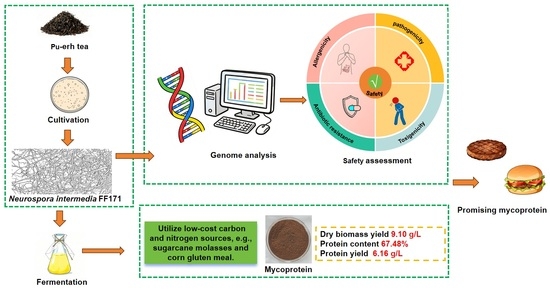
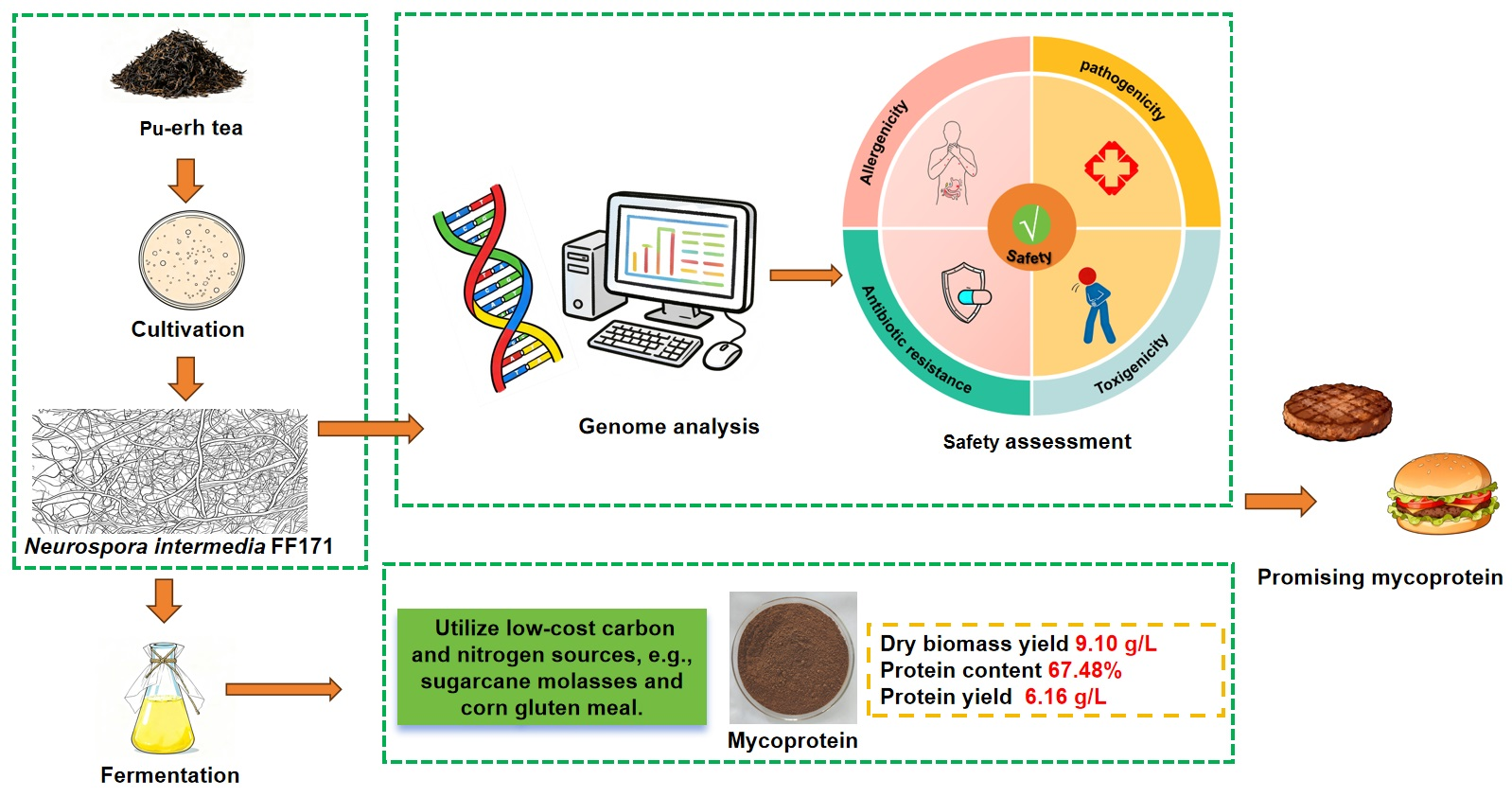
With the rapid growth of the population and the economy, environmental and health issues caused by animal protein consumption have received increasing attention. The world urgently needs alternative proteins as a way out, and microbial proteins have tremendous potential as sustainable protein sources. In this study, Neurospora intermedia FF171 was isolated and identified from Pu-erh fermented tea. FF171 can rapidly produce substantial mycelial biomass using a sugar byproduct as a carbon source. The combination of sugarcane molasses and corn gluten meal as carbon and nitrogen sources, respectively, resulted in a dry biomass of 9.10 ± 0.20 g/L and a protein yield of 6.16 ± 0.11 g/L (67.48% protein content). FF171 exhibits genetic stability, and no mycotoxins were detected in the biomass. Furthermore, the strain’s genome was sequenced and annotated. Bioinformatics analysis, including comparison of specific sequences with reference strains in the GRAS (Generally Recognized as Safe) database, was conducted to assess potential toxicity, allergenicity, and antimicrobial resistance. The results revealed no virulence or pathogenic factors and no antibiotic resistance genes, while the risk of triggering allergic reactions was minimal. Taken together, these findings suggest that Neurospora intermedia FF171 is a safe and promising candidate for mycoprotein production, with strong potential as a future alternative protein source.

1. Introduction

With the global population projected to reach 9.8 billion by 2050, the demand for animal protein is anticipated to surge by nearly 70% by 2030 [1,2]. However, the production of animal protein is a primary driver of environmental degradation, accounting for over one-third of food-related greenhouse gas emissions while exacerbating pressures on land, water, and biodiversity and contributing to antibiotic overuse [3,4,5]. Furthermore, excessive consumption of red and processed meats is linked to an increased risk of chronic non-communicable diseases [6,7,8]. Consequently, the global meat protein market is increasingly transitioning to alternative proteins. Current alternative proteins mainly include cultured meat, plant-based meat, insect protein, and microbial protein [9]. Recently, microbial protein has garnered significant attention. Among these, filamentous fungi such as Fusarium venenatum [10], Neurospora crassa [11], Rhizopus oligosporus [1], and Aspergillus oryzae [7] are of particular interest. These fungi can grow rapidly using inexpensive substrates and have a lower environmental impact than animal meat [12].
Filamentous fungi have been used in traditional foods around the world for thousands of years, such as blue-veined cheeses in Europe; soy sauce, Baijiu, and fermented tofu in China; sake and koji in Japan; and tempeh and Oncom in Indonesia [13]. They contain all nine essential amino acids required by the human body and are notable for their high levels of protein and dietary fiber, along with a low fat content [14]. In recent decades, the global market has offered fungal-based alternative protein products such as Quorn™ from Marlow Foods Ltd. [15], Fy Protein™ from Nature’s Fynd [16], and Rhiza Mycoprotein from Better Meat Co. (BMC) [17]. However, the microbial strains currently used in alternative protein production are still relatively limited. Therefore, traditional fermented foods represent a largely untapped reservoir with significant potential for identifying novel microbial resources capable of producing alternative proteins.
Pu-erh tea is a unique fermented tea produced in Yunnan Province, China. It has been consumed worldwide for centuries and is highly valued by many consumers for its distinctive and rich flavor. Pu-erh tea contains a diverse range of microorganisms, including filamentous fungi, yeast, and bacteria. Haas et al. [18] identified 19 fungal genera, such as Aspergillus, Penicillium, and Rhizopus, in 36 Pu-erh tea samples. Tian et al. [19] reported approximately 10 fungal genera, including yeast, Aspergillus, and Penicillium, in 19 Pu-erh tea samples. The genus Neurospora has also been found in Pu-erh tea, though it is not a dominant genus [20]. These studies demonstrate that Pu-erh tea serves as a valuable source of food-grade filamentous fungi.
The genus Neurospora has a long history of use in food. Neurospora has been employed in diverse human societies, either as a food or in the processing of foods and beverages. For instance, Indigenous tribesmen in Brazil utilize it to convert cassava into fermented beverages; it serves as koji in East Asian cuisines; the Iban of Borneo consume it as a foodstuff; and in southern France, it contributes to the ripening of Roquefort cheese [21]. In particular, Neurospora intermedia is the main constituent of Oncom, a traditional fermented food in Indonesia [22]. Neurospora crassa, a classic model organism, has been extensively studied, indicating that it possesses no strong allergenic properties, toxin-producing potential, or pathogenicity in humans [11,12,17]. Moreover, based on the results of acute and sub-chronic toxicity tests, no adverse effects on animal health have been reported for Neurospora crassa [23]. Importantly, Neurospora crassa was recognized as “Generally Recognized as Safe (GRAS)” by the U.S. Food and Drug Administration (FDA) in 2024, with GRN No. 1117 [17]. Neurospora crassa and Neurospora intermedia both belong to the genus Neurospora. Due to its superior fermentation performance, Neurospora intermedia has gained more attention in recent years and has been used to produce pigments, enzymes, ethanol, and proteins [22,24,25].
This study aims to identify high-protein filamentous fungi from Pu-erh tea as a potential alternative protein source. Several Neurospora intermedia strains were isolated and identified, among which strain FF171 demonstrated a promising capacity for protein production. The fermentation conditions of FF171 were further optimized to evaluate its commercial applicability. In addition, comprehensive assessments of allergenicity, toxicity, pathogenicity, and drug resistance were conducted. These findings highlight N. intermedia FF171 as a promising candidate for the development of novel alternative proteins.

2. Materials and Methods

2.1. Sampling

The Pu-erh tea samples were collected from tea production bases in Xishuangbanna, Yunnan Province. During sampling, strict disinfection measures were implemented between samples to prevent cross-contamination. All tea samples were ground using a homogenizer to ensure uniformity. The samples were immediately transported under refrigerated conditions and stored at 4 °C until further processing.

2.2. Isolation and Purification of Neurospora

The pour plate method was used. A total of 0.1 g of ground Pu-erh tea sample was added to 40 mL of a 0.1% peptone water solution. The mixture was shaken at 28 °C and 150 rpm for 1 h. The suspension was then poured into 40 mL of double-layer DRBC medium (composition: 20 g/L glucose, 0.05 g/L rose red, 0.05 g/L chloramphenicol, 15 g/L agar, 1 g/L sodium dihydrogen phosphate, and 1 g/L sodium chloride) that had been cooled to 45 °C and dispensed into two square plates, with 80 mL of medium per plate. The culture medium plates were incubated at 28 °C, 35 °C, and 45 °C for 5 to 10 days. Different colonies were selected based on observations of their phenotypic characteristics (including size, shape, color, texture, presence of exudate, and production of soluble pigments) and transferred to PDA plates for further isolation and purification. This purification process was repeated at least three times until pure single colonies were obtained.

2.3. Identification of Neurospora intermedia

2.3.1. Identification by Internal Transcribed Spacer (ITS)

Mycelium grown on PDA plates was collected, and total DNA was extracted using a fungal genomic DNA extraction kit. PCR amplification of the fungal ITS region was performed using the universal fungal ITS primers ITS1 (5′-TCCGTAGGTGAACCTGCGG-3′) and ITS4 (5′-TCCTCCGCTTATTGATATGC-3′). The amplified products were separated by 1% agarose gel electrophoresis, after which the target fragments were recovered using a gel recovery kit and sequenced. The sequencing results were compared with sequences in the GenBank database using BLAST (version 2.3.0) to determine the taxonomic identification of the strains. The identified strains were stored in a solution containing 10% glycerol and preserved at −80 °C for long-term storage.

2.3.2. Identification by QMA, TMI, TML, and DMG Sequences

Since the ITS region cannot effectively distinguish between Neurospora crassa and Neurospora intermedia, the strains were further identified by constructing a multigene phylogenetic tree of selected Neurospora species using QMA, TMI, TML, and DMG sequences with ACOPTools (version 2.0) software [26]. First, the QMA, TMI, TML, and DMG sequences of reference Neurospora strains were downloaded from the NCBI database. The PCR conditions and primer sequences for the amplification for each polymorphic sequence have been described by Dettman et al. [27]. The primer sequences are as follows: TMI-F 5′-CACCCTCAGTATCTTCAACA-3′, TMI-R 5′-TGTGAAGGTTGAGAGTATGG-3′; DMG-F 5′-GACGTCGCGCTATGCTCTGC-3′, DMG-R 5′-TTTGGTCGGAATGGTCGGTG-3′; TML-F 5′-GTCGGACACGAAGTGGACAA-3′, TML-R 5′-AATCCCGCTTAGCAAAGGTG-3′; QMA-F 5′-TCTTGATGGGAATTTATGTGA-3′, QMA-R1 5′-CCTAGGTTCCTATCTAGCCAG-3′, and QMA-R2 5′-ATATGTGCCTAAAAGCAATCA-3′. These sequences were aligned using MAFFT (version 7.526) software [28], and the resulting alignments were trimmed with Gblocks to remove low-quality and unreliable regions. The trimmed sequences were then concatenated, and the resulting concatenated sequences were used to construct a Bayesian phylogenetic tree with MrBayes.

2.4. Screening of Neurospora intermedia Strains with High Protein Yield and Analysis of Protein Yield Under Different Fermentation Conditions

2.4.1. Screening High-Protein-Yield Strains

The strains were inoculated onto PDA plates and incubated at 35 °C for 3–5 days. Mycelial plugs were then removed and inoculated into 100 mL of liquid fermentation medium and cultured at 35 °C with shaking at 220 rpm for 24 h. The liquid fermentation medium had the following composition: glucose, 10 g/L; yeast extract, 5 g/L; (NH4)2SO4, 11.80 g/L; KH2PO4, 3.5 g/L; MgSO4·7H2O, 0.75 g/L; trace metal elements, 1 mL/L (including CaCl2·2H2O, 0.009 mg/mL; ZnSO4·7H2O, 0.009 mg/mL; FeSO4·7H2O, 0.006 mg/mL; MnCl2·2H2O, 0.0016 mg/mL; Na2MoO4·2H2O, 0.0008 mg/mL; CuSO4·5H2O, 0.0006 mg/mL; and KI, 0.0002 mg/mL); and vitamins, 1 mL/L (containing p-aminobenzoic acid, 0.2 mg/L; nicotinic acid, 1 mg/L; calcium pantothenate, 1 mg/L; pyridoxine hydrochloride (Vitamin B6), 1 mg/L; thiamine hydrochloride (Vitamin B1), 1 mg/L; biotin, 0.05 mg/L; and inositol, 25 mg/L). The pH was adjusted to 5.0. After fermentation, mycelia were collected by filtration and dried at 70 °C for 24 h to constant weight. Fungal biomass yield (g/L) and protein concentration were then determined. The protein concentration (%, w/w) was determined using the Dumas combustion method with a nitrogen-to-protein conversion factor of 6.25. The protein yield (g/L) was calculated by multiplying the biomass by its protein content. Three biological replicates (in triplicate) were set up for each condition, and the same approach was applied consistently throughout.

2.4.2. Genetic Stability Experiment

Frozen stocks were revived by plating on PDA and incubating at 35 °C for 3 d (passage 1). The agar plugs containing mycelium were then transferred to fresh PDA plates to obtain passage 2. This process was repeated until passage 9. Strains from passages 1, 3, 5, 7, and 9 were selected for shake flask culture in seed medium and subsequent fermentation medium. After each fermentation cycle, the biomass was harvested to determine the dry weight and protein content. For the seed culture, agar plugs containing mycelium (approximately 1 cm × 1 cm) were inoculated into seed medium and incubated at 35 °C and 220 rpm for 36 h. Fermentation was initiated by inoculating 1% (v/v) of the seed culture into the fermentation medium and incubating at 35 °C for 24 h. The seed medium had the following composition: glucose, 10 g/L; yeast extract, 5 g/L; (NH4)2SO4, 7.08 g/L; KH2PO4, 3.5 g/L; MgSO4·7H2O, 0.75 g/L; EDTA, 0.03 g/L; trace metal solution, 1 mL/L; and vitamin solution, 1 mL/L. The fermentation medium had the following composition: glucose, 10 g/L; (NH4)2SO4, 4.72 g/L; KH2PO4, 3.5 g/L; MgSO4·7H2O, 0.75 g/L; EDTA, 0.03 g/L; yeast extract, 3 g/L; trace metal solution, 1 mL/L; and vitamin solution, 1 mL/L. The pH was adjusted to 5.0, and the experiments were performed in triplicate under the same conditions as described above.

2.4.3. Fermentation with Different Carbon and Nitrogen Sources

In the carbon source single-factor experiment, six different carbon sources were evaluated: sugarcane molasses (10 g/L), corn starch (8 g/L), glucose (10 g/L), maltose (10 g/L), sucrose (10 g/L), and fructose (10 g/L). The basal fermentation medium additionally consisted of corn steep liquor (12.5 g/L), ammonium sulfate (9.44 g/L), monopotassium phosphate (7 g/L), magnesium sulfate heptahydrate (1.5 g/L), EDTA (0.06 g/L), trace metal solution (1 mL/L), and vitamin solution (1 mL/L). Following the identification of the optimal carbon source, the effects of different organic nitrogen sources on protein yield were further investigated. In the nitrogen source single-factor experiment, five organic nitrogen sources were tested: yeast extract (5 g/L), corn steep powder (10 g/L), corn gluten meal (10 g/L), soybean meal extract (10 g/L), and soy peptone (10 g/L). The fermentation medium used in this stage contained sugarcane molasses (10 g/L), ammonium sulfate (9.44 g/L), monopotassium phosphate (7 g/L), magnesium sulfate heptahydrate (1.5 g/L), EDTA (0.06 g/L), trace metal solution (1 mL/L), and vitamin solution (1 mL/L). Using a 1% (v/v) inoculum, the seed culture was transferred into the fermentation medium and cultivated in shake flasks at a pH of 5.0, 35 °C, and 220 rpm for 24 h. All experiments were performed in triplicate under identical conditions.

2.5. Mycotoxin Content Determination

According to SN/T 3136-2012 [29], a total of 11 mycotoxins in N. intermedia FF171 biomass were detected using liquid chromatography–tandem mass spectrometry (LC-MS/MS). The tested mycotoxins included aflatoxin B1, aflatoxin B2, aflatoxin G1, aflatoxin G2, fumonisin B1, fumonisin B2, deoxynivalenol, T-2 toxin, HT-2 toxin, ochratoxin A, and zearalenone.

2.6. Whole-Genome Sequencing and Annotation

Genomic DNA of N. intermedia FF171 was extracted and qualified prior to sequencing. High-molecular-weight DNA was sheared into approximately 500 bp fragments, followed by end repair, gel purification, and PCR amplification to construct sequencing libraries for cluster generation and sequencing. After adapter removal and quality filtering, high-quality clean reads were obtained. Genome assembly was performed using Velvet (version 1.2.10) [30,31] based on k-mer analysis, in which de Bruijn graphs were constructed according to the overlap relationships between k-mers to generate contig sequences. Subsequently, SSPACE (version 3.0) [32,33] was employed to align all paired-end reads to the assembled contigs, using the insert size information to scaffold the contigs into longer sequences. GapFiller (version 1.10) [34] was then applied to map all reads back to the scaffolds and fill the remaining gaps. Based on the final assembly, protein-coding genes, rRNA, tRNA, and other non-coding RNAs were predicted. Functional annotation of the predicted genes was performed using the Non-Redundant (NR), Kyoto Encyclopedia of Genes and Genomes (KEGG), Eukaryotic Orthologous Groups (KOG), Gene Ontology (GO), Carbohydrate-Active Enzymes (CAZys), Protein Family (Pfam), and UniProtKB/Swiss-Prot databases [35,36].

2.7. Safety Assessment of N. intermedia FF171 Based on Bioinformatics Analysis

2.7.1. Overview of Bioinformatics Analysis

The safety of N. intermedia FF171 was assessed through bioinformatic analysis of its genome, focusing on three aspects: toxigenicity, allergenicity, and antimicrobial resistance. For toxigenicity and allergenicity analyses, protein database comparisons and genomic alignment with Generally Recognized as Safe (GRAS) strains were comprehensively employed. GRAS strains refer to strains that have received a response of “FDA has no questions” following a comprehensive safety evaluation by the U.S. FDA, thereby holding “Generally Recognized as Safe” status. If proteins in FF171 linked to toxigenicity or allergenicity exhibit significant homology to those in GRAS strains, they are not expected to compromise the safety of FF171. In addition to GRAS strains, the N. intermedia FF171 genome was also compared against the genomes of 9 organisms commonly consumed as human food (including plants and animals) as well as the human genome. Concurrently, relevant scientific literature concerning the safety of N. intermedia was thoroughly reviewed.
GRAS strain selection criteria: The microorganism has been approved by the U.S. FDA as “Generally Recognized as Safe” and has a long history of consumption in the human diet. Furthermore, no adverse events have been reported in published clinical studies [11]. The GRAS strains selected for this study include 8 bacterial strains and 3 fungal strains (Fusarium venenatum A3/5, Fusarium sp. ‘flavolapis’ MK7, and Neurospora crassa OR74A). The GRAS strains correspond to GRN Nos. 91, 945, 904, 807, 725, 660, 281, 531, 758, 865, 814, and 1117 [15,16,17,37,38,39,40,41,42,43,44,45], as shown in Table S1.
The genomes of GRAS strains were downloaded from the GenBank and PATRIC databases. The FF171 genome was subjected to bi-directional BLASTP (https://www.uniprot.org/blast (accessed on 10 February 2025)) analyses: all predicted proteins were queried against the proteomes of 11 GRAS strains and, conversely, GRAS proteomes were queried against FF171 to ensure comprehensive ortholog detection. According to the standards established by Pearson [46], sequences with identity > 40%, E-value < 0.001, and bit score > 50 were marked as significantly homologous and considered to have similar functions. In the subsequent analyses of virulence factors and allergenic factors, sequences that were significantly homologous to GRAS strains were not considered to possess toxicity or allergenicity.

2.7.2. Antibiotic Resistance Assessment

The Comprehensive Antibiotic Resistance Database (version 4.0.1) (CARD), the AMR reference gene database from the NCBI National Database of Antibiotic Resistant Organisms (NDARO) (https://www.ncbi.nlm.nih.gov/pathogens/antimicrobial-resistance/ (accessed on 12 February 2025)), and the Antibiotic Resistance Gene-ANNOTation (ARG-ANNOT) (https://www.mediterranee-infection.com/acces-ressources/base-de-donnees/arg-annot/ (accessed on 12 February 2025)) database [47] were utilized to predict potential antimicrobial resistance (AMR) genes in N. intermedia FF171. Sequence homology analysis was performed using BLASTN (https://blast.ncbi.nlm.nih.gov/Blast.cgi?PROGRAM=blastn&PAGE_TYPE=BlastSearch&BLAST_SPEC=&LINK_LOC=blasttab&LAST_PAGE=tblastn (accessed on 12 February 2025)) with the following default search parameters: maximum target sequences, 100; E-value threshold, 0.05; word size, 28; match and mismatch scores, 1 and −2, respectively; and linear gap costs. According to the criteria established by European Food Safety Authority (EFSA) [48], DNA sequence alignments meeting the following criteria were considered to have significant sequence homology with AMR genes: sequence identity ≥ 80%, query coverage ≥ 70%, E-value < 1 × 10⁻¹⁰, and bit score > 50 (for databases containing ≤7 million entries, to account for reduced accuracy in DNA/DNA alignments).
Additional bioinformatic analysis of N. intermedia FF171 to identify acquired AMR genes was conducted using ResFinder 4.1 [49], hosted by the CGE. The assessment employed default search parameters, with sequence identity ≥ 80% and minimum length ≥ 60% applied according to the EFSA guidelines [50].

2.7.3. Toxigenicity Analysis

The assessment of the potential toxicity of polypeptides encoded by the protein-coding regions of the N. intermedia genome followed the guidelines established by Pariza et al. [51], the EFSA [50], and van der Vlugt [52]. First, manually annotated protein toxin sequences were downloaded from the UniProtKB/Swiss-Prot database. A total of 7578 manually curated proteins were annotated as toxins on 19 February 2025. The predicted proteins of the FF171 and GRAS strains were separately subjected to BLASTP analysis for comparison with these protein toxins. The default search parameters were as follows: max target sequences, 100; E-value threshold, 0.05; word size, 6; matrix, BLOSUM62; gap costs, 11 and 1 for existence and extension, respectively; and conditional compositional score matrix adjustment. Toxic proteins identified in N. intermedia FF171 but not present in GRAS strains were further analyzed based on the significant homologous sequences between FF171 and GRAS strains obtained in Section 2.7.1. If FF171 and GRAS strains share a certain protein toxin, or if a toxic protein in FF171 has significant homology with non-toxic proteins in GRAS strains, the protein was considered unlikely to affect the edible safety of FF171.
Subsequently, the phenotypic prediction tool PathogenFinder 1.1 [53] was employed to analyze potential virulence factors in F8. The PathogenFinder 1.1 database predicts the pathogenicity of N. intermedia FF171 to human hosts by analyzing the strain’s protein sequences, genomic sequences, or raw sequences, with automated model selection employed during the evaluation.

2.7.4. Allergenicity Analysis

A stepwise analysis approach was adopted to assess the allergenicity of N. intermedia FF171, and the analysis process is shown in Figure S1. The analysis process included the following steps:
  • Preliminary screening using the AlgPred 2.0 hybrid model: The Algpred 2.0 hybrid model (Random Forest + BLAST + MERCI) was used for preliminary screening of allergenic proteins in N. intermedia FF171. AlgPred 2.0 is a web server designed to predict whether a protein is an allergen. The AlgPred 2.0 dataset contains a total of 10,075 allergens, 10,075 non-allergens, and 10,451 IgE epitopes [54]. The Algpred 2.0 hybrid model refers to an integrated approach that combines and performs weighted calculation of multiple methods (a Random Forest (RF) model based on machine learning (ML) techniques, BLAST similarity search, and MERCI motif analysis) to generate a hybrid score, aiming to improve the classification accuracy of allergenic proteins. In this study, the threshold for the hybrid score was set at 0.3 to identify allergenic proteins.
  • Refinement against manually curated non-allergenic proteins: To refine the allergenic protein prediction results, the allergenic proteins predicted by AlgPred 2.0 were subjected to sequence homology searches against manually annotated non-allergenic proteins from the UniProtKB/Swiss-Prot database. A comparison between predicted allergenic proteins and non-allergenic proteins from the UniProt/Swiss-Prot database (downloaded on 19 February 2025) revealed significant sequence homology for 1000 entries through BLASTP. All subsequent BLASTP analyses in this section employed the same default parameters.
  • Comparison with allergens in the AllergenOnline database: The remaining allergenic proteins were compared with allergens in the AllergenOnline database. Following the guidelines issued by the Food and Agriculture Organization/World Health Organization (FAO/WHO) [55], Codex Alimentarius Commission [56,57], and EFSA [48,58], sequences showing >35% homology were identified as allergenic proteins using an 80-amino acid sliding window. Given that many conserved proteins easily reach this threshold, matches with an E-value < 1 × 10⁻⁷ and full-length sequence homology > 50% were further filtered, as these criteria are considered more predictive [59].
  • Homology analysis with proteins from GRAS strains: The putative allergenic proteins obtained in the previous step were subjected to BLASTP analysis (default search parameters) against the Swiss-Prot annotated proteins derived from GRAS strains. The criteria for significant sequence homology were based on the functional thresholds established by Pearson (>40% identity, E-value < 0.001, and bit score > 50) [46]. Based on the significant homologous sequences previously identified between FF171 and GRAS strains, potential allergenic proteins were further screened to identify those unique to FF171. N. intermedia FF171 proteins exhibiting significant homology to GRAS strain proteomes were considered functionally similar and were not classified as allergenic proteins of FF171.
  • Homology investigation with proteins from common foods and humans: The predicted allergenic proteins were further investigated for sequence homology with proteins from widely consumed food sources and humans (Homo sapiens) [60] by conducting BLASTP searches within the NCBI non-redundant protein sequence database (default search parameters). The widely consumed foods selected in this study included chicken (Gallus gallus), beef (Bos taurus), pork (Sus scrofa), rice (Oryza sativa), wheat (Triticum aestivum), soybean (Glycine max), corn (Zea mays), pepper (Capsicum annuum), and sweet orange (Citrus sinensis). Each allergenic protein in the AllergenOnline database sharing at least 50% homology with N. intermedia FF171 proteins was subjected to sequence homology searches against human proteins. The comparative analyses applied the standard thresholds for functional sequence homology, which were based on the parameters reported by Pearson [46].

2.8. Statistical Analysis

The data are presented as the mean ± standard deviation (SD) from three independent experiments. Statistical analysis of the collected data was performed using SPSS version 27.0 software. One-way analysis of variance (ANOVA) and Tukey’s test were employed at a 95% confidence interval to investigate the significant differences (p < 0.05).

3. Results and Discussion

3.1. Isolation, Purification, and Identification of Neurospora intermedia

A total of 195 fungal strains were isolated from fermented Pu-erh tea and were preliminarily identified as belonging to eight genera based on their ITS region sequences: Schizophyllum sp., Neurospora sp., Irpex sp., Trametes sp., Aspergillus sp., Lichtheimia sp., Penicillium sp., and Rhizopus sp. Since the ITS region cannot effectively distinguish between Neurospora crassa and Neurospora intermedia (Figure S2), eight Neurospora strains (FF113, FF158, FF343, FF171, FF216, FF190, FF380, and FF318) were subjected to multigene identification using QMA, TMI, TML, and DMG markers. A multigene phylogeny of Neurospora was subsequently constructed based on these sequences, as shown in Figure 1a. The obtained sequences exhibited the highest nucleotide sequence identity (>95%) to those of Neurospora intermedia. Moreover, the sequences generated in this study cluster separately within this clade, indicating significant genetic divergence from the reference strains of Neurospora intermedia.
The colony morphology of Neurospora intermedia on PDA plates is shown in Figure 1b,c, using the FF171 strain as an example. Under dark conditions, the mycelium remained consistently white. Under natural light, the tips of the aerial mycelium turned orange–red and were accompanied by conidia production. The colony color was grayish-yellow, and the reverse side of the colony was pale yellow. The colony surface was flat and thin, with submerged mycelium and sparse aerial mycelium. The morphological structure of the Neurospora mycelium under the microscope is shown in Figure 1d, again using the FF171 strain as an example. Under the microscope, the mycelium consists of hyaline to light-brown hyphae, which are septate, branched, reticulate, and smooth. The conidiophores are orange–red and spherical to oval, with a diameter of 10–12 μm. The FF171 strain exhibits a mycelial length of 585–1216 μm. This substantial fiber length facilitates the development of a fibrous structure analogous to that of meat, thereby enhancing the textural and organoleptic properties of the fungal protein product [14].

3.2. Protein Production Capacity and Genetic Stability of N. intermedia FF171

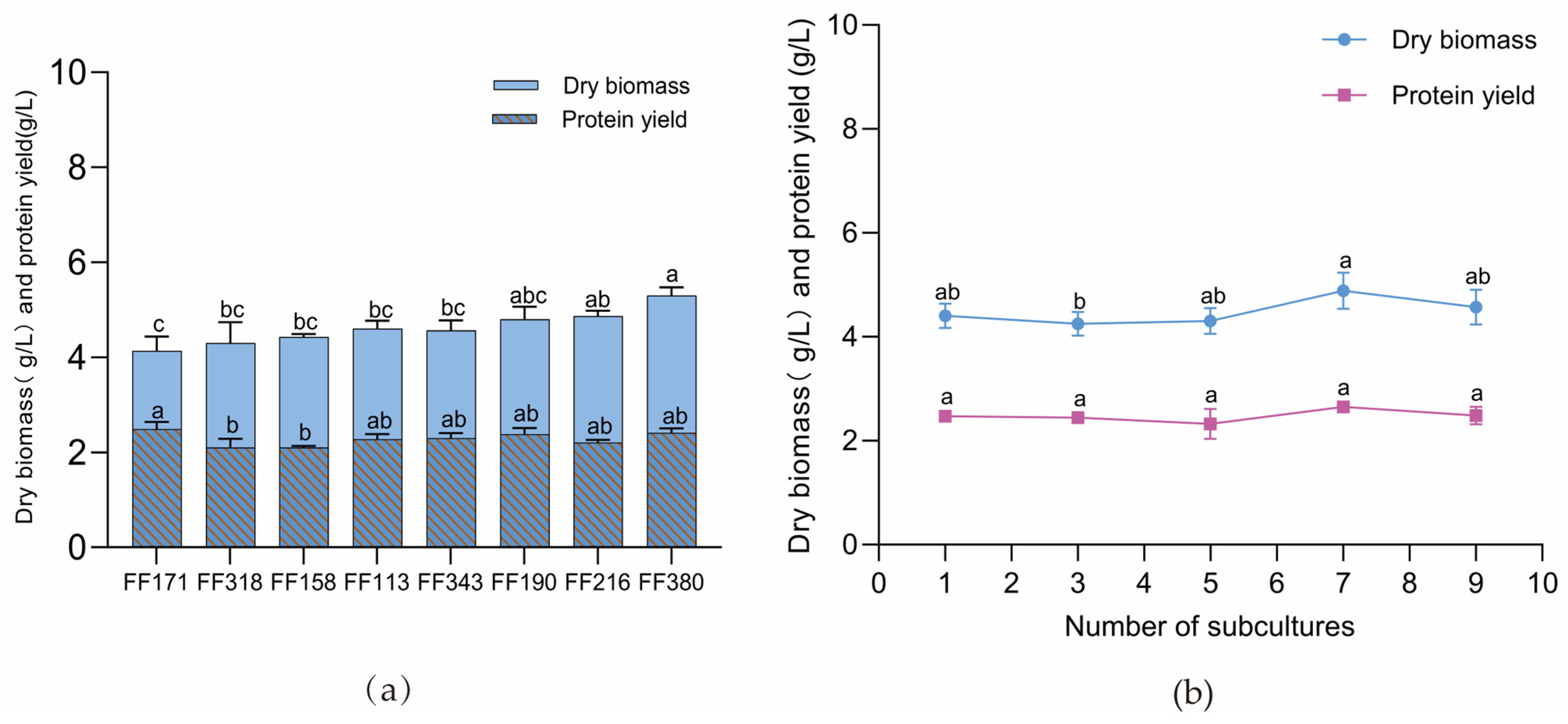
The protein production capacity of the identified Neurospora intermedia strains was evaluated. Eight N. intermedia strains produced biomass with a dry weight exceeding 4 g/L, and the protein content of the dried mycelium was greater than 45% (Figure 2a). Superior performance was found in FF171, which showed a dry biomass yield of 4.13 ± 0.31 g/L and a protein content of 60.29 ± 0.86% (protein yield: 2.49 g/L). Based on dry weight, the protein content of Fusarium venenatum is approximately 45% [61], whereas that of Fusarium strain flavolapis is approximately 50% [62]. N. intermedia FF171 contains all nine essential amino acids, with a total essential amino acid content of 20.70% on a dry weight basis (see Table S2). This value is comparable to the essential amino acid contents of Fusarium venenatum (20.9%, dry weight basis) [61] and Fusarium strain flavolapis (20–24% of total dry weight) [62]. By comparison, N. intermedia CBS 131.92, cultivated on wastewater from baker’s yeast production supplemented with a phosphorus source (KH2PO4), achieved a maximum biomass yield of 2.71 g/L, but the protein content was only 34.9% [63]. N. intermedia FF171 has been deposited in the China General Microbiological Culture Collection Center (CGMCC) under the accession number CGMCC NO. 40496.
To assess genetic stability, N. intermedia FF171 was passaged serially nine times via mycelium plug inoculation on solid agar medium. Protein yield and dry biomass yield of the first, third, fifth, seventh, and ninth subcultures were analyzed (Figure 2b). The dry biomass yield exhibited minor fluctuations, with slight differences observed between the third and seventh subcultures, whereas the protein yield remained statistically unchanged. The pronounced degeneration of filamentous fungi during subculturing poses a significant challenge to industrial-scale production [64]. Consequently, genetic stability is a fundamental requirement for successful industrial application, ensuring that strains retain their superior characteristics and that introduced genes are not lost or rearranged during passages [65,66]. These results indicate that N. intermedia FF171 largely retains its high protein production capacity during successive subculturing.

3.3. Effects of Carbon and Nitrogen Sources on Protein Yield of N. intermedia FF171

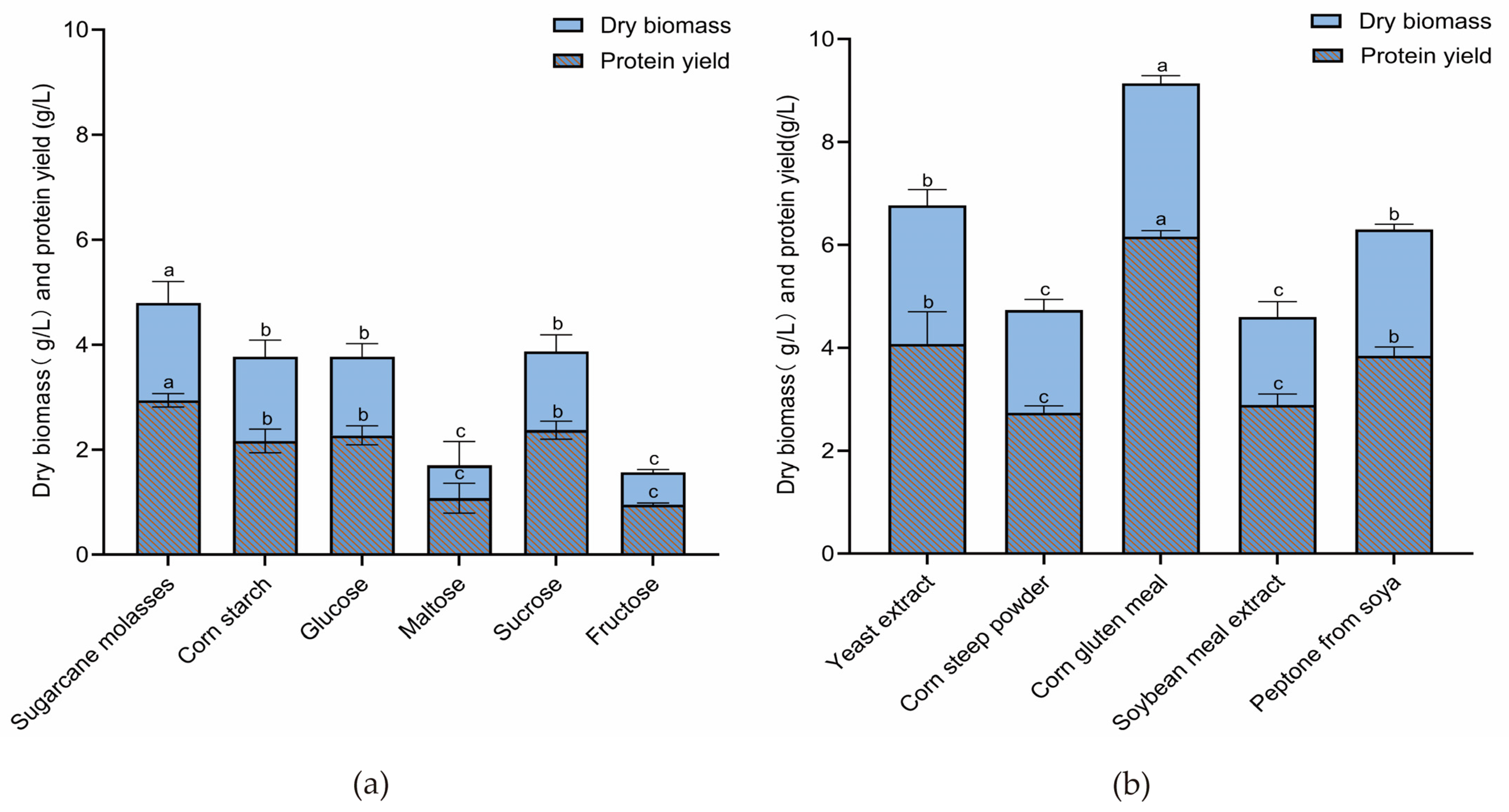
N. intermedia FF171 can utilize common monosaccharides (glucose and fructose) and disaccharides (sucrose and maltose) found in microbial culture media. Additionally, it can utilize more readily available and lower-cost food raw materials and processing byproducts (corn starch and sugarcane molasses) as carbon sources, as shown in Figure 3a. The dry biomass of FF171 ranged from 4.13 g/L to 4.8 g/L, and the protein yield ranged from 2.49 g/L to 2.94 g/L. Furthermore, with sugarcane molasses as the carbon source, the strain achieved the highest dry biomass (4.8 ± 0.40 g/L) and protein yields (2.94 ± 0.13 g/L). In addition, both the dry biomass yield and protein yield were higher with corn starch as the carbon source than when maltose or fructose was used. Sugarcane molasses, a low-cost and nutrient-rich byproduct of cane sugar manufacture that contains sugars, polyphenols, and vitamins, serves as a carbon source for the biosynthesis of exopolysaccharides, mannitol, polyhydroxyalkanoates, heterologous proteins, and amino acids [67,68,69,70,71,72]. These results demonstrate that strain FF171 is capable of industrial-scale fungal protein production using cane molasses as the carbon source.
N. intermedia FF171 can utilize high-quality, rapidly absorbed nitrogen sources such as yeast extract and soy peptone. It can also utilize economical, low-cost, and readily available corn gluten meal, corn steep powder, and soybean meal extract as nitrogen sources, as shown in Figure 3b. The dry biomass of FF171 ranged from 4.13 to 9.10 g/L, and the protein yield ranged from 2.49 g/L to 6.16 g/L. The strain achieved the highest dry biomass (9.10 ± 0.20 g/L) and protein yield (6.16 ± 0.11 g/L) when corn gluten meal was used as the nitrogen source. Additionally, the low-cost corn steep powder and soybean meal extract can produce considerable mycoprotein, with protein contents of 57.85% and 67.48%. Fungal strains that have been commercialized for mycoprotein production, such as Fusarium venenatum [37,73,74] and Fusarium strain flavolapis [16,62], primarily utilize nitrogen sources, including ammonia, yeast extract, and nitrate salts. Corn gluten meal, a byproduct of the corn wet-milling process, is low-cost, rich in protein, and serves as an economical and sustainable nitrogen source [75]. These results suggest that the combination of organic and inorganic nitrogen sources, such as (NH4)2SO4, more effectively enhances both the biomass yield and protein production in strain FF171. Consistent with this finding, Hashemi et al. [76] reported that supplementing a mixed fermentation substrate of vinasse and whey with (NH4)2SO4 increased the biomass content by 17.6% during the high-cell-density fermentation of Neurospora intermedia CBS 131.92. Therefore, N. intermedia FF171 represents a promising candidate for the industrial manufacture of mycoprotein, capable of deriving its carbon and nitrogen requirements from low-value agricultural processing byproducts.

3.4. Genome Sequencing, Annotation, and Metabolic Pathway Analysis of N. intermedia FF171

The genome of N. intermedia FF171 was sequenced to elucidate the genetic basis underlying its high protein production. Whole-genome sequencing was performed using the Illumina NovaSeq platform, generating approximately 9.9 Gb of clean reads with an average coverage of 265×. The final genome assembly comprised 650 scaffolds with a total length of 35.27 Mb, a GC content of 51.83%, and scaffold N50 and L50 values of 180,143 bp and 56, respectively. Assessment with BUSCO (benchmarking universal single-copy orthologs) revealed a completeness score of 99.1% (C:751, S:750, D:1), indicating a high-quality and nearly complete genome assembly. A total of 8912 protein-coding genes were predicted. The detailed annotation results for the respective databases are provided in Table 1. The genome of the Oncom-derived reference strain N. intermedia FGSC 2613 is approximately 39 Mb in size and has a GC content of 49%, as determined by long-read sequencing [77].
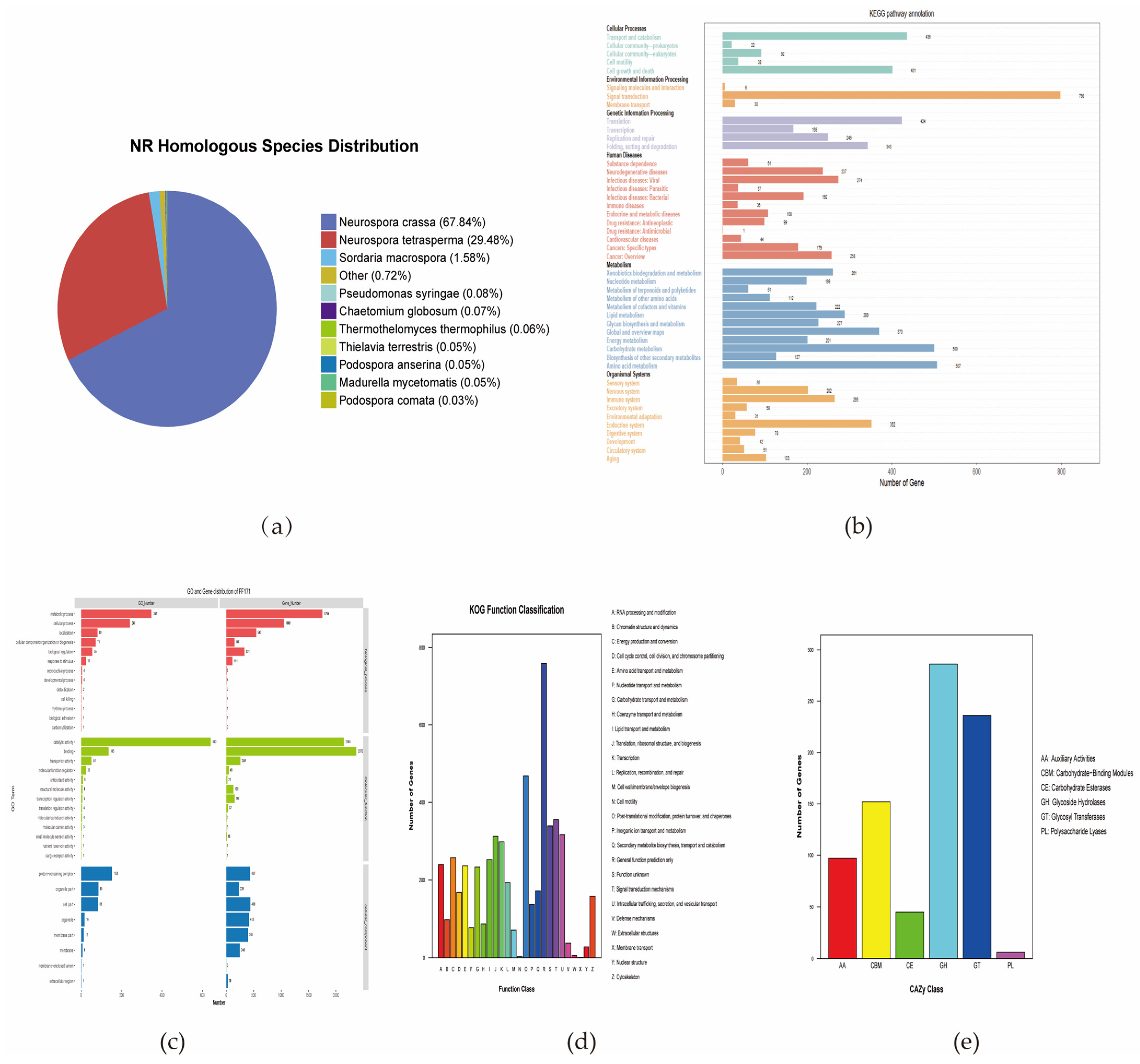
KEGG annotation assigned 4899 protein-coding genes to six primary categories with 366 pathways. Notably, genes involved in amino acid metabolism (507 genes) constituted the largest subset within the “Metabolism” class, implying robust nitrogen assimilation and protein synthesis capacity. This was followed by carbohydrate metabolism genes (500 genes), reflecting an extensive repertoire for polysaccharide catabolism and carbohydrate conversion. Additionally, signal transduction genes were the most abundant functional group overall (798 genes), highlighting a sophisticated regulatory network that enables rapid metabolic adaptation to environmental fluctuations. In total, 4582 genes were assigned GO terms, and their distribution across functional categories is illustrated in Figure 4c. Significant enrichment was detected for “metabolic process”, “catalytic activity”, and “protein-containing complex”, underscoring the organism’s high biosynthetic and enzymatic potential. Within the KOG classification, class R (“General function prediction only”) contained the largest number of genes (759), followed by class O (“Post-translational modification, protein turnover, chaperones”; 468 genes) (Figure 4d). These findings indicate that the FF171 genome encodes a robust protein management system that supports high-level protein synthesis, folding, and quality control, consistent with the KEGG-based analyses. CAZy annotation identified 822 carbohydrate-active genes (Figure 4e). Glycoside hydrolases (GHs) were the most abundant (286 genes), followed by glycosyl transferases (GTs; 236 genes), demonstrating a strong capacity to depolymerize cellulose, chitin, and other complex polysaccharides, as well as to synthesize cell wall polysaccharides. Collectively, these genomic features provide the genetic foundation for the efficient exploitation of FF171 as a promising fungal candidate for mycoprotein production.

3.5. Bioinformatics-Based Safety Analysis of the N. intermedia FF171

3.5.1. Antibiotic Resistance

Antimicrobial resistance genes in strain FF171 were analyzed by alignment against the CARD, NDARO, ARG-ANNOT, and ResFinder 4.1 databases, in compliance with the EFSA guideline requirements [48,50]. The genes annotated as open reading frames in the N. intermedia FF171 genome were assessed for significant homology to antimicrobial resistance (AMR) genes from the CARD, NDARO, and ARG-ANNOT databases using BLASTN. No sequences in FF171 showed significant alignment with reference AMR genes in the aforementioned databases. Moreover, ResFinder 4.1 analysis did not detect any potential AMR genes or chromosomal point mutations associated with antimicrobial resistance. These findings suggest that FF171 is unlikely to exhibit resistance to clinically relevant antimicrobial agents.

3.5.2. Toxigenicity and Pathogenicity

The toxigenicity and pathogenicity analysis of strain FF171 were analyzed in accordance with the EFSA guidelines [50,52] and the methodology established by Pariza et al. [51]. A total of 7778 manually curated protein toxin sequences were retrieved from UniProtKB/Swiss-Prot and used as the reference database. BLASTP searches (identity > 40%, E-value < 0.001, and bit score > 50) identified 18 putative protein toxins in N. intermedia FF171. Among these, 17 were also present in the GRAS strains, including disintegrin and metalloproteinase domain-containing protein B, uncharacterized protein R883, cryparin, and others (Figure S3). The remaining toxin candidate, killer toxin subunits alpha/beta, exhibited significant but still moderate homology to the Neurospora crassa OR74A (GRN 1117) proteome (46.2% identity, E-value = 5.43 × 10⁻¹³, and bit score = 68.9). Therefore, N. intermedia FF171 does not harbor any unique virulence factors that warrant specific concern. Mycotoxins pose a significant potential hazard when filamentous fungi (molds) are considered for food applications. Fusarium venenatum, a fungus used for alternative meat production in Quorn, as well as Aspergillus and Penicillium molds used for fermented foods, can encode mycotoxins [78]. Consequently, industrial Quorn production selects strains that are incapable of toxin production under the intended fermentation conditions [74]. In this study, laboratory analyses confirmed the absence of mycotoxin production by FF171 (Table S3). Consistent with its genomic background, which lacks known mycotoxin-encoding genes, untargeted metabolomics analysis by Rekdal et al. detected no mycotoxins in solid-state okara fermentations by N. intermedia [79]. These characteristics are highly advantageous for the development of a safe alternative protein product.
Additionally, the pathogenic potential of N. intermedia FF171 was evaluated using PathogenFinder 1.1. The prediction revealed a low probability of human pathogenicity (24.3%), and only a single putative virulence factor belonging to a non-pathogenic family was identified, with no factors associated with known pathogenic families detected. These results suggest that FF171 biomass poses no pathogenic risk to humans when used as an alternative protein. Based on the above results and in accordance with EFSA guidelines, no sequences requiring reporting were identified.

3.5.3. Assessment of Allergenicity

Genome-wide allergenicity screening of strain FF171 with AlgPred 2.0 yielded 1274 putative allergenic proteins. After excluding 106 sequences that displayed significant homology (identity > 40%, E-value < 0.001, and bit score > 50) to non-allergenic entries in the UniProtKB/Swiss-Prot database through BLASTP, 1168 candidates remained. These proteins were further queried against AllergenOnline. Ten proteins met the specified thresholds (Table 2; for details, see Table S4), nine of which shared significant homology with counterparts present in the GRAS strain N. crassa OR74A. Following comprehensive studies on its digestibility, allergenicity, and safety, Neurospora crassa OR74A—a strain used in the production of traditional fermented foods such as Oncom, beiju, and Roquefort—was listed by the FDA in the GRAS inventory in 2024 [17,23]. Specifically, reciprocal BLASTP analysis revealed that the FF171 gene g5315.t1-1 is 99.24% identical to the OR74A orthologue (E-value = 0), while the remaining eight sequences exhibited >40% identity and E-values < 2 × 10⁻⁵ when compared with OR74A entries in the Swiss-Prot database (Table S5). Consequently, only one FF171-specific potential allergen, elongation factor 1-beta, was identified. This protein displayed significant sequence similarity to a known allergen (elongation factor 1 beta-like from Penicillium citrinum) in AllergenOnline, with a full-length sequence identity > 50% and an E-value < 1 × 10⁻⁷ (Table 2; for details, see Table S4).
However, the orthologous EF-1β (Pen c 24) of P. citrinum is classified as a minor allergen and has only been associated with IgE binding in airborne, rather than ingestive, exposure scenarios [80]. Furthermore, no published evidence indicates that oral intake of this protein elicits allergic reactions. Proteins conserved across at least ten evolutionary distant species are generally considered to have low allergenic potential, as extensive sequence identity reduces the probability of cross-reactive IgE epitopes [59]. Sequence homology analysis was conducted between the FF171-specific elongation factor 1-beta (EF-1β) protein and EF-1β variants derived from ten species, including nine commonly consumed food organisms and humans. The resulting identities ranged from 40.66% to 56.47% (Table S6), demonstrating that the FF171 protein is highly conserved and therefore unlikely to act as a de novo food allergen. Moreover, humans are immunologically tolerant to autologous EF-1β, precluding IgE-mediated responses to self-derived epitopes. When the FF171-matched allergen (source: P. citrinum) was compared with the human proteome, P. citrinum elongation factor 1 β-like (AAR17475.1) displayed 50.44% identity to human EF-1β (NP_001032752; E-value = 3 × 10−69 and bit score = 199). These findings indicate that some allergens cataloged in the AllergenOnline database may not necessarily elicit allergic reactions in humans. Comparable situations have been reported by Abdelmoteleb [59] and Scaife et al. [60] in allergenicity assessments of Fusarium strain flavolapis, Rhizomucor pusillus, Chlorella variabilis, and Galdieria sulphuraria.

4. Conclusions

The N. intermedia strain FF171 was isolated from traditional Chinese fermented Pu-erh tea and can be cultivated on molasses and organic nitrogen sources, producing abundant mycelial biomass and high protein yields with genetic stability, thereby demonstrating potential for industrial-scale mycoprotein production. As summarized in Table S7, whole-genome analyses confirmed the absence of antibiotic-resistance genes, toxin biosynthetic clusters, and known virulence factors, while allergenicity screening revealed no significant homologs to human allergens. Together, these findings provide strong evidence that FF171 mycelium is a safe and promising candidate for use as a meat alternative, supporting the development of a more sustainable food system. Future in vitro and in vivo studies will further clarify its safety, nutritional value, and functional properties, providing critical data to support its commercialization.

5. Patents

Dingrong Kang, Mingxia Li, and Wei Zhang are the inventors of the patent entitled A Strain of Neurospora intermedia and Its Application in Alternative Protein Production (Patent No.: CN202310344908.3).

Supplementary Materials

The following supporting information can be downloaded at: https://www.mdpi.com/article/10.3390/fermentation12010027/s1, Table S1: Selected GRAS strains; Figure S1: Flow diagram of allergenicity analysis; Table S2: Amino acid composition in dried biomass of N. intermedia FF171; Table S3: Detection of mycotoxins in N. intermedia FF171 biomass; Figure S2: ITS sequence-based phylogenetic tree of the studied strains. Figure S3: Protein toxins shared between Neurospora intermedia FF171 and GRAS strains; Table S4: Comparison of N. intermedia FF171 proteins to AllergenOnline database; Table S5: Allergenic proteins identified by the AllergenOnline database in N. intermedia FF171 with significant homology to GRAS strains; Table S6: Sequence homology with common food and human proteins. Table S7: Genomic safety assessment summary of N. intermedia FF171.

Author Contributions

Conceptualization, D.K. and W.Z. (Weiwei Zhao); methodology, C.H., M.L., L.D., W.Z. (Weiwei Zhao) and D.K.; software, C.H. and Y.C.; validation, F.Z., W.Z. (Weiwei Zhao), J.C. and D.K.; formal analysis, G.Y. and J.C.; investigation, C.H. and L.D.; resources, W.Z. (Wei Zhang), J.C. and D.K.; writing—original draft, C.H.; writing—review and editing, W.Z. (Weiwei Zhao), J.C. and D.K.; visualization, C.H., L.W. and H.Z.; supervision, W.Z. (Weiwei Zhao), J.C. and D.K.; project administration, D.K.; funding acquisition, W.Z. (Weiwei Zhao), J.C. and D.K. All authors have read and agreed to the published version of the manuscript.

Funding

This research was funded by Dali University (Grant No. KYBS2023018), Beijing Municipal Science and Technology Commission (Grant No. Z231100003723003), and High-Level Talent Studio Development Initiative of Pinggu District, Beijing.

Institutional Review Board Statement

Not applicable.

Informed Consent Statement

Not applicable.

Data Availability Statement

The sequences were deposited in the NCBI GenBank database with the following accession numbers: Neurospora intermedia strain FF318 (PX454711), Neurospora intermedia strain FF158 (PX454712), Neurospora intermedia strain FF113 (PX454713), Neurospora intermedia strain FF343 (PX454714), Neurospora intermedia strain FF190 (PX454715), Neurospora intermedia strain FF216 (PX454716), Neurospora intermedia strain FF380 (PX454717), and Neurospora intermedia strain FF171 (PX454718). The original contributions presented in this study are included in the article/Supplementary Materials. Further inquiries can be directed to the corresponding author.

Acknowledgments

The authors are grateful for the guidance provided by Wentao Xu.

Conflicts of Interest

Authors Dingrong Kang, Lichao Dong, Mingxia Li, Li Wang, Haifeng Zhao, Wei Zhang, and Jialu Cao are employed by DeePro Technology (Beijing) Co., Ltd. Author Yinshan Cui is employed by Yunnan Pulis Biotechnology Co., Ltd. The remaining authors declare that the research was conducted in the absence of any commercial or financial relationships that could be construed as potential conflicts of interest.

References

  1. Furlan, O.; de Oliveira, N.S.; de Paula, R.C.; Rosa, R.T.; Michelotto, P.V.; Weber, S.H.; Bianchini, L.F.; Rosa, E.A.R. Pilot scale production of high-content mycoprotein using Rhizopus microsporus var. oligosporus by submerged fermentation and agro-industrial by-products. Bioresour. Technol. 2024, 413, 131515. [Google Scholar] [CrossRef]
  2. Hayes, M. Challenges Regarding Protein Provision for the Growing Global Population: Improving the Environmental Impact of Traditional Protein Supply Chains and Maximising use of Coproducts and Alternative, New Resources. Glob. Chall. 2023, 7, 2300059. [Google Scholar] [CrossRef]
  3. Lumsden, C.L.; Jägermeyr, J.; Ziska, L.; Fanzo, J. Critical overview of the implications of a global protein transition in the face of climate change: Key unknowns and research imperatives. One Earth 2024, 7, 1187–1201. [Google Scholar] [CrossRef]
  4. Aimutis, W.R.; Shirwaiker, R. A perspective on the environmental impact of plant-based protein concentrates and isolates. Proc. Natl. Acad. Sci. USA 2024, 121, e2319003121. [Google Scholar] [CrossRef]
  5. Lima, M.; Costa, R.; Rodrigues, I.; Lameiras, J.; Botelho, G. A Narrative Review of Alternative Protein Sources: Highlights on Meat, Fish, Egg and Dairy Analogues. Foods 2022, 11, 2053. [Google Scholar] [CrossRef]
  6. Qian, F.; Riddle, M.C.; Wylie-Rosett, J.; Hu, F.B. Red and Processed Meats and Health Risks: How Strong Is the Evidence? Diabetes Care 2020, 43, 265–271. [Google Scholar] [CrossRef]
  7. Gamarra-Castillo, O.; Echeverry-Montaña, N.; Marbello-Santrich, A.; Hernández-Carrión, M.; Restrepo, S. Meat Substitute Development from Fungal Protein (Aspergillus oryzae). Foods 2022, 11, 2940. [Google Scholar] [CrossRef] [PubMed]
  8. Ferrari, L.; Panaite, S.-A.; Bertazzo, A.; Visioli, F. Animal- and Plant-Based Protein Sources: A Scoping Review of Human Health Outcomes and Environmental Impact. Nutrients 2022, 14, 5115. [Google Scholar] [CrossRef] [PubMed]
  9. Hadi, J.; Brightwell, G. Safety of Alternative Proteins: Technological, Environmental and Regulatory Aspects of Cultured Meat, Plant-Based Meat, Insect Protein and Single-Cell Protein. Foods 2021, 10, 1226. [Google Scholar] [CrossRef]
  10. Lee, D.J.; Na Kang, A.; Lee, J.; Kwak, M.-J.; Mun, D.; Lee, D.; Oh, S.; Kim, Y. Molecular characterization of Fusarium venenatum-based microbial protein in animal models of obesity using multi-omics analysis. Commun. Biol. 2024, 7, 133. [Google Scholar] [CrossRef]
  11. Bartholomai, B.M.; Ruwe, K.M.; Thurston, J.; Jha, P.; Scaife, K.; Simon, R.; Abdelmoteleb, M.; Goodman, R.E.; Farhi, M. Safety evaluation of Neurospora crassa mycoprotein for use as a novel meat alternative and enhancer. Food Chem. Toxicol. 2022, 168, 113342. [Google Scholar] [CrossRef]
  12. Lee, D.; Pan, J.H.; Kim, D.; Heo, W.; Shin, E.C.; Kim, Y.J.; Shim, Y.Y.; Reaney, M.J.T.; Ko, S.; Hong, S.; et al. Mycoproteins and their health-promoting properties: Fusarium species and beyond. Compr. Rev. Food Sci. Food Saf. 2024, 23, e13365. [Google Scholar] [CrossRef]
  13. Molfetta, M.; Morais, E.G.; Barreira, L.; Bruno, G.L.; Porcelli, F.; Dugat-Bony, E.; Bonnarme, P.; Minervini, F. Protein Sources Alternative to Meat: State of the Art and Involvement of Fermentation. Foods 2022, 11, 2065. [Google Scholar] [CrossRef]
  14. Li, K.; Qiao, K.; Xiong, J.; Guo, H.; Zhang, Y. Nutritional Values and Bio-Functional Properties of Fungal Proteins: Applications in Foods as a Sustainable Source. Foods 2023, 12, 4388. [Google Scholar] [CrossRef]
  15. U.S. FDA. Agency Response Letter GRAS Notice No. GRN 91. Marlow Foods Ltd., North Yorkshire, UK. Mycoprotein. Available online: https://hfpappexternal.fda.gov/scripts/fdcc/index.cfm?set=GRASNotices&id=91&sort=GRN_No&order=DESC&startrow=1&type=basic&search=GRN%2091 (accessed on 10 January 2025).
  16. U.S. FDA. Agency Response Letter GRAS Notice No. GRN 904. Natures Fynd, Pershing Rd, Chicago. Fungal Protein from Fusarium sp. Mycelia. Available online: https://www.fda.gov/media/142277/download (accessed on 10 January 2025).
  17. U.S. FDA. Agency Response Letter GRAS Notice No. GRN 1117. The Better Meat Co, Promenade Street, West Sacramento. Mycelial Biomass from Neurospora crassa. Available online: https://www.fda.gov/media/175166/download (accessed on 10 January 2025).
  18. Haas, D.; Pfeifer, B.; Reiterich, C.; Partenheimer, R.; Reck, B.; Buzina, W. Identification and quantification of fungi and mycotoxins from Pu-erh tea. Int. J. Food Microbiol. 2013, 166, 316–322. [Google Scholar] [CrossRef]
  19. Tian, J.; Zhu, Z.; Wu, B.; Wang, L.; Liu, X. Bacterial and fungal communities in Pu’er tea samples of different ages. J. Food Sci. 2013, 78, M1249–M1256. [Google Scholar] [CrossRef] [PubMed]
  20. Zhang, Y.; Skaar, I.; Sulyok, M.; Liu, X.; Rao, M.; Taylor, J.W. The Microbiome and Metabolites in Fermented Pu-erh Tea as Revealed by High-Throughput Sequencing and Quantitative Multiplex Metabolite Analysis. PLoS ONE 2016, 11, e0157847. [Google Scholar] [CrossRef] [PubMed]
  21. Perkins, D.D.; Davis, R.H. Evidence for safety of Neurospora species for academic and commercial uses. Appl. Environ. Microbiol. 2000, 66, 5107–5109. [Google Scholar] [CrossRef] [PubMed]
  22. Shahryari, Z.; Fazaelipoor, M.H.; Ghasemi, Y.; Lennartsson, P.R.; Taherzadeh, M.J. Amylase and Xylanase from Edible Fungus Neurospora intermedia: Production and Characterization. Molecules 2019, 24, 721. [Google Scholar] [CrossRef]
  23. Lozy, F.; Meetro, J.; Simon, R.; Calabrese, P.; Whiteley, J.M. Genotoxicity, acute, and subchronic toxicity evaluation of dried Neurospora crassa protein-rich biomass. Toxicol. Res. 2022, 11, 1003–1017. [Google Scholar] [CrossRef]
  24. Gmoser, R.; Ferreira, J.A.; Taherzadeh, M.J.; Lennartsson, P.R. Post-treatment of Fungal Biomass to Enhance Pigment Production. Appl. Biochem. Biotechnol. 2019, 189, 160–174. [Google Scholar] [CrossRef]
  25. Nair, R.B.; Taherzadeh, M.J. Valorization of sugar-to-ethanol process waste vinasse: A novel biorefinery approach using edible ascomycetes filamentous fungi. Bioresour. Technol. 2016, 221, 469–476. [Google Scholar] [CrossRef]
  26. Yang, W.; Zhang, L.; Zhang, H.; Li, H.; Yang, Y.; Yu, J.; Xiang, H. First Report of Root Rot of Tobacco Caused by Fusarium concentricum in China. Plant Disease 2024, 109, 719. [Google Scholar] [CrossRef]
  27. Dettman, J.R.; Jacobson, D.J.; Taylor, J.W. A multilocus genealogical approach to phylogenetic species recognition in the model eukaryote Neurospora. Evolution 2003, 57, 2703–2720. [Google Scholar] [CrossRef] [PubMed]
  28. Katoh, K.; Rozewicki, J.; Yamada, K.D. MAFFT online service: Multiple sequence alignment, interactive sequence choice and visualization. Brief. Bioinform. 2019, 20, 1160–1166. [Google Scholar] [CrossRef] [PubMed]
  29. AQSIQ. Determination of Aflatoxins, Ochratoxin, Fumonisin B1, Deoxynivalenol, T-2 and HT-2 Toxins in Peanut, Grain and Their Products for Export. Available online: https://www.nhc.gov.cn/sps/c100088/201704/e8b91e9057a84df7a30875a69bf7de12/files/1732844732475_44027.zip (accessed on 10 January 2025).
  30. Zerbino, D.R.; McEwen, G.K.; Margulies, E.H.; Birney, E. Pebble and Rock Band: Heuristic Resolution of Repeats and Scaffolding in the Velvet Short-Read de Novo Assembler. PLoS ONE 2009, 4, e8407. [Google Scholar] [CrossRef] [PubMed]
  31. Zerbino, D.R.; Birney, E. Velvet: Algorithms for de novo short read assembly using de Bruijn graphs. Genome Res. 2008, 18, 821–829. [Google Scholar] [CrossRef]
  32. Boetzer, M.; Henkel, C.V.; Jansen, H.J.; Butler, D.; Pirovano, W. Scaffolding pre-assembled contigs using SSPACE. Bioinformatics 2011, 27, 578–579. [Google Scholar] [CrossRef]
  33. Hunt, M.; Newbold, C.; Berriman, M.; Otto, T.D. A comprehensive evaluation of assembly scaffolding tools. Genome Biol. 2014, 15, R42. [Google Scholar] [CrossRef]
  34. Boetzer, M.; Pirovano, W. Toward almost closed genomes with GapFiller. Genome Biol. 2012, 13, R56. [Google Scholar] [CrossRef]
  35. Harris, M.A.; Clark, J.; Ireland, A.; Lomax, J.; Ashburner, M.; Foulger, R.; Eilbeck, K.; Lewis, S.; Marshall, B.; Mungall, C.; et al. The Gene Ontology (GO) database and informatics resource. Nucleic Acids Res. 2004, 32, D258–D261. [Google Scholar] [CrossRef]
  36. Kanehisa, M.; Goto, S. KEGG: Kyoto Encyclopedia of Genes and Genomes. Nucleic Acids Res. 2000, 28, 27–30. [Google Scholar] [CrossRef]
  37. U.S. FDA. Agency Response Letter GRAS Notice No. GRN 945. 3F BIO Limited, Glasgow, UK. Fungal Protein from Fusarium sp. Mycelia. Available online: https://www.fda.gov/media/145554/download (accessed on 10 January 2025).
  38. U.S. FDA. Agency Response Letter GRAS Notice No. GRN 807. BLIS Technologies Ltd., South Dunedin, New Zealand, Streptococcus salivarius M18. Available online: https://www.fda.gov/media/133874/download (accessed on 10 January 2025).
  39. U.S. FDA. Agency Response Letter GRAS Notice No. GRN 725. Ganeden Biotech, Inc., Inactivated Bacillus coagulans GBI-30, 6086, Mayfield Heights (OH). Available online: https://www.fda.gov/media/111306/download (accessed on 10 January 2025).
  40. U.S. FDA. Agency Response Letter GRAS Notice No. GRN 660. Ganeden Biotech, Inc., Bacillus coagulans GBI-30, 6086 Spores, Mayfield (OH). Available online: https://www.fda.gov/media/100025/download (accessed on 10 January 2025).
  41. U.S. FDA. Agency Response Letter GRAS Notice No. GRN 281. Fonterra Co operative Group, Auckland, New Zealand. Lactobacillus rhamnosus Strain HN001 Produced in a Milk-Based Medium. Available online: https://hfpappexternal.fda.gov/scripts/fdcc/index.cfm?set=GRASNotices&id=281 (accessed on 10 January 2025).
  42. U.S. FDA. Agency Response Letter GRAS Notice No. GRN 531. Biosearch Life, S.A, Lactobacillus fermentum CECT5716, Granada, Spain. Available online: https://hfpappexternal.fda.gov/scripts/fdcc/index.cfm?set=GRASNotices&id=531 (accessed on 10 January 2025).
  43. U.S. FDA. Agency Response Letter GRAS Notice No. GRN 758. Lallemand Health Solutions, Lactobacillus helveticus R0052, Bifidobacterium longum subsp. Infantis R0033, and Bifidobacterium bifidum R0071, Mirabel (QC). Available online: https://www.fda.gov/media/122558/download (accessed on 10 January 2025).
  44. U.S. FDA. Agency Response Letter GRAS Notice No. GRN 865. Dupont Nutrition and Biosciences (Danisco USA, Inc), Madison (WI). Lactobacillus acidophilus NCFM. Available online: https://www.fda.gov/media/134208/download (accessed on 10 January 2025).
  45. U.S. FDA. Agency Response Letter GRAS Notice No. GRN 814. BIFIDO Co., Ltd, Gangwon Province, Republic of Korea. Bifidobacterium bifidum BGN4. Available online: https://www.fda.gov/media/133875/download (accessed on 10 January 2025).
  46. Pearson, W.R. An introduction to sequence similarity (“homology”) searching. Curr. Protoc. Bioinform. 2013, 42, 3.1.1–3.1.8. [Google Scholar] [CrossRef]
  47. Scaife, K.; Vo, T.D.; Dommels, Y.; Leune, E.; Albermann, K.; Pařenicová, L. In silico and in vitro safety assessment of a fungal biomass from Rhizomucor pusillus for use as a novel food ingredient. Food Chem. Toxicol. 2023, 179, 113972. [Google Scholar] [CrossRef]
  48. EFSA. Scientific Guidance for the Submission of Dossiers on Food Enzymes. Available online: https://doi.org/10.2903/j.efsa.2021.6851 (accessed on 25 January 2025). [CrossRef]
  49. Bortolaia, V.; Kaas, R.S.; Ruppe, E.; Roberts, M.C.; Schwarz, S.; Cattoir, V.; Philippon, A.; Allesoe, R.L.; Rebelo, A.R.; Florensa, A.F.; et al. ResFinder 4.0 for predictions of phenotypes from genotypes. J. Antimicrob. Chemother. 2020, 75, 3491–3500. [Google Scholar] [CrossRef]
  50. EFSA. EFSA Statement on the Requirements for Whole Genome Sequence Analysis of Microorganisms Intentionally Used in the Food Chain. Efsa J. Available online: https://doi.org/10.2903/j.efsa.2024.8912 (accessed on 25 January 2025). [CrossRef]
  51. Pariza, M.W.; Gillies, K.O.; Kraak-Ripple, S.F.; Leyer, G.; Smith, A.B. Determining the safety of microbial cultures for consumption by humans and animals. Regul. Toxicol. Pharmacol. 2015, 73, 164–171. [Google Scholar] [CrossRef]
  52. van der Vlugt, C.J. Overview of sixteen scientific opinions on genetically modified plants obtained by new genomic techniques. EFSA Support. Publ. 2021, 18, 1973E. [Google Scholar] [CrossRef]
  53. Cosentino, S.; Voldby Larsen, M.; Møller Aarestrup, F.; Lund, O. PathogenFinder—Distinguishing Friend from Foe Using Bacterial Whole Genome Sequence Data. PLoS ONE 2013, 8, e77302. [Google Scholar] [CrossRef]
  54. Sharma, N.; Patiyal, S.; Dhall, A.; Pande, A.; Arora, C.; Raghava, G.P.S. AlgPred 2.0: An improved method for predicting allergenic proteins and mapping of IgE epitopes. Brief. Bioinform. 2021, 22, bbaa294. [Google Scholar] [CrossRef] [PubMed]
  55. FAO/WHO. Evaluation of Allergenicity of Genetically Modified Foods: Report of a Joint FAO/WHO Expert Consultation on Allergenicity of Foods Derived from Biotechnology, 22–25 January 2001. Available online: https://iris.who.int/handle/10665/340572 (accessed on 23 January 2025).
  56. Commission, C.A. Guideline for the Conduct of Food Safety Assessment of Foods Derived from Recombinant-DNA Plants. Available online: https://www.fao.org/4/y5819e/y5819e03.htm (accessed on 23 January 2025).
  57. Commission, C.A. Foods Derived from Modern Biotechnology. Available online: https://openknowledge.fao.org/bitstreams/3229fca1-ff5a-4561-8e89-cd4a48a6438a/download (accessed on 23 January 2025).
  58. EFSA Panel on Genetically Modified Organisms (GMO); Naegeli, H.; Birch, A.N.; Casacuberta, J.; De Schrijver, A.; Gralak, M.A.; Guerche, P.; Jones, H.; Manachini, B.; Messéan, A.; et al. Guidance on allergenicity assessment of genetically modified plants. EFSA J. 2017, 15, e04862. [Google Scholar] [CrossRef] [PubMed]
  59. Abdelmoteleb, M.; Zhang, C.; Furey, B.; Kozubal, M.; Griffiths, H.; Champeaud, M.; Goodman, R.E. Evaluating potential risks of food allergy of novel food sources based on comparison of proteins predicted from genomes and compared to www.AllergenOnline.org. Food Chem. Toxicol. 2021, 147, 111888. [Google Scholar] [CrossRef]
  60. Scaife, K.; Taylor, S.L.; Pařenicová, L.; Goodman, R.E.; Vo, T.D.; Leune, E.; Abdelmoteleb, M.; Dommels, Y. In silico evaluation of the potential allergenicity of a fungal biomass from Rhizomucor pusillus for use as a novel food ingredient. Regul. Toxicol. Pharmacol. 2024, 150, 105629. [Google Scholar] [CrossRef]
  61. Coelho, M.O.C.; Monteyne, A.J.; Dunlop, M.V.; Harris, H.C.; Morrison, D.J.; Stephens, F.B.; Wall, B.T. Mycoprotein as a possible alternative source of dietary protein to support muscle and metabolic health. Nutr. Rev. 2020, 78, 486–497. [Google Scholar] [CrossRef] [PubMed]
  62. Furey, B.; Slingerland, K.; Bauter, M.R.; Dunn, C.; Goodman, R.E.; Koo, S. Safety evaluation of Fy Protein™ (Nutritional Fungi Protein), a macroingredient for human consumption. Food Chem. Toxicol. 2022, 166, 113005. [Google Scholar] [CrossRef]
  63. Hashemi, S.S.; Karimi, K.; Taherzadeh, M.J. Integrated process for protein, pigments, and biogas production from baker’s yeast wastewater using filamentous fungi. Bioresour. Technol. 2021, 337, 125356. [Google Scholar] [CrossRef]
  64. He, H.; Cao, Z.; Wang, T.; Tang, C.; Li, Y.; Li, X. Metabolomics Combined with Physiology and Transcriptomics Reveal the Response of Samsoniella hepiali to Key Metabolic Pathways and Its Degradation Mechanism during Subculture. Antioxidants 2024, 13, 780. [Google Scholar] [CrossRef]
  65. Renno, D.V.; Saunders, G.; Bull, A.T.; Holt, G. The genetic stability of Penicillium chrysogenum transformants in a fermentor. Appl. Microbiol. Biotechnol. 1990, 34, 364–367. [Google Scholar] [CrossRef] [PubMed]
  66. Taylor, J.W.; Branco, S.; Gao, C.; Hann-Soden, C.; Montoya, L.; Sylvain, I.; Gladieux, P. Sources of Fungal Genetic Variation and Associating It with Phenotypic Diversity. Microbiol. Spectr. 2017, 5, 635–655. [Google Scholar] [CrossRef]
  67. Kim, G.Y.; Yang, J.; Han, Y.H.; Seo, S.W. Synthetic redesign of Escherichia coli W for faster metabolism of sugarcane molasses. Microb. Cell Factories 2024, 23, 242. [Google Scholar] [CrossRef] [PubMed]
  68. González-Torres, M.; Hernández-Rosas, F.; Pacheco, N.; Salinas-Ruiz, J.; Herrera-Corredor, J.A.; Hernández-Martínez, R. Levan Production by Suhomyces kilbournensis Using Sugarcane Molasses as a Carbon Source in Submerged Fermentation. Molecules 2024, 29, 1105. [Google Scholar] [CrossRef]
  69. Ortiz, M.E.; Fornaguera, M.J.; Raya, R.R.; Mozzi, F. Lactobacillus reuteri CRL 1101 highly produces mannitol from sugarcane molasses as carbon source. Appl. Microbiol. Biotechnol. 2012, 95, 991–999. [Google Scholar] [CrossRef]
  70. Naseem, A.; Rasul, I.; Raza, Z.A.; Muneer, F.; Rehman, A.U.; Nadeem, H. Bacterial production of polyhydroxyalkanoates (PHAs) using various waste carbon sources. PeerJ 2024, 12, e17936. [Google Scholar] [CrossRef]
  71. Ye, Q.; Li, X.; Yan, M.; Cao, H.; Xu, L.; Zhang, Y.; Chen, Y.; Xiong, J.; Ouyang, P.; Ying, H. High-level production of heterologous proteins using untreated cane molasses and corn steep liquor in Escherichia coli medium. Appl. Microbiol. Biotechnol. 2010, 87, 517–525. [Google Scholar] [CrossRef]
  72. Tateno, T.; Fukuda, H.; Kondo, A. Direct production of L-lysine from raw corn starch by Corynebacterium glutamicum secreting Streptococcus bovis alpha-amylase using cspB promoter and signal sequence. Appl. Microbiol. Biotechnol. 2007, 77, 533–541. [Google Scholar] [CrossRef]
  73. Finnigan, T.; Theobald, H.; Bajka, B. Mycoprotein: A Healthy and Sustainable Source of Alternative Protein-Based Foods. Annu. Rev. Food Sci. Technol. 2025, 16, 105–125. [Google Scholar] [CrossRef] [PubMed]
  74. Wiebe, M. Myco-protein from Fusarium venenatum: A well-established product for human consumption. Appl. Microbiol. Biotechnol. 2002, 58, 421–427. [Google Scholar] [CrossRef]
  75. Ge, H.; Zhang, Z.; Xiao, J.; Tan, H.; Huang, G. Release of Leu-Pro-Pro from corn gluten meal by fermentation with a Lactobacillus helveticus strain. J. Sci. Food Agric. 2022, 102, 1095–1104. [Google Scholar] [CrossRef] [PubMed]
  76. Hashemi, S.S.; Karimi, K.; Taherzadeh, M.J. Valorization of vinasse and whey to protein and biogas through an environmental fungi-based biorefinery. J. Environ. Manag. 2022, 303, 114138. [Google Scholar] [CrossRef] [PubMed]
  77. Svedberg, J.; Hosseini, S.; Chen, J.; Vogan, A.A.; Mozgova, I.; Hennig, L.; Manitchotpisit, P.; Abusharekh, A.; Hammond, T.M.; Lascoux, M.; et al. Convergent evolution of complex genomic rearrangements in two fungal meiotic drive elements. Nat. Commun. 2018, 9, 4242. [Google Scholar] [CrossRef]
  78. Dubey, M.K.; Aamir, M.; Kaushik, M.S.; Khare, S.; Meena, M.; Singh, S.; Upadhyay, R.S. PR Toxin—Biosynthesis, Genetic Regulation, Toxicological Potential, Prevention and Control Measures: Overview and Challenges. Front. Pharmacol. 2018, 9, 288. [Google Scholar] [CrossRef]
  79. Rekdal, V.M.; Villalobos-Escobedo, J.M.; Rodriguez-Valeron, N.; Garcia, M.O.; Vásquez, D.P.; Rosales, A.; Sörensen, P.M.; Baidoo, E.E.K.; de Carvalho, A.C.; Riley, R.; et al. Neurospora intermedia from a traditional fermented food enables waste-to-food conversion. Nat. Microbiol. 2024, 9, 2666–2683. [Google Scholar] [CrossRef] [PubMed]
  80. Tang, R.; Chen, Y.; Chou, H.; Lee, S.; Tai, H.; Shen, H.D. cDNA cloning and immunologic characterization of a novel EF-1beta allergen from Penicillium citrinum. Allergy 2005, 60, 366–371. [Google Scholar] [CrossRef] [PubMed]
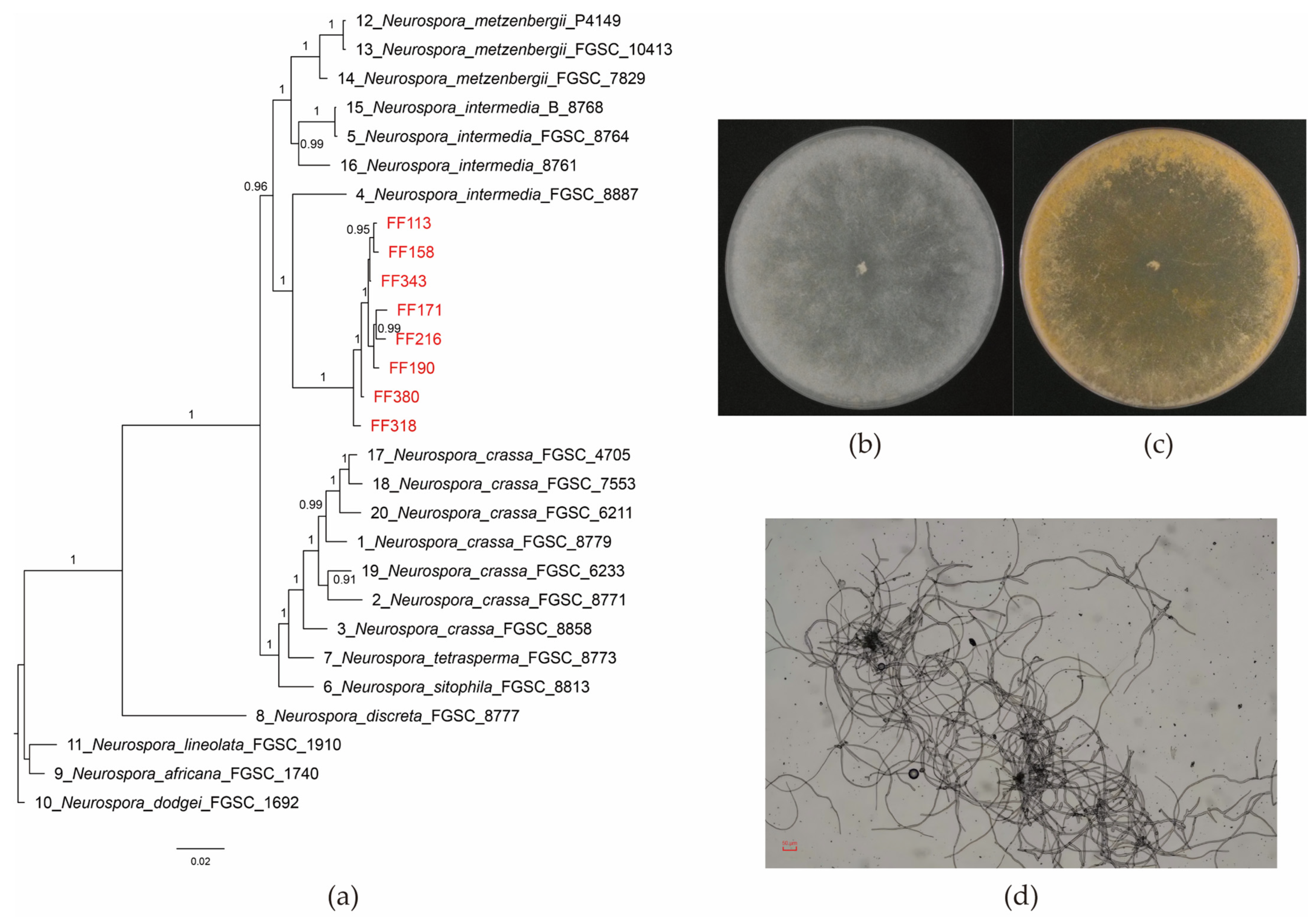
Figure 1. (a) Multigene phylogenetic tree of Neurospora constructed based on QMA, TMI, TML, and DMG sequences. (b,c) Colony morphology of N. intermedia (strain FF171) (b) under dark and (c) natural light conditions. (d) Mycelial morphology of N. intermedia (strain FF171). The scale bars correspond to 50 µm.
Fermentation 12 00027 g001
Figure 2. (a) Growth profiles and protein production of different strains. (b) Genetic stability verification of N. intermedia FF171. Different superscripts (a–c) denote significant differences among sample means (p < 0.05).
Fermentation 12 00027 g002
Figure 3. Protein production by N. intermedia FF171 under fermentation conditions with different: (a) carbon sources; (b) nitrogen sources. Different superscripts (a–c) denote significant differences among sample means (p < 0.05).
Fermentation 12 00027 g003
Figure 4. Genomic sequence characteristics and functional annotation. (a) NR species composition distribution results. (b) KEGG annotation results. (c) GO functional annotation results. (d) KOG annotation results. (e) CAZy annotation results.
Fermentation 12 00027 g004
Table 1. Statistics of gene functional annotations.
Anno-DatabaseAnnotated NumberPercentage (%)
NR880698.81
KEGG489954.97
GO458251.41
KOG471752.93
CAZy8229.22
Pfam618569.40
Swiss-Prot579264.99
Total8912100%
Table 2. Comparison of N. intermedia FF171 proteins with the AllergenOnline database.
N. intermedia FF171 Protein from GenomeAllergens Matched in Allergen OnlineDescription
Overall Conclusion of Risks for Cross-Reactivity for N. intermedia FF171 Protein
g3197.t1_1
Elongation factor 1-beta
gi|38326693|gid|246|elongation factor 1 beta-likeIt was further evaluated.
g2102.t1_1
Superoxide dismutase [Mn], mitochondrial
gi|83305645|gid|330|Superoxide dismutase [Mn], mitochondrialIt shares significant sequence homology (54.10% identity) with the superoxide dismutase [Mn](mitochondrial) from a GRAS strain (GRN No. 1117). It is highly unlikely to pose a risk of food allergy.
gi|1648970|gid|330|manganese superoxide dismutase
gi|529279957|gid|1885|manganese superoxide dismutase
gi|348137|gid|590|superoxide dismutase (manganese)
gi|149786150|gid|1092|manganese superoxide dismutase-like protein
gi|10862818|gid|590|IgE-binding protein MnSOD
gi|5777414|gid|590|MnSOD
g7030.t1_1
Heat shock 70 kDa protein
gi|14423733|gid|250|Heat shock 70 kDa proteinIt shares significant sequence homology (99.59% identity) with the heat shock 70 kDa protein from a GRAS strain (GRN No. 1117). It is highly unlikely to pose a risk of food allergy.
gi|729764|gid|519|Heat shock 70 kDa protein
gi|442565876|gid|2076|heat shock protein 70
gi|1055365842|gid|2591|heat shock-like protein
gi|1561006361|gid|3077|allergen Der p 28
gi|685432788|gid|2076|Der f 28 allergen
gi|94468818|gid|2708|heat shock cognate 70
g2853.t1_1
Translationally controlled tumor protein homolog
gi|112824341|gid|1337|TCTPIt shares significant sequence homology (99.41% identity) with the translationally controlled tumor protein homolog from a GRAS strain (GRN No. 1117). It is highly unlikely to pose a risk of food allergy.
gi|1679357707|gid|2864|RecName: Full = Translationally-cont
g513.t1_1
Alcohol dehydrogenase 1
gi|86278351|gid|2582|alcohol dehydrogenaseIt shares significant sequence homology (65.04% identity) with the alcohol dehydrogenase 1 from a GRAS strain (GRN No. 1117). It is highly unlikely to pose a risk of food allergy.
gi|608690|gid|395|alcohol dehydrogenase
g4129.t1_1
Protein argonaute-2
gi|291197394|gid|1338|ragweed homologue of Art v 1 precursorIt shares significant sequence homology (59.40% identity) with the ATP-dependent RNA helicase ded1 from a GRAS strain (GRN No. 1117). It is highly unlikely to pose a risk of food allergy.
gi|285005079|gid|1338|ragweed homologue of Art v 1 precur
gi|291482310|gid|1338|ragweed homologue of Art v 1 precur
gi|291482308|gid|1338|ragweed homologue of Art v 1 precur
g816.t1_1
60S acidic ribosomal protein P1
gi|371537645|gid|1983|60S acidic ribosomal phosphoprotein P1It shares significant sequence homology (50.00% identity) with the large ribosomal subunit protein uL10 from a GRAS strain (GRN No. 1117). It is highly unlikely to pose a risk of food allergy.
gi|1350779|gid|73|60S acidic ribosomal protein P1
gi|59894749|gid|848|60S acidic ribosomal P1 phosphoprotein Pen b 26
gi|83305635|gid|331|60S acidic ribosomal protein P2
gi|6686524|gid|331|rAsp f 8
gi|5777795|gid|520|minor allergen, ribosomal protein P2
g1058.t1_1
Nuclear transport factor 2
gi|21748151|gid|489|putative nuclear transport factor 2It shares significant sequence homology (100.00% identity) with the nuclear transport factor 2 from a GRAS strain (GRN No. 1117). It is highly unlikely to pose a risk of food allergy.
gi|21748153|gid|72|putative nuclear transport factor 2
g5256.t1_1
Peptidyl-prolyl cis-trans isomerase H
gi|4138173|gid|651|allergenIt shares significant sequence homology (98.90% identity) with the peptidyl-prolyl cis-trans isomerase H from a GRAS strain (GRN No. 1117). It is highly unlikely to pose a risk of food allergy.
gi|37958141|gid|951|Der f Mal f 6 allergen
gi|5019414|gid|325|PPIase
gi|1220142|gid|1926|cyclophilin
gi|91680605|gid|863|cyclophilin
gi|373939374|gid|1941|cyclophilin
gi|2325204258|gid|3374|Per a 18 allergen
gi|1432030624|gid|3310|peptidyl-prolyl cis-trans isomerase
gi|1373739558|gid|2869|cyclophilin 0101
gi|946715057|gid|2304|cyclophilin A
gi|21886603|gid|344|peptidylprolyl isomerase
g5315.t1_1
Cuticle-degrading protease
gi|23894240|gid|313|tri m 2 allergenIt shares significant sequence homology (99.24% identity) with the cuticle-degrading protease from a GRAS strain (GRN No. 1117). It is highly unlikely to pose a risk of food allergy.
gi|2612389725|gid|2227|Chain C, Alkaline protease 1
gi|2612389721|gid|2227|Chain D, Alkaline protease 1
gi|2612389719|gid|2227|Chain C, Alkaline protease 1
gi|2612389715|gid|2227|Chain C, Alkaline protease 1
Disclaimer/Publisher’s Note: The statements, opinions and data contained in all publications are solely those of the individual author(s) and contributor(s) and not of MDPI and/or the editor(s). MDPI and/or the editor(s) disclaim responsibility for any injury to people or property resulting from any ideas, methods, instructions or products referred to in the content.