Review

Fermented Pulses for the Future: Microbial Strategies Enhancing Nutritional Quality, Functionality, and Health Potential


by
Franco Van de Velde
1,2,*,
Raúl E. Cian
1,2,
Antonela G. Garzón
1,2,
Micaela Albarracín
1,2 and
Silvina R. Drago
1,2
1
Instituto de Tecnología de Alimentos, Facultad de Ingeniería Química, Universidad Nacional del Litoral, Santa Fe 3000, Argentina
2
Consejo Nacional de Investigaciones Científicas y Técnicas (CONICET), Santa Fe 3000, Argentina
*
Author to whom correspondence should be addressed.
Fermentation 2026, 12(1), 18; https://doi.org/10.3390/fermentation12010018 (registering DOI)
Submission received: 25 November 2025 / Revised: 11 December 2025 / Accepted: 25 December 2025 / Published: 29 December 2025
(This article belongs to the Special Issue Nutrition and Health of Fermented Foods—4th Edition)

Abstract

Pulses are recognized as sustainable foods due to their high nutritional density, low environmental footprint, and versatility as plant-based ingredients. Fermentation has emerged as a powerful bioprocessing tool to further enhance nutritional, sensory, techno-functional, and health-promoting properties of pulses. This review summarizes recent advances in the fermentation of commonly consumed pulses using lactic acid bacteria, yeasts, molds, and co-fermentation microorganism consortia, focusing on the biochemical mechanisms underlying changes in their nutritional and bioactive potential. Microbial metabolism (i.e., α-galactosidase and phytase activity) reduces antinutritional factors, such as raffinose family oligosaccharides and phytic acid, while promoting the release of bound nutrients and bioactive compounds as phenolics, increasing their bioaccessibility and bioactivity. Microbial amylases change the carbohydrate profile by decreasing simple sugars, modifying starch digestibility, and favoring resistant starch production. Microbial lipases remodel lipids, improving the fatty-acid distribution and nutritional value. Protein hydrolysis by microbial proteases enhances digestibility and generates bioactive peptides with antioxidant and antihypertensive properties, among others. Co-fermentation systems offer additional opportunities to tailor metabolic outcomes, facilitating positive symbiotic interactions between microorganisms. Overall, fermentation represents a key technology to unlock the full potential of pulses as next-generation ingredients, supporting the development of nutritious, functional, and sustainable foods for future food systems.

1. Introduction

Pulses are millenary crops that have been cultivated since the dawn of agriculture, providing essential protein and nutrients to human diets across civilizations [1]. Pulses are part of the legume group. Although the terms are used interchangeably, not all legumes are considered pulses [2]. According to the Food and Agriculture Organization of the United Nations, FAO, pulses are edible seeds of the family Leguminosae (Fabaceae) which are harvested mature and dry, excluding fresh legumes harvested green, such as green peas or green beans, legume seeds used for oil extraction (soybean and peanut), and those employed for sowing purposes (clover, alfalfa, etc.) [3]. Pulses include common beans (Phaseolus vulgaris L.), dried peas (Pisum sativum L.), chickpeas (Cicer arietinum L.), lentils (Lens culinaris Medik.), and lupins (Lupinus sp.), among others [3,4].
Pulses are cultivated in more than 170 countries worldwide [5]. In 2022, global production reached approximately 96 million tons, with an average consumption per capita of about 7 kg per year. Due to their environmental and health benefits, pulses are expected to gain increasing importance in both agricultural systems and human diets. By 2032, global production is projected to rise to around 125 million tons, with an average per capita consumption reaching 8.6 kg per year [6]. Dry beans accounted for 29% of global pulse production, followed by chickpeas (19%), dry peas (15%), lentils (7%), pigeon peas (5%), and other pulses (15%), with India being the leading country in both cultivation area and total production [5].
Nutritionally, pulses are an affordable source of macronutrients, serving as a staple food in many developing countries [4]. In recent years, their consumption has also increased in developed nations, driven by the rapid growth of the plant-based food sector and the demand for healthier and more sustainable dietary alternatives among increasingly health-conscious consumers [2,7,8]. Pulses provide 20–40% protein on a dry-weight basis, more than double the protein content of cereals such as wheat or rice [9]. They are also an excellent source of dietary fiber, delivering 20–25 g per 100 g, considerably higher than the levels found in some whole grains [10]. Their carbohydrate fraction (55–65%) is largely composed of slowly digestible and resistant starch, contributing to lower glycemic responses [11]. Moreover, unlike oilseeds and most animal-derived protein sources, pulses contain very little fat (<2%), no cholesterol, and provide substantial amounts of folate, iron, zinc, magnesium, and potassium. Also, they present high levels of monounsaturated fatty acids (MUFA), polyunsaturated fatty acids (PUFA), and plant sterols [8,12]. Pulses are a rich source of phenolic compounds, such as phenolic acids, flavonoids, and tannins, which exhibit bioactive properties, including antioxidant, anti-inflammatory, and antidiabetic activities, among others [13,14].
As previously mentioned, pulse consumption is expected to increase, driven in part by growing public awareness of environmental sustainability and animal welfare, which has promoted vegan and vegetarian diets. In addition, global population growth and potential shortages of animal-derived proteins are reinforcing the role of pulses as alternative protein sources [7]. In this sense, pulses are an excellent source of protein (from 20 to 30% in chickpeas, lentils, and common beans, to more than 40% in lupins), with a generally balanced amino acid profile and a low cost. Pulses generally exhibit lower Digestible Indispensable Amino Acid Score (DIAAS) values than high-quality animal proteins. Typical DIAASs for pulses range from about 55 for faba bean to 70 for pea and lupin, reflecting limitations in indispensable amino acid digestibility compared to animal proteins such as egg (DIAAS = 101) and pork (DIAAS = 117) [15]. Pulse proteins are limited by low amounts of essential sulfur-containing amino acids, such as methionine and cysteine. However, these deficiencies can easily be mitigated by combining pulses with cereal grains, which provide complementary sulfur-containing amino acids, and complement those by adding lysine, whose content is high in pulses but limited in cereals [16]. On the other hand, pulse proteins exhibit desirable functional properties, including solubility, foaming ability, and water- and oil-holding capacities, which make them highly suitable for various food industry applications [11,17].
Despite their well-balanced nutritional profile, the consumption of pulses has been limited by the presence of antinutritional factors (ANFs). ANFs include phytic acid, enzyme inhibitors (trypsin, chymotrypsin, and α-amylase inhibitors), lectins, tannins, saponins, and many other compounds [18]. Apparently, antinutrients in pulses are part of an adaptation mechanism to protect them from adverse environmental conditions and serve as an insect defense mechanism [11]. These compounds can interfere with nutrient bioavailability and protein digestibility, so their reduction or elimination in pulses is desired before consumption [19]. However, recent evidence demonstrated that some ANFs also exhibit bioactive properties [20].
There are many processing methods, such as soaking, thermal treatments, puffing, milling, germination, and fermentation, that not only can reduce or eliminate the presence of antinutrients in pulses but also can increase protein digestibility and functional properties, making them more suitable for different food purposes [16].
Particularly, fermentation is one of the oldest food processing methods, consisting of modifying food using microorganisms (bacteria, molds, and yeasts) [21]. During fermentation, microbial and endogenous enzymatic activities promote hydrolytic transformations that degrade antinutritional components while enhancing the sensory and nutritional quality of pulses [22]. Fermentation represents an effective strategy to improve the overall aroma profile of pulses by reducing or masking undesirable off-flavors, particularly the characteristic beany flavor [23]. Moreover, pulse fermentation can enhance protein digestibility and amino acid availability, improve the fermentability and functional properties of the dietary fiber, and increase the level of resistant starch and the bioavailability of vitamins and minerals [4,24]. In addition, fermentation contributes to food safety and stability by inhibiting the growth of spoilage and pathogenic microorganisms through acidification and the production of antimicrobial metabolites [4].
Fermentation is classified based on its microbiological origin: natural or inoculated. Natural fermentation is a spontaneous process that occurs in plant foods through the growth and activity of their native microbiota. Lactic acid bacteria (LAB) have been traditionally involved in pulse fermentation, as they are naturally present in legume seeds [25]. On the other hand, inoculation is a targeted process in which specific microorganisms are deliberately introduced to initiate or control fermentation. For pulses, inoculation with selected microorganisms, such as characterized LAB strains, yeasts, and/or molds, enables a controlled and consistent fermentation process. These microorganisms are recognized as safe under major international regulatory frameworks, including the European Food Safety Authority’s Qualified Presumption of Safety (QPS) list and the U.S. Food and Drug Administration’s Generally Recognized as Safe (GRAS) designation, supporting their use in food and feed applications worldwide [26]. Controlled fermentation enhances food safety by lowering pH, producing antimicrobial compounds such as organic acids and bacteriocins, and inhibiting the growth of spoilage and pathogenic microorganisms. Moreover, selected bacteria, i.e., LAB, are non-toxigenic, lack transferable antibiotic resistance genes, and contribute to extended shelf-life, further enhancing the safety of pulse-based fermented foods [27].
This review summarizes recent advances in the fermentation of pulses with microorganisms, including LAB, yeasts, and molds, and unlike previous reviews on the topic, it also examines the co-fermentation consortia of LAB–yeasts, LAB–molds, and yeasts–molds. It focuses on the effects of fermentation on carbohydrate, lipid, and protein quality, antinutrient inactivation, sensory and functional properties, and bioactive compounds and bioactivity of pulse-based fermented foods, highlighting the biochemical mechanisms underlying changes in their nutritional and bioactive potential. Additionally, the review discusses current challenges and future perspectives in this research field.

2. Microbial Fermentation of Legumes

As previously mentioned and presented in Figure 1, fermentation can be classified as natural (or spontaneous), in which the indigenous microflora of the pulse surface, typically LAB or yeasts, proliferates and lowers the pH, preventing the growth of undesirable microorganisms; or as controlled, where selected microorganisms are deliberately inoculated onto the pulses to direct the fermentation process [28]. A third type of fermentation called ‘back-slopping’ is also recognized. Like natural fermentation, it involves introducing a small portion of a previous successful fermentation batch into a new one, serving as a source of ‘starter cultures’ and ensuring the effective transfer of microorganisms responsible for fermentation [24]. For pulse substrates, preliminary heat treatments are commonly applied to cook the grains and gelatinize starch, as in pastes or fermented beverages [29,30]. This step substantially reduces or eliminates the native surface microbiota, minimizing ecological competition and favoring the establishment and growth of inoculated microorganisms. In contrast, when pulse flour or protein isolates are incorporated without prior thermal processing, as in doughs or semi-solid matrices, the native microbiota remains active and may compete with the starter cultures [31,32].
On the other hand, fermentation can be classified based on water content into solid-state fermentation (SSF), where microbes grow on moist solids with minimal free water, and liquid-state fermentation (LSF), also called submerged fermentation, where microbial growth occurs in a liquid medium (Figure 1). SSF is typically applied to whole pulses or flours, whereas LSF is used for pulse protein isolates or beverages, depending on the desired nutritional or functional outcomes [12,24].
Table 1 summarizes the most representative recent works on pulse fermentation, highlighting the fermented matrix, the microorganisms used in each study, and the type of fermentation. Most fermentations were conducted between 30 and 37 °C, the optimal range for LAB, yeasts, and many molds, with 30 °C being common for SSF and 37 °C frequently used in LSF. Regarding time, most protocols ranged from 24 to 48 h, although shorter fermentations (10–12 h) and longer processes (72 h or more, particularly in fungal or co-fermentation) were also reported.
As reported in earlier reviews, LAB are the main microorganisms used for the fermentation of pulses [4,12,24]. Most LAB are classified within the genera Lactiplantibacillus, Lacticaseibacillus, Limosilactobacillus, and other lactic acid bacteria genera such as Leuconostoc, Pediococcus, Lactococcus, Streptococcus, Enterococcus, Carnobacterium, Aerococcus, Oenococcus, Tetragenococcus, Vagococcus, and Weissella, members of the phylum Firmicutes [33]. In addition, bacteria from the genus Bifidobacterium (phylum Actinobacteria) are often included in the LAB classification due to their similar metabolic activity [34].
The fermentation of chickpea flour with Lactiplantibacillus plantarum CRL2211 and/or Weissella paramesenteroides CRL2182 was studied by Sáez et al. (2022) [35]. A typical pH reduction was observed, with L. plantarum CRL2211 rapidly dominating the microbial population and driving the fermentation process. A beverage produced from lentil protein isolate was fermented with Leuconostoc citreum TR116, Leuconostoc pseudomesenteroides MP070, and Lacticaseibacillus paracasei FST 6.1 [36]. Also, a beverage produced with faba bean flour was fermented with Pediococcus pentosaceus [37]. Results revealed that the pulse-based substrate was suitable for the selected strains.
Two consortia of LAB (MIX31: Levilactobacillus brevis, Pediococcus pentosaceus, and Limosilactobacillus fermentum, and MIX33: Lactiplantibacillus plantarum, Leuconostoc mesenteroides, and Levilactobacillus brevis), isolated from cereals and pulses and selected for their ability to degrade antinutrients in faba bean and pea, were evaluated in fermentation trials of a faba bean–oat mixture. The microbial consortia performed effectively, producing fermented products with enhanced nutritional quality and improved sensory attributes [38]. Other recent works studied the fermentation of a chickpea-quinoa beverage [39] and bean flour [40] by different LAB strains.
Bacteria of the genus Bacillus are also found in fermented pulses, particularly from fermented locust bean in Asian and Western African nations. Bacillus produces alkaline fermentation due to the degradation of proteins into amino acids and ammonia [41]. The co-fermentation of lentils using Lactiplantibacillus plantarum TK9 and Bacillus subtilis natto was investigated [42].
Yeasts have been reported in pulse fermentation [4,43]. Saccharomyces cerevisiae, Candida spp., Debaryomyces spp., and Hansenula anomala are among the yeasts most frequently associated with traditional fermentations, occurring widely across a broad range of fermented foods and beverages [44]. The fermentation of chickpeas was recently investigated using the yeast strains Debaryomyces hansenii, Yarrowia lipolytica, and Saccharomyces cerevisiae [45]. In Turkey, a traditional leavening agent prepared from spontaneously fermented chickpea is commonly used to produce bakery products. Starter cultures isolated from chickpea fermentations were characterized, with Saccharomyces cerevisiae being the dominant yeast, followed by Pichia fermentans, Candida parapsilosis, Meyerozyma guilliermondii, and Cryptococcus albidosimilis [46]. The fermentation of a red lentil-protein-isolate with the yeast strains Hanseniaspora uvarum SY1 and Kazachstania unispora KFBY1, as well as with LAB strains, was recently investigated [47]. Also, craft beer fortified with hydrolyzed red lentils was fermented with the non-conventional yeasts Lachancea thermotolerans and Kazachstania unispora [48].
Some fungal species have been involved in pulse fermentation [12]. Species of Actinomucor, Amylomyces, Aspergillus, Monascus, Mucor, Neurospora, Parcilomyces, Penicillium, Rhizopus, and Ustilago are reported for many fermented foods [43]. The production of tempeh from grass peas and flaxseed oil cake with individual mold strains of R. oryzae, R. oligosporus, and M. indicus was recently studied [49]. In the same way, the fermentation of chickpea and pigeon pea with R. oligosporus was investigated, and the results revealed that fermentation could be a potential approach in developing novel functional foods and in addressing concerns of food security [50]. Similarly, fava bean flour was fermented with A. oryzae and R. oligosporus [51], with R. microsporus [30], and with Pleurotus ostreatus [52]; and kidney bean flour was fermented with A. awamori [53]. Interestingly, chickpea, green lentil, and faba bean protein isolates were fermented spontaneously, and individually inoculated with A. niger, A. oryzae, and L. plantarum. Results showed that all microorganisms grew in the matrices, but only A. niger outgrew the natural microbiota for all pulses. Additionally, green kernel black beans fermented with Eurotium cristatum showed improved nutritional quality, along with favorable sensory modifications, including a reduction in sourness [54].
Co-fermentation represents a complementary strategy to enhance the nutritional, functional, and sensory properties, and security of pulse-based substrates [45]. Table 1 summarizes the most recent co-fermentation consortia applied to pulses reported in the literature. Starch-rich faba bean, yellow lentil, and yellow field pea flours were subjected to LSF using A. oryzae (mold) and L. plantarum (LAB) [55]. The co-fermentation with R. oligosporus (mold) and L. plantarum (LAB) improved the antioxidant activity of tempeh obtained from grass pea seeds with flaxseed oil-cake addition [56]. Also, the co-fermentation of the same matrix with R. oligosporus DSM 1964 (mold) and L. plantarum (LAB), applied at an inoculation level equivalent to the mold spore count, resulted in higher nutritional and bioactive properties compared with fermentation using the mold alone [49]. Also, the co-fermentation of pigeon pea okara with R. oligosporus (mold) and Yarrowia Lipolytica (yeast) was studied [57].
Finally, some microorganisms commonly employed in pulse fermentation are considered probiotics. Probiotics are live microorganisms that, when administered in adequate amounts, confer a health benefit on the host by modulating the gut microbiota, enhancing immune responses, improving intestinal barrier function, and producing bioactive metabolites, among others [58]. In that sense, the probiotic LAB Lactiplantibacillus plantarum 299v has been successfully employed for the fermentation of black beans, black eyed peas, green split peas, red lentils, and pinto beans [29], and in the fermentation of a beverage made from chickpeas and green or red lentils [59]. In addition, yeasts from the natural fermentation of chickpeas were isolated and tested as potential probiotics. Yeast strains Pichia kudriavzevii, Kazachstania exigua, and Hanseniaspora uvarum exhibited limited tolerance to low pH, bile salt, and NaCl, but strains presented great hydrophobicity, auto-aggregation, co-aggregation ability, antimicrobial activity, and resistance to antibiotic/antifungal agents [60].
Table 1. Fermentation of pulses with lactic acid bacteria (LAB), yeasts, and molds.
Fermented MatrixMicroorganism(s)Type of FermentationReference
Chickpea flourLactiplantibacillus plantarum CRL2211 and/or Weissella paramesenteroides CRL2182LSF, 37 °C for 24 h. [35]
Lentil-based
yogurt alternatives
Leuconostoc citreum TR116, Leuconostoc pseudomesenteroides MP070, and Lacticaseibacillus paracasei FST 6.1 LSF, 30 °C for 12 h.[36]
Fava bean beverageIndigenous LAB strains (Enterococcus, Pediococcus, and Bacillus) isolated from Swedish legumesLSF, 37 °C for 48 h. [37]
Fava bean flour + oat productSelected LAB strains isolated from cereals and pulsesLSF, 30 –37 °C for 72 h[38]
Chickpea–quinoa beverageL. acidophilus LA-5LSF, 38 °C for 10 h[39]
Whole lentilsL. plantarum TK9 and Bacillus subtilis nattoCo-fermentation, SSF, and LSF[42]
Chickpea flourLAB and yeasts SLF 72 h at room temperature for
yeasts and 48 h at 30° C for LAB and
S. cerevisiae.
[45]
Chickpea sourdoughsYeast isolated from natural chickpea fermentation: Saccharomyces cerevisiae (most abundant)Yeast fermentation in chickpea sourdoughs[46]
Lentil protein isolate (production of bioactive peptides)Yeast strains: Hanseniaspora uvarum SY1 and Kazachstania unispora KFBY1
LAB strains: Fructilactibacillus sanfranciscensis E10, L. plantarum LM1.3, L.hamnosus ATCC53103
SLF, 30 °C for 8 days[47]
Craft beer fortified
with hydrolyzed red lentils
Lachancea thermotolerans and Kazachstania unisporaBeer fermentation[48]
Grass Pea with the addition of flaxseed oil cake tempehIndividual mold strains of Rhizopus oryzae, R.oligosporus, and Mucor indicus, or cofermentation with L. plantarum SSF, 30 °C for 30 to 40 h.[49]
Chickpeas, pigeon peasR. oligosporusSSF, 34 °C for 52 h.[50]
Fava bean flourAspergillus oryzae, R. oligosporusSSF, 28 or 30 °C for 48 or 72 h.[51]
Fava bean
tempeh-like product
R. microsporusSSF, 30 °C for 40 h[30]
Faba beansPleurotus ostreatusSSF, 30 °C for 96 h[52]
Kidney bean flourA. awamoriSSF, 30 °C for 96 h.[53]
Green kernel black beansEurotium cristatumSSF, 22–39 °C, 24–72 h[54]
Faba bean, yellow lentil,
and yellow field pea
L. plantarum + A. oryzaeLSF, [55]
Grass peas and
flaxseed oil cake tempeh
R. oligosporus and L. plantarumCo-fermentation (tempeh/SSF) at 30 °C for 27 h.[56]
Pigeon pea okara (application in vegetable pasta)R. oligosporus and Yarrowia lipolytica SSF, 39 °C for 48 h[57]
Black beans, black eyed peas,
green split peas, red lentils, and pinto beans
Lactiplantibacillus plantarum 299vLSF, 37 °C for 24 h[29]
Chickpeas and green or
Red lentil-derived beverages
Lactiplantibacillus plantarum 299vLSF, 37 °C for 72 h[59]
ChickpeasNatural fermentation, isolation of 19 yeastsLSF, 37 °C for 22 h.[60]
Bean flourLactiplantibacillus plantarum CRL 2211 and/or Weissella paramesenteroides CRL 2182LSF, 37 °C for 24 h[40]
LSF: liquid-state fermentation, SSF: solid-state fermentation.

3. Impact of Fermentation on Carbohydrates and Lipids

Carbohydrates in legumes are a heterogeneous group including digestible starches, resistant starch (RS), oligosaccharides such as raffinose family oligosaccharides (RFOs), and dietary fiber fractions (cellulose, hemicellulose, pectin, and lignin). Sugars such as glucose, fructose, and sucrose are in very low quantities. All these components determine the nutritional quality, fermentability, and glycemic response of legume-based foods [19].
In most of the studies reviewed, carbohydrate content is determined by difference, calculated as the remainder after subtracting the measured amounts of other proximate components (protein, lipids, ashes, fiber, etc.) from the total composition. As mentioned, the carbohydrate fraction in pulses is about 55–65% [11], and most studies reported a decrease in total carbohydrate content ranging from 4 to 15% after fermentation [24,50,61,62,63,64], whereas only a few investigations found no significant differences between fermented and unfermented samples [64,65].
Raffinose, stachyose, and verbascose, collectively known as RFOs, are major flatulence-causing oligosaccharides in legumes. As discussed further in the antinutrient section, multiple studies confirm that microbial fermentation significantly reduces their concentration through α-galactosidase activity produced by microorganisms [34,66].
Regarding starch, its fractions transformation during fermentation is complex, involving partial hydrolysis by microbial amylases, which releases maltodextrins and oligosaccharides used as energy sources by microorganisms [12]. In addition, fermentation induced the modification of the starch structure through acidification or enzymatic remodeling, increasing the levels of resistant starch (RS). In that sense, microbial α-amylases partially hydrolyze amylose by cleaving its α-1,4-glycosidic linkages, as well as the linear regions of amylopectin, generating shorter chains with a greater propensity to retrograde. At the same time, the acidification caused by LAB lowers the pH, inducing granule swelling, partial loss of crystallinity, and increased mobility of starch polymers. These conditions facilitate the re-association of amylose into a more ordered and thermodynamically stable crystalline structure through hydrogen bonding. In addition, debranching enzymes such as pullulanase or isoamylase can remove α-1,6 linkages, increasing the proportion of linear chains capable of recrystallization. Overall, the combined action of enzymatic hydrolysis, acid-induced structural disruption, and subsequent retrogradation leads to increased levels of RS during fermentation [62,63,67].
The fermentation of raw or pregelatinized red and yellow lentil, white and black bean, chickpea, and pea flours with Lactiplantibacillus plantarum MRS1 and L. brevis MRS4 markedly modified the fiber and starch fractions. Raw red lentils showed the highest increase in RS (from 2.2% to 4.1%; +85%), and the highest RS content was observed after fermentation of white and black bean flours (12.1 and 13.8%, respectively) [62]. Interestingly, when fermentation was applied after gelatinization, RS in black bean flour further increased to 15.9%. Overall, fermentation increased the soluble (SDF), insoluble (IDF), and total dietary fiber (TDF) contents in all pulse flours, with the largest increase occurring in pre-gelatinized flours. The most pronounced rise in SDF (up to 70%) was recorded in yellow lentil and white bean flours, while chickpea and pea flours exhibited more moderate gains (~25%). White bean flour also displayed the highest IDF (29.1%) and TDF (up to 34.8%) values after the combined gelatinization-fermentation treatment [62]. Importantly, both fermentation and gelatinization decreased the starch hydrolysis index (HI) regardless of the legume type, indicating a lower predicted glycemic response. HI values were approximately 9% lower in fermented pulse flours than in raw controls, and even lower in gelatinized-fermented samples, ranging from ~40% in chickpeas to ~58% in white and black beans. Interestingly, the higher soluble fiber and resistant starch contents provide fermentable substrates for gut microbiota, suggesting potential synbiotic benefits of fermented legume flours [62]. The increase in dietary fiber may show an apparent increase after fermentation, largely due to a relative concentration effect, as microorganisms consume part of the digestible carbohydrate fraction, increasing the proportional contribution of non-digestible components. Additional increases may result from the formation of RS, as well as from the production of microbial polysaccharides such as exopolysaccharides [68].
Tao et al. (2022) [63] investigated the effects of LAB fermentation on the in vitro estimated glycemic index (eGI) of probiotic-rich mung bean, chickpea, and tiger skin kidney bean powders using Limosilactobacillus fermentum FL-061. After fermentation, starch contents significantly decreased (5.83%, 5.40%, and 5.28%, for mung bean, chickpea, and tiger skin kidney bean, respectively), mainly due to the probiotic strain metabolic activity and growth. Concurrently, the proportion of RS increased, suggesting that fermentation with L. fermentum FL-061 preferentially utilized rapidly digestible starch (RDS) and slowly digestible starch (SDS) fractions over RS. Consequently, the HI of the fermented powders was significantly reduced, indicating inhibited starch degradation. Based on the derived equation, the corresponding eGI values also decreased. Additionally, fermented powders exhibited enhanced inhibitory effects on α-amylase and α-glucosidase activities, contributing to the modulation of postprandial glucose levels. These findings indicate that the improved ability of fermented legume powders to reduce eGI values in vitro depends not only on the increased RS fraction but also on the suppression of starch-degrading enzymatic activities [63].
In addition, starch fractions were reorganized in lentil flour fermented with Pleurotus ostreatus, promoting partial gelatinization and altering crystallinity. These structural changes increased the proportion of RS from 66.5% to 76.2% and decreased in vitro starch hydrolysis from 34% to 24% in unfermented and fermented lentil flour, respectively. Later results suggest enhanced SDS formation. The reported increase in RS, together with a significant decrease in RDS, could result in a lower glycemic index in vivo [61]. Similarly, Toor et al. (2022) [50] investigated the SSF of chickpeas and pigeon peas with Rhizopus oligosporus, reporting decreases of 23–66% in total sugars and 38–85% in reducing sugars, while starch fraction increased by 6–22%, likely reflecting a relative enrichment due to carbohydrate utilization by the fungus or an increase in RS. However, the authors also observed a reduction in fiber content (14–17%), attributed to microbial enzymatic solubilization of fiber molecules.
Contrarily, the fermentation of faba bean flour with Aspergillus oryzae (FBA) and Rhizopus oligosporus (FBR) led to a reduction in RS by two-thirds and three-quarters, respectively. Digestible starch increased by approximately 18% in the FBA treatment. The authors also indicated that fermentation resulted in a decrease in total dietary fiber, primarily due to a substantial reduction in the insoluble fraction (−38% in FBA and −36% in FBR), while the soluble dietary fiber fractions increased in both fermented ingredients.
As seen, pulse fermentation substantially reshapes carbohydrate composition through microbial enzymatic activities and structural remodeling. RFOs are degraded, starch fractions are modified, RS and soluble fiber are increased, and the predicted glycemic index is reduced. These biochemical transformations not only enhance nutritional quality and consumer acceptance but also create opportunities for designing low-GI, fiber-enriched, and microbiota-supportive legume-based foods. Additionally, according to the analysis of the bibliography, there is a notable lack of enzymatic analytical determinations of the different starch fractions (RDS, SDS, and RS) in the pulse-based fermented products, which is essential for understanding how fermentation processes can modify starch structure and functionality. Likewise, chromatographic techniques (HPAEC-PAD, GC–MS) for profiling mono-, di-, and oligosaccharides, and structural characterization tools such as FTIR or NMR can also be employed in future works for better understanding the effects of fermentation on pulse carbohydrates.
Regarding the effect of fermentation of pulses on the lipid content, only limited evidence has been recently published. Gautheron et al. (2024) [51] analyzed the fatty acid profile of faba beans after fermentation with Aspergillus oryzae and Rhizopus oligosporus. Results showed that fat content in raw beans was 2.27%, derived mainly from linoleic (39.2%), oleic (23.3%), and palmitic (12.8%) acids. With the application of fermentation with R. oligosporus, the fat content was higher (3.18%) than in the case of fermentation with A. oryzae (2.65%). The fatty acid profile showed an increase in palmitic, oleic, and linoleic acids for both genera. However, fermentation with R. oligosporus led to a further increase in stearic acid (+200%) and linolenic acid (+140%) compared with raw Faba beans.
Natural fermentation of white lima bean at different fermentation periods of 0, 24, 48, 72, and 96 h indicated that lower fat content was found after 96 h of fermentation (reduction of 17.4%) [69]. This was supported by Kouadio Patrick et al. (2021) [70], who reported a decrease from 1.76% to 1.25% after spontaneous fermentation of lima bean flour. Authors established that the decrease in fat content could be attributed to the metabolism of lipids by the organisms responsible for fermentation, as well as the leaching of soluble organic salts. According to Toor et al. (2022) [50], the fermentation of chickpea and pigeon pea with Rhizopus oligosporus led to noticeable modifications in their fatty acid profiles. In chickpea, fermentation decreased the proportion of saturated fatty acids (SFA) and markedly increased polyunsaturated fatty acids (PUFA), particularly linoleic and α-linolenic acids, resulting in a higher PUFA/SFA ratio. In contrast, pigeon pea showed an opposite trend, where fermentation caused a substantial increase in monounsaturated fatty acids (MUFA) and a marked reduction in PUFA levels. Despite these legume-specific responses, the fermented samples maintained nutritionally favorable fatty acid ratios (PUFA/SFA > 0.45), suggesting that microbial lipolytic activity and matrix restructuring during fungal growth contribute to the remodeling of lipid fractions in these substrates.
In the study by Cichońska et al. (2022) [34] fermentation was shown to modify the lipid fraction of bean- and lentil-based beverages. Across all samples, unsaturated fatty acids predominate, with linoleic, α-linolenic, and oleic acids constituting the major components, while palmitic and stearic acids represent the main saturated fatty acids. Fermentation, particularly with the fermentum ABY-3 (Streptococcus thermophilus, Lactobacillus delbrueckii subsp. bulgaricus, Lactobacillus acidophilus, and Bifidobacterium animalis subsp. lactis), increased the proportion of unsaturated fatty acids in bean-based beverages, notably enhancing α-linolenic acid while reducing palmitic, stearic, and, in some cases, linoleic acid. Importantly, fermentation also altered the positional distribution of fatty acids within triacylglycerols by increasing the share of polyunsaturated fatty acids at the sn-2 position and concentrating saturated and monounsaturated fatty acids at sn-1,3. This structural rearrangement is considered nutritionally advantageous, as PUFAs at sn-2 exhibit higher bioavailability, while SFAs at sn-1,3 are less efficiently absorbed. Overall, the authors suggest that microbial lipase activity drives these selective modifications, thereby improving the nutritional quality of fermented legume-based beverages.
Overall, studies consistently show that fermentation can reshape the lipid fraction of pulses through microbial lipolysis, de novo fatty acid transformations, and structural rearrangements within triacylglycerols. These effects are highly matrix- and microorganism-dependent, ranging from reductions in total fat content to selective increases in SFA, MUFA, or PUFA. Further research is needed to clarify the mechanisms underlying these responses and to determine how fermentation conditions can be optimized to tailor lipid profiles in pulse-based foods.

4. Impact of Fermentation on Protein Quality and Bioactive Peptide Production

Pulses contain about 30% protein. They can be classified into Osborne fractions based on their solubility in different solvents. These fractions comprise albumins, which are soluble in water; globulins, soluble in saline solutions; prolamins, which dissolve in concentrated aqueous alcohol; and glutelins, soluble in dilute acidic or alkaline solutions [71]. Among these, globulins represent the predominant storage proteins (70–80% of the total protein content of seeds), followed by albumins, whereas prolamins and glutelins occur in comparatively smaller quantities [72]. The globulin fraction of pulse proteins includes legumins, vicilins, and convicilins. Legumins are hexameric proteins (300–400 kDa), with each monomer consisting of an acidic (~40 kDa) and a basic (~20 kDa) polypeptide chain linked by disulfide bonds [71,73]. Vicilins are trimeric proteins (145–190 kDa) composed of identical or heterogeneous subunits generated by proteolysis during post-translational modification; they notably lack cysteine residues [74]. Convicilins, which share high sequence homology with vicilins, are trimeric proteins with molecular weights of 220–290 kDa and comprise 3–4 subunits of around 70 kDa each [75]. Typically, convicilins occur in small quantities [73]. In contrast, albumins are complex mixtures of enzymes, cytoplasmic proteins, and storage proteins, exhibiting a wide range of molecular weights [74]. Some of these albumins, including lectins and protease inhibitors, are classified as ANFs due to their potential adverse effects on human nutrient absorption [76,77]. In this regard, pulse proteins show relatively low digestibility due to the presence of these anti-nutrient factors [78], which are discussed in the following section. In this way, in vitro and in vivo studies have shown that pulse proteins are generally digested less efficiently than animal proteins [71,79]. A promising strategy to enhance the protein digestibility of pulse proteins involves fermentation, a process in which numerous ANFs are degraded [67].
On the other hand, pulse proteins provide adequate amounts of most essential amino acids. Pulse proteins are characteristically enriched in Glu/Gln, Asp/Asn, Leu, Arg, Ser, and Lys [11]. However, they are relatively low in sulfur-containing amino acids, such as Cys and Met [80], which makes these amino acids limiting factors in the overall protein quality of these legumes. The composition of pulse proteins is governed by a combination of intrinsic and extrinsic factors. In peas and faba beans, the legumin-to-vicilin ratio typically increases during seed maturation, primarily due to the preferential accumulation of legumins in the later stages of seed development [81]. External factors, such as agricultural practices and environmental conditions during plant development, also play a crucial role in determining the relative abundance of storage proteins [71]. Under sulfur-deficient conditions, the proportion of vicilins tends to remain constant throughout seed maturation, whereas legumin biosynthesis is significantly reduced, or even completely inhibited, when sulfur limitation becomes severe [74].
Pulse proteins exhibit a range of desirable techno-functional properties, including binding, gelling, thickening, emulsifying, and foaming, which enhance their applicability in various food systems [73,82]. Accordingly, they can be extracted and employed as functional ingredients in the food and beverage industries [71]. However, these proteins may also have potential allergenic risks. In this regard, lentils, chickpeas, peas, mung beans, and red grams showed allergenic potential [67]. Several allergens identified in pulse proteins recognized by the International Union of Immunological Societies (IUIS) are nsLTP1 (Phaseolus vulgaris; Pha v3), PR-10 (Vigna radiata L.; Vig r 1), vicilin (Vigna radiata L.; Vig r 2), Seed albumin (Vigna radiata L.; Vig r 4), Bet v 1 (Vigna radiata L.; Vig r 6), nsLTP (Lupinus angustifolius; Lup an 1), Profilin (Lupinus albus; Lup an 5), Late embryogenesis protein (Cicer arietinum; Cic a 1), Vicilin (Pisum sativum L.; Pis s 1), Convicilin (Pisum sativum L.; Pis s 2), nsLTP (Pisum sativum L.; Pis s 3), Len c 1 and Len c 3 (Lens culinaris) [83,84]. Structural similarities among pulse proteins, such as those found in lupin and pea, result in shared IgE-binding epitopes, explaining the frequent cross-reactivity observed with peanut allergens [71]. Importantly, allergenicity can be mitigated or eliminated through processing methods such as enzymatic hydrolysis, thermal treatment, or fermentation. Fermentation represents a promising approach to reducing the allergenic potential of pulse proteins by inducing biochemical and structural modifications [84]. During fermentation, microorganisms such as Lactiplantibacillus, Limosilactobacillus, and other lactic acid bacteria, as well as Bacillus, Rhizopus, and Aspergillus, secrete or possess a wide range of proteolytic enzymes (endopeptidases, exopeptidases, dipeptidyl-peptidases, and aminopeptidases) that hydrolyze large allergenic proteins into smaller peptides and free amino acids [85]. This enzymatic activity reduces the immunoreactivity of well-known allergens, including vicilin and legumin in lentils and chickpeas [86]. In addition, fermentation alters the conformational structure of proteins, leading to the destruction or masking of IgE-reactive epitopes, which decreases immune recognition of these proteins as allergens [83,84,87]. Moreover, microbial fermentation promotes the release of bioactive peptides from pulse proteins. Peptides exhibiting antioxidant, antihypertensive, immunomodulatory, antimicrobial, and other beneficial properties have been identified in fermented pulse proteins and fermented pulse-based products [47,79,88,89,90,91].

Production of Bioactive Peptides Through the Fermentation of Pulse-Derived Proteins

Dietary protein not only offers daily energy and essential amino acids but could be regarded as a source of bioactive peptides [92]. Bioactive peptides typically consist of short amino acid sequences, usually between 2 and 20 residues. These peptides are encrypted within the structure of native proteins and become biologically active only after proteolytic cleavage. Their release can occur through several pathways: (i) hydrolysis by gastrointestinal enzymes such as pepsin, trypsin, or pancreatic proteases (in vitro or in vivo); (ii) the action of microbial proteases and peptidases generated during fermentation by lactic acid bacteria, yeasts, or other microorganisms; or (iii) the activity of endogenous plant enzymes or exogenous enzymes supplied by microbes, either individually or acting synergistically [93]. Depending on their amino acid sequence, these peptides can accomplish a wide range of activities, such as antioxidant, cholesterol-lowering capacity, enhancing mineral absorption, immunomodulatory, antimicrobial, antithrombotic, and blood pressure-lowering [94]. Bioactive peptides can be generated from a wide range of protein sources, including pulse proteins [88,91]. Several strategies can be used to obtain bioactive peptides from microorganisms. In this regard, peptides generated by LAB have received considerable attention. The proteolytic systems of LAB not only supply the free amino acids required for their metabolism, but also generate numerous peptide fragments, some of which display relevant biological activities [95]. Accordingly, a growing body of research has identified bioactive peptides in fermented pulse-based products [84,92,93]. Among the various bioactivities of LAB-derived peptides from pulses, their antihypertensive potential has been the most extensively studied [91,96]. It is well known that LAB species are auxotrophic for numerous amino acids and consequently rely on external nitrogen sources to support their growth. To satisfy this requirement, they have evolved a highly efficient proteolytic system that hydrolyzes proteins and releases the amino acids essential for their metabolism [97]. During LAB fermentation, the proteolytic machinery of these microorganisms breaks down protein substrates and releases a range of bioactive peptides. LAB-derived peptides have been linked to numerous physiological effects, such as immunomodulatory and antioxidant actions, opioid-like activity, inhibition of angiotensin-converting enzyme I (ACE-I), antithrombotic effects, mineral-binding capacity, antimicrobial activity, DPP-IV inhibition, and various cytomodulatory functions [95]. For instance, antihypertensive peptides, especially those inhibiting ACE-I, generally display short chain length (2–12 residues) and possess hydrophobic or aromatic residues at the C-terminal position, commonly Pro, Phe, Tyr, or Trp, which are preferred by the ACE catalytic pocket. Positively charged residues such as Lys or Arg near the peptide N-terminus can further enhance ACE interactions. Fermentation enhances these motifs by releasing small peptides enriched in hydrophobic, aromatic, and proline-containing sequences that exhibit high ACE-I inhibitory potency [98,99]. Additionally, fermentation can release antioxidant peptides that typically contain hydrophobic and aromatic residues (e.g., Tyr, Trp, Phe) or amino acids capable of donating electrons or hydrogen atoms (e.g., His, Cys, Met). These residues facilitate radical scavenging through aromatic ring stabilization or redox-active side chains [100]. However, the bioactivity of peptides may vary among strains and species, as microorganisms exhibit distinct proteolytic systems [90]. Chiacchio et al. (2025) [101] demonstrated that lactic acid fermentation of chickpea using different LAB strains promotes the release of bioactive peptides with DPP-IV and ACE-I inhibitory properties. In addition, SSF of lupin protein with L. plantarum K779 was also reported to release bioactive peptides with antioxidant and ACE-I inhibitory activity [102]. Moreover, the fermentation time of bean proteins with this LAB strain influenced the bioactive properties of the resulting peptides. In this regard, short fermentation times favored the production of α-amylase-inhibitory peptides, whereas longer fermentation times promoted the release of antioxidant- and ACE-I inhibitory- peptides [91].
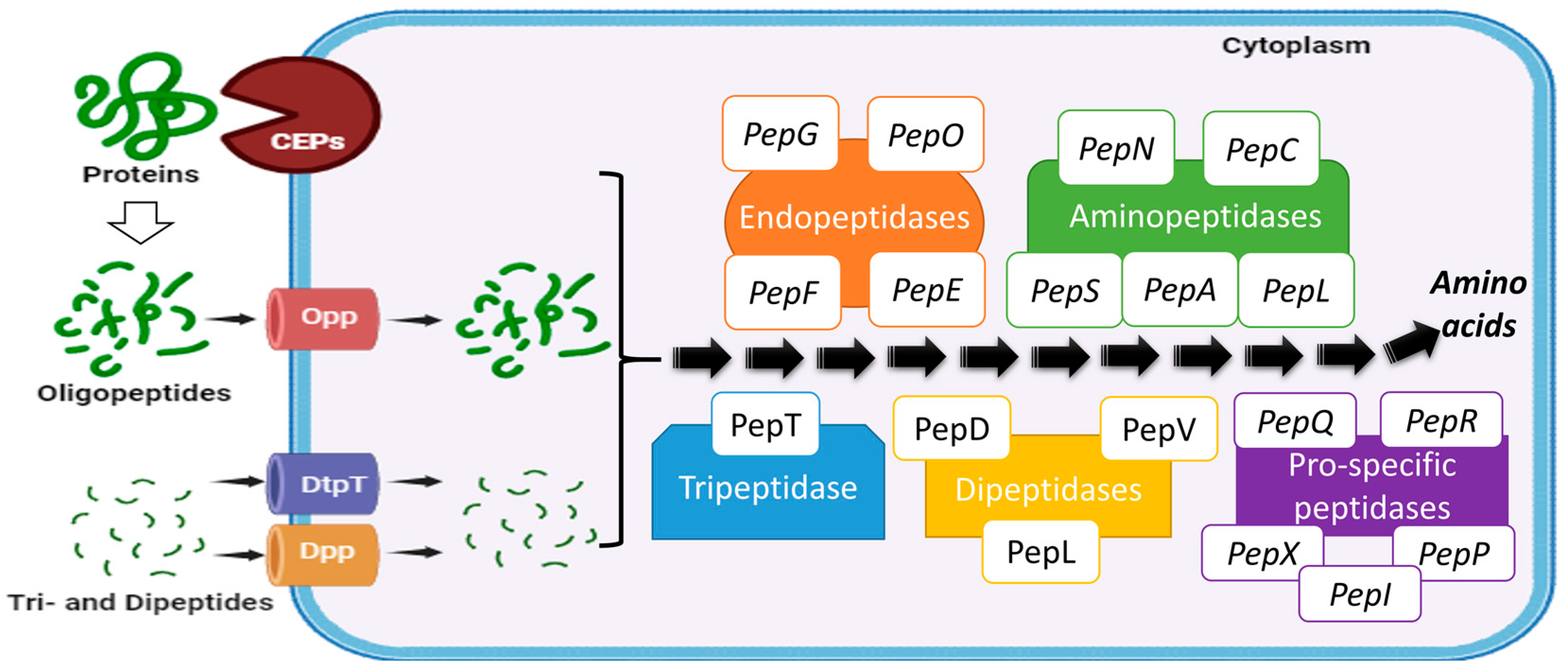
The LAB proteolytic system consists of three major functional components (Figure 2): (a) cell-envelope proteinases (CEPs), (b) peptide transporters, and (c) internal peptidases.
In this sense, protein hydrolysis is initiated by CEPs that cleave the proteins into peptides ranging from 4 to 30 amino acids [97,103]. Peptides generated by CEPs are subsequently taken up by cells via specific transport systems such as the oligopeptide permease (Opp), the ion-linked transporter (DtpT) for di- and tripeptides, and the ABC transporter (Dpp) for peptides containing 2 to 9 amino acid residues. Then, the internalized peptides are degraded by cytoplasmic peptidases into shorter peptides and free amino acids [95]. CEPs are serine proteases and belong to the subtilisin family. They are anchored to the cell wall via sortase A (SrtA). The type of CEP in LAB may be strain and species-dependent. However, the most abundant CEP in LAB is prtH3 (80%) [104]. CEPs are organized into distinct N-terminal domains that collectively enable efficient protein hydrolysis. These include the protein pro-domain (PP) for folding, the catalytic domain (PR), the insertion domain (I) that may modulate substrate specificity, domain A of unknown function, and domain B, likely involved in structural stabilization. The helix domain (H) anchors CEPs extracellularly, while the hydrophilic domain (W) acts as a cell wall spacer or binding region. Together, these domains facilitate the interaction of CEPs with extracellular proteins, forming a central component of the LAB proteolytic system [97]. So far, four CEPs present in different LAB species have been characterized (PrtB from Lactobacillus delbrueckii subsp. bulgaricus, PrtP from Lacticaseibacillus casei and Lacticaseibacillus paracasei, PrtR from Lacticaseibacillus rhamnosus and Lactiplantibacillus plantarum, and PrtH from Lactobacillus helveticus [95].
As mentioned above, once peptides are transported into LAB cells, they undergo further degradation by a broad set of cytosolic peptidases, including endo- and aminopeptidases, as well as tri-, di-, and proline-specific peptidases. For example, PepG is a cysteine protease with broad substrate tolerance; PepN, a metallopeptidase, preferentially cleaves basic residues followed by hydrophobic or uncharged amino acids; and PepT, another cysteine peptidase, favors peptides containing hydrophobic residues such as Leu, Met, Phe, or Gly. PepL, a serine peptidase, shows high specificity for Leu- and Ala-containing sequences, whereas the cysteine peptidase PepR exhibits broad selectivity toward small dipeptides such as Met–Ala, Leu–Leu, and Leu–Gly [95]. As discussed earlier, pulse proteins are enriched in Glu/Gln, Asp/Asn, Leu, Arg, Ser, and Lys, while sulfur-containing amino acids (Met and Cys) and Trp are present at low levels [11]. However, the amino acid sequences of pulse storage proteins vary considerably among species and protein classes (e.g., vicilins, legumins, and albumins), and these differences shape their susceptibility to the LAB proteolytic system. Because LAB proteases exhibit defined cleavage preferences, the frequency and spatial distribution of the corresponding target residues within a polypeptide chain largely determine the extent and pattern of hydrolysis. In that sense, proteins containing a higher abundance of accessible hydrophobic residues or X–Pro motifs, preferred targets of LAB endopeptidases and proline-specific peptidases, would tend to undergo more extensive degradation during fermentation. Nevertheless, it should be noted that no rigorous studies have yet systematically mapped the specific proteolytic mechanisms or cleavage sites of LAB enzymes on pulse proteins, and current understanding remains largely extrapolated from general protease specificities.
The biological activities of the peptides generated depend strongly on the catalytic properties and substrate preferences of these enzymes. Notably, several reports indicate that increasing the expression of peptidase genes in LAB can markedly boost the formation of ACE-I inhibitory peptides [105]. Overall, the LAB proteolytic system exhibits substantial inter- and intraspecies variability, generating distinct profiles of bioactive peptides. This variability likely arises from multiple factors, including differences in CEP gene expression, CEP gene polymorphisms, and strain-specific optimal conditions for enzymatic activity [95]. In this regard, Zhang et al. (2023) [106] extracted CEP from Lactobacillus delbrueckii subsp. bulgaricus to produce bioactive peptides using pea protein as a substrate. The authors reported that the CEP preferentially hydrolyzed peptides with an N-terminus enriched in Ser and a C-terminus enriched in Leu, which enhanced both antioxidant activity (ABTS+ and DPPH scavenging) and ACE-I inhibitory capacity.
On the other hand, yeast cells play a well-established role in the generation of bioactive peptides, primarily through their proteolytic activity during fermentation [107]. Yeast species and strains express distinct profiles of carboxypeptidases and aminopeptidases, determined in part by their amino acid auxotrophy, which leads to the release of a diverse array of bioactive peptides [108]. Moreover, the specific yeast strain employed is a critical determinant of the quantity and type of bioactive peptides produced during fermentation [109]. In addition, factors such as the nature of the protein substrate, fermentation time, temperature, inoculum level, and mixing speed significantly influence the bioactivity of the peptides generated during yeast fermentation [107].
Common yeast strains used for fermentation include Saccharomyces pastorianus, Kluyveromyces marxianus, Saccharomyces cerevisiae, and Pichia fermentans. These strains produce enzymes that efficiently hydrolyze proteins, generating peptides with diverse biological activities [91,109]. Notably, Hanseniaspora uvarum is highly effective due to its robust proteolytic systems, adaptability to plant substrates, and GRAS status [91]. Tonini et al. (2024) [47] showed that fermenting red-lentil protein isolates with H. uvarum SY1 yielded low-molecular-weight peptides with potent antiradical, ACE-inhibitory, and antifungal activities. In comparison with other microorganisms, H. uvarum SY1 consistently released peptides with higher antioxidant and ACE-inhibitory activities. Similarly, Mastrolonardo et al. (2025) [110] reported that fermentation of red-lentil protein isolates with this yeast enhanced the generation of bioactive peptides, predominantly exhibiting ACE-inhibitory and antioxidant effects.
Molds such as Aspergillus oryzae and Rhizopus oligosporus are extensively used in industry to produce antibiotics, organic acids, and commercial enzymes. Beyond their robust proteolytic activity, filamentous fungi enable the generation of bioactive peptides, and SSF has been employed to produce such peptides from various pulse proteins [111]. Data on the production, identification, and isolation of bioactive peptides from pulse proteins fermented with filamentous fungi remain limited. Notably, Nawaz et al. (2017) [112] reported a novel ACE-I inhibitory peptide (VVSLSIPR) from pigeon pea fermented with Aspergillus niger.
On the other hand, co-fermentation with multiple microorganisms can have both positive and negative effects on peptide production [113,114]. In co-fermentation, organisms may compete for nutrients or produce metabolites that stimulate or inhibit each other’s growth. For example, yeasts such as Saccharomyces release B-complex vitamins, including thiamine, riboflavin, niacin, and folate, which function as key cofactors in LAB central metabolism, supporting glycolytic flux, redox balance, and amino-acid biosynthesis. They may also provide amino acids, short peptides, and other growth factors that further stimulate LAB metabolic and proteolytic systems [95,115]. Additionally, the growth of LAB is often promoted when co-fermented with yeasts. Yeasts excrete amino acids and small peptides because of metabolic overflow and partial autolysis, thereby supplying essential nitrogenous compounds required by LAB, which often exhibit limited biosynthetic capacity. This nutrient release stimulates LAB growth, increases their metabolic activity, and promotes the generation of bioactive peptides and other fermentation-derived metabolites [114,115]. Although co-fermentation of pulses may lead to the generation of interesting bioactive peptides, current bibliographic evidence to support this claim remains limited.
Table 2 summarizes several peptides from pulse proteins obtained through fermentation with LAB and yeast.
Table 2. Identified peptides from pulse protein fermentation by LAB and yeasts from works published from 2020 to 2025.
Protein SourceStrainsBioactivityPeptide SequenceMolecular Weight (Da) *Peptide Hydrophobicity *Reference
Bitter beansLimosilactobacillus fermentum ATCC9338AntioxidantPVNNNAWAYATNFVPGK1861.911.85[103]
EAKPSFYLK1081.614.56
Bitter beansLimosilactobacillus fermentum ATCC9338Antibacterial activityAIGIFVKPDTAV1229.712.01[116]
LentilsHanseniaspora uvarumACE I inhibitory activity and antioxidantALEPDHR836.418.70[47]
AVV287.27.48
FFI425.23.36
FGG279.18.49
KVI358.39.12
LVL343.24.94
LVR386.38.00
VVR372.28.79
* Obtained with PepDraw program. https://pepdraw.com/app (accessed on 11 November 2025).

5. Reduction in Antinutritional Factors

Fermentation is a biotechnological process widely recognized for its ability to enhance the nutritional and functional properties of pulses by reducing ANFs. These compounds, naturally present in pulses, include phytates, tannins, trypsin inhibitors, lectins, saponins, and α-galactosides (such as raffinose, stachyose, and verbascose). Although these molecules have physiological roles in seeds, they can cause nutritional deficiencies by limiting protein digestibility, the bioavailability of minerals and vitamins, and altering the intestinal epithelium [117]. Fermentation, through the metabolic activities of bacteria, yeasts, and molds, effectively decreases these ANFs via enzymatic degradation, acidification, and microbial metabolism (Table 3), representing an eco-friendly alternative to thermal or chemical treatments.
Table 3. Microbiological mechanisms involved in the reduction in antinutritional factors (ANF) during pulse fermentation.
MechanismMicrobial Enzyme/ProcessTarget ANFEffectReferences
Enzymatic hydrolysis of phosphate groupsPhytase PhytatesSequential dephosphorylation of inositol hexakisphosphate; release of bound minerals (Fe2+, Zn2+, Ca2+); up to 90% reduction[118,119]
Acidification and solubilization of phytic complexesOrganic acid production (lactic, citric, gluconic acids).PhytatesIncreased solubility and accessibility of phytic acid; enhancement of endogenous phytase activity under acidic pH[120]
Hydrolysis and oxidation of polyphenolsTannase, polyphenol oxidaseTanninsCleavage of ester bonds; conversion of hydrolysable tannins into gallic acid; precipitation of insoluble complexes; 30–80% reduction[121,122]
Proteolytic degradation of enzyme inhibitorsAcid proteasesTrypsin inhibitorsHydrolysis of protease-inhibiting activity; up to 90% reduction[40,123]
Denaturation of lectin structureProtease secretion and acidificationLectinsDisruption of quaternary structure; loss of hemagglutinating activity; up to 70% reduction[124]
Biotransformation of glycosidesβ-GlucosidaseSaponinsHydrolysis into sapogenins and less bitter derivatives; decreased foaming and surface activity[62,124]
Hydrolysis of α-galactosidesα-GalactosidaseRaffinose, stachyose, verbascoseRemoval of α-1,6-linked galactose units; reduced flatulence potential; up to 80% degradation[62,125]
Phytates, or myo-inositol hexakisphosphate (IP6), are among the most relevant ANFs in pulses because they form insoluble complexes with divalent cations such as iron, zinc, and calcium. During fermentation, endogenous and, depending on the microorganism, microbial phytases hydrolyze IP6 into lower inositol phosphates (IP5-IP1) and inorganic phosphate (Pi), thereby releasing bound minerals [126]. Based on the general phosphatase mechanism, it is likely that phytase catalyzes the stepwise hydrolysis of IP6 by sequentially removing phosphate groups from the inositol ring. In the first step, a catalytic residue, typically a histidine or a metal ion such as Ca2+, activates a water molecule, which then nucleophilically attacks a phosphorus atom, releasing Pi and generating IP5. Subsequent dephosphorylations proceed in a similar manner (IP5 → IP4 → IP3 → IP2 → IP1), with each step generally slower due to decreasing substrate affinity as fewer phosphate groups remain [126,127]. Additionally, the drop in pH, caused by microbial metabolism, activates native seed phytases, further enhancing phytate hydrolysis [120]. Some microorganisms, such as Lactiplantibacillus plantarum and L. fermentum, along with yeasts like Saccharomyces cerevisiae and fungi like Rhizopus oligosporus and Aspergillus niger, are well known for producing phytases that function effectively under acidic conditions generated during fermentation [118,119]. Quantitatively, reductions in phytate content in fermented pulses vary between 30 and 90%, depending on the pulse variety, fermentation and microorganism type, and process duration [62,64,101,124,128]. Studies showed that the significant reduction in phytate levels in fermented pulses directly correlates with increases in mineral solubility and in vitro iron, calcium, and zinc bioaccessibility [129,130]. Although phytic acid is a recognized ANF due to its mineral-chelating capacity, it also exhibits a potent antioxidant capacity by chelating pro-oxidant metals and scavenging reactive oxygen species, and it has been associated with anti-inflammatory and anticancer effects [20].
Hydrolysable tannins, polyphenolic compounds that form complexes with proteins and carbohydrates, negatively affect the digestibility and sensory quality of pulses due to their bitter and harsh taste. Fermentation mitigates these effects primarily through microbial tannases (tannin acyl hydrolases), which hydrolyze ester bonds within tannin molecules and contribute to the breakdown of complex polyphenols into simpler, less astringent compounds like gallic acid and glucose [121]. Tannase is a serine esterase belonging to the α/β-hydrolase superfamily and typically contains a conserved catalytic triad (Ser–His–Asp). The catalytic mechanism follows the canonical two-step acyl-enzyme pathway: the nucleophilic serine attacks the carbonyl carbon of the galloyl ester to form a tetrahedral intermediate that is stabilized by an oxyanion hole; collapse of this intermediate releases the alcohol moiety and yields an acyl–enzyme, which is then hydrolyzed by a water molecule activated by the histidine residue to liberate gallic acid and regenerate the free enzyme [131,132]. Tannase is mostly produced by many fungal strains belonging to the Aspergillus and Penicillium genera, such as A. fumigatus [133], A. sydowii [134], A. niger [135] and P. commune [136], as well as yeasts such as Debaryomyces hansenii [137] and Geotrichum cucujoidarum [138], and LAB strains, such as L. plantarum and L. brevis [122]. Fermentation mediated by microorganisms is one of the most effective techniques for tannin reduction (more than 80%), often better than physical treatments like boiling and microwaving [139]. Particularly in pulses, reductions in tannins ranged from 20 to 80%, with higher percentages observed when fermentation follows dehulling, as tannins are concentrated in seed coats [122,140].
Although microbial tannases act on hydrolysable tannins, numerous studies have shown that fermentation can also reduce condensed tannins (proanthocyanidins) in pulses. This reduction is not usually explained by direct hydrolysis, but rather by combined mechanisms: oxidative enzyme activity (laccases, peroxidases) produced by fungi and certain microorganisms, partial depolymerization and oxidation induced by fermentation conditions, as well as adsorption and precipitation of phenolic polymers onto the microbial biomass [141,142].
Trypsin inhibitors constitute another major class of ANFs. They are proteins that can bind to the active sites of the pancreatic digestive enzyme trypsin, reducing its proteolytic activity and, therefore, influencing the digestion and absorption of dietary proteins [143]. While heat treatments can denature most trypsin inhibitors, fermentation provides an additional biological route to their degradation. During pulse fermentation, the combined effect of microbial proteases and acidic conditions leads to substantial trypsin inhibitor reductions, often between 50 and 90%, depending on the process used [40,123,128]. Byanju et al. (2021) [64] found a pulse type-related effect on the reduction in trypsin inhibitor activity (TIA): fermentation with L. plantarum or Pediococcus acidilactici of green pea significantly reduced TIA in green pea by nearly 50% compared with the unfermented sample, while no reduction effect was observed for lentil samples.
Lectins, carbohydrate-binding proteins that can agglutinate red blood cells and cause intestinal distress, can also be affected by fermentation. Lectins are known to be more resistant to heat denaturation than other plant proteins, and thus, a combination of cooking, soaking, and fermentation can be utilized to efficiently remove and/or inactivate lectins from various plants [122]. Fermentation contributes additional reductions through proteolytic degradation. This far, information on the effects of pulse fermentation on the lectin activity is rare; however, a few reports have been published. Spontaneous fermentation of lentil was shown to reduce lectin content significantly, with a lentil flour concentration and fermentation temperature directly related: the best results were obtained with fermentation at 42 °C with a lentil flour concentration of 79 g/L [144]. Additionally, natural fermented pigeon pea seeds for 72 h at 28 °C, followed by dehulling, have been shown to reduce the lectin content [124]. Further studies are needed to improve comprehension of pulse fermentation effects over lectins, to clarify the influences of microbial type, pulse variety, and fermentation conditions.
Fermentation also influences other ANFs, including saponins and α-galactosides. Saponins are characterized by their bitter flavor and surface-active properties. They can cause hemolysis of red blood cells and can alter the normal function of the intestinal epithelium, in turn facilitating allergen transport and interfering with cell regeneration [122]. During fermentation, microbial β-glucosidase enzymes contribute to saponin degradation by removing sugar residues from their steroidal or triterpenoid structures, thereby decreasing their water solubility [145].
The most common α-galactosides, including raffinose, stachyose, and verbascose (RFO), are composed of three, four, and five sugar units, respectively. Because humans lack the enzyme α-galactosidase in the upper gastrointestinal tract, these oligosaccharides remain undigested and reach the large intestine intact. There, they are fermented by the resident microbiota, leading to the production of carbon dioxide, hydrogen, and small amounts of methane, which can result in gastrointestinal disturbances such as bloating, diarrhea, and abdominal discomfort [125]. Microbial α-galactosidase enzymes, produced by LAB and fungi, hydrolyze these compounds into simple sugars. Structural and biochemical studies of several glycoside-hydrolase (GH) families that contain α-galactosidases (e.g., GH27, GH36, and GH97) show that many members use a retaining catalytic mechanism, in which two acidic residues act as a nucleophile (typically an Asp) and a general acid/base (Asp or Glu). In this mechanism, the nucleophilic residue attacks the anomeric carbon of the terminal galactosyl unit, forming a covalent galactosyl–enzyme intermediate. A water molecule, activated by the acid/base residue, then hydrolyzes this intermediate, releasing free galactose and regenerating the active enzyme [146,147]. Thus, fermentation not only enhances palatability due to saponin reduction but also reduces gastrointestinal disturbances due to α-galactosides reduction [117]. Studies on black chickpea flour showed that inoculation with L. plantarum exhibited much higher saponin and raffinose reduction than spontaneous fermentation. Samples fermented with L. plantarum reduced 55% saponins and 65% raffinose, while natural fermentation produced a reduction of 35% for both saponin and raffinose contents [128]. Moreover, studies on fermentation using mixed (1:1) of two LAB strains (L. plantarum MRS1 and L. brevis MRS4) at 30 °C for 24 h of red and yellow lentils, white bean, black bean, chickpea, and pea, showed a decrease in raffinose values from 62 to 81% and a decrease in total saponin values of 11 to 68% [62]. Furthermore, Galli et al. (2019) [125] analyzed the raffinose degradation in chickpea fermented with selected LAB strains and found that the acidification itself has a role in the oligosaccharide degradation. The authors detected a strain of L. plantarum (M8) that is strongly able to reduce the total RFOs content (68% of reduction). Contrary, Shi et al. (2024) [145] evaluated the saponin content in fermented lentil protein isolate and found that the Aspergillus strain inoculation increased by 40% the total saponins, mainly due to an increase in the extractability of these compounds, as microbes likely facilitate the hydrolysis of cell walls and subsequently release previously bound saponins.
Quantitatively, the magnitude of ANF reduction depends on legume species, microbial consortium, and process parameters such as temperature, moisture, and fermentation time. Advances in microbial genomics and enzyme engineering will further support the development of customized fermentations designed to maximize nutritional outcomes. Despite abundant evidence of ANF reduction, future research should focus on standardized methodologies for ANF quantification and bioavailability assessment, ensuring comparability across studies and legume species.

6. Effect of Fermentation on Phenolic Compounds

Pulses are valuable sources of B-group vitamins, tocopherols, folate, and bioactive compounds such as phenolics and γ-aminobutyric acid (GABA) [19]. The effects of fermentation on vitamins and some bioactive compounds, and their associated biological activities, have been reviewed elsewhere [148,149]. In this section, we summarize recent advances concerning changes in phenolic compounds during pulse fermentation.
Pulses are a rich source of phenolic compounds, including phenolic acids, tannins, and flavonoids, which are predominantly located in the seed hull [4]. These compounds occur in both free and insoluble (bound) forms. Most pulse phenolics are covalently or physically associated with components of the cell wall matrix, such as cellulose, hemicellulose, and lignin, and therefore primarily constitute the insoluble phenolic fraction [150]. Pulses contain a characteristic profile of hydroxycinnamic and hydroxybenzoic acid derivatives, including trans-ferulic, trans-p-coumaric, and syringic acids. Their seed coats may also comprise gallic, syringic, p-hydroxybenzoic, protocatechuic, p-coumaric, vanillic, caffeic, sinapic, and ferulic acids. In addition, pulses are recognized as important sources of flavonoids, particularly flavan-3-ols, flavones, flavonols, and anthocyanidins, as well as polymerized phenolics such as hydrolysable and condensed tannins [14,151,152].
During fermentation, microorganisms can metabolize phenolic compounds through enzymatic reactions, allowing them to obtain energy or carbon from their transformations. Through this metabolic activity, phenolic compounds may exert prebiotic-like effects by selectively supporting the growth and functionality of microorganisms, particularly in the case of LAB and certain yeast strains [153,154]. In addition, as previously discussed, polymerized polyphenols (i.e., tannins) can function as antinutrients; therefore, their metabolism and transformation may also be beneficial from a nutritional standpoint. However, at higher concentrations, phenolic compounds can display antimicrobial properties by disrupting cell membranes, inactivating enzymes, or chelating essential metals [155]. Thus, their dual role as both substrates and inhibitors makes phenolics important modulators of microbial ecology.
Fermentation by bacteria, yeasts, and molds modifies the composition of phenolic compounds in food matrices. The extent and nature of these modifications depend on the species or strains involved and their specific enzymatic profiles [154]. Fermentation can convert conjugated phenolic compounds (e.g., glycosylated flavonoids) into aglycones. In this context, for example, LAB from the genera Lactiplantibacillus, Lacticaseibacillus, Limosilactobacillus, and Bifidobacterium exhibit β-glucosidase activity, which hydrolyzes β-glycosidic bonds in plant substrates and may participate in the aglycone release from conjugated phenolic compounds [34]. Like the enzymatic mechanism described earlier for α-galactosidase, microbial β-glucosidases follow the typical retaining mechanism of glycoside hydrolases but act specifically on β-glycosidic linkages in plant-derived substrates [156]. It is known that aglycones are better absorbed than glycosylated phenolics; thus, fermentation can improve phenolic bioavailability [157]. Fermentation can also release phenolics bound to plant cell wall components, such as fiber or protein molecules. Strains of LAB, yeasts, and molds can exhibit enzymatic activities such as de-esterification, decarboxylation, and demethylation of phenolic compounds, promoting their release and extractability from the food matrix and potentially enhancing their bioaccessibility and bioavailability [12,14,157]. As mentioned, certain microorganisms can metabolize phenolic compounds and utilize them as an energy source [153]. However, despite the potential reduction in phenolic content due to microbial metabolism, the enhanced release of phenolics from the food matrix may still positively influence their bioaccessibility [158]. The metabolic activity of microorganisms varies among species and strains; therefore, the resulting impact on phenolic compounds, and consequently on their bioactivities (i.e., the antioxidant capacity), will depend on the specific starter culture employed [154].
Some recent studies have investigated the effect of fermentation on the content, bioactive properties, and bioaccessibility of phenolic compounds in pulses. The fermentation of chickpea with specific LAB and yeast strains increased the content of total phenolic compounds and the antioxidant capacity of the pulse [45]. Among samples inoculated with LAB strains, Latilactobacillus sakei produced the highest phenolic content, approximately twice that of the control, whereas Lacticaseibacillus paracasei L. showed the lowest increase, about 1.6 times higher than the control. In yeast-inoculated samples, the highest phenolic levels were observed in those fermented with Saccharomyces cerevisiae FB2 and Yarrowia lipolytica PO17, showing 2.0- and 1.8-fold increases relative to the control, respectively. The authors reported higher antioxidant capacity (measured by the DPPH and FRAP methods) in samples that showed increases in the phenolic compound content [45].
The natural and inoculated fermentation with L. plantarum, Aspergillus niger, and A. oryzae of doughs made from chickpea, green lentil, and faba bean protein isolates resulted in an increase in the total phenolic compound content by varying degrees, depending on the fermentation treatment and pulse type. In general, spontaneous fermentation of pulses involving native microflora resulted in greater increases in phenolic compounds than samples inoculated with specific microorganisms [31]. Differently, the fermentation of bean flour with Lactiplantibacillus plantarum CRL 2211 and Weissella paramesenteroides CRL 2182 increased the content of total phenolics by 1.2 times compared to spontaneous fermentation [40]. Bean flour individually fermented with Lp. plantarum CRL2211 showed higher total phenolics than samples treated with W. paramesenteroides CRL 2182. Authors attributed these results to the presence of tannase and gallate decarboxylase activities in Lp. Plantarum CRL2211, which allows it to hydrolyze phenolic compound polymers such as hydrolysable tannins, whereas W. paramesenteroides CRL 2182 only presents gallate decarboxylase activity [40]. Thus, the conversion of antinutrients such as hydrolysable tannins into free phenolics enhances both the nutritional quality of pulses and their bioactive potential [51].
Most studies suggest that the changes in phenolic content during fermentation result from biochemical modifications in the phenolic compound profile. However, only a few investigations have experimentally analyzed these profile changes in fermented samples. In that sense, Toor et al. (2021) [159] identified eight phenolic compounds in fermented chickpea (kabuli and desi) and pigeon pea with Rhizopus oligosporus. Fermentation increased p-hydroxybenzoic and chlorogenic acids in both chickpea varieties, while in pigeon pea, only p-hydroxybenzoic acid increased, and chlorogenic acid remained undetected. Fermentation also enhanced the levels of several acids depending on the pulse: caffeic (kabuli chickpea, pigeon pea), ferulic (kabuli chickpea), gallic (desi chickpea, pigeon pea), syringic (desi chickpea, pigeon pea), and vanillic (kabuli chickpea and desi chickpea). Conversely, some compounds decreased, including cinnamic (all three pulses), syringic (kabuli chickpea), and caffeic and ferulic acids (desi chickpea and pigeon pea). Additionally, the fermentation of faba beans with three R. oligosporus strains (ATCC 48012, ATCC 42222, and ATCC 22959) resulted in decreases in the phenolic compound content (by 44–50%), tannin content (by 61–68%), and antiradical activity (by 40–53%). However, although total polyphenol content declined, phenolic profiling revealed that quercetin and kaempferol were released during fermentation by all strains, and apigenin and p-coumaric acid were released exclusively by ATCC 22959 [160].
The effect of gastrointestinal digestion on the bioaccessibility of phenolic compounds and the antioxidant capacity of black bean tempeh, prepared using R. oligosporus, was investigated [161]. The contents of phenolics, flavonoids, and proanthocyanidins released from black bean tempeh were 1.21, 1.40, and 1.55 times higher than those measured in unfermented black beans following in vitro digestion, respectively. Antioxidant activity was also significantly higher in digested black bean tempeh than in digested unfermented black beans [161]. As previously discussed, fermentation of pulses can enhance the extractability of phenolic compounds and, in turn, potentially increase their bioaccessibility.
Co-fermentation of LAB and yeasts or molds can enhance the phenolic compound extractability of pulses and, in turn, contribute to better bioactive properties. In this regard, co-fermentation of lentils with Lactiplantibacillus plantarum TK9, Lacticaseibacillus paracasei TK1501, and Bacillus subtilis natto increased both the phenolic content and antioxidant capacity of the samples. This enhancement was attributed to enzyme-induced and non-enzymatic release of bound phenolic compounds, with carbohydrases, glucosidases, and esterases produced by LAB, as well as proteases secreted by B. subtilis, contributing to the degradation and liberation of phenolic-bound structures [42]. Similarly, the co-fermentation of tempeh obtained from grass pea seeds and flaxseed oilcake with R. oligosporus and L. plantarum improved the antioxidant activity of the product (up to 30%). The co-fermented tempeh was enriched in phenolic acids (gallic and protocatechuic acids), likely to come from the metabolism of complex phenolics by LAB [49].

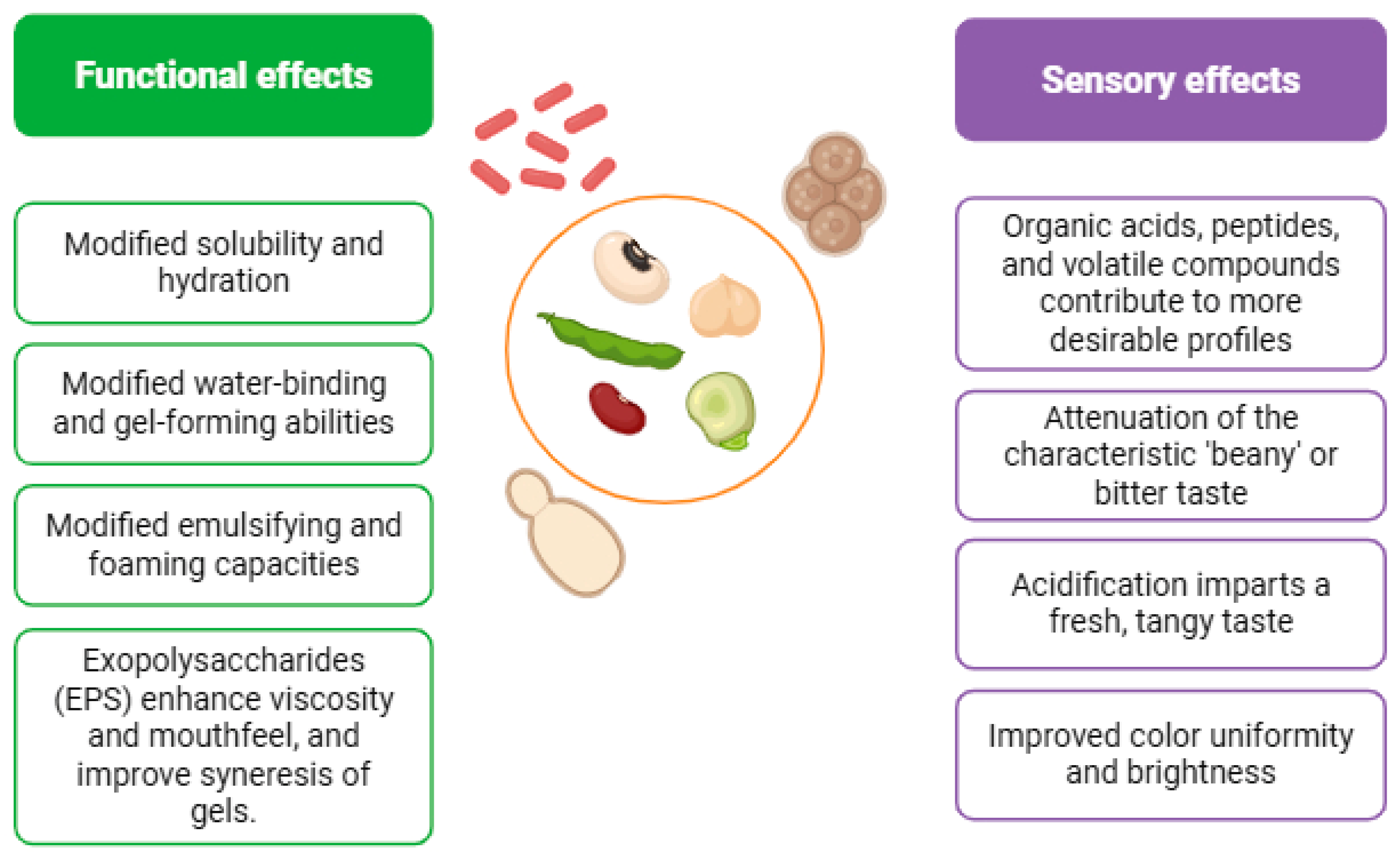
7. Functional Properties and Sensory Improvements

Fermentation profoundly influences the functional and sensory characteristics of pulse-based foods, transforming them from raw, beany, and often hard-to-cook materials into products with improved texture, flavor, aroma, and consumer appeal (Figure 3). During fermentation, microorganisms modify the chemical composition and structure of proteins, carbohydrates, and lipids through enzymatic reactions and metabolite production. These transformations not only improve digestibility and nutritional quality but also modify the physicochemical properties relevant to food processing, such as water-holding capacity, gel formation, emulsifying ability, and foaming stability [50,101,145]. In parallel, the generation of organic acids, peptides, and volatile compounds contributes to more desirable sensory profiles [162,163]. Together, these changes explain the increasing use of fermented pulses as functional ingredients in modern plant-based foods, including meat analogs [163], dairy substitutes like yogurt [36,164], beverages [165], and fermented pasta [128].
Proteolysis by microbial enzymes cleaves large storage proteins into peptides and free amino acids, leading to structural rearrangements that modify solubility and hydration. Partial hydrolysis could expose hydrophilic and hydrophobic groups on protein surfaces, having effects on functional properties. Pea protein isolate fermented with Enterococcus faecalis 07 increased water holding capacities (WHC) and oil holding capacities (OHC) after 72 h of fermentation (270 and 30% increase, respectively), but decreased protein solubility 3 times, mainly due to reaching the isoelectric point, and to protein-microbial metabolites interactions [166]. In particular, the hydrophobicity of the LAB cell surfaces might play a role in the interaction with hydrophobic proteins and by-products, leading to the precipitation of these agglomerates [86]. Contrary results were obtained for fermented lentil protein isolate, where protein solubility increased 3 times when fermented with L. plantarum and 4.5 times when fermentation occurred with Aspergillus niger or Aspergillus oryzae, hypothesized that protein particle size reduction resulting from hydrolysis played a more important role than changes in charge repulsion in determining the aqueous dispersibility of the lentil protein [145]. Additionally, Shi et al. (2024) [145] also found that WHC decreased after fermentation, but OHC enhanced after fermentation with fungal strains. Furthermore, Toor et al. (2022) [50] fermented chickpea and pigeon pea with Rhizopus oligosporus and found that the WHC increased after fermentation of chickpea, but decreased in pigeon pea, showing a pulse variety effect.
Starch modification during fermentation also contributes to improved texture and functionality. Microbial amylases and organic acids partially hydrolyze starch granules, reducing rigidity and promoting viscous or gel-like systems upon heating. Huang et al. (2024) [167] studied the effect of L. plantarum mung bean fermentation on starch properties and found that water absorption increased, while swelling and water solubility decreased; concurrently, the gel viscosity, breakdown, and setback values all increased, indicating that forming gel and a compact structure was easier. In fermented lentil flours, interactions between gelatinized starch and denatured proteins enhance gel stability and decrease syneresis, yielding products with smoother mouthfeel and greater moisture retention [168].
From a functional standpoint, fermentation modified the emulsifying and foaming capacities of pulse ingredients through protein conformational changes. The stability of the foam was expected to improve with fermentation as surface charge density decreased and hydrophobicity increased, promoting protein adsorption at oil–water and air–water interfaces, stabilizing emulsions and foams. Studies on fermented chickpea and pigeon pea with Rhizopus oligosporus reported enhanced emulsion capacity (30–37%) and stability (15–30%) [50]. However, loss of high and medium-MW proteins after fermentation may also compromise protein structure and contribute to reduced foaming capacity and stability, and emulsion stability, as happened with fermented lentil protein isolate [145]. Additionally, Pei et al. (2022) [169] found that fermentation of pea flour with L. rhamnosus L08 significantly reduced the solubility (due to reduction in pH near the isoelectric point), the emulsifying property, and the foam capacity, but increased the emulsifying stability. The authors hypothesize that the possible aggregation between LAB cells, proteins, and by-products during fermentation may reduce protein-air-water interactions and prevent foam formation. Furthermore, Khorsandi et al. (2024) [170] found a pulse variety effect on functional properties: fermentation with Aspergillus oryzae reduced emulsion stability and increased foaming properties of pea protein isolate, but no changes were obtained for navy bean protein isolate after processing, mainly due to emulsion stability depends not just on the degree of hydrolysis, but also on the specific peptides released and the structure of the modified protein. Thus, the choice of microbial strain and pulse variety should be guided by the functional properties desired in the final product. For instance, applications such as plant-based milks benefit from higher protein solubility, as well as improved emulsifying and foaming capacities.
Microbial exopolysaccharides (EPS) further enhance viscosity and mouthfeel. Acting as natural hydrocolloids, EPS increases creaminess and reduces syneresis in fermented pulse gels [68], and enhances water binding capacity, producing a stable viscoelastic and microstructure of dough [171]. The synergistic action between pulse proteins and microbial EPS, therefore, provides opportunities for texture modulation without chemical additives.
A notable sensory improvement from fermentation is the attenuation of the characteristic ‘beany’ or bitter flavor of raw pulses. These undesirable notes, mainly due to aldehydes and alcohols from lipid oxidation (e.g., hexanal, pentanal, 1-octen-3-ol), are metabolized or transformed by microorganisms [163]. Five main microbial enzymes (alcalase, aldehyde oxidase, aldehyde dehydrogenase, alcohol dehydrogenase, and hydroperoxide lyase) are responsible for the reduction in beany flavor compounds [162]. LABs convert aldehydes into alcohols and acids, while yeasts and fungi further esterify or oxidize them, producing pleasant aromatic compounds. Consequently, the aroma shifts from grassy or earthy to nutty, sour, or mildly fruity [163]. In a yogurt-style snack prepared with rice, lentil, and chickpea fermented with L. plantarum DSM33326 and Le. brevis DSM33325 (ratio 1:1), sensory panels consistently report reduced beany intensity and enhanced creamy odor, acidic notes, and taste, as well as viscosity [164]. Moreover, mung bean fermented with L. plantarum at 48 °C transformed aldehydes into esters [172], and pea flour fermented with L. rhamnosus L08 for 48 h reduced the unpleasant beany flavor and produced floral and honey-like aromas by increasing the variety of acids and esters and producing phenylethyl aldehyde that could bring pleasant aromas [169].
Fermentation also enriches flavor complexity through the production of organic acids (lactic, acetic, succinic), amino acid catabolites, and Maillard reaction precursors. Pea protein isolate fermented by Enterococcus faecalis 07 for 24, 48, and 72 h not only diminished the undesirable beany odor but also enhanced favorable sensory attributes, including aromatic, meaty, and caramel-like notes, as fermentation time increased, likely attributable to the accumulation of organic acids and elevated levels of esters, alcohols, and ketones that contributed to the enhanced aromatic perception [166]. The authors suggested that prolonged fermentation can promote the development of more consumer-appealing flavor characteristics. Larsen et al. (2025) [173] demonstrated that L. fermentum NSB2, L. argentoratensis 12-27B, B. subtilis natto, and B. velezensis G17 effectively fermented faba bean protein concentrate, each exhibiting distinct metabolic effects: differences were observed in volatile odor compounds profiles, organic acids, and free amino acids, reflecting diverse metabolic pathways. Moreover, authors showed that Bacillus spp. presented strong proteolytic activity, increasing γ-glutamyl peptides linked to umami flavor enhancement. Amino acids (mainly glutamic and aspartic acids) and peptides generated during proteolysis contribute to umami notes, enhancing the overall flavor balance. In this regard, numerous studies have investigated umami peptides derived from soybean fermentation, but much less is known for pulses, representing a promising area for future research.
Color and appearance, critical for consumer perception, are also affected by fermentation. Enzymatic and oxidative reactions can reduce pigments, resulting in more uniform brownish or creamy hues depending on species and process conditions. Rhizopus oligosporus fermentation of chickpea and pea, for example, led to higher L* values, attributed to pigment degradation and purification effects [50]. However, fermentation following a heat treatment process produced a higher browning index in chickpea fermented beverages [165].
Fermented pulses align with the demand for sustainable, clean-label plant-based foods. The process relies on natural microbial activity rather than chemical additives to achieve desirable textures and flavors. Controlled fermentations using defined starter cultures enable reproducible sensory outcomes and target enhancement of functional traits such as viscosity, creaminess, or emulsion stability.

8. Conclusions, Challenges, and Future Trends

Fermentation induces extensive modification in macromolecules, antinutrients, and bioactive compounds, modifying the physicochemical, sensory, nutritional, and bioactive properties of the pulses.
Changes in macromolecules with the generation of hydrolysis products have an impact on the nutritional properties of pulses. The consumption of rapidly digestible starch by microorganisms and the concomitant increase in the proportion of resistant starch, along with changes in total dietary fiber profiles and an increase in fermentable fiber, transform the matrix into a food with a lower glycemic index and the potential of its fiber to act as a prebiotic capable of modulating the gut microbiota.
The impact on protein structure, with the generation of diverse peptides depending on the pulse type and the microorganism used, positions these products as a source of peptides with diverse bioactive properties. Although antioxidant, anti-diabetic, and anti-hypertensive properties have been evaluated, the potential spectrum of activities may be much broader. Peptides, combined with the release of phenolic compounds, flavonoids, and the hydrolysis of tannins and proanthocyanidins from the matrix, and their metabolism promoted by fermentation, transform fermented pulses into functional foods.
On the other hand, different strains of bacteria, molds, or yeasts can create the appropriate environment to eliminate or reduce anti-nutritional and toxic components in pulses during fermentation, such as tannins and phytate, which have a positive impact on the nutritional quality and the improvement of the bioavailability of proteins and minerals.
From a technological point of view, fermentation can be used to improve the flavor of pulses. The reduction in aldehydes, alcohols, and bitter peptides concomitant with the generation of new compounds (volatile compounds, organic acids, etc.) produced in the process of fermentation has positive effects on “beany” notes and bitterness.
Due to the wide variety of pulses and microorganisms, the possibilities for developing fermented pulses are very broad. These possibilities are even greater if pretreatments are performed on the pulses, such as soaking, germination, dehulling, enzymatic hydrolysis, converting the grains into flour, etc. Moreover, the combination of cereals and legumes for joint fermentation opens multiple possibilities, and the choice of pulse type and cereal or pseudocereal, their proportions, and their pretreatments are a set of factors to investigate to enhance the sensory aspects and the healthy and bioactive properties of these new-generation foods.
On the other hand, we must not forget the possibility of using fermented pulses in the development of new foods, with different textures that expand the range of plant-based products. Since fermentation changes the structure of proteins, starches, and fiber, it alters the physicochemical properties of the food matrix. This induces changes in the solubility, thickening, and gelling capacities. This makes it easier to use fermented pulses in higher concentrations when formulating food products, broadening the scope of applications for these plant-based ingredients in developing protein and fiber-enriched foods such as extrudates, baked goods, and pasta, milk analogs, etc.
New foods can be conceived as healthy products with digestible protein, lower allergenicity, slow-digesting starches, and fermentable fiber, providing bioaccessible polyphenols and bioactive peptides, but also of a new line of tailor-made foods with enhanced bioactive properties such as hypotensive, neuro-modulatory, hypoglycemic, and hypolipidemic effects, aimed at people with chronic non-communicable diseases and the elderly. The challenge will be to achieve the combination of pulses and microorganisms that allow for sensorially pleasing products with good physicochemical stability and low allergenicity, using fermentation as a tool to improve the nutritional and health-promoting properties of pulse-derived products. This requires a multidisciplinary approach that combines food technology, the chemistry of macromolecules and phenolic compounds, the study of bioactive properties using in vitro methods, biological studies using animal models, and clinical trials that confirm these enhanced bioactive properties of the fermented pulses.

Author Contributions

Conceptualization, F.V.d.V.; Resources: S.R.D.; Supervision: F.V.d.V. and S.R.D.; Writing—original draft, F.V.d.V., R.E.C., M.A. and A.G.G.; Writing—review and editing, F.V.d.V. and S.R.D. All authors have read and agreed to the published version of the manuscript.

Funding

Projects CAI+D-2024- Tipo II—85520240100119LI; PICT-2020-SERIE A-03116.

Institutional Review Board Statement

Not applicable.

Informed Consent Statement

Not applicable.

Data Availability Statement

No new data were created or analyzed in this study. Data sharing is not applicable to this article.

Conflicts of Interest

The authors declare no conflicts of interest.

Abbreviations

The following abbreviations are used in this manuscript:
ANF(s)Antinutritional Factor(s)
FBFava Bean
GABAGamma-Aminobutyric Acid
GRASGenerally Recognized as Safe
LABLactic Acid Bacteria
LSFLiquid-State Fermentation/Submerged Fermentation
MUFAMonounsaturated Fatty Acids
PDCAASProtein Digestibility-Corrected Amino Acid Score
PUFAPolyunsaturated Fatty Acids
QPSQualified Presumption of Safety
RFO(s)Raffinose Family Oligosaccharides
SFASaturated Fatty Acids
SSFSolid-State Fermentation
TIATrypsin Inhibitor Activity
TAGTriacylglycerol.
IUISUnion of Immunological Societies

References

  1. Huebbe, P.; Rimbach, G. Historical Reflection of Food Processing and the Role of Legumes as Part of a Healthy Balanced Diet. Foods 2020, 9, 1056. [Google Scholar] [CrossRef]
  2. Villarino, C.B.J.; Alikpala, H.M.A.; Begonia, A.F.; Cruz, J.D.; Dolot, L.A.D.; Mayo, D.R.; Rigor, T.M.T.; Tan, E.S. Quality and Health Dimensions of Pulse-Based Dairy Alternatives with Chickpeas, Lupins and Mung Beans. Crit. Rev. Food Sci. Nutr. 2024, 64, 2375–2421. [Google Scholar] [CrossRef]
  3. Food and Agriculture Organization of the United Nations. Definition and Classification of Commodities; Food and Agriculture Organization of the United Nations: Rome, Italy, 1994. [Google Scholar]
  4. Adebo, O.A.; Njobeh, P.B.; Adebiyi, J.A.; Gbashi, S.; Phoku, J.Z.; Kayitesi, E. Fermented Pulse-Based Food Products in Developing Nations as Functional Foods and Ingredients. In Functional Food—Improve Health through Adequate Food; InTech: London, UK, 2017. [Google Scholar]
  5. Department of Pulses Development (DPD), G. of India. (2023). G. (APY) 2022–23. Crop-Wise Pulses Global Scenario: 2022. Directorate of Pulses Development. Available online: https://www.dpd.gov.in/ (accessed on 24 December 2025).
  6. Food and Agriculture Organization of the United Nations (FAO). Why We Celebrate World Pulses Day. Available online: https://www.fao.org/plant-production-protection/news-and-events/news/news-detail/why-we-celebrate-world-pulses-day/en?utm_source=chatgpt.com (accessed on 8 December 2025).
  7. Zhang, X.; Zhang, Z.; Shen, A.; Zhang, T.; Jiang, L.; El-Seedi, H.; Zhang, G.; Sui, X. Legumes as an Alternative Protein Source in Plant-Based Foods: Applications, Challenges, and Strategies. Curr. Res. Food Sci. 2024, 9, 100876. [Google Scholar] [CrossRef]
  8. Yanni, A.E.; Iakovidi, S.; Vasilikopoulou, E.; Karathanos, V.T. Legumes: A Vehicle for Transition to Sustainability. Nutrients 2024, 16, 98. [Google Scholar] [CrossRef]
  9. Zhang, W.; Boateng, I.D.; Xu, J.; Zhang, Y. Proteins from Legumes, Cereals, and Pseudo-Cereals: Composition, Modification, Bioactivities, and Applications. Foods 2024, 13, 1974. [Google Scholar] [CrossRef] [PubMed]
  10. Nirmala Prasadi, V.P.; Joye, I.J. Dietary Fibre from Whole Grains and Their Benefits on Metabolic Health. Nutrients 2020, 12, 3045. [Google Scholar] [CrossRef] [PubMed]
  11. Messina, V.; Skylas, D.J.; Roberts, T.H.; Valtchev, P.; Whiteway, C.; Li, Z.; Hopf, A.; Dehghani, F.; Quail, K.J.; Kaiser, B.N. Pulse Proteins: Processing, Nutrition, and Functionality in Foods. Foods 2025, 14, 1151. [Google Scholar] [CrossRef]
  12. Frias, J.; Peñas, E.; Martinez-Villaluenga, C. Fermented Pulses in Nutrition and Health Promotion. In Fermented Foods in Health and Disease Prevention; Elsevier Inc.: Amsterdam, The Netherlands, 2017; pp. 385–416. [Google Scholar]
  13. Han, S.S.; Hur, S.J.; Lee, S.K. A Comparison of Antioxidative and Anti-Inflammatory Activities of Sword Beans and Soybeans Fermented with Bacillus subtilis. Food Funct. 2015, 6, 2736–2748. [Google Scholar] [CrossRef] [PubMed]
  14. Nicolás-García, M.; Perucini-Avendaño, M.; Jiménez-Martínez, C.; Perea-Flores, M.d.J.; Gómez-Patiño, M.B.; Arrieta-Báez, D.; Dávila-Ortiz, G. Bean Phenolic Compound Changes during Processing: Chemical Interactions and Identification. J. Food Sci. 2021, 86, 643–655. [Google Scholar] [CrossRef]
  15. Herreman, L.; Nommensen, P.; Pennings, B.; Laus, M.C. Comprehensive Overview of the Quality of Plant- And Animal-Sourced Proteins Based on the Digestible Indispensable Amino Acid Score. Food Sci. Nutr. 2020, 8, 5379–5391. [Google Scholar] [CrossRef]
  16. Lisciani, S.; Marconi, S.; Le Donne, C.; Camilli, E.; Aguzzi, A.; Gabrielli, P.; Gambelli, L.; Kunert, K.; Marais, D.; Vorster, B.J.; et al. Legumes and Common Beans in Sustainable Diets: Nutritional Quality, Environmental Benefits, Spread and Use in Food Preparations. Front. Nutr. 2024, 11, 1385232. [Google Scholar] [CrossRef] [PubMed]
  17. Vogelsang-O’Dwyer, M.; Zannini, E.; Arendt, E.K. Production of Pulse Protein Ingredients and Their Application in Plant-Based Milk Alternatives. Trends Food Sci. Technol. 2021, 110, 364–374. [Google Scholar] [CrossRef]
  18. Cheng, S.; Langrish, T.A.G. A Review of the Treatments to Reduce Anti-Nutritional Factors and Fluidized Bed Drying of Pulses. Foods 2025, 14, 681. [Google Scholar] [CrossRef]
  19. Vijaya, P.S.; Singh, R. Pulses: Nutritional or Anti-Nutritional? A Review on Bioactive Components and Digestibility. J. Food Sci. Technol. 2023, 20, 28–51. [Google Scholar] [CrossRef]
  20. Kumar, Y.; Basu, S.; Goswami, D.; Devi, M.; Shivhare, U.S.; Vishwakarma, R.K. Anti-Nutritional Compounds in Pulses: Implications and Alleviation Methods. Legume Sci. 2022, 4, e111. [Google Scholar] [CrossRef]
  21. Emkani, M.; Oliete, B.; Saurel, R. Effect of Lactic Acid Fermentation on Legume Protein Properties, a Review. Fermentation 2022, 8, 244. [Google Scholar] [CrossRef]
  22. Acquah, C.; Ohemeng-Boahen, G.; Power, K.A.; Tosh, S.M. The Effect of Processing on Bioactive Compounds and Nutritional Qualities of Pulses in Meeting the Sustainable Development Goal 2. Front. Sustain. Food Syst. 2021, 5, 681662. [Google Scholar] [CrossRef]
  23. Ritter, S.W.; Gastl, M.I.; Becker, T.M. The Modification of Volatile and Nonvolatile Compounds in Lupines and Faba Beans by Substrate Modulation and Lactic Acid Fermentation to Facilitate Their Use for Legume-Based Beverages—A Review. Compr. Rev. Food Sci. Food Saf. 2022, 21, 4018–4055. [Google Scholar] [CrossRef]
  24. Adebo, J.A.; Njobeh, P.B.; Gbashi, S.; Oyedeji, A.B.; Ogundele, O.M.; Oyeyinka, S.A.; Adebo, O.A. Fermentation of Cereals and Legumes: Impact on Nutritional Constituents and Nutrient Bioavailability. Fermentation 2022, 8, 63. [Google Scholar] [CrossRef]
  25. Limón, R.I.; Peñas, E.; Torino, M.I.; Martínez-Villaluenga, C.; Dueñas, M.; Frias, J. Fermentation Enhances the Content of Bioactive Compounds in Kidney Bean Extracts. Food Chem. 2015, 172, 343–352. [Google Scholar] [CrossRef] [PubMed]
  26. Thompson, H.O.; Önning, G.; Holmgren, K.; Strandler, H.S.; Hultberg, M. Fermentation of Cauliflower and White Beans with Lactobacillus plantarum—Impact on Levels of Riboflavin, Folate, Vitamin B12, and Amino Acid Composition. Plant Foods Hum. Nutr. 2020, 75, 236–242. [Google Scholar] [CrossRef]
  27. Hatti-Kaul, R.; Chen, L.; Dishisha, T.; Enshasy, H. El Lactic Acid Bacteria: From Starter Cultures to Producers of Chemicals. FEMS Microbiol. Lett. 2018, 365, fny213. [Google Scholar] [CrossRef]
  28. Bento, J.A.C.; Rossetti Rogerio, M.F.; Bassinello, P.Z.; Oomah, B.D. The Use of Fermentation in the Valorization of Pulses By-Products. Trends Food Sci. Technol. 2025, 159, 104957. [Google Scholar] [CrossRef]
  29. Valdés-Alvarado, A.J.; Castañeda-Reyes, E.D.; Gonzalez de Mejia, E. Optimized Fermentation Conditions of Pulses Increase Scavenging Capacity and Markers of Anti-Diabetic Properties. Antioxidants 2025, 14, 523. [Google Scholar] [CrossRef]
  30. Fernandez Castaneda, L.A.; Auer, J.; Leong, S.L.L.; Newson, W.R.; Passoth, V.; Langton, M.; Zamaratskaia, G. Optimizing Soaking and Boiling Time in the Development of Tempeh-like Products from Faba Bean (Vicia faba L.). Fermentation 2024, 10, 407. [Google Scholar] [CrossRef]
  31. Stone, A.K.; Shi, D.; Liu, E.; Jafarian, Z.; Xu, C.; Bhagwat, A.; Lu, Y.; Akhov, L.; Gerein, J.; Han, X.; et al. Effect of Solid-State Fermentation on the Functionality, Digestibility, and Volatile Profiles of Pulse Protein Isolates. Food Biosci. 2024, 61, 104580. [Google Scholar] [CrossRef]
  32. Munch-Andersen, C.B.; Porcellato, D.; Devold, T.G.; Østlie, H.M. Isolation, Identification, and Stability of Sourdough Microbiota from Spontaneously Fermented Norwegian Legumes. Int. J. Food Microbiol. 2024, 410, 110505. [Google Scholar] [CrossRef] [PubMed]
  33. Ayivi, R.D.; Gyawali, R.; Krastanov, A.; Aljaloud, S.O.; Worku, M.; Tahergorabi, R.; Da Silva, R.C.; Ibrahim, S.A. Lactic Acid Bacteria: Food Safety and Human Health Applications. Dairy 2020, 1, 202–232. [Google Scholar] [CrossRef]
  34. Cichońska, P.; Ziarno, M. Legumes and Legume-Based Beverages Fermented with Lactic Acid Bacteria as a Potential Carrier of Probiotics and Prebiotics. Microorganisms 2022, 10, 91. [Google Scholar] [CrossRef]
  35. Sáez, G.D.; Sabater, C.; Fara, A.; Zárate, G. Fermentation of Chickpea Flour with Selected Lactic Acid Bacteria for Improving Its Nutritional and Functional Properties. J. Appl. Microbiol. 2022, 133, 181–199. [Google Scholar] [CrossRef]
  36. Boeck, T.; Ispiryan, L.; Hoehnel, A.; Sahin, A.W.; Coffey, A.; Zannini, E.; Arendt, E.K. Lentil-Based Yogurt Alternatives Fermented with Multifunctional Strains of Lactic Acid Bacteria—Techno-Functional, Microbiological, and Sensory Characteristics. Foods 2022, 11, 2013. [Google Scholar] [CrossRef]
  37. Labba, I.C.M.; Andlid, T.; Lindgren, Å.; Sandberg, A.S.; Sjöberg, F. Isolation, Identification, and Selection of Strains as Candidate Probiotics and Starters for Fermentation of Swedish Legumes. Food Nutr. Res. 2020, 64, 4410. [Google Scholar] [CrossRef]
  38. Kahala, M.; Ikonen, I.; Blasco, L.; Bragge, R.; Pihlava, J.M.; Nurmi, M.; Pihlanto, A. Effect of Lactic Acid Bacteria on the Level of Antinutrients in Pulses: A Case Study of a Fermented Faba Bean–Oat Product. Foods 2023, 12, 3922. [Google Scholar] [CrossRef]
  39. Hurtado-Murillo, J.; Franco, W.; Contardo, I. Impact of Homolactic Fermentation Using Lactobacillus acidophilus on Plant-Based Protein Hydrolysis in Quinoa and Chickpea Flour Blended Beverages. Food Chem. 2025, 463, 141110. [Google Scholar] [CrossRef] [PubMed]
  40. Sabater, C.; Sáez, G.D.; Suárez, N.; Garro, M.S.; Margolles, A.; Zárate, G. Fermentation with Lactic Acid Bacteria for Bean Flour Improvement: Experimental Study and Molecular Modeling as Complementary Tools. Foods 2024, 13, 2105. [Google Scholar] [CrossRef] [PubMed]
  41. Kimura, K.; Yokoyama, S. Trends in the Application of Bacillus in Fermented Foods. Curr. Opin. Biotechnol. 2019, 56, 36–42. [Google Scholar] [CrossRef]
  42. Chen, K.; Gao, C.; Han, X.; Li, D.; Wang, H.; Lu, F. Co-Fermentation of Lentils Using Lactic Acid Bacteria and Bacillus subtilis Natto Increases Functional and Antioxidant Components. J. Food Sci. 2021, 86, 475–483. [Google Scholar] [CrossRef]
  43. Tamang, J.P.; Watanabe, K.; Holzapfel, W.H. Review: Diversity of Microorganisms in Global Fermented Foods and Beverages. Front. Microbiol. 2016, 7, 377. [Google Scholar] [CrossRef]
  44. Bhalla, T.C.; Savitri. Yeasts and Traditional Fermented Foods and Beverages. In Yeast Diversity in Human Welfare; Springer: Singapore, 2017; pp. 53–82. [Google Scholar]
  45. Amadei, S.; Gandolfi, I.; Gottardi, D.; Cevoli, C.; D’Alessandro, M.; Siroli, L.; Lanciotti, R.; Patrignani, F. Selection of Yeasts and Lactic Acid Bacteria to Improve the Nutritional Quality, Volatile Profile, and Biofunctional Properties of Chickpea Flour. Curr. Res. Food Sci. 2025, 11, 101204. [Google Scholar] [CrossRef]
  46. Boyaci Gunduz, C.P.; Erten, H. Yeast Biodiversity in Chickpea Sourdoughs and Comparison of the Microbiological and Chemical Characteristics of the Spontaneous Chickpea Fermentations. J. Food Process. Preserv. 2022, 46, e16479. [Google Scholar] [CrossRef]
  47. Tonini, S.; Tlais, A.Z.A.; Galli, B.D.; Helal, A.; Tagliazucchi, D.; Filannino, P.; Zannini, E.; Gobbetti, M.; Di Cagno, R. Lentils Protein Isolate as a Fermenting Substrate for the Production of Bioactive Peptides by Lactic Acid Bacteria and Neglected Yeast Species. Microb. Biotechnol. 2024, 17, e14387. [Google Scholar] [CrossRef]
  48. Canonico, L.; Agarbati, A.; Zannini, E.; Ciani, M.; Comitini, F. Lentil Fortification and Non-Conventional Yeasts as Strategy to Enhance Functionality and Aroma Profile of Craft Beer. Foods 2022, 11, 2787. [Google Scholar] [CrossRef] [PubMed]
  49. Stodolak, B.; Grabacka, M.; Starzyńska-Janiszewska, A.; Duliński, R. Effect of Fungal and Fungal-Bacterial Tempe-Type Fermentation on the Bioactive Potential of Grass Pea Seeds and Flaxseed Oil Cake Mix. Int. J. Food Sci. 2024, 2024, 5596798. [Google Scholar] [CrossRef] [PubMed]
  50. Toor, B.S.; Kaur, A.; Kaur, J. Fermentation of Legumes with Rhizopus oligosporus: Effect on Physicochemical, Functional and Microstructural Properties. Int. J. Food Sci. Technol. 2022, 57, 1763–1772. [Google Scholar] [CrossRef]
  51. Gautheron, O.; Nyhan, L.; Torreiro, M.G.; Tlais, A.Z.A.; Cappello, C.; Gobbetti, M.; Hammer, A.K.; Zannini, E.; Arendt, E.K.; Sahin, A.W. Exploring the Impact of Solid-State Fermentation on Fava Bean Flour: A Comparative Study of Aspergillus oryzae and Rhizopus oligosporus. Foods 2024, 13, 2922. [Google Scholar] [CrossRef] [PubMed]
  52. Muñoz-Pina, S.; Khvostenko, K.; García-Hernández, J.; Heredia, A.; Andrés, A. In Vitro Digestibility and Angiotensin Converting Enzyme (ACE) Inhibitory Activity of Solid-State Fermented Fava Beans (Vicia faba L.). Food Chem. 2024, 455, 139867. [Google Scholar] [CrossRef]
  53. Patil, N.D.; Bains, A.; Goksen, G.; Ali, N.; Dhull, S.B.; Khan, M.R.; Chawla, P. Effect of Solid-State Fermentation on Kidney Bean Flour: Functional Properties, Mineral Bioavailability, and Product Formulation. Food Chem. X 2025, 27, 102339. [Google Scholar] [CrossRef]
  54. Zhang, Y.; Qi, B.; Li, Q.; Yang, C.; Yu, P.; Yang, X.; Li, T. Dynamic Changes on Sensory Property, Nutritional Quality and Metabolic Profiles of Green Kernel Black Beans during Eurotium Cristatum-Based Solid-State Fermentation. Food Chem. 2024, 455, 139846. [Google Scholar] [CrossRef]
  55. Kryachko, Y.; Arasaratnam, L.; House, J.D.; Ai, Y.; Nickerson, M.T.; Korber, D.R.; Tanaka, T. Microbial Protein Production during Fermentation of Starch-Rich Legume Flours Using Aspergillus oryzae and Lactobacillus plantarum Starter Cultures. J. Biosci. Bioeng. 2025, 139, 288–295. [Google Scholar] [CrossRef]
  56. Stodolak, B.; Starzyńska-Janiszewska, A.; Mika, M.; Wikiera, A. Rhizopus oligosporus and Lactobacillus plantarum Co-Fermentation as a Tool for Increasing the Antioxidant Potential of Grass Pea and Flaxseed Oil-Cake Tempe. Molecules 2020, 25, 4759. [Google Scholar] [CrossRef]
  57. Zhang, H.R.; Chen, C.J.; Chen, B.Y. Response Surface Methodology-Optimized Co-Fermentation of Pigeon Pea Okara by Rhizopus oligosporus and Yarrowia lipolytica and Its Application for Vegetable Paste. JSFA Rep. 2022, 2, 236–246. [Google Scholar] [CrossRef]
  58. Rahman, M.S.; Das Emon, D.; Toma, M.A.; Nupur, A.H.; Karmoker, P.; Iqbal, A.; Aziz, M.G.; Alim, M.A. Recent Advances in Probiotication of Fruit and Vegetable Juices. J. Adv. Vet. Anim. Res. 2023, 10, 522–537. [Google Scholar] [CrossRef]
  59. Skrzypczak, K.; Teterycz, D.; Gustaw, W.; Domagała, D.; Mielczarek, P.; Kasprzyk-Pochopień, J. The Possibility of Using Lactobacillus plantarum 299v to Reinforce the Bioactive Properties of Legume-Derived Beverages. Appl. Sci. 2024, 14, 5187. [Google Scholar] [CrossRef]
  60. Devecioglu, D.; Kuscu, A.; Karbancioglu-Guler, F. Isolation and Functional Characterization of Yeasts from Fermented Plant Based Products. Fermentation 2025, 11, 305. [Google Scholar] [CrossRef]
  61. Asensio-Grau, A.; Calvo-Lerma, J.; Heredia, A.; Andrés, A. Enhancing the Nutritional Profile and Digestibility of Lentil Flour by Solid State Fermentation with: Pleurotus ostreatus. Food Funct. 2020, 11, 7905–7912. [Google Scholar] [CrossRef]
  62. De Pasquale, I.; Pontonio, E.; Gobbetti, M.; Rizzello, C.G. Nutritional and Functional Effects of the Lactic Acid Bacteria Fermentation on Gelatinized Legume Flours. Int. J. Food Microbiol. 2020, 316, 108426. [Google Scholar] [CrossRef] [PubMed]
  63. Tao, L.; Song, S.; Liu, C.; Huang, W.; Bi, Y.; Yu, L. Fermentation Reduced the In Vitro Glycemic Index Values of Probiotic-Rich Bean Powders. Int. J. Food Sci. Technol. 2022, 57, 3038–3045. [Google Scholar] [CrossRef]
  64. Byanju, B.; Hojilla-Evangelista, M.P.; Lamsal, B.P. Fermentation Performance and Nutritional Assessment of Physically Processed Lentil and Green Pea Flour. J. Sci. Food Agric. 2021, 101, 5792–5806. [Google Scholar] [CrossRef] [PubMed]
  65. Noori, S.M.A.; Hojjati, M.; Sorourian, R. Enhancing Nutritional Quality and Functionality of Legumes: Application of Solid-State Fermentation with Pleurotus ostreatus. Food Sci. Nutr. 2025, 13, e70783. [Google Scholar] [CrossRef]
  66. Kitum, V.C.; Kinyanjui, P.K.; Mathara, J.M.; Sila, D.N. Oligosaccharide and Antinutrient Content of Whole Red Haricot Bean Fermented in Salt–Sugar and Salt-Only Solutions. Legume Sci. 2022, 4, e110. [Google Scholar] [CrossRef]
  67. Senanayake, D.; Torley, P.J.; Chandrapala, J.; Terefe, N.S. Microbial Fermentation for Improving the Sensory, Nutritional and Functional Attributes of Legumes. Fermentation 2023, 9, 635. [Google Scholar] [CrossRef]
  68. Ait Chekdid, A.; Kahn, C.J.F.; Lemois, B.; Linder, M. Impact of a Starch Hydrolysate on the Production of Exopolysaccharides in a Fermented Plant-Based Dessert Formulation. Foods 2023, 12, 3868. [Google Scholar] [CrossRef]
  69. Ojo, M.O.; Oni, O.K.; Zubair, A.B.; Femi, F.A.; Audu, Y.; Etim, B.; Adeyeye, S.A.O. Influence of Fermentation Period on the Chemical and Functional Properties, Antinutritional Factors, and in Vitro Digestibility of White Lima Beans Flour. J. Food Sci. 2024, 89, 9047–9059. [Google Scholar] [CrossRef] [PubMed]
  70. Kouadio Patrick, N.; Kouassi Martial-Didier, A.; Kouadio Florent, N.; Kouadio Constant, A.; Kablan, T. Effect of Spontaneous Fermentation Time on Physicochemical, Nutrient, Anti-Nutrient and Microbiological Composition of Lima Bean (Phaseolus lunatus) Flour. J. Appl. Biosci. 2021, 162, 16707–16725. [Google Scholar] [CrossRef]
  71. Aghababaei, F.; McClements, D.J.; Hadidi, M. Strategies to Overcome Nutritional and Technological Limitations of Pulse Proteins. Future Foods 2025, 11, 100624. [Google Scholar] [CrossRef]
  72. Singh, N. Pulses: An Overview. J. Food Sci. Technol. 2017, 54, 853–857. [Google Scholar] [CrossRef]
  73. Shen, P.; Ha, S.M.L.; Peng, J.; Landman, J.; Sagis, L.M.C. Role of Pulse Globulins and Albumins in Air-Water Interface and Foam Stabilization. Food Hydrocoll. 2025, 160, 110792. [Google Scholar] [CrossRef]
  74. Shevkani, K.; Singh, N.; Chen, Y.; Kaur, A.; Yu, L. Pulse Proteins: Secondary Structure, Functionality and Applications. J. Food Sci. Technol. 2019, 56, 2787–2798. [Google Scholar] [CrossRef]
  75. Alfieri, F.; Ververis, E.; Precup, G.; Julio-Gonzalez, L.C.; Noriega Fernández, E. Proteins from Pulses: Food Processing and Applications. In Sustainable Food Science—A Comprehensive Approach; Elsevier: Amsterdam, The Netherlands, 2023; Volume 1–4, pp. 192–218. [Google Scholar] [CrossRef]
  76. Thakur, A.; Sharma, V.; Thakur, A. An Overview of Anti-Nutritional Factors in Food. Int. J. Chem. Stud. 2019, 7, 2472–2479. [Google Scholar]
  77. Salim, R.; Nehvi, I.B.; Mir, R.A.; Tyagi, A.; Ali, S.; Bhat, O.M. A Review on Anti-Nutritional Factors: Unraveling the Natural Gateways to Human Health. Front. Nutr. 2023, 10, 1215873. [Google Scholar] [CrossRef]
  78. Banti, M.; Bajo, W. Review on Nutritional Importance and Anti-Nutritional Factors of Legumes. Int. J. Nutr. Food Sci. 2020, 9, 138. [Google Scholar] [CrossRef]
  79. Bouchard, J.; Malalgoda, M.; Storsley, J.; Malunga, L.; Netticadan, T.; Thandapilly, S.J. Health Benefits of Cereal Grain-and Pulse-Derived Proteins. Molecules 2022, 27, 3746. [Google Scholar] [CrossRef] [PubMed]
  80. Hertzler, S.R.; Lieblein-Boff, J.C.; Weiler, M.; Allgeier, C. Plant Proteins: Assessing Their Nutritional Quality and Effects on Health and Physical Function. Nutrients 2020, 12, 3704. [Google Scholar] [CrossRef]
  81. Warsame, A.O.; O’Sullivan, D.M.; Tosi, P. Seed Storage Proteins of Faba Bean (Vicia faba L): Current Status and Prospects for Genetic Improvement. J. Agric. Food Chem. 2018, 66, 12617–12626. [Google Scholar] [CrossRef] [PubMed]
  82. Shen, P.; Twilt, F.; Nazir, R.; Peng, J.; Landman, J.; Sagis, L.M.C. Role of Globulins and Albumins in Oil-Water Interface and Emulsion Stabilization Properties of Pulse Proteins. Food Hydrocoll. 2025, 167, 111463. [Google Scholar] [CrossRef]
  83. Günal-Köroğlu, D.; Karabulut, G.; Ozkan, G.; Yılmaz, H.; Gültekin-Subaşı, B.; Capanoglu, E. Allergenicity of Alternative Proteins: Reduction Mechanisms and Processing Strategies. J. Agric. Food Chem. 2025, 73, 7522–7546. [Google Scholar] [CrossRef]
  84. El Mecherfi, K.E.; Todorov, S.D.; De Albuquerque, M.A.C.; Denery-Papini, S.; Lupi, R.; Haertlé, T.; De Melo Franco, B.D.G.; Larre, C. Allergenicity of Fermented Foods: Emphasis on Seeds Protein-Based Products. Foods 2020, 9, 792. [Google Scholar] [CrossRef]
  85. Yousefi, N.; Shokrollahi Yancheshmeh, B.; Gernaey, K.V. The Potential of Fermentation-Based Processing on Protein Modification: A Review. Foods 2025, 14, 3461. [Google Scholar] [CrossRef]
  86. García Arteaga, V.; Leffler, S.; Muranyi, I.; Eisner, P.; Schweiggert-Weisz, U. Sensory Profile, Functional Properties and Molecular Weight Distribution of Fermented Pea Protein Isolate. Curr. Res. Food Sci. 2021, 4, 1–10. [Google Scholar] [CrossRef]
  87. Arteaga-Marin, S.; Ayala-Larrea, D.; Cardador-Martínez, A.; Tellez-Perez, C.; Resendiz-Vazquez, J.A.; Alonzo-Macias, M. Non-Thermal Food Processing for Plant Protein Allergenicity Reduction: A Systematic Review. Food Sci. Nutr. 2025, 13, e70430. [Google Scholar]
  88. Nosworthy, M.G.; Yu, B.; Zaharia, L.I.; Medina, G.; Patterson, N. Pulse Protein Quality and Derived Bioactive Peptides. Front. Plant Sci. 2025, 16, 1429225. [Google Scholar] [CrossRef]
  89. Aderinola, T.A.; Duodu, K.G. Production, Health-Promoting Properties and Characterization of Bioactive Peptides from Cereal and Legume Grains. BioFactors 2022, 48, 972–992. [Google Scholar] [CrossRef]
  90. Peres Fabbri, L.; Cavallero, A.; Vidotto, F.; Gabriele, M. Bioactive Peptides from Fermented Foods: Production Approaches, Sources, and Potential Health Benefits. Foods 2024, 13, 3369. [Google Scholar] [CrossRef]
  91. Martoccia, M.; Disca, V.; Jaouhari, Y.; Bordiga, M.; Coïsson, J.D. Recent Approaches for Bioactive Peptides Production from Pulses and Pseudocereals. Molecules 2025, 30, 4304. [Google Scholar] [CrossRef]
  92. Song, M.W.; Chung, Y.; Kim, K.T.; Hong, W.S.; Chang, H.J.; Paik, H.D. Probiotic Characteristics of Lactobacillus brevis B13-2 Isolated from Kimchi and Investigation of Antioxidant and Immune-Modulating Abilities of Its Heat-Killed Cells. LWT 2020, 128, 109452. [Google Scholar] [CrossRef]
  93. Cruz-Casas, D.E.; Aguilar, C.N.; Ascacio-Valdés, J.A.; Rodríguez-Herrera, R.; Chávez-González, M.L.; Flores-Gallegos, A.C. Enzymatic Hydrolysis and Microbial Fermentation: The Most Favorable Biotechnological Methods for the Release of Bioactive Peptides. Food Chem. Mol. Sci. 2021, 3, 100047. [Google Scholar] [CrossRef]
  94. Du, J.; Xiao, M.; Sudo, N.; Liu, Q. Bioactive Peptides of Marine Organisms: Roles in the Reduction and Control of Cardiovascular Diseases. Food Sci. Nutr. 2024, 12, 5271–5284. [Google Scholar] [CrossRef] [PubMed]
  95. Cian, R.E.; Drago, S.R. Microbial Bioactive Peptides from Bacteria, Yeasts, and Molds. In Handbook of Food Bioactive Ingredients: Properties and Applications; Jafari, S.M., Rashidinejad, A., Simal-Gandara, J., Eds.; Springer International Publishing: Cham, Switzerland, 2022; pp. 1–24. ISBN 978-3-030-81404-5. [Google Scholar]
  96. Maleki, S.; Razavi, S.H. Pulses’ Germination and Fermentation: Two Bioprocessing against Hypertension by Releasing ACE Inhibitory Peptides. Crit. Rev. Food Sci. Nutr. 2020, 61, 2876–2893. [Google Scholar] [CrossRef] [PubMed]
  97. Raveschot, C.; Cudennec, B.; Coutte, F.; Flahaut, C.; Fremont, M.; Drider, D.; Dhulster, P. Production of Bioactive Peptides by Lactobacillus Species: From Gene to Application. Front. Microbiol. 2018, 9, 2354. [Google Scholar] [CrossRef] [PubMed]
  98. Fan, H.; Liu, H.; Zhang, Y.; Zhang, S.; Liu, T.; Wang, D. Review on Plant-Derived Bioactive Peptides: Biological Activities, Mechanism of Action and Utilizations in Food Development. J. Future Foods 2022, 2, 143–159. [Google Scholar] [CrossRef]
  99. Apud, G.R.; Kristof, I.; Ledesma, S.C.; Stivala, M.G.; Aredes Fernandez, P.A. Health-Promoting Peptides in Fermented Beverages. Rev. Argent. Microbiol. 2024, 56, 336–345. [Google Scholar] [CrossRef]
  100. Zou, T.B.; He, T.P.; Li, H.B.; Tang, H.W.; Xia, E.Q. The Structure-Activity Relationship of the Antioxidant Peptides from Natural Proteins. Molecules 2016, 21, 72. [Google Scholar] [CrossRef]
  101. Chiacchio, M.F.; Tagliamonte, S.; Pazzanese, A.; Vitaglione, P.; Blaiotta, G. Lactic Acid Fermentation Improves Nutritional and Functional Properties of Chickpea Flours. Food Res. Int. 2025, 203, 115899. [Google Scholar] [CrossRef]
  102. Ayyash, M.; Johnson, S.K.; Liu, S.Q.; Mesmari, N.; Dahmani, S.; Al Dhaheri, A.S.; Kizhakkayil, J. In Vitro Investigation of Bioactivities of Solid-State Fermented Lupin, Quinoa and Wheat Using Lactobacillus spp. Food Chem. 2019, 275, 50–58. [Google Scholar] [CrossRef]
  103. Guo, Q.; Chen, P.; Chen, X. Bioactive Peptides Derived from Fermented Foods: Preparation and Biological Activities. J. Funct. Foods 2023, 101, 105422. [Google Scholar] [CrossRef]
  104. Daliri, E.B.M.; Lee, B.H.; Oh, D.H. Current Trends and Perspectives of Bioactive Peptides. Crit. Rev. Food Sci. Nutr. 2018, 58, 2273–2284. [Google Scholar] [CrossRef] [PubMed]
  105. Huang, C.; Kok, J. Editing of the Proteolytic System of Lactococcus lactis Increases Its Bioactive Potential. Appl. Environ. Microbiol. 2020, 86, e01319-20. [Google Scholar] [CrossRef]
  106. Zhang, X.; Tang, Y.; Cheng, H.; Zhang, J.J.; Zhang, S. Investigating Structure, Biological Activity, Peptide Composition and Emulsifying Properties of Pea Protein Hydrolysates Obtained by Cell Envelope Proteinase from Lactobacillus delbrueckii subsp. Bulgaricus. Int. J. Biol. Macromol. 2023, 245, 125375. [Google Scholar] [CrossRef]
  107. Mirzaei, M.; Shavandi, A.; Mirdamadi, S.; Soleymanzadeh, N.; Motahari, P.; Mirdamadi, N.; Moser, M.; Subra, G.; Alimoradi, H.; Goriely, S. Bioactive Peptides from Yeast: A Comparative Review on Production Methods, Bioactivity, Structure-Function Relationship, and Stability. Trends Food Sci. Technol. 2021, 118, 297–315. [Google Scholar] [CrossRef]
  108. Zhang, D.D.; Liu, J.L.; Jiang, T.M.; Li, L.; Fang, G.Z.; Liu, Y.P.; Chen, L.J. Influence of Kluyveromyces marxianus on Proteins, Peptides, and Amino Acids in Lactobacillus-Fermented Milk. Food Sci. Biotechnol. 2017, 26, 739–748. [Google Scholar] [CrossRef]
  109. Zhao, L.; Liu, X.; Wang, S.; Yin, Z.; An, T.; Zhang, J.; Liu, Y. Research Progress on Fermentation-Produced Plant-Derived Bioactive Peptides. Front. Pharmacol. 2024, 15, 1438947. [Google Scholar] [CrossRef] [PubMed]
  110. Mastrolonardo, F.; Tonini, S.; Granehäll, L.; Polo, A.; Zannini, E.; Gobbetti, M.; Di Cagno, R.; Nikoloudaki, O. Influence of Bioactive Peptides from Fermented Red Lentil Protein Isolate on Gut Microbiota: A Dynamic in Vitro Investigation. Future Foods 2025, 12, 100772. [Google Scholar] [CrossRef]
  111. Xiao, Y.; Sun, M.; Zhang, Q.; Chen, Y.; Miao, J.; Rui, X.; Dong, M. Effects of Cordyceps militaris (L.) Fr. Fermentation on the Nutritional, Physicochemical, Functional Properties and Angiotensin I Converting Enzyme Inhibitory Activity of Red Bean (Phaseolus angularis [Willd.] W.F. Wight.) Flour. J. Food Sci. Technol. 2018, 55, 1244–1255. [Google Scholar] [CrossRef] [PubMed]
  112. Nawaz, K.A.A.; David, S.M.; Murugesh, E.; Thandeeswaran, M.; Kiran, K.G.; Mahendran, R.; Palaniswamy, M.; Angayarkanni, J. Identification and in Silico Characterization of a Novel Peptide Inhibitor of Angiotensin Converting Enzyme from Pigeon Pea (Cajanus cajan). Phytomedicine 2017, 36, 1–7. [Google Scholar] [CrossRef]
  113. Liu, W.; Tang, Y.; Zhang, J.; Bai, J.; Zhu, Y.; Zhu, L.; Zhao, Y.; Daglia, M.; Xiao, X.; He, Y. Microbial Interactions in Food Fermentation: Interactions, Analysis Strategies, and Quality Enhancement. Foods 2025, 14, 2515. [Google Scholar] [CrossRef]
  114. Canon, F.; Briard-Bion, V.; Jardin, J.; Thierry, A.; Gagnaire, V. Positive Interactions Between Lactic Acid Bacteria Could Be Mediated by Peptides Containing Branched-Chain Amino Acids. Front. Microbiol. 2022, 12, 793136. [Google Scholar] [CrossRef]
  115. Ponomarova, O.; Gabrielli, N.; Sévin, D.C.; Mülleder, M.; Zirngibl, K.; Bulyha, K.; Andrejev, S.; Kafkia, E.; Typas, A.; Sauer, U.; et al. Yeast Creates a Niche for Symbiotic Lactic Acid Bacteria through Nitrogen Overflow. Cell Syst. 2017, 5, 345–357.e6. [Google Scholar] [CrossRef]
  116. Muhialdin, B.J.; Abdul Rani, N.F.; Meor Hussin, A.S. Identification of Antioxidant and Antibacterial Activities for the Bioactive Peptides Generated from Bitter Beans (Parkia speciosa) via Boiling and Fermentation Processes. LWT 2020, 131, 109776. [Google Scholar] [CrossRef]
  117. Amoah, I.; Ascione, A.; Muthanna, F.M.S.; Feraco, A.; Camajani, E.; Gorini, S.; Armani, A.; Caprio, M.; Lombardo, M. Sustainable Strategies for Increasing Legume Consumption: Culinary and Educational Approaches. Foods 2023, 12, 2265. [Google Scholar] [CrossRef]
  118. Nezhad, N.G.; Rahman, R.N.Z.R.A.; Normi, Y.M.; Oslan, S.N.; Shariff, F.M.; Leow, T.C. Isolation, Screening and Molecular Characterization of Phytase-Producing Microorganisms to Discover the Novel Phytase. Biologia 2023, 78, 2527–2537. [Google Scholar] [CrossRef]
  119. Singh, B.; Pragya; Tiwari, S.K.; Singh, D.; Kumar, S.; Malik, V. Production of Fungal Phytases in Solid State Fermentation and Potential Biotechnological Applications. World J. Microbiol. Biotechnol. 2024, 40, 22. [Google Scholar] [CrossRef]
  120. Nkhata, S.G.; Ayua, E.; Kamau, E.H.; Shingiro, J.B. Fermentation and Germination Improve Nutritional Value of Cereals and Legumes through Activation of Endogenous Enzymes. Food Sci. Nutr. 2018, 6, 2446–2458. [Google Scholar] [CrossRef] [PubMed]
  121. Mostafa, H.S. Valorization of Faba Bean Peels for Fungal Tannase Production and Its Application in Coffee Tannin Removal. Food Chem. X 2024, 23, 101678. [Google Scholar] [CrossRef]
  122. Manzoor, M.; Singh, D.; Aseri, G.K.; Sohal, J.S.; Vij, S.; Sharma, D. Role of Lacto-Fermentations in Reduction of Antinutrients in Plant-Based Foods. J. Appl. Biol. Biotechnol. 2021, 9, 7–16. [Google Scholar] [CrossRef]
  123. Thulesen, L.; Duque-Estrada, P.; Zhang, L.; Martin, M.S.; Aaslyng, M.D.; Petersen, I.L. Faba Bean Tempeh: The Effects of Fermentation and Cooking on Protein Nutritional Quality and Sensory Quality. Food Chem. Adv. 2025, 6, 100894. [Google Scholar] [CrossRef]
  124. Anaemene, D.; Fadupin, G. Anti-Nutrient Reduction and Nutrient Retention Capacity of Fermentation, Germination and Combined Germination-Fermentation in Legume Processing. Appl. Food Res. 2022, 2, 100059. [Google Scholar] [CrossRef]
  125. Galli, V.; Venturi, M.; Pini, N.; Guerrini, S.; Granchi, L. Exploitation of Sourdough Lactic Acid Bacteria to Reduce Raffinose Family Oligosaccharides (RFOs) Content in Breads Enriched with Chickpea Flour. Eur. Food Res. Technol. 2019, 245, 2353–2363. [Google Scholar] [CrossRef]
  126. Sarkhel, S.; Roy, A. Phytic Acid and Its Reduction in Pulse Matrix: Structure–Function Relationship Owing to Bioavailability Enhancement of Micronutrients. J. Food Process. Eng. 2022, 45, e14030. [Google Scholar] [CrossRef]
  127. Greiner, R.; Konietzny, U. Phytase for Food Application. Food Technol. Biotechnol. 2006, 44, 25–140. [Google Scholar]
  128. De Pasquale, I.; Verni, M.; Verardo, V.; Gómez-Caravaca, A.M.; Rizzello, C.G. Nutritional and Functional Advantages of the Use of Fermented Black Chickpea Flour for Semolina-Pasta Fortification. Foods 2021, 10, 182. [Google Scholar] [CrossRef] [PubMed]
  129. Sánchez-García, J.; Muñoz-Pina, S.; García-Hernández, J.; Tárrega, A.; Heredia, A.; Andrés, A. In Vitro Digestion Assessment (Standard vs. Older Adult Model) on Antioxidant Properties and Mineral Bioaccessibility of Fermented Dried Lentils and Quinoa. Molecules 2023, 28, 7298. [Google Scholar] [CrossRef] [PubMed]
  130. Kumari, M.; Platel, K. Impact of Soaking, Germination, Fermentation, and Thermal Processing on the Bioaccessibility of Trace Minerals from Food Grains. J. Food Process. Preserv. 2020, 44, e14752. [Google Scholar] [CrossRef]
  131. Ren, B.; Wu, M.; Wang, Q.; Peng, X.; Wen, H.; McKinstry, W.J.; Chen, Q. Crystal Structure of Tannase from Lactobacillus plantarum. J. Mol. Biol. 2013, 425, 2737–2751. [Google Scholar] [CrossRef]
  132. Coleman, T.; Viknander, S.; Kirk, A.M.; Sandberg, D.; Caron, E.; Zelezniak, A.; Krenske, E.; Larsbrink, J. Structure-Based Clustering and Mutagenesis of Bacterial Tannases Reveals the Importance and Diversity of Active Site-Capping Domains. Protein Sci. 2024, 33, e5202. [Google Scholar] [CrossRef]
  133. Selwal, K.K.; Selwal, M.K. Purification and Characterization of Extracellular Tannase from Aspergillus fumigatus MA Using Syzigium cumini Leaves under Solid State Fermentation. Prep. Biochem. Biotechnol. 2024, 54, 720–727. [Google Scholar] [CrossRef]
  134. Ibrahim, S.R.M.; Mohamed, S.G.A.; Alsaadi, B.H.; Althubyani, M.M.; Awari, Z.I.; Hussein, H.G.A.; Aljohani, A.A.; Albasri, J.F.; Faraj, S.A.; Mohamed, G.A. Secondary Metabolites, Biological Activities, and Industrial and Biotechnological Importance of Aspergillus sydowii. Mar. Drugs 2023, 21, 441. [Google Scholar] [CrossRef]
  135. Paranthaman, R.; Vidyalakshmi, R.; Alagusundaram, K. Production on Tannin Acyl Hydrolase from Pulse Milling By-Products Using Solid State Fermentation. Acad. J. Plant Sci. 2009, 2, 124–127. [Google Scholar]
  136. Mostafa, H.S. Potato Peels for Tannase Production from Penicillium Commune HS2, a High Tannin-Tolerant Strain, and Its Optimization Using Response Surface Methodology. Biomass Convers. Biorefin 2023, 13, 16765–16778. [Google Scholar] [CrossRef]
  137. Song, L.; Wang, X.C.; Feng, Z.Q.; Guo, Y.F.; Meng, G.Q.; Wang, H.Y. Biotransformation of Gallate Esters by a PH-Stable Tannase of Mangrove-Derived Yeast Debaryomyces Hansenii. Front. Mol. Biosci. 2023, 10, 1211621. [Google Scholar] [CrossRef]
  138. Thangavelu, N.; Jeyabalan, J.; Veluchamy, A.; Belur, P.D. Production of Tannase from a Newly Isolated Yeast, Geotrichum Cucujoidarum Using Agro-Residues. Prep. Biochem. Biotechnol. 2024, 54, 564–572. [Google Scholar] [CrossRef] [PubMed]
  139. Zayed, A.; Abdelkareem, S.; Talaat, N.; Dayem, D.A.; Farag, M.A. Tannin in Foods: Classification, Dietary Sources, and Processing Strategies to Minimize Anti-Nutrient Effects. Food Bioprocess Technol. 2025, 18, 9221–9249. [Google Scholar] [CrossRef]
  140. Curiel, J.A.; Coda, R.; Centomani, I.; Summo, C.; Gobbetti, M.; Rizzello, C.G. Exploitation of the Nutritional and Functional Characteristics of Traditional Italian Legumes: The Potential of Sourdough Fermentation. Int. J. Food Microbiol. 2015, 196, 51–61. [Google Scholar] [CrossRef] [PubMed]
  141. Álvarez, A.; Rodríguez, A.; Chaparro, S.; Borrás, L.M.; Rache, L.Y.; Brijaldo, M.H.; Martínez, J.J. Solid-State Fermentation as a Biotechnological Tool to Reduce Antinutrients and Increase Nutritional Content in Legumes and Cereals for Animal Feed. Fermentation 2025, 11, 359. [Google Scholar] [CrossRef]
  142. Cosme, F.; Aires, A.; Pinto, T.; Oliveira, I.; Vilela, A.; Gonçalves, B. A Comprehensive Review of Bioactive Tannins in Foods and Beverages: Functional Properties, Health Benefits, and Sensory Qualities. Molecules 2025, 30, 800. [Google Scholar] [CrossRef] [PubMed]
  143. Khorsandi, A.; Shi, D.; Stone, A.K.; Bhagwat, A.; Lu, Y.; Xu, C.; Das, P.P.; Polley, B.; Akhov, L.; Gerein, J.; et al. Effect of Solid-State Fermentation on the Protein Quality and Volatile Profile of Pea and Navy Bean Protein Isolates. Cereal Chem. 2024, 101, 131–143. [Google Scholar] [CrossRef]
  144. Cuadrado, C.; Hajos, G.; Burbano, C.; Pedrosa, M.M.; Ayet, G.; Muzquiz, M.; Pusztai, A.; Gelencser, E. Effect of Natural Fermentation on the Lectin of Lentils Measured by Immunological Methods. Food Agric. Immunol. 2002, 14, 41–49. [Google Scholar] [CrossRef]
  145. Shi, D.; Stone, A.K.; Jafarian, Z.; Liu, E.; Xu, C.; Bhagwat, A.; Lu, Y.; Gao, P.; Polley, B.; Bhowmik, P.; et al. Submerged Fermentation of Lentil Protein Isolate and Its Impact on Protein Functionality, Nutrition, and Volatile Profiles. J. Food Sci. 2024, 89, 3412–3429. [Google Scholar] [CrossRef]
  146. Katrolia, P.; Rajashekhara, E.; Yan, Q.; Jiang, Z. Biotechnological Potential of Microbial α-Galactosidases. Crit. Rev. Biotechnol. 2014, 34, 307–317. [Google Scholar] [CrossRef]
  147. Okuyama, M.; Kitamura, M.; Hondoh, H.; Kang, M.S.; Mori, H.; Kimura, A.; Tanaka, I.; Yao, M. Catalytic Mechanism of Retaining α-Galactosidase Belonging to Glycoside Hydrolase Family 97. J. Mol. Biol. 2009, 392, 1232–1241. [Google Scholar] [CrossRef]
  148. Gan, R.Y.; Li, H.B.; Gunaratne, A.; Sui, Z.Q.; Corke, H. Effects of Fermented Edible Seeds and Their Products on Human Health: Bioactive Components and Bioactivities. Compr. Rev. Food Sci. Food Saf. 2017, 16, 489–531. [Google Scholar] [CrossRef]
  149. Pannerchelvan, S.; Rios-Solis, L.; Faizal Wong, F.W.; Zaidan, U.H.; Wasoh, H.; Mohamed, M.S.; Tan, J.S.; Mohamad, R.; Halim, M. Strategies for Improvement of Gamma-Aminobutyric Acid (GABA) Biosynthesis via Lactic Acid Bacteria (LAB) Fermentation. Food Funct. 2023, 14, 3929–3948. [Google Scholar] [CrossRef]
  150. Hernández-Ruiz, R.G.; Olivares-Ochoa, X.C.; Salinas-Varela, Y.; Guajardo-Espinoza, D.; Roldán-Flores, L.G.; Rivera-Leon, E.A.; López-Quintero, A. Phenolic Compounds and Anthocyanins in Legumes and Their Impact on Inflammation, Oxidative Stress, and Metabolism: Comprehensive Review. Molecules 2025, 30, 174. [Google Scholar] [CrossRef]
  151. Nicolás-García, M.; Jiménez-Martínez, C.; Perucini-Avendaño, M.; Hildeliza Camacho-Díaz, B.; Ruperto Jiménez-Aparicio, A.; Dávila-Ortiz, G. Phenolic Compounds in Legumes: Composition, Processing and Gut Health. In Legumes Research—Volume 2; IntechOpen: London, UK, 2022. [Google Scholar]
  152. Vaz Patto, M.C.; Amarowicz, R.; Aryee, A.N.A.; Boye, J.I.; Chung, H.-J.; Martín-Cabrejas, M.A.; Domoney, C. Achievements and Challenges in Improving the Nutritional Quality of Food Legumes. CRC Crit. Rev. Plant Sci. 2015, 34, 105–143. [Google Scholar] [CrossRef]
  153. Peng, M.; Tabashsum, Z.; Anderson, M.; Truong, A.; Houser, A.K.; Padilla, J.; Akmel, A.; Bhatti, J.; Rahaman, S.O.; Biswas, D. Effectiveness of Probiotics, Prebiotics, and Prebiotic-like Components in Common Functional Foods. Compr. Rev. Food Sci. Food Saf. 2020, 19, 1908–1933. [Google Scholar] [CrossRef]
  154. Verni, M.; Verardo, V.; Rizzello, C.G. How Fermentation Affects the Antioxidant Properties of Cereals and Legumes. Foods 2019, 8, 362. [Google Scholar] [CrossRef]
  155. Lobiuc, A.; Pavăl, N.E.; Mangalagiu, I.I.; Gheorghiță, R.; Teliban, G.C.; Amăriucăi-Mantu, D.; Stoleru, V. Future Antimicrobials: Natural and Functionalized Phenolics. Molecules 2023, 28, 1114. [Google Scholar] [CrossRef] [PubMed]
  156. Michlmayr, H.; Kneifel, W. β-Glucosidase Activities of Lactic Acid Bacteria: Mechanisms, Impact on Fermented Food and Human Health. FEMS Microbiol. Lett. 2014, 352, 1–10. [Google Scholar] [CrossRef] [PubMed]
  157. Méndez-Galarraga, M.P.; Pirovani, M.E.; García-Cayuela, T.; Van de Velde, F. Fruit and Vegetable Beverages Fermented with Probiotic Strains: Impact on the Content, Bioaccessibility, and Bioavailability of Phenolic Compounds and the Antioxidant Capacity. Curr. Food Sci. Technol. Rep. 2025, 3, 4. [Google Scholar] [CrossRef]
  158. Méndez-Galarraga, M.P.; Pirovani, M.É.; Vinderola, G.; Van de Velde, F. Bioaccessibility of Phenolic Compounds in Fermented Strawberry-Orange-Apple-Banana Smoothies with Lactobacilli. Food Biosci. 2025, 65, 106074. [Google Scholar] [CrossRef]
  159. Toor, B.S.; Kaur, A.; Sahota, P.P.; Kaur, J. Antioxidant Potential, Antinutrients, Mineral Composition and FTIR Spectra of Legumes Fermented with Rhizopus oligosporus. Food Technol. Biotechnol. 2021, 59, 530–542. [Google Scholar] [CrossRef]
  160. Polanowska, K.; Grygier, A.; Kuligowski, M.; Rudzińska, M.; Nowak, J. Effect of Tempe Fermentation by Three Different Strains of Rhizopus oligosporus on Nutritional Characteristics of Faba Beans. LWT 2020, 122, 109024. [Google Scholar] [CrossRef]
  161. Wang, K.; Gao, Y.; Zhao, J.; Wu, Y.; Sun, J.; Niu, G.; Zuo, F.; Zheng, X. Effects of in Vitro Digestion on Protein Degradation, Phenolic Compound Release, and Bioactivity of Black Bean Tempeh. Front. Nutr. 2022, 9, 1017765. [Google Scholar] [CrossRef]
  162. Xiang, L.; Jiang, B.; Xiong, Y.L.; Zhou, L.; Zhong, F.; Zhang, R.; Bin Tahir, A.; Xiao, Z. Beany Flavor in Pea Protein: Recent Advances in Formation Mechanism, Analytical Techniques and Microbial Fermentation Mitigation Strategies. Food Biosci. 2023, 56, 103166. [Google Scholar] [CrossRef]
  163. Tao, A.; Zhang, H.; Duan, J.; Xiao, Y.; Liu, Y.; Li, J.; Huang, J.; Zhong, T.; Yu, X. Mechanism and Application of Fermentation to Remove Beany Flavor from Plant-Based Meat Analogs: A Mini Review. Front. Microbiol. 2022, 13, 1070773. [Google Scholar] [CrossRef] [PubMed]
  164. Pontonio, E.; Raho, S.; Dingeo, C.; Centrone, D.; Carofiglio, V.E.; Rizzello, C.G. Nutritional, Functional, and Technological Characterization of a Novel Gluten- and Lactose-Free Yogurt-Style Snack Produced with Selected Lactic Acid Bacteria and Leguminosae Flours. Front. Microbiol. 2020, 11, 1664. [Google Scholar] [CrossRef]
  165. Johnson, N.A.N.; Adade, S.Y.S.S.; Ekumah, J.N.; Li, Y.; Betchem, G.; Issaka, E.; Ma, Y. Efficacy of Ultrasound-Assisted Lactic Acid Fermentation and Its Effect on the Nutritional and Sensory Quality of Novel Chickpea-Based Beverage. Fermentation 2023, 9, 495. [Google Scholar] [CrossRef]
  166. Zhu, Z.; Zhu, L.; Wang, Y.; Cao, R.; Ren, Y.; Zhao, X. Fermentation of Pea Protein Isolate by Enterococcus Faecalis 07: A Strategy to Enhance Flavor and Functionality. Foods 2025, 14, 3065. [Google Scholar] [CrossRef]
  167. Huang, Z.; Li, Y.; Guo, T.; Xu, L.; Yuan, J.; Li, Z.; Yi, C. The Physicochemical Properties and Structure of Mung Bean Starch Fermented by Lactobacillus plantarum. Foods 2024, 13, 3409. [Google Scholar] [CrossRef]
  168. Badia-Olmos, C.; Sánchez-García, J.; Laguna, L.; Zúñiga, E.; Mónika Haros, C.; Maria Andrés, A.; Tarrega, A. Flours from Fermented Lentil and Quinoa Grains as Ingredients with New Techno-Functional Properties. Food Res. Int. 2024, 177, 113915. [Google Scholar] [CrossRef]
  169. Pei, M.; Zhao, Z.; Chen, S.; Reshetnik, E.I.; Gribanova, S.L.; Li, C.; Zhang, G.; Liu, L.; Zhao, L. Physicochemical Properties and Volatile Components of Pea Flour Fermented by Lactobacillus rhamnosus L08. Food Biosci. 2022, 46, 101590. [Google Scholar] [CrossRef]
  170. Khorsandi, A.; Stone, A.K.; Shi, D.; Xu, C.; Das, P.P.; Lu, Y.; Rajagopalan, N.; Tanaka, T.; Korber, D.R.; Nickerson, M.T. Physicochemical and Functional Properties of Fermented Pea and Navy Bean Protein Isolates. Cereal Chem. 2024, 101, 231–247. [Google Scholar] [CrossRef]
  171. Zhang, B.; Omedi, J.O.; Zheng, J.; Huang, W.; Jia, C.; Zhou, L.; Zou, Q.; Li, N.; Gao, T. Exopolysaccharides in Sourdough Fermented by Weissella confusa QS813 Protected Protein Matrix and Quality of Frozen Gluten-Red Bean Dough during Freeze-Thaw Cycles. Food Biosci. 2021, 43, 101180. [Google Scholar] [CrossRef]
  172. Yi, C.; Li, Y.; Zhu, H.; Liu, Y.; Quan, K. Effect of Lactobacillus plantarum Fermentation on the Volatile Flavors of Mung Beans. LWT 2021, 146, 111434. [Google Scholar] [CrossRef]
  173. Larsen, N.; Henriksen, M.G.; Crocoll, C.; Li, Q.; Lametsch, R.; Poojary, M.M.; Krych, L.; Petersen, M.A.; Jespersen, L. Enhancing the Sensory and Nutritional Properties of Faba Bean Protein through 2 Fermentation with Lactic Acid Bacteria and Bacillus spp. Int. J. Food Microbiol. 2025, 446, 111549. [Google Scholar] [CrossRef] [PubMed]
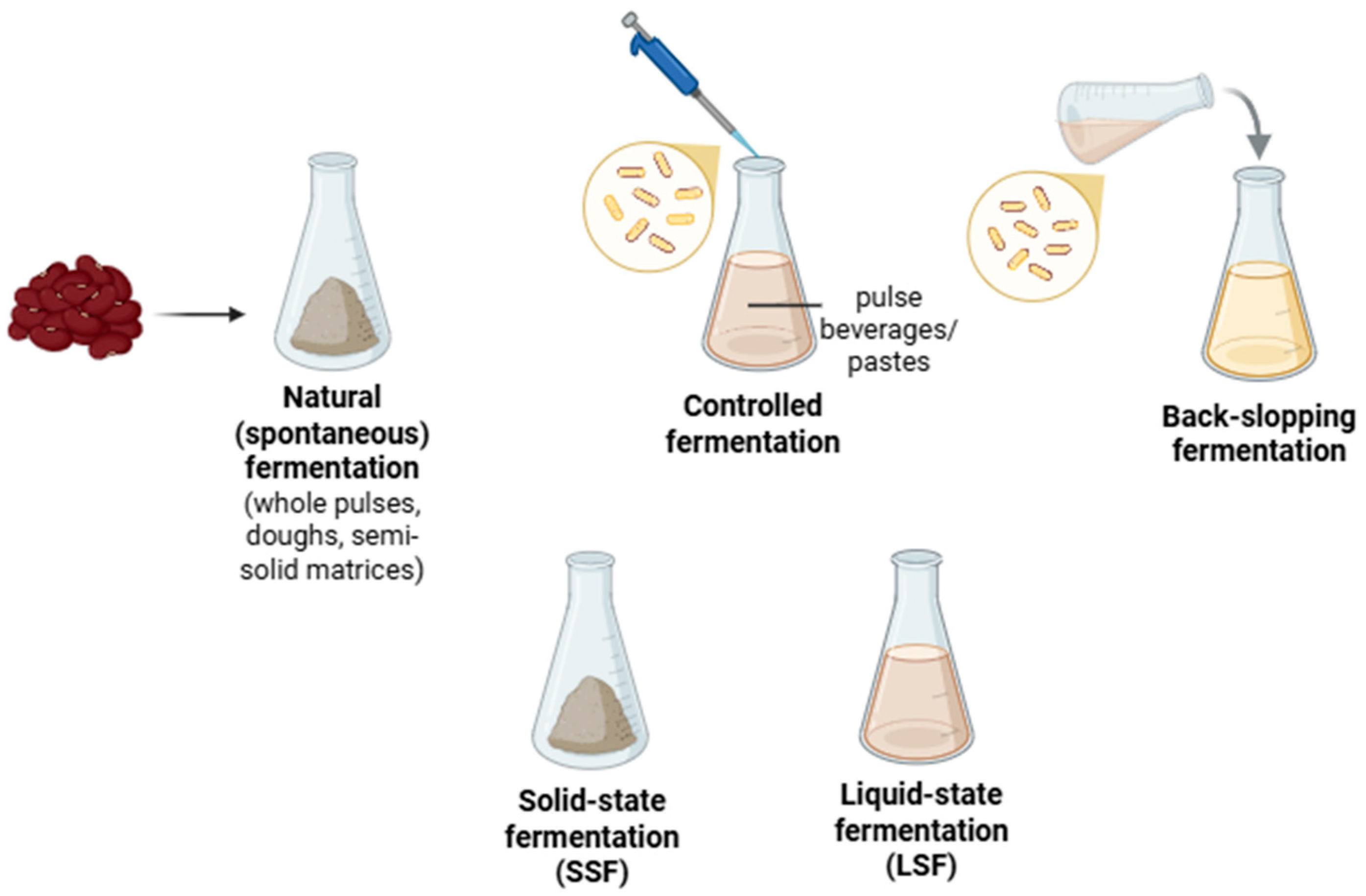
Figure 1. Fermentation classification. The figure was created with Biorender.com.
Fermentation 12 00018 g001
Figure 2. Schematic representation of the proteolytic system of LAB. CEPs: cell-envelope proteinases, Opp: oligopeptide permease, DtpT: ion-linked transporter, Dpp: ABC transporter. PepX corresponds to a broad set of cytosolic peptidases (see text). The figure was created with Biorender.com.
Fermentation 12 00018 g002
Figure 3. Effects of pulse fermentation on functional and sensory attributes. The figure was created with Biorender.com.
Fermentation 12 00018 g003
Disclaimer/Publisher’s Note: The statements, opinions and data contained in all publications are solely those of the individual author(s) and contributor(s) and not of MDPI and/or the editor(s). MDPI and/or the editor(s) disclaim responsibility for any injury to people or property resulting from any ideas, methods, instructions or products referred to in the content.