Review

From Natural Defense to Synthetic Application: Emerging Bacterial Anti-Phage Mechanisms and Their Potential in Industrial Fermentation


1
State Key Laboratory of Food Science and Resources, School of Biotechnology, Jiangnan University, Wuxi 214122, China
2
Yixing Institute of Food and Biotechnology Co., Ltd., Wuxi 214200, China
*
Author to whom correspondence should be addressed.
Fermentation 2026, 12(1), 17; https://doi.org/10.3390/fermentation12010017 (registering DOI)
Submission received: 21 November 2025 / Revised: 16 December 2025 / Accepted: 23 December 2025 / Published: 29 December 2025
(This article belongs to the Special Issue Feature Review Papers in Industrial Fermentation, 2nd Edition)

Abstract

Bacteriophage contamination remains a persistent and costly challenge in industrial bio-manufacturing. Traditional control strategies rely heavily on physical exclusion and chemical disinfection, yet these passive measures often fail to address the rapid evolutionary adaptation of phages and their persistence in complex fermentation environments. Recent genomic and biochemical discoveries have revealed a diverse arsenal of bacterial antiviral immune systems beyond the classical Restriction-Modification and CRISPR-Cas pathways, including cyclic oligonucleotide-based signaling systems and various abortive infection mechanisms. This review systematically summarizes the latest advances in bacterial anti-phage defense mechanisms, categorizing them into adsorption inhibition, replication interference, nucleic acid degradation, and population-level suicide defense. Furthermore, we discuss the application of synthetic biology in integrating these defense modules to construct broad-spectrum “pan-immune” microbial chassis. This active defense strategy offers a fundamental solution to phage predation and provides a theoretical basis for developing robust next-generation cell factories.

1. Introduction

Microbial fermentation serves as the cornerstone of the modern bioeconomy, encompassing the production of pharmaceuticals, commodity chemicals, and food ingredients [1]. However, the stability of these bioprocesses is perpetually threatened by bacterio-phages, the most abundant biological entities on Earth [2,3]. In the high-density culture environments typical of industrial fermenters, the rapid lytic kinetics and high burst size of phages can lead to catastrophic culture collapse within hours [4], resulting in significant economic losses and production downtime.
Historically, the industrial response to phage contamination has been predominantly defensive. Standard protocols involve rigorous sterilization of raw materials, installation of high-efficiency air filtration systems, and the rotation of phage-resistant bacterial strains [5]. While these physical and chemical countermeasures provide a baseline level of protection, they suffer from inherent limitations. Physical barriers cannot guarantee absolute sterility in large-scale operations, and chemical agents often pose risks of residue accumulation or equipment corrosion [6]. Moreover, the “arms race” between bacteria and phages drives the rapid emergence of mutant phages capable of overcoming simple receptor modifications or single-mechanism resistances found in rotation strains [7,8].
A promising paradigm shift lies in enhancing the intrinsic immunity of the production host. In natural ecosystems, bacteria have evolved sophisticated multi-layered defense networks to survive phage predation. Advances in bioinformatics have recently unveiled a vast landscape of prokaryotic immune systems. Beyond the well-characterized Restriction-Modification (R-M) and CRISPR-Cas adaptive immunity, novel mechanisms such as BREX, DISARM, and signaling-based systems like CBASS and Thoeris have been identified. These systems employ diverse strategies ranging from direct nucleic acid cleavage to metabolic arrest via second messenger signaling, effectively creating a “firewall” against viral intrusion [9,10].
Leveraging these natural defense mechanisms through synthetic biology offers a transformative approach to industrial strain development. By systematically engineering production hosts with orthogonal and complementary defense modules, it is possible to create “chassis” cells with broad-spectrum resistance that do not compromise production performance [11]. This review aims to synthesize current knowledge on these emerging bacterial immune mechanisms and evaluate strategies for their integration into industrial strains. We focus on the transition from passive contamination control to the active design of robust cellular factories, providing a roadmap for securing future biomanufacturing processes against viral threats.

2. Bacteriophages in Industrial Fermentation

2.1. Diversity and Characteristics of Industrial Bacteriophages

Bacterial hosts employed in industrial fermentation are besieged by a diverse array of bacteriophages. The vast majority belong to the order Caudovirales, characterized by double-stranded DNA (dsDNA) genomes and distinct head-tail structures, representing over 96% of observed phages [12]. Based on tail morphology, these are traditionally categorized into Myoviridae (contractile tails), Siphoviridae (long, non-contractile tails), and Podoviridae (short tails), a nomenclature still prevalent in literature despite recent taxonomic revisions by the ICTV [8]. Filamentous phages (family Inoviridae, ssDNA), while present, are less frequently encountered in industrial settings [1].
Different host species exhibit distinct phage susceptibility profiles. Escherichia coli production systems frequently encounter T-series phages (e.g., T4 of Myoviridae, T7 of Podoviridae) and phage lambda (Siphoviridae), which primarily infect E. coli and closely related strains [13,14]. Lactococcus lactis fermentations are often compromised by Siphoviridae members like the 936 and c2 species; notably, approximately 80% of lactococcal phages isolated from U.S. cheese factories belong to the 936 species [15,16]. Similarly, Bacillus fermentations for enzyme production face threats from phages such as phi29 (Podoviridae, small genome) and SPO1 (Myoviridae, large genome) [16]. While most industrial phages exhibit narrow host ranges—infecting specific species or strains—some, like the E. coli phage P1, possess broader host ranges capable of crossing genera within Enterobacteriaceae [3]. Overall, phage specificity is strictly dictated by recognition structures like tail fibers, resulting in highly specific host-phage interactions [17].
Life cycle parameters of industrial phages vary by species and culture conditions but generally fall within characteristic ranges. Typical latent periods span 20–60 min, with burst sizes ranging from dozens to hundreds of virions [18]. For instance, phage T4 exhibits a latent period of approximately 25 min at 37 °C, releasing an average of 100 progeny per cell; conversely, other phages may have latent periods as short as 10 min or extending to 2 h, with burst sizes varying from fewer than 10 to several hundred. Adsorption rates, governed by tail fiber recognition efficiency and diffusion, typically range from 10−9 to 10−7 PFU/min, allowing for the infection of the majority of a high-density population within minutes [19].
In industrial environments, the threat of phages is exacerbated by their environmental robustness, which often exceeds that of vegetative bacteria regarding temperature, pH, and osmotic stress. Most phages survive long-term at 4 °C or in lyophilized states and remain stable between pH 5 and 9 [20]. While extreme pH (<4 or >11) is effective for inactivation, such conditions are rarely feasible within fermentation systems. Phages generally exhibit higher thermal stability than vegetative bacterial cells; while 55–60 °C treatments require extended durations for inactivation, some phages endure 70 °C for tens of minutes or survive brief exposure to 90 °C [2]. For example, certain E. coli phages reportedly survive 60 min at 70 °C and remain partially active after 10 min at 90 °C [21]. Furthermore, many phages demonstrate significant osmotolerance, maintaining infectivity in saline media (0.5–6% NaCl) or seawater (~3.5% NaCl) [5]. Consequently, standard pasteurization (72–85 °C) may fail to completely eliminate phage threats, necessitating more rigorous sanitization protocols in downstream processing [6].
Phage-host recognition is mediated by specific surface receptors, to which phages bind via adsorption structures such as tail fibers to initiate genome injection [22]. For Gram-negative bacteria, primary receptors include outer membrane polysaccharides and proteins (Table 1) [23]. For example, phage T4 requires the recognition of specific terminal glucose residues on the lipopolysaccharide (LPS) core, followed by binding to the outer membrane porin OmpC to trigger infection [24]. Phage lambda utilizes the maltose channel protein LamB as a receptor, while phage chi targets the bacterial flagellum [25]. Phage T5 specifically depends on the ferrichrome transporter FhuA [26]. In Gram-positive bacteria (e.g., lactic acid bacteria, Bacillus), phages predominantly target cell wall components such as wall teichoic acids (WTA) and lipoteichoic acids (LTA) [27]. For instance, the Bacillus phage SPbeta utilizes WTA as its primary receptor, characterized by a ~90 min latent period and a small burst size [28,29]. Ultimately, receptor specificity dictates host range and infection efficiency; consequently, host mutations, such as receptor deletion, often block infection [30]. In summary, while specific phage types vary across industrial strains, they share common characteristics—short life cycles, rapid proliferation, and high environmental durability—enabling them to cause massive bacterial lysis and production collapse within hours of intrusion [31].

2.2. Threats Posed by Bacteriophages to Industrial Fermentation

Throughout an industrial fermentation workflow, bacteriophages can infiltrate at multiple points, causing production interruptions or performance degradation. Critical vulnerabilities include the seed culture stage (where a contaminated starter inoculum amplifies phages during scale-up); inoculation and sampling events (during which environmental phages may enter through air exposure or equipment contact when reactors are opened); and ventilation or feeding systems (through which phages penetrate via unfiltered air or insufficiently sterilized additives). Inadequate Clean-in-Place (CIP) or Sterilization-in-Place (SIP) procedures, as well as equipment dead zones, can harbor residual phages that seed subsequent batches [32]. Phage incursions are broadly categorized as primary contamination, introduced from external sources (e.g., raw materials, personnel), versus secondary contamination, arising from the proliferation and dispersal of high-titer phages within the facility (e.g., from an earlier infected batch) [33]. Primary contamination typically stems from lapses in material handling or hygiene, seeding low phage titers into the system. By contrast, secondary contamination indicates that phages have established reservoirs in the production environment or equipment, leading to recurrent high-titer infections in subsequent batches. Once secondary contamination is established, control becomes markedly more difficult due to the continual cycling of phages within the facility [34].
Even when introduced at extremely low doses, phages can proliferate rapidly, triggering production failures within a short timeframe. Empirical data from large-scale fermentations indicates that culture performance declines noticeably when phage titers reach approximately 104 PFU/mL; if concentrations escalate to the 105–106 PFU/mL range, the fermentation process typically faces total failure [2]. For instance, in lactic acid fermentation, acid production rates decelerate significantly at 105 PFU/mL and may cease entirely above 106 PFU/mL, necessitating the disposal of the entire batch [1]. Historical cases underscore the magnitude of economic losses caused by phage-induced yield reduction or shutdowns. The Commercial Solvents Corporation (CSC) acetone-butanol plant experienced a ~50% yield collapse lasting nearly a year due to phage contamination, forcing a substantial expansion of fermentation capacity to compensate [1]. In more recent history, European vinegar factories in the 1980s suffered continuous phage outbreaks with titers reaching 109 PFU/mL, causing drastic drops in conversion rates and severe financial losses [1]. Alarmingly, traditional disinfectants like hydrogen peroxide proved largely ineffective against these phages, compelling facilities to halt production for rigorous equipment modification and deep cleaning to eradicate the contamination. Thus, whether in food fermentation (dairy, brewing, fermented vegetables) or industrial biotechnology (solvents, amino acids, antibiotics), massive phage proliferation invariably leads to yield losses (often exceeding 20%) or total batch rejection, resulting in incalculable direct economic losses and operational disruptions [3].
An even more insidious aspect of phage contamination is the lagging detection and diffuse spread, which make early warning and localized containment extremely challenging. In the initial stages of infection, there may be no obvious process anomalies—e.g., in dairy fermentations, the first batch’s acidification profile can appear normal [3]. Yet as phages carry over via whey into subsequent fermenters, acid production rates progressively decline until a complete arrest occurs. By the time operators notice a deviation (e.g., slowed acidification or product formation), phage titers often have reached irreversible levels. At that point, adding fresh inoculum cannot salvage the fermentation, and terminating the batch becomes the only option. Traditional detection methods face inherent limitations. Although plaque assays are the standard for detecting the lytic phages responsible for fermentation collapse, they require incubation periods (typically >24 h) that are too slow for timely intervention. Moreover, this method may miss non-lytic or temperate phages that do not form visible plaques yet still burden host metabolism. Consequently, the industry relies heavily on indirect process indicators (pH trends, acid production rate, product titer) to infer a potential phage issue. Once a phage intrusion is suspected, the affected batch is usually halted immediately to trace and eliminate the source. Unfortunately, this reactive, post hoc strategy often fails to prevent losses and may miss the optimal window to curb further spread. In summary, phage threats in industrial fermentation are characterized by short latent periods, explosive population bursts, and broad dissemination. Once a phage penetrates the production system, it can decimate the entire culture within hours to days, severely compromising yield and quality. Therefore, phages must be treated as a major operational risk, warranting comprehensive prevention, vigilant monitoring, and rapid-response protocols to minimize their impact.

2.3. Traditional Phage Control Measures

To mitigate phage threats, the industry has long established a multi-layered defense framework encompassing physical containment, chemical disinfection, and process management. Among physical control measures, the rigorous sterilization and filtration of air, media, and additives are paramount. For instance, the installation of hydrophobic filter membranes (0.1–0.2 µm pore size) in ventilation systems effectively intercepts airborne phage particles, while sterile filtration or high-temperature sterilization of liquid media and feed solutions minimizes initial bioburden [35]. Some facilities employ ultraviolet (UV) irradiation systems to continuously sanitize air and equipment surfaces, achieving rapid inactivation of exposed virions; however, UV efficacy is strictly limited to direct lines of sight, leaving “shadow zones” on equipment vulnerable. High-temperature protocols remain the standard for equipment sanitation: alkaline washes at 80–90 °C significantly reduce phage activity, while Steam-in-Place (SIP) at 121 °C ensures the sterilization of vessels and piping. While terminal sterilization in batch fermentation effectively blocks cross-batch transmission, continuous fermentation processes, which lack downtime for inter-batch sterilization, remain inherently vulnerable to contamination once physical barriers are breached, necessitating alternative remedial strategies.
Regarding chemical control, the industry utilizes a diverse spectrum of disinfectants, including chlorine-based agents, peroxides, alcohols, and quaternary ammonium compounds (QACs). However, many conventional bactericides exhibit limited virucidal efficacy against phages. Surveys indicate that sanitation protocols in numerous factories lack validated phage-inactivation components. Crucially, lacking lipid envelopes, most phages display significant resistance to membrane-disrupting agents like alcohols and QACs [35]. Conversely, strong oxidizing agents such as chlorine and peroxides are more effective but require high concentrations that pose risks of equipment corrosion and chemical residues, conflicting with strict food and pharmaceutical safety standards. Furthermore, chemical disinfectants are impotent against intracellular phages already sequestered within host cells. Consequently, chemical control is primarily reserved for environmental hygiene, requiring a delicate balance between potency and safety. While high concentrations of sodium hypochlorite or peracetic acid can eradicate phages, rigorous rinsing validation is essential to prevent residual toxicity. Historically extreme measures, such as formaldehyde fumigation, have been phased out due to safety regulations. Effective chemical control systems typically require combinatorial approaches with extended contact times and strict validation regimes to reduce phage loads to negligible levels.
Process management strategies play a pivotal role, particularly through strain rotation and the breeding of phage-resistant cultivars. In the dairy industry, strain rotation systems are well-established; factories alternate between distinct sets of functionally equivalent strains to disrupt the propagation cycles of strain-specific phages. Adjusting process strategies also mitigates risk; for example, replacing long-cycle continuous fermentation with fed-batch modes confines contamination impacts to single batches, preventing cascading failures. High-value biopharmaceutical processes increasingly adopt single-use bioreactors (SUBs), such as disposable bag fermenters, to eliminate equipment-associated carryover risks at the hardware level. Additionally, stringent personnel and environmental management, including gowning protocols, positive pressure zoning, and rigorous waste inactivation, serves as a critical firewall against external phage introduction and internal circulation. While these measures incur additional operational costs, they significantly reduce the probability of large-scale outbreaks. The intensity of phage control investment generally correlates with regulatory and economic stakes: the pharmaceutical sector maintains high sterility standards regardless of cost, whereas the food industry, characterized by more open processes and lower margins, continues to face frequent phage incidents.
In summary, traditional control measures offer partial solutions with specific limitations. Physical and chemical barriers rarely guarantee absolute eradication, often necessitating complex, combinatorial approaches that increase operational costs. Moreover, these interventions can induce side effects; frequent harsh disinfection may damage equipment or inhibit sensitive production strains, while strain rotation can introduce batch-to-batch product variability. Furthermore, strategies are not universally transferable; the rotation logic of dairy fermentation is ill-suited for single-strain chemical production, and the single-use technologies of pharma are economically unviable for bulk commodity fermentation. Consequently, despite reducing the frequency of accidents over past decades, traditional methods cannot fundamentally eliminate the phage threat. In modern high-density fermentation, where even trace contamination can trigger catastrophic failure, achieving genuine production security requires shifting focus from external containment to enhancing the intrinsic phage resistance of the host. The following section explores the emerging strategy of developing “broad-spectrum anti-phage chassis cells,” a fundamental breakthrough that promises more robust biosecurity for industrial fermentation.

2.4. Development Needs for Broad-Spectrum Phage-Resistant Chassis Cells

Traditional phage control focuses on externally blocking viruses, without addressing infections that slip through. This realization is driving a paradigm shift: the creation of broad-spectrum phage-resistant chassis strains. The idea is to use systems engineering and synthetic biology to reprogram the production host itself with built-in immunity to a wide array of phages [10]. Initially demonstrated in E. coli, the approach can extend to other workhorse microbes. The key is integrating multiple defensive modules in the host, covering everything from adsorption inhibition and DNA injection blockage to replication interference, so that the cell attains an “active immunity” against diverse phages. Tactics to achieve this include selecting or evolving Bacteriophage-Insensitive Mutants (BIMs) and introducing plasmid-encoded defense systems to augment the host’s native resistance. Unlike single-point defenses (e.g., just air filtration or a single resistance gene), a multi-layered resistant chassis serves as a biological firewall: even if phages enter the bioreactor, they cannot successfully propagate inside the fortified host, thus preserving process stability. This active-defense chassis concept marks a fundamental shift away from purely passive protection, and it promises to greatly lower both the likelihood and severity of phage contamination by adding robust internal barriers at the cellular level. While this strategy is primarily applicable to genetically amenable industrial hosts (e.g., E. coli, B. subtilis, C. glutamicum) widely used in biomanufacturing, it offers a theoretical framework that may eventually benefit traditional fermentation strains as genetic tools advance.
Creating such phage-resistant chassis cells entails a careful balance between maximal immunity and minimal cost to the host’s productivity. On one hand, the installed defenses must collectively cover a broad range of phage types and infection strategies. Achieving this breadth often requires combinations of interventions. For example, removing or altering primary phage receptors on the cell surface, and simultaneously inserting multiple defense gene modules (e.g., R-M enzymes, Abi toxin–antitoxin systems, CRISPR-Cas, plus newly discovered systems like BREX, DISARM, or Dnd) can target phages at different stages. On the other hand, loading a cell with many defenses can impose metabolic burden or other physiological side-effects. Thus, engineered strains must be rigorously tested to ensure they still meet key performance benchmarks: growth rate and biomass comparable to the parent strain, maintained product yield, titer, quality, genetic stability of the inserted modules, and retention of these traits even under intense phage attack. Defining quantitative acceptance criteria for these parameters is vital when validating any candidate chassis. Encouragingly, recent work by Zou et al. demonstrated a viable path forward [11]. By combining a DNA phosphorothioation-based Ssp defense system with knockouts of several host genes indispensable for phage replication, they built an E. coli strain with broad phage resistance. In trials, this engineered chassis resisted all tested phages and exhibited growth kinetics indistinguishable from the wild-type host. Even when continuously challenged with a high-titer phage cocktail, the strain maintained normal yields and activity of a recombinant product. This case study confirms that multi-pronged resistance strategies can be both feasible and effective under real-world fermentation conditions.
Broad-spectrum phage-resistant chassis have the potential to revolutionize biomanufacturing security by addressing phage risks at their root [36]. If robust phage-immune production strains can be developed, they may significantly reduce the need for many cumbersome current practices, such as constant sterilization, extensive strain rotations, or emergency shutdown protocols, thereby simplifying operations and increasing overall process reliability. To reach this goal, however, several challenges must be overcome. Different defense elements may not always cooperate optimally in one cell, and the metabolic cost or genetic instability of heavy engineering could impact performance. Additionally, deploying such genetically modified organisms will require careful consideration of regulatory and biosafety guidelines. Despite these hurdles, rapid progress in synthetic biology and systems bioengineering is bringing this vision closer to reality. It is likely that in the near future, we will see the industrial chassis microbes endowed with broad-spectrum phage immunity, a breakthrough that addresses the core limitations of traditional anti-phage measures and pushes the fermentation industry toward new heights of security and continuity.

3. Research Progress on Bacterial Anti-Phage Systems

Industrial bacteria have evolved a rich, multi-layered immune system against phages through eons of co-evolution. Early studies focused on “innate” defenses like restriction–modification (R-M) and abortive infection (Abi) systems, but the discovery of CRISPR-Cas adaptive immunity greatly expanded our appreciation of bacterial antiviral strategies. More recent pan-genomic surveys have revealed that the defensive arsenal is far more expansive than previously thought [37,38]. Scientists continue to uncover a steady stream of novel anti-phage genes and systems with diverse modes of action. To date, over 100 distinct anti-phage systems have been identified across bacterial genomes [39], including examples such as Thoeris, CBASS (Cyclic oligonucleotide-Based Anti-Phage Signaling System), retrons, Gabija, RADAR, and even prokaryotic Argonaute nucleases (pAgos) [40].
These novel mechanisms employ distinct strategies ranging from foreign nucleic acid degradation and modification to membrane disruption. Triggered by specific cues, these systems rely on core protein complexes to intervene at various stages of the phage life cycle, producing diverse antiviral outcomes. Concurrently, phages have evolved counter-defense measures, resulting in a complex host-phage evolutionary arms race. Based on the stage and mode of action, these mechanisms can be broadly categorized as follows: (1) blockade of phage adsorption and genome injection; (2) interference with replication and transcription (via non-nucleolytic pathways); (3) targeted cleavage or degradation of phage nucleic acids; and (4) abortive infection immunity mediated by host suicide or signal amplification. The following sections review recent progress in these mechanisms within the context of industrial microbiology.

3.1. Anti-Phage Methods Based on Blocking Adsorption

Surface receptor-based defenses: The most immediate way for bacteria to avoid infection is to prevent phage adsorption and DNA injection at the outset. Many bacteria naturally become less susceptible by altering or hiding their phage receptors. For example, cells may mutate the receptor protein’s binding site to reduce phage recognition, or they can modify surface polysaccharides (such as O-antigens on LPS or components of the capsule) to create a physical barrier [41,42]. Some microbes even use phase-variable expression to intermittently turn receptors off. These forms of receptor escape are commonly observed both in Gram-negatives and lactic acid bacteria as a means of acquiring phage resistance [43]. Additionally, cells can secrete abundant exopolysaccharides (EPS) or form a biofilm-like slime layer that physically occludes receptor access, thereby slowing adsorption [44]. While such surface modifications markedly impede phage attachment, they impose a fitness cost (e.g., slower growth) and often provoke phages to counter-adapt their tail fibers to the new receptor variant [45]. Thus, receptor-based immunity is a continually shifting “arms race” equilibrium between bacterial innovation and phage adaptation.
Beyond altering receptors, some bacteria deploy superinfection exclusion (Sie) systems to actively block phage DNA entry [46]. These systems, often carried by prophages or plasmids, encode membrane proteins that sense when a phage tail has attached and then prevent the phage DNA from crossing the membrane into the cytoplasm [47]. For example, two recently characterized systems dubbed Bunzi and Shango each encode a membrane protein with a TerB domain that appears to “monitor” the cell envelope for phage entry attempts [22,48]. Upon phage binding, these proteins somehow obstruct the DNA injection process. Experiments have shown that the Shango system, in particular, provides effective resistance to phage infection in Pseudomonas aeruginosa [23,47]. In addition, many lysogenic bacteria are naturally protected by superinfection immunity: an integrated prophage’s repressor protein will prevent related phages from successfully initiating an infection, thereby conferring population-level immunity against those phages. Summary: During the earliest infection stage, bacteria can establish a defensive perimeter through a variety of means—ranging from receptor loss or masking, to producing slime layers, to actively blocking DNA injection via membrane proteins. These strategies can be exploited to enhance phage resistance in industrial strains, serving as the first line of defense.

3.2. Anti-Phage Mechanisms Based on Inhibiting Replication and Transcription

Once a phage has successfully injected its genome, the host cell can still halt the infection by stalling phage replication and gene expression internally. These defenses do not immediately destroy the phage DNA (unlike nucleases) but instead disrupt the viral life cycle through other means, buying time or preventing the phage from completing its replication. The main non-destructive interference strategies will be introduced in the following text.
(1)
Repression of Phage Replication Complexes: It was recently discovered that some bacteria produce multi-protein complexes that effectively freeze phage DNA replication at the outset, without cutting the DNA. One example is the Kiwa system, identified in E. coli O55:H7, is a representative example [49]. Kiwa consists of a membrane-anchored sensor protein (KwaA) and a DNA-binding effector protein (KwaB). When a phage adsorbs to the cell surface, KwaA’s periplasmic loop detects this attachment and triggers KwaB to rapidly seize the incoming phage DNA at the inner membrane. By tightly binding the phage DNA, KwaB halts replication initiation and blocks late-gene transcription—without destroying the DNA or killing the host. Because the phage infection is immediately “frozen,” no progeny is produced and the host cell remains alive (Figure 1). This non-suicidal interference is especially valuable in industrial fermentations, as it preserves biomass. However, phages can fight back. Phage T4, for instance, encodes the Gam protein, which imitates a DNA end and binds the KwaB site to inhibit the Kiwa complex. Bacteria in turn reinforce Kiwa with backup: Kiwa loci are often found alongside the host’s RecBCD nuclease [50]. RecBCD will degrade loose phage DNA ends, making it harder for Gam to concurrently block both defenses. Once RecBCD activity removes Gam’s interference, Kiwa can resume its function, thereby restoring robust protection.
(2)
Metabolic/Biosynthetic Interference and Toxin-Antitoxin Systems: Many bacterial stress responses to phage involve TA systems that slow or stop cellular metabolism, thereby hindering phage replication. In essence, these act like “mild” abortive infections, damping growth rather than immediately killing the cell. For instance, the CapRel system (a Type II TA) is activated by sensing a phage major capsid protein. When triggered, the antitoxin is degraded and the CapRel toxin is released, which then cleaves specific host tRNAs (Figure 1). This shut-down of protein synthesis halts both host and phage processes, blocking phage production [51,52]. Likewise, the DarTG system (Type IV TA) modifies phage DNA: the DarT toxin ADP-ribosylates the phage genome, preventing normal replication and transcription [53]. Importantly, TA-based defenses are often phage-responsive—they impose their toxic effect only upon detecting a phage signal. For example, T4 infection causes host transcription to cease, which is a cue that activates certain host RNase toxins (like RnlA/RnlB or ToxIN) to start indiscriminately cleaving RNA [54]. These responses may put the host into stasis or even kill it, but crucially, they abort the phage infection before maximal virion production, essentially “trapping” the phage inside a non-growing or dead cell. This curtails phage amplification in the overall population.
(3)
Epigenetic Modification and Resource Limitation: Some defenses work by altering DNA chemistry or starving phage processes of resources. The BREX system, for example, modifies the host DNA with unique methylation or phosphorothioate marks [55,56]. Any invading phage DNA lacking these marks is recognized as foreign, and BREX somehow blocks its replication (by an unclear mechanism) without cutting it, drastically reducing phage yield (Figure 1). BREX systems are found in roughly 10% of sequenced bacteria [57]. Similarly, the Dnd system adds phosphorothioate groups to the host genome; phage DNA that is not similarly modified gets selectively attacked by host nucleases, akin to a twist on the restriction-modification concept [58,59]. Bacteria can also slow phage growth by limiting key metabolites. The Gabija defense is illustrative: it has two components, GajA (a nuclease) and GajB (an ATP-binding protein). Under normal nutrient conditions, high nucleotide levels keep GajA inactive. But when a phage infection rapidly depletes the host’s nucleotide pools (dNTPs, NAD+), GajA is unleashed to nick phage DNA, stalling replication forks [60,61]. In this way, Gabija acts as a sensor of phage-induced resource theft: harmless to the host when nutrients are plentiful, but quick to attack phage DNA when the phage is consuming nucleotides. Another multi-gene defense, DISARM (“defense island associated with restriction-modification”), combines several enzymes to concurrently impede phage DNA replication and transcription [62]. Summary: The mechanisms above illustrate how bacteria can stall phage reproduction by means other than direct DNA cleavage—be it through epigenetic discrimination, metabolic booby-traps, or global resource withdrawal. These systems often operate alongside nucleolytic defenses in the same strain, collectively fortifying the cell’s anti-phage arsenal [22,23].

3.3. Anti-Phage Mechanisms Based on Targeted Phage Clearance

Upon the entry of viral DNA into the host cell, one of the most direct and effective bacterial defense strategies is the recognition and cleavage of foreign nucleic acids. These mechanisms typically rely on endonucleases to fragment and degrade the phage genome, thereby fundamentally eliminating the infection threat.
(1)
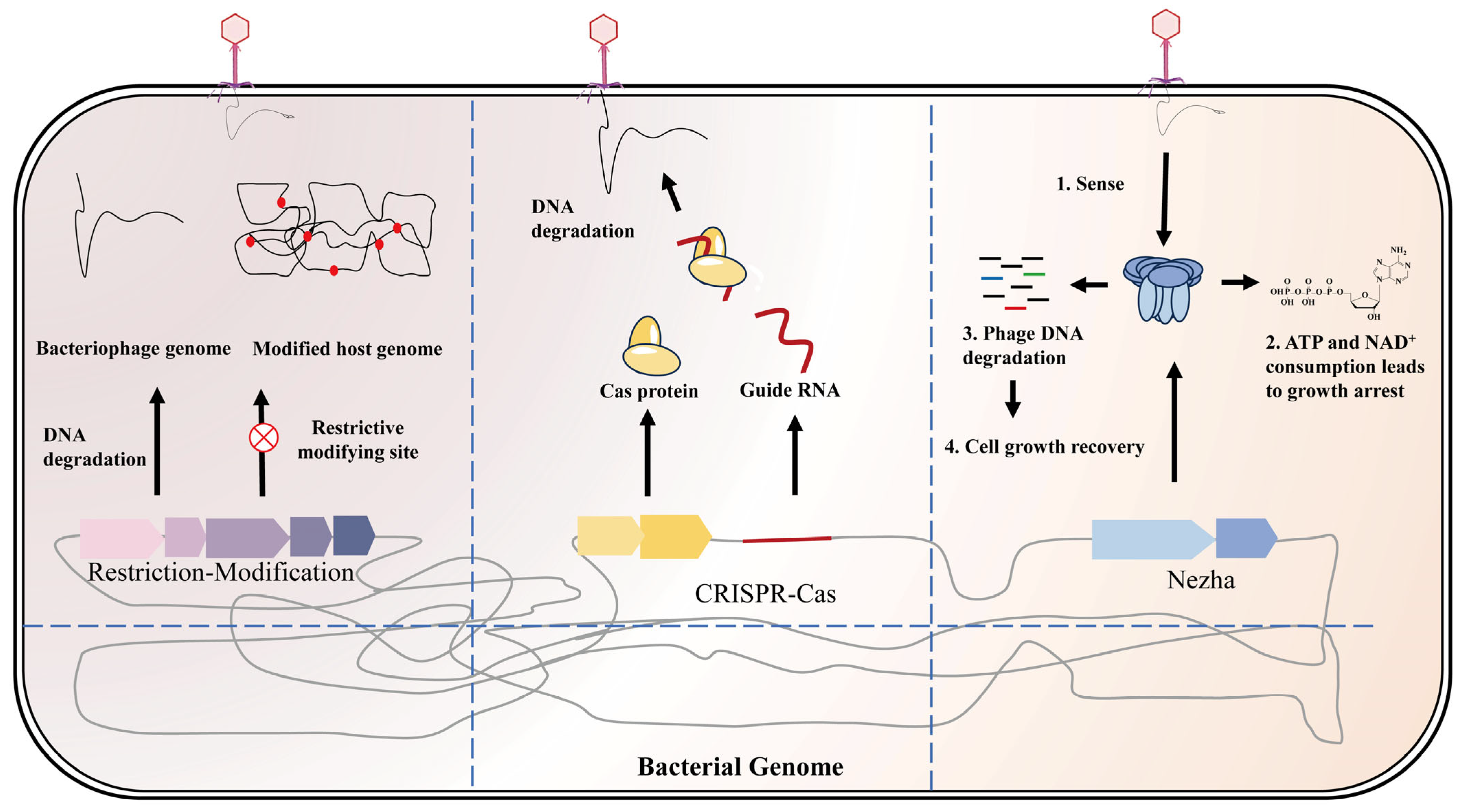
Restriction-Modification (R-M) Systems: The canonical bacterial defense is the restriction enzyme system, paired with a DNA methylase. The host’s methyltransferase tags its own genome at specific sequences; any incoming DNA lacking those methylation marks is recognized as foreign and cleaved by the restriction endonuclease. R-M systems (especially Types I–IV) are found in ~75% of bacteria [22]. Classic Type II R-M enzymes (e.g., EcoR I) cut at a defined short DNA sequence, while Type I/III systems bind a recognition site but cleave the DNA some distance away. Bacteria have even evolved modification-dependent restriction enzymes to counter phages that chemically modify their DNA (Figure 2). For example, phage T4 glycosylates its 5-hydroxymethylcytosine (5hmC) bases to evade normal restriction enzymes. E. coli counters with enzymes like PvuRts1I, which specifically recognize 5hmC or its glucosylated form and cut the phage DNA despite its camouflage. In summary, R-M systems distinguish self vs. non-self based on DNA methylation patterns and slice up invader DNA accordingly. They remain a foundational tool (and a go-to engineering strategy) for protecting production strains from phage contamination.
(2)
CRISPR-Cas Adaptive Immunity: This system is the bacterial equivalent of a “memory” immune system [63,64,65,66,67]. After surviving a phage attack, a bacterium may integrate snippets of the phage DNA (spacers) into its CRISPR array. Later, if the same phage attacks again, the bacterium transcribes these spacers into CRISPR RNAs (crRNAs) that guide Cas nucleases to the matching phage sequence, cutting the invader’s DNA. There is a wide variety of CRISPR-Cas systems (Figure 2). Generally, Type I and II CRISPR systems target dsDNA. For instance, the well-known Type II-A CRISPR (Cas9) uses a guide RNA to cleave specific phage DNA sequences with surgical precision. Type III CRISPR systems provide a twist: they detect phage RNA transcripts rather than DNA. When a Type III complex binds a phage mRNA, it cleaves that RNA and simultaneously the Cas10 subunit generates a second messenger (cyclic oligoadenylate, cOA) from ATP [68]. This cOA then activates auxiliary nucleases like Csm6/Csx1, which indiscriminately degrade viral RNAs, amplifying the defensive response. In Staphylococcus aureus, for example, the Type III-A system’s Cas10 produces cOA upon sensing target RNA, which activates Csm6 to aggressively degrade viral RNA—greatly enhancing phage clearance. This multi-layered response is conceptually similar to second-messenger cascades in mammalian innate immunity. Interestingly, bacteria sometimes coordinate different CRISPR types: e.g., accessory proteins Csx27/28 in a Type VI system can modulate the cOA pathway of a Type III system, fine-tuning the immune response for efficiency and avoiding excessive self-damage [69,70].
(3)
Helicase-Nuclease Complex Systems: A theme emerging from several new discoveries is paired enzymes, a helicase and a nuclease, that work together to demolish phage DNA. The helicase unwinds the phage’s double helix, and the nuclease follows behind, cutting the now-exposed single strands. This one-two punch circumvents many phage DNA protection tricks (like tight packing or secondary structures). For example, the Nezha defense system assembles a large complex of a Sir2-family NADase and a HerA-family helicase [71]. This complex has multiple activities (ATPase, helicase, nuclease) and is thought to sense phage DNA replication, then spring into action: it halts host cell growth and simultaneously chews up the phage genome, but after the threat is eliminated, it switches off to let the cell resume normal function (Figure 2). Notably, even well-known systems have similar components—Type I CRISPR’s Cas3 protein itself is a helicase-nuclease combo. Many recently named defenses also pair unwinding and cutting functions. A concrete example is Shedu: this system, containing a DUF4263-domain protein, serves as an endonuclease that often sits in a larger defense gene cluster, rapidly shredding phage DNA right after injection [72,73]. Another, Pycsar, uses a cyclic nucleotide signal to activate its nuclease component specifically when phage DNA is detected [74]. The proliferation of such multi-enzyme machines underscores how bacteria deploy highly sophisticated molecular tools to ensure any invading phage genome is efficiently unwound and destroyed on the front lines of infection.

3.4. The Final Line of Defense: Abortive Infection Systems

If a phage manages to overcome all earlier defenses and begins robust replication, bacteria have one final drastic option: abortive infection (Abi), essentially an act of cellular suicide to protect the colony. In an Abi response, the infected bacterium sacrifices itself by shutting down or rupturing, thereby preventing the phage from reproducing and spreading to kin. In the context of an industrial fermenter, triggering Abi means losing a few cells but potentially saving the culture as a whole from collapse. Thus, Abi systems are rightly called the last line of defense [74].
Toxin-Antitoxin (TA) System-Mediated Suicide Defense: Numerous abortive infection systems are built upon toxin–antitoxin pairs that trigger lethal conditions in the host once a phage is detected [74]. As mentioned earlier, many TA modules (e.g., AbiE/F in Lactococcus [75], RnlA/RnlB in E. coli [76,77]) double as anti-phage devices. For example, when phage T4 infects E. coli, it induces the host SOS response, which in turn degrades the RnlB antitoxin. Freed from inhibition, the RnlA toxin (an RNase) nonspecifically cleaves the cell’s RNA, abruptly halting metabolism and killing the cell—thereby cutting off the phage’s replication mid-cycle [54,77]. Similarly, in the ToxIN system, a phage-encoded protease specifically cleaves the ToxI antitoxin, unleashing the ToxN toxin to shred host tRNAs and rRNAs, causing rapid cell death [54]. Even systems previously discussed under non-lethal interference can ultimately function as Abi: for instance, CapRel’s tRNA cleavage and DarTG’s DNA ADP-ribosylation both irreversibly arrest growth or kill the cell, making them abortive in effect. The key distinction is semantic; earlier we described their mechanisms, but because their outcome is host self-destruction, they firmly qualify as Abi systems. In short, TA-driven Abi responses destroy essential host processes (protein synthesis, etc.) via various toxins, implementing a “scorched earth” tactic so the phage cannot successfully reproduce. Evolutionarily, this altruistic strategy thrives in high-density populations where sacrificing some individuals can save the community.
Host self-destruction mechanisms: Some Abi systems act by wrecking the host’s own structures when a phage is detected. For example, AbiZ in L. lactis triggers membrane depolarization, making the cell leaky and causing it to lyse before new phages can assemble [78]. Another recently named system, Lamassu, appears to combine an endonuclease with a DNA-condensing factor to induce a state resembling chromatin condensation and widespread DNA fragmentation, abruptly halting phage replication [79]. It is worth noting that the line between “non-lethal” defenses and Abi can blur: if a DNA-cleaving defense fires too aggressively, it effectively becomes abortive. Many nuclease-based systems from the previous section would be lethal if not carefully controlled. For instance, the Gabija system’s GajA nuclease could chop up host DNA and kill the cell if its activation were not strictly tied to phage-induced nucleotide depletion [60]. Thus, a strong regulatory check is what prevents some clearance systems from devolving into self-destructive Abi modes.
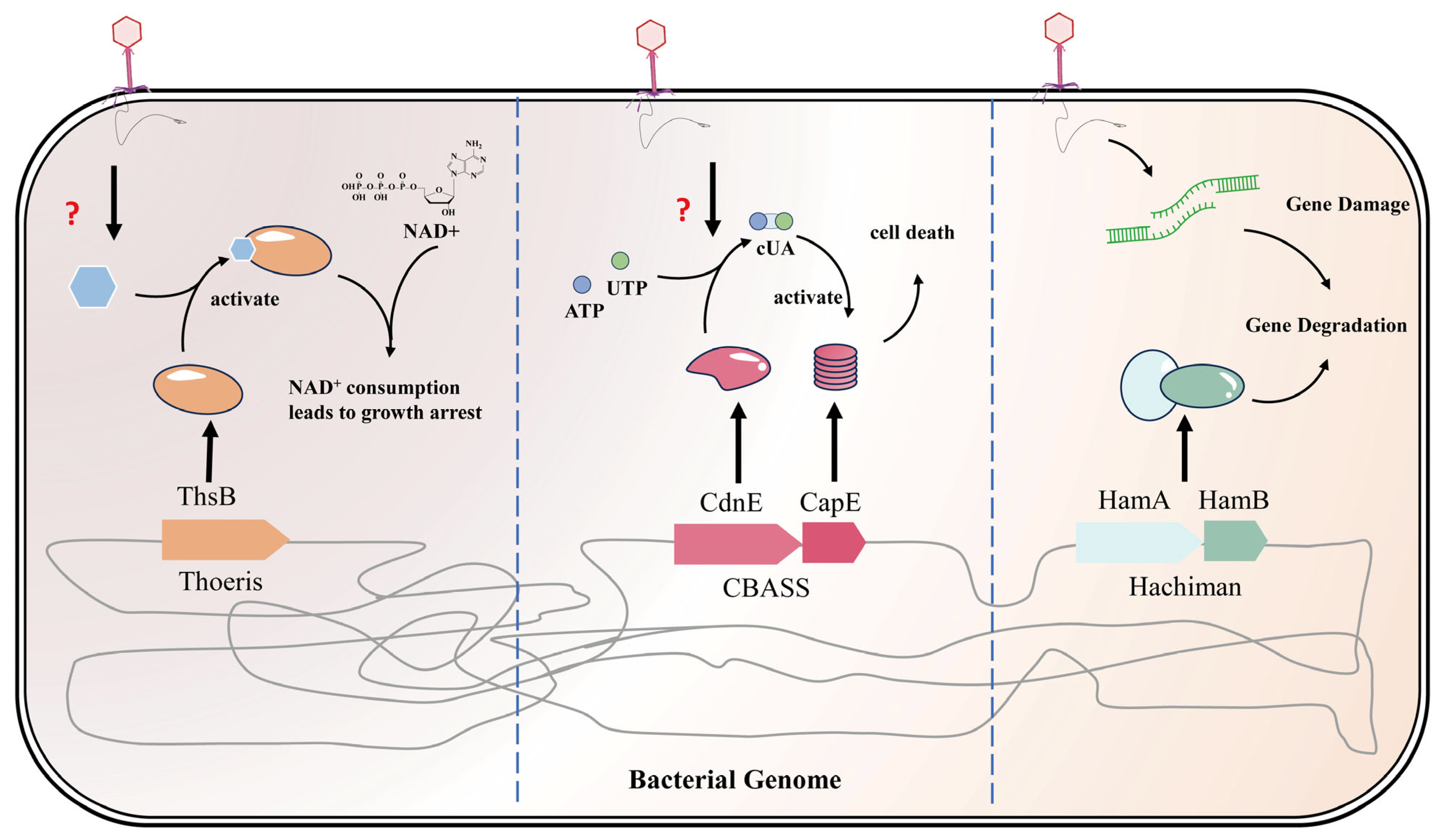
Signaling-Mediated Anti-Phage Immunity: Signal-amplified immunity (innate-like responses): Rather than acting in isolation, some bacterial defenses broadcast danger signals to activate potent downstream effectors, analogous to immune signaling in higher organisms. Two standout examples are CBASS [80,81] and Thoeris [82]. A typical CBASS locus includes a cyclic oligonucleotide synthase (CD-NTase) and one or more effector proteins. When a phage infects the cell, the CD-NTase senses a specific phage-associated trigger and churns out cyclic nucleotide second messengers (like cGAMP or c-di-AMP). These cyclic molecules act as alarms that bind and activate effector proteins, which then execute an abortive defense (killing or growth-arresting the cell to stop phage replication). CBASS systems are surprisingly common (found in ~17% of bacterial and archaeal genomes) and use a variety of effectors [22]. Some CBASS effectors are phospholipases (e.g., CapV/CapE) that, once activated, wreak havoc on the cell membrane, causing the cell to lyse. Others are nucleases (like NucC) that shred the cell’s own DNA, or pore-formers (Cap15 family) that punch holes in the membrane, or TIR-domain enzymes (SAVED-domain proteins) that destroy NAD+ and crash metabolism. For example, the CapV phospholipase in CBASS is normally an inactive dimer; when it binds the cyclic nucleotide signal, it polymerizes into active filaments that degrade the inner membrane lipids, lysing the cell [83]. Though the host dies, this dramatic action stops phage spread and gives surrounding cells a chance to survive (Figure 3).
Argonaute proteins, famous for RNA interference in eukaryotes, also exist in many bacteria and archaea. Some pAgo proteins can use small DNA or RNA guides (often derived from foreign genetic elements) to target and slice invading genetic material [84]. For example, the Argonaute from Thermus thermophilus uses short DNA guides to cut complementary DNA strands, thereby chopping up phage genomes. Though pAgos are found in fewer bacteria (~10% of species) compared to ubiquitous R-M and CRISPR systems, they offer yet another method for nucleic-acid-based immunity [61]. Intriguingly, scientists are exploring pAgos as programmable tools for gene editing and as potential new avenues for boosting bacterial antiviral defenses.
Thoeris and beyond: The Thoeris system, first found in Bacillus, operates on a similar “detect and signal” principle [82,85]. It comprises a sensor protein ThsB (with a TIR domain) and an effector NADase ThsA. When a phage infects, ThsB recognizes some aspect of the invasion and produces a distinctive cyclic ADP-ribose signal (cADPR) from NAD+. This signal molecule then binds ThsA, activating its NADase activity. ThsA proceeds to deplete cellular NAD+ wholesale, a fatal blow to the cell’s metabolism that results in cell death and aborted phage replication (Figure 3). Recent research has uncovered a Type II Thoeris variant: its TIR-domain sensor generates a different cyclic signal (a Histidine-ADPR molecule), which ThsA detects via a Macro domain before launching the NADase attack. In response, phages have evolved clever countermeasures. Some encode signal sponge proteins that specifically bind and neutralize these cyclic messengers (e.g., soaking up the His-ADPR), thus blocking Thoeris activation. This is a stark illustration of a signaling arms race [86]. Beyond Thoeris, other new systems also use paired components: Hachiman, for instance, has HamB (a helicase) and HamA (a nuclease). HamB travels along phage DNA using ATP, unwinding it, and HamA then cuts the unwound DNA [23]. The Hachiman system can provide a bacterial host (like E. coli) an impressive 100- to 10,000-fold increase in phage resistance. Another, Nhi in Staphylococcus aureus, is a single protein with both helicase and nuclease domains that together prevent phage DNA accumulation [87] (Figure 3).
Ongoing discoveries: Modern sequencing and bioinformatic mining are continually revealing new Abi/signal-based defenses. For example, retron elements (better known for producing multi-copy single-stranded DNA) have defense roles [88,89]: systems like Retron-Sen2 and CmdTAC link a reverse transcriptase with toxin components (like an N-glycosylase or ADP-ribosyltransferase) to kill infected cells in a multi-step process. Another recently described mechanism, whimsically named Kongming, co-opts a small phage protein (DNK) and a host cytidine deaminase (KomA) to generate an unusual nucleotide signal (dITP). This signal is recognized by KomB, which then activates an NAD+-degrading enzyme KomC, leading to cell death. Yet another, Zorya, monitors the cell’s membrane potential for disturbances associated with phage DNA injection; when such a change is sensed, Zorya triggers wholesale nucleic acid destruction and cell death [90].
In summary, abortive infection and immune signaling systems act as the bacteria’s do-or-die last resort, halting phage epidemics via individual cell sacrifice or by triggering community-wide alarms. In an industrial setting, these final defenses can be the difference between a contained incident and a runaway outbreak. The key challenge, however, is tuning these potent responses so they do not needlessly impair the production strain. Overzealous activation of suicide pathways or signaling effectors can exact a heavy toll on culture productivity. Thus, many Abi and signaling systems come with elaborate regulatory circuits to prevent unwarranted “friendly fire” and limit the collateral damage to the population [15,42].

4. Discussion

Defensive layers and integration: In industrial microbes, anti-phage defenses span the entire infection process. They can be seen as a layered network (see Table 1), with each class targeting a specific stage: blocking adsorption at the perimeter; halting replication or transcribing of phage genes in mid-cycle; and abortive/signal mechanisms as a last resort if earlier layers fail. Crucially, these layers are not independent silos. Most bacteria carry multiple defense systems in parallel, often clustered as “defense islands” in genomes, indicating they complement and reinforce each other. For example, an R-M system might catch some phage DNA that escapes CRISPR detection, and vice versa. The RecBCD system can mitigate the effects of phage anti-defense proteins (like T4’s Gam) that might otherwise shut down Kiwa or similar systems. Some TA toxins, as discussed, are wired into signaling cascades (e.g., CBASS or Thoeris) as extra executioners. This redundancy and crosstalk hint at a robust, networked immunity. For strain engineers, this natural layering suggests a design principle: by stacking multiple defense modules—both ones that block phage entry and ones that clear phage genomes—one could build a “pan-immune” chassis strain with much higher resilience to phages than any single strategy could afford.
In summary, the defensive repertoire of industrial microorganisms encompasses a continuum from early-stage adsorption inhibition to late-stage altruistic suicide, creating a rigorous anti-phage “immune web.” Natural defenses intercept invasion at the onset via receptor modification and superinfection exclusion; replication interference mechanisms retard or halt viral proliferation by suppressing replication and transcription; targeted nucleic acid clearance employs nucleases to irrevocably destroy the phage genome; and Abi/signaling immunity terminates the infection cycle through cell suicide or population-wide alerts. These mechanisms frequently co-occur within a single strain; statistics indicate that bacterial genomes harbor an average of 5–6 defense systems, with some strains possessing over 20. The coexistence of these multiple defense lines makes large-scale phage infection difficult in industrial fermentation environments, thereby safeguarding the stability of production strains.
However, the struggle between phage and host is a perpetual evolutionary arms race. Phages continuously evolve to evade host receptor dependency via mutation and, more actively, develop anti-defense systems to counteract bacterial immunity. The most prominent examples are Anti-CRISPR proteins (Acrs); many phage genomes encode acr genes whose products specifically bind to and inactivate Cas nucleases, rendering CRISPR-Cas immunity ineffective. To date, dozens of Acr proteins have been identified, and dedicated databases have been established for their prediction. In comparison, anti-defense factors targeting other systems like R-M or Abi remain less characterized. However, given the vastness of the bacterial immune arsenal, it is hypothesized that phages possess a rich, yet-to-be-discovered repertoire of countermeasures. For example, the T7 phage protein gp0.7 inhibits host transcription, which inadvertently triggers TA toxins, inducing premature host death; this represents a complex scenario where the phage “hijacks” the host’s own defense to execute cell killing. Similarly, some prophages carry defense genes, presumably to suppress competing phages during co-infection, thereby prioritizing their own survival. These phenomena underscore that phages are not passive aggressors but active participants capable of evolving sophisticated strategies to maneuver against bacterial antiviral systems.
For industrial applications, a deep understanding and strategic deployment of these mechanisms are of paramount importance. On one hand, we can enhance the robustness of industrial strains via breeding and genetic engineering, endowing them with combinatorial defense portfolios (e.g., co-integrating CRISPR and Abi modules). On the other hand, we must remain vigilant regarding the potential side effects and ecological dissemination of these systems. Research indicates that many defense genes are located on mobile genetic elements (MGEs), facilitating horizontal gene transfer (HGT) between microbial populations. This poses a risk of defense systems spreading from production environments to pathogenic bacteria, potentially compromising phage therapy efficacy—a concern analogous to the spread of antibiotic resistance. Therefore, while advancing phage-based biocontrol tools, it is essential to monitor the environmental flux of bacterial defense genes. Looking forward, with over a hundred novel anti-phage mechanisms identified to date, and as our understanding of phage counter-mechanisms deepens, we anticipate the design of more sophisticated synergistic management strategies. These may include developing engineered phages carrying anti-defense genes to bypass host immunity, or implementing targeted interventions (e.g., modulating signal molecules or antitoxins) to balance fermentation stability with efficiency. In conclusion, the expanding knowledge of industrial anti-phage mechanisms enriches our arsenal for contamination control.

Author Contributions

Conceptualization, Z.R. and X.Z.; formal analysis, H.Z.; investigation, J.Y. and H.Z.; resources, G.L.; data curation, J.Y.; writing—original draft preparation, H.Z.; writing—review and editing, H.Z. and X.Z.; visualization, J.Y.; supervision, H.Z.; project administration, Z.R. and X.Z.; and funding acquisition, Z.R. and X.Z. All authors have read and agreed to the published version of the manuscript.

Funding

This work was supported by grants from the National Key Research and Development Program of China (No. 2022YFA0912200), the National Natural Science Foundation of China (No. 32071470), Jiangsu Program for Frontier Technology R&D (BF2024012) and the Research Program of State Key Laboratory of Food Science and Resources, Jiangnan University (No. SKLF-ZZB-202512).

Institutional Review Board Statement

Not applicable.

Informed Consent Statement

Not applicable.

Data Availability Statement

No new data were created or analyzed in this study. Data sharing is not applicable to this article.

Conflicts of Interest

Authors Hengwei Zhang, Jiajia You, Guomin Li and Zhiming Rao were employed by the company Yixing Institute of Food and Biotechnology Co., Ltd. The remaining authors declare that the research was conducted in the absence of any commercial or financial relationships that could be construed as a potential conflict of interest.

References

  1. Kaminski, B.; Paczesny, J. Bacteriophage Challenges in Industrial Processes: A Historical Unveiling and Future Outlook. Pathogens 2024, 13, 152. [Google Scholar] [CrossRef]
  2. Fernández, L.; Escobedo, S.; Gutiérrez, D.; Portilla, S.; Martínez, B.; García, P.; Rodríguez, A. Bacteriophages in the Dairy Environment: From Enemies to Allies. Antibiotics 2017, 6, 27. [Google Scholar] [CrossRef]
  3. Marco, M.B.; Moineau, S.; Quiberoni, A. Bacteriophages and dairy fermentations. Bacteriophage 2012, 2, 149–158. [Google Scholar] [CrossRef] [PubMed]
  4. Hampton, H.G.; Watson, B.N.J.; Fineran, P.C. The arms race between bacteria and their phage foes. Nature 2020, 577, 327–336. [Google Scholar] [CrossRef]
  5. Zou, X.; Mo, Z.R.; Wang, L.R.; Chen, S.; Lee, S.Y. Overcoming Bacteriophage Contamination in Bioprocessing: Strategies and Applications. Small Methods 2025, 9, 2400932. [Google Scholar] [CrossRef]
  6. Los, M. Strategies of phage contamination prevention in industry. Open J. Bacteriol. 2020, 4, 20–23. [Google Scholar] [CrossRef]
  7. Yu, F.; Mizushima, S. Roles of Lipopolysaccharide and Outer Membrane Protein OmpC of Escherichia coli K-12 in the Receptor Function for Bacteriophage T4. J. Bacteriol. 1982, 151, 718–722. [Google Scholar] [CrossRef]
  8. Bertozzi Silva, J.; Storms, Z.; Sauvageau, D. Host receptors for bacteriophage adsorption. FEMS Microbiol. Lett. 2016, 363, fnw002. [Google Scholar] [CrossRef] [PubMed]
  9. Erez, Z.; Steinberger-Levy, I.; Shamir, M.; Doron, S.; Stokar-Avihail, A.; Peleg, Y.; Melamed, S.; Leavitt, A.; Savidor, A.; Albeck, S.; et al. Communication between viruses guides lysis–lysogeny decisions. Nature 2017, 541, 488–493. [Google Scholar] [CrossRef]
  10. Stern, A.; Sorek, R. The phage-host arms race: Shaping the evolution of microbes. BioEssays 2010, 33, 43–51. [Google Scholar] [CrossRef] [PubMed]
  11. Zou, X.; Xiao, X.; Mo, Z.; Ge, Y.; Jiang, X.; Huang, R.; Li, M.; Deng, Z.; Chen, S.; Wang, L.; et al. Systematic strategies for developing phage resistant Escherichia coli strains. Nat. Commun. 2022, 13, 4491. [Google Scholar] [CrossRef]
  12. Chevallereau, A.; Pons, B.J.; van Houte, S.; Westra, E.R. Interactions between bacterial and phage communities in natural environments. Nat. Rev. Microbiol. 2021, 20, 49–62. [Google Scholar] [CrossRef]
  13. Jiang, X.; Jiang, H.; Li, C.; Wang, S.; Mi, Z.; An, X.; Chen, J. Sequence characteristics of T4-like bacteriophage IME08 genome termini revealed by high throughput sequencing. Virol. J. 2011, 8, 194. [Google Scholar]
  14. Orsini, G.; Igonet, S.; Pène, C.; Sclavi, B.; Buckle, M.; Uzan, M.; Kolb, A. Phage T4 early promoters are resistant to inhibition by the anti-sigma factor AsiA. Mol. Microbiol. 2004, 52, 1013–1028. [Google Scholar] [CrossRef] [PubMed]
  15. Aframian, N.; Omer Bendori, S.; Hen, T.; Guler, P.; Eldar, A. Expression level of anti-phage defence systems controls a trade-off between protection range and autoimmunity. Nat. Microbiol. 2025, 10, 1954–1962. [Google Scholar] [CrossRef] [PubMed]
  16. Fortier, L.C.; Bransi, A.; Moineau, S. Genome sequence and global gene expression of Q54, a new phage species linking the 936 and c2 phage species of. J. Bacteriol. 2006, 188, 6101–6114. [Google Scholar] [CrossRef] [PubMed]
  17. Leprince, A.; Mahillon, J. Phage Adsorption to Gram-Positive Bacteria. Viruses 2023, 15, 196. [Google Scholar] [CrossRef]
  18. Hyman, P.; Abedon, S.T. Bacteriophage Host Range and Bacterial Resistance. Adv. Appl. Microbiol. 2010, 70, 217–248. [Google Scholar] [CrossRef]
  19. Bartual, S.G.; Otero, J.M.; Garcia-Doval, C.; Llamas-Saiz, A.L.; Kahn, R.; Fox, G.C.; van Raaij, M.J. Structure of the bacteriophage T4 long tail fiber receptor-binding tip. Proc. Natl. Acad. Sci. USA 2010, 107, 20287–20292. [Google Scholar] [CrossRef]
  20. Park, H.; Kim, J.; Kim, M.; Park, Y.; Ryu, S. Development of new strategy combining heat treatment and phage cocktail for post-contamination prevention. Food Res. Int. 2021, 145, 110415. [Google Scholar] [CrossRef]
  21. Abd-Allah, I.M.; El-Housseiny, G.S.; Al-Agamy, M.H.; Radwan, H.H.; Aboshanab, K.M.; Hassouna, N.A. Statistical optimization of a podoviral anti-MRSA phage CCASU-L10 generated from an under sampled repository: Chicken rinse. Front. Cell Infect. Microbiol. 2023, 13, 1149848. [Google Scholar] [CrossRef]
  22. Millman, A.; Melamed, S.; Leavitt, A.; Doron, S.; Bernheim, A.; Hor, J.; Garb, J.; Bechon, N.; Brandis, A.; Lopatina, A.; et al. An expanded arsenal of immune systems that protect bacteria from phages. Cell Host Microbe 2022, 30, 1556–1569.e1555. [Google Scholar] [CrossRef]
  23. Cui, Y.; Dai, Z.; Ouyang, Y.; Fu, C.; Wang, Y.; Chen, X.; Yang, K.; Zheng, S.; Wang, W.; Tao, P.; et al. Bacterial Hachiman complex executes DNA cleavage for antiphage defense. Nat. Commun. 2025, 16, 2604. [Google Scholar] [CrossRef]
  24. Magaziner, S.J.; Salmond, G.P.C. A novel T4- and lambda-based receptor binding protein family for bacteriophage therapy host range engineering. Front. Microbiol. 2022, 13, 1010330. [Google Scholar] [CrossRef] [PubMed]
  25. Lee, J.H.; Shin, H.; Choi, Y.; Ryu, S. Complete genome sequence analysis of bacterial-flagellum-targeting bacteriophage chi. Arch. Virol. 2013, 158, 2179–2183. [Google Scholar] [CrossRef]
  26. Flayhan, A.; Wien, F.; Paternostre, M.; Boulanger, P.; Breyton, C. New insights into pb5, the receptor binding protein of bacteriophage T5, and its interaction with its Escherichia coli receptor FhuA. Biochimie 2012, 94, 1982–1989. [Google Scholar] [CrossRef]
  27. Dicks, L.M.T.; Vermeulen, W. Bacteriophage-Host Interactions and the Therapeutic Potential of Bacteriophages. Viruses 2024, 16, 478. [Google Scholar] [CrossRef] [PubMed]
  28. Kohm, K.; Floccari, V.A.; Lutz, V.T.; Nordmann, B.; Mittelstadt, C.; Poehlein, A.; Dragos, A.; Commichau, F.M.; Hertel, R. The Bacillus phage SPbeta and its relatives: A temperate phage model system reveals new strains, species, prophage integration loci, conserved proteins and lysogeny management components. Environ. Microbiol. 2022, 24, 2098–2118. [Google Scholar] [CrossRef] [PubMed]
  29. Yee, L.M.; Matsuoka, S.; Yano, K.; Sadaie, Y.; Asai, K. Inhibitory effect of prophage SPbeta fragments on phage SP10 ribonucleotide reductase function and its multiplication in Bacillus subtilis. Genes. Genet. Syst. 2011, 86, 7–18. [Google Scholar] [CrossRef]
  30. Kim, M.; Ryu, S. Spontaneous and transient defence against bacteriophage by phase-variable glucosylation of O-antigen in Salmonella enterica serovar Typhimurium. Mol. Microbiol. 2012, 86, 411–425. [Google Scholar] [CrossRef]
  31. Shahin, Y.H.; Elwakil, B.H.; Ghareeb, D.A.; Olama, Z.A. Micrococcus lylae MW407006 Pigment: Production, Optimization, Nano-Pigment Synthesis, and Biological Activities. Biology 2022, 11, 1171. [Google Scholar] [CrossRef]
  32. Mauerhofer, L.M.; Pappenreiter, P.; Paulik, C.; Seifert, A.H.; Bernacchi, S.; Rittmann, S.K.R. Methods for quantification of growth and productivity in anaerobic microbiology and biotechnology. Folia Microbiol. 2019, 64, 321–360. [Google Scholar] [CrossRef]
  33. Lepecka, A.; Okon, A.; Szymanski, P.; Zielinska, D.; Kajak-Siemaszko, K.; Jaworska, D.; Neffe-Skocinska, K.; Sionek, B.; Trzaskowska, M.; Kolozyn-Krajewska, D.; et al. The Use of Unique, Environmental Lactic Acid Bacteria Strains in the Traditional Production of Organic Cheeses from Unpasteurized Cow’s Milk. Molecules 2022, 27, 1097. [Google Scholar] [CrossRef]
  34. Fagerlund, A.; Langsrud, S.; Moretro, T. In-Depth Longitudinal Study of Listeria monocytogenes ST9 Isolates from the Meat Processing Industry: Resolving Diversity and Transmission Patterns Using Whole-Genome Sequencing. Appl. Environ. Microbiol. 2020, 86, e00579-20. [Google Scholar] [CrossRef] [PubMed]
  35. Ma, R.; Li, J.; Zeng, P.; Duan, L.; Dong, J.; Ma, Y.; Yang, L. The Application of Membrane Separation Technology in the Pharmaceutical Industry. Membranes 2024, 14, 24. [Google Scholar] [CrossRef] [PubMed]
  36. Liu, L.; Zhao, D.; Ye, L.; Zhan, T.; Xiong, B.; Hu, M.; Bi, C.; Zhang, X. A programmable CRISPR/Cas9-based phage defense system for Escherichia coli BL21(DE3). Microb. Cell Fact. 2020, 19, 136. [Google Scholar] [CrossRef]
  37. Bernheim, A.; Sorek, R. The pan-immune system of bacteria: Antiviral defence as a community resource. Nat. Rev. Microbiol. 2019, 18, 113–119. [Google Scholar] [CrossRef]
  38. Doron, S.; Melamed, S.; Ofir, G.; Leavitt, A.; Lopatina, A.; Keren, M.; Amitai, G.; Sorek, R. Systematic discovery of antiphage defense systems in the microbial pangenome. Science 2018, 359, eaar4120. [Google Scholar] [CrossRef] [PubMed]
  39. Belalov, I.S.; Sokolov, A.A.; Letarov, A.V. Diversity-Generating Retroelements in Prokaryotic Immunity. Int. J. Mol. Sci. 2023, 24, 5614. [Google Scholar] [CrossRef]
  40. Vassallo, C.N.; Doering, C.R.; Littlehale, M.L.; Teodoro, G.I.C.; Laub, M.T. A functional selection reveals previously undetected anti-phage defence systems in the E. coli pangenome. Nat. Microbiol. 2022, 7, 1568–1579. [Google Scholar] [CrossRef]
  41. Zhang, H.; You, J.; Pan, X.; Hu, Y.; Zhang, Z.; Zhang, X.; Zhang, W.; Rao, Z. Genomic and biological insights of bacteriophages JNUWH1 and JNUWD in the arms race against bacterial resistance. Front. Microbiol. 2024, 15, 1407039. [Google Scholar] [CrossRef]
  42. Yuan, X.; Huang, Z.; Zhu, Z.; Zhang, J.; Wu, Q.; Xue, L.; Wang, J.; Ding, Y. Recent advances in phage defense systems and potential overcoming strategies. Biotechnol. Adv. 2023, 65, 108152. [Google Scholar] [CrossRef]
  43. Porter, N.T.; Hryckowian, A.J.; Merrill, B.D.; Fuentes, J.J.; Gardner, J.O.; Glowacki, R.W.P.; Singh, S.; Crawford, R.D.; Snitkin, E.S.; Sonnenburg, J.L.; et al. Phase-variable capsular polysaccharides and lipoproteins modify bacteriophage susceptibility in Bacteroides thetaiotaomicron. Nat. Microbiol. 2020, 5, 1170–1181. [Google Scholar] [CrossRef]
  44. Hu, Q.; Huang, L.; Yang, Y.; Xiang, Y.; Liu, J. Essential phage component induces resistance of bacterial community. Sci. Adv. 2024, 10, eadp5057. [Google Scholar] [CrossRef] [PubMed]
  45. Lopez-Perez, J.; Otero, J.; Sanchez-Osuna, M.; Erill, I.; Cortes, P.; Llagostera, M. Impact of mutagenesis and lateral gene transfer processes in bacterial susceptibility to phage in food biocontrol and phage therapy. Front. Cell Infect. Microbiol. 2023, 13, 1266685. [Google Scholar] [CrossRef] [PubMed]
  46. Venturini, C.; Petrovic Fabijan, A.; Fajardo Lubian, A.; Barbirz, S.; Iredell, J. Biological foundations of successful bacteriophage therapy. EMBO Mol. Med. 2022, 14, e12435. [Google Scholar] [CrossRef]
  47. Johnson, M.C.; Laderman, E.; Huiting, E.; Zhang, C.; Davidson, A.; Bondy-Denomy, J. Core defense hotspots within Pseudomonas aeruginosa are a consistent and rich source of anti-phage defense systems. Nucleic Acids Res. 2023, 51, 4995–5005. [Google Scholar] [CrossRef] [PubMed]
  48. Hochhauser, D.; Millman, A.; Sorek, R. The defense island repertoire of the Escherichia coli pan-genome. PLoS Genet. 2023, 19, e1010694. [Google Scholar] [CrossRef]
  49. Zhang, Z.; Todeschini, T.C.; Wu, Y.; Kogay, R.; Naji, A.; Cardenas Rodriguez, J.; Mondi, R.; Kaganovich, D.; Taylor, D.W.; Bravo, J.P.K.; et al. Kiwa is a membrane-embedded defense supercomplex activated at phage attachment sites. Cell 2025, 188, 5862–5877.e23. [Google Scholar] [CrossRef]
  50. Cheng, K.; Wilkinson, M.; Chaban, Y.; Wigley, D.B. A conformational switch in response to Chi converts RecBCD from phage destruction to DNA repair. Nat. Struct. Mol. Biol. 2020, 27, 71–77. [Google Scholar] [CrossRef]
  51. Zhang, T.; Tamman, H.; Coppieters ’t Wallant, K.; Kurata, T.; LeRoux, M.; Srikant, S.; Brodiazhenko, T.; Cepauskas, A.; Talavera, A.; Martens, C.; et al. Direct activation of a bacterial innate immune system by a viral capsid protein. Nature 2022, 612, 132–140. [Google Scholar] [CrossRef]
  52. Stokar-Avihail, A.; Fedorenko, T.; Hör, J.; Garb, J.; Leavitt, A.; Millman, A.; Shulman, G.; Wojtania, N.; Melamed, S.; Amitai, G.; et al. Discovery of phage determinants that confer sensitivity to bacterial immune systems. Cell 2023, 186, 1863–1876.e1816. [Google Scholar] [CrossRef]
  53. LeRoux, M.; Srikant, S.; Teodoro, G.I.C.; Zhang, T.; Littlehale, M.L.; Doron, S.; Badiee, M.; Leung, A.K.L.; Sorek, R.; Laub, M.T. The DarTG toxin-antitoxin system provides phage defence by ADP-ribosylating viral DNA. Nat. Microbiol. 2022, 7, 1028–1040. [Google Scholar] [CrossRef]
  54. Pu, H.; Chen, Y.; Zhao, X.; Dai, L.; Tong, A.; Tang, D.; Chen, Q.; Yu, Y. A toxin-antitoxin system provides phage defense via DNA damage and repair. Nat. Commun. 2025, 16, 3141. [Google Scholar] [CrossRef] [PubMed]
  55. Bhushan, K. BacteRiophage EXclusion (BREX): A novel anti-phage mechanism in the arsenal of bacterial defense system. J. Cell. Physiol. 2017, 233, 771–773. [Google Scholar] [CrossRef]
  56. Gordeeva, J.; Morozova, N.; Sierro, N.; Isaev, A.; Sinkunas, T.; Tsvetkova, K.; Matlashov, M.; Truncaitė, L.; Morgan, R.D.; Ivanov, N.V.; et al. BREX system ofEscherichia colidistinguishes self from non-self by methylation of a specific DNA site. Nucleic Acids Res. 2019, 47, 253–265. [Google Scholar] [CrossRef]
  57. Goldfarb, T.; Sberro, H.; Weinstock, E.; Cohen, O.; Doron, S.; Charpak-Amikam, Y.; Afik, S.; Ofir, G.; Sorek, R. BREX is a novel phage resistance system widespread in microbial genomes. EMBO J. 2014, 34, 169–183. [Google Scholar] [CrossRef]
  58. Wang, H.; Guan, S.; Quimby, A.; Cohen-Karni, D.; Pradhan, S.; Wilson, G.; Roberts, R.J.; Zhu, Z.; Zheng, Y. Comparative characterization of the PvuRts1I family of restriction enzymes and their application in mapping genomic 5-hydroxymethylcytosine. Nucleic Acids Res. 2011, 39, 9294–9305. [Google Scholar] [CrossRef] [PubMed]
  59. Jiang, S.; Chen, C.; Huang, W.; He, Y.; Du, X.; Wang, Y.; Ou, H.; Deng, Z.; Xu, C.; Jiang, L.; et al. A widespread phage-encoded kinase enables evasion of multiple host antiphage defence systems. Nat. Microbiol. 2024, 9, 3226–3239. [Google Scholar] [CrossRef] [PubMed]
  60. Cheng, R.; Huang, F.; Wu, H.; Lu, X.; Yan, Y.; Yu, B.; Wang, X.; Zhu, B. A nucleotide-sensing endonuclease from the Gabija bacterial defense system. Nucleic Acids Res. 2021, 49, 5216–5229. [Google Scholar] [CrossRef]
  61. Gao, L.A.; Wilkinson, M.E.; Strecker, J.; Makarova, K.S.; Macrae, R.K.; Koonin, E.V.; Zhang, F. Prokaryotic innate immunity through pattern recognition of conserved viral proteins. Science 2022, 377, eabm4096. [Google Scholar] [CrossRef]
  62. Ofir, G.; Melamed, S.; Sberro, H.; Mukamel, Z.; Silverman, S.; Yaakov, G.; Doron, S.; Sorek, R. DISARM is a widespread bacterial defence system with broad anti-phage activities. Nat. Microbiol. 2017, 3, 90–98. [Google Scholar] [CrossRef]
  63. Li, Q.i.; Sun, B.; Chen, J.; Zhang, Y.; Jiang, Y.u.; Yang, S. A modified pCas/pTargetF system for CRISPR-Cas9-assisted genome editing in Escherichia coli. Acta Biochim. Biophys. Sin. 2021, 53, 620–627. [Google Scholar] [CrossRef]
  64. Amitai, G.; Sorek, R. CRISPR–Cas adaptation: Insights into the mechanism of action. Nat. Rev. Microbiol. 2016, 14, 67–76. [Google Scholar] [CrossRef]
  65. Rouillon, C.; Schneberger, N.; Chi, H.; Blumenstock, K.; Da Vela, S.; Ackermann, K.; Moecking, J.; Peter, M.F.; Boenigk, W.; Seifert, R.; et al. Antiviral signalling by a cyclic nucleotide activated CRISPR protease. Nature 2022, 614, 168–174. [Google Scholar] [CrossRef]
  66. Gasiunas, G.; Sinkunas, T.; Siksnys, V. Molecular mechanisms of CRISPR-mediated microbial immunity. Cell. Mol. Life Sci. 2013, 71, 449–465. [Google Scholar] [CrossRef]
  67. Liu, Y.P.; Dai, L.; Dong, J.H.; Chen, C.; Zhu, J.G.; Rao, V.B.; Tao, P. Covalent Modifications of the Bacteriophage Genome Confer a Degree of Resistance to Bacterial CRISPR Systems. J. Virol. 2020, 94, e01630-20. [Google Scholar] [CrossRef] [PubMed]
  68. Niewoehner, O.; Garcia-Doval, C.; Rostøl, J.T.; Berk, C.; Schwede, F.; Bigler, L.; Hall, J.; Marraffini, L.A.; Jinek, M. Type III CRISPR–Cas systems produce cyclic oligoadenylate second messengers. Nature 2017, 548, 543–548. [Google Scholar] [CrossRef]
  69. McKitterick, A.C.; LeGault, K.N.; Angermeyer, A.; Alam, M.; Seed, K.D. Competition between mobile genetic elements drives optimization of a phage-encoded CRISPR-Cas system: Insights from a natural arms race. Philos. Trans. R. Soc. B Biol. Sci. 2019, 374, 20180089. [Google Scholar] [CrossRef] [PubMed]
  70. Yan, M.; Li, J. The evolving CRISPR technology. Protein Cell 2019, 10, 783–786. [Google Scholar] [CrossRef] [PubMed]
  71. Tang, D.; Chen, Y.; Chen, H.; Jia, T.; Chen, Q.; Yu, Y. Multiple enzymatic activities of a Sir2-HerA system cooperate for anti-phage defense. Mol. Cell 2023, 83, 4600–4613.e6. [Google Scholar] [CrossRef]
  72. Gu, Y.J.; Li, H.; Deep, A.; Enustun, E.; Zhang, D.P.; Corbett, K.D. Bacterial Shedu immune nucleases share a common enzymatic core regulated by diverse sensor domains. Mol. Cell 2025, 85, 523–536.e6. [Google Scholar] [CrossRef]
  73. Loeff, L.; Walter, A.; Rosalen, G.T.; Jinek, M. DNA end sensing and cleavage by the Shedu anti-phage defense system. Cell 2025, 188, 721–733 e717. [Google Scholar] [CrossRef]
  74. Hou, M.H.; Chen, C.J.; Yang, C.S.; Wang, Y.C.; Chen, Y. Structural and functional characterization of cyclic pyrimidine-regulated anti-phage system. Nat. Commun. 2024, 15, 5634. [Google Scholar] [CrossRef]
  75. Hampton, H.G.; Jackson, S.A.; Fagerlund, R.D.; Vogel, A.I.M.; Dy, R.L.; Blower, T.R.; Fineran, P.C. AbiEi Binds Cooperatively to the Type IV abiE Toxin-Antitoxin Operator Via a Positively-Charged Surface and Causes DNA Bending and Negative Autoregulation. J. Mol. Biol. 2018, 430, 1141–1156. [Google Scholar] [CrossRef] [PubMed]
  76. Garcia-Rodriguez, G.; Perez, A.T.; Konijnenberg, A.; Sobott, F.; Michiels, J.; Loris, R. The RnlA-RnlB toxin-antitoxin complex: Production, characterization and crystallization. Acta Crystallogr. F 2020, 76, 31–39. [Google Scholar] [CrossRef] [PubMed]
  77. Naka, K.; Qi, D.; Yonesaki, T.; Otsuka, Y. RnlB Antitoxin of the RnlA-RnlB Toxin-Antitoxin Module Requires RNase HI for Inhibition of RnlA Toxin Activity. Toxins 2017, 9, 29. [Google Scholar] [CrossRef] [PubMed]
  78. Durmaz, E.; Klaenhammer, T.R. Abortive phage resistance mechanism AbiZ speeds the lysis clock to cause premature lysis of phage-infected. J. Bacteriol. 2007, 189, 1417–1425. [Google Scholar] [CrossRef]
  79. Haudiquet, M.; Chakravarti, A.; Zhang, Z.; Ramirez, J.L.; Herrero del Valle, A.; Olinares, P.D.B.; Lavenir, R.; Ahmed, M.A.; de la Cruz, M.J.; Chait, B.T.; et al. Structural basis for Lamassu-based antiviral immunity and its evolution from DNA repair machinery. bioRxiv 2025. bioRxiv:2025.2004.2002.646746. [Google Scholar] [CrossRef]
  80. Wang, J.; Li, Z.; Lang, H.; Fu, W.; Gao, Y.; Yin, S.; Sun, P.; Li, Z.; Huang, J.; Liu, S.; et al. Cyclic-dinucleotide-induced filamentous assembly of phospholipases governs broad CBASS immunity. Cell 2025, 188, 3744–3756.e3716. [Google Scholar] [CrossRef] [PubMed]
  81. Liang, Q.S.; Richey, S.T.; Ur, S.N.; Ye, Q.Z.; Lau, R.K.; Corbett, K.D. Structure and activity of a bacterial defense-associated 3′-5′ exonuclease. Protein Sci. 2022, 31, e4374. [Google Scholar] [CrossRef]
  82. Sabonis, D.; Avraham, C.; Chang, R.B.; Lu, A.; Herbst, E.; Silanskas, A.; Vilutis, D.; Leavitt, A.; Yirmiya, E.; Toyoda, H.C.; et al. TIR domains produce histidine-ADPR as an immune signal in bacteria. Nature 2025, 642, 467–473. [Google Scholar] [CrossRef]
  83. Kong, J.; Wu, W.; Ke, S.; Zhou, Z.; Xia, S.; Chen, J.; Zhu, R.; Hou, Y.; Makanyire, T.; Shan, X.; et al. Molecular mechanisms of CBASS phospholipase effector CapV mediated membrane disruption. Nat. Commun. 2025, 16, 8611. [Google Scholar] [CrossRef]
  84. Swarts, D.C.; Jore, M.M.; Westra, E.R.; Zhu, Y.; Janssen, J.H.; Snijders, A.P.; Wang, Y.; Patel, D.J.; Berenguer, J.; Brouns, S.J.J.; et al. DNA-guided DNA interference by a prokaryotic Argonaute. Nature 2014, 507, 258–261. [Google Scholar] [CrossRef] [PubMed]
  85. Ofir, G.; Herbst, E.; Baroz, M.; Cohen, D.; Millman, A.; Doron, S.; Tal, N.; Malheiro, D.B.A.; Malitsky, S.; Amitai, G.; et al. Antiviral activity of bacterial TIR domains via immune signalling molecules. Nature 2021, 600, 116–120. [Google Scholar] [CrossRef] [PubMed]
  86. Yirmiya, E.; Leavitt, A.; Lu, A.L.; Ragucci, A.E.; Avraham, C.; Osterman, I.; Garb, J.; Antine, S.P.; Mooney, S.E.; Hobbs, S.J.; et al. Phages overcome bacterial immunity via diverse anti-defence proteins. Nature 2024, 625, 352–359. [Google Scholar] [CrossRef] [PubMed]
  87. Huiting, E.; Bondy-Denomy, J. A single bacterial enzyme i(NHI)bits phage DNA replication. Cell Host Microbe 2022, 30, 417–419. [Google Scholar] [CrossRef]
  88. Temin, H.M. Reverse transcriptases. Retrons in bacteria. Nature 1989, 339, 254–255. [Google Scholar] [CrossRef]
  89. Millman, A.; Bernheim, A.; Stokar-Avihail, A.; Fedorenko, T.; Voichek, M.; Leavitt, A.; Oppenheimer-Shaanan, Y.; Sorek, R. Bacterial Retrons Function In Anti-Phage Defense. Cell 2020, 183, 1551–1561.e1512. [Google Scholar] [CrossRef]
  90. Hu, H.D.; Popp, P.F.; Hughes, T.C.D.; Roa-Eguiara, A.; Rutbeek, N.R.; Martin, F.J.O.; Hendriks, I.A.; Payne, L.J.; Yan, Y.M.; Humolli, D.; et al. Structure and mechanism of the Zorya anti-phage defence system. Nature 2025, 639, 1093–1101. [Google Scholar] [CrossRef]
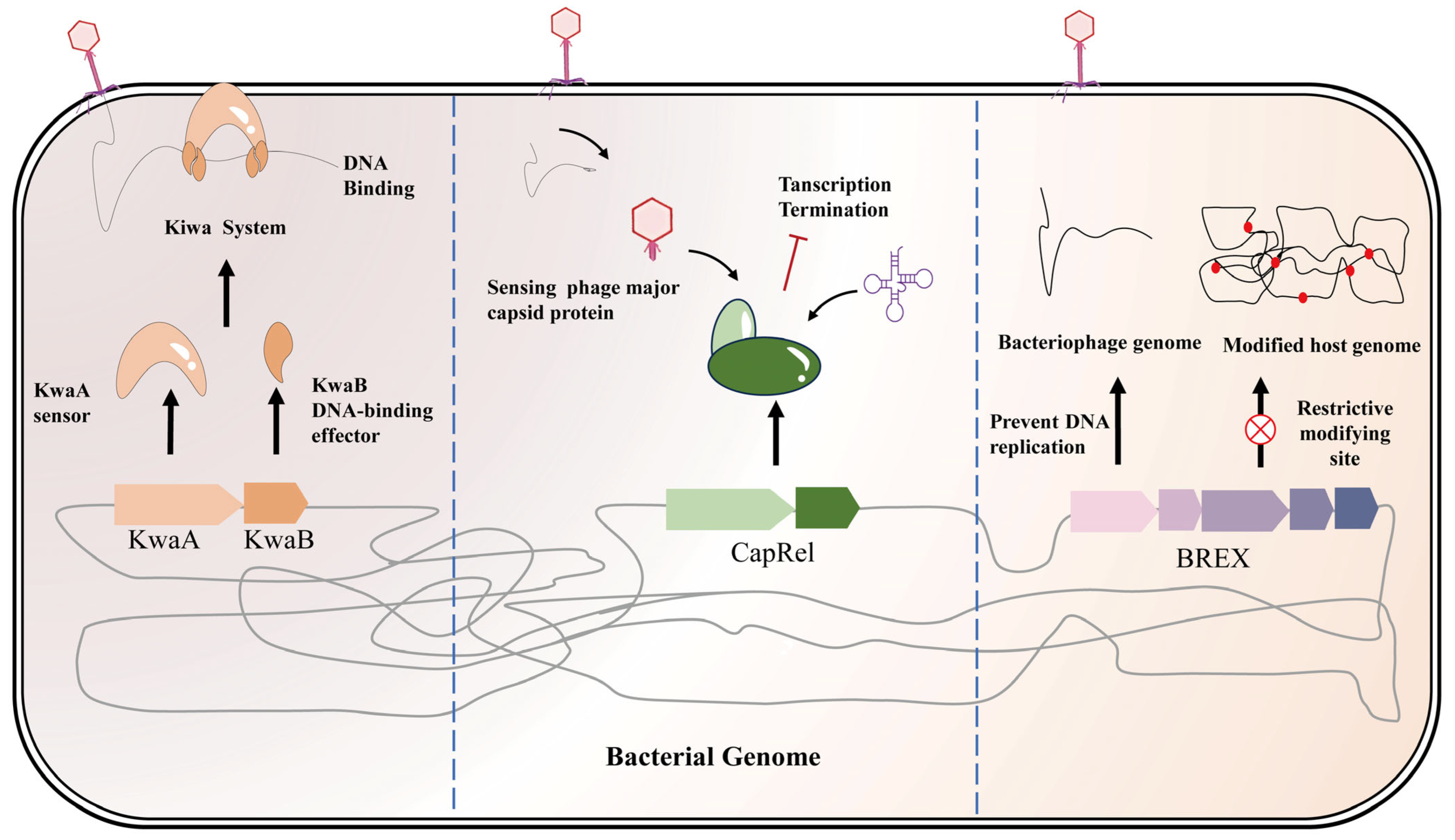
Figure 1. Anti-Phage Mechanisms Based on Inhibiting Replication and Transcription. The antibacterial mechanism of the Kiwa, CapRel, and BREX systems.
Fermentation 12 00017 g001
Figure 2. Anti-Phage Mechanisms Based on Targeted Phage Clearance. The antibacterial mechanism of the R-M, CRISPR, and Nezha systems.
Fermentation 12 00017 g002
Figure 3. The Final Line of Defense: Abortive Infection Systems. The antibacterial mechanism of the Thoeris, CBASS, and Hachiman systems.
Fermentation 12 00017 g003
Table 1. Summary of Host-Phage Related Parameters.
BacteriophageClassifyHostReceptor
T4MyoviridaeE. coliLPS/OmpC
T7PodoviridaeE. coliLPS
T5SiphoviridaeE. coliFhuA
T1SiphoviridaeE. coliFhuA/TonBb
T2MyoviridaeE. coliOmpF/lipopolysaccharide/FadL
LambdaSiphoviridaeE. coliLamB
SPP1SiphoviridaeBacillus subtilisPolyglycerol phosphate on the glucose group of WTA
YueB
φ29PodoviridaeB. subtilisWTA
p2SiphoviridaeLactococcus lactisCell wall carbohydrates/
The phosphogluconate group on the membrane
SPC35SiphoviridaeSalmonella sp.BtuB/O12-antigen
DT1SiphoviridaeS. thermophilusCell wall polysaccharides
2972SiphoviridaeS. thermophilusCell wall polysaccharides
Disclaimer/Publisher’s Note: The statements, opinions and data contained in all publications are solely those of the individual author(s) and contributor(s) and not of MDPI and/or the editor(s). MDPI and/or the editor(s) disclaim responsibility for any injury to people or property resulting from any ideas, methods, instructions or products referred to in the content.