You are currently viewing a new version of our website. To view the old version click .
Fermentation
  • Article
  • Open Access

18 December 2025

Fe/Mn-Modified Biochar Facilitates Functional Microbial Enrichment for Efficient Glucose–Xylose Co-Fermentation and Biohydrogen Production


,
,

,
,
,
and
1
National-Local Joint Engineering Research Center for Biomass Energy Development and Utilization, School of Environment, Harbin Institute of Technology, Harbin 150090, China
2
POWERCHINA Chengdu Engineering Corporation Limited, Chengdu 611130, China
3
Power Construction Corporation of China, Ltd., Beijing 100085, China
4
Power China Eco-Environment Group Co., Ltd., Shenzhen 518101, China
This article belongs to the Section Industrial Fermentation

Abstract

Biohydrogen production can be derived from low-value lignocellulosic biomass; however, in many biohydrogen producing systems, xylose is utilized less efficiently than glucose, which limits overall substrate conversion. To address this issue, Fe/Mn-modified biochar was employed to enhance dark fermentation of glucose–xylose mixed sugars, and its performance was compared with other inoculum treatments. The biochar addition achieved a hydrogen yield of 2.57 ± 0.10 mol-H2/mol-sugar, representing 14.6% enhancement over untreated controls, while enabling complete substrate utilization across varying xylose proportions. Biochar supplementation also reduced the lag phase by 24.4% and increased hydrogen productivity by 47.3% in mixed-sugar cultivation. Integrated analyses of the experimental data revealed the dual role of Fe/Mn-modified biochar in constructing conductive extracellular polymeric substance networks and directing metabolic flux toward high-yield butyrate pathways. This work establishes Fe/Mn-biochar as a multifunctional microbial engineering tool that alleviates carbon catabolite repression and promotes the enrichment of hydrogen-producing bacteria (HPB), thereby providing a practical and effective strategy for enhanced biohydrogen production from lignocellulosic biomass.

1. Introduction

Hydrogen is increasingly regarded as a pivotal component in global decarbonization due to its high energy density and carbon-neutral combustion [1]. As a clean energy carrier, hydrogen emits no greenhouse gases and generates only water when it is used as a fuel, making it a promising alternative to fossil fuels [2]. Current hydrogen production methods include water electrolysis, thermocatalytic processes, and biological processes. Among these, the biological conversion of renewable feedstocks such as waste biomass presents a sustainable and economically viable route [3]. In particular, dark fermentation of complex organic wastes (e.g., lignocellulosic residues, agro-industrial by-products and food waste) is attractive due to its operational simplicity and ability to convert complex substrates into hydrogen along with value-added coproducts such as acetate, ethanol, and butyrate [4,5]. This not only contributes to clean energy production but also supports waste biomass reduction and resource recovery, aligning with circular bioeconomy principles [6,7].
Among these biomass feedstocks, lignocellulosic biomass, with an estimated annual global production exceeding 180 billion tons, represents the most abundant renewable carbon resource and is therefore a particularly promising substrate for biohydrogen production [8]. Nevertheless, less than 5% of this biomass is effectively converted into high-value products [9]. Lignocellulose is a heterogeneous biopolymer mainly composed of cellulose (30–56%), hemicellulose (10–27%), and lignin (3–30%) [10]. Through pretreatment and enzymatic hydrolysis, it can be depolymerized into fermentable monosaccharides, primarily glucose and xylose, which serve as essential substrates for microbial hydrogen production [11]. Yet, the efficient co-utilization of glucose and xylose remains a major bottleneck due to carbon catabolite repression (CCR)-mediated substrate competition in mixed-sugar systems. In this context, substrate competition refers to the preferential uptake and metabolism of glucose over xylose, which leads to incomplete substrate conversion and low biohydrogen yields [12]. Overcoming CCR and enhancing mixed-sugar fermentation efficiency are therefore crucial for lignocellulosic hydrogen production.
A key to this lies in developing hydrogen-producing bacteria (HPB) with high activity and xylose utilization capabilities [13]. Traditional treatments strategies for HPB enrichment, such as heat-shock and acidification, are commonly employed to suppress non-hydrogenogenic microorganisms (e.g., methanogens and sulfate-reducing bacteria), while selectively enriching hydrogen-producing functional consortia [14,15]. Nevertheless, establishing a highly active HPB consortium remains difficult, especially under mixed sugar conditions where substrate competition and CCR effects significantly inhibit the metabolic activity of functional strains.
Recent studies have revealed that biochar can serve simultaneously as a conductive microenvironment and an electron-transfer mediator, thereby promoting the formation of stable and efficient microbial communities [16]. In particular, when biochar is modified with transition metals such as iron (Fe) and manganese (Mn), its surface provides abundant active sites and functional groups that enhance the activity of key enzymes (e.g., xylose isomerase and dehydrogenase), accelerating the conversion of xylose into central metabolic intermediates such as acetyl-CoA [17]. Moreover, studies have reported that Fe/Mn-modified biochar can effectively alleviate CCR effects and enhance the co-fermentation efficiency of glucose and xylose [18]. However, the underlying interaction between modified biochar and microbial inocula, particularly the mechanisms by which biochar modulates community succession and functional enrichment, remains unexplored. Therefore, Fe/Mn-modified biochar was selected in this study as a representative transition-metal-modified biochar to investigate its effects on biohydrogen production of mixed-sugar substrate.
In this study, batch serum-bottle experiments were employed as an initial screening step to evaluate the effect of Fe/Mn-modified biochar supplementation on the enrichment of HPB consortia, with xylose used as the sole carbon source during the enrichment phase. This biochar-assisted enrichment strategy was systematically compared with conventional pretreatment approaches, including ultrasonic stimulation, heat shock, acid treatment, alkali treatment, and chemical induction. Subsequently, the hydrogen production performance and substrate co-utilization behavior of the enriched consortia were investigated under glucose–xylose mixed sugar fermentation conditions representative of lignocellulosic hydrolysates. In addition, the extracellular polymeric substance (EPS) composition, microbial community succession, and predicted functional gene profiles were comprehensively analyzed to elucidate the regulatory mechanisms by which Fe/Mn-modified biochar interfaces with microbial activity and mixed-sugar metabolism.

2. Materials and Methods

2.1. Preparation of Inocula

The activated sludge used in this study was collected from the secondary sedimentation tank of the Wenchang Wastewater Treatment Plant in Harbin, China. The methanogenic digester slurry was obtained from a previously constructed anaerobic baffled reactor [19]. Fresh samples were passed through a 50-mesh sieve (300 μm pore size) to remove large debris and impurities. To enrich HPB, each inoculum underwent specific pretreatment as described below.
The acidic treatment was performed by adjusting the pH to 3.0 with 1 M HCl, incubating at 4 °C for 24 h, and subsequently readjusting the pH to 7.0 using 1 M NaOH, while the alkali treatment involved increasing the pH to 10.0 and restoring it to 7.0 following the same procedure. The heat-shock treatment was conducted by exposing the inoculum to 100 °C for 30 min and 60 min, respectively, using a pre-heated water bath. The ultrasonic treatment was carried out for 3.5 min per day and 7 min per day using a 40 kHz, 100 W ultrasonic cleaning bath. For chemical induction, two methanogenesis inhibitors were employed: 10 mM 2-bromoethanesulfonate (BES) and 0.1 v/v% chloroform, both added to the inocula 24 h prior to inoculation to inhibit methanogenic activity. Two types of biochar were used in this experiment: a straw-derived biochar and an Fe/Mn-modified straw biochar synthesized in our laboratory with an iron-to-manganese ratio of 2:1 [20]. Both types of biochar were introduced into the culture medium at a dosage of 3 g/L during medium preparation, 24 h before inoculation. A control group without any pretreatment was included for comparison.

2.2. Batch Fermentation Procedure

Batch fermentations were carried out in 100 mL glass serum bottles with a working volume of 50 mL under controlled conditions of 37 ± 1 °C and 200 rpm agitation. The xylose-based medium contained (per liter): 10 g xylose, 0.5 g L-cysteine, 3.25 g NH4Cl, 0.5 g K2HPO4, 0.5 g KH2PO4, 77 mg MgCl2, 10 mg NaCl, 7.5 mg MnCl2, 5 mg FeCl2, 1 mL trace elements (104 µg CoCl2, 83.1 µg ZnSO4, 31 µg Na2MoO4, 13.1 µg NiCl2, 13 µg Na2WO4, 10 µg Na2SeO3, H3BO3 6 µg, 1.6 µg CuCl2), and 1 mL vitamin solution (niacin 350 µg, pyridoxine hydrochloride 100 µg, calcium pantothenate 50 µg, para-aminobenzoic acid 50 µg, lipoic acid 50 µg, folic acid 20 µg, thiamine hydrochloride 5 µg, cobalamin 1 µg) [20]. The initial pH was adjusted to 7.00 ± 0.05 using 5 M NaOH, and the inoculation ratio was at 10% (v/v). After inoculation, all reactors were flushed with high-purity nitrogen for 30 min to ensure strict anaerobic conditions.
The optimal HPB enrichment strategy identified from the sole xylose fermentation was subsequently applied in the glucose and xylose mix sugars (GXMS) batch fermentations. All other culture conditions were maintained as described above, except that xylose in the medium was replaced with three types of GXMS (75% xylose + 25% glucose, 50% xylose + 50% glucose, 25% xylose + 75% glucose), corresponding to a total sugar concentration of 10 g/L. Both the gas and liquid phases generated during fermentation were collected for further analysis.

2.3. Analytical Methods

The volume of biogas produced during fermentation was measured using a gas-tight syringe method [21]. The content of biogas and soluble metabolites was measured via gas chromatographySP-7890 plus (LunanRUIHONG Co Ltd., Zaozhuang, China) equipped with a thermal conductivity detector (TCD). Residual reducing sugars were quantified via a high-performance liquid chromatography (HPLC) system (Waters Alliance 1525, Waters Corporation, Milford, MA, USA) equipped with a refractive index detector Waters 2414 (Waters Corporation, Milford, MA, USA) and a Shodex sugar SH 1011 column (Resonac Corporation, Tokyo, Japan). The mobile phase consisted of 0.5 mM H2SO4 at a flow rate of 0.6 mL min−1. The protein concentration was determined following the steps provided by the Solarbio BCA (bicinchoninic acid) protein assay kit (Beijing, China). The composition of EPS in inocula and fermentation effluents was analyzed using a three-dimensional excitation-emission (3D-EEM) fluorescence spectrometer LS-55 (Perkin-Elmer, Waltham, MA, USA) [22]. The total organic carbon (TOC) content of the EPS was determined using a total organic carbon analyzer multi N/C 3100 (Analytik Jena GmbH+Co. KG, Jena, Germany) [23].

2.4. Microbial Community Analysis

Microbial community compositions of inocula subjected to different pretreatments were analyzed via 16S rRNA gene amplicon sequencing targeting the V3–V4 region using primers 341F (CCTACGGGNGGCWGCAG) and 805R (GACTACHVGGGTATCTAATCC) [24]. The PCR products were purified, quantified, and subsequently sequenced on an Illumina MiSeq PE250 platform (Guangdong Magigene Biotechnology Co., Ltd., Guangzhou, China). Operational taxonomic unit (OTU) clustering was conducted at 97% similarity using UPARSE (version 11.0.667). Representative OTU sequences were taxonomically classified employing the Bayesian algorithm of the RDP classifier (version 2.12) against the SILVA 138 reference database with default parameters. Functional gene and metabolic pathway predictions were performed based on the 16S rRNA gene data using PICRUSt2 (version 2.5.2). The predicted functional profiles were annotated against the Kyoto Encyclopedia of Genes and Genomes (KEGG) database (accessed in October 2024), and KEGG ortholog abundances were collapsed to pathway level for downstream analysis.

2.5. Kinetic Analysis

Hydrogen production kinetics were analyzed using the modified Gompertz model (Equation (1)) [25]:
P = P m e x p e x p R m × e P m λ t + 1
where, t—fermentation time (h); P—cumulative hydrogen production (mL); Pm—maximum hydrogen production potential (mL/L); λ—lag phase duration (h); Rm—maximum hydrogen production rate (mL/(h·L)); e—2.718.

3. Results and Discussion

3.1. Effects of Pretreated Inocula on H2 Production from Xylose Fermentation

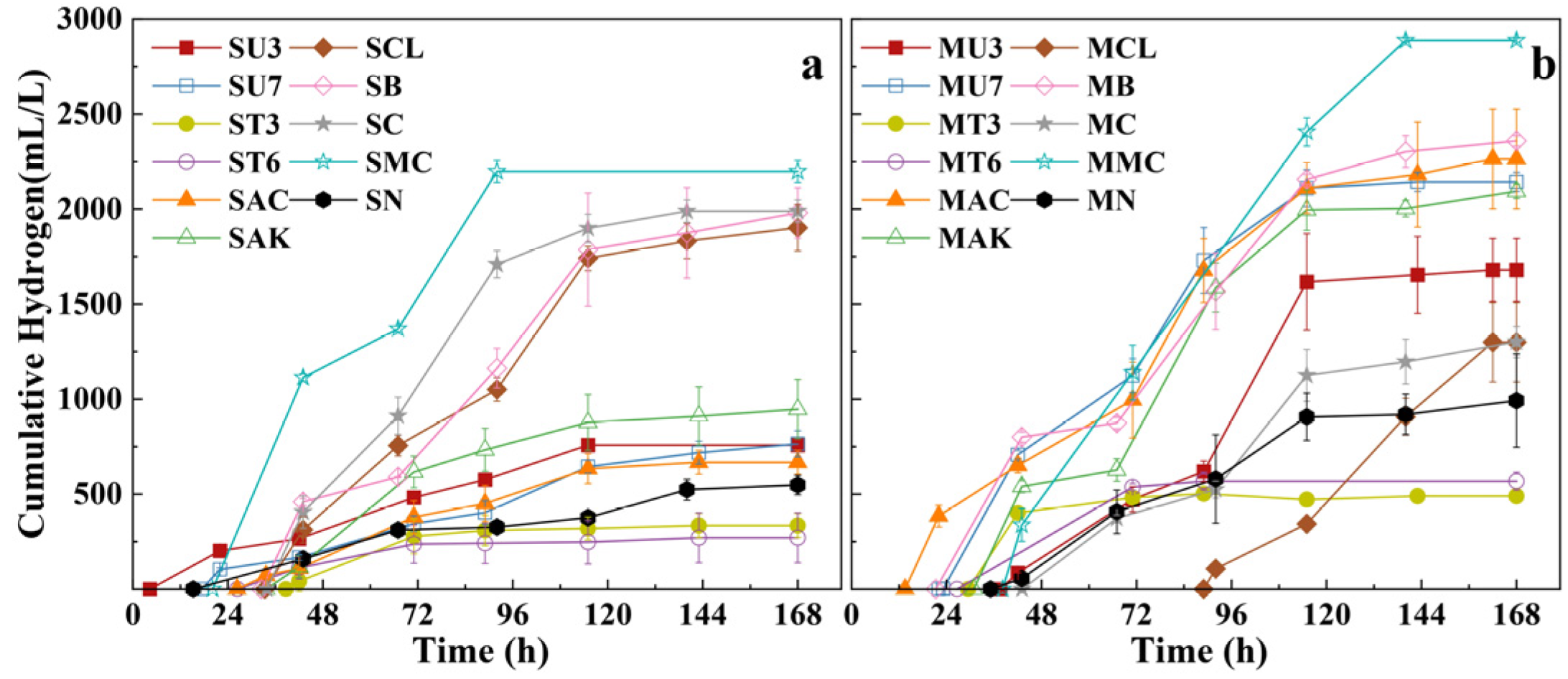
To elucidate the effects of inoculum pretreatments on fermentative hydrogen production, the time-course profiles of cumulative H2 generation under different treatment strategies were analyzed. As shown in Figure 1, most pretreated systems entered the hydrogenogenic phase rapidly after a brief lag period, yet exhibited substantial differences in hydrogen production, indicating that the distinct pretreatment methods induced divergent microbial responses and metabolic adaptations.
Figure 1. Hydrogen production variation from xylose with different inoculum treatments. (a) Activated sludge inoculum; (b) Methanogenic digester slurry inoculum (The first letter “S” refers to activated sludge, while “M” refers to methanogenic digester slurry. Others letter refers to the treatment strategies: U3, short-term ultrasound treatment; U7, long-term ultrasound treatment; T3, short-term heat shock; T6, long-term heat shock; AC, acid treatment; AK, alkaline treatment; B, BES addition; CL, chloroform addition; C, straw biochar addition; MC, Fe/Mn modified straw biochar addition; N, untreated control).
In the systems inoculated with activated sludge (S), the Fe/Mn-modified biochar amended group (SMC) achieved the highest cumulative hydrogen production, reaching 2198 ± 58 mL/L within 96 h, followed by the unmodified straw biochar addition group (SC), the chloroform addition group (SCL), and the BES addition group (SB) with hydrogen yields ranging from 1902 to 1989 mL/L. Notably, although the unmodified straw biochar treatment enhanced hydrogen production compared with chemical inhibition strategies, its performance remained distinctly inferior to that of the Fe/Mn-modified biochar, highlighting the critical role of metal-induced redox functionality. In contrast, both the untreated control (SN) and the heat-shock groups (ST3, ST6) produced less than 1000 mL/L, demonstrating that thermal stress severely inhibited the activity of HPB.
In comparison, the methanogenic digester slurry (M) inoculated systems exhibited a longer active hydrogenogenic phase and higher overall yields, suggesting that appropriately conditioned methanogenic digester slurry serves as a more efficient and stable inoculum source for biohydrogen production. Among these, the Fe/Mn-modified biochar group (MMC) recorded the highest yield of 2888 ± 11 mL/L, which was 1.22–1.38 times greater than those of other representative treatments (e.g., BES addition group (MB), alkali treatment group (MAK) and long-term ultrasound treatment group (MU7)). The superior performance of Fe/Mn-modified biochar relative to unmodified straw biochar may be attributed to the synergistic redox functions of Fe and Mn, which enhance interspecies electron transfer and stimulate the proliferation of efficient hydrogen producers [26,27]. This observation aligns with previous reports that Fe-based materials selectively enrich Clostridium spp. while suppressing facultative taxa such as Enterobacter spp., thereby optimizing the microbial consortia for hydrogenogenesis [28]. Conversely, the two heat-shock treatment groups (MT3 and MT6) yielded the lowest hydrogen levels, confirming that high-temperature exposure irreversibly impaired HPB viability [29,30].
Furthermore, the cumulative hydrogen profiles were well fitted to the modified Gompertz model (Table 1). Although Fe/Mn-modified biochar addition did not shorten the lag phase, it substantially accelerated system stabilization and enhanced overall kinetic performance. With Fe/Mn-modified biochar supplementation, both the maximum hydrogen production potential and maximum production rate increased significantly from 584 mL/L and 5.73 mL/(L·h) to 2228 mL/L and 38.53 mL/(L·h) for SMC and 2918 mL/L and 35.43 mL/(L·h) to 1022 mL/L and 35.10 mL/(L·h) for MMC, respectively. These results demonstrate that Fe/Mn-modified biochar effectively mediates inoculum enrichment and process stabilization, offering a promising strategy to enhance hydrogen yield and reactor robustness in dark fermentation systems.
Table 1. Hydrogen production kinetic parameters of xylose fermentation using inocula with different treatments.

3.2. Performance of Hydrogen Fermentation Using Glucose–Xylose Mixed Substrates

The principal fermentable constituents of lignocellulosic hydrolysates are glucose and xylose. Previous studies have reported that when glucose–xylose mixed sugars (GXMS) are used as substrates, the actual hydrogen yield generally attains only about 40% of the theoretical maximum [12,15,31]. This limitation primarily arises from carbon catabolite repression (CCR), wherein glucose markedly suppresses xylose metabolism, resulting in preferential glucose consumption and restricted xylose utilization within mixed-sugar systems [32]. To evaluate the hydrogen-producing performance of pretreated inocula under mixed-sugar conditions, the most efficient consortia, SMC and MMC, were selected for further investigation. In this experiment, mixed-sugar solutions containing 75% (w/w) xylose + 25% glucose, 50% xylose + 50% glucose and 25% xylose + 75% glucose, respectively, were prepared to simulate the composition of lignocellulosic hydrolysates.
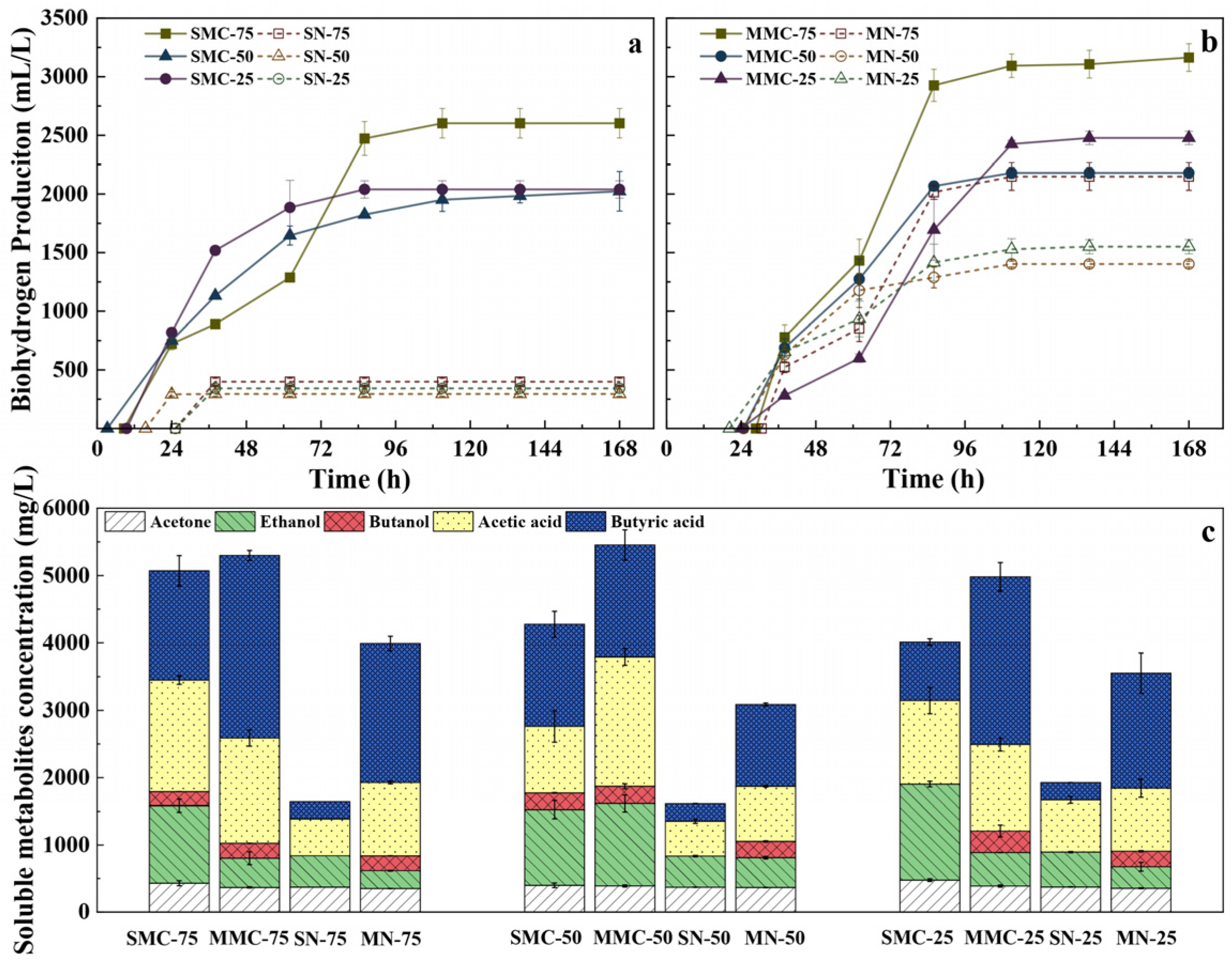
As shown in Figure 2a, the SMC consortium maintained a clear advantage over the control (SN) across all substrate compositions. The SMC-75 group achieved the highest hydrogen yield of approximately 2603 ± 125 mL/L after 120 h before reaching a stable plateau, while SMC-50 and SMC-25 stabilized around 2023 ± 169 mL/L and 2039 ± 74 mL/L, respectively. In contrast, all SN reactors produced less than 400 mL/L, confirming that Fe/Mn-modified biochar substantially enhanced hydrogenogenic potential even under mixed-sugar conditions. In the methanogenic digester slurry inoculum systems (Figure 2b), overall hydrogen production was markedly higher. The MMC-75 group exhibited the highest cumulative yield (3163 ± 118 mL/L), followed by MMC-25 (2478 ± 57 mL/L) and MMC-50 (2180 ± 47 mL/L), representing 47–60% increases relative to their respective controls (MN). Notably, the prolonged hydrogenogenic phase observed in MMC reflected enhanced metabolic stability and substrate adaptability. Apparently, Fe/Mn-modified biochar effectively reinforced the conversion of glucose–xylose mixed sugars into hydrogen under dark fermentation conditions. These results indicate that Fe/Mn-biochar-mediated inoculum enrichment not only mitigates CCR in glucose–xylose co-fermentation but also provides an effective and sustainable strategy for improving biohydrogen production from lignocellulosic hydrolysates.
Figure 2. Hydrogen production (a,b) and accumulation of soluble metabolic byproducts (c) during fermentation of glucose–xylose mix sugars (GXMS) with pretreated inocula (S, activated sludge; M, methanogenic digester slurry; MC, Fe/Mn-modified straw biochar addition; N, control group).
Figure 2c shows the accumulation of soluble metabolites during dark fermentation of GXMS by the control and Fe/Mn-modified biochar-enriched inocula. It can be observed that acetic acid (HAc) and butyric acid (HBu) were the predominant soluble fermentation products, together accounting for over 60% of the total soluble metabolites. The formation of acetic acid and butyric acid is theoretically coupled with hydrogen production pathways; therefore, these two acids are regarded as key intermediates in biohydrogen generation [33,34]. In the SN, the HAc/HBu molar ratio ranged from 1.07 to 3.03, indicating that acetic acid production dominated the metabolic flux. However, in the MMC group, this ratio declined to 0.52–1.16, suggesting that biochar addition promoted the butyrate-type fermentation pathway and suppressed excessive acetate accumulation. The MMC group produced significantly higher total volatile metabolites than the corresponding controls, particularly in the MMC-75, which also achieved the highest hydrogen yield.
According to the stoichiometric relationships, up to 4 mol H2 can be theoretically produced in acetic-type fermentation, whereas 2 mol H2 are generated in butyric-type fermentation. However, considering Gibbs free energy, the butyric-acid pathway is energetically more favorable, and its enhancement is often associated with increased hydrogen yields [35,36].
C 6 H 12 O 6 + 2 H 2 O 2 C H 3 C O O H + 2 C O 2 + 4 H 2 ( G 0 = 206   k J )
C 6 H 12 O 6 C H 3 C H 2 C H 2 C O O H + 2 C O 2 + 2 H 2 ( G 0 = 254   k J )
In this study, the shift toward a butyrate-dominant metabolic pattern in the modified biochar groups indicates that Fe/Mn-biochar likely altered the metabolic flux distribution by regulating the activity of key hydrogen-producing bacteria. Consequently, the lowered HAc/HBu ratio reflected a strengthened butyrate pathway, which favored efficient electron recovery as hydrogen, thereby improving overall hydrogen productivity during GXMS fermentation.
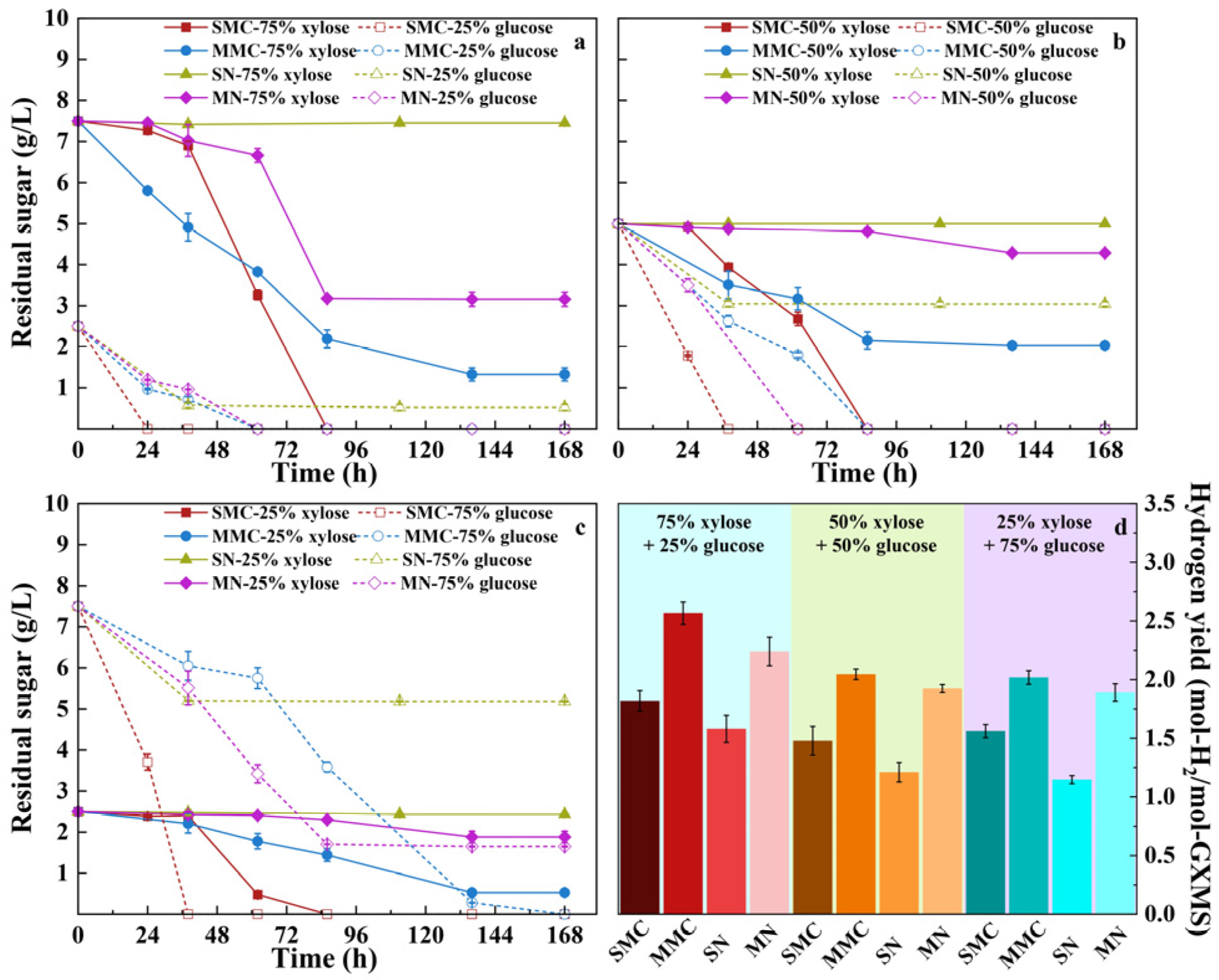
Figure 3 illustrates the utilization of mixed sugars by different inocula under various glucose/xylose ratio conditions. As shown in Figure 3a–c, all untreated systems (SN and MN) exhibited a pronounced delay in xylose utilization across substrate compositions. In the 75% xylose + 25% glucose GXMS group, xylose metabolism was inhibited by glucose and declined only during the late fermentation stage; in particular, the xylose utilization rate in the SN was only 0.6%. In the 50% xylose + 50% glucose GXMS and 25% xylose + 75% glucose GXMS, the CCR effect became even more evident, with glucose being preferentially consumed while xylose remained scarcely metabolized, resulting in limited xylose utilization and low overall substrate conversion efficiency. This behavior is characteristic of carbon catabolite repression, where the presence of glucose suppresses the uptake and metabolism of secondary sugars such as xylose [13]. Correspondingly, hydrogen yields in SN remained low, ranging from 1.15–1.58 mol-H2/mol-GXMS across all substrate ratios (Figure 3d). In comparison, the MN inoculum exhibited significantly higher xylose utilization and hydrogen yield. This improvement may be attributed to the origin of MN inocula in the straw-fed methanogenic digester, which is naturally enriched with xylose-metabolizing microorganisms [37,38]. Nevertheless, xylose utilization in the MN remained limited, and the inhibitory effect of glucose became more pronounced as its content increased; at 25% xylose + 75% glucose GXMS, xylose utilization dropped to only 24.7%. These results are consistent with the findings of Zhao et al., who reported that higher glucose proportions intensify the inhibitory effect of glucose on xylose metabolism [13].
Figure 3. Residual sugar profiles during mixed-sugar fermentation with different inocula under three substrate compositions: (a) 75% xylose + 25% glucose; (b) 50% xylose + 50% glucose; (c) 25% xylose + 75% glucose. (d) Hydrogen yield obtained with the different inocula (S, activated sludge; M, methanogenic digester slurry; MC, Fe/Mn modified straw biochar addition; N, control group).
In contrast, the addition of Fe/Mn-modified biochar markedly accelerated the degradation and co-metabolism of mixed sugars. In the 75% xylose + 25% glucose GXMS group, the SMC achieved complete consumption of all substrate within 86 h, with both glucose and xylose fully metabolized, yielding 1.82 ± 0.09 mol-H2/mol-GXMS, 15.2% higher than the untreated control. In the MMC group, glucose was completely consumed and xylose utilization reached about 59.4–82.3%, corresponding to a hydrogen yield of 2.57 ± 0.10 mol-H2/mol-GXMS. In the 50% xylose + 50% glucose GXMS group, the SMC attained 100% substrate utilization with a hydrogen yield of 1.48 ± 0.12 mol-H2/mol-sugar, whereas MMC retained 2.03 ± 0.09 g/L residual xylose but maintained a similar yield of 2.04 ± 0.04 mol-H2/mol-GXMS. Even under the 90% xylose condition, biochar-amended systems still utilized over 75% of total sugars, achieving a maximum hydrogen yield of 2.02 ± 0.05 mol-H2/mol-GXMS. Although SMC achieved complete substrate consumption at all xylose ratios, its hydrogen yield remained relatively lower (1.82 ± 0.09 mol-H2/mol-sugar) compared to the MMC system (2.57 ± 0.10 mol-H2/mol-sugar). Analysis of soluble metabolites revealed that, in the activated sludge system, part of the reducing power was diverted toward by-product formation, such as acetone and ethanol, whereas in the methanogenic digester slurry system, more electrons were directed toward hydrogenogenic pathways, resulting in higher hydrogen yields and enhanced metabolic selectivity.
Overall, the incorporation of Fe/Mn-modified biochar significantly promoted the degradation and conversion of mixed sugars, improving both substrate utilization efficiency and hydrogen production. The results highlight that the synergy between biochar-enhanced electron transfer and co-metabolic regulation effectively mitigates CCR, achieving superior hydrogen yield and substrate conversion performance.

3.3. Extracellular Polymeric Substance Dynamics in Metabolic Regulation

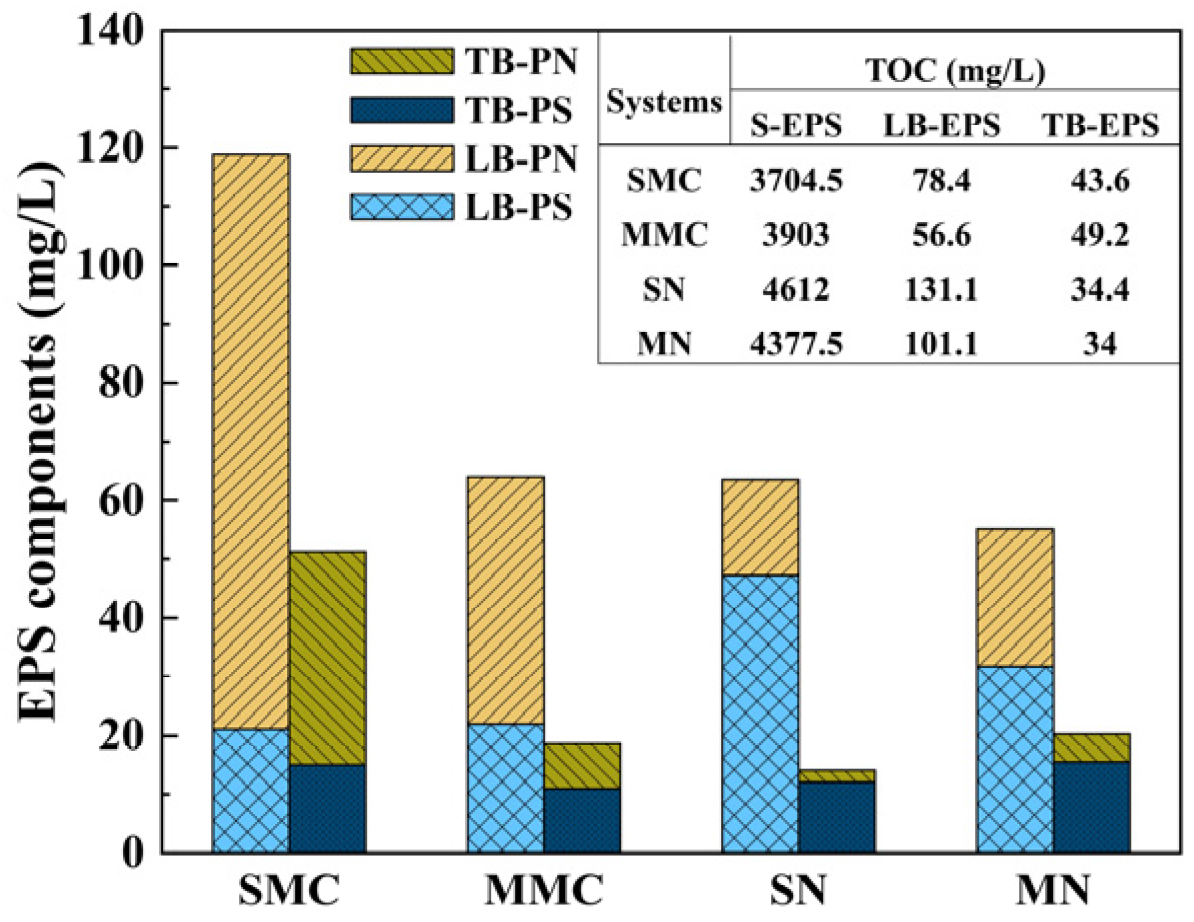
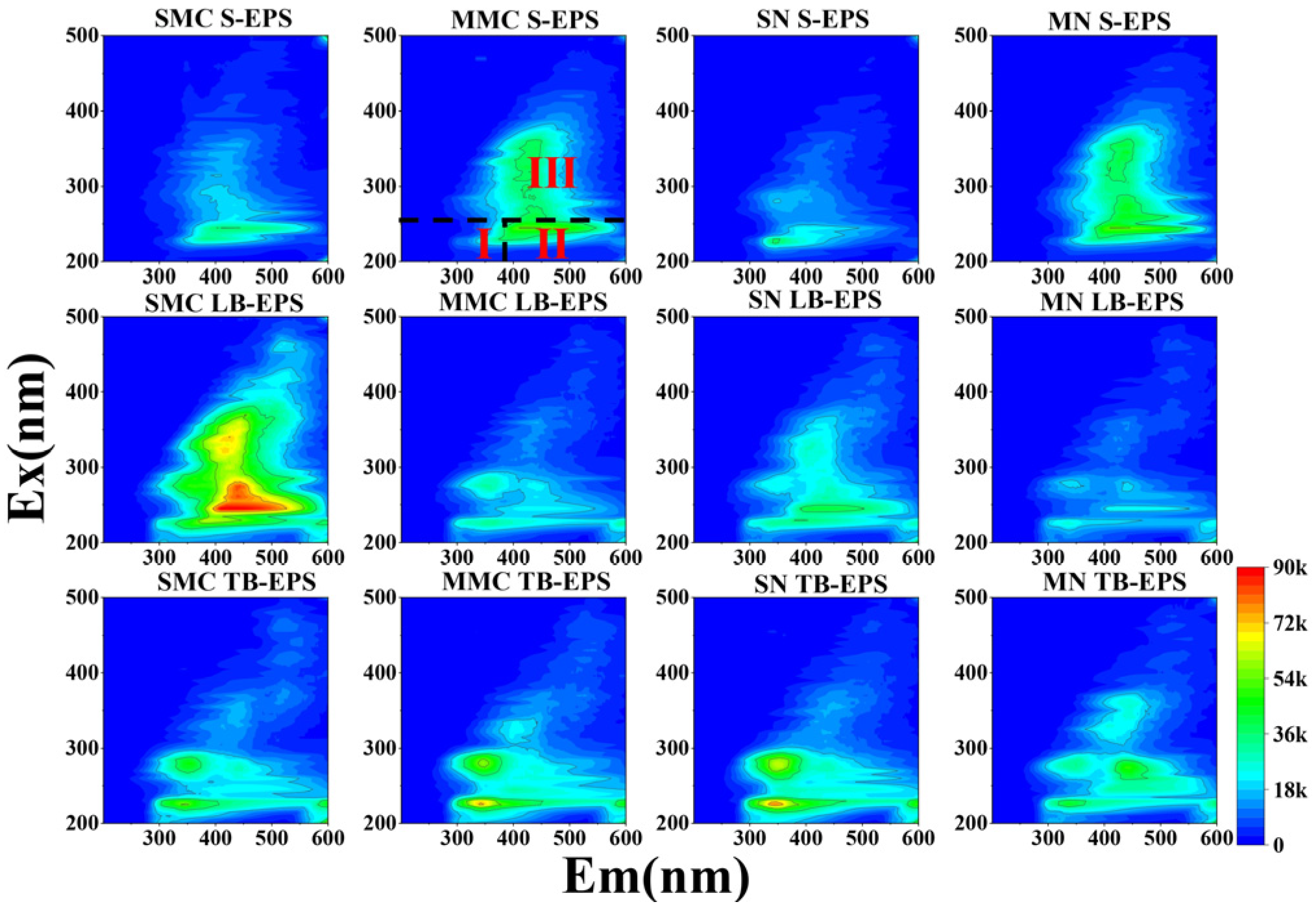
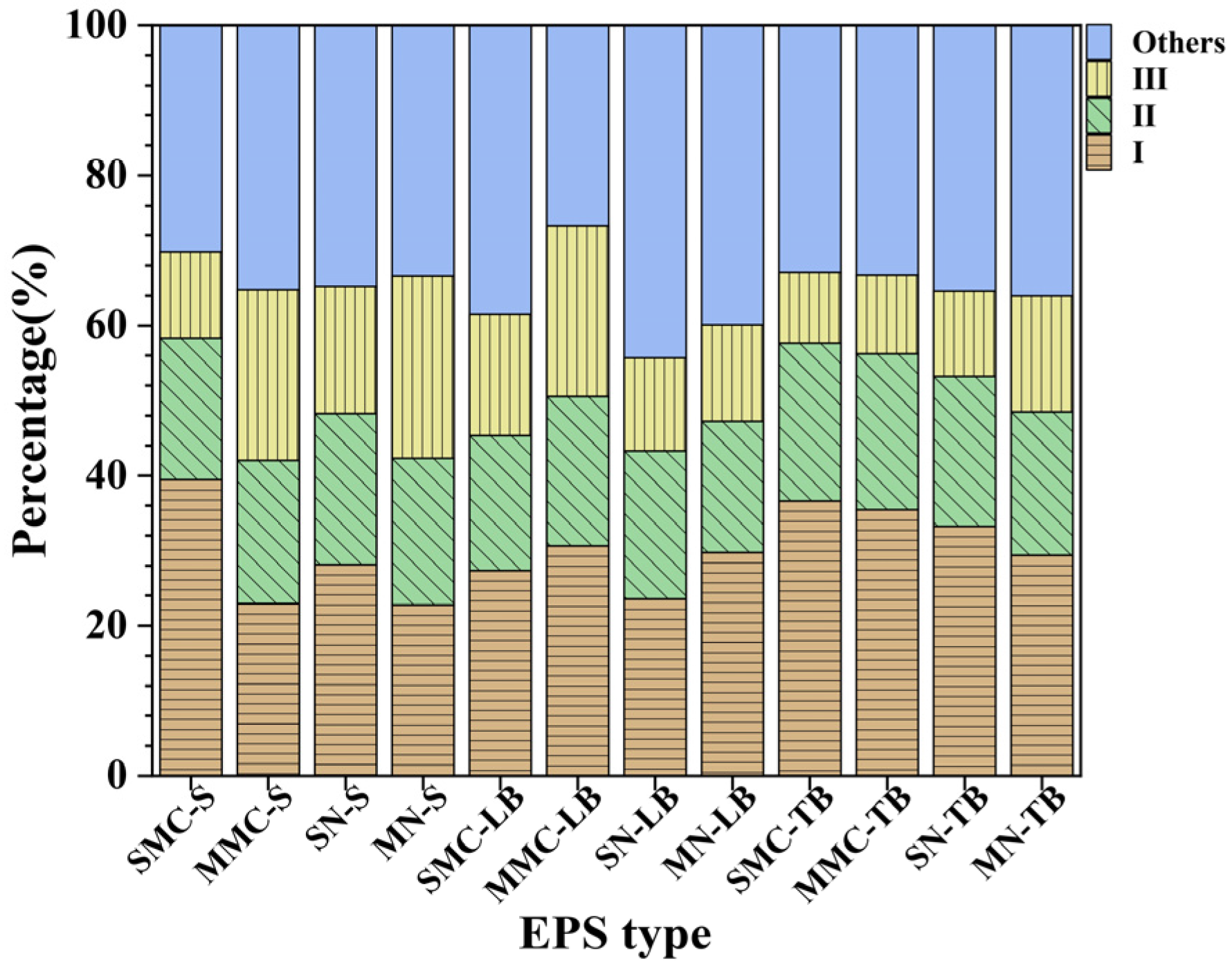
To gain mechanistic insight into why inocula enriched by Fe/Mn-modified biochar exhibited higher hydrogen yields and improved stability in Section 3.1 and Section 3.2, the dynamics of EPS were analyzed as a key physicochemical interface between the enriched consortia and their environment. EPS are pivotal in maintaining the structural stability and metabolic activity of activated sludge or methanogenic digester slurry inocula. Their porous architecture facilitates substrate diffusion and extracellular electron transfer (EET), both of which are critical for dark fermentative hydrogen production. The EPS matrix can be fractionated into three layers: soluble EPS (S-EPS), loosely bound EPS (LB-EPS), and tightly bound EPS (TB-EPS). The S-EPS layer mainly consists of secreted metabolites and cell lysis products, LB-EPS forms the physicochemical interface between microbial cells and substrates, while TB-EPS represents the metabolically active and protective layer surrounding the cells [39]. As shown in Figure 4, the addition of Fe/Mn-modified biochar markedly altered the composition and distribution of EPS components in both activated sludge and methanogenic digester slurry inocula. Compared with the control, the protein (PN) content in both LB-EPS and TB-EPS significantly increased, whereas the polysaccharide (PS) content decreased, particularly in LB-EPS. This compositional shift suggests that the presence of conductive biochar redirected microbial resources toward producing functional proteinaceous components, mainly extracellular enzymes and redox-active electron-transfer proteins, instead of polysaccharides with primarily structural or defensive roles. The enhanced PN fraction therefore reflects a potential improvement in EPS conductivity and electron-transfer efficiency. The 3D-EEM spectra (Figure 5) further confirmed these compositional changes. Three major fluorescence peaks were identified under Ex/Em regions of 200–250/330–380 nm (I), 200–250/380–550 nm (II), and 250–450/380–550 nm (III), corresponding to tyrosine-like, fulvic-like, and humic-like substances, respectively. The fluorescence intensity of peaks I and II, representing protein-like fluorophores, was significantly enhanced in biochar-treated inoculum. Figure 6 shows that the area proportion of region I in TB-EPS of SMC and MMC increased by 3.4% and 6.0%, respectively, while that in LB-EPS increased by 3.8% and 0.9%, respectively, indicating the accumulation of redox-active proteins related to the microbial electron transport chain. Meanwhile, the content of humic substances decreased slightly, especially the area of region III in LB-EPS of SMC and MMC, which increased by 3.8% and 9.8% compared to the control group, respectively, indicating that Fe/Mn-modified biochar promoted the generation or stabilization of electron-shuttling organic components within the EPS matrix. These humic-like compounds are rich in carbonyl and quinone functional groups, both known to facilitate rapid electron transfer between microbial cells and conductive materials [40,41].
Figure 4. Contents of proteins (PN) and polysaccharides (PS) in the bound EPS (LB-EPS and TB-EPS) plus Cumulative total organic carbon (TOC) in all three type of EPS at the end of hydrogen fermentation using xylose as the substrate with pretreated inoculum (S, activated sludge; M, methanogenic digester slurry; MC, Fe/Mn-modified straw biochar addition; N, control group).
Figure 5. 3D-EEM spectra of S-EPS, LB-EPS, and TB-EPS at the end of hydrogen fermentation using xylose as the substrate with pretreated inocula. Three major fluorescence peaks were observed under Ex/Em conditions: 200–250 nm/330–380 nm (I), 200–250 nm/380–550 nm (II), and 250–450 nm/380–550 nm (III), identified as tryptophan-like substances, fulvic acid-like substances, and humic acid-like substances, respectively (S, activated sludge; M, methanogenic digester slurry; MC, Fe/Mn-modified straw biochar addition; N, control group).
Figure 6. Fluorescence spectral regions of EPS from activated sludge and methanogenic digester slurry inoculum before and after Fe/Mn-modified biochar treatment, after xylose biohydrogen production (SMC, activated sludge with Fe/Mn modified straw biochar addition; MMC, methanogenic digester slurry with Fe/Mn-modified straw biochar addition; SN & MN, control group; -S, soluble EPS; -LB, loosely bound EPS; -TB, tightly bound EPS).
In addition, the TOC content of S-EPS slightly decreased after Fe/Mn-biochar enrichment, suggesting that the overall EPS became more compact and metabolically stable [42]. This stabilization can be attributed to the multiple functions of biochar, including pH buffering, adsorption of inhibitory metabolites, and provision of microbial attachment sites [43,44]. These effects alleviate cellular stress, allowing microorganisms to allocate more metabolic resources to the synthesis of catalytically active proteins rather than stress-protective polysaccharides.
Collectively, Fe/Mn-modified biochar enrichment induced a spatial and compositional reorganization of EPS, characterized by (i) an elevated PN/PS ratio in bound EPS, (ii) the enrichment of redox-active protein-like and humic-like components, and (iii) a reduction in soluble EPS accumulation. Such restructuring is expected to enhance the conductivity and electron-transfer capability of EPS networks and to stabilize the microenvironment surrounding HPB. In turn, these EPS properties provide a mechanistic explanation for the higher hydrogen yields, faster system stabilization and improved robustness observed in the SMC and MMC groups, thereby linking the inoculum enrichment step to the subsequent hydrogenogenic fermentation performance.

3.4. Microbial Community Shifts and Functional Gene Prediction During Xylose Fermentation

The microbial community composition of different inocula changed significantly before and after modified biochar treatment, and the distribution of the microbial community clearly differed between treated groups and control groups. As shown in Table S1, the Fe/Mn-biochar-enriched inocula exhibited distinct biodiversity patterns. In SMC, richness indices (OTUs, Chao, ACE) increased substantially compared with SN (OTUs 372 vs. 23), indicating the proliferation of previously minor taxa. However, the Shannon and evenness indices decreased (1.43 vs. 1.29), and the Simpson index rose, suggesting that several functional populations became dominant after enrichment. In contrast, MMC displayed a slight decline in richness (OTUs 355 vs. 389) but a pronounced rise in the Simpson index, implying that Fe/Mn-modified biochar strongly selected for specific hydrogen-producing species while suppressing non-hydrogenogenic competitors. These results were supported by rarefaction and Venn analyses (Figure S1), confirming that biochar enrichment reshaped both diversity and the core taxonomic composition of the inocula. The Venn diagram (Figure S1b) also confirmed significant differences in the community distribution at the genus level among the four samples; SMC, MMC, SN, and MN each possess unique genera.
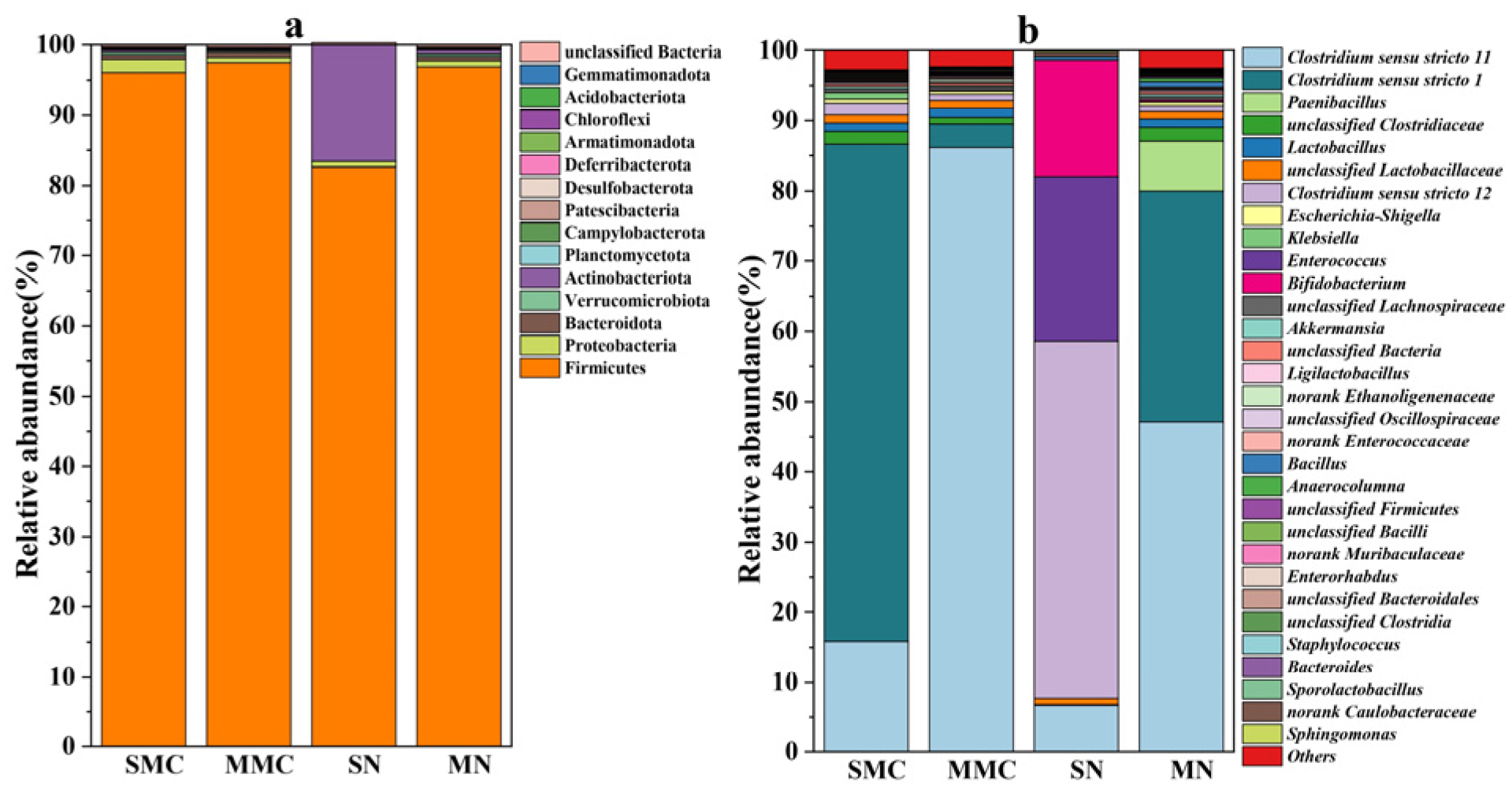
The taxonomic composition at the phylum level (Figure 7a) demonstrated that Firmicutes dominated all samples (82.6–97.5%), while Actinobacteria and Proteobacteria were present in minor proportions. Notably, in the untreated activated sludge, Actinobacteria accounted for up to 16.6%, but this proportion dropped below 1% in the SMC after biochar enrichment, accompanied by a slight increase in Proteobacteria. In contrast, the methanogenic digester slurry inoculum maintained similar phylum-level profiles before and after treatment, indicating that biochar exerted a stronger selective pressure in the sludge-based system.
Figure 7. Microbial relative abundance at the phylum (a) and genus (b) level after fermentation with pure xylose as the substrate using different pretreated inocula (S, activated sludge; M, methanogenic digester slurry; MC, Fe/Mn-modified straw biochar addition; N, control group).
At the genus level (Figure 7b), dramatic successions were observed. In SN, five genera exceeded 0.1% in relative abundance: Clostridium sensu stricto_12 (50.9%), Enterococcus (23.5%), Bifidobacterium (16.6%), Clostridium sensu stricto_11 (6.7%), and Lactobacillus (0.11%), showing a highly uneven distribution dominated by non-hydrogenogenic taxa. After enrichment, the SMC community shifted sharply; the genus of Enterococcus and Bifidobacterium declined to <0.1%, while Clostridium sensu stricto_1 rose from <0.1% to 70.7%, replacing Clostridium sensu stricto_12 (now 1.6%). In the untreated methanogenic digester slurry, Clostridium sensu stricto_1 (32.9%) and Clostridium sensu stricto_11 (47.1%) were co-dominant, with Paenibacillus at 7.0%. After Fe/Mn-biochar enrichment, MMC became overwhelmingly dominated by Clostridium sensu stricto_11 (86.1%), while Clostridium sensu stricto_1 and Paenibacillus fell to 3.3% and <0.01%, respectively. Clostridium sensu stricto_11 is known to possess conserved enzymes such as DNA gyrase, ATP synthase β-subunit, and ribosomal protein S2 and is frequently detected in anaerobic systems, indicating its role in butyrate-type hydrogenogenic metabolism [45]. Clostridium sensu stricto_1 is a versatile anaerobe capable of fermenting carbohydrates, amino acids, and ethanol to produce butyrate [46,47], whereas Clostridium sensu stricto_12 is associated with caproic-acid formation and usually occurs in trace amounts in rumen fluid [48].
Non-Clostridium taxa diminished after biochar enrichment. Enterococcus, a stress-tolerant gut commensal, and Bifidobacterium, an anaerobe depending on complex carbohydrates, were almost eliminated. Summing the three Clostridium sensu stricto lineages yields the order SN < MN < SMC < MMC, paralleling the observed increase in hydrogen yield. The hydrogen-producing capacities among these Clostridium types follow 12 < 1 < 11, supporting that Fe/Mn-biochar enrichment promoted butyrate-type fermentation and enhanced electron recovery through hydrogen formation. These trends were consistent in mixed-sugar fermentations (Figure S2). In MMC-75, which achieved the highest hydrogen yield, Clostridium sensu stricto_11 reached 91.5%. In MMC-50 and MMC-25, where CCR effects were stronger, small fractions of types 1 and 12 re-emerged, though total Clostridium abundance remained comparable, confirming that Clostridium sensu stricto_11 played a key role in alleviating glucose-mediated repression and improving xylose utilization.
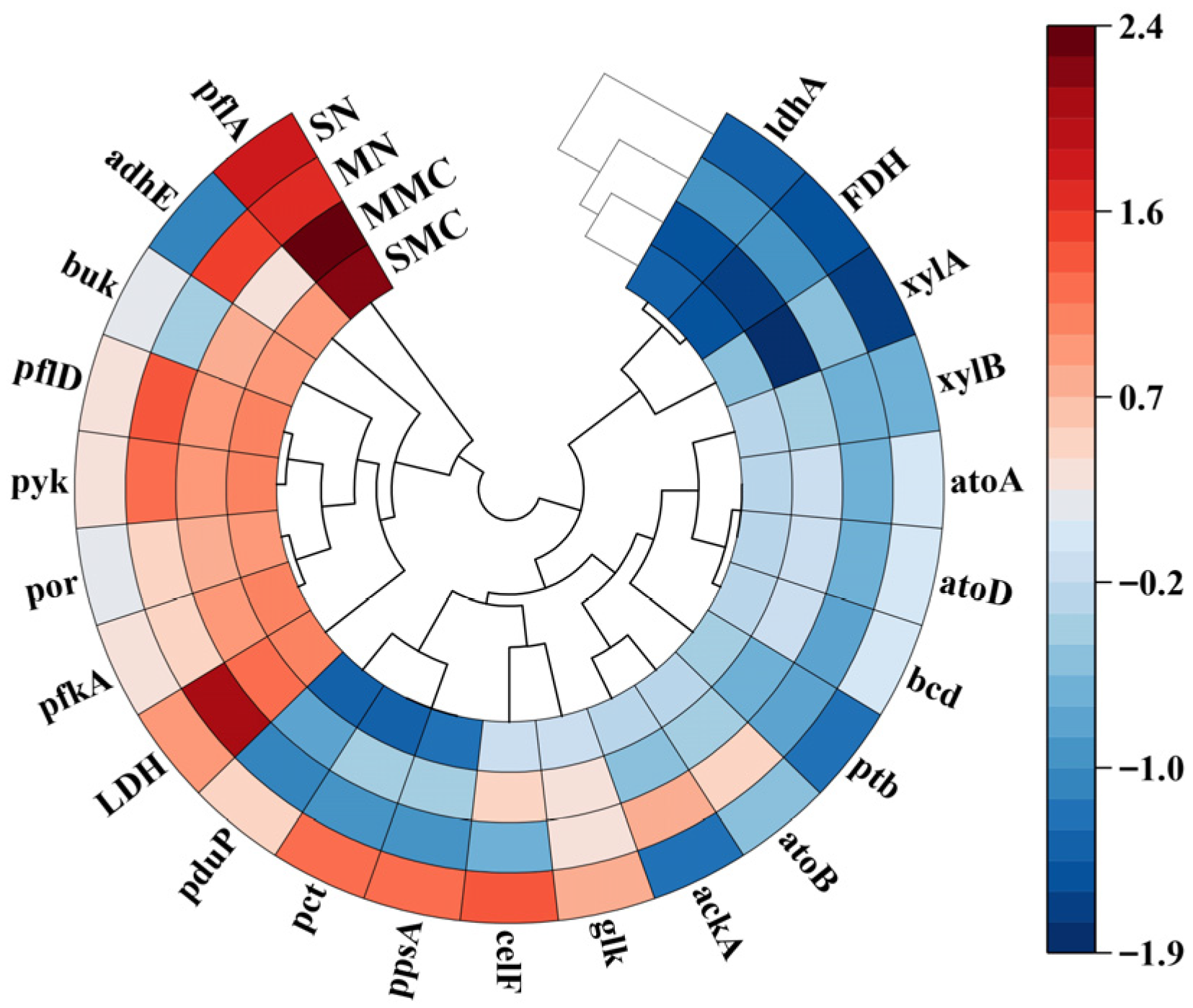
Functional prediction using the KEGG database (Figure 8) further demonstrated the regulatory influence of Fe/Mn-biochar enrichment on metabolic pathways. Compared with the controls, SMC and MMC showed strong upregulation of pflA, which encodes pyruvate formate-lyase linking glycolysis to the hydrogen-producing conversion of pyruvate to acetyl-CoA [49]. Genes associated with the butyrate branch (adhE, buk, pfkA, pyk, and por) were likewise upregulated, confirming that carbon flux was redirected toward acetyl-CoA and butyrate formation [50]. Conversely, ldhA, encoding lactate dehydrogenase, was markedly downregulated in MMC, indicating suppression of the lactate pathway and reduced NADH competition. In SMC, pct (propionate-CoA transferase) was also downregulated, minimizing electron diversion to propionate synthesis. Collectively, these transcriptional changes reinforced the butyrate-type hydrogenogenic route while attenuating competing pathways [51,52]. Taken together, Fe/Mn-modified biochar functioned simultaneously as a selective microbial regulator and an intracellular redox modulator. By enriching Clostridium sensu stricto_11 and upregulating genes in the pyruvate-acetyl-CoA-butyrate axis, biochar enrichment strengthened the coupling between microbial community structure and hydrogenogenic metabolism. This integrated regulatory mechanism explains the enhanced hydrogen productivity, improved xylose utilization, and superior metabolic stability observed in the Fe/Mn-biochar-enriched systems.
Figure 8. Heatmap of predicted microbial functional gene abundance in pure xylose fermentation based on the KEGG database using PICRUSt (S, activated sludge; M, methanogenic digester slurry; MC, Fe/Mn-modified straw biochar addition; N, control group).

4. Conclusions

This study establishes Fe/Mn-modified biochar-augmented methanogenic digester slurry (MMC) as the optimal inoculum for biohydrogen production, achieving a yield of 2.57 ± 0.10 mol-H2/mol-mixed sugar and a 14.9–35.8% enhancement over untreated controls. When applied to the inoculum, biochar supplementation synergistically alleviated glucose-mediated catabolite repression in mixed sugar systems, enabling complete substrate utilization in all three types of mixed-sugar (75% xylose + 25% glucose, 50% xylose + 50% glucose, 25% xylose + 75% glucose). As an electron conduit, modified biochar promoted the formation of conductive EPS networks, facilitating direct electron transfer from enriched HBP. Under modified biochar enhancement, the xylose-metabolizing enzymes and xylulokine genes of Clostridium sensu stricto_11, which are dominant, are fully expressed, and butyrate fermentation is mainly carried out, reducing the transfer of electrons to the lactate/propionic acid pathway. Future work should translate this serum-bottle screening strategy to lab- and pilot-scale reactors to validate performance and assess techno-economic feasibility.

Supplementary Materials

The following supporting information can be downloaded at https://www.mdpi.com/article/10.3390/fermentation11120703/s1. Table S1: Biodiversity indices of different pretreated inocula when xylose fermentation ended; Figure S1: Effects of different treatments on microbial community structure: (a) Rarefaction curves with coverage indices; (b) Venn diagram at the genus level; Figure S2: Microbial relative abundance at the phylum (a) and genus (b) level after fermentation with mixed-sugar as the substrate using MMC inoculum.

Author Contributions

J.F.: Investigation, Data curation, Validation, Formal analysis, Writing—original draft. J.W.: Writing—review and editing. J.Z., H.H. and Y.Y.: Software, Supervision, Funding acquisition. G.C.: Conceptualization, Writing—review and editing, Supervision. N.R.: Supervision, Writing—review and editing. All authors have read and agreed to the published version of the manuscript.

Funding

This research was supported by Scientific and Technological Project of PowerChina Eco-Environmental Group Co., Ltd. (No. ST-ZB-ZC-JY-JS-2025-15), the National Natural Science Foundation of China (No. 52470145), the Heilongjiang Key Research and Development Program (No. 2023ZX02C04), the Natural Science Foundation of Heilongjiang Province (No. JQ2024E006), the Foundation of National Engineering Research Center for Safe Disposal and Resources Recovery of Sludge (Grant No. Z2024A018), and the State Key Laboratory of Rural-urban Water Resource and Environment (Harbin Institute of Technology) (No. 2024TS18).

Institutional Review Board Statement

Not applicable.

Data Availability Statement

The original contributions presented in this study are included in the article/Supplementary Materials. Further inquiries can be directed to the corresponding authors.

Conflicts of Interest

Authors Ji zhao, Hongsheng Hao, and Yange Yu are employed by the companies “POWERCHINA Chengdu Engineering Corporation Limited”, “Power Construction Corporation of China, Ltd. “, and “Power China Eco-Environment Group Co., Ltd.”, respectively. But for purposes of this investigation, there was no financing relationship with these companies; therefore, there are no conflicts of interest. The remaining authors declare that the research was conducted in the absence of any commercial or financial relationships that could be construed as potential conflicts of interest. The authors declare that this study received funding from PowerChina Eco-Environmental Group Co., Ltd. The funder was not involved in the study design, collection, analysis, interpretation of data, the writing of this article or the decision to submit it for publication.

Abbreviations

The following abbreviations are used in this manuscript:
HPBHydrogen-producing bacteria
CCRCarbon catabolite repression
EPSExtracellular polymeric substances
BES2-bromoethanesulfonate
GXMSGlucose and xylose mix sugars
TCDThermal conductivity detector
HPLCHigh-performance liquid chromatography
3D-EEMThree-dimensional excitation-emission
TOCTotal organic carbon
OTUOperational taxonomic unit
KEGGKyoto Encyclopedia of Genes and Genomes
SActivated sludge
SACAcid-treated activated sludge
SAKAlkali-treated activated sludge
ST330 min heat-shock-treated activated sludge
ST660 min heat-shock-treated activated sludge
SU33.5 min per day ultrasonic-treated activated sludge
SU77 min per day ultrasonic-treated activated sludge
SB2-bromoethanesulfonate-treated activated sludge
SCLChloroform treated activated sludge
SCActivated sludge with straw-derived biochar addition
SMCActivated sludge with Fe/Mn-modified straw biochar addition
SNUntreated activated sludge
MACAcid-treated methanogenic digester slurry
MAKAlkali-treated methanogenic digester slurry
MT330 min heat-shock treated methanogenic digester slurry
MT660 min heat-shock treated methanogenic digester slurry
MU33.5 min per day ultrasonic=treated methanogenic digester slurry
MU77 min per day ultrasonic-treated methanogenic digester slurry
MB2-bromoethanesulfonate-treated methanogenic digester slurry
MCLChloroform-treated methanogenic digester slurry
MCMethanogenic digester slurry with straw-derived biochar addition
MMCMethanogenic digester slurry with Fe/Mn-modified straw biochar addition
MNUntreated methanogenic digester slurry
SMC-75Activated sludge with Fe/Mn-modified straw biochar as inoculum, substrate is a xylose-glucose mixture with 75% xylose and 25% glucose
SMC-50Activated sludge with Fe/Mn-modified straw biochar as inoculum, substrate is a xylose-glucose mixture with 50% xylose and 50% glucose
SMC-25Activated sludge with Fe/Mn-modified straw biochar as inoculum, substrate is a xylose-glucose mixture with 25% xylose and 75% glucose
MMC-75Methanogenic digester slurry with Fe/Mn-modified straw biochar as inoculum, substrate is a xylose-glucose mixture with 75% xylose and 25% glucose
MMC-50Methanogenic digester slurry with Fe/Mn-modified straw biochar as inoculum, substrate is a xylose-glucose mixture with 50% xylose and 50% glucose
MMC-25Methanogenic digester slurry with Fe/Mn-modified straw biochar as inoculum, substrate is a xylose-glucose mixture with 25% xylose and 75% glucose
HAcAcetic acid 
HBuButyric acid
EETExtracellular electron transfer
S-EPSSoluble extracellular polymeric substances 
LB-EPSLoosely bound extracellular polymeric substances
TB-EPSTightly bound extracellular polymeric substances
PNProtein
PSPolysaccharide

References

  1. Balaji, R.K. Beyond Electrification: Green Hydrogen From Offshore Wind and Green Ammonia as Emerging Vectors for Decarbonization. Master’s Thesis, Cornell University, Ithaca, NY, USA, 2024. [Google Scholar]
  2. Tuluhong, A.; Chang, Q.; Xie, L.; Xu, Z.; Song, T. Current Status of Green Hydrogen Production Technology: A Review. Sustainability 2024, 16, 9070. [Google Scholar] [CrossRef]
  3. Litti, Y.V.; Khuraseva, N.D.; Vishnyakova, A.V.; Zhuravleva, E.A.; Kovalev, A.A.; Kovalev, D.A.; Panchenko, V.A.; Parshina, S.N. Comparative Study on Biohydrogen Production by Newly Isolated Clostridium Butyricum SP4 and Clostridium Beijerinckii SP6. Int. J. Hydrogen Energy 2023, 48, 27540–27556. [Google Scholar] [CrossRef]
  4. Sun, J.; Zhang, Z.; Liu, J.; Zhang, S. Experimental Study on Biogas Fermentation of Corn Stover Pretreated with Compound Microbial Agent. Energy 2024, 306, 132469. [Google Scholar] [CrossRef]
  5. Shen, X.; Jin, S.; Liang, Z.; Ao, R. Unravelling the Effects of Straw Return on Rice Production in Central China: Evidence for Future Policy-making. Soil Use Manag. 2024, 40, e13118. [Google Scholar] [CrossRef]
  6. Saletnik, B.A.; Saletnik, A.; Bajcar, M.; Zaguła, G.; Puchalski, C.; Strobel, W.; Dobrzański, B., Jr. Influence of Temperature and Duration of Pyrolysis Process on Calorific Value of Cereal Straw Biochar and Dust Explosive Index. Int. Agrophys. 2024, 38, 267–278. [Google Scholar] [CrossRef]
  7. Ghisellini, P.; Ulgiati, S. Circular Economy Transition in Italy. Achievements, Perspectives and Constraints. J. Clean. Prod. 2020, 243, 118360. [Google Scholar] [CrossRef]
  8. Blasi, A.; Verardi, A.; Lopresto, C.G.; Siciliano, S.; Sangiorgio, P. Lignocellulosic Agricultural Waste Valorization to Obtain Valuable Products: An Overview. Recycling 2023, 8, 61. [Google Scholar] [CrossRef]
  9. Tang, Z.; Liang, Y.; Wang, M.; Zhang, H.; Wang, X. Effect of Mechanical Properties of Rice Stem and Its Fiber on the Strength of Straw Rope. Ind. Crops Prod. 2022, 180, 114729. [Google Scholar] [CrossRef]
  10. Poy, H.; Valles, A.; Lladosa, E.; Gabaldón, C.; Loras, S. Selection of Protic Ionic Liquids for the Improved Production of Butanol from Rice Straw. Fuel 2023, 333, 126386. [Google Scholar] [CrossRef]
  11. Fu, H.; Yang, S.-T.; Wang, M.; Wang, J.; Tang, I.-C. Butyric Acid Production from Lignocellulosic Biomass Hydrolysates by Engineered Clostridium tyrobutyricum Overexpressing Xylose Catabolism Genes for Glucose and Xylose Co-Utilization. Bioresour. Technol. 2017, 234, 389–396. [Google Scholar] [CrossRef] [PubMed]
  12. Jayakrishnan, U.; Deka, D.; Das, G. Regulation of Volatile Fatty Acid Accumulation from Waste: Effect of Inoculum Pretreatment. Water Environ. Res. 2021, 93, 1019–1031. [Google Scholar] [CrossRef]
  13. Zhao, L.; Wang, Z.-H.; Wu, J.-T.; Ren, H.-Y.; Yang, S.-S.; Nan, J.; Cao, G.-L.; Sheng, Y.-C.; Wang, A.-J.; Ren, N.-Q. Co-Fermentation of a Mixture of Glucose and Xylose to Hydrogen by Thermoanaerobacter thermosaccharolyticum W16: Characteristics and Kinetics. Int. J. Hydrogen Energy 2019, 44, 9248–9255. [Google Scholar] [CrossRef]
  14. Volschan Junior, I.; de Almeida, R.; Cammarota, M.C. A Review of Sludge Pretreatment Methods and Co-Digestion to Boost Biogas Production and Energy Self-Sufficiency in Wastewater Treatment Plants. J. Water Process Eng. 2021, 40, 101857. [Google Scholar] [CrossRef]
  15. Pineda-Muñoz, C.F.; Conde-Baez, L.; Lucho-Constantino, C.; Medina-Moreno, S.A.; Jiménez-González, A. Ultrasonic Energy Effect on Dark Fermentation by Ultrasound Application Alone and in Combination with Heat Shock. BioEnergy Res. 2020, 13, 334–348. [Google Scholar] [CrossRef]
  16. Wu, J.; Dong, L.; Zhou, C.; Liu, B.; Xing, D.; Feng, L.; Wu, X.; Wang, Q.; Cao, G. Enhanced Butanol-Hydrogen Coproduction by Clostridium Beijerinckii with Biochar as Cell’s Carrier. Bioresour. Technol. 2019, 294, 122141. [Google Scholar] [CrossRef] [PubMed]
  17. Fu, W.; Feng, M.; Guo, C.; Zhou, J.; Zhang, X.; Lv, S.; Huo, Y.; Wang, F. Machine Learning-Driven Prediction of Phosphorus Removal Performance of Metal-Modified Biochar and Optimization of Preparation Processes Considering Water Quality Management Objectives. Bioresour. Technol. 2024, 403, 130861. [Google Scholar] [CrossRef]
  18. Chen, S.-J.; Chen, X.; Hu, B.-B.; Wei, M.-Y.; Zhu, M.-J. Efficient Hydrogen Production from Sugarcane Bagasse and Food Waste by Thermophilic Clostridiales Consortium and Fe–Mn Impregnated Biochars. Renew. Energy 2023, 211, 166–178. [Google Scholar] [CrossRef]
  19. Dong, L.; Cao, G.; Wu, J.; Liu, B.; Xing, D.; Zhao, L.; Zhou, C.; Feng, L.; Ren, N. High-Solid Pretreatment of Rice Straw at Cold Temperature Using NaOH/Urea for Enhanced Enzymatic Conversion and Hydrogen Production. Bioresour. Technol. 2019, 287, 121399. [Google Scholar] [CrossRef]
  20. Wu, J.; Pei, S.; Zhou, C.; Liu, B.; Cao, G. Assessment of Potential Biotoxicity Induced by Biochar-Derived Dissolved Organic Matters to Biological Fermentative H2 Production. Sci. Total Environ. 2022, 838, 156072. [Google Scholar] [CrossRef]
  21. Dessì, P.; Porca, E.; Frunzo, L.; Lakaniemi, A.; Collins, G.; Esposito, G.; Lens, P.N.L. Inoculum Pretreatment Differentially Affects the Active Microbial Community Performing Mesophilic and Thermophilic Dark Fermentation of Xylose. Int. J. Hydrogen Energy 2018, 43, 9233–9245. [Google Scholar] [CrossRef]
  22. Cheng, W.; Wang, L.; Xu, Y.; Li, S.; Wang, Q.; Chen, R.; Yu, L. Performance and Mechanism of Different Pretreatment Methods for Inoculated Sludge in Biohydrogen Production. Bioresour. Technol. 2023, 383, 129234. [Google Scholar] [CrossRef] [PubMed]
  23. Sun, X.; Zhou, B.; Cai, Z. Determination of the Adsorption Density of High Molecular Weight Polymers on Ultrafine Sub-Micron Particles. J. Polym. Res. 2023, 30, 68. [Google Scholar] [CrossRef]
  24. Quast, C.; Pruesse, E.; Yilmaz, P.; Gerken, J.; Schweer, T.; Yarza, P.; Peplies, J.; Glöckner, F.O. The SILVA Ribosomal RNA Gene Database Project: Improved Data Processing and Web-Based Tools. Nucleic Acids Res. 2012, 41, D590. [Google Scholar] [CrossRef]
  25. Yang, G.; Wang, J. Kinetics and Microbial Community Analysis for Hydrogen Production Using Raw Grass Inoculated with Different Pretreated Mixed Culture. Bioresour. Technol. 2018, 247, 954–962. [Google Scholar] [CrossRef]
  26. Wu, J.; You, S.; Zhou, C.; Xi, Q.; Fan, J.; Ma, J.; Cao, G. Unlocking Bio-H2 Production Potential from Straw–Sludge Co-Substrates: The Role of Fe/Mn-Biochar in Alleviating Carbon Catabolite Repression. Chem. Eng. J. 2025, 519, 165592. [Google Scholar] [CrossRef]
  27. Zhang, M.; Wang, Y. Effects of Fe-Mn-Modified Biochar Addition on Anaerobic Digestion of Sewage Sludge: Biomethane Production, Heavy Metal Speciation and Performance Stability. Bioresour. Technol. 2020, 313, 123695. [Google Scholar] [CrossRef] [PubMed]
  28. Yang, G.; Wang, J. Enhancement of Biohydrogen Production from Grass by Ferrous Ion and Variation of Microbial Community. Fuel 2018, 233, 404–411. [Google Scholar] [CrossRef]
  29. Okonkwo, O.; Escudie, R.; Bernet, N.; Mangayil, R.; Lakaniemi, A.-M.; Trably, E. Impacts of Short-Term Temperature Fluctuations on Biohydrogen Production and Resilience of Thermophilic Microbial Communities. Int. J. Hydrogen Energy 2019, 44, 8028–8037. [Google Scholar] [CrossRef]
  30. Okonkwo, O.; Escudie, R.; Bernet, N.; Mangayil, R.; Lakaniemi, A.-M.; Trably, E. Bioaugmentation Enhances Dark Fermentative Hydrogen Production in Cultures Exposed to Short-Term Temperature Fluctuations. Appl. Microbiol. Biotechnol. 2020, 104, 439–449. [Google Scholar] [CrossRef]
  31. Chaitanya, N.; Sivaramakrishna, D.; Kumar, B.S.; Himabindu, V.; Lakshminarasu, M.; Vishwanadham, M. Selection of Pretreatment Method for Enriching Hydrogen-Producing Bacteria Using Anaerobic Sewage Sludge with Three Different Substrates. Biofuels 2016, 7, 163–171. [Google Scholar] [CrossRef]
  32. Khamtib, S.; Reungsang, A. Biohydrogen Production from Xylose by Thermoanaerobacterium thermosaccharolyticum KKU19 Isolated from Hot Spring Sediment. Int. J. Hydrogen Energy 2012, 37, 12219–12228. [Google Scholar] [CrossRef]
  33. Cao, Y.; Liu, H.; Liu, W.; Guo, J.; Xian, M. Debottlenecking the Biological Hydrogen Production Pathway of Dark Fermentation: Insight into the Impact of Strain Improvement. Microb. Cell Factories 2022, 21, 166. [Google Scholar] [CrossRef] [PubMed]
  34. Jalil, A.; Yu, Z. Impact of Substrates, Volatile Fatty Acids, and Microbial Communities on Biohydrogen Production: A Systematic Review and Meta-Analysis. Sustainability 2024, 16, 10755. [Google Scholar] [CrossRef]
  35. Campbell, A.; Gdanetz, K.; Schmidt, A.W.; Schmidt, T.M. H2 Generated by Fermentation in the Human Gut Microbiome Influences Metabolism and Competitive Fitness of Gut Butyrate Producers. Microbiome 2023, 11, 133. [Google Scholar] [CrossRef] [PubMed]
  36. Clark, I.C.; Zhang, R.H.; Upadhyaya, S.K. The Effect of Low Pressure and Mixing on Biological Hydrogen Production via Anaerobic Fermentation. Int. J. Hydrogen Energy 2012, 37, 11504–11513. [Google Scholar] [CrossRef]
  37. Jensen, M.B.; de Jonge, N.; Dolriis, M.D.; Kragelund, C.; Fischer, C.H.; Eskesen, M.R.; Noer, K.; Møller, H.B.; Ottosen, L.D.M.; Nielsen, J.L.; et al. Cellulolytic and Xylanolytic Microbial Communities Associated With Lignocellulose-Rich Wheat Straw Degradation in Anaerobic Digestion. Front. Microbiol. 2021, 12, 645174. [Google Scholar] [CrossRef]
  38. Chen, D.; Zuo, X.; Li, J.; Wang, X.; Liu, J. Carbon Migration and Metagenomic Characteristics during Anaerobic Digestion of Rice Straw. Biotechnol. Biofuels 2020, 13, 130. [Google Scholar] [CrossRef]
  39. Wang, Y.; Wang, X.; Zheng, K.; Guo, H.; Tian, L.; Zhu, T.; Liu, Y. Ultrasound-Sodium Percarbonate Effectively Promotes Short-Chain Carboxylic Acids Production from Sewage Sludge through Anaerobic Fermentation. Bioresour. Technol. 2022, 364, 128024. [Google Scholar] [CrossRef]
  40. Wang, J.; Zhao, Z.; Zhang, Y. Enhancing Anaerobic Digestion of Kitchen Wastes with Biochar: Link between Different Properties and Critical Mechanisms of Promoting Interspecies Electron Transfer. Renew. Energy 2021, 167, 791–799. [Google Scholar] [CrossRef]
  41. Lovley, D.R.; Coates, J.D.; Blunt-Harris, E.L.; Phillips, E.J.P.; Woodward, J.C. Humic Substances as Electron Acceptors for Microbial Respiration. Nature 1996, 382, 445–448. [Google Scholar] [CrossRef]
  42. Zhou, X.; Chen, Z.; Li, Z.; Wu, H. Impacts of Aeration and Biochar Addition on Extracellular Polymeric Substances and Microbial Communities in Constructed Wetlands for Low C/N Wastewater Treatment: Implications for Clogging. Chem. Eng. J. 2020, 396, 125349. [Google Scholar] [CrossRef]
  43. Li, W.; Zhang, Q.; Cheng, C.; Xie, Y.; Liu, M.; Ren, N.; Wang, S.; Zeng, X.; Jia, Y. Quantitative Analysis of the Mechanism of Biochar in Alleviating Product Inhibition in Different Fermentative Hydrogen Production Processes. Biochar 2025, 7, 53. [Google Scholar] [CrossRef]
  44. Wang, G.; Chen, L.; Xing, Y.; Sun, C.; Fu, P.; Li, Q.; Chen, R. Biochar Establishing Syntrophic Partnership between Exoelectrogens to Facilitate Extracellular Electron Transfer. Sci. Total Environ. 2023, 904, 166549. [Google Scholar] [CrossRef] [PubMed]
  45. Cui, P.; Wang, S.; Su, H. Enhanced Biohydrogen Production of Anaerobic Fermentation by the Fe3O4 Modified Mycelial Pellets-Based Anaerobic Granular Sludge. Bioresour. Technol. 2022, 366, 128144. [Google Scholar] [CrossRef]
  46. Lv, N.; Cai, G.; Pan, X.; Li, Y.; Wang, R.; Li, J.; Li, C.; Zhu, G. pH and Hydraulic Retention Time Regulation for Anaerobic Fermentation: Focus on Volatile Fatty Acids Production/Distribution, Microbial Community Succession and Interactive Correlation. Bioresour. Technol. 2022, 347, 126310. [Google Scholar] [CrossRef]
  47. Fu, X.; Jin, X.; Pan, C.; Ye, R.; Wang, Q.; Wang, H.; Lu, W. Enhanced Butyrate Production by Transition Metal Particles during the Food Waste Fermentation. Bioresour. Technol. 2019, 291, 121848. [Google Scholar] [CrossRef]
  48. Ma, H.; Yu, Z.; Wu, W.; Fu, P.; Xia, C.; Shiung Lam, S.; Boer Emilia, D.; Wang, Q.; Gao, M. Effects of Ethanol Addition on Caproic Acid Production and Rumen Microorganism Community Structure from Straw Fermentation. Fuel 2022, 327, 125142. [Google Scholar] [CrossRef]
  49. Zhang, S.; Zhang, X.; Yuan, Y.; Li, K.; Liu, H. Renewable Biohydrogen Production from Clostridium Sp. LQ25 Using Different Forms of Ferric as Electron Acceptor. Sci. Total Environ. 2023, 855, 158911. [Google Scholar] [CrossRef] [PubMed]
  50. Zhou, Z.; Gong, X.; Liu, Z.; Wang, Y.; Zhong, Y.; Hu, X.; Wang, T.; Yi, J. Integrated Transcriptomic and Metabolomic Analyses Reveal the Mechanism of Lactiplantibacillus plantarum Enhancing Butyric Acid Production by Clostridium tyrobutyricum. Food Biosci. 2025, 71, 107418. [Google Scholar] [CrossRef]
  51. Shi, Z.; Zhang, C.; Sun, M.; Usman, M.; Cui, Y.; Zhang, S.; Ni, B.; Luo, G. Syntrophic Propionate Degradation in Anaerobic Digestion Facilitated by Hydrochar: Microbial Insights as Revealed by Genome-Centric Metatranscriptomics. Environ. Res. 2024, 261, 119717. [Google Scholar] [CrossRef]
  52. Selmer, T.; Willanzheimer, A.; Hetzel, M. Propionate CoA-Transferase from Clostridium Propionicum. Cloning of Gene and Identification of Glutamate 324 at the Active Site. Eur. J. Biochem. 2002, 269, 372–380. [Google Scholar] [CrossRef] [PubMed]
Disclaimer/Publisher’s Note: The statements, opinions and data contained in all publications are solely those of the individual author(s) and contributor(s) and not of MDPI and/or the editor(s). MDPI and/or the editor(s) disclaim responsibility for any injury to people or property resulting from any ideas, methods, instructions or products referred to in the content.

Article Metrics

Citations

Article Access Statistics

Multiple requests from the same IP address are counted as one view.