Article

Response Surface Optimization of GABA-Enriched Fermented Pork with Co-Fermentation of Lactiplantibacillus plantarum CP1.2 and Pediococcus acidilactici CP1.4 and Packaging Effects on Product Shelf-Life


1
Institute of Food and Biotechnology, Can Tho University, Can Tho City 900000, Vietnam
2
Institute of Applied Technology and Sustainable Development, Nguyen Tat Thanh University, Ho Chi Minh City 700000, Vietnam
3
Center for Hi-Tech Development, Nguyen Tat Thanh University, Saigon Hi-Tech Park, Ho Chi Minh City 700000, Vietnam
*
Author to whom correspondence should be addressed.
Fermentation 2025, 11(11), 649; https://doi.org/10.3390/fermentation11110649
Submission received: 15 October 2025 / Revised: 10 November 2025 / Accepted: 11 November 2025 / Published: 15 November 2025
(This article belongs to the Special Issue Recent Trends in Lactobacillus and Fermented Food, 3rd Edition)

Abstract

This study optimized γ-aminobutyric acid (GABA) formation in Vietnamese fermented pork (nem chua) using a central composite design to tune salt, sugar, and monosodium glutamate (MSG) under co-inoculation with Lactiplantibacillus plantarum CP1.2 and Pediococcus acidilactici CP1.4. Fermentations proceeded at room temperature; pH, titratable acidity, GABA (colorimetry), formal nitrogen, ammoniacal nitrogen (indophenol blue), and microbial counts were measured, with a packaging comparison between polypropylene (PP) and polyethylene (PE). Response surface analysis (R2 = 0.8897) predicted an optimum at 2.0% salt, ~15.9–16.0% sugar, and ~2.9–3.0% MSG, yielding 7.44 mg/g GABA. Validation at these conditions achieved higher GABA (8.32 ± 0.24 mg/g), with pH near 4.70 and lactic acid ~18.5 g/kg. Across seven storage days, GABA peaked at day 1 (8.72–8.84 mg/g) and declined to 4.74–5.07 mg/g (day 7) as acidity increased. PE tended to preserve GABA better and reduced aerobic counts relative to PP, whereas PP limited ammoniacal nitrogen later in storage; lactic acid bacteria remained abundant (≥9.4 log CFU/g). Sensory attributes (color, aroma, taste, firmness) decreased over time but were higher in PE. The results show that balanced seasoning ratios, starter cultures, and packaging can maximize GABA enrichment while maintaining safety and quality in nem chua, providing a practical basis for scale-up of GABA-enhanced fermented meat products and tailoring shelf-life with packaging.

1. Introduction

Gamma-aminobutyric acid (GABA) is increasingly recognized for its health-promoting properties, including its ability to regulate blood pressure, enhance relaxation, and improve mood disorders. As a prominent inhibitory neurotransmitter in the central nervous system, GABA’s supplementation through enriched food sources presents a promising avenue for functional food development [1,2]. Enrichment of GABA in foods is commonly achieved via microbial fermentation, leveraging the capabilities of lactic acid bacteria (LAB), which are known to synthesize GABA through the glutamate decarboxylase (GAD) system [3,4]. Optimizing conditions such as substrate concentration, pH, and temperature is crucial for maximizing GABA production [5].
LAB-mediated GABA synthesis is subject to environmental influences and the availability of substrates like monosodium glutamate (MSG). In past experiments, specific LAB strains have been shown to produce significant amounts of GABA under optimal conditions. For instance, Lactiplantibacillus plantarum was reported to achieve GABA concentrations up to 2.42 g/L in coculture with Saccharomyces cerevisiae in mulberry beverage fermentation [4]. Moreover, a combined approach using a two-step fermentation process has successfully increased GABA yield to 365.6 mg/100 mL of product [5].
Nem chua, a traditional Vietnamese fermented pork product, serves as an excellent model for GABA enrichment studies due to its inherent microbial diversity and cultural relevance. Despite its potential, detailed studies on optimizing nem chua’s fermentation conditions to enhance GABA content remain sparse. Recent studies have demonstrated that by manipulating fermentation variables such as pH and time, typically set between 30–45 °C and 48–72 h, LAB species such as Lpb. plantarum can substantially enhance GABA concentrations [5,6].
Packaging plays a crucial role in preserving the quality and bioactivity of fermented products. Different types of packaging materials provide varying degrees of protection against environmental factors, thereby influencing product quality [7]. Polypropylene (PP) and polyethylene (PE) are widely used due to their effective barrier properties. Studies have indicated that vacuum and modified atmosphere packaging can extend the shelf life of meat products significantly better than conventional methods [8]. For example, in one study, vacuum packaging maintained microbial safety while preserving nem chua’s sensory attributes for up to 15 days compared to only 6 days without specialized packaging [9].
Active packaging solutions, which integrate antimicrobial and antioxidant agents, offer additional benefits by reducing spoilage rates and preserving food quality [10]. Recent advances have shown that active packaging, such as those incorporating silver nanoparticles or natural extracts, can substantially mitigate microbial contamination and oxidative degradation in perishable foods [11]. This study aims to compare the efficacy of PP and PE packaging in preserving GABA-enriched nem chua, assessing both biochemical stability and sensory quality over a specified storage period.
Addressing both fermentation and packaging, this research seeks to establish a robust framework for producing high-quality, GABA-enriched nem chua. Such advancements not only enhance consumer health benefits but also position Vietnamese culinary tradition at the forefront of innovation in the global food industry. The comprehensive approach investigated in this study promises to bridge gaps in the existing literature by providing empirical evidence and strategies relevant to functional food production.

2. Materials and Methods

2.1. Materials and Chemicals

Lean pork was purchased in Vinh Long Province, Vietnam. Pork skin was purchased from FOCO FOOD Co., Ho Chi Minh City, Vietnam. Lactic acid bacteria (Lactiplantibacillus plantarum CP1.2 and Pediococcus acidilactici CP1.4) were supplied by the Industrial Microbiology Laboratory, Department of Microbial Biotechnology, Can Tho University. The packaging material made of PP (polypropylene) has a thickness of 100–160 µm with an oxygen transmission rate and water vapor transmission rate (OTR/WVTR) of 187–300 cc/100 in2/24 h at 23 °C. The packaging material made of PE (polyethylene) has a thickness of 50–80 µm (OTR/WVTR = 400–500 cc/100 in2/24 h at 23 °C).
Boric acid (≥99.5%, Xilong, Shantou, China), sodium hydroxide (>99%, Cemacao, Ho Chi Minh City, Vietnam), standard nitrogen solution N-NH4+ (Merck, Darmstadt, Germany), gamma aminobutyric acid (GABA; A2129, Merck KGaA, Darmstadt, Germany), monosodium glutamate (MSG; Ajinomoto, Ho Chi Minh City, Vietnam), disodium hydrogen phosphate dodecahydrate (Xilong, China), pyridozal 5′-phosphase (Xilong, China), sodium hypochlorite (Xilong, China), phenol (Chemisol, Ho Chi Minh City, Vietnam), phenolphthalein (Ghtech, Shantou, China), formaldehyde (Xilong, China), sodium nitroprusside (Oxford, Palghar, India), Ethylenediaminetetraacetic acid (Xilong, China). MRS medium (de Man, Rogosa and Sharpe agar/broth; Merck, Germany), plate count agar (Merck, Germany), and oxytetracycline glucose yeast extract agar (Merck, Germany).

2.2. Processing and Optimization Experimental Design

Fermented pork (nem chua) was prepared following the traditional production process. Fresh pork was trimmed of fat and sinew, cut into 1.5 cm × 1.5 cm × 1.5 cm pieces, and minced for 30 s. Beetroot juice was added at 4% (w/w), together with salt at 0–4% (w/w), sugar at 12–20% (w/w), monosodium glutamate (MSG) at 1–5% (w/w), and pork meat–skin mixed at an 8:2 (w/w) ratio. The mixture was inoculated with 1% (w/w) lactic acid bacteria (0.5% Lpb. plantarum CP1.2 and 0.5% P. acidilactici CP1.4 with the initial concentration of 108 CFU/g) and thoroughly mixed to support fermentation. These are two strains isolated and selected from fermented sour pork sausage and GABA production, which have been confirmed through thin layer chromatography. The mixture was atmospheric packaged in polypropylene (PP) and polyethylene (PE) plastic bags by manual rolling method, and product quality was monitored over 7 days at 30 ± 2 °C to determine the appropriate packaging type. After fermentation, the product was evaluated. In addition, a Central Composite Design (CCD) using Design-Expert 11.0 software was employed to identify the optimal seasoning levels to maximize GABA content in nem chua. After optimization, confirmatory experiments were conducted under the predicted optimal conditions.

2.3. Analytical Methods

2.3.1. pH

The pH value was determined based on the activity of hydronium ions (H3O+) in solution. For each 15 g sample, pH was measured using a dedicated instrument (Horiba, Kyoto, Japan) [12].

2.3.2. Titrated Acidity

Titratable acidity was determined by neutralizing organic acids with 0.1 N NaOH using phenolphthalein as the indicator. For each 1 mL sample, 1–2 drops of phenolphthalein were added and the sample was titrated with 0.1 N NaOH until a pink color appeared (first persistent faint pink, equivalent to pH 8.3). The acid content was calculated using the following equation: TA = k × VNaOH × 1000 (g/kg) with k = 0.009 is the conversion factor for expressing titratable acidity as lactic acid. The results were converted and expressed in units of g/kg [13,14].

2.3.3. Gamma-Aminobutyric Acid

Gamma-aminobutyric acid (GABA) content was determined based on the reaction of phenol and sodium hypochlorite with GABA to form a blue chromophore exhibiting a maximal absorbance at 640–645 nm. For each 1 mL sample, the suspension was centrifuged at 10,000 rpm for 10 min to remove bacterial biomass. Then, 0.5 mL of the supernatant was mixed with 0.2 mL borate buffer, 1 mL of 6% phenol, and 0.4 mL of 6% NaOCl, followed by thorough vortexing. The mixture was heated in boiling water for 10 min, then cooled in an ice bath for 20 min and vortexed again (a blue color developed). Finally, 2 mL of 60% ethanol was added. The maximum absorbance was measured at 640 nm and quantified against a GABA calibration curve (y = 0.1792x + 0.012 with R2 = 0.9914). The blank sample was prepared similarly, replacing the sample with ethanol, and adding 4% beetroot extract to eliminate the absorption of the juice. The results were converted and expressed in units of mg/g [15,16]. No confirmatory selective method (e.g., HPLC or LC–MS) was performed to validate the assay. The phenol–NaOCl assay was applied as a rapid screening approach and is considered semi-quantitative in complex meat matrices.

2.3.4. Formol Nitrogen Content

Ammoniacal nitrogen was determined based on the weak electrolytic properties of the carboxyl (–COOH) and amino (–NH2) groups. In the presence of formaldehyde, amino groups react to form methylenic derivatives (N=CH). For each 20 mL sample, 0.1 N NaOH was added to adjust the mixture to pH 7 to obtain mixture A. Aliquots of 25 μL of 0.1 N NaOH were then added stepwise to mixture A until pH 9.2–9.3 was reached, recording the number of additions. Formol nitrogen content was calculated using the following equation: NF = (0.0014 × (V − V0) × n × 1000)/Y with V: the volume (mL) of 0.1 N NaOH used for the actual test sample; V0: the volume (mL) of 0.1 N NaOH used for the distilled water blank; 0.0014: the grams of nitrogen corresponding to 1 mL of standard 0.1 N NaOH; n: the dilution factor; Y: the volume (mL) of sample analyzed; 1000: the unit conversion factor (e.g., from mL to L or from g to kg). The results were converted and expressed in units of g/kg [17,18].

2.3.5. Protein Content NH4+ by Indophenol Blue

Ammonium nitrogen (NH4+) was determined by the indophenol blue method, in which phenol reacts with ammonia in the presence of hypochlorite (oxidizing agent) under alkaline pH to form a blue-colored complex. The results were converted and expressed in units of g/kg [19].

2.3.6. Counts of Total Yeast, Mold and Aerobic Bacteria

Yeasts/molds and aerobic bacteria were enumerated by weighing 10 g of sample, preparing decimal dilutions (10−1 to 10−5), and plating by pour plate or surface spread on DG18 medium (supplemented with chloramphenicol). Plates were incubated at 25–28 °C for 3 days, and colonies were counted on plates with 30–300 CFU to calculate CFU/g. Total aerobic bacteria were determined similarly by plating on PCA and incubating at 30–35 °C for 24 h, with CFU/g calculated in the same manner. All measurements were performed in at least triplicate [20].

2.3.7. Lactic Acid Bacteria

The LAB were cultured in 9 mL of MRS medium at 37 °C for 48 h to increase the population to 109 CFU/mL [21]. The LAB population was determined using the drop plate technique on MRS agar at 37 °C under anaerobic conditions [22].

2.3.8. Sensory Evaluation

Sensory evaluation was conducted with 30–40 trained panelists (both male and female, aged 22–45 years) from the Can Tho University. All panelists had prior experience in food sensory testing and were trained in the use of the 5-point descriptive scale before the evaluation. Each session included 30–40 participants to ensure consistency in assessment conditions. The samples were verified for compliance with food safety and quality standards (TCVN 3215:1979) by a nationally accredited food quality testing center in Vietnam, and were then cut into uniform pieces (approximately 2 cm × 2 cm × 2 cm), coded with random three-digit numbers, and served in a randomized order to minimize bias. Evaluations were performed in a well-ventilated sensory room at room temperature (~25 °C) under white lighting. Panelists independently rated each sample for color, aroma, taste, and firmness using a 5-point scale (1 = very poor, 5 = excellent). All results were recorded individually and analyzed statistically (mean ± SD, one-way ANOVA, α = 0.05). Before participation, all panelists were informed about the study’s objectives and procedures and provided verbal consent for voluntary participation. No personal identifying information was collected [20].

2.4. Statistical and Data Analysis

Optimization experiments were designed according to the CCD model, and statistical analyses as well as predictive modeling of product quality under various processing conditions were conducted using Design Expert software (version 11.0) [23].

3. Result and Discussion

3.1. Optimization of Fermentation Conditions to Increase GABA Content in Nem Chua

Lactic acid and GABA are key indicators showing how fermentation conditions improve the quality of nem chua. A CCD model with 20 runs was evaluated to identify the optimal proportions of ingredients (sugar, salt, and MSG) after 3 days of fermentation.
ANOVA results showed that all three factors—salt, sugar, and MSG—significantly affected GABA production during nem chua fermentation (p < 0.05) (Table 1). Indeed, MSG serves as a precursor of GABA via the activity of glutamate decarboxylase secreted by lactic acid bacteria. The central runs (8–13) demonstrated a well-balanced combination of 2% salt, 16% sugar, and 3% MSG, yielding the highest post-fermentation GABA levels (7.06–8.05 mg/g). The combined use of Lpb. plantarum CP1.2 and P. acidilactici CP1.4 also enhanced GABA biosynthesis. After fermentation, the pH was recorded at 4.82 ± 0.05 with a corresponding lactic acid content of 17.55 ± 0.62 g/kg. These results indicate that the combined additives created an ideal environment for Lpb. plantarum CP1.2 and P. acidilactici CP1.4 to grow and optimize GABA synthesis. At the same time, the product maintained pH and lactic acid content within a stable range, thereby supporting effective fermentation.
Conversely, treatments with large deviations in any one of the three additives, for example, treatment 20 with the highest salt level (4%) alongside 16% sugar and 3% MSG, showed a marked decrease in GABA content, achieving only 5.32 ± 0.13 mg/g. Treatment 20 also exhibited a high lactic acid content (15.93 ± 0.23 g/kg) and a post-fermentation pH of 4.98. This suggests that the unbalanced seasoning ratio created a suboptimal environment for lactic acid bacteria activity, leading to a significant reduction in GABA synthesis efficiency (p < 0.05). Similarly, treatment 1 with a low salt level (0%), 16% sugar, and 3% MSG also recorded a low GABA content (5.26 ± 0.07 mg/g), indicating that the absence of salt in the fermentation process may reduce its efficiency [24]. Additionally, treatment 15 with a high sugar level (20%) achieved only 5.16 ± 0.15 mg/g of GABA. Excess sugar markedly affected the fermentation process by disrupting the balance of ingredient ratios and creating an inhibitory environment for lactic acid bacteria and GABA biosynthesis. A previous report also indicated that surplus sugar can destabilize fermentation, leading to reduced GABA formation [25].
The ANOVA results and statistical indices showed that the model used in this study was statistically significant at the 95% confidence level (p < 0.05) (Table 2). The R2 value of 88.97% indicates that the model explains the variability of GABA content in nem chua very well. However, the Pred R2 value only reached 0.3514, which is considered a limitation of the study in predicting the actual values. Moreover, the experimentally obtained GABA values were close to the model’s predicted values, demonstrating good agreement between the model and the experimental results. The coefficient of variation (CV%) was 6.81%, indicating high accuracy and good repeatability of the experiment. The Adeq Precision value was 7.6120, exceeding the threshold of 4, which confirms that the model has adequate signal and can effectively discriminate differences under the tested conditions [26].
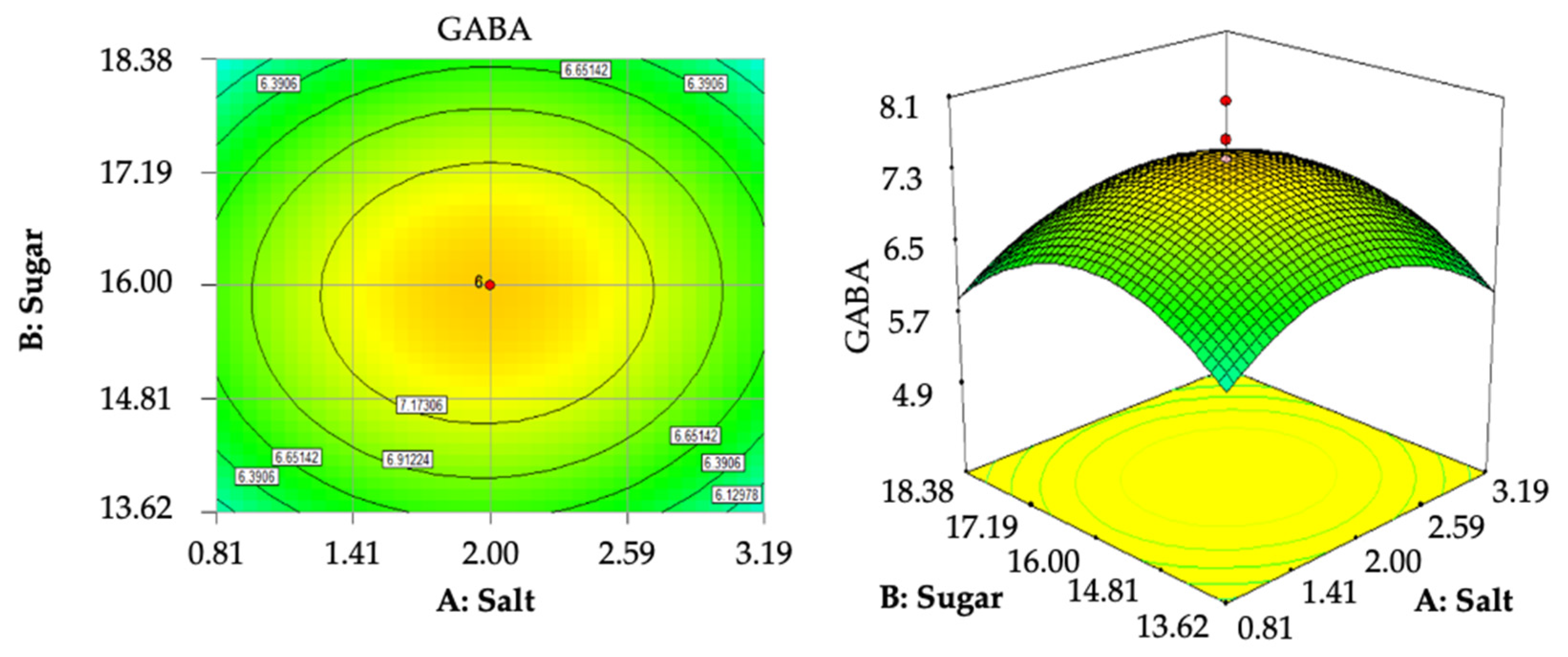
The ANOVA results also revealed significant interactions among the factors and their quadratic terms, particularly for salt (A2) and sugar (B2), with p < 0.0001, indicating strong effects on the fermentation process and GABA production. Although interactions such as salt with MSG (AB) and salt with sugar (AC) were not significant (p > 0.05), the main factors still played important roles during fermentation [27]. The and 2D contour and 3D surface plot represent the interaction effect of salt (A) and sugar (B) on GABA content as shown in Figure 1.
The model’s lack-of-fit value was 1.21 with p = 0.2470, indicating that the model adequately described the fermentation process and can be used to predict GABA content in nem chua under different experimental conditions. Therefore, a linear regression equation predicting post-fermentation GABA content is reliable and was applied to select the optimal treatment.
The equation coded in terms of the factors:
GABA = 7.43 − 0.017A − 0.05B − 0.033C + 0.035AB − 0.14AC + 0.022BC − 0.71A2 − 0.79B2 − 0.14C2
The equation expressed in terms of the actual (uncoded) factors:
GABA = −30.47564 + 2.09423A + 4.38148B + 0.66427C + 0.012208AB − 0.10136AC + 0.00777BC − 0.49992A2 − 0.13910B2 − 0.1024C2

3.2. Confirmatory Experiments to Validate the Optimal Conditions

Based on the experimental results from the Central Composite Design (CCD), the model showed good fit, and one treatment with optimal parameters was recommended by Design-Expert 7.0. The selected treatment—salt 2%, sugar 15.92%, and MSG 2.86%—was predicted to yield the highest theoretical GABA content and was therefore chosen for confirmatory testing. The validation experiment was conducted using this single optimal treatment in triplicate (Table 3).
The results demonstrated that fermenting nem chua with the combined starter cultures of Lpb. plantarum CP1.2 and P. acidilactici CP1.4 under optimal conditions yielded favorable GABA levels. The mean pH decreased from 5.93 before fermentation to 4.70 after fermentation, indicating a mildly acidic environment appropriate for the growth and activity of lactic acid bacteria. Concurrently, lactic acid content reached an average of 18.50 g/kg, reflecting high metabolic efficiency of the inoculated strains.
Notably, the actual GABA contents in all three replicates (8.59, 8.14, and 8.24 mg/g) were higher than the model-predicted theoretical value (7.44 mg/g), with an average of 8.32 mg/g, exceeding the prediction. This not only confirms the repeatability and stability of the fermentation process but also suggests that the model tended to slightly underpredict the experimental outcome. The small variation among replicates indicates the procedure’s precision and reliability in practical application.
An important factor influencing GABA biosynthesis efficiency is the pH and acid concentration of the fermentation environment. Post-fermentation pH was maintained below 5.0, which is optimal for the expression and activity of glutamate decarboxylase, the key enzyme responsible for converting glutamate to GABA [28]. At the same time, lactic acid accumulation in the medium creates favorable competitive conditions for LAB and inhibits undesirable microorganisms, helping maintain a stable microbial community. Several previous reports have also shown that temperature and pH directly affect the expression of the gadB gene encoding glutamate decarboxylase (GAD) as well as the activity of this enzyme [29]. The optimal pH for GAD activity in LAB species typically falls within 3.5–5.0, while the optimal temperature ranges from 30 to 45 °C depending on the species [28]. Although this study did not investigate each environmental factor separately, the results indicate that a mildly acidic environment was stably maintained and was suitable for optimizing GABA biosynthesis.
In summary, the validation results not only reinforce the reliability of the predictive model but also demonstrate a strong correlation between fermentation environmental conditions (pH, lactic acid) and GABA production efficiency. These findings provide a crucial basis for future studies aimed at optimizing and scaling up the production of GABA-rich fermented products with high application potential in foods.

3.3. Effect of Packaging Type on the Quality of Nem Chua During Storage

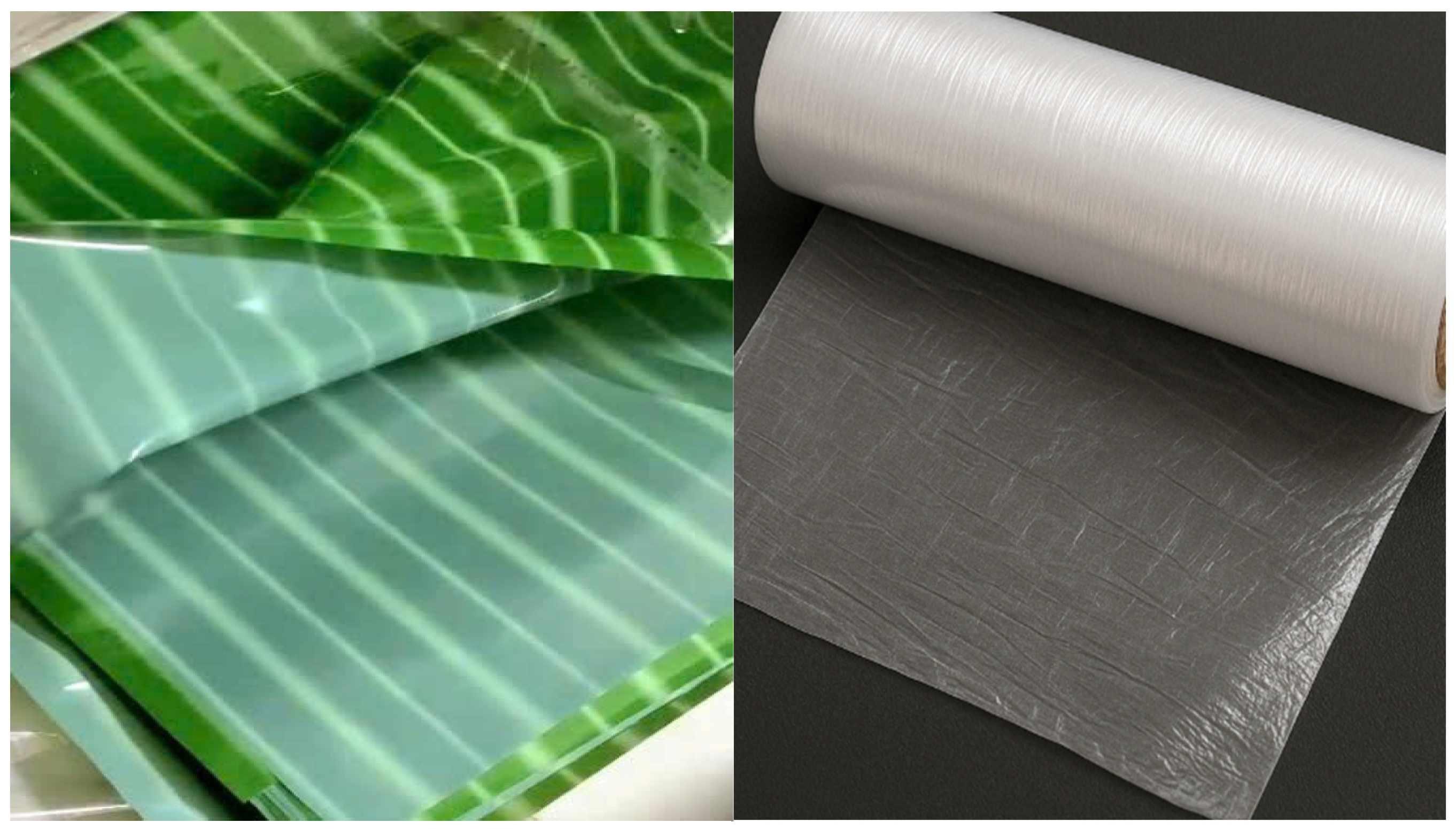
Packaging is a key factor in improving product shelf life. Two types of packaging were used: artificial banana leaves (PP) and food-grade bags (PE) (Figure 2). PE packaging is more flexible, while PP packaging is more durable. Differences in material properties may affect product quality throughout storage.
The survey results showed that the pre-fermentation pH of all samples was around 5.55 with no differences among treatments (p > 0.05), indicating uniform initial conditions (Table 4). After fermentation and throughout storage, pH tended to decrease markedly over time. On day 1, pH dropped to 4.56 (PE) and 4.52 (PP); on day 3, it further decreased to 4.48 (PE) and 4.46 (PP); by day 5, the decline slowed to 4.43 for both packaging types. By day 7, pH continued to fall to 4.41 (PE) and 4.40 (PP). These trends indicate effective fermentation and acid formation, consistent with the strong acid-producing capacity of Lpb. plantarum CP1.2 and P. acidilactici CP1.4 [30]. However, statistical analysis showed no significant differences between PE and PP packaging at the same time points, though a slightly lower pH was consistently observed in PE compared with PP at most time points. This small difference may be related to the degree of gas permeability of each packaging type, which can influence microbial activity conditions within the product.
Lactic acid is the principal product of lactic fermentation, determining sourness and inhibiting spoilage microorganisms. The increase in lactic acid during storage reflects the effective activity of lactic acid bacteria and a stable fermentation process. In line with the pH decline, lactic acid content rose over fermentation time. On day 1, values were about 21.87 g/kg (PE) and 20.92 g/kg (PP); by day 3, they increased to 23.22 g/kg for both packaging types–the phase with the fastest acid accumulation. From day 5 onward, concentrations continued to rise but at a slower rate, reaching their highest levels on day 5 (24.70 g/kg for PE; 24.98 g/kg for PP) and remaining nearly stable through day 7 (24.97 g/kg and 24.84 g/kg, respectively). A previous report also indicated that lactic acid accumulation is a key indicator of lactic acid bacteria performance in meat fermentation [31]. This indicates that the microbial community has entered a stable phase and the fermentation environment is approaching saturation in terms of acidification. PE packaging yielded higher lactic acid levels than PP; although the difference was not statistically large, it still suggests that packaging has a certain influence on lactic acid content.
Additionally, the results showed that on day 1, GABA content reached the highest level across all time points: 8.84 mg/g for the PE samples and 8.72 mg/g for the PP samples. The high GABA level at this time reflects efficient biosynthesis after one day of fermentation, when bacteria achieve optimal metabolic rates in a nutrient-rich environment that has not yet been inhibited by acid or other metabolic products. A previous report indicated that Lpb. plantarum convert glutamic acid to GABA most effectively during the early growth phase [27]. By day 3 of fermentation, GABA content decreased slightly to 7.73 mg/g (PE) and 7.68 mg/g (PP), indicating a downward trend in synthesis rate. This is attributable to lactic acid accumulation and the resulting pH decline, which inhibit the activity of glutamate decarboxylase, the key enzyme in GABA biosynthesis [32]. Additionally, substrate depletion (glutamic acid) in the medium may also be a limiting factor. By day 5, GABA further declined to 6.81 mg/g (PE) and 6.48 mg/g (PP), corresponding to the fermentation approaching a steady state. This marked decrease may be related to substrate exhaustion as well as a reduction in bacterial biomass due to strong acidification, as reflected by the lower pH and higher lactic acid levels at this time [32,33]. By day 7, the end of storage, GABA reached its lowest levels of 5.07 mg/g (PE) and 4.74 mg/g (PP).
This decrease indicates that fermentation had nearly ceased and the environment was no longer favorable for enzyme activity or bacterial growth. Although the residual GABA still has nutritional value, it is much lower than at the beginning of fermentation. Based on the experiment, GABA content on most storage days remained high compared with other studies. A previous report recorded about 4.05 mg/g of GABA in the Thai fermented meat product “nham” [34]. However, another report obtained only about 1.66 mg/g in sausage fermented with Lpb. plantarum [35].
Regarding the effect of packaging, although there was no large (statistically significant) difference between the two types, GABA levels in PE were generally higher than in PP at most time points. Moreover, in PE, the rate of GABA decline from days 1–7 was slower than in PP, suggesting that PE may better protect the fermentation environment in the early stage. These results further underscore the crucial role of fermentation conditions in the accumulation of GABA, a high-value bioactive compound that can help improve neural function, lower blood pressure, and support the human central nervous system [36].
Formol nitrogen in foods includes amino nitrogen and ammoniacal nitrogen. Amino acids are key building blocks of many proteins; they perform important functions by forming enzymes and hormones that regulate and maintain body processes. In contrast, ammoniacal nitrogen (as NH4+) is an indicator of product spoilage and microbial contamination. High ammoniacal nitrogen reflects poor processing or storage, allowing harmful bacteria to dominate and degrade amino acids into ammonia, causing food spoilage. Some fermented foods may contain a small amount of ammonia generated during fermentation; however, this level is usually very low and not harmful to health.
Analytical results showed that ammoniacal nitrogen increased notably over storage time, reflecting progressive protein degradation during fermentation and storage. Specifically, after 1 day of fermentation, the ammonia level was very low (0.093 g/kg with PE packaging and 0.091 g/kg with PP), indicating that protein hydrolysis had just begun and spoilage microflora were still limited. From day 3 onward, this index rose to 0.101 g/kg (PE) and 0.098 g/kg (PP). By day 5, values increased more clearly (0.111 g/kg in PE and 0.101 g/kg in PP), showing stronger deamination activity. On day 7 (end of storage), ammoniacal nitrogen continued to rise, reaching 0.130 g/kg in PE and 0.113 g/kg in PP, with PE being the highest.
Comparing the two packaging types, PE consistently gave higher ammonia values than PP at all time points from day 3 onward. This difference may come from the physical properties of the materials: PE retains moisture better, which favors the activity of endogenous enzymes and proteolytic microbes, leading to higher NH4+ accumulation. Meanwhile, PP is more gas-permeable, which may help limit the growth of spoilage microorganisms and thus slow protein breakdown [37]. This demonstrates that the choice of packaging can have different effects depending on the storage stage. Although ammonium levels increased over time, the NH4+ measured in this study remained within safe limits. In meat products, ammonia levels are considered acceptable when below 0.30 mg/kg [38] or 0.35 g/kg as the Vietnamese standard [39]. Therefore, the highest value—0.130 g/kg (PE, day 7)—still ensures sensory and microbiological safety. However, if storage is prolonged, NH4+ may exceed the safety threshold, leading to the accumulation of odorous compounds and sensory deterioration, underscoring the importance of controlling storage time and selecting appropriate packaging to extend shelf life while maintaining quality.
Amino nitrogen content also showed an increasing trend throughout storage, indicating vigorous protein hydrolysis under the action of lactic acid bacteria. On day 1, the levels were still quite low—2.35 g/kg in PE and 2.10 g/kg in PP. By day 3, these values rose markedly to 3.75 g/kg (PE) and 2.95 g/kg (PP), showing that early fermentation had initiated protein breakdown via bacterial extracellular enzymes and endogenous meat enzymes [40]. From day 5 to day 7, proteolysis continued to intensify, as evidenced by a pronounced increase in amino nitrogen, especially in samples packaged with PP. On day 5, the PE sample reached 3.88 g/kg and the PP sample 4.02 g/kg. By day 7, the rise became more marked, with 6.44 g/kg for PE and 5.87 g/kg for PP. Statistical analysis showed significant differences in amino nitrogen on days 3 and 7. This disparity suggests that PE packaging tends to retain moisture better, creating a more favorable environment for enzymatic activity and thereby promoting stronger protein degradation in the late fermentation stage. The increase in amino nitrogen over time confirms the hydrolysis of proteins into peptides and free amino acids—compounds that contribute substantially to the product’s characteristic flavor and nutritional value [41]. This is a useful index for evaluating the sensory quality of nem chua during the fermentation and storage stages.
Lactic acid bacteria (LAB) are central to nem chua fermentation due to their ability to produce lactic acid, which lowers pH, imparts the characteristic sour taste, and inhibits spoilage microorganisms [42]. They not only serve as the primary biological agents in food fermentation but are also widely recognized as probiotics, live microorganisms that confer health benefits to the host when administered in adequate amounts. In this study, LAB counts ranged from 9.41 to 9.64 log CFU/g, indicating vigorous and stable activity throughout storage. On day 1, LAB reached the highest levels—9.64 log CFU/g in PE packaging and 9.58 log CFU/g in PP. This reflects a robust onset of fermentation and growth performance of the inoculated LAB strains. It also indicates rapid adaptation of Lpb. plantarum CP1.2 and P. acidilactici CP1.4 to the environment under favorable temperature, moisture, and nutrient conditions from the meat matrix. From day 3 to day 5, LAB counts declined slightly, ranging from 9.60 to 9.51 log CFU/g, likely due to decreasing pH and greater lactic acid accumulation, which create conditions that increasingly inhibit LAB growth [43]. By day 7, LAB counts continued to decrease, reaching 9.46 log CFU/g (PE) and 9.41 log CFU/g (PP). This decline reflects self-inhibition of growth, which commonly occurs in closed fermentation systems when metabolic products (acids, bacteriocins, etc.) accumulate to levels that inhibit the very bacteria that produced them [44]. At the same time, because the product is not stored under refrigeration, maintaining high counts for a long period inevitably leads to gradual declines. Regarding packaging effects, PE showed a better ability to protect and maintain LAB counts than PP throughout the process, suggesting that PE has better gas tightness and moisture retention, thereby creating conditions that favor the optimal growth of anaerobic microorganisms. In summary, LAB counts in nem chua packaged with both materials remained high (above 9.4 log CFU/g). A previous report noted that traditional fermented meat products typically have LAB counts ranging from 8.0 to 9.5 log CFU/g, which tend to decrease after the main fermentation phase due to the accumulation of acids and other metabolites, ensuring effective fermentation and microbiological safety [42]. However, PE packaging tends to better support the stability of LAB counts throughout storage.
Aerobic bacteria indicate the level of microbial contamination in foods and reflect the ability to control exogenous microflora during storage. In nem chua, excessive growth of undesirable aerobic bacteria can lead to spoilage, reduced sensory quality, and compromised food safety [45]. The storage process from 1 to 7 days showed an increase in the number of aerobic bacteria from 2.10 to 5.87 CFU/g in PP packaging, but higher aerobic counts were observed when stored in PE packaging (2.35–6.44 logCFU/g). However, the results before day 7 were still below the permissible limit for unprocessed food products before use (<6.7 logCFU/g) according to QCVN 8-3:2012/BYT [46]. In addition, yeasts and molds are common aerobic microorganisms in foods that can cause quality changes and spoilage if not controlled. In nem chua, their presence is usually associated with storage conditions, moisture, oxygen levels, and the inhibitory capacity of beneficial microflora, especially lactic acid bacteria. Our results showed a slight upward trend in yeast and mold counts over time, starting at 0.29 log CFU/g for PP and 0.30 log CFU/g for PE on day 1, then increasing to 0.36–0.38 log CFU/g on days 3–5. By day 7, counts reached their highest levels – 0.37 log CFU/g in PE and 0.39 log CFU/g in PP. Although this increase was modest, it likely reflects the gradual decline of LAB’s inhibitory activity over time as the fermentation environment stabilizes and acid levels no longer rise substantially, allowing some acid-tolerant yeasts and molds to grow slightly [47]. According to Vietnam’s national regulation QCVN 8-3:2012/BYT, for processed meat products (including nem chua), yeasts and molds must not exceed 102 CFU/g (2 log CFU/g). In summary, compared with other references, the data from this study are reasonable—indeed close to optimal—ensuring safety and extended product shelf life.
Sensory evaluation method is performed based on Vietnamese national standards (TCVN 3215:1979). Sensory evaluation results based on color, aroma, taste, and firmness (5-point scale) showed that the sensory quality of nem chua declined over storage time (Table 5). However, the degree of decline differed between the two packaging types: PE generally yielded better sensory scores than PP at most time points.
On day 1, PE achieved the highest scores for color and aroma (3.50), and consistent scores for taste and firmness (3.25). PP had a stronger aroma (3.75) but poorer color than PE. This suggests PP may accelerate fermentation, but can also cause the initial color to fade more quickly. Clear differentiation in sensory quality emerged by day 3. PE maintained stability with color (3.00), taste (3.25), and firmness (3.25), whereas PP tended to drop markedly, especially in taste (2.75) and color (2.75). Thus, PE sustained more even sensory performance, while PP showed earlier sensory instability.
Both packaging types showed noticeable declines in color and aroma after 5 days of fermentation. Even so, PE still scored better for color (2.25) and aroma (3.00) than PP (color: 2.00; aroma: 2.75). Taste for PE reached 2.50, higher than PP (2.25). This indicates that PE can slow the deterioration of key sensory attributes–especially aroma and taste–which determine the product’s appeal. By day 7, nem chua began to deteriorate markedly in sensory terms. Nevertheless, PE still maintained better scores for aroma (2.25) and taste (2.25), whereas PP reached only 2.50 and 2.00, respectively. Color in PE (2.25) also exceeded PP (1.75), suggesting that PE better preserves the product’s natural color stability, possibly due to superior oxygen or moisture barrier properties.

4. Conclusions

Using co-cultures of L. plantarum CP1.2 and P. acidilactici CP1.4, response surface methodology identified seasoning ratios near 2.0% salt, ~16% sugar, and ~3% MSG as optimal for GABA enrichment in nem chua. Model predictions (7.44 mg/g) were confirmed and surpassed in validation (8.32 mg/g), with acidification to ~pH 4.7 and lactic acid ~18.5 g/kg indicating robust lactic fermentation. During room-temperature storage, GABA peaked on day 1 and declined thereafter as acidity accumulated. Packaging influenced quality trajectories: PE favored higher early GABA retention and lower aerobic counts, whereas PP better limited ammoniacal nitrogen increases later in storage. LAB populations remained high (≥9.4 log CFU/g) throughout, and sensory quality decreased gradually but was generally superior in PE. Collectively, these results establish a reproducible formulation–culture–packaging framework that both maximizes bioactive GABA and may contribute to improved safety under controlled conditions, offering a practical pathway for pilot- and industrial-scale production of GABA-enhanced fermented meat products and for shelf-life tuning via packaging selection.

Author Contributions

N.N.T.: conceptualization, methodology, validation, formal analysis, investigation, data curation, writing—original draft. S.T.C.T.: methodology, formal analysis. L.M.C.: methodology, formal analysis, data curation. B.H.D.L.: formal analysis, data curation. T.T.N.H.N.: methodology, validation, formal analysis, software; B.A.P.: methodology, visualization, software. N.D.V.: data curation, formal analysis, writing—original draft, writing—review and editing; N.V.T.: methodology, supervision, writing—review and editing. H.X.P.: conceptualization, supervision, project administration, funding acquisition, writing—review and editing. All authors have read and agreed to the published version of the manuscript.

Funding

This study was funded by grants of the Ministry of Education and Training of Vietnam (project code: B2024-TCT-13).

Institutional Review Board Statement

The national laws do not require ethical approval for sensory evaluation. There are no human ethics committees or formal documentation procedures available for sensory evaluation. The experimental protocol involving sensory evaluation was in accordance with the relevant operation specifications in Vietnam.

Informed Consent Statement

Appropriate protocols were put in place to protect the rights and privacy of all participants during the execution, e.g., no coercion to participate, full disclosure of the study’s requirements and risks, and verbal consent of participants.

Data Availability Statement

The original contributions presented in this study are included in the article. Further inquiries can be directed to the corresponding author.

Acknowledgments

This study was funded by grants of Ministry of Education and Training of Vietnam (Project code: B2024-TCT-13). We acknowledge Can Tho University and Nguyen Tat Thanh University, Ho Chi Minh City, Vietnam for supporting this study.

Conflicts of Interest

The authors declare no conflicts of interest.

References

  1. Pannerchelvan, S.; Rios-Solis, L.; Faizal Wong, F.W.; Zaidan, U.H.; Wasoh, H.; Mohamed, M.S.; Tan, J.S.; Mohamad, R.; Halim, M. Strategies for improvement of gamma-aminobutyric acid (GABA) biosynthesis via lactic acid bacteria (LAB) fermentation. Food Funct. 2023, 14, 3929–3948. [Google Scholar] [CrossRef]
  2. Zhang, Q.; Sun, Q.; Tan, X.; Zhang, S.; Zeng, L.; Tang, J.; Xiang, W. Characterization of γ-aminobutyric acid (GABA)-producing Saccharomyces cerevisiae and coculture with Lactobacillus plantarum for mulberry beverage brewing. J. Biosci. Bioeng. 2020, 129, 447–453. [Google Scholar] [CrossRef]
  3. Çelebi Sezer, Y.; Bozkurt, H. Use of antimicrobial packaging systems in the production and storage of meat and meat products. Food Health 2021, 7, 150–163. [Google Scholar] [CrossRef]
  4. Alkay, Z.; Tuncil, Y.E.; Durak, M.Z.; Yilmaz, M.T.; Dertli, E. Enhancing γ-aminobutyric acid (GABA) in Boza, a fermented Turkish beverage: Role of monosodium glutamate and Lactobacillus strains. J. Food Process. Preserv. 2025, 2025, 7139222. [Google Scholar] [CrossRef]
  5. Noorolahi, Z.; Sahari, M.A.; Ahmadi Gavlighi, H.; Barzegar, M. The effect of pistachio green hull extract and packaging type on antioxidant and antimicrobial properties of ω3/low-fat fermented sausage. LWT 2025, 231, 118355. [Google Scholar] [CrossRef]
  6. Nascimento, A.P.S.; Barros, A.N. Sustainable innovations in food microbiology: Fermentation, biocontrol, and functional foods. Foods 2025, 14, 2320. [Google Scholar] [CrossRef]
  7. Hashem, M.; Yasmin, M.; Ali, M.; Al Sabid, A.; Al Noman, M. Effect of vacuum and aerial packaging on the quality and shelf life of broiler meat treated with extra virgin olive oil. Meat Res. 2023, 3, 62. [Google Scholar] [CrossRef]
  8. Nauman, K.; Jaspal, M.H.; Asghar, B.; Manzoor, A.; Akhtar, K.H.; Ali, U.; Ali, S.; Nasir, J.; Sohaib, M.; Badar, I.H. Effect of Different packaging atmosphere on microbiological shelf life, physicochemical attributes, and sensory characteristics of chilled poultry fillets. Food Sci. Anim. Resour. 2022, 42, 153–174. [Google Scholar] [CrossRef]
  9. Lohita, B.; Srijaya, M. Novel technologies for shelf-life extension of food products as a competitive advantage: A review. In Food Production, Diversity, and Safety Under Climate Change; Springer Nature: Cham, Switzerland, 2024; pp. 285–306. [Google Scholar]
  10. Deshmukh, R.K.; Gaikwad, K.K. Natural antimicrobial and antioxidant compounds for active food packaging applications. Biomass Convers. Biorefin. 2024, 14, 4419–4440. [Google Scholar] [CrossRef]
  11. Ząbek, K.; Miciński, J.; Milewski, S.; Sobczak, A. Effect of modified atmosphere packaging and vacuum packaging on quality characteristics of lamb meat. Arch. Anim. Breed. 2021, 64, 437–445. [Google Scholar] [CrossRef]
  12. Vu, N.D.; Hang, N.T.T.N.; Mi, K.D.Q.; Anh, N.H.T.; Pham, B.A. Exploring the nutritional composition, physicochemical properties, and biological characteristics of mature banana varieties (Musaceae). Food Chem. X 2025, 28, 102594. [Google Scholar] [CrossRef] [PubMed]
  13. Nguyen, L.; Hwang, E.-S. Quality Characteristics and antioxidant activity of yogurt supplemented with aronia (Aronia melanocarpa) juice. Prev. Nutr. Food Sci. 2016, 21, 330–337. [Google Scholar] [CrossRef] [PubMed]
  14. AOAC Official Method 947.05 Acidity of Milk. In Official Methods of Analysis of AOAC INTERNATIONAL; Oxford University Press: New York, NY, USA, 2023.
  15. Tram, H.T.N.; Van Thinh, P.; Minh, T.N.; Mui, D.T.; Vu, N.D.; Pham, B.A.; Pham, D.T.N.; Phu, L.H.; Thuy, C.X. Enhanced production of gamma-aminobutyric acid (GABA) in Mang Buk Brown rice via optimal fermentation conditions with Lactobacillus brevis, Lactobacillus pentosus, and Lactobacillus plantarum. J. Agric. Food Res. 2025, 21, 101896. [Google Scholar] [CrossRef]
  16. Herawati, H.; Afifah, D.N.; Kusumanigtyas, E.; Usmiati, S.; Soemantri, A.S.; Miskiyah; Kamsiati, E.; Bachtiar, M. Characterization of GABA (gamma-aminobutyric acid) levels some fermented food in Indonesia. IOP Conf. Ser. Earth Environ. Sci. 2021, 819, 012068. [Google Scholar] [CrossRef]
  17. Gump, B.H.; Zoecklein, B.W.; Fugelsang, K.C.; Whiton, R.S. Comparison of analytical methods for prediction of prefermentation nutritional status of grape juice. Am. J. Enol. Vitic. 2002, 53, 325–329. [Google Scholar] [CrossRef]
  18. Skoutelas, D.; Ricardo-da-Silva, J.M.; Laureano, O. Validation and Comparison of formol and ft-ir methods for assimilable nitrogen in vine grapes. S. Afr. J. Enol. Vitic. 2016, 32, 262–266. [Google Scholar] [CrossRef][Green Version]
  19. Huang, C.; Gao, M.; Luo, H.; Xu, Y. Indophenol blue colorimetric method to determine grain protein content of cereal plants. In Plant Functional Genomics; Springer Nature: Cham, Switzerland, 2024; pp. 257–263. [Google Scholar]
  20. Vu, N.D.; Nguyen, N.H.K.; Tran, T.T.; Long, T.B.; Tan, L.V.; Nhi, T.T.Y. Changes in the recovery efficiency, nutritional and safety quality of dried sergestid shrimp (Acetes species) during commercial production. Int. J. Food Stud. 2024, 13, 72–89. [Google Scholar] [CrossRef]
  21. Ngouénam, J.R.; Momo Kenfack, C.H.; Foko Kouam, E.M.; Kaktcham, P.M.; Maharjan, R.; Ngoufack, F.Z. Lactic acid production ability of Lactobacillus sp. from four tropical fruits using their by-products as carbon source. Heliyon 2021, 7, e07079. [Google Scholar] [CrossRef]
  22. Naghili, H.; Tajik, H.; Mardani, K.; Rouhani, S.M.R.; Ehsani, A.; Zare, P. Validation of drop plate technique for bacterial enumeration by parametric and nonparametric tests. Vet. Res. Forum 2013, 4, 179. [Google Scholar]
  23. Vu, N.D.; Tran, N.T.Y.; Le, T.D.; Phan, N.T.M.; Doan, P.L.A.; Huynh, L.B.; Dao, P.T. Kinetic model of moisture loss and polyphenol degradation during heat pump drying of soursop fruit (Annona muricata L.). Processes 2022, 10, 2082. [Google Scholar] [CrossRef]
  24. Linares, D.M.; Martín, M.; Ladero, V.; Alvarez, M.A.; Fernández, M. Biogenic Amines in dairy products. Crit. Rev. Food Sci. Nutr. 2011, 51, 691–703. [Google Scholar] [CrossRef] [PubMed]
  25. Jorge, J.M.P.; Nguyen, A.Q.D.; Pérez-García, F.; Kind, S.; Wendisch, V.F. Improved fermentative production of gamma-aminobutyric acid via the putrescine route: Systems metabolic engineering for production from glucose, amino sugars, and xylose. Biotechnol. Bioeng. 2017, 114, 862–873. [Google Scholar] [CrossRef] [PubMed]
  26. Myers, R.H.; Montgomery, D.C. Response surface methodology. IIE Trans. 1996, 28, 1031–1032. [Google Scholar] [CrossRef]
  27. Siragusa, S.; De Angelis, M.; Di Cagno, R.; Rizzello, C.G.; Coda, R.; Gobbetti, M. Synthesis of γ-Aminobutyric acid by lactic acid bacteria isolated from a variety of italian cheeses. Appl. Environ. Microbiol. 2007, 73, 7283–7290. [Google Scholar] [CrossRef]
  28. Cui, Y.; Miao, K.; Niyaphorn, S.; Qu, X. Production of gamma-aminobutyric acid from lactic acid bacteria: A systematic review. Int. J. Mol. Sci. 2020, 21, 995. [Google Scholar] [CrossRef]
  29. Wu, Q.; Shah, N.P. High γ-aminobutyric acid production from lactic acid bacteria: Emphasis on Lactobacillus brevis as a functional dairy starter. Crit. Rev. Food Sci. Nutr. 2017, 57, 3661–3672. [Google Scholar] [CrossRef]
  30. Holzapfel, W.H.; Haberer, P.; Snel, J.; Schillinger, U.; Huis in’t Veld, J.H. Overview of gut flora and probiotics. Int. J. Food Microbiol. 1998, 41, 85–101. [Google Scholar] [CrossRef]
  31. Hammes, W.P.; Bantleon, A.; Min, S. Lactic acid bacteria in meat fermentation. FEMS Microbiol. Lett. 1990, 87, 165–174. [Google Scholar] [CrossRef]
  32. Dhakal, R.; Bajpai, V.K.; Baek, K.-H. Production of gaba (Y—Aminobutyric acid) by microorganisms: A review. Braz. J. Microbiol. 2012, 43, 1230–1241. [Google Scholar] [CrossRef]
  33. Yogeswara, I.B.A.; Maneerat, S.; Haltrich, D. Glutamate decarboxylase from lactic acid bacteria—A key enzyme in GABA synthesis. Microorganisms 2020, 8, 1923. [Google Scholar] [CrossRef]
  34. Phupaboon, S.; Kontongdee, P.; Hashim, F.J.; Kanpipit, N.; Matra, M.; Totakul, P.; Prommachart, R.; Phesatcha, B.; Wanapat, M. Bioaccessibility and microencapsulation of Lactobacillus sp. to enhance nham protein hydrolysates in thai fermented sausage. Foods 2022, 11, 3846. [Google Scholar] [CrossRef]
  35. Icer, M.A.; Sarikaya, B.; Kocyigit, E.; Atabilen, B.; Çelik, M.N.; Capasso, R.; Ağagündüz, D.; Budán, F. Contributions of gamma-aminobutyric acid (gaba) produced by lactic acid bacteria on food quality and human health: Current applications and future prospects. Foods 2024, 13, 2437. [Google Scholar] [CrossRef] [PubMed]
  36. Li, H.; Qiu, T.; Huang, G.; Cao, Y. Production of gamma-aminobutyric acid by Lactobacillus brevis NCL912 using fed-batch fermentation. Microb. Cell Fact. 2010, 9, 85. [Google Scholar] [CrossRef] [PubMed]
  37. Castrica, M.; Pavlovic, R.; Balzaretti, C.M.; Curone, G.; Brecchia, G.; Copelotti, E.; Panseri, S.; Pessina, D.; Arnoldi, C.; Chiesa, L.M. Effect of high-pressure processing on physico-chemical, microbiological and sensory traits in fresh fish fillets (Salmo salar and Pleuronectes platessa). Foods 2021, 10, 1775. [Google Scholar] [CrossRef] [PubMed]
  38. Falk, K.G.; McGuire, G. Ammonia test for meat spoilage. J. Biol. Chem. 1919, 37, 547–550. [Google Scholar] [CrossRef]
  39. TCVN 7046:2019; Fresh Meat. Vietnamese Technical Standard: Ha Noi, Vietnam, 2019; pp. 1–15.
  40. Toldra, F. Proteolysis and lipolysis in flavour development of dry-cured meat products. Meat Sci. 1998, 49, S101–S110. [Google Scholar] [CrossRef]
  41. Leroy, F.; Verluyten, J.; De Vuyst, L. Functional meat starter cultures for improved sausage fermentation. Int. J. Food Microbiol. 2006, 106, 270–285. [Google Scholar] [CrossRef]
  42. Laranjo, M.; Elias, M.; Fraqueza, M.J. The use of starter cultures in traditional meat products. J. Food Qual. 2017, 2017, 9546026. [Google Scholar] [CrossRef]
  43. Shah, A.M.; Tarfeen, N.; Mohamed, H.; Song, Y. Fermented foods: Their health-promoting components and potential effects on gut microbiota. Fermentation 2023, 9, 118. [Google Scholar] [CrossRef]
  44. Leroy, F.; De Vuyst, L. Lactic acid bacteria as functional starter cultures for the food fermentation industry. Trends Food Sci. Technol. 2004, 15, 67–78. [Google Scholar] [CrossRef]
  45. Ray, B.; Bhunia, A. Fundamental Food Microbiology; CRC Press: Boca Raton, FL, USA, 2024; ISBN 9781003346616. [Google Scholar]
  46. QCVN 8-3:2012/BYT; National Regulations on Microbial Contamination in Food. Vietnam Ministry of Health: Hanoi, Vietnam, 2012.
  47. Pitt, J.I.; Hocking, A.D. Fungi and Food Spoilage; Springer US: Boston, MA, USA, 2009; ISBN 978-0-387-92206-5. [Google Scholar]
Figure 1. The response surface plots show the relationships between salt and sugar levels and the resulting GABA content after fermentation.
Fermentation 11 00649 g001
Figure 2. PP packaging (left) and PE food-grade bag (right).
Fermentation 11 00649 g002
Table 1. An optimization model using a central composite design (CCD) with 20 runs.
RunExperimental FactorAnalytical Fermentation Parameter
Salt
(w/w)
Sugar
(w/w)
MSG
(w/w)
Initial pHFinal pHLactic Acid (g/kg)GABA (mg/g)
10.0016.003.005.65 ± 0.01 f4.67 ± 0.03 g18.77 ± 0.23 a5.26 ± 0.07 hi
20.8113.621.815.59 ± 0.00 g4.73 ± 0.04 defg18.36 ± 0.23 ab5.63 ± 0.13 fghi
30.8113.624.195.72 ± 0.02 bc4.88 ± 0.02 abcde17.42 ± 0.41 abcd6.58 ± 0.13 cde
40.8118.381.815.59 ± 0.01 g4.70 ± 0.02 fg18.77 ± 0.23 a5.74 ± 0.07 fgh
50.8118.384.195.73 ± 0.02 ab4.85 ± 0.06 abcdef17.96 ± 1.02 abcd5.81 ± 0.13 fgh
62.0012.003.005.65 ± 0.01 f4.75 ± 0.01 defg17.96 ± 0.23 abcd4.99 ± 0.10 i
72.0016.001.005.53 ± 0.03 h4.71 ± 0.03 efg18.23 ± 0.41 ab7.28 ± 0.13 b
82.0016.003.005.66 ± 0.00 ef4.79 ± 0.02 cdefg17.82 ± 0.62 abcd7.06 ± 0.36 bcd
92.0016.003.005.70 ± 0.03 bcd4.78 ± 0.08 cdefg18.09 ± 0.70 abc7.22 ± 0.03 bc
102.0016.003.005.68 ± 0.01 cdef4.82 ± 0.05 bcdefg17.55 ± 0.62 abcd8.05 ± 0.03 a
112.0016.003.005.65 ± 0.01 f4.83 ± 0.05 bcdefg17.42 ± 0.62 abcd7.27 ± 0.18 b
122.0016.003.005.67 ± 0.01 def4.85 ± 0.06 abcdef17.55 ± 0.70 abcd7.42 ± 0.20 ab
132.0016.003.005.67 ± 0.01 def4.84 ± 0.02 bcdefg17.82 ± 0.23 abcd7.63 ± 0.50 ab
142.0016.005.005.77 ± 0.02 a4.84 ± 0.06 ab15.93 ± 0.41 cd6.48 ± 0.28 de
152.0020.003.005.69 ± 0.01 bcdef4.89 ± 0.03 abcd17.15 ± 0.62 abcd5.16 ± 0.15 hi
163.1913.621.815.57 ± 0.01 gh4.86 ± 0.15 abcdef17.15 ± 2.23 abcd6.24 ± 0.10 ef
173.1913.624.195.70 ± 0.01 bcde4.92 ± 0.09 abc16.20 ± 1.07 bcd5.57 ± 0.18 ghi
183.1918.381.815.68 ± 0.01 cdef4.81 ± 0.02 cdefg17.96 ± 0.23 abcd5.52 ± 0.22 ghi
193.1918.384.195.71 ± 0.01 bcd5.01 ± 0.04 a15.80 ± 0.41 d5.99 ± 0.38 efg
204.0016.003.005.71 ± 0.01 bcd4.98 ± 0.03 ab15.93 ± 0.23 cd5.32 ± 0.13 hi
Note: The results represent the mean ± standard deviation (SD) of three analytical replicates and three experimental repetitions. MSG: monosodium glutamate. (a–i) indicates statistically significant differences between conditions.
Table 2. ANOVA results from the statistical analysis of GABA in nem chua using a Central Composite Design (CCD) experimental model.
SourceSum of SquaresdfMean SquareF-Valuep-ValueNote
Model14.9291.668.960.001significant
A-Salt0.003810.00380.0210.8875
B-Sugar0.03810.0380.210.6602
C-MSG0.01510.0150.0820.7801
AB0.009510.00950.0520.8249
AC0.1610.160.890.3679
BC0.0038610.003860.0210.8879
A27.217.238.96<0.0001
B28.9218.9248.27<0.0001
C20.310.31.630.2303
Residual1.85100.18
Lack of Fit1.2150.241.910.247not significant
Pure Error0.6350.13
Cor Total16.7619
Std. Dev.0.43    R2 0.8897
Mean6.31   Adj R20.7905
C.V.%6.81   Pred R20.3514
PRESS10.87   Adeq Precision7.612
Table 3. Actual (measured) GABA content versus theoretical (predicted) values.
No.Experimental FactorFermentation ParameterGABA Content (mg/g)
Salt
(% w/w)
Sugar
(% w/w)
MSG
(% w/w)
Initial pHFinal pHLactic Acid (g/kg)TheoreticalActual
12.0015.922.865.924.7118.237.448.59
22.0015.922.865.954.7117.827.448.14
32.0015.922.865.934.6819.447.448.24
Average 5.93 ± 0.024.70 ± 0.0218.50 ± 0.847.448.32 ± 0.24
Note: The results represent the mean ± standard deviation (SD) of three experimental replicates.
Table 4. Effect of storage time and packaging on the quality parameters of nem chua.
Time (Day)PackageChemical ParameterMicrobiological Parameter
Initial pHFinal pHLactic Acid (g/kg)GABA (mg/g)Ammoniacal Nitrogen (g/kg)Formol Nitrogen (g/kg)LAB Counts (log CFU/g)Mold and Yeast Counts (log CFU/g)Total Aerobic Counts (log CFU/g)
DC * -4.5420.752.37-1.538.020.424.33
1PE5.554.56 a21.87 c8.84 a0.093 d2.35 e9.64 a0.30 b2.35 e
PP5.554.52 a20.92 c8.72 a0.091 d2.10 e9.58 b0.29 b2.10 e
3PE5.554.48 b23.22 b7.73 b0.101 c3.75 c9.60 b0.36 a3.75 c
PP5.554.46 b23.22 b7.68 b0.098 cd2.95 d9.53 cd0.37 a2.95 d
5PE5.554.43 bc24.70 a6.81 c0.111 b3.88 c9.56 bc0.37 a3.88 c
PP5.554.43 bc24.98 a6.48 c0.101 c4.02 c9.51 d0.38 a4.02 c
7PE5.554.41 c24.97 a5.07 d0.130 a6.44 a9.46 e0.37 a6.44 a
PP5.554.40 c24.84 a4.74 d0.113 b5.87 b9.41 f0.39 a5.87 b
Noted: The results represent the mean value of three analytical replicates and three experimental repetitions. DC *: The average results of the samples were collected from 30 production facilities in the Mekong Delta region. PE: polyethylene; PP: polypropylene. (a–f) indicates statistically significant differences between conditions.
Table 5. Sensory evaluation of nem chua.
FactorIndicator
Time (Day)PackageColorAromaTasteFirmnessAppearance
1PE3.50 ± 0.173.50 ± 0.133.25 ± 0.123.25 ± 0.11Fermentation 11 00649 i001
PP3.25 ± 0.133.75 ± 0.123.25 ± 0.143.50 ± 0.21Fermentation 11 00649 i002
3PE3.00 ± 0.113.25 ± 0.143.25 ± 0.053.25 ± 0.21Fermentation 11 00649 i003
PP2.75 ± 0.163.50 ± 0.162.75 ± 0.133.50 ± 0.11Fermentation 11 00649 i004
5PE2.25 ± 0.213.00 ± 0.252.50 ± 0.212.75 ± 0.17Fermentation 11 00649 i005
PP2.00 ± 0.102.50 ± 0.152.50 ± 0.173.00 ± 0.13Fermentation 11 00649 i006
7PE2.25 ± 0.182.25 ± 0.072.25 ± 0.112.75 ± 0.21Fermentation 11 00649 i007
PP1.75 ± 0.132.50 ± 0.052.00 ± 0.123.00 ± 0.15Fermentation 11 00649 i008
Note: The results represent the mean ± standard deviation (SD) of evaluations conducted by 30–40 participants across three assessment sessions.
Disclaimer/Publisher’s Note: The statements, opinions and data contained in all publications are solely those of the individual author(s) and contributor(s) and not of MDPI and/or the editor(s). MDPI and/or the editor(s) disclaim responsibility for any injury to people or property resulting from any ideas, methods, instructions or products referred to in the content.