
Surface-Integrated Hydrogen Sensing Using ZnFe2O4–CNT Composite Coatings on Cement-Based Materials with Data-Driven Concentration Prediction



Abstract
1. Introduction
2. Materials and Methods
2.1. Raw Materials
2.2. Synthesis of Spinel ZF Nanostructures
2.3. Synthesis of the ZFC Composite
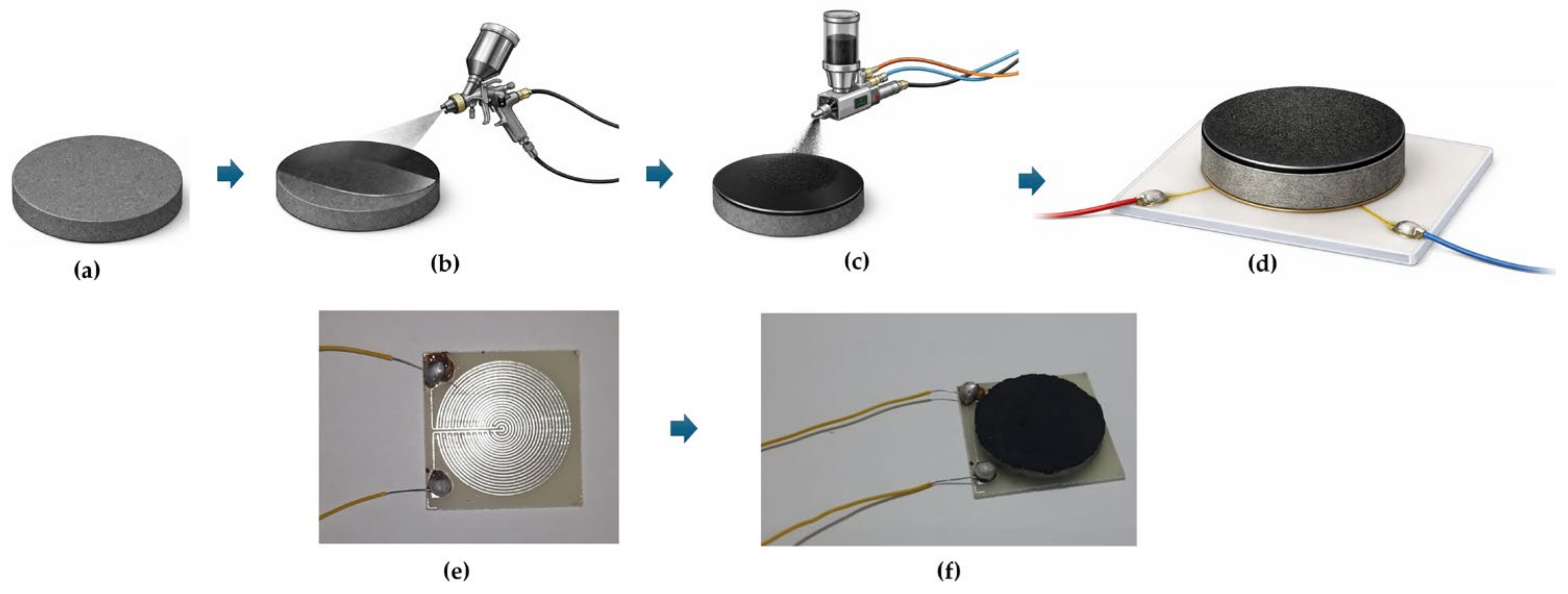
2.4. ZFC-Coated Cementitious Disc Preparation
2.5. ZFC Characterization Methods
2.6. H2 Sensing Characterization
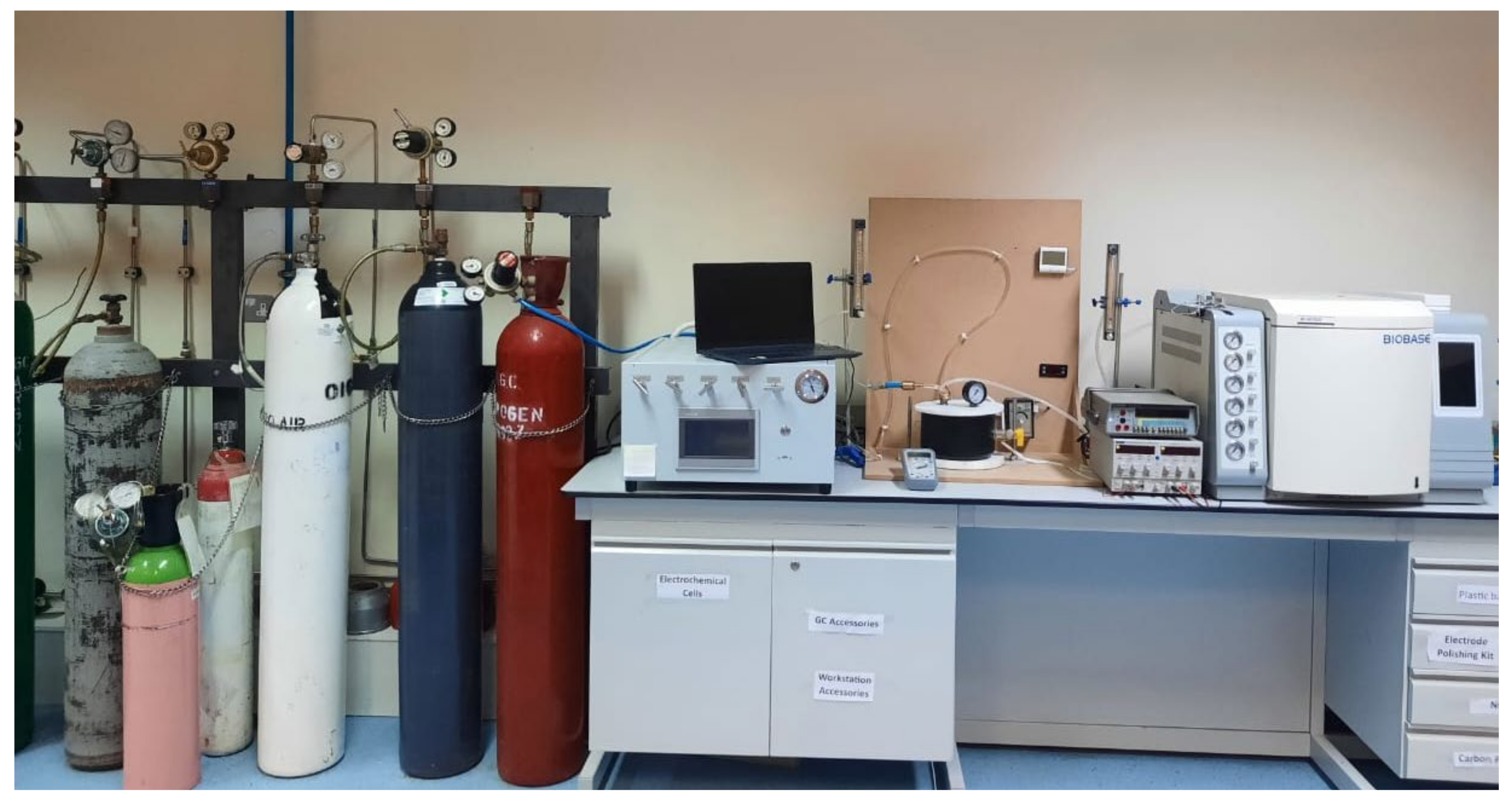
2.6.1. Experimental Methodology for H2 Sensing
2.6.2. Data Driven Prediction of H2 Concentration
3. Results and Discussion
3.1. ZFC Characterization
3.1.1. Structural Analysis by X-Ray Diffraction (XRD)
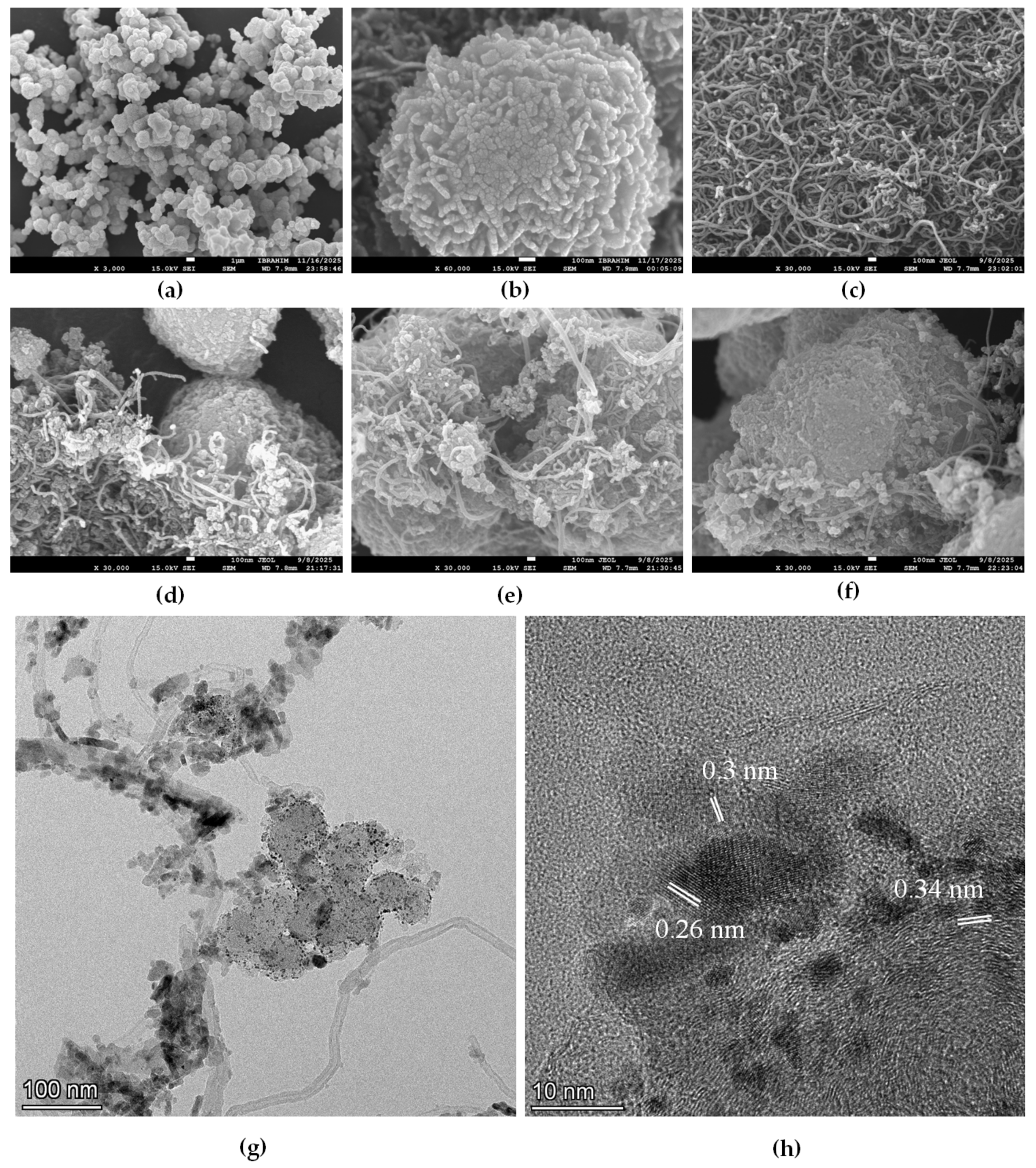
3.1.2. Morphological Analysis by FESEM
3.1.3. Microstructural Analysis by TEM and HRTEM
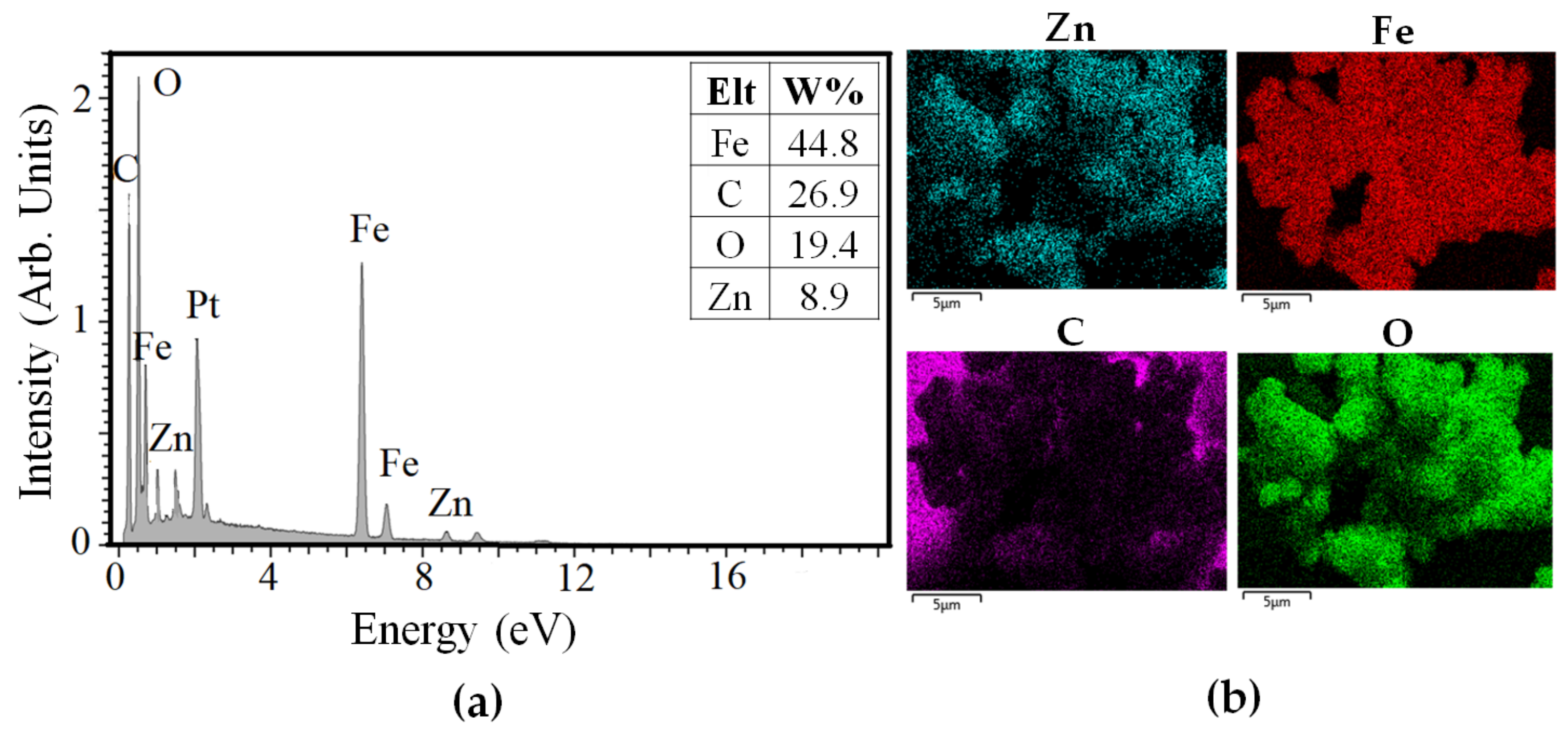
3.1.4. Elemental Composition and Mapping Analysis
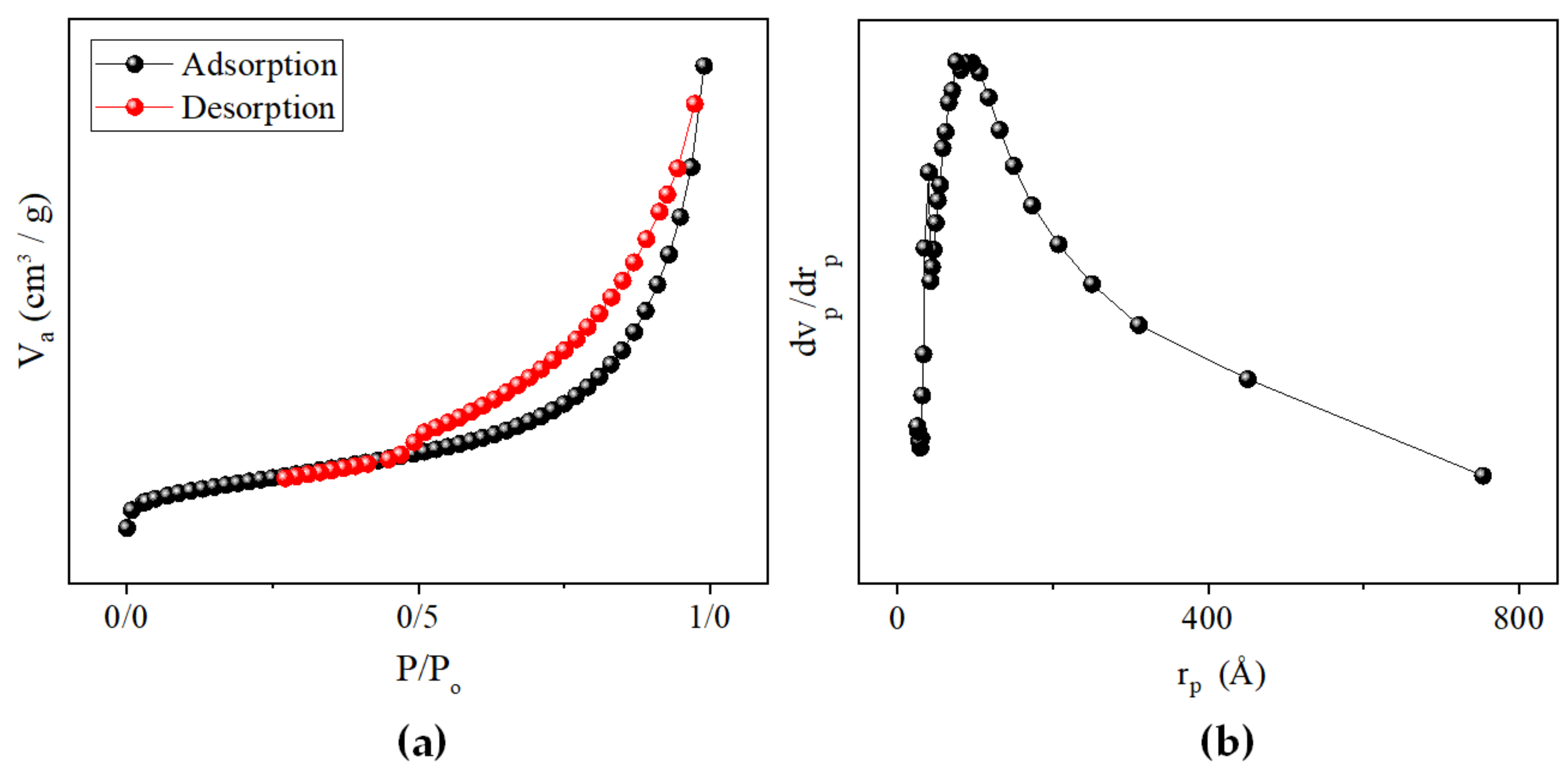
3.1.5. Surface Area and Pore Structure Analysis
3.2. H2 Sensing Performance
3.2.1. Effect of Operating Temperature and Relative Humidity on H2 Sensing Performance
3.2.2. Data Driven Prediction of H2 Concentration
4. Conclusions
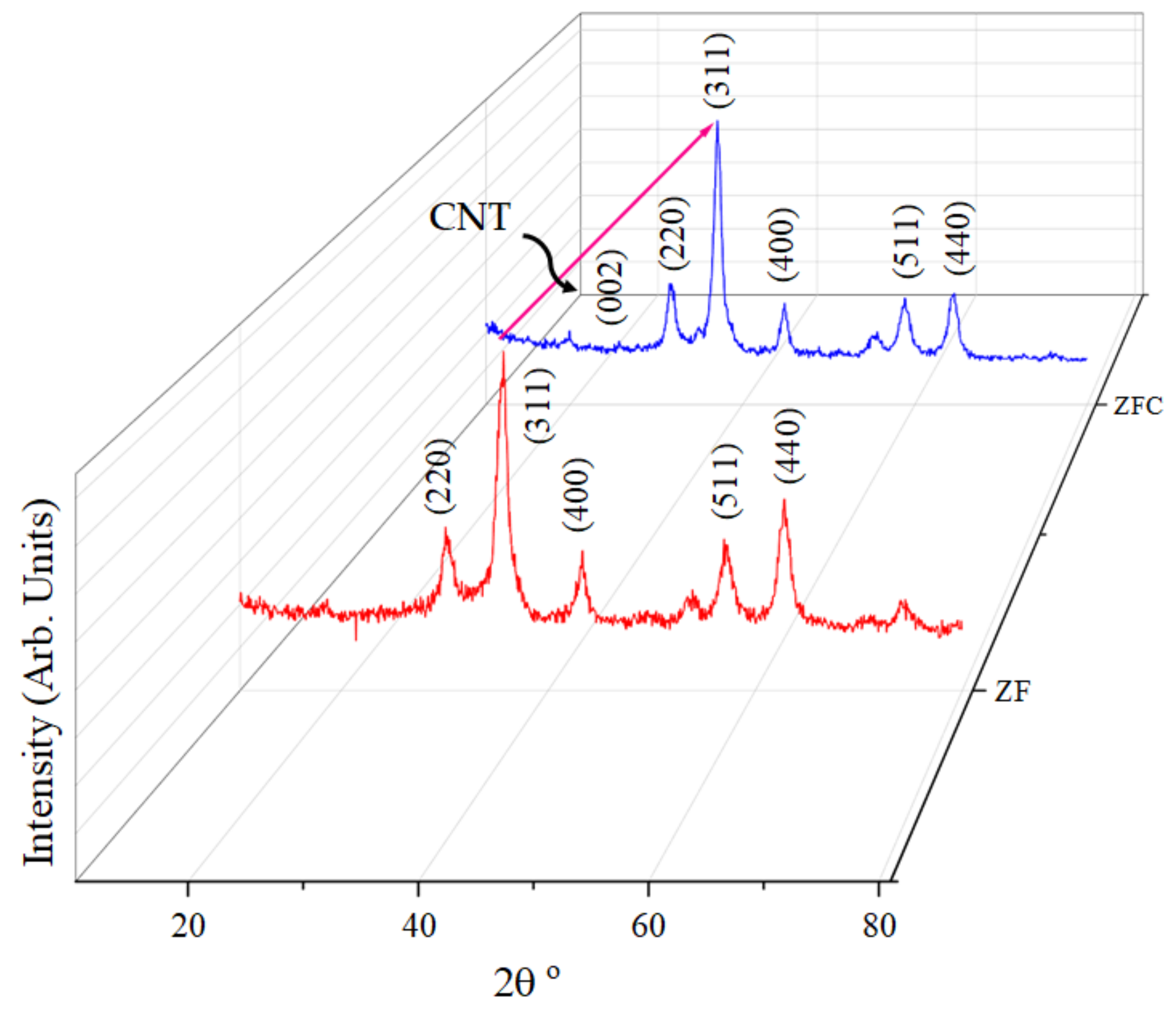
- The XRD, FESEM, and TEM analyses confirmed the formation of a crystalline spinel ZF phase integrated within a continuous MWCNT network.
- The ZFC composite exhibited a hierarchical porous structure with a specific surface area of 138.18 m2/g, promoting enhanced gas diffusion and accessible active sites, which are critical for achieving stable and repeatable sensing under practical conditions.
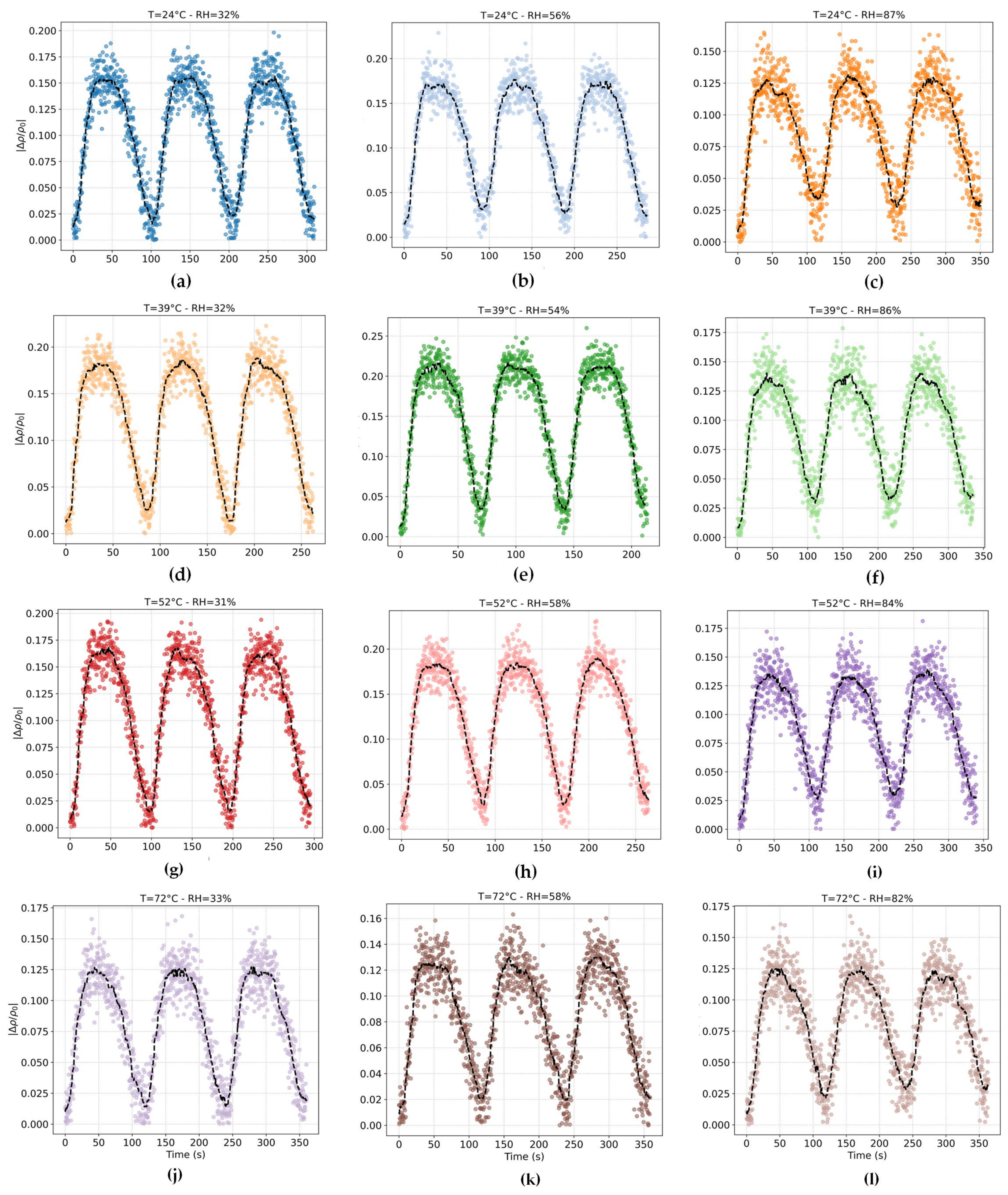
- The sensor showed optimal hydrogen sensing performance at 39–52 °C with a minimum response time of 18 s, while the response time increased to approximately 40.5 s under higher-temperature conditions (72 °C), indicating the strong influence of thermo-hygrometric conditions on adsorption–desorption kinetics and charge-transfer efficiency.
- Increasing relative humidity from 32% to 87% reduced the response amplitude but preserved reversible cyclic behavior throughout repeated exposure–recovery operations, demonstrating robustness of the sensing mechanism under realistic environmental fluctuations encountered in field applications.
- The dynamic concentration-ramp experiments demonstrated stable and reversible hydrogen sensing behavior from near-baseline levels up to 10,000 ppm H2 under twelve thermo-hygrometric operating conditions and ramp rates of 0.1 sccm s−1, while the maximum normalized resistance variation reached approximately 0.12 under low-humidity conditions and decreased to about 0.07–0.08 at high relative humidity levels.
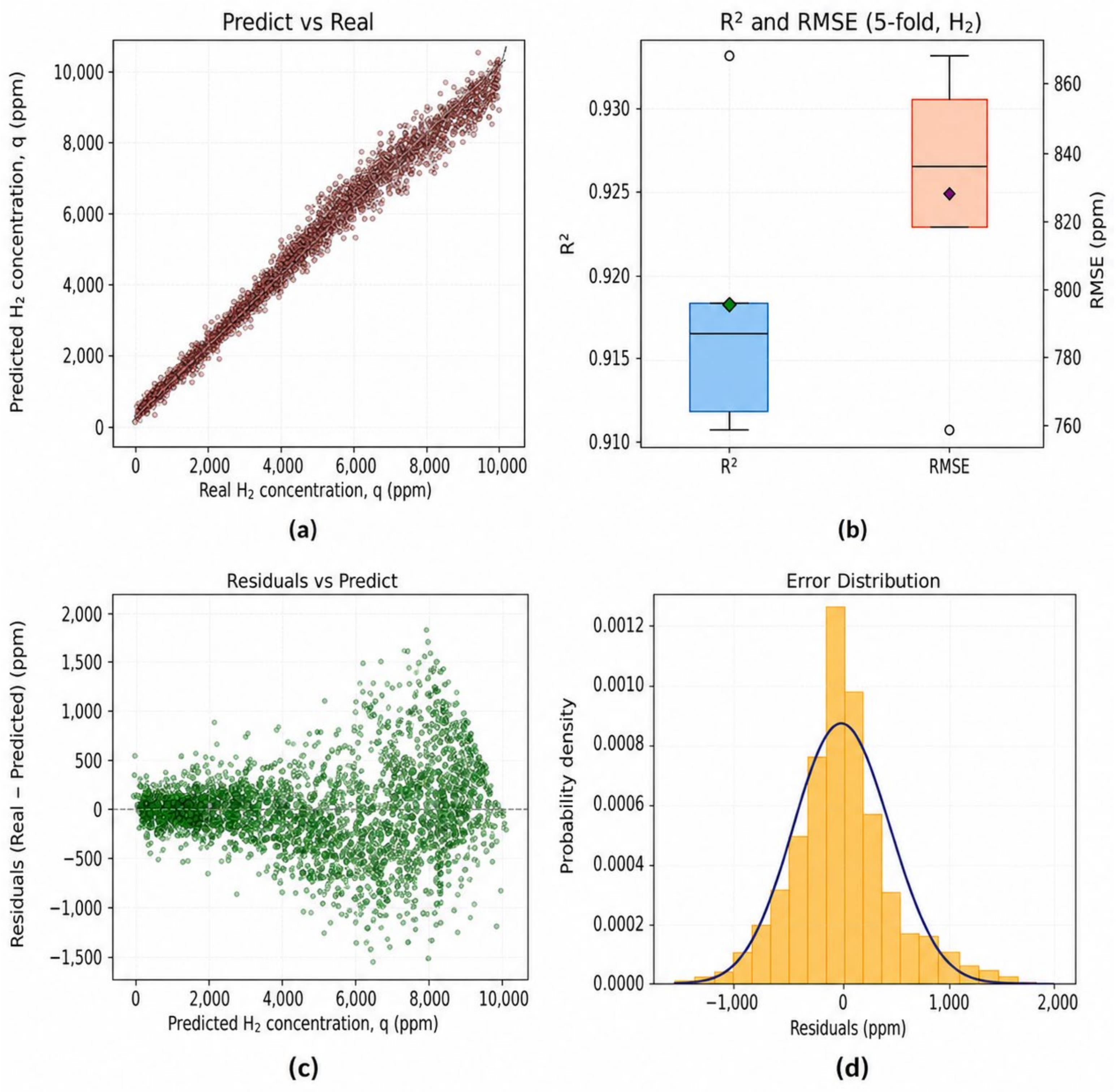
- The XGBoost model achieved high predictive accuracy (R2 ≈ 0.92, RMSE ≈ 820 ppm), with most residual prediction errors remaining within ±1500 ppm and without significant multimodal error distribution, supporting reliable real-time estimation of hydrogen concentration from sensor signals.
5. Limitations and Future Perspectives
Supplementary Materials
Author Contributions
Funding
Data Availability Statement
Conflicts of Interest
References
- Abohamzeh, E.; Salehi, F.; Sheikholeslami, M.; Abbassi, R.; Khan, F. Review of hydrogen safety during storage, transmission, and applications processes. J. Loss Prev. Process Ind. 2021, 72, 104569. [Google Scholar] [CrossRef] [Scilit]
- Rostrup-Nielsen, J.R.; Rostrup-Nielsen, T. Large-scale hydrogen production. Cattech 2002, 6, 150–159. [Google Scholar] [CrossRef] [Scilit]
- Marzouk, O.A. Expectations for the role of hydrogen and its derivatives in different sectors through analysis of the four energy scenarios: IEA-STEPS, IEA-NZE, IRENA-PES, and IRENA-1.5 °C. Energies 2024, 17, 646. [Google Scholar] [CrossRef] [Scilit]
- Jeon, J.; Kim, S.J. Recent progress in hydrogen flammability prediction for the safe energy systems. Energies 2020, 13, 6263. [Google Scholar] [CrossRef] [Scilit]
- Rivkin, C.H.; Burgess, R.M.; Buttner, W.J. Hydrogen Technologies Safety Guide; National Renewable Energy Laboratory: Applewood, CO, USA, 2015. [Google Scholar]
- Hübert, T.; Boon-Brett, L.; Black, G.; Banach, U. Hydrogen sensors–a review. Sens. Actuators B Chem. 2011, 157, 329–352. [Google Scholar] [CrossRef] [Scilit]
- Wadell, C.; Syrenova, S.; Langhammer, C. Plasmonic hydrogen sensing with nanostructured metal hydrides. ACS Nano 2014, 8, 11925–11940. [Google Scholar] [CrossRef] [Scilit]
- Shankar, P.; Rayappan, J.B.B. Gas sensing mechanism of metal oxides: The role of ambient atmosphere, type of semiconductor and gases-A review. Sci. Lett. J. 2015, 4, 126. [Google Scholar]
- Yamazoe, N. Toward innovations of gas sensor technology. Sens. Actuators B Chem. 2005, 108, 2–14. [Google Scholar]
- Kong, J.; Chapline, M.G.; Dai, H. Functionalized carbon nanotubes for molecular hydrogen sensors. Adv. Mater. 2001, 13, 1384–1386. [Google Scholar] [CrossRef] [Scilit]
- Sayago, I.; Santos, H.; Horrillo, M.C.; Aleixandre, M.; Fernández, M.J.; Terrado, E.; Tacchini, I.; Aroz, R.; Maser, W.K.; Benito, A.M.; et al. Carbon nanotube networks as gas sensors for NO2 detection. Talanta 2008, 77, 758–764. [Google Scholar] [CrossRef] [Scilit]
- Paska, Y.; Stelzner, T.; Christiansen, S.; Haick, H. Enhanced sensing of nonpolar volatile organic compounds by silicon nanowire field effect transistors. ACS Nano 2011, 5, 5620–5626. [Google Scholar] [CrossRef] [Scilit]
- Singh, V. An overview on recent trends of spinel ferrites (MFe2O4: M = Fe2, Co2, Mn2, Ni2, Zn2) synthesis and catalytic applications. Int. J. New Chem. 2025, 12, 283. [Google Scholar]
- Azmoodeh, Z.; Nasirian, S.; Moghaddam, H.M. Improving H2 gas sensing with ZnMn2O4/Polypyrrole Nanocomposite. Int. J. Hydrogen Energy 2024, 85, 854–864. [Google Scholar] [CrossRef] [Scilit]
- Azmoodeh, Z.; Karouei, S.F.H.; Khatibani, A.B.; Rezapour, A.; Moghaddam, H.M.; Nasirian, S. A stunning sensitive isopropanol gas sensor based on ZnMn2O4 microspheres. Phys. B Condens. Matter 2025, 698, 416752. [Google Scholar] [CrossRef] [Scilit]
- Zhang, R.; Qin, C.; Bala, H.; Wang, Y.; Cao, J. Recent progress in spinel ferrite (MFe2O4) chemiresistive based gas sensors. Nanomaterials 2023, 13, 2188. [Google Scholar] [CrossRef] [Scilit]
- Shiraz, H.G.; Astaraei, F.R.; Fardindoost, S.; Hosseini, Z.S. Decorated CNT based on porous silicon for hydrogen gas sensing at room temperature. RSC Adv. 2016, 6, 44410–44414. [Google Scholar] [CrossRef] [Scilit]
- Han, L.; Zhai, W.; Bai, B.; Zhu, H.; Yang, J.; Yan, Z.; Zhang, T. Critical behavior in Ni0.15Cu0.15 Zn0.7Fe2O4 spinel ferrite. Ceram. Int. 2019, 45, 14322–14326. [Google Scholar] [CrossRef] [Scilit]
- Ozbey, S.; Yerli, Y.; Erkmen, C.; Kurbanoglu, S. Recent Advances in Nanomaterial-Based Electrochemical Sensors for Pharmaceutical and Biomedical Diagnosis. In Fabrication and Advanced Applications of Nanomaterial-Based Electrochemical Sensors; CRC Press: Boca Raton, FL, USA, 2025; Volume 148. [Google Scholar]
- Zhang, W.; Yuan, T.; Wang, X.; Chen, Y.; Xu, J. ZnFe2O4@ZnO pn heterojunction based ultra-fast H2S sensor and mechanism: For detecting freshness of eggs. Sens. Actuators B Chem. 2026, 450, 139254. [Google Scholar]
- Achary, L.S.K.; Maji, B.; Kumar, A.; Ghosh, S.P.; Kar, J.P.; Dash, P. Efficient room temperature detection of H2 gas by novel ZnFe2O4–Pd decorated rGO nanocomposite. Int. J. Hydrogen Energy 2020, 45, 5073–5085. [Google Scholar] [CrossRef] [Scilit]
- Dang, H.; Qiu, Y.; Cheng, Z.; Yang, W.; Wu, H.; Fan, H.; Dong, X. Hydrothermal preparation and characterization of nanostructured CNTs/ZnFe2O4 composites for solar water splitting application. Ceram. Int. 2016, 42, 10520–10525. [Google Scholar] [CrossRef] [Scilit]
- Mir, S.; Akbarzadeh Torbati, N.; Amani, V.; Tajik, S.; Beitollahi, H. Y-Co metal-organic framework for sensitive electrochemical determination of doxorubicin hydrochloride. ADMET DMPK 2025, 13, 3141. [Google Scholar]
- Ullah, R. Semiconductor ZnFe2O4 as efficient photocatalyst for the degradation of organic dyes: An update. J. Chem. Rev. 2023, 5, 466–476. [Google Scholar]
- Andersen, H.L.; Granados-Miralles, C.; Jensen, K.M.Ø.; Saura-Muzquiz, M.; Christensen, M. The chemistry of spinel ferrite nanoparticle nucleation, crystallization, and growth. ACS Nano 2024, 18, 9852–9870. [Google Scholar] [CrossRef] [Scilit] [PubMed]
- Barandun, G.; Gonzalez-Macia, L.; Lee, H.S.; Dincer, C.; Guder, F. Challenges and opportunities for printed electrical gas sensors. ACS Sens. 2022, 7, 2804–2822. [Google Scholar] [PubMed]
- Abedi, M.; Fangueiro, R.; Correia, A.G. An effective method for hybrid CNT/GNP dispersion and its effects on the mechanical, microstructural, thermal, and electrical properties of multifunctional cementitious composites. J. Nanomater. 2020, 2020, 6749150. [Google Scholar] [CrossRef] [Scilit]
- Liu, H.; Wang, J.; Wang, J.; Cui, S. Sulfonitric Treatment of Multiwalled Carbon Nanotubes and Their Dispersibility in Water. Materials 2018, 11, 2442. [Google Scholar] [CrossRef] [Scilit]
- Lavagna, L.; Bartoli, M.; Suarez-Riera, D.; Cagliero, D.; Musso, S.; Pavese, M. Oxidation of carbon nanotubes for improving the mechanical and electrical properties of oil-well cement-based composites. ACS Appl. Nano Mater. 2022, 5, 6671–6678. [Google Scholar] [CrossRef] [Scilit]
- Datsyuk, V.; Kalyva, M.; Papagelis, K.; Parthenios, J.; Tasis, D.; Siokou, A.; Kallitsis, I.; Galiotis, C. Chemical oxidation of multiwalled carbon nanotubes. Carbon 2008, 46, 833–840. [Google Scholar] [CrossRef] [Scilit]
- EN 196-1; Methods of Testing Cement—Part 1: Determination of Strength. European Committee for Standardization (CEN): Brussels, Belgium, 2016.
- Yuvaraj, S.; Ramachandran, S.; Sheela, R.; Jothiramalingam, R.; Isaac, R.S.R.; Sundararajan, M.; Sasikumar, S. Synthesis and optical and magnetic property characterization of Zn1−x−yCoxNiyFe2O4 (x & y= 0, 0.05, 0.15 and 0.25) nanoparticles. J. Ovonic Res. 2025, 21, 279–284. [Google Scholar]
- Oliveira, T.P.; Marques, G.N.; Macedo Castro, M.A.; Viana Costa, R.C.; Rangel, J.H.G.; Rodrigues, S.F.; dos Santos, C.C.; Oliveira, M.M. Synthesis and photocatalytic investigation of ZnFe2O4 in the degradation of organic dyes under visible light. J. Mater. Res. Technol. 2020, 9, 15001–15015. [Google Scholar]
- Yalovega, G.E.; Brzhezinskaya, M.; Dmitriev, V.O.; Shmatko, V.A.; Ershov, I.V.; Ulyankina, A.A.; Chernysheva, D.V.; Smirnova, N.V. Interfacial interaction in MeOx/MWNTs (Me–Cu, Ni) nanostructures as efficient electrode materials for high-performance supercapacitors. Nanomaterials 2024, 14, 947. [Google Scholar] [CrossRef] [Scilit]
- Luo, J.; Wu, Y.; Jiang, M.; Zhang, A.; Chen, X.; Zeng, Y.; Wang, Y.; Zhao, Y.; Wang, G. Novel ZnFe2O4/BC/ZnO photocatalyst for high-efficiency degradation of tetracycline under visible light irradiation. Chemosphere 2023, 311, 137041. [Google Scholar] [CrossRef] [Scilit]
- Abedi, M.; Fangueiro, R.; Gomes Correia, A. Ultra-sensitive affordable cementitious composite with high mechanical and microstructural performances by hybrid CNT/GNP. Materials 2020, 13, 3484. [Google Scholar] [CrossRef] [Scilit]
- Awadallah-f, A.; Al-Muhtaseb, S. Carbon nanoparticles-decorated carbon nanotubes. Sci. Rep. 2020, 10, 4878. [Google Scholar] [CrossRef] [Scilit]
- Chen, Z.; Qu, Q.; Li, X.; Srinivas, K.; Chen, Y.; Zhu, M. Room-Temperature Synthesis of Carbon-Nanotube-Interconnected Amorphous NiFe-Layered Double Hydroxides for Boosting Oxygen Evolution Reaction. Molecules 2023, 28, 7289. [Google Scholar] [CrossRef] [Scilit] [PubMed]
- Singhal, S.; Sharma, R.; Singh, C.; Bansal, S. Enhanced photocatalytic degradation of methylene blue using ZnFe2O4/MWCNT composite synthesized by hydrothermal method. Indian J. Mater. Sci. 2013, 2013, 356025. [Google Scholar] [CrossRef] [Scilit]
- Zhao, H.; Wu, J.; Li, J.; Wu, H.; Zhang, Y.; Liu, H. A flexible three-dimensional MoS2/carbon architecture derived from melamine foam as free-standing anode for high performance lithium-ion batteries. Appl. Surf. Sci. 2018, 462, 337–343. [Google Scholar] [CrossRef] [Scilit]
- Chen, J.; Xiong, X.; Xiao, P.; Zhang, H.-B. The catalytic effect of boric acid on polyacrylonitrile-based carbon fibers and the thermal conductivity of carbon/carbon composites produced from them. Carbon 2010, 48, 2341–2346. [Google Scholar]
- Lipinska, M.; Hutchinson, J.M. Elastomeric epoxy nanocomposites: Nanostructure and properties. Compos. Sci. Technol. 2012, 72, 640–646. [Google Scholar] [CrossRef] [Scilit]
- Newbury, D.E.; Ritchie, N.W.M. Elemental mapping of microstructures by scanning electron microscopy-energy dispersive X-ray spectrometry (SEM-EDS): Extraordinary advances with the silicon drift detector (SDD). J. Anal. At. Spectrom. 2013, 28, 973–988. [Google Scholar] [CrossRef] [Scilit]
- Al Khabouri, S.; Al Harthi, S.; Maekawa, T.; Nagaoka, Y.; Elzain, M.E.; Al Hinai, A.; Al-Rawas, A.D.; Gismelseed, A.M.; Yousif, A.A. Composition, electronic and magnetic investigation of the encapsulated ZnFe2O4 nanoparticles in multiwall carbon nanotubes containing Ni residuals. Nanoscale Res. Lett. 2015, 10, 262. [Google Scholar] [CrossRef] [Scilit] [PubMed]
- Buttersack, C. Modeling of type IV and V sigmoidal adsorption isotherms. Phys. Chem. Chem. Phys. 2019, 21, 5614–5626. [Google Scholar] [CrossRef] [Scilit] [PubMed]
- Koo, W.-T.; Cho, H.-J.; Kim, D.-H.; Kim, Y.H.; Shin, H.; Penner, R.M.; Kim, I.-D. Chemiresistive Hydrogen Sensors: Fundamentals, Recent Advances, and Challenges. ACS Nano 2020, 14, 14284–14322. [Google Scholar] [CrossRef] [Scilit] [PubMed]
- Darmadi, I.; Nugroho, F.A.A.; Langhammer, C. High-performance nanostructured palladium-based hydrogen sensors—Current limitations and strategies for their mitigation. ACS Sens. 2020, 5, 3306–3327. [Google Scholar] [CrossRef] [Scilit]
- Haija, M.A.; Ayesh, A.I.; Ahmed, S.; Katsiotis, M.S. Selective hydrogen gas sensor using CuFe2O4 nanoparticle based thin film. Appl. Surf. Sci. 2016, 369, 443–447. [Google Scholar] [CrossRef] [Scilit]
- Tan, Y.; Du, B.; Liang, C.; Guo, X.; Zheng, H.; Liu, P.; Yang, X.; Li, S.; Jin, B.; Sun, J. Improving anti-humidity property of a SnO2-based chemiresistive hydrogen sensor by a breathable and hydrophobic fluoropolymer coating. Langmuir 2022, 38, 13833–13840. [Google Scholar] [CrossRef] [Scilit]
- Herbeck-Tazibt, J.; Djeziri, M.A.; Fiorido, T.; Seguin, J.-L. Review of Hydrogen Sensors in Aerobic and Anaerobic Environments Coupled with Artificial Intelligence Tools. Sensors 2025, 25, 6936. [Google Scholar] [CrossRef] [Scilit]
- Li, W.; Jang, D.M.; An, S.Y.; Kim, D.; Hong, S.-K.; Kim, H. Polyaniline–chitosan nanocomposite: High performance hydrogen sensor from new principle. Sens. Actuators B Chem. 2011, 160, 1020–1025. [Google Scholar] [CrossRef] [Scilit]
- Dong, R.; Yang, M.; Zuo, Y.; Liang, L.; Xing, H.; Duan, X.; Chen, S. Conducting Polymers-Based Gas Sensors: Principles, Materials, and Applications. Sensors 2025, 25, 2724. [Google Scholar] [CrossRef] [Scilit]
- Askar, P.; Kanzhigitova, D.; Ospanova, A.; Tapkharov, A.; Duisenbekov, S.; Abutalip, M.; Soltabayev, B.; Turlybekuly, A.; Adilov, S.; Nuraje, N. 1 ppm-detectable hydrogen gas sensor based on nanostructured polyaniline. Sci. Rep. 2024, 14, 26984. [Google Scholar] [CrossRef] [Scilit]
- Shooshtari, M.; Salehi, A.; Vollebregt, S. Effect of humidity on gas sensing performance of carbon nanotube gas sensors operated at room temperature. IEEE Sens. J. 2020, 21, 5763–5770. [Google Scholar] [CrossRef] [Scilit]
- Shooshtari, M.; Salehi, A. An electronic nose based on carbon nanotube-titanium dioxide hybrid nanostructures for detection and discrimination of volatile organic compounds. Sens. Actuators B Chem. 2022, 357, 131418. [Google Scholar] [CrossRef] [Scilit]
- Tomeček, D.; Moberg, H.K.; Nilsson, S.; Theodoridis, A.; Darmadi, I.; Midtvedt, D.; Volpe, G.; Andersson, O.; Langhammer, C. Neural network enabled nanoplasmonic hydrogen sensors with 100 ppm limit of detection in humid air. Nat. Commun. 2024, 15, 1208. [Google Scholar] [CrossRef] [Scilit]
- Yue, J.; Wu, F.; Wang, X.; Feng, P.; Zhuo, J.; Cui, H.; Yan, J.; Duan, S.; Peng, X. A Novel Method for H2S Concentration Prediction Under Small Sample Based on ECA-1DCNN-XGBR. IEEE Sens. J. 2024, 24, 20167–20176. [Google Scholar] [CrossRef] [Scilit]
- Champahom, T.; Banyong, C.; Janhuaton, T.; Se, C.; Watcharamaisakul, F.; Ratanavaraha, V.; Jomnonkwao, S. Deep Learning vs. Gradient Boosting: Optimizing Transport Energy Forecasts in Thailand Through LSTM and XGBoost. Energies 2025, 18, 1685. [Google Scholar] [CrossRef] [Scilit]
- Adam, A.M.; Osman, A.N.; Yusuf, A.M.; Gokcekus, H.; Bolour, F. Exploring machine learning models for predicting greenhouse gas emissions in Africa’s building sector: A case study of six nations. Environ. Syst. Res. 2025, 14, 21. [Google Scholar] [CrossRef] [Scilit]





| T(°C) | 24 | 39 | 52 | 72 | |
|---|---|---|---|---|---|
| RH% | |||||
| 32 | 36 s | 22.5 s | 31.5 s | 40.5 s | |
| 56 | 27 s | 18 s | 22.5 s | 34.2 s | |
| 87 | 31.5 s | 22 s | 27 s | 36 s | |
Disclaimer/Publisher’s Note: The statements, opinions and data contained in all publications are solely those of the individual author(s) and contributor(s) and not of MDPI and/or the editor(s). MDPI and/or the editor(s) disclaim responsibility for any injury to people or property resulting from any ideas, methods, instructions or products referred to in the content. |
© 2026 by the authors. Licensee MDPI, Basel, Switzerland. This article is an open access article distributed under the terms and conditions of the Creative Commons Attribution (CC BY) license.
Share and Cite
Abedi, M.; Azmoodeh, Z.; Figueiredo, E. Surface-Integrated Hydrogen Sensing Using ZnFe2O4–CNT Composite Coatings on Cement-Based Materials with Data-Driven Concentration Prediction. C 2026, 12, 51. https://doi.org/10.3390/c12020051
Abedi M, Azmoodeh Z, Figueiredo E. Surface-Integrated Hydrogen Sensing Using ZnFe2O4–CNT Composite Coatings on Cement-Based Materials with Data-Driven Concentration Prediction. C. 2026; 12(2):51. https://doi.org/10.3390/c12020051
Chicago/Turabian StyleAbedi, Mohammadmahdi, Zivar Azmoodeh, and Eloi Figueiredo. 2026. "Surface-Integrated Hydrogen Sensing Using ZnFe2O4–CNT Composite Coatings on Cement-Based Materials with Data-Driven Concentration Prediction" C 12, no. 2: 51. https://doi.org/10.3390/c12020051
APA StyleAbedi, M., Azmoodeh, Z., & Figueiredo, E. (2026). Surface-Integrated Hydrogen Sensing Using ZnFe2O4–CNT Composite Coatings on Cement-Based Materials with Data-Driven Concentration Prediction. C, 12(2), 51. https://doi.org/10.3390/c12020051