3.1. Microstructure and Composition of Cf/C/CuNi Composites
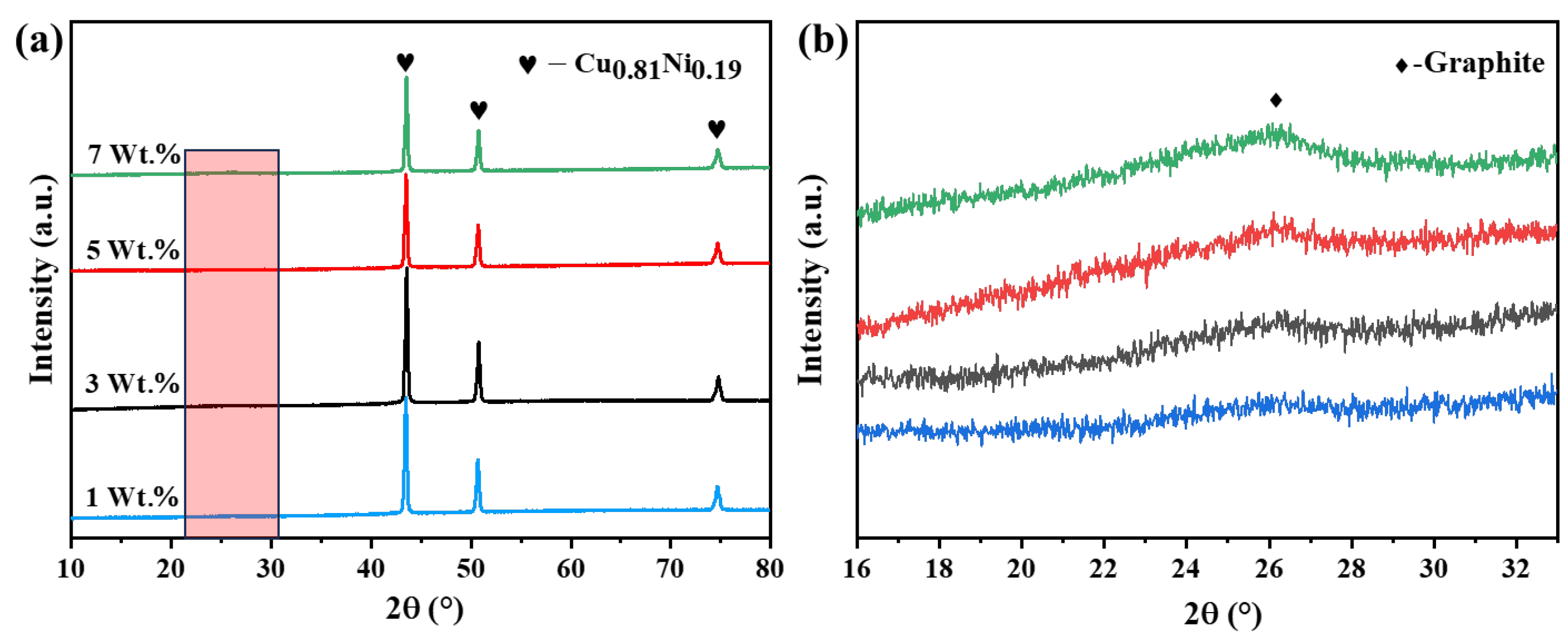
Figure 1 shows the XRD patterns of Cf/C/CuNi composites with different carbon fiber mass fractions.
Figure 1a shows the diffraction peaks of the main phase CuNi alloy with a composition of Cu
0.81Ni
0.19. The characteristic peaks are located at 43.6°, 50.79°, and 74.67°, which exactly correspond to the (111), (200), and (220) crystal planes of the face-centered cubic structure of the CuNi solid solution (PDF#47-1406). This indicates that the Cu
0.81Ni
0.19 solid solution formed in the composite has a face-centered cubic crystal structure. Due to the C/CuNi composite being the main matrix and the addition of short-cut carbon fibers being relatively small, the diffraction signal of carbon fibers is not obvious in the overall pattern. After magnifying the area around 26°, it was found that a diffraction peak of graphite appeared at 26.38°, and as the content of carbon fibers increased, the peak intensity gradually enhanced. This peak belongs to non-graphitized carbon fibers, but under high temperature and high-pressure conditions, nickel metal played a catalytic role, promoting partial graphitization. However, due to the overall low content of carbon fibers, the degree of graphitization improvement was limited, and the effect was not significant.
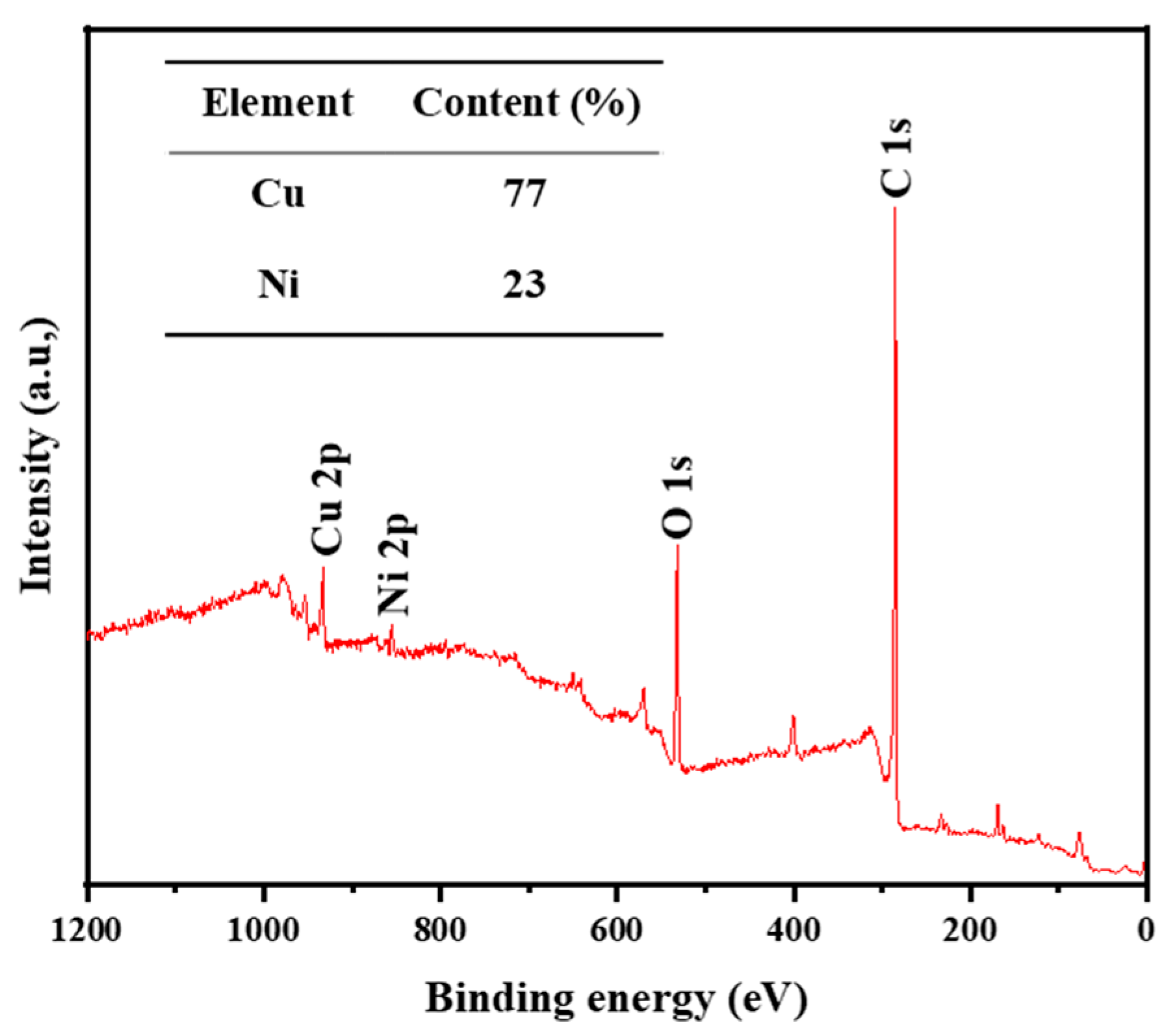
The XPS characterization results of the composite are shown in
Figure 2. The XPS results indicate the presence of Cu, Ni, C, and O elements, and the atomic content of Cu is 77%, while that of Ni is 23%, which is basically similar to the composition of the Cu
0.81Ni
0.19 solid solution detected by XRD. Therefore, the composition of the Cf/C/CuNi composite includes carbon fibers, matrix carbon, and CuNi alloy, mainly composed of Cu
0.81Ni
0.19 solid solution.
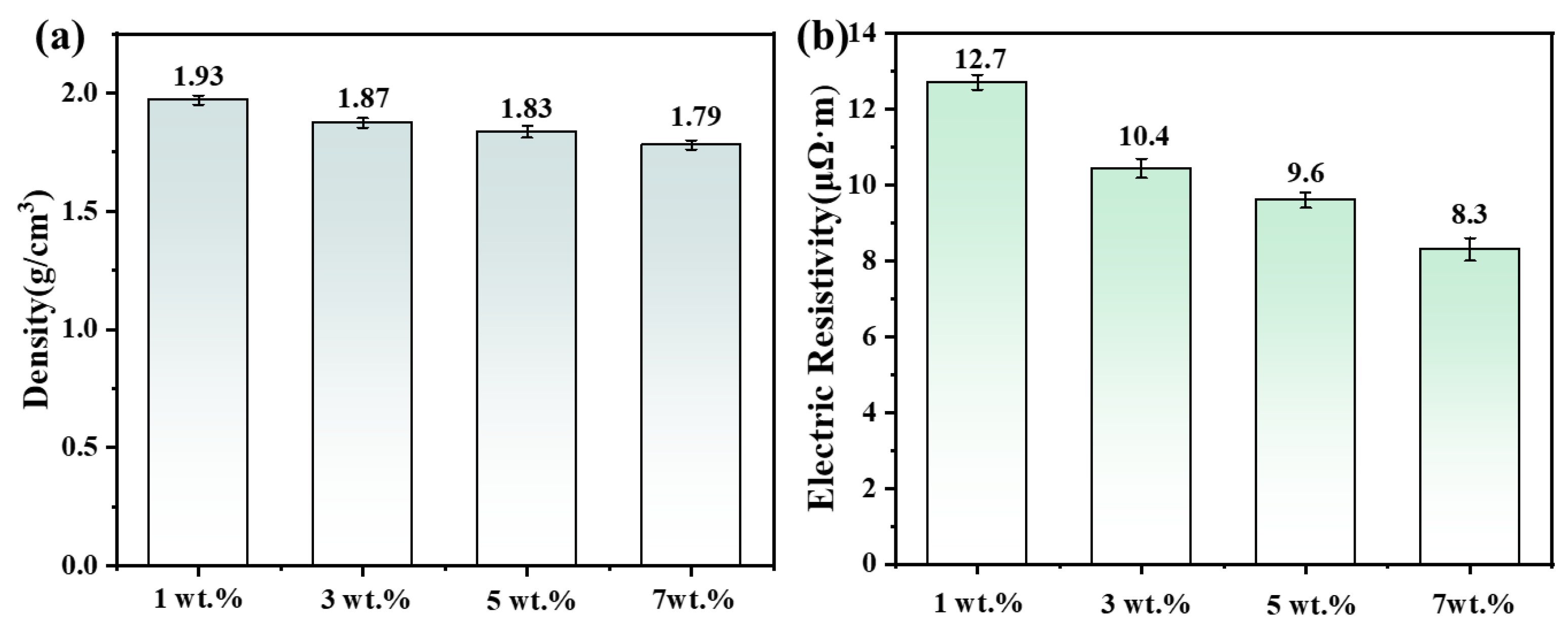
Figure 3 shows the density and resistivity of Cf/C/CuNi composites with different carbon fiber mass fractions. As shown in
Figure 3a, the density of the material gradually decreases with the increase of carbon fiber content, from the maximum value of 1.93 g/cm
3 to 1.79 g/cm
3. This is mainly attributed to the low density of carbon fibers themselves, which are much lighter than the matrix material. Therefore, a high carbon fiber content reduces the average density of Cf/C-CuNi composites. Although the volume of added carbon fibers is large and their mass is light, the density decline trend is relatively gentle, indicating that the influence tends to saturate. In addition, the uniformity of carbon fiber distribution in the matrix also affects the overall density. As shown in
Figure 3b, the resistivity shows a linear decreasing trend with the increase of carbon fiber content, which is closely related to the apparent bulk density of chopped carbon fibers. The introduction of carbon fibers significantly improves the electrical conductivity of the composites. This is because the increase in carbon fiber mass fraction during high-pressure molding increases the probability of fiber bridging, and the increase in carbon fiber volume fraction increases the proportion of carbon fibers in the electron conduction path of the material, thereby significantly reducing the resistivity [
29].
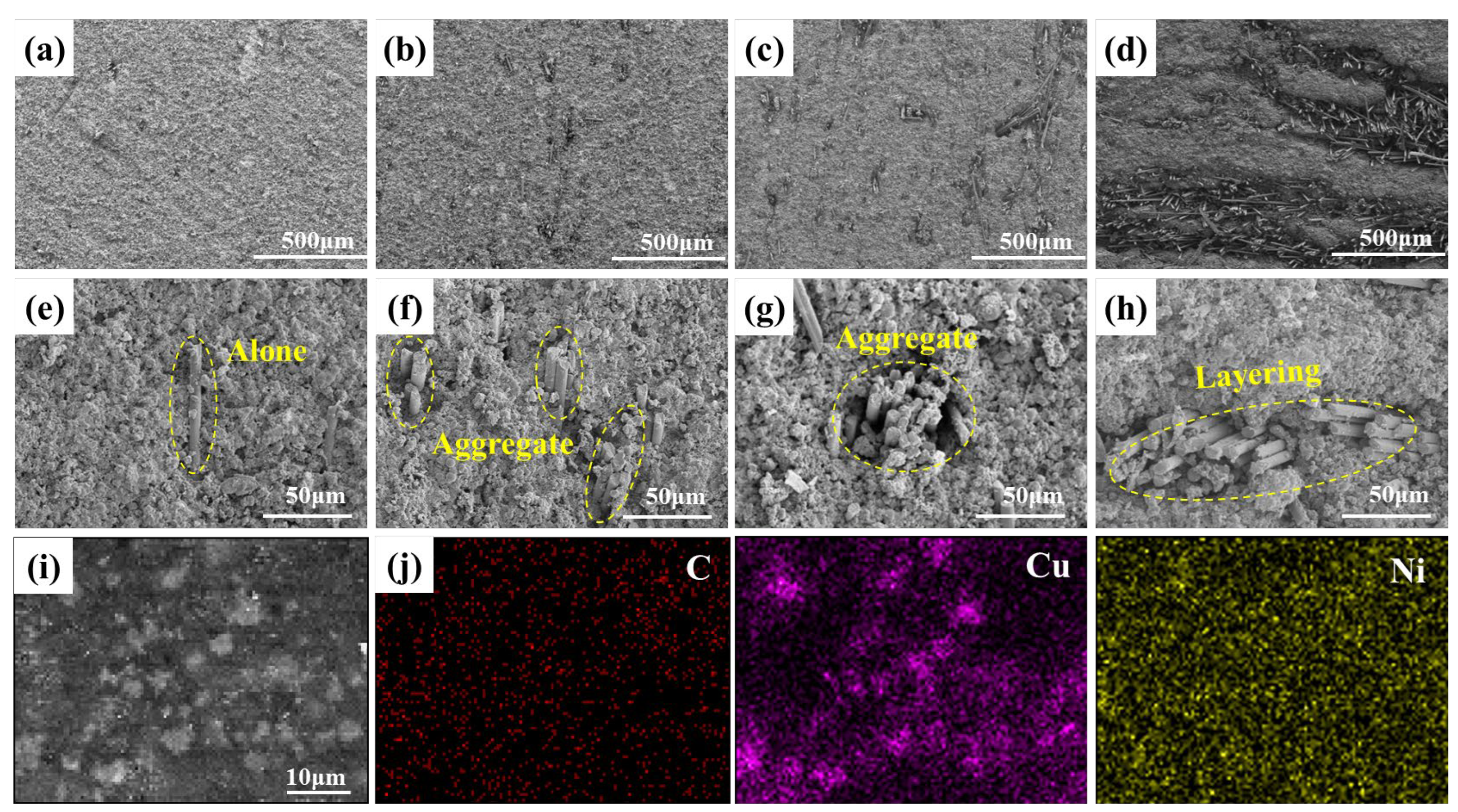
Figure 4 shows the microstructure of Cf/C/CuNi composites with different carbon fiber contents, where
Figure 4a–d are low-magnification images and
Figure 4e–h are high-magnification images. When the carbon fiber addition is 1 wt.%, the surface of the Cf/C/CuNi composite is dense without obvious pores (
Figure 4a), indicating that the C/CuNi matrix itself has good bonding properties, and a small amount of carbon fibers is tightly compacted and embedded in the matrix during the high-pressure molding process. The carbon fibers are in a single-fiber distribution state, with a diameter of approximately 5–8 µm, and the fiber spacing is large, evenly distributed in the matrix (
Figure 4e). When the carbon fiber content increases to 3 wt.%, pores begin to appear on the material surface, and the carbon fibers show initial agglomeration. The size of the pits increases with the increase in the number of agglomerates, forming a few defects (
Figure 4b), while the fiber spacing decreases, and local pores are prone to connect and expand (
Figure 4f). When the carbon fiber content reaches 5 wt.%, the agglomeration size and pores further expand. During the molding compression process, the internal stress of the matrix is locally concentrated around the carbon fiber bundles, causing cracks to extend along the direction of the carbon fiber clusters (
Figure 4c); the bonding between the carbon fibers and the matrix is not tight, and the structure tends to be loose, which may be due to the inconsistent orientation of the carbon fiber bundles, hindering their full contact and effective bonding with the matrix (
Figure 4g). When the carbon fiber content increases to 7 wt.%, unlike the other samples, the carbon fibers in the matrix show obvious layering and uneven distribution. A large number of fibers are aggregated layer by layer in the horizontal direction, and more matrix is trapped between the fiber layers, resulting in a significant increase in internal defects (
Figure 4d,h). The results show that with the increase in carbon fiber content, the distribution morphology of carbon fibers in the matrix undergoes an evolution process from single dispersion to agglomeration and then to layering, while the pores and structural defects in the matrix gradually intensify. This trend is consistent with the previous analysis results of apparent density. The EDS characterization results of the composites visually demonstrated the distribution of Cu, Ni, and C elements, as shown in
Figure 4i,j. Ni was uniformly distributed throughout the composite, while Cu exhibited local agglomeration, which was attributed to the difference in wettability between Ni and Cu with C. The wettability between Cu and C is relatively poor, and agglomeration is prone to occur during sintering; while Ni, due to its good affinity with carbon, is distributed relatively uniformly. Although XRD (
Figure 1) shows that a Cu
0.81Ni
0.19 solid solution has formed, the micro-scale compositional segregation does not significantly affect the overall crystal structure detectable by XRD. XRD reflects the overall phase composition of the material rather than the local compositional uniformity.
3.2. Mechanical Properties of Cf/C/CuNi Composites
Although an increase in carbon fiber content leads to more internal defects in the material, it still plays a significant role as a reinforcing phase in enhancing the mechanical properties of the composite.
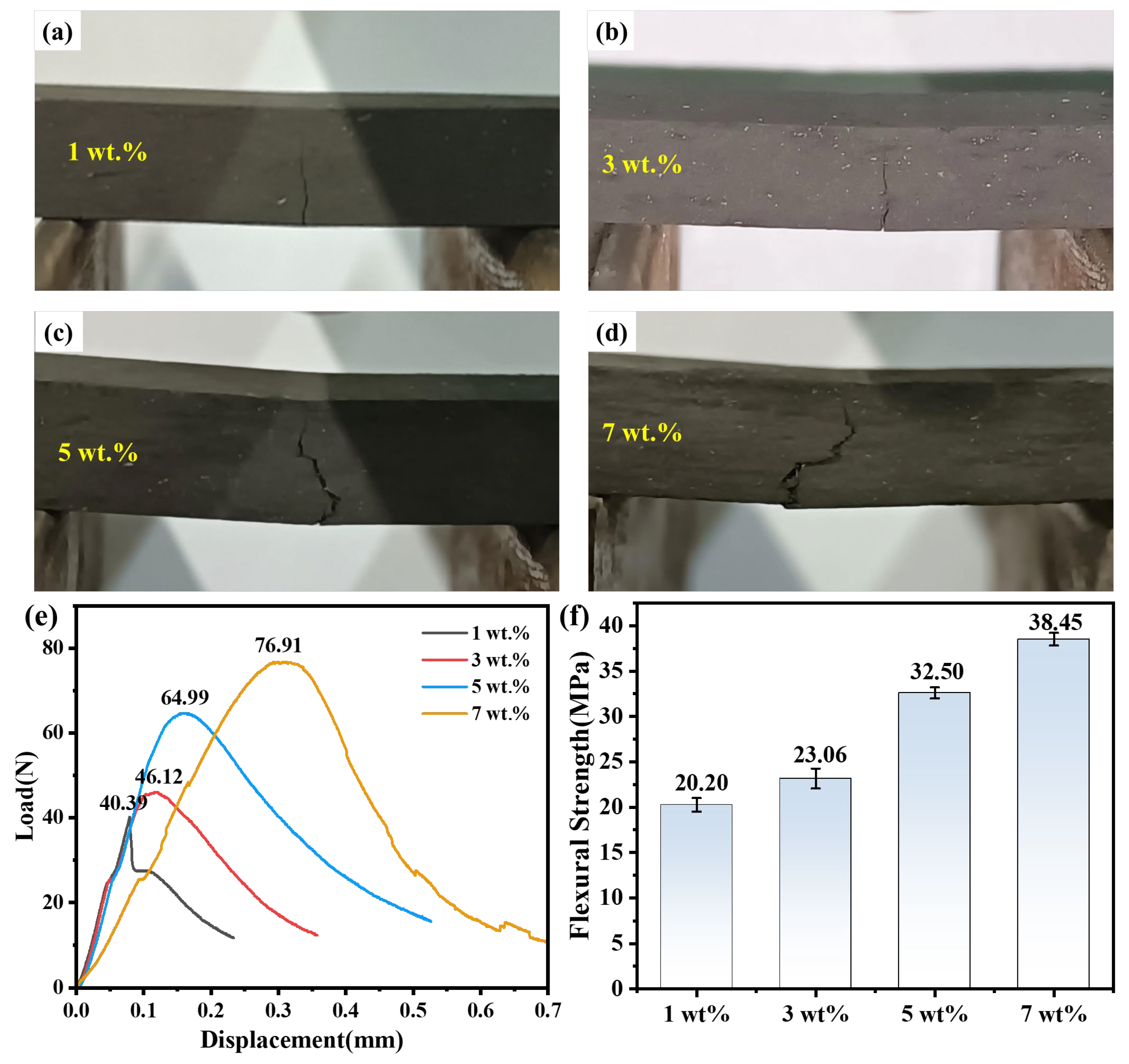
Figure 5a–d show the crack propagation morphology during the fracture process of Cf/C/CuNi composites, and it can be clearly observed that the cracks propagate from bottom to top. With the increase in carbon fiber content, the width, length, and number of turns of the crack propagation path gradually increase, indicating that the crack propagation is more strongly hindered, and the material’s resistance to crack propagation is enhanced, reflecting an improvement in fracture toughness. The displacement-load curves of Cf/C/CuNi composites are shown in
Figure 5e. Under the four carbon fiber contents, after the material reaches its maximum load-bearing capacity, the load shows a slow downward trend, demonstrating typical pseudo-plastic fracture characteristics. This behavior indicates that the carbon fibers effectively bear the load and absorb a large amount of energy in the matrix, exerting bridging and pull-out effects. With the increase in carbon fiber content, the maximum fracture loads of the materials are 40.39 N, 46.12 N, 64.99 N, and 76.91 N, respectively, indicating a significant positive influence of carbon fiber content on the material’s load-bearing capacity. Notably, the load–displacement curve of the sample with 7 wt.% carbon fiber content shows a stepwise decline at the end, suggesting that the crack undergoes multiple deflections and pinning during propagation, which corresponds to the layered and fiber agglomeration structures observed in the macroscopic fracture surface morphology. Bending strength reflects the material’s comprehensive resistance to deformation under a bending moment. With the increase in carbon fiber content, the bending strengths are 20.20 MPa, 23.06 MPa, 32.50 MPa, and 38.45 MPa, respectively (
Figure 5f), with a clear trend. Thus, it can be seen that the introduction of carbon fibers significantly enhances the material’s bending resistance, and the mechanical strength continuously increases with the increase in their content, further confirming the important role of carbon fiber-reinforced C/CuNi-based composites in improving structural strength and toughness.
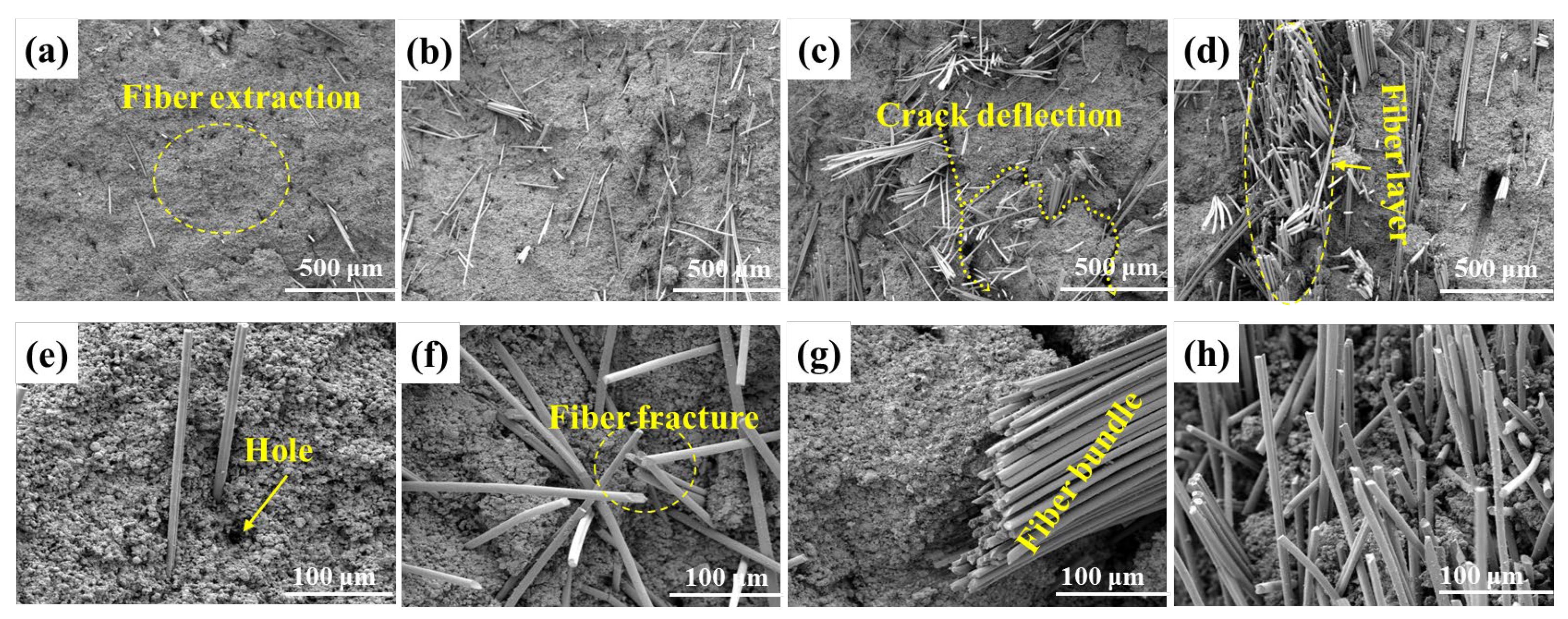
To further reveal the reinforcing mechanism of carbon fibers, a microscopic morphology analysis was conducted on the fractured Cf/C/CuNi composites, and the results are shown in
Figure 6. When the carbon fiber content was 1 wt.%, the fracture surface was relatively smooth, and most of the carbon fibers in the matrix were pulled out, forming a large number of obvious holes (
Figure 6a,e), indicating that the interface bonding between the carbon fibers and the matrix was weak, and the fiber pull-out phenomenon was prone to occur. When the carbon fiber content increased to 3 wt.%, a few fiber agglomerations appeared, the fiber orientation was disordered and intertwined, and the size of the surface holes increased (
Figure 6b), which was due to the overall pull-out of the agglomerated fiber bundles; at the same time, obvious fracture traces could be seen on the carbon fiber cross-sections (
Figure 6f), indicating that some fibers had borne the load and fractured during the fracture process. When the carbon fiber content reached 5 wt.%, large-sized fiber bundles were pulled out, and the crack propagation along the fiber bundle direction could be clearly observed on the fracture surface (
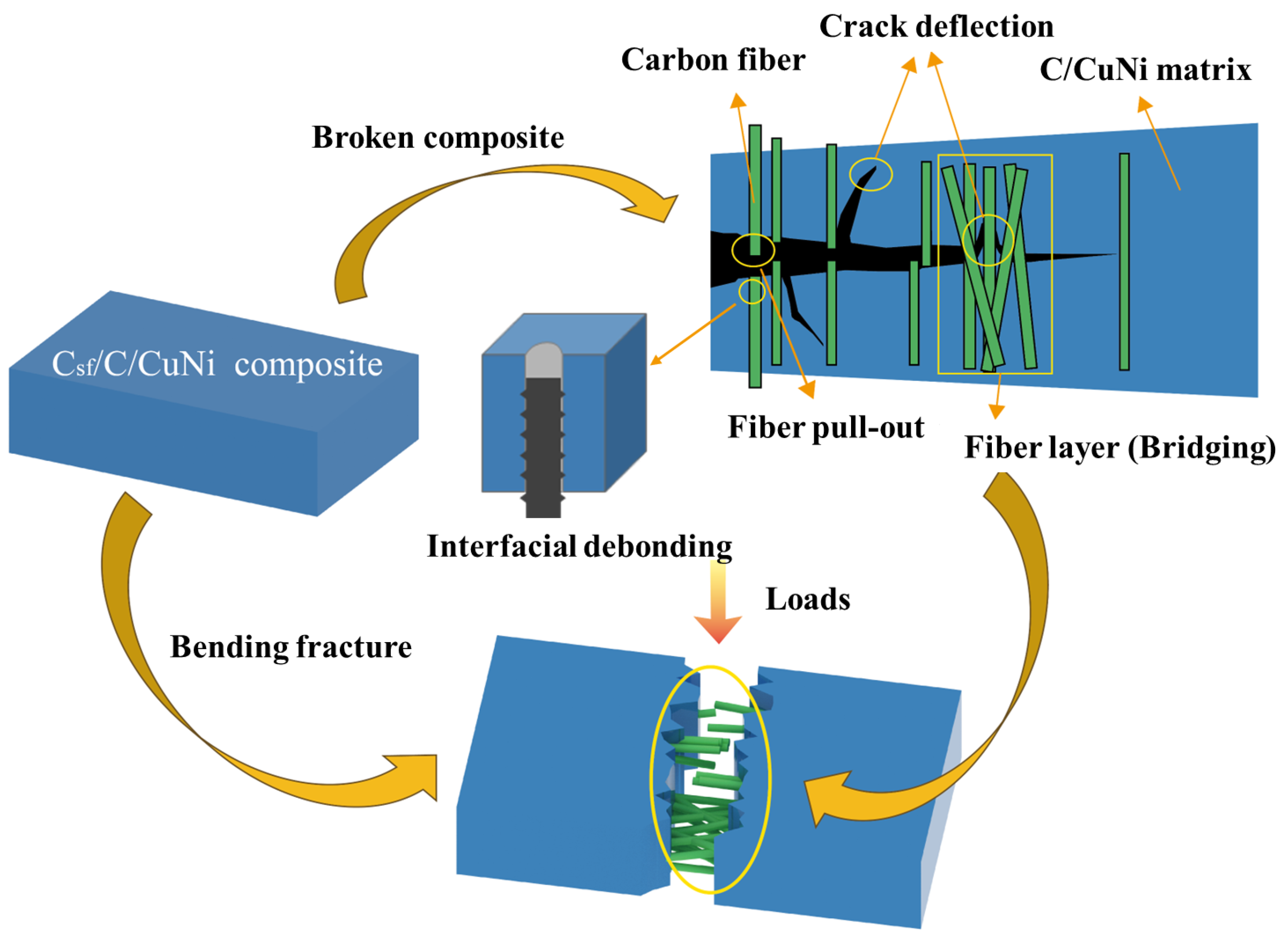
Figure 6c,g). These agglomerated fiber bundles could withstand higher tensile stress and act as obstacles during crack propagation, dissipating energy by inducing crack deflection, thereby delaying the rapid crack propagation. When the carbon fiber content further increased to 7 wt.%, the carbon fibers presented a layered and oriented interwoven arrangement. After the crack propagated to the carbon fiber layer, it tended to continue propagating between the layers. The matrix material was interlaced between the fibers, and the crack deflected multiple times during propagation when encountering fibers; at the same time, the layered carbon fibers formed a continuous network structure during the fracture process, playing a bridging role and effectively enhancing the material’s toughness. Additionally, there were a large number of large-sized holes and obvious fiber pull-out traces in the matrix (
Figure 6d,h), indicating that the fiber pull-out process required overcoming greater interfacial resistance and consuming more energy. In summary, during the fracture process, when the carbon fiber content was 7 wt.%, multiple reinforcing mechanisms worked in concert, including fiber pull-out, fiber fracture, bridging effect, and crack deflection, significantly enhancing the material’s energy dissipation capacity and overall mechanical properties, thus demonstrating the highest strength.
3.3. Friction Properties of Cf/C/CuNi Composites
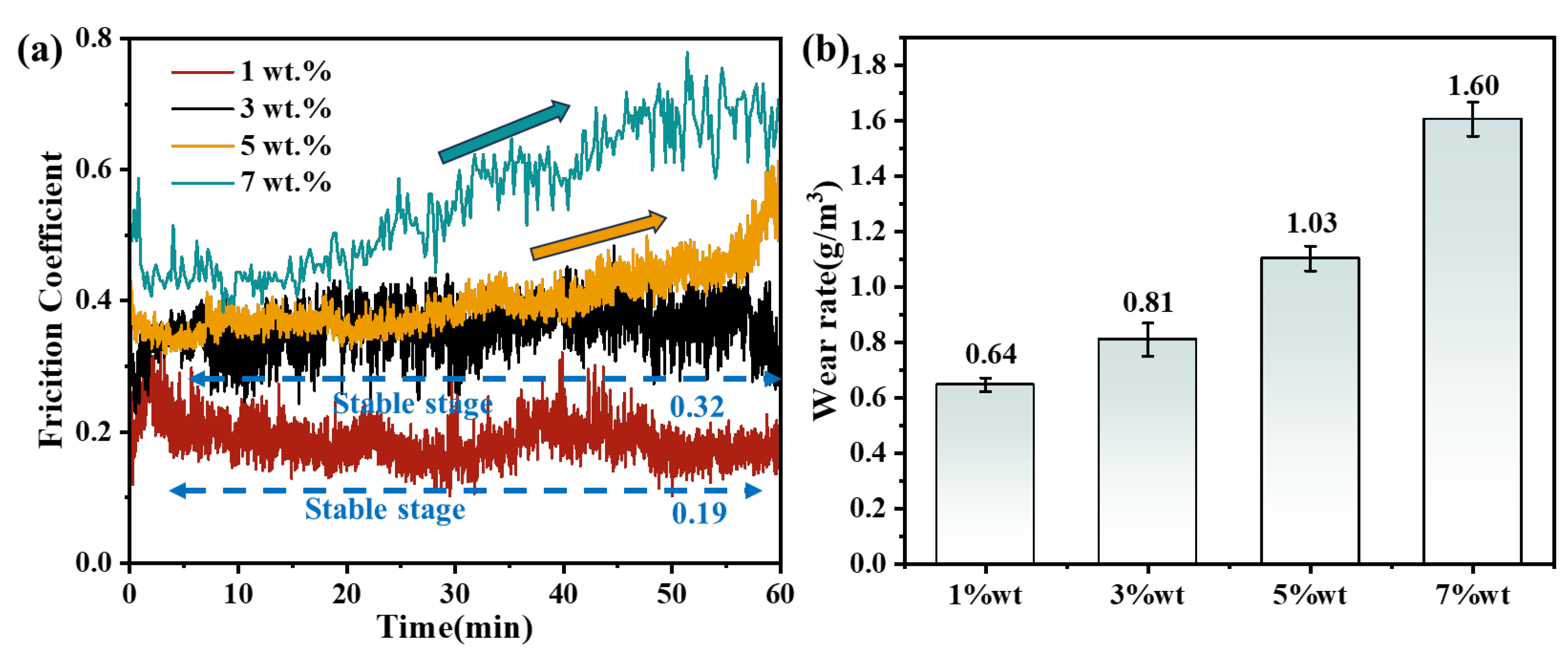
Figure 7a shows the variation in the friction coefficient with time for Cf/C/CuNi composites with different carbon fiber contents under a test load of 0.98 N. Due to the different distribution patterns of carbon fibers in the matrix, the friction coefficients of each sample not only show significant differences in value but also have more obvious fluctuations. When the carbon fiber content is 1 wt.%, the average friction coefficient is 0.19; when the content increases to 3 wt.%, the average value rises to 0.32 (taken from the stable stage of the friction process). Among them, the composite with 1 wt.% carbon fiber content exhibits better friction stability and lubrication performance, mainly due to the uniform dispersion of low-content carbon fibers in the dense matrix, which can form a continuous and stable lubricating layer on the friction surface. Although the contact of local carbon fibers during sliding causes small fluctuations in the friction coefficient, the overall friction behavior remains stable. As the carbon fiber content further increases, the agglomeration of fibers intensifies. The friction coefficients of the 3 wt.% and 5 wt.% samples are similar, but the latter shows an upward trend in the later stage of the curve, indicating an intensified wear process and a deteriorating interface friction state. When the carbon fiber content reaches 7 wt.%, the friction coefficient rapidly increases linearly, showing severe friction instability. This phenomenon is attributed to the fact that under the combined action of vertical load and shear force, a large number of carbon fibers exposed on the surface break and undergo cutting effects. The fibers of different lengths are interlaced at the friction interface, significantly increasing the friction resistance. At the same time, carbon fibers have good elastic deformation ability and swing back and forth under the action of parallel friction force, weakening their anchoring effect in the matrix and causing local structural loosening, which in turn destroys the integrity of the protective friction film and hinders its continuous formation. As shown in
Figure 7b, with the increase of carbon fiber content, the wear rates of Cf/C/CuNi composites are 0.64, 0.81, 1.03, and 1.60 g/m3 in sequence, showing a significant upward trend. This result indicates that an excessively high carbon fiber content weakens the material’s anti-wear performance and is not conducive to achieving stable and low-loss lubrication friction behavior.
Table 1 summarizes the performance parameters of the Cf/C/CuNi composites, providing a more intuitive understanding of the core performance comparisons and changing trends of materials with different compositions.
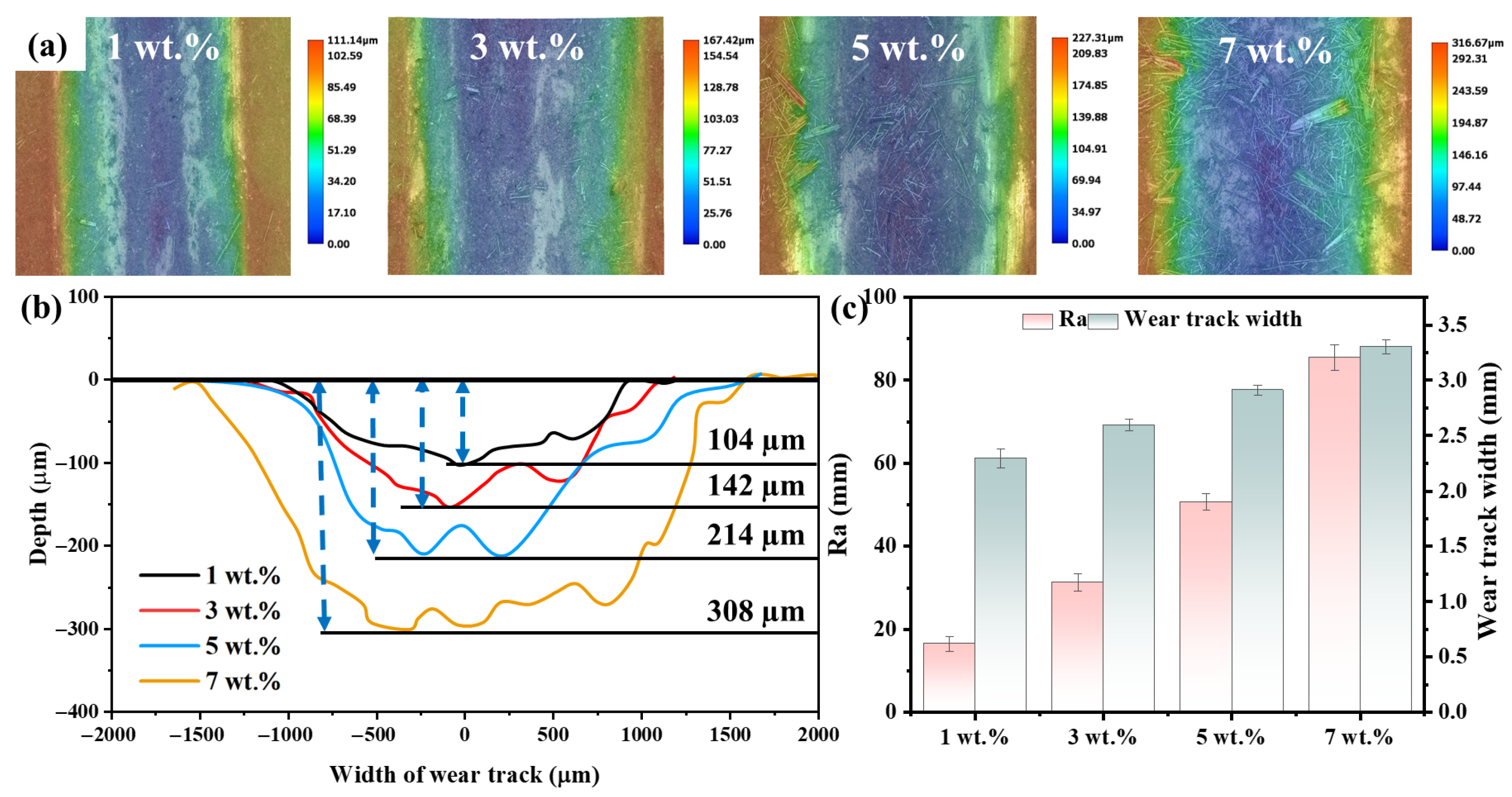
Figure 8 presents the wear morphology and depth analysis results of the Cf/C/CuNi composites. As can be seen from the 3D morphology in
Figure 8a, there are carbon fiber residues inside the friction indentations of all samples. These carbon fibers are the products that were broken due to shearing and bending during the friction process and embedded in the wear marks. Among them, the samples with 5 wt.% and 7 wt.% carbon fiber content has accumulated a large number of short rod-shaped carbon fiber fragments in the wear mark area, which is significantly more than those with 1 wt.% and 3 wt.% carbon fiber content. This indicates that they experienced more severe material removal behavior and more serious wear during the friction process. Quantitative analysis shows that the wear depths of the Cf/C/CuNi composites with carbon fiber contents of 1 wt.%, 3 wt.%, 5 wt.%, and 7 wt.% are approximately 104, 142, 214, and 308 μm, respectively (
Figure 8b), showing a significant increase with the increase in carbon fiber content. Additionally, as shown in
Figure 8c, there is a clear linear positive correlation between the surface roughness of the material and the width of the wear mark, further indicating that as the wear area expands, the surface unevenness intensifies. This result systematically confirms that with the increase in carbon fiber content, the wear behavior of the composites intensifies, the matrix damage becomes more severe, and the overall wear volume significantly increases, which is highly consistent with the aforementioned friction coefficient variation law and wear rate test results.
To gain a deeper understanding of the friction behavior of Cf/C/CuNi composites,
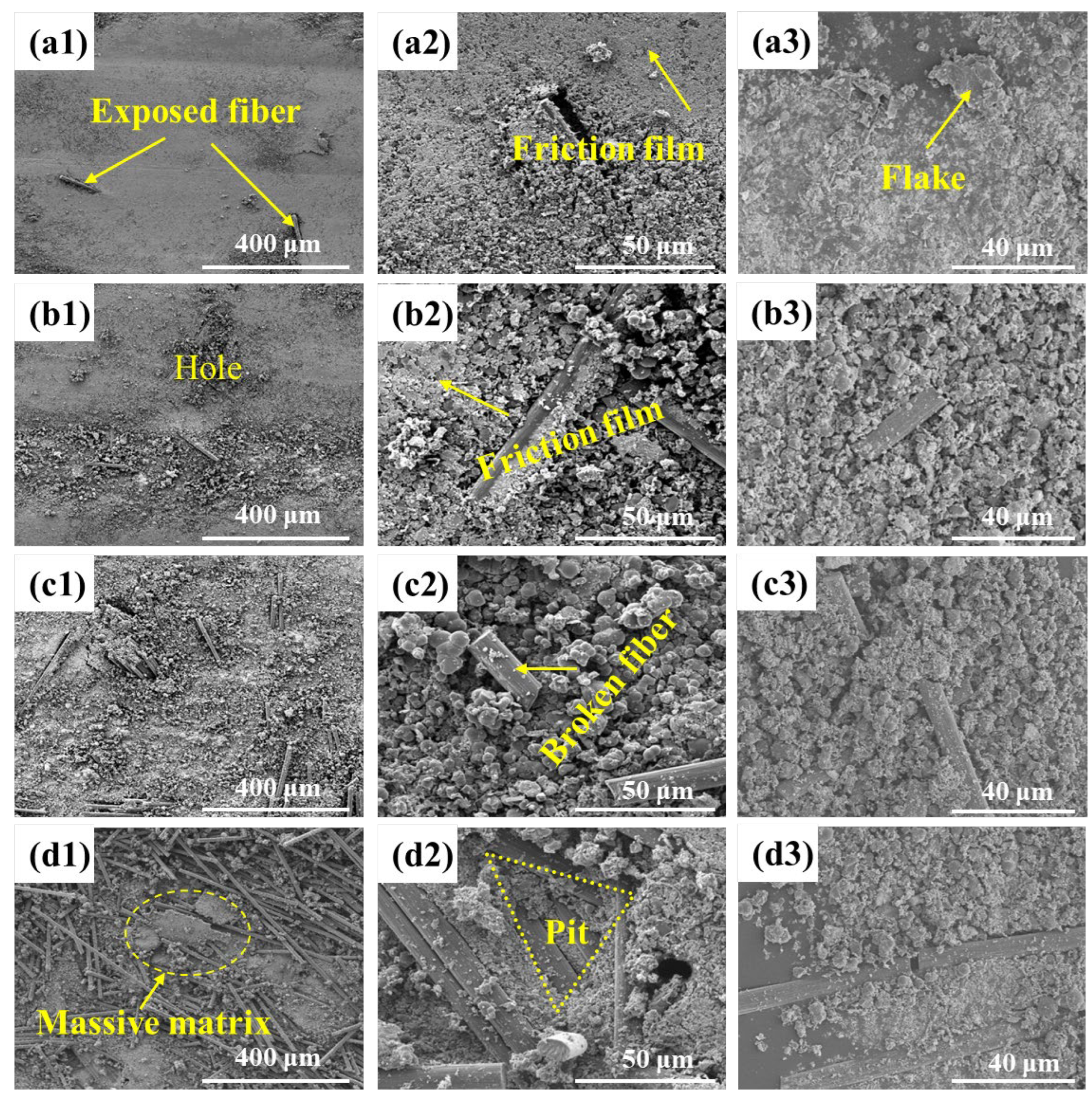
Figure 9 presents the micro-morphology of the friction surfaces and the characteristics of the wear debris under different carbon fiber contents. When the carbon fiber content is 1 wt.%, the formed friction film on the friction surface is relatively complete and smooth, with a few fine debris distributed on the surface, and some individual carbon fibers slightly protruding from the matrix (
Figure 9a1). Local porosity appears around the carbon fibers in the matrix, and the bonding between the fibers and the matrix is weak. This is mainly attributed to the fact that the relatively short exposed carbon fibers are less likely to break during repeated contact with the counter surface, and the unexposed parts of the fibers transfer the high-frequency reciprocating shear stress to the surrounding matrix, causing the matrix to undergo periodic compression and the interface bonding performance to gradually deteriorate (
Figure 9a2). As the carbon fiber content increases, the degree of damage on the friction surface gradually intensifies. When the content reaches 5 wt.%, the friction film is completely destroyed, and the agglomerated carbon fiber bundles cause the matrix structure to become loose, accompanied by the initiation and propagation of cracks (
Figure 9c1). Additionally, due to the different orientations of the carbon fibers, uneven stress distribution is induced under shear force, further exacerbating the damage to the matrix. Comparing the friction surfaces of the 3 wt.% and 5 wt.% samples, it can be seen that the former still retains some continuous friction film, showing relatively better surface integrity (
Figure 9b2,b3). When the carbon fiber content increases to 7 wt.%, the interwoven carbon fiber network causes large chunks of the matrix to peel off during friction, with a large number of carbon fibers exposed on the friction surface (
Figure 9d1). At this point, the surface morphology is uneven, significantly increasing the friction resistance; under shear force, a few fiber pull-out phenomena can be observed, indicating a relatively low interface bonding strength between the fibers and the matrix (
Figure 9d2). Analysis of the wear debris composition under different carbon fiber contents (
Figure 9a3–d3) reveals that matrix material shedding occurs in all four conditions, but the wear debris of the 1 wt.% sample mainly consists of extremely thin carbon fiber layers, with almost no matrix fragments, indicating that the wear mechanism is mainly mild surface peeling.
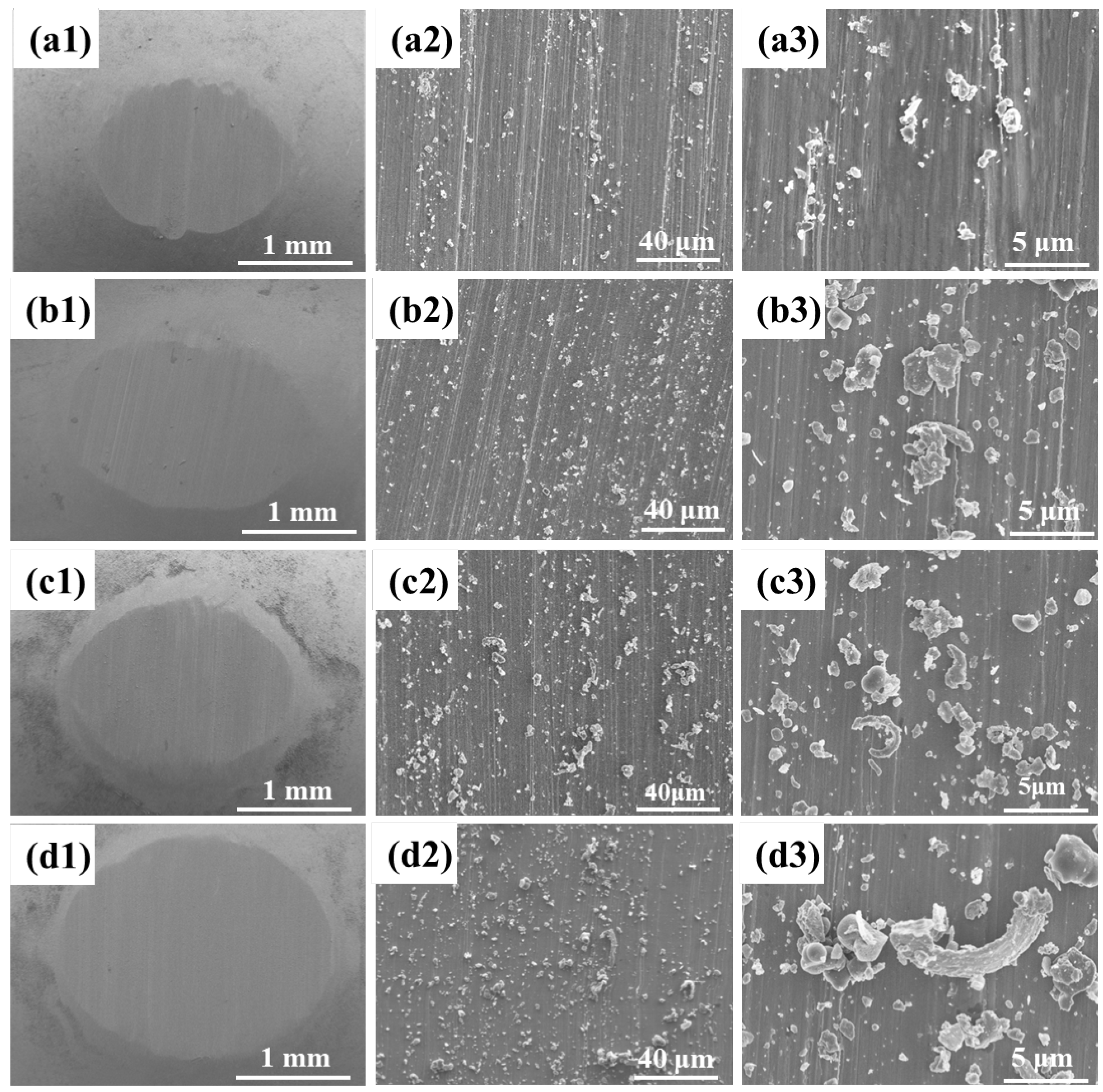
The microstructure of the friction counter balls of Cf/C/CuNi composites with different carbon fiber contents was characterized, and the results are shown in
Figure 10. With the increase of carbon fiber content, the diameter of the wear scar on the surface of the counter balls gradually increases (
Figure 10a1–d1). Due to the mutual interaction in the friction process, the wear state of the counter balls corresponds to the wear degree of the composites, and the size of the wear debris particles adhering to their surface also increases (
Figure 10a2–d2). When the carbon fiber content is 1 wt.%, the main wear debris on the surface of the counter balls comes from the fine fragments produced by the local loosening of the matrix, and the composition is mainly carbon and copper-nickel alloy (
Figure 10a3). When the carbon fiber content increases to 3–7 wt.%, in addition to the shedding of the matrix material, the carbon fibers crack and fall off under the shear stress during the friction process. Under the repeated rolling and friction stress, they further curl and break, eventually forming wear debris and transferring to the surface of the counter balls (
Figure 10b3–d3). This phenomenon further confirms that carbon fibers actively participate in the friction and wear process and have an adverse effect on the overall friction performance at higher contents.
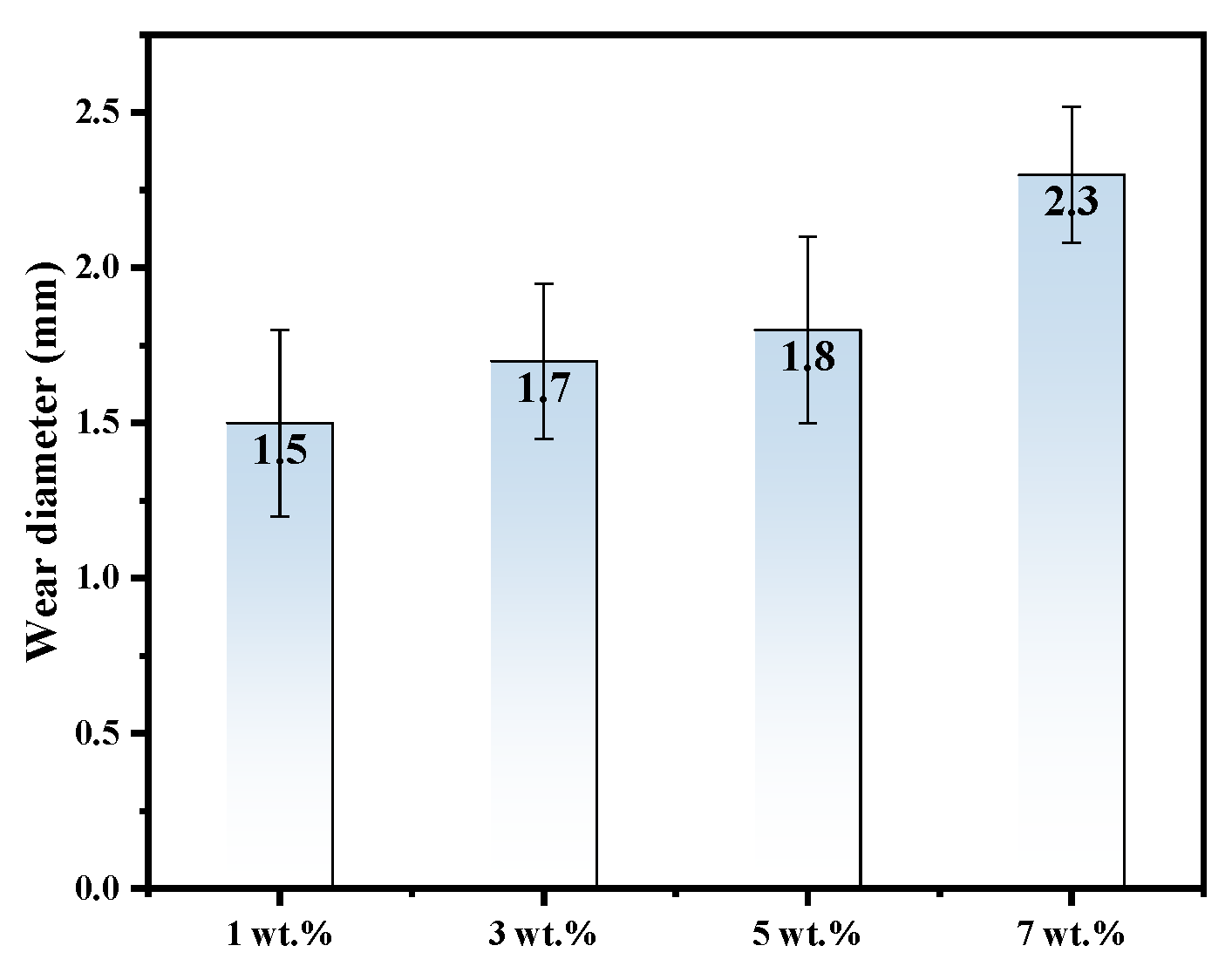
The diameter of the wear scar, as shown in
Figure 11, increases from 1.5 mm to 2.3 mm as the carbon content rises from 1 wt.% to 7 wt.%. This quantitative trend further corroborates the friction and wear mechanism proposed in this paper. At a low carbon content (1 wt.%), a stable lubricating film and a mild wear mechanism result in the least damage to the counterpart (the smallest wear scar diameter). As the carbon fiber content increases, the combined effects of fiber agglomeration, lubricating film disruption, and the generation of hard carbon fiber wear debris intensify abrasive and adhesive wear, thereby causing larger and deeper wear scars on the counterpart. The changes in the composition and morphology of the wear debris on the surface of the grinding ball shown in
Figure 10a3–d3 are microscopic evidence of this process.
3.4. Friction and Toughening Mechanisms of Cf/C/CuNi Composites
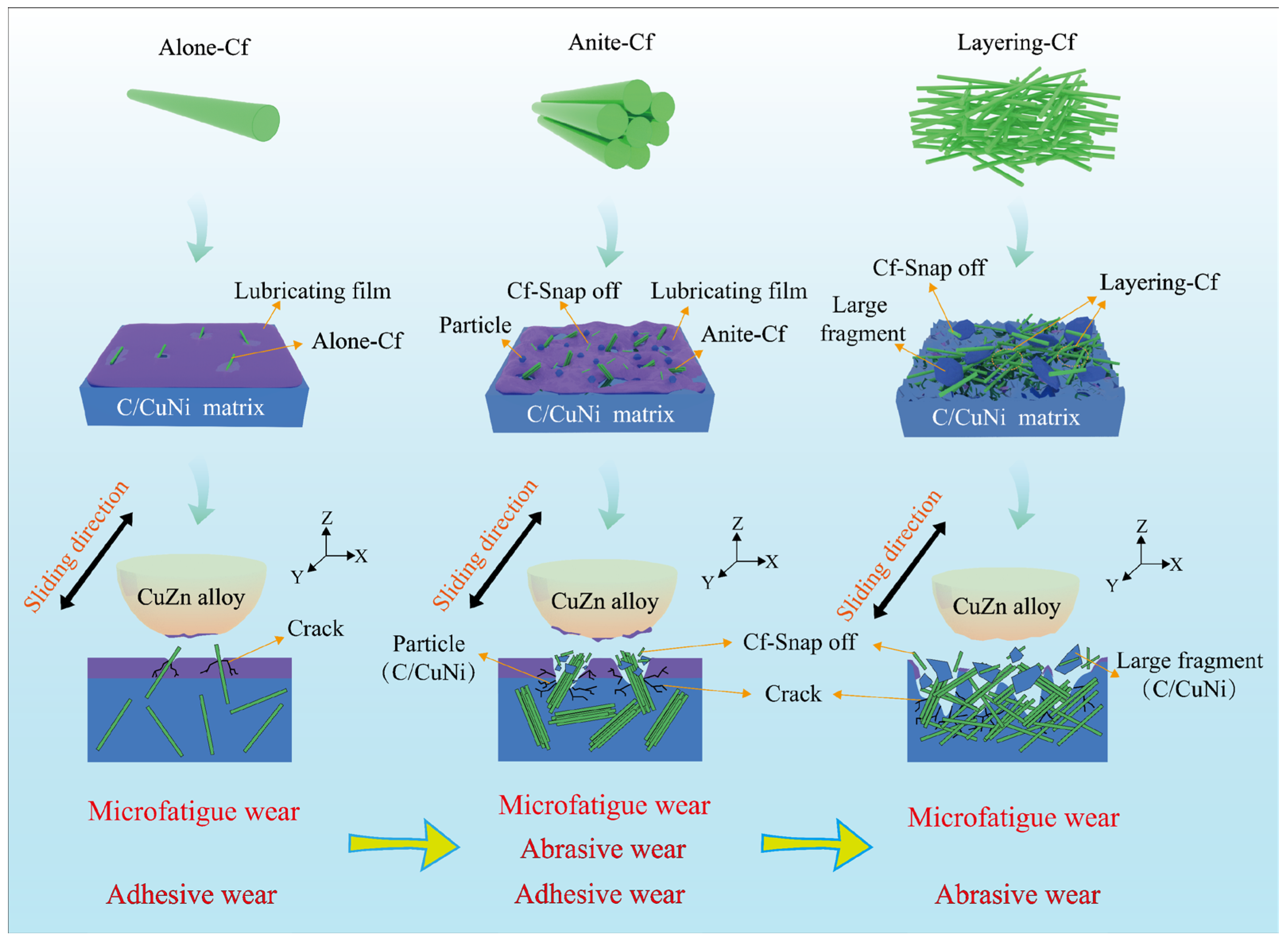
Figure 12 shows the schematic diagrams of the friction mechanisms of Cf/C/CuNi composites with different carbon fiber contents. As the carbon fiber content increases, the distribution state of the fibers in the matrix changes significantly, successively presenting as single dispersion, agglomeration, and stratified arrangement. The carbon fibers exposed on the matrix surface, under the combined action of vertical load and horizontal shear stress, cause the matrix around the fibers to gradually become loose due to fatigue wear and induce cracks to extend into the matrix interior; meanwhile, the broken carbon fiber fragments act as third-body abrasive particles in the friction process, intensifying the material’s spalling. With the increase in carbon fiber content, the lubricating film formed during the friction process is progressively damaged, with its integrity decreasing and gradually losing continuity; when the carbon fibers are distributed in a stratified manner, the lubricating film is completely broken, unable to effectively play a role in reducing friction, leading to a significant increase in the overall wear of the material.
The carbon fiber content has a significant impact on the mechanical properties of the Cf/C/CuNi composite.
Figure 13 shows the fracture-toughening mechanism of this composite. When the carbon fibers are uniformly distributed, they are prone to pull-out during the loading process, effectively consuming the energy. As the fiber content increases, the orientation of the agglomerated fibers becomes more complex, and the number of agglomerates gradually increases. The pull-out of large bundles of carbon fibers requires overcoming greater interfacial resistance, thus consuming more energy. Additionally, due to the much higher elastic modulus of carbon fibers compared to the matrix, cracks are difficult to directly penetrate the fibers during propagation and often deflect, resulting in an extended crack path and increased energy required for crack propagation. When the carbon fiber content further increases and forms a layered structure, under external loading, the crack propagation is hindered by the dense fiber regions, slowing down the crack extension speed and significantly enhancing the material’s fracture toughness. At the same time, the layered distribution of carbon fibers can effectively transfer the load to the surrounding matrix through stress transmission and act as a bridging effect, inhibiting further crack propagation. This bridging effect helps to disperse the stress concentration at the crack tip and delay the fracture process. Moreover, the ordered arrangement of carbon fibers in the layered structure can form a stable load-bearing skeleton, which can efficiently absorb and disperse external loads and provide stronger support during loading, thereby synergistically enhancing the strength and toughness of the composite. The main toughening mechanisms include fiber pull-out, crack deflection, and fiber bridging. The effectiveness of these macroscopic toughening mechanisms fundamentally stems from the strong interfacial bonding between carbon fibers and the C/CuNi matrix. Firstly, the addition of Ni significantly improves the wettability between Cu and carbon as well as carbon fibers. This is not merely an improvement in physical contact but also involves possible chemical interactions promoted by Ni at the interface, thereby enhancing the interfacial bonding energy. Secondly, the close physical contact between carbon fibers and the C/CuNi matrix is achieved through a combination of the solvothermal method and SPS preparation. The micro-roughness on the surface of carbon fibers and the micro-region interlocking formed by the matrix during sintering provide a significant mechanical interlocking effect, which is a powerful form of physical bonding. Therefore, the good bonding between carbon fibers and the matrix for stress transfer lays a solid foundation for the improvement of mechanical properties.