1. Introduction
In thermal-insulation applications, silica aerogels (SAs) are valued because their sol–gel-derived nanoporous networks can combine low density, high porosity, high specific surface area, and low thermal conductivity [
1,
2,
3,
4]. These structural characteristics make SAs promising candidates for thermal insulation, energy conservation, and building-safety-related applications [
5,
6,
7,
8]. In practical service environments, hydrophobic modification is usually required to improve moisture resistance and long-term stability, and hydrophobic silica aerogels (HSAs) generally exhibit better durability than hydrophilic silica aerogels [
7]. However, the introduction of hydrophobic organosilicon groups also changes the thermal response of the silica framework. Methyl-containing surface groups may decompose, rearrange, or volatilize at elevated temperatures, thereby producing combustible or hazardous gaseous products and increasing the uncertainty of thermal safety during high-temperature exposure [
9]. Therefore, the thermal behavior of HSAs is not determined only by the silica skeleton but also by the chemical structure and amount of the surface modifier. Trimethylsilyl, dimethylsilyl, and methylsilyl modifications differ in the number of methyl groups attached to silicon and in their possible contribution to surface capping, crosslinking, and network condensation. These differences may alter the pore structure, density, specific surface area, and thermal-degradation pathway of the final aerogels. Clarifying this structure–pyrolysis relationship is essential for selecting suitable hydrophobic modifiers for thermally stable aerogel insulation materials.
Previous studies [
10,
11,
12,
13] have demonstrated that the thermal behavior of HSAs is closely related to their surface modification chemistry. The multistep thermal decomposition, kinetic behavior, and reaction mechanisms of hydrophobic silica aerogels have been investigated under different atmospheres, and heat treatment has also been shown to affect the pore structure and pyrolysis behavior of silica aerogels. In addition, methylsilyl-modified silica aerogels have been reported to exhibit different combustion characteristics and thermal hazards, confirming that the type and amount of methylsilyl groups are important for thermal-safety evaluation. Li et al. investigated the pyrolysis behavior of silica aerogels modified with trimethylsilyl groups in an air atmosphere. Zhong et al. [
14] investigated the thermal decomposition and conversion mechanisms of silica-aerogel-infused cork cells, providing further evidence that silica-aerogel-based materials can undergo complex thermal conversion processes involving both organic components and silica-derived porous structures. These studies provided useful information on the thermal degradation of hydrophobic aerogels, but the pyrolysis behavior under an inert atmosphere has not been fully clarified. However, most of these studies focused on a single type of hydrophobic modification or on the general pyrolysis behavior of hydrophobic silica aerogels, while the systematic relationship between methyl-substitution degree, aerogel structure, activation energy, apparent reaction model, and evolved-gas behavior remains insufficiently clarified. In particular, the effects of tri-, di-, and mono-methylsilyl groups on the decomposition stage, activation energy, reaction model, and volatile-product evolution still require systematic comparison. Such information is important for evaluating the intrinsic thermal hazards of HSAs independently of oxidation reactions.
Thermogravimetric analysis (TG) is an effective method for tracking mass loss and evaluating kinetic or thermodynamic parameters during thermal decomposition [
15,
16,
17,
18]. Nevertheless, TG results alone cannot identify the chemical composition of evolved gases. Fourier transform infrared spectroscopy (FTIR) can distinguish typical gas-phase products and functional groups according to their characteristic absorption bands, such as those related to H
2O, CO
2, CO, CH
4, and other small molecules [
19,
20,
21]. Therefore, coupling TG with FTIR enables the mass-loss process to be correlated with the release of gaseous products, which is particularly useful for analyzing the pyrolysis stages and volatile-generation behavior of organic–inorganic hybrid materials [
19,
20]. For HSAs with different methyl-substituted surface groups, this combined technique can provide direct evidence for identifying the gaseous products generated from the thermal decomposition of hydrophobic groups.
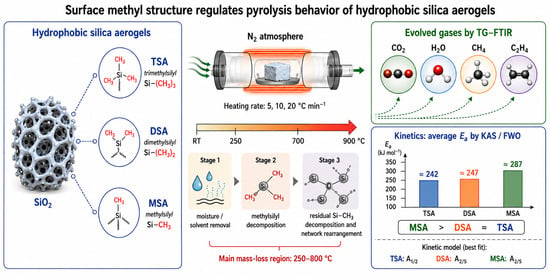
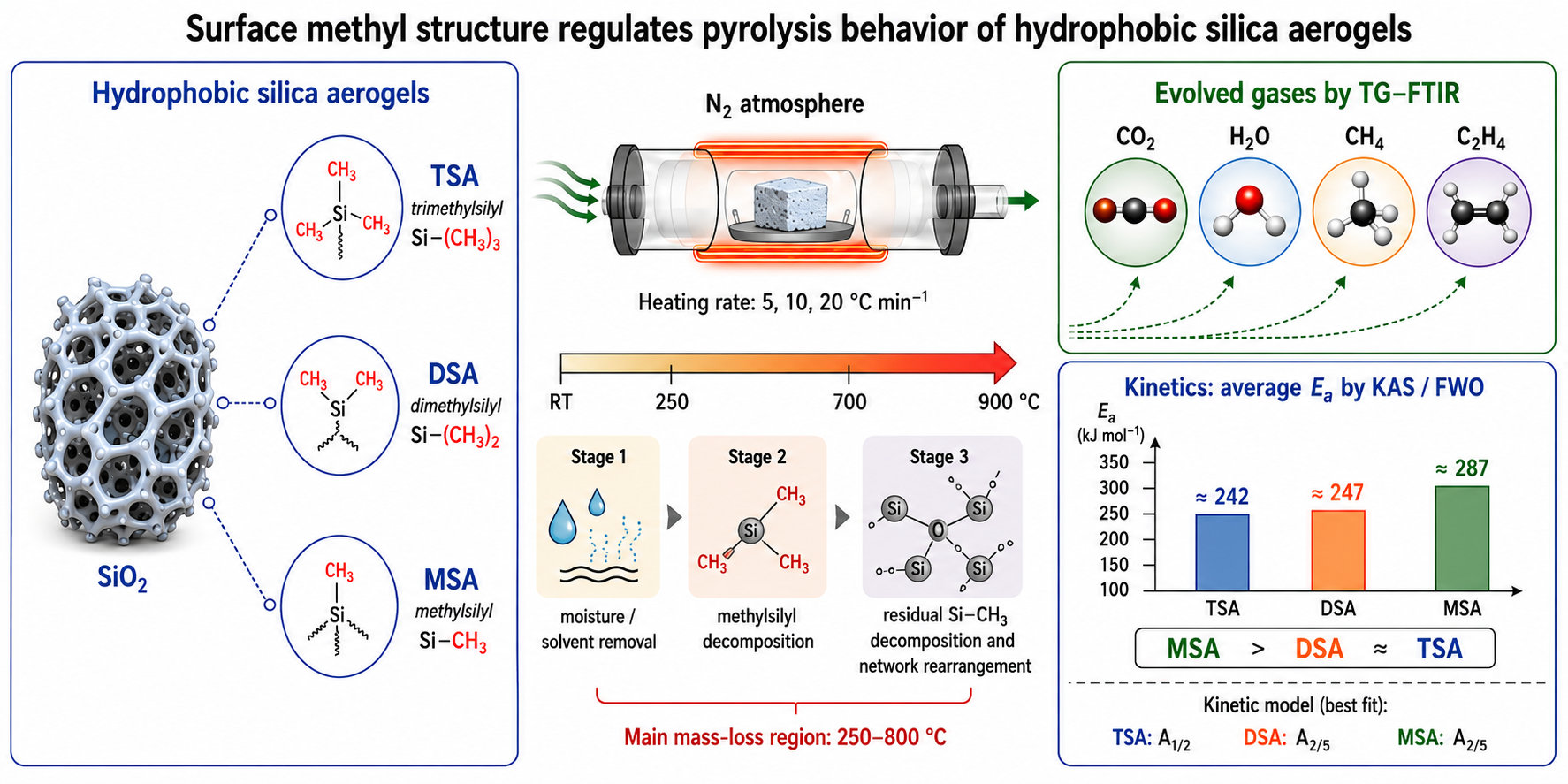
In this work, three ambient-pressure-dried HSAs modified with trimethylchlorosilane (TMCS), dimethyldichlorosilane (DMDCS), and methyltrichlorosilane (MTCS) were prepared and denoted as TSA, DSA, and MSA, respectively. These samples represent three methylsilyl surface-modification structures with decreasing methyl substitution from TSA to MSA. TG experiments at different heating rates were conducted under a nitrogen atmosphere to determine their pyrolysis characteristics. TG-FTIR was used to identify the gaseous products released during degradation. The Kissinger–Akahira–Sunose (KAS) and Flynn–Wall–Ozawa (FWO) methods were applied to evaluate the conversion-dependent activation energies, while the Malek and Coats–Redfern methods were used to analyze the apparent reaction models. By comparing TSA, DSA, and MSA, this study aims to clarify how the surface methyl-substitution structure affects the pore structure, pyrolysis kinetics, thermodynamic parameters, and volatile-product evolution of HSAs. The results are expected to provide a kinetic and mechanistic basis for selecting hydrophobic modifiers for silica aerogel insulation materials used under oxygen-limited or high-temperature conditions.
2. Results and Discussion
2.1. Basic Physicochemical Properties
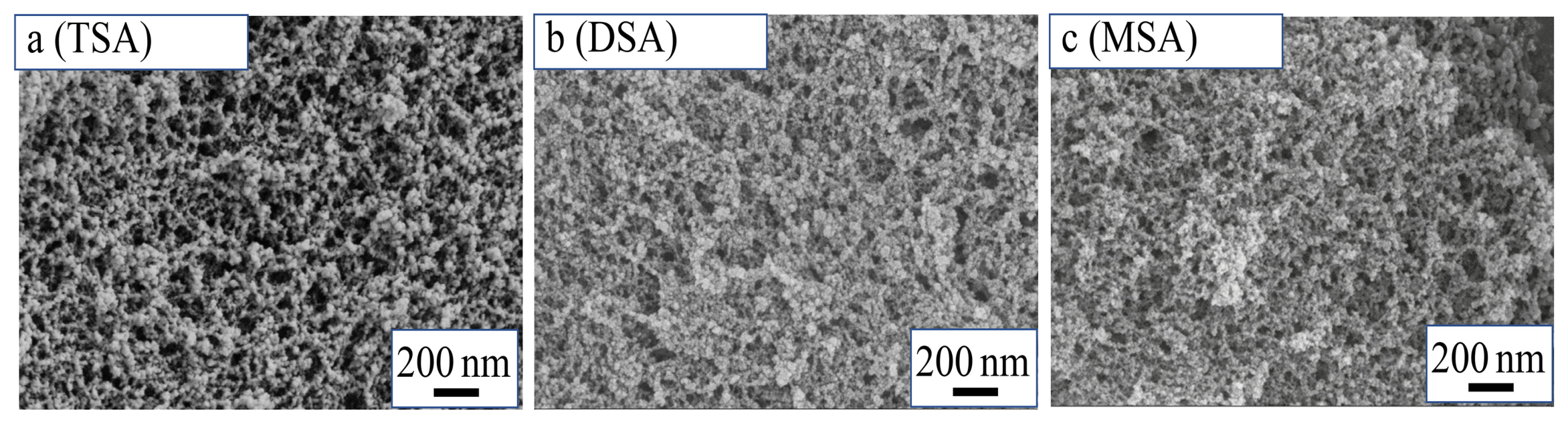
Figure 1 shows the SEM images of the three hydrophobic silica aerogels modified with different methylsilyl groups. All samples exhibited continuous three-dimensional nanoporous networks, indicating that the aerogel skeletons were generally preserved after ambient-pressure drying. However, clear differences in the pore morphology were observed among TSA, DSA, and MSA. TSA showed a relatively loose and homogeneous nanoporous network, whereas DSA and especially MSA displayed denser particle aggregation and less open pore structures. This morphological evolution suggests that the type of surface modifier not only determines the surface organic groups but also affects the development and preservation of the aerogel framework.
The structural differences observed by SEM are consistent with the density, thermal conductivity, and N
2 physisorption results shown in
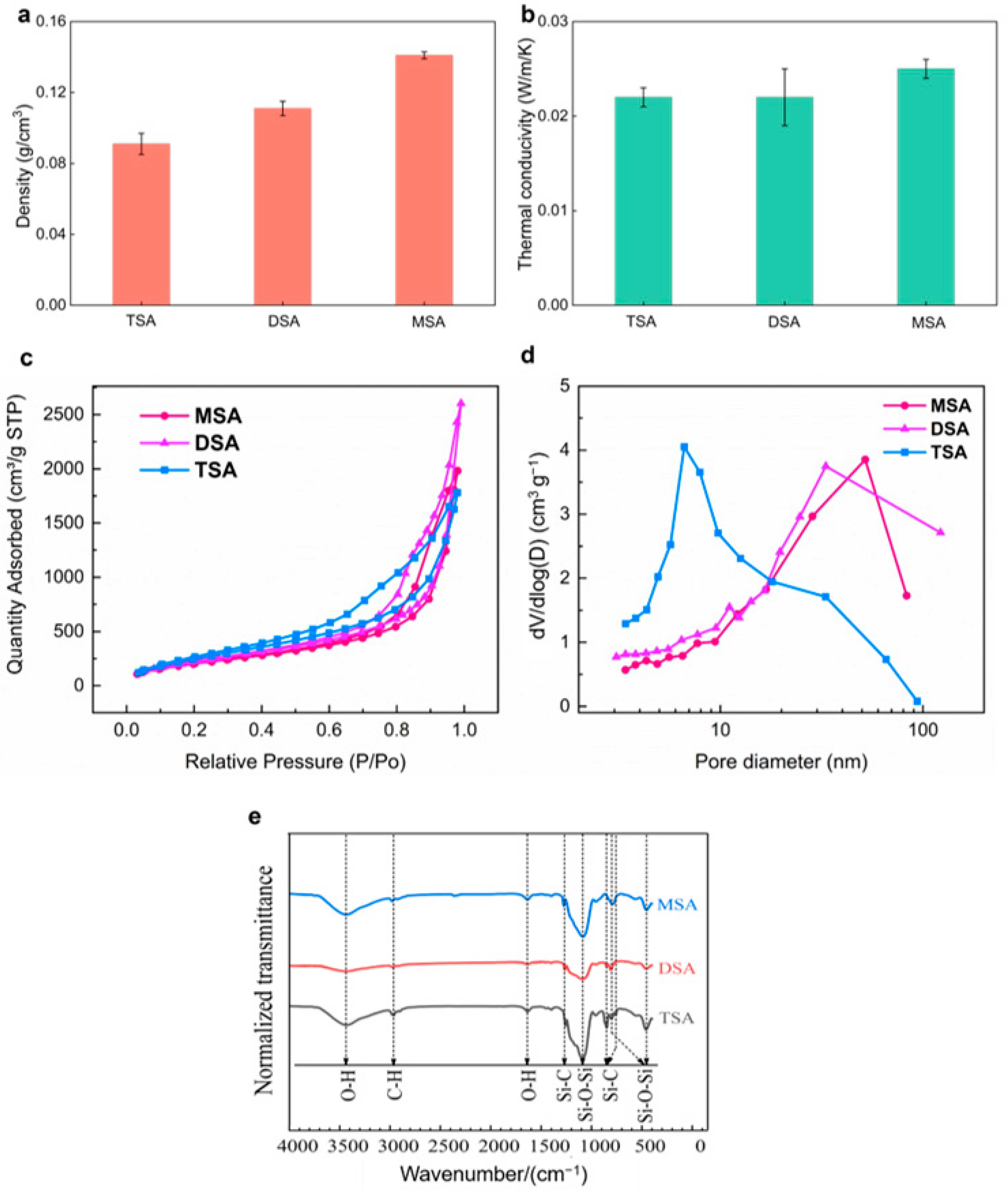
Figure 2. The densities of TSA, DSA, and MSA were 0.091, 0.111, and 0.141 g/cm
3, respectively, showing a gradual increase as the methyl substitution of the modifier decreased. As shown in
Figure 2c, the N
2 adsorption–desorption isotherms of all three aerogels exhibit typical mesoporous adsorption behavior, with a distinct increase in adsorbed volume at high relative pressures, indicating capillary condensation in the interconnected pore network. The corresponding BJH pore-size distributions further confirm the mesoporous characteristics of the aerogels (
Figure 2d). These N
2 physisorption data were replotted from our previous study for structural comparison. The previously reported BET specific surface areas decreased from 1002.4 m
2/g for TSA to 877.7 m
2/g for DSA and 773.3 m
2/g for MSA [
22]. This opposite trend between density and specific surface area indicates that the MSA sample possessed a more compact silica framework and reduced accessible pore volume. Such a denser network can also explain the slightly higher thermal conductivity of MSA. Although all three aerogels retained low thermal conductivity values, the increase from 0.022 W/(m·K) for TSA and DSA to 0.025 W/(m·K) for MSA indicates that the contribution of solid-phase heat transfer became more pronounced when the silica skeleton became more continuous.
The solid-state FTIR spectra further confirmed the successful introduction of methyl-containing organosilicon groups into the aerogel networks. The assignment of silica-related vibration bands was made by considering reported FTIR analyses of silica, silicate networks, and silica-based particles. The absorption band near 2978 cm
−1 was attributed to C–H stretching vibrations [
23], while the bands around 1275 and 849 cm
−1 were assigned to Si–C-related vibrations in methylsilyl groups [
24]. The bands near 800 and 452 cm
−1 correspond to Si–O–Si vibrations [
25], confirming the formation of a silica-based framework. The broad band around 3400 cm
−1 and the band near 1630 cm
−1 can be associated with adsorbed water and hydrogen-bonded O-H species. However, because KBr is hygroscopic, these bands should not be used to quantitatively compare the water content or humidity adsorption among the samples. Therefore, the FTIR analysis was mainly used to verify the presence of methylsilyl groups and the silica network rather than to draw conclusions on the relative moisture content of TSA, DSA, and MSA.
Overall, the structural characterization indicates that decreasing the methyl substitution from TSA to MSA resulted in a denser aerogel framework, lower specific surface area, and slightly higher thermal conductivity. The N2 adsorption–desorption isotherms and BJH pore-size distributions further demonstrate that the pore structures of the three aerogels are closely related to the methylsilyl modification type. These structural differences are important for interpreting the following thermal degradation behavior, because a denser silica-rich network may restrict volatile diffusion and increase the apparent resistance to pyrolysis.
2.2. Thermal Analysis
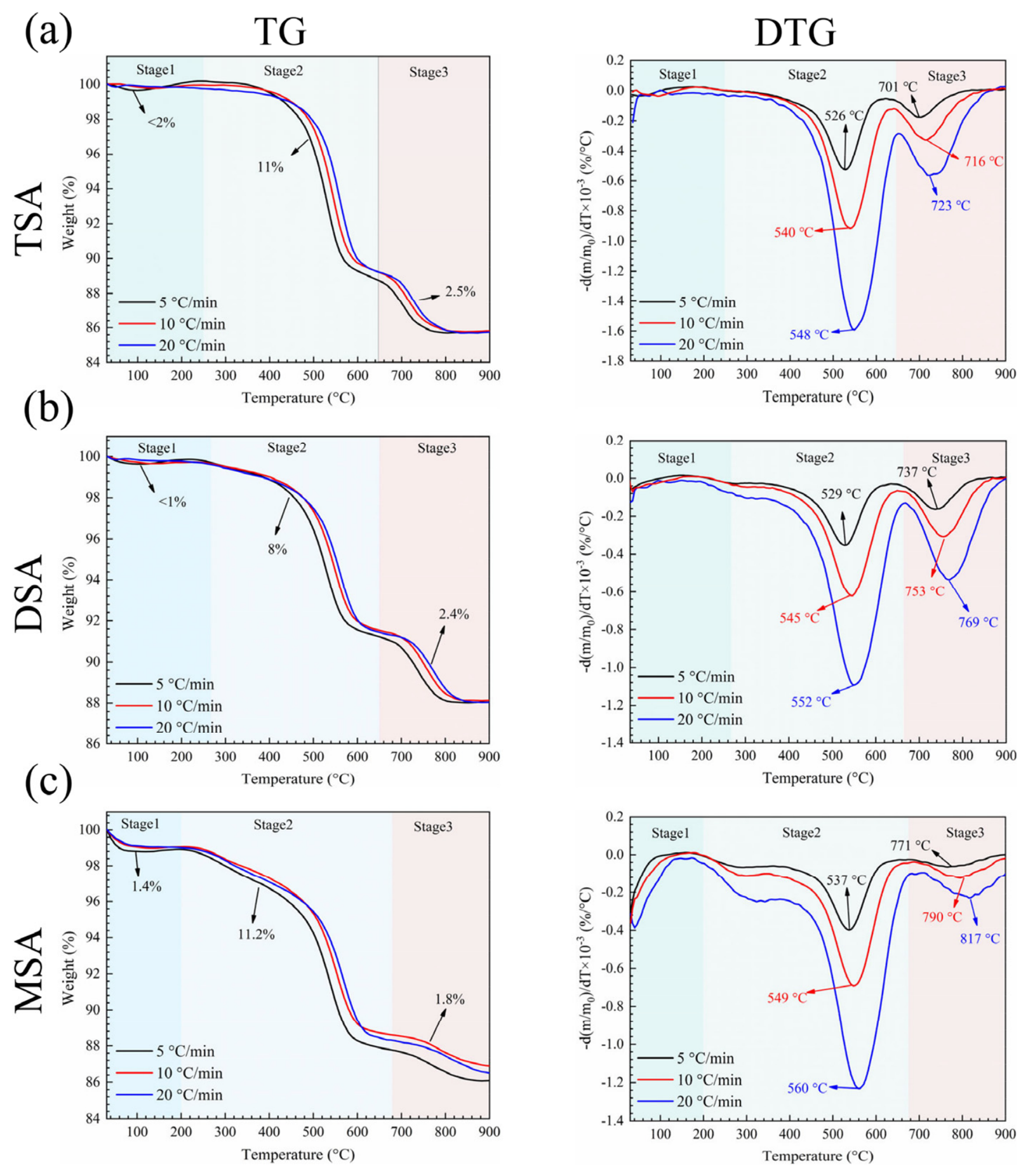
Figure 3 presents the TG and DTG curves of TSA, DSA, and MSA obtained at heating rates of 5, 10, and 20 °C/min under a nitrogen atmosphere. The principal mass-loss region of the three aerogels was located between 250 °C and 800 °C. With an increasing heating rate, the characteristic temperatures shifted to higher values, which can be attributed to thermal lag and the limited time available for heat and mass transfer during dynamic heating.
The pyrolysis process can be divided into three main stages as shown in
Table 1. In Stage 1, below approximately 250 °C, only slight mass loss was observed. This mass loss can mainly be attributed to physically adsorbed water and traces of residual pore liquids or volatile species from the preparation process, such as ethanol or n-hexane. The small mass loss in this stage indicates that most of the residual solvent had been removed during drying [
26,
27]. In Stage 2, from approximately 250 to 700 °C, the main mass loss occurred. This stage is associated with the decomposition and rearrangement of methyl-containing organosilicon groups, accompanied by the release of small-molecule volatile products. In Stage 3, from approximately 700 to 900 °C, further degradation of residual organic groups and structural rearrangement of the silica-rich network occurred. The release of H
2O in this high-temperature region can be partly related to condensation reactions between residual silanol or hydroxyl-containing sites, rather than simple evaporation of physically adsorbed water [
16,
28].
Although the three samples showed similar multistep degradation characteristics, their DTG profiles and characteristic temperatures were different. TSA and DSA, which contained more methyl groups in their surface-modification structures, exhibited more pronounced mass loss in the main degradation region. This behavior suggests that a higher organic-group content provides more decomposable methyl-containing units. In contrast, MSA showed denser morphology, higher density, and lower BET specific surface area, which indicates a more compact silica-rich framework. Such a structure may delay the transport of volatile products and increase the apparent resistance to thermal degradation. Therefore, the difference in TG/DTG behavior among TSA, DSA, and MSA should be interpreted as the combined effect of surface organic-group content and aerogel network density.
The above results indicate that the type of methylsilyl modifier affects not only the amount of decomposable organic groups but also the structural compactness of the aerogel skeleton. This dual effect provides the structural basis for the differences in activation energy and evolved-gas behavior discussed in the following sections.
Table 1.
Pyrolysis characteristics of HSAs at different heating rates.
Table 1.
Pyrolysis characteristics of HSAs at different heating rates.
| Samples | β (°C/min) | Stage 1 | Stage 2 | Stage 3 | Residue at 900 °C (%) |
|---|
| To (°C) | Te (°C) | To (°C) | Tp (°C) | Te (°C) | To (°C) | Tp (°C) | Te (°C) |
|---|
| TSA | 5 | 31 | 226 | 226 | 526 | 618 | 618 | 701 | 900 | 85.5 |
| 10 | 31 | 245 | 245 | 540 | 635 | 635 | 716 | 900 | 85.6 |
| 20 | 31 | 266 | 266 | 548 | 652 | 652 | 723 | 900 | 85.6 |
| DSA | 5 | 31 | 235 | 235 | 529 | 645 | 645 | 737 | 900 | 88.1 |
| 10 | 31 | 267 | 267 | 545 | 652 | 652 | 753 | 900 | 88.2 |
| 20 | 31 | 274 | 274 | 552 | 666 | 666 | 769 | 900 | 88.1 |
| MSA | 5 | 31 | 183 | 183 | 537 | 657 | 657 | 771 | 900 | 86.0 |
| 10 | 31 | 199 | 199 | 549 | 678 | 678 | 790 | 900 | 86.8 |
| 20 | 31 | 204 | 204 | 560 | 688 | 688 | 817 | 900 | 86.4 |
2.3. Kinetic Parameters Based on Model-Free Methods
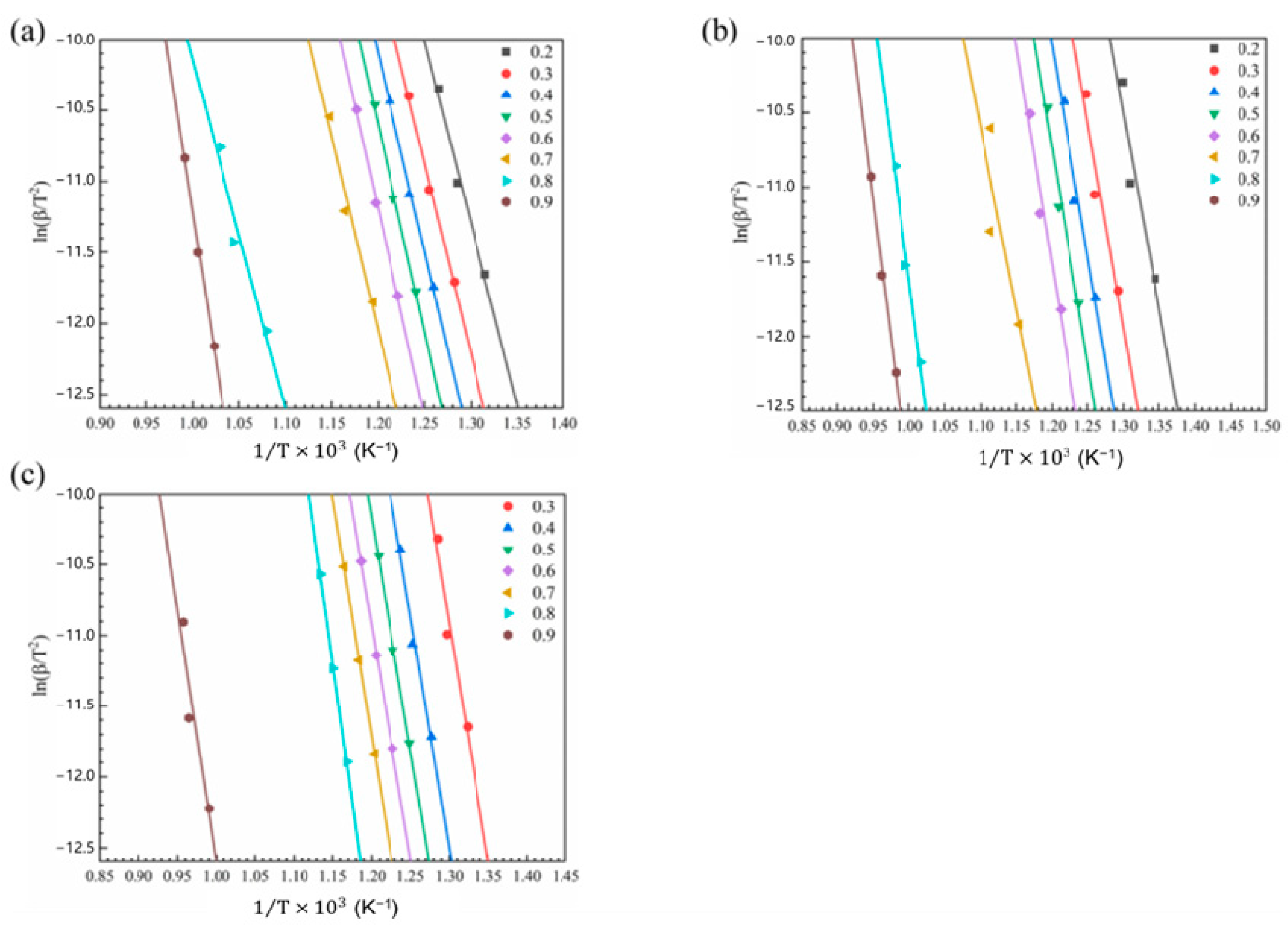
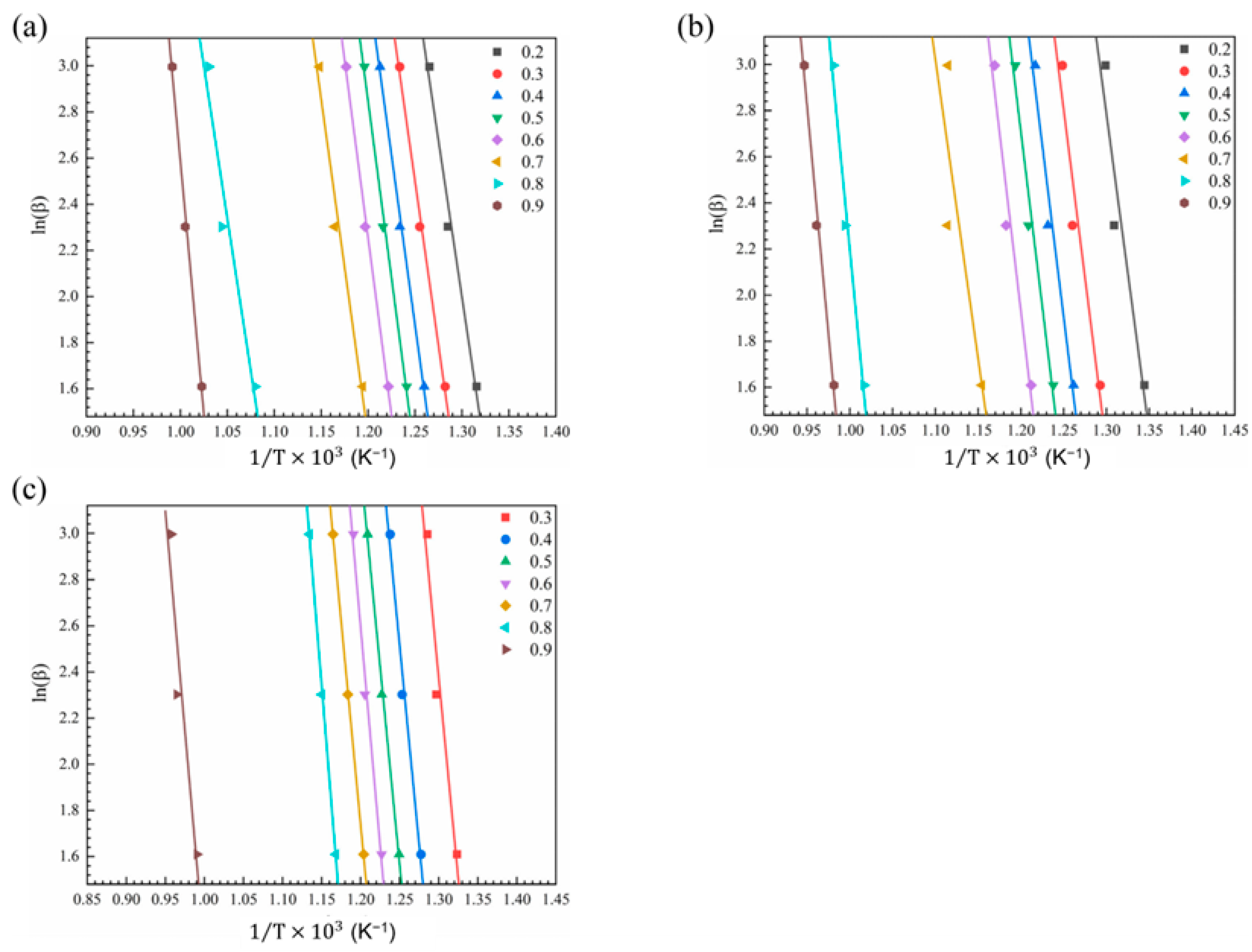
Based on the model-free KAS and FWO methods, a conversion degree (α) was selected in the range of 0.2–0.9 for TSA and DSA and 0.3–0.9 for MSA. The corresponding linear fitting plots obtained from the KAS and FWO methods are presented in
Figure 4 and
Figure 5, respectively. The apparent activation energy (Ea) at each conversion level was calculated from the slope of the fitted line, and the resulting kinetic parameters are summarized in
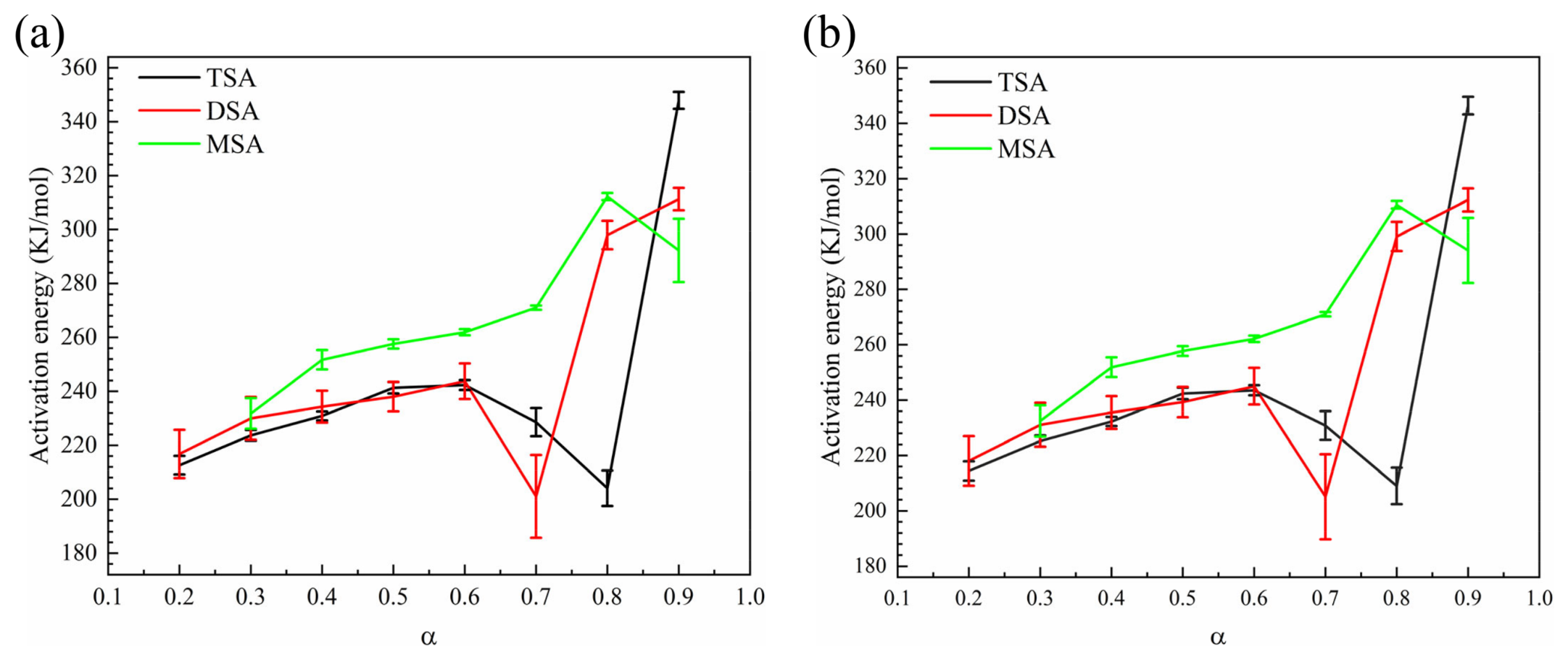
Table 2. The conversion-dependent Ea profiles derived from the two methods are compared in
Figure 6.
The Ea values obtained from the KAS and FWO methods showed similar magnitudes and variation trends, indicating that the two model-free methods gave consistent kinetic results. The dependence of Ea on α suggests that the pyrolysis of hydrophobic silica aerogels is not governed by a single elementary reaction but involves several overlapping processes, including the release of weakly bound species, decomposition of methyl-containing organosilicon groups, volatile-product formation, mass transfer through the porous framework, and rearrangement of the silica-rich skeleton [
29].
For TSA, the Ea values increased from 212.6 to 242.3 kJ/mol in the range of α = 0.2–0.6 according to the KAS method, and a similar trend was obtained by the FWO method. This increase corresponds to the main degradation region observed in the TG/DTG curves, where relatively labile methyl-containing silyl groups started to decompose. At higher conversion levels, the Ea values fluctuated rather than increasing monotonically. This behavior indicates that the degradation of TSA involved overlapping reactions instead of a continuous single-step process. The sharp increase in Ea at α = 0.9 suggests that the remaining organic groups or more thermally resistant organosilicon structures required higher energy for further degradation [
30].
DSA showed kinetic behavior like that of TSA in the low- and medium-conversion ranges. The Ea values increased from 216.7 to 243.7 kJ/mol at α = 0.2–0.6 by the KAS method, indicating that the initial and main degradation stages were also dominated by the decomposition of methyl-containing surface groups. However, the fitting reliability at α = 0.7 was relatively poor, as reflected by the low R2 values in both the KAS and FWO results. Therefore, the Ea value at this conversion should not be overinterpreted as an independent mechanistic transition. Instead, it more likely reflects the strong overlap between the end of the main methyl-group decomposition stage and the beginning of subsequent residual-structure degradation. At higher conversions, the Ea values increased again, suggesting that the remaining organosilicon structures became more resistant to thermal decomposition.
MSA exhibited the highest average Ea among the three aerogels. The average activation energies of MSA were 285.5 kJ/mol by KAS and 289.0 kJ/mol by FWO, which were distinctly higher than those of TSA and DSA. This result indicates that the mono-methylsilyl-modified aerogel had the highest apparent resistance to the main pyrolysis process. This behavior can be attributed to both its chemical structure and physical morphology. Compared with TSA and DSA, MSA contained fewer methyl groups per silicon center, reducing the contribution of readily decomposable organic units. In addition, MSA had the highest density and the lowest BET specific surface area, indicating a denser silica-rich framework. Such a compact network can restrict volatile diffusion and increase the apparent energy barrier for degradation, thereby leading to higher Ea values over most of the conversion range.
The decrease in Ea for MSA from α = 0.8 to 0.9 requires further consideration. This decrease does not mean that the initial MSA structure had poor thermal stability. Rather, it suggests that the major decomposable methyl-containing structures had already been largely consumed before the final conversion stage. Consequently, the later stage was less dominated by Si-CH3 decomposition and more controlled by residual structural rearrangement, limited volatile release, and condensation or reorganization of the silica-rich framework. This interpretation is consistent with the TG/DTG results, where MSA showed a more compact structure and delayed high-temperature degradation behavior.
Overall, the model-free kinetic analysis demonstrates that the surface modifier structure strongly affects the apparent pyrolysis resistance of the aerogels. The average Ea followed the order MSA > DSA ≈ TSA, showing that decreasing the methyl substitution from trimethylsilyl to methylsilyl modification increased the apparent energy requirement for the main pyrolysis process. This trend is closely related to the denser silica-rich network, lower BET specific surface area, and reduced content of readily decomposable methyl groups in MSA. Therefore, the kinetic results provide direct evidence that the pyrolysis behavior of hydrophobic silica aerogels is jointly controlled by surface organic-group content and framework compactness.
2.4. Reaction Mechanism Functions
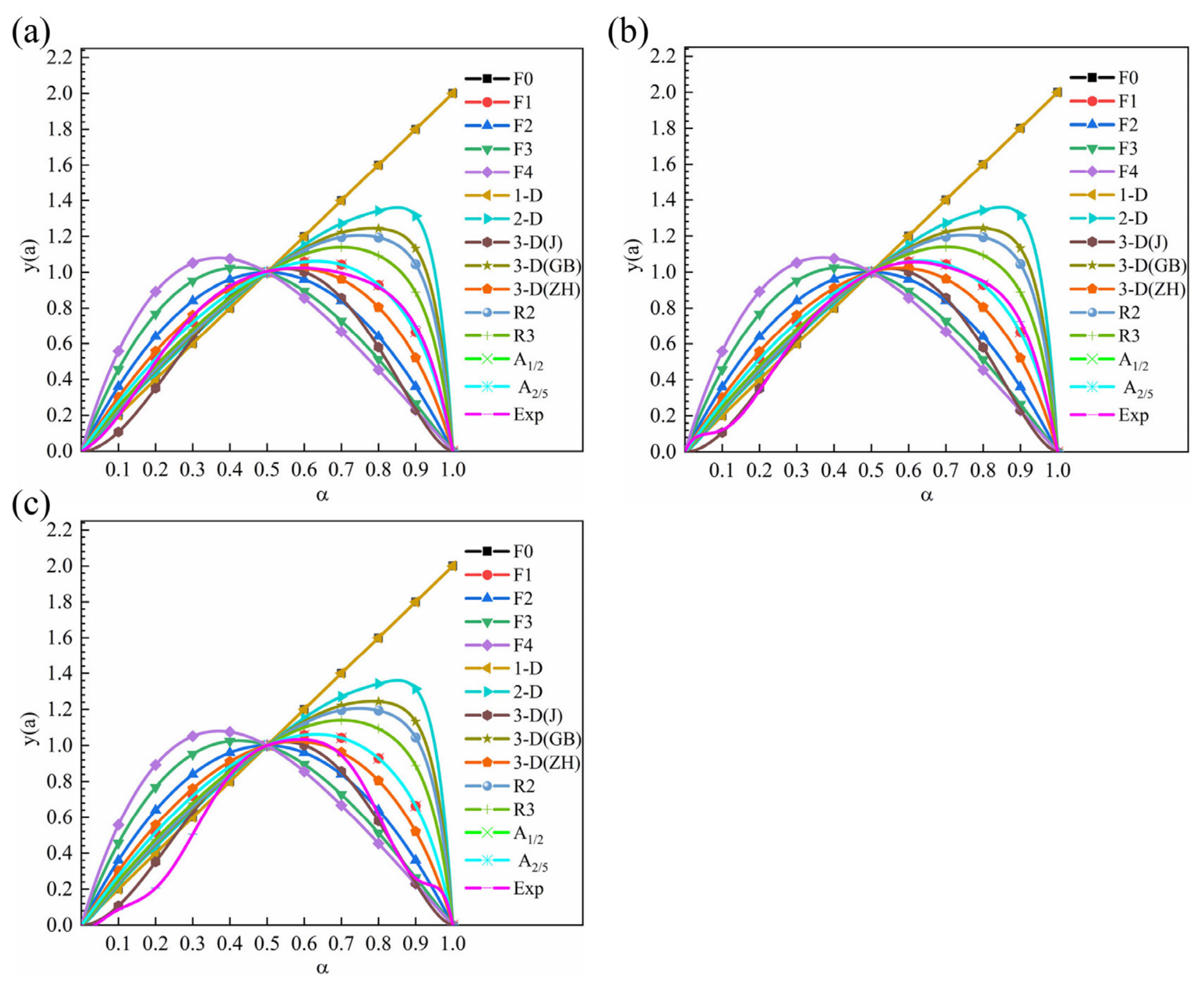
The reaction mechanism functions of HSA pyrolysis were further evaluated using the Malek master-plot method and the Coats–Redfern method. A heating rate of 10 °C/min was selected as the representative condition for comparing the experimental and theoretical master plots, so as to reduce the possible influence of heating-rate variation on model discrimination [
31]. The experimental and theoretical y(
α) curves are presented in
Figure 7. For TSA and DSA, the experimental y(α) curves were closer to the nucleation-growth-type models than to the reaction-order or diffusion models. This result suggests that the pyrolysis of TSA and DSA may involve the formation of newly decomposed regions within the solid matrix, followed by the growth of these regions as the decomposition proceeds [
32]. In this context, the A-type models should be understood as apparent solid-state reaction models rather than elementary molecular reactions. The A1/2 and A2/5 functions describe nucleation-and-growth-controlled conversion behavior with different apparent growth exponents, reflecting differences in the formation and propagation of reactive regions during thermal degradation.
The MSA sample showed different behavior in the Malek master plot. Its experimental curve was closer to the three-dimensional diffusion model 3-D (ZH), suggesting that diffusion-related resistance contributed more strongly to the pyrolysis of MSA [
33]. This result is consistent with the structural characterization, where MSA exhibited the highest density and the lowest BET specific surface area. The more compact silica-rich framework of MSA may hinder the outward diffusion of volatile products and promote the formation of a residual product layer during the later stage of degradation. Therefore, the Malek analysis indicates that the pyrolysis of MSA cannot be described simply by the same nucleation-growth behavior observed for TSA and DSA.
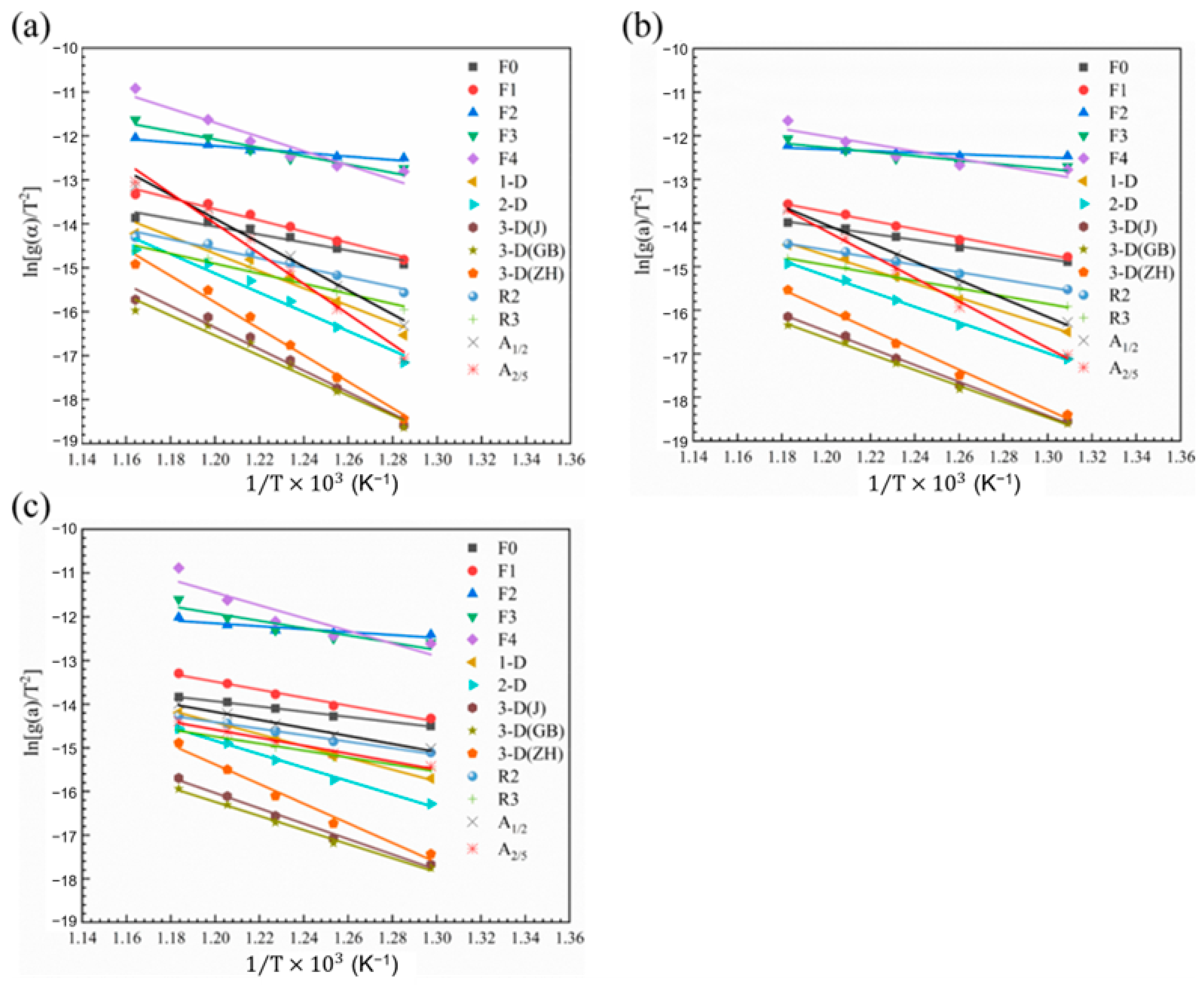
To further determine the most probable reaction mechanism, the Coats–Redfern method was applied in parallel with the Malek analysis.
Figure 8 presents the plots of ln(g(
α)/T
2) versus 1/T for different solid-state reaction models at a heating rate of 10 °C/min. The activation energies calculated from the slopes of the fitted lines are summarized in
Table 3,
Table 4 and
Table 5 for TSA, DSA, and MSA, respectively. The candidate mechanism whose average activation energy at the three heating rates was closest to the values obtained from the KAS and FWO methods was considered the most suitable model for describing the pyrolysis process [
34].
For TSA, the average Ea calculated using the A1/2 model was approximately 238.1 kJ/mol, which was close to the average Ea values obtained by the KAS method (241.4 kJ/mol) and the FWO method (243.0 kJ/mol). Therefore, A1/2 was selected as the apparent reaction model for TSA. This result indicates that the pyrolysis of TSA was mainly associated with random nucleation and subsequent growth of decomposition regions, which is reasonable considering the relatively loose porous network and higher content of methyl-containing surface groups in TSA.
For DSA, the Ea value obtained using the A2/5 model was closer to those obtained by the KAS and FWO methods than the values calculated from the other models. Therefore, A2/5 was selected as the apparent reaction model for DSA. Compared with TSA, DSA contained fewer methyl groups per silicon center and possessed a relatively denser framework. These differences may change the propagation behavior of the decomposed regions during pyrolysis, leading to a different apparent nucleation-growth exponent.
For MSA, the CR analysis also suggested A2/5 as the closest apparent model when the criterion of activation-energy agreement was used. However, this result should not be interpreted as evidence that MSA pyrolysis is governed only by nucleation and growth. The Malek master plot showed stronger agreement with the 3-D diffusion model, indicating that diffusion resistance also played an important role. Therefore, the pyrolysis of MSA is better described as a mixed process: the early and middle stages may involve structural transformation and growth of decomposed regions, whereas the later stage is increasingly affected by volatile diffusion through the denser silica-rich framework and residual product layer. In this sense, A2/5 represents the overall apparent model obtained from CR fitting, while the Malek analysis reveals the diffusion-related contribution in MSA.
Overall, the model-fitting results demonstrate that the pyrolysis of HSAs with different methylsilyl surface structures cannot be reduced to a single elementary reaction. TSA and DSA mainly exhibited nucleation-growth-controlled apparent behavior, whereas MSA showed mixed kinetic features involving both apparent nucleation-growth behavior and diffusion-related resistance. This distinction is consistent with the structural and kinetic results: decreasing methyl substitution from TSA to MSA produced a denser silica-rich framework, which increased the apparent activation energy and enhanced diffusion limitations during the later degradation stage.
2.5. TG-FTIR Analysis of Evolved Gases
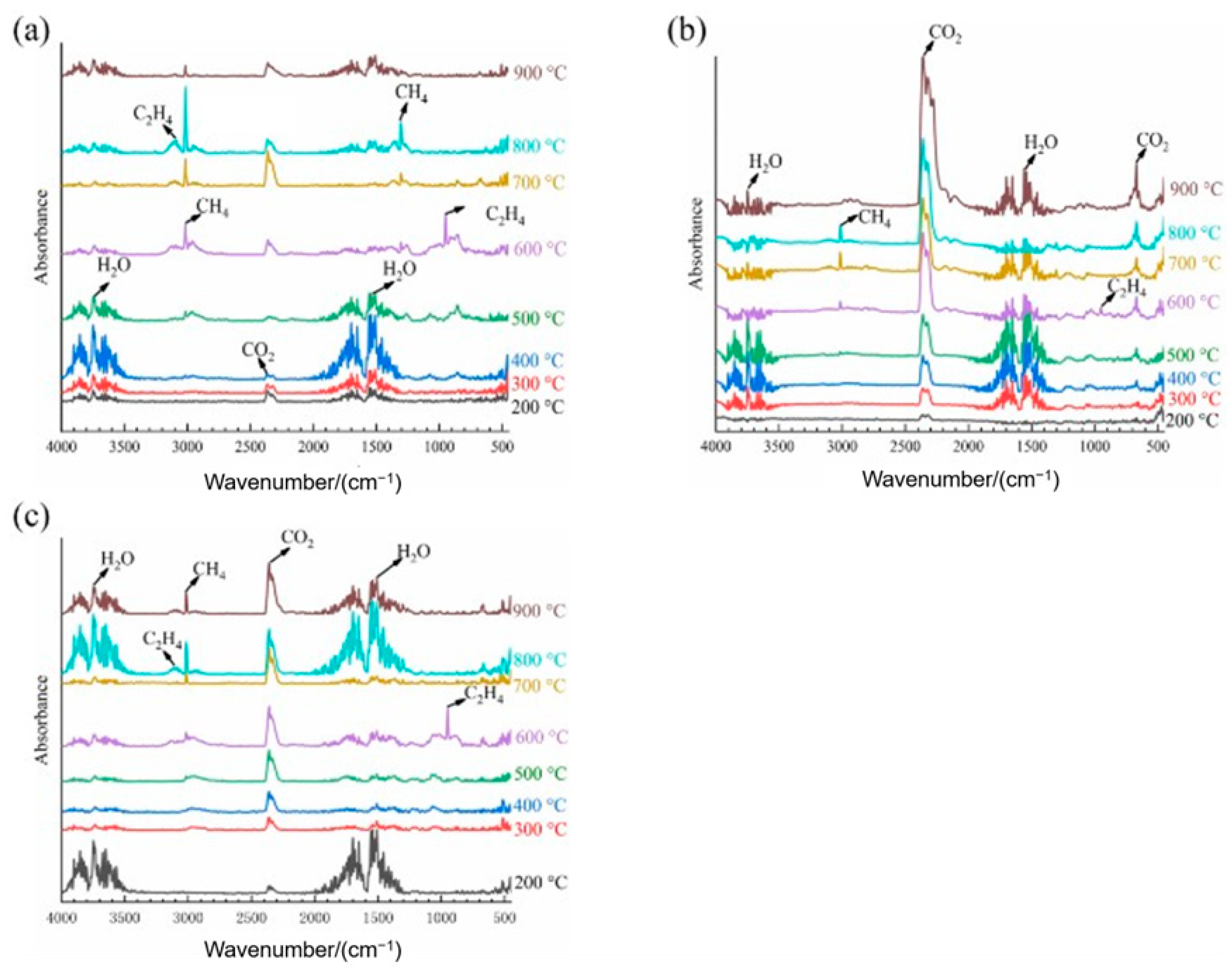
TG-FTIR was used to identify the gaseous products released during the pyrolysis of TSA, DSA, and MSA and to correlate the gas-evolution behavior with the TG/DTG degradation stages. The TG-FTIR measurements were conducted under a helium atmosphere at a heating rate of 10 °C/min. The main evolved gases identified from the FTIR spectra were H
2O, CO
2, CH
4, and C
2H
4, as summarized in
Table 6. These gases were assigned according to their characteristic gas-phase infrared absorption bands [
19,
21,
35]. The H
2O-related bands were mainly associated with O–H stretching and bending vibrations, while CO
2 was identified from its characteristic gas-phase asymmetric stretching absorption. The hydrocarbon products, including CH
4 and C
2H
4, were assigned according to their C–H-related vibration bands. Because gas-phase H
2O and CO
2 absorptions are susceptible to residual atmospheric H
2O/CO
2 in the optical path and gas cell, their evolution profiles were interpreted together with the corresponding TG/DTG curves rather than independently [
36,
37]. In addition, irregular CO
2 and H
2O absorption signals appeared during the whole pyrolysis process, which may be related to background interference or ghost peaks caused by an imbalance in the optical path during testing.
Figure 9 shows the temperature-dependent FTIR absorbance profiles of the main gaseous products during the pyrolysis of the three aerogels. For TSA, the gas-evolution behavior was closely related to the decomposition of trimethylsilyl surface groups. A weak H
2O signal appeared at the low-temperature stage, which can be mainly attributed to the removal of physically adsorbed water and weakly bound hydroxyl-containing species. In the main degradation region, CH
4 and C
2H
4 were detected, indicating that methyl-containing organosilicon groups participated in the pyrolysis process. The formation of these hydrocarbon products can be associated with the cleavage of Si–CH
3 bonds, followed by hydrogen abstraction, recombination, or dehydrogenation reactions of methyl-related fragments [
19,
20,
38,
39]. Therefore, the TG-FTIR results support the assignment of the 250–700 °C region to the main decomposition of organic surface groups. At higher temperatures, the H
2O signal can be partly attributed to condensation reactions between residual hydroxyl-containing sites in the silica-rich framework rather than simple evaporation of physically adsorbed water.
DSA released similar types of gaseous products, but the relative evolution behavior differed from that of TSA. The detection of CH4 and C2H4 confirms that dimethylsilyl-derived groups also decomposed during the main pyrolysis stage. Compared with TSA, DSA contained fewer methyl groups per silicon center and exhibited a relatively denser aerogel framework. These structural differences may reduce the amount of readily releasable hydrocarbon fragments and shift part of the gas evolution to a higher temperature region. Thus, DSA showed intermediate behavior between the methyl-rich TSA and the more silica-rich MSA. This observation is consistent with the TG/DTG and kinetic results, indicating that the modifier structure affects both the decomposition temperature range and the apparent activation energy.
MSA exhibited a more distinct gas-evolution behavior. CH4, C2H4, CO2, and H2O were detected over a relatively broad temperature range, indicating that its pyrolysis involved not only methyl-group decomposition but also high-temperature structural rearrangement of the silica-rich network. Because MSA had the highest density and the lowest BET specific surface area, the diffusion of volatile products through the compact framework may have been more restricted. In addition, the lower methyl content of MSA reduced the contribution of readily decomposable organic groups, while the more condensed silica-rich structure promoted high-temperature network rearrangement and condensation reactions. This can explain the broader gas-release process and the more evident high-temperature H2O evolution observed for MSA.
The TG-FTIR results are consistent with the model-free kinetic analysis. TSA and DSA, which contained more methyl groups in their surface-modification structures, generated hydrocarbon products mainly through the decomposition of methyl-containing organosilicon groups. In contrast, MSA showed higher Ea and broader gas-evolution behavior because of its denser silica-rich framework and lower content of readily decomposable methyl groups. These findings demonstrate that the surface methyl-substitution structure controls not only the pyrolysis resistance of hydrophobic silica aerogels but also the type and release behavior of volatile products. The release of hydrocarbon gases from methyl-containing surface groups is also consistent with previous thermal-hazard and pyrolysis studies of methylsilyl-modified silica aerogels [
10,
13]. It should be noted that TMCS, DMDCS, and MTCS used in this study do not contain Si–H bonds; therefore, Si–H-related absorption was not expected in the solid FTIR spectra.
2.6. Thermodynamic Analysis
To further evaluate the energetic characteristics of HSA pyrolysis, the thermodynamic parameters of TSA, DSA, and MSA were calculated from the apparent activation energies obtained by the KAS and FWO methods. The heating rate of 10 °C/min was selected for this calculation because it provided representative kinetic information and reduced the possible influence of heating-rate-dependent deviations [
38,
40,
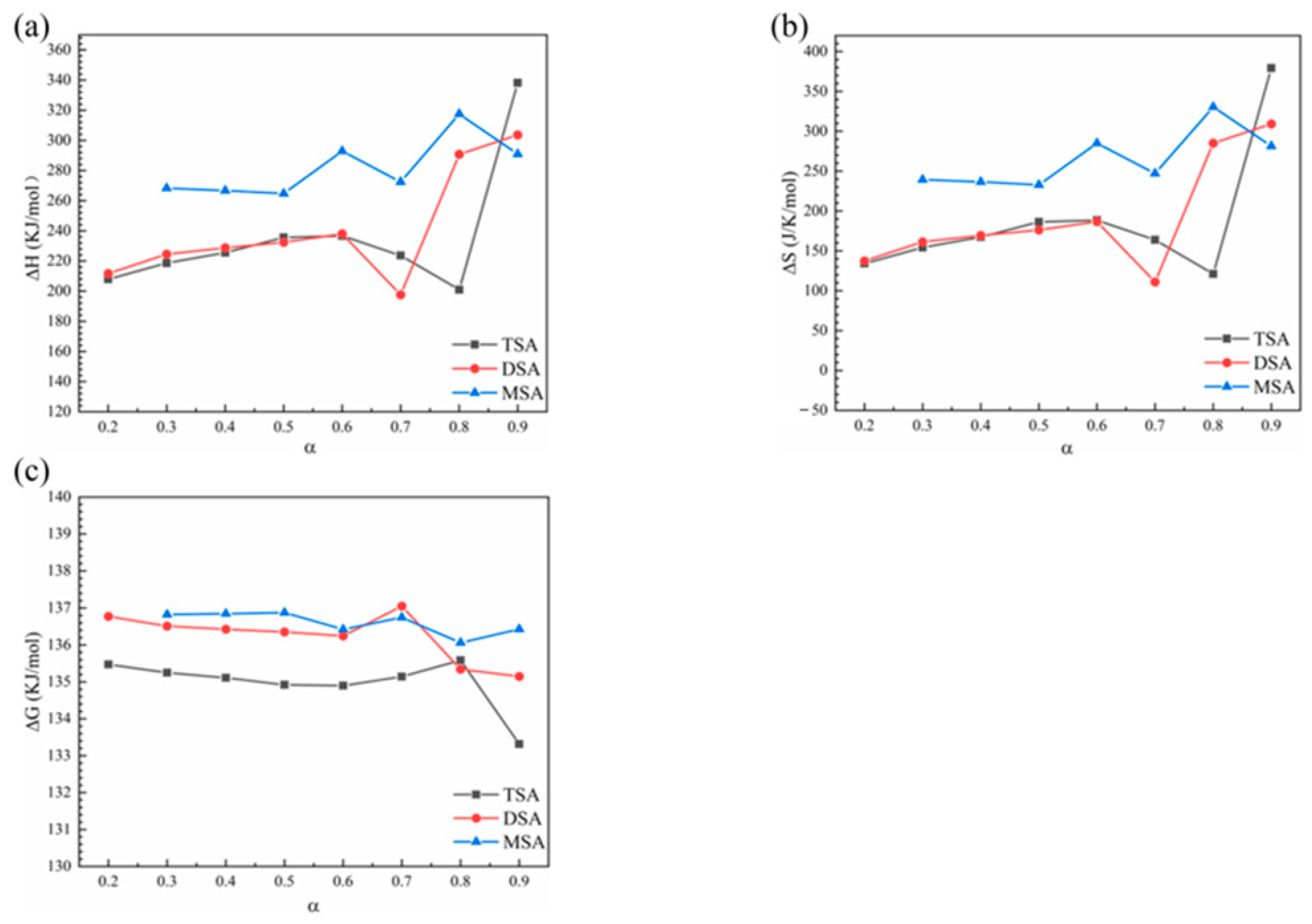
41]. The calculated pre-exponential factor (A), enthalpy change (ΔH), Gibbs free energy change (ΔG), and entropy change (ΔS) are presented in
Figure 10 and
Table 7.
The lnA values varied with conversion for all three aerogels, confirming that their pyrolysis did not proceed through a single elementary reaction. In general, low A values are usually associated with surface-controlled processes, whereas high A values are related to more complex reaction events involving bond cleavage, structural rearrangement, and volatile release [
42]. In this study, the relatively high lnA values and their conversion-dependent variation indicate that the pyrolysis of HSAs involved multiple overlapping processes, which is consistent with the TG/DTG, TG-FTIR, and model-free kinetic results.
The ΔH values show a trend like the apparent activation energies. MSA exhibited generally higher ΔH values than TSA and DSA over most of the conversion range, indicating that more energy was required to drive the main degradation process of the mono-methylsilyl-modified aerogel. This result agrees with the higher Ea values of MSA obtained from the KAS and FWO methods. The higher ΔH of MSA can be attributed to its denser silica-rich framework, lower BET specific surface area, and lower content of readily decomposable methyl groups. These structural features increase the energy demand for organic-group decomposition, volatile diffusion, and framework rearrangement. Previous thermodynamic analyses have suggested that the difference between Ea and ΔH can be used to evaluate the energy requirement for forming activated complexes during thermal degradation [
43,
44]. In the present study, the relatively large energy demand further supports that the pyrolysis of HSAs, especially MSA, is not a facile decomposition process.
The ΔG values changed only slightly among the three samples and across the conversion range investigated. This limited variation indicates that the free-energy requirement for forming activated complexes remained relatively stable during the main pyrolysis process. Therefore, the differences in pyrolysis behavior among TSA, DSA, and MSA were not mainly caused by a large fluctuation in ΔG. Instead, they were more closely associated with differences in ΔH, framework compactness, methyl-group content, and mass-transfer resistance. This interpretation is consistent with the structural characterization and kinetic analysis, where MSA showed the highest density, the lowest specific surface area, and the highest average activation energy.
The ΔS values of the three samples were positive throughout the examined conversion range. This indicates that the pyrolysis process was accompanied by an increase in system disorder. Such an increase can be attributed to the generation and release of gaseous products, cleavage of methyl-containing organosilicon groups, and progressive rearrangement of the silica-based framework. Although condensation and residue formation may locally reduce disorder, the overall positive ΔS values suggest that volatile formation and structural transformation were dominant during the pyrolysis process [
18].
Overall, the thermodynamic results support the kinetic and TG-FTIR analyses. The higher ΔH and Ea values of MSA demonstrate their stronger resistance to the main pyrolysis process, while the relatively stable ΔG values indicate that the formation of activated complexes required a comparable free-energy level among the three aerogels. The positive ΔS values further confirm that pyrolysis involved volatile release and structural reorganization. These results show that the thermodynamic behavior of HSAs is strongly affected by the surface methyl-substitution structure and the compactness of the silica-rich framework.
3. Conclusions
In this study, three ambient-pressure-dried hydrophobic silica aerogels modified with trimethylsilyl, dimethylsilyl, and methylsilyl groups were comparatively investigated to clarify the effect of surface methyl-substitution structure on pyrolysis behavior under a nitrogen atmosphere. The results show that the type of methylsilyl modifier affected not only the surface organic groups but also the pore structure and framework compactness of the aerogels. With decreasing methyl substitution from TSA to MSA, the aerogel framework became denser, the BET specific surface area decreased, and the thermal conductivity increased slightly, indicating a stronger contribution from the solid silica skeleton.
TG/DTG analysis showed that all three aerogels underwent a multistep pyrolysis process, mainly occurring between 250 and 800 °C. The main mass-loss stage was associated with the decomposition and rearrangement of methyl-containing organosilicon groups, while the high-temperature stage was related to further degradation of residual organic groups and structural rearrangement or condensation of the silica-rich framework. TSA and DSA, which contained more methyl groups in their surface-modification structures, exhibited more evident degradation associated with methyl-containing units. In contrast, MSA showed a more compact silica-rich framework, which increased the apparent resistance to the main pyrolysis process.
The model-free kinetic results obtained by the Kissinger–Akahira–Sunose (KAS) and Flynn–Wall–Ozawa (FWO) methods showed consistent trends. The average activation energies of TSA, DSA, and MSA were 241.4, 246.6, and 285.5 kJ/mol by KAS and 243.0, 248.2, and 289.0 kJ/mol by FWO, respectively. The higher activation energy of MSA indicates that the mono-methylsilyl-modified aerogel had the highest apparent resistance to pyrolysis, which can be attributed to its denser silica-rich network and lower content of readily decomposable methyl groups. The decrease in activation energy at high conversion for MSA suggests that most decomposable organic groups had already been consumed and that the later stage was mainly governed by residual structural rearrangement and limited volatile release.
The model-fitting analysis indicated that the pyrolysis behavior of the aerogels could be described by apparent solid-state reaction models rather than a single elementary reaction. TSA was mainly associated with an A1/2-type nucleation-growth model, while DSA and MSA were better described by A2/5-type apparent models. For MSA, the denser framework may also introduce diffusion-related resistance during the later degradation stage, suggesting that its pyrolysis involves mixed kinetic features.
TG-FTIR analysis confirmed the release of H2O, CO2, CH4, and C2H4 during pyrolysis. The hydrocarbon products were mainly derived from the decomposition of methyl-containing surface groups, whereas the high-temperature H2O release was associated with condensation reactions of residual hydroxyl-containing sites in the silica-rich framework. The different gas-evolution profiles of TSA, DSA, and MSA demonstrate that the surface methyl-substitution structure controls both volatile-product formation and pyrolysis resistance. Overall, this study shows that reducing the number of methyl groups in the surface modifier can enhance the apparent pyrolysis resistance of silica aerogels, but it also leads to a denser framework and slightly increased thermal conductivity. These findings provide a basis for selecting surface modifiers for hydrophobic silica aerogel insulation materials used under oxygen-limited or inert high-temperature conditions.
4. Materials and Methods
4.1. Raw Materials
Tetraethoxysilane (TEOS, 98%) was selected as the silica precursor. Ethanol (EtOH, 99.7%) and n-hexane were used as the solvent and solvent-exchange medium, respectively, while hydrochloric acid (HCl, 36.5%) and an ammonia solution (NH3·H2O, 26.5–28.5%) served as the acid and base catalysts. These chemicals were supplied by Sinopharm Chemical Reagent Co., Ltd. (Shanghai, China). Trimethylchlorosilane (TMCS, 98%), dimethyldichlorosilane (DMDCS, 98%), and methyltrichlorosilane (MTCS, 99%) were used for surface modification and were obtained from Shanghai Aladdin Biochemical Technology Co., Ltd. (Shanghai, China).
4.2. Sample Preparation
The hydrophobic silica aerogels were prepared by a sol–gel process followed by solvent exchange, surface modification, and ambient-pressure drying, according to our previously reported method with slight modifications [
45]. Briefly, tetraethoxysilane (TEOS) was used as the silica precursor, ethanol was used as the solvent, and hydrochloric acid and the ammonia solution were used as the acid and base catalysts, respectively. TEOS was first mixed with ethanol, deionized water, and hydrochloric acid to form an acidic sol, which was hydrolyzed in a water bath at 45 °C for 12 h. The ammonia solution was then added to promote gelation, and the obtained wet gels were aged at 45 °C for 3 h.
After gelation and aging, ethanol was added to replace the water in the wet gels. The ethanol exchange was performed for 24 h, and the ethanol was refreshed every 12 h. Subsequently, n-hexane was used to replace ethanol in the gels under the same solvent-exchange procedure. The n-hexane-exchanged wet gels were then subjected to surface modification using trimethylchlorosilane (TMCS), dimethyldichlorosilane (DMDCS), or methyltrichlorosilane (MTCS) in the n-hexane solution for 12 h. The aerogels modified with TMCS, DMDCS, and MTCS were denoted as TSA, DSA, and MSA, respectively.
After surface modification, the gels were dried under ambient pressure to obtain hydrophobic silica aerogels. To remove free moisture before the thermal analysis, the dried samples were further treated in an oven at 120 °C for 2 h. Finally, all samples were ground and sieved to 100 mesh before TG and TG-FTIR measurements to minimize the influence of particle-size differences on the thermal analysis.
4.3. Characterization
The microstructure of the aerogel samples was examined using a field-emission scanning electron microscope (FE-SEM, ZEISS Sigma 300, Oberkochen, Germany). Before observation, the samples were fixed on conductive adhesive tape and coated with a thin conductive layer to reduce charging during electron-beam irradiation.
The apparent density of the aerogels was determined using a tap density tester (ZS-202, Liaoning Instrument Research Institute, Dandong, China). For each measurement, the powdered sample was placed into a 10 mL graduated cylinder and vibrated at 300 rpm for 10 min. The density was calculated from the measured mass and the stabilized volume after tapping. Each sample was measured repeatedly, and the average value was used for comparison.
Nitrogen adsorption–desorption measurements were carried out at 77 K using an automatic surface area and porosity analyzer (AUTOSORB IQ, Quantachrome, Boynton Beach, FL, USA). Before testing, the samples were degassed to remove physically adsorbed species. The specific surface area was calculated using the Brunauer–Emmett–Teller (BET) method, and the pore-size distribution was obtained from the desorption branch using the Barrett–Joyner–Halenda (BJH) method.
The room-temperature thermal conductivity of the aerogels was measured by the transient hot-wire method using a thermal conductivity analyzer (TC3000E, XIATECH, London, England The samples were gently filled into the sample holder to avoid excessive compression, and the measurements were performed under ambient conditions.
The chemical structure of the solid aerogels was characterized using Fourier transform infrared spectroscopy (FTIR, Nicolet 8700, Thermo Fisher/Nicolet, Madison, WI, USA). The spectra were collected over the wavenumber range of 4000–400 cm−1. For the KBr pellet measurements, the aerogel powders were mixed with dried KBr and pressed into transparent pellets before analysis. The obtained spectra were used to identify the Si–O–Si framework and methylsilyl-related surface groups. TG-FTIR was performed under a helium carrier gas.
Thermogravimetric analysis (TG) was performed using a thermal analyzer (SDT Q600, Waters, Milford, MA, USA) at heating rates of 5, 10, and 20 °C/min under a nitrogen atmosphere. TG-FTIR analysis was conducted using a thermogravimetric analyzer coupled with a Fourier transform infrared spectrometer (PerkinElmer TGA8000-FTIR-GCMS-ATD, Waltham, MA, USA). The samples were heated from 30 to 1000 °C, and the evolved gases were transferred to the FTIR gas cell for online analysis. The gas-phase FTIR spectra were recorded in the range of 4000–450 cm−1 with a resolution of 4 cm−1.
4.4. Kinetic Methods and Thermodynamic Analysis
The reaction rate can be expressed as a function of temperature and conversion by the Arrhenius equation:
where
A,
Ea and
refer to the pre-exponential factor, the apparent activation energy and the differential form of reaction mechanism function, respectively.
R is the gas constant,
T is the reaction temperature, and
α refers to conversion degree which can be expressed as follows:
where
,
and
refer to the mass of the initial samples, final samples and samples at time
t, respectively.
There is a linear relationship between reaction temperature and time,
, and the pyrolysis reaction rate can be expressed as follows:
Two model-free methods, KAS and FWO, were chosen to study the kinetic analysis of the pyrolysis of the HSAs, and the expressions are as follows respectively [
38,
46,
47]:
There is a linear relationship between , (KAS), and (FWO) at different heating rates. Ea is obtained by the slope of the line.
Model-fitting methods are usually used to determine the reaction mechanism function. In this study, the method of combining Malek and Coats–Redfern (CR) was used to increase the accuracy of the calculation results [
48,
49].
The Malek method was used to identify the most probable kinetic model by comparing the normalized experimental master plot with the corresponding theoretical curves for different solid-state reaction mechanisms [
50]. The common pyrolysis mechanism functions are summarized in
Table 8. And the expression for
y(
α) is defined as follows:
where the left side of the equation represents the theoretical curve, and the right side represents the experimental curve, and
and
refer to the temperature and reaction rate at
, respectively.
The CR method expression is obtained by introducing
into Equation (3) [
51], and
Ea is obtained by the slope of the line:
To further characterize the energetic features of HSA pyrolysis, the pre-exponential factor (
A), enthalpy change (Δ
H), Gibbs free energy change (Δ
G), and entropy change (Δ
S) were calculated using the following equations:
where
and
are the temperature of the peak value of the DTG curve and conversion rate, respectively;
is the Boltzmann constant,
J/K; and
is the Planck constant,
J·s.