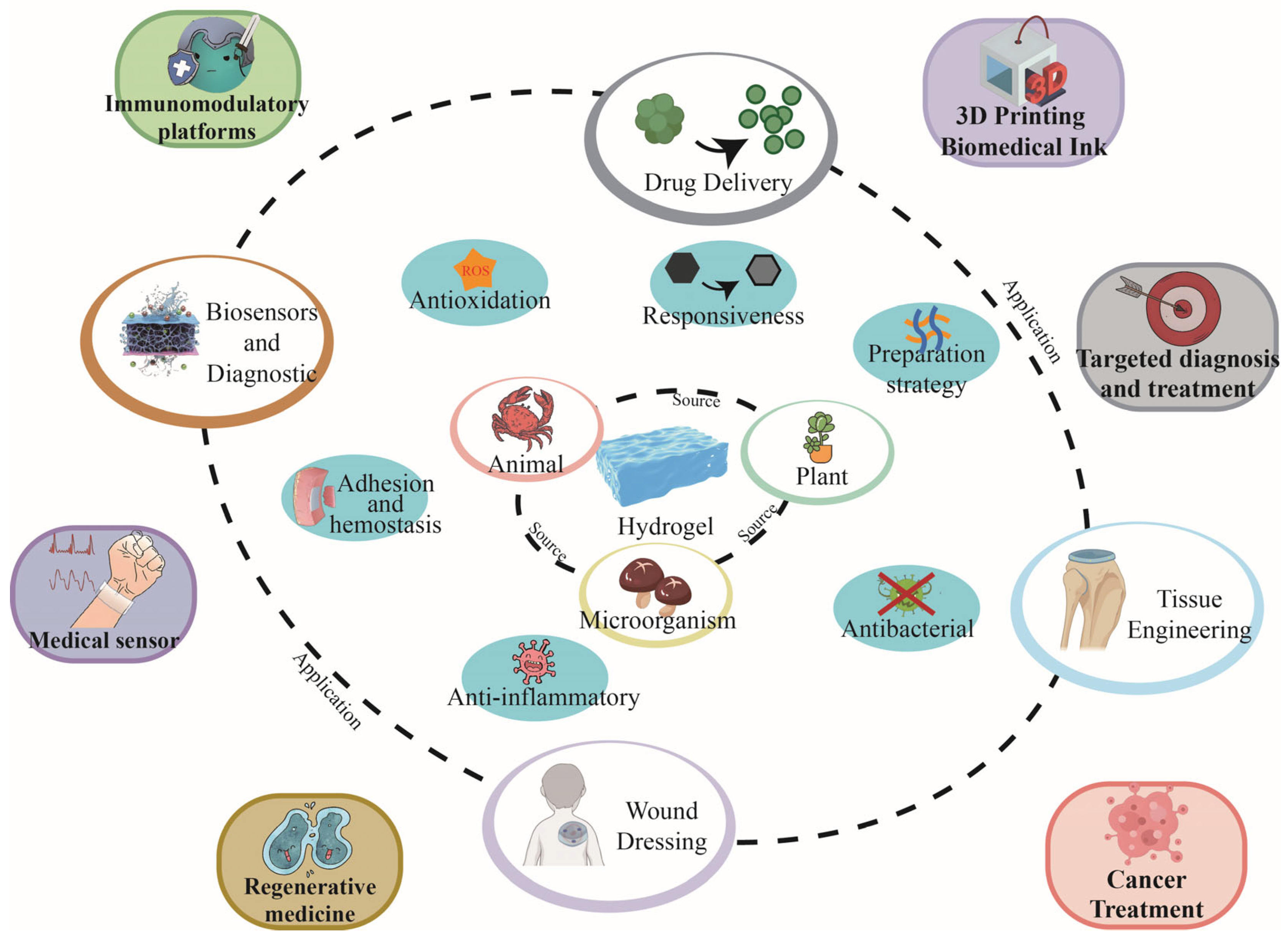

Biomedical Hydrogels Based on Natural Polysaccharides: Structural Design


Abstract
1. Introduction
2. Different Kinds of Natural Polysaccharide-Based Hydrogels
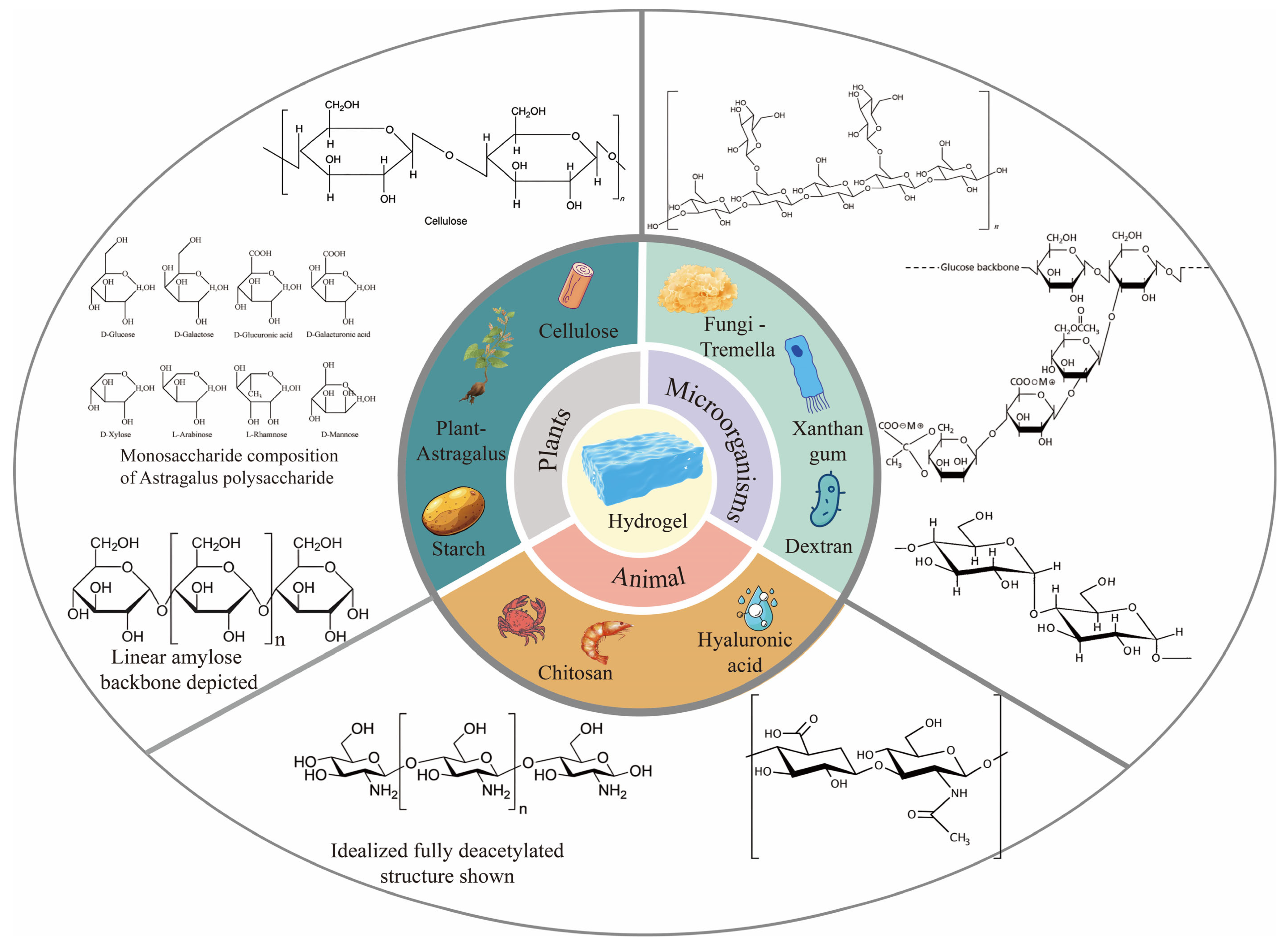
2.1. Plant-Derived Polysaccharide Hydrogels
2.2. Animal-Derived Polysaccharide Hydrogel
2.3. Microbial Polysaccharide Hydrogels
3. Fabrication Techniques
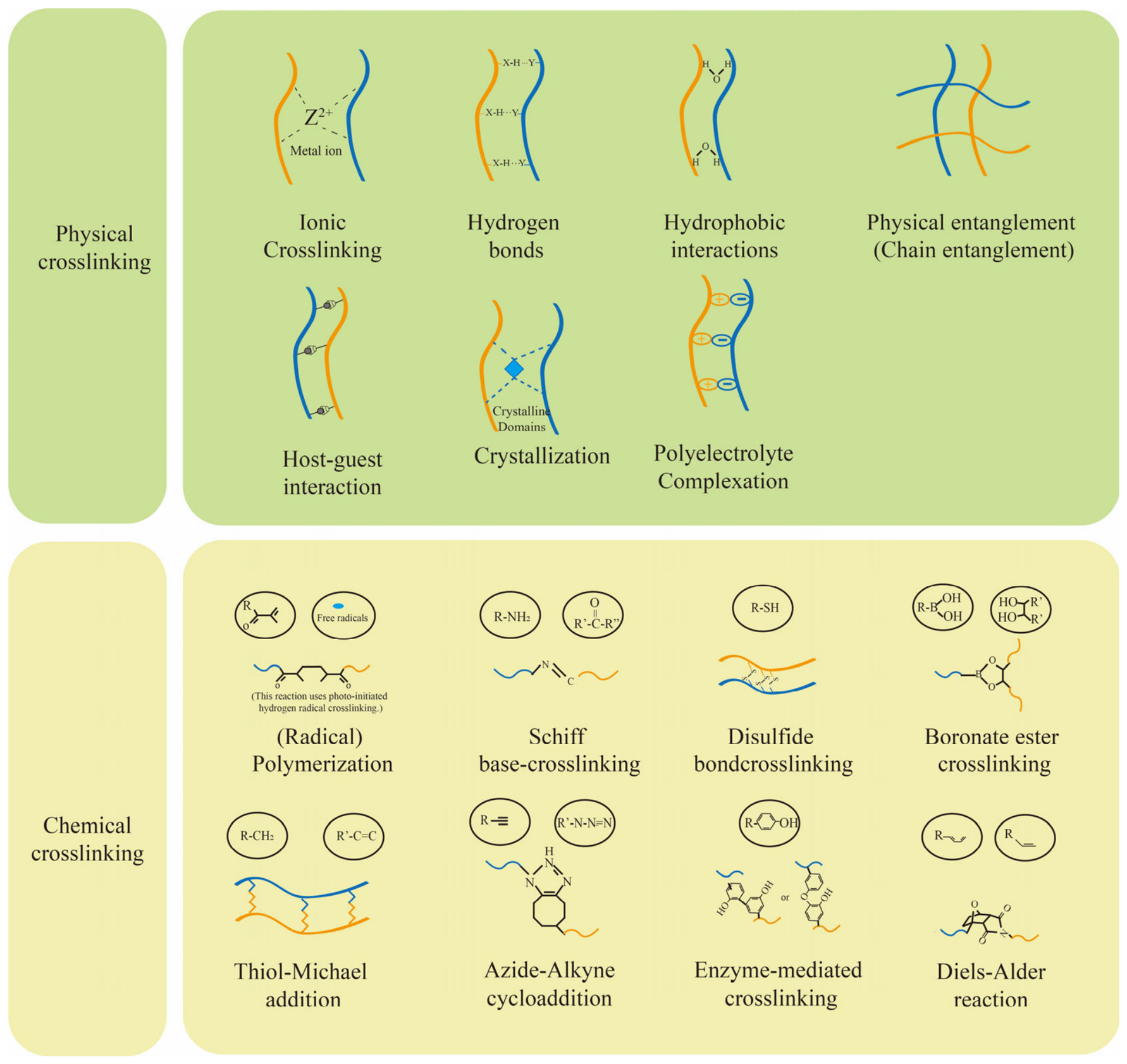
3.1. Physical Cross-Linking
3.2. Chemical Cross-Linking
4. Application of Polysaccharide-Based Hydrogels

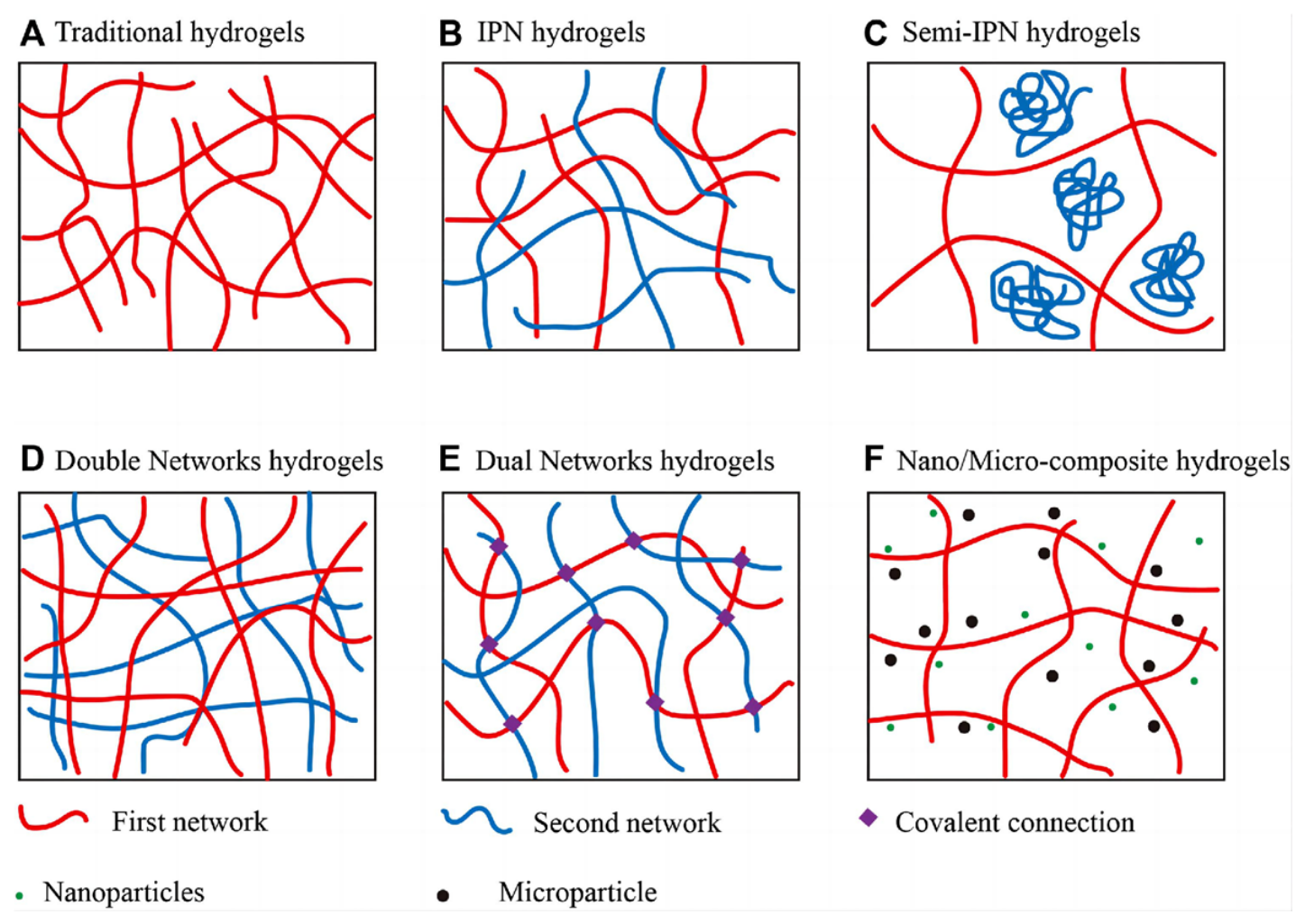
| Cross-Linking Method | Component Parts | Structural Type | Crosslinking Method or Crosslinking Agent | Advantages | Ref. |
|---|---|---|---|---|---|
| Chemical crosslinking | Almond gum | Semi-IPN | N,N′–methylenebisacrylamide | A semi-interpenetrating network is formed through free radical polymerization initiated by REDOX reactions | [59] |
| whey protein isolate/chitosan | Traditional | genipin | It begins to form a gel upon mixing at room temperature, maintaining a high compressive strength while also maintaining a high water retention rate | [66] | |
| borated peach gum and oxime-modified hyaluronic acid. | Double Networks | arginine | Arginine, as a cross-linking agent, further enhanced its biocompatibility and functional performance. | [67] | |
| phenylboronic acid-modified marine-derived sodium alginate | Nano/Micro-composite | gold clusterzyme | It greatly enhances the mechanical properties of the hydrogel, endows the hydrogel with good tissue adhesion, thereby achieving rapid hemostasis, and the crosslinking agent is easy to remove | [68] | |
| Glucan—hyaluronic acid | IPN | Horseradish peroxidase | The reaction conditions are mild, and the mechanical properties can be programmed with horseradish or oxidase/H2O2 ratio | [69] | |
| Physical crosslinking | Amylopectin/polyacrylamide | IPN | A continuous hydrogen bond network | It features extremely high deformation, capable of stretching from less than 0.5 to over 300 cm without breaking, with an elongation rate exceeding 600 times the original length. | [53] |
| Chitosan/alginate | Double Networks | Hydrogen bond, double-ion crosslinking | Hydrogen bonds promote the self-crosslinking of chitosan to produce phase separation, and the first network is constructed in the hydrogel. Dual-ion crosslinking ensures the stability of alginate aggregates and constructs a second network in the hydrogel. | [70] | |
| Gastrodia elata polysaccharides/methacrylic acid gelatin | Dual Networks | Schiff base bonds, photo-crosslinking and hydrogen bonds | The unique multi-cross-linked design not only endows the hydrogel with excellent mechanical properties, but also provides it with rapid antibacterial, antioxidant and hemostatic capabilities. | [71] | |
| Hyaluronic acid/chitosan | Traditional | Hydrazone bonds, disulfide bonds, electrostatic interactions | The formation of different types of reversible interactions enables hyaluronic acid hydrogels to rapidly gel and exhibit excellent self-healing capabilities, achieving complete healing within one hour. | [72] | |
| Tamarind seed polysaccharide and sodium alginate | Double Networks | Physical cross-linking and enzymatic covalent cross-linking | By leveraging the complementary synergy of two networks with different properties, we can overcome the performance limitations of a single network. | [73] |
| Polysaccharide | Source | Functional Groups | Advantages | Potential Properties | Ref. |
|---|---|---|---|---|---|
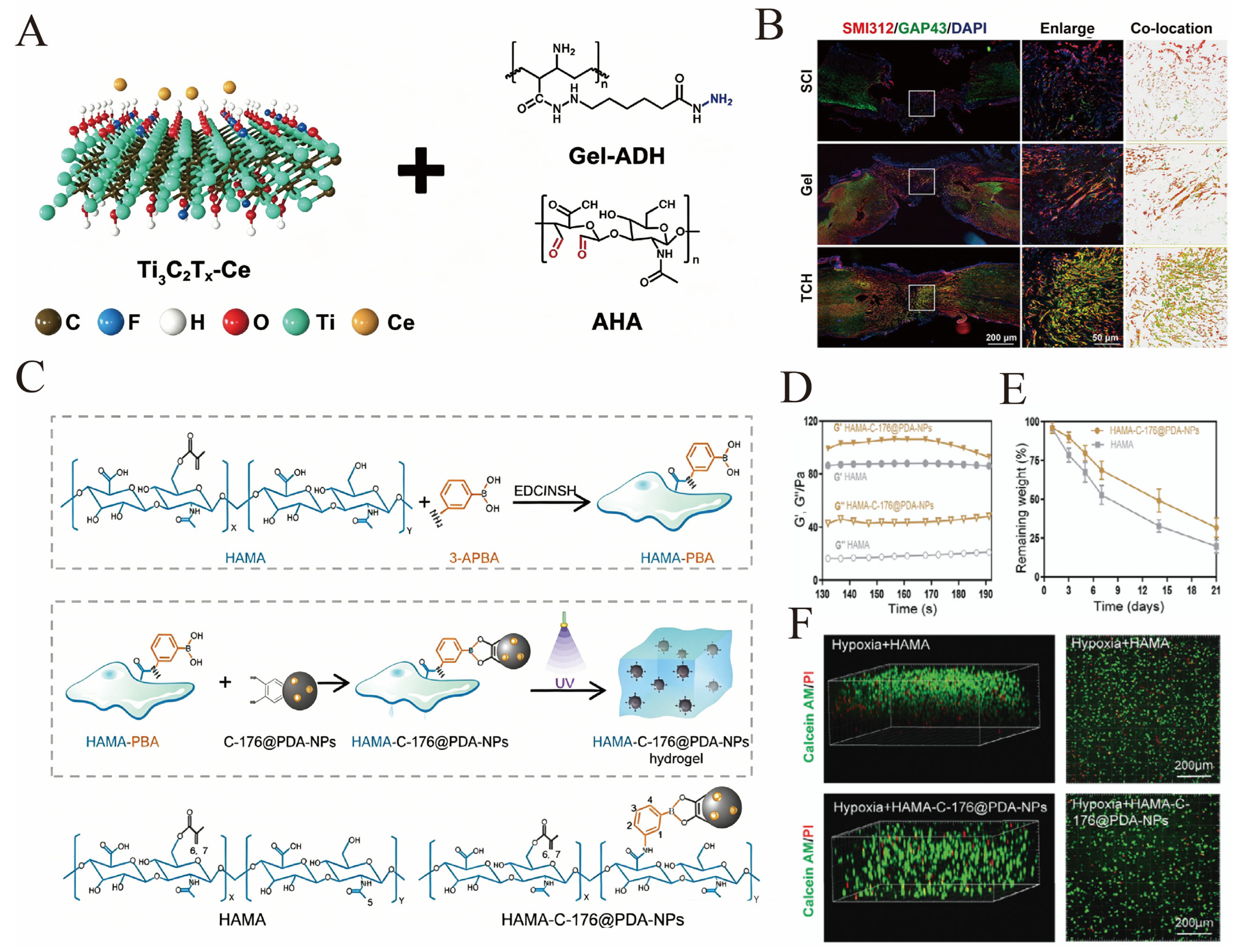
| Tissue engineering and regenerative medicine | Hyaluronic acid | -OH; -COOH | It overcomes the rejection reaction of cells to polysaccharide-based scaffolds, promotes cell adhesion and aggregation, and enhances the interaction between cells and cytosol. | Regulate the immune microenvironment and create a regenerative microenvironment. | [72] |
| Hydroxyethyl starch | -OH; -CHO | The mechanical properties can be adjusted by regulating the aldehyde-amine ratio. | It can be used for soft tissue adhesion, hemostasis and wound healing | [74] | |
| Chitosan | -OH; -NH2 | Abundant hydroxyl groups form strong hydrogen bonds with water molecules, resulting in a very high water content | It can promote angiogenesis and collagen deposition, minimizing scar formation to the greatest extent. | [75] | |
| Astragalus polysaccharides | -OH | The mechanical span characteristics of continuous gradient hydrogels have been achieved. | It is a bionic scaffold with improved mechanical span, which closely replicates the mechanical heterogeneity of natural osteochondral tissue | [76] | |
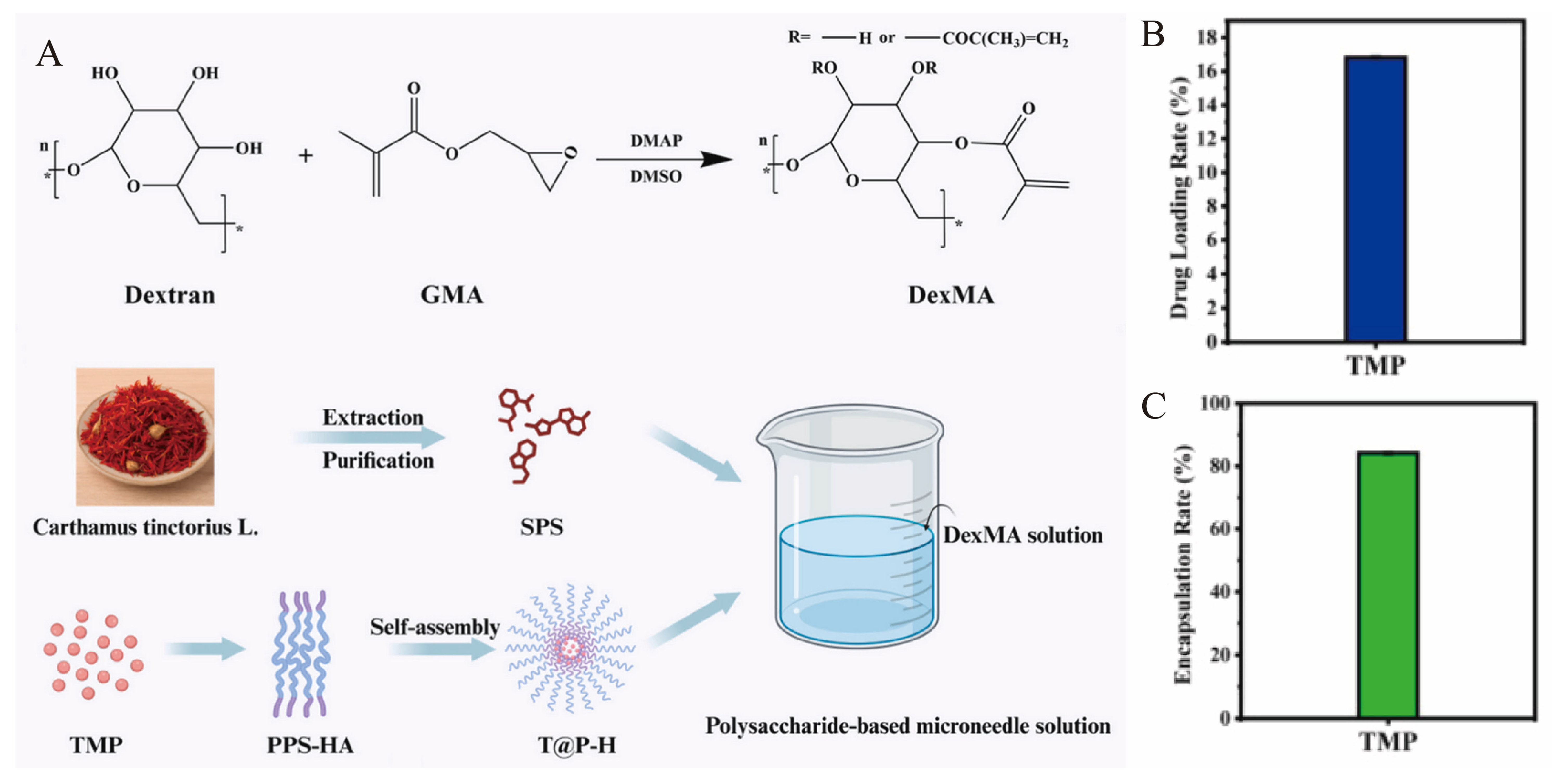
| Drug delivery | Alginate | -COOH; -OH; -CHO | The drug is dispersed in the heat-responsive hydrogel and ROS reactive drug release is achieved. | It can cross the blood–brain barrier and deliver drug components to the brain. | [77] |
| Chitosan | -OH; -NH2 | The hydrogel exhibits self-repairing properties, showing antioxidant and antibacterial properties in response to ph-drug delivery. | It is a biocompatible and stimulus-reactive drug carrier | [78] | |
| Dioscorea opposita Thunb polysaccharide | -OH; -COOH | It can prevent the leakage of loaded drugs and effectively generate the release triggered by glucose | It can be used as an “intelligent” glucose response carrier to control the slow release of drugs. | [79] | |
| Wound Dressing | salecan | -OH | Hydrogels exhibit self-healing, high adhesion and repairable behaviors | This hydrogel promotes the exchange of nutrients, regulates oxygen permeability, and absorbs wound exudate through its porous matrix | [80] |
| Chitosan | -OH; -NH2 | Through the synergistic antibacterial effect of photothermal activation and metal ion coordination | It has achieved a bactericidal effect of over 99% against multi-drug resistant (MDR) bacteria. | [81] | |
| Chitosan | -OH; -NH2 | After absorbing water, it exhibits electrical conductivity and network remodeling properties, and also shows degradability, rapid swelling, excellent antioxidant, adhesive, biocompatibility, photothermal and antibacterial properties. | The compound cryogel hemostatic dressing is used to stop bleeding and further promote wound healing | [82] | |
| Alginate | COOH; -OH | It has anti-inflammatory and pain-relieving activities and is used to treat infectious burn wounds | It not only supports wound closure but also minimizes the risk of infection and complications to the greatest extent | [83] | |
| Biosensors and diagnostics | Tremella aurantialba polysaccharide | -OH; -COOH; -CHO | Hydrogels possess excellent transparency, thermoplasticity and remarkable mechanical properties, including significant elongation and high self-healing rate | It can accurately monitor different human movements through strain sensors. Meanwhile, it maintains excellent sensing stability and durability under repeated strain cycles. | [84] |
| Bletilla striata polysaccharides | -OH | It is a heat-sensitive hemostatic hydrogel that achieves hemostasis within 30 s | It is conducive to the development of minimally invasive hemostasis in vivo and functional hemostatic gels | [85] | |
| Sanghuang polysaccharides | -OH; COOH | The obtained hydrogel has excellent self-healing performance. Meanwhile, SHP endows the hydrogel with antibacterial, anti-inflammatory, ROS clearance and pro-angiogenic functions, and low pH and near-infrared (NIR) irradiation can accelerate the release of sanghuang polysaccharides | Hydrogels accelerate wound healing by enhancing M2 polarization, promoting angiogenesis and reducing inflammation. | [86] | |
| Hyaluronic acid | -OH; -COOH | Significantly increase cell proliferation and improve wound closure | Due to the electroosmotic phenomenon and the amplification and transfer of soluble growth factors, the cell activity was significantly enhanced | [87] |
4.1. Tissue Engineering and Regenerative Medicine

4.2. Drug Delivery
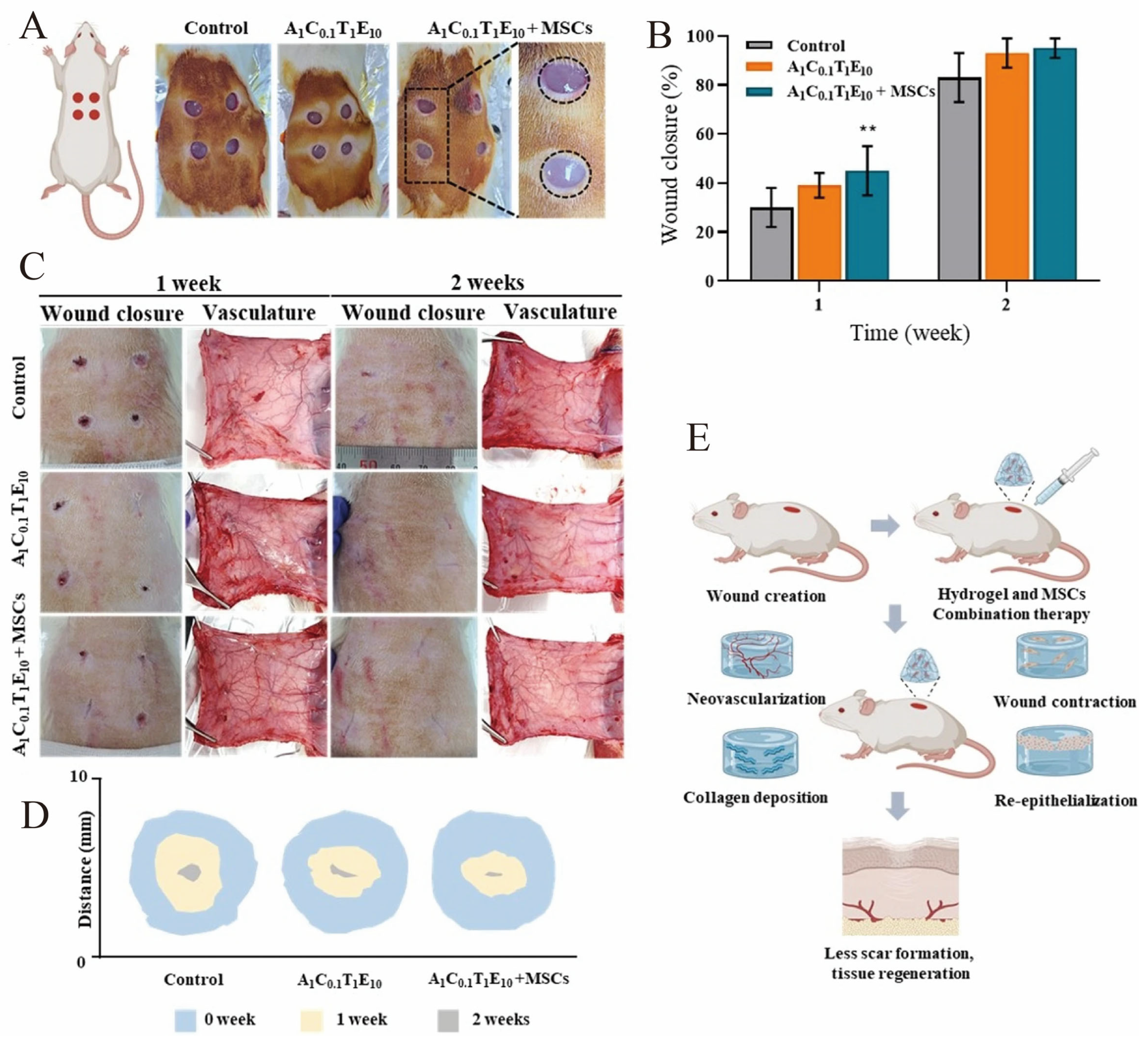
4.3. Wound Dressing
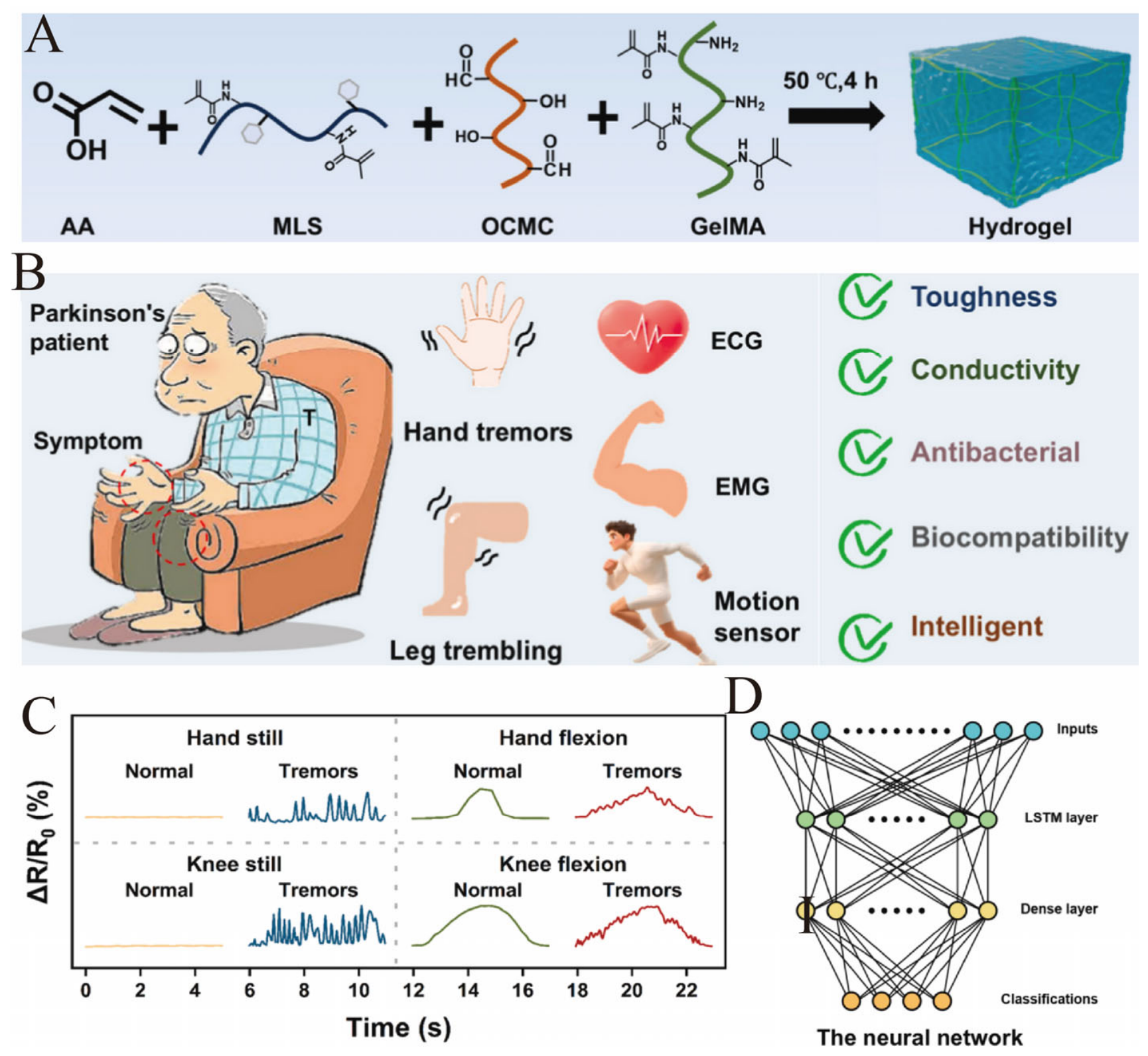
4.4. Biosensors and Diagnostic
5. Conclusions and Future Perspective
Author Contributions
Funding
Data Availability Statement
Acknowledgments
Conflicts of Interest
References
- Ding, X.; Fan, L.; Wang, L.; Zhou, M.; Wang, Y.; Zhao, Y. Designing self-healing hydrogels for biomedical applications. Mater. Horiz. 2023, 10, 3929–3947. [Google Scholar] [CrossRef] [Scilit] [PubMed]
- Cai, Y.; Xu, D.; Chong, Z.E.; Chen, E.S.A.; Gan, S.W.; Bok, A.S.K.; Lu, W.F.; Zhai, W.; Yen, C.-C. Multifunctional composite microgels: From structural design to biomedical applications. Mater. Today Bio 2026, 38, 103127. [Google Scholar] [CrossRef] [Scilit] [PubMed]
- Lin, H.-F.; Wang, Y.-Y.; Liu, F.-Z.; Yang, Z.-W.; Cui, H.; Hu, S.-Y.; Li, F.-H.; Pan, P. Natural Bletilla striata Polysaccharide-Based Hydrogels for Accelerating Hemostasis. Gels 2025, 11, 48. [Google Scholar] [CrossRef] [Scilit] [PubMed]
- He, C.; Liu, R.; Bi, S.; Zhang, L.; Gu, J.; Yan, B. Microenvironment responsive copper-polyphenol nanozyme hybrid hydrogel with NO/O2 release for healing diabetic infected wounds via immunomodulation and angiogenesis. Chem. Eng. J. 2026, 537, 176317. [Google Scholar] [CrossRef] [Scilit]
- Zhang, Y.; Dong, L.; Liu, L.; Wu, Z.; Pan, D.; Liu, L. Recent Advances of Stimuli-Responsive Polysaccharide Hydrogels in Delivery Systems: A Review. J. Agric. Food Chem. 2022, 70, 6300–6316. [Google Scholar] [CrossRef] [Scilit] [PubMed]
- Wang, Y.; Fu, J.; Zou, M.; Xia, P.; Zheng, X.; Huang, X.; Liu, Y.; Yang, P.; Liu, X.; Zhang, D.; et al. Programming the beating heart with polymer catalysis: A therapeutic microenvironment revolution. J. Nanobiotechnol. 2026, 24, 516. [Google Scholar] [CrossRef] [Scilit] [PubMed]
- Yang, J.; Yu, H.; Wang, L.; Liu, J.; Liu, X.; Hong, Y.; Huang, Y.; Ren, S. Advances in adhesive hydrogels for tissue engineering. Eur. Polym. J. 2022, 172, 111241. [Google Scholar] [CrossRef] [Scilit]
- Qi, X.; Zhang, Z.; Xi, J.; Cheng, L.; Li, Y.; Yang, Q.; Sun, Z.; Zhao, T.; Li, X. Self-assembled hydrogels based on natural active ingredients: Mechanisms, applications and characterization. J. Mater. Chem. B 2026, 14, 5184–5211. [Google Scholar] [CrossRef] [Scilit] [PubMed]
- Damiri, F.; Simińska-Stanny, J.; Rasoulian, F.; Pinal, C.; Kaczmarek-Szczepanska, B.; Patel, C.D.; Patel, H.M.; Papadimitirou, S.A.; Jaradat, E.; Paiva-Santos, A.C.; et al. Emerging trends in polysaccharide-based smart PEGylated hydrogels for biomedical applications. Carbohydr. Polym. 2026, 375, 124707. [Google Scholar] [CrossRef] [Scilit] [PubMed]
- Yu, W.; Jin, D.; Zhang, Y.; Wang, S.; Yu, J.; Liu, M.; Dai, Y.; Yin, Y.; Cheng, J.; Liu, Y. Provoking tumor disulfidptosis by single-atom nanozyme via regulating cellular energy supply and reducing power. Nat. Commun. 2025, 16, 4877. [Google Scholar] [CrossRef] [Scilit] [PubMed]
- Tang, P.; Xia, J.; Jiang, S.; Song, H.; Jin, Y.; Chen, J.; Xie, D.; Wu, M.; Li, X.; Lu, Q.; et al. Bimetallic nanozyme-functionalized injectable hydrogel for enhanced therapy for intervertebral disc degeneration. Chem. Eng. J. 2026, 536, 176062. [Google Scholar] [CrossRef] [Scilit]
- Zhang, M.; Ren, Y.; Jiang, X.; Chen, C.; Wu, J.; Kong, X. Hybrid hydrogels of polysaccharides and inorganic nanomaterials: A synergistic combat-engine for drug delivery and tissue regeneration. Mater. Today Chem. 2026, 51, 103304. [Google Scholar] [CrossRef] [Scilit]
- Mohanty, S.; Swarup, J.; Priya, S.; Jain, R.; Singhvi, G. Exploring the potential of polysaccharide-based hybrid hydrogel systems for their biomedical and therapeutic applications: A review. Int. J. Biol. Macromol. 2024, 256, 128348. [Google Scholar] [CrossRef] [Scilit] [PubMed]
- Dong, Y.; Fei, Y.; Hu, Y.; Cai, C.; Li, M.; Luo, Z. Microenvironment engineering with injectable hydrogel-based biofunctional scaffolds for augmenting bone defect regeneration. J. Nanobiotechnol. 2026, 24, 522. [Google Scholar] [CrossRef] [Scilit] [PubMed]
- Dong, Y.; Ghasemzadeh, M.; Khorsandi, Z.; Sheibani, R.; Nasrollahzadeh, M. Starch-based hydrogels for environmental applications: A review. Int. J. Biol. Macromol. 2024, 269, 131956. [Google Scholar] [CrossRef] [Scilit] [PubMed]
- Zöller, K.; To, D.; Bernkop-Schnürch, A. Biomedical applications of functional hydrogels: Innovative developments, relevant clinical trials and advanced products. Biomaterials 2025, 312, 122718. [Google Scholar] [CrossRef] [Scilit] [PubMed]
- Laffargue, T.; Moulis, C.; Remaud-Siméon, M. Phosphorylated polysaccharides: Applications, natural abundance, and new-to-nature structures generated by chemical and enzymatic functionalisation. Biotechnol. Adv. 2023, 65, 108140. [Google Scholar] [CrossRef] [Scilit] [PubMed]
- Dixit, S.S.; Moorthy, G. Pectin in precision medicine for targeted delivery, gene therapy, and cancer immunomodulation: A review. Int. J. Biol. Macromol. 2026, 359, 151816. [Google Scholar] [CrossRef] [Scilit] [PubMed]
- Sun, B.; Zhang, C.; Li, X.; Zhong, L.; Zhang, Z.; Zhou, D. Nanocellulose-based hydrogels for smart sensors. Carbohydr. Polym. 2025, 368, 124152. [Google Scholar] [CrossRef] [Scilit] [PubMed]
- Liu, W.; Jiang, Y.; Shi, J. Effects of selenylation on Chinese yam polysaccharides: Structure, antioxidant, and digestive properties. Food Chem. X 2025, 27, 102435. [Google Scholar] [CrossRef] [Scilit] [PubMed]
- Liao, X.; Lu, J.; Yao, J.; Li, J.; Chen, J.; Liu, J.; Chen, Y. Polysaccharide-based injectable hydrogels for targeted drug delivery: Advances and challenges. Int. J. Pharm. 2026, 690, 126536. [Google Scholar] [CrossRef] [Scilit] [PubMed]
- Liang, Z.; Chen, A.; Lin, H.; Dong, C.; Huang, Q.; Li, L.; Chen, J.; Zhang, W.; Huang, X.; Wang, J.; et al. A facile polysaccharide hydrogel activates PPARγ via the Gut-Kidney axis to ameliorate chronic kidney disease. J. Nanobiotechnol. 2026, 24, 257. [Google Scholar] [CrossRef] [Scilit] [PubMed]
- Sang, Z.; Zhang, W.; Zhou, Z.; Fu, H.; Tan, Y.; Sui, K.; Xia, Y. Functionalized alginate with liquid-like behaviors and its application in wet-spinning. Carbohydr. Polym. 2017, 174, 933–940. [Google Scholar] [CrossRef] [Scilit] [PubMed]
- Yang, J.-J.; Zhang, X.; Dai, J.-F.; Ma, Y.-G.; Jiang, J.-G. Effect of fermentation modification on the physicochemical characteristics and anti-aging related activities of Polygonatum kingianum polysaccharides. Int. J. Biol. Macromol. 2023, 235, 123661. [Google Scholar] [CrossRef] [Scilit] [PubMed]
- Teixeira, F.; Rut, A.; Costa, P.C.; Rodrigues, F.; Estevinho, B.N. Design of Polymeric Delivery Systems for Lycium barbarum Phytochemicals: A Spray Drying Approach for Nutraceuticals. Foods 2025, 14, 3504. [Google Scholar] [CrossRef] [Scilit] [PubMed]
- Li, Y.; Qiu, Y.; Hou, H.; Zhang, G.; Hao, H.; Bi, J. The Preparation and Properties of Amino-Carboxymethyl Chitosan-Based Antibacterial Hydrogel Loaded with ε-Polylysine. Foods 2023, 12, 3807. [Google Scholar] [CrossRef] [Scilit] [PubMed]
- Lombardo, G.; Dorm, B.C.; Salvay, A.G.; Franzi, L.; Gaffney, M.L.; Peredo Camio, J.B.; Trovatti, E.; Rossi, E.; Errea, M.I. Novel chitosan-based hydrogels as promising wound dressing materials with advanced properties. Int. J. Biol. Macromol. 2024, 279, 135423. [Google Scholar] [CrossRef] [Scilit] [PubMed]
- Xie, Y.; Li, G.; Wu, J.; Zhu, J.; Cai, X.; Zhao, P.; Zhang, D.; Zhong, Y. Injectable self-healing alginate/PEG hydrogels cross-linked via thiol-Michael addition bonds for hemostasis and wound healing. Carbohydr. Polym. 2025, 348, 122864. [Google Scholar] [CrossRef] [Scilit] [PubMed]
- Tang, D.-X.; Zhou, S.-Z.; Wang, Z.-J.; Zhang, Y.-L.; Liu, K.; Yang, J.-Y.; Yang, X.-J.; Li, Y.-S.; Zhang, X. Efficiently radiation-induced degradation and extraction of Polygonatum sibiricum polysaccharides and its excellent ROS scavenging properties. Chem. Eng. J. 2025, 505, 159717. [Google Scholar] [CrossRef] [Scilit]
- Wang, L.; Dong, C.; Wang, Q.; Teng, C.; Gao, W.; He, Y.; Liang, J.; Xia, Y.; Kuang, H.; Sun, Y. Polysaccharides from Actinidia Lindl.: Extraction, bioactivities, and emerging applications in food and pharmaceutical industries. Trends Food Sci. Technol. 2025, 165, 105334. [Google Scholar] [CrossRef] [Scilit]
- Chu, Q.; Xie, S.; Wei, H.; Tian, X.; Tang, Z.; Li, D.; Liu, Y. Enzyme-assisted ultrasonic extraction of total flavonoids and extraction polysaccharides in residue from Abelmoschus manihot (L). Ultrason. Sonochem. 2024, 104, 106815. [Google Scholar] [CrossRef] [Scilit] [PubMed]
- Bono, F.; Puiggalí-Jou, A.; Lucherini, L.; Cocchi, G.; Zenobi-Wong, M.; Amstad, E. Enzyme-induced mineralization of calcium carbonate in 3D printable granular hydrogels. Adv. Compos. Hybrid Mater. 2026, 9, 126. [Google Scholar] [CrossRef] [Scilit] [PubMed]
- Lan, X.; Luo, M.; Li, M.; Mu, L.; Li, G.; Chen, G.; He, Z.; Xiao, J. Swim bladder-derived biomaterials: Structures, compositions, properties, modifications, and biomedical applications. J. Nanobiotechnol. 2024, 22, 186. [Google Scholar] [CrossRef] [Scilit] [PubMed]
- Torresan, V.; Gandin, A.; Contessotto, P.; Zanconato, F.; Brusatin, G. Injectable hyaluronic acid-based hydrogel niches to create localized and time-controlled therapy delivery. Mater. Today Bio 2025, 31, 101510. [Google Scholar] [CrossRef] [Scilit] [PubMed]
- Li, Y.; Li, T.; Feng, J.; Liu, B.; Wang, Z.; He, J.; Chen, Z.; Tao, R.; Wang, H.; Fan, K.; et al. Acid-responsive contractile hyaluronic acid-based hydrogel loaded with ginsenoside Rg1 for hemostasis and promotion of gastric wound healing. Biomaterials 2025, 321, 123320. [Google Scholar] [CrossRef] [Scilit] [PubMed]
- Paone, L.S.; Jin, Y.; Bouyer, J.; Fischer, I.; Galie, P.A. Development of a multifunctional, injectable biomaterial using hyaluronan as a bioactive nanocarrier. Biomaterials 2026, 324, 123505. [Google Scholar] [CrossRef] [Scilit] [PubMed]
- Choi, J.; Hwang, D.S.; Lim, C.; Lee, D.W. Interaction mechanism between low molecular weight chitosan nanofilm and functionalized surfaces in aqueous solutions. Carbohydr. Polym. 2024, 324, 121504. [Google Scholar] [CrossRef] [Scilit] [PubMed]
- Qiao, C.; Ma, X.; Wang, X.; Liu, L. Structure and properties of chitosan films: Effect of the type of solvent acid. LWT 2021, 135, 109984. [Google Scholar] [CrossRef] [Scilit]
- Mi, Y.; Zhang, J.; Chen, Y.; Sun, X.; Tan, W.; Li, Q.; Guo, Z. New synthetic chitosan derivatives bearing benzenoid/heterocyclic moieties with enhanced antioxidant and antifungal activities. Carbohydr. Polym. 2020, 249, 116847. [Google Scholar] [CrossRef] [Scilit] [PubMed]
- Firuzeh, M.; Labbaf, S.; Enayati, M.H.; Dinari, M.; Mirhaj, M. Enhanced wound healing with a bilayered multifunctional quaternized chitosan-dextran-curcumin construct. Carbohydr. Polym. 2025, 352, 123195. [Google Scholar] [CrossRef] [Scilit] [PubMed]
- Trombino, S.; Serini, S.; Cassano, R.; Calviello, G. Xanthan gum-based materials for omega-3 PUFA delivery: Preparation, characterization and antineoplastic activity evaluation. Carbohydr. Polym. 2019, 208, 431–440. [Google Scholar] [CrossRef] [Scilit] [PubMed]
- Yan, F.; Xu, Y.; Long, X.; Chen, Q. Ultrasound-enzyme-assisted aqueous two-phase extraction, structural characterization and bioactivities of Coptis chinensis polysaccharides. LWT 2025, 215, 117254. [Google Scholar] [CrossRef] [Scilit]
- Li, D.; Wan Ibadullah, W.Z.; Shukri, R.; Duan, Q.; Gu, Y.; Mustapha, N.A. The Effects of Different Extraction Methods on the Yield, Microstructure, and Antioxidant Activity of Polysaccharides from Rhodomyrtus tomentosa Berry. Food Bioprocess Technol. 2025, 18, 3719–3731. [Google Scholar] [CrossRef] [Scilit]
- Amorim, S.; Reis, C.A.; Reis, R.L.; Pires, R.A. Extracellular Matrix Mimics Using Hyaluronan-Based Biomaterials. Trends Biotechnol. 2021, 39, 90–104. [Google Scholar] [CrossRef] [Scilit] [PubMed]
- Graça, M.F.P.; Miguel, S.P.; Cabral, C.S.D.; Correia, I.J. Hyaluronic acid—Based wound dressings: A review. Carbohydr. Polym. 2020, 241, 116364. [Google Scholar] [CrossRef] [Scilit] [PubMed]
- Chen, S.-K.; Liu, J.-J.; Wang, X.; Luo, H.; He, W.-W.; Song, X.-X.; Nie, S.-P.; Yin, J.-Y. Hericium erinaceus β-glucan/tannic acid hydrogels based on physical cross-linking and hydrogen bonding strategies for accelerating wound healing. Int. J. Biol. Macromol. 2024, 279, 135381. [Google Scholar] [CrossRef] [Scilit] [PubMed]
- Hu, X.; Wang, Y.; Zhang, L.; Xu, M. Formation of self-assembled polyelectrolyte complex hydrogel derived from salecan and chitosan for sustained release of Vitamin C. Carbohydr. Polym. 2020, 234, 115920. [Google Scholar] [CrossRef] [Scilit] [PubMed]
- Wang, P.; Zhang, Q.; Wang, S.; Wang, D.; Yip, R.C.S.; Xie, W.; Chen, H. Injectable Salecan/hyaluronic acid-based hydrogels with antibacterial, rapid self-healing, pH-responsive and controllable drug release capability for infected wound repair. Carbohydr. Polym. 2025, 347, 122750. [Google Scholar] [CrossRef] [Scilit] [PubMed]
- Mahmood, H.; Khan, I.U.; Asif, M.; Khan, R.U.; Asghar, S.; Khalid, I.; Khalid, S.H.; Irfan, M.; Rehman, F.; Shahzad, Y.; et al. In vitro and in vivo evaluation of gellan gum hydrogel films: Assessing the co impact of therapeutic oils and ofloxacin on wound healing. Int. J. Biol. Macromol. 2021, 166, 483–495. [Google Scholar] [CrossRef] [Scilit] [PubMed]
- Prateeksha; Sharma, V.K.; Liu, X.; Oyarzún, D.A.; Abdel-Azeem, A.M.; Atanasov, A.G.; Hesham, A.E.-L.; Barik, S.K.; Gupta, V.K.; Singh, B.N. Microbial polysaccharides: An emerging family of natural biomaterials for cancer therapy and diagnostics. Semin. Cancer Biol. 2022, 86, 706–731. [Google Scholar] [CrossRef] [Scilit] [PubMed]
- Qing, X.; Liu, Z.; Katsaounis, A.; Bouropoulos, N.; Taurino, I.; Fardim, P. Poly(vinyl alcohol)/Pullulan/NaCl Conductive Hydrogels with High Strength and Sensitivity for Wearable Strain Sensors. ACS Appl. Polym. Mater. 2024, 6, 8105–8115. [Google Scholar] [CrossRef] [Scilit]
- Zhang, Z.-F.; Ling, M.-Y.; Ge, X.-R.; Chen, J.-Y.; Zhang, B.; Yao, X.-H.; Song, P.; Zhao, W.-G.; Zhang, D.-Y.; Wang, J. Dual-stage reverse-dialysis-engineered cartilage-biomimetic hydrogels: Highly resilient anti-swelling double-layer architectures. Chem. Eng. J. 2025, 524, 169915. [Google Scholar] [CrossRef] [Scilit]
- Zhao, J.; Chen, R.; Cheng, D.; Yang, X.; Zhang, H.; Zheng, J.; Hu, R. Extremely Ultrahigh Stretchable Starch-Based Hydrogels with Continuous Hydrogen Bonding. Adv. Funct. Mater. 2025, 35, 2415530. [Google Scholar] [CrossRef] [Scilit]
- Wang, Y.; Zhang, Y.; Zhong, H.; Guo, M.; Chen, X.; Lu, Y. Construction of a non-toxic interpenetrating network hydrogel drug carrier supported by carbon microspheres and nanocellulose. Carbohydr. Polym. 2025, 350, 123035. [Google Scholar] [CrossRef] [Scilit] [PubMed]
- Zhu, Y.; Chen, F.; Wu, B.; Tong, Y.; Ning, K.; Zhen, Z.; Chen, J. Supramolecular self-assembly of an herbal fructan and chitosan hydrogel: Analysis of the fructan, gel structures and the molecular interaction mechanisms. Carbohydr. Polym. 2026, 381, 125160. [Google Scholar] [CrossRef] [Scilit] [PubMed]
- Kang, D.-H.; Wang, S.; Goh, M.; Park, J.; Na, H.; Lee, W.-J.; Kim, Y.; Rahman, M.S.; Tae, G.; Yoon, M.-H. Synthesis of Superabsorbent Hydrogels with Predefined Geometries and Controlled Swelling Properties for Versatile 3D Cell Culture Scaffolds. ACS Appl. Mater. Interfaces 2024, 16, 3031–3041. [Google Scholar] [CrossRef] [Scilit] [PubMed]
- Dave, P.N.; Bamaniya, S.; Singh, P. Synthesis, characterization, and reinforcement effect of graphene oxide on rheological behaviour of gum acacia-grafted-poly(N,N-dimethylacrylamide) hydrogels. Int. J. Biol. Macromol. 2026, 357, 151625. [Google Scholar] [CrossRef] [Scilit] [PubMed]
- Syed Ahamed Hussain, I.; Jaisankar, V. An eco-friendly synthesis, characterization and antibacterial applications of novel almond gum—poly(acrylamide) based hydrogel silver nanocomposite. Polym. Test. 2017, 62, 154–161. [Google Scholar] [CrossRef] [Scilit]
- Leite, A.C.; Vicente, A.A.; Pereira, R.N.; Mendes, C.; Rodrigues, R.M. Production and characterization of potato protein-based cryogels produced by different gelation mechanisms. Food Hydrocoll. 2026, 178, 112658. [Google Scholar] [CrossRef] [Scilit]
- Hu, X.; Zeng, F.; Yang, Y.; Hao, B.; Sun, L.; Wang, T.; Liu, J.; Xu, H. Injectable enzyme-crosslinking antioxidant hydrogel for stem cells protection and application in skeletal muscle regeneration. Chem. Eng. J. 2025, 503, 158135. [Google Scholar] [CrossRef] [Scilit]
- Yan, Y.; Lv, S.; Qiang, Y.; She, J.; Cao, X.; He, T.; Liu, L. Fabrication of CA–K+/P(AM–MBA)/AgNPs–K+ hydrogel with ion-electron synergistic conduction and ion-covalent dual-network enhancement and its flexible sensing performance. Carbohydr. Polym. 2026, 381, 125218. [Google Scholar] [CrossRef] [Scilit] [PubMed]
- Torabi Rahvar, P.; Abdekhodaie, M.J.; Jooybar, E.; Gantenbein, B. An enzymatically crosslinked collagen type II/hyaluronic acid hybrid hydrogel: A biomimetic cell delivery system for cartilage tissue engineering. Int. J. Biol. Macromol. 2024, 279, 134614. [Google Scholar] [CrossRef] [Scilit] [PubMed]
- Zhang, W.; Liu, S.; Wang, L.; Li, B.; Xie, M.; Deng, Y.; Zhang, J.; Zeng, H.; Qiu, L.; Huang, L.; et al. Triple-crosslinked double-network alginate/dextran/dendrimer hydrogel with tunable mechanical and adhesive properties: A potential candidate for sutureless keratoplasty. Carbohydr. Polym. 2024, 344, 122538. [Google Scholar] [CrossRef] [Scilit] [PubMed]
- Tavakoli, M.; Zare, F. Electron beam crosslinked PVA/PAM/GO/SA hydrogel for high-efficiency solar desalination: Synergistic design and performance optimization. Sol. Energy Mater. Sol. Cells 2026, 295, 113980. [Google Scholar] [CrossRef] [Scilit]
- Zhu, S.; Li, Y.; He, Z.; Ji, L.; Zhang, W.; Tong, Y.; Luo, J.; Yu, D.; Zhang, Q.; Bi, Q. Advanced injectable hydrogels for cartilage tissue engineering. Front. Bioeng. Biotechnol. 2022, 10, 954501. [Google Scholar] [CrossRef] [Scilit] [PubMed]
- Liu, Z.; Liu, C.; Sun, X.; Zhang, S.; Yuan, Y.; Wang, D.; Xu, Y. Fabrication and characterization of cold-gelation whey protein-chitosan complex hydrogels for the controlled release of curcumin. Food Hydrocoll. 2020, 103, 105619. [Google Scholar] [CrossRef] [Scilit]
- Xuan, H.; Liu, Z.; Lu, K.; Chen, Y.; Gu, H.; Li, B.; Sun, J.; Jin, Y.; Yang, Y.; Yuan, H. Immunomodulatory hydrogel reprograms IL-17/NF-κB signaling to drive regeneration in diabetic wounds. Mater. Today Bio 2026, 37, 102890. [Google Scholar] [CrossRef] [Scilit] [PubMed]
- Wang, T.; Wen, M.; Li, N.; Zhang, L.; Xue, Y.; Shang, L. Marine-Derived Nanozyme-Crosslinked Self-Adaptive Hydrogels for Programmed Regulating the Regeneration Process. Adv. Funct. Mater. 2024, 34, 2405257. [Google Scholar] [CrossRef] [Scilit]
- Hendriks, J.; Zoetebier, B.; Larrea, C.S.; Le, N.X.T.; Saris, D.B.F.; Karperien, M. Gelatin-tyramine addition and low hydrogel density improves cell attachment, migration, and metabolic activity in vitro and tissue response in vivo in enzymatically crosslinkable dextran-hyaluronic acid hydrogels. Int. J. Biol. Macromol. 2024, 259, 128843. [Google Scholar] [CrossRef] [Scilit] [PubMed]
- Wu, C.; Yang, F.; Zhong, H.; Hong, J.; Lin, H.; Zong, M.; Ren, H.; Zhao, S.; Chen, Y.; Shi, Z.; et al. Obesity-enriched gut microbe degrades myo-inositol and promotes lipid absorption. Cell Host Microbe 2024, 32, 1301–1314.e1309. [Google Scholar] [CrossRef] [Scilit] [PubMed]
- Lin, Y.; Lau, H.C.-H.; Liu, C.; Ding, X.; Sun, Y.; Rong, J.; Zhang, X.; Wang, L.; Yuan, K.; Miao, Y.; et al. Multi-cohort analysis reveals colorectal cancer tumor location-associated fecal microbiota and their clinical impact. Cell Host Microbe 2025, 33, 589–601.e583. [Google Scholar] [CrossRef] [Scilit] [PubMed]
- Yang, K.; Yang, J.; Chen, R.; Dong, Q.; Yang, H.; Gu, S.; Zhou, Y. Antibacterial hyaluronic acid hydrogels with enhanced self-healing properties via multiple dynamic bond crosslinking. Int. J. Biol. Macromol. 2024, 256, 128320. [Google Scholar] [CrossRef] [Scilit] [PubMed]
- Du, N.; Chang, Z.; Li, W.; Li, P.; Lei, F.; Yao, X.; Li, J.; Wang, M.; Ma, N.; Jiang, J.; et al. Alcohol-induced and ion-mediated strategy for flexible polysaccharide-based hydrogels with superior evaporative cooling performance. Carbohydr. Polym. 2026, 375, 124758. [Google Scholar] [CrossRef] [Scilit] [PubMed]
- Gan, D.; Jiang, Y.; Hu, Y.; Wang, X.; Wang, Q.; Wang, K.; Xie, C.; Han, L.; Lu, X. Mussel-inspired extracellular matrix-mimicking hydrogel scaffold with high cell affinity and immunomodulation ability for growth factor-free cartilage regeneration. J. Orthop. Transl. 2022, 33, 120–131. [Google Scholar] [CrossRef] [Scilit] [PubMed]
- Liu, J.; Li, J.; Yu, F.; Zhao, Y.-x.; Mo, X.-m.; Pan, J.-f. In situ forming hydrogel of natural polysaccharides through Schiff base reaction for soft tissue adhesive and hemostasis. Int. J. Biol. Macromol. 2020, 147, 653–666. [Google Scholar] [CrossRef] [Scilit] [PubMed]
- Xing, D.; Du, Y.; Dai, K.; Lang, S.; Bai, Y.; Liu, G. Polysaccharide-Based Injectable Hydrogel Loaded with Quercetin Promotes Scarless Healing of Burn Wounds by Reducing Inflammation. Biomacromolecules 2024, 25, 7529–7542. [Google Scholar] [CrossRef] [Scilit] [PubMed]
- Xu, D.; Qiao, T.; Zhou, Y.-M.; Wu, X.-Y.; Cui, Y.-L. A brain-targeted and ROS-responsive natural polysaccharide nanogel for enhancing antidepressant therapy. Chem. Eng. J. 2025, 507, 160719. [Google Scholar] [CrossRef] [Scilit]
- Jeong, J.-p.; Kim, K.; Oh, E.; Park, S.; Jung, S. Self-Healing Hydrogels with Intrinsic Antioxidant and Antibacterial Properties Based on Oxidized Hydroxybutanoyl Glycan and Quaternized Carboxymethyl Chitosan for pH-Responsive Drug Delivery. Gels 2025, 11, 169. [Google Scholar] [CrossRef] [Scilit] [PubMed]
- Liu, W.; Wang, X.; Fan, X.; Zhou, D.; Hu, W.; Liu, X.; Zhu, J. Glucose-Triggered Release of trans-N-p-Coumaroyltyramine from Zeolitic Imidazolate Framework-8 (ZIF8) Modified with Dioscorea opposita Thunb Polysaccharide. Langmuir 2023, 39, 9069–9077. [Google Scholar] [CrossRef] [Scilit] [PubMed]
- Deng, K.; Huang, Q.; Yan, X.; Dai, Y.; Zhao, J.; Xiong, X.; Wang, H.; Chen, X.; Chen, P.; Liu, L. Facile fabrication of a novel, photodetachable salecan-based hydrogel dressing with self-healing, injectable, and antibacterial properties based on metal coordination. Int. J. Biol. Macromol. 2024, 264, 130551. [Google Scholar] [CrossRef] [Scilit] [PubMed]
- Chen, S.; Hou, Z.; Xiao, M.; Wu, P.; Yang, Y.; Han, S.; Xia, J.; Hu, J.; Zhang, K.; Yang, L. Quaternized chitosan-based photothermal antibacterial hydrogel with pro-vascularization and on-demand degradation properties for enhanced infected wound healing. Carbohydr. Polym. 2025, 355, 123350. [Google Scholar] [CrossRef] [Scilit] [PubMed]
- Luo, J.; Wu, Z.; Zhao, X.; Qiao, L.; Huang, Y.; Chen, J.; Shan, Y.; Deng, Z.; Liang, Z.; Han, Y.; et al. Network-Remodeling, Electroactive and Antibacterial Cryogel with Tissue Sealing and Pro-Coagulant Activity for Hemostasis and Skin Wound Healing. Adv. Funct. Mater. 2025, 35, 2419037. [Google Scholar] [CrossRef] [Scilit]
- Han, X.; Lu, T.; Zhang, Z.; Wang, H.; Lu, S. Tremella polysaccharide-based conductive hydrogel with anti-freezing and self-healing ability for motion monitoring and intelligent interaction. Int. J. Biol. Macromol. 2023, 248, 125987. [Google Scholar] [CrossRef] [Scilit] [PubMed]
- Yan, X.; Chen, Y.; Dan, N.; Dan, W. A novel thermosensitive growth-promoting collagen fibers composite hemostatic gel. J. Mater. Chem. B 2022, 10, 4070–4082. [Google Scholar] [CrossRef] [Scilit] [PubMed]
- Wang, S.; Fu, Q.; Cen, W.; Su, Z.; Jin, W.; Yu, Z.; Xu, S. A multifunctional hydrogel based on Sanghuang polysaccharides and MXene for infected wound healing. Chem. Eng. J. 2025, 505, 159563. [Google Scholar] [CrossRef] [Scilit]
- Shakibi, R.; Khayamian, M.A.; Abadijoo, H.; Dashtianeh, M.; Kolahdouz, M.; Daemi, H.; Abdolmaleki, P. Enhancing cell activities through integration of polyanionic alginate or hyaluronic acid derivatives with triboelectric nanogenerators. Carbohydr. Polym. 2024, 346, 122629. [Google Scholar] [CrossRef] [Scilit] [PubMed]
- Wu, J.; Xue, W.; Yun, Z.; Liu, Q.; Sun, X. Biomedical applications of stimuli-responsive “smart” interpenetrating polymer network hydrogels. Mater. Today Bio 2024, 25, 100998. [Google Scholar] [CrossRef] [Scilit] [PubMed]
- Wu, D.; Lin, Q.; Wang, Z.; Huang, H.; Song, X.; Gao, Y.; Yang, X.; Wen, K.; Sun, X. Mechanism of Xue-Jie-San treating Crohn’s disease complicated by atherosclerosis: Network pharmacology, molecular docking and experimental validation. Phytomedicine 2024, 135, 156169. [Google Scholar] [CrossRef] [Scilit] [PubMed]
- Pedro, S.N.; Valente, B.F.A.; Vilela, C.; Oliveira, H.; Almeida, A.; Freire, M.G.; Silvestre, A.J.D.; Freire, C.S.R. Switchable adhesive films of pullulan loaded with a deep eutectic solvent-curcumin formulation for the photodynamic treatment of drug-resistant skin infections. Mater. Today Bio 2023, 22, 100733. [Google Scholar] [CrossRef] [Scilit] [PubMed]
- Wang, W.; Liu, Q.; Lv, A.; Lin, Y.; Chen, J.; Ding, N.; Zhang, C.; Zhou, S.; Yuan, B.; Zhao, W.; et al. Bioactive Conductive Ti3C2Tx-Ce Hydrogel Facilitates Spinal Cord Injury Repair Through ROS Scavenging and Mitochondrial Regulation. Adv. Funct. Mater. 2026, 36, e74612. [Google Scholar] [CrossRef] [Scilit]
- Fang, Y.; Zhang, L.; Chen, Y.; Wu, S.; Weng, Y.; Liu, H. Polysaccharides based rapid self-crosslinking and wet tissue adhesive hemostatic powders for effective hemostasis. Carbohydr. Polym. 2023, 312, 120819. [Google Scholar] [CrossRef] [Scilit] [PubMed]
- Xu, J.; Cui, Y.; Sun, X.; Chen, Z.; Liu, M.; Wang, X.; Li, P.; Fan, Y. Continuous magnetic-gradient hydrogel with augmented mechanical span and reverse-directional polysaccharides distribution for integrated repair of osteochondral defects. Compos. Part B Eng. 2025, 298, 112361. [Google Scholar] [CrossRef] [Scilit]
- Luo, L.; Zhang, S.; Gong, J.; Zhang, J.; Xie, P.; Yin, J.; Zhang, M.; Zhang, C.; Chen, H.; Liu, Y.; et al. 3-D Sustained-Release Culture Carrier Alleviates Rat Intervertebral Disc Degeneration by Targeting STING in Transplanted Skeletal Stem Cells. Adv. Sci. 2025, 12, 2410151. [Google Scholar] [CrossRef] [Scilit] [PubMed]
- Archana, M.; Rubini, D.; Dharshini, K.P.; Hari, B.N.V.; Jayasankari, S.; Ramyadevi, D.; Gonciarz, W.; Domańska, A.; Brzeziński, M.; Nithyanand, P. Development of an anti-infective urinary catheter composed of polyvinyl alcohol/sodium alginate/methylcellulose/polyethylene glycol by using a pressure-assisted 3D-printing technique. Int. J. Biol. Macromol. 2023, 249, 126029. [Google Scholar] [CrossRef] [Scilit] [PubMed]
- Zhong, J.; Tang, Y.; Hu, X.; Deng, X.; Liu, M.; Cao, Y.; Peng, L.; Liu, W.; Liu, X.; Deng, L. Dextran-based microneedle patch Co-delivering safflower polysaccharide and ROS-responsive tetramethylpyrazine micelles for diabetic wound repair. Mater. Today Bio 2026, 37, 102980. [Google Scholar] [CrossRef] [Scilit] [PubMed]
- Fu, W.; Sun, S.; Cheng, Y.; Ma, J.; Hu, Y.; Yang, Z.; Yao, H.; Zhang, Z. Opportunities and challenges of nanomaterials in wound healing: Advances, mechanisms, and perspectives. Chem. Eng. J. 2024, 495, 153640. [Google Scholar] [CrossRef] [Scilit]
- Park, M.; Tripathi, G.; Fahad, M.A.A.; Park, S.-s.; Gwon, J.-G.; Cho, H.; Kim, D.H.; Lee, B.-T. MSCs-loaded injectable multifunctional dSECM hydrogels enhance wound healing through the activation of Wnt signaling pathways. Adv. Compos. Hybrid Mater. 2026, 9, 153. [Google Scholar] [CrossRef] [Scilit]
- Das, I.J.; Bal, T. pH factors in chronic wound and pH-responsive polysaccharide-based hydrogel dressings. Int. J. Biol. Macromol. 2024, 279, 135118. [Google Scholar] [CrossRef] [Scilit] [PubMed]
- Haidari, H.; Vasilev, K.; Cowin, A.J.; Kopecki, Z. Bacteria-Activated Dual pH- and Temperature-Responsive Hydrogel for Targeted Elimination of Infection and Improved Wound Healing. ACS Appl. Mater. Interfaces 2022, 14, 51744–51762. [Google Scholar] [CrossRef] [Scilit] [PubMed]
- Deng, Z.; Guo, Y.; Wang, X.; Song, J.; Yang, G.; Shen, L.; Wang, Y.; Zhao, X.; Guo, B.; Wang, W. Multiple crosslinked, self-healing, and shape-adaptable hydrogel laden with pain-relieving chitosan@borneol nanoparticles for infected burn wound healing. Theranostics 2025, 15, 1439–1455. [Google Scholar] [CrossRef] [Scilit] [PubMed]
- Lin, C.; Yang, M.; Zhang, F.; Liu, Y.; Leng, J. Stimuli-responsive smart materials for biomedical applications. Mater. Sci. Eng. R Rep. 2026, 167, 101126. [Google Scholar] [CrossRef] [Scilit]
- Ma, Z.; Yang, X.; Ma, J.; Lv, J.; He, J.; Jia, D.; Qu, Y.; Chen, G.; Yan, H.; Zeng, R. Development of the mussel-inspired pH-responsive hydrogel based on Bletilla striata polysaccharide with enhanced adhesiveness and antioxidant properties. Colloids Surf. B Biointerfaces 2021, 208, 112066. [Google Scholar] [CrossRef] [Scilit] [PubMed]
- Chen, Y.; Lin, Y.; Liu, Z.; Zhang, Y.; Hu, Z.; Ai, M.; Shen, Y.; Lian, D.; Wang, C.; Liu, X.; et al. ROS-responsive adaptive injectable hydrogel promoting inflammatory mastoid bone repair through efficient sterilization and regulating oxidative stress and macrophage phenotype. Mater. Today Bio 2025, 32, 101856. [Google Scholar] [CrossRef] [Scilit] [PubMed]
- Ding, S.; Yu, X.; Wang, Q.; Luo, P.; Li, H.; Li, Z.; Wang, R.; Liu, H.; He, Y.; Nong, J.; et al. Multifunctional hydrogel sensors with dynamic covalent networks for machine learning-assisted Parkinson’s disease diagnosis and encrypted human-computer interaction. Mater. Today Bio 2025, 35, 102524. [Google Scholar] [CrossRef] [Scilit] [PubMed]
- Ding, A.; Tang, F.; Ayyagari, S.; Alsberg, E. Reprogrammable 4D tissue engineering hydrogel scaffold via reversible ion printing. Bioact. Mater. 2026, 62, 282–293. [Google Scholar] [CrossRef] [Scilit] [PubMed]




Disclaimer/Publisher’s Note: The statements, opinions and data contained in all publications are solely those of the individual author(s) and contributor(s) and not of MDPI and/or the editor(s). MDPI and/or the editor(s) disclaim responsibility for any injury to people or property resulting from any ideas, methods, instructions or products referred to in the content. |
© 2026 by the authors. Licensee MDPI, Basel, Switzerland. This article is an open access article distributed under the terms and conditions of the Creative Commons Attribution (CC BY) license.
Share and Cite
Liu, Z.; Huang, X.; Tong, J.; Zhang, H. Biomedical Hydrogels Based on Natural Polysaccharides: Structural Design. Gels 2026, 12, 578. https://doi.org/10.3390/gels12070578
Liu Z, Huang X, Tong J, Zhang H. Biomedical Hydrogels Based on Natural Polysaccharides: Structural Design. Gels. 2026; 12(7):578. https://doi.org/10.3390/gels12070578
Chicago/Turabian StyleLiu, Zezheng, Xin Huang, Jinjin Tong, and Hua Zhang. 2026. "Biomedical Hydrogels Based on Natural Polysaccharides: Structural Design" Gels 12, no. 7: 578. https://doi.org/10.3390/gels12070578
APA StyleLiu, Z., Huang, X., Tong, J., & Zhang, H. (2026). Biomedical Hydrogels Based on Natural Polysaccharides: Structural Design. Gels, 12(7), 578. https://doi.org/10.3390/gels12070578