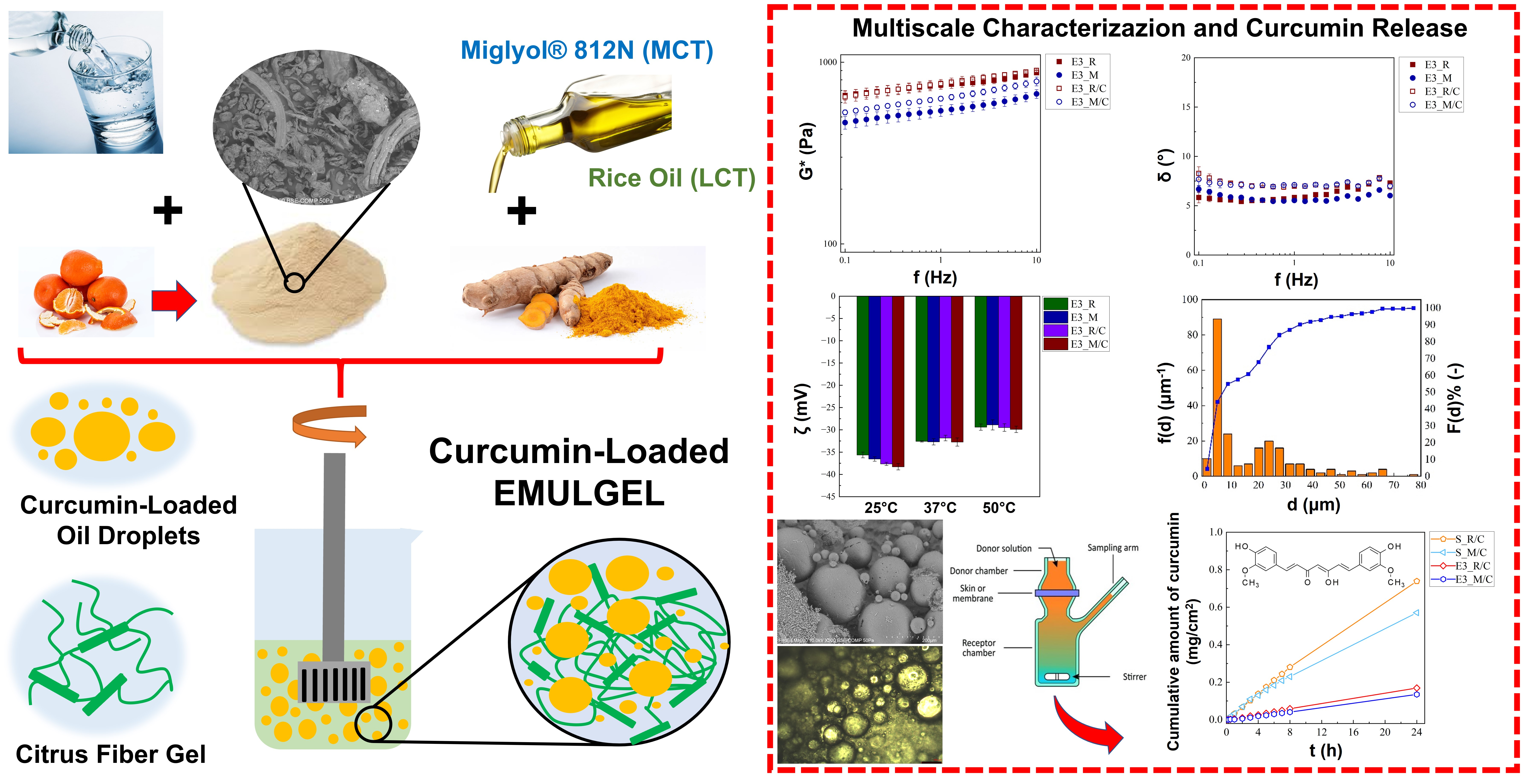

Structure–Function Relationship in Citrus-Fiber-Based Emulgels for Controlled Curcumin Delivery

 ,
,  , and
, and 
Abstract
1. Introduction
2. Results and Discussion
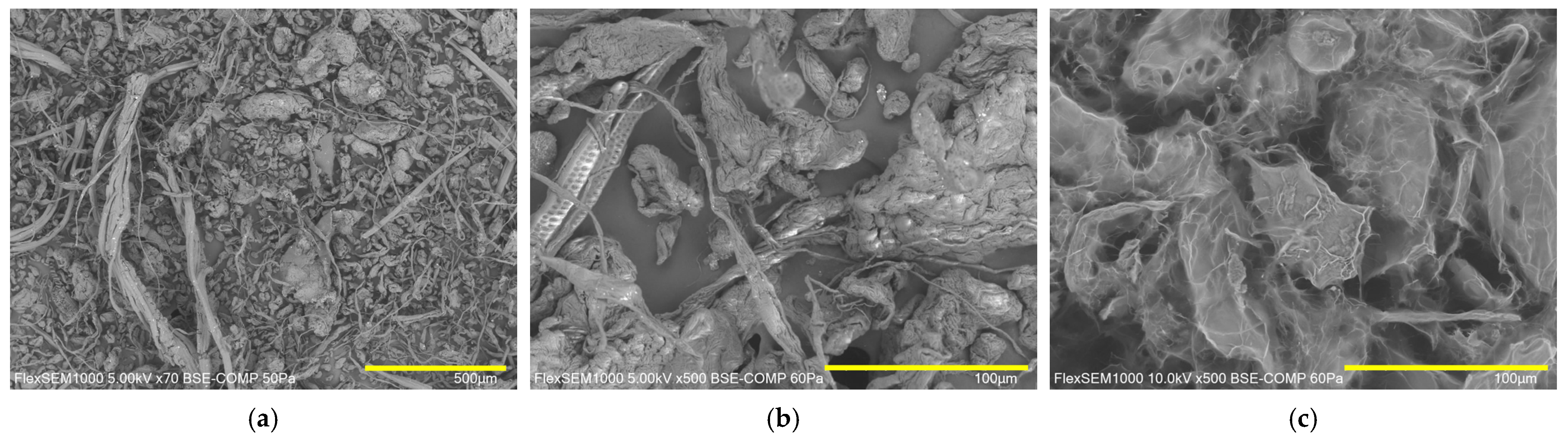
2.1. Physical and Functional Properties and Morphology of Citrus Fiber
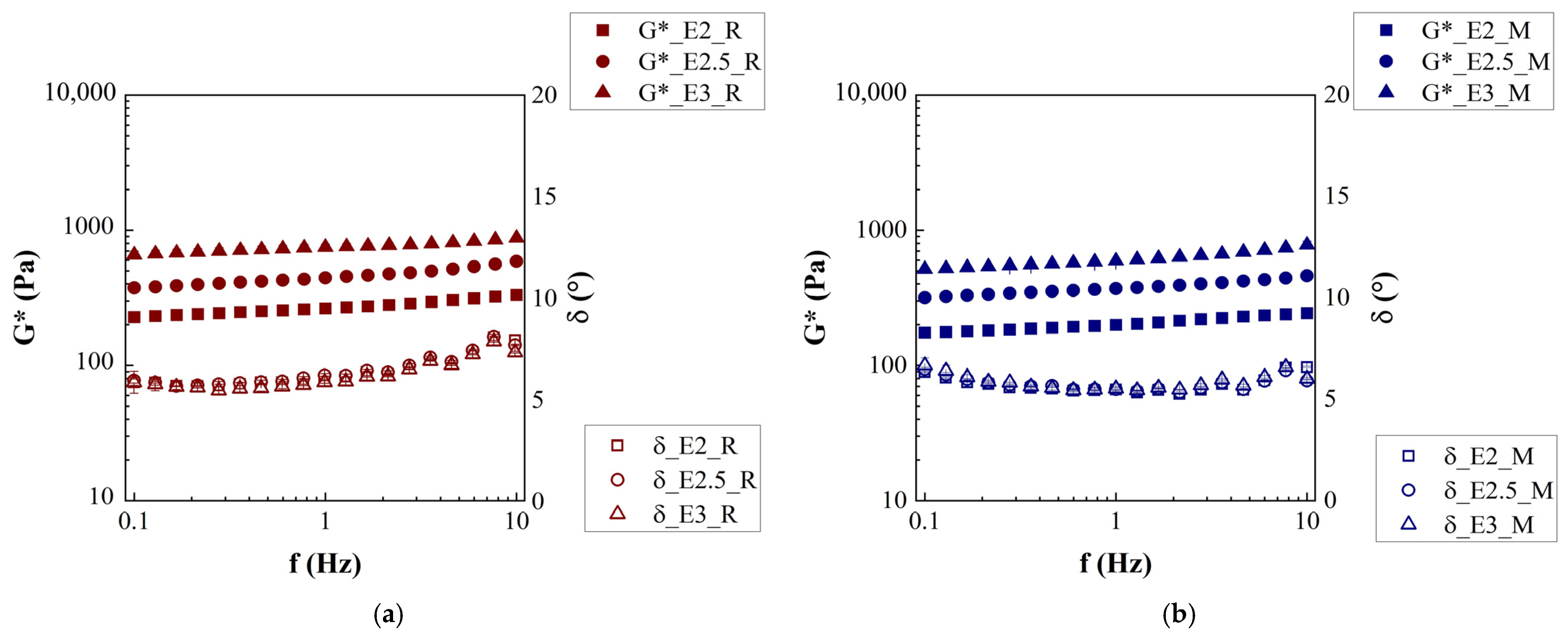
2.2. Dynamic Oscillatory Behavior of Single Phases and Unloaded Emulgels
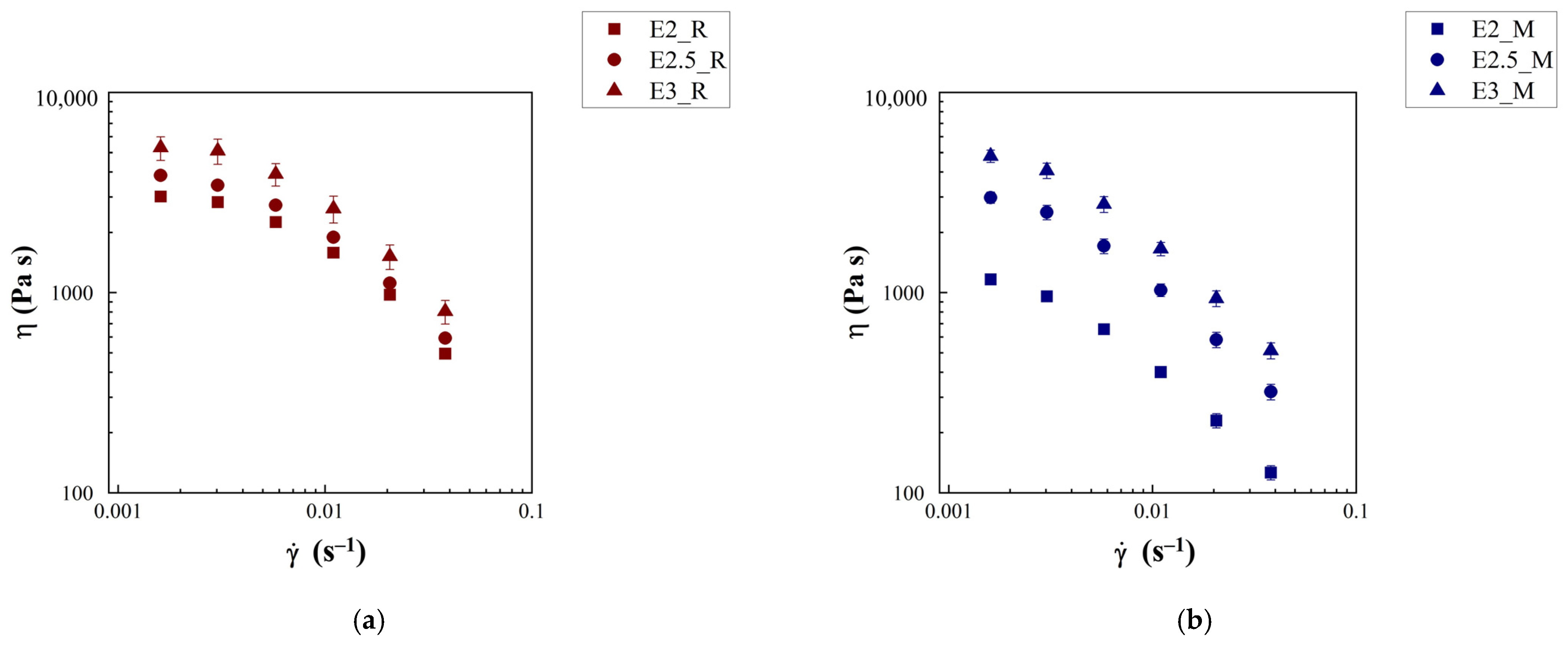
2.3. Flow Behavior of Single Phases and Unloaded Emulgel
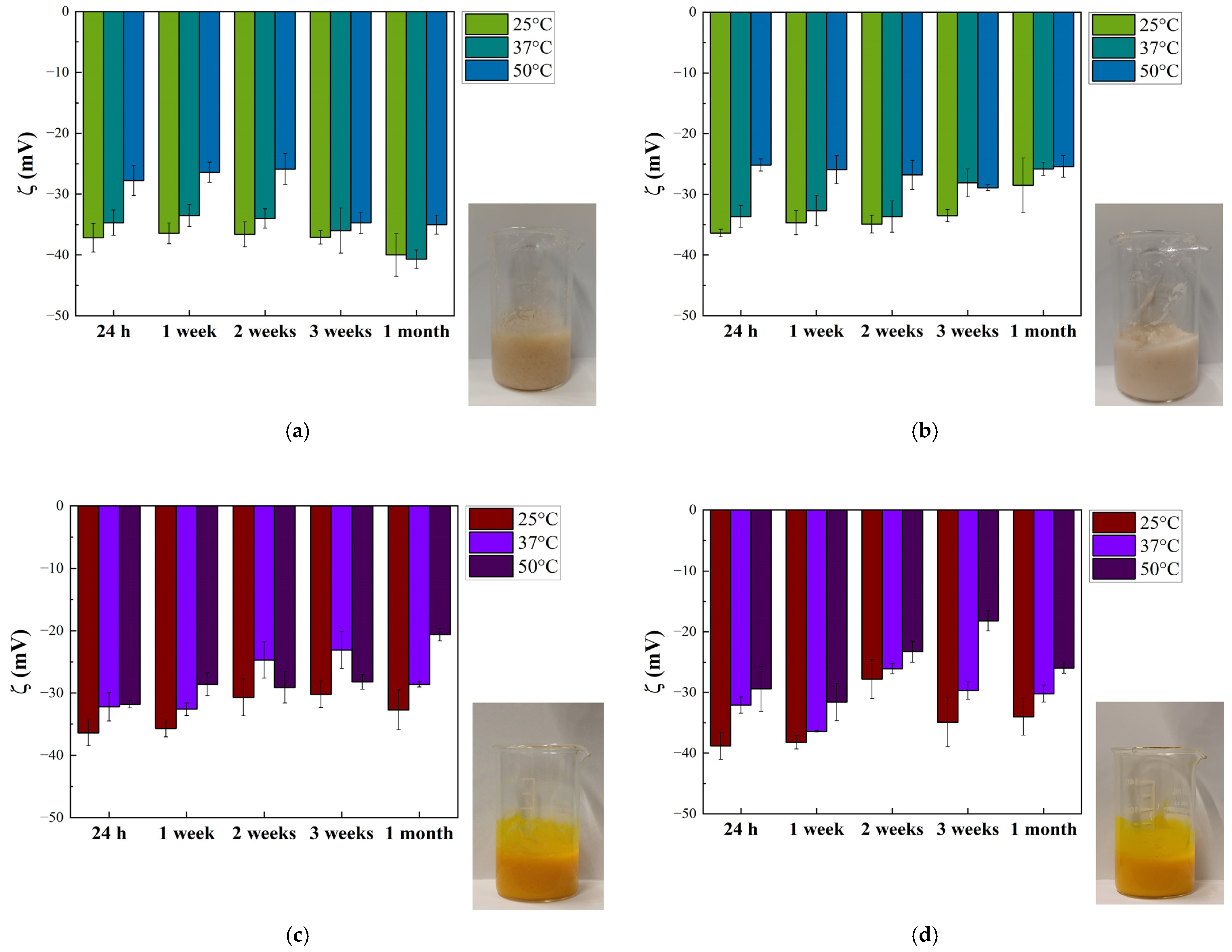
2.4. Analysis of Zeta Potential in Emulgel Samples
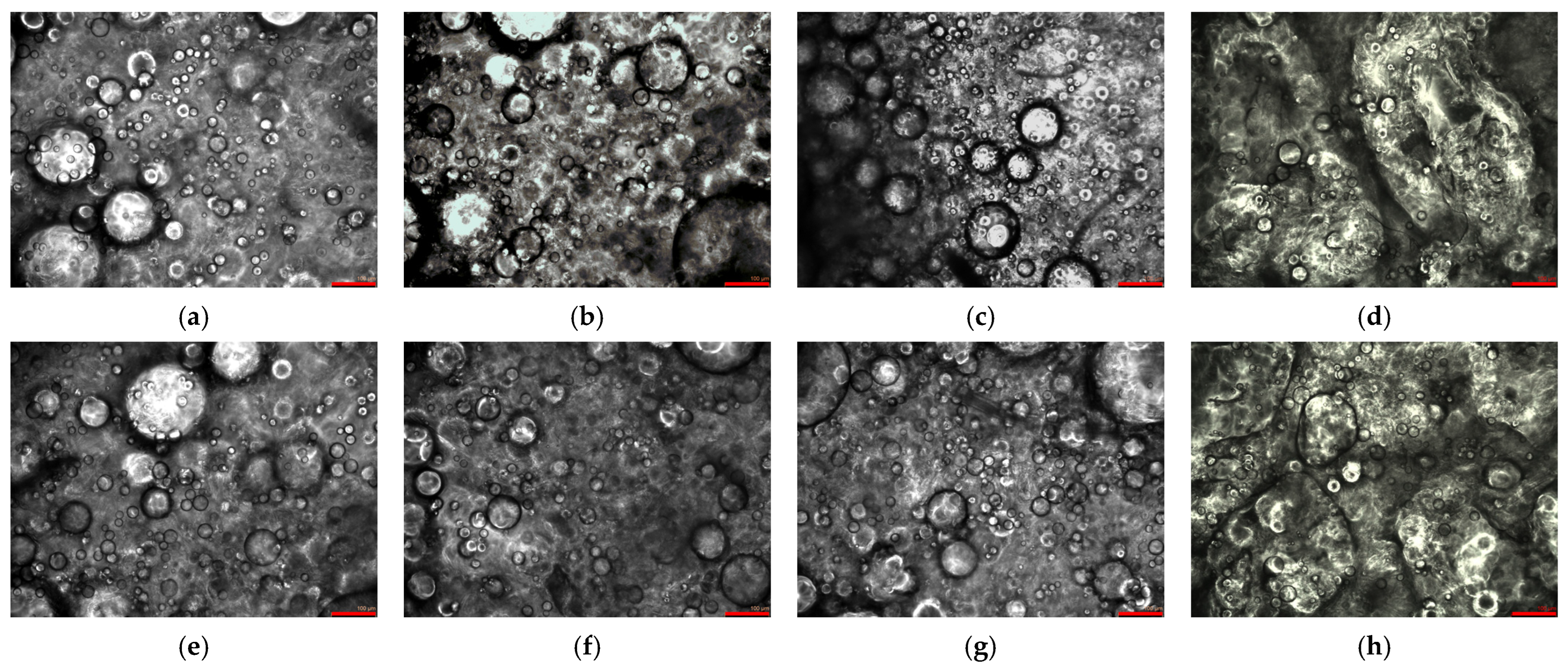
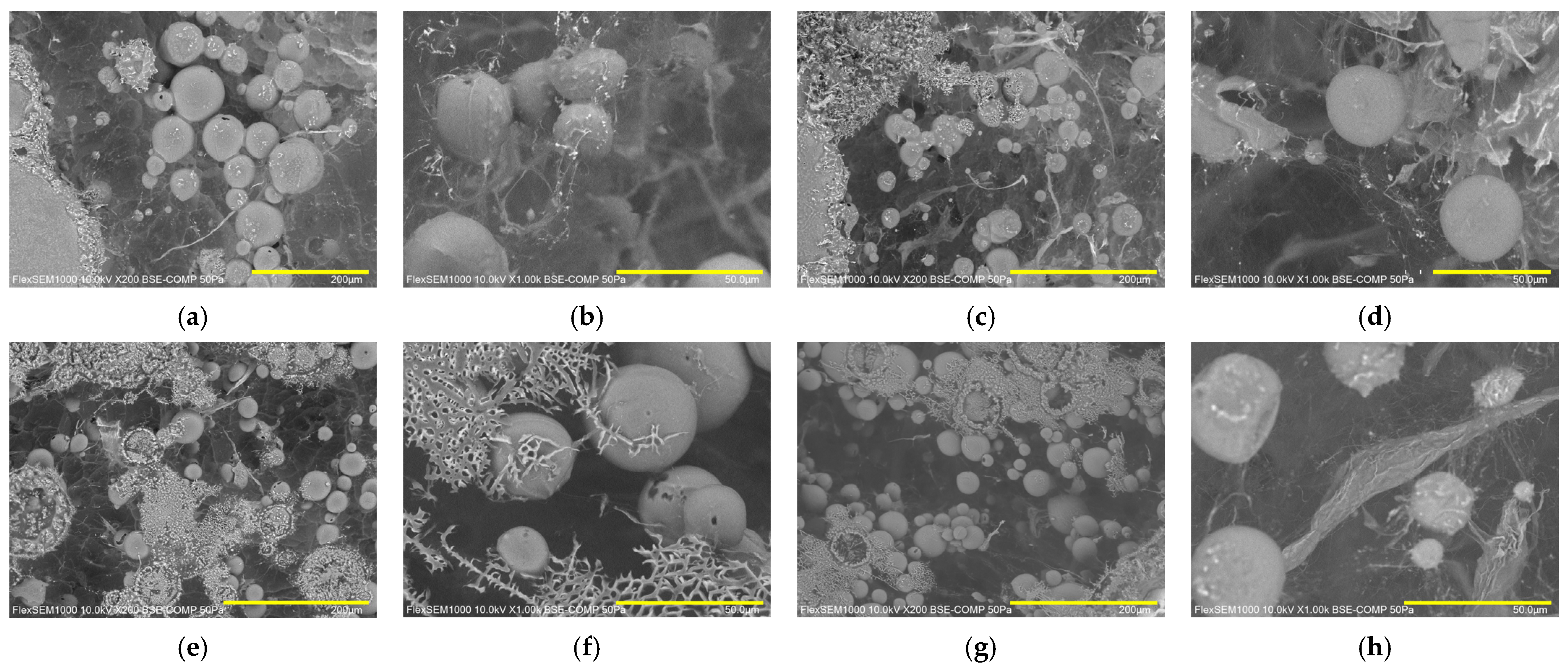
2.5. Microstructure of Emulgel Samples
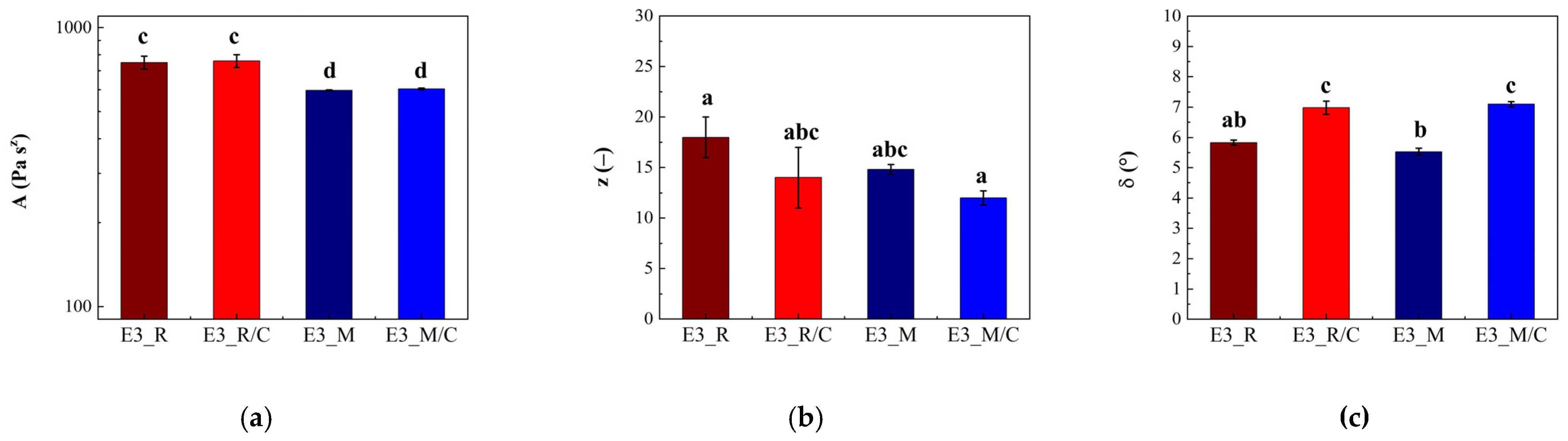
2.6. Effect of Curcumin Loading on Dynamic Oscillatory Behavior of Emulgel
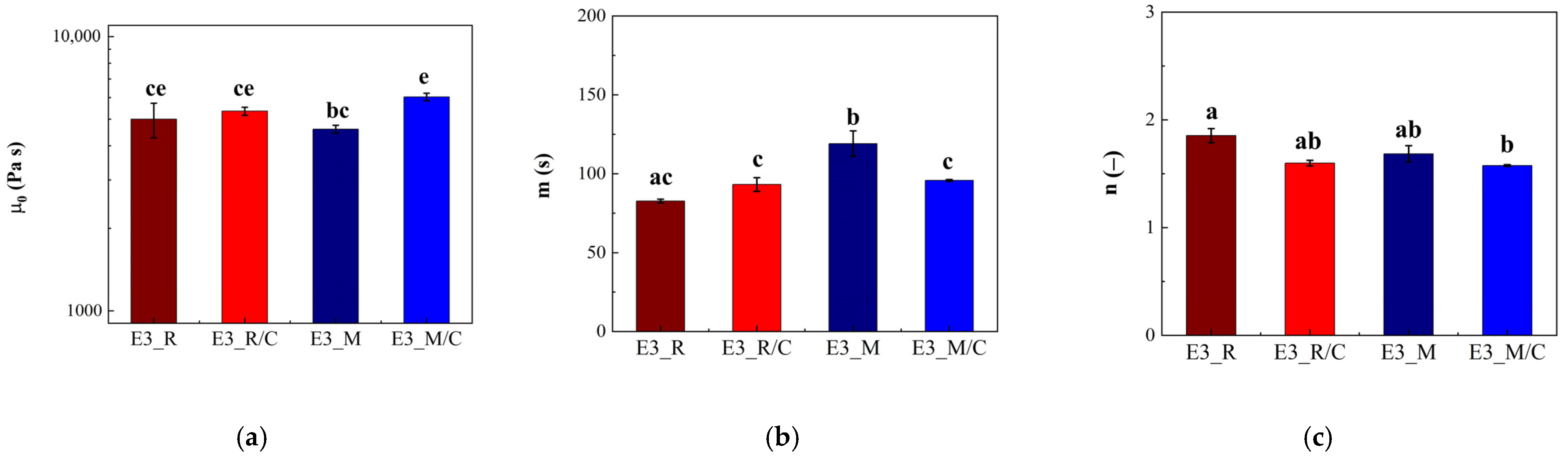
2.7. Effect of Curcumin Loading on Flow Behavior of Emulgels
2.8. Entrapment Efficiency and Loading Capacity of Loaded Emulgels
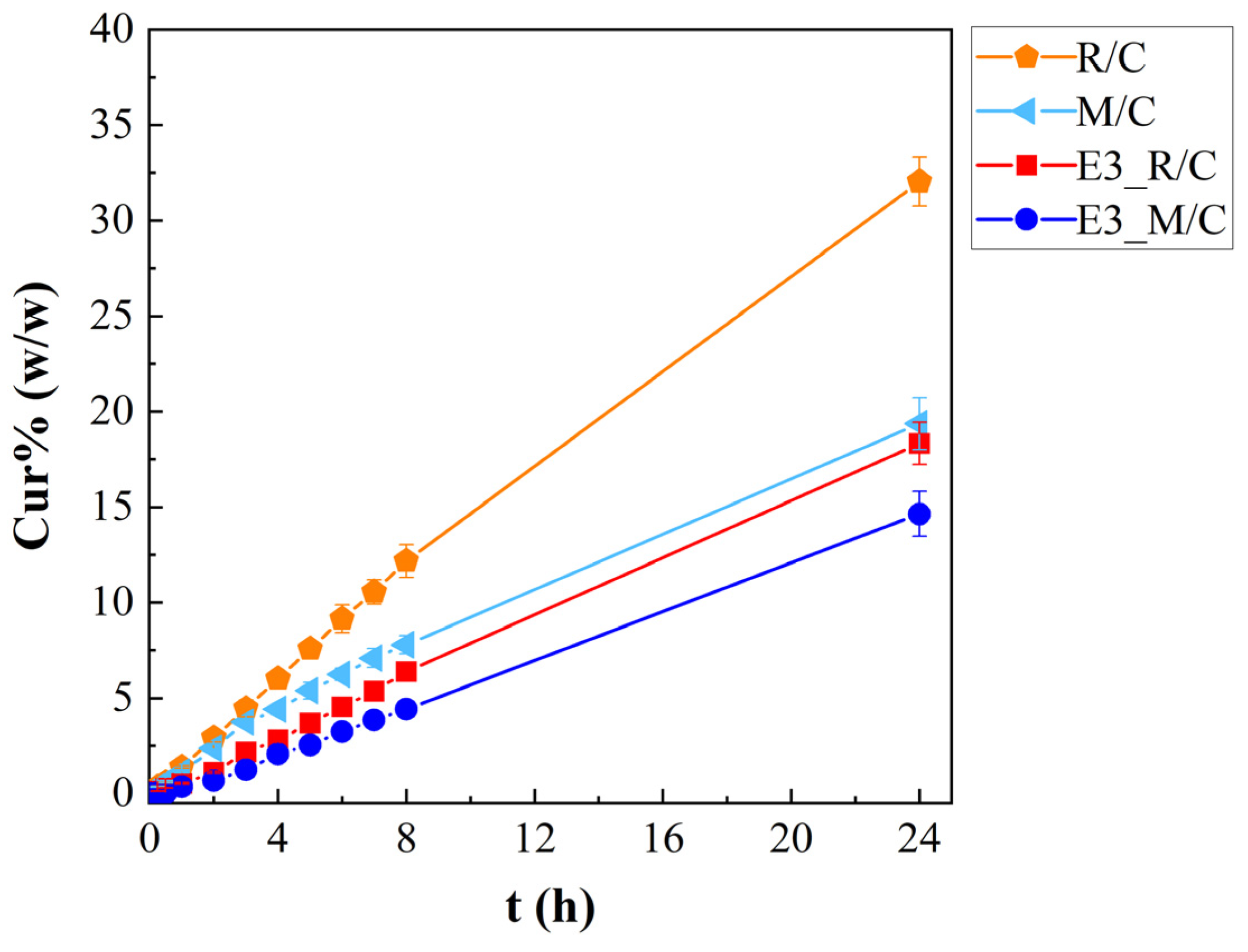
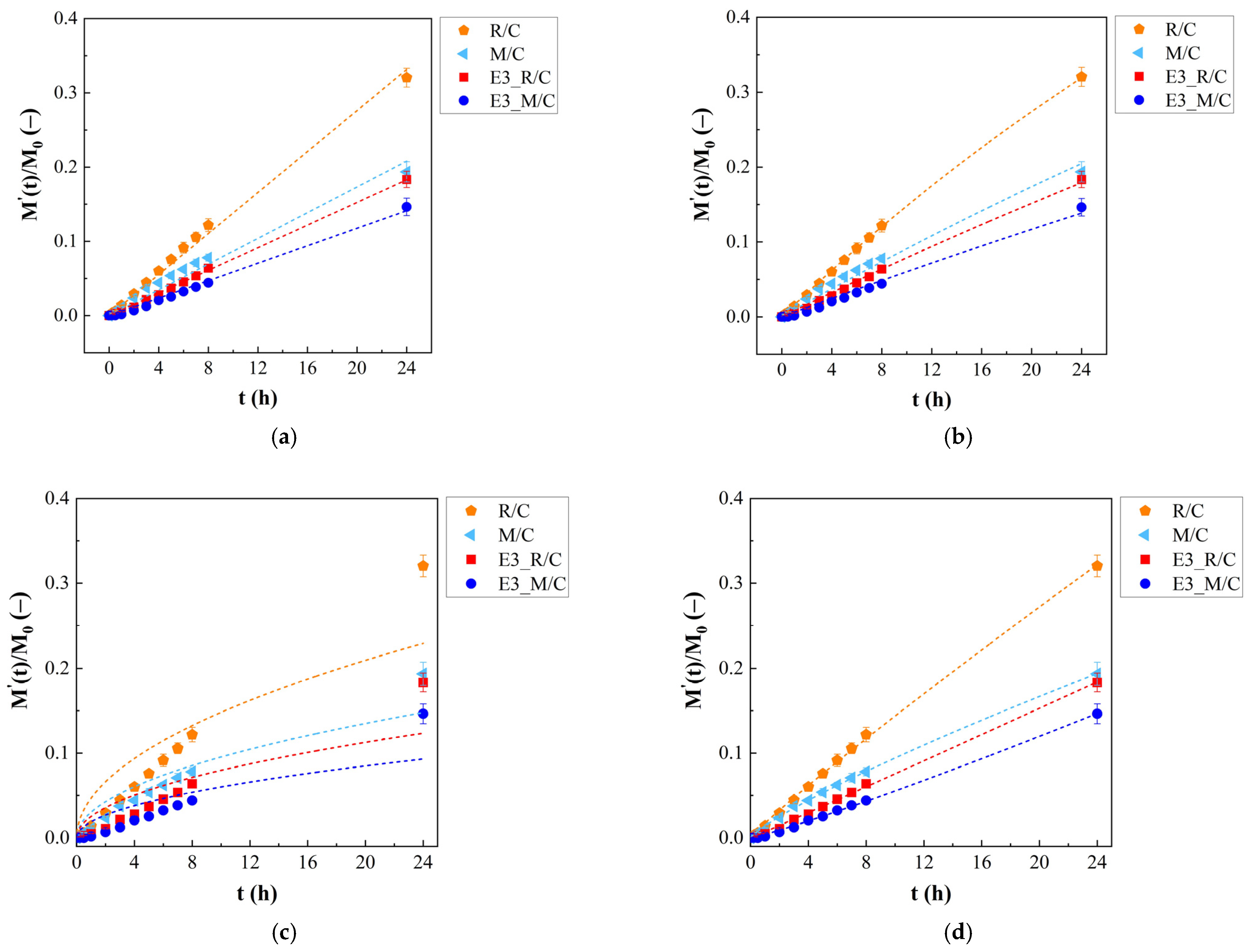
2.9. In Vitro Release Study
2.10. Release Kinetic Modeling
3. Conclusions
4. Materials and Methods
4.1. Materials
4.2. Physical and Functional Properties of Dietary Fibers
4.3. Preparation of Curcumin/Oil Solution
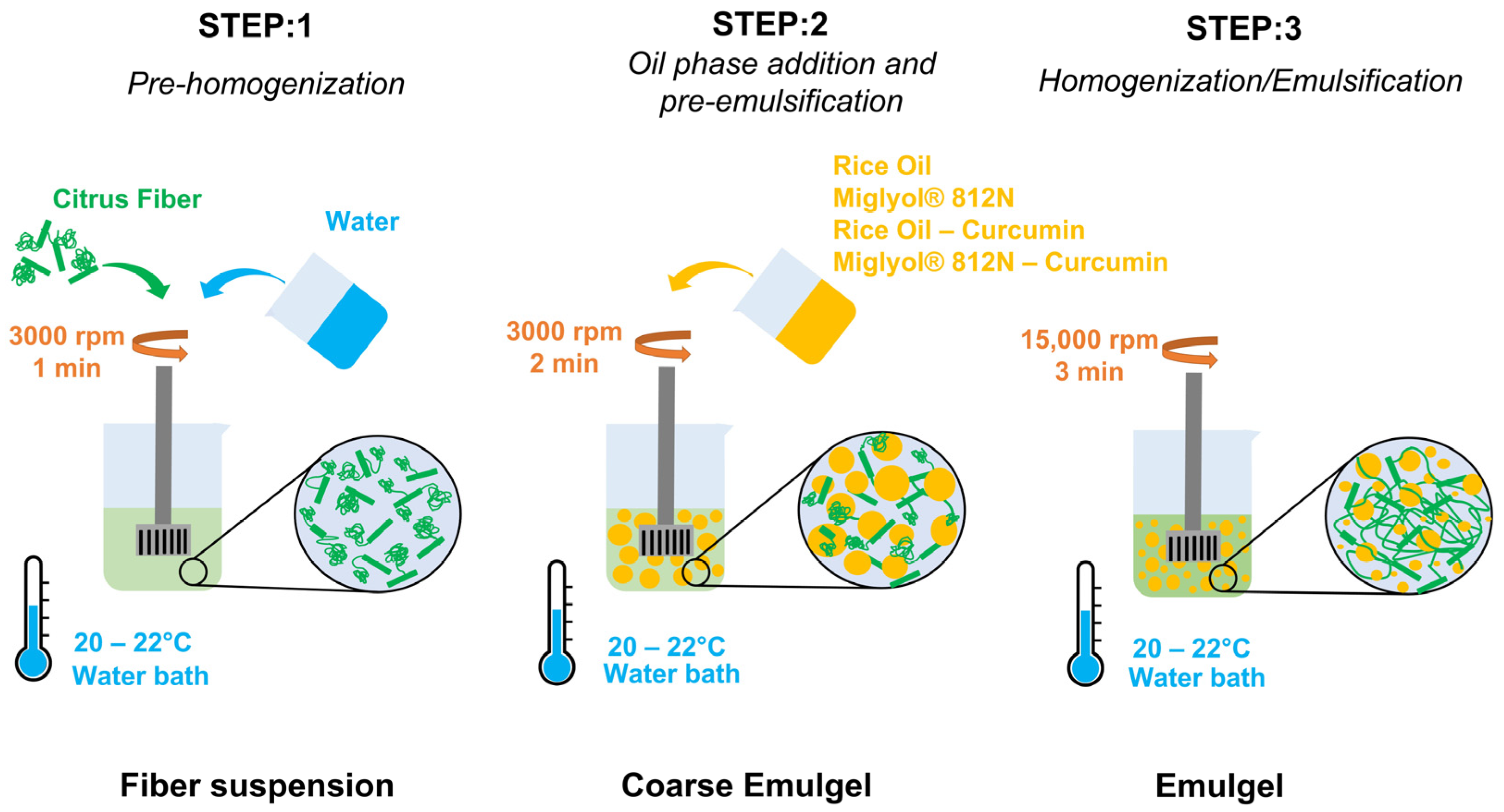
4.4. Preparation of Emulgels
4.5. Rheological Characterization and Analysis
4.6. Zeta Potential Measurements
4.7. Optical Microscopy and Droplets Size Distribution (DSD) Analysis
4.8. SEM and Cryo-SEM
4.9. Entrapment Efficiency and Loading Capacity
4.10. UV-VIS Spectroscopy
4.11. In Vitro Release Analysis
4.12. Statistical Analysis
Supplementary Materials
Author Contributions
Funding
Institutional Review Board Statement
Informed Consent Statement
Data Availability Statement
Acknowledgments
Conflicts of Interest
Abbreviations
| R | Rice oil |
| M | Miglyol® 812N |
| R/C | Curcumin solution in rice oil |
| M/C | Curcumin solution in Miglyol® 812N |
| LCT | Long Chain Triglycerides |
| MCT | Medium Chain Triglycerides |
| E2_R | Emulgel with rice oil and 2% w/w of fiber in water |
| E2_M | Emulgel with Miglyol® 812N and 2% w/w of fiber in water |
| E2.5_R | Emulgel with rice oil and 2.5% w/w of fiber in water |
| E2.5_M | Emulgel with Miglyol® 812N and 2.5% w/w of fiber in water |
| E3_R | Emulgel with rice oil and 3% w/w of fiber in water |
| E3_M | Emulgel with Miglyol® 812N and 3% w/w of fiber in water |
| E3_R/C | Emulgel with rice oil and 3% w/w of fiber in water and curcumin |
| E3_M/C | Emulgel with Miglyol® 812N and 3% w/w of fiber in water and curcumin |
| O/W | Oil in Water |
| W/O | Water in Oil |
| RSS | Residual Sum of Square |
| RMSE | Root Mean Squared Error |
| AIC | Akaike Information Criterion |
| BIC | Bayesian Information Criterion |
| WHC | Water Holding Capacity |
| WSC | Water Swelling Capacity |
| OHC | Oil Swelling Capacity |
| rpm | Revolution Per Minute |
| rcf | Relative Centrifugal force |
| EE% | Entrapment Efficiency |
| LC | Loading Capacity |
| MWCO | Molecular Weight Cut Off |
| Cur% | Percentage Cumulative Release of Curcumin |
| DSD | Droplets Size Distribution |
| SEM | Scanning Electron Microscopy |
| Cryo-SEM | Cryo-Scanning Electron Microscopy |
| UV-Vis | Ultra Violet-Visible |
References
- Dickinson, E. Stabilising Emulsion-Based Colloidal Structures with Mixed Food Ingredients. J. Sci. Food Agric. 2013, 93, 710–721. [Google Scholar] [CrossRef]
- Wan, C.; Cheng, Q.; Zeng, M.; Huang, C. Recent Progress in Emulsion Gels: From Fundamentals to Applications. Soft Matter 2023, 19, 1282–1292. [Google Scholar] [CrossRef] [PubMed]
- Milutinov, J.; Krstonošić, V.; Ćirin, D.; Pavlović, N. Emulgels: Promising Carrier Systems for Food Ingredients and Drugs. Polymers 2023, 15, 2302. [Google Scholar] [CrossRef]
- Raeisi Estabragh, M.A.; Sajadi Bami, M.; Dehghannoudeh, G.; Noudeh, Y.D.; Moghimipour, E. Cellulose Derivatives and Natural Gums as Gelling Agents for Preparation of Emulgel-Based Dosage Forms: A Brief Review. Int. J. Biol. Macromol. 2023, 241, 124538. [Google Scholar] [CrossRef]
- Hao, Y.; Mei, J.; Ling, D.; Zhang, Z.; Li, S.; Gong, Z.; Liu, X.; Xu, M.; Lin, Y.; Yu, R. Improving stability and UV protection properties of phycocyanin nanoparticle-based Pickering emulgels via amorphous cationic starch complexation. Carbohydr. Polym. 2025, 369, 124314. [Google Scholar] [CrossRef]
- Guo, S.; Li, J.; Ji, X.; Jiao, W.; Wan, Z.; Huang, L.; Niu, X.; Xu, J.; Liu, Y.; Zheng, J.; et al. Interactions, properties and lipid digestibility of attractive Pickering emulgels formed by sequential addition of oppositely charged nanopolysaccharides. Green Chem. 2025, 27, 650–659. [Google Scholar] [CrossRef]
- Tang, Y.; Fang, Z.; Ng, K. Dietary fiber-based colon-targeted delivery systems for polyphenols. Trends Food Sci. Technol. 2020, 100, 333–348. [Google Scholar] [CrossRef]
- Punia, S.; Kumar, M.; Siroha, A.K.; Purewal, S.S. Rice Bran Oil: Emerging Trends in Extraction, Health Benefit, and Its Industrial Application. Rice Sci. 2021, 28, 217–232. [Google Scholar] [CrossRef]
- Ferreira, M.R.A.; Daniels, R.; Soares, L.A.L. Development and Evaluation of Classical and Pickering Emulsions Containing Crude or Fractionated Extracts of Libidibia Ferrea Pods. Drug Dev. Ind. Pharm. 2020, 46, 1185–1198. [Google Scholar] [CrossRef]
- Mekhloufi, G.; Vilamosa, N.; Agnely, F. Nanoemulsion Stabilized by SS-Lactoglobulin: A Promising Strategy to Encapsulate Curcumin for Topical Delivery. Mater. Today Proc. 2022, 53, 168–173. [Google Scholar] [CrossRef]
- Fernández-Fernández, A.M.; Dellacassa, E.; Medrano-Fernandez, A.; Castillo, M.D. Citrus Waste Recovery for Sustainable Nutrition and Health. In Food Wastes and By-Products: Nutraceutical and Health Potential; Rocio Campos-Vega, B., Oomah, D., Vergara-Castañeda, H.A., Eds.; John Wiley & Sons Ltd.: Hoboken, NJ, USA, 2020; pp. 193–222. [Google Scholar]
- Mammolenti, D.; Lupi, F.R.; Baldino, N.; Gabriele, D. Technological Advancements of Insoluble Dietary Fiber from Food By-Product Processing: A Review. Foods 2025, 14, 1822. [Google Scholar] [CrossRef]
- Bruno, E.; Lupi, F.R.; Mammolenti, D.; Mileti, O.; Baldino, N.; Gabriele, D. Emulgels Structured with Dietary Fiber for Food Uses: A Rheological Model. Foods 2022, 11, 3866. [Google Scholar] [CrossRef]
- Bruno, E.; Lupi, F.R.; Mammolenti, D.; Baldino, N.; Gabriele, D. Development and Rheological Modeling of Dietary Fiber and Policosanol Plant-Based Bigels for Potential Food Applications. Food Hydrocoll. 2024, 150, 109733. [Google Scholar] [CrossRef]
- Jo, M.; Park, M.; Choi, Y.J. Citrus Peel Pectin and Alginate-Based Emulgel Particles for Small Intestine-Targeted Oral Delivery of Curcumin. Food Res. Int. 2024, 176, 113847. [Google Scholar] [CrossRef]
- Zhang, L.; Zheng, J.; Wang, Y.; Ye, X.; Chen, S.; Pan, H.; Chen, J. Fabrication of Rhamnogalacturonan-I Enriched Pectin-Based Emulsion Gels for Protection and Sustained Release of Curcumin. Food Hydrocoll. 2022, 128, 107592. [Google Scholar] [CrossRef]
- Li, T.; Wang, L. Improved Curcumin Bioaccessibility in Pickering Emulsion Fabricated by Rice Glutelin Fibrils. Food Biosci. 2023, 55, 102988. [Google Scholar] [CrossRef]
- Artiga-Artigas, M.; Lanjari-Pérez, Y.; Martín-Belloso, O. Curcumin-Loaded Nanoemulsions Stability as Affected by the Nature and Concentration of Surfactant. Food Chem. 2018, 266, 466–474. [Google Scholar] [CrossRef] [PubMed]
- Calligaris, S.; Alongi, M.; Lucci, P.; Anese, M. Effect of Different Oleogelators on Lipolysis and Curcuminoid Bioaccessibility upon in Vitro Digestion of Sunflower Oil Oleogels. Food Chem. 2020, 314, 126146. [Google Scholar] [CrossRef] [PubMed]
- Palla, C.A.; Aguilera-Garrido, A.; Carrín, M.E.; Galisteo-González, F.; Gálvez-Ruiz, M.J. Preparation of Highly Stable Oleogel-Based Nanoemulsions for Encapsulation and Controlled Release of Curcumin. Food Chem. 2022, 378, 132132. [Google Scholar] [CrossRef]
- Akapan, P.; da Silva, M.; Akbar, B.V.A.; Alanna, M.A.; Vllasaliu, D.; Dreiss, C.A. Cellulose nanocrystal stabilised Pickering emulgels for sustained colonic delivery of budesonide. Colloids Surf. B Biointerfaces 2026, 265, 115681. [Google Scholar] [CrossRef] [PubMed]
- Vijayan, U.K.; Varakumar, S.; Sole, S.; Singhal, R.S. Enhancement of Loading and Oral Bioavailability of Curcumin Loaded Self-Microemulsifying Lipid Carriers Using Curcuma Oleoresins. Drug Dev. Ind. Pharm. 2020, 46, 889–898. [Google Scholar] [CrossRef]
- Chen, B.; Cai, Y.; Liu, T.; Huang, L.; Deng, X.; Zhao, Q.; Zhao, M. Improvements in Physicochemical and Emulsifying Properties of Insoluble Soybean Fiber by Physical-Chemical Treatments. Food Hydrocoll. 2019, 93, 167–175. [Google Scholar] [CrossRef]
- Mammolenti, D.; Lupi, F.R.; Bruno, E.; D’Agostino, A.; Mileti, O.; Baldino, N.; Gabriele, D. Impact of Solutes and Temperature on Rheological and Physical Properties of Particle Gels from Insoluble Dietary Fiber. Food Res. Int. 2025, 221, 117256. [Google Scholar] [CrossRef] [PubMed]
- Elleuch, M.; Bedigian, D.; Roiseux, O.; Besbes, S.; Blecker, C.; Attia, H. Dietary fibre and fibre-rich by-products of food processing: Characterisation, technological functionality and commercial applications: A review. Food Chem. 2011, 124, 411–421. [Google Scholar] [CrossRef]
- Cano-Sarmiento, C.; Téllez-Medina, D.I.; Viveros-Contreras, R.; Cornejo-Mazón, M.; Figueroa-Hernández, C.Y.; García-Armenta, E.; Alamilla-Beltrán, L.; García, H.S.; Gutiérrez-López, G.F. Zeta Potential of Food Matrices. Food Eng. Rev. 2018, 10, 113–138. [Google Scholar] [CrossRef]
- Qi, J.R.; Song, L.W.; Zeng, W.Q.; Liao, J.S. Citrus Fiber for the Stabilization of O/W Emulsion through Combination of Pickering Effect and Fiber-Based Network. Food Chem. 2021, 343, 128523. [Google Scholar] [CrossRef]
- Chen, J.; Gao, D.; Yang, L.; Gao, Y. Effect of Microfluidization Process on the Functional Properties of Insoluble Dietary Fiber. Food Res. Int. 2013, 54, 1821–1827. [Google Scholar] [CrossRef]
- Gabriele, D.; de Cindio, B.; D’Antona, P. A Weak Gel Model for Foods. Rheol. Acta 2001, 40, 120–127. [Google Scholar] [CrossRef]
- Willemsen, K.L.D.D.; Panozzo, A.; Moelants, K.; Wallecan, J.; Hendrickx, M. Towards improved understanding of the viscoelastic properties of functionalized lemon peel fibers in suspension based on microstructure, hydration value and swelling volume. J. Food Eng. 2020, 278, 109950. [Google Scholar] [CrossRef]
- Opperman, C.; Majzoobi, M.; Farahnaky, A.; Shah, R.; Van, T.T.H.; Ratanpaul, V.; Blanch, E.W.; Brennan, C.; Eri, R. Beyond soluble and insoluble: A comprehensive framework for classifying dietary fibre’s health effects. Food Res. Int. 2025, 206, 115843. [Google Scholar] [CrossRef]
- Bruno, E.; Lupi, F.R.; Martin-Piñero, M.J.; Girimonte, R.; Baldino, N.; Muñoz, J.; Gabriele, D. Influence of different dispersing systems on rheological and microstructural properties of citrus fiber suspensions. LWT Food Sci. Technol. 2021, 152, 112270. [Google Scholar] [CrossRef]
- Noureddini, H.; Teoh, B.C.; Davis Clements, L. Viscosities of vegetable oils and fatty acids. J. Am. Oil Chem. Soc. 1992, 69, 1189–1191. [Google Scholar] [CrossRef]
- Lupi, F.R.; Mammolenti, D.; Mileti, O.; Baldino, N.; Gabriele, D. Rheological Analysis of Edible Oils. In Edible Oils Analysis; Elsevier: Amsterdam, The Netherlands, 2026; pp. 277–314. [Google Scholar]
- Geremias-Andrade, I.M.; Souki, N.P.B.G.; Moaraes, I.C.F.; Pinho, S.C. Rheology of Emulsion-Filled Gels Applied to the Development of Food Materials. Gels 2016, 2, 22. [Google Scholar] [CrossRef]
- Thangaraju, S.; Modupalli, N.; Naik, M.; Rawson, A.; Natarajan, V. Changes in Physicochemical Characteristics of Rice Bran Oil during Mechanical-Stirring and Ultrasonic-Assisted Enzymatic Degumming. J. Food Process Eng. 2023, 46, e14123. [Google Scholar] [CrossRef]
- de Gennaro, G.; Difonzo, G.; Quiles, A.; Hernando, I.; Caponio, F. Design Optimization of Emulsions Based on Fine Fraction of Durum Wheat Oil Cake: Structural and Rheological Properties. Food Hydrocoll. 2024, 154, 110107. [Google Scholar] [CrossRef]
- Roshandel, Z.; Zibaei, R.; Abdolmaleki, K. Characteristics of Reduced-Fat Mayonnaise Prepared by Oleaster as a Fat Replacer and Natural Antioxidant. Food Sci. Nutr. 2023, 11, 3329–3338. [Google Scholar] [CrossRef]
- Geremias-Andrade, I.M.; Souki, N.P.D.B.G.; Moraes, I.C.F.; Pinho, S.C. Rheological and Mechanical Characterization of Curcumin-Loaded Emulsion-Filled Gels Produced with Whey Protein Isolate and Xanthan Gum. LWT 2017, 86, 166–173. [Google Scholar] [CrossRef]
- Wallecan, J.R.P.; Mccrae, C.H.; Debon, S.J.J.; Dong, J.; Mazoyer, J. Emulsifying and Stabilizing Properties of Functionalized Orange Pulp Fibers. Food Hydrocoll. 2015, 47, 115–123. [Google Scholar] [CrossRef]
- Ma, P.; Zeng, Q.; Tai, K.; He, X.; Yao, Y.; Hong, X.; Yuan, F. Development of Stable Curcumin Nanoemulsions: Effects of Emulsifier Type and Surfactant-to-Oil Ratios. J. Food Sci. Technol. 2018, 55, 3485–3497. [Google Scholar] [CrossRef]
- Fonseca-Santos, B.; dos Santos, A.M.; Rodero, C.F.; Daflon Gremião, M.P.; Chorilli, M. Design, Characterization, and Biological Evaluation of Curcumin-Loaded Surfactant-Based Systems for Topical Drug Delivery. Int. J. Nanomed. 2016, 11, 4553–4562. [Google Scholar] [CrossRef]
- Zainuddin, N.; Ahmad, I.; Kargarzadeh, H.; Ramli, S. Hydrophobic Kenaf Nanocrystalline Cellulose for the Binding of Curcumin. Carbohydr. Polym. 2017, 163, 261–269. [Google Scholar] [CrossRef]
- Vardar, U.S.; Bitter, J.H.; Nikiforidis, C.V. The Mechanism of Encapsulating Curcumin into Oleosomes (Lipid Droplets). Colloids Surf. B Biointerfaces 2024, 236, 113819. [Google Scholar] [CrossRef]
- Del Duca, G.; Parisi, E.; Artusio, F.; Calì, E.; Fraterrigo Garofalo, S.; Rosso, C.; Cauda, V.; Chierotti, M.R.; Simone, E. A Crystal Engineering Approach for Rational Design of Curcumin Crystals for Pickering Stabilization of Emulsions. Food Res. Int. 2024, 194, 114871. [Google Scholar] [CrossRef] [PubMed]
- Aditya, N.P.; Hamilton, I.E.; Norton, I.T. Amorphous Nano-Curcumin Stabilized Oil in Water Emulsion: Physico Chemical Characterization. Food Chem. 2017, 224, 191–200. [Google Scholar] [CrossRef]
- Costa, P.; Sousa Lobo, J.M. Modeling and comparison of dissolution profiles. Eur. J. Pharm. Sci. 2001, 13, 123–133. [Google Scholar] [CrossRef] [PubMed]
- Kutner, M.H.; Nachtsheim, C.J.; Neter, J.; Li, W. Applied Linear Regression Models, 5th ed.; McGraw-Hill/Irwin: New York, NY, USA, 2005. [Google Scholar]
- Hastie, T.; Tibshirani, R.; Friedman, J. The Elements of Statistical Learning: Data Mining, Inference, and Prediction; Springer: New York, NY, USA, 2009. [Google Scholar]
- Burnham, K.P.; Anderson, D.R. Model Selection and Multimodel Inference: A Practical Information-Theoretic Approach, 2nd ed.; Springer: New York, NY, USA, 2002. [Google Scholar]
- Islam, Z.U.; Mir, N.A.; Gani, A. Effect of Controlled Enzymatic Treatment on the Physicochemical, Structural and Functional Properties of High-Intensity Ultrasound Treated Album (Chenopodium album) Protein. Food Hydrocoll. 2023, 144, 108940. [Google Scholar] [CrossRef]
- Allam, A.N.; Komeil, I.A.; Abdallah, O.Y. Curcumin Phytosomal Softgel Formulation: Development, Optimization and Physicochemical Characterization. Acta Pharm. 2015, 65, 285–297. [Google Scholar] [CrossRef]
- Gabriele, D.; Migliori, M.; Di Sanzo, R.; Oliverio Rossi, C.; Ruffolo, S.A.; de Cindio, B. Characterisation of dairy emulsions by NMR and rheological techniques. Food Hydrocoll. 2009, 23, 619–628. [Google Scholar] [CrossRef]
- Lupi, F.R.; Gentile, L.; Gabriele, D.; Mazzulla, S.; Baldino, N.; de Cindio, B. Olive oil and hyperthermal water bigels for cosmetic uses. J. Colloid Interface Sci. 2015, 459, 70–78. [Google Scholar] [CrossRef]
- Barnes, H.A.; Hutton, J.F.; Walters, K. An Introduction to Rheology; Walters, K., Ed.; Elsevier: Amsterdam, The Netherlands, 1989; Volume 3. [Google Scholar]
- Kadam, P.V.; Yadav, K.N.; Bhingare, C.L.; Patil, M.J. Standardization and Quantification of Curcumin from Curcuma Longa Extract Using UV Visible Spectroscopy and HPLC. J. Pharmacogn. Phytochem. 2018, 7, 1913–1918. [Google Scholar]
- Mondal, S.; Ghosh, S.; Moulik, S.P. Stability of Curcumin in Different Solvent and Solution Media: UV–Visible and Steady-State Fluorescence Spectral Study. J. Photochem. Photobiol. B 2016, 158, 212–218. [Google Scholar] [CrossRef]
- Yang, K.; Yao, J.; Shi, K.; Yang, C.; Xu, Y.; Zhang, P.; Pan, S. Emulsification Characteristics of Insoluble Dietary Fibers from Pomelo Peel: Effects of Acetylation, Enzymatic Hydrolysis, and Wet Ball Milling. Foods 2024, 13, 624. [Google Scholar] [CrossRef] [PubMed]
- Ke, J.; Wang, X.; Gao, X.; Zhou, Y.; Wei, D.; Ma, Y.; Li, C.; Liu, Y.; Chen, Z. Ball Milling Improves Physicochemical, Functionality, and Emulsification Characteristics of Insoluble Dietary Fiber from Polygonatum sibiricum. Foods 2024, 13, 2323. [Google Scholar] [CrossRef] [PubMed]
- Bao, Y.; Xue, H.; Yue, Y.; Wang, X.; Yu, H.; Piao, C. Preparation and Characterization of Pickering Emulsions with Modified Okara Insoluble Dietary Fiber. Foods 2021, 10, 2982. [Google Scholar] [CrossRef] [PubMed]





| Property | Value |
|---|---|
| Humidity (%) | 11.3 ± 0.3 |
| Bulk density (g/mL) | 0.456 ± 0.007 |
| Particle size parameters | |
| 10th percentile diameter, D10 (μm) | 33 |
| Median diameter, D50 (μm) | 115 |
| 90th percentile diameter, D90 (μm) | 287 |
| ζ (mV) | −31 ± 1 |
| Water Holding Capacity, WHC (g/g) | 18.6 ± 0.9 |
| Water Swelling Capacity, WSC (mL/g) | 21 ± 1 |
| Oil Holding Capacity, OHC (g/g) | |
| Rice oil | 2.9 ± 0.1 |
| Miglyol® 812 N | 2.85 ± 0.01 |
| Rice oil + Curcumin (2.67 mg/mL) | 2.86 ± 0.02 |
| Miglyol® 812 N + Curcumin (3.56 mg/mL) | 2.85 ± 0.02 |
| Emulgel ID | A (Pa sz) | z (−) | δ (°) |
|---|---|---|---|
| E2_R | 260 ± 20 a | 16 ± 1 abc | 6.0 ± 0.1 a |
| E2.5_R | 444 ± 7 b | 13.53 ± 0.04 bc | 6.2 ± 0.1 a |
| E3_R | 750 ± 40 c | 18 ± 2 a | 5.83 ± 0.09 ab |
| E2_M | 199.1 ± 0.7 a | 16.9 ± 0.1 ab | 5.4 ± 0.1 b |
| E2.5_M | 371 ± 1 b | 15.0 ± 0.1 abc | 5.482 ± 0.002 b |
| E3_M | 597 ± 2 d | 14.8 ± 0.5 abc | 5.5 ± 0.1 b |
| Emulgel ID | µ0 (Pa s) | m (s) | n (−) |
|---|---|---|---|
| E2_R | 2820 ± 60 a | 75 ± 2 a | 1.8 ± 0.1 ab |
| E2.5_R | 3600 ± 100 ab | 81 ± 4 a | 1.77 ± 0.02 ab |
| E3_R | 5000 ± 700 c | 82 ± 1 a | 1.85 ± 0.06 a |
| E2_M | 1130 ± 70 d | 124 ± 1 b | 1.73 ± 0.05 ab |
| E2.5_M | 2880 ± 32 a | 120 ± 7 b | 1.69 ± 0.08 ab |
| E3_M | 4600 ± 200 bc | 119 ± 8 b | 1.69 ± 0.07 ab |
| Emulgel ID | d10 (μm) | d50 (μm) | d90 (μm) | SPAN |
|---|---|---|---|---|
| E2_R | 1.7 ± 0.5 a | 9 ± 3 ab | 19 ± 4 a | 2.3 ± 0.9 a |
| E2.5_R | 1.6 ± 0.3 a | 5 ± 2 ab | 21 ± 2 ab | 4 ± 1 abc |
| E3_R | 1.7 ± 0.6 a | 7 ± 2 ab | 21 ± 4 abc | 3 ± 1 ab |
| E3_R/C | 1.18 ± 0.05 a | 4.4 ± 0.9 b | 20 ± 3 a | 4.3 ± 0.7 abc |
| E2_M | 1.4 ± 0.2 a | 4.5 ± 0.4 b | 30 ± 10 abc | 7 ± 2 c |
| E2.5_M | 1.5 ± 0.4 a | 11 ± 6 a | 40 ± 10 c | 4 ± 2 abc |
| E3_M | 1.3 ± 0.2 a | 6 ± 1 ab | 34.8 ± 0.6 bc | 6 ± 1 bc |
| E3_M/C | 1.3 ± 0.1 a | 3.5 ± 0.5 b | 18 ± 6 a | 5 ± 2 abc |
| Kinetic Models | Equation | Samples | |||
|---|---|---|---|---|---|
| R/C | E3_R/C | M/C | E3_M/C | ||
| Zero-order | = (138 ± 2) × 10−4 h R2 = 0.99647 RSS = 0.00048 RMSE = 0.00635 AIC = −119 BIC = −119 | = (76.2 ± 0.7) × 10−4 h R2 = 0.99899 RSS = 0.00004 RMSE = 0.00187 AIC = −127 BIC = −121 | = (87 ± 3) × 10−4 h R2 = 0.98390 RSS = 0.00088 RMSE = 0.00855 AIC = −112 BIC = −112 | = (59 ± 1) × 10−4 h R2 = 0.99377 RSS = 0.00016 RMSE = 0.00360 AIC = −133 BIC = −133 | |
| First-order | = (160.1 ± 0.8) × 10−4 h R2 = 0.99967 RSS = 0.00003 RMSE = 0.00155 AIC = −153 BIC = −153 | = (82 ± 1) × 10−4 h R2 = 0.99623 RSS = 0.00011 RMSE = 0.00298 AIC = −140 BIC = −140 | = (95 ± 3) × 10−4 h R2 = 0.98582 RSS = 0.00044 RMSE = 0.00605 AIC = −121 BIC = −121 | = (62 ± 2) × 10−4 h R2 = 0.98592 RSS = 0.00026 RMSE = 0.00462 AIC = −127 BIC = −127 | |
| Higuchi | = 0.047 ± 0.003 h−1/2 R2 = 0.79867 RSS = 0.01616 RMSE = 0.03670 AIC = −77 BIC = −77 | = 0.02521 ± 0.003 h−1/2 R2 = 0.74586 RSS = 0.00679 RMSE = 0.02379 AIC = −88 BIC = −87 | = 0.030 ± 0. 003 h−1/2 R2 = 0.85499 RSS = 0.00411 RMSE = 0.01851 AIC = −94 BIC = −93 | = 0.019 ± 0.003 h−1/2 R2 = 0.69741 RSS = 0.00525 RMSE = 0.02092 AIC = −91 BIC = −90 | |
| Korsmeyer-Peppas | = (172 ± 5) × 10−4 h−0.92 n = 0.92 ± 0.01 R2 = 0.99893 RSS = 0.00008 RMSE = 0.00254 AIC = −139 BIC = −138 | = (73 ± 3) × 10−4 h−1.02 n = 1.02 ± 0.01 R2 = 0.99848 RSS = 0.00004 RMSE = 0.00175 AIC = −148 BIC = −147 | = (141 ± 3) × 10−4 h−0.824 n = 0.825 ± 0.009 R2 = 0.99914 RSS = 0.00002 RMSE = 0.00135 AIC = −155 BIC = −154 | = (43 ± 2) × 10−4 h−1.11 n = 1.11 ± 0.02 R2 = 0.99841 RSS = 0.00002 RMSE = 0.00144 AIC = −153 BIC = −152 |
| Emulgel ID | % w/w of Citrus Fiber in Water Phase | Oil Type | Oil Phase ID | Curcumin (mg/mL) |
|---|---|---|---|---|
| E2_R | 2 | Rice Oil | R | - |
| E2_M | 2 | Miglyol® 812 N | M | - |
| E2.5_R | 2.5 | Rice Oil | R | - |
| E2.5_M | 2.5 | Miglyol® 812 N | M | - |
| E3_R | 3 | Rice Oil | R | - |
| E3_M | 3 | Miglyol® 812 N | M | - |
| E3_R/C | 3 | Rice Oil | R/C | 2.67 |
| E3_M/C | 3 | Miglyol® 812 N | M/C | 3.56 |
Disclaimer/Publisher’s Note: The statements, opinions and data contained in all publications are solely those of the individual author(s) and contributor(s) and not of MDPI and/or the editor(s). MDPI and/or the editor(s) disclaim responsibility for any injury to people or property resulting from any ideas, methods, instructions or products referred to in the content. |
© 2026 by the authors. Licensee MDPI, Basel, Switzerland. This article is an open access article distributed under the terms and conditions of the Creative Commons Attribution (CC BY) license.
Share and Cite
Mammolenti, D.; Gabriele, D.; Lupi, F.R.; Baldino, N.; Formoso, P. Structure–Function Relationship in Citrus-Fiber-Based Emulgels for Controlled Curcumin Delivery. Gels 2026, 12, 444. https://doi.org/10.3390/gels12050444
Mammolenti D, Gabriele D, Lupi FR, Baldino N, Formoso P. Structure–Function Relationship in Citrus-Fiber-Based Emulgels for Controlled Curcumin Delivery. Gels. 2026; 12(5):444. https://doi.org/10.3390/gels12050444
Chicago/Turabian StyleMammolenti, Domenico, Domenico Gabriele, Francesca Romana Lupi, Noemi Baldino, and Patrizia Formoso. 2026. "Structure–Function Relationship in Citrus-Fiber-Based Emulgels for Controlled Curcumin Delivery" Gels 12, no. 5: 444. https://doi.org/10.3390/gels12050444
APA StyleMammolenti, D., Gabriele, D., Lupi, F. R., Baldino, N., & Formoso, P. (2026). Structure–Function Relationship in Citrus-Fiber-Based Emulgels for Controlled Curcumin Delivery. Gels, 12(5), 444. https://doi.org/10.3390/gels12050444