1. Introduction
Lithium slag (LS) is a byproduct generated from lithium carbonate production via the sulfuric acid method [
1], and its accumulation is directly linked to the rapid expansion of the lithium battery industry. In China, the remarkable growth of the new energy vehicle sector has led to a rapid increase in lithium salt production, inevitably resulting in a steady rise in LS emissions, which currently amount to approximately 6 million tons annually [
2,
3]. This massive accumulation not only occupies farmland but also poses a significant threat to the environment.
Previous studies have shown that the mineral composition of LS includes leached spodumene, quartz, gypsum, and carbonate [
4]; and its chemical composition is dominated by SiO
2 (48.6~63.1%), Al
2O
3 (14.0~20.7%), and SO
3 (4.5~9.3%), along with small amounts of CaO (3.6~12.1%) [
5,
6,
7]. Although LS contains high levels of SiO
2 and Al
2O
3, these components are primarily present in the form of leached spodumene rather than in an amorphous phase [
8].
The high Al
2O
3 and SiO
2 contents in lithium slag enable its use in preparing zeolite X and ceramic glazed tiles [
6,
9]. On the other hand, its high gypsum content makes it a high-quality raw material for producing gypsum products. In addition, Ding et al. [
10] noted that LS is effective in mitigating expansion induced by the alkali-silica reaction (ASR). However, incorporating LS powder into concrete may lead to micro-expansion due to ettringite formation. Therefore, this micro-expansion should be isolated when evaluating the ASR-inhibiting effect of LS powder. He et al. [
11] demonstrated that mine filling materials with excellent unconfined compressive strength can be prepared using cement, lithium slag, and fly ash at a mass ratio of 2:1:1. They further reported that the addition of NaOH can improve the pozzolanic activity of lithium slag in mine backfill binders [
12]. Furthermore, LS has been used as a white pigment [
13,
14] and in the production of lightweight aggregates [
15]. Despite its applications in various fields, the utilization rate of lithium slag remains low. Therefore, exploring efficient methods to improve the utilization of LS is of great significance.
In recent years, the use of supplementary cementitious materials (SCMs) in concrete has gained increasing attention owing to their economic benefits, environmental advantages, and technological improvements [
16]. LS contains large amounts of SiO
2 and Al
2O
3, which impart pozzolanic activity; thus, it also represents a promising candidate for use as an SCM [
17]. However, like other SCMs, LS hinders the early strength development rate of cementitious systems. Zhang [
5] reported that a higher LS content leads to greater deterioration in the early strength of concrete. To improve the reactivity of LS, Liu combined alkali activation with thermal treatment, using this method, the 1-day compressive strength of alkali-activated LS was increased from 12.8 MPa to 47.7 MPa [
18]. Tan et al. [
19,
20] found that wet-grinding yields much finer LS particles than dry-grinding, thereby accelerating the formation of hydration products in concrete incorporating LS as an SCM. Previous work by the authors demonstrated that steam curing can significantly improve the demolding strength of LS-blended cement mortar [
21,
22]. However, the above-mentioned activation methods have issues in terms of environmental friendliness, energy consumption, and cost. Specifically, the strong alkali activation method not only causes severe corrosion to equipment but also increases construction operation risks and material costs. Meanwhile, the drying step after wet-grinding and the steam curing process incur high energy costs.
Although the incorporation of LS can hinder early strength development, it enhances the early crack resistance of concrete by forming more fibrous ettringite [
23]. Moreover, when the replacement level is below 20%, LS can improve the long-term (≥28 d) compressive strength of concrete. Li et al. [
8,
24] reported that incorporating LS can enhance the durability of concrete, including sulfate resistance, elastic modulus, drying shrinkage, and creep behavior. He et al. [
25] showed that replacing silica fume with LS can increase the hydration degree of ultra-high-performance concrete. However, at high LS replacement ratios, the high gypsum content in LS may lead to a risk of delayed ettringite formation in concrete. Notably, early-age steam curing has been proven effective in addressing this issue [
8].
Not surprisingly, the incorporation of LS reduces the Ca/Si ratio of C–S–H gels. Meanwhile, our study identified the presence of equant grain-shaped C–S–H gels and cubic CaCO
3 in lithium slag-blended cement [
22]. Beyond these observations, little is known about the characteristics of hydration products in lithium slag-blended cement. Furthermore, the influence of the high sulfate and carbonate contents in LS on cement hydration remains unclear.
Calcium hydroxide (CH) is one of the main hydration products in cement and the primary reactant for SCMs in concrete. Therefore, to explore the hydration mechanism of SCMs in concrete, CH is often used to simulate the alkaline environment in Portland cement pastes. This approach allows the direct investigation of the reaction between CH and SCMs, providing insight into the hydration process and products of SCMs in concrete. However, unlike common SCMs such as ground granulated blast-furnace slag (GBFS) and fly ash (FA), LS contains carbonates and a higher SO3 content. The reaction mechanism between lithium slag and CH remains unclear.
Thus, this study first investigates the hydration process of LS blended with 10 wt.% Ca(OH)2 (LS-CH) using isothermal conduction calorimetry (ICC) and X-ray diffraction (XRD). It then characterizes the hydration products of LS-CH pastes under standard curing conditions using XRD, scanning electron microscopy with energy-dispersive spectroscopy (SEM–EDS), thermogravimetric analysis (TG–DTG), Fourier transform infrared spectroscopy (FTIR), and Brunauer–Emmett–Teller (BET) analysis, while their mechanical properties are evaluated through strength tests. Given the increasing adoption of precast concrete construction, this study further examines the hydration products and mechanical properties of LS-CH pastes under steam curing.
Based on the experimental investigation, this study provides a comprehensive understanding of the hydration behavior of the LS-CH system, with detailed descriptions of its microstructural evolution and phase development. These findings clarify the role of lithium slag in cementitious matrices and validate its potential as a sustainable, low-carbon construction material.
2. Results and Discussion
2.1. Results of Material Characterization
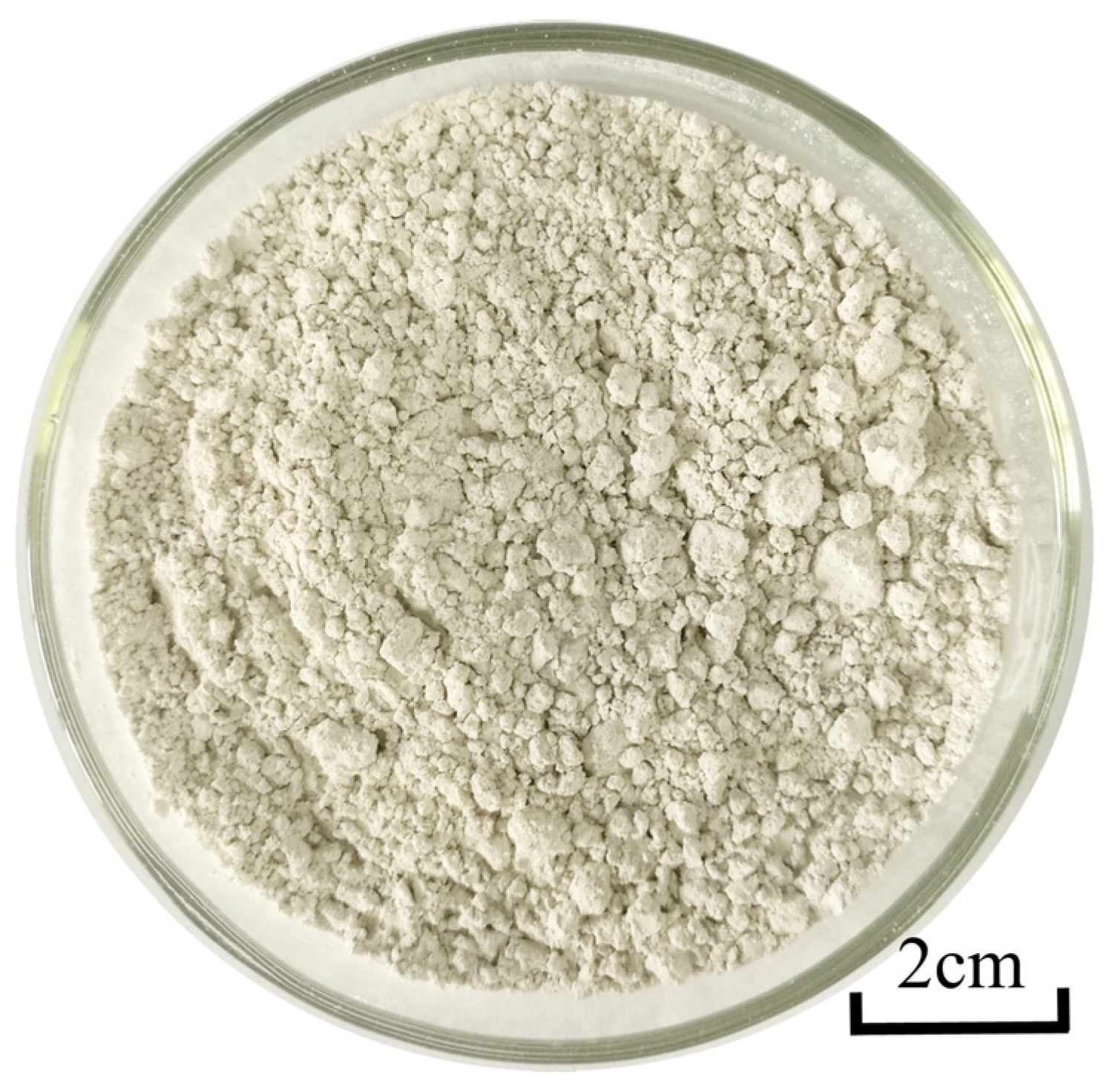
As shown in
Figure 1, the lithium slag (LS) powder was yellowish-white in appearance. Its chemical composition, analyzed by X-ray fluorescence (XRF), is presented in
Table 1. Like ground granulated blast-furnace slag (GBFS) and fly ash (FA), LS is rich in SiO
2 and Al
2O
3, with the main distinction being its higher SO
3 content. SiO
2, Al
2O
3, and SO
3 together account for 89.03 wt.% of LS by mass. Other minor components include CaO, P
2O
5, K
2O, and Fe
2O
3. Notably, the CaO content in LS is relatively low, even lower than that in FA. Accordingly, based on the data in
Table 1, the molar Ca/Si ratio of LS is merely 0.08.
LS has a density of approximately 2.50 g/cm3, which is comparable to that of FA. For a LS-water suspension with a water-to-LS mass ratio of 10:1, the pH value reached 7.5 after 4 h of mixing, whereas that of tap water was 7.9. Therefore, LS can be classified as an acidic slag.
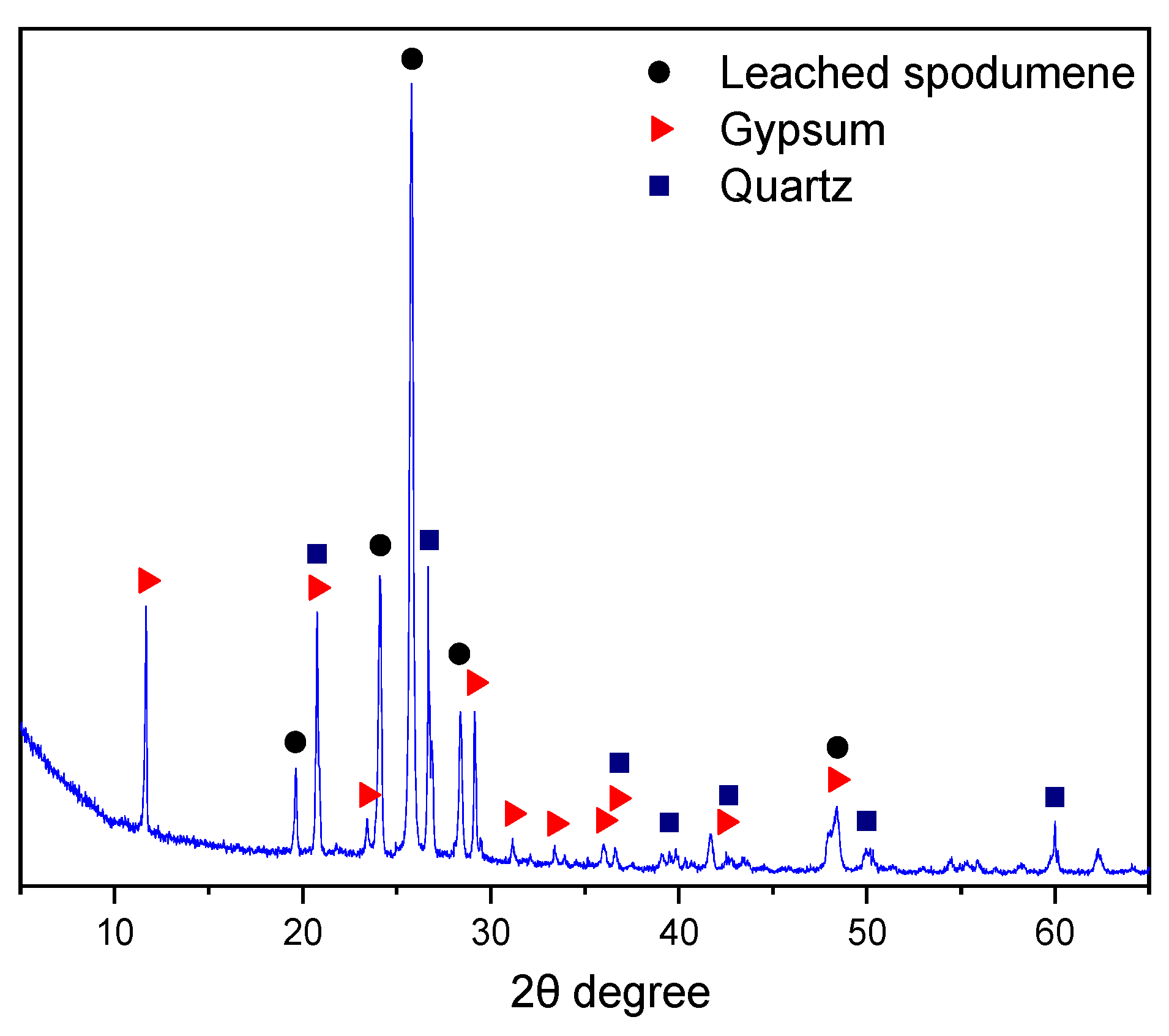
The XRD results (
Figure 2) indicated that LS was primarily composed of 7.9% quartz (SiO
2), 66.2% leached spodumene (LiAlSi
2O
6), 13.3% gypsum (CaSO
4·2H
2O), and 12.6% amorphous phase, as calculated via the XRD/Rietveld method.
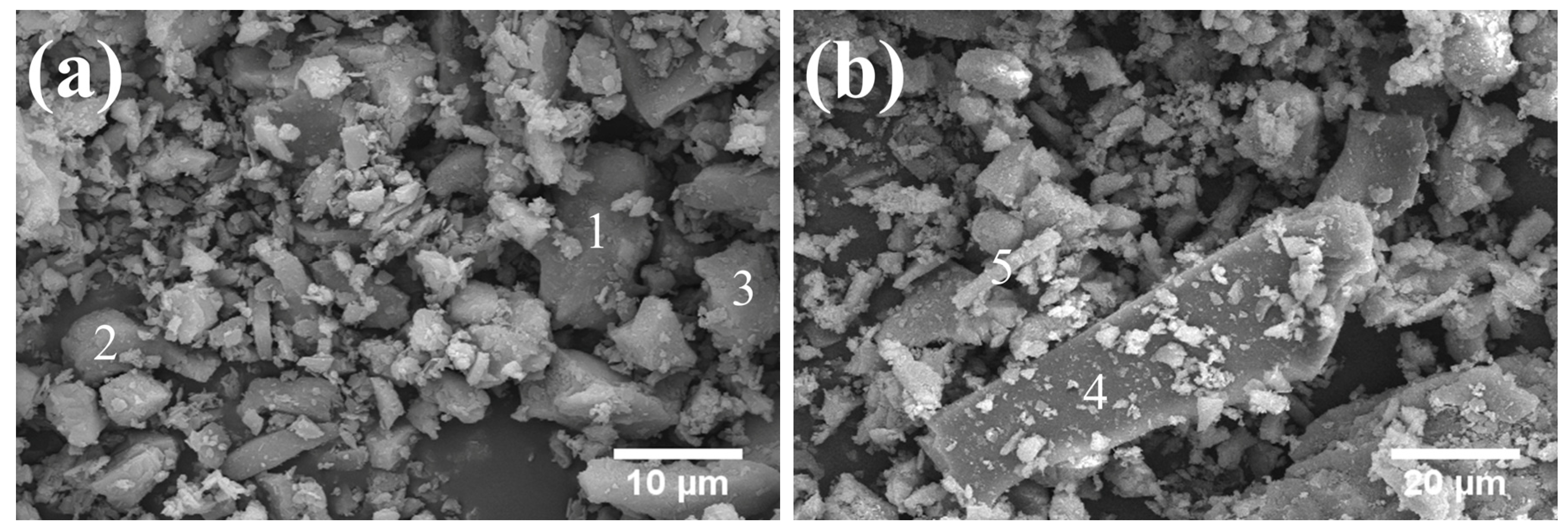
Figure 3 illustrates the morphology of LS particles, which exhibit an angular, distinct crystalline structure. The atomic composition of individual particles, determined by EDS results, is listed in
Table 2. Smaller particles (Particles 1, 2, and 3) were predominantly LiAlSi
2O
6, whereas larger particles (Particles 4 and 5) were mainly CaSO
4·2H
2O. This can be attributed to the fact that LiAlSi
2O
6 is readily crushed during grinding [
26], while gypsum tends to agglomerate owing to its higher moisture content and viscosity.
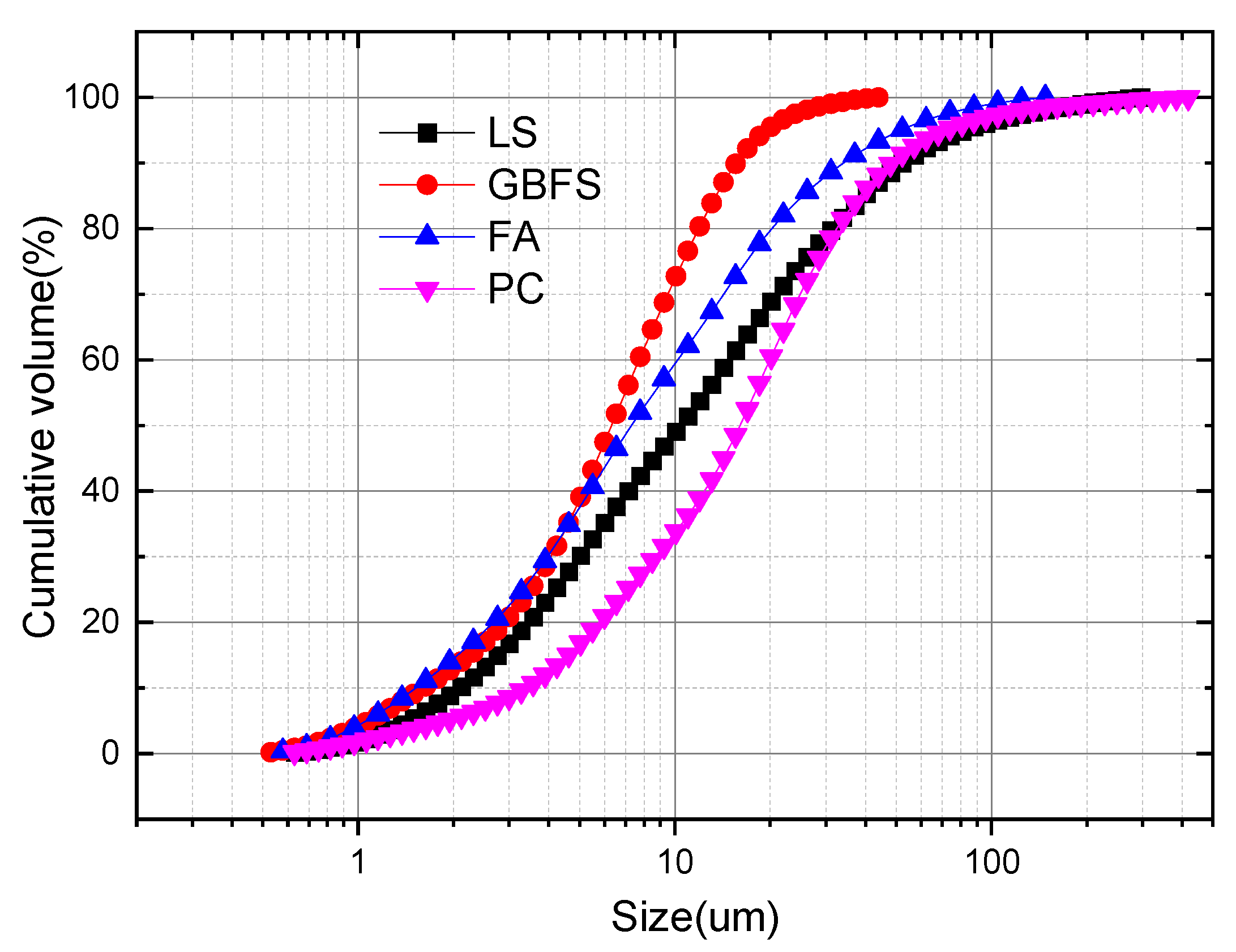
Figure 4 presents the particle size distribution of LS powder, measured using a laser particle size analyzer. The particle size of LS powder ranged from 0.6 μm to 296 μm, with an average particle size of 10.45 μm. This value was slightly larger than those of FA (7.43 μm) and GBFS (GBFS, 6.33 μm) used in this study, yet smaller than that of PC (16.70 μm).
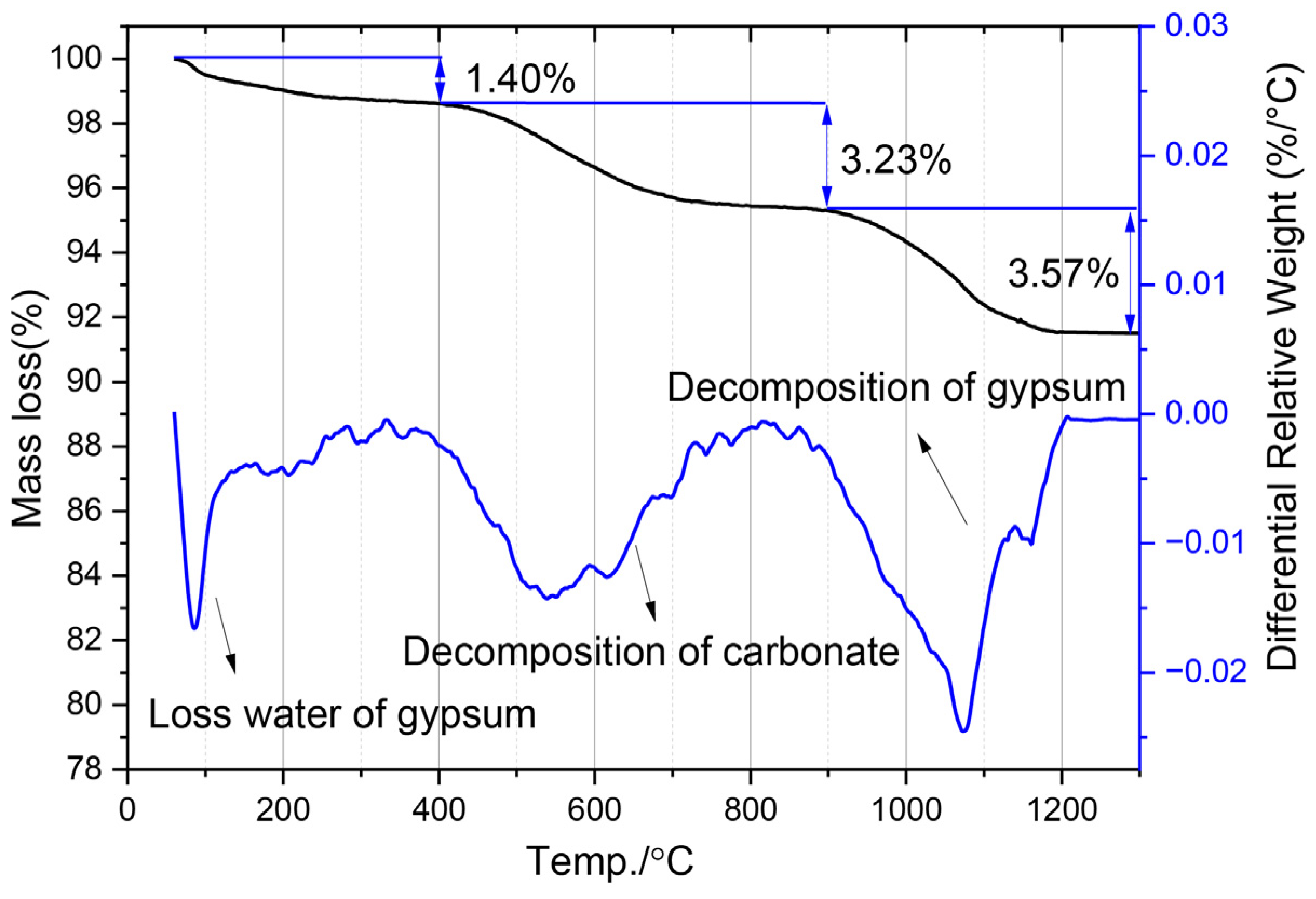
Thermogravimetric (TG/DTG) analysis (
Figure 5) indicated that, in addition to gypsum, lithium slag contained carbonates, with a loss on ignition of 8.2% below 1300 °C [
27,
28,
29]. The high carbonate content in LS mainly exists in the forms of CaCO
3, Na
2CO
3, and Li
2CO
3, whereas conventional SCMs contain very little carbonate, especially Na
2CO
3 and Li
2CO
3.
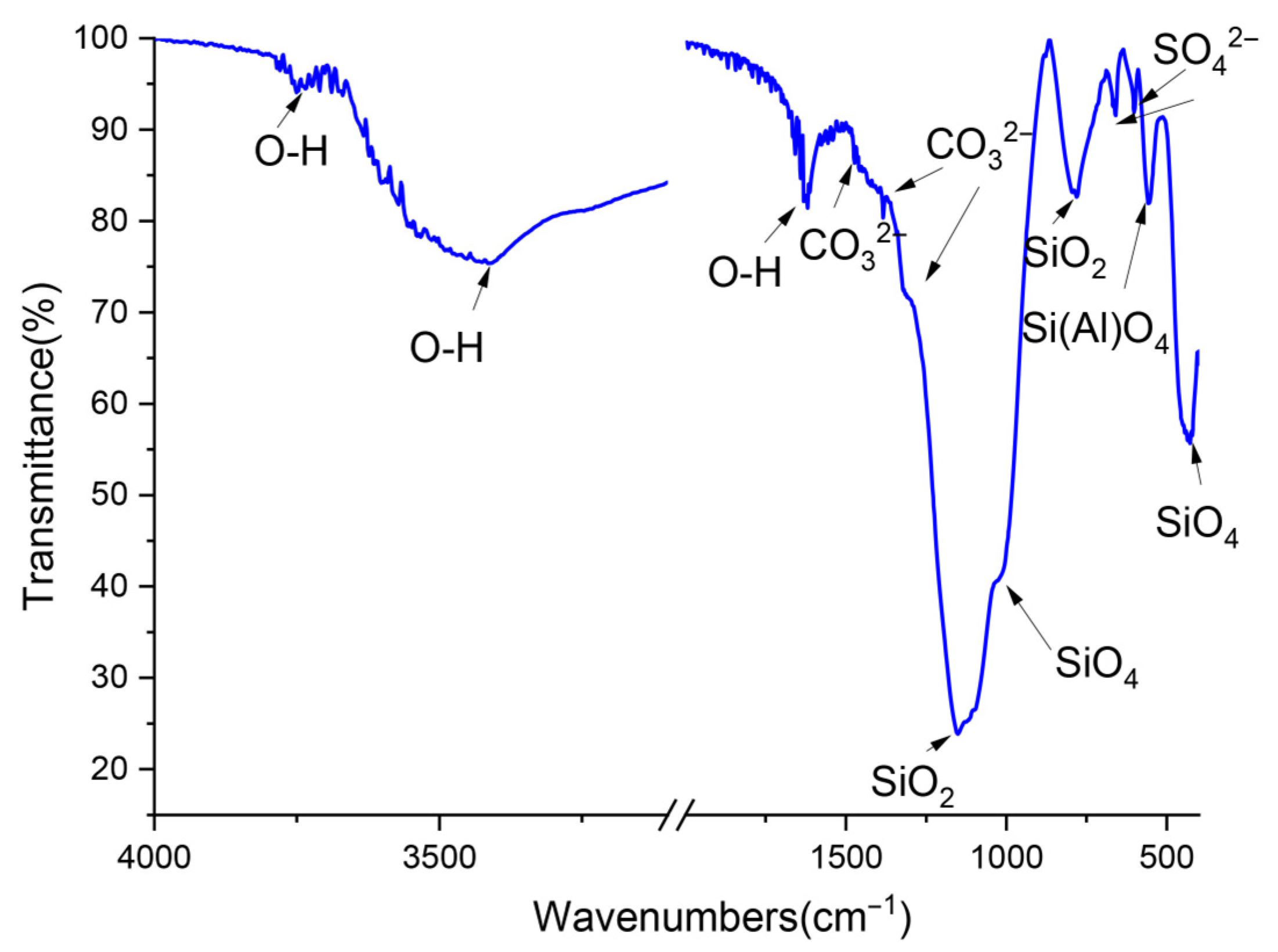
The FTIR results (
Figure 6) further confirmed the presence of sulfates and carbonates in lithium slag. As reported in our previous study [
8,
22], these sulfates mainly exist in the forms of gypsum and sodium sulfate.
The 28-day pozzolanic activity of LS was 92%, which was slightly lower than that of GBFS (98%) but higher than that of FA (76%).
2.2. Hydration Heat Evolution of LS-CH Pastes
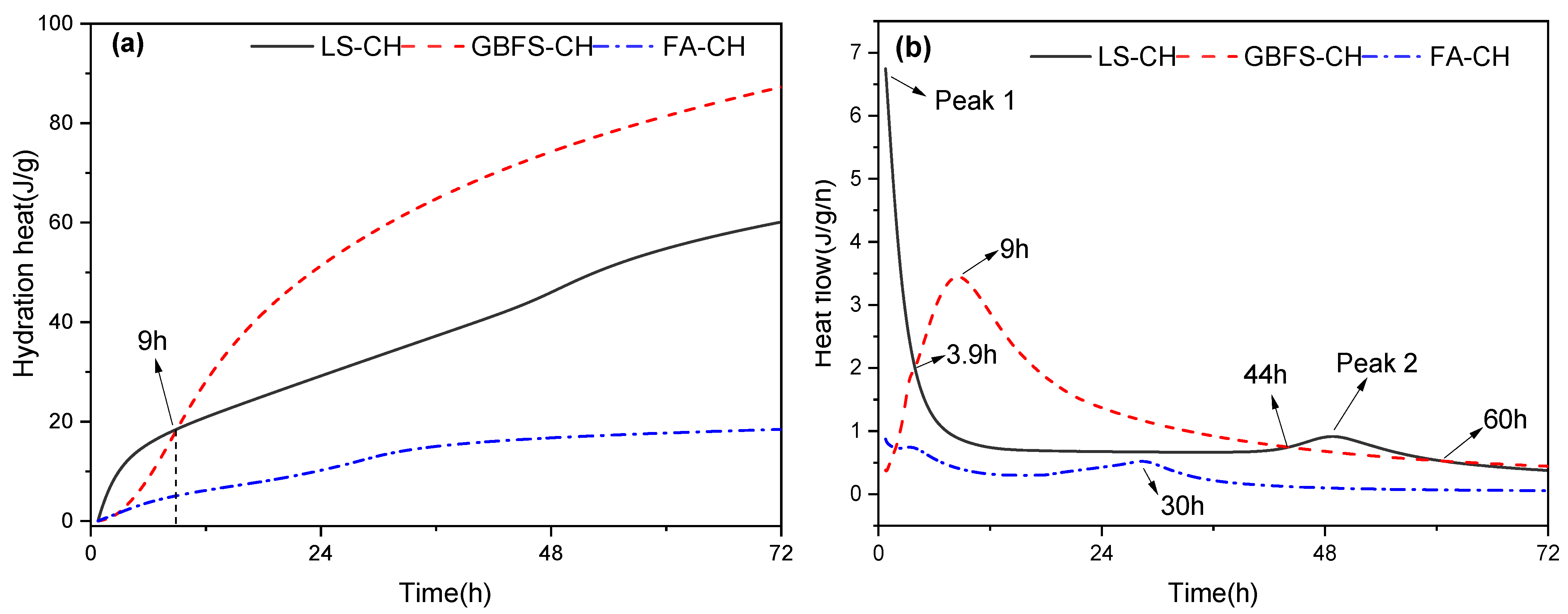
The cumulative hydration heat and heat flow of LS-CH pastes with a water-to-binder ratio of 0.3 at 20 °C are presented in
Figure 7. To clarify the hydration process of LS, the hydration heat results of GBFS-CH and FA-CH (prepared with the same mix proportion as LS-CH) are also included in
Figure 7. As observed, the 72 h cumulative hydration heat of GBFS-CH was the highest at 87.2 J/g, followed by LS-CH at 60.30 J/g, while FA-CH exhibited the lowest value at 18.51 J/g. This indicates that the reactivity of LS is significantly higher than that of FA but slightly lower than that of GBFS within 72 h. However, it is noteworthy that the cumulative hydration heat of LS-CH during the first 9 h was the highest, demonstrating that LS possesses the highest hydration reactivity in this early period.
FA is generally regarded as an inert material at very early ages, particularly within the 0–24 h period, and its influence on cement hydration is primarily attributed to the filling effect and the provision of nucleation and precipitation sites for C–S–H gels [
30]. Consequently, the hydration exothermic rate of the FA-CH mixture fell below 1 J/(g·h), with only several minor exothermic peaks observed within 30 h, as depicted in
Figure 7b. In contrast to FA-CH, both GBFS-CH and LS-CH exhibited relatively high hydration exothermic rates, especially within the first 24 h. Furthermore, the hydration process of the GBFS-CH paste featured a significantly larger and broader exothermic peak, which initiated at approximately 0–1 h and terminated at roughly 48 h. This phenomenon is likely due to the formation of C–S–H gels [
31].
However, two distinct exothermic peaks were observed during the hydration heat release of LS-CH pastes. The first exothermic peak was significantly higher than those of both GBFS-CH and FA-CH, whereas the second exothermic peak was relatively small: it was similar to that of FA-CH at approximately 30 h, but much lower than that of GBFS-CH at around 9 h. Notably, the hydration exothermic rate of LS-CH exceeded that of GBFS-CH again at 44 h. Thereafter, the two curves followed a similar trend after 60 h of hydration.
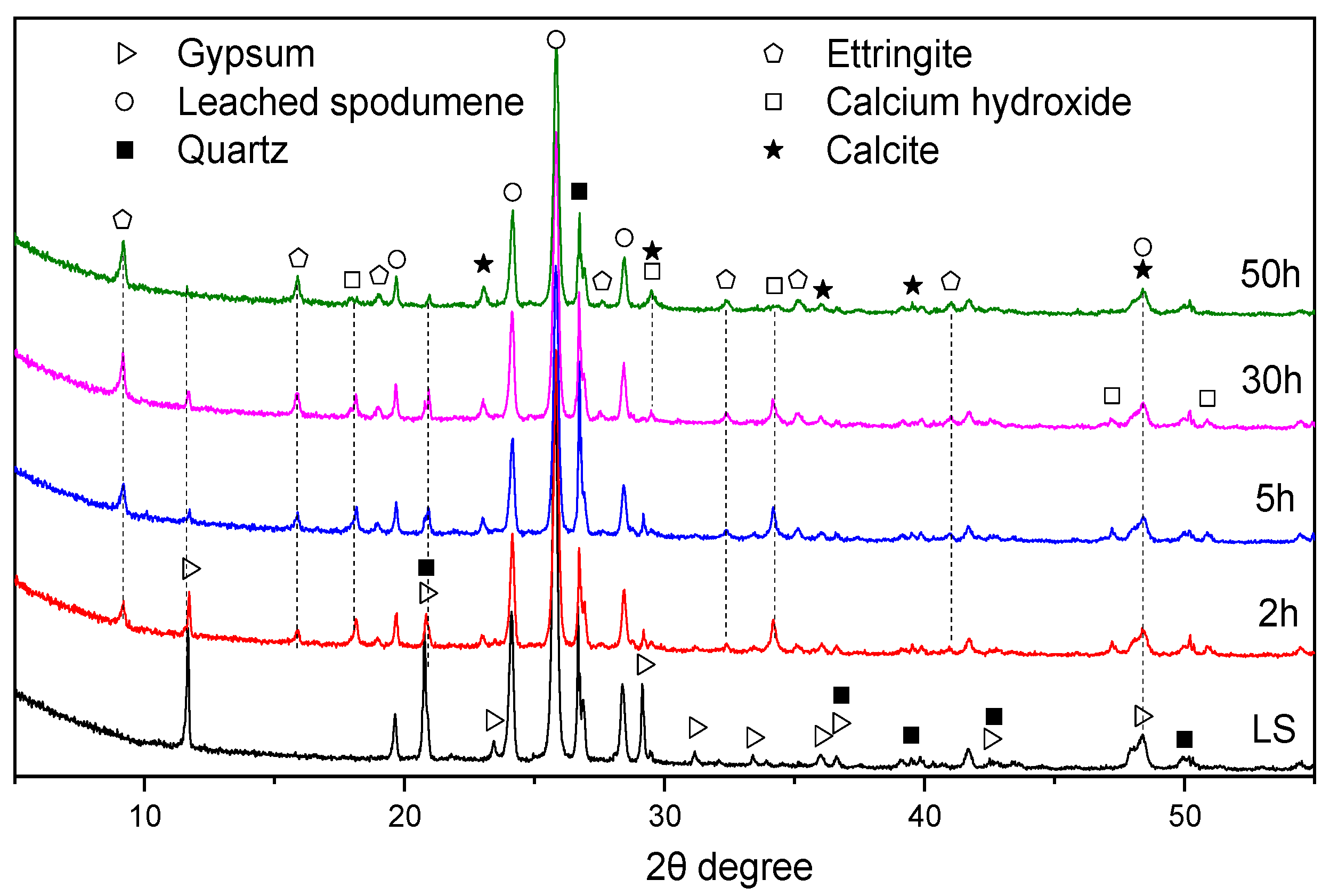
To further investigate the underlying causes of the two exothermic peaks formed during the hydration of LS-CH paste, XRD analysis was performed on its hydration products cured at 20 °C for 2 h, 5 h, 40 h, and 50 h in a sealed centrifuge tube. The XRD patterns were collected over a 2θ range of 5° to 55°, with the results presented in
Figure 8.
As shown in
Figure 8, aside from AFt, no obvious crystalline phases were generated in the LS-CH paste between 2 h and 5 h. This suggests that the first exothermic peak in
Figure 7b is primarily attributed to the formation of ettringite, together with the heat released from wetting and dissolution. Notably, the final setting time of the LS-CH paste was determined to be approximately 2 h. This indicates that the C–S–H gels formed by the reaction between LS and CH within 2–5 h further contributed to the hydration heat corresponding to the first exothermic peak.
As illustrated in
Figure 7b, a comparison of the hydration heat flow curves of LS-CH and GBFS-CH before 3.9 h shows that, despite GBFS having a higher amorphous phase content than LS, the heat flow of the GBFS-CH system during this period is considerably lower than that of LS-CH. Based on the above analysis, the heat released by GBFS-CH before 3.9 h is mainly attributable to C–S–H formation. Given the lower amorphous content in lithium slag, the thermal contribution from C–S–H formation in the LS-CH system would be correspondingly smaller at the same hydration age. It can therefore be inferred that C–S–H formation is not the primary mechanism responsible for the first exothermic peak observed in LS-CH. In contrast, LS contains a substantially higher SO
3 content. These results suggest that the first exothermic peak in the LS-CH system arises mainly from ettringite formation, with only a limited contribution from C–S–H gels. Accordingly, the enhanced hydration activity of lithium slag within the first 9 h can be attributed primarily to ettringite formation.
Between 30 h and 50 h, CaCO
3 was detected, while the diffraction peak of gypsum decreased further. This suggests that the second exothermic peak can be attributed to the reformation of AFt, along with the formation of CaCO
3. The formation of AFt between 30 h and 50 h is likely related to the renewed dissolution of Al
2O
3, which is similar to the corresponding process during cement hydration [
32]. Furthermore, the presence of residual unreacted gypsum in the LS-CH mixture after 50 h of hydration indicates that the second broad exothermic peak in
Figure 7b does not correspond to gypsum depletion or AFm formation [
33,
34].
2.3. Hydration Products of LS-CH Pastes Determined by XRD
2.3.1. Hydration Products of LS-CH Pastes Under Normal Curing Condition
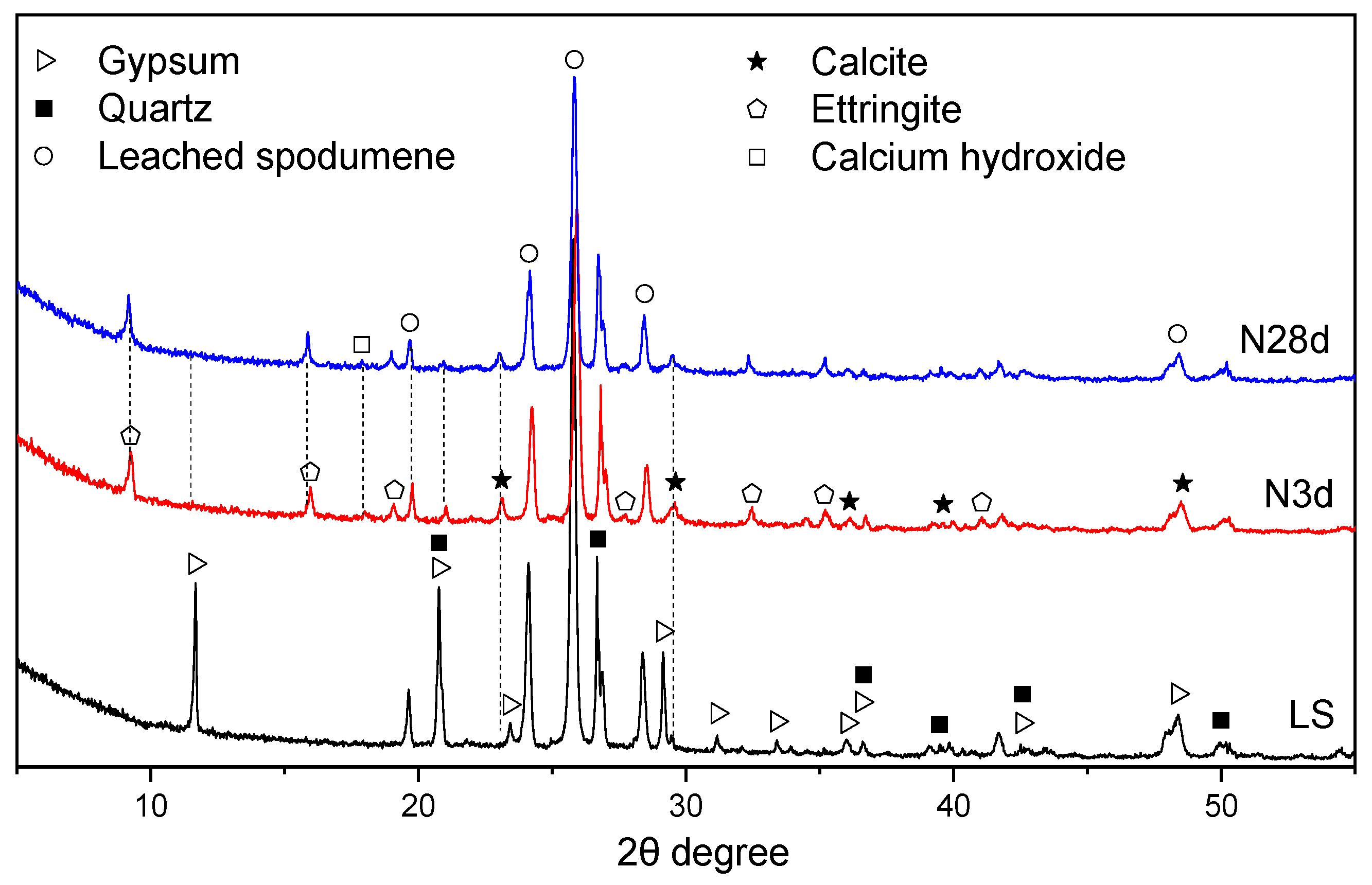
Figure 9 shows the XRD patterns of LS-CH pastes cured for 3 days (N3d) and 28 days (N28d) under normal curing conditions.
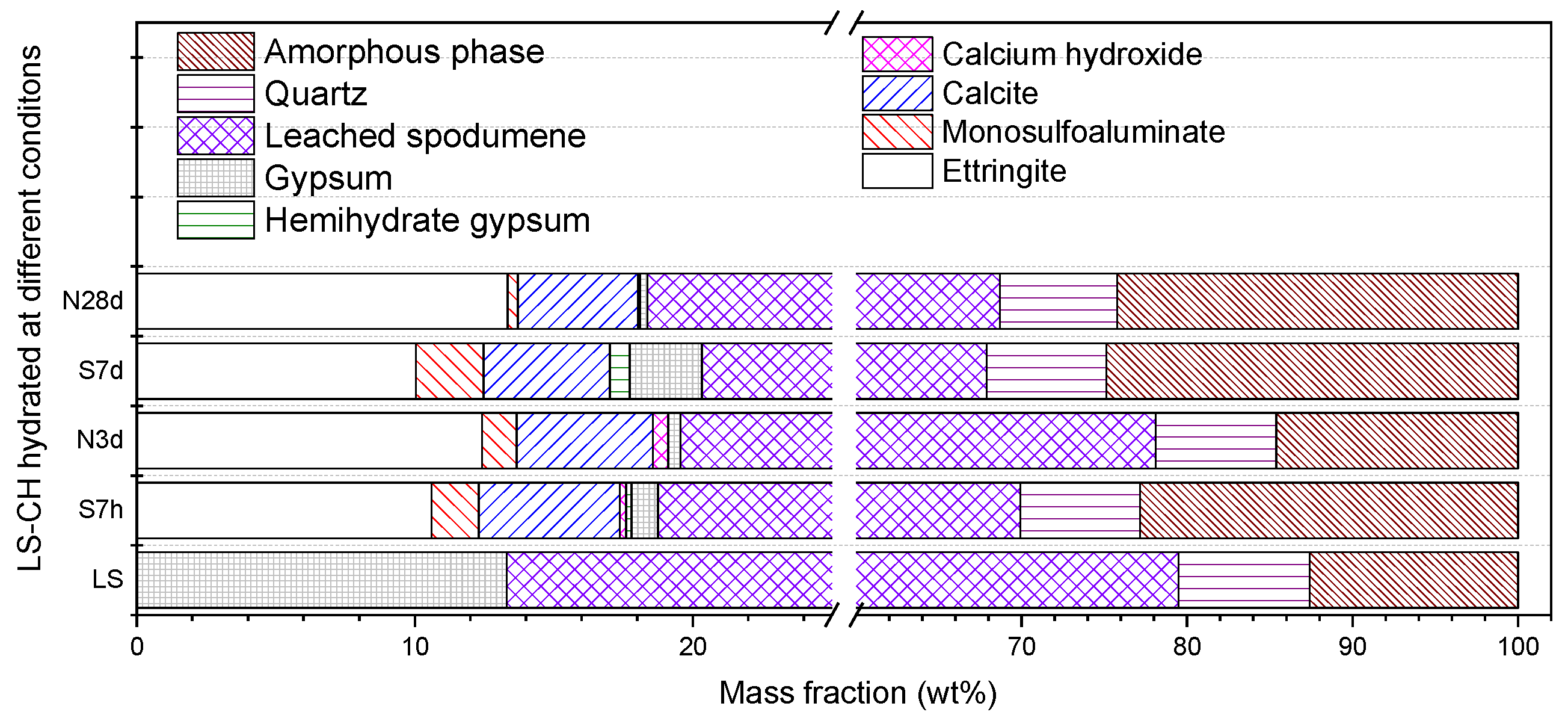
Figure 10 presents the relative content of each phase in LS-CH pastes, as determined by XRD/Rietveld analysis.
The results show that the diffraction peaks of gypsum (originally from LS) gradually weakened over time, whereas those of quartz remained largely unchanged. This indicates that the quartz in LS is either inert or exhibits extremely low reactivity. Notably, the main diffraction peak of LiAlSi
2O
6 slightly decreased over time, suggesting that, in addition to amorphous phases, LiAlSi
2O
6 can also slowly participate in the hydration reaction. Previous studies have identified leached LiAlSi
2O
6 as a zeolite-like phase [
26] with relatively low pozzolanic activity, comparable only to that of FA [
35].
At 3 d and 28 d, the primary reactive components in LS consisted of LiAlSi2O6 along with amorphous Al2O3, SiO2, and crystalline CaSO4·2H2O (gypsum). The major hydration products in LS-CH pastes included C–S–H gels, ettringite (AFt), and CaCO3 (calcite). Notably, owing to their amorphous nature, C–S–H gels could not be detected by XRD analysis, whereas the crystalline phases (AFt and CaCO3) were clearly identified. It should be noted that the formation of CaCO3 arose not only from the reaction between CH and carbonate but also from the carbonation of CH during specimen preparation. Accordingly, the primary phases in hardened LS-CH pastes were unreacted CH, C–S–H gels, AFt, CaCO3, SiO2 (quartz), and LiAlSi2O6.
Similar to metakaolin [
36,
37,
38], the main chemical reaction in LS-CH pastes involves the reaction between amorphous Al
2O
3, SiO
2, and CH. However, LS contains considerable amounts of SO
3 (primarily present as gypsum and other sulfates) and carbonates (
Figure 5). Meanwhile, LiAlSi
2O
6, which is rich in Al
2O
3 and SiO
2, can also participate in hydration reactions, although its reactivity is relatively low. Consequently, the overall hydration process can be described by reactions (1)–(4).
The formation of C–S–H gels:
The formation of CaCO
3 [
39]:
The reaction between LS and CH solution proceeds via a mechanism analogous to the pozzolanic reaction of LS in cement systems. The high-pH CH solution actively disrupts Si-O and Al-O bonds, promoting the formation of Al-bearing C–S–H gels via the reaction of SiO2 and Al2O3 (from both amorphous phases and partial dissolution of LiAlSi2O6) with CH. The proposed reaction mechanism comprises three key steps:
- (1)
CH-activated dissolution of SiO2 from LS releases SiO44− species into solution;
- (2)
the subsequent reaction of these silicate ions with CH forms C–S–H gels [
40,
41];
- (3)
the concurrent incorporation of aluminum species (released from Al
2O
3 dissolution) into the C–S–H structure yields C–(A)–S–H gels [
42].
Simultaneously, in the presence of gypsum and other sulfates, dissolved Al
2O
3 reacts with CH to initially form AFm phases, which subsequently convert to ettringite (AFt). Notably, carbonate ions may partially or fully replace sulfate in the ettringite structure through anion substitution [
40]. Furthermore, carbonate species derived from LS can react directly with CH in aqueous conditions to precipitate CaCO
3 (calcite). Additionally, CaCO
3 may form indirectly through the carbonation of CH upon exposure to atmospheric CO
2.
Unlike GBFS, LS contains both amorphous and crystalline phases. The crystalline phases in LS (e.g., gypsum and carbonates) mainly contribute to its early hydration activity within 9 h, as evidenced by the significantly higher hydration heat of the LS-CH system relative to GBFS-CH in
Figure 7. In contrast, the amorphous phase and spodumene in LS are primarily responsible for its later-stage reactivity. In the late hydration stage, spodumene and the amorphous phase in LS can react continuously with CH, releasing hydration heat steadily. Nevertheless, the performance is limited by several factors: the reactivity of spodumene is only comparable to that of FA; LS does not undergo the high-temperature water quenching process used for GBFS, leading to lower activity of its amorphous phase; and the amorphous phase content in LS is considerably lower than in GBFS. Owing to the combined effect of these factors, the hydration heat release of the LS-CH system after 9 h is lower than that of GBFS-CH.
2.3.2. Hydration Products of LS-CH Pastes Under Steam Curing Condition
As steam curing is widely used in precast concrete production, this study also investigated the hydration products of LS-CH paste under steam-cured conditions.
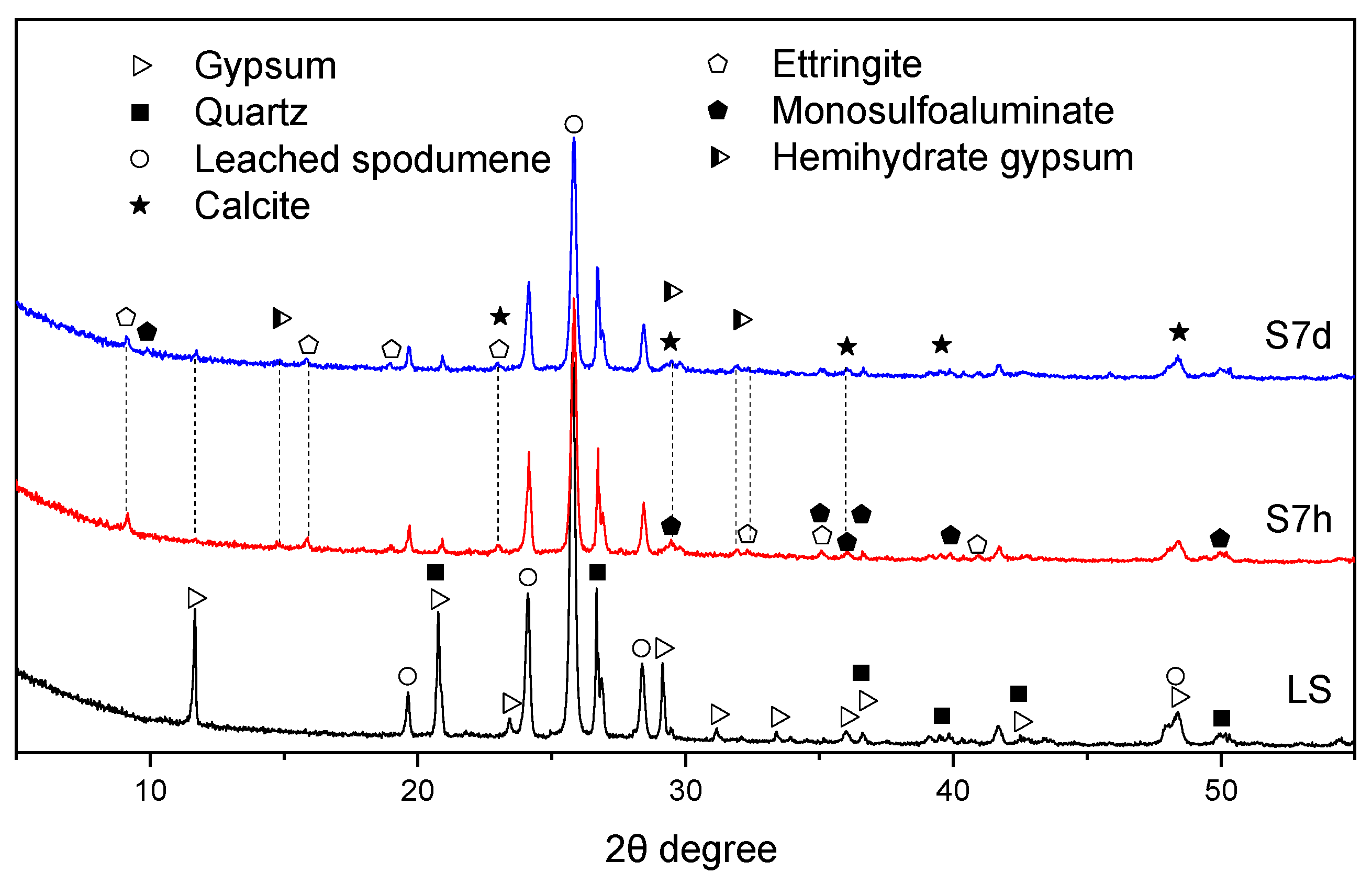
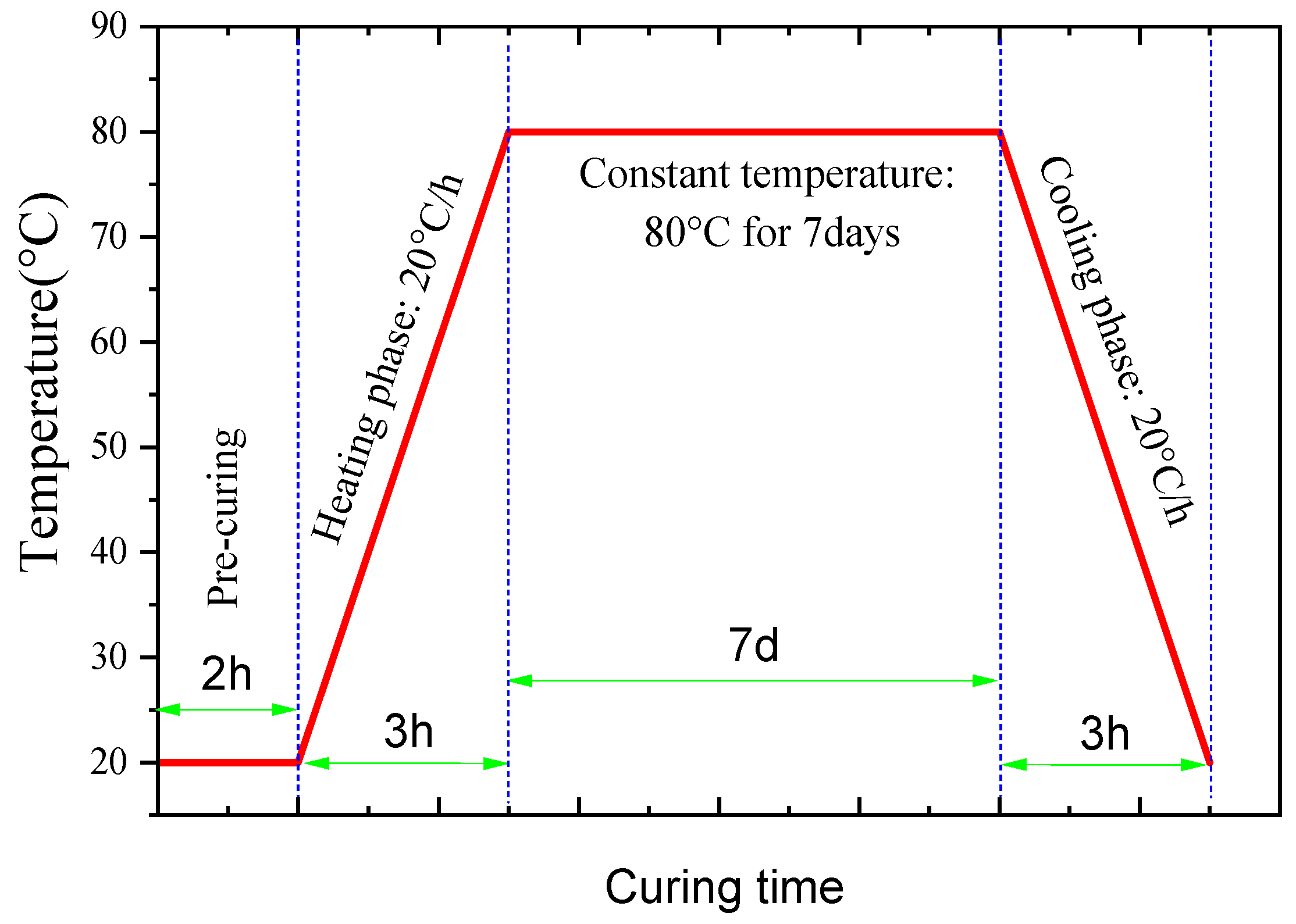
Figure 11 shows the XRD patterns of LS-CH pastes cured at 80 °C for 7 h (S7h) and 7 days (S7d) under steam curing. Analysis indicated that the main hydration products were C–S–H gels, ettringite (AFt), monosulfoaluminate (AFm), bassanite (CaSO
4·0.5H
2O), and calcite (CaCO
3), together with unreacted LiAlSi
2O
6 and quartz. A comparison of
Figure 10 and
Figure 11 demonstrated that steam curing significantly accelerates the hydration rate of LiAlSi
2O
6 compared with standard curing conditions, which is consistent with previous results [
8].
Taylor et al. [
43] demonstrated that excess gypsum can stabilize ettringite (AFt) even under elevated temperature, which explains its persistence after 7 h and 7 d of steam curing in this study. However, given the well-documented thermal instability of AFt at 80 °C [
44], we observed its gradual conversion to monosulfoaluminate (AFm) and bassanite (CaSO
4·0.5H
2O) after the initial 7 h of curing, a finding consistent with previous reports [
45]. Concurrently, elevated temperatures also accelerated the decomposition of gypsum into bassanite [
27].
With prolonged steam curing (7 d), two distinct phenomena were observed:
- (1)
further decomposition of AFt, as indicated by the progressive weakening of its characteristic XRD peaks (
Figure 11);
- (2)
the reappearance of gypsum diffraction signals.
This latter observation suggests the existence of a dynamic equilibrium involving sulfate release from continuous AFt decomposition and subsequent rehydration of bassanite back to gypsum under the steam curing conditions.
2.4. Morphology of Hydration Products in LS-CH Pastes Under SEM
2.4.1. LS-CH Pastes After 28 Days of Standard Curing
Given the high SO
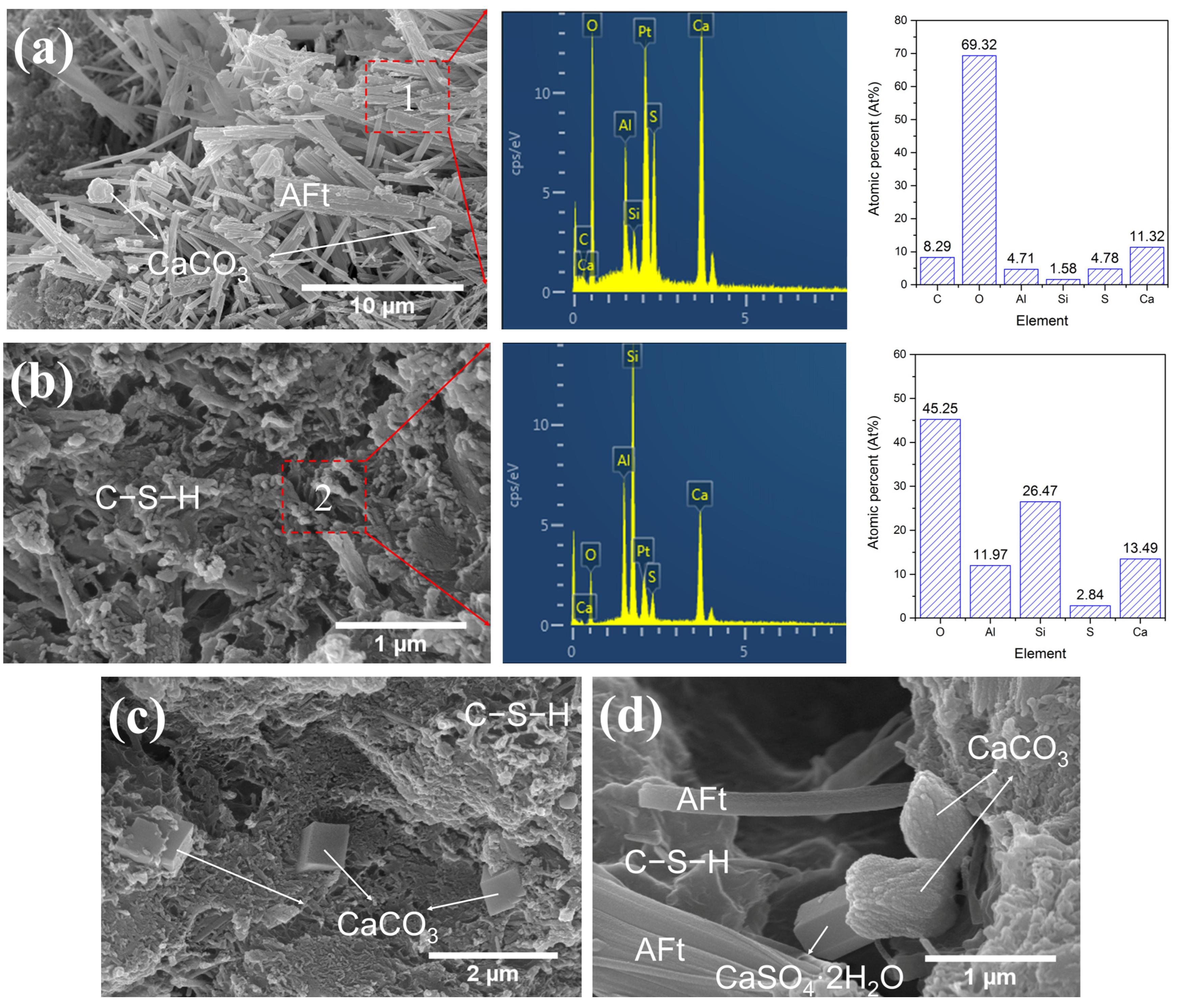
3 content in LS, SEM-EDS was used to conduct an in-depth investigation into the morphology and composition of hydration products in LS-CH pastes. The representative SEM-EDS results are presented below. Since no significant differences were observed in the hydration products of LS-CH pastes cured for 3 and 28 days,
Figure 12 only presents the morphology and EDS results of hydration products in the 28-day LS-CH paste.
As shown in
Figure 12, the hardened LS-CH paste consisted of six types of hydration products along with unreacted LS particles. These six hydration products were needle-like AFt with a length of 1~10 μm (
Figure 12a,d), spherical CaCO
3 with a particle size of approximately 1 μm (
Figure 12a), porous reticular C–S–H (
Figure 12b,d), cubic CaCO
3 with a particle size of about 1 μm (
Figure 12c), ellipsoidal CaCO
3 with a particle size of approximately 2 μm (
Figure 12d), and hexagonal prismatic gypsum with a particle size of approximately 1 μm (
Figure 12d).
Ettringite, which contains 32 bound water molecules, has a large molar volume that contributes to an increased solid volume and reduced porosity in hardened pastes [
46]. However, when formed in excess, the generation of loosely packed, polydisperse ettringite needles (
Figure 12a) can reduce the packing density and hinder the densification of the LS-CH matrix. Additionally, the high carbon content in the EDS analysis of ettringite (
Figure 12a) suggests that carbonates from the lithium slag were involved in its formation.
It is well established that CaCO
3 crystals typically exhibit three distinct morphologies: cubic calcite, spherical vaterite, and needle-like aragonite. Among these, calcite is the most thermodynamically stable under ambient conditions, whereas vaterite and aragonite tend to convert to calcite over time [
47]. Furthermore, the morphology of CaCO
3 is highly dependent on precipitation conditions, including solution pH, temperature, the presence of foreign ions (e.g., Mg
2+) and organic additives, as well as the degree of supersaturation [
47,
48].
In this study, the low alkalinity of the LS-CH hardened paste, carbonates present in LS, elevated curing temperature, and the use of acetone to halt hydration are believed to contribute to the formation of multiple CaCO
3 morphologies. Notably, CO
32− and Ca
2+ initially react to form metastable spherical or ellipsoidal vaterite (
Figure 12d), which subsequently undergoes gradual transformation into calcite. This indicated that ellipsoidal vaterite acts as an intermediate phase during calcite formation under the given conditions.
Additionally, the presence of unreacted gypsum (
Figure 12d) after 28 days of standard curing suggests incomplete sulfate consumption in the LS-CH paste. Consequently, special attention should be paid to the risk of delayed ettringite formation (DEF) when lithium slag is used as an SCM in concrete applications.
2.4.2. LS-CH Pastes Steam-Cured for 7 h and 7 Days
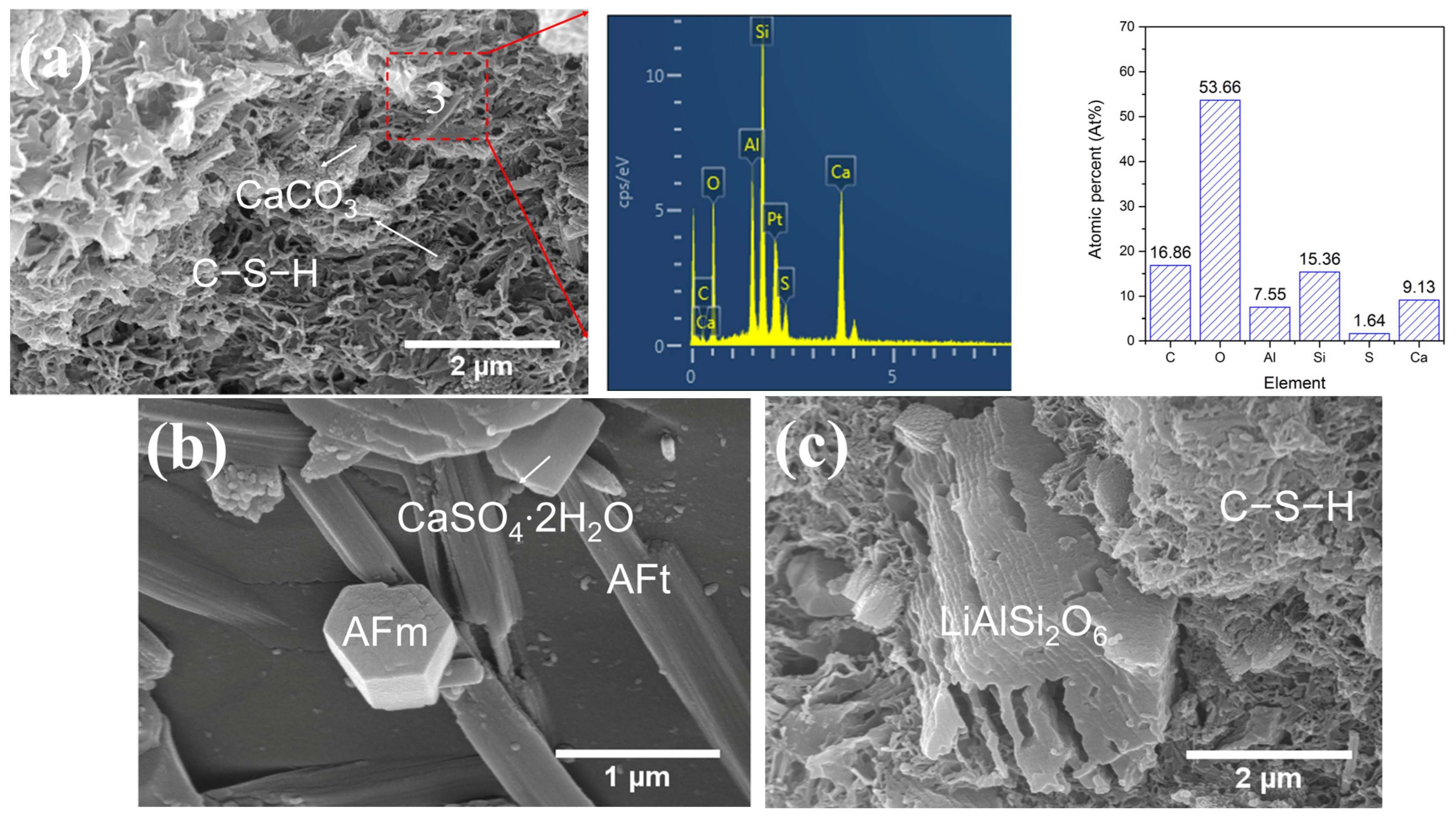
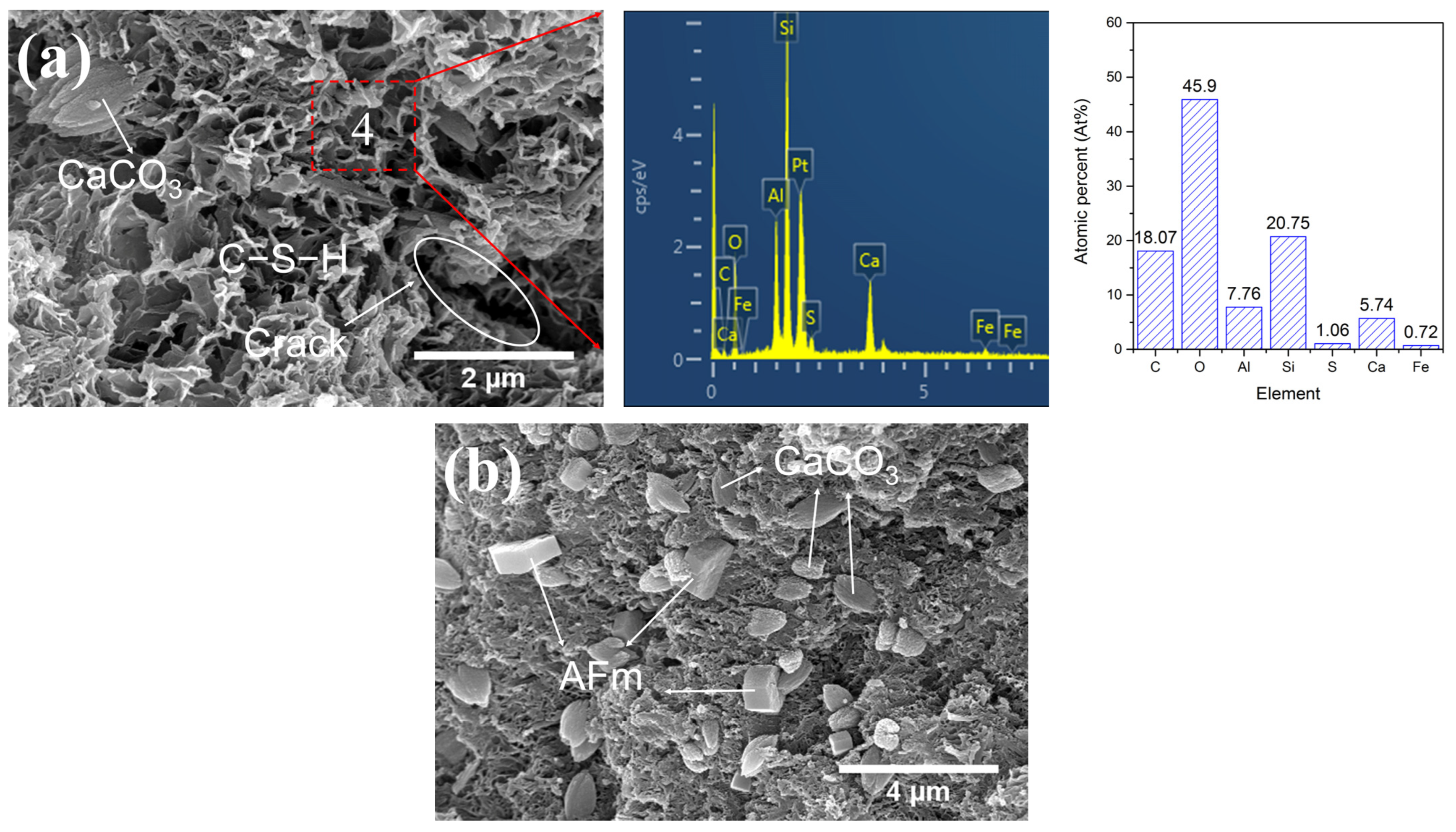
Figure 13 and
Figure 14 present the microstructural characteristics of hydration products in LS-CH pastes after steam curing for 7 h and 7 days, respectively. The main hydration phases formed under steam curing include: (1) loose reticular C–S–H gels (
Figure 13a,c and
Figure 14a); (2) fibrous AFt with a length of 5 μm and a diameter of 0.5 μm (
Figure 13b); (3) hexagonal plate-like AFm with a size close to 1 μm (
Figure 13b and
Figure 14b); (4) ellipsoidal CaCO
3 with a particle size of 0.5~1 μm (
Figure 13a and
Figure 14b); and (5) short prismatic gypsum crystals with a particle size close to 1 μm (
Figure 13b). Notably, the appearance of partially eroded LiAlSi
2O
6 after heat treatment indicates its involvement in the hydration reaction, especially at elevated temperatures. This observation is in good agreement with the XRD results.
Consistent with the high SiO
2, Al
2O
3, and SO
3 contents in lithium slag, the C–S–H gels in the LS-CH paste exhibited lower Ca/Si ratios (0.28~0.59) and higher Al/Si ratios (0.37~0.49) (
Figure 12b,
Figure 13a and
Figure 14a), along with significant sulfate adsorption (
Figure 12b,
Figure 13a and
Figure 14a). Previous studies have established that sulfate primarily adsorbs onto Si-O sites as CaSO
3 complexes without being incorporated into the C–S–H gel structure [
46,
49], this adsorption behavior may subsequently promote the formation of AFt and AFm phases.
Interestingly, the C–S–H gels maintained a relatively loose, highly porous structure (
Figure 12b,
Figure 13a and
Figure 14a) regardless of curing conditions. This observation aligns with the existing literature: Bérodier et al. [
49] reported that elevated sulfate content reduces the bulk volume of C–S–H gels while increasing capillary porosity, whereas Adu-Amankwah et al. [
50] observed that excess sulfate lowers gel water content and increases porosity. Although our results support these findings, the underlying mechanisms warrant further investigation.
2.5. TG/DTG Analysis Results of Hydration Products in LS-CH Pastes
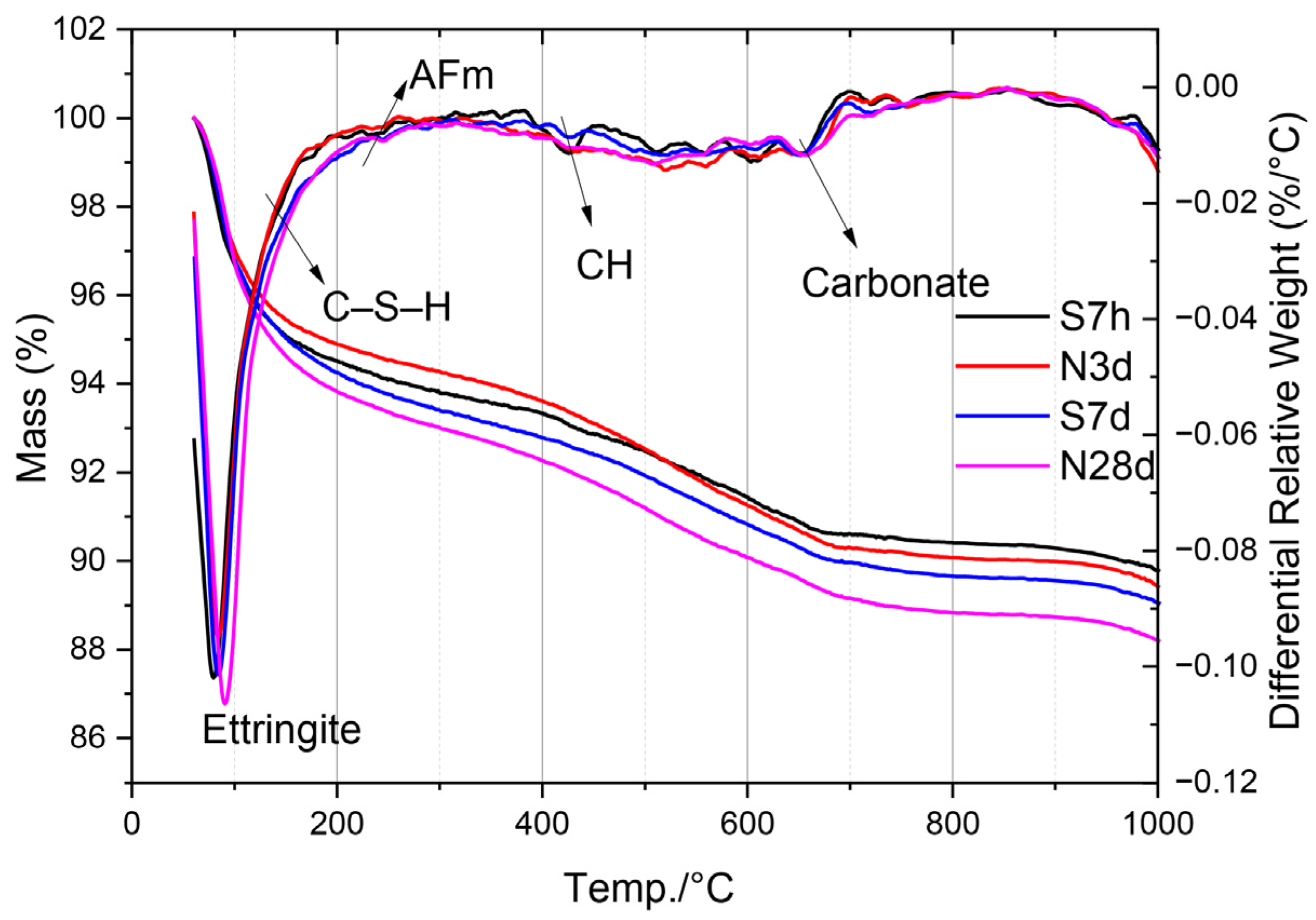
Figure 15 presents the TG/DTG results of LS-CH pastes under different curing conditions. The characteristic mass loss events within specific temperature ranges, along with their corresponding chemical reactions, are systematically summarized in
Table 3. In addition,
Table 4 provides a quantitative analysis of total weight loss percentages within defined temperature intervals for all investigated LS-CH paste samples.
The mass loss observed between room temperature and 400 °C primarily corresponds to the decomposition of newly formed hydration products in LS-CH paste, thus serving as a reliable indicator of hydration degree. Based on this analysis, the relative hydration degrees under different curing conditions followed the order: N28d > S7d > S7h > N3d. Although steam curing at early ages promotes hydration, prolonged steam curing (7 days) appeared to inhibit further hydration development. This phenomenon may be attributed to the gradual decomposition of ettringite under extended thermal treatment, as well as the limited CH content in the LS-CH mixture.
In addition, trace carbonate phases were detected in all four LS-CH paste samples. These carbonates may originate from: (1) reactions between inherent carbonates in LS and CH, (2) carbonation occurring during sample preparation or storage, or (3) residual unreacted carbonates in the original LS material.
Besides the non-evaporable water, the mass loss of the LS-CH paste between room temperature and 1000 °C also reflects the decomposition of carbonates, unreacted gypsum, and residual CH. Nevertheless, the total mass loss remained considerably lower than that of pure cement paste [
8], indicating that the hydration degree of LS-CH pastes is relatively low compared with conventional cement systems.
2.6. Hydration Products of LS-CH Pastes Determined by FTIR
To better understand the distinct hydration characteristics of LS-CH paste compared with conventional cement systems, Fourier transform infrared spectroscopy (FTIR) was employed to analyze the chemical composition of hydration products.
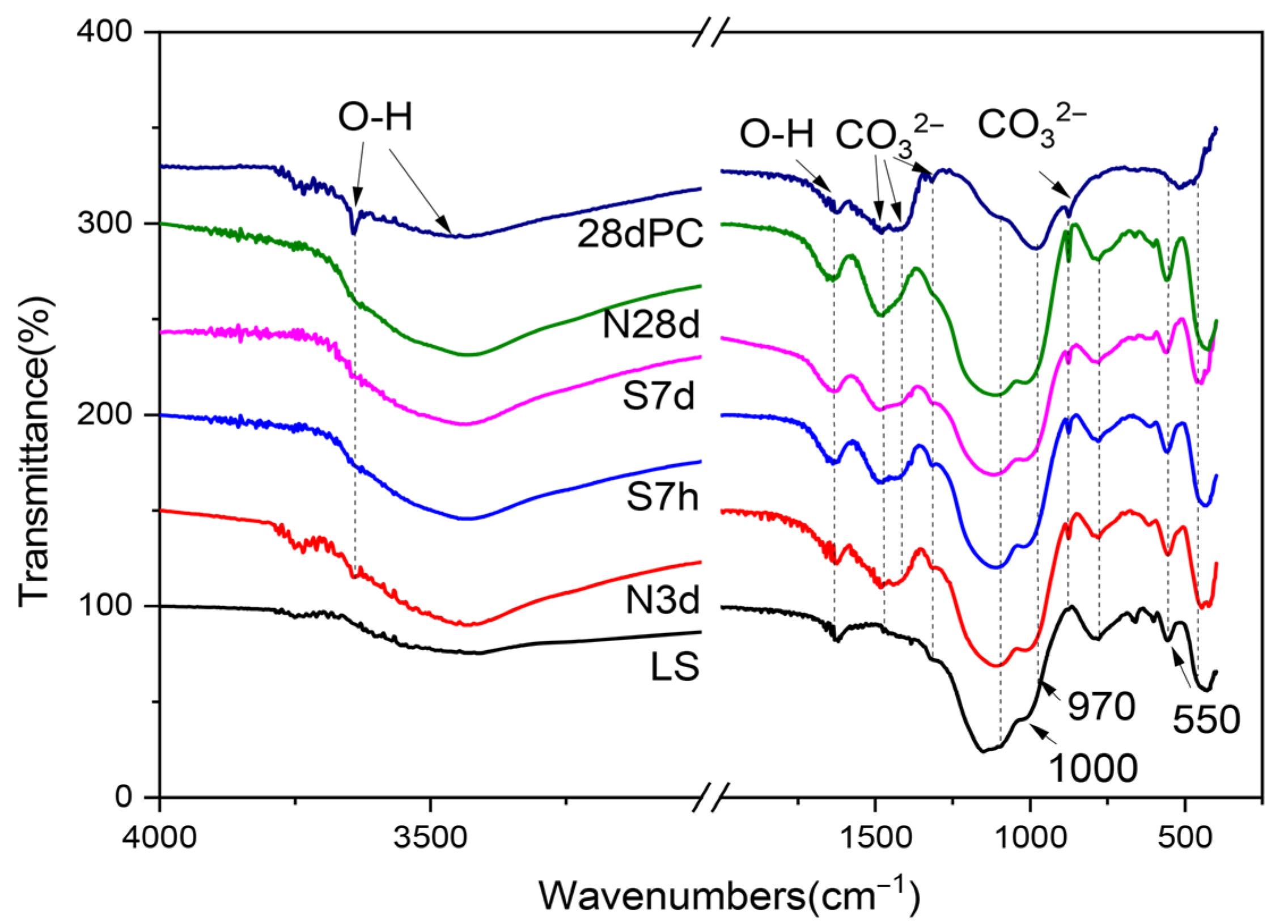
Figure 16 shows the comparative FTIR spectra of: (1) LS-CH paste and (2) Portland cement paste (
w/
c = 0.3) after 28 days of hydration under standard curing conditions.
As shown in
Figure 16, the distinct band at 3640 cm
−1, assigned to the stretching vibration modes of H-OH groups, corresponded to calcium hydroxide in both the hardened cement paste and hardened LS-CH pastes. Meanwhile, the band at 875 cm
−1 is associated with the out-of-plane bending (ν
2) modes of CO
32− and the antisymmetric stretching modes of AlO
4 groups [
53]. This result further confirms that, similar to its role in hardened cement paste, the carbonate phase is also an important hydration product in hardened LS-CH paste, which is consistent with SEM observations.
The main differences between the hydration products of LS-CH pastes and PC paste appeared in the characteristic bands within the ranges of 1000–970 cm
−1 and 550–520 cm
−1 [
54]. This can be attributed to two factors: firstly, the presence of unreacted spodumene and quartz; secondly, in LS-CH pastes, the band at 970 cm
−1, which is characteristic of the Si-O stretching vibrations in C–S–H gels, exhibited a significant shift toward higher wavenumbers compared to that in PC paste (from 970 cm
−1 to 1000 cm
−1). This phenomenon further indicates an increased content of Al incorporated into C–S–H gels, as well as the gradual polymerization of silicate chains in C–S–H gels accompanied by a decreasing Ca/Si ratio [
55]. These findings are consistent with the aforementioned SEM-EDS analysis results.
2.7. Hydration Products of LS-CH Pastes Determined by BET Analysis
To further analyze the differences in properties between the hydration products of LS-CH pastes and those of 28-day PC paste, the multipoint Brunauer–Emmett–Teller (BET) analysis was performed to characterize the hydration products of LS-CH paste, with the results presented in
Table 5. BET analysis is well suited for characterizing the gel pores in calcium silicate hydrate (C–S–H) and partial transitional pores in hardened LS-CH paste [
56]. Accordingly, BET results can provide insights into the structural characteristics of C–S–H to some extent. Specifically, pore structure reflects the compactness of C–S–H, whereas specific surface area acts as an indicator of its cementitious potential.
As shown in
Table 5, LS-CH pastes exhibited a coarser pore structure than PC paste, characterized by larger average pore diameters (25.88–43.61 nm vs. 19.09 nm), lower specific surface areas (11.49–17.96 m
2/g vs. 29.98 m
2/g), and higher cumulative pore volumes (0.1580–0.1638 cm
3/g vs. 0.1530 cm
3/g).
The phase composition of conventional cement hydration products typically consists of 50–60% C–S–H, 20–25% calcium hydroxide, and 5–10% ettringite [
57,
58]. In contrast, the LS-CH system displayed a markedly distinct phase assemblage: C–S–H content below 24.88% (
Figure 10), calcium hydroxide ranging from 5.47% to 7.19% (
Table 4), and ettringite between 10.60% and 13.34% (
Figure 10). This unique phase composition, differing from that of traditional hardened cement pastes, is the primary cause of the coarser pore structure and lower specific surface area observed in the hardened LS-CH paste. These characteristics are mainly attributed to the low C–S–H content, high ettringite content, and the large proportion of unreacted lithium slag.
In addition, the reticular C–S–H structure formed in the LS-CH paste in this study was relatively loose, with its gel pore size significantly larger than that of C–S–H gel in hardened cement paste [
59], reaching several tens of nanometers (
Figure 12b,
Figure 13a and
Figure 14a). Meanwhile, a large number of unreacted lithium slag particles were present in the LS-CH paste. Owing to the inherently porous structure of lithium slag (with an average pore size of 19.96 nm, as shown in
Table 5), the incorporation of these unreacted particles further increased the porosity of the paste. Furthermore, it should be noted that although a moderate amount of ettringite can refine the microstructure via pore-filling effects, excessive ettringite formation may instead increase porosity [
60].
Extending the curing age promotes the formation of C–S–H (
Table 4). Consequently, under both standard and steam curing regimes, prolonged curing (N28d vs. N3d; S7d vs. S7h) yields a finer pore structure, characterized by smaller average pore diameters and larger specific surface areas. This refinement is attributed to the inherently high specific surface area and dense nature of C–S–H gel. In contrast, early-age steam-cured samples (S7h) exhibited larger average pore diameters and specific surface areas than their standard-cured counterparts (N3d). This result arises from a dual effect: while steam curing accelerates early-age C–S–H formation, it also induces rapid hydration that can lead to an uneven distribution of products, thereby introducing more and larger pores. Consistent with this mechanism, S7d samples displayed a larger pore diameter than N28d samples. Nevertheless, owing to the lower total volume of C–S–H formed in S7d samples, their pore volume and specific surface area remained lower than those of N28d.
2.8. Mechanical Properties
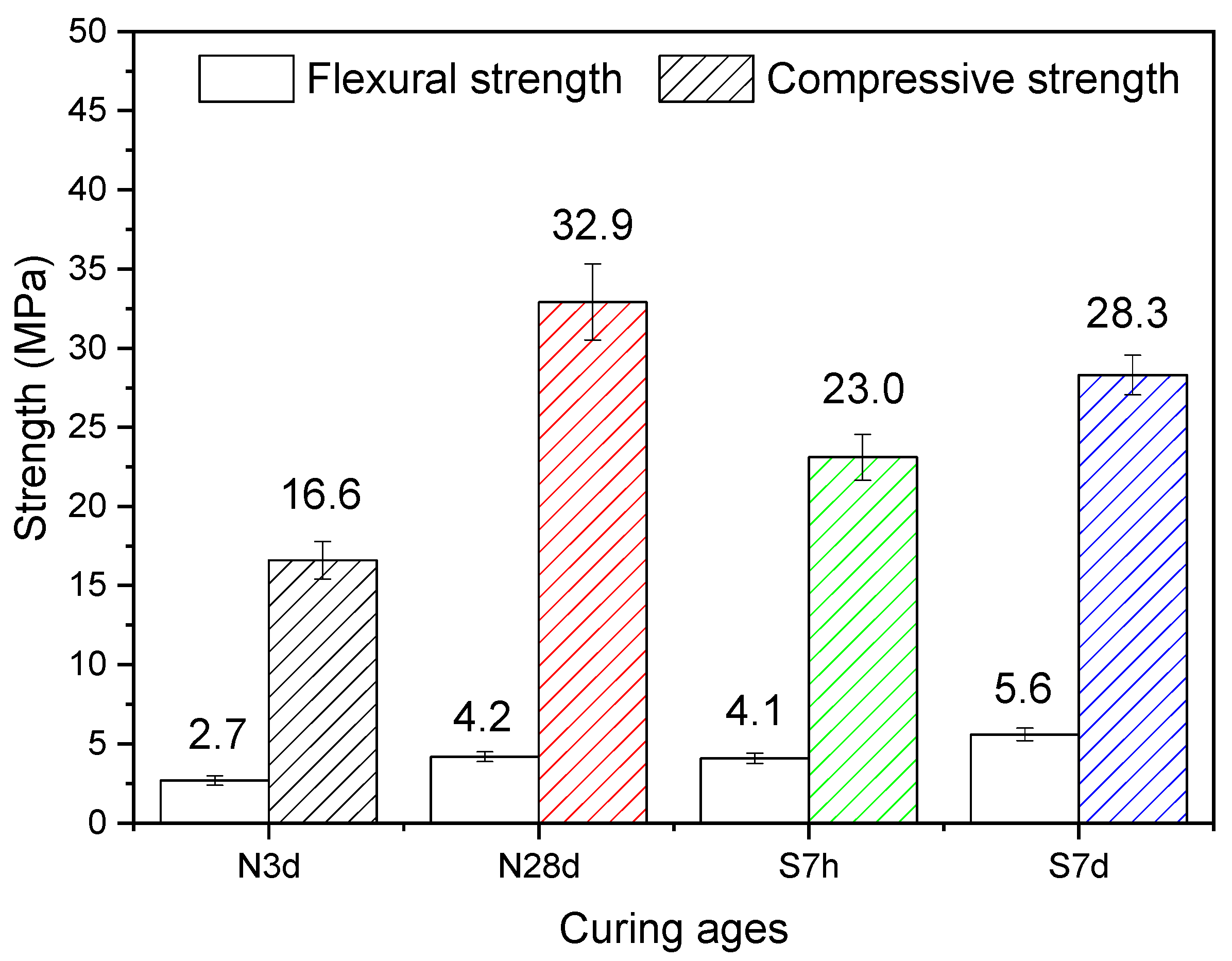
Figure 17 presents the mechanical strength development of LS-CH pastes under various curing regimes. Under standard curing conditions, the 3-day compressive and flexural strengths reached 16.6 MPa and 2.7 MPa, respectively, and increased to 32.9 MPa and 4.2 MPa after 28 days of hydration. As discussed earlier, this significant strength development is primarily attributed to the substantial formation of AFt and C–(A)–S–H gels.
Steam-cured specimens exhibited enhanced early-age strength, with 7 h compressive and flexural strengths reaching 23.0 MPa and 4.1 MPa, respectively. These values exceeded those of 3-day normally cured samples. This significant improvement clearly demonstrates the beneficial effect of elevated temperature in activating the hydration potential of lithium slag. However, extending the steam curing duration to 7 days resulted in only moderate strength gains (28.3 MPa compressive and 5.6 MPa flexural), representing increases of just 23.0% and 36.6%, respectively, relative to the 7 h steam-cured specimens.
The compressive strengths of the four specimens—N3d, S7h, S7d, and N28d—increased sequentially. This can be attributed to the gradual rise in the content of newly formed hydration products (
Table 4) and the corresponding increase in N
2 specific surface area (
Table 5), which serves as an indicator of C–S–H formation.
Notably, the compressive strength of the 7-day steam-cured specimen (S7d) was lower than that of the 28-day standard-cured specimen (N28d). This behavior is not only associated with the lower quantity of hydration products generated, but also with microstructural defects induced by prolonged high-temperature exposure—especially microcracks (
Figure 14a) and a coarsened pore structure (
Table 5)—which collectively impaired strength development. Interestingly, however, S7d exhibited a higher flexural strength. This may be attributed to its lower CH content (
Table 4). Wang et al. [
61] previously reported that a lower content of CH, along with a smaller CH particle size, can improve the interfacial transition zone and thereby help enhance the flexural strength of concrete.
In addition, after 28 days of normal curing, the flexural and compressive strengths of LS-CH are approximately one-third of those of P·I 42.5 cement under the same conditions [
62]; whereas under steam curing at 80 °C for 7 days, the compressive strength and flexural strength of LS-CH reach 3.49 times and 1.70 times those of ferronickel slag powder activated by 10% CH, respectively, under identical curing conditions [
63]. These favorable mechanical properties not only confirm the high pozzolanic reactivity of lithium slag but also demonstrate the potential of LS-CH paste as a viable cementitious material.
2.9. Discussion
2.9.1. Differences Between LS and Traditional SCMs
Distinct from conventional SCMs, lithium slag is characterized by elevated SO
3 and carbonate contents. These components exist in specific chemical forms: SO
3 is present mainly as calcium sulfate (both hydrated and anhydrous CaSO
4) and sodium sulfate (Na
2SO
4), while carbonates occur as CaCO
3, Na
2CO
3, and Li
2CO
3. SO
3 plays a crucial role in controlling setting behavior through a dual mechanism: (1) at low concentrations, it retards hydration by moderating C
3A reactivity, thereby prolonging setting time; (2) at high concentrations, it accelerates hydration through rapid ettringite formation, which may induce flash setting [
46,
49].
Similarly, the presence of carbonates in LS also exerts a dual effect on the LS-CH system. On the one hand, carbonates react with Ca
2+ in the system to form CaCO
3, lowering the Ca
2+ concentration. This in turn promotes further dissolution of CH and releases more OH
−, increasing the alkalinity of the system and accelerating the dissolution of the amorphous phase in LS [
64]. Meanwhile, carbonate ions can partially replace sulfate ions during ettringite formation, accelerating the setting of the system [
40]. On the other hand, the reduced Ca
2+ concentration retards the nucleation of C–S–H, thereby prolonging the setting time [
65].
Although LS is rich in SiO
2 and Al
2O
3 (
Table 1), these components mainly exist as crystalline LiAlSi
2O
6 rather than in reactive amorphous phases. The low reactivity of LiAlSi
2O
6 explains the weaker pozzolanic activity of LS at later ages compared with GBFS, which contains a higher proportion of amorphous aluminosilicate phases. However, high-temperature treatment can significantly improve the reactivity of spodumene (
Figure 10 and
Figure 13c and
Table 4). Therefore, lithium slag is highly suitable for applications in components cured at high temperatures [
8,
22], or it can be effectively utilized after a high-temperature pretreatment process [
66].
2.9.2. Differences Between LS-CH and Traditional Cement Products
Additionally, owing to the high SO
3 and carbonate contents in lithium slag, ettringite and CaCO
3 constitute a considerable proportion of the hydration products in hardened LS-CH pastes (
Figure 10 and
Table 4). Their contents are not only markedly higher than those in conventional cement-based materials but also in some cases even exceed that of C–S–H gel in LS-CH pastes. This distinctive chemical composition exerts several critical influences on the properties of LS-CH paste:
- (1)
Reduced fluidity and enhanced early strength: The rapid formation of ettringite accelerates paste hardening and improves early-age strength (
Figure 17). Meanwhile, it consumes considerable free water, thereby reducing the fluidity of the fresh paste (the fluidity of the LS-CH mortar was 120 mm).
- (2)
Pore structure: The LS-CH paste displays a coarser pore structure and a smaller specific surface area (
Table 5).
- (3)
Thermal stability of ettringite: Prolonged steam curing provides only limited benefits to the LS-CH paste. Even when the curing duration is increased from 7 h to 7 days, the increases in hydration products and mechanical properties remain negligible, as shown in
Table 4 and
Figure 15. This limited improvement is mainly controlled by two factors: the thermal instability of ettringite and thermal damage caused by steam curing (
Figure 14a), both of which restrict further property development. Therefore, from the perspective of balancing energy costs and strength gain, prolonged high-temperature steam curing should be applied cautiously to LS-CH specimens. It is also worth noting that this limited strength enhancement may be associated with the low CH content in the LS-CH system. Hence, future research could further explore the performance evolution of LS-CH with different CH dosages under various steam curing conditions.
- (4)
Delayed ettringite formation: The high SO
3 content raises potential concerns regarding delayed ettringite formation (DEF), which requires further investigation. However, existing literature indicates that in low-alkalinity lime-based systems, carbonation tendencies may suppress the stability of ettringite [
67].
2.9.3. Thermal Damage Caused by Steam Curing
As shown in
Figure 14a and
Table 5, microcracks and pore coarsening appeared in the LS-CH paste under steam curing conditions, indicating that steam curing caused thermal damage to LS-CH.
Thermal damage caused by steam curing to concrete typically includes three types: unrecoverable expansion deformation, surface layer defects, and embrittlement effects, all of which are detrimental to its durability [
68]. This can be attributed to three main factors: (1) The rapid and uneven formation of hydration products leads to coarsening and deterioration of the pore structure [
69]. (2) Thermal expansion mismatch induces microcracking. At the macroscopic level, the temperature gradient arising from differential heat dissipation between the surface and interior creates thermal stress gradients, resulting in surface microcracks. At the mesoscopic level, the mismatch in thermal expansion coefficients between aggregate and cement paste imposes additional stresses on the interfacial transition zone (ITZ) during heating and cooling. Furthermore, a higher steam-curing temperature leads to a more uneven microhardness distribution in the ITZ and a greater number of interfacial defects [
70]. (3) When concrete is heated, the internal free water expands and partially vaporizes, generating internal steam pressure [
71].




 ,
,