
Article

Hybrid Conductive Hydrogels Reinforced by Core–Shell PANi@PAN Nanofibers for Resilient Electromechanical Stability at Subzero Temperatures

Key Laboratory of Optoelectronic Devices and Systems of Ministry of Education and Guangdong Province, College of Physics and Optoelectronic Engineering, Shenzhen University, Shenzhen 518000, China
*
Author to whom correspondence should be addressed.
These authors contributed equally to this work.
Gels 2026, 12(5), 358; https://doi.org/10.3390/gels12050358
Submission received: 7 March 2026 / Revised: 13 April 2026 / Accepted: 17 April 2026 / Published: 24 April 2026
(This article belongs to the Special Issue Gel Materials for Advanced Energy Systems and Flexible Devices)

Abstract

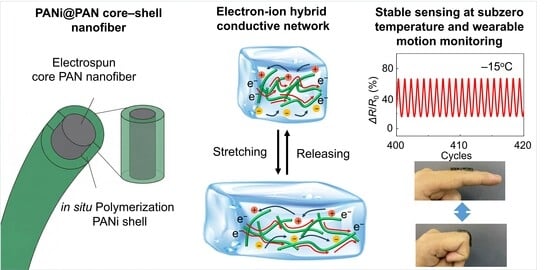
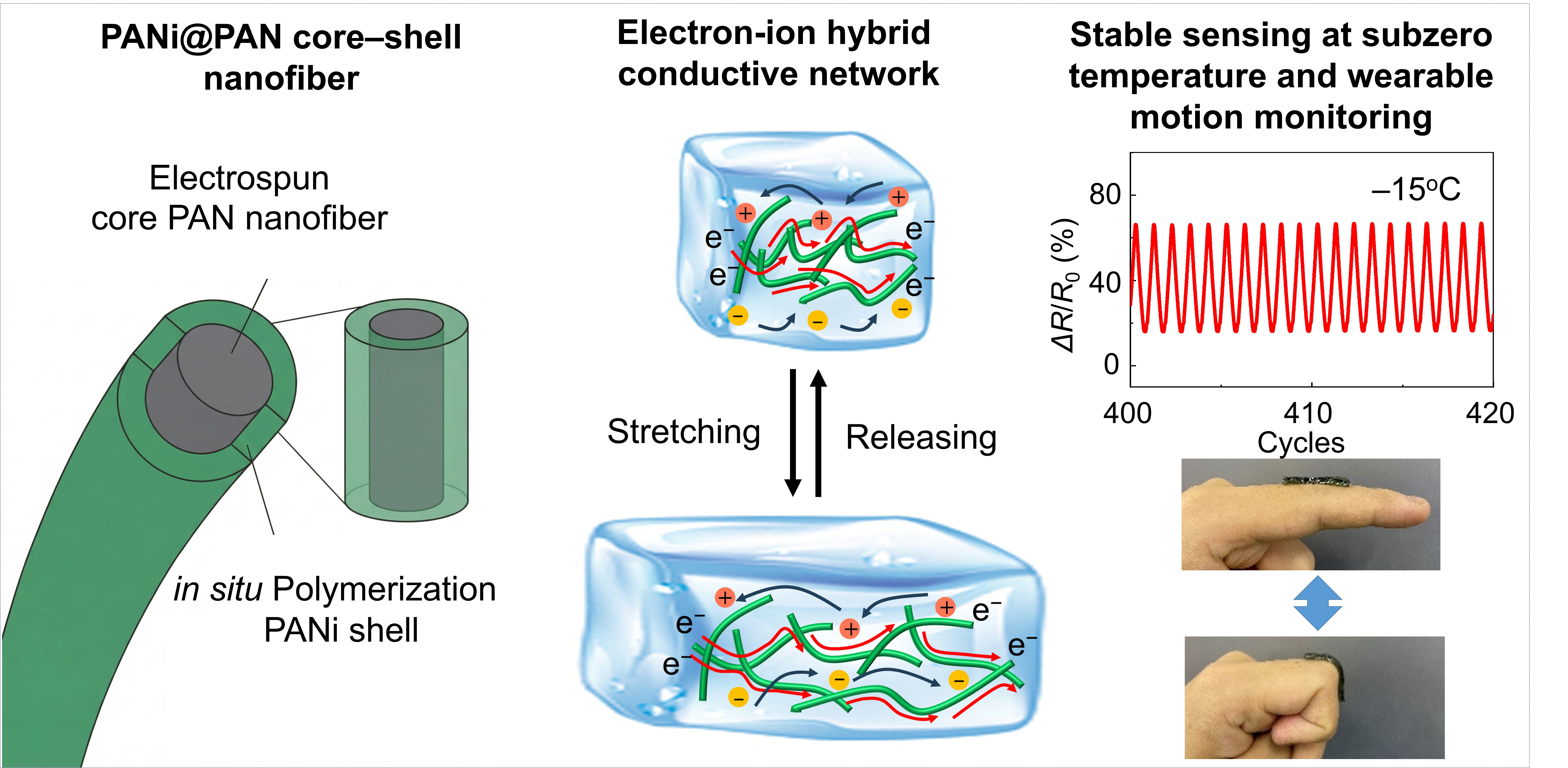
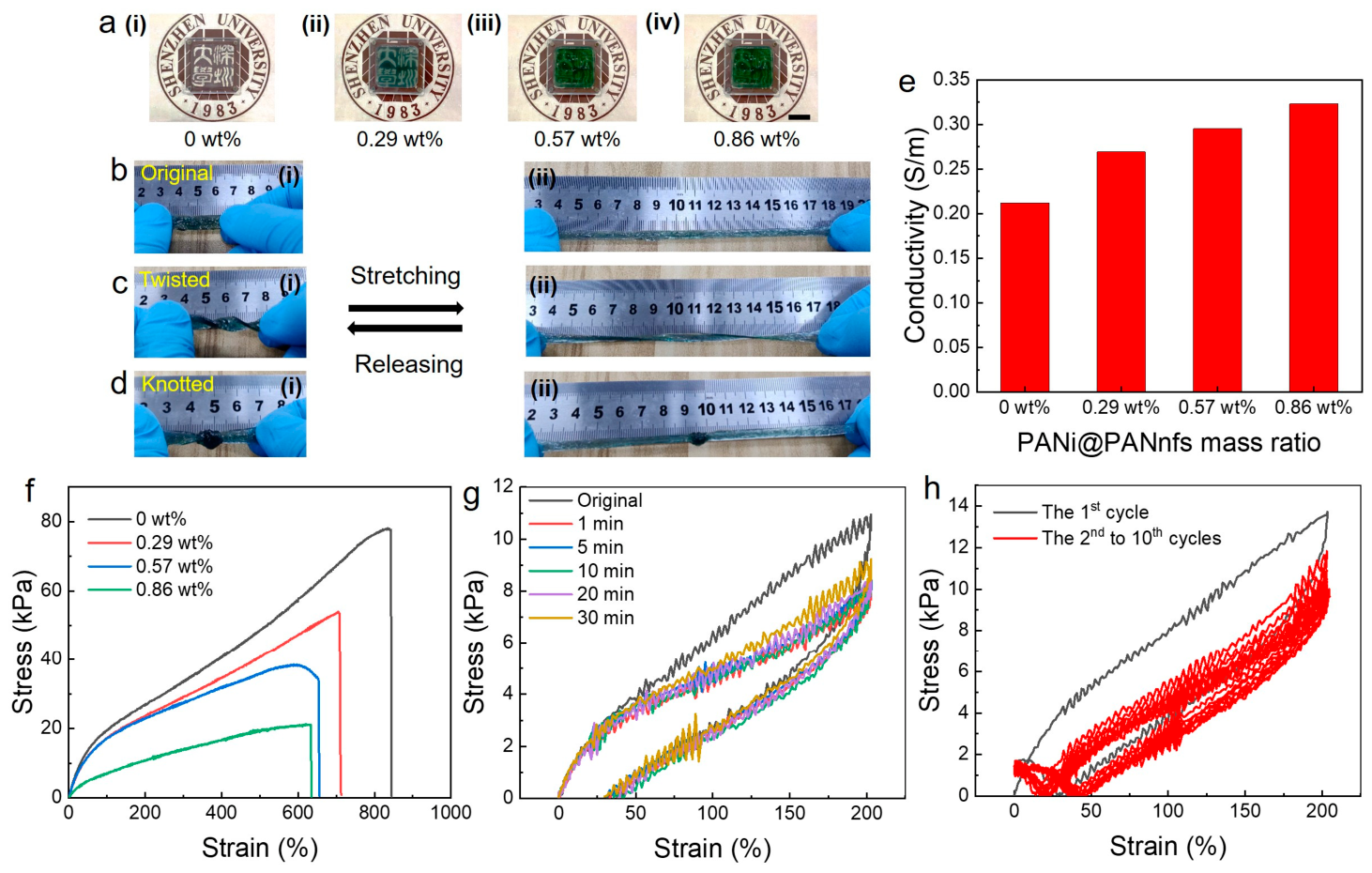
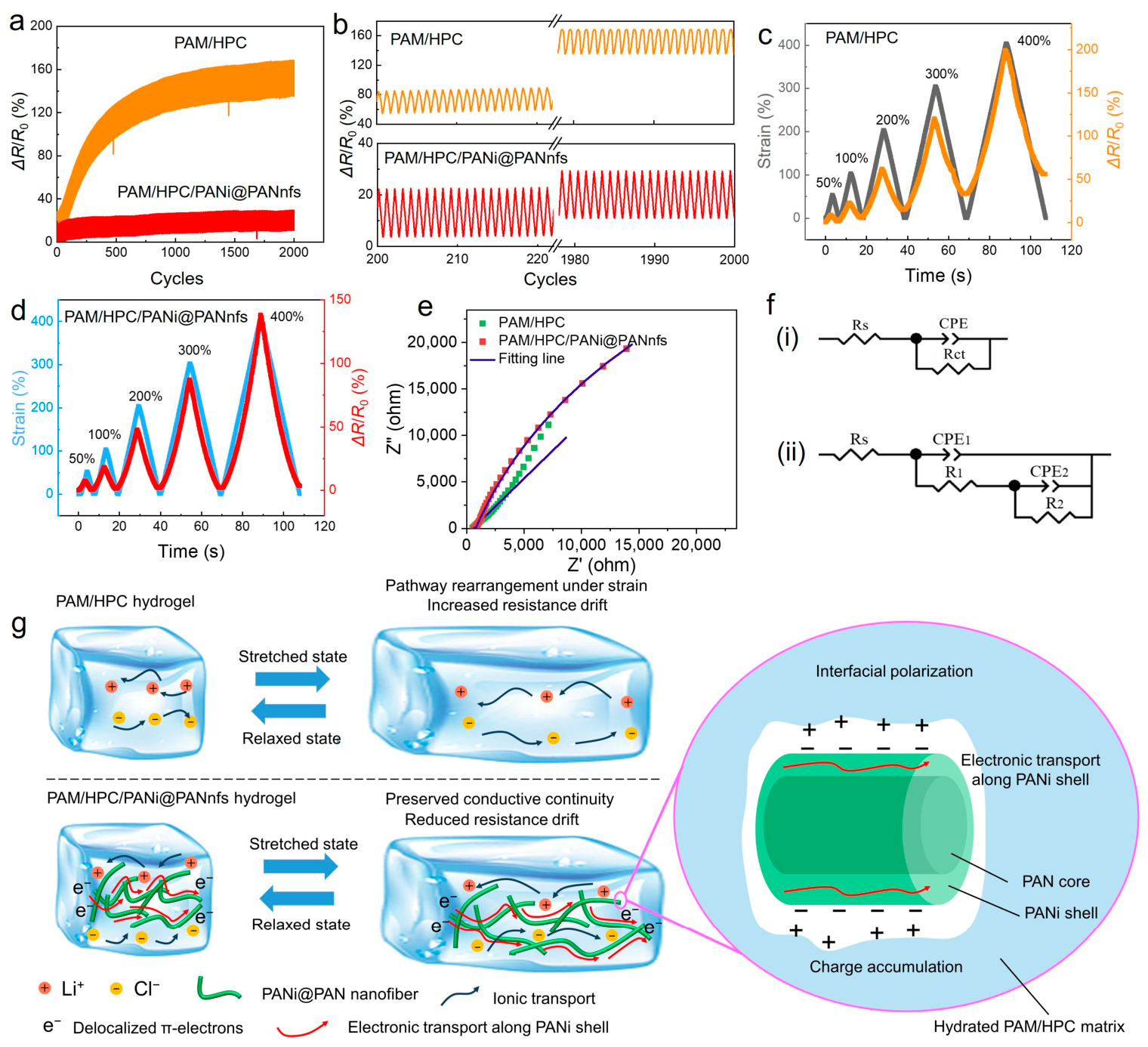
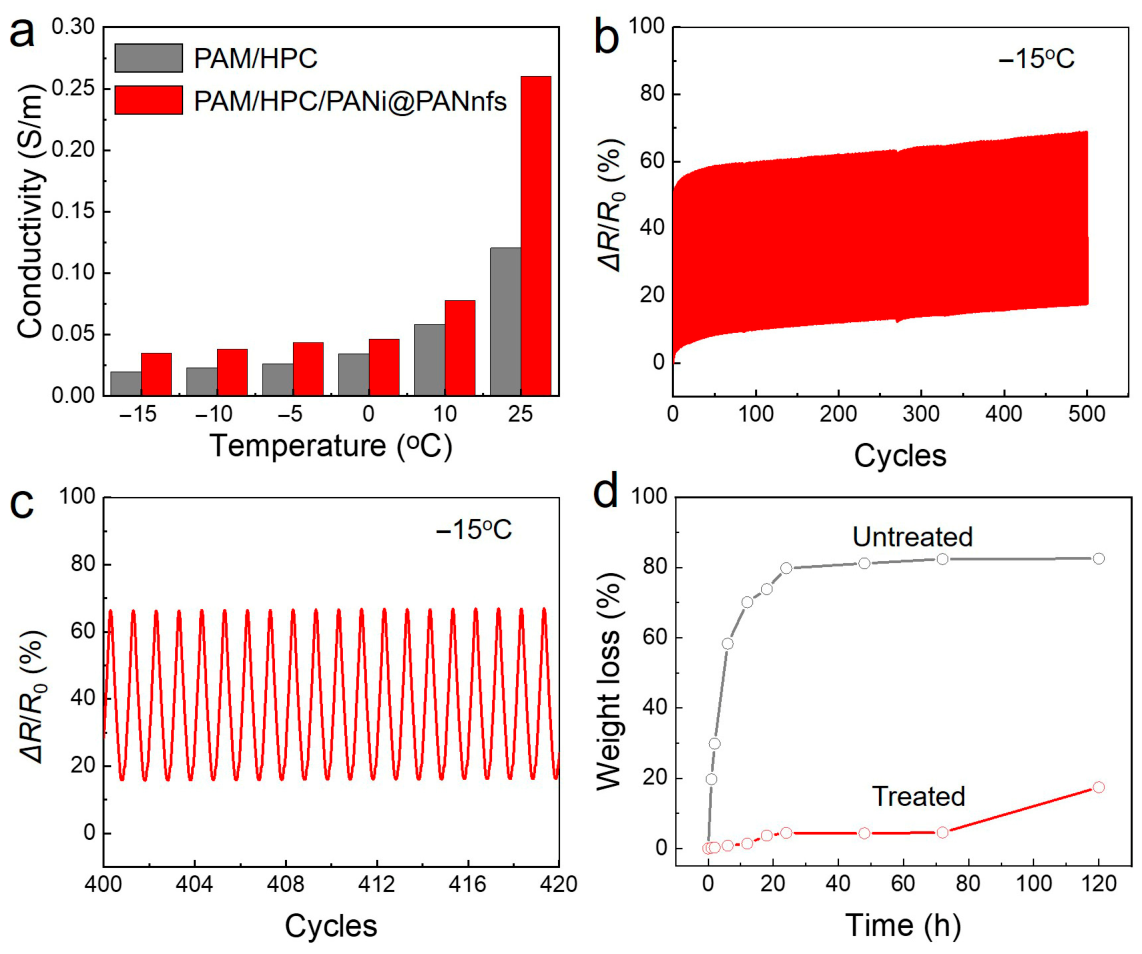
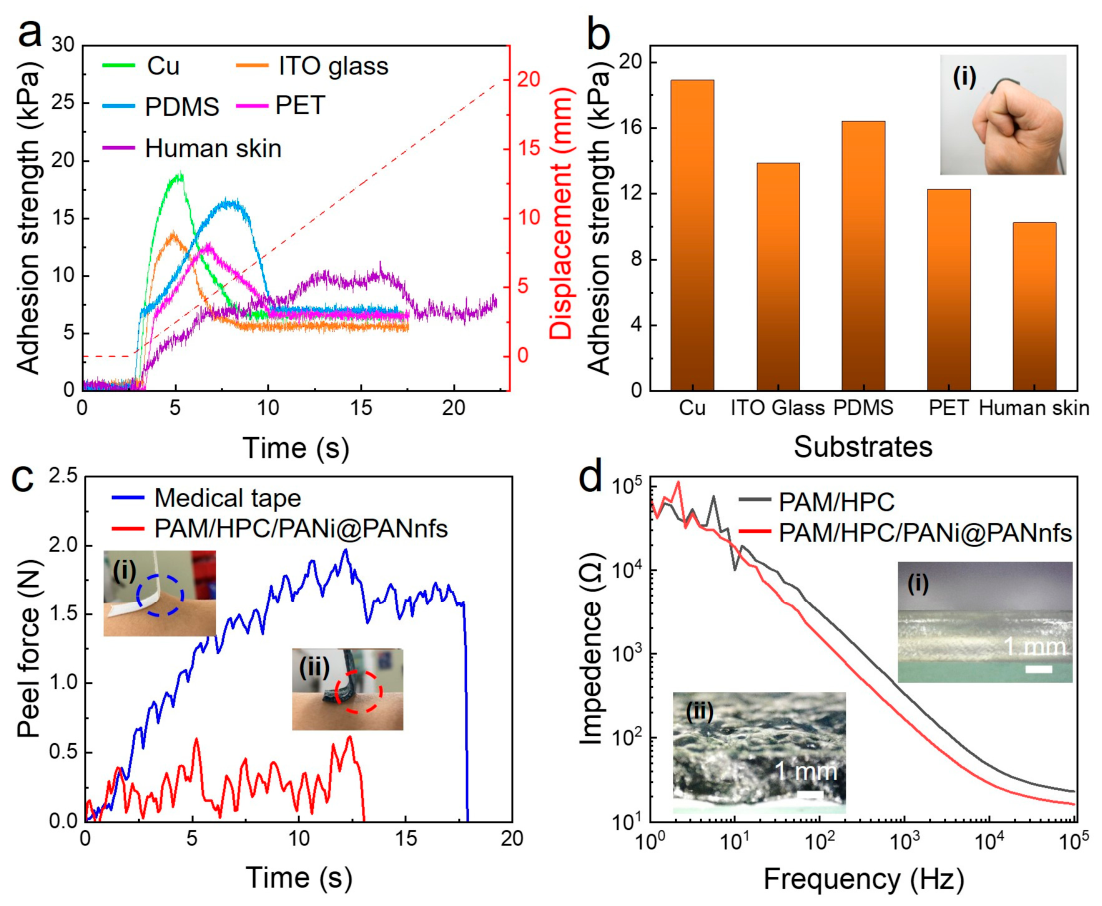
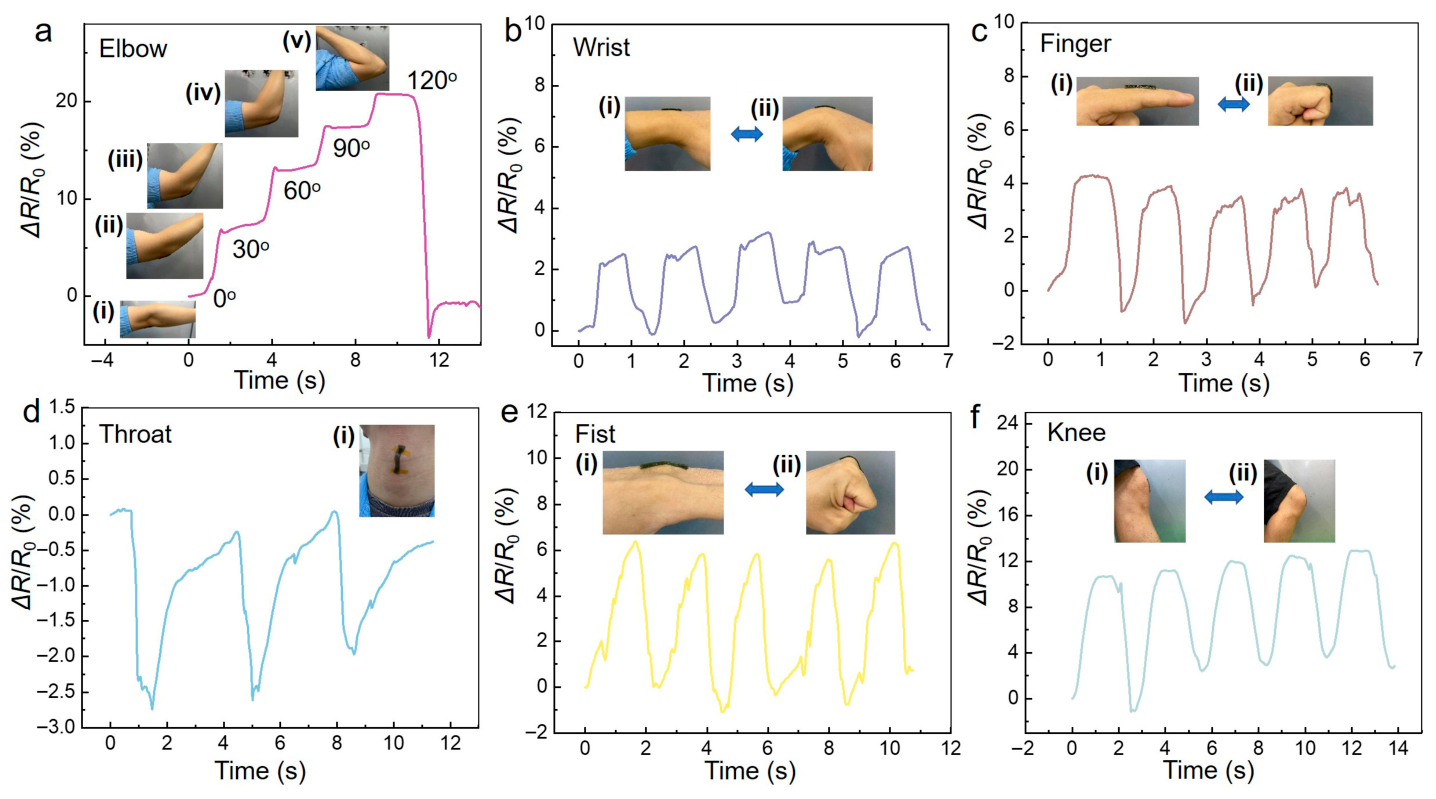
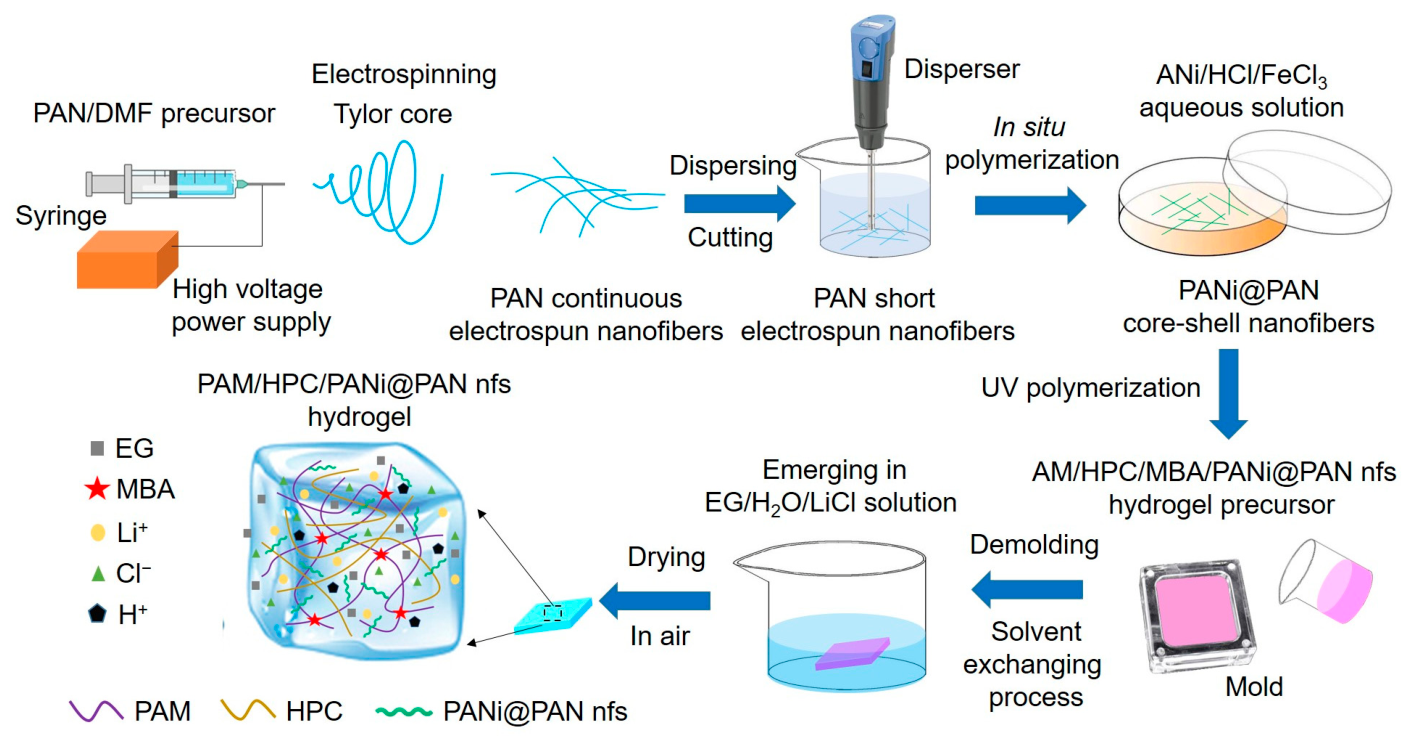
Conductive hydrogels are attractive for flexible electronics, but their practical use is often limited by resistance drift during repeated deformation and performance degradation at low temperatures. Here, core–shell polyaniline-coated polyacrylonitrile (PANi@PAN) electrospun nanofibers were incorporated into a polyacrylamide/hydroxypropyl cellulose (PAM/HPC) hydrogel matrix to construct a hybrid conductive network. The PANi shell serves as an electronic pathway alongside ionic conduction in the hydrated polymer network, leading to markedly improved electromechanical stability. The resistance drift is about 11% after 2000 stretching–relaxation cycles at 0–100% strain, about 12 times lower than that of the nanofiber-free hydrogel. Stable electrical responses are maintained under large deformation, with a resistance drift as low as 3.3% over a strain range of 0–400%. The hydrogels show a conductivity of 0.32 S m−1 while retaining high stretchability (>600%). An ethylene glycol/water binary solvent is used to suppress ice formation and improve moisture retention, allowing stable electromechanical performance at −15 °C over 500 cycles. The hydrogel also adheres reliably to human skin (about 10.25 kPa) and functions as a conformal strain sensor without extra fixation.
Keywords: core–shell nanofibers; dual-conduction network; electron–ion hybrid conduction; anti-freezing hydrogels; electromechanical stability core–shell nanofibers; dual-conduction network; electron–ion hybrid conduction; anti-freezing hydrogels; electromechanical stability
Graphical Abstract