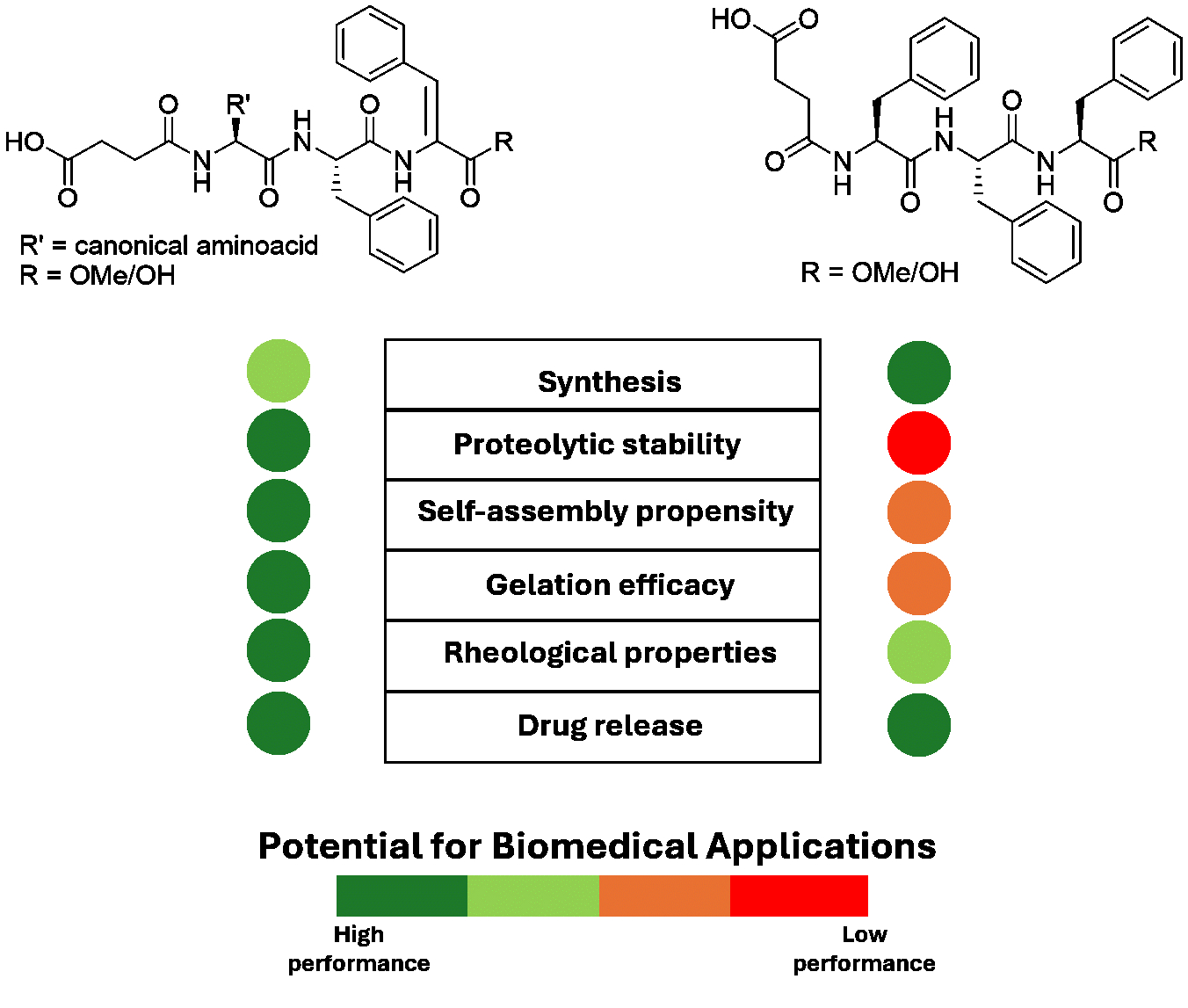
N-Succinylated Canonical vs. Dehydropeptides: Contrasting Self-Assembly Pathways and Hydrogel Properties

 ,
,  , , ,
, , ,  , , , , and
Abstract
1. Introduction
2. Results and Discussion
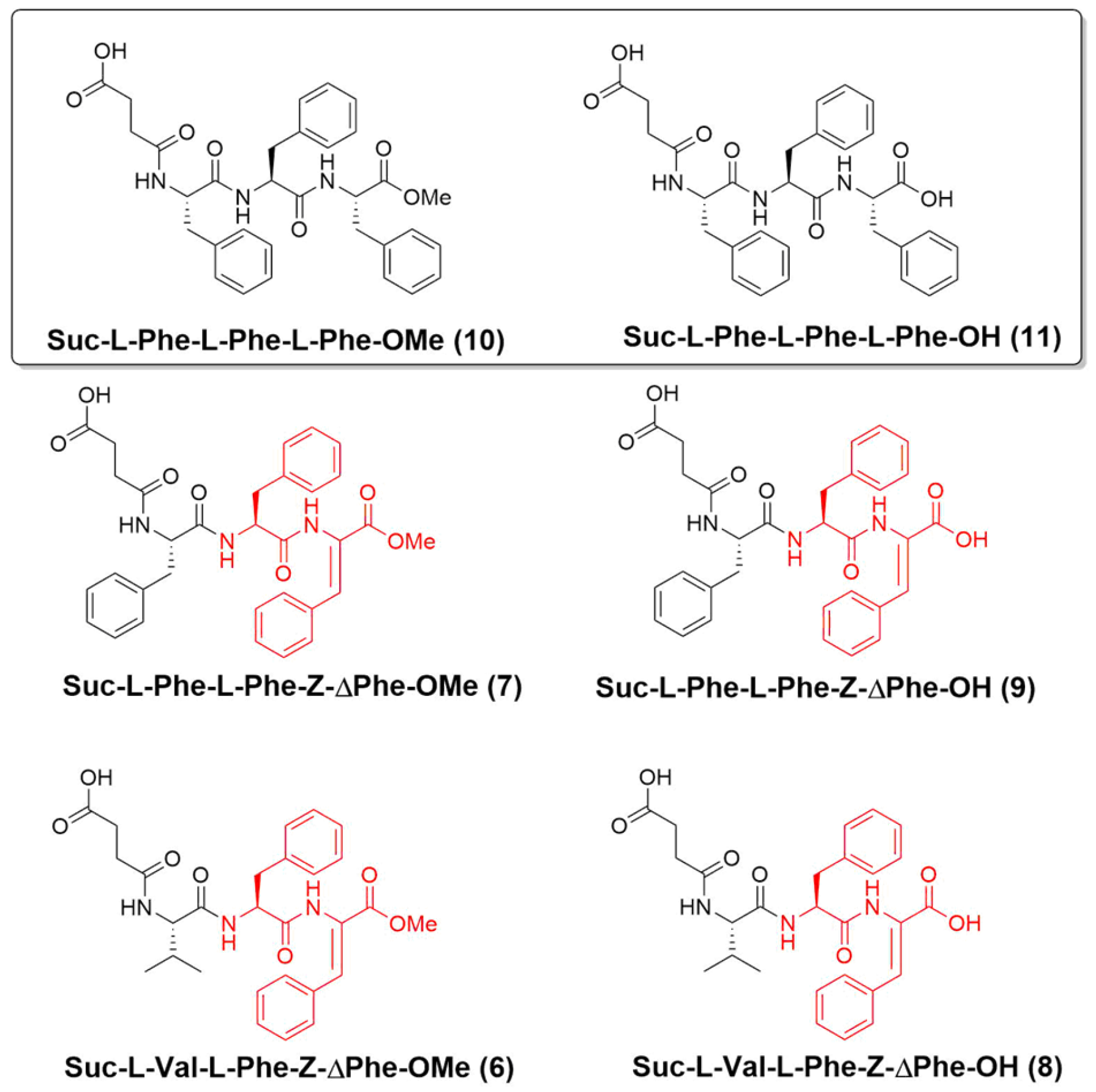
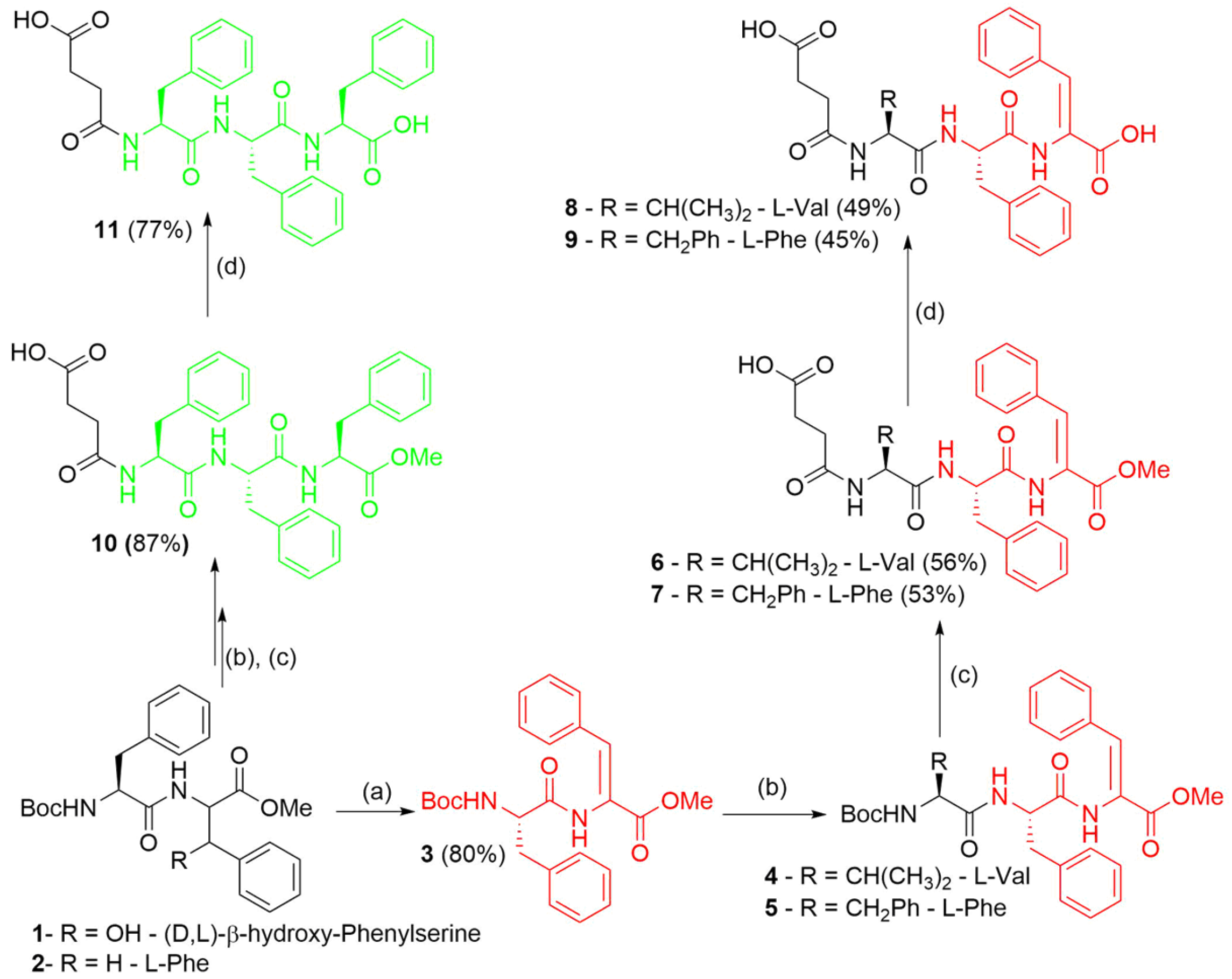
2.1. Synthesis
2.2. Peptide Self-Assembly
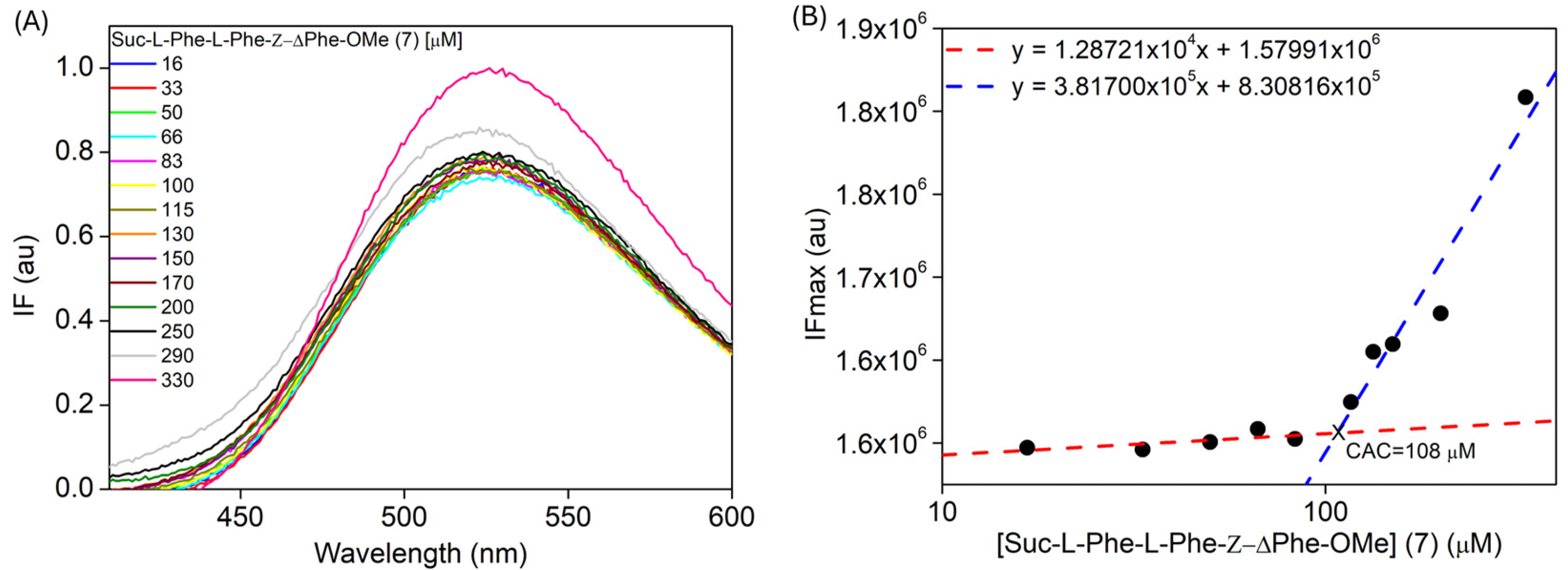
2.2.1. Critical Aggregation Concentration
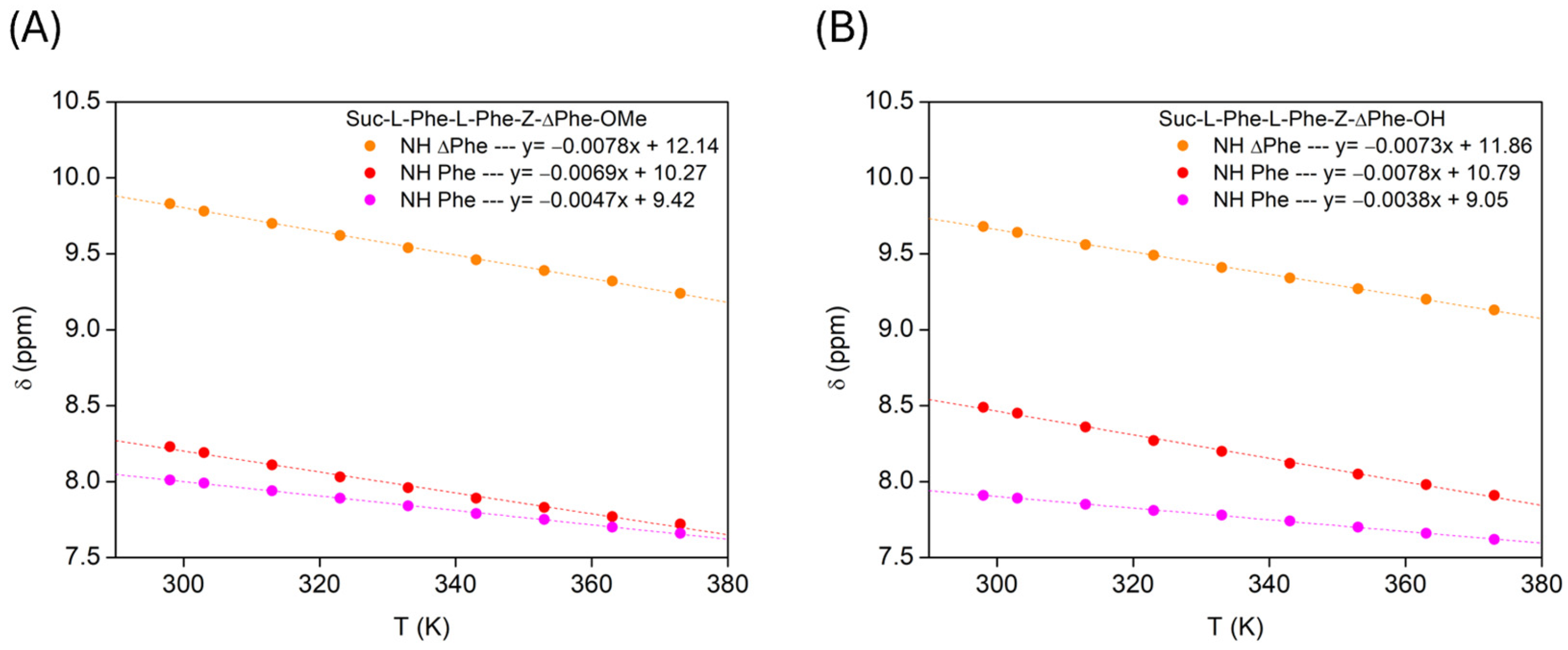
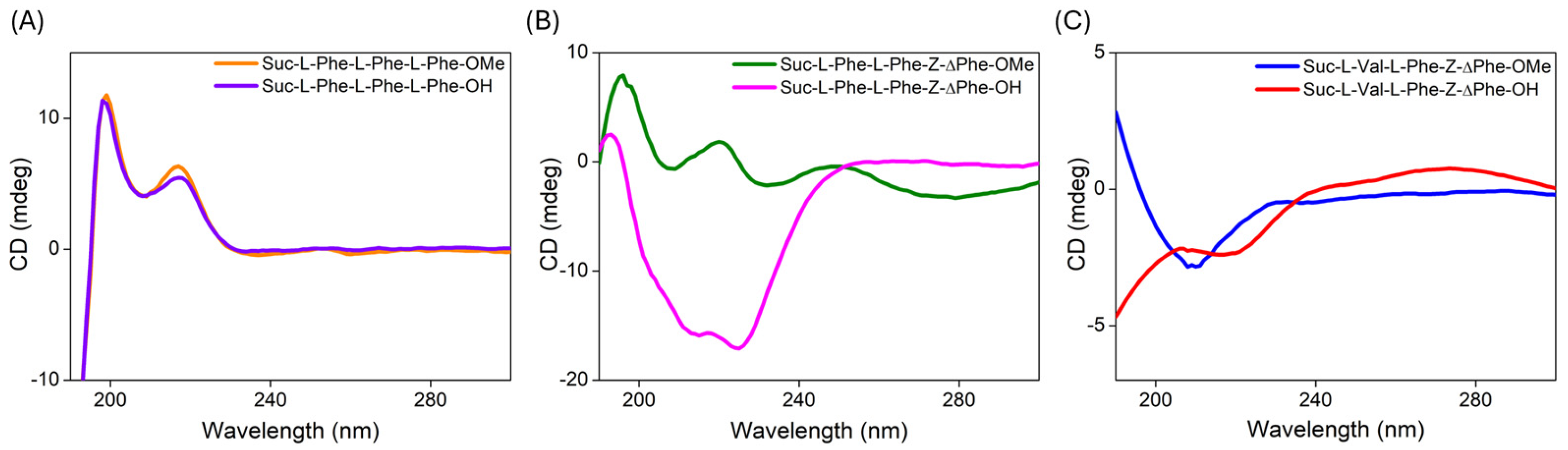
2.2.2. Circular Dichroism
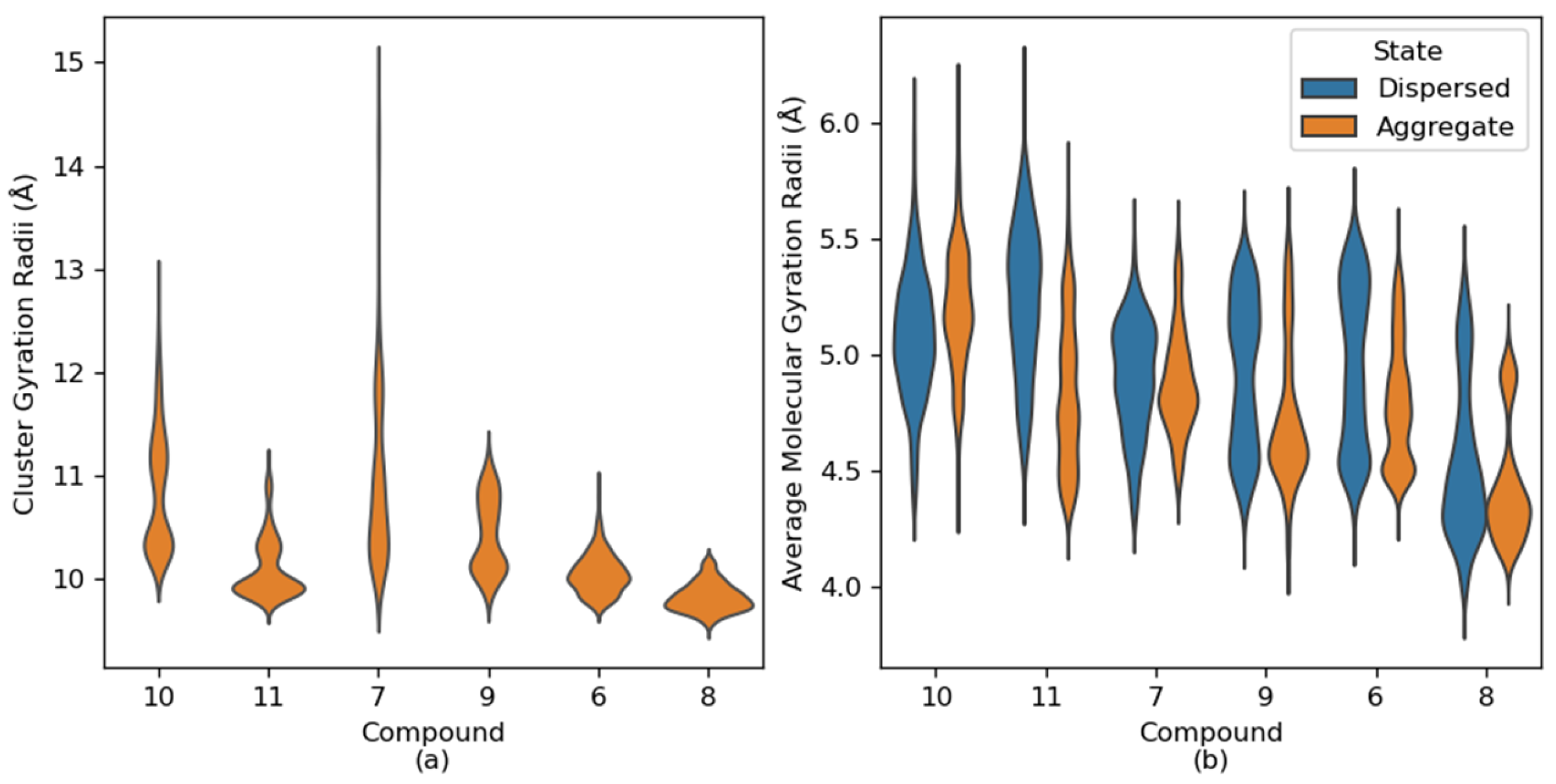
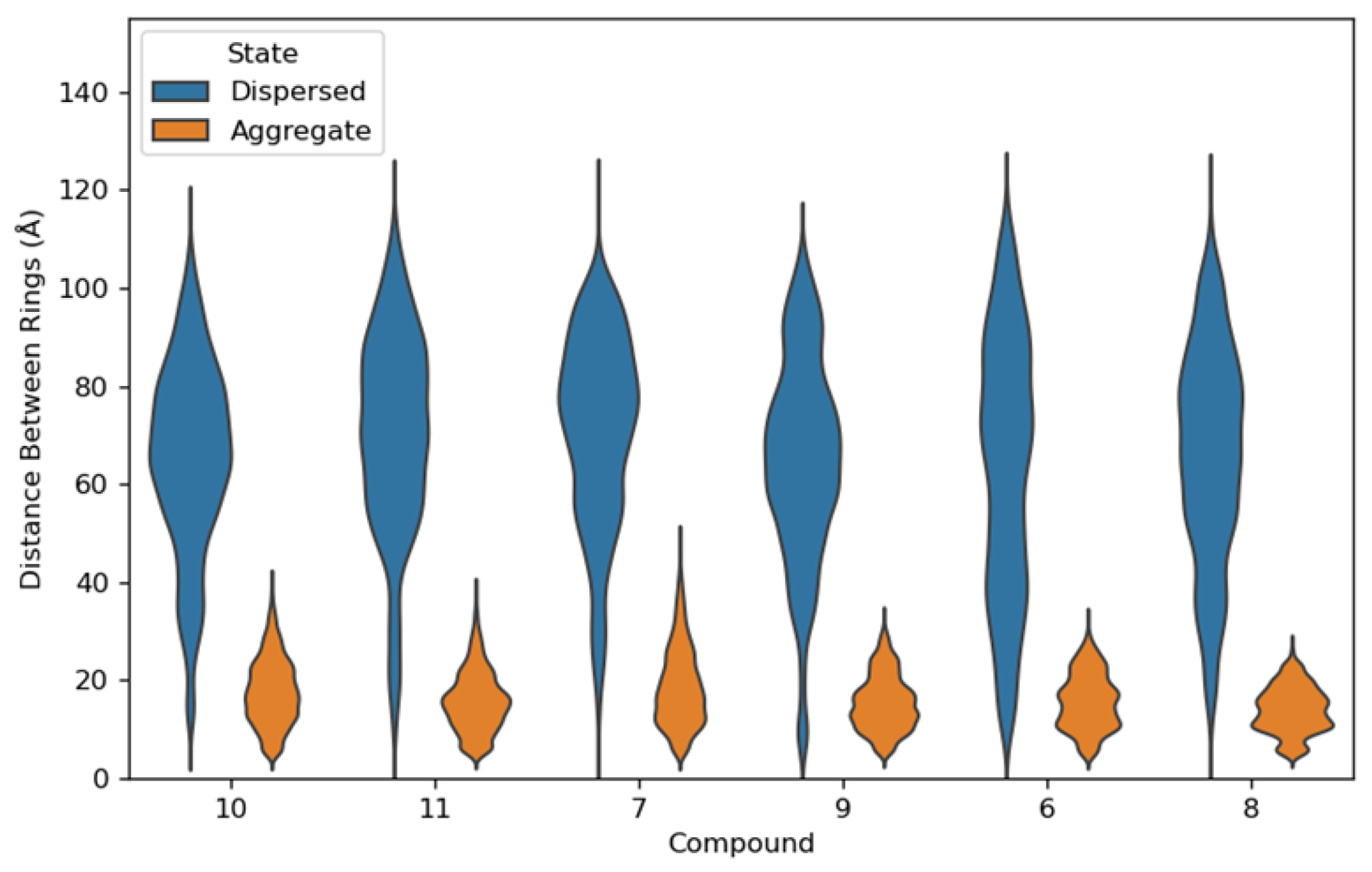
2.2.3. Molecular Dynamics Simulations
2.3. Hydrogel Studies
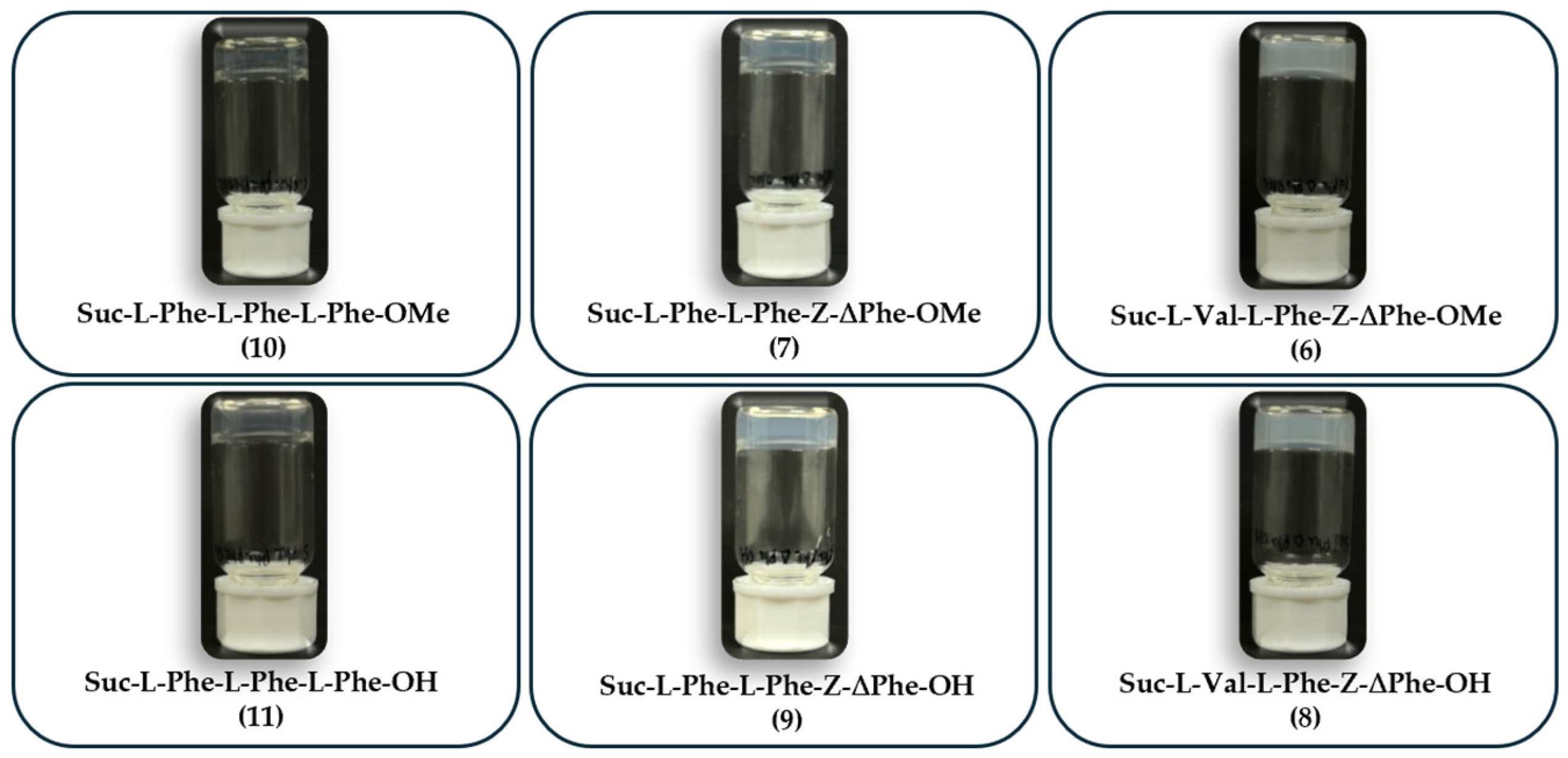
2.3.1. Preparation of Hydrogels
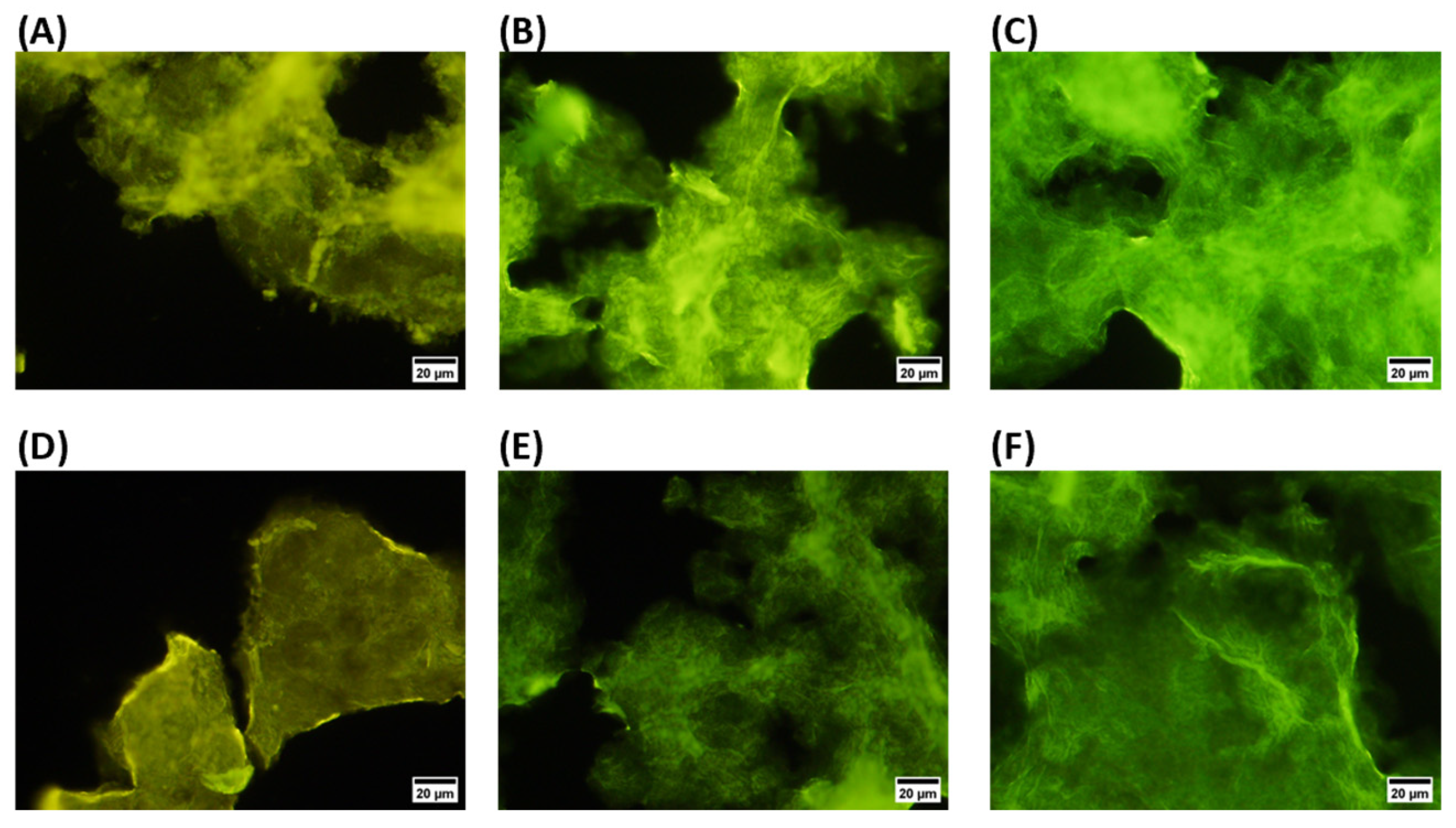
2.3.2. Thioflavin-Stained Hydrogels
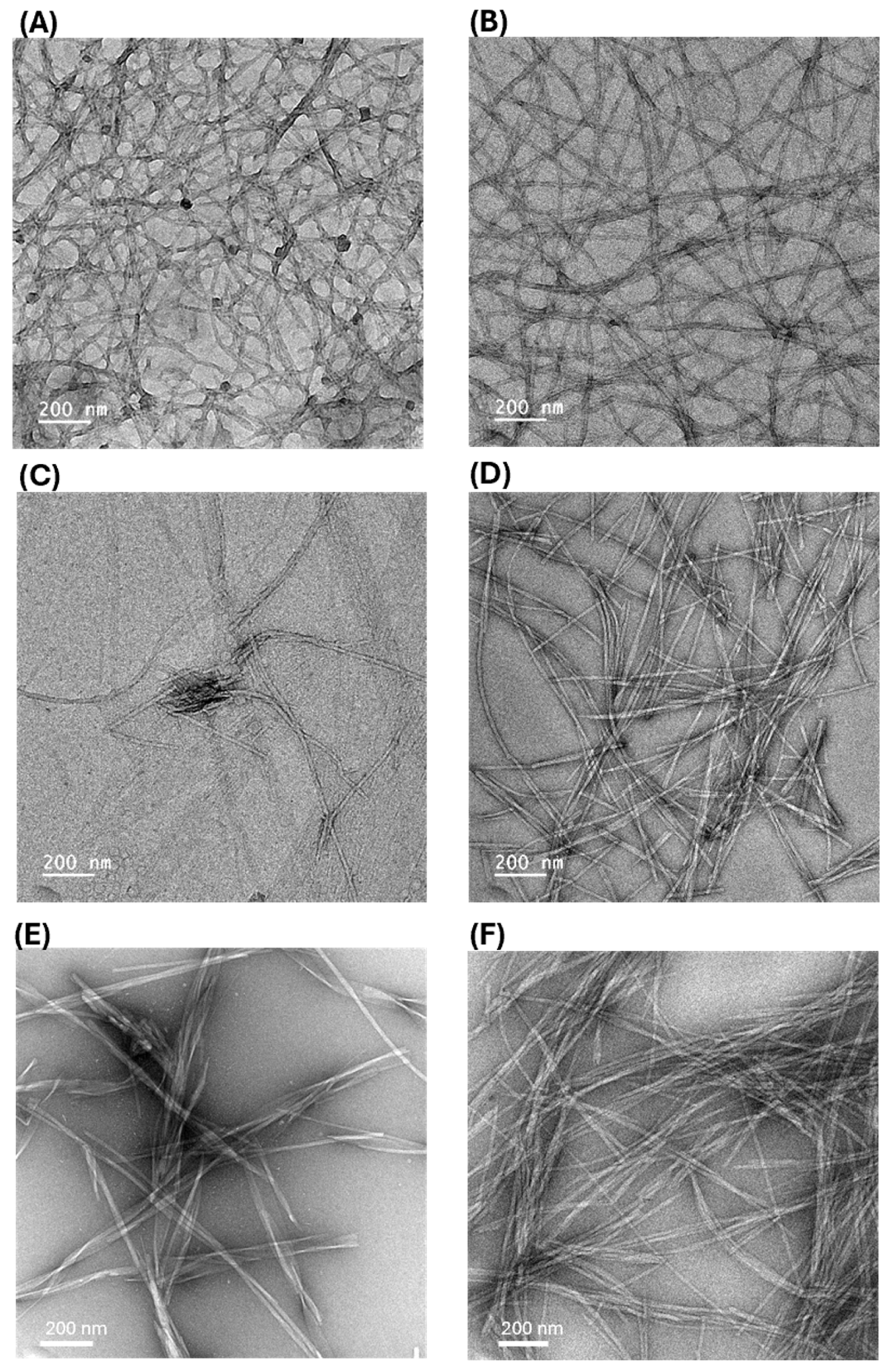
2.3.3. Transmission Electron Microscopy (TEM) Studies
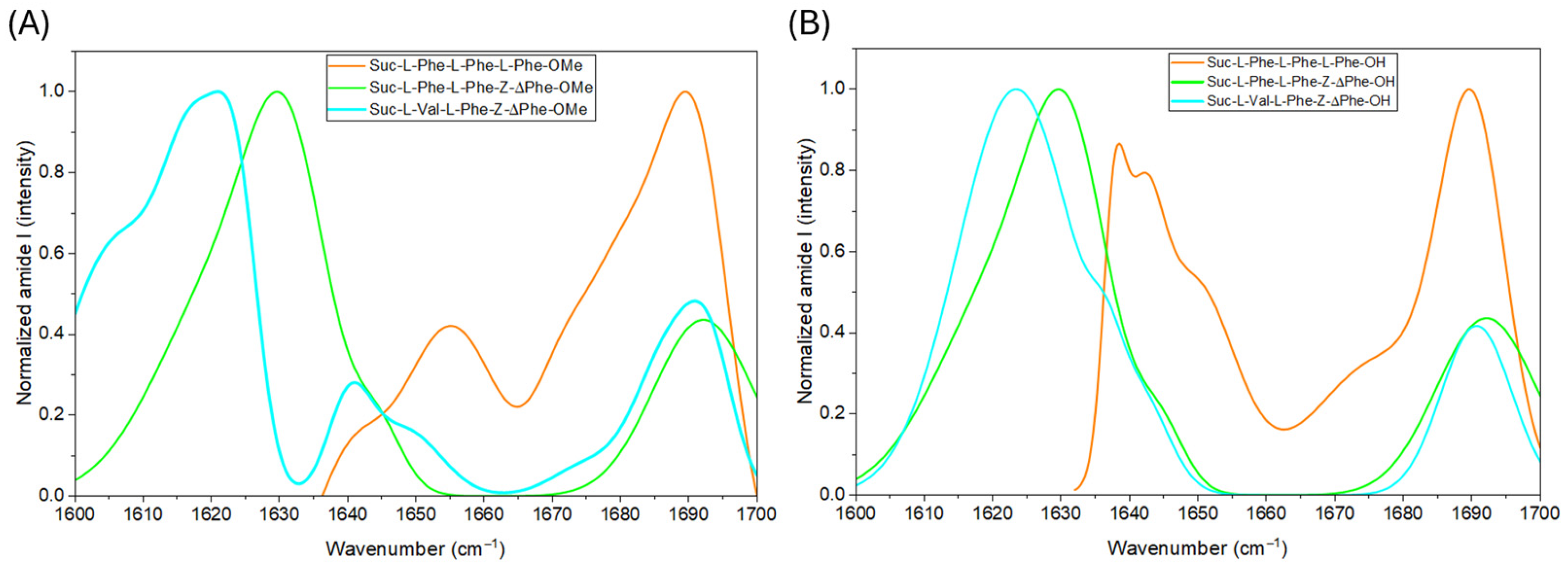
2.3.4. Fourier Transform Infrared Red (FTIR) Studies
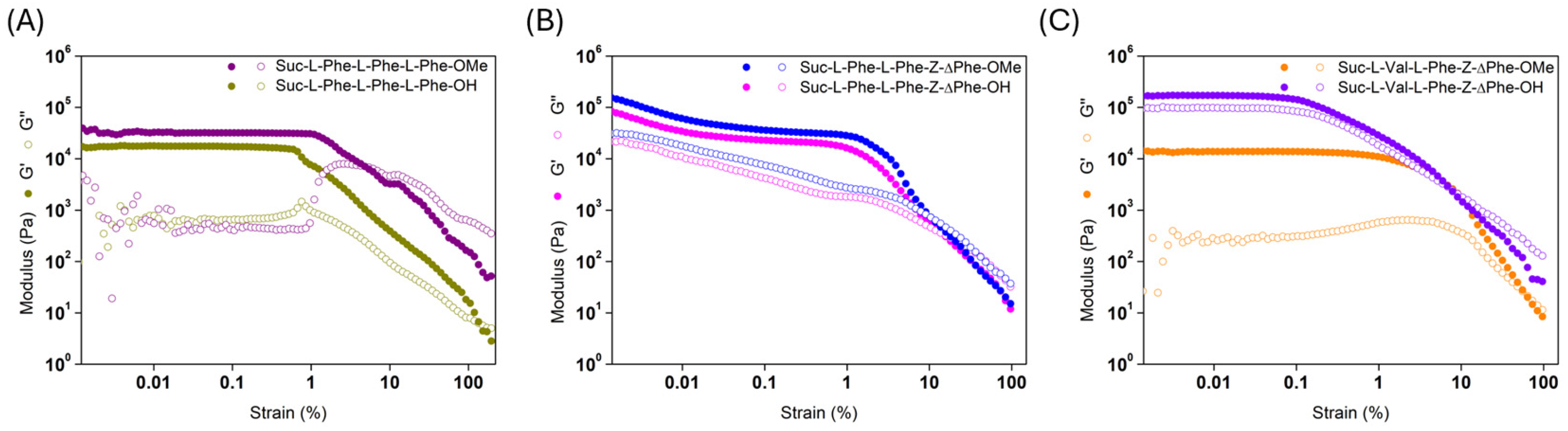
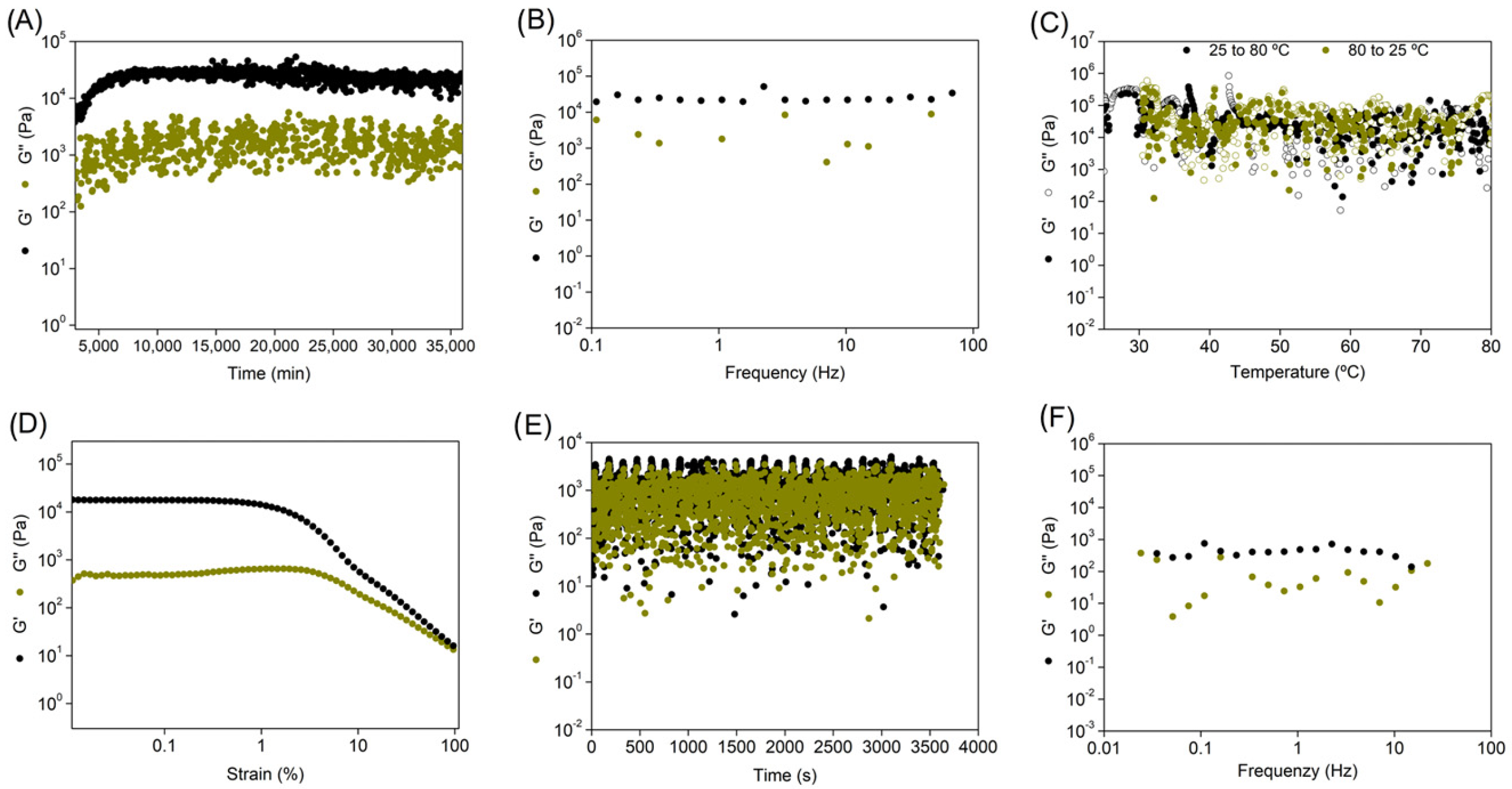
2.3.5. Rheological Studies
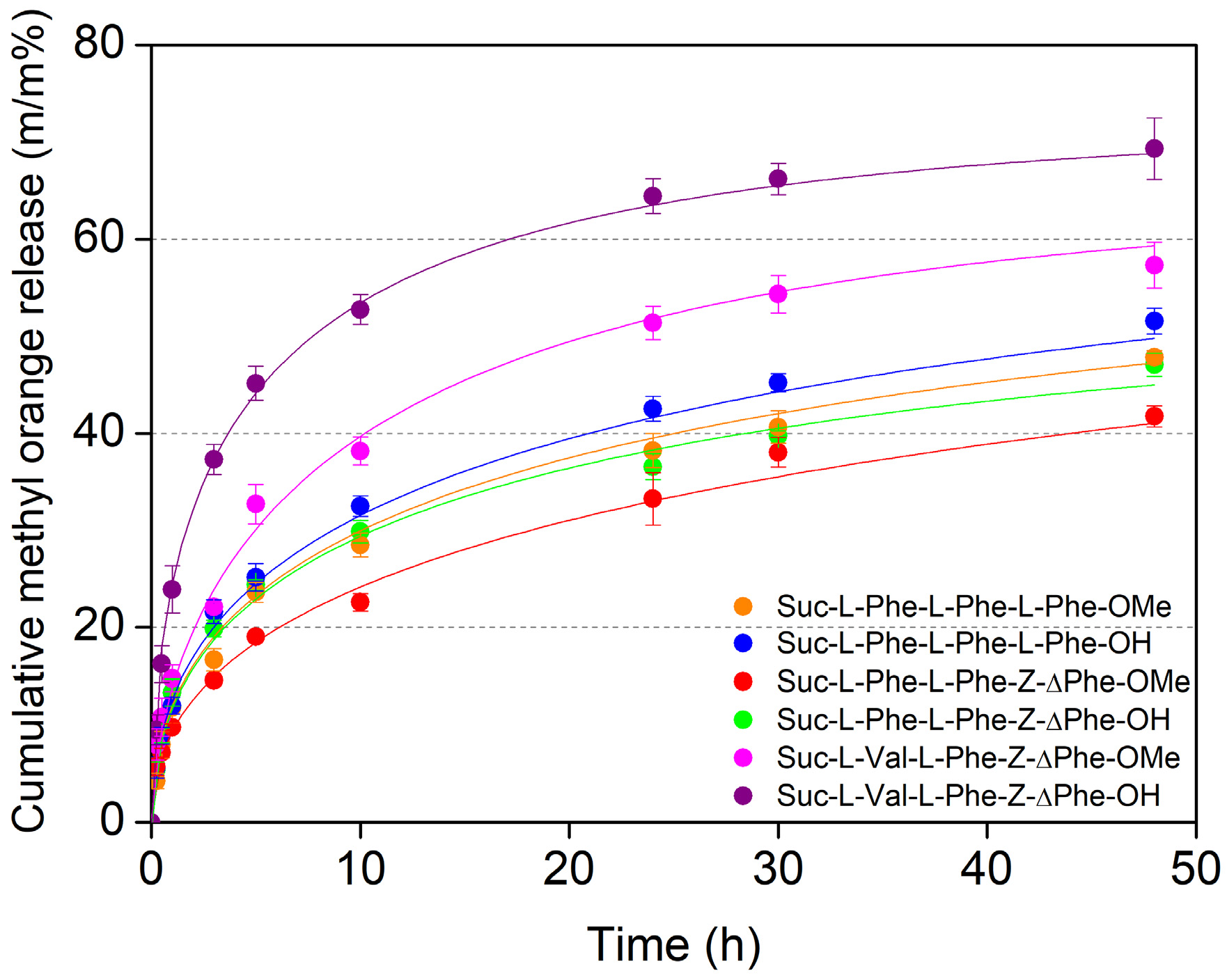
2.3.6. Drug-Release Studies
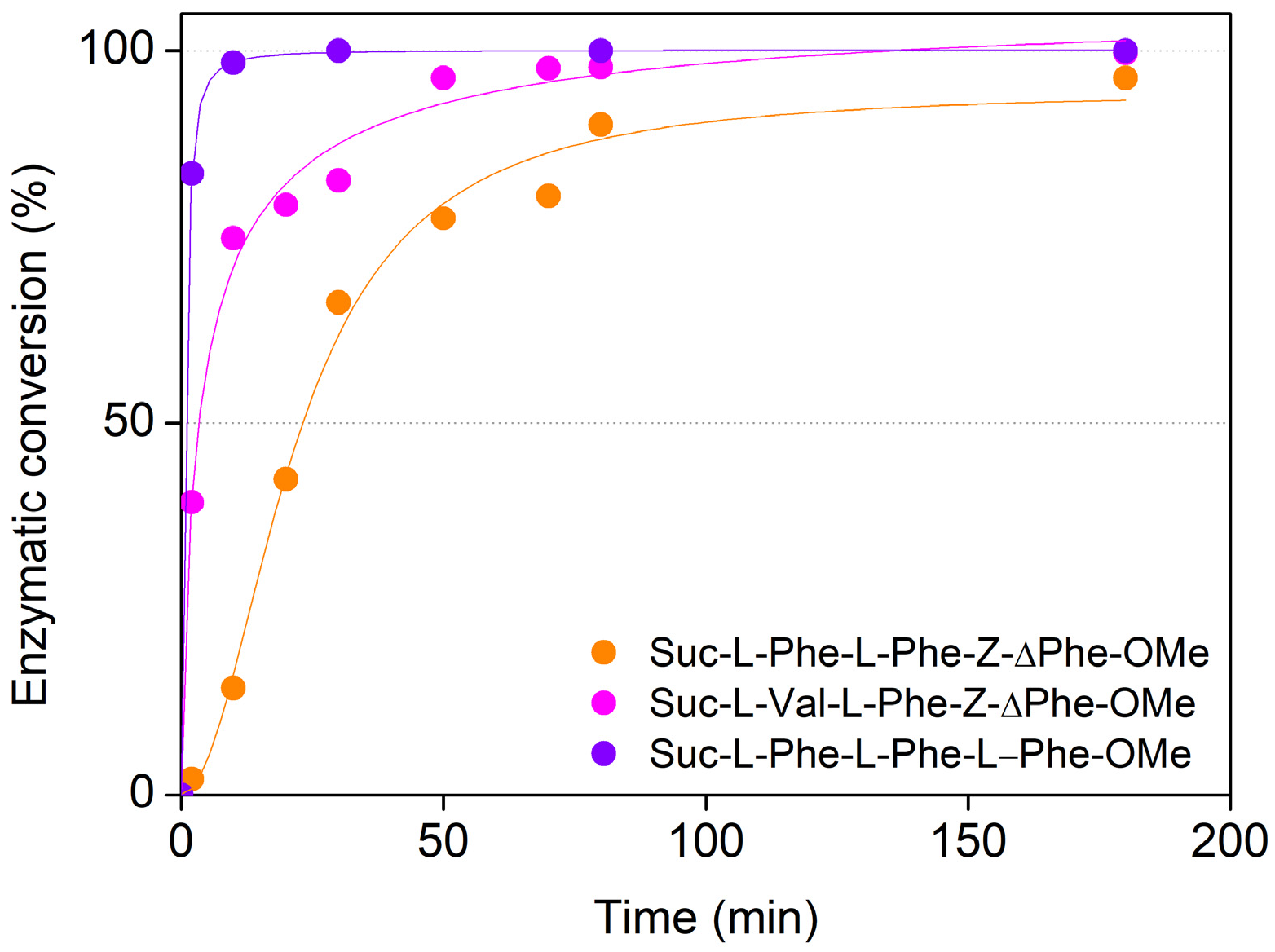
2.4. Proteolytic Stability Assays
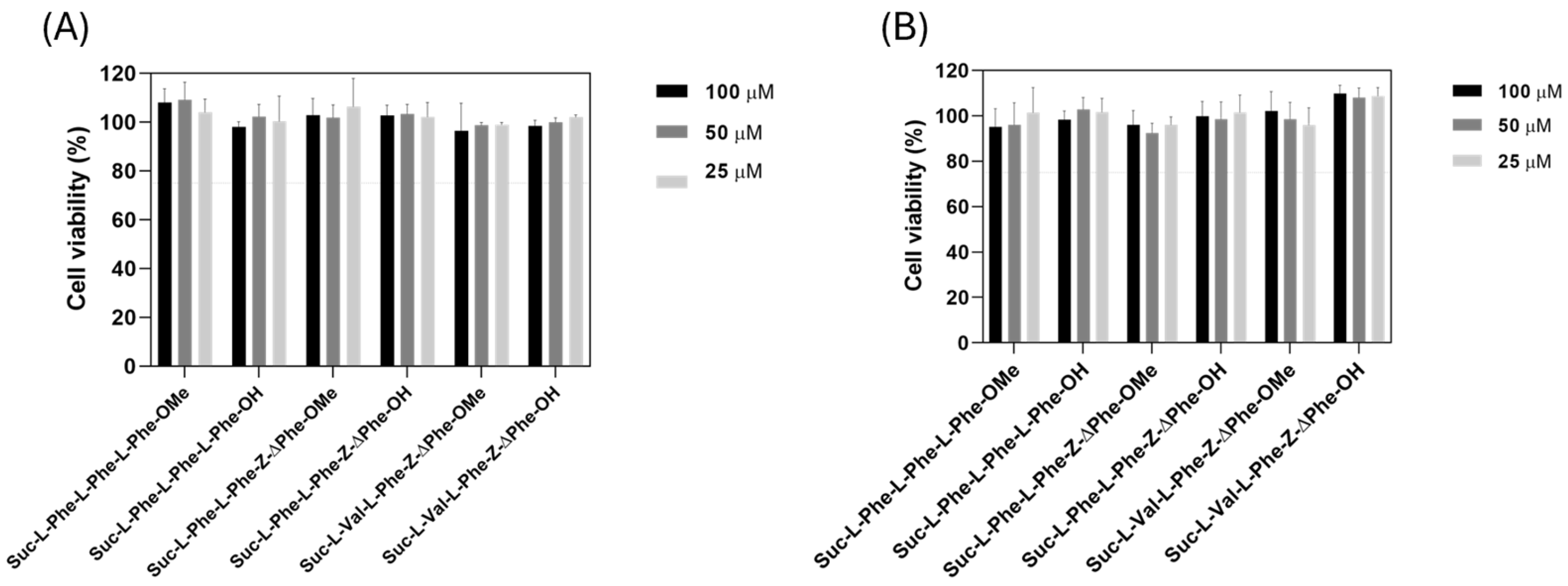
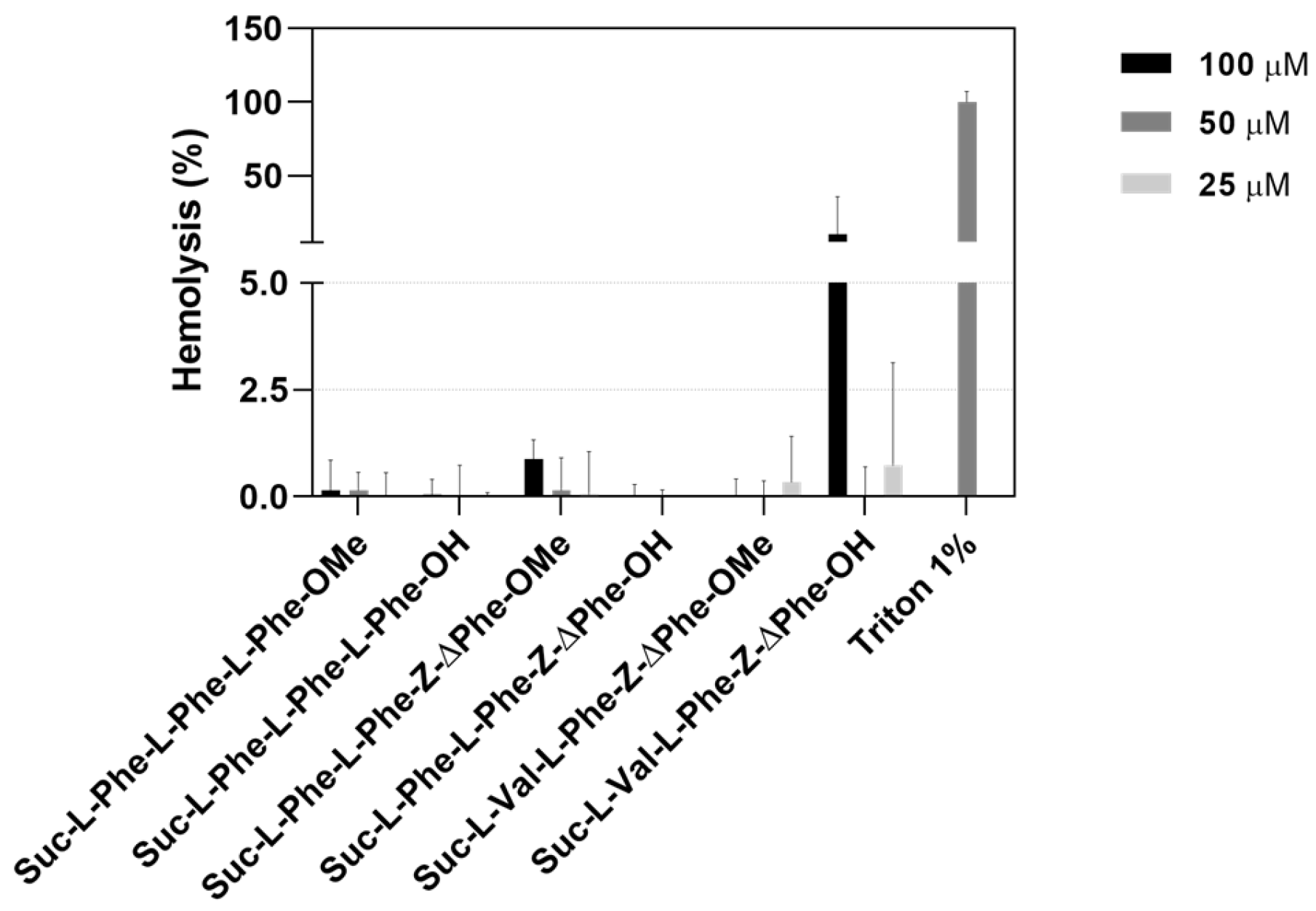
2.5. Biocompatibility Studies
3. Conclusions
4. Materials and Methods
4.1. General Procedures
4.2. CAC Determination
4.3. Circular Dichroism (CD) Spectroscopy
4.4. Molecular Dynamic Simulations
4.5. Preparation of Hydrogels
4.6. Thioflavin T-Stained Hydrogels and Congo Red Binding Assays
4.7. Transmission Electron Microscopy (TEM)
4.8. Fourier Transform Infrared Spectroscopy (FTIR)
4.9. Rheological Studies
4.10. Drug-Release Assays
4.11. Proteolytic Stability Assays
4.12. Biocompatibility Studies
Supplementary Materials
Author Contributions
Funding
Institutional Review Board Statement
Informed Consent Statement
Data Availability Statement
Conflicts of Interest
References
- Thakkar, A.; Johansson, S.; Jorner, K.; Buttar, D.; Reymond, J.-L.; Engkvist, O. Artificial intelligence and automation in computer aided synthesis planning, reaction prediction, and condition optimization. React. Chem. Eng. 2021, 6, 27–51. [Google Scholar] [CrossRef]
- He, C.; Zhang, C.; Bian, T.; Jiao, K.; Su, W.; Wu, K.-J.; Su, A. A Review on Artificial Intelligence Enabled Design, Synthesis, and Process Optimization of Chemical Products for Industry 4.0. Processes 2023, 11, 330. [Google Scholar] [CrossRef]
- Balderston, D.E.; Feo, E.; Leonescu, A.; Stevens, M.; Wilmshurst, A.M.; Gale, P.A.; Haynes, C.J.E.; Williams, G.T.; Hiscock, J.R. Advances in applied supramolecular technologies 2021–2025. Chem. Soc. Rev. 2025, 54, 8888–8924. [Google Scholar] [CrossRef] [PubMed]
- He, H.; Tan, W.; Guo, J.; Yi, M.; Shy, A.N.; Xu, B. Enzymatic Noncovalent Synthesis. Chem. Rev. 2020, 120, 9994–10078. [Google Scholar] [CrossRef]
- Yang, S.; Wang, M.; Wang, T.; Sun, M.; Huang, H.; Shi, X.; Duan, S.; Wu, Y.; Zhu, J.; Liu, F. Self-assembled short peptides: Recent advances and strategies for potential pharmaceutical applications. Mater. Today Bio 2023, 20, 100644. [Google Scholar] [CrossRef]
- Wang, J.; Liu, K.; Xing, R.; Yan, X. Peptide Self-Assembly: Thermodynamics and Kinetics. Chem. Soc. Rev. 2016, 45, 5589–5604. [Google Scholar] [CrossRef]
- Jervis, P.J.; Amorim, C.; Pereira, T.; Martins, J.A.; Ferreira, P.M.T. Dehydropeptide Supramolecular Hydrogels and Nanostructures as Potential Peptidomimetic Biomedical Materials. Int. J. Mol. Sci. 2021, 22, 2528. [Google Scholar] [CrossRef]
- Zhang, Z.; Ou, C.; Cho, Y.; Akiyama, Y.; Ovchinnikov, S. Artificial intelligence methods for protein folding and design. Curr. Opin. Struct. Biol. 2025, 93, 103066. [Google Scholar] [CrossRef]
- Bellotto, O.; Kralj, S.; Melchionna, M.; Pengo, P.; Kisovec, M.; Podobnik, M.; De Zorzi, R.; Marchesan, S. Self-Assembly of Unprotected Dipeptides into Hydrogels: Water-Channels Make the Difference. ChemBioChem 2021, 23, e202100518. [Google Scholar] [CrossRef]
- Das, S.; Das, D. Rational Design of Peptide-based Smart Hydrogels for Therapeutic Applications. Front. Chem. 2021, 9, 770102. [Google Scholar] [CrossRef]
- Fu, K.; Wu, H.; Su, Z. Self-assembling peptide-based hydrogels: Fabrication, properties, and applications. Biotechnol. Adv. 2021, 49, 107752. [Google Scholar] [CrossRef] [PubMed]
- Binaymotlagh, R.; Chronopoulou, L.; Haghighi, F.H.; Fratoddi, I.; Palocci, C. Peptide-Based Hydrogels: New Materials for Biosensing and Biomedical Applications. Materials 2022, 15, 5871. [Google Scholar] [CrossRef] [PubMed]
- Li, L.; Zheng, R.; Sun, R. Hierarchical Self-Assembly of Short Peptides: Nanostructure Formation, Function Tailoring, and Applications. Macromol. Biosci. 2025, 25, 202400523. [Google Scholar] [CrossRef] [PubMed]
- Mu, R.; Zhu, D.; Abdulmalik, S.; Wijekoon, S.; Wei, G.; Kumbar, S.G. Stimuli-responsive peptide assemblies: Design, self-assembly, modulation, and biomedical applications. Bioact. Mater. 2024, 35, 181–207. [Google Scholar] [CrossRef]
- Hamley, I.W. Self-Assembly, Bioactivity, and Nanomaterials Applications of Peptide Conjugates with Bulky Aromatic Terminal Groups. ACS Appl. Bio Mater. 2023, 6, 384–409. [Google Scholar] [CrossRef]
- Li, W.; Tang, Z.; Zhang, M.; Wang, J.; Liu, Y.; Ding, M.; Zhou, D.; Su, H. Unraveling the Influence of Aromatic Endcaps in Peptide Self-Assembly. Polymer 2024, 302, 127090. [Google Scholar] [CrossRef]
- Chen, Y.-K.; Simon, I.A.; Maslov, I.; Oyarce-Pino, I.E.; Kulkarni, K.; Hopper, D.; Aguilar, M.-I.; Vankadari, N.; Broughton, B.R.; Del Borgo, M.P. A switch in N-terminal capping of β-peptides creates novel self-assembled nanoparticles. RSC Adv. 2023, 13, 29401–29407. [Google Scholar] [CrossRef]
- Lucana, M.C.; Arruga, Y.; Petrachi, E.; Roig, A.; Lucchi, R.; Oller-Salvia, B. Protease-Resistant Peptides for Targeting and Intracellular Delivery of Therapeutics. Pharmaceutics 2021, 13, 2065. [Google Scholar] [CrossRef]
- Yang, B.; Zhang, M.; Weng, H.; Xu, Y.; Zeng, L. Optimization of Ultrasound Assisted Extraction (UAE) of Kinsenoside Compound from Anoectochilus roxburghii (Wall.) Lindl by Response Surface Methodology (RSM). Molecules 2020, 25, 193. [Google Scholar] [CrossRef]
- Castro, T.G.; Melle-Franco, M.; Sousa, C.E.A.; Cavaco-Paulo, A.; Marcos, J.C. Non-Canonical Amino Acids as Building Blocks for Peptidomimetics: Structure, Function, and Applications. Biomolecules 2023, 13, 981. [Google Scholar] [CrossRef]
- Pentlavalli, S.; Coulter, S.M.; An, Y.; Cross, E.R.; Sun, H.; Moore, J.V.; Bin Sabri, A.; Greer, B.; Vora, L.; McCarthy, H.O.; et al. D-peptide hydrogels as a long-acting multipurpose drug delivery platform for combined contraception and HIV prevention. J. Control. Release 2024, 379, 30–44. [Google Scholar] [CrossRef] [PubMed]
- Liang, H.; Yin, J.; Man, K.; Yang, X.B.; Calciolari, E.; Donos, N.; Russell, S.J.; Wood, D.J.; Tronci, G. A long-lasting guided bone regeneration membrane from sequentially functionalised photoactive atelocollagen. Acta Biomater. 2022, 140, 190–205. [Google Scholar] [CrossRef] [PubMed]
- Zöller, K.; To, D.; Bernkop-Schnürch, A. Biomedical applications of functional hydrogels: Innovative developments, relevant clinical trials and advanced products. Biomaterials 2025, 312, 122718. [Google Scholar] [CrossRef] [PubMed]
- Vilaça, H.; Pereira, G.; Castro, T.G.; Hermenegildo, B.F.; Shi, J.; Faria, T.Q.; Micaêlo, N.; Brito, R.M.M.M.; Xu, B.; Castanheira, E.M.S.S.; et al. New Self-Assembled Supramolecular Hydrogels Based on Dehydropeptides. J. Mater. Chem. B 2015, 3, 6355–6367. [Google Scholar] [CrossRef]
- Carvalho, A.; Gallo, J.; Pereira, D.M.; Valentão, P.; Andrade, P.B.; Hilliou, L.; Ferreira, P.M.T.; Bañobre-López, M.; Martins, J.A. Magnetic Dehydrodipeptide-Based Self-Assembled Hydrogels for Theragnostic Applications. Nanomaterials 2019, 9, 541. [Google Scholar] [CrossRef]
- Amorim, C.; Veloso, S.R.S.; Castanheira, E.M.S.; Hilliou, L.; Pereira, R.B.; Pereira, D.M.; Martins, J.A.; Jervis, P.J.; Ferreira, P.M.T. Bolaamphiphilic Bis-Dehydropeptide Hydrogels as Potential Drug Release Systems. Gels 2021, 7, 52. [Google Scholar] [CrossRef]
- Oliveira, C.B.P.; Pereira, R.B.; Pereira, D.M.; Hilliou, L.; Castro, T.G.; Martins, J.A.; Jervis, P.J.; Ferreira, P.M.T. Aryl-Capped Lysine-Dehydroamino Acid Dipeptide Supergelators as Potential Drug Release Systems. Int. J. Mol. Sci. 2022, 23, 11811. [Google Scholar] [CrossRef]
- Vilaça, H.; Carvalho, A.; Castro, T.; Castanheira, E.M.S.S.; Hilliou, L.; Hamley, I.; Melle-Franco, M.; Ferreira, P.M.T.T.; Martins, J.A. Unveiling the Role of Capping Groups in Naphthalene N-Capped Dehydrodipeptide Hydrogels. Gels 2023, 9, 464. [Google Scholar] [CrossRef]
- Oliveira, C.B.P.; Gomes, V.; Ferreira, P.M.T.; Martins, J.A.; Jervis, P.J. Peptide-Based Supramolecular Hydrogels as Drug Delivery Agents: Recent Advances. Gels 2022, 8, 706. [Google Scholar] [CrossRef]
- Carvalho, A.F.G.; Pereira, T.; Oliveira, C.; Figueiredo, P.; Carvalho, A.; Pereira, D.M.; Hilliou, L.; Bañobre-López, M.; Xu, B.; Ferreira, P.M.T.; et al. Tripeptides featuring dehydrophenylalanine and homophenylalanine: Homo- versus hetero-chirality and sequence effects on self-assembly and gelation. Gels 2025, 11, 164. [Google Scholar] [CrossRef]
- Vilaça, H.; Castro, T.; Costa, F.M.G.; Melle-Franco, M.; Hilliou, L.; Hamley, I.W.; Castanheira, E.M.S.; Martins, J.A.; Ferreira, P.M.T. Self-assembled RGD dehydropeptide hydrogels for drug delivery applications. J. Mater. Chem. B 2017, 5, 8607–8617. [Google Scholar] [CrossRef] [PubMed]
- Ferreira, P.M.T.; Maia, H.L.S.; Monteiro, L.S.; Sacramento, J. High yielding synthesis of dehydroamino acid and dehydropeptide derivatives. J. Chem. Soc. Perkin Trans. 1999, 1, 3697–3703. [Google Scholar] [CrossRef]
- Adorinni, S.; Kurbasic, M.; Garcia, A.M.; Kralj, S.; Bellotto, O.; Scarel, E.; Pengo, P.; De Zorzi, R.; Melchionna, M.; Vargiu, A.V.; et al. A Water Playground for Peptide Re-Assembly from Fibrils to Plates. J. Mater. Chem. B 2024, 12, 12589–12596. [Google Scholar] [CrossRef] [PubMed]
- Gao, Y.; Zhang, K.; Ding, M.; Gong, X.; Cao, H.; Wang, L. Hydrophobicity regulates self-assembly behavior of binding-induced fibrillogenesis peptides. Colloid Interface Sci. Commun. 2022, 48, 100622. [Google Scholar] [CrossRef]
- Rosa, E.; Diaferia, C.; De Mello, L.; Seitsonen, J.; Hamley, I.W.; Accardo, A. Self-Assembled Aggregates Based on Cationic Amphiphilic Peptides: Structural Insight. Soft Matter 2023, 19, 4686–4696. [Google Scholar] [CrossRef]
- Castelletto, V.; Ryumin, P.; Cramer, R.; Hamley, I.W.; Taylor, M.; Allsop, D.; Reza, M.; Ruokolainen, J.; Arnold, T.; Hermida-Merino, D.; et al. Self-Assembly and Anti-Amyloid Cytotoxicity Activity of Amyloid Beta Peptide Derivatives. Sci. Rep. 2017, 7, 43637. [Google Scholar] [CrossRef]
- Krysmann, M.J.; Castelletto, V.; Kelarakis, A.; Hamley, I.W.; Hule, R.A.; Pochan, D.J. Self-Assembly and Hydrogelation of an Amyloid Peptide Fragment. Biochemistry 2008, 47, 4597–4605. [Google Scholar] [CrossRef]
- Balasco, N.; Altamura, D.; Scognamiglio, P.L.; Sibillano, T.; Giannini, C.; Morelli, G.; Vitagliano, L.; Accardo, A.; Diaferia, C. Self-Assembled Materials Based on Fully Aromatic Peptides: The Impact of Tryptophan, Tyrosine, and Dopa Residues. Langmuir 2024, 40, 1470–1486. [Google Scholar] [CrossRef]
- Singh, N.; Singh, R.; Joshi, K.B.; Verma, S. Constitutionally Isomeric Aromatic Tripeptides: Self-Assembly and Metal-Ion-Modulated Transformations. ChemPlusChem 2020, 85, 2001–2009. [Google Scholar] [CrossRef]
- Biswas, S.; Umesh; Das, B.; Koley, P.; Acharya, S.; Bhattacharya, S. Molecular Propeller Tethering on a Dipeptide Induces a One-Step Conversion of Its Secondary Structure on Water Surface Promoted by Chiral Supramolecular Assembly. Small 2025, 21, 2408634. [Google Scholar] [CrossRef]
- Pérez-Madrigal, M.M.; Gil, A.M.; Casanovas, J.; Jiménez, A.I.; Macor, L.P.; Alemán, C. Self-Assembly Pathways in a Triphenylalanine Peptide Capped with Aromatic Groups. Colloids Surf. B Biointerfaces 2022, 215, 112522. [Google Scholar] [CrossRef] [PubMed]
- Smith, T.; Slipchenko, L.V.; Gordon, M.S. Modeling π–π interactions with the effective fragment potential method: The benzene dimer and substituents. J. Phys. Chem. A 2008, 112, 5286–5294. [Google Scholar] [CrossRef] [PubMed]
- Adams, D.J.; Butler, M.F.; Frith, W.J.; Kirkland, M.; Mullen, L.; Sanderson, P. A new method for maintaining homogeneity during liquid–hydrogel transitions using low molecular weight hydrogelators. Soft Matter 2009, 5, 1856–1862. [Google Scholar] [CrossRef]
- Malmos, K.G.; Blancas-Mejía, L.M.; Weber, B.; Buchner, J.; Ramirez-Alvarado, M.; Naiki, H.; Otzen, D. ThT 101: A primer on the use of thioflavin T to investigate amyloid formation. Amyloid 2017, 24, 1–16. [Google Scholar] [CrossRef]
- Tikhonova, T.N.; Rovnyagina, N.N.; Arnon, Z.A.; Yakimov, B.P.; Efremov, Y.M.; Cohen-Gerassi, D.; Halperin-Sternfeld, M.; Kosheleva, N.V.; Drachev, V.P.; Svistunov, A.A.; et al. Mechanical enhancement and kinetics regulation of Fmoc-diphenylalanine hydrogels by Thioflavin T. Angew. Chem. Int. Ed. 2021, 60, 25339–25345. [Google Scholar] [CrossRef]
- Fortunato, A.; Mba, M. Metal Cation Triggered Peptide Hydrogels and Their Application in Food Freshness Monitoring and Dye Adsorption. Gels 2021, 7, 85. [Google Scholar] [CrossRef]
- Byler, D.M.; Susi, H. Examination of the Secondary Structure of Proteins by Deconvolved FTIR Spectra. Biopolymers 1986, 25, 469–487. [Google Scholar] [CrossRef]
- Warren, J.P.; Culbert, M.P.; Miles, D.E.; Maude, S.; Wilcox, R.K.; Beales, P.A. Controlling the Self-Assembly and Material Properties of β-Sheet Peptide Hydrogels by Modulating Intermolecular Interactions. Gels 2023, 9, 441. [Google Scholar] [CrossRef]
- Saiani, A.; Mohammed, A.; Frielinghaus, H.; Collins, R.; Hodson, N.; Kielty, C.M.; Sherratt, M.J.; Miller, A.F. Self-Assembly and Gelation Properties of α-Helix versus β-Sheet Forming Peptides. Soft Matter 2009, 5, 193–202. [Google Scholar] [CrossRef]
- Yan, C.; Pochan, D.J. Rheological properties of peptide-based hydrogels for biomedical and other applications. Chem. Soc. Rev. 2010, 39, 3528–3540. [Google Scholar] [CrossRef]
- Tang, C.; Smith, A.M.; Collins, R.F.; Ulijn, R.V.; Saiani, A. Fmoc-Diphenylalanine Self-Assembly Mechanism Induces Apparent pKa Shifts. Langmuir 2009, 25, 9447–9453. [Google Scholar] [CrossRef] [PubMed]
- Marchesan, S.; Waddington, L.J.; Easton, C.D.; Winkler, D.A.; Goodall, L.; Forsythe, J.S.; Hartley, P.G. Unzipping the role of chirality in nanoscale self-assembly of tripeptide hydrogels. Nanoscale 2012, 4, 6752–6760. [Google Scholar] [CrossRef] [PubMed]
- Wojnarowska, Z.; Grzybowska, K.; Hawełek, Ł.; Dulski, M.; Wrzalik, R.; Grzybowski, A.; Paluch, M. Mathematical Modelling of Release Kinetics from Supramolecular Drug Delivery Systems. Pharmaceutics 2019, 11, 140. [Google Scholar] [CrossRef] [PubMed]
- Hedstrom, L. Serine Protease Mechanism and Specificity. Chem. Rev. 2002, 102, 4501–4524. [Google Scholar] [CrossRef]
- Dobrovolskaia, M.A.; McNeil, S.E. Understanding the correlation between in vitro and in vivo immunotoxicity tests for nanomedicines. J. Control. Release 2013, 172, 456–466. [Google Scholar] [CrossRef]
- Jakalian, A.; Jack, D.B.; Bayly, C.I. Fast, efficient generation of high-quality atomic charges. AM1-BCC model: II. Parameterization and validation. J. Comput. Chem. 2002, 23, 1623–1641. [Google Scholar] [CrossRef]
- Case, D.A.; Aktulga, H.M.; Belfon, K.; Cerutti, D.S.; Cisneros, G.A.; Cruzeiro, V.W.D.; Forouzesh, N.; Giese, T.J.; Götz, A.W.; Gohlke, H.; et al. Amber Tools. J. Chem. Inf. Model. 2023, 63, 6183–6191. [Google Scholar] [CrossRef]
- Price, D.J.; Brooks, C.L. A modified TIP3P water potential for simulation with Ewald summation. J. Chem. Phys. 2004, 121, 10096–10103. [Google Scholar] [CrossRef]
- Thompson, A.P.; Aktulga, H.M.; Berger, R.; Bolintineanu, D.S.; Brown, W.M.; Crozier, P.S.; in ’t Veld, P.J.; Kohlmeyer, A.; Moore, S.G.; Nguyen, T.D.; et al. LAMMPS—A flexible simulation tool for particle-based materials modeling at the atomic, meso, and continuum scales. Comput. Phys. Commun. 2022, 271, 108171. [Google Scholar] [CrossRef]
- Fiorin, G.; Klein, M.L.; Hénin, J. Using collective variables to drive molecular dynamics simulations. Mol. Phys. 2013, 111, 3345–3362. [Google Scholar] [CrossRef]
- O’Boyle, N.M.; Banck, M.; James, C.A.; Morley, C.; Vandermeersch, T.; Hutchison, G.R. Open Babel: An Open Chemical Toolbox. J. Cheminform 2011, 3, 33. [Google Scholar] [CrossRef]
- O’Boyle, N.M.; Banck, M.; James, C.A.; Morley, C.; Vandermeersch, T.; Hutchison, G.R. Open Babel, Version 3.1.0. Available online: http://openbabel.org (accessed on 15 October 2025).
- Martínez, L.; Andrade, R.; Birgin, E.G.; Martínez, J.M. Packmol: A Package for Building Initial Configurations for Molecular Dynamics Simulations. J. Comput. Chem. 2009, 30, 2157–2164. [Google Scholar] [CrossRef]
- Laun, M.; Auhl, D.; Brummer, R.; Dijkstra, D.J.; Gabriel, K.; Mangnus, M.A.; Rullmann, M.; Zoetelief, W.; Handge, U.A. Guidelines for Checking Performance and Verifying Accuracy of Rotational Rheometers: Viscosity Measurements in Steady and Oscillatory Shear (IUPAC Technical Report). Pure Appl. Chem. 2014, 86, 1945–1968. [Google Scholar] [CrossRef]


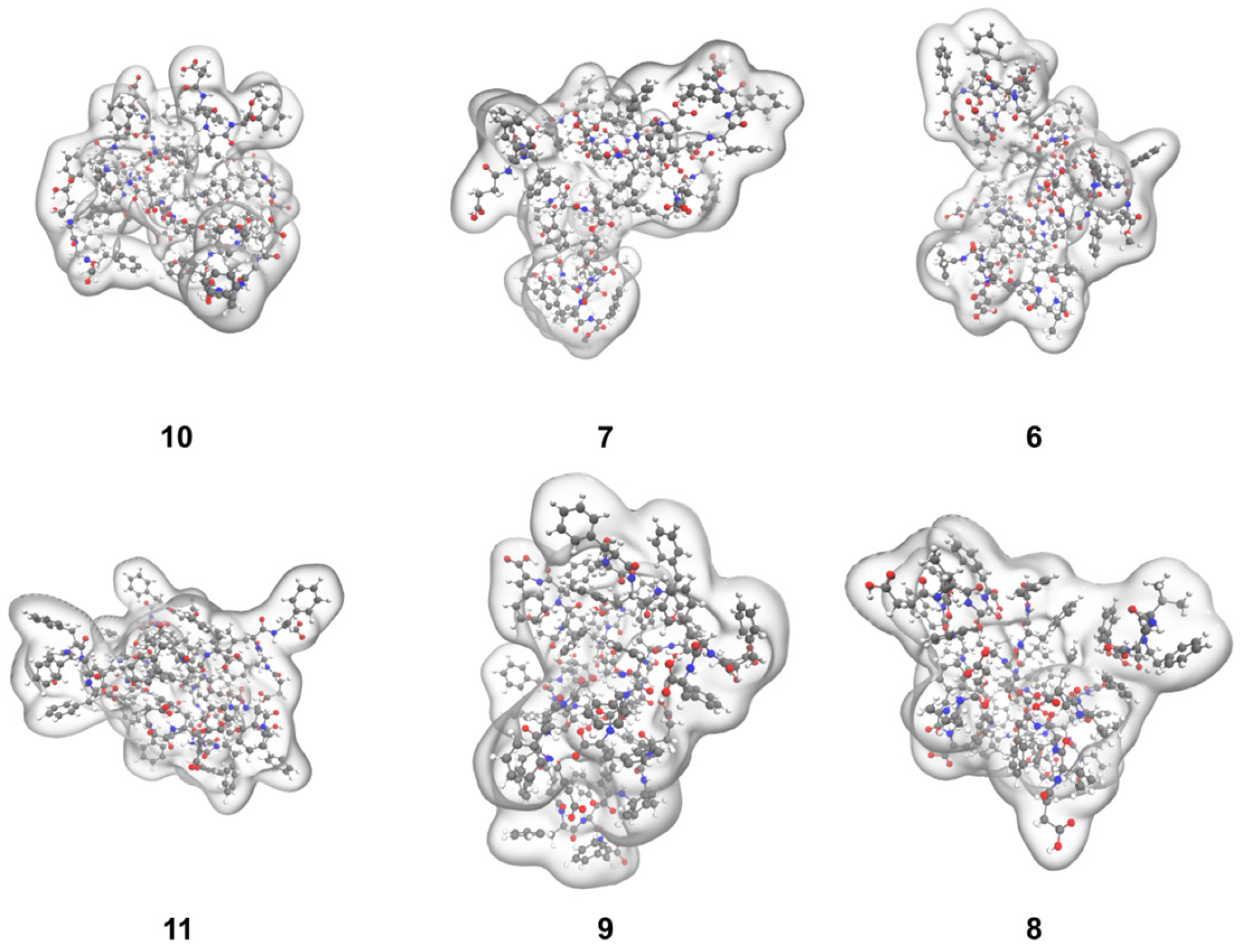






| (Dehydro)peptides | δ (ppm) | ||
|---|---|---|---|
| NH(Phe)N-ter | NH(Phe) | NH(Phe) | |
| Suc-L-Phe-L-Phe-L-Phe-OMe (10) | 8.40 | 8.00 | 7.98 |
| Suc-L-Phe-L-Phe-L-Phe-OH (11) | 8.24 | 7.99 | 7.97 |
| NH(∆Phe)C-ter | NH(Phe)N-ter | NH(Phe)int | |
| Suc-L-Phe-L-Phe-Z-ΔPhe-OMe (7) | 9.83 | 8.23 | 8.01 |
| Suc-L-Phe-L-Phe-Z-ΔPhe-OH (9) | 9.68 | 8.49 | 7.91 |
| Suc-L-Val-L-Phe-Z-ΔPhe-OMe (6) | 9.79 | 8.11 | 7.78 |
| Suc-L-Val-L-Phe-Z-ΔPhe-OH (8) | 9.61 | 8.40 | 8.10 |
| (Dehydro)peptide | CAC (µM) | cLogP * |
|---|---|---|
| Suc-L-Phe-L-Phe-L-Phe-OMe (10) | 155 | 2.65 |
| Suc-L-Phe-L-Phe-L-Phe-OH (11) | 144 | 0.58 |
| Suc-L-Phe-L-Phe-Z-∆Phe-OMe (7) | 108 | 3.32 |
| Suc-L-Phe-L-Phe-Z-∆Phe-OH (9) | 119 | 2.71 |
| Suc-L-Val-L-Phe-Z-∆Phe-OMe (6) | 120 | 2.64 |
| Suc-L-Val-L-Phe-Z-∆Phe-OH (8) | 100 | 2.02 |
| Hydrogelator | CGC (wt%) | GDL (wt%) | pH |
|---|---|---|---|
| Suc-L-Phe-L-Phe-L-Phe-OMe (10) | 0.3 | 0.3 | 5.8 |
| Suc-L-Phe-L-Phe-L-Phe-OH (11) | 0.3 | 0.6 | 5.7 |
| Suc-L-Phe-L-Phe-Z-∆Phe-OMe (7) | 0.2 | 0.2 | 5.6 |
| Suc-L-Phe-L-Phe-Z-∆Phe-OH (9) | 0.2 | 0.4 | 5.5 |
| Suc-L-Val-L-Phe-Z-∆Phe-OMe (6) | 0.2 | 0.2 | 5.7 |
| Suc-L-Val-L-Phe-Z-∆Phe-OH (8) | 0.2 | 0.4 | 5.8 |
| (Dehydro)peptide | G′i (kPa) | G′h (kPa) | γc (%) | TH (%) | G′r (kPa) | MH (%) | TMH (%) |
|---|---|---|---|---|---|---|---|
| Suc-L-Phe-L-Phe-L-Phe-OMe (10) | 256 | 60 | 1 ± 0.1 | 23.4 | 33 | 55 | 12.9 |
| Suc-L-Phe-L-Phe-L-Phe-OH (11) | 12 | 18 | 152 ± 12 | 150.0 | 6 | 34 | 50.0 |
| Suc-L-Phe-L-Phe-Z-∆Phe-OMe (7) | 294 | 45 | 48 ± 7 | 15.3 | 32 | 71 | 10.9 |
| Suc-L-Phe-L-Phe-Z-∆Phe-OH (9) | 259 | 177 | 14 ± 2.2 | 68.3 | 13 | 38 | 5.0 |
| Suc-L-Val-L-Phe-Z-∆Phe-OMe (6) | 20 | 16 | 60 ± 11 | 80.0 | 3 | 18 | 15.0 |
| Suc-L-Val-L-Phe-Z-∆Phe-OH (8) | 151 | 170 | 7 ± 1.2 | 112.6 | 80 | 47 | 53.0 |
Disclaimer/Publisher’s Note: The statements, opinions and data contained in all publications are solely those of the individual author(s) and contributor(s) and not of MDPI and/or the editor(s). MDPI and/or the editor(s) disclaim responsibility for any injury to people or property resulting from any ideas, methods, instructions or products referred to in the content. |
© 2026 by the authors. Licensee MDPI, Basel, Switzerland. This article is an open access article distributed under the terms and conditions of the Creative Commons Attribution (CC BY) license.
Share and Cite
Pereira, T.; Carvalho, A.F.; Teixeira, F.; Magalhães, A.P.; Pereira, D.M.; Hilliou, L.; Abrunhosa, A.; Bañobre-López, M.; Ferreira, P.M.T.; Martins, J.A. N-Succinylated Canonical vs. Dehydropeptides: Contrasting Self-Assembly Pathways and Hydrogel Properties. Gels 2026, 12, 299. https://doi.org/10.3390/gels12040299
Pereira T, Carvalho AF, Teixeira F, Magalhães AP, Pereira DM, Hilliou L, Abrunhosa A, Bañobre-López M, Ferreira PMT, Martins JA. N-Succinylated Canonical vs. Dehydropeptides: Contrasting Self-Assembly Pathways and Hydrogel Properties. Gels. 2026; 12(4):299. https://doi.org/10.3390/gels12040299
Chicago/Turabian StylePereira, Teresa, André F. Carvalho, Filipe Teixeira, Andreia Patrícia Magalhães, David M. Pereira, Loic Hilliou, Antero Abrunhosa, Manuel Bañobre-López, Paula M. T. Ferreira, and José A. Martins. 2026. "N-Succinylated Canonical vs. Dehydropeptides: Contrasting Self-Assembly Pathways and Hydrogel Properties" Gels 12, no. 4: 299. https://doi.org/10.3390/gels12040299
APA StylePereira, T., Carvalho, A. F., Teixeira, F., Magalhães, A. P., Pereira, D. M., Hilliou, L., Abrunhosa, A., Bañobre-López, M., Ferreira, P. M. T., & Martins, J. A. (2026). N-Succinylated Canonical vs. Dehydropeptides: Contrasting Self-Assembly Pathways and Hydrogel Properties. Gels, 12(4), 299. https://doi.org/10.3390/gels12040299