Comparison of NaOH-Based Solvents for Lignocellulosic Microfines (LCMFs) Dissolution and Properties of Regenerated Cellulose Film

Abstract
1. Introduction
2. Results and Discussion
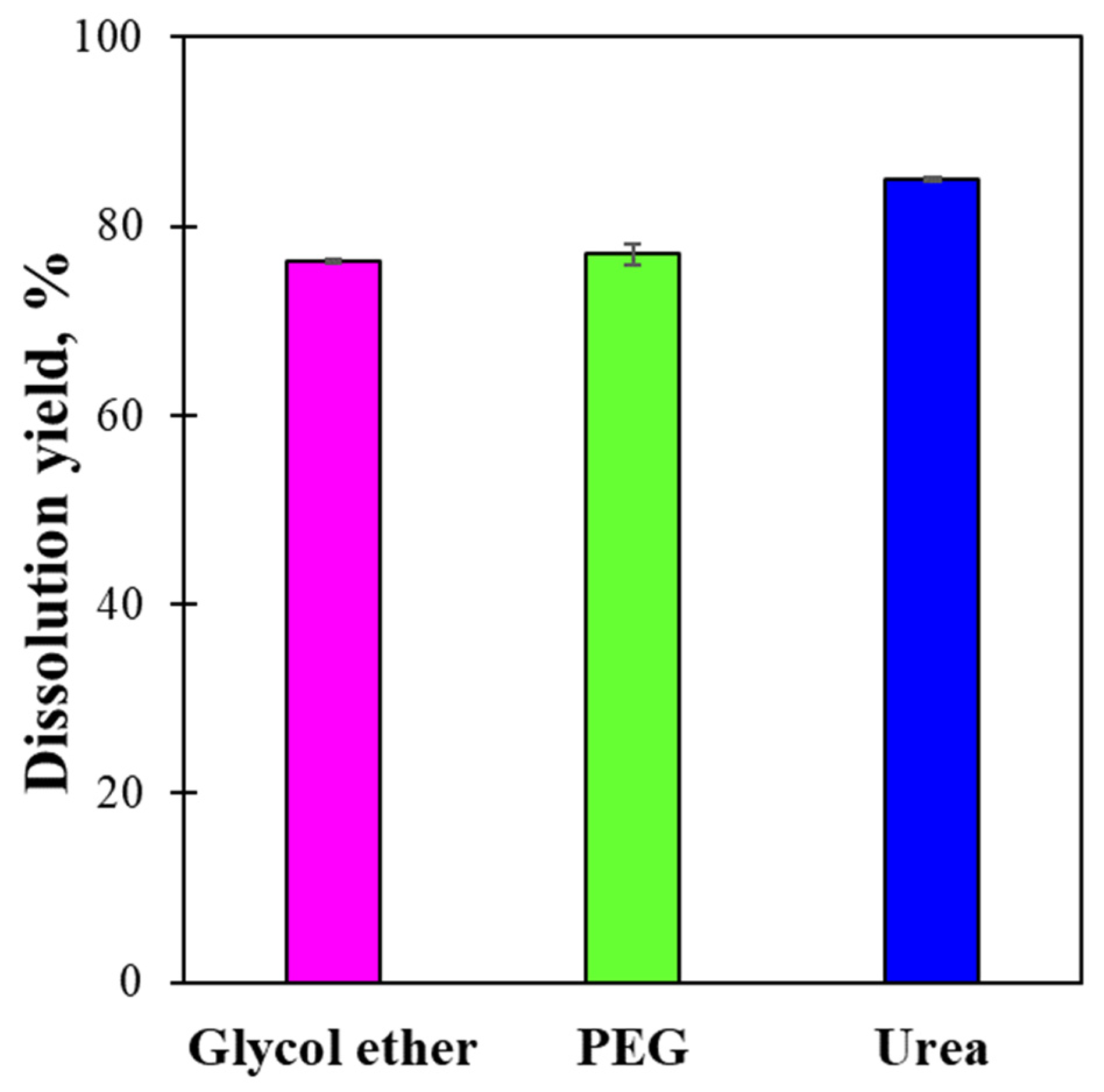
2.1. Dissolution Characteristics of Dissolved and Undissolved Components
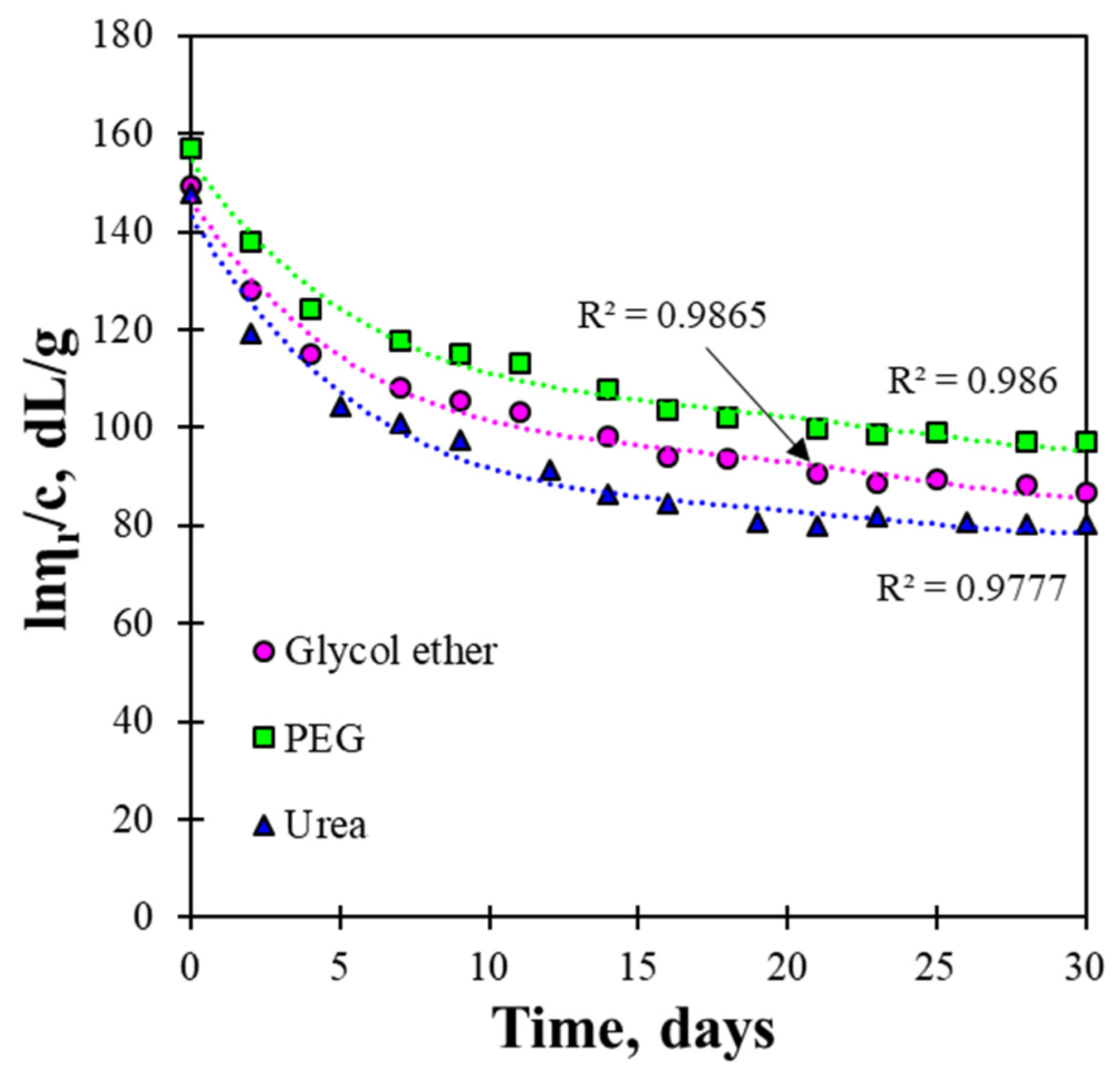
2.2. Properties of the Dissolved LCMF Solution
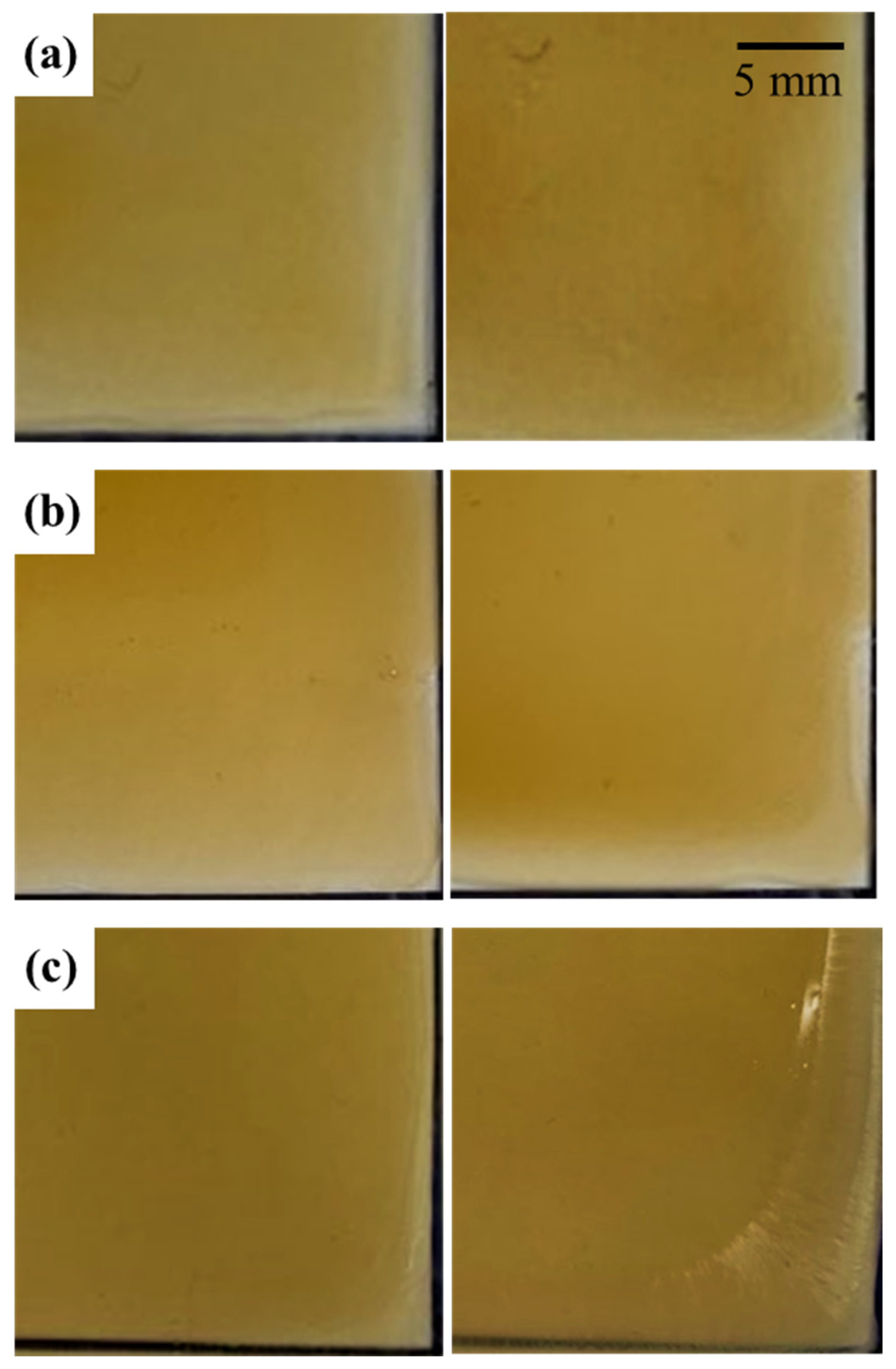
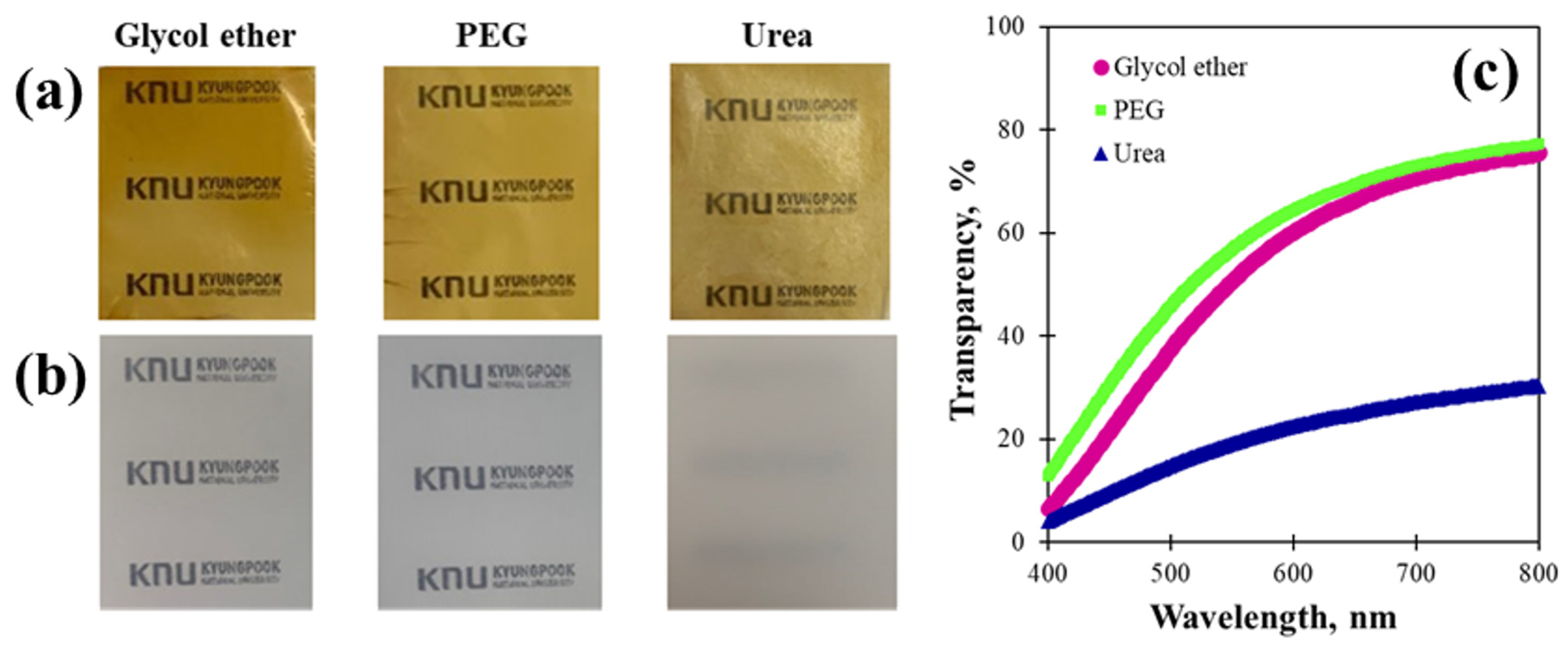
2.3. Regenerated LCMF Film Properties
3. Conclusions
4. Materials and Methods
4.1. Materials
4.2. LCMF Preparation
4.3. LCMF Dissolution
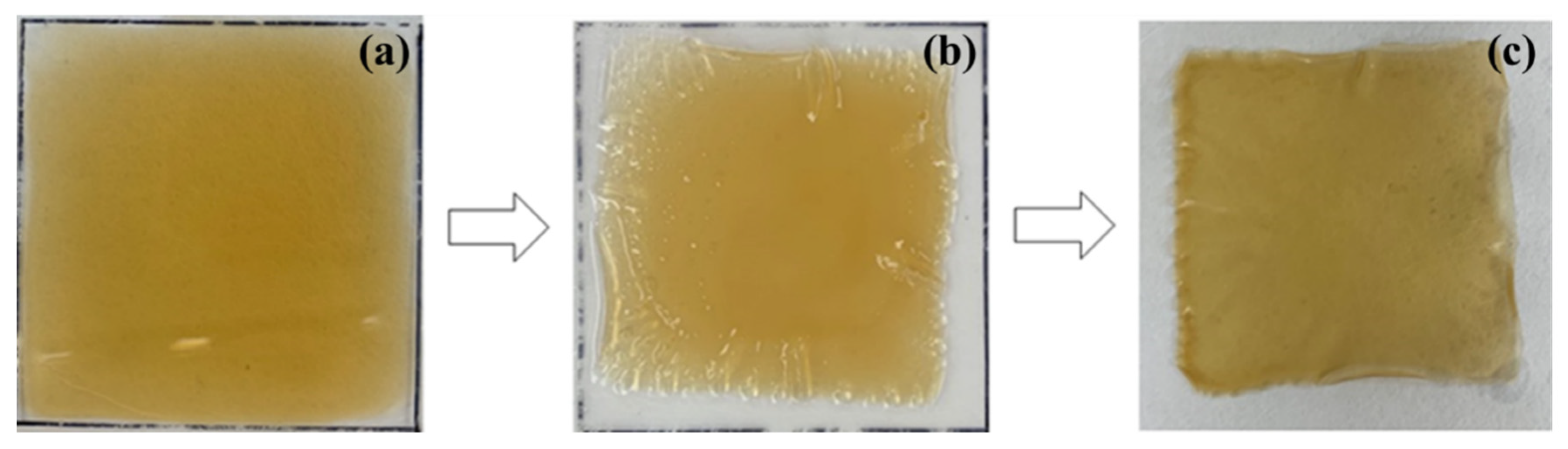
4.4. Regenerated LCMF Films
4.5. Dissolution Yield
4.6. Chemical Composition
4.7. Viscosity Measurement of the LCMF Solution Stability
4.8. Transparency of the LCMF-Regenerated Films
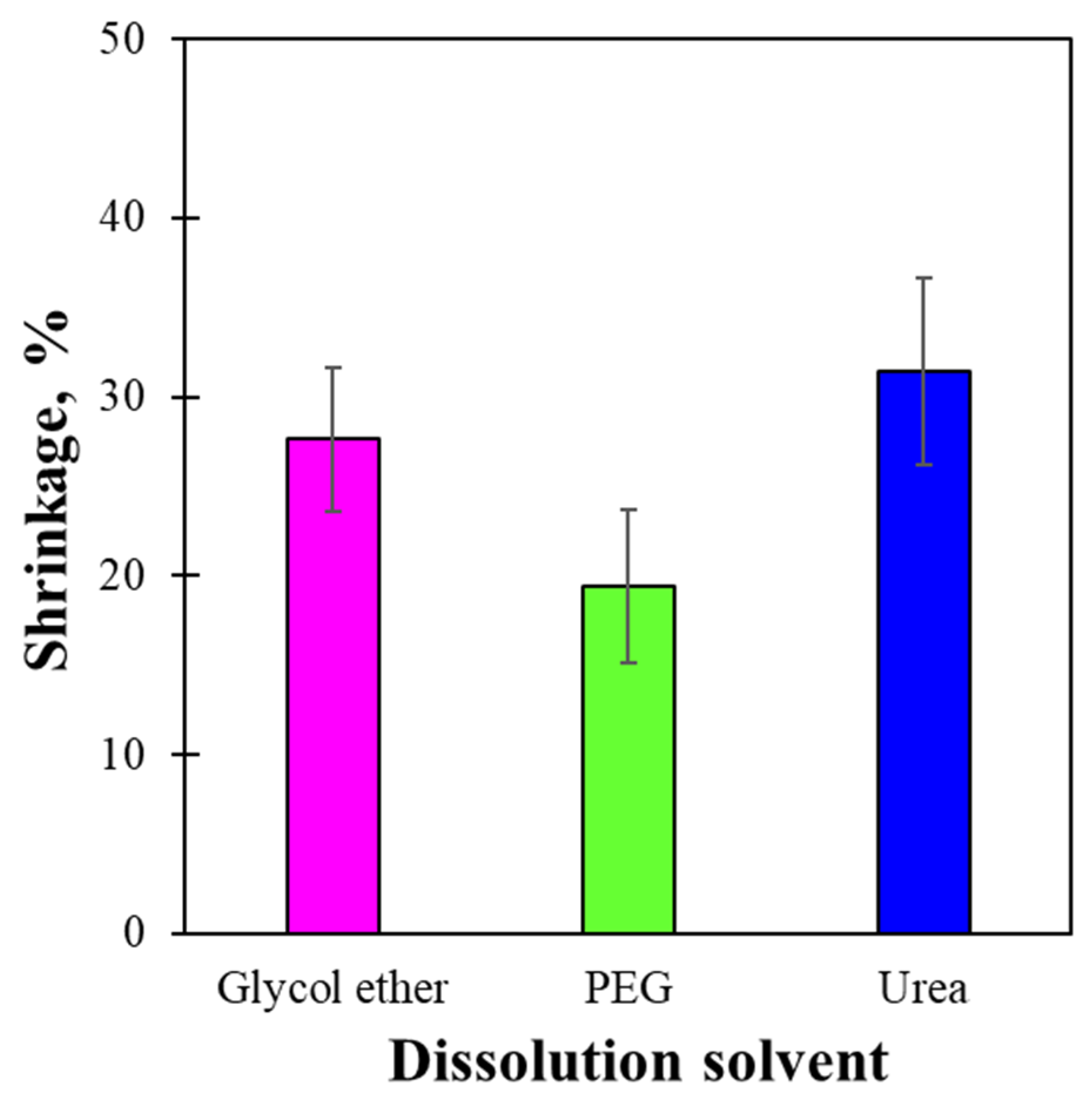
4.9. Shrinkage of the LCMF-Regenerated Films
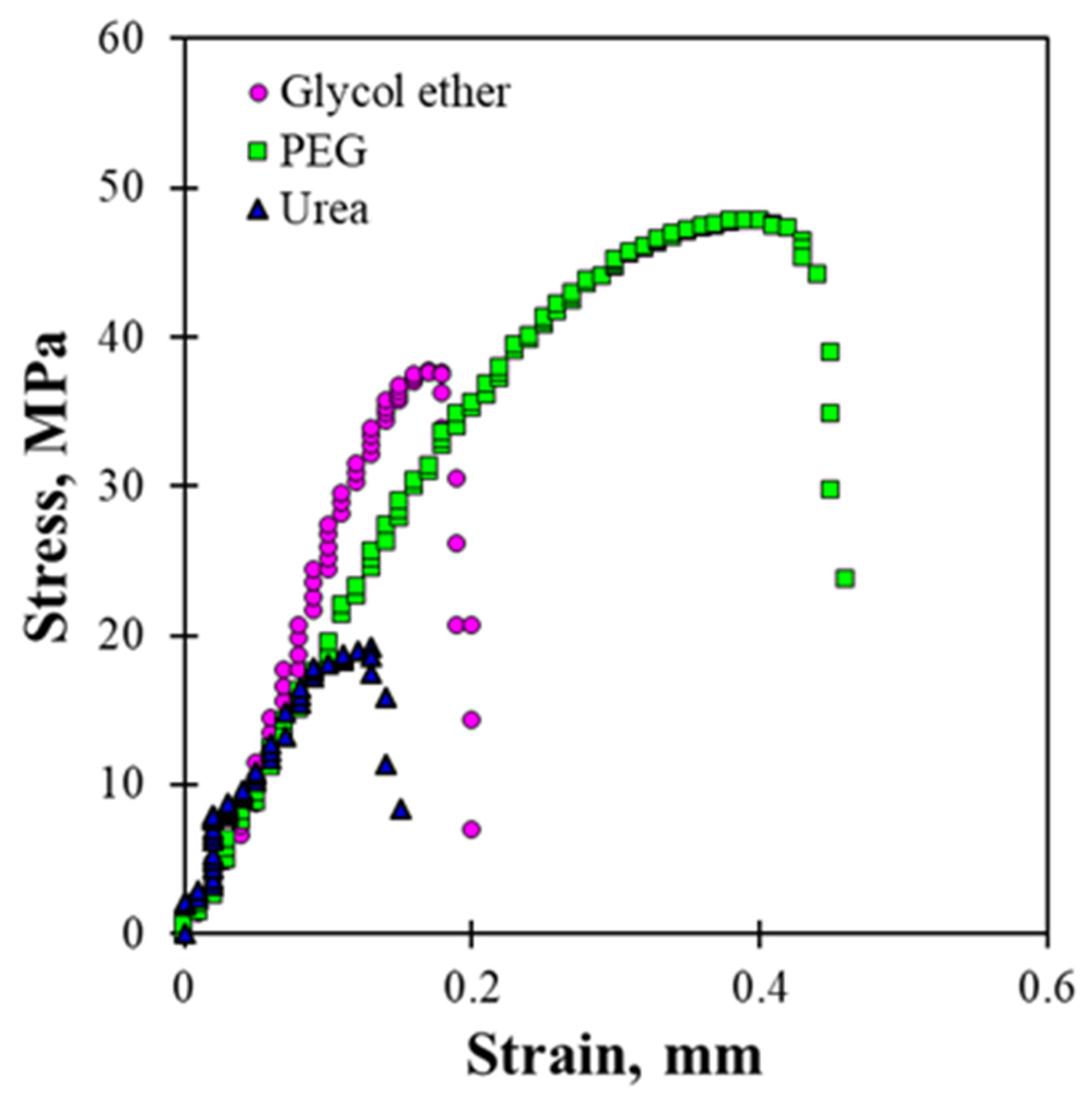
4.10. Tensile Strength of the LCMF-Regenerated Films
Author Contributions
Funding
Institutional Review Board Statement
Informed Consent Statement
Data Availability Statement
Conflicts of Interest
Abbreviations
| CCUS | Carbon capture, utilization, and storage |
| CO2 | Carbon dioxide |
| DP | Degree of polymerization |
| FD | Freeze-drying |
| FID | Flame ionization detector |
| GC | Gas chromatography |
| IPCC | Intergovernmental Panel on Climate Change |
| LCMFs | Lignocellulosic microfines |
| NaOH | Sodium hydroxide |
| PEG | Poly(ethylene glycol) |
| RC | Regenerated cellulose |
| UV | Ultraviolet |
References
- Piemonte, V. Bioplastic wastes: The best final disposition for energy saving. J. Polym. Environ. 2011, 19, 988–994. [Google Scholar] [CrossRef]
- Sagues, W.J.; Jameel, H.; Sanchez, D.L.; Park, S. Prospects for bioenergy with carbon capture & storage (BECCS) in the United States pulp and paper industry. Energy Environ. Sci. 2020, 13, 2243–2261. [Google Scholar] [CrossRef]
- Tofanica, B.M.; Mikhailidi, A.; Samuil, C.; Ungureanu, O.C.; Fortună, M.E.; Ungureanu, E. Advances in cellulose-based hydrogels: Current trends and challenges. Gels 2024, 10, 842. [Google Scholar] [CrossRef]
- Isikgor, F.H.; Becer, C.R. Lignocellulosic biomass: A sustainable platform for the production of bio-based chemicals and polymers. Polym. Chem. 2015, 6, 4497–4559. [Google Scholar] [CrossRef]
- Venturelli, G.; Villa, F.; Petraretti, M.; Guagliano, G.; Levi, M.; Petrini, P. Bacterial cellulose for scalable and sustainable bio-gels in the circular economy. Gels 2025, 11, 262. [Google Scholar] [CrossRef]
- Pang, S. Advances in thermochemical conversion of woody biomass to energy, fuels and chemicals. Biotechnol. Adv. 2019, 37, 589–597. [Google Scholar] [CrossRef] [PubMed]
- Wang, S.; Lu, A.; Zhang, L. Recent advances in regenerated cellulose materials. Prog. Polym. Sci. 2016, 53, 169–206. [Google Scholar] [CrossRef]
- Amalini, A.N.; Haida, M.K.N.; Imran, K.; Haafiz, M.K.M. Relationship between dissolution temperature and properties of oil palm biomass based-regenerated cellulose films prepared via ionic liquid. Mater. Chem. Phys. 2019, 221, 382–389. [Google Scholar] [CrossRef]
- Wan, C.; Jiao, Y.; Wei, S.; Zhang, L.; Wu, Y.; Li, J. Functional nanocomposites from sustainable regenerated cellulose aerogels: A review. Chem. Eng. J. 2019, 359, 459–475. [Google Scholar] [CrossRef]
- Zheng, X.; Huang, F.; Chen, L.; Huang, L.; Cao, S.; Ma, X. Preparation of transparent film via cellulose regeneration: Correlations between ionic liquid and film properties. Carbohydr. Polym. 2019, 203, 214–218. [Google Scholar] [CrossRef]
- O’Sullivan, A.C. Cellulose: The structure slowly unravels. Cellulose 1997, 4, 173–207. [Google Scholar] [CrossRef]
- Fink, H.-P.; Weigel, P.; Purz, H.J.; Ganster, J. Structure formation of regenerated cellulose materials from NMMO solutions. Prog. Polym. Sci. 2001, 26, 1473–1524. [Google Scholar] [CrossRef]
- Östlund, Å.; Idström, A.; Olsson, C.; Larsson, P.T.; Nordstierna, L. Modification of crystallinity and pore size distribution in coagulated cellulose films. Cellulose 2013, 20, 1657–1667. [Google Scholar] [CrossRef]
- Medronho, B.; Lindman, B. Brief overview on cellulose dissolution/regeneration interactions and mechanisms. Adv. Colloid Interface Sci. 2015, 222, 502–508. [Google Scholar] [CrossRef]
- Cheng, G.; Zhu, P.; Li, J.; Cheng, F.; Lin, Y.; Zhou, M. All-cellulose films with excellent strength and toughness via a facile approach of dissolution–regeneration. J. Appl. Polym. Sci. 2019, 136, 46925. [Google Scholar] [CrossRef]
- Bedane, A.H.; Eić, M.; Farmahini-Farahani, M.; Xiao, H. Water vapor transport properties of regenerated cellulose and nanofibrillated cellulose films. J. Membr. Sci. 2015, 493, 46–57. [Google Scholar] [CrossRef]
- Klemm, D.; Heublein, B.; Fink, H.-P.; Bohn, A. Cellulose: Fascinating biopolymer and sustainable raw material. Angew. Chem. Int. Ed. 2005, 44, 3358–3393. [Google Scholar] [CrossRef]
- Hinner, L.P.; Wissner, J.L.; Beurer, A.; Nebel, B.A.; Hauer, B. Homogeneous vinyl ester-based synthesis of different cellulose derivatives in 1-ethyl-3-methylimidazolium acetate. Green Chem. 2016, 18, 6099–6107. [Google Scholar] [CrossRef]
- Cheng, D.; An, X.; Zhang, J.; Tian, X.; He, Z.; Wen, Y.; Ni, Y. Facile preparation of regenerated cellulose film from cotton linter using organic electrolyte solution. Cellulose 2017, 24, 1631–1639. [Google Scholar] [CrossRef]
- Korhonen, O.; Budtova, T. Gelation of Cellulose–NaOH Solutions in the Presence of Cellulose Fibers. Carbohydr. Polym. 2019, 224, 115152. [Google Scholar] [CrossRef]
- Medronho, B.; Lindman, B. Competing forces during cellulose dissolution: From solvents to mechanisms. Curr. Opin. Colloid Interface Sci. 2014, 19, 32–40. [Google Scholar] [CrossRef]
- Jadhav, S.; Ganvir, V.; Shinde, Y.; Revankar, S.; Thakre, S.; Singh, M.K. Carboxylate functionalized imidazolium-based zwitterions as benign and sustainable solvent for cellulose dissolution: Synthesis and characterization. J. Mol. Liq. 2021, 344, 117724. [Google Scholar] [CrossRef]
- Hasegawa, M.; Isogai, A.; Onabe, F.; Usuda, M. Dissolving states of cellulose and chitosan in trifluoroacetic acid. J. Appl. Polym. Sci. 1992, 45, 1857–1863. [Google Scholar] [CrossRef]
- Liu, S.; Zhang, L. Effects of polymer concentration and coagulation temperature on the properties of regenerated cellulose films prepared from LiOH/urea solution. Cellulose 2009, 16, 189–198. [Google Scholar] [CrossRef]
- Pang, J.; Wu, M.; Zhang, Q.; Tan, X.; Xu, F.; Zhang, X.; Sun, R. Comparison of physical properties of regenerated cellulose films fabricated with different cellulose feedstocks in ionic liquid. Carbohydr. Polym. 2015, 121, 71–78. [Google Scholar] [CrossRef] [PubMed]
- Qi, H.; Yang, Q.; Zhang, L.; Liebert, T.; Heinze, T. The dissolution of cellulose in NaOH-based aqueous system by two-step process. Cellulose 2011, 18, 237–245. [Google Scholar] [CrossRef]
- Kamide, K.; Okajima, K.; Kowsaka, K. Dissolution of natural cellulose into aqueous alkali solution: Role of super-molecular structure of cellulose. Polym. J. 1992, 24, 71–86. [Google Scholar] [CrossRef]
- Yan, L.; Gao, Z. Dissolving of cellulose in PEG/NaOH aqueous solution. Cellulose 2008, 15, 789–796. [Google Scholar] [CrossRef]
- Trygg, J.; Fardim, P. Enhancement of cellulose dissolution in water-based solvent via ethanol–hydrochloric acid pretreatment. Cellulose 2011, 18, 987–994. [Google Scholar] [CrossRef]
- Shi, Z.; Yang, Q.; Kuga, S.; Matsumoto, Y. Dissolution of wood pulp in aqueous NaOH/urea solution via dilute acid pretreatment. J. Agric. Food Chem. 2015, 63, 6113–6119. [Google Scholar] [CrossRef] [PubMed]
- Han, D.; Yan, L. Preparation of all-cellulose composite by selective dissolving of cellulose surface in PEG/NaOH aqueous solution. Carbohydr. Polym. 2010, 79, 614–619. [Google Scholar] [CrossRef]
- Zhang, L.; Ruan, D.; Zhou, J. Structure and properties of regenerated cellulose films prepared from cotton linters in NaOH/urea aqueous solution. Ind. Eng. Chem. Res. 2001, 40, 5923–5928. [Google Scholar] [CrossRef]
- Cai, J.; Zhang, L. Rapid dissolution of cellulose in LiOH/urea and NaOH/urea aqueous solutions. Macromol. Biosci. 2005, 5, 539–548. [Google Scholar] [CrossRef] [PubMed]
- Koistinen, A.; Vuorinen, T.; Maloney, T. The effect of alkaline pretreatment on cellulose pulp fiber dissolution. Carbohydr. Polym. Technol. Appl. 2025, 6, 100978. [Google Scholar] [CrossRef]
- Ryu, J.A.; Jo, Y.S.; Lee, J.M. Dissolution of lignin-rich organosolv pulps by PEG and urea contents in aqueous alkaline solution. J. Korea TAPPI 2020, 52, 63–72. [Google Scholar] [CrossRef]
- Shi, Z.; Yang, Q.; Cai, J.; Kuga, S.; Matsumoto, Y. Effects of lignin and hemicellulose contents on dissolution of wood pulp in aqueous NaOH/urea solution. Cellulose 2014, 21, 1205–1215. [Google Scholar] [CrossRef]
- Ryu, J.A.; Choi, H.S.; Lee, J.M. Dissolution and regeneration of residual lignin-controlled micronized residues by washing methods. J. Korea TAPPI 2021, 53, 38–46. [Google Scholar] [CrossRef]
- Zhou, J.; Zhang, L. Solubility of cellulose in NaOH/urea aqueous solution. Polym. J. 2000, 32, 866–870. [Google Scholar] [CrossRef]
- Lu, A.; Liu, Y.; Zhang, L.; Potthast, A. Investigation on metastable solution of cellulose dissolved in NaOH/urea aqueous system at low temperature. J. Phys. Chem. B 2011, 115, 12801–12808. [Google Scholar] [CrossRef]
- Xiong, B.; Zhao, P.; Hu, K.; Zhang, L.; Cheng, G. Dissolution of cellulose in aqueous NaOH/urea solution: Role of urea. Cellulose 2014, 21, 1183–1192. [Google Scholar] [CrossRef]
- Vasanthan, N.; Shin, I.D.; Tonelli, A.E. Structure, conformation, and motions of poly(ethylene oxide) and poly(ethylene glycol) in their urea inclusion compounds. Macromolecules 1996, 29, 263–267. [Google Scholar] [CrossRef]
- Masunov, A.; Dannenberg, J.J. Theoretical study of urea and thiourea. 2. Chains and ribbons. J. Phys. Chem. B 2000, 104, 806–810. [Google Scholar] [CrossRef]
- Rusa, C.C.; Tonelli, A.E. Separation of polymers by molecular weight through inclusion compound formation with urea and α-cyclodextrin hosts. Macromolecules 2000, 33, 1813–1818. [Google Scholar] [CrossRef]
- Liu, G.; Li, W.; Chen, L.; Zhang, X.; Niu, D.; Chen, Y.; Zhu, Q. Molecular dynamics studies on the aggregating behaviors of cellulose molecules in NaOH/urea aqueous solution. Colloids Surf. A Physicochem. Eng. Asp. 2020, 594, 124663. [Google Scholar] [CrossRef]
- Morgado, D.L.; Frollini, E.; Castellan, A.; Rosa, D.S.; Coma, V. Biobased films prepared from NaOH/thiourea aqueous solution of chitosan and linter cellulose. Cellulose 2011, 18, 699–712. [Google Scholar] [CrossRef]
- Kim, K.J.; Ryu, J.A.; Eom, T.J. Chemical characteristics of heterogeneous lignocellulosic microfines prepared using the glycol ether–organosolv process: Dissolution properties in an NaOH–urea aqueous solution. Holzforschung 2022, 76, 535–543. [Google Scholar] [CrossRef]
- Cai, J.; Zhang, L.; Zhou, J.; Qi, H.; Chen, H.; Kondo, T.; Chu, B. Multifilament fibers based on dissolution of cellulose in NaOH/urea aqueous solution: Structure and properties. Adv. Mater. 2007, 19, 821–825. [Google Scholar] [CrossRef]
- Zhu, H.; Xiao, Z.; Liu, D.; Li, Y.; Weadock, N.J.; Fang, Z.; Hu, L. Biodegradable transparent substrates for flexible organic-light-emitting diodes. Energy Environ. Sci. 2013, 6, 2105–2111. [Google Scholar] [CrossRef]




| Type | Raw Material | |||
|---|---|---|---|---|
| Total (g) | Carbohydrate (g) | Lignin (g) | C + L a | |
| LCMF | 100.0 | 87.4 | 8.4 | 95.8 |
| Type | Solvent | Dissolved Component (Regeneration) | Undissolved Component (Residue) | ||||||
|---|---|---|---|---|---|---|---|---|---|
| Total (g) a | Carbohydrate (g) b | Lignin (g) c | C + L d | Total (g) a | Carbohydrate (g) b | Lignin (g) c | C + L d | ||
| LCMF | Glycol ether | 76.2 | 67.7 | 3.5 | 71.2 | 23.8 | 18.9 | 4.0 | 22.9 |
| PEG | 77.0 | 68.2 | 3.9 | 72.1 | 23.0 | 17.9 | 3.6 | 21.5 | |
| Urea | 85.0 | 71.6 | 5.2 | 76.8 | 15.0 | 12.0 | 2.3 | 14.3 | |
| Sample | Klason Lignin, % | Neutral Sugar Analysis, % | ||||||
|---|---|---|---|---|---|---|---|---|
| Glucose | Arabinose | Xylose | Mannose | Galactose | Yield, % a | |||
| Raw materials | 8.4 | 95.9 | <0.3 | 1.1 | 2.5 | 0.7 | 94.7 | |
| Glycol ether | Dissolved component | 4.6 | 94.0 | <0.3 | 0.9 | 3.1 | 1.7 | 88.9 |
| Undissolved component | 16.7 | 96.5 | <0.3 | 0.4 | 2.2 | 0.7 | 79.4 | |
| PEG | Dissolved component | 5.0 | 94.7 | <0.3 | 0.9 | 3.2 | 0.9 | 88.6 |
| Undissolved component | 15.8 | 96.4 | <0.3 | 0.4 | 2.3 | 0.8 | 77.9 | |
| Urea | Dissolved component | 6.2 | 94.7 | <0.3 | 0.9 | 3.1 | 0.9 | 84.2 |
| Undissolved component | 15.5 | 96.0 | <0.3 | 0.6 | 2.5 | 0.6 | 79.7 | |
Disclaimer/Publisher’s Note: The statements, opinions and data contained in all publications are solely those of the individual author(s) and contributor(s) and not of MDPI and/or the editor(s). MDPI and/or the editor(s) disclaim responsibility for any injury to people or property resulting from any ideas, methods, instructions or products referred to in the content. |
© 2026 by the authors. Licensee MDPI, Basel, Switzerland. This article is an open access article distributed under the terms and conditions of the Creative Commons Attribution (CC BY) license.
Share and Cite
Ryu, J.; Choi, S.R.; Lee, J.M. Comparison of NaOH-Based Solvents for Lignocellulosic Microfines (LCMFs) Dissolution and Properties of Regenerated Cellulose Film. Gels 2026, 12, 199. https://doi.org/10.3390/gels12030199
Ryu J, Choi SR, Lee JM. Comparison of NaOH-Based Solvents for Lignocellulosic Microfines (LCMFs) Dissolution and Properties of Regenerated Cellulose Film. Gels. 2026; 12(3):199. https://doi.org/10.3390/gels12030199
Chicago/Turabian StyleRyu, Jiae, Sa Rang Choi, and Jung Myoung Lee. 2026. "Comparison of NaOH-Based Solvents for Lignocellulosic Microfines (LCMFs) Dissolution and Properties of Regenerated Cellulose Film" Gels 12, no. 3: 199. https://doi.org/10.3390/gels12030199
APA StyleRyu, J., Choi, S. R., & Lee, J. M. (2026). Comparison of NaOH-Based Solvents for Lignocellulosic Microfines (LCMFs) Dissolution and Properties of Regenerated Cellulose Film. Gels, 12(3), 199. https://doi.org/10.3390/gels12030199