
High-Temperature Induced Sintering Strengthening of Mechanical Properties of Porous Silica: A Molecular Dynamics Study


 and
and 
Abstract
1. Introduction
2. Results and Discussion
2.1. Tensile Fracture Behavior and Stress Response
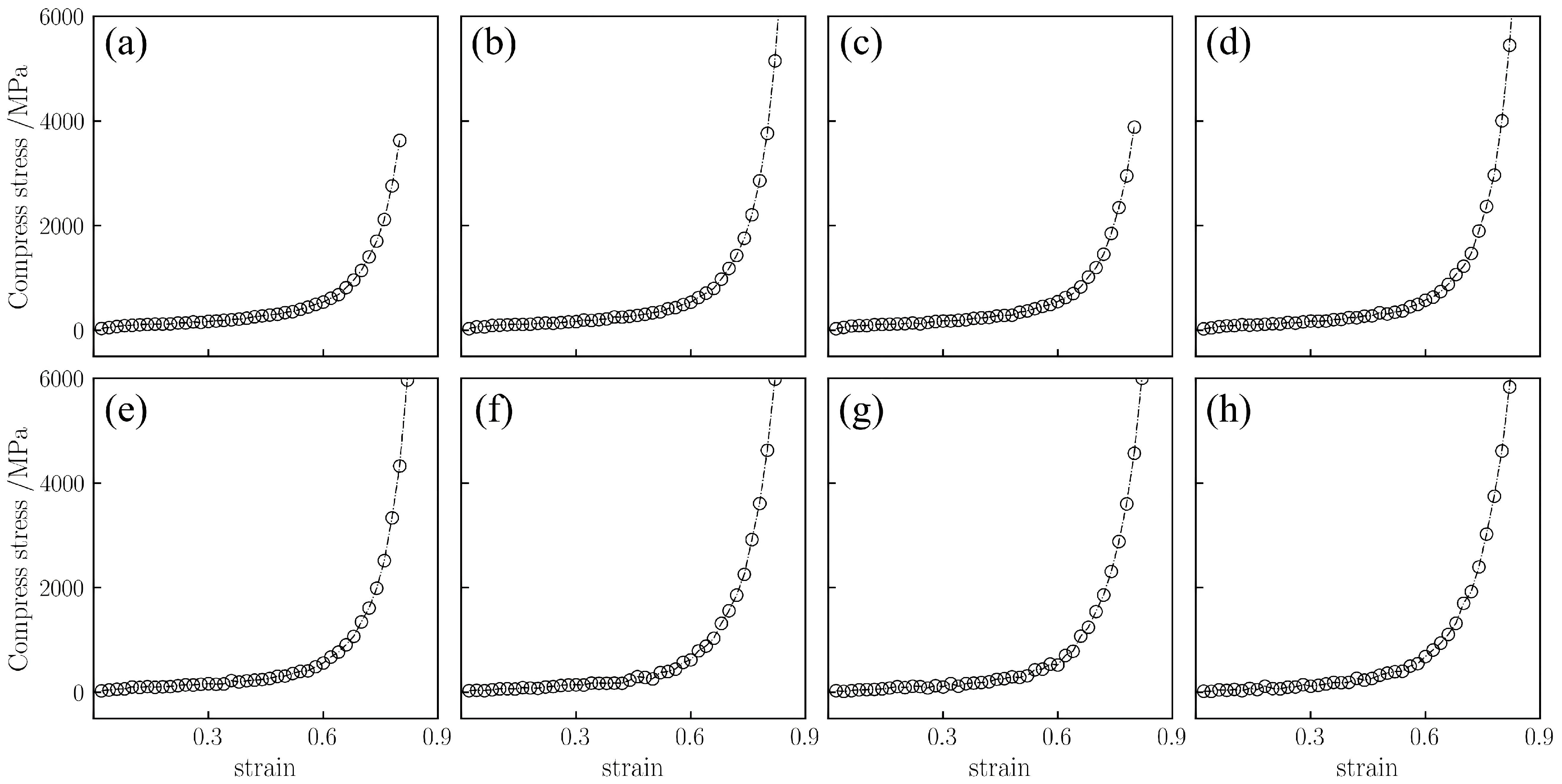
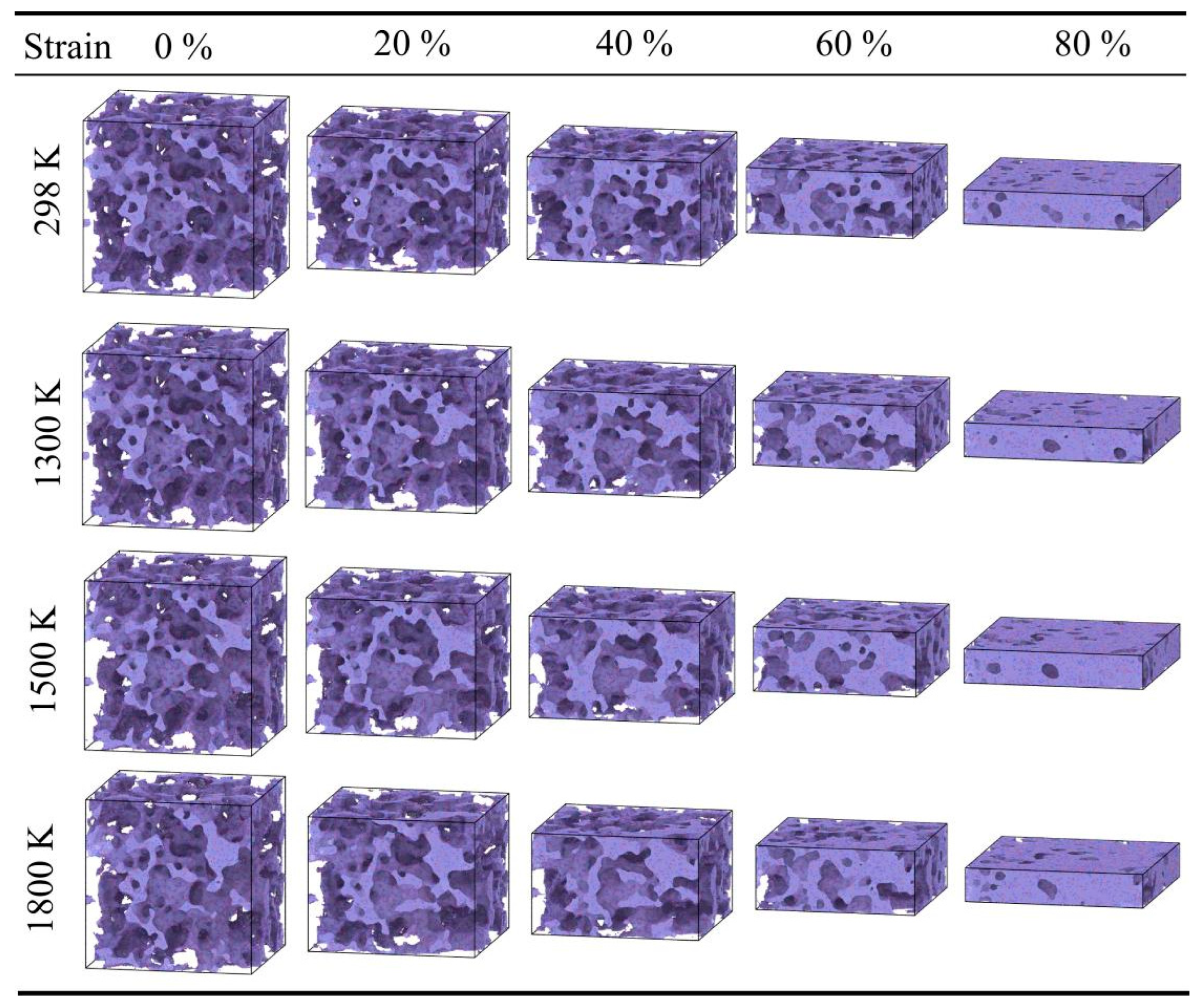
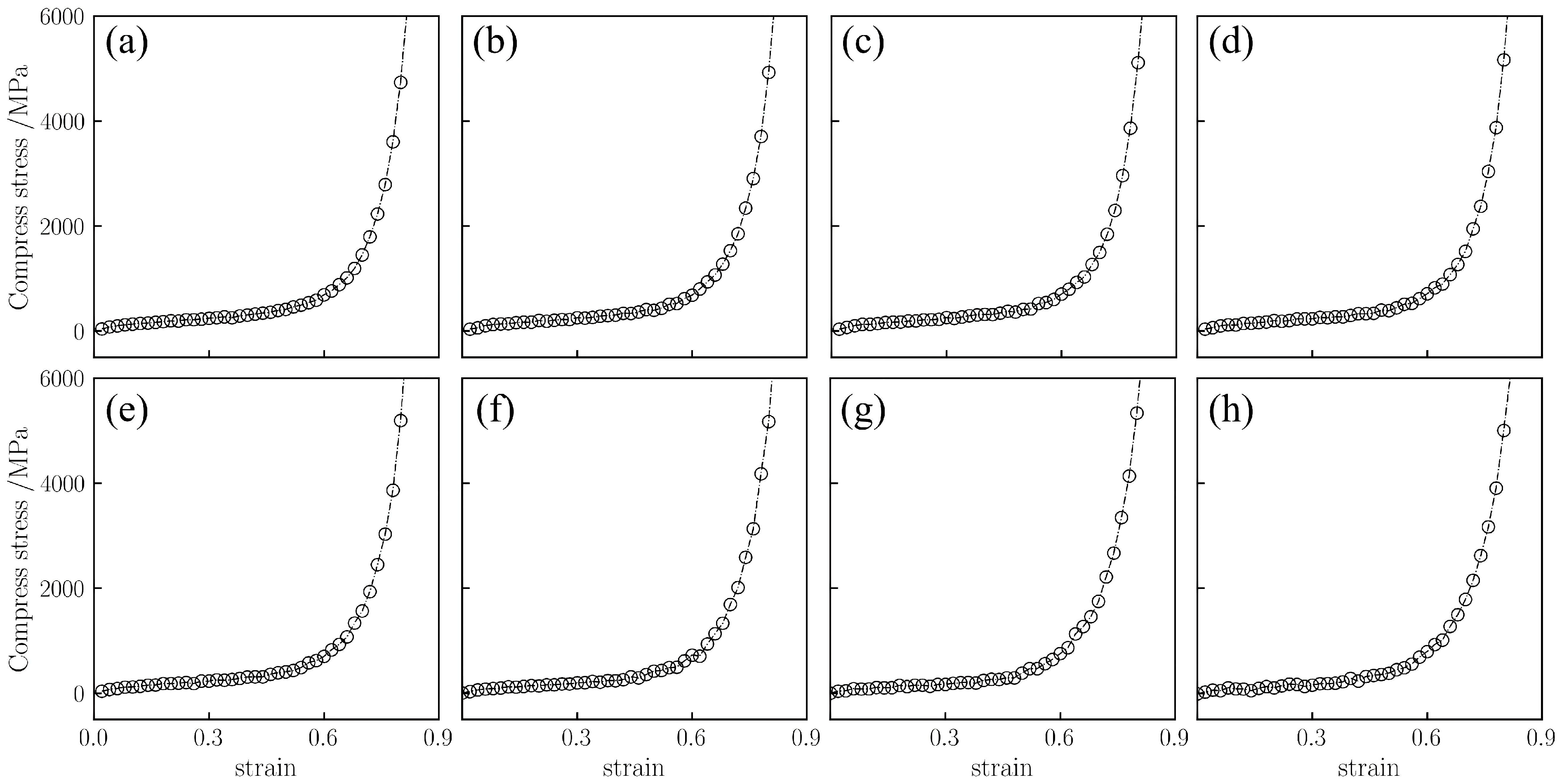
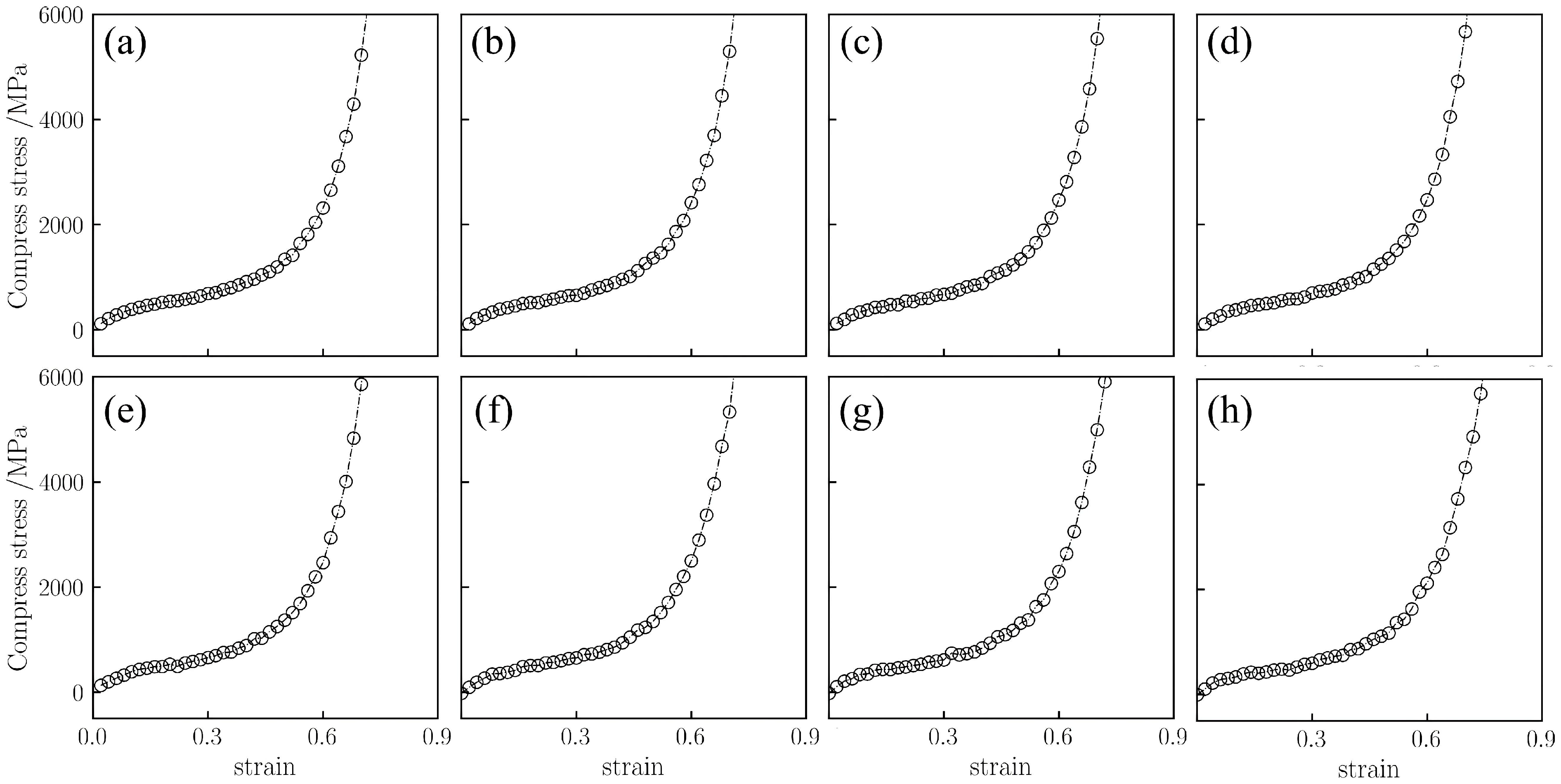
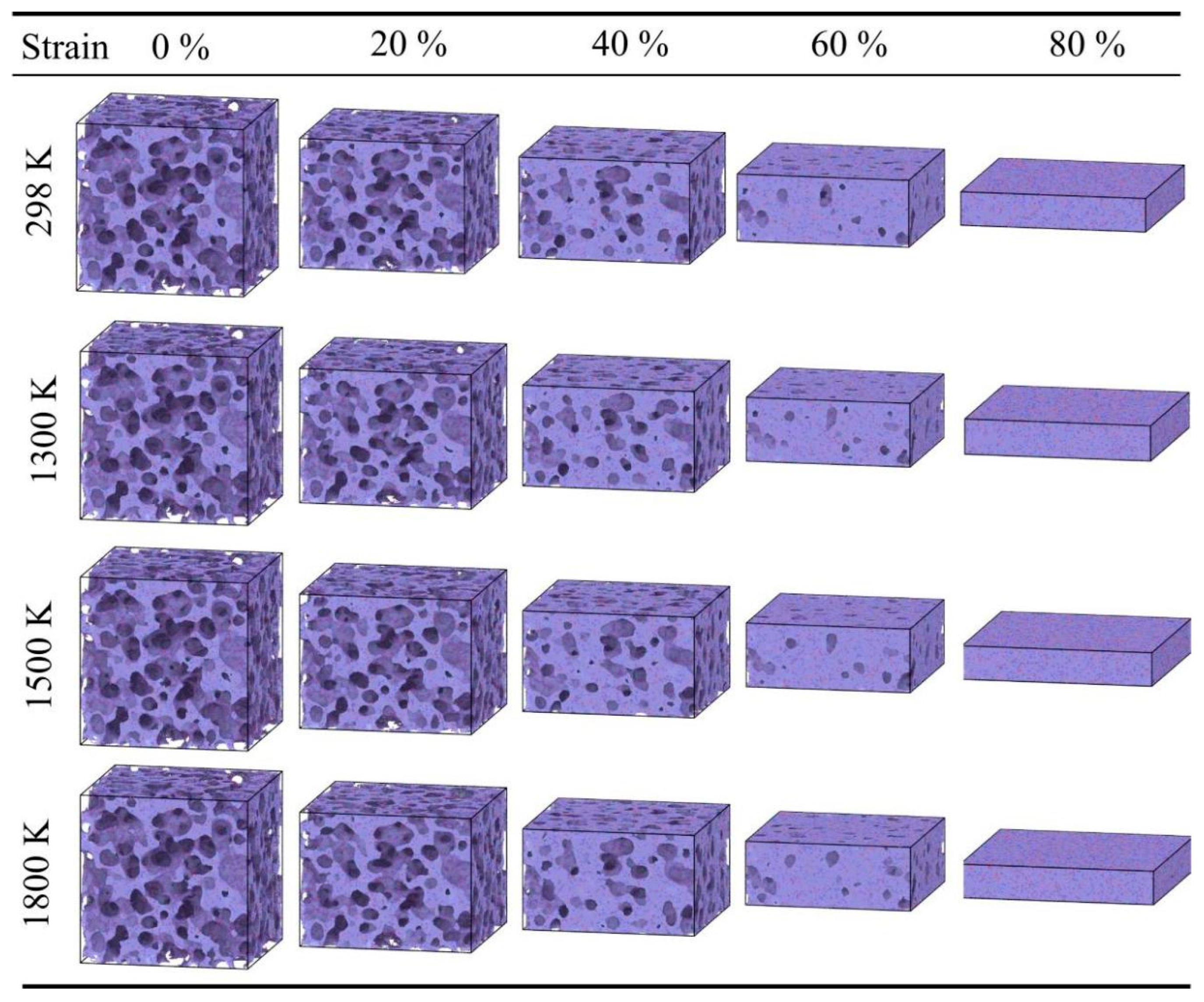
2.2. Compressive Densification and High-Temperature Strengthening
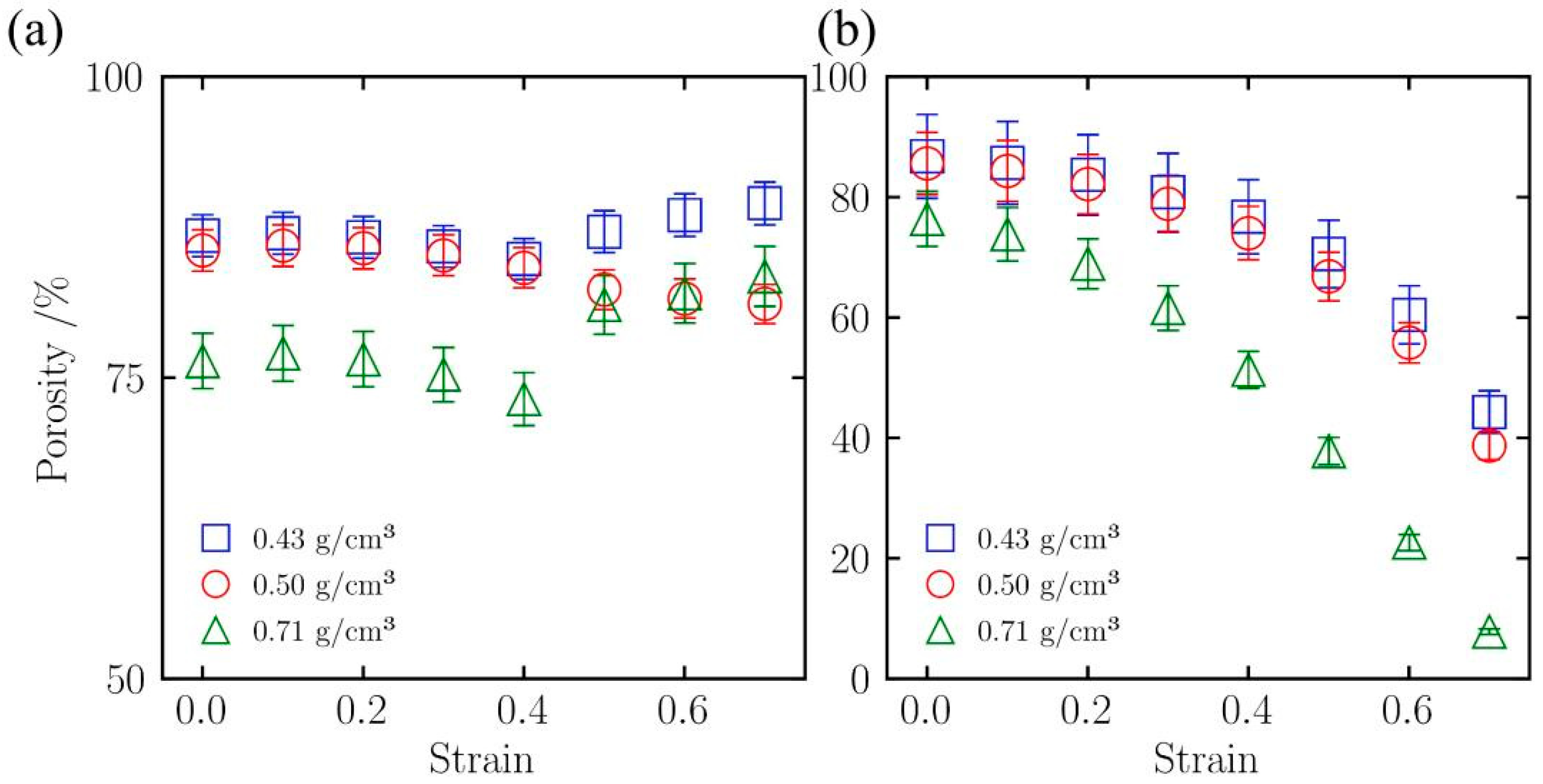
2.3. Porosity Evolution
2.4. Elastic Modulus
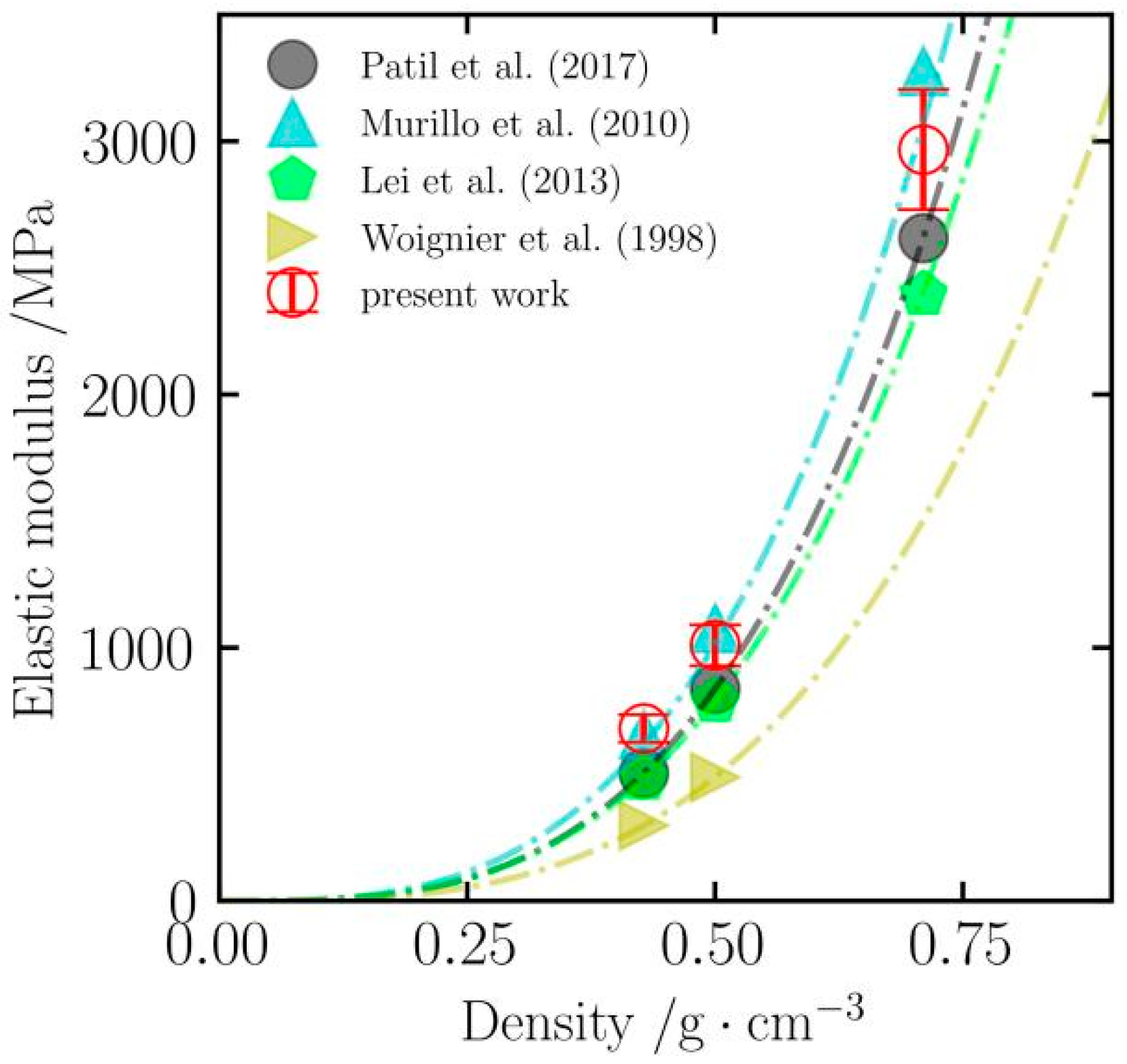
2.4.1. Model Verification
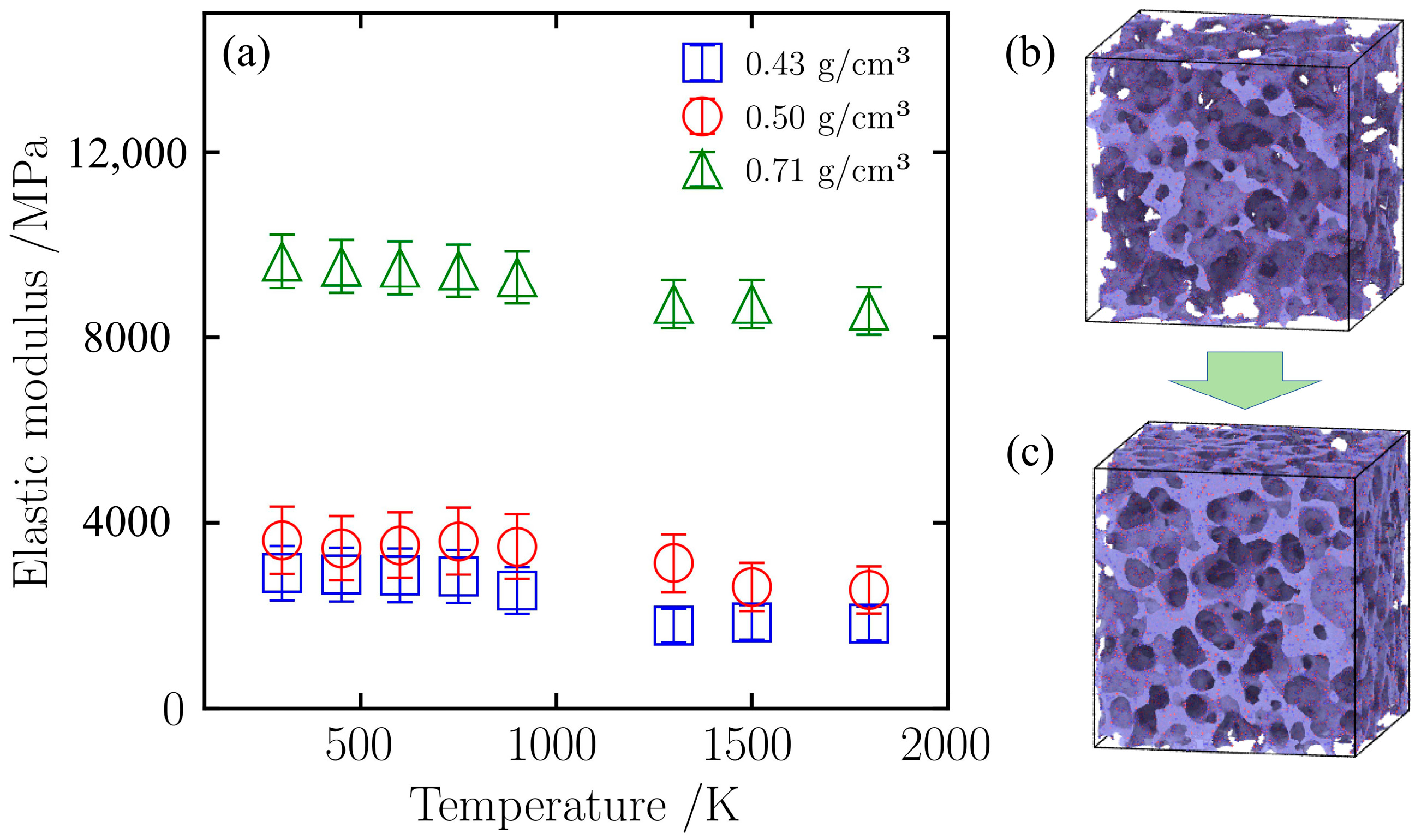
2.4.2. Thermal Softening Effect Under Tension
2.4.3. Sintering Strengthening Effect Under Compression
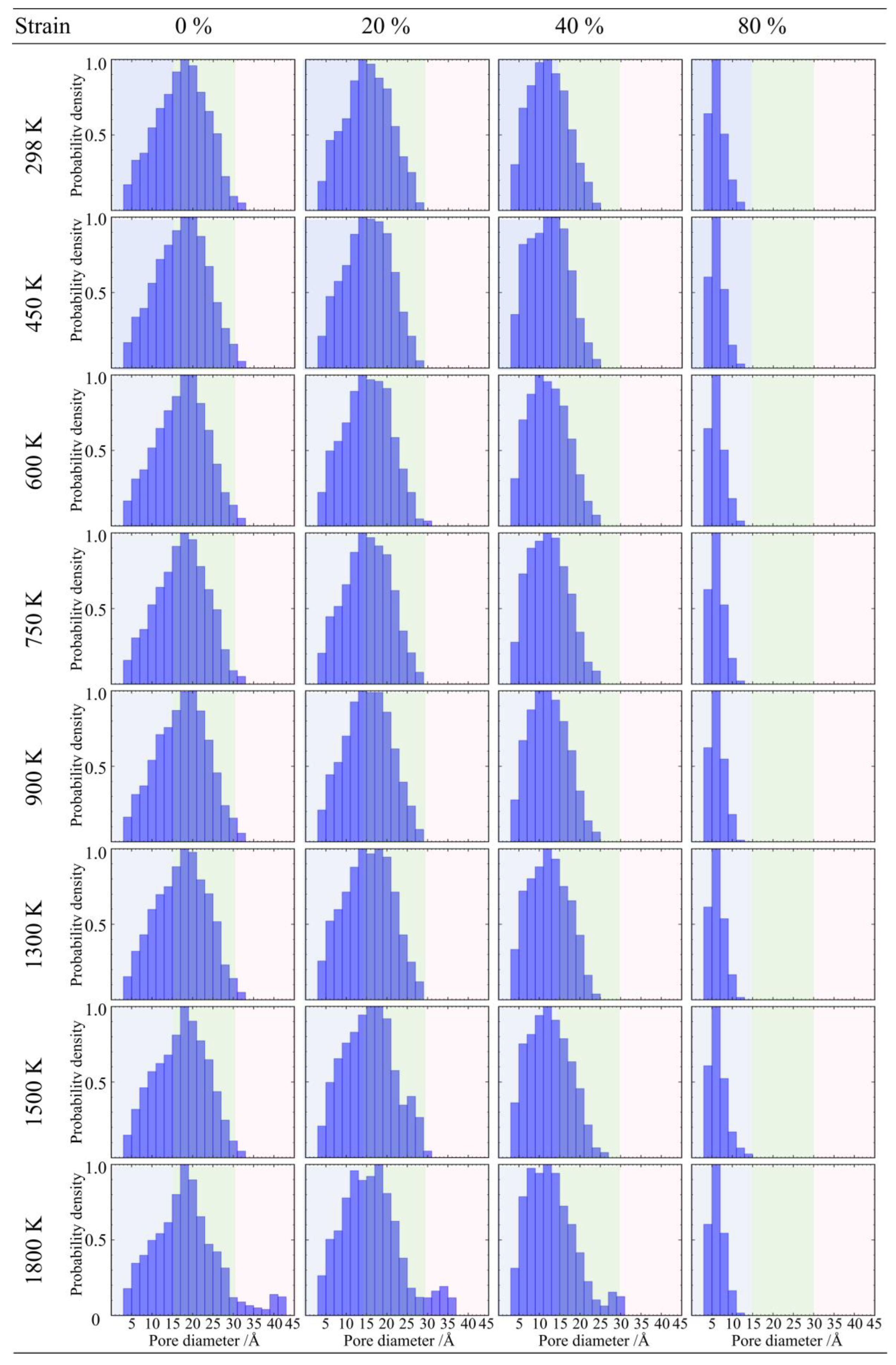
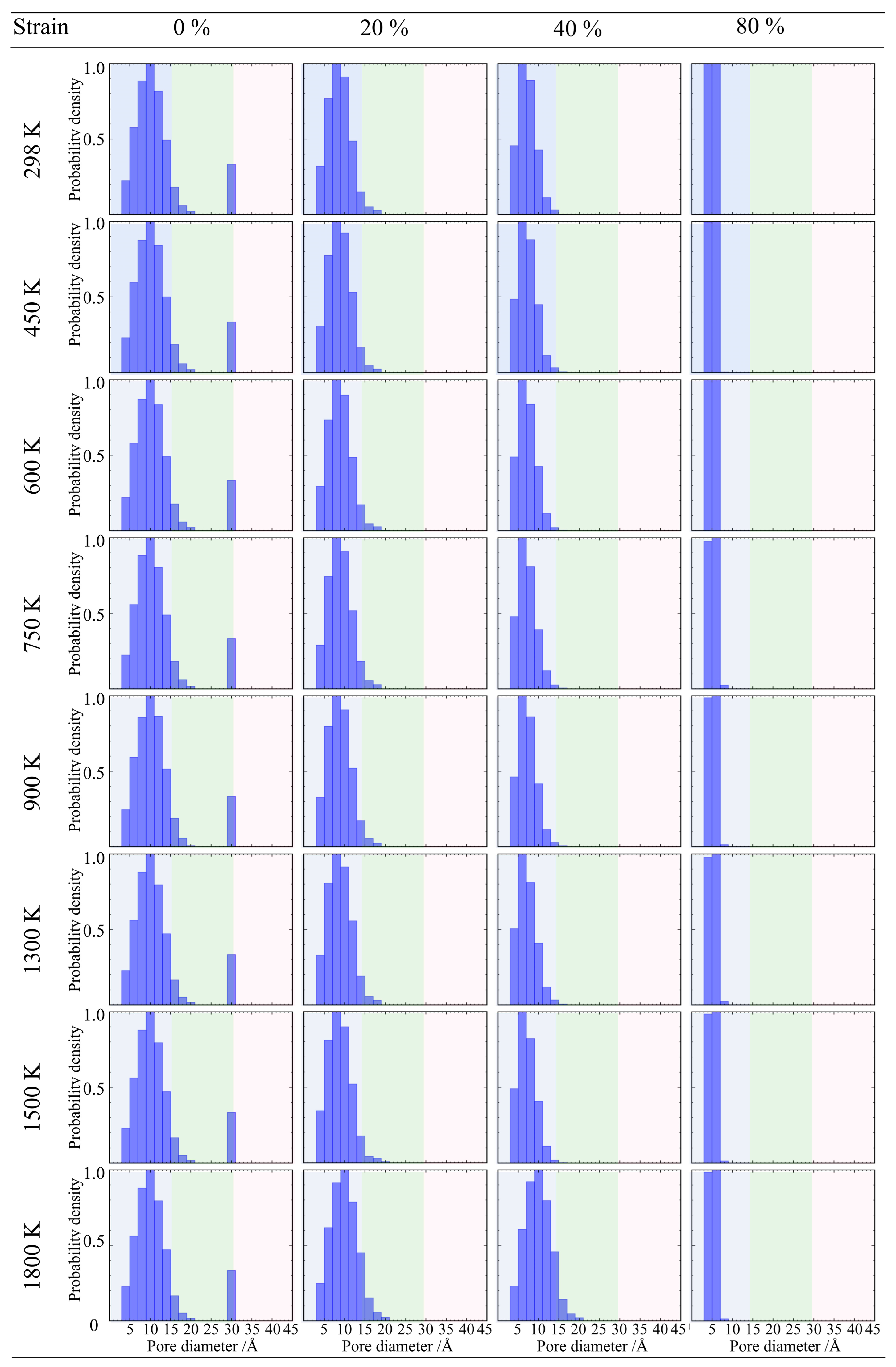
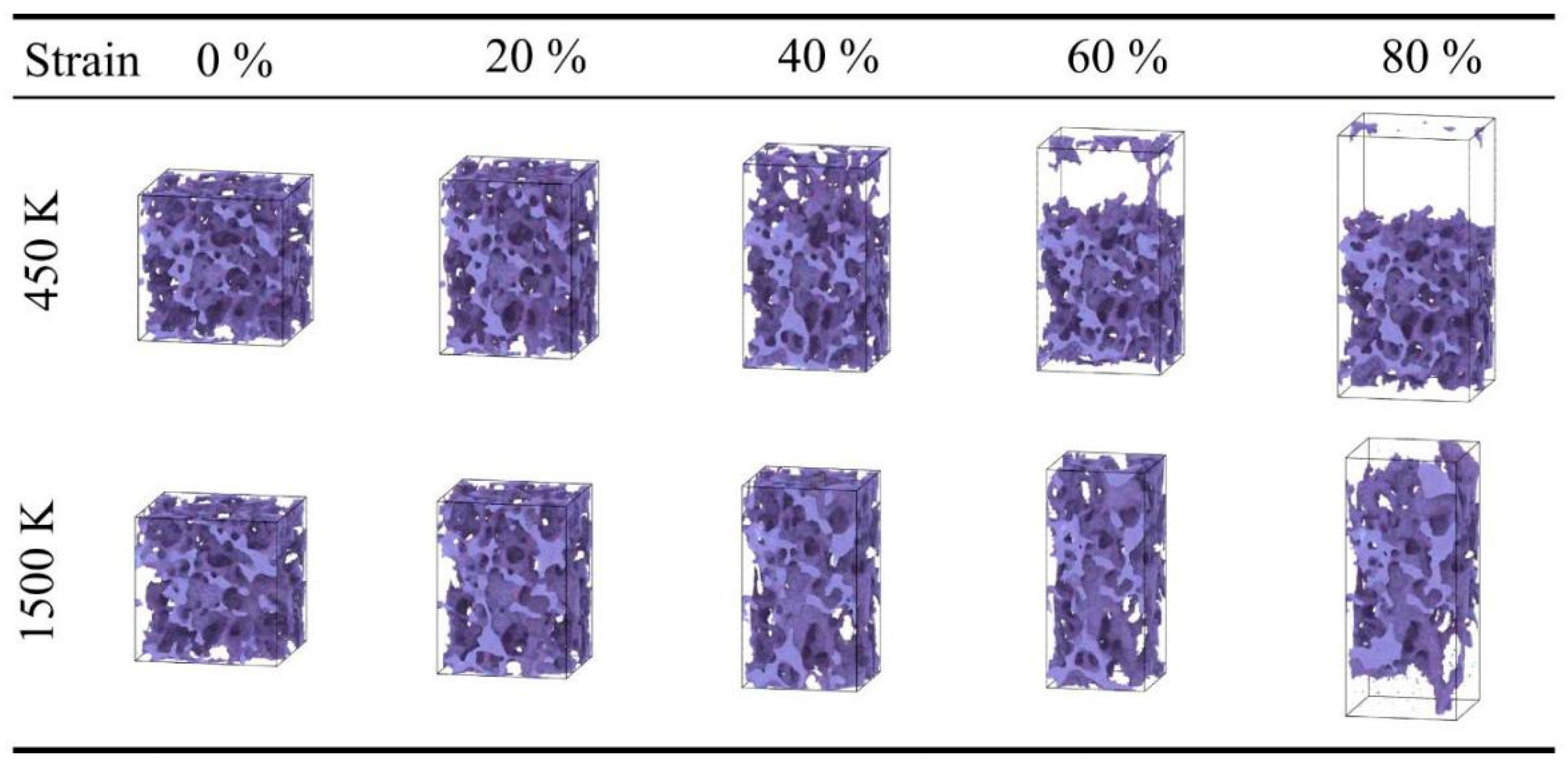
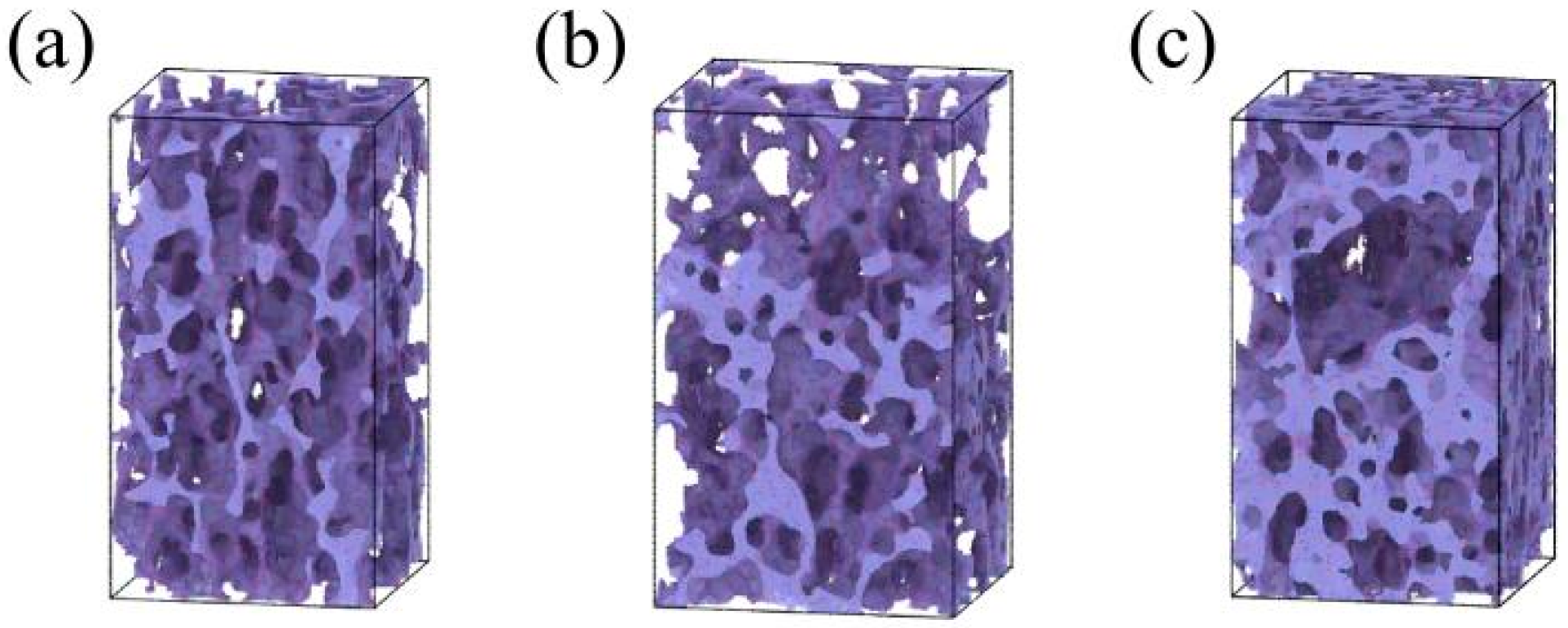
2.5. Pore Size Distribution
2.5.1. Pore Evolution Under Tensile Loading
2.5.2. Pore Evolution Under Compressive Loading
3. Conclusions
- (1)
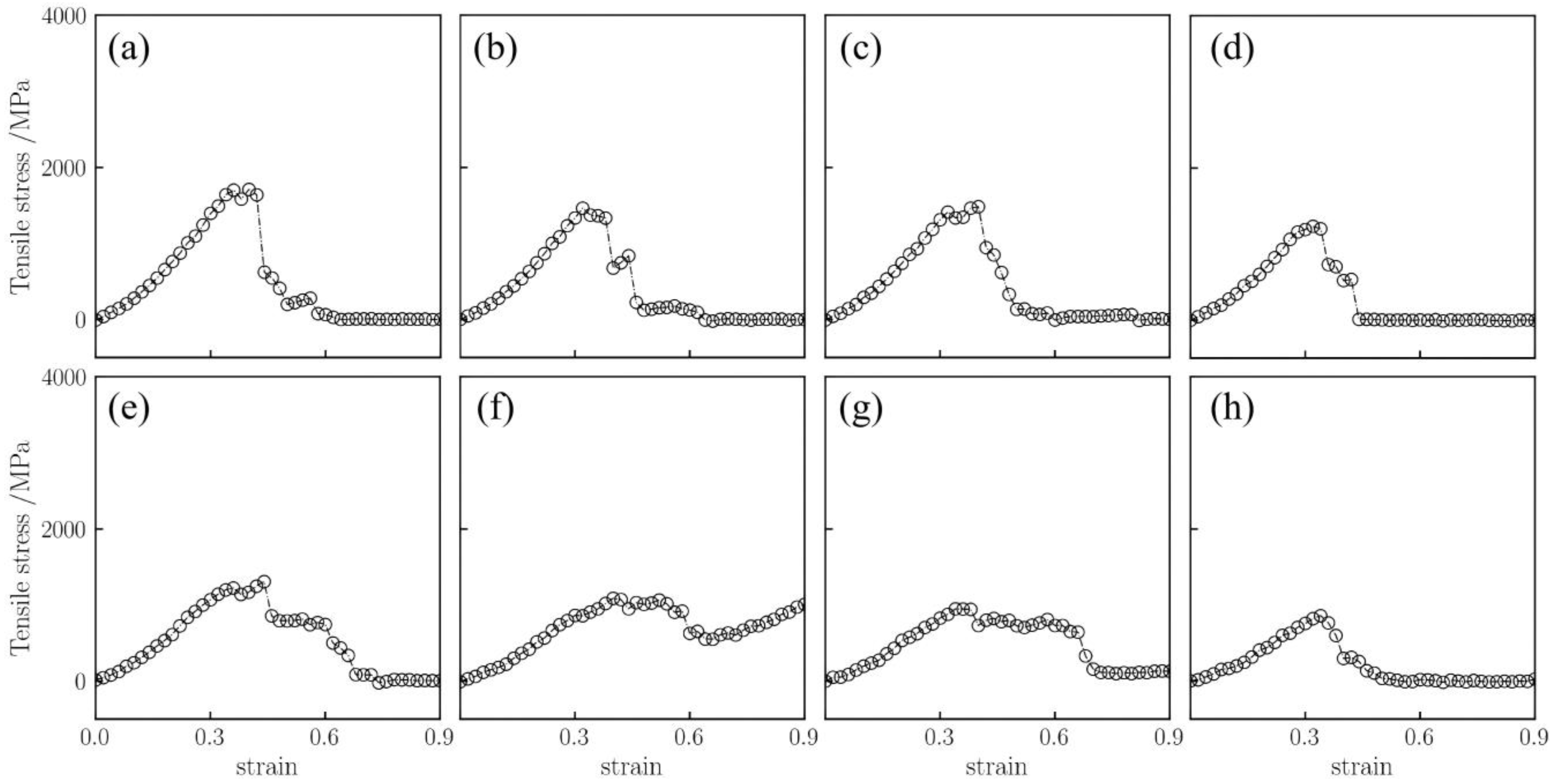
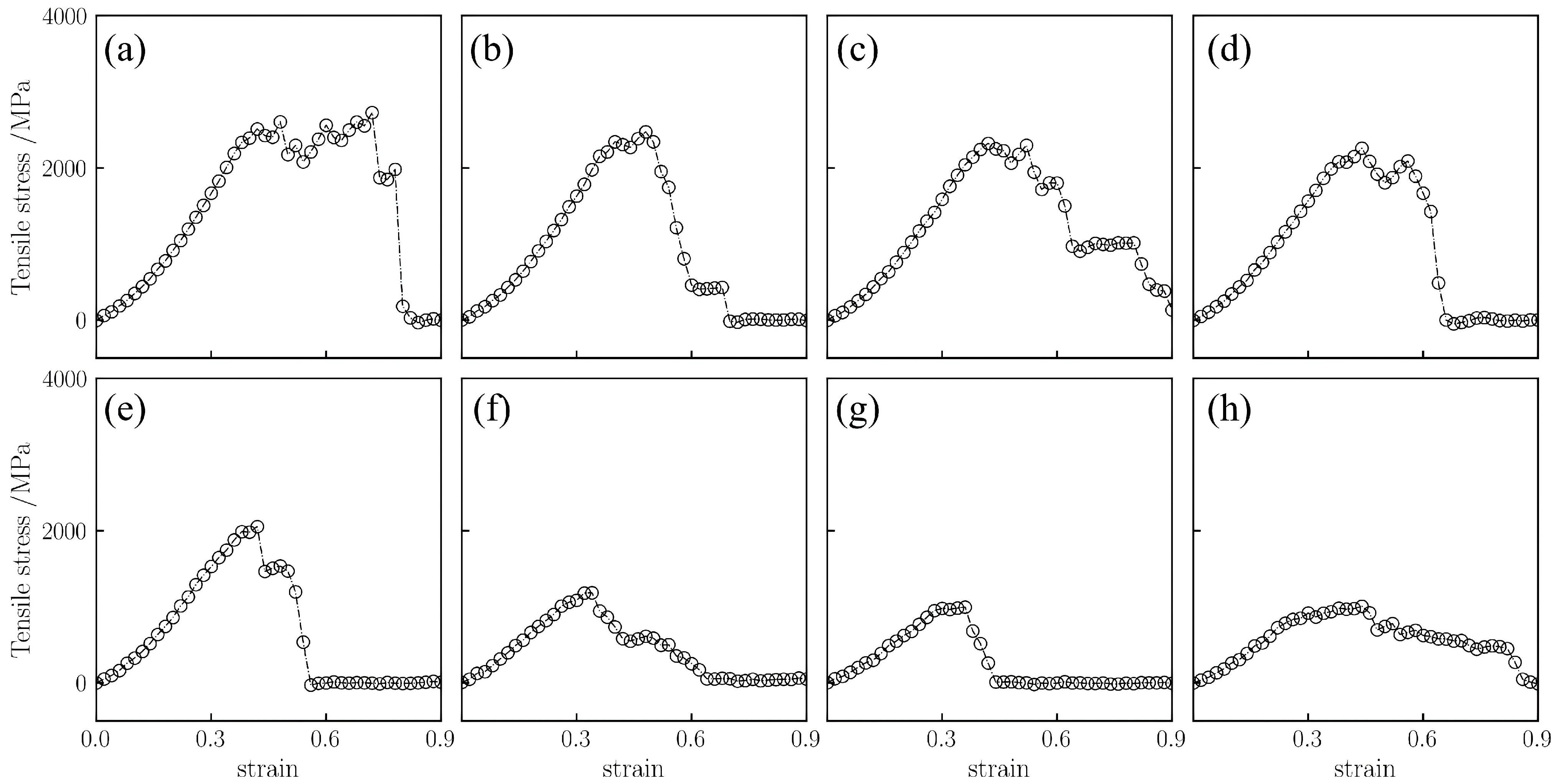
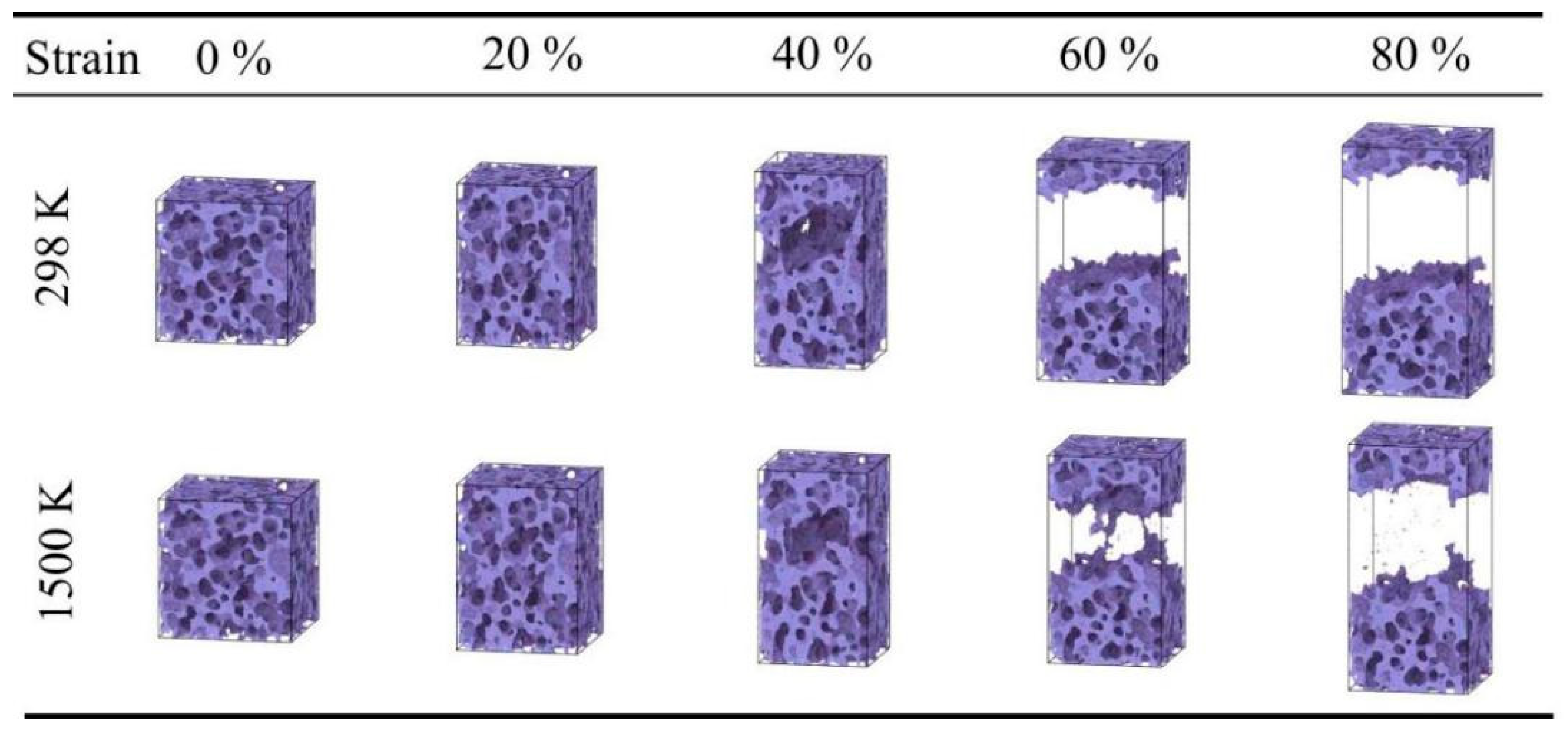
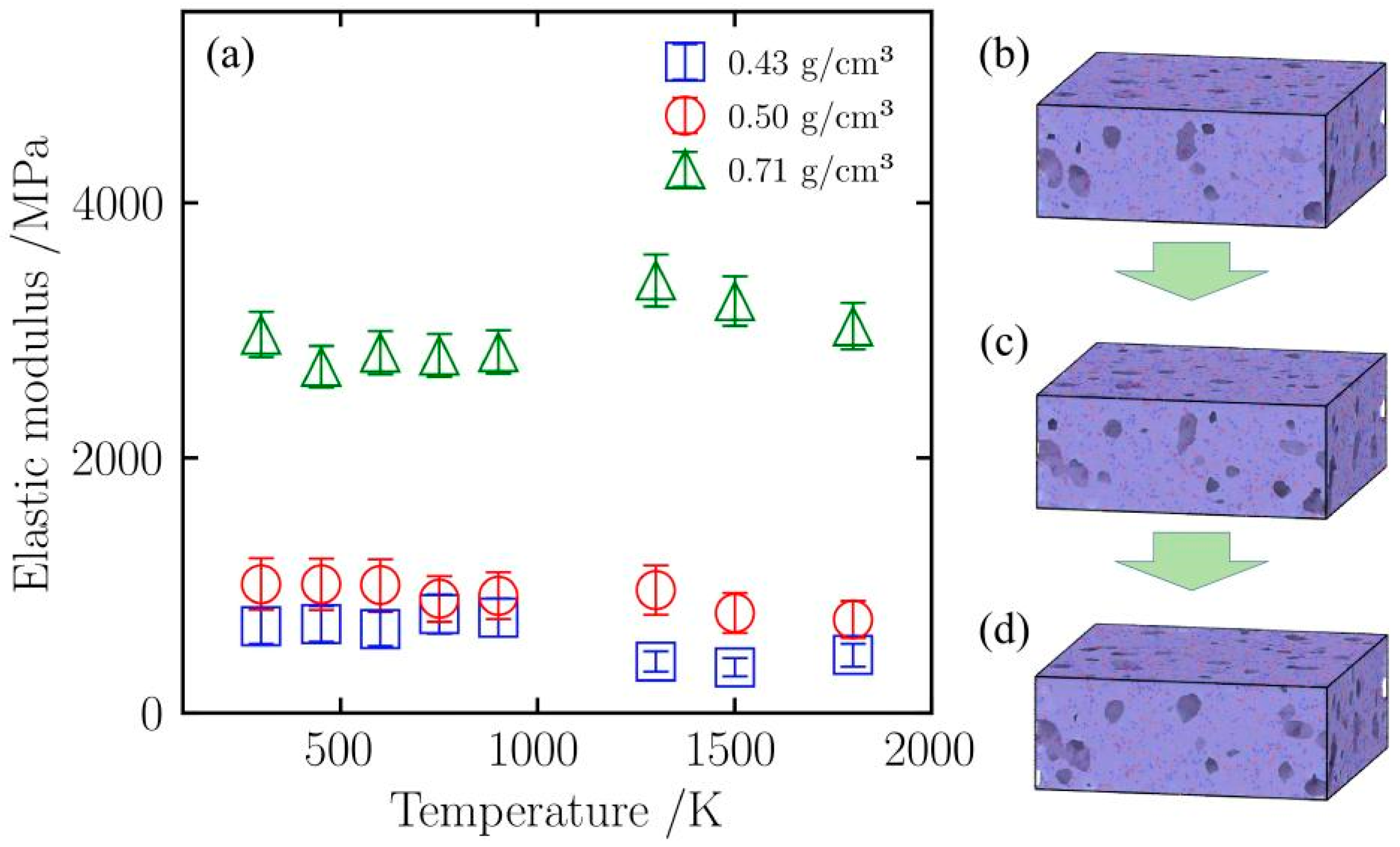
- The mechanical properties under tensile loading exhibit a decaying trend with increasing temperature, primarily attributed to the dominance of the thermal softening mechanism. As the temperature rises, intensified atomic thermal vibrations weaken the binding energy of Si-O bonds, making the backbone more prone to thermal fracture, thereby reducing the elastic modulus and fracture strength. Quantitative analysis indicates that even the high-density sample (0.71 g/cm3) with good initial connectivity is affected by high temperatures, with its elastic modulus at 1800 K decreasing by approximately 11.1% compared to room temperature
- (2)
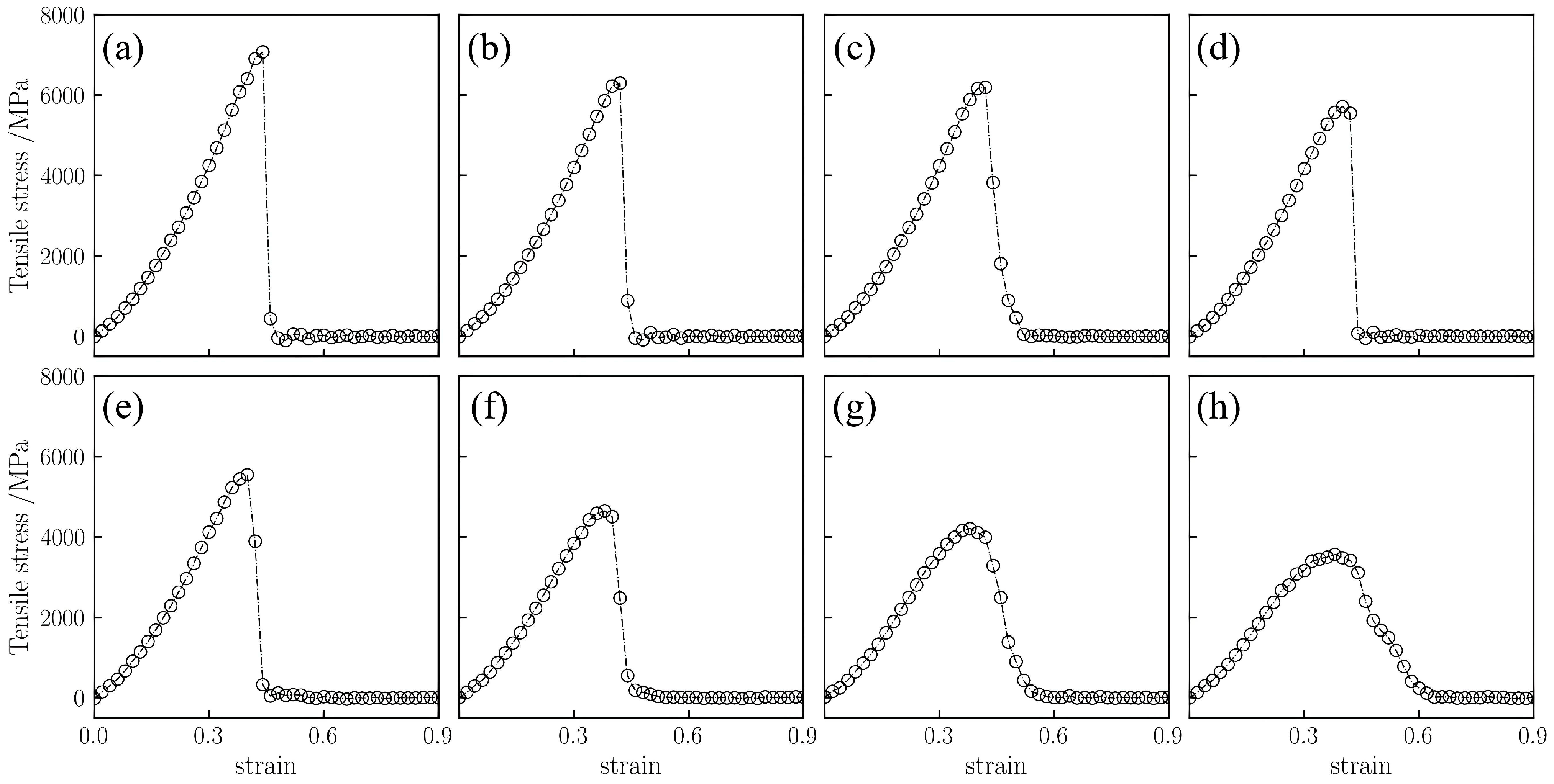
- The high-temperature-induced sintering mechanism leads to distinct strengthening characteristics in the compressive elastic modulus, an effect that is more pronounced in high-density samples. When the temperature exceeds 900 K, the backbone fusion and densification caused by sintering outweigh the weakening effect of thermal softening, causing the compressive elastic modulus of the material to rise. Data show that the elastic modulus of the high-density sample (0.71 g/cm3) at 1300 K increases by approximately 20% compared to that at 900 K, indicating that high-temperature sintering can effectively enhance the load-bearing capacity of the material.
- (3)
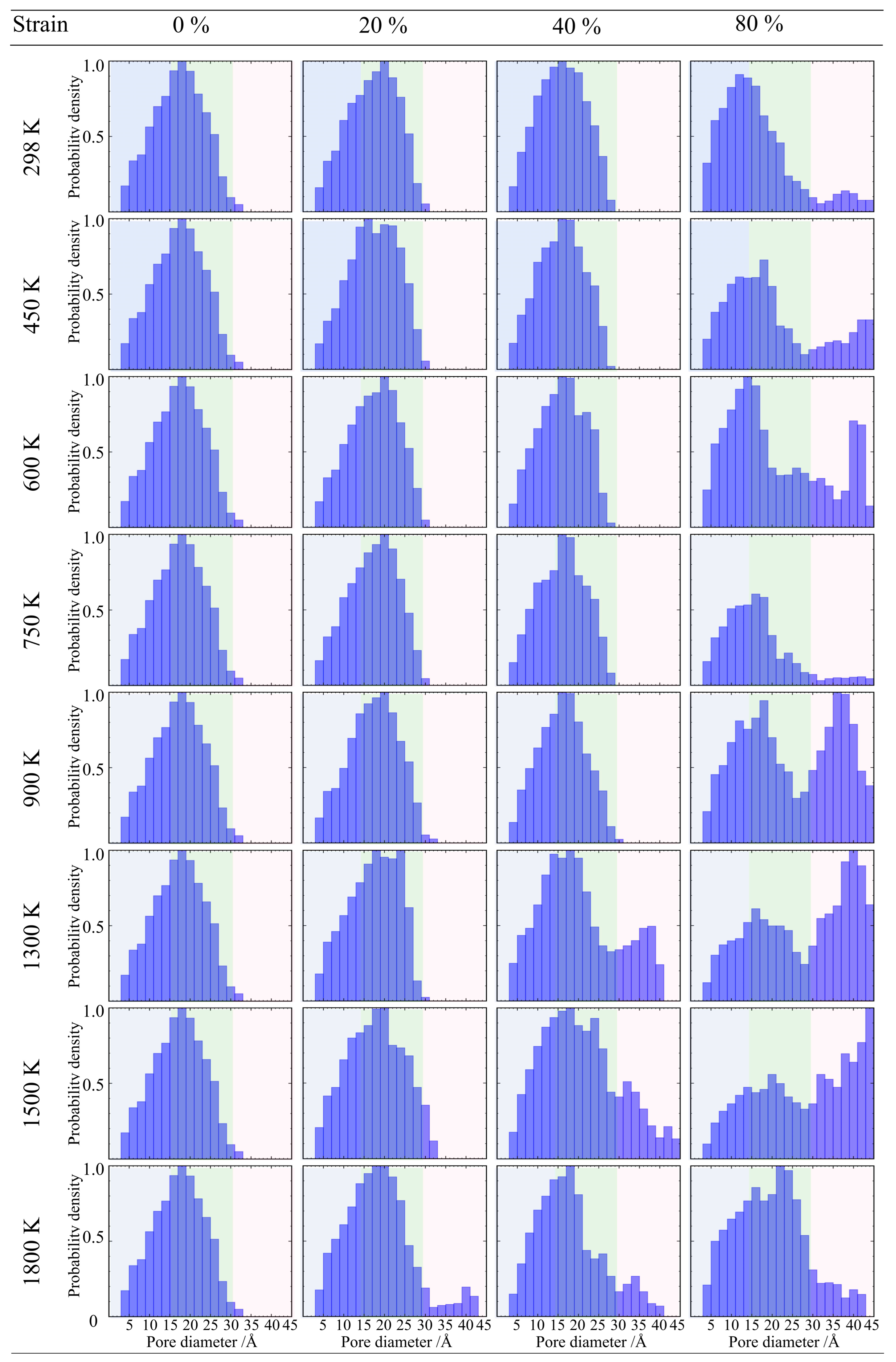
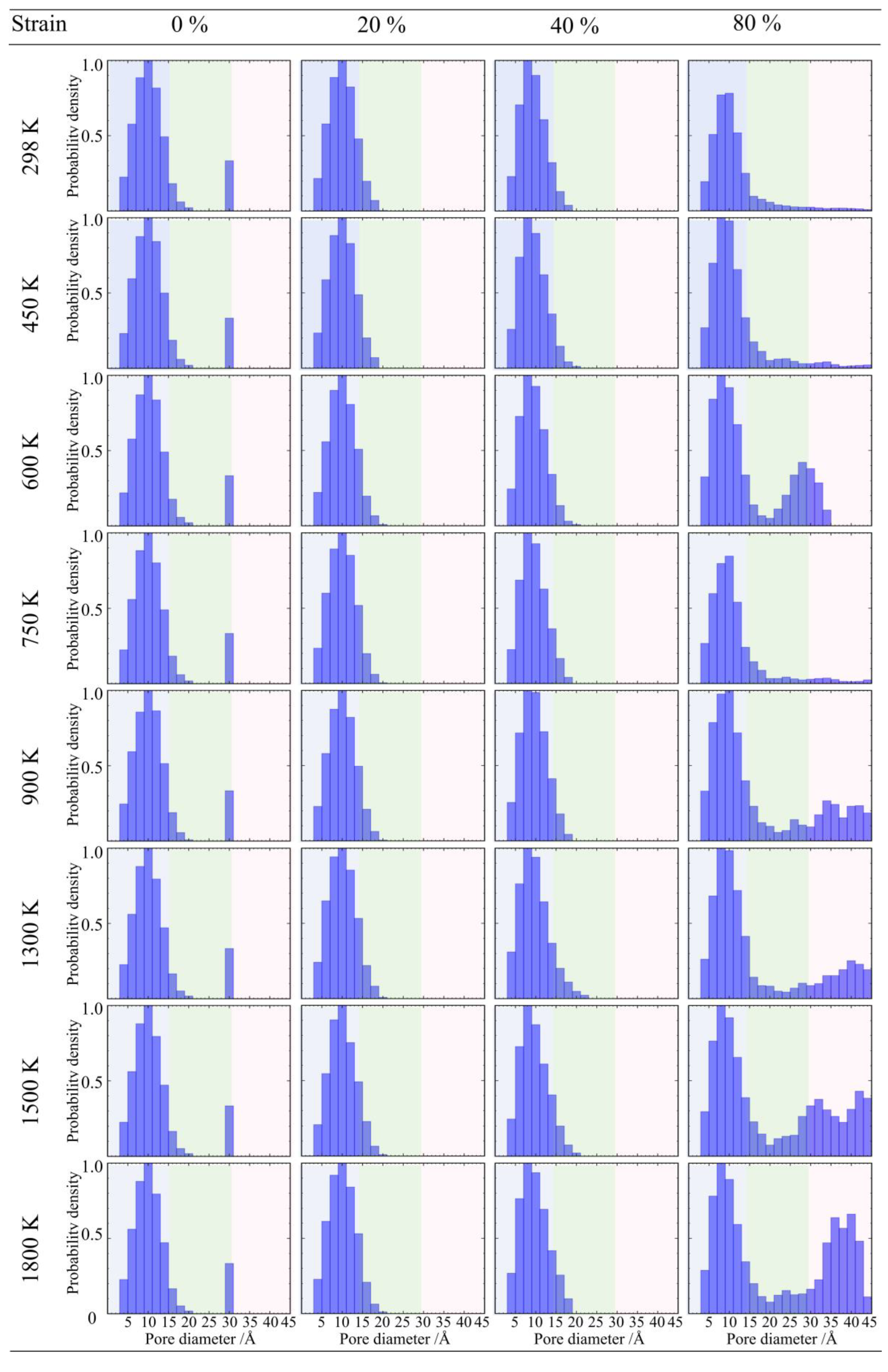
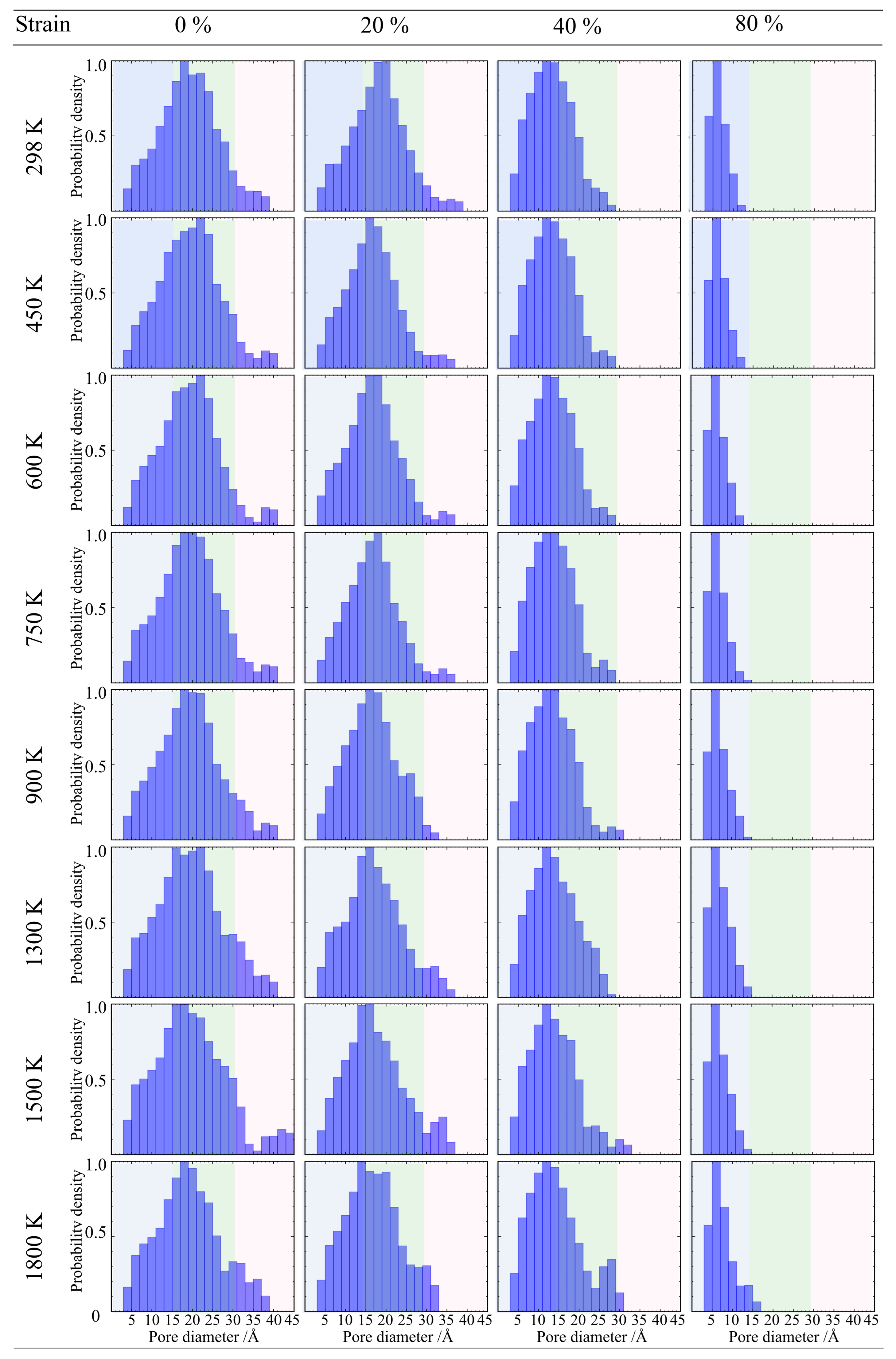
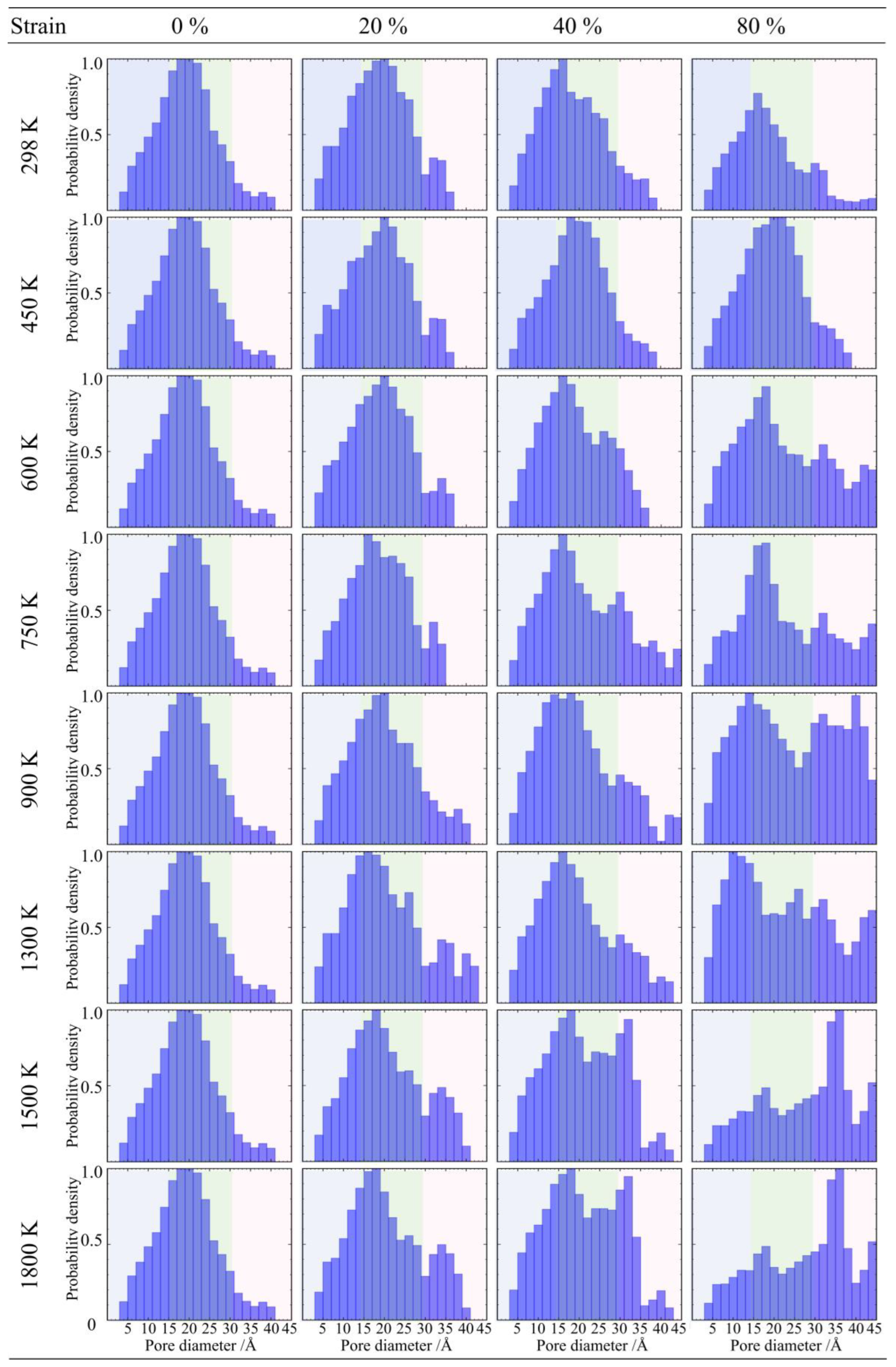
- The non-linear changes in macroscopic mechanical behavior originate from the distinct evolutionary paths of the microscopic pore structure. Pore size distribution analysis reveals that under tensile loading, high temperatures induce pore coarsening and microcrack initiation, evidenced by the emergence of a new peak in the large pore region (>3.0 nm) for the high-density sample, which disrupts backbone continuity and triggers performance degradation. Conversely, under compressive loading, structural evolution is characterized by the rapid collapse and closure of large pores; regardless of the initial density and temperature, the final pore size distribution converges to a narrow atomic-scale micropore interval of 0.5–1.0 nm, indicating that compaction and densification occur within the material.
- (4)
- Density and temperature exert significant coupled regulatory effects on the mechanical properties of aerogels. Density determines the baseline initial mechanical strength, while temperature dictates the specific failure modes. Low-density samples (0.43 g/cm3) are severely affected by thermal softening, evidenced by a 46% decrease in compressive elastic modulus from 900 K to 1300 K. In contrast, high-density samples (0.71 g/cm3), by virtue of their tighter atomic packing, effectively utilize the sintering mechanism to achieve structural strengthening, showing a 20% increase in compressive elastic modulus within the same temperature range. This finding provides a theoretical basis for designing the microstructure of silica aerogels tailored to specific thermal environments.
4. Materials and Methods
4.1. Model of Porous Silica
4.2. Molecular Simulation Settings
4.3. Calculation of Pore Structure
Author Contributions
Funding
Institutional Review Board Statement
Informed Consent Statement
Data Availability Statement
Conflicts of Interest
References
- Xie, J.; Wang, L.; Li, G.; Liao, J.; Zhang, X. Transparent Silica Aerogels: Optical and Chemical Design, Controlled Synthesis, and Emerging Applications. Chem.–Asian J. 2024, 19, e202400492. [Google Scholar] [CrossRef]
- Jadhav, S.; Sarawade, P. Recent advances and prospective of reinforced silica aerogel Nanocomposites and their applications. Eur. Polym. J. 2024, 206, 112766. [Google Scholar] [CrossRef]
- Ma, H.; Liu, Y.; Gao, J.; Lin, Q.; Fan, C.; Zhou, X.; Zhang, L. Interfacial-Engineered Sub-Crystalline Silica Aerogels with Extreme Thermal Anisotropy for Ultrahigh-Energy Laser Protection. ACS Appl. Mater. Interfaces 2025, 17, 56520–56531. [Google Scholar] [CrossRef] [PubMed]
- Lin, D.; Zheng, Y.; Huang, Y.; Ni, L.; Zhao, J.; Huang, C.; Chen, X.; Chen, X.; Wu, Z.; Wu, D.; et al. Investigation of the structural, physical properties, antioxidant, and antimicrobial activity of chitosan-nano-silicon aerogel composite edible films incorporated with okara powder. Carbohydr. Polym. 2020, 250, 116842. [Google Scholar] [CrossRef] [PubMed]
- He, P.; Pan, Y.; Yan, M.; Gong, L.; Shi, L.; Cheng, X.; Zhang, H.; Zhao, J. Super thermal insulation SiC aerogel with high elasticity and good adsorption performance prepared by constructing coaxial precursor. Compos. Part A Appl. Sci. Manuf. 2024, 181, 108153. [Google Scholar] [CrossRef]
- Zhao, Z.; Civioc, R.; Liu, W.; Hu, P.; Li, M.; Xu, F.; Pauer, R.; Luo, J.; Brunner, S.; Ziemiański, P.P.; et al. Three-dimensional Patterning Super-Black Silica-Based Nanocomposite Aerogels. Nano-Micro Lett. 2026, 18, 36. [Google Scholar] [CrossRef]
- Almeida, C.M.R.; Ghica, M.E.; Duraes, L. An overview on alumina-silica-based aerogels. Adv. Colloid Interface Sci. 2020, 282, 102189. [Google Scholar] [CrossRef]
- Hu, X.; Liu, L.; Wang, J. Silica aerogels as functional units for shapeable thermal management materials: Synthesis, mechanisms, and emerging applications. Chem. Eng. J. 2025, 167640. [Google Scholar] [CrossRef]
- Qian, X.; Lu, J.; Rui, M.; Xu, D.; Liu, H.; Han, D.; Lu, T.; Yang, J.; Du, A.; Qin, L. Silica Aerogels in Nano Drug Delivery Systems: A Comprehensive Review from Preparation to Medical Applications. Gels 2025, 11, 859. [Google Scholar] [CrossRef]
- Ma, H.; Fashandi, M.; Rejeb, Z.B.; Ming, X.; Liu, L.; Gong, P.; Li, G.; Park, C.B. Efficient electromagnetic wave absorption and thermal infrared stealth in PVTMS@MWCNT nano-aerogel via abundant nano-sized cavities and attenuation interfaces. Nano-Micro Lett. 2024, 16, 20. [Google Scholar] [CrossRef]
- Woignier, T.; Phalippou, J. Mechanical strength of silica aerogels. J. Non-Cryst. Solids 1988, 100, 404–408. [Google Scholar] [CrossRef]
- Gross, J.; Fricke, J. Ultrasonic velocity measurements in silica, carbon and organic aerogels. J. Non-Cryst. Solids 1992, 145, 217–222. [Google Scholar] [CrossRef]
- Ma, H.S.; Roberts, A.P.; Prévost, J.H.; Jullien, R.; Scherer, G.W. Mechanical structure–property relationship of aerogels. J. Non-Cryst. Solids 2000, 277, 127–141. [Google Scholar] [CrossRef]
- Patil, S.P.; Parale, V.G.; Park, H.H.; Markert, B. Mechanical modeling and simulation of aerogels: A review. Ceram. Int. 2021, 47, 2981–2998. [Google Scholar] [CrossRef]
- Li, K.; He, S.; Du, C.; Guo, S.; Huang, Y. Ultra flexible silica aerogel with excellent mechanical properties for durable oil-water separation. J. Environ. Chem. Eng. 2024, 12, 113752. [Google Scholar] [CrossRef]
- Anthony, D.B.; Nguyen, S.N.; Qian, H.; Xu, S.; Shaw, C.M.D.; Greenhalgh, E.S.; Bismarck, A.; Shaffer, M.S.P. Silica aerogel infused hierarchical glass fiber polymer composites. Compos. Commun. 2023, 39, 101531. [Google Scholar] [CrossRef]
- Karamikamkar, S.; Naguib, H.E.; Park, C.B. Advances in precursor system for silica-based aerogel production toward improved mechanical properties, customized morphology, and multifunctionality: A review. Adv. Colloid Interface Sci. 2020, 276, 102101. [Google Scholar] [CrossRef]
- Mazrouei-Sebdani, Z.; Naeimirad, M.; Peterek, S.; Begum, H.; Galmarini, S.; Pursche, F.; Baskin, E.; Zhao, S.; Gries, T.; Malfait, W.J. Multiple assembly strategies for silica aerogel-fiber combinations—A review. Mater. Des. 2022, 223, 111228. [Google Scholar] [CrossRef]
- Wei, G.; Zhang, J.; Usuelli, M.; Zhang, X.; Liu, B.; Mezzenga, R. Biomass vs inorganic and plastic-based aerogels: Structural design, functional tailoring, resource-efficient applications and sustainability analysis. Prog. Mater. Sci. 2022, 125, 100915. [Google Scholar] [CrossRef]
- Ghaffari-Mosanenzadeh, S.; Tafreshi, O.A.; Karamikamkar, S.; Saadatnia, Z.; Rad, E.; Meysami, M.; Naguib, H.E. Recent advances in tailoring and improving the properties of polyimide aerogels and their application. Adv. Colloid Interface Sci. 2022, 304, 102646. [Google Scholar] [CrossRef]
- Zhou, S.; Hou, Y.; Xiang, G.; Hu, C.; Hu, B.; Ji, Y.; Zhang, W.; Zhang, S. A Dual-Modified Chitosan-Derived Silica Composite Aerogel with Simultaneous Improvement of Mechanical, Flame Retardancy, and Thermal Insulation Properties. Polymers 2025, 17, 3162. [Google Scholar] [CrossRef]
- Bhardwaj, S.; Singh, S.; Dev, K.; Chhajed, M.; Maji, P.K. Harnessing the flexibility of lightweight cellulose nanofiber composite aerogels for superior thermal insulation and fire protection. ACS Appl. Mater. Interfaces 2024, 16, 18075–18089. [Google Scholar] [CrossRef]
- Woignier, T.; Primera, J.; Alaoui, A.; Despetis, F.; Calas-Etienne, S.; Faivre, A.; Duffours, L.; Levelut, C.; Pascal, E. Techniques for characterizing the mechanical properties of aerogels. J. Sol-Gel Sci. Technol. 2020, 93, 6–27. [Google Scholar] [CrossRef]
- Wang, L.; Lian, W.; Yin, B.; Liu, X.; Tang, S. Silica nanowires-reinforced silica aerogels with outstanding thermal insulation, thermal stability and mechanical properties. Ceram. Int. 2024, 50, 6693–6702. [Google Scholar] [CrossRef]
- Luo, Z.Y.; Su, G.H.; Yang, Z.C. Heat conduction mechanism in silica aerogel skeleton. J. Phys. Conf. Ser. 2020, 1605, 012150. [Google Scholar] [CrossRef]
- Kieffer, J.; Angell, C.A. Generation of fractal structures by negative pressure rupturing of SiO2 glass. J. Non-Cryst. Solids 1988, 106, 336–342. [Google Scholar] [CrossRef]
- Campbell, T.; Kalia, R.K.; Nakano, A.; Shimojo, F.; Tsuruta, K.; Vashishta, P.; Ogata, S. Structural correlations and mechanical behavior in nanophase silica glasses. Phys. Rev. Lett. 1999, 82, 4018. [Google Scholar] [CrossRef]
- Gelb, L.D. Simulating silica aerogels with a coarse-grained flexible model and langevin dynamics. J. Phys. Chem. C 2007, 111, 15792–15802. [Google Scholar] [CrossRef]
- Swimm, K.; Vidi, S.; Reichenauer, G.; Ebert, H.P. Coupling of gaseous and solid thermal conduction in porous solids. J. Non-Cryst. Solids 2017, 456, 114–124. [Google Scholar] [CrossRef]
- Yang, J.; Wang, S.; Zhao, J.; Wang, S.; Wang, S.; Peng, Y.; Huang, Q.; Liu, C. Preparation of MXene-based aerogel-derived phase change materials for mitigating thermal runaway risk in batteries. Chem. Eng. J. 2025, 511, 162039. [Google Scholar] [CrossRef]
- Dai, X.; Ping, P.; Kong, D.; Gao, X.; Zhang, Y.; Wang, G.; Peng, R. Heat transfer enhanced inorganic phase change material compositing carbon nanotubes for battery thermal management and thermal runaway propagation mitigation. J. Energy Chem. 2024, 89, 226–238. [Google Scholar] [CrossRef]
- Yang, X.; Sun, Y.; Shi, D. Experimental investigation and modeling of the creep behavior of ceramic fiber-reinforced SiO2 aerogel. J. Non-Cryst. Solids 2012, 358, 519–524. [Google Scholar] [CrossRef]
- Iswar, S.; Galmarini, S.; Bonanomi, L.; Wernery, J.; Roumeli, E.; Nimalshantha, S.; Ishai, A.M.B.; Lattuada, M.; Koebel, M.M.; Malfait, W.J. Dense and strong, but superinsulating silica aerogel. Acta Mater. 2021, 213, 116959. [Google Scholar] [CrossRef]
- Patil, S.P.; Rege, A.; Sagardas; Itskov, M.; Markert, B. Mechanics of nanostructured porous silica aerogel resulting from molecular dynamics simulations. J. Phys. Chem. B 2017, 121, 5660–5668. [Google Scholar] [CrossRef]
- Lei, J.; Liu, Z.; Yeo, J.; Ng, T. Determination of the Young’s modulus of silica aerogels—An analytical–numerical approach. Soft Matter 2013, 9, 11367–11373. [Google Scholar] [CrossRef]
- Yang, M.; Guo, L.; Li, N.; Du, M.; Tang, G. Heat treatment customizes pore structure of silica aerogel: The induced role of faults. Constr. Build. Mater. 2024, 452, 138812. [Google Scholar] [CrossRef]
- Zhou, A.; Yang, Q.; Xu, K.; Zhou, Q.; Wu, J.; Bai, H. Manipulating the elasticity of chemically modified graphene aerogel through water surface plasticization. Carbon 2021, 184, 43–52. [Google Scholar] [CrossRef]
- Xue, T.; Zhu, C.; Feng, X.; Wali, Q.; Fan, W.; Liu, T. Polyimide aerogel fibers with controllable porous microstructure for super-thermal insulation under extreme environments. Adv. Fiber Mater. 2022, 4, 1118–1128. [Google Scholar] [CrossRef]
- Tabernero, A.; Baldino, L.; Misol, A.; Cardea, S.; Del Valle, E.M.M. Role of rheological properties on physical chitosan aerogels obtained by supercritical drying. Carbohydr. Polym. 2020, 233, 115850. [Google Scholar] [CrossRef]
- Murillo, J.S.R.; Bachlechner, M.E.; Campo, F.A.; Barbero, E.J. Structure and mechanical properties of silica aerogels and xerogels modeled by molecular dynamics simulation. J. Non-Cryst. Solids 2010, 356, 1325–1331. [Google Scholar] [CrossRef]
- Woignier, T.; Reynes, J.; Alaoui, A.H.; Beurroies, I.; Phalippou, J. Different kinds of structure in aerogels: Relationships with the mechanical properties. J. Non-Cryst. Solids 1998, 241, 45–52. [Google Scholar] [CrossRef]
- Cheng, J.; Yao, X.; Zhang, Z.; Tan, Y.; Hu, N.; Ma, C.; Zhang, G. Intelligent anti-impact elastomers by precisely tailoring the topology of modular polymer networks. Mater. Horiz. 2024, 11, 3143–3156. [Google Scholar] [CrossRef] [PubMed]
- Ni, H.; Wang, D.; Jia, R.; Liu, Y.; Wu, D.; Chang, S.; Li, X.; Shi, J. Fast preparation of aluminum silicate fiber reinforced silica aerogel composites with the ultra-low thermal conductivity and high temperature resistance by combustion technology. J. Alloys Compd. 2025, 1036, 182129. [Google Scholar] [CrossRef]
- Zhang, X.; Yu, J.; Si, Y. Programmable shape-morphing enables ceramic meta-aerogel highly stretchable for thermal protection. Adv. Mater. 2025, 37, 2412962. [Google Scholar] [CrossRef]
- Ren, Y.; Zhang, B.; Zhong, Z.; Ye, J.; Zhang, J.; Fang, Z.; Ye, F. Reusable, high specific surface areas, and excellent thermal stability Al2O3–SiO2 aerogel composites as high-temperature thermal insulators for radome applications. J. Alloys Compd. 2024, 984, 173990. [Google Scholar] [CrossRef]
- Bruns, S.; Minnert, C.; Pethö, L.; Michler, J.; Durst, K. Room temperature viscous flow of amorphous silica induced by electron beam irradiation. Adv. Sci. 2023, 10, 2205237. [Google Scholar] [CrossRef]
- Yi, M.; Wang, W.; Xue, M.; Gong, Q.; Xu, B.X. Modeling and simulation of sintering process across scales. Arch. Comput. Methods Eng. 2023, 30, 3325–3358. [Google Scholar] [CrossRef]
- Zhang, B.; Hu, M.; Zhong, F.; Zhang, S.; Yang, Z.; Qiu, X.; Xu, J.; Ou-yang, J.; Zhang, Y.; Zhu, B.; et al. Ultrafast high-temperature sintering and densification of ZrC-based ceramics. J. Eur. Ceram. Soc. 2024, 44, 5569–5578. [Google Scholar] [CrossRef]
- Iswar, S.; Malfait, W.J.; Balog, S.; Winnefeld, F.; Lattuada, M.; Koebel, M.M. Effect of aging on silica aerogel properties. Microporous Mesoporous Mater. 2017, 241, 293–302. [Google Scholar] [CrossRef]
- Munetoh, S.; Motooka, T.; Moriguchi, K.; Shintani, A. Interatomic potential for Si–O systems using Tersoff parameterization. Comput. Mater. Sci. 2007, 39, 334–339. [Google Scholar] [CrossRef]
- Rowlinson, J.S. The maxwell–boltzmann distribution. Mol. Phys. 2005, 103, 2821–2828. [Google Scholar] [CrossRef]
- Tanhadoust, A.; Jahanshahi, M.; Khoei, A.R. Temperature-dependent multiscale modeling of graphene sheet under finite deformation. Diam. Relat. Mater. 2022, 129, 109334. [Google Scholar] [CrossRef]
- Stanglmeier, M.; Nguyen, N.C.; Peraire, J.; Cockburn, B. An explicit hybridizable discontinuous Galerkin method for the acoustic wave equation. Comput. Methods Appl. Mech. Eng. 2016, 300, 748–769. [Google Scholar] [CrossRef]








| Category | Typical References | Conditions | Focus | Identified Gap |
|---|---|---|---|---|
| Experimental Studies | Yang et al. [32], Iswar et al. [33] | 298 K or Post-heat treatment | Macroscopic strength, creep, and scaling laws | Limited real-time observation of atomic-scale evolution under extreme heat |
| MD Simulations (Room Temp) | Patil et al. [34], Lei et al. [35] | 298 K | Topological connectivity and mechanical power laws | Neglect of thermal activation and kinetic structural reorganization |
| MD Simulations (Thermal Focus) | Yang et al. [36] | 298–1500 K (Static) | Sintering mechanism and thermal conductivity | Lack of mechanical loading coupling and stress-induced failure modes |
| Present Study | This Work | 298–1800 K (Dynamic Coupling) | Competition between softening and sintering under load | Fill the gap in real-time thermo-mechanical response at extreme temperatures |
Disclaimer/Publisher’s Note: The statements, opinions and data contained in all publications are solely those of the individual author(s) and contributor(s) and not of MDPI and/or the editor(s). MDPI and/or the editor(s) disclaim responsibility for any injury to people or property resulting from any ideas, methods, instructions or products referred to in the content. |
© 2026 by the authors. Licensee MDPI, Basel, Switzerland. This article is an open access article distributed under the terms and conditions of the Creative Commons Attribution (CC BY) license.
Share and Cite
Bao, R.; Song, Y.; Shi, J.; Zhang, Y.; Cheng, R.; Yang, M.; Du, M. High-Temperature Induced Sintering Strengthening of Mechanical Properties of Porous Silica: A Molecular Dynamics Study. Gels 2026, 12, 125. https://doi.org/10.3390/gels12020125
Bao R, Song Y, Shi J, Zhang Y, Cheng R, Yang M, Du M. High-Temperature Induced Sintering Strengthening of Mechanical Properties of Porous Silica: A Molecular Dynamics Study. Gels. 2026; 12(2):125. https://doi.org/10.3390/gels12020125
Chicago/Turabian StyleBao, Ruoyu, Yiming Song, Jiejie Shi, Yuanfu Zhang, Renhui Cheng, Mingyang Yang, and Mu Du. 2026. "High-Temperature Induced Sintering Strengthening of Mechanical Properties of Porous Silica: A Molecular Dynamics Study" Gels 12, no. 2: 125. https://doi.org/10.3390/gels12020125
APA StyleBao, R., Song, Y., Shi, J., Zhang, Y., Cheng, R., Yang, M., & Du, M. (2026). High-Temperature Induced Sintering Strengthening of Mechanical Properties of Porous Silica: A Molecular Dynamics Study. Gels, 12(2), 125. https://doi.org/10.3390/gels12020125