Polyacrylamide-Based Polymers for Slickwater Fracturing Fluids: A Review of Molecular Design, Drag Reduction Mechanisms, and Gelation Methods


Abstract
1. Introduction
2. Synthesis Methods of Polyacrylamide
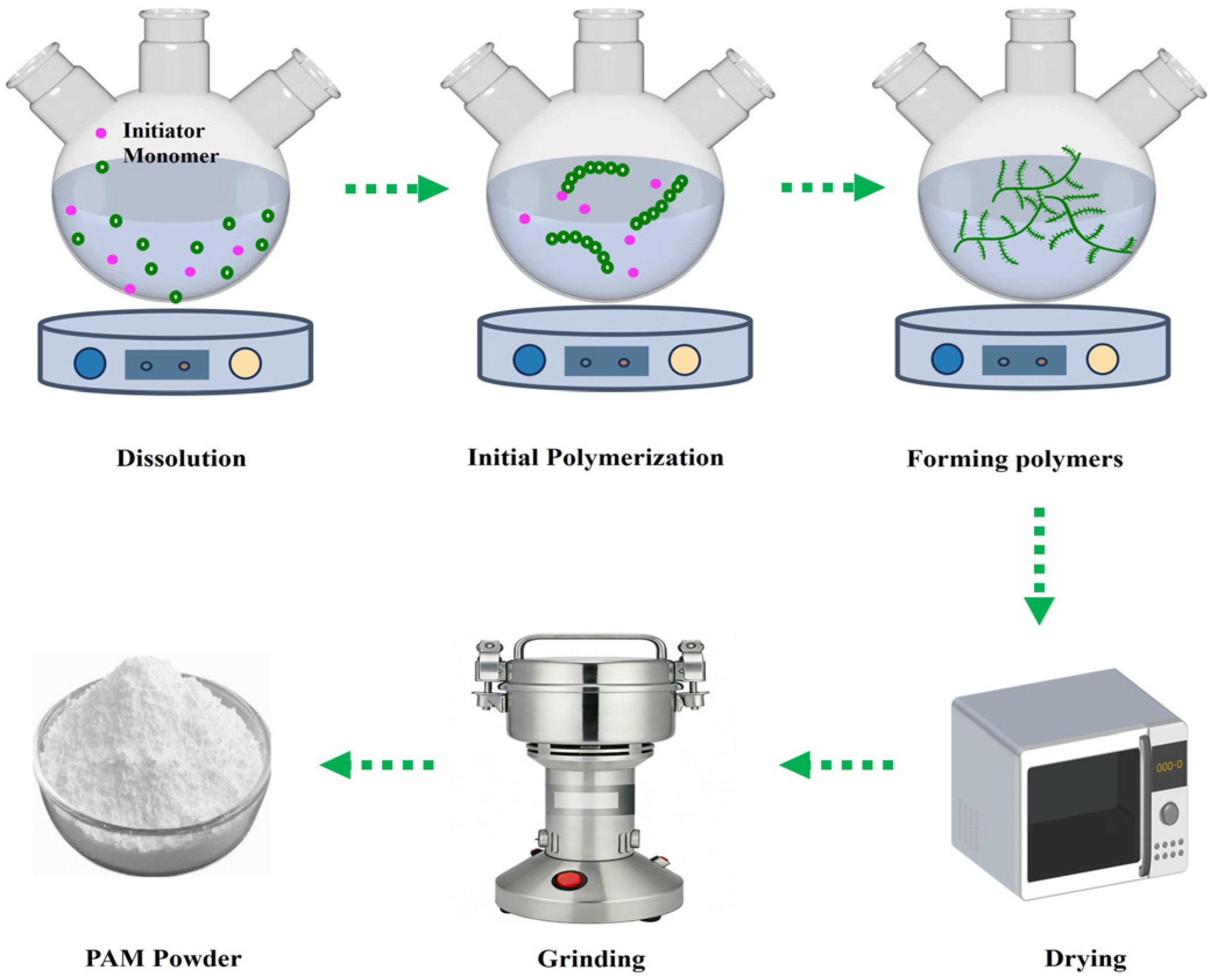
2.1. Aqueous Solution Polymerization
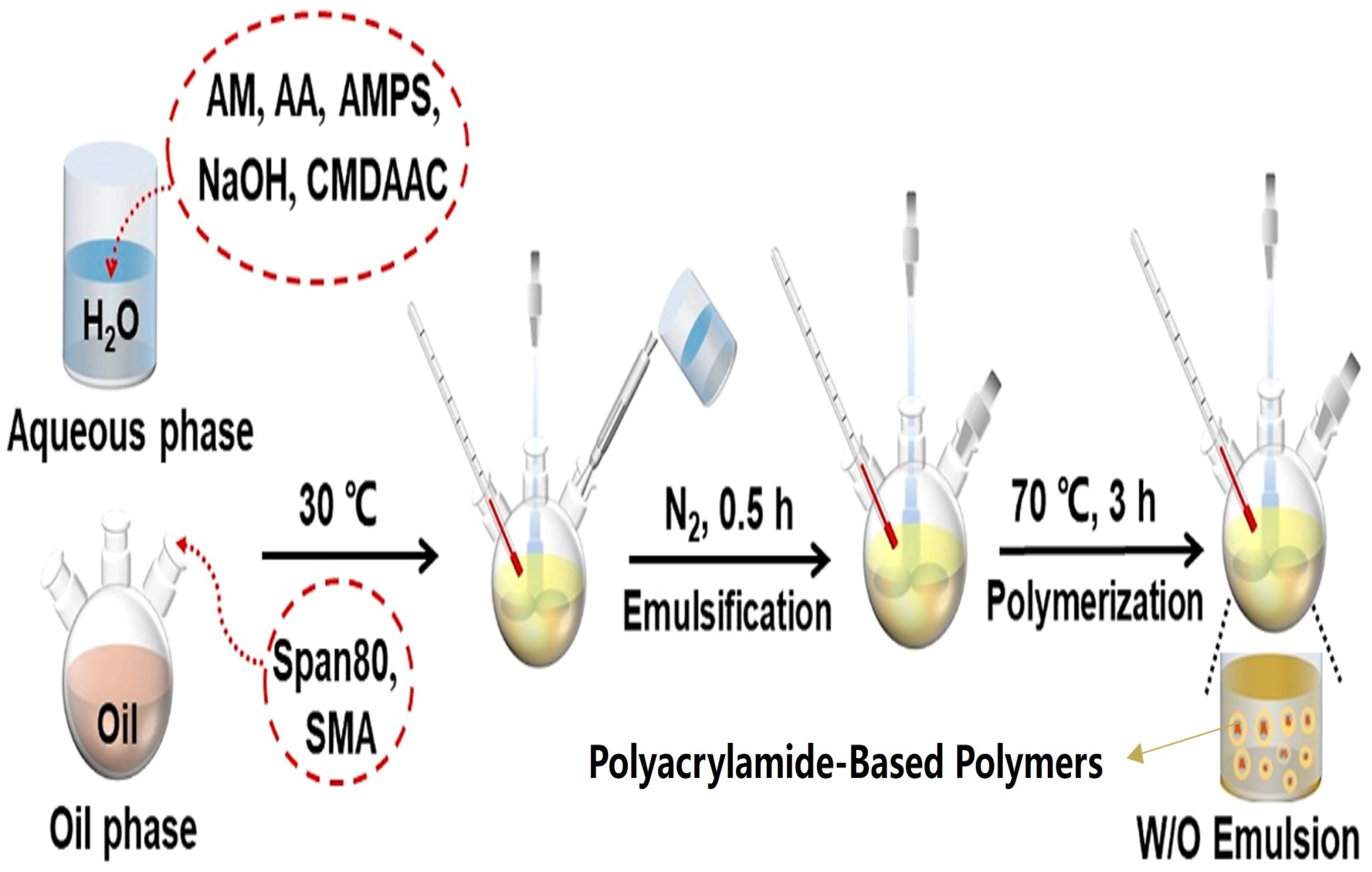
2.2. Inverse Emulsion Polymerization
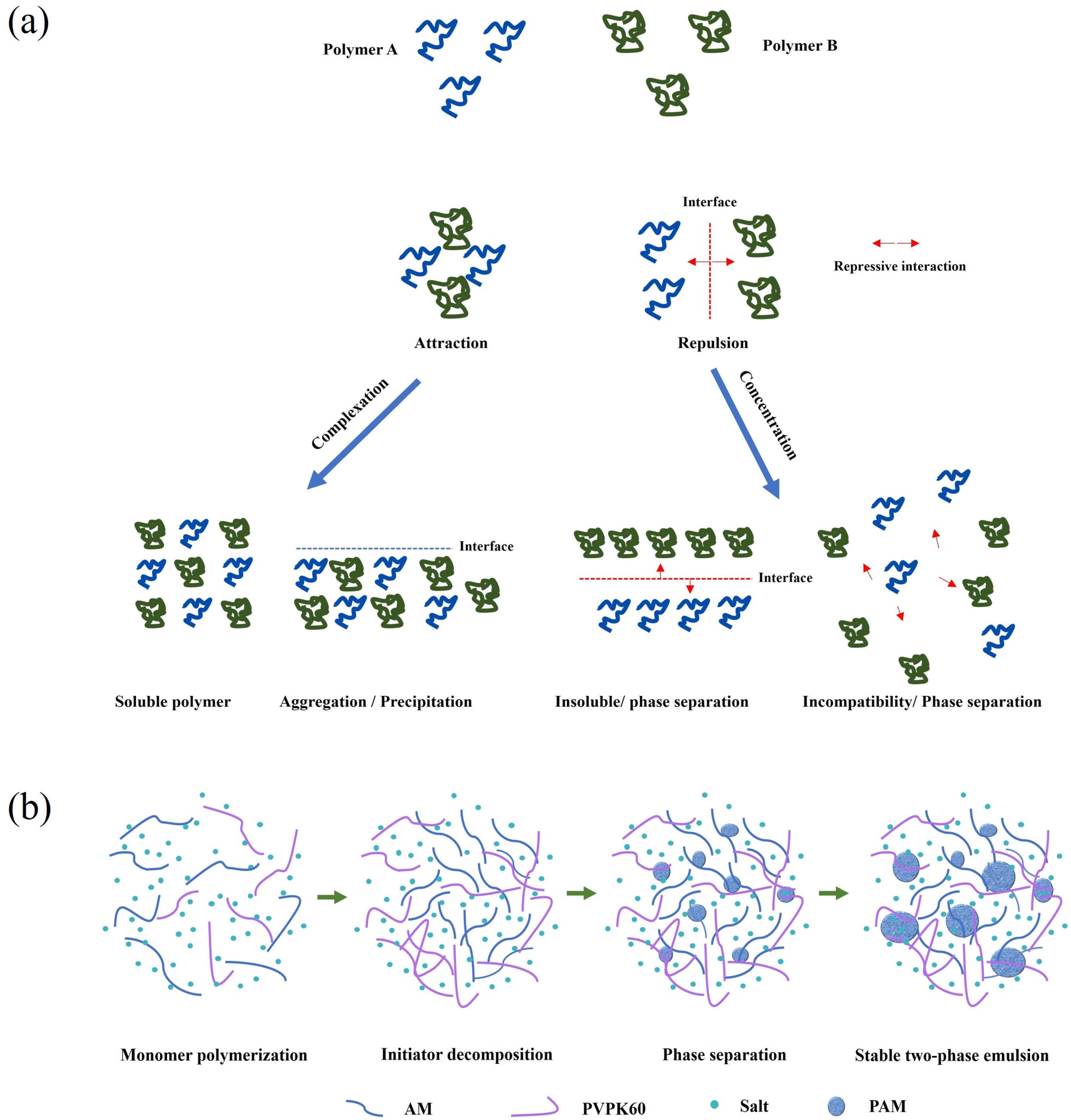
2.3. Dispersion Polymerization
3. Methods for Enhancing Thermal Stability
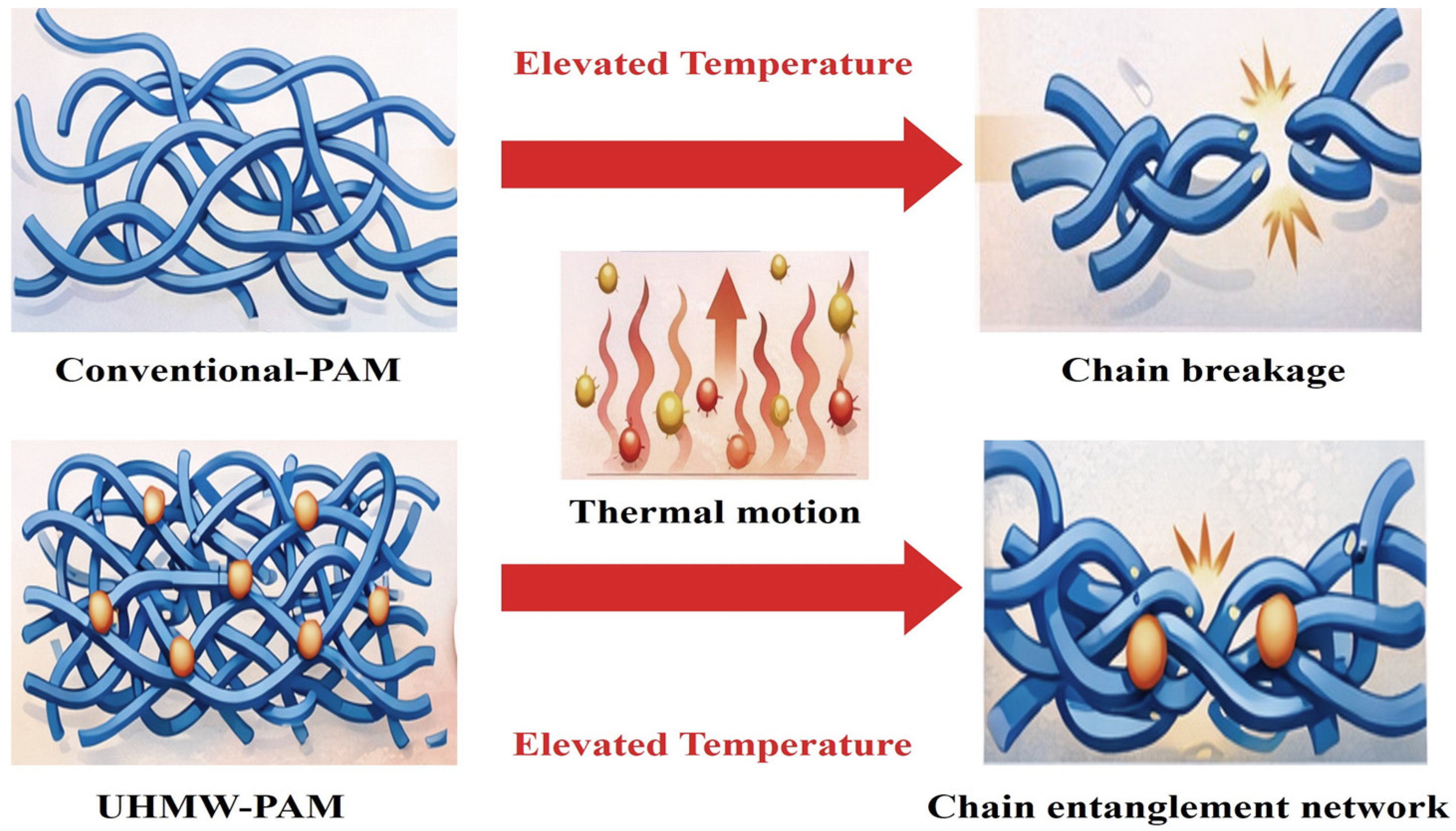
3.1. Synthesis of Ultra-High-Molecular-Weight Polyacrylamide
3.2. Copolymerization with Thermally Resistant Monomers
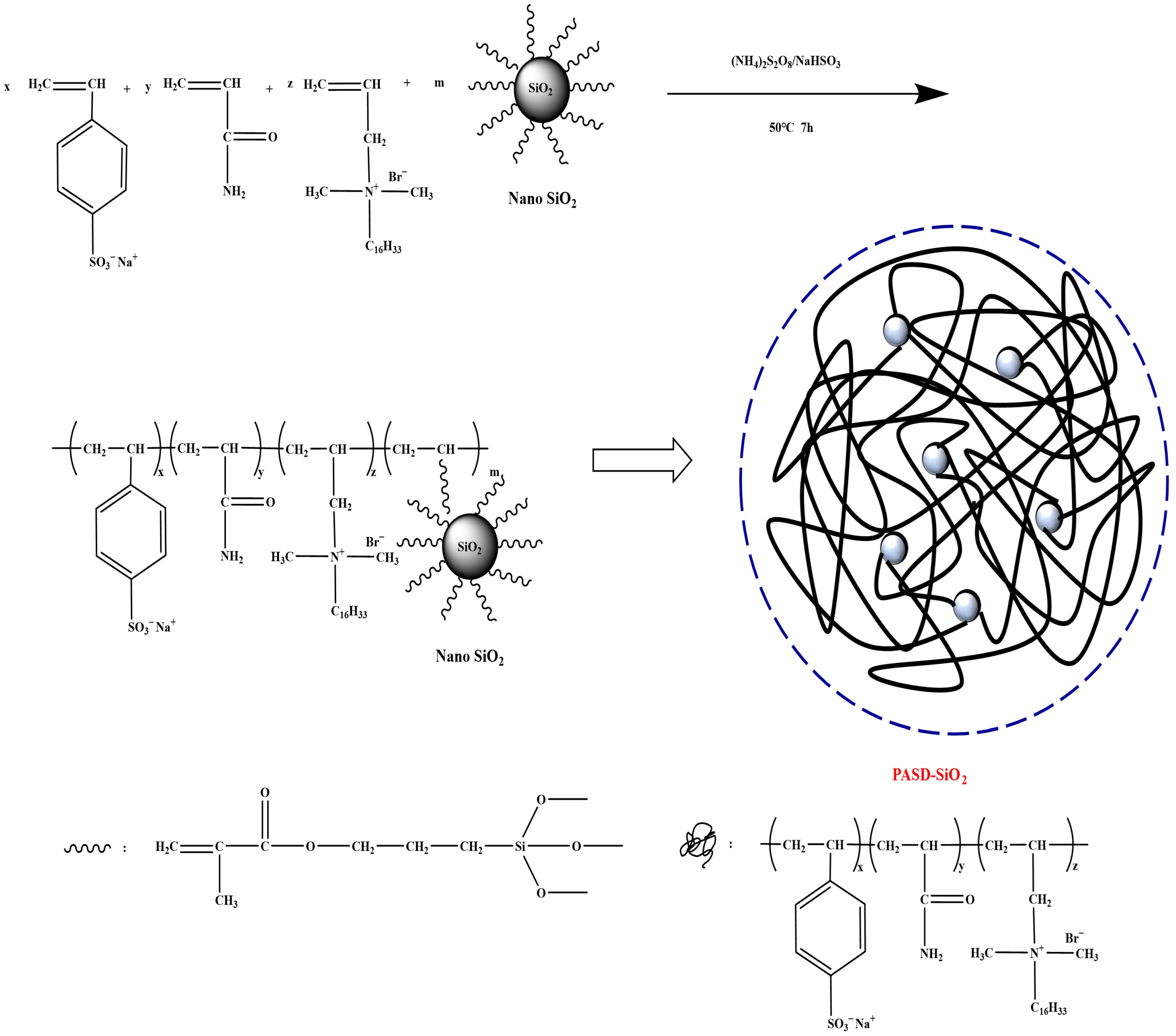
3.3. Incorporation of Nanoparticles
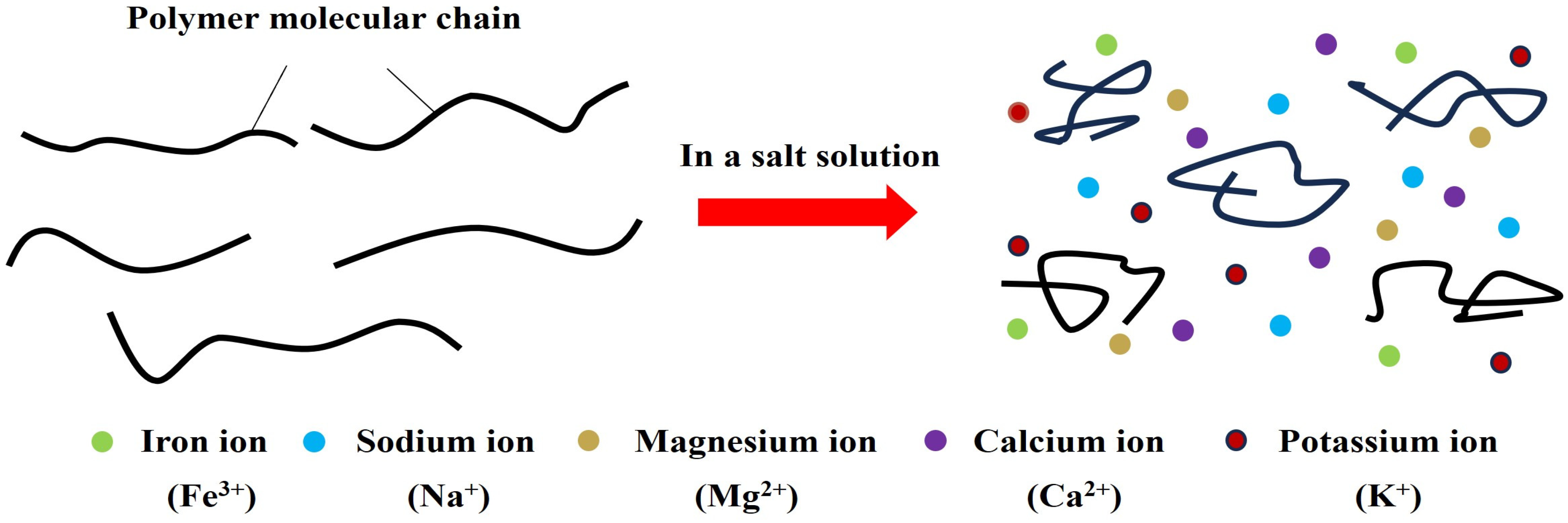
4. Methods for Enhancing Salt Resistance
4.1. Grafting Anionic Side Groups
4.2. Grafting Cationic Side Groups
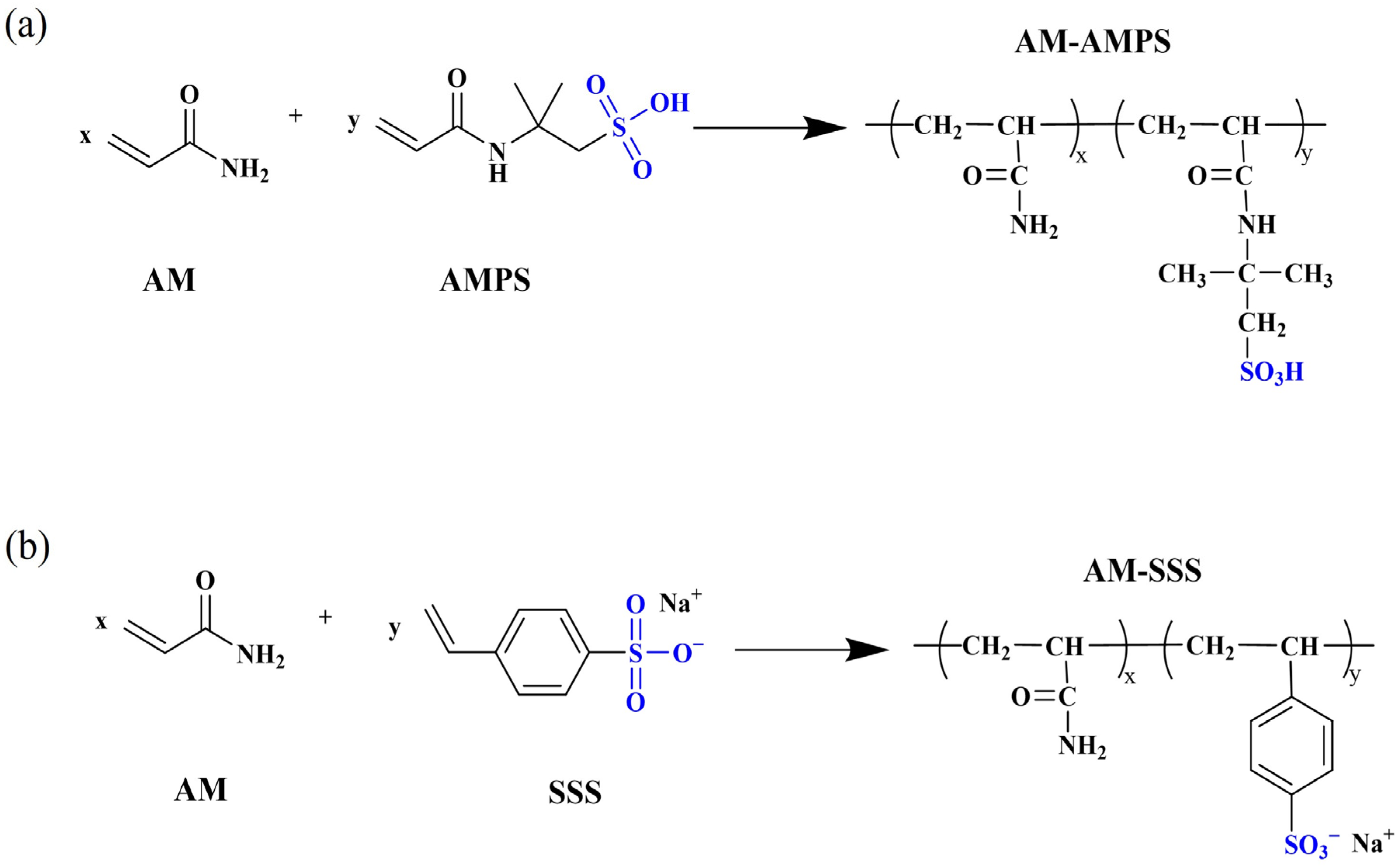
4.3. Grafting Amphoteric Side Groups
5. Drag Reduction in Slickwater Fracturing Fluid
5.1. Mechanisms of Drag Reduction
- (1)
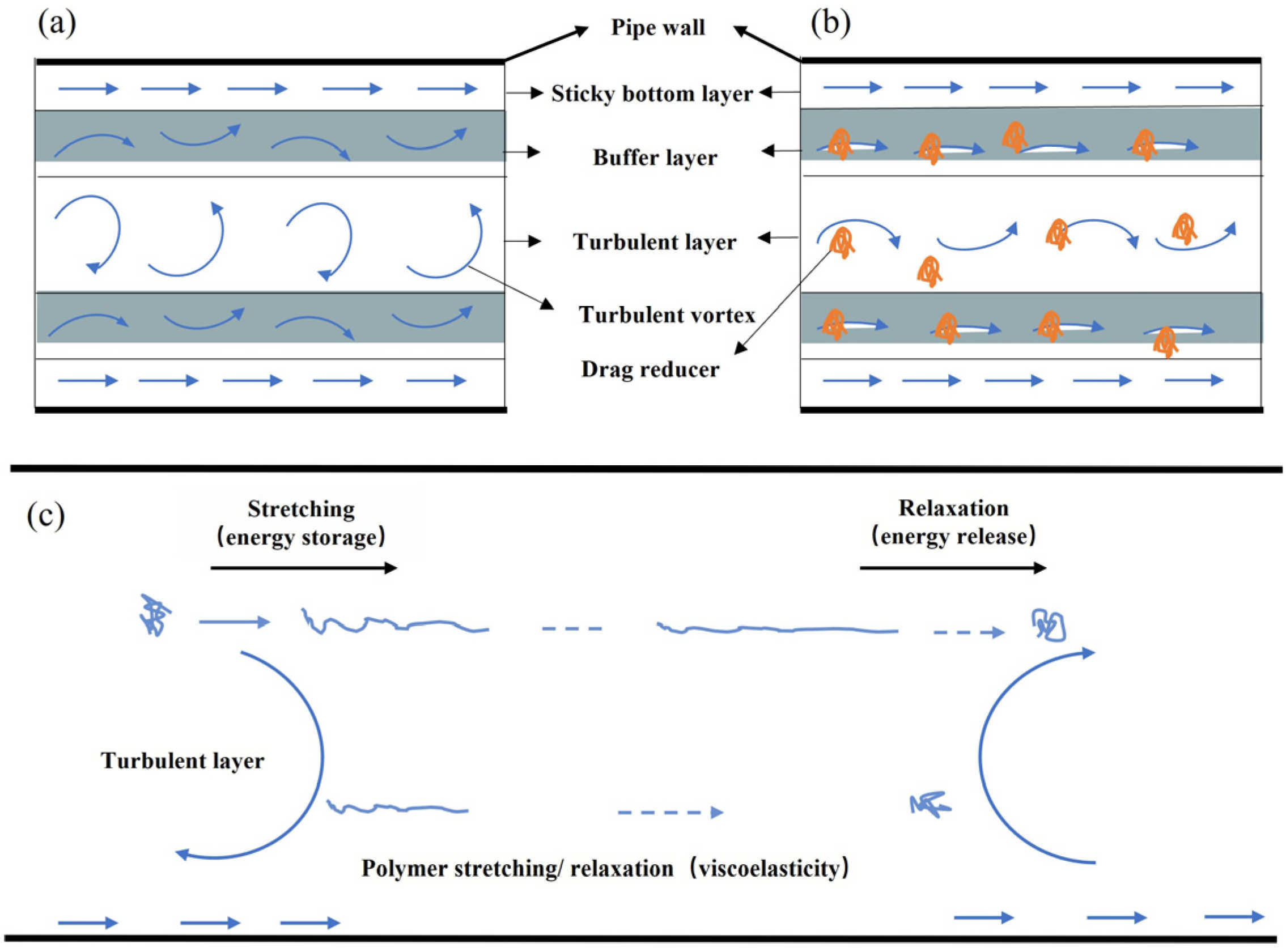
- Turbulence suppression theory: Fluid flow in a pipe is divided into three regions (Figure 10a): the viscous sublayer (laminar, low energy dissipation), the buffer layer (small-scale turbulence), and the turbulent core (highly disordered, large energy dissipation) [116,117]. Extended PAM chains dissolved in the fluid suppress the transverse momentum exchange perpendicular to the main flow direction (Figure 10b), thereby reducing turbulence intensity and frictional resistance [118,119,120]. This theory, based on momentum transfer, is widely accepted.
- (2)
- Viscoelasticity theory: This mechanism emphasizes the interaction between viscoelastic polymer chains and near-wall turbulent structures [121,122]. In regions with a high strain rate, polymer coils are stretched toward extended conformations and temporarily store part of the turbulent kinetic energy as elastic/entropic energy (Figure 10c). As the stretched chains are convected into regions of lower strain, they relax back toward coiled conformations and release the stored energy to the flow, which weakens near-wall vortical motions and reduces turbulent energy dissipation [123,124].

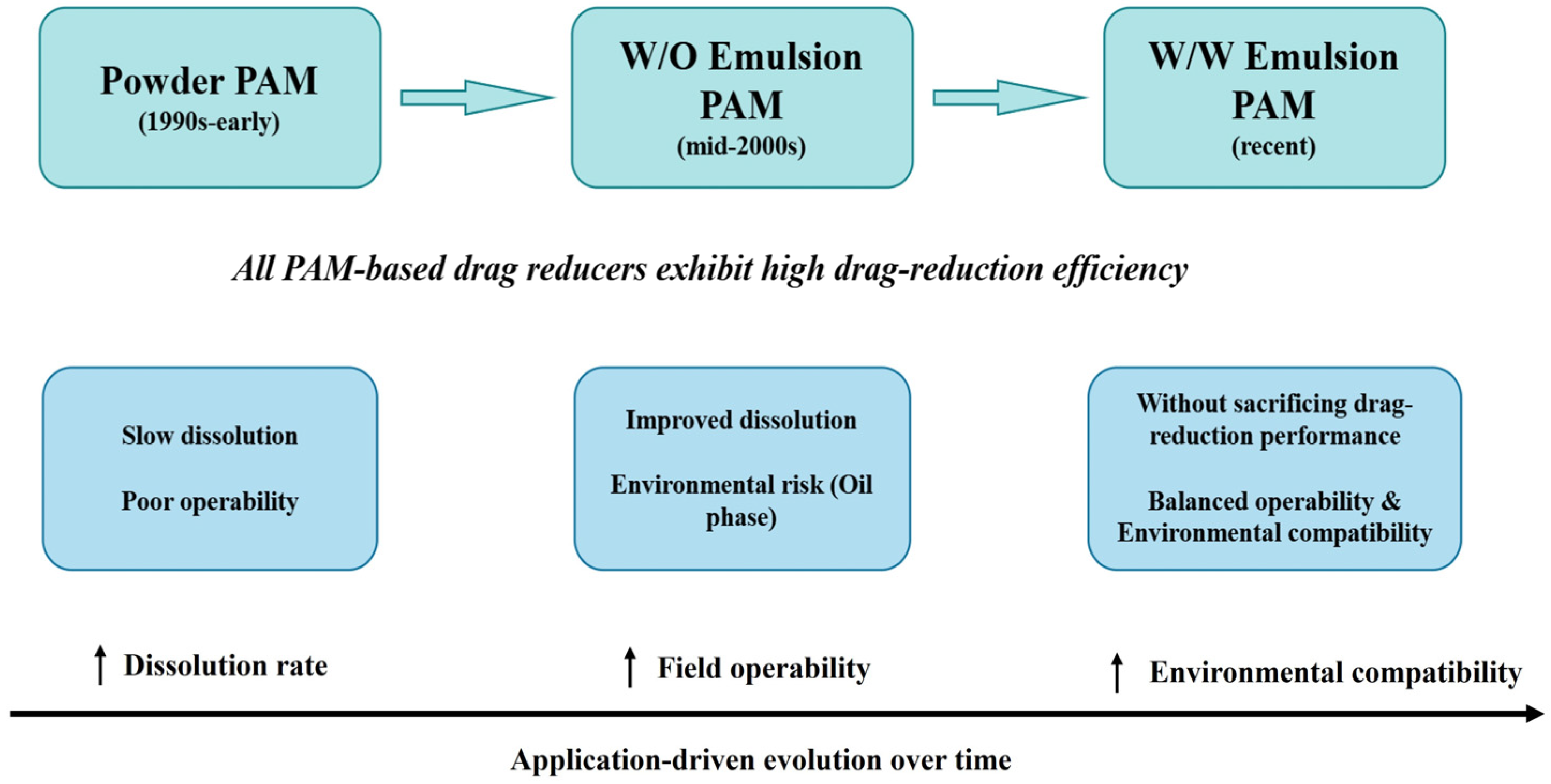
5.2. Evolution of Drag Reducers
6. Gelation in Slickwater Fracturing Fluid
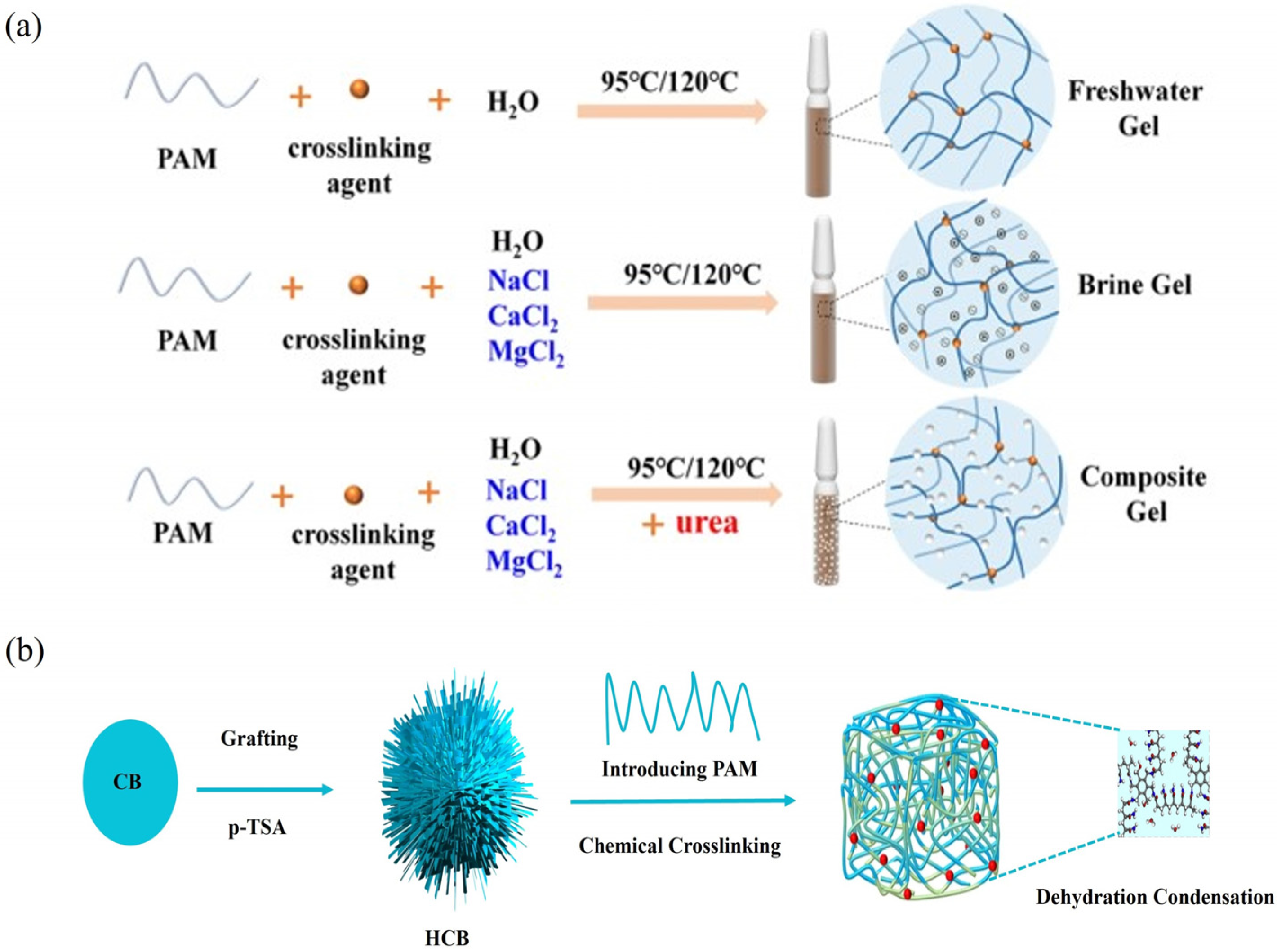
6.1. Chemical Cross-Linking with Crosslinkers
- (1)
- Multivalent metal ions: Ge et al. [139] combined a metal cross-linker with hydrophobically associating PAM. The system acts as a drag reducer at low concentrations but transforms into a heat-stable gel (80 mPa·s after 1 h at 120 °C, 170 s−1) via coordination cross-linking at higher concentrations, enabling intelligent “drag-reduction-to-viscosity-enhancement” switching.
- (2)
- Surface-functionalized nanoparticles: Bai et al. [140] grafted hyperbranched polyester onto nano-carbon black and covalently cross-linked it with PAM chains, producing an HCB/PAM nanocomposite gel (Figure 12b). The nano-carbon black acts as a rigid nano-cross-linker, significantly boosting thermal stability (withstands 200 °C) and mechanical strength, thereby improving proppant transport and reducing formation damage.
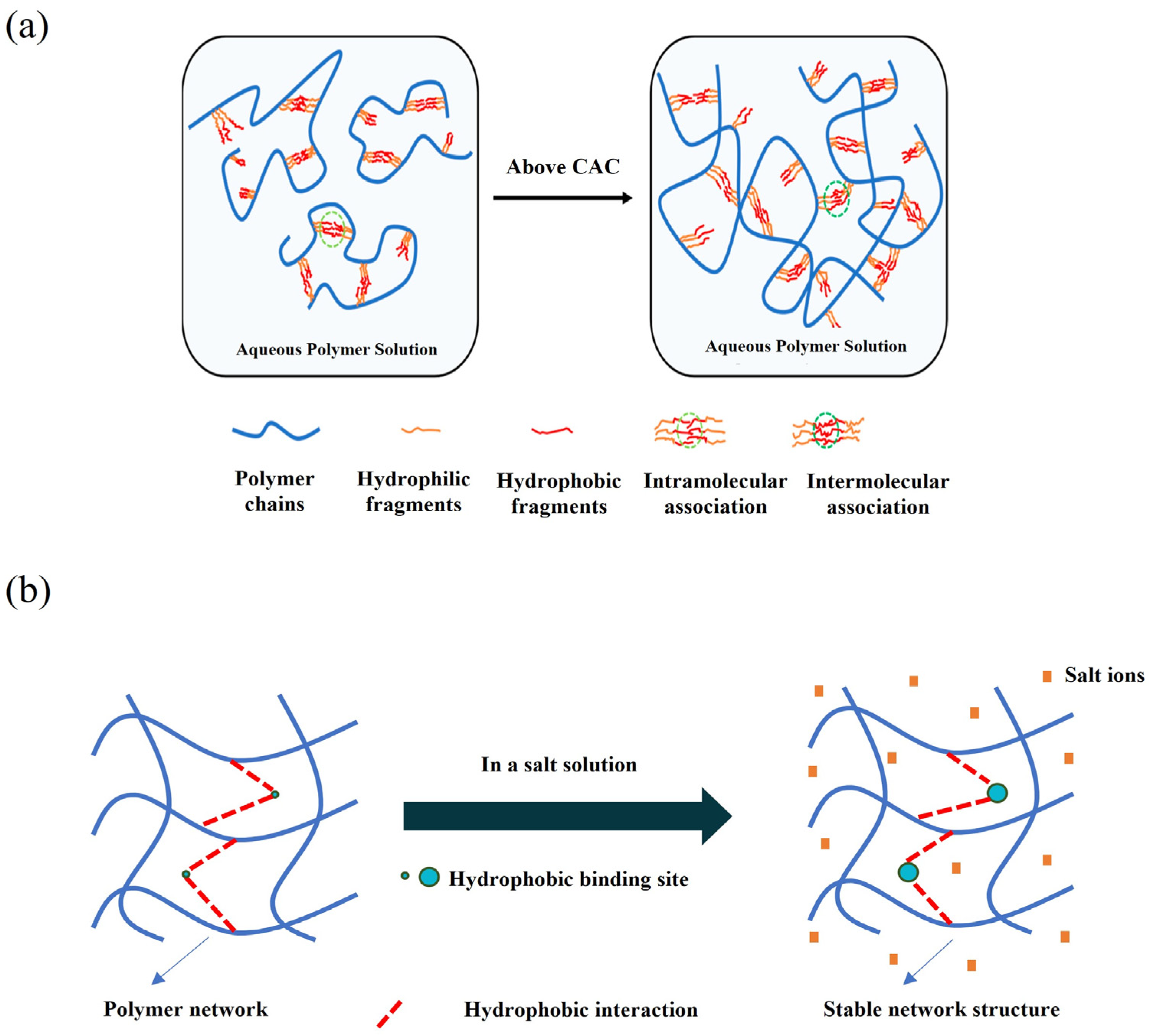
6.2. Physical Cross-Linking via Hydrophobic Association
7. Conclusions
- (1)
- The principal synthesis routes for PAM-based slickwater additives include aqueous solution polymerization, inverse emulsion polymerization, and aqueous dispersion polymerization, which determine product form and field operability.
- (2)
- Thermal stability can be enhanced by synthesizing ultra-high-molecular-weight PAM, copolymerizing with thermally resistant monomers, and incorporating nanoparticles to reinforce gel-like polymer networks.
- (3)
- Salt tolerance can be improved by grafting anionic, cationic, or zwitterionic side chains onto the polymer backbone to mitigate salt-induced chain collapse and preserve chain conformation in brines.
- (4)
- PAM-based additives provide dual functionality in slickwater: drag reduction to lower turbulent friction during high-rate pumping and viscosity/weak-gel enhancement to improve proppant transport and fracture conductivity.
- (5)
- Water-in-water (W/W) PAM emulsions prepared via aqueous dispersion polymerization show clear advantages in rapid dissolution and environmental compatibility, but storage stability and achievable molecular weight remain key limitations.
- (6)
- Strengthening associative or (pseudo-)cross-linked structures can improve tolerance to harsh conditions, yet excessive interactions may restrict chain flexibility and shear-induced elongation, potentially compromising drag-reduction efficiency; thus, stability and flow functionality must be balanced in design.
8. Discussion
Author Contributions
Funding
Institutional Review Board Statement
Informed Consent Statement
Data Availability Statement
Acknowledgments
Conflicts of Interest
Abbreviations
| PAM | Polyacrylamide |
| W/O | Water-in-oil |
| W/W | Water-in-water |
| UHMW-PAM | Ultra-high-molecular-weight polyacrylamide |
| Mη | Viscosity-average molecular weight |
| AMPS | 2-acrylamido-2-methylpropane sulfonic acid |
| SSS | Sodium p-styrene sulfonate |
| PASD | Ampholytic polyacrylamide |
| KH570 | 3-Methacryloxypropyltrimethoxy-silane |
| SMA | Stearic acid methyl acrylate |
| DMAEMA | Dimethylaminoethyl methacrylate |
| DMC | Methacryloyloxyethyltrimethylammonium chloride |
| APO-10 | Octylphenol ethoxylate (10 EO) acrylate |
References
- Welsby, D.; Price, J.; Pye, S.; Ekins, P. Unextractable fossil fuels in a 1.5 °C world. Nature 2021, 597, 230–234. [Google Scholar] [CrossRef] [Scilit]
- Salahshoor, S.; Afzal, S. Subsurface technologies for hydrogen production from fossil fuel resources: A review and techno-economic analysis. Int. J. Hydrogen Energy 2022, in press. [Google Scholar] [CrossRef] [Scilit]
- Wang, J.; Azam, W. Natural resource scarcity, fossil fuel energy consumption, and total greenhouse gas emissions in top emitting countries. Geosci. Front. 2024, 15, 101757. [Google Scholar] [CrossRef] [Scilit]
- Yang, B.; Zhao, J.; Mao, J.; Tan, H.; Zhang, Y.; Song, Z. Review of friction reducers used in slickwater fracturing fluids for shale gas reservoirs. J. Nat. Gas Sci. Eng. 2019, 62, 302–313. [Google Scholar] [CrossRef] [Scilit]
- He, X.; Li, P.; Qian, H.; Shi, H.; Ma, Z. Biogeochemistry during hydraulic fracturing: A critical review of reservoirs, fluids, processes, and implications. Geoenergy Sci. Eng. 2026, 256, 214143. [Google Scholar] [CrossRef] [Scilit]
- Li, N.; Fang, L.; Sun, W.; Zhang, X.; Chen, D. Evaluation of Borehole Hydraulic Fracturing in Coal Seam Using the Microseismic Monitoring Method. Rock Mech. Rock Eng. 2020, 54, 607–625. [Google Scholar] [CrossRef] [Scilit]
- Zhao, J.; Ren, L.; Shen, C.; Li, Y. Latest research progresses in network fracturing theories and technologies for shale gas reservoirs. Nat. Gas Ind. B 2018, 5, 533–546. [Google Scholar] [CrossRef] [Scilit]
- Lei, Q.; Yang, Z.; Weng, D.; Liu, H.; Guan, B.; Cai, B.; Fu, H.; Liu, Z.; Duan, Y.; Liang, T.; et al. Techniques for improving fracture-controlled stimulated reservoir volume in ultra-deep fractured tight reservoirs: A case study of kuqa piedmont clastic reservoirs, Tarim Basin, NW China. Pet. Explor. Dev. 2022, 49, 1169–1184. [Google Scholar] [CrossRef] [Scilit]
- Qin, J.; Xian, C.; Zhang, J.; Liang, T.; Wang, W.; Li, S.; Zhang, J.; Zhang, Y.; Zhou, F. Characteristics of hydraulic fracture network in the tight conglomerate reservoir based on a hydraulic fracturing test site. Pet. Explor. Dev. 2025, 52, 245–257. [Google Scholar] [CrossRef] [Scilit]
- Liu, X.; Zhang, A.; Tang, Y.; Wang, X.; Xiong, J. Investigation on the influences of gravel characteristics on the hydraulic fracture propagation in the conglomerate reservoirs. Nat. Gas Ind. B 2022, 9, 232–239. [Google Scholar] [CrossRef] [Scilit]
- Liu, J.; Yang, X.; Zhao, S.; Yang, Y.; Huang, S.; Cao, L.; Li, J.; Zhang, J. The Effect of Slickwater on Shale Properties and Main Influencing Factors in Hydraulic Fracturing. Geofluids 2023, 2023, 6645245. [Google Scholar] [CrossRef] [Scilit]
- Lu, Y.; Wei, S.; Xia, Y.; Jin, Y. Modeling of geomechanics and fluid flow in fractured shale reservoirs with deformable multi-continuum matrix. J. Pet. Sci. Eng. 2021, 196, 107576. [Google Scholar] [CrossRef] [Scilit]
- Othman, A.; Aljawad, M.S.; Kalgaonkar, R.; Kamal, M.S. Application of Polymers in Hydraulic Fracturing Fluids: A Review. Polymers 2025, 17, 2562. [Google Scholar] [CrossRef] [Scilit]
- Almubarak, T.; Li, L.; Ng, J.H.; Nasr-El-Din, H.; AlKhaldi, M. New insights into hydraulic fracturing fluids used for high-temperature wells. Petroleum 2021, 7, 70–79. [Google Scholar] [CrossRef] [Scilit]
- Xu, H.; Li, Y.; Yu, G.-L.; Yang, S.-S.; Li, B.-J.; Zhou, F.-J.; Yao, E.-D.; Bai, H.; Liu, Z.-Y. The enhancement of performance and imbibition effect of slickwater-based fracturing fluid by using MoS2 nanosheets. Pet. Sci. 2023, 20, 2187–2201. [Google Scholar] [CrossRef] [Scilit]
- Al-Hajri, S.; Negash, B.M.; Rahman, M.M.; Haroun, M.; Al-Shami, T.M. Perspective Review of Polymers As Additives in Water-Based Fracturing Fluids. ACS Omega 2022, 7, 7431–7443. [Google Scholar] [CrossRef] [Scilit]
- Shang, J.; Dong, Z.; Tan, W.; Zhang, Y.; Liang, T.; Xing, L.; Wang, Z. A Review of Fracturing and Enhanced Recovery Integration Working Fluids in Tight Reservoirs. Processes 2024, 12, 1241. [Google Scholar] [CrossRef] [Scilit]
- Bourkaib, K.; Elamri, A.; Hadjsadok, A.; Izountar, C.E.; Abimouloud, M.F.; Bouhafs, A.; Isseri, A.; Maatalah, D.; Braik, M.; Guezei, A.; et al. Comparative Study of Opuntia ficus-indica Polymers, HPAM, and Their Mixture for Enhanced Oil Recovery in the Hassi Messaoud Reservoir, Algeria. Processes 2025, 13, 1794. [Google Scholar] [CrossRef] [Scilit]
- Xu, S.; Gou, Q.; Hao, F.; Zhang, B.; Shu, Z.; Zhang, Y. Multiscale faults and fractures characterization and their effects on shale gas accumulation in the Jiaoshiba area, Sichuan Basin, China. J. Pet. Sci. Eng. 2020, 189, 107026. [Google Scholar] [CrossRef] [Scilit]
- Yuan, Z.; Deng, Z.; Jiang, M.; Xie, Y.; Wu, Y. A modeling and analytical solution for transient flow in natural gas pipelines with extended partial blockage. J. Nat. Gas Sci. Eng. 2015, 22, 141–149. [Google Scholar] [CrossRef] [Scilit]
- Sun, W.; Zeng, H.; Tang, T. Enhanced Adsorption of Anionic Polymer on Montmorillonite by Divalent Cations and the Effect of Salinity. Phys. Chem. A 2021, 125, 1025–1035. [Google Scholar] [CrossRef] [Scilit] [PubMed]
- Nguyen, T.C.; Romero, B.; Vinson, E.; Wiggins, H. Effect of salt on the performance of drag reducers in slickwater fracturing fluids. J. Pet. Sci. Eng. 2018, 163, 590–599. [Google Scholar] [CrossRef] [Scilit]
- Ma, X.; Tian, H. Stimuli-Responsive Supramolecular Polymers in Aqueous Solution. Acc. Chem. Res. 2014, 47, 1971–1981. [Google Scholar] [CrossRef] [Scilit]
- North, S.M.; Armes, S.P. Synthesis of polyampholytic diblock copolymers via RAFT aqueous solution polymerization. Polym. Chem. 2021, 12, 4846–4855. [Google Scholar] [CrossRef] [Scilit]
- Ouyang, L.; Wang, L.; Schork, F.J. Synthesis and nucleation mechanism of inverse emulsion polymerization of acrylamide by RAFT polymerization: A comparative study. Polymer 2011, 52, 63–67. [Google Scholar] [CrossRef] [Scilit]
- Wang, X.; Shen, L.; An, Z. Dispersion polymerization in environmentally benign solvents via reversible deactivation radical polymerization. Prog. Polym. Sci. 2018, 83, 1–27. [Google Scholar] [CrossRef] [Scilit]
- Vajihinejad, V.; Gumfekar, S.P.; Bazoubandi, B.; Rostami Najafabadi, Z.; Soares, J.B.P. Water Soluble Polymer Flocculants: Synthesis, Characterization, and Performance Assessment. Macromol. Mater. Eng. 2018, 304, 1800526. [Google Scholar] [CrossRef] [Scilit]
- Wever, D.A.Z.; Picchioni, F.; Broekhuis, A.A. Polymers for enhanced oil recovery: A paradigm for structure–property relationship in aqueous solution. Prog. Polym. Sci. 2011, 36, 1558–1628. [Google Scholar] [CrossRef] [Scilit]
- Junjie, X.; Donghong, G.; Qingfeng, H. The Development and Application of the Acrylamide Kind Polymers for Tertiary Oil Recovery in China. Int. J. Pet. Technol. 2018, 5, 19–29. [Google Scholar] [CrossRef] [Scilit]
- Huang, B.; Jiang, J.; Kang, M.; Liu, P.; Sun, H.; Li, B.-G.; Wang, W.-J. Synthesis of block cationic polyacrylamide precursors using an aqueous RAFT dispersion polymerization. RSC Adv. 2019, 9, 12370–12383. [Google Scholar] [CrossRef] [Scilit]
- Gong, J.P.; Osada, Y. Surface friction of polymer gels. Prog. Polym. Sci. 2002, 27, 3–38. [Google Scholar] [CrossRef] [Scilit]
- Zhang, W.; Chen, Y.; Tian, J.; Wang, D.; Zeng, H.; Wang, L.; Su, H.; Mao, J.; Yang, X. Development of polymer powder-based multifunctional variable-viscosity slickwater systems assisted by viscoelastic surfactants for enhanced unconventional reservoir fracturing. Chem. Eng. J. 2025, 523, 168356. [Google Scholar] [CrossRef] [Scilit]
- Li, Q.; Wang, X.; Li, D.; Tang, Y.; Ge, H. Development and performance evaluation of multi-functional slickwater fracturing fluid system for shale reservoirs. Sci. Rep. 2025, 15, 17637. [Google Scholar] [CrossRef] [Scilit]
- Wang, J.; Ran, D.; Lu, H.; Zhang, J.; Wu, Y. Realizing the Efficient Dissolution of Drag Reducer upon pH-Induced Demulsification of Inverse Polymer Emulsion. Langmuir 2024, 40, 15869–15876. [Google Scholar] [CrossRef] [Scilit] [PubMed]
- Guo, Q.; Yin, L.; Wang, X.; Yuan, J.; Zhang, Q. An Environmentally Friendly Inverse Microemulsion Method to Synthesize Polyacrylamide. Materials 2022, 15, 5927. [Google Scholar] [CrossRef] [Scilit] [PubMed]
- Mao, H.; Liu, J.; Zhang, W.; Qiu, W.; Zhang, Q.; Wang, J.; Zhang, D.; Shao, Z. Self-Soluble Hydrophobically Associating Polyacrylamide Inverse Emulsions with Extraordinary Thickening Properties. ACS Appl. Polym. Mater. 2024, 6, 3748–3755. [Google Scholar] [CrossRef] [Scilit]
- Sen, G.; Mishra, S.; Prasad Dey, K.; Bharti, S. Synthesis, characterization and application of novel polyacrylamide-grafted barley. J. Appl. Polym. Sci. 2014, 131, 41046. [Google Scholar] [CrossRef] [Scilit]
- Czarnecka, E.; Nowaczyk, J. Synthesis and Characterization Superabsorbent Polymers Made of Starch, Acrylic Acid, Acrylamide, Poly(Vinyl Alcohol), 2-Hydroxyethyl Methacrylate, 2-Acrylamido-2-methylpropane Sulfonic Acid. Int. J. Mol. Sci. 2021, 22, 4325. [Google Scholar] [CrossRef] [Scilit]
- Yao, E.; Bai, H.; Zhou, F.; Zhang, M.; Wang, J.; Li, F. Performance Evaluation of the Multifunctional Variable-Viscosity Slick Water for Fracturing in Unconventional Reservoirs. ACS Omega 2021, 6, 20822–20832. [Google Scholar] [CrossRef] [Scilit]
- Fan, Y.; Yu, W.; Shu, W.; Zhang, Y.; Ju, Y.; Fan, P. Synthesis and performance evaluation of low-damage variable viscosity integrated drag reducer. J. Appl. Polym. Sci. 2024, 141, e55925. [Google Scholar] [CrossRef] [Scilit]
- Zhao, M.; Liu, S.; Dai, C.; Yan, R.; Li, Y.; Liu, P. Development and drag reduction behaviors of a water-in-water emulsion polymer drag reducer. ACS Appl. Polym. Mater. 2023, 5, 3707–3716. [Google Scholar] [CrossRef] [Scilit]
- Molina-Gutiérrez, S.; Ladmiral, V.; Bongiovanni, R.; Caillol, S.; Lacroix-Desmazes, P. Radical polymerization of biobased monomers in aqueous dispersed media. Green Chem. 2019, 21, 36–53. [Google Scholar] [CrossRef] [Scilit]
- Matalanis, A.; Jones, O.G.; McClements, D.J. Structured biopolymer-based delivery systems for encapsulation, protection, and release of lipophilic compounds. Food Hydrocoll. 2011, 25, 1865–1880. [Google Scholar] [CrossRef] [Scilit]
- Zhao, M.; Yan, X.; Yan, R.; Liu, S.; Song, X.; Dai, C. Synthesis and performance evaluation of water-in-water polymer drag-reducing agent. Colloids Surf. A Physicochem. Eng. Asp. 2023, 674, 131935. [Google Scholar] [CrossRef] [Scilit]
- Wang, J.; Wu, J.; Xian, C.; Jia, W. Aqueous dispersion polymerization: An overview of the mechanisms, formulations and applications. J.Mol. Liq. 2024, 410, 125557. [Google Scholar] [CrossRef] [Scilit]
- Lv, Y.; Zhang, S.; Zhang, Y.; Yin, H.; Feng, Y. Hydrophobically associating polyacrylamide “water-in-water” emulsion prepared by aqueous dispersion polymerization: Synthesis, characterization and rheological behavior. Molecules 2023, 28, 2698. [Google Scholar] [CrossRef] [Scilit] [PubMed]
- Cui, W.; Xia, C.; Xu, S.; Ye, X.; Wu, Y.; Cheng, S.; Zhang, R.; Zhang, C.; Miao, Z. Water-in-water emulsions stabilized by self-assembled chitosan colloidal particles. Carbohydr. Polym. 2023, 303, 120466. [Google Scholar] [CrossRef] [Scilit]
- Du, J.; Lv, C.; Lan, X.; Song, J.; Liu, P.; Chen, X.; Wang, Q.; Liu, J.; Guo, G. A review on viscosity retention of PAM solution for polymer flooding technology. Pet. Sci. Technol. 2022, 42, 372–405. [Google Scholar] [CrossRef] [Scilit]
- Arp, H.P.H.; Knutsen, H. Could We Spare a Moment of the Spotlight for Persistent, Water-Soluble Polymers? Environ. Sci. Technol. 2019, 54, 3–5. [Google Scholar] [CrossRef] [Scilit] [PubMed]
- Wang, Y.; Feng, Y.; Wang, B.; Lu, Z. A novel thermoviscosifying water-soluble polymer: Synthesis and aqueous solution properties. J. Appl. Polym. Sci. 2010, 116, 3516–3524. [Google Scholar] [CrossRef] [Scilit]
- Wang, D.; Zheng, Y.; Deng, Q.; Liu, X. Water-Soluble Synthetic Polymers: Their Environmental Emission Relevant Usage, Transport and Transformation, Persistence, and Toxicity. Environ. Sci. Technol 2023, 57, 6387–6402. [Google Scholar] [CrossRef] [Scilit]
- Amir, Z.; Mohd Saaid, I.; Mohamed Jan, B. An Optimization Study of Polyacrylamide-Polyethylenimine-Based Polymer Gel for High Temperature Reservoir Conformance Control. Int. J. Polym. Sci. 2018, 2018, 2510132. [Google Scholar] [CrossRef] [Scilit]
- Zhang, P.; Wang, Y.; Guo, S.; Pan, B.; Huang, W.; Jia, Z.; Zhou, C.; Guo, M.; Yu, H. Seepage Flow Characteristics and Ability for Enhanced Oil Recovery Based on Ultra High Molecular Weight Partially Hydrolysed Polyacrylamide. Int. J. Oil Gas Coal Technol. 2017, 14, 216–231. [Google Scholar] [CrossRef] [Scilit]
- Zhang, X.; Han, M.; Xu, L.; AlSofi, A.M. Long-term stability prediction of polyacrylamide-type polymers at harsh conditions via thermogravimetric analysis. Chem. Phys. Lett. 2022, 795, 139538. [Google Scholar] [CrossRef] [Scilit]
- Cao, X.; Feng, Y.; Yin, H. Facile access to highly functionalized polyacrylamide with ultra-high molecular weight: Multicomponent initiators-based free radical polymerization. Polymer 2024, 315, 127825. [Google Scholar] [CrossRef] [Scilit]
- Streicher, M.; Boyko, V.; Blanazs, A. Ultra-High-Molecular-Weight, Narrow-Polydispersity Polyacrylamides Synthesized Using Photoiniferter Polymerization to Generate High-Performance Flocculants. ACS Appl. Mater. Interfaces 2023, 15, 59044–59054. [Google Scholar] [CrossRef] [Scilit]
- Wang, F.-S.; Kosovsky, L.M.; Krist, E.C.; Kruse, B.J.; Zhukhovitskiy, A.V. Trapped entanglements in polymer networks: Formation and characterization. Trends Chem. 2024, 6, 447–458. [Google Scholar] [CrossRef] [Scilit]
- Barra, G.; Guadagno, L.; Raimondo, M.; Santonicola, M.G.; Toto, E.; Vecchio Ciprioti, S. A Comprehensive Review on the Thermal Stability Assessment of Polymers and Composites for Aeronautics and Space Applications. Polymers 2023, 15, 3786. [Google Scholar] [CrossRef] [Scilit] [PubMed]
- Sun, H.; Zhang, Y.; Peng, F.; Cao, R.; Liu, Z.; Xu, T.; Li, L. Influence of Entanglement Density on Polymer Glass Transition Temperature. Macromolecules 2025, 58, 1512–1520. [Google Scholar] [CrossRef] [Scilit]
- Lin, T.-W.; Mei, B.; Schweizer, K.S.; Sing, C.E. Simulation study of the effects of polymer network dynamics and mesh confinement on the diffusion and structural relaxation of penetrants. Chem. Phys 2023, 159, 014904. [Google Scholar] [CrossRef] [Scilit]
- Wei, J.; Jia, W.; Zuo, L.; Chen, H.; Feng, Y. Turbulent Drag Reduction with an Ultra-High-Molecular-Weight Water-Soluble Polymer in Slick-Water Hydrofracking. Molecules 2022, 27, 351. [Google Scholar] [CrossRef] [Scilit]
- Lira, R.B.; Plucinski, A.; Ko, Y.; Bayliss, N.; van Ewijk, C.; Roos, W.H.; Schmidt, B.V.K.J. Properties of Pickering Stabilized Associative Water-In-Water Emulsions Based on Ultra-High Molecular Weight Polyacrylamides. Adv. Mater. Interfaces 2024, 12, 2400594. [Google Scholar] [CrossRef] [Scilit]
- Queirós, A.S.; Lopes-da-Silva, J.A. Nonthermal gelation of whey proteins induced by organic acids. J. Appl. Polym. Sci. 2017, 134, 45134. [Google Scholar] [CrossRef] [Scilit]
- Wang, L.; Zhang, X.; Sun, J.; Zhang, Y.; Cao, Z. Synthesis of novel network-type ultra-high molecular weight cationic polyacrylamide. Chem. Reag. 2014, 36, 449–454. [Google Scholar] [CrossRef]
- Sonker, E.; Tiwari, R.; Adhikary, P.; Kumar, K.; Krishnamoorthi, S. Preparation of ultra-high-molecular-weight polyacrylamide by vertical solution polymerization technique. Polym. Eng. Sci. 2019, 59, 1175–1181. [Google Scholar] [CrossRef] [Scilit]
- Yang, K.; Chen, J.; Yao, C. Cationic Polyacrylamide Emulsion with Ultra-high Concentration As a Flocculant for Paper Mill Wastewater Treatment. BioResources 2020, 15, 3173–3189. [Google Scholar] [CrossRef] [Scilit]
- Cheng, C.; Gong, F.; Fu, Y.; Liu, J.; Qiao, J. Effect of polyethylene glycol/polyacrylamide graft copolymerizaton phase change materials on the performance of asphalt mixture for road engineering. J. Mater. Res. Technol. 2021, 15, 1970–1983. [Google Scholar] [CrossRef] [Scilit]
- Jha, S.; Malviya, R.; Fuloria, S.; Sundram, S.; Subramaniyan, V.; Sekar, M.; Sharma, P.K.; Chakravarthi, S.; Wu, Y.S.; Mishra, N.; et al. Characterization of Microwave-Controlled Polyacrylamide Graft Copolymer of Tamarind Seed Polysaccharide. Polymers 2022, 14, 1037. [Google Scholar] [CrossRef] [Scilit]
- Zhao, J.; Yang, B.; Mao, J.; Zhang, Y.; Yang, X.; Zhang, Z.; Shao, Y. A Novel Hydrophobic Associative Polymer by RAFT-MADIX Copolymerization for Fracturing Fluids with High Thermal Stability. Energy Fuels 2018, 32, 3039–3051. [Google Scholar] [CrossRef] [Scilit]
- Wang, H.; Lin, M.; Zhao, Q.; Xu, C.; Dong, Z.; Yang, Z.; Zhang, J. Fabrication, formation mechanism, and thermal degradation process of AM/AMPS/NVP terpolymeric microspheres with different microstructures. Colloids Surf. A Physicochem. Eng. Asp. 2020, 589, 124401. [Google Scholar] [CrossRef] [Scilit]
- Borai, E.H.; Hamed, M.G.; El-kamash, A.M.; Siyam, T.; El-Sayed, G.O. Synthesis, characterization and application of a modified acrylamide–styrene sulfonate resin and a composite for sorption of some rare earth elements. New J. Chem. 2015, 39, 7409–7420. [Google Scholar] [CrossRef] [Scilit]
- Martínez-Cornejo, V.; Velázquez-Roblero, J.; Rosiles-González, V.; Correa-Duran, M.; Avila-Ortega, A.; Hernández-Núñez, E.; Le Lagadec, R.; González-Díaz, M.O. Synthesis of Poly(2-Acrylamido-2-Methylpropane Sulfonic Acid) and its Block Copolymers with Methyl Methacrylate and 2-Hydroxyethyl Methacrylate by Quasiliving Radical Polymerization Catalyzed by a Cyclometalated Ruthenium(II) Complex. Polymers 2020, 12, 1663. [Google Scholar] [CrossRef] [Scilit]
- Wang, Y.; Qiao, W.; Wang, B.; Zhang, Y.; Shao, P.; Yin, T. Electrospun composite nanofibers containing nanoparticles for the programmable release of dual drugs. Polym. J. 2011, 43, 478–483. [Google Scholar] [CrossRef] [Scilit]
- Gupta, S.; Malgar Puttaiahgowda, Y. N-vinylpyrrolidone antimicrobial polymers: Current trends and emerging perspectives. Eur. Polym. J. 2022, 180, 111590. [Google Scholar] [CrossRef] [Scilit]
- Xu, L.; Che, L.; Zheng, J.; Huang, G.; Wu, X.; Chen, P.; Zhang, L.; Hu, Q. Synthesis and thermal degradation property study of N-vinylpyrrolidone and acrylamide copolymer. RSC Adv. 2014, 4, 33269–33278. [Google Scholar] [CrossRef] [Scilit]
- Yekeen, N.; Padmanabhan, E.; Idris, A.K.; Chauhan, P.S. Nanoparticles applications for hydraulic fracturing of unconventional reservoirs: A comprehensive review of recent advances and prospects. J. Pet. Sci. Eng. 2019, 178, 41–73. [Google Scholar] [CrossRef] [Scilit]
- Wang, B.; Qiu, F.; Barber, G.C.; Zou, Q.; Wang, J.; Guo, S.; Yuan, Y.; Jiang, Q. Role of nano-sized materials as lubricant additives in friction and wear reduction: A review. Wear 2022, 490–491, 204206. [Google Scholar] [CrossRef] [Scilit]
- Baig, N.; Kammakakam, I.; Falath, W. Nanomaterials: A review of synthesis methods, properties, recent progress, and challenges. Mater. Adv. 2021, 2, 1821–1871. [Google Scholar] [CrossRef] [Scilit]
- Lin, E.Y.; Frischknecht, A.L.; Riggleman, R.A. Chain and Segmental Dynamics in Polymer–Nanoparticle Composites with High Nanoparticle Loading. Macromolecules 2021, 54, 5335–5343. [Google Scholar] [CrossRef] [Scilit]
- Yang, S.; Yu, W.; Zhao, M.; Ding, F.; Zhang, Y. A review of weak gel fracturing fluids for deep shale gas reservoirs. Gels 2024, 10, 345. [Google Scholar] [CrossRef] [Scilit]
- Maguire, S.M.; McClimon, J.B.; Zhang, A.C.; Keller, A.W.; Bilchak, C.R.; Ohno, K.; Carpick, R.W.; Composto, R.J. Nanoscale Structure–Property Relations in Self-Regulated Polymer-Grafted Nanoparticle Composite Structures. ACS Appl. Mater. Interfaces 2023, 15, 10974–10985. [Google Scholar] [CrossRef] [Scilit]
- Liu, C.; Li, Y.; Wang, P.; Jiao, H.; Yao, X.; Zhao, G.; Dai, C.; You, Q. Preparation and performance evaluation of nano-composite fracturing fluid with good oil displacement ability in tight reservoir. J. Mol. Liq. 2022, 367, 120494. [Google Scholar] [CrossRef] [Scilit]
- Xing, L.; Ke, Y.; Hu, X.; Liang, P. Preparation and solution properties of polyacrylamide-based silica nanocomposites for drag reduction application. New J. Chem. 2020, 44, 9802–9812. [Google Scholar] [CrossRef] [Scilit]
- Li, X.; Wang, Y.; Li, X.; Zhou, S.; Liu, Y.; Lv, X. Study on the production of gas hydrates and underlying free gas by horizontal well under different directions of hydraulic fracturing. Energy 2024, 290, 130199. [Google Scholar] [CrossRef] [Scilit]
- Chen, F.; Li, D.; Liao, Z.; Den, Y.; Zhang, L.; Wang, H. Salt-tolerant and instant friction reducer for slickwater fracturing stimulation based on dispersion polymerization. Energy Sources A Recovery Util. Environ. Eff. 2022, 44, 6392–6403. [Google Scholar] [CrossRef] [Scilit]
- Shi, X.; Qin, Y.; Gao, Q.; Liu, S.; Xu, H.; Yu, T. Experimental study on hydraulic fracture propagation in heterogeneous glutenite rock. Geoenergy Sci. Eng. 2023, 225, 211673. [Google Scholar] [CrossRef] [Scilit]
- Guo, W.; Zhu, B.; Liu, Z.; Li, Q. Fracture propagation and evaluation of dual wells, multi-fracturing, and split-time in fuyu oil shale. Geoenergy Sci. Eng. 2024, 239, 212948. [Google Scholar] [CrossRef] [Scilit]
- Zhou, C.; Huang, Q.; Xiao, Y.; Lei, M.; Wan, W.; Luo, Y.; Zhang, P. Preparation of drag reducing agent and properties of composite osmotic acid based on volume fracturing. Pet. Sci. Technol. 2021, 39, 739–759. [Google Scholar] [CrossRef] [Scilit]
- Jing, X.; Huang, C.; Fu, Z. Synthesis and performance evaluation of a new drag reducer–cationic hybrid polymeric based on polyacrylamide. Polym. Res. 2021, 28, 435. [Google Scholar] [CrossRef] [Scilit]
- Jinhua, H.; Siman, Z.; Junwei, L.; Chenxi, W.; Ruizhi, Z.; Xing, Z.; Shanjian, L. Synthesis, investigation of temperature and salt resistant polyacrylamide microspheres used for deep sealing and profile control and function strengthening mechanism. J. Appl. Polym. Sci. 2024, 141, e55620. [Google Scholar] [CrossRef] [Scilit]
- Gao, J.; Zhang, G.; Wang, L.; Ding, L.; Shi, H.; Lai, X.; Wen, X.; Ma, S.; Huang, C. Rheological properties of an ultra-high salt hydrophobic associated polymer as a fracturing fluid system. RSC Adv. 2019, 9, 15246–15256. [Google Scholar] [CrossRef] [Scilit]
- Ma, Y.; Zhu, Z.; Guo, J.; Zhou, H.; Li, J.; Xiong, Y.; Ma, L. A high salt tolerance and low adsorption drag reducer based on non-covalent enhancement. Pet. Explor. Dev. 2020, 47, 1333–1341. [Google Scholar] [CrossRef] [Scilit]
- Sui, Y.; Cao, G.; Guo, T.; Zhang, Z.; Zhang, Z.; Xiao, Z. Synthesis and Mechanism Study of Temperature- and Salt-Resistant Amphoteric Polyacrylamide with MAPTAC and DTAB as Monomers. Processes 2022, 10, 1666. [Google Scholar] [CrossRef] [Scilit]
- Li, X.; Ju, Y.; Jia, Y.; Liu, F.; Liu, G.; Wang, S.; Wang, H.; Mao, S.; Yang, J.; Du, G. Design of novel temperature-resistant and salt-tolerant acrylamide-based copolymers by aqueous dispersion polymerization. Des. Monomers Polym. 2022, 25, 220–230. [Google Scholar] [CrossRef] [Scilit] [PubMed]
- Dai, C.; Xu, Z.; Wu, Y.; Zou, C.; Wu, X.; Wang, T.; Guo, X.; Zhao, M. Design and Study of a Novel Thermal-Resistant and Shear-Stable Amphoteric Polyacrylamide in High-Salinity Solution. Polymers 2017, 9, 296. [Google Scholar] [CrossRef] [Scilit] [PubMed]
- Habibpour, M.; Clark, P.E. Drag reduction behavior of hydrolyzed polyacrylamide/xanthan gum mixed polymer solutions. Pet. Sci. 2017, 14, 412–423. [Google Scholar] [CrossRef] [Scilit]
- Bao, Y.; Ma, J.; Li, N. Synthesis and swelling behaviors of sodium carboxymethyl cellulose-g-poly(AA-co-AM-co-AMPS)/MMT superabsorbent hydrogel. Carbohydr. Polym. 2011, 84, 76–82. [Google Scholar] [CrossRef] [Scilit]
- Chituru, S.V.; Das, S.; Majumdar, S. Impact of specific ion effects and electrostatic interactions on a polyelectrolyte-polyampholyte complex. Discov. Chem. Eng. 2024, 4, 6. [Google Scholar] [CrossRef] [Scilit]
- Yuan, J.; Tanaka, H. Charge Regulation Effects in Polyelectrolyte Adsorption. Phys. Rev. Lett. 2024, 132, 228101. [Google Scholar] [CrossRef] [Scilit]
- Bossa, G.V.; May, S. Integral Representation of Electrostatic Interactions inside a Lipid Membrane. Molecules 2020, 25, 3824. [Google Scholar] [CrossRef] [Scilit]
- Laage, D.; Elsaesser, T.; Hynes, J.T. Water Dynamics in the Hydration Shells of Biomolecules. Chem. Rev. 2017, 117, 10694–10725. [Google Scholar] [CrossRef] [Scilit]
- Bruce, E.E.; Okur, H.I.; Stegmaier, S.; Drexler, C.I.; Rogers, B.A.; van der Vegt, N.F.A.; Roke, S.; Cremer, P.S. Molecular Mechanism for the Interactions of Hofmeister Cations with Macromolecules in Aqueous Solution. J. Am. Chem. Soc. 2020, 142, 19094–19100. [Google Scholar] [CrossRef] [Scilit]
- Liu, C.; Zou, H.; Wang, Y.; Zhu, M.; Su, G.; Huang, Z.; Yu, X.; Yang, H. Degradation behavior and mechanism of P(AM/AA/AMPS)@PLA core-shell self-degrading temporary plugging agent. J. Mol. Liq. 2024, 393, 123656. [Google Scholar] [CrossRef] [Scilit]
- Alipoormazandarani, N.; Fatehi, P. Interaction Mechanism of Anionic Lignin and Cationic Soft Surface in Saline Systems. J. Phys. Chem. B 2020, 124, 8678–8689. [Google Scholar] [CrossRef] [Scilit]
- Qu, Y.; Lin, L.; Gao, S.; Yang, Y.; Huang, H.; Li, X.; Ren, H.; Luo, W. A molecular dynamics study on adsorption mechanisms of polar, cationic, and anionic polymers on montmorillonite. RSC Adv. 2023, 13, 2010–2023. [Google Scholar] [CrossRef] [Scilit]
- Sun, W.; Zeng, H.; Tang, T. Synergetic adsorption of polymers on montmorillonite: Insights from molecular dynamics simulations. Appl. Clay Sci. 2020, 193, 105654. [Google Scholar] [CrossRef] [Scilit]
- Zhu, Z.; Kang, W.; Sarsenbekuly, B.; Yang, H.; Dai, C.; Yang, R.; Fan, H. Preparation and solution performance for the amphiphilic polymers with different hydrophobic groups. J. Appl. Polym. Sci. 2017, 134, 44744. [Google Scholar] [CrossRef] [Scilit]
- Quan, H.; Tian, H.; Huang, Z.; Long, Y. Salt stimulus response of a carboxyl betaine amphoteric hydrophobic associative polyacrylamide. Russ. J. Appl. Chem. 2017, 90, 1193–1201. [Google Scholar] [CrossRef] [Scilit]
- Zhang, X.; Li, G.; Chen, Y.; Wang, K.; Yang, E. The Synthesis of Associative Copolymers with Both Amphoteric and Hydrophobic Groups and the Effect of the Degree of Association on the Instability of Emulsions. Polymers 2021, 13, 4041. [Google Scholar] [CrossRef] [Scilit]
- Wang, C.; Wang, X.; Miao, C.; Wu, Y. Preparation and properties of amphoteric polyacrylamide by seeded dispersion polymerization in ammonium sulfate solution. Polym. Eng. Sci. 2011, 51, 1742–1748. [Google Scholar] [CrossRef] [Scilit]
- Mao, J.; Cao, H.; Zhang, H.; Du, A.; Xue, J.; Lin, C.; Yang, X.; Wang, Q.; Mao, J.; Chen, A. Design of salt-responsive low-viscosity and high-elasticity hydrophobic association polymers and study of association structure changes under high-salt conditions. Colloids Surf. A Physicochem. Eng. Asp. 2022, 650, 129512. [Google Scholar] [CrossRef] [Scilit]
- Zhong, C.; Chen, R.; Liu, B.; Pu, S.; Hou, D. Trends in polyacrylamide utilization and treatment for hydraulic fracturing. npj Mater. Sustain. 2024, 2, 15. [Google Scholar] [CrossRef] [Scilit]
- Liu, J.; Liu, P.; Du, J.; Wang, Q.; Chen, X.; Zhao, L. Review on High-Temperature-Resistant Viscoelastic Surfactant Fracturing Fluids: State-of-the-Art and Perspectives. Energy Fuels 2023, 37, 9790–9821. [Google Scholar] [CrossRef] [Scilit]
- Zhao, M.; Ma, Z.; Dai, C.; Wu, W.; Sun, Y.; Song, X.; Cheng, Y.; Wang, X. Preparation and performance evaluation of the slickwater using novel polymeric drag reducing agent with high temperature and shear resistance ability. Pet. Sci. 2024, 21, 1113–1121. [Google Scholar] [CrossRef] [Scilit]
- Xu, Z.; Zhao, M.; Xie, Y.; Li, T.; Meng, X.; Dong, Y.; Yang, Z.; Dai, C. Nanoslickwater Fracturing Fluid with Enhanced Imbibition Capacity for Low-Permeability Reservoirs. Energy Fuels 2024, 39, 1141–1151. [Google Scholar] [CrossRef] [Scilit]
- Abraham, J.P.; Sparrow, E.M.; Tong, J.C.K. Heat transfer in all pipe flow regimes: Laminar, transitional/intermittent, and turbulent. Int. J. Heat Mass Transf. 2009, 52, 557–563. [Google Scholar] [CrossRef] [Scilit]
- Monty, J.P.; Hutchins, N.; Ng, H.C.H.; Marusic, I.; Chong, M.S. A comparison of turbulent pipe, channel and boundary layer flows. J. Fluid Mech. 2009, 632, 431–442. [Google Scholar] [CrossRef] [Scilit]
- Owolabi, B.E.; Dennis, D.J.C.; Poole, R.J. Turbulent drag reduction by polymer additives in parallel-shear flows. J. Fluid Mech. 2017, 827, R4. [Google Scholar] [CrossRef] [Scilit]
- Sreedhar, I.; Saketharam Reddy, N.; Abdur Rahman, S.; Phanindra Govada, K. Drag reduction studies in water using polymers and their combinations. Mater. Today Proc. 2020, 24, 601–610. [Google Scholar] [CrossRef] [Scilit]
- Brun, N.L.; Zadrazil, I.; Norman, L.; Bismarck, A.; Markides, C.N. On the drag reduction effect and shear stability of improved acrylamide copolymers for enhanced hydraulic fracturing. Chem. Eng. Sci. 2016, 146, 135–143. [Google Scholar] [CrossRef] [Scilit]
- Varnaseri, M.; Peyghambarzadeh, S.M. The effect of polyacrylamide drag reducing agent on friction factor and heat transfer coefficient in laminar, transition and turbulent flow regimes in circular pipes with different diameters. Int. J. Heat Mass Transf. 2020, 154, 119815. [Google Scholar] [CrossRef] [Scilit]
- Abreu, H.; Pinho, F.T.; da Silva, C.B. Turbulent entrainment in viscoelastic fluids. J. Fluid Mech. 2022, 934, A36. [Google Scholar] [CrossRef] [Scilit]
- Abubakar, A.; Al-Wahaibi, T.; Al-Wahaibi, Y.; Al-Hashmi, A.R.; Al-Ajmi, A. Roles of drag reducing polymers in single- and multi-phase flows. Chem. Eng. Res. Des. 2014, 92, 2153–2181. [Google Scholar] [CrossRef] [Scilit]
- Min, T.; Choi, H.; Yoo, J.Y. Maximum drag reduction in a turbulent channel flow by polymer additives. J. Fluid Mech. 2003, 492, 91–100. [Google Scholar] [CrossRef] [Scilit]
- Si, X.; Luo, M.; Li, M.; Jia, X.; Yang, Y.; Zhan, Y. Advances in the application and mechanisms of drag reducers for hydraulic fracturing. Oilfield Chem. 2021, 38, 732–739. [Google Scholar] [CrossRef]
- Brandfellner, L.; Muratspahić, E.; Bismarck, A.; Müller, H.W. Quantitative description of polymer drag reduction: Effect of polyacrylamide molecular weight distributions. J. Non-Newton. Fluid Mech. 2024, 325, 105185. [Google Scholar] [CrossRef] [Scilit]
- Saeed, Z.; Elbing, B.R. Polymer drag reduction: A review through the lens of coherent structures in wall-bounded turbulent flows. Phys. Fluids 2023, 35, 081304. [Google Scholar] [CrossRef] [Scilit]
- Muratspahić, E.; Brandfellner, L.; Schöffmann, J.; Bismarck, A.; Müller, H.W. Aqueous Solutions of Associating Poly(acrylamide-co-styrene): A Path to Improve Drag Reduction? Macromolecules 2022, 55, 10479–10490. [Google Scholar] [CrossRef] [Scilit]
- Zhi, C.; Zhang, Y.; Qing, M.; Qi, J.; Wu, Y.; Wang, N.; Lu, H. pH-switchable W/O drag reducer emulsions based on dynamic covalent stabilizers for efficient stabilization and rapid dissolution of drag reducers. Colloids Surf. A Physicochem. Eng. Asp. 2024, 690, 133825. [Google Scholar] [CrossRef] [Scilit]
- Zhang, K.; Liu, X.-F.; Wang, D.-B.; Zheng, B.; Chen, T.-H.; Wang, Q.; Bai, H.; Yao, E.-D.; Zhou, F.-J. A review of reservoir damage during hydraulic fracturing of deep and ultra-deep reservoirs. Pet. Sci. 2024, 21, 384–409. [Google Scholar] [CrossRef] [Scilit]
- Budiman, O.; Alajmei, S.; Bahri, A.; Aljawad, M.S.; Miskimins, J. A Review of Proppant Transport and Distribution in Slickwater Fracturing. Arab. J. Sci. Eng. 2025, 50, 5303–5322. [Google Scholar] [CrossRef] [Scilit]
- He, D.; Jia, C.; Zhao, W.; Xu, F.; Luo, X.; Liu, W.; Tang, Y.; Gao, S.; Zheng, X.; Li, D.; et al. Research progress and key issues of ultra-deep oil and gas exploration in China. Pet. Explor. Dev. 2023, 50, 1333–1344. [Google Scholar] [CrossRef] [Scilit]
- Luo, Y.; Lin, L.; Guo, Y.; Luo, P.; Xiong, G.; Li, Z.; Ao, H. Study on high-temperature degradation of acrylamide-based polymer ZP1 in aqueous solution. Polym. Degrad. Stab. 2023, 217, 110533. [Google Scholar] [CrossRef] [Scilit]
- Jing, X.; Liu, Y.; Zhao, W.; Pu, J. Synthesis and drag reduction properties of a hydrophobically associative polymer containing ultra-long side chains. BMC Chem. 2023, 17, 48. [Google Scholar] [CrossRef] [Scilit] [PubMed]
- Sarsenbekuly, B.; Kang, W.; Fan, H.; Yang, H.; Dai, C.; Zhao, B.; Aidarova, S.B. Study of salt tolerance and temperature resistance of a hydrophobically modified polyacrylamide based novel functional polymer for EOR. Colloids Surf. A Physicochem. Eng. Asp. 2017, 514, 91–97. [Google Scholar] [CrossRef] [Scilit]
- Nianyin, L.; Yu, J.; Daocheng, W.; Chao, W.; Jia, K.; Pingli, L.; Chengzhi, H.; Ying, X. Development status of crosslinking agent in high-temperature and pressure fracturing fluid: A review. J. Nat. Gas Sci. Eng. 2022, 107, 104369. [Google Scholar] [CrossRef] [Scilit]
- Han, J.; Sun, J.; Lv, K.; Yang, J.; Li, Y. Polymer Gels Used in Oil–Gas Drilling and Production Engineering. Gels 2022, 8, 637. [Google Scholar] [CrossRef] [Scilit]
- Liang, L.; Li, J.; Li, D.; Xu, J.; Zheng, B.; Zhao, J. Urea Delays High-Temperature Crosslinking of Polyacrylamide for In Situ Preparation of an Organic/Inorganic Composite Gel. Gels 2025, 11, 256. [Google Scholar] [CrossRef] [Scilit]
- Ge, Y.; Zhao, Z.; Cheng, X.; Chen, T.; Liu, T.; Guo, X. Research of a novel double cross-linking fracturing fluid. J. Pet. Explor. Prod. Technol. 2021, 11, 2191–2197. [Google Scholar] [CrossRef] [Scilit]
- Bai, Y.; Lian, Y.; Ban, C.; Wang, Z.; Zhao, J.; Zhang, H. Facile synthesis of temperature-resistant hydroxylated carbon black/polyacrylamide nanocomposite gel based on chemical crosslinking and its application in oilfield. J. Mol. Liq. 2021, 329, 115578. [Google Scholar] [CrossRef] [Scilit]
- Dai, H.; Huang, Z.; Xiong, Y.; Chen, N.; Lan, J.; He, Z.; Dai, S.; Huang, D. Molecularly designed nonionic hydrophobic association polymers with anti-salt capacity: Enhancing drag reduction at high mineralization levels. Colloids Surf. A Physicochem. Eng. Asp. 2024, 681, 132827. [Google Scholar] [CrossRef] [Scilit]
- Zhang, L.; Dai, S.; Dai, H.; Xiong, Y.; Jing, X.; Lan, J.; Zhao, X. Fast-dissolving twin-tail hydrophobic association polymers drag reducer with salt endurable and shear resistant for slick-water fracturing fluids. Colloids Surf. A Physicochem. Eng. Asp. 2025, 709, 136171. [Google Scholar] [CrossRef] [Scilit]
- Liu, Z.; Tan, L.; Gao, J.; Qin, Z.; Huo, X.; Liang, Z. Hydrophobically Modified Polyacrylamide Incorporating Both Hydrophilic and Hydrophobic Units: Enhanced Printability and Stability in Aqueous Ink. Molecules 2024, 29, 5105. [Google Scholar] [CrossRef] [Scilit] [PubMed]







| Polymerization Method | Reaction Medium | Initiation System | Product Morphology | Polymer Molecular Weight | Solubility | Stability | Reference |
|---|---|---|---|---|---|---|---|
| Aqueous Solution Polymerization | Water | Water-soluble | Gel | High, Broad Distribution | Slow | Excellent | [23,24] |
| Inverse Emulsion Polymerization | Oil–water | Oil-soluble | Oil-in-water emulsion | Medium, Narrow Distribution | Fast | Good | [25] |
| Water Dispersion Polymerization | Alcohol–water/salt–water | Water-soluble | Water-in-water emulsion | Low, Uniform, Controllable | Faster | Poor | [26] |
| Type | Name | Structural Formula | Key Structural Feature | Mechanism of Action | Reference |
|---|---|---|---|---|---|
| Sulfonate monomer | 2-Acrylanmido-2-methylpropanesulfonic acid (AMPS) |  | Bulky sulfonated tert-carbon | Steric hindrance and strong hydration restrict chain motion and thermal degradation. | [72] |
| Sodium p-Styrene Sulfonate (SSS) |  | Aromatic sulfonated ring | Rigid aromatic rings increase chain stiffness and thermal stability. | [37] | |
| 2-Methacrylamido-2-methylpropanesulfonic acid (MAMPS) |  | α-Methyl + sulfonate group | α-Methyl substitution and sulfonated bulk synergistically reduce chain flexibility. | [73] | |
| Monomers containing cyclic structures | N-vinylpyrrolidone (NVP) |  | Five-membered lactam ring | Rigid lactam rings restrict chain motion and form stabilizing hydrogen bonds. | [74] |
| N-Vinylcaprolactam (NVCL) |  | Seven-membered lactam ring | Larger cyclic lactam rings enhance chain rigidity and intermolecular interactions. | [75] |
| Ionic Side Group Type | Representative Groups/Monomers | Salt-Tolerance Mechanism | Advantages | Disadvantages | Reference |
|---|---|---|---|---|---|
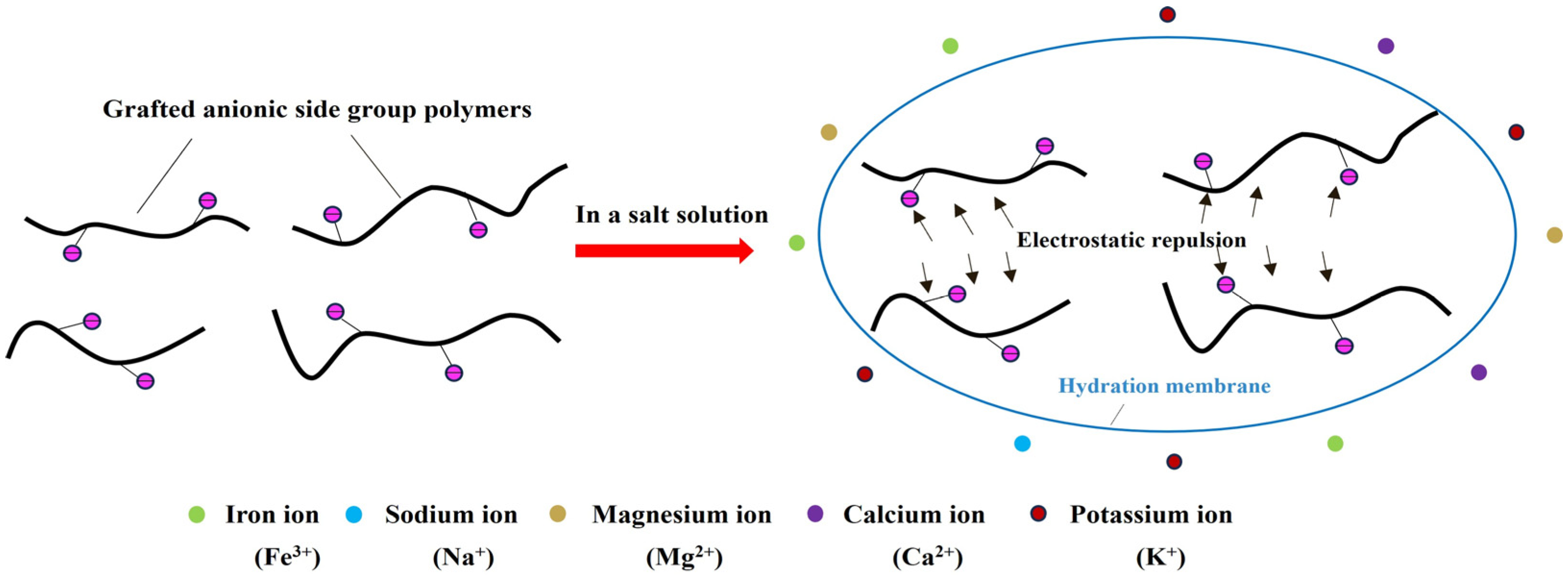
| Anionic side groups | Carboxylate (–COO− and AA); sulfonate (–SO3−, AMPS, and SVS) | Electrostatic repulsion between negatively charged chains suppresses chain coiling; hydrated shells shield charges from cation neutralization. | Mature and well-understood strategy; effective at moderate–high salinity | Excess anionic content increases steric hindrance; reduced polymerization degree and molecular weight | [90,91] |
| Cationic side groups | Quaternary ammonium (DMC, DAC); amino groups (DMAEMA) | Positive charges neutralize negatively charged particles; polymer bridging forms stable flocs and suppresses excessive chain contraction. | Good salt tolerance in complex brines; Enhances flowback-water reuse | Strong interactions with suspended solids and minerals; increased system complexity | [92,93] |
| Amphoteric side groups | Sulfonate + quaternary ammonium (e.g., PASD) | Intramolecular/intermolecular electrostatic attraction forms dynamic cross-linking structures, counteracting external ionic shielding. | Superior salt tolerance; best adaptability to complex brines | Complex synthesis and charge-ratio control; high production cost | [94,95] |
Disclaimer/Publisher’s Note: The statements, opinions and data contained in all publications are solely those of the individual author(s) and contributor(s) and not of MDPI and/or the editor(s). MDPI and/or the editor(s) disclaim responsibility for any injury to people or property resulting from any ideas, methods, instructions or products referred to in the content. |
© 2026 by the authors. Licensee MDPI, Basel, Switzerland. This article is an open access article distributed under the terms and conditions of the Creative Commons Attribution (CC BY) license.
Share and Cite
Cai, W.; Yu, W.; Ding, F.; Liu, K.; Xin, W.; Zhao, Z.; Xiong, C. Polyacrylamide-Based Polymers for Slickwater Fracturing Fluids: A Review of Molecular Design, Drag Reduction Mechanisms, and Gelation Methods. Gels 2026, 12, 101. https://doi.org/10.3390/gels12020101
Cai W, Yu W, Ding F, Liu K, Xin W, Zhao Z, Xiong C. Polyacrylamide-Based Polymers for Slickwater Fracturing Fluids: A Review of Molecular Design, Drag Reduction Mechanisms, and Gelation Methods. Gels. 2026; 12(2):101. https://doi.org/10.3390/gels12020101
Chicago/Turabian StyleCai, Wenbin, Weichu Yu, Fei Ding, Kang Liu, Wen Xin, Zhiyong Zhao, and Chao Xiong. 2026. "Polyacrylamide-Based Polymers for Slickwater Fracturing Fluids: A Review of Molecular Design, Drag Reduction Mechanisms, and Gelation Methods" Gels 12, no. 2: 101. https://doi.org/10.3390/gels12020101
APA StyleCai, W., Yu, W., Ding, F., Liu, K., Xin, W., Zhao, Z., & Xiong, C. (2026). Polyacrylamide-Based Polymers for Slickwater Fracturing Fluids: A Review of Molecular Design, Drag Reduction Mechanisms, and Gelation Methods. Gels, 12(2), 101. https://doi.org/10.3390/gels12020101