Review

Hydrogel-Based Therapies for Ischemic and Hemorrhagic Stroke: A Comprehensive Review

by
Alexandra-Daniela Rotaru-Zăvăleanu
1,2,
Venera Cristina Dinescu
3,*,
Madalina Aldea
4,* and
Andrei Gresita
2,5
1
Department of Epidemiology, University of Medicine and Pharmacy of Craiova, 2-4 Petru Rares Str., 200349 Craiova, Romania
2
Experimental Research Centre for Normal and Pathological Aging, University of Medicine and Pharmacy of Craiova, 200349 Craiova, Romania
3
Department of Health Promotion and Occupational Medicine, University of Medicine and Pharmacy of Craiova, 2–4 Petru Rares Str., 200349 Craiova, Romania
4
Psychiatry Department, University of Medicine and Pharmacy of Craiova, 200349 Craiova, Romania
5
Department of Biomedical Sciences, New York Institute of Technology, College of Osteopathic Medicine, Old Westbury, NY 115680, USA
*
Authors to whom correspondence should be addressed.
Gels 2024, 10(7), 476; https://doi.org/10.3390/gels10070476
Submission received: 7 June 2024 / Revised: 12 July 2024 / Accepted: 16 July 2024 / Published: 18 July 2024
(This article belongs to the Special Issue Recent Advances in Hydrogels for Biomedical Application)

Abstract

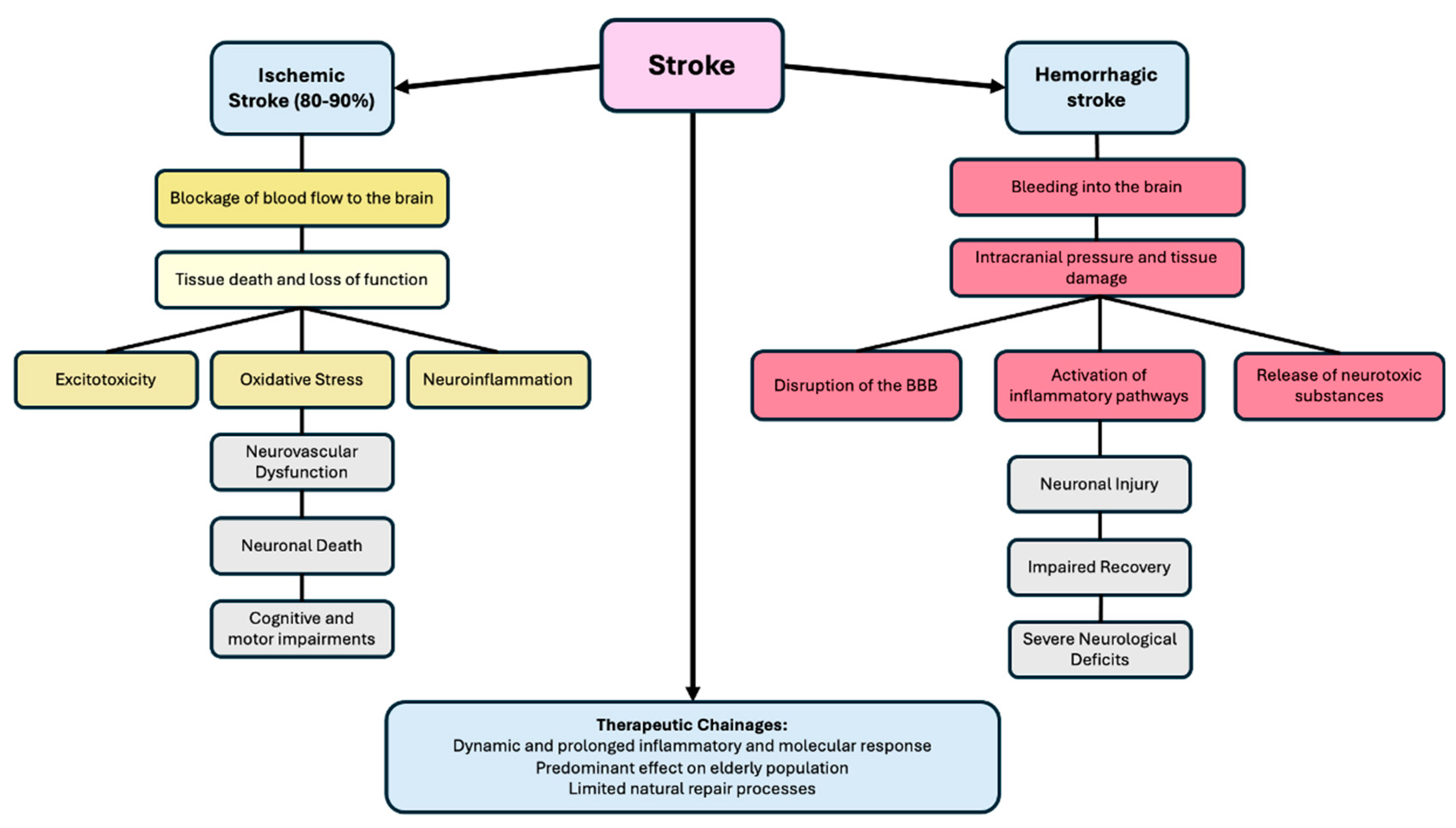
Stroke remains the second leading cause of death and a major cause of disability worldwide, significantly impacting individuals, families, and healthcare systems. This neurological emergency can be triggered by ischemic events, including small vessel arteriolosclerosis, cardioembolism, and large artery atherothromboembolism, as well as hemorrhagic incidents resulting from macrovascular lesions, venous sinus thrombosis, or vascular malformations, leading to significant neuronal damage. The resultant motor impairment, cognitive dysfunction, and emotional disturbances underscore the urgent need for effective therapeutic interventions. Recent advancements in biomaterials, particularly hydrogels, offer promising new avenues for stroke management. Hydrogels, composed of three-dimensional networks of hydrophilic polymers, are notable for their ability to absorb and retain substantial amounts of water. Commonly used polymers in hydrogel formulations include natural polymers like alginate, chitosan, and collagen, as well as synthetic polymers such as polyethylene glycol (PEG), polyvinyl alcohol (PVA), and polyacrylamide. Their customizable characteristics—such as their porosity, swelling behavior, mechanical strength, and degradation rates—make hydrogels ideal for biomedical applications, including drug delivery, cell delivery, tissue engineering, and the controlled release of therapeutic agents. This review comprehensively explores hydrogel-based approaches to both ischemic and hemorrhagic stroke therapy, elucidating the mechanisms by which hydrogels provide neuroprotection. It covers their application in drug delivery systems, their role in reducing inflammation and secondary injury, and their potential to support neurogenesis and angiogenesis. It also discusses current advancements in hydrogel technology and the significant challenges in translating these innovations from research into clinical practice. Additionally, it emphasizes the limited number of clinical trials utilizing hydrogel therapies for stroke and addresses the associated limitations and constraints, underscoring the need for further research in this field.
Keywords: stroke; hydrogels; biomaterials; neuroprotection; drug delivery; tissue engineering stroke; hydrogels; biomaterials; neuroprotection; drug delivery; tissue engineering