
Article

Expanding the Toolbox for Functional Genomics in Fonsecaea pedrosoi: The Use of Split-Marker and Biolistic Transformation for Inactivation of Tryptophan Synthase (trpB) Gene

by
Luísa Dan Favilla
1,2,
Tatiana Sobianski Herman
1,3,
Camila da Silva Goersch
1,4,
Rosangela Vieira de Andrade
5,
Maria Sueli Soares Felipe
5,
Anamélia Lorenzetti Bocca
1,2,3 and
Larissa Fernandes
1,4,6,*
1
Laboratory of Applied Immunology, Institute of Biology, Campus Darcy Ribeiro, University of Brasília, Asa Norte, Federal District, Brasilia 70910-900, Brazil
2
Graduate Program in Molecular Biology, Institute of Biology, Campus Darcy Ribeiro, University of Brasília, Asa Norte, Federal District, Brasilia 70910-900, Brazil
3
Graduate Program in Molecular Patology, Faculty of Medicine, Campus Darcy Ribeiro, University of Brasília, Asa Norte, Federal District, Brasilia 70910-900, Brazil
4
Graduate Program in Microbial Biology, Institute of Biology, Campus Darcy Ribeiro, University of Brasília, Asa Norte, Federal District, Brasilia 70910-900, Brazil
5
Graduate Program of Genomic Sciences and Biotechnology, Catholic University of Brasilia, Campus Asa Norte, Asa Norte, Federal District, Taguatinga 70790-160, Brazil
6
Centro Metropolitano, Faculty of Ceilândia, Campus UnB Ceilândia, University of Brasília, Ceilândia Sul, Federal District, Brasilia 72220-275, Brazil
*
Author to whom correspondence should be addressed.
J. Fungi 2023, 9(2), 224; https://doi.org/10.3390/jof9020224
Submission received: 3 January 2023 / Revised: 27 January 2023 / Accepted: 31 January 2023 / Published: 8 February 2023
(This article belongs to the Special Issue Young Investigators of Human Pathogenic Fungi)

Abstract

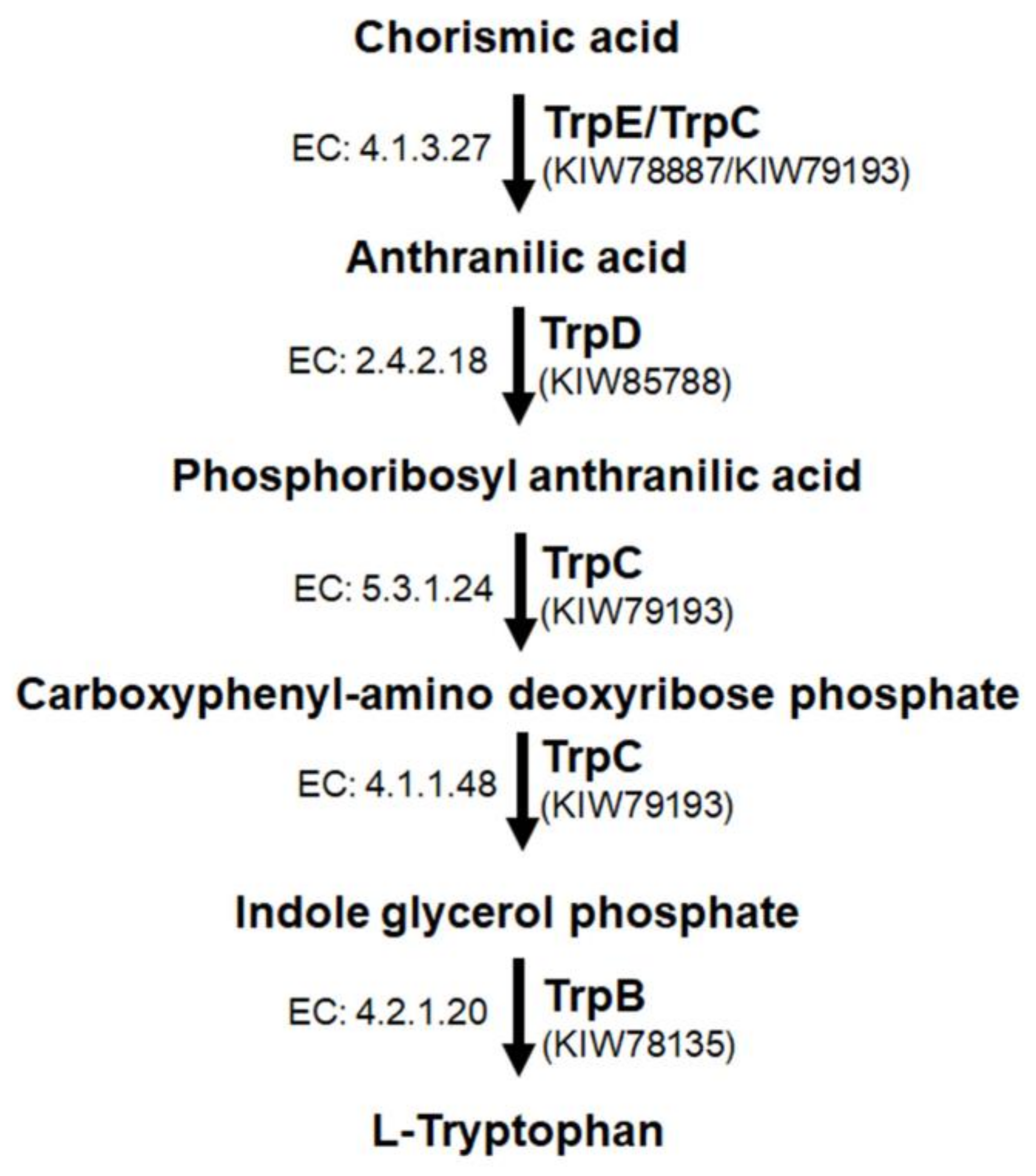
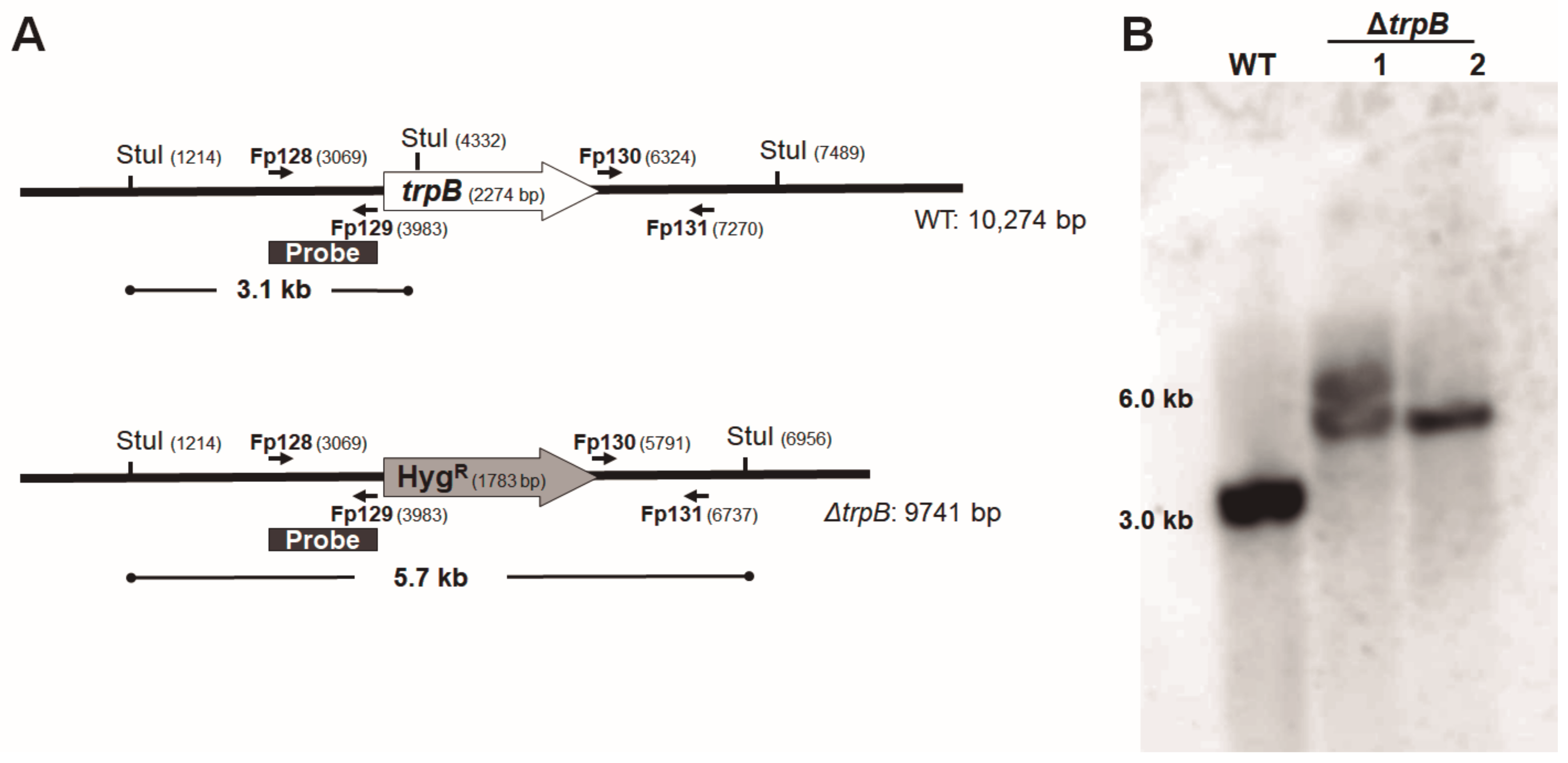
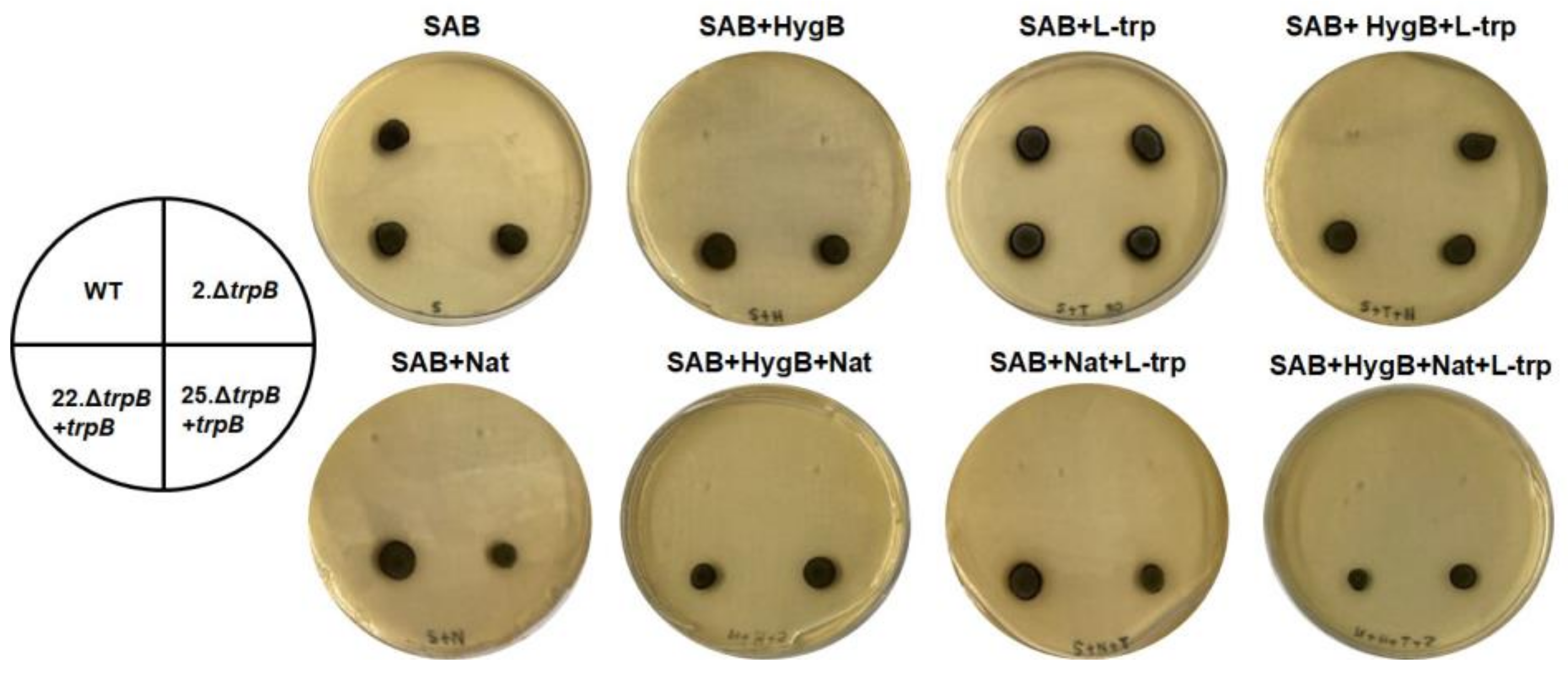
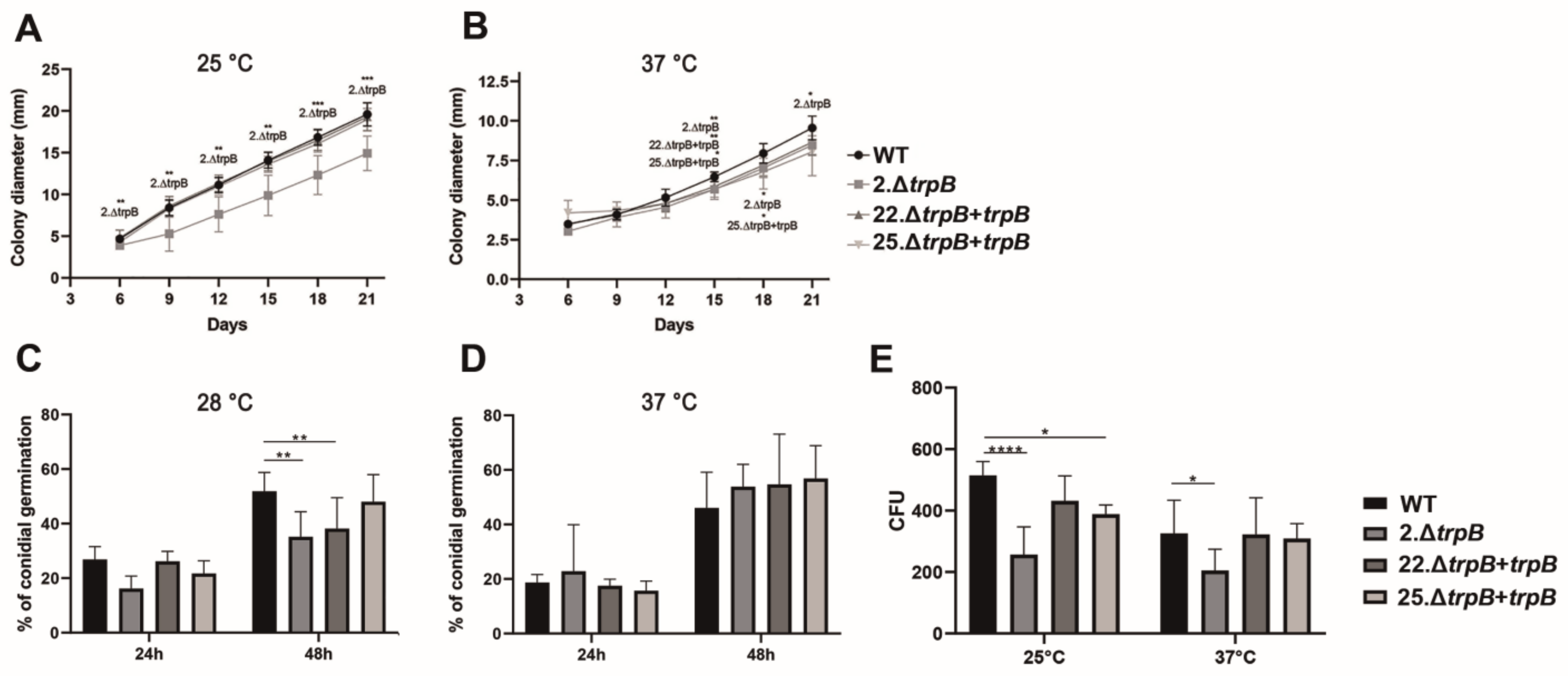
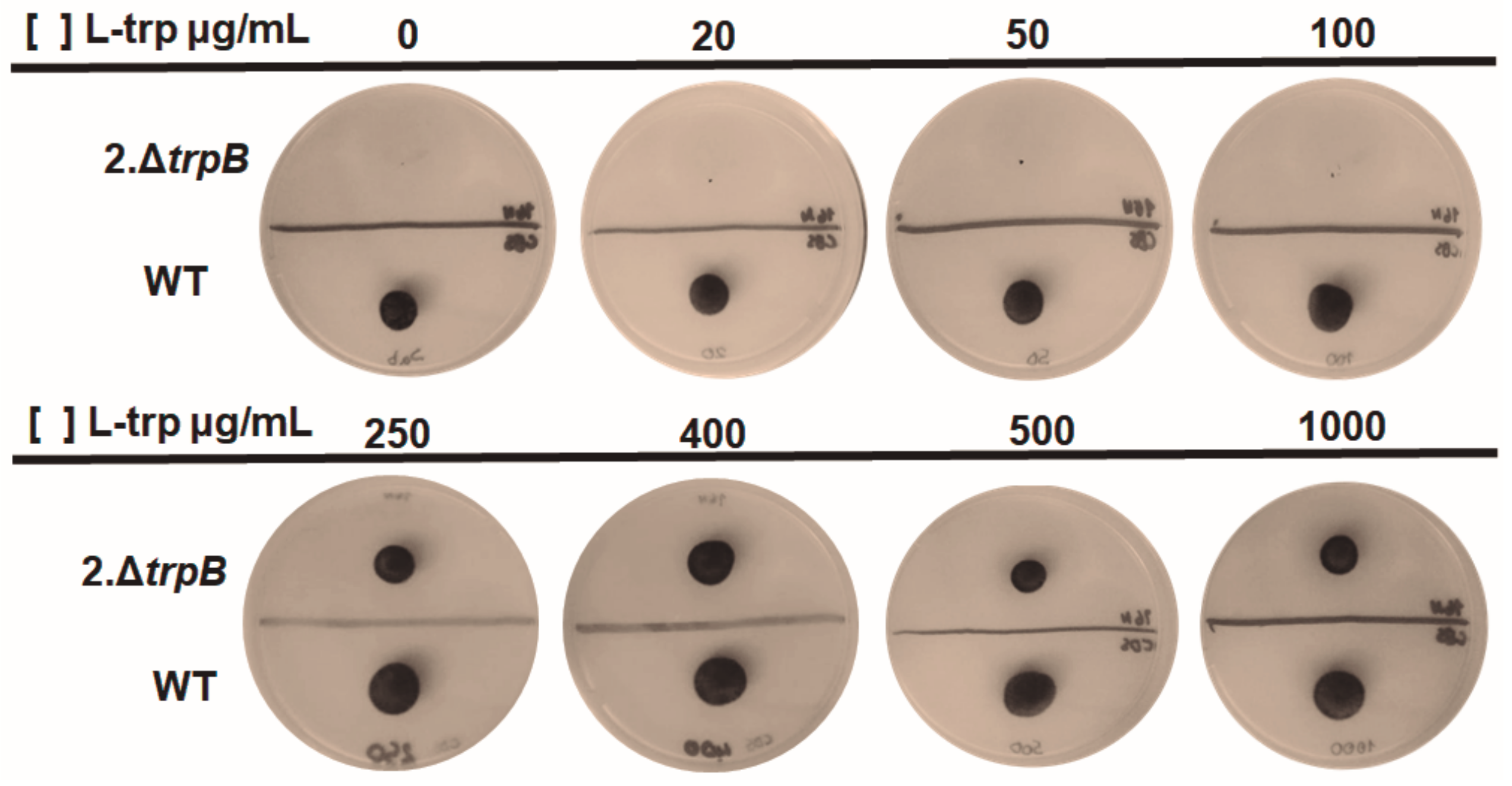
Chromoblastomycosis (CBM) is a disease caused by several dematiaceous fungi from different genera, and Fonsecaea is the most common which has been clinically isolated. Genetic transformation methods have recently been described; however, molecular tools for the functional study of genes have been scarcely reported for those fungi. In this work, we demonstrated that gene deletion and generation of the null mutant by homologous recombination are achievable for Fonsecaea pedrosoi by the use of two approaches: use of double-joint PCR for cassette construction, followed by delivery of the split-marker by biolistic transformation. Through in silico analyses, we identified that F. pedrosoi presents the complete enzymatic apparatus required for tryptophan (trp) biosynthesis. The gene encoding a tryptophan synthase trpB —which converts chorismate to trp—was disrupted. The ΔtrpB auxotrophic mutant can grow with external trp supply, but germination, viability of conidia, and radial growth are defective compared to the wild-type and reconstituted strains. The use of 5-FAA for selection of trp- phenotypes and for counter-selection of strains carrying the trp gene was also demonstrated. The molecular tools for the functional study of genes, allied to the genetic information from genomic databases, significantly boost our understanding of the biology and pathogenicity of CBM causative agents.
Keywords: gene replacement by homologous recombination; double-joint PCR; biolistic transformation; knockout mutant; trpB; tryptophan biosynthesis; Fonsecaea; chromoblastomycosis gene replacement by homologous recombination; double-joint PCR; biolistic transformation; knockout mutant; trpB; tryptophan biosynthesis; Fonsecaea; chromoblastomycosis