
Article

High Frequency of Enterocytozoon bieneusi Genotype WL12 Occurrence among Immunocompromised Patients with Intestinal Microsporidiosis


1
Laboratoire de Parasitologie et Mycologie, UR17SP03, La Rabta Hospital, Tunis 1007, Tunisia
2
Institut Pasteur de Tunis, University of Tunis El Manar, Laboratoire de Microbiologie Moléculaire, Vaccinologie et Développement Biotechnologique, Tunis 1002, Tunisia
3
Institut Pasteur, INRA, Département Mycologie, Unité Biologie et Pathogénicité Fongiques, 75015 Paris, France
*
Authors to whom correspondence should be addressed.
These authors contributed equally to this work.
J. Fungi 2021, 7(3), 161; https://doi.org/10.3390/jof7030161
Submission received: 26 December 2020 / Revised: 8 February 2021 / Accepted: 11 February 2021 / Published: 24 February 2021
(This article belongs to the Special Issue Fungal Pathogens and Human Health)

Abstract

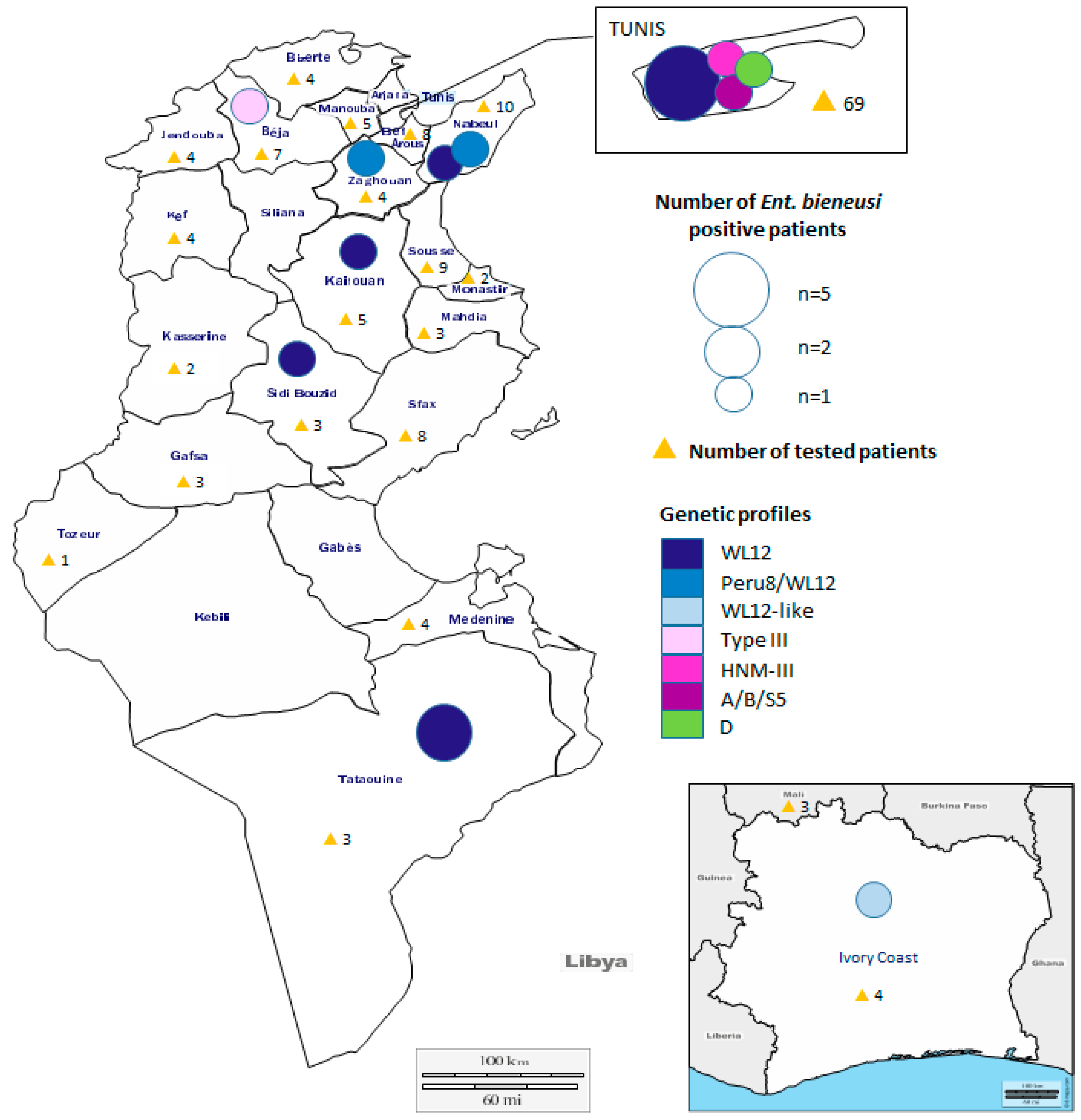
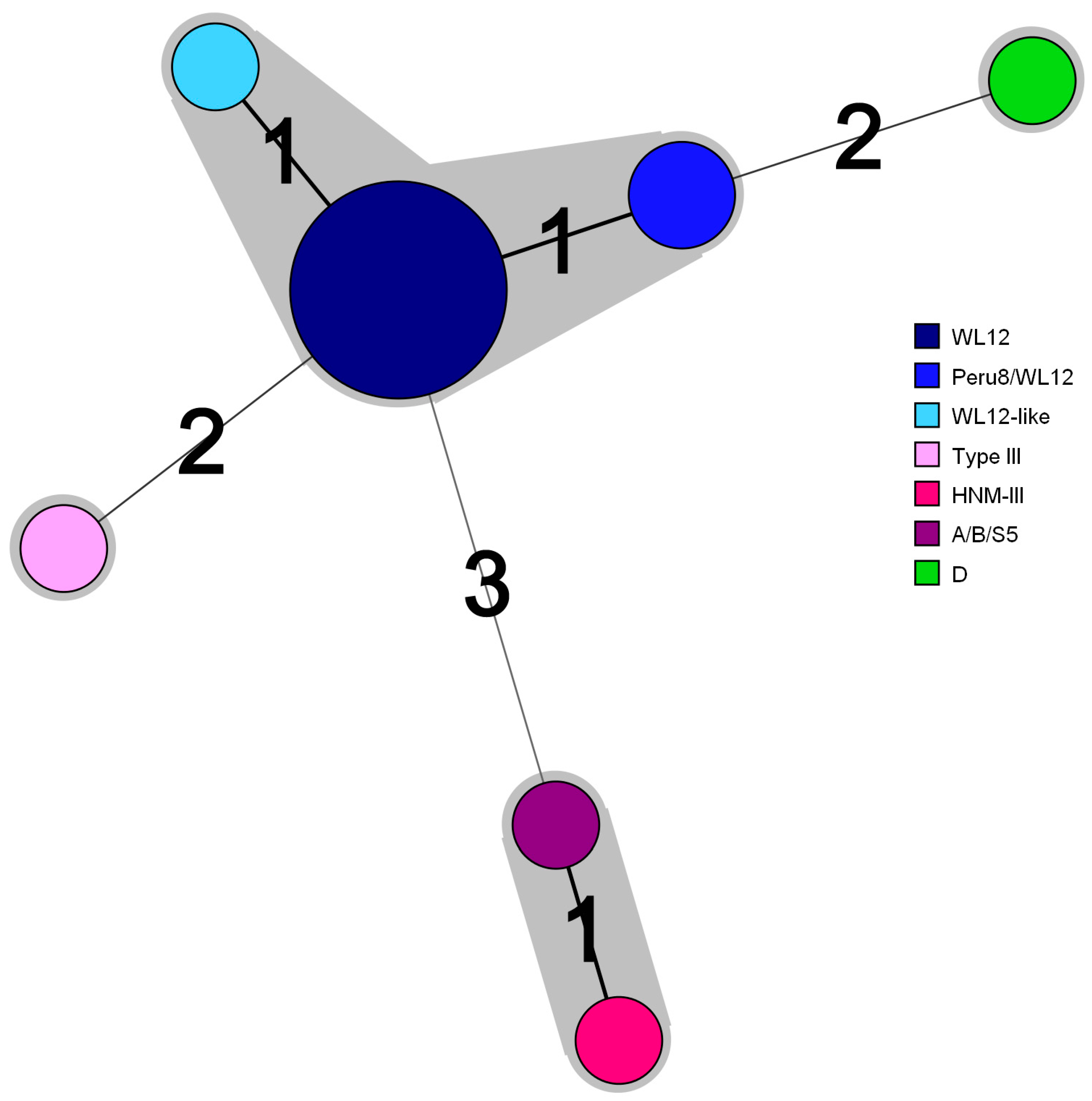
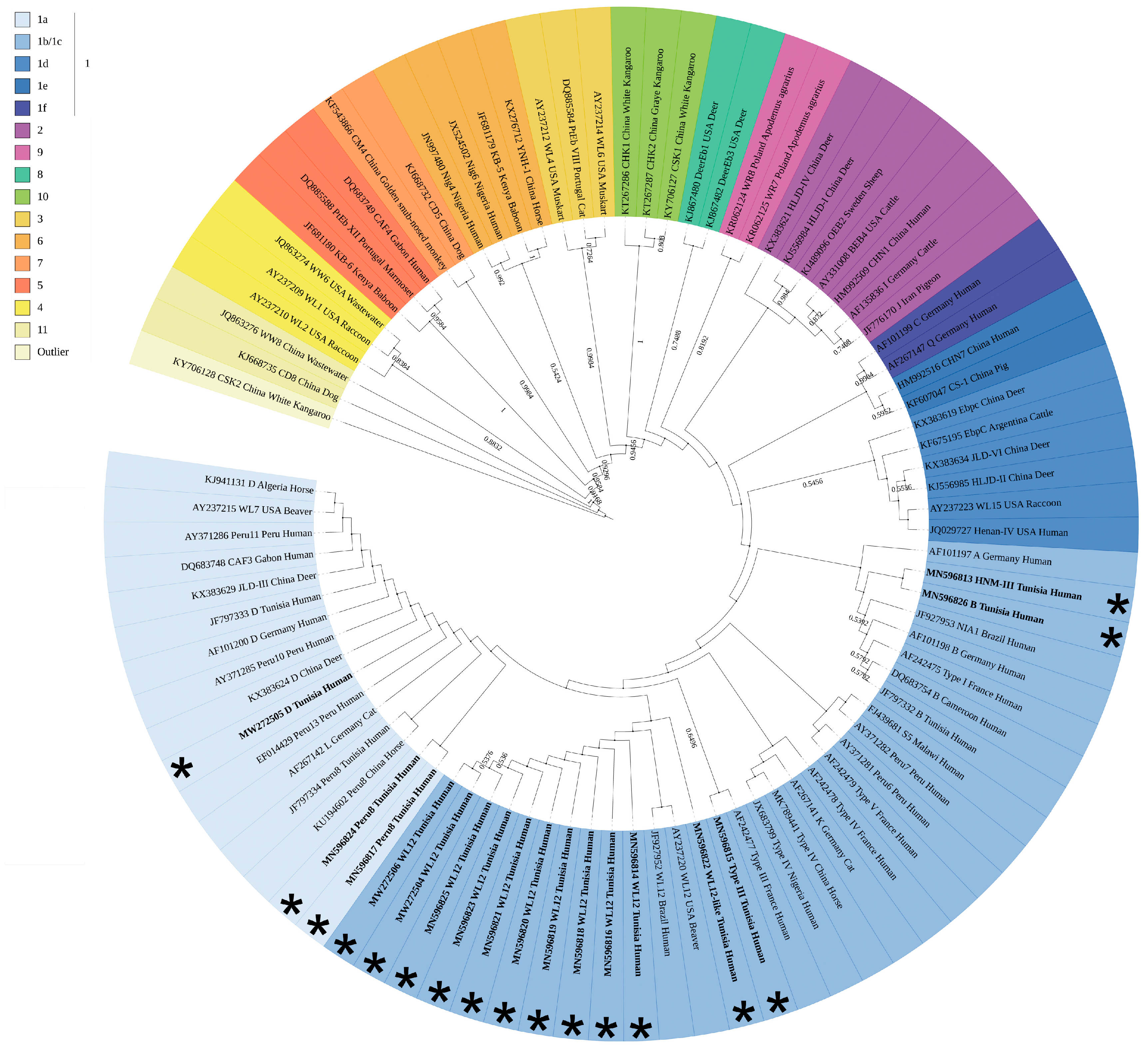
Microsporidiosis is an emerging opportunistic infection causing severe digestive disorders in immunocompromised patients. The aim of this study was to investigate the prevalence of intestinal microsporidia carriage among immunocompromised patients hospitalized at a major hospital complex in the Tunis capital area, Tunisia (North Africa), and perform molecular epidemiology and population structure analyses of Enterocytozoon bieneusi, which is an emerging fungal pathogen. We screened 250 stool samples for the presence of intestinal microsporidia from 171 patients, including 81 organ transplant recipients, 73 Human Immunodeficiency Virus (HIV)-positive patients, and 17 patients with unspecified immunodeficiency. Using a nested PCR-based diagnostic approach for the detection of E. bieneusi and Encephalitozoon spp., we identified 18 microsporidia-positive patients out of 171 (10.5%), among which 17 were infected with E. bieneusi. Microsporidia-positive cases displayed chronic diarrhea (17 out of 18), which was associated more with HIV rather than with immunosuppression other than HIV (12 out of 73 versus 6 out of 98, respectively, p = 0.02) and correlated with extended hospital stays compared to microsporidia-negative cases (60 versus 19 days on average, respectively; p = 0.001). Strikingly, internal transcribed spacer (ITS)-based genotyping of E. bieneusi strains revealed high-frequency occurrence of ITS sequences that were identical (n = 10) or similar (with one single polymorphic site, n = 3) to rare genotype WL12. Minimum-spanning tree analyses segregated the 17 E. bieneusi infection cases into four distinct genotypic clusters and confirmed the high prevalence of genotype WL12 in our patient population. Phylogenetic analyses allowed the mapping of all 17 E. bieneusi strains to zoonotic group 1 (subgroups 1a and 1b/1c), indicating loose host specificity and raising public health concern. Our study suggests a probable common source of E. bieneusi genotype WL12 transmission and prompts the implementation of a wider epidemiological investigation.
Keywords: Enterocytozoon bieneusi; Encephalitozoon spp; immunocompromised patients; HIV; emerging infectious diseases; genotype WL12; molecular diagnosis Enterocytozoon bieneusi; Encephalitozoon spp; immunocompromised patients; HIV; emerging infectious diseases; genotype WL12; molecular diagnosis