
Article

Four New Species and a New Record of Panaeolus from China, with Notes on the Taxonomy of Panaeolus rhombispermus

Key Laboratory of Edible Fungal Resources and Utilization (North), Ministry of Agriculture and Rural Affairs, Jilin Agricultural University, Changchun 130118, China
*
Author to whom correspondence should be addressed.
J. Fungi 2026, 12(3), 182; https://doi.org/10.3390/jof12030182
Submission received: 3 February 2026 / Revised: 25 February 2026 / Accepted: 2 March 2026 / Published: 3 March 2026
(This article belongs to the Section Fungal Evolution, Biodiversity and Systematics)

Abstract

Panaeolus is a genus of small, dark-sporeda agarics within the family Galeropsidaceae. Based on the majority of specimens collected from China, this study investigated the genus Panaeolus and identified 17 species. These include four new species: Panaeolus bambusicola, Panaeolus latifolius, Panaeolus praecox, and Panaeolus ovinus; and one new record for China: Panaeolus fraxinophilus. The new species and the newly recorded species for China are morphologically described and illustrated. A multi-locus phylogenetic analysis (ITS, nrLSU, tef1-α, rpb2) was conducted using maximum likelihood and Bayesian inference. Combined morphological and phylogenetic evidence supports the reduction in the genus Crucispora to a subgenus within Panaeolus, accommodating P. rhombispermus.

1. Introduction

The genus Panaeolus (Fr.) Quél. was originally proposed as a subgenus of Agaricus L. by Fries (1836) [1], and subsequently unequivocally established at the generic level by Quélet (1872) [2]. As saprotrophic fungi, species of Panaeolus are globally distributed across temperate, tropical, and desert regions, typically inhabiting grasslands, herbivore dung, sandy soils, and wood chips. According to the Index Fungorum database (https://www.indexfungorum.org, accessed on 24 February 2026), the genus encompasses 203 names, including 45 infraspecific taxa. Of the approximately 158 remaining names at the species level, several have been reassigned to other genera, such as Psathyrella (Fr.) Quél. and Psilocybe (Fr.) P. Kumm. However, within modern taxonomic frameworks, likely fewer than half are currently accepted as distinct species. Notably, several species within Panaeolus are known to contain psilocybin and other related psychoactive compounds, the ingestion of which can lead to poisoning characterized by hallucinogenic effects [3,4,5].
The taxonomic history of the genus Panaeolus is marked by considerable debate, a consequence of the divergent methodological approaches and observational focuses employed by researchers over time. The concept of Panaeoloideae Singer was first proposed by Singer as a subfamily under Coprinaceae Overeem & Weese, encompassing Panaeolina Maire, Panaeolus (Fr.) Quél., Copelandia Bres., and Anellaria P. Karst., with Panaeolus (Fr.) Quél. as the type genus. This subfamily is distinguished from other subfamilies within the Coprinaceae primarily by a key microscopic character: its spores do not exhibit discolouration when treated with concentrated sulfuric acid (H2SO4). In contrast, Oláh (1969) [6] reclassified the genus within Strophariaceae Singer & A.H. Sm., consolidating related species into a single generic name Panaeolus based primarily on chemical and cultural characteristics. Singer (1976) challenged Oláh’s conclusions, critiquing the methodology, biassed character selection overemphasizing chemical traits, and the omission of key morphological features such as spore print color, solubility of spore pigments, and epicutis structure [7].
This historical debate illustrates the limitations of morphology-based classification and has been largely addressed by modern molecular phylogenetics. Molecular phylogenetic analyses have generated convergent insights. Tóth et al. (2013) demonstrated that the type species of Galeropsis Velen. (Galeropsis desertorum Velen. & Dvořák) clusters within the PanaeolusPanaeolina clade [8]. Subsequently, based on examinations of type specimens and molecular phylogenetic analyses, Malysheva et al. (2019) formally combined the type species of Galeropsis, G. desertorum, into Panaeolus [9]. In a review that synthesized these findings, Kalichman et al. (2020) [10] further examined the taxonomic position of Panaeolus and suggested that Galeropsidaceae Singer should be recognized as the correct familial designation for the clade historically treated as tribe Panaeoleae or subfamily Panaeoloideae Singer, positing it as the proper name for the family containing Copelandia Bres., Panaeolina Maire, Panaeolopsis Singer, and Panaeolus (Fr.) Quél., with the proviso that this grouping continues to be supported as distinct from Bolbitiaceae Singer. More recently, this hypothesis was substantiated by He et al. (2026), who revised the taxonomic framework of Galeropsidaceae and, based on phylogenetic evidence, proposed a division of the genus Panaeolus into the following three subgenera: Panaeolus subg. Bresadolomyces, subg. Panaeolina, and subg. Panaeolus [11].
The taxonomic uncertainty extends to morphologically distinctive genera historically associated with Panaeolus. The genus Crucispora E. Horak was established in 1971 with Crucispora naucorioides E. Horak designated as its type species. However, its unique morphological characteristics, particularly the distinctive cruciform spores, precluded a clear familial assignment at the time [12]. Upon re-examining the type material, Singer acknowledged that its phylogenetic affinities remained unresolved but tentatively placed it within the Agaricaceae Chevall, based on a synthesis of morphological traits [7]. The species Panaeolina rhombispermus Hongo, originally described by Hongo (1973) [13], was subsequently transferred to Crucispora as Crucispora rhombisperma (Hongo) E. Horak, becoming the second species in the genus. The taxonomic status of this species remained uncertain for decades. Previous work by Ostuni et al. (2025) re-evaluated C. rhombisperma based on ITS and 28S phylogenetic data [14]. Their analysis revealed its close affinity with P. mexicanus, leading to the proposal of the new combination Panaeolus rhombispermus (Hongo) Birkebak, Voto & Ostuni. However, this conclusion was drawn mainly from molecular phylogenetic data. Therefore, the present study aims to re-evaluate the taxonomic status of P. rhombispermus by integrating novel morphological evidence from scanning electron microscopy (SEM) of spore morphology with multilocus phylogenetic analyses.
Previous records indicate over 30 species of Panaeolus in China [11,15,16,17,18,19,20], though some lack verifiable voucher specimens. Here, we report the findings from a four-year nationwide survey that yielded over 200 specimens. Using a combined morphological and phylogenetic approach, we identified 17 species, including four new species and one new record for China, which are described and illustrated in detail.

2. Materials and Methods

2.1. Sampling and Morphological Analyses

Specimens for this study were collected from different regions in China, including Inner Mongolia Autonomous Region, Xinjiang Uygur Autonomous Region and the provinces of Jilin, Zhejiang, Guangdong, and Yunnan. Habitat photographs were captured in the field (Figure 1), and specimens were deposited at the Fungarium of Jilin Agricultural University (FJAU). We described the colours of all major morphological structures (e.g., fresh basidiocarps, lamellae, and spores) based on the Kornerup and Wanscher (1978) colour system [21]. The tissues of the specimens were treated with 5% KOH [22]. Microscopic observations were carried out with the aid of light microscopes (Carl Zeiss Primo Star, Jena, Germany; Olympus CX33, Tokyo, Japan). The basidiospore measurements do not include the apiculus and are presented as “(a)b–c(d) × e–f × g–h”, where “b–c” represents the minimum of 90% of the measured values and “a” and “d” represent the extreme values. Due to the dorsiventral flattening of Panaeolus basidiospores, their dimensions are view-specific: “e–f” represents the width in frontal view, and “g–h” the thickness in side view. The main body (sterigmata not included) of the basidia, cheilocystidia, pleurocystidia, caulocystidia, pileocystidia and pileipellis were measured (if present). The notation (n/m/p) indicates that measurements were made on “n” randomly selected basidiospores from “m” basidiomes of “p” collections. Q is the ratio of length divided by width, and Qm represents the average quotient (length/width ratio) standard deviation.
For scanning electron microscopy (SEM) analysis, the lamellae of air-dried samples were first mounted on specimen stubs using double-sided conductive adhesive tape. Subsequently, the samples were sputter-coated with gold using an IXRF MSP-2S ion sputter coater (IXRF Systems, Austin, TX, USA) and then observed under a Zeiss field-emission scanning electron microscope (Carl Zeiss AG, Oberkochen, Germany).

2.2. DNA Extraction, PCR Amplification, and Sequencing

Genomic DNA was extracted from the dried specimens using a NuClean Plant Genomic DNA kit (ComWin Biotech, CW0531M, Taizhou, China) according to the manufacturer’s instructions. The primer pairs ITS1F/ITS4 [23,24], LR0R/LR7 [25], EF1-983F/EF1-2212R [26], and RPB2-6F/RPB2-7.1R [27] were used to amplify the ITS, nrLSU, tef1-α, and rpb2 sequences, respectively. PCR amplifications were performed in 25 µL reactions containing: 2.0 µL template DNA, 12.5 µL 2× Es Taq Master Mix (Dye, ComWin Biotech, CW0690H, Taizhou, China), 1.0 µL of each primer (10 pmol/µL), and 8.5 µL of ddH2O. PCR products were purified and sequenced by Sangon Biotech (Shanghai, China).

2.3. Phylogenetic Analyses

Newly generated sequences were deposited in the NCBI GenBank database, while other sequences were retrieved from NCBI (accession numbers are provided in Table 1). The ITS, nrLSU, tef1-α, and rpb2 sequences were aligned separately using the online MAFFT v7 service with default parameters (https://mafft.cbrc.jp/alignment/server/, accessed on 31 March 2025) and subsequently refined manually in MEGA7 [28]. The resulting individual alignments were then concatenated into a multi-locus dataset using PhyloSuite v2 [29]. The final concatenated dataset (ITS + nrLSU + tef1-α + rpb2) consisted of aligned sequences with lengths of 743 bp (ITS), 1351 bp (nrLSU), 1191 bp (tef1-α), and 731 bp (rpb2), resulting in a total concatenated length of 4016 bp, with missing data coded as “?”. The best-fit partition and substitution models were selected using ModelFinder v2.2.0 [30]. For the maximum likelihood (ML) analysis, the best-fit models selected under the Bayesian Information Criterion (BIC) were TPM2u + F + G4 for the ITS dataset, TIM3 + F + R2 for the nrLSU dataset, SYM + I + G4 for the tef1-α dataset, and TNe + I + G4 for the rpb2 dataset. For the Bayesian inference (BI) analysis, the best-fit models selected under the Akaike Information Criterion (AIC) were GTR + F + I + G4 for the ITS dataset, GTR + F + I + G4 for the nrLSU dataset, SYM + I + G4 for the tef1-α dataset, and SYM + I + G4 for the rpb2 dataset. The ML analysis was performed with IQ-TREE 3 under the selected models, with branch support assessed based on 1000 standard bootstrap replicates [31]. Bayesian inference was conducted with MrBayes v3.2.7a [32] under the partition model. Four independent Markov Chain Monte Carlo (MCMC) chains were run for 10,000,000 generations, sampling trees every 1000 generations. The first 25% of sampled trees were discarded as burn-in after the average standard deviation of split frequencies dropped below 0.01. Resulting consensus trees were visualized in FigTree v1.4.4 and prepared for publication using Adobe Illustrator 2021.
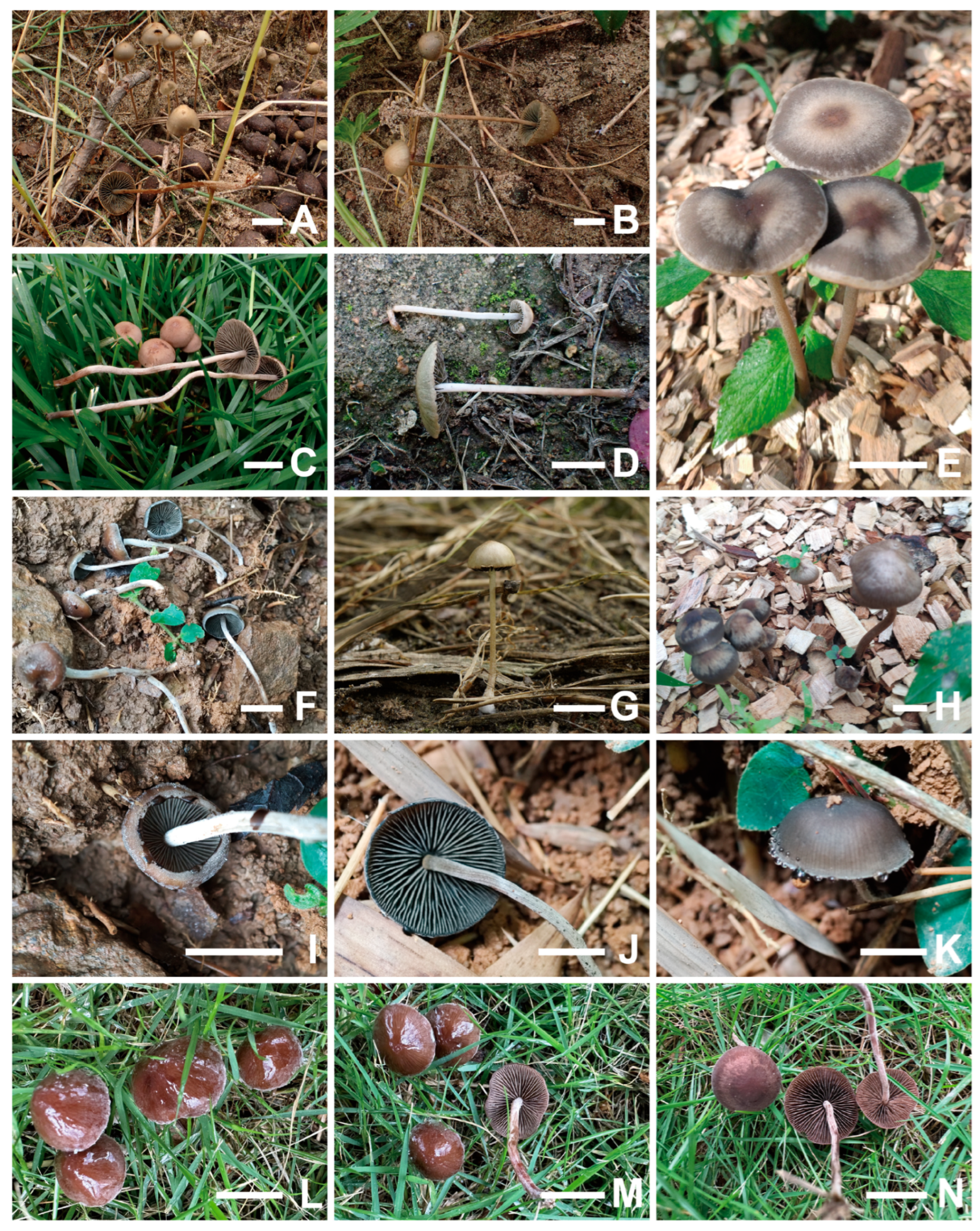
Figure 1. Basidiomata of Panaeolus species. (A,B) Panaeolus ovinus, (C) Panaeolus praecox, (D,G) Panaeolus latifolius, (E,H) Panaeolus fraxinophilus, (F,IK) Panaeolus bambusicola, (LN) Panaeolus rhombispermus. Scale bars = 1 cm.
Jof 12 00182 g001

3. Results

3.1. Molecular Phylogeny

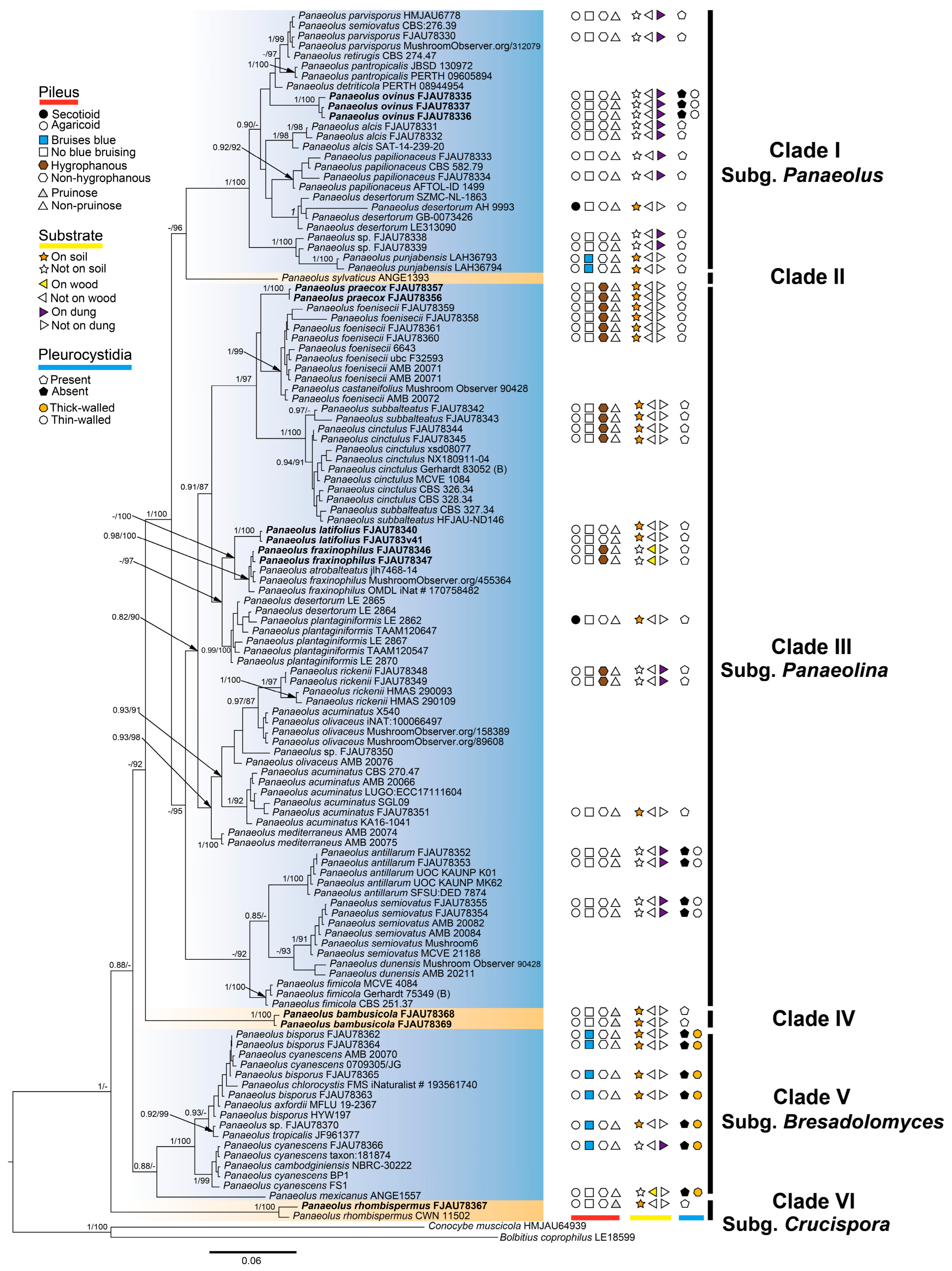
This study generated 95 new sequences (ITS: 40, nrLSU: 21, tef1-α: 18, and rpb2: 16), which were combined with 120 sequences retrieved from GenBank, resulting in a final dataset of 120 taxa. Conocybe muscicola and Bolbitius coprophilus (Bolbitiaceae) were selected as the outgroup. The Bayesian inference (BI) and maximum likelihood (ML) analyses yielded largely congruent tree topologies. Only the BI tree is presented (Figure 2), with nodal support indicated as Bayesian posterior probabilities (PPs) and ML bootstrap values (MLbs); nodes with PP ≥ 0.80 and MLbs ≥ 80% are shown.
The phylogenetic reconstruction did not support the traditional generic boundaries among Panaeolina, Copelandia, Anellaria, and Panaeolus sensu stricto, further supporting their consolidation into a single, unified genus. Within Panaeolus, six major clades (I–VI) were identified, each highlighted with a distinct background colour in Figure 2.
Panaeolus ovinus (vouchers: FJAU78335–37) was placed within Clade I (subg. Panaeolus) and is distinguished by the presence of pleurocystidia, a trait not observed in other members of this subgenus. Within Clade III (subg. Panaeolina), the following three taxa were of particular interest: (1) P. praecox (vouchers FJAU78356–57) was a sister to P. foenisecii. These species are morphologically distinguished by spore ornamentation (P. foenisecii: verrucose; P. praecox: smooth) but share an exclusive occurrence on grassy lawns and hygrophanous pilei. (2) P. latifolius (vouchers FJAU78340–41) and (3) the newly recorded P. fraxinophilus (vouchers FJAU78346–47) formed a sister-group relationship. While sharing smooth-walled basidiospores, they differ in substrate preference and pileus characteristics: P. latifolius occurs on sandy soil and lacks hygrophany, whereas P. fraxinophilus grows on wood chips and exhibits a distinctly hygrophanous pileus. P. bambusicola (vouchers FJAU78368–69) formed a distinct lineage, which is here designated as Clade IV. This species is unique among known Panaeolus taxa in its exclusive bamboo forest habitat and is further characterized by a persistently pruinose pileus, abundant pileocystidia, and relatively small basidiospores.
Notably, P. rhombispermus (vouchers: FJAU78367, CWN11502) formed an independent lineage identified as Clade VI (subg. Crucispora). This phylogenetic placement is corroborated by its distinctive cruciform basidiospores. Consequently, we treat this lineage as a distinct subgenus within the genus Panaeolus.

3.2. Taxonomy

Panaeolus ovinus T. Bau & H. Cheng, sp. nov.
Mycobank No.: MB861990
Etymology. “ovinus” (Latin, pertaining to sheep) refers to its growth on sheep dung.
Holotypus. CHINA. Jilin Province, Baicheng City, Tongyu County, Xianghai National Nature Reserve, 25 August 2023, 122°20′23″ E, 45°02′39″ N, alt. 137 m, Liyang Zhu, Z2382506 (FJAU78336).
Diagnosis: Panaeolus ovinus is distinguished from other coprophilous Panaeolus species by its relatively small, non-bruising blue basidiomata. It is macroscopically similar to P. alcis M.M. Moser but differs in having pleurocystidia.
Pileus 0.5–1.5 cm in diameter, campanulate, paraboloid, or hemispherical, margin weakly hygrophanous, centre blond (4C4), transitioning to greyish yellow (4B4) or pale yellow (4A4) toward the margin, drying brownish grey (5C2). Context thin, yellowish white (4A2) to grey (4B1), without a distinctive odour. Lamellae adnate to adnexed, moderately close, unequal, irregularly mottled with dark grey (1F1) or yellowish brown (5F8) to pale grey (1B1), edge even and remaining paler greyish. Stipe 4.0–6.5 cm long, 1.0–2.0 mm thick, cylindrical, slightly enlarged at the base, pale ochraceous grey, brownish toward the base, entirely pruinose, with the pruina more densely distributed on the middle and lower parts, and slightly longitudinally striated.
Figure 2. Phylogeny of Panaeolus inferred from Bayesian and maximum-likelihood analyses of a multi-locus dataset (ITS, nrLSU, tef1-α, and rpb2). Nodal support values are shown. Key morphological features (pileus, pleurocystidia) and substrate preferences are summarized in the right panel.
Jof 12 00182 g002
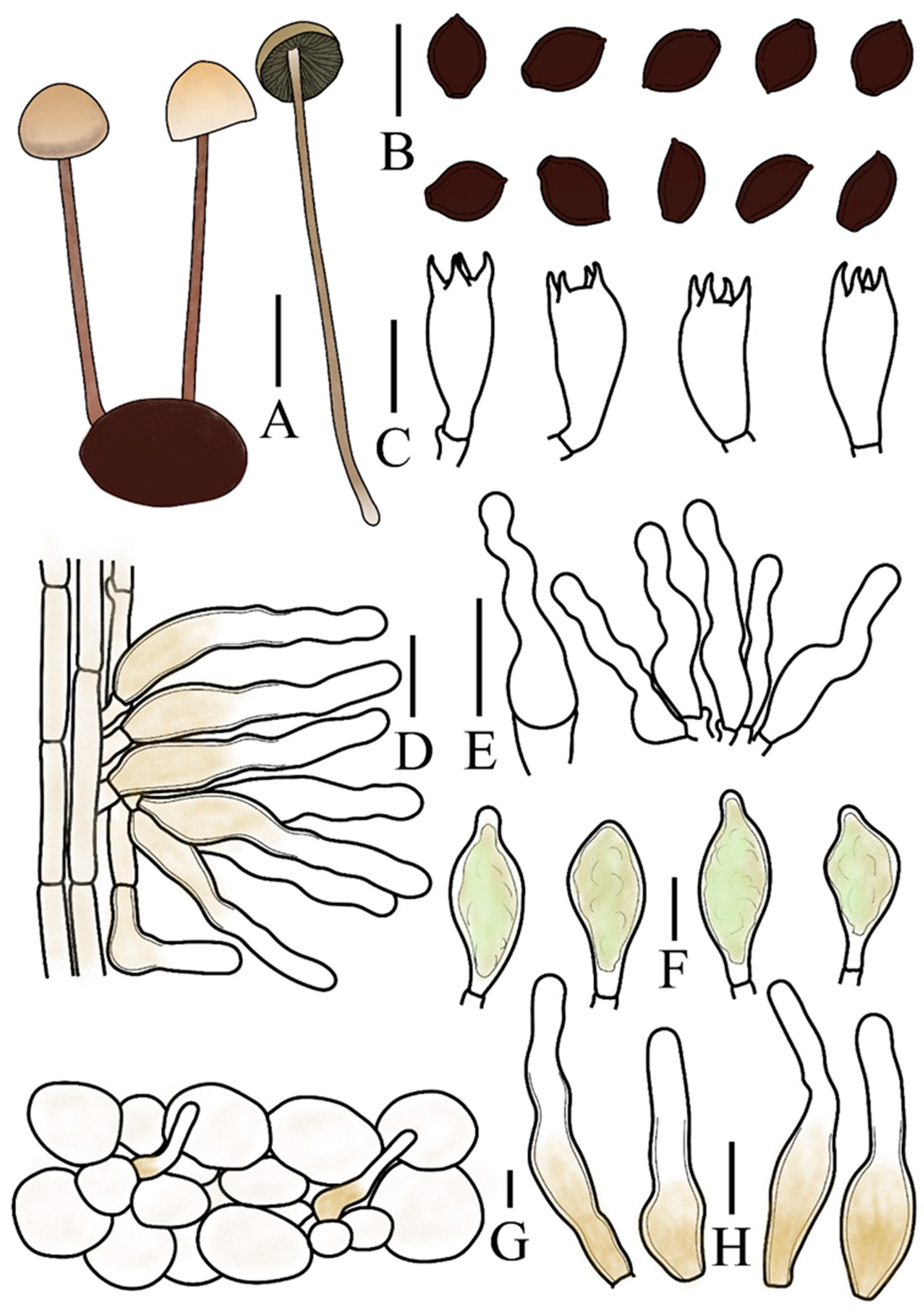
Figure 3. Panaeolus ovinus (FJAU78336) (A) basidiomata, (B) basidiospores, (C) basidia, (D) caulocystidia, (E) cheilocystidia, (F) pleurocystidia, (G) pileipellis element (H) pileocystidia. (A) Scale bar = 1 cm; (BH) scale bars = 10 μm.
Jof 12 00182 g003
Spores (60/3/3) (7.8–)8.4–10.5(–11.5) × 6.1–8.2 × 5.0–6.5 µm, Q = 1.28–1.55, Qm = 1.39(0.07) in frontal view, limoniform to broadly limoniform, wall thick, smooth, Q = 1.55–1.82, Qm = 1.70(0.07) in side view, asymmetrical, pyriform, with a distinct germ pore, central, or slightly eccentric, spores appear dark brown (7F6) to black in a 5% KOH solution. Basidia (13–)16–23 × (7–)8–10 µm, nearly elliptical, clavate, 4-sterigmate, sterigmata 2–4 µm long. Cheilocystidia (15–)16–22(–25) × 3.5–5.5 µm, versiform, predominantly lageniform to narrowly utriform but with a ventricose base and an elongated, flexuose neck. Pleurocystidia (20–)23–27(–29) × (10–)11–12(–13) µm, thin-walled, functioning as chrysocystidia in KOH and containing yellow pigments, pedunculate or pedicellate, mostly with an obtuse apex. Caulocystidia (29–)32–40(–47) × (4.5–)5–7(–8.5) µm, versiform, predominantly narrowly cylindrical or less frequently geniculate, with both forms typically broadening toward the base, pale yellow (4A3) with slightly thickened walls on the medial and lower parts. Pileipellis hymeniform, composed predominantly of subglobose or globose elements, (15–)20–29(–40) × (14–)18–28(–36) µm, with yellow pigments at the base. Pileocystidia morphologically similar to caulocystidia, 32–46 × 8.5–10.5 µm. Clamp connections present.
Habitat. Gregarious to scattered on sheep dung in early autumn.
Known distribution. Currently, only known in Jilin Province, China.
Additional specimens measured. CHINA. Jilin Province, Baicheng City, Tongyu County, Xianghai National Nature Reserve, 25 August 2023, Hanbing Song, S2382511 (FJAU78337), Shien Wang, E2308343 (FJAU78335).
Notes. Although a considerable number of species in Panaeolus grow on dung, current records indicate that only P. ovinus is specifically associated with sheep dung. A morphologically similar species, P. alcis [41], can be distinguished from P. ovinus by its elongate-ellipsoid spores and the absence of pleurocystidia. The fruiting bodies of P. papilionaceus (Bull.) Quél. are generally markedly larger than those of P. ovinus and typically bear distinctive white, pyramidal veil remnants at the pileus margin. Under nutrient-deficient conditions, however, developmental constraints and the abrasion of these remnants by rain or wind may cause P. papilionaceus to closely resemble P. ovinus. Adding to this morphological convergence, both species share lemon-shaped spores in frontal view. The absence of pleurocystidia in P. papilionaceus, nevertheless, provides a stable and definitive diagnostic character for differentiation.
Panaeolus praecox T. Bau & H. Cheng, sp. nov.
Mycobank No.: MB861989
Etymology. “praecox” (Latin, early-maturing or precocious) refers to its characteristic of fruiting earlier in the season compared to other Panaeolus species found in grassy habitats.
Holotypus. CHINA. Jilin Province, Changchun City, Jilin Agricultural University campus, 9 July 2023, 125°24′14″ E, 43°48′35″ N, alt. 352 m, Hong Cheng, C2370902 (FJAU78357).
Diagnosis: Panaeolus praecox is distinguished by its earlier fruiting phenology compared to other grassy Panaeolus species, a hygrophanous pileus, and smooth-walled, ellipsoid to elongate-ellipsoid basidiospores in frontal view.
Pileus 1.5–2.5 cm in diameter, conical, broadly conical, or obtusely conical, margin hygrophanous, centre reddish brown (8D8), greyish red (8C5) to dull red (8C4), drying dull red (8B3) to reddish grey (8B2). Context thin, reddish white (8A2) to grey (8B1), without a distinctive odour. Lamellae adnate to adnexed, moderately close, unequal, irregularly mottled with dark grey (1F1) or brownish grey (8E2) to pale grey (1B1), edge smooth and remaining paler greyish. Stipe 7.0–9.0 cm long, 2.0–3.0 mm thick, cylindrical, erect to flexuous, slightly enlarged at the base, white (7A1) or pinkish (7A2), densely pruinose and slightly longitudinally striated, developing brownish discolorations where bruised or handled.
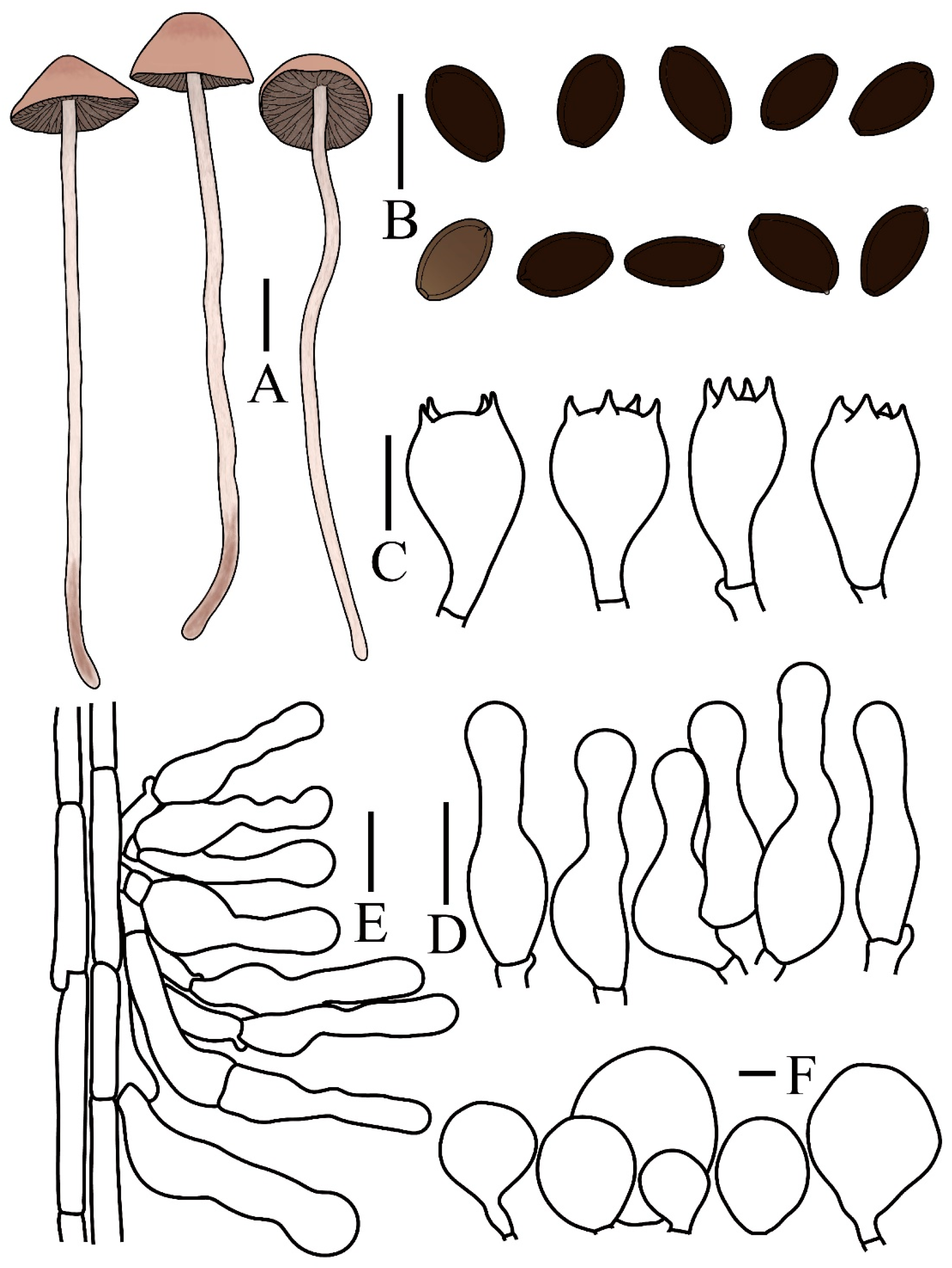
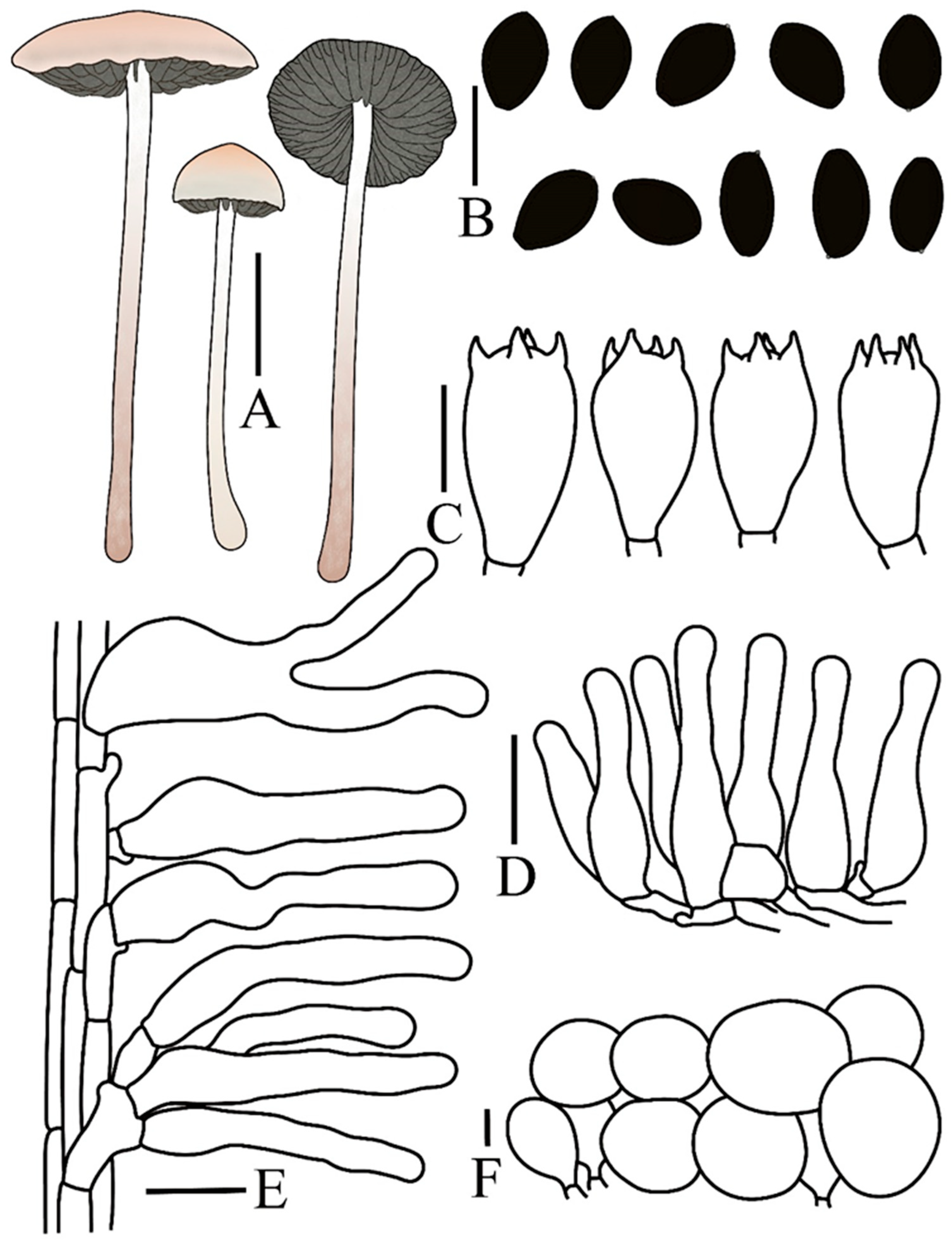
Spores (60/3/3) (9.5–)10.2–11.8(–14.0) × 6.2–7.5 × 5.3–6.5 µm, Q = 1.48–1.85, Qm = 1.63(0.09) in frontal view, ellipsoid to elongate-ellipsoid, wall thick, smooth, Q = 1.63–1.94, Qm = 1.80(0.09) in side view, elongate-ellipsoid, with a distinct germ pore, central, or slightly eccentric, spores appear dark brown (7F6) to black or brown (7E5) in a 5% KOH solution. Basidia (18–)19–22 × (10.5–)11–12.5 µm, clavate to broadly clavate, 4-sterigmate, sterigmata 2–4 µm long. Cheilocystidia (18–)19–24(–27) × 5.5–7.5 µm, versiform, predominantly narrowly utriform, often with a flexuous neck. Pleurocystidia absent. Caulocystidia (19–)23–33(–35) ×5.5–8.5(–9.2) µm, versiform, predominantly narrowly utriform with a flexuous neck to narrowly cylindrical. Pileipellis hymeniform, composed predominantly of subglobose or globose elements, (14–)28–33(–48) × (14–)26–32(–40) µm. Pileocystidia were not observed. Clamp connections present.
Habitat. Gregarious to scattered on lawns during spring or early summer.
Known distribution. Currently, this species has been recorded only in Jilin and Hunan Provinces, China.
Additional specimens measured. CHINA. Hunan Province, Changsha City, 16 April 2024, Changzhuo Liu, C2441601 (FJAU78356).
Figure 4. Panaeolus praecox (FJAU78357) (A) basidiomata, (B) basidiospores, (C) basidia, (D) cheilocystidia, (E) caulocystidia and (F) pileipellis element. (A) Scale bar = 1 cm; (BF) scale bars = 10 μm.
Jof 12 00182 g004
Notes. Panaeolus foenisecii (Pers.) J. Schröt., P. cinctulus (Bolton) Sacc., and P. oligotrophus Ostuni & Voto are macroscopically similar to P. praecox and share comparable grassy habitats, all exhibiting a hygrophanous pileus. Spore morphology provides critical diagnostic characters for their differentiation. Only P. foenisecii possesses verrucose spores, whereas others are smooth. The spores of P. cinctulus are predominantly lemon-shaped, while those of P. praecox and P. oligotrophus are ellipsoid to oval; additionally, the spores of P. praecox are generally more elongated than those of P. oligotrophus. Based on current knowledge, P. praecox also fruits earlier in the growing season than other documented Panaeolus species within China. P. subfoenisecii M.Q. He & R.L. Zhao can be further distinguished by its slightly larger spores compared to P. praecox and the absence of caulocystidia [11].
Panaeolus latifolius T. Bau & H. Cheng, sp. nov.
Mycobank No.: MB861988
Etymology. “latifolius” (Latin, broad-gilled) refers to its conspicuously wide lamellae that remain visible even in a frontal view of the basidioma.
Holotypus. CHINA. Inner Mongolia Autonomous Region, Tongliao City, Xar Moron Park, 19 July 2023, 122°15′28″ E, 43°37′55″ N alt. 260 m, Hong Cheng, C2371907 (FJAU78340).
Diagnosis: Panaeolus latifolius is distinguished by its convex to nearly applanate pileus, which causes the lamellae to appear conspicuously broad and ventricose. When the basidiomata are placed vertically and viewed frontally, the lamellae remain distinctly visible—a characteristic that distinguishes it from most other Panaeolus species. It further differs by its occurrence on sandy soil and non-hygrophanous pileus.
Pileus 0.8–1.8 cm in diameter, initially hemispherical, becoming convex to plano-convex at maturity, non-hygrophanous; centre greyish orange (5B4) to greyish red (7B6), gradually transitioning to orange white (5A2) or reddish grey (7B2) toward the margin. Context thin, reddish white (7A2) to grey (7B1), without distinctive odour. Lamellae adnate to adnexed, moderately close, unequal, distinctly ventricose, irregularly mottled with dark grey (1F1) to pale grey (1B1), edge even and remaining paler greyish. Stipe 2.0–4.5 cm long, 1.0–2.0 mm thick, cylindrical, erect, slightly enlarged at the base, white (7A1), pruinose and slightly longitudinally striated, or brownish toward the base.
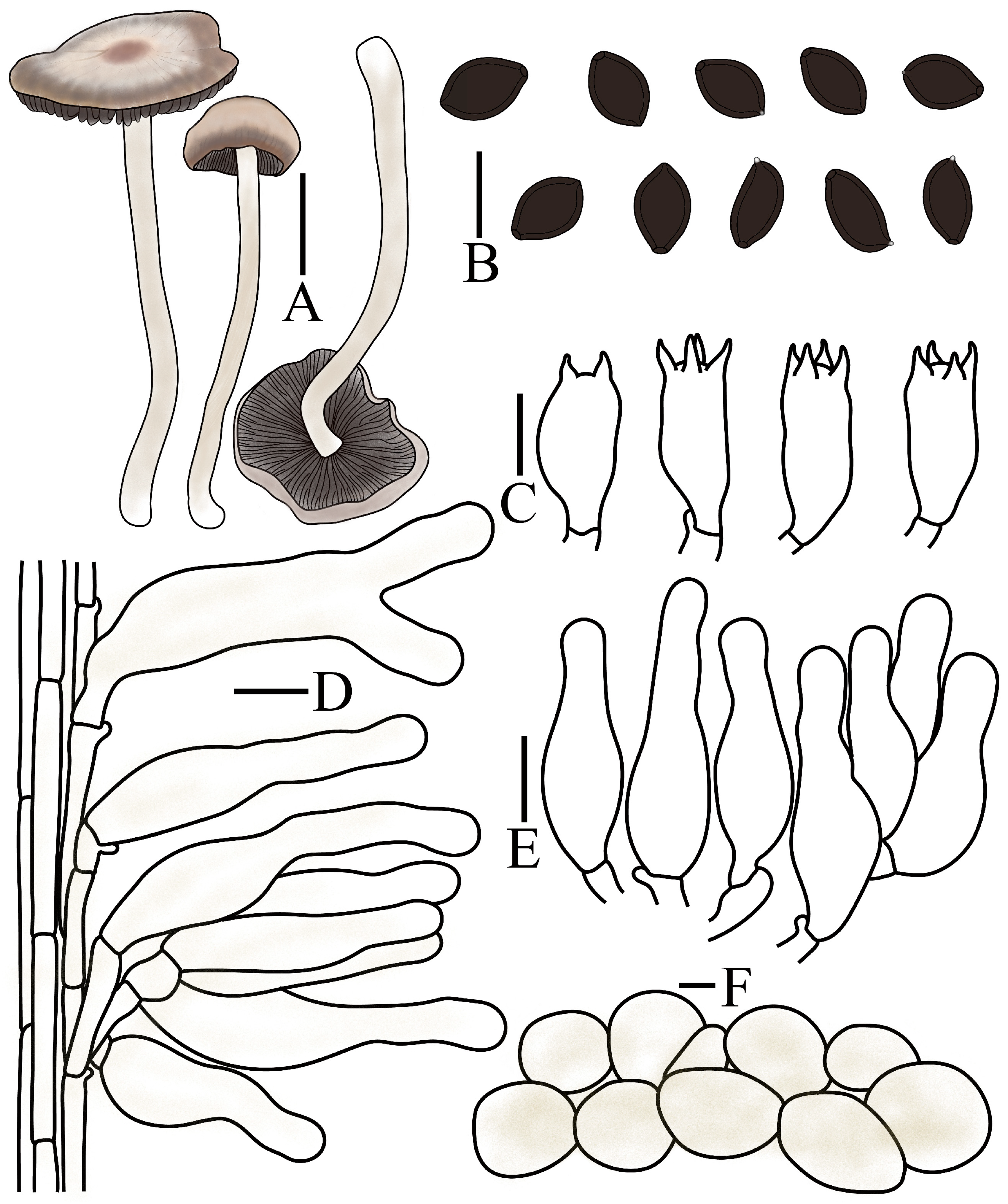
Spores (60/3/3) (9.5–)11.0–12.3(–13.7) × 6.0–7.1 × 5.3–6.4 µm, Q = 1.45–1.80, Qm = 1.58 (0.09) in frontal view, ovoid, ellipsoid to elongate-ellipsoid, wall thick, smooth, Q = 1.65–1.93, Qm = 1.76(0.08) in side view, elongate-ellipsoid, with a distinct germ pore, central, or slightly eccentric, spores appear dark brown (7F6) to black in a 5% KOH solution. Basidia (14.5–)16–20(–23) × 8–10 µm, nearly elliptical to clavate, 4-sterigmate, sterigmata 2–4 µm long. Cheilocystidia (14–)17–25(–27) × 5.0–7.0 µm, predominantly narrowly lageniform to narrowly utriform. Pleurocystidia absent. Caulocystidia (23–)35–45 × 7.5–8.5(–12.8) µm, versiform, predominantly narrowly lageniform to narrowly utriform, occasionally furcate. Pileipellis hymeniform, composed predominantly of subglobose or globose elements, (22–)24–36(–41) × (20–)23–30(–40) µm. Pileocystidia were not observed. Clamp connections present.
Habitat. Scattered on sandy soil during summer and autumn.
Known distribution. Currently, this species is currently known only from Jilin Province and the Inner Mongolia Autonomous Region, China.
Additional specimens measured. Jilin Province, Baicheng City, Tongyu County, Xianghai National Nature Reserve, 26 August 2023, 122°20′10″ E, 44°50′39″ N, alt. 145 m, Liyang Zhu, Z2382617 (FJAU78341).
Notes. Panaeolus latifolius is characterized by its occurrence on sandy soil and small basidiomata with frontally visible lamellae. The species further exhibits a non-hygrophanous pileus that becomes convex to plano-convex at maturity, absence of pleurocystidia, and no blue bruising reaction. This unique combination of features allows clear differentiation from other Panaeolus species. P. fraxinophilus A.H. Sm., while also possessing a convex pileus, is distinguished by its fuscous-black pileus colour, hygrophanous condition when moist, and lignicolous habit. These pronounced macroscopic differences allow for reliable separation from P. latifolius.
Figure 5. Panaeolus latifolius (FJAU78340) (A) basidiomata, (B) basidiospores, (C) basidia, (D) cheilocystidia, (E) caulocystidia and (F) pileipellis element. (A) Scale bar = 1 cm; (BF) scale bars = 10 μm.
Jof 12 00182 g005
Panaeolus bambusicola T. Bau & H. Cheng, sp. nov.
Mycobank No.: MB861987
Figure 1F,I–K and Figure 6
Etymology. “bambusicola” (Latin, from bambusa “bamboo” and -cola “inhabitant”) refers to its specific habitat in bamboo forests.
Holotypus. CHINA. Zhejiang Province, Huzhou City, Changxing County, 7 June 2024, 120°58′35″ E, 30°57′44″ N alt. 10 m, Zhuoluo Zhou, 1654 (FJAU78368).
Diagnosis: Panaeolus bambusicola is distinguished by its unique ecological habit of growing on bamboo forest soil, a pruinose pileus margin, absence of pleurocystidia, lack of a blue bruising reaction, and relatively small basidiospores measuring less than 10 µm in length.
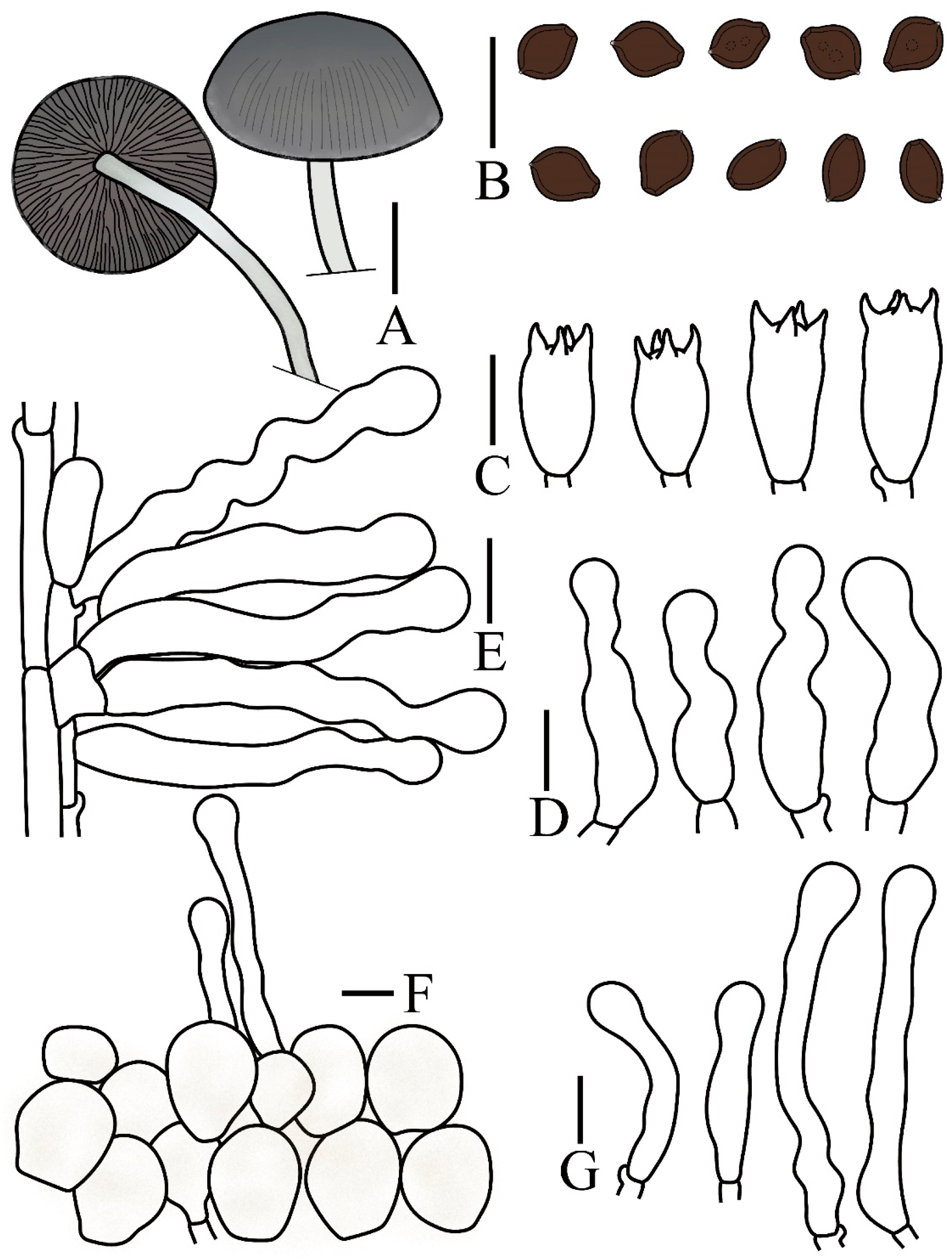
Figure 6. Panaeolus bambusicola (FJAU78368) (A) basidiomata, (B) basidiospores, (C) basidia, (D) cheilocystidia, (E) caulocystidia (F) pileipellis element (G) pileocystidia. (A) Scale bar = 1 cm; (BG) scale bars = 10 μm.
Jof 12 00182 g006
Pileus 0.5–2.0 cm in diameter, initially campanulate, becoming broadly conical to convex at maturity, striate, pruinose at the margin; centre brown (7E8 to 7E3) or grey (7E8), transitioning to reddish grey (7B2) or pale grey (7C1) toward the margin. Context thin, without distinctive odour. Lamellae adnate to adnexed, moderately close, unequal, distinctly ventricose, irregularly mottled with dark grey (1F1) to pale grey (1B1), edge even and remaining paler greyish. Stipe 2.0–4.0 cm long, 1.0–2.0 mm thick, cylindrical, erect to flexuous, slightly enlarged at the base; surface white (7A1) to pale grey (1B1), becoming brownish toward the base, densely pruinose and faintly longitudinally striate, developing reddish brown discolorations where bruised or handled.
Spores (60/3/3) (6.0–)6.5–7 × 4.8–5.8 × 4.0–5.0 µm, Q = 1.10–1.40, Qm = 1.23 (0.06) in frontal view, broadly limoniform to nearly subglobose, wall thick, smooth, Q = 1.38–1.65, Qm = 1.53(0.09) in side view, ellipsoid, with a distinct germ pore, central, spores appear dark brown (7F6) to black in a 5% KOH solution. Basidia (12–)13–16(–17.5) × 7.2–8.5 µm, nearly elliptical to clavate, 4-sterigmate, sterigmata 2–4 µm long. Cheilocystidia (22–)24–30(–34) × 6.0–7.5 µm, flexuose with obtuse apex. Pleurocystidia absent. Caulocystidia (30–)45–60 × 7.0–9(–10.5) µm, flexuose with obtuse apex. Pileipellis hymeniform, composed predominantly of subglobose or globose elements, (13–)18–22(–24) × (12–)15–20(–21) µm. Pileocystidia nearly narrowly cylindrical but curved, or flexuose with an obtuse apex. Clamp connections present.
Habitat. Scattered on soil sections under bamboo forest during summer.
Known distribution. Currently, only known in Zhejiang Province, China.
Additional specimens measured. CHINA. Zhejiang Province, Huzhou City, Changxing County, 12 June 2025, 120°58′25″ E, 30°57′18″ N alt. 9 m, Zhuoluo Zhou, 1713 (FJAU78369).
Notes. Panaeolus bambusicola is characterized by its occurrence on soil in bamboo forests, a pruinose pileus margin, and relatively small spores. Although a pruinose pileus margin is also observed in P. rhombispermus, the latter is instantly distinguished by its unique cruciform basidiospores. This combination of ecological and micromorphological features reliably distinguishes P. bambusicola from all other known Panaeolus species.
Panaeolus fraxinophilus A.H. Sm.
Pileus 1–2.5 cm in diameter, initially campanulate, becoming convex to applanate or broadly conical with a subumbonate disc at maturity. Surface smooth or lacunose, hygrophanous when moist, with distinct striations; margin occasionally irregularly undulate, centre fuscous black (6F1 to 6F2), transitioning to grey (6D1) or pale grey (6C1) toward the margin, then darkening again to fuscous black near the edge, drying uniformly to grey (6D1). Context thin, without distinctive odour. Lamellae adnate, moderately close, unequal, irregularly mottled with dark grey (1F1) to pale grey (1B1), edge even and remaining paler greyish. Stipe 2.0–8.0 cm long, 2.0–3.0 mm thick, cylindrical, erect to flexuous, slightly enlarged at the base; surface pale grey (1B1), becoming brownish grey toward the base, densely pruinose and faintly longitudinally striate.
Spores (60/3/3) 9.0–10.5(–13.5) × 6.5–7.5(–8.0) × 5.0–6.3 µm, Q = 1.32–1.63, Qm = 1.50 (0.07) in frontal view, ovate, ellipsoid, wall thick, smooth, Q = 1.67–2.07, Qm = 1.87(0.11) in side view, elongate-ellipsoid, asymmetrical, with a distinct germ pore, eccentric, spores appear dark brown (7F6) to black in a 5% KOH solution. Basidia 19–21 × 7.8–9.5 µm, nearly elliptical to clavate, 4(2)-sterigmate, sterigmata 2–4 µm long. Cheilocystidia (24–)29–32(–35) × 9.0–11.2 µm, narrowly utriform. Pleurocystidia absent. Caulocystidia (37–)40–60 × 7.0–10.0(–12.5) µm, narrowly utriform, or with an elongated neck. Pileipellis hymeniform, composed predominantly of subglobose or globose elements, (25–)32–55(–65) × (24–)30–54(–60) µm. Pileocystidia absent. Clamp connections present.
Habitat. Gregarious to scattered on wood chip piles during spring.
Known distribution. Asia: China; North America: United States of America (Holotype), Canada; South America: Brazil.
Additional specimens measured. CHINA. Guangdong Province, Shenzhen City, 18 March 2024, Jianfeng Tan, C2431801(FJAU78346), Yunnan Province, Wenshan City, 18 May 2024, Xiangyang Li, C2452504 (FJAU78347).
Notes. Within the genus Panaeolus, lignicolous species are relatively uncommon. Panaeolus atrobalteatus Pegler & A. Henrici and P. fraxinophilus represent two such species that demonstrate remarkable morphological similarity. Both exhibit strongly hygrophanous pilei in moist conditions and possess closely overlapping spore size ranges [42]. It is noteworthy that in the protologue of P. atrobalteatus, Henrici did not undertake a comparative analysis with the morphologically similar P. fraxinophilus, nor was this taxon mentioned. Based on available herbarium material and the literature, the basidiomata of P. atrobalteatus are generally larger in overall dimensions than those of P. fraxinophilus, a characteristic that may provide a practical morphological criterion for their differentiation.
Figure 7. Panaeolus fraxinophilus (FJAU78346, FJAU78347) (A) basidiomata, (B) basidiospores, (C) basidia, (D) caulocystidia, (E) cheilocystidia and (F) pileipellis element. (A) Scale bar = 1 cm; (BF) scale bars = 10 μm.
Jof 12 00182 g007
Panaeolus subg. Crucispora (E. Horak) T. Bau & H. Cheng, comb. and stat. nov.
Mycobank No.: MB862146
Basionym. Crucispora E. Horak, New Zealand J. Bot. 9(3): 489 (1971)
Type species. Panaeolus naucorioides (E. Horak) T. Bau & H. Cheng
Description emended based on E. Horak’s (1971) [12] concept of Crucispora: Basidiomata small to medium-sized, mycenoid or naucorioid, not staining blue when injured. Pileus hemispherical to conical when young, becoming convex to campanulate; surface dry, hygrophanous, colour deep brown, tobacco-brown; margin non-striate or finely striate, bearing a white, pruinose coating (veil remnants) when young, disappearing with age. Context thin, odour and taste not distinctive. Lamellae adnate to adnexed, ventricose, edge white. Stipe cylindrical, fistulose; no persistent cortina or annulus. Basidiospores in deposit brown to dark brown or black, cruciform-rhomboid.
Notes. Crucispora rhombispermus (Hongo) was transferred to Panaeolus (Fr.) Quél. by Birkebak, Voto & Ostuni based on phylogenetic analyses of ITS and nrLSU sequences [14]. Subsequently, He et al. placed P. rhombispermus into Panaeolus subg. Bresadolomyces M.Q. He & R.L. Zhao, mainly based on phylogenetic evidence [11]. However, our results indicate that this species is clearly distinct from other members of subg. Bresadolomyces. Furthermore, the type species of Crucispora, C. naucorioides E. Horak, also possesses cruciform spores. Based on these findings, we propose to reduce the genus Crucispora to a subgenus within Panaeolus.
Panaeolus naucorioides (E. Horak) T. Bau & H. Cheng, comb. nov.
Mycobank No.: MB862188
Basionym. Crucispora naucorioides E. Horak, New Zealand J. Bot. 9(3): 489 (1971)
Notes. According to E. Horak’s description of Crucispora naucorioides, features such as its hygrophanous pileus, buff-brown lamellae with white edges, adnate to adnexed attachment, and a hymeniform pileipellis closely resemble those of species in the genus Panaeolus [12]. Furthermore, its spores are cruciform, as in P. rhombispermus. Based on this morphological congruence, we propose to transfer this species into the genus Panaeolus and place it within the subgenus Panaeolus subg. Crucispora.

4. Discussion

Our integrated taxonomic reconstruction of Panaeolus delineates six major clades (I–VI) and describes four new species and one new record from China. Notably, based on phylogenetic and morphological evidence (particularly the cruciform basidiospores), we propose recognizing Clade VI (P. rhombispermus) as a distinct subgenus, Panaeolus subg. Crucispora. It should be noted, however, that the sampling localities in this study cover approximately 80% of China’s land area, spanning multiple provinces and autonomous regions. Specimens of Panaeolus from China’s Taiwan province, Hainan province, Qinghai province, and the Xizang Autonomous Region were not obtained; therefore, the diversity of the genus in these regions remains to be investigated in future studies. Furthermore, future discoveries of additional Panaeolus species worldwide may necessitate further refinement and revision of the taxonomic framework proposed here.
Among the newly described taxa, Panaeolus ovinus is currently the only known species in subg. Panaeolus that possesses pleurocystidia, with sheep dung as its sole known substrate. P. praecox is most closely related to P. foenisecii but is distinguished by its smooth spore surface. P. latifolius grows on sandy soil and, unlike the newly recorded species P. fraxinophilus (which grows on wood chips), we observed no hygrophany in the pileus of collected specimens—a characteristic that may be attributed to the species’ inherent traits or the relatively arid environment where it occurs. To our knowledge, P. bambusicola represents the first recorded species of Panaeolus found in bamboo forest habitats, characterized by relatively small spores and a frequently pruinose pileus. Correspondingly, this species exhibits abundant pileocystidia, whereas pileocystidia are generally sparse or even absent in other Panaeolus species. These findings enrich the known species diversity of Panaeolus in China and deepen our understanding of the habitat preferences and micromorphological characteristics within this genus.
In early taxonomy that relied predominantly on morphological characters, species of Panaeolus were historically classified into different genera or subgenera based on traits such as blue-bruising reaction upon injury, presence or absence of an annulus, spore ornamentation, and the morphology and occurrence of pleurocystidia [7]. In the present study, based on collected Panaeolus specimens and clear descriptions available in the literature, we summarized pileus characteristics, pleurocystidia types, and substrate preferences across the genus. The results indicate that these morphological features do not fully correspond to the six clades revealed by phylogenetic analysis, i.e., no shared derived characters (synapomorphies) useful for subdivision of the genus were identified. Because the phylogenetic framework obtained here is largely congruent with that of He et al. [11], we have adopted a similar subdivision of Panaeolus. However, in our phylogeny, Panaeolus rhombispermus (vouchers: FJAU78367, CWN 11502) form an independent lineage.
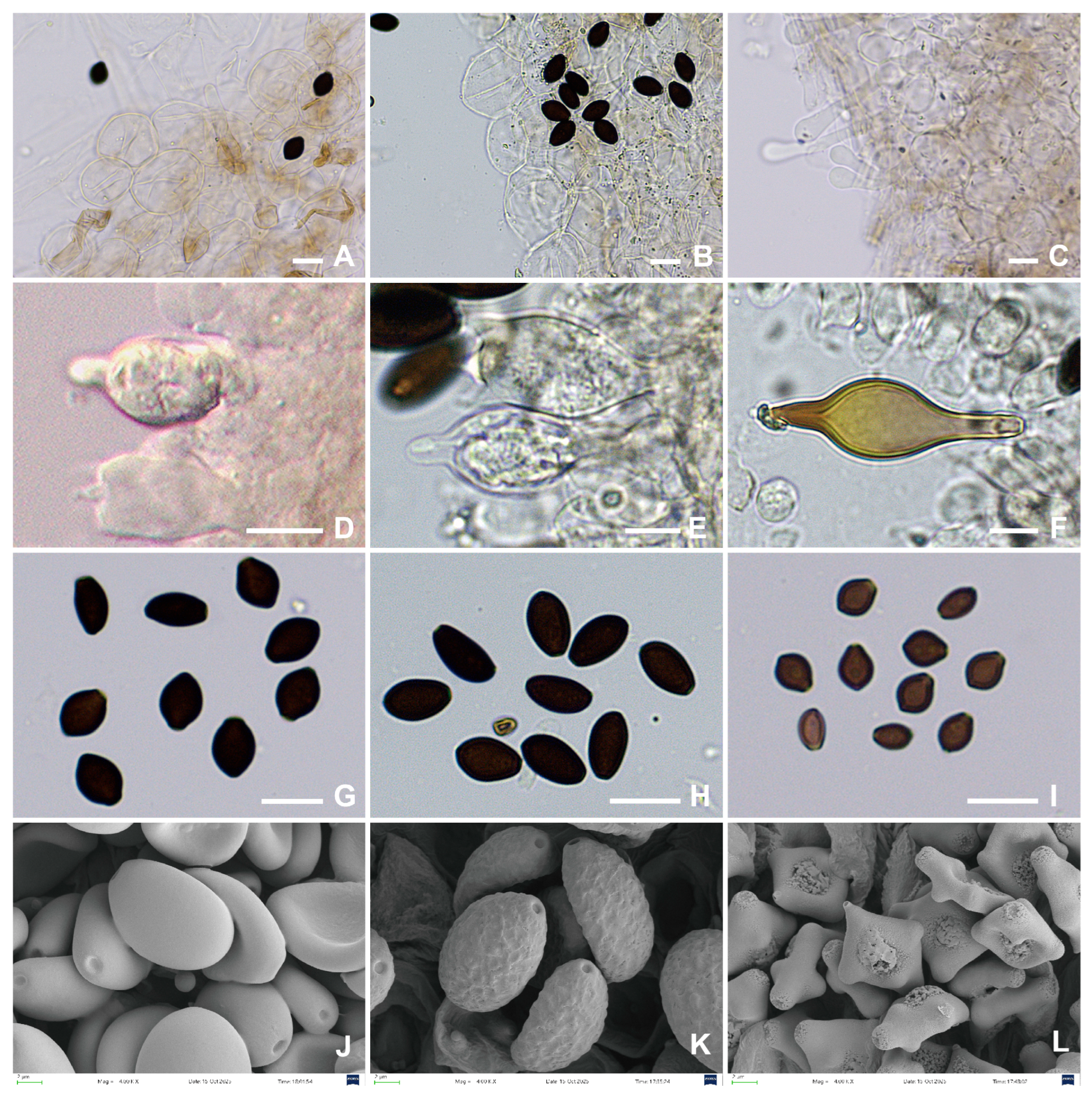
Based on scanning electron microscopy (SEM) observations of the spore ornamentation of Panaeolus rhombispermus and multi-locus phylogenetic analyses, we regard P. rhombispermus as distinct from other Panaeolus species (Figure 8). Considering that the type species of Crucispora, Crucispora naucorioides E. Horak, also possesses cruciform spores, we thus further propose to reduce Crucispora to a subgenus under Panaeolus. Previous work by Ostuni et al. [14] proposed transferring C. rhombispermus to the genus Panaeolus, arguing that its hymeniform pileipellis, mottled gills, and dark brown spores with a germ pore align with characteristics of Panaeolus. They further suggested that the distinctive cruciform spore shape of P. rhombispermus represents merely an extreme morphological variant within the known spore morphology range of Panaeolus, noting that a similar, albeit less pronounced, shape occurs in spores of P. mexicanus (Guzmán) Voto & Angelini. However, our observations indicate that the spore morphology and surface ornamentation of P. rhombispermus (Figure 8L) are fundamentally distinct from those of all known Panaeolus species. This is corroborated by light microscopy images from Chou et al. [40], which show pronounced spore surface ornamentation in P. rhombispermus, whereas spores of P. mexicanus appear smooth [38]. Furthermore, P. mexicanus possesses thick-walled pleurocystidia, a trait shared with other members of Clade V (Panaeolus subg. Bresadolomyces, including P. bisporus and P. cyanescens), while both currently recognized species of Panaeolus subg. Crucispora lack pleurocystidia. We note that in the original publications of the two Crucispora species, their spores were consistently described as “rhomboid” and “smooth”, with corresponding illustrations also depicting a smooth surface [12,13]. This conclusion, however, may have been constrained by the resolution limits of the microscopes available at the time, which likely prevented accurate recognition of the spore wall ornamentation. It should be emphasized that the rhomboid shape of the spores remains an accurate and stable diagnostic feature.
Our phylogenetic analysis reveals that Panaeolus bambusicola (FJAU78368, FJAU78369) and P. sylvaticus (ANGE1393) each form independent lineages, designated as Clade IV and Clade II, respectively, and neither is assigned to an existing subgenus. P. bambusicola is distinguished by a persistently pruinose pileus and broadly limoniform, relatively small basidiospores. Nevertheless, because its clade currently comprises only this species, we have not proposed a subgeneric placement for it. Conversely, the phylogenetic position of P. sylvaticus remains unstable, likely due to the current limitation to ITS sequences and a lack of additional sequence data for robust support. We expect that the future discovery of more Panaeolus species and the sharing of related molecular sequences will facilitate a more robust and stable subdivision of the genus.
Figure 8. Micro-morphological structures of Panaeolus species. (AC) Pileipellis: (A) Panaeolus ovinus (FJAU78336). (B) P. latifolius (FJAU78340). (C) P. bambusicola (FJAU78368); (DF) Pleurocystidia: (D) P. ovinus (FJAU78336). (E) P. semiovatus (FJAU78355). (F) P. bisporus (FJAU78362); (GL) Basidiospores: (G) P. ovinus (FJAU78336). (H) P. latifolius (FJAU78340). (I) P. bambusicola (FJAU78368). (J) P. praecox (FJAU78357). (K) P. foenisecii (FJAU78361). (L) P. rhombispermus (FJAU78367). Scale bars: (AI) = 10 μm; (JL) = 2 μm.
Jof 12 00182 g008

Author Contributions

Conceptualization, T.B. and H.C.; methodology, H.C.; software, H.C.; validation, H.C. and T.B.; formal analysis, H.C.; investigation, H.C. and T.B.; resources, H.C. and T.B.; data curation, H.C. and T.B.; writing—original draft preparation, H.C.; writing—review and editing, H.C. and T.B.; visualization, H.C. and T.B.; supervision, T.B.; project administration, T.B.; funding acquisition, T.B. All authors have read and agreed to the published version of the manuscript.

Funding

This study was supported by the National Natural Science Foundation of China (32270001).

Institutional Review Board Statement

Not applicable.

Informed Consent Statement

Not applicable.

Data Availability Statement

All the sequences have been deposited in GenBank (https://www.ncbi.nlm.nih.gov, accessed on 26 January 2026) and MycoBank (https://www.mycobank.org, accessed on 29 January 2026). The data presented in this study are deposited in the Zenodo repository, accession number https://doi.org/10.5281/zenodo.18431687, accessed on 30 January 2026.

Acknowledgments

We sincerely thank our supervisor and the entire research team for their invaluable guidance and collaboration. We are also deeply grateful to Zhuoluo Zhou, Jianfeng Tan, Xiaofang Liao, SiAng Chen, and XiangYang Li for their generous assistance. Furthermore, we gratefully acknowledge the financial support provided by the National Natural Science Foundation of China (Grant No. 32270001).

Conflicts of Interest

The authors declare no conflicts of interest.

References

  1. Fries, E. Epicrisis Systematis Mycologici: Seu Synopsis Hymenomycetum; Sumtibus Auctoris; Typographia Academica (Upsaliae): Uppsala, Sweden, 1836; Volume 1. [Google Scholar]
  2. Quélet, L. Les Champignons du Jura et des Vosges; Impr. et lithographie de H. Barbier: Paris, France, 1872. [Google Scholar]
  3. Pollock, S.H. A Novel Experience with Panaeolus A Case Study from Hawaii. J. Psychedelic Drugs 1974, 6, 85–89. [Google Scholar] [CrossRef]
  4. Watling, R. A Panaeolus poisoning in Scotland. Mycopathologia 1977, 61, 187–190. [Google Scholar] [CrossRef] [PubMed]
  5. Stijve, T. Psilocin, psilocybin, serotonin and urea in Panaeolus cyanescens from various origin. Persoonia-Mol. Phylogeny Evol. Fungi 1992, 15, 117–121. [Google Scholar]
  6. Oláh, G.-M. Le Genre Panaeolus: Essai Taxinomique et Physiologique; Laboratoire de Cryptogamie du Muséum National D’histoire Naturelle: Paris, France, 1969. [Google Scholar]
  7. Shaffer, R.L. The Agaricales in Modern Taxonomy; J. Cramer: Vaduz, Liechtenstein, 1976. [Google Scholar]
  8. Tóth, A.; Hausknecht, A.; Krisai-Greilhuber, I.; Papp, T.; Vágvölgyi, C.; Nagy, L.G. Iteratively refined guide trees help improving alignment and phylogenetic inference in the mushroom family Bolbitiaceae. PLoS ONE 2013, 8, e56143. [Google Scholar] [CrossRef] [PubMed]
  9. Malysheva, E.; Moreno, G.; Villarreal, M.; Malysheva, V.; Svetasheva, T. The secotioid genus Galeropsis (Agaricomycetes, Basidiomycota): A real taxonomic unit or ecological phenomenon? Mycol. Prog. 2019, 18, 805–831. [Google Scholar] [CrossRef]
  10. Kalichman, J.; Kirk, P.M.; Matheny, P.B. A compendium of generic names of agarics and Agaricales. Taxon 2020, 69, 425–447. [Google Scholar] [CrossRef]
  11. He, M.-Q.; Yang, W.-Q.; Phurbu, D.; Liu, F.; Li, J.-X.; Cao, B.; Zhao, R.-L. Systematic study of Panaeolus (Agaricales, Galeropsidaceae) sensu lato and psilocybin-producing traits of species from China. IMA Fungus 2026, 17, e167329. [Google Scholar] [CrossRef]
  12. Horak, E. Contributions to the knowledge of the Agaricales sl (Fungi) of New Zealand. N. Z. J. Bot. 1971, 9, 463–493. [Google Scholar] [CrossRef]
  13. Hongo, T. Notulae Mycologicae (12): Auctore. Bull. Fac. Educ. Shiga Univ. Nat. Sci. 1973, 23, 37–43. [Google Scholar]
  14. Ostuni, S.; Voto, P.; Birkebak, J.; Meyer, M.G.; Geurin, Z.; Slot, J.C. Panaeolus oligotrophus: A new species from central Florida, with notes on Panaeolus pumilus and Crucispora rhombisperma. Mycologia 2025, 117, 1057–1066. [Google Scholar] [CrossRef]
  15. Li, Y.; Li, T.H.; Yang, Z.L.; Dai, Y.C.; Bau, T. Atlas of Chinese Macrofungal Resources; Central China Farmers’ Publishing House: Zhengzhou, China, 2015. [Google Scholar]
  16. Bau, T.; Sarentoya. Strophariaceae of China (V) Panaeolus s.l. J. Fungal Res. 2010, 8, 131–168. [Google Scholar] [CrossRef]
  17. He, X.-S. A new record of Panaeolina in China. Mycosystema 2004, 23, 150. [Google Scholar] [CrossRef]
  18. Ma, T. Taxonomy of Psilocybe sl and Panaeolus in Yunnan, Southwest China, with Notes on Related Genus Protostropharia; Chinese Academy of Forestry: Beijing, China, 2014. [Google Scholar]
  19. Hu, Y.; Mortimer, P.E.; Karunarathna, S.C.; Raspe, O.; Promputtha, I.; Yan, K.; Xu, J.; Hyde, K.D. A new species of Panaeolus (Agaricales, Basidiomycota) from Yunnan, Southwest China. Phytotaxa 2020, 434, 22–34. [Google Scholar] [CrossRef]
  20. Cao, B.; Phurbu, D.; Ralaiveloarisoa, A.; Liimatainen, K.; Niskanen, T.; Ramírez-Cruz, V.; Bradshaw, A.J.; Dentinger, B.T.; Ramírez-Guillén, F.; Cortés-Pérez, A. Fungal diversity notes 1919–2016: Taxonomic and phylogenetic contributions to fungal taxa. Fungal Divers. 2025, 132, 425–651. [Google Scholar] [CrossRef]
  21. Kornerup, A.; Wanscher, J.H. Methuen Handbook of Colour; Methuen and Co., Ltd.: London, UK, 1967. [Google Scholar]
  22. Weeks, R.A.; Singer, R.; Hearn, W.L. A new psilocybian species of Copelandia. J. Nat. Prod. 1979, 42, 469–474. [Google Scholar] [CrossRef]
  23. White, T.J.; Bruns, T.; Lee, S.; Taylor, J.W. Amplification and direct sequencing of fungal ribosomal RNA genes for phylogenetics. In PCR Protocols: A Guide to Methods and Applications; Academic Press: San Diego, CA, USA, 1990; pp. 315–322. [Google Scholar]
  24. Gardes, M.; Bruns, T.D. ITS primers with enhanced specificity for basidiomycetes-application to the identification of mycorrhizae and rusts. Mol. Ecol. 1993, 2, 113–118. [Google Scholar] [CrossRef]
  25. Moncalvo, J.-M.; Lutzoni, F.M.; Rehner, S.A.; Johnson, J.; Vilgalys, R. Phylogenetic relationships of agaric fungi based on nuclear large subunit ribosomal DNA sequences. Syst. Biol. 2000, 49, 278–305. [Google Scholar] [CrossRef]
  26. Rehner, S.A.; Buckley, E. A Beauveria phylogeny inferred from nuclear ITS and EF1-α sequences: Evidence for cryptic diversification and links to Cordyceps teleomorphs. Mycologia 2005, 97, 84–98. [Google Scholar] [CrossRef]
  27. Matheny, P.B. Improving phylogenetic inference of mushrooms with RPB1 and RPB2 nucleotide sequences (Inocybe; Agaricales). Mol. Phylogenetics Evol. 2005, 35, 1–20. [Google Scholar] [CrossRef]
  28. Kumar, S.; Stecher, G.; Tamura, K. MEGA7: Molecular evolutionary genetics analysis version 7.0 for bigger datasets. Mol. Biol. Evol. 2016, 33, 1870–1874. [Google Scholar] [CrossRef]
  29. Zhao, D.; Ye, T.; Gao, F.; Jakovlić, I.; La, Q.; Tong, Y.; Liu, X.; Song, R.; Liu, F.; Lian, Z.M. PhyloSuite v2: The development of an all-in-one, efficient and visualization-oriented suite for molecular dating analysis and other advanced features. iMeta 2025, 4, e70095. [Google Scholar] [CrossRef] [PubMed]
  30. Kalyaanamoorthy, S.; Minh, B.Q.; Wong, T.K.; Von Haeseler, A.; Jermiin, L.S. ModelFinder: Fast model selection for accurate phylogenetic estimates. Nat. Methods 2017, 14, 587–589. [Google Scholar] [CrossRef] [PubMed]
  31. Wong, T.K.; Ly-Trong, N.; Ren, H.; Baños, H.; Roger, A.J.; Susko, E.; Bielow, C.; De Maio, N.; Goldman, N.; Hahn, M.W. IQ-TREE 3: Phylogenomic Inference Software using Complex Evolutionary Models. EcoEvoRxiv 2025. [Google Scholar] [CrossRef]
  32. Ronquist, F.; Teslenko, M.; Van Der Mark, P.; Ayres, D.L.; Darling, A.; Höhna, S.; Larget, B.; Liu, L.; Suchard, M.A.; Huelsenbeck, J.P. MrBayes 3.2: Efficient Bayesian phylogenetic inference and model choice across a large model space. Syst. Biol. 2012, 61, 539–542. [Google Scholar] [CrossRef]
  33. Malysheva, E.F.; Malysheva, V.F.; Svetasheva, T.Y. Molecular phylogeny and taxonomic revision of the genus Bolbitius (Bolbitiaceae, Agaricales) in Russia. Mycol. Prog. 2015, 14, 64. [Google Scholar] [CrossRef]
  34. Song, H.-B.; Bau, T. Conocybe section Pilosellae in China: Reconciliation of taxonomy and phylogeny reveals seven new species and a new record. J. Fungi 2023, 9, 924. [Google Scholar] [CrossRef]
  35. Voto, P.; Angelini, C. Studies in the Panaeolus papilionaceus complex (Agaricales, Galeropsidaceae): Two new species discovered in the Dominican Republic and Australia. Mycol. Obs. 2024, 9, 1–32. [Google Scholar]
  36. Strauss, D.; Ghosh, S.; Murray, Z.; Gryzenhout, M. Global species diversity and distribution of the psychedelic fungal genus Panaeolus. Heliyon 2023, 9, e16338. [Google Scholar] [CrossRef]
  37. Vallino, D. Contributo alla conoscenza del genere Panaeolus sensu lato. Riv. Di Micol. 2023, 66, 209–286. [Google Scholar]
  38. Voto, P.; Angelina, C. First record of Copelandia mexicana in Dominican Republic and notes on Panaeolus. Mycol. Obs. 2021, 1, 44–58. [Google Scholar]
  39. Asif, M.; Firdous, Q.; Izhar, A.; Niazi, A.R.; Sarwar, S.; Khalid, A.N. Molecular and morphological studies reveal a new species of Panaeolus (Agaricales, Basidiomycota) from Punjab, Pakistan. Eur. J. Taxon. 2023, 888, 77–96. [Google Scholar] [CrossRef]
  40. Chou, W.-N.; Yang, B.-H.; Hsieh, H.-M.; Ju, Y.-M. Crucispora rhombisperma newly recorded in Taiwan. Fungal Sci. 2021, 36, 33–36. [Google Scholar]
  41. Moser, M. Panaeolus alcidis, a new species from Scandinavia and Canada. Mycologia 1984, 76, 551–554. [Google Scholar] [CrossRef]
  42. Pegler, D.; Henrici, A. Panaeolus atrobalteatus sp. nov., a member of Panaeolus stirps Subbalteatus (Agaricales, Strophariaceae). Folia Cryptogam. Est. 1998, 33, 105–108. [Google Scholar]

Table 1. Information of DNA sequences used in the phylogenetic analyses. Sequences newly generated in this study are shown in bold. “–” means data not available. Bold capital letters after voucher or strain represent Holotype “T”, Paratypes “P”.
TaxonVoucher/StrainOriginITSnrLSUtef1rpb2References
Bolbitius coprophilusLE18599RussiaKR425526KR425556[33]
Conocybe muscicolaHMJAU64939 TChinaOQ758113OQ758223OQ758309[34]
P. acuminatusFJAU78351ChinaPX868543PX868580This study
P. acuminatusCBS 270.47Not indicatedMH856251MH867783[9]
P. acuminatusKA16-1041KyrgyzstanMK351680[35]
P. acuminatusX540Czech RepublicMW352021[35]
P. acuminatusLUGO:ECC17111604SpainMW376698[36]
P. acuminatusSGL09Not indicatedOR035540[35]
P. acuminatusAMB 20066ItalyPP447481PP447517[37]
P. alcisFJAU78331ChinaPX868551PX868579PX857983PX852305This study
P. alcisFJAU78332ChinaPX868540This study
P. alcisSAT-14-239-20USA(Alaska)MW597122[35]
P. antillarumFJAU78352ChinaPX868546PX868578PX857978This study
P. antillarumFJAU78353ChinaPX868537PX868562PX893654PX852306This study
P. antillarumUOC KAUNP MK62Sri LankaKP764810[35]
P. antillarumUOC KAUNP K01Sri LankaKR867660[35]
P. antillarumSFSU:DED 7874ThailandMF497585[35]
P. atrobalteatusjlh7468-14USAPP808684
P. axfordiiMFLU 19-2367 TChinaNR169700[19]
P. bambusicolaFJAU78368 TChinaPX868530PX868563PX893655PX852307This study
P. bambusicolaFJAU78369ChinaPX868522This study
P. bisporusFJAU78362ChinaPX868547PX868577This study
P. bisporusFJAU78363ChinaPX868550This study
P. bisporusFJAU78365ChinaPX868532PX868561This study
P. bisporusHYW197ChinaOR035518[35]
P. cambodginiensisNBRC-30222JapanAB158633[35]
P. castaneifoliusMushroom Observer 90428USAKX010428[35]
P. chlorocystisFMS iNaturalist # 193561740USAPQ678531
P. cinctulusFJAU78344ChinaPX868557PX868570PX857981PX852303This study
P. cinctulusFJAU78345ChinaPX868538PX893653PX852304This study
P. cinctulusxsd08077Not indicatedFJ478119[37]
P. cinctulusCBS 326.34Not indicatedMH855550MH867055[37]
P. cinctulusCBS 328.34Not indicatedMH855552MH867057[37]
P. cinctulusNX180911-04 MN960188[37]
P. cinctulusMCVE 1084ItalyPP447482PP447518[37]
P. cinctulusGerhardt 83052 (B)GermanyPP447483PP447521[37]
P. cyanescensFJAU78366Timor-LestePX868520This study
P. cyanescenstaxon:181874Not indicatedHM035084HM035084[37]
P. cyanescensBP1IndiaMK855515[37]
P. cyanescensFS1IndiaMK855516[37]
P. cyanescensAMB 20070ItalyPP447484PP447522[37]
P. cyanescens0709305/JGFrancePP447485PP447523[37]
P. desertorumSZMC-NL-1863HungaryJX968154JX968271JX968387[8]
P. desertorumLE 2865UzbekistanMH055383 [35]
P. desertorumLE 2864UzbekistanMH055384[35]
P. desertorumAH 9993 PSpainMK397543MK397561[35]
P. desertorumLE313090RussiaMK397566MK397591[37]
P. desertorumGB-0073426HungaryPP447486PP447524[37]
P. detriticolaPERTH 08944954 TAustraliaNR199086MT571659
P. dunensisAMB 20210ItalyPP447489PP447527[37]
P. dunensisAMB 20211ItalyPP447490[37]
P. fimicolaMCVE 4084ItalyJF908518[37]
P. fimicolaCBS 251.37Not indicatedMH855904MH867411[37]
P. fimicolaGerhardt 75349 (B)GermanyPP447492PP447529[37]
P. foeniseciiFJAU78358ChinaPX868536This study
P. foeniseciiFJAU78359ChinaPX868542This study
P. foeniseciiFJAU78360ChinaPX868539PX868560PX893657PX852302This study
P. foeniseciiFJAU78361ChinaPX868554PX852298This study
P. foenisecii6643ItalyJF908520[37]
P. foeniseciiubc F32593CanadaMG969989[37]
P. foeniseciiCBS 142.40Not indicatedMH856067MH867557[37]
P. foeniseciiAMB 20071ItalyPP447493PP447530[37]
P. foeniseciiAMB 20072ItalyPP447494PP447531[37]
P. fraxinophilusFJAU78346ChinaPX868544PX868575PX857980PX852308This study
P. fraxinophilusMushroomObserver.org/455364USAOL629088[35]
P. fraxinophilusOMDL iNat # 170758482USAOR987324[35]
P. latifoliusFJAU78340 TChinaPX868523This study
P. latifoliusFJAU78341ChinaPX868533PX868565This study
P. mediterraneusAMB 20074ItalyPP447496 [37]
P. mediterraneusAMB 20075ItalyPP447497PP447533[37]
P. mexicanusANGE1557Dominican RepublicMZ856314OK546186 [38]
P. olivaceusMushroomObserver.org/158389USAMF629829[35]
P. olivaceusMushroomObserver.org/89608USAMH285992[35]
P. olivaceusiNAT:100066497USAON314881[37]
P. olivaceusAMB 20076ItalyPP447498PP447534[37]
P. ovinusFJAU78335ChinaPX868559This study
P. ovinusFJAU78336 TChinaPX868534PX868566PX857973PX852299This study
P. ovinusFJAU78337ChinaPX868535PX868567PX857974PX852297This study
P. pantropicalisJBSD 130972 TDominican RepublicPP590037[35]
P. pantropicalisPERTH 09605894 PAustraliaPP590039[35]
P. papilionaceusFJAU78333ChinaPX868549PX868573PX857972PX852300This study
P. papilionaceusFJAU78334ChinaPX868525This study
P. papilionaceusAFTOL-ID 1499Not indicatedDQ182503DQ470817[37]
P. papilionaceusCBS 582.79Not indicatedHM035081HM035081[37]
P. parvisporusFJAU78330ChinaPX868556This study
P. parvisporusMushroomObserver.org/312079USAMH101639[35]
P. plantaginiformisLE 2867UzbekistanMK397575MK397597[9]
P. plantaginiformisLE 2870UzbekistanMK397576MK397598[9]
P. plantaginiformisLE 2862RussiaMK397577MK397599[9]
P. plantaginiformisTAAM120547UzbekistanPP447502PP447537[37]
P. plantaginiformisTAAM120647UzbekistanPP447503[37]
P. praecoxFJAU78356ChinaPX868528PX868568PX857975PX852309This study
P. praecoxFJAU78357 TChinaPX868558PX868569PX857976This study
P. punjabensisLAH36793 TPakistanMZ265143ON116490[39]
P. punjabensisLAH36794PakistanMZ823627ON116492[39]
P. retirugisCBS 274.47FranceMH856255MH867787[37]
P. rhombispermusFJAU78367ChinaPX868531PX868564PX926009PX926010This study
P. rhombispermusCWN 11502ChinaMZ782082MZ781504[40]
P. rickeniiFJAU78348ChinaPX868548PX868572PX857979PX852296This study
P. rickeniiFJAU78349ChinaPX868541PX868571This study
P. rickeniiHMAS 290093ChinaMK966648
P. rickeniiHMAS 290109ChinaMK966649
P. semiovatusFJAU78354ChinaPX868526This study
P. semiovatusFJAU78355ChinaPX868524This study
P. semiovatusMCVE 21188ItalyJF908515[37]
P. semiovatusCBS 276.39Not indicatedMH856012[35]
P. semiovatusMushroom6ChinaMT451924[35]
P. semiovatusAMB 20084ItalyPP447509PP447542[37]
P. semiovatusAMB 20082ItalyPP447511PP447541[37]
Panaeolus sp.FJAU78338ChinaPX868555PX893656This study
Panaeolus sp.FJAU78339ChinaPX868545This study
Panaeolus sp.FJAU78350ChinaPX868521This study
Panaeolus sp.FJAU78364ChinaPX868553This study
P. subbalteatusFJAU78342ChinaPX868552PX868576PX857977PX852301This study
P. subbalteatusFJAU78343ChinaPX868527This study
P. subbalteatusCBS 327.34USAMH855551MH867056[37]
P. subbalteatusHFJAU-ND146ChinaMN622762[35]
P. sylvaticusANGE1393Dominican RepublicOQ311002[35]
P. tropicalisNot indicatedChinaJF961377
Disclaimer/Publisher’s Note: The statements, opinions and data contained in all publications are solely those of the individual author(s) and contributor(s) and not of MDPI and/or the editor(s). MDPI and/or the editor(s) disclaim responsibility for any injury to people or property resulting from any ideas, methods, instructions or products referred to in the content.