


Abstract
Currently, most research on CRISPR (Clustered Regularly Interspaced Short Palindromic Repeats) gene editing in edible fungi focuses on monokaryotic strains. However, the biological mechanisms in a monokaryotic state often do not accurately reflect the actual physiological and metabolic conditions of dikaryotic strains. Therefore, this study used two mating-type-compatible monokaryotic strains, L1 and L2, isolated from Ganoderma lucidum ‘Hunong No.1’ G0119, and employed an RNP (ribonucleoprotein)-based CRISPR/Cas9 system to successfully knock out the cyp512a3 gene in strain L2, resulting in the edited strain L2-KO-cyp512a3. The strain was single-crossed with the previously edited L1 strain L1-KO-cyp512a3 in our laboratory to obtain a dikaryotic editing strain that was homozygous at the cyp512a3 locus, named G0119-KO-cyp512a3. UPLC-MS (Ultra Performance Liquid Chromatography–Mass Spectrometry) analysis showed that compared to the starting strain G0119, the dikaryotic editing strain exhibited varying degrees of reduction in the content of eight types of ganoderic acids, including ganoderic acid Me, ganoderic acid P, ganoderic acid T1, etc., with the reduction ranging from 30.5% to 80.1%. To further validate the function of cyp512a3, we overexpressed this gene in the L1 strain. The results showed that the contents of ganoderic acid Mk, ganoderic acid S, ganoderic acid T, and ganoderic acid R in the mycelium were 0.548 ± 0.020, 1.780 ± 0.028, 2.416 ± 0.148, and 0.281 ± 0.016 mg/g (dry weight), which were 1.5 times, 1.3 times, 1.3 times, and 1.3 times that of G0119, respectively. By integrating the results of gene knockout and overexpression, it can be clearly established that cyp512a3 is a key cytochrome P450 gene regulating the biosynthesis of ganoderic triterpenoids in Ganoderma lucidum. This study not only establishes, for the first time, a homologous recombination-based gene editing system in dikaryotic strains of Ganoderma lucidum, but also provides a research paradigm based on a dikaryon-editing tool for investigating key life traits of other edible fungi.
1. Introduction
Ganoderma lucidum, belonging to the phylum Basidiomycota, order Polyporales, family Ganodermataceae, and genus Ganoderma, is commonly known as the “mushroom of immortality” [1]. As a globally recognized fungus for both food and medicinal use, G. lucidum has been included in the American Herbal Pharmacopoeia and Therapeutic Compendium, the European Pharmacopoeia, and the Pharmacopoeia of the People’s Republic of China [2]. Modern research has found that G. lucidum is rich in various active components such as triterpenes, polysaccharides, nucleosides, alkaloids, and sterols, demonstrating multiple biological activities, including immune regulation, antioxidant properties, anti-tumor effects, and liver protection [3,4]. Among them, triterpenoids are considered one of the most important bioactive constituents of Ganoderma lucidum. Based on the differences in functional groups attached to their side chains, triterpenoids can be categorized into acidic triterpenoids (containing carboxyl groups) and neutral triterpenoids (lacking carboxyl groups) [5]. As an important subtype of ganoderma triterpenoids, acidic triterpenoids (also known as ganoderic acids) are formed from the lanosterol skeleton via a series of postmodification reactions, including hydroxylation, methylation, and acetylation [6]. To date, numerous studies have reported their diverse functions: for example, ganoderic acid Mk induces apoptosis in cervical cancer cells [7]; ganoderic acid S promotes platelet aggregation [8]; ganoderic acid T induces apoptosis in lung cancer cells [9]; ganoderic acid Me inhibits tumor growth and lung metastasis [10,11]; and ganoderic acid O exerts cytotoxic effects on 95D cancer cells [12]. Furthermore, depending on the side chain groups and the degree of oxidation, triterpenoids also include various derivatives such as ganoderiol, ganoderal and ganolactone [13].
The biosynthesis of ganoderic acids begins with the conversion of acetyl-CoA to its precursor, lanosterol, via the mevalonate (MVA) pathway [14]. Subsequently, the carbon skeleton of lanosterol undergoes a series of modification reactions to form a diverse array of triterpenoid compounds. In this process, proteins encoded by the cytochrome P450 (CYP450) superfamily act as key oxidases, responsible for introducing hydroxyl, carboxyl, and carbonyl groups onto the carbon skeleton, thereby participating in the structural diversification of ganoderma triterpenes [15]. Some cyp450 genes have been confirmed to be involved in this pathway [16,17,18,19,20,21,22,23]. However, hundreds of triterpenoid compounds have been identified in G. lucidum, and the biosynthetic pathways of most remain unclear. The corresponding cyp450 regulatory genes and their functions lack systematic analysis, which has become an important research direction in the field of secondary metabolism regulation of G. lucidum.
As a large filamentous fungus, the development of genetic manipulation techniques for ganoderma has been relatively slow. Currently, there are few reports on cyp450 genes involved in triterpenoid synthesis that have been validated in homologous systems in G.lucidum. In contrast, Saccharomyces cerevisiae can synthesize lanosterol via its endogenous mevalonate (MVA) pathway, and its endoplasmic reticulum structure and post-translational modification system are suitable for the catalytic reactions of CYP450 enzymes. Therefore, it is widely used as a heterologous expression system to explore cyp450 genes related to triterpenoid synthesis in ganoderma. Currently, the functions of multiple cyp450 genes (such as cyp5150l8, cyp512w2, cyp512u6, cyp505d13, etc.) have been identified in yeast systems, and these genes are involved in the biosynthesis of various triterpenes, including HLDOA (3-hydroxy lanosta-8,24-dien-26-oic acid), ganoderic acid Y, and ganoderic acid ZXYL [16,17,18,19,20,21,22,23]. However, heterologous systems still possess inherent limitations, fundamentally stemming from their inability to fully mimic the natural metabolic environment within G. lucidum. On one hand, the system lacks a rich natural substrate library and a complex regulatory network inherent to ganoderma, with substrate supply largely relying on artificial exogenous selection, which significantly limits product diversity. On the other hand, heterologous hosts cannot replicate the spatiotemporal regulatory mechanisms of ganoderma under different growth stages or stress conditions (such as transcriptional regulation and epigenetic modifications), and their endogenous enzymatic systems may interfere with the catalytic activity of the exogenous CYP450 enzymes, affecting reaction specificity and efficiency. Therefore, heterologous experiments primarily reflect the “potential” functions of genes, making it difficult to accurately restore their true biological functions and roles in the natural host. This may be an important reason why the synthetic pathways of key active triterpenoid compounds, such as ganoderic acid A, have not been successfully elucidated in heterologous systems. Developing modern gene-editing technologies such as Clustered Regularly Interspaced Short Palindromic Repeats/CRISPR-associated protein 9 (CRISPR/Cas9), and adopting the strategy of directly conducting functional research on cyp450 genes within the homologous system of G. lucidum are of great significance for systematically elucidating the biosynthetic mechanism of ganoderic acids. Moreover, nearly all the currently reported gene-editing systems for G. lucidum have been developed based on monokaryotic strains. However, the monokaryotic state does not accurately reflect the synthesis of ganoderic triterpenoids during the growth of the G. lucidum fruiting body. Therefore, establishing a gene-editing system in dikaryotic strains and conducting functional studies on relevant cyp450 genes hold irreplaceable and significant value for elucidating the biosynthetic mechanism of ganoderic triterpenoids.
This study integrated CRISPR/Cas9 gene-editing technology with gene overexpression techniques, using the G. lucidum variety ‘Hunong No.1’ as the research material, to functionally analyze the cyp450 gene cyp512a3 (designated as 0Z_04785). The results confirm that this gene is involved in the biosynthesis of various ganoderic acids, including Me, P, T1, and R, which are derived from the mycelium of G. lucidum. Notably, this gene is the first cyp450 gene to be systematically studied and functionally confirmed in the endogenous system of G. lucidum. The findings are not only of significant value for elucidating the biosynthetic pathways of ganoderic acids but also lay an important foundation for the subsequent development of high-activity G. lucidum products through directed molecular breeding and synthetic metabolic regulation.
2. Materials and Methods
2.1. Strain and Protoplast Preparation
The dikaryotic strain G. lucidum ‘Hunong No.1’ G0119, along with two mating-type compatible monokaryotic strains L1 and L2 isolated from it, were all provided by the Institute of Edible Fungi, Shanghai Academy of Agricultural Sciences. After activation on PDA (potato dextrose agar) medium (39 g/L PDA powder, BD, Franklin Lakes, NJ, USA), the strains were inoculated into YMG liquid medium (4 g/L yeast extract, Oxoid, Basingstoke, UK; 10 g/L malt extract, Oxoid, Basingstoke, UK; and 4 g/L glucose, SCR, Shanghai, China) for mycelial culture. The mycelia were collected, and protoplasts were prepared using 2% (w/v) lywallzyme (Guangdong Institute of Microbiology, Guangzhou, China). The obtained protoplasts were resuspended in STC solution (0.55 mol/L sorbitol, 10 mmol/L CaCl2, and 10 mmol/L Tris-HCl, pH 7.5) and adjusted to a concentration of 107 protoplasts per 100 μL. All experimental procedures were conducted following the methods reported by Tan et al. [24].
2.2. Preparation of sgRNA-cyp512a3 and Cas9 Protein
The genomic DNA of G. lucidum strain L2 was extracted using the HiPure Fungal DNA Mini Kit (Magen, Guangzhou, China). The full-length cyp512a3 gene was amplified using primers L2-cyp512a3-F/R (Table S1). The gene sequence of cyp512a3 in L2 was determined by Sanger sequencing (Genewiz, Suzhou, China). Based on the determined gene sequence of cyp512a3, sgRNA targets were screened and identified using the CRISPOR online tool (http://crispor.tefor.net, accessed on 1 July 2024). Subsequently, an in vitro transcription template for sgRNA was constructed, with its structure comprising a T7 promoter, the targeting sequence, and the sgRNA scaffold. The in vitro transcription reaction was carried out using the HiScribe T7 Quick High Yield RNA Synthesis Kit (NEB, Beverly, MA, USA), and the transcription products were purified using the RNA Clean & Concentrator-25 (Zymo Research, Irvine, CA, USA), ultimately yielding sgRNA-cyp512a3. The Cas9 protein with a nuclear localization signal was purchased from Novoprotein, Inc. (Shanghai, China).
2.3. In Vitro Cleavage Experiment of the RNP Complex
To determine the guiding activity of sgRNA-cyp512a3, an in vitro cleavage assay was conducted. According to the instructions for the Cas9 protein (Novoprotein, Shanghai, China), a 20 μL reaction system was established, comprising 200 ng of PCR-amplified fragment, 200 ng of sgRNA-cyp512a3, 1 μL of Cas9 protein, and 2 μL of 10× Reaction Buffer, with the volume made up to the required amount using nuclease-free water. The reaction was incubated at 37 °C for 1 h and then terminated by treatment at 70 °C for 10 min. After the reaction, an appropriate amount of loading buffer was added, followed by agarose gel electrophoresis analysis. The specificity of the cleavage activity of the RNP complex was assessed by observing whether the sizes of the cleavage product bands matched the expected sizes.
2.4. Co-Transformation of RNP-Donor DNA Mediated by PEG
Using the genome of strain L2 as the template, overlap PCR assembly was performed with 2× EasyTaq® PCR SuperMix (TransGen Biotech, Beijing, China). The assembled fragment consisted of a 500 bp sequence upstream of the cyp512a3 target site, an ura3 (orotidine 5′-monophosphate decarboxylase gene) expression cassette (comprising a 1000 bp promoter, a 947 bp ura3 gene, and a 573 bp terminator), and a 500 bp flanking sequence downstream of the target site. The relevant primers are listed in Table S1. This fragment was then ligated into the linearized pCE-Zero vector using the ClonExpress® Ultra One Step Cloning Kit (Vazyme, Nanjing, China).
Assemble the RNP complex on ice. The reaction system (20 μL) comprises: 6 μg (37.5 pmol) of Cas9 protein, 3.6 μg (112.5 pmol) of sgRNA-cyp512a3, 2 μL of 10× Reaction Buffer, with the volume made up to 20 μL using Nuclease-free water. Incubate at 37 °C for 15 min.
Referring to the PEG-mediated transformation method established by Tan et al. [24], mix 100 μL of STC solution (containing approximately 1 × 10⁷ protoplasts), 15 μg of donor DNA plasmid, 20 μL of RNP complex, 50 μL of PTC solution, and Triton X-100 at a final concentration of 0.006%, and then subject the mixture to ice bath for 10 min. Subsequently, slowly add 1 mL of PTC solution, mix well, and incubate at 20 °C for 50 min. Finally, mix the transformation mixture evenly with minimal medium (Glucose 20 g/L, SCR, Shanghai, China; magnesium sulfate heptahydrate 0.5 g/L, SCR, Shanghai, China; potassium dihydrogen phosphate 0.46 g/L, SCR, Shanghai, China; dipotassium hydrogen phosphate 1 g/L, SCR, Shanghai, China; vitamin B1 0.125 mg/L, Sangon, Shanghai, China; mannitol 109.3 g/L, SCR, Shanghai, China; low melting point agarose 10 g/L, Shaoxin Biotech, Shanghai, China;, asparagine 20 g/L, BBI, Shanghai, China), pour it onto plates, and culture at 26 °C.
2.5. Screening and Validation of Gene-Edited Transformants
Individual germinated colonies were picked from the minimal medium and transferred to fresh minimal medium for secondary screening, followed by incubation at 26 °C. The transformants that passed the secondary screening were inoculated onto PDA medium, and their genomic DNA was extracted. Using this DNA as a template, a fragment encompassing the complete homologous recombination site was amplified with primers V-KO-cyp512a3-F/R (Table S1). After agarose gel electrophoresis detection of the PCR products, bands of the expected size were recovered from the gel and sequenced to screen for transformants that had successfully complemented the ura3 marker gene.
2.6. Acquisition and Identification of a Dikaryon-Editing Strain
The monokaryotic edited strains L2-KO-cyp512a3 obtained in this study and the pre-existing monokaryotic edited strain L1-KO-cyp512a3 in the laboratory were respectively spotted onto PDA plates with a spacing of approximately 3 cm between them, allowing the mycelia to grow and fuse with each other. Mycelia were then picked from the area where the mycelia made contact and transferred to fresh PDA medium. Microscopic observation was conducted to check for the formation of clamp connections. Meanwhile, PCR amplification was performed on the single-nucleotide polymorphism (SNP) site of the ura3 gene using primers ura3-SNP-F/R (Table S1). By analyzing whether overlapping peaks appeared in the sequencing chromatogram, it was determined whether a dikaryotic edited strain had been obtained.
2.7. Construction of Overexpression Plasmid and PEG-Mediated Transformation
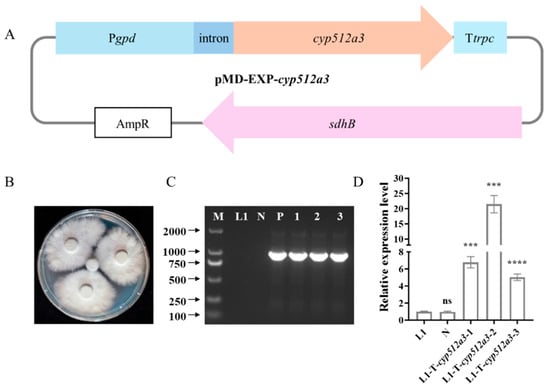
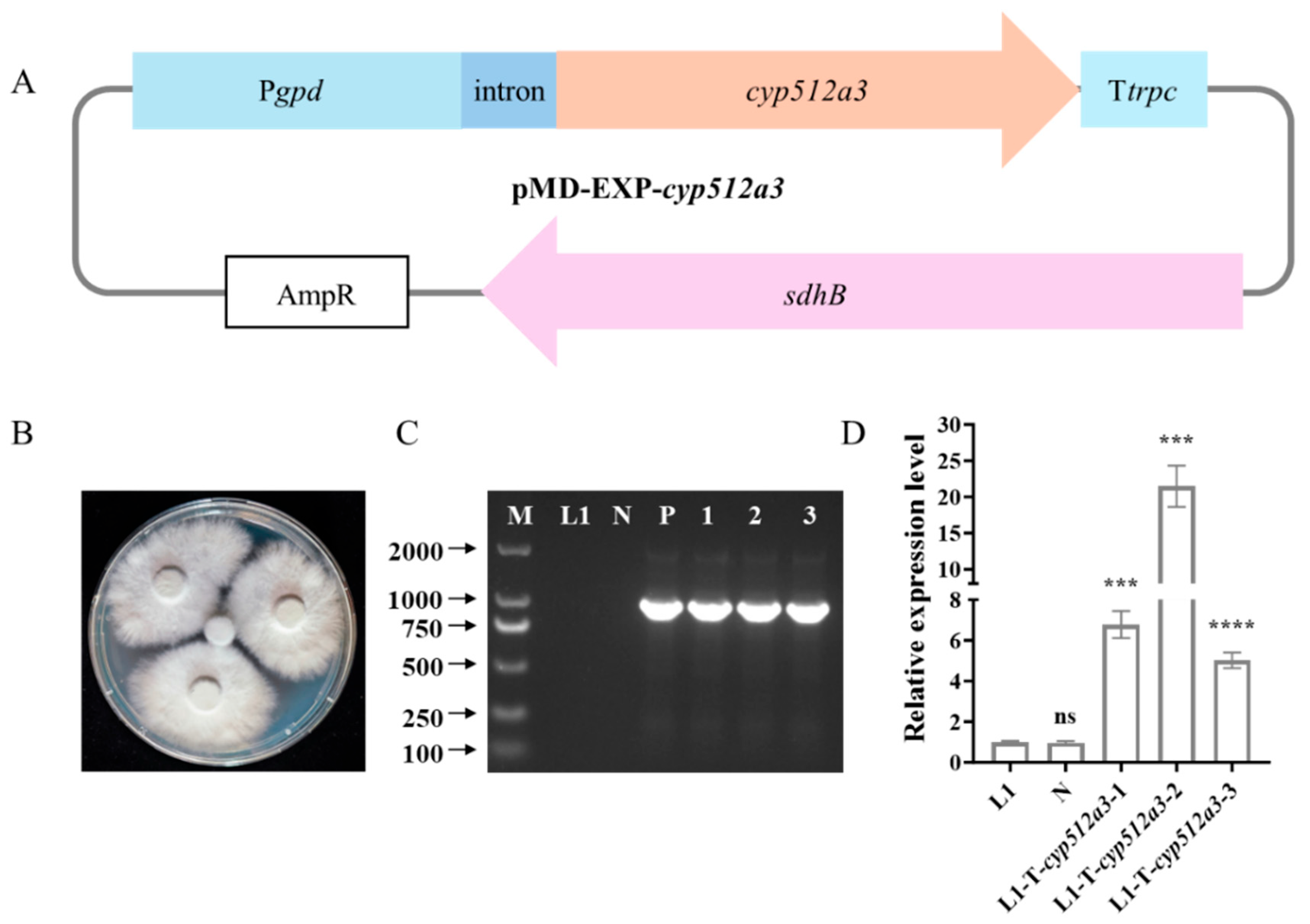
To achieve overexpression of the cyp512a3 gene in strain L1, the expression plasmid pMD-EXP-cyp512a3 was constructed. Using pMD19T as the backbone, the Pgpd (promoter of the glyceraldehyde-3-phosphate dehydrogenase gene)-intron fragment and the TtrpC (terminator of the tryptophan synthase gene from Aspergillus nidulans)-sdhB (iron-sulfur protein subunit of the succinate dehydrogenase gene) fragment were amplified from the plasmid pMD-EXP-cas9 [25]. Additionally, the cyp512a3 gene was amplified from strain L1. The expression plasmid was assembled using overlap PCR and the ClonExpress® Ultra One Step Cloning Kit (C115, Vazyme, Nanjing, China) (Figure 1A). The primers used are listed in Table S1. The selection marker of this plasmid is a mutated sdhB gene, which confers carboxin resistance to the strain. The plasmid was cloned and propagated in Escherichia coli DH5α. The expression plasmid pMD-EXP-cyp512a3 (experimental group) and the starting plasmid pMD19T (negative control group) were separately transferred into the protoplasts of strain L1 using a PEG-mediated method: 100 μL of STC containing L1 protoplasts, 10 μg of the pMD-EXP-cyp512a3 plasmid, and 50 μL of PTC (600 g/L PEG 4000, 10 mmol/L Tris-HCl at pH 7.5, and 50 mmol/L CaCl2) were mixed together. After incubation on ice for 10 min, 1 mL of PTC was added and gently mixed, followed by incubation at room temperature for 30 min. Add the transformation system to YMGAM medium (YMG medium supplemented with 10 g/L low-melting-point agarose, Shaoxin Biotech, Shanghai, China; and 109.3 g/L mannitol, SCR, Shanghai, China) for a 48 h recovery period. Then, add the upper screening YMGAM medium containing carboxin (with a final mass concentration of 4 μg/mL) and culture at 26 °C. Subsequently, subculturing was carried out, and re-screening was performed using a PDA medium containing carboxin. The genomic DNA of the resistant transformants was extracted using the HiPure Fungal DNA Mini Kit (Magen, Guangzhou, China). The target band was amplified using primers V-OE-cyp512a3-F/R (Table S1) and subjected to sequencing for verification.
Figure 1.
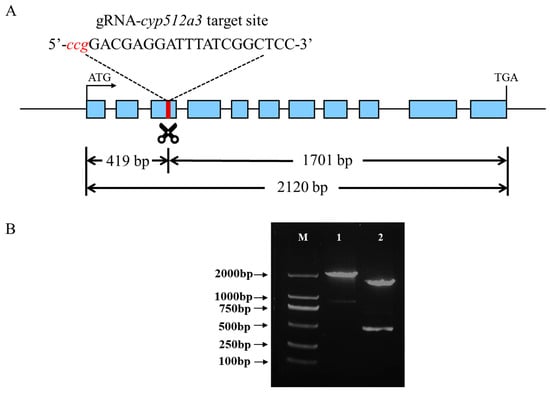
Electrophoretogram of in vitro cleavage of the cyp512a3 gene by RNP. (A) The blue sections represent exons, the white sections represent introns, and the red section represents the target site. (B) M indicates the 2000 molecular weight marker; 1 represents the cyp512a3 gene fragment; 2 represents the two fragments resulting from cleavage by RNP-cyp512a3, with the band positions corresponding to 419 bp and 1701 bp, respectively.
2.8. Gene Expression by Quantitative Real-Time PCR (qRT-PCR) Analysis of Transformants
The resistant transformants from the experimental group (transformed with the pMD-EXP-cyp512a3 plasmid), the resistant transformants from the negative control group (transformed with the pMD19T plasmid), and the wild-type strain L1 were respectively inoculated onto PDA medium. After incubation at 26 °C for 10 days, the mycelia were collected. Total RNA was extracted using the HiPure Fungal RNA Mini Kit (Magen, Guangzhou, China). Genomic DNA was removed and reverse-transcribed into cDNA according to the instructions of the FastKing RT Kit (With gDNase) (Tiangen, Beijing, China). Fluorescent quantitative PCR reactions were performed using the SuperReal PreMix Plus (SYBR Green) Kit (Tiangen, Beijing, China). The experiment utilized the RPL4 gene of G. lucidum as an internal reference [26,27], and the primer sequences used are listed in Table S1.
2.9. Mycelial Fermentation and UPLC-MS of Ganoderma Triterpenoids
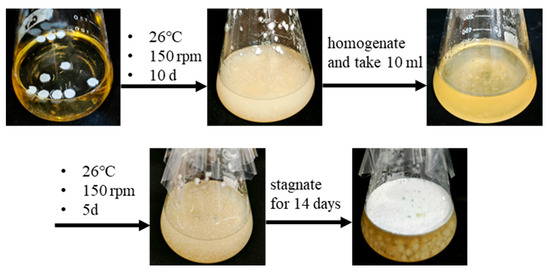
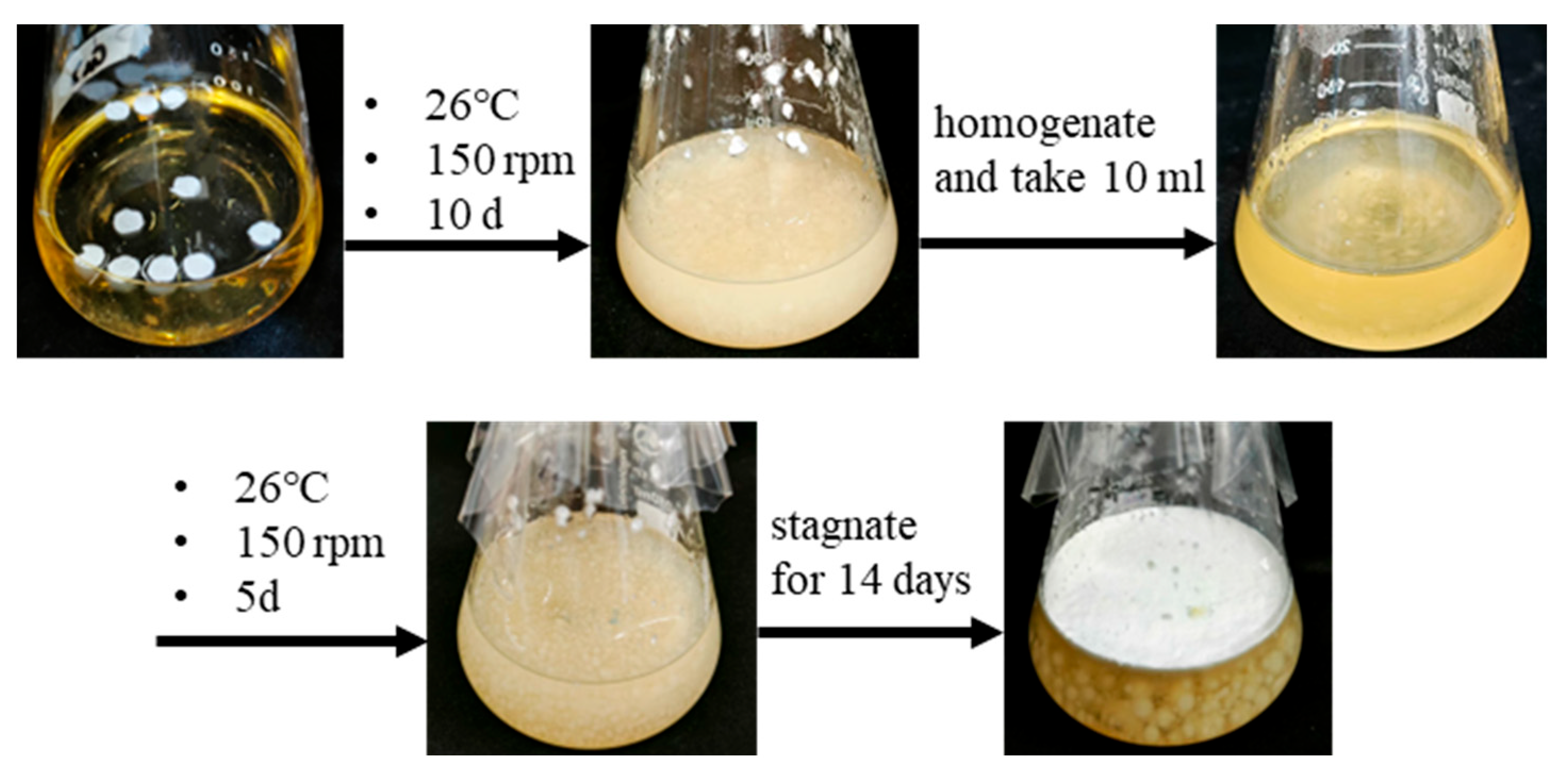
The dikaryon-editing strain G0119-KO-cyp512a3 and the overexpressing strain L1-OE-cyp512a3 were respectively inoculated into YMG liquid medium and shaken and cultured at 26 °C and 150 rpm for 10 days, while their corresponding wild-type strains, L1 and G0119, were synchronously cultured under the same conditions. After the culture period, the fermentation broth was transferred to a sterile homogenization cup and subjected to low-speed homogenization for 7 s, repeated twice. Subsequently, 10 mL of the homogenized broth was transferred into a secondary YMG fermentation liquid medium and further shaken and cultured for 5 days, followed by static incubation at 26 °C. The mycelial pellets formed on the surface of the fermentation broth were collected, freeze-dried, and reserved for further use. The freeze-dried mycelial pellets were extracted by adding absolute alcohol at a solid-to-liquid ratio of 1:20 (w/v), sonicated for 1 h, and then centrifuged at 6000 rpm for 10 min. The supernatant was collected, filtered through a 0.22 μm organic filter membrane, and the filtrate was diluted 100-fold stepwise for subsequent ultra-performance liquid chromatography-mass spectrometry (UPLC-MS) analysis to calculate the changes in the content of individual ganoderic acids in the dry weight of the mycelial pellets. The UPLC-MS detection of Ganoderma triterpenoids was performed according to the method of Yue et al. [28]. The concentrations of the target analytes were determined by means of an Agilent UPLC system (1290 infinity II) coupled with an Agilent triple quadrupole mass spectrometer (6495 Triple Quad(Agilent Technologies, Santa Clara, CA, USA)). The LC-MS system was controlled with Agilent MassHunter Workstation software (version B.08.00). More specifically, optimization of the precursor ions, quantitative ions, and qualitative ions of all reference standards was completed by means of the Agilent MassHunter Optimizer (version B.08.00). The chromatography and retention time determination were performed by Agilent MassHunter Qualitative Analysis (version B.07.00). Quantitative calculations and peak integration were performed with Agilent MassHunter Quantitative Analysis (version B.07.01). Gradient elution was achieved through a binary mobile phase mixture of water (mobile phase A, with 0.01% acetic acid) and ACN (mobile phase B). The elution procedure was as follows: 0–5 min, 55% B; 5–25 min, 55–75% B; 25–30 min, 75–85% B; 30–32 min, 85–100% B. The column temperature was set at 35 °C. Additionally, the sample or mixed standard solution was injected at 4 μL via autosampler, with the flow rate maintained at 400 µL/min. UV detection was performed at 240 nm. The sample recovery rate of this method ranged from 93.3% to 109.7%, indicating good accuracy of the method. The relative standard deviation (RSD) of the recovery rate was less than 11.45%, which evaluated the stability of the method at different spiking levels and demonstrated that the quantitative results were reliable.
2.10. Functional Characterization of the Gene cyp512a3 in the Triterpene Synthesis Pathway of G. Lucidum Mycelium
To determine the potential functional position of cyp512a3 in the triterpene biosynthetic pathway of G. lucidum, we first analyzed the 11 reported cyp450 genes involved in triterpene synthesis in G. lucidum [13,16,17,18,19,20,21,22,23]. Using the website https://www.ncbi.nlm.nih.gov/(accessed on 6 June 2025), we retrieved the corresponding gene identifiers in the L1 genome. Subsequently, MEGA-X software and the website https://itol.embl.de/ (accessed on 6 June 2025) were utilized to construct a phylogenetic tree for the 170 cyp450 genes within the L1 genome. By integrating the reported triterpene synthesis pathway in G. lucidum mycelium [13,16,17,18,19,20,21,22,23,29,30] and the clustering relationship of cyp512a3 with cyp450 genes of known functions in the phylogenetic tree, we ultimately inferred the potential functional position of cyp512a3 in the triterpene synthesis pathway of G. lucidum mycelium.
3. Results and Analysis
3.1. Design of sgRNA and Verification of RNP Cleavage Efficiency in Vitro
The full length of the cyp512a3 gene is 2120 bp, comprising a total of 11 exons (Supplementary Data S1). The selected sgRNA sequence is 5′-GACGAGGATTTATCGGCTCC-3′, and its cleavage site is located 419 bp downstream of the start codon ATG (Figure 2A, Supplementary Data S1). Subsequently, an in vitro transcription template for the sgRNA was constructed (the sequence is shown in Supplementary Data S2), and in vitro transcription was carried out. To verify whether the Cas9 protein guided by this sgRNA could specifically cleave the target sequence of cyp512a3, an in vitro cleavage experiment was conducted. Theoretically, the RNP complex composed of the Cas9 protein and sgRNA-cyp512a3 can cleave the 2120 bp target fragment, generating two products of 419 bp and 1701 bp (Figure 1A). Agarose gel electrophoresis results showed that after the addition of the RNP complex, the 2120 bp fragment was successfully cleaved, producing two bands that matched the expected sizes (approximately 1701 bp and 419 bp; Figure 1B). This indicates that the prepared RNP complex can effectively cleave the target sequence of cyp512a3.
Figure 2.
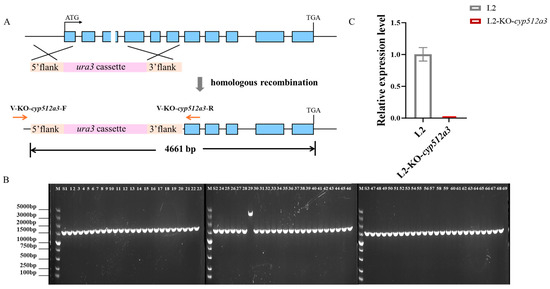
Acquisition of cyp512a3 editing strain. (A) Schematic diagram of homologous recombination of donor DNA for cyp512a3. The blue sections represent gene exons, the pink section is the ura3 expression cassette, and the orange sections are the homologous upper arm and homologous lower arm. (B) Gel electrophoresis image for the verification of 69 putative transformants. M represents the 5000 molecular weight marker; S1, S2, and S3 are the control strain L2; 1~69 are the putative transformants. (C) Detection of RT-qPCR expression levels of the cyp512a3 gene in the L2 monokaryotic strain and the L2-KO-cyp512a3 monokaryotic edited strain.
3.2. Acquisition of G. lucidum L2-KO-cyp512a3 Gene Editing Strain
During the gene editing of cyp512a3 in strain L2, RNP-cyp512a3 (220.6 nM) and donor DNA (15 μg) were co-transformed into L2-Δura3 protoplasts (107 in number). Screening was conducted on minimal medium lacking uracil: the RNP complex induced double-strand breaks in the target sequence, while the donor DNA facilitated homologous recombination via its homologous arms, complementing the ura3 gene near the target site. This enabled the transformants to grow on minimal medium deficient in uridine, thus achieving the screening process (Figure 2A). The sequence of the donor DNA is provided in Supplementary Data S3. A total of 69 putative transformants were screened using minimal medium. After genomic DNA extraction and PCR analysis, only one strain exhibited a band consistent with the expected size (Figure 2B). Sequencing of this transformant (results shown in Supplementary Data S4) revealed that homologous recombination had occurred between the sequences near the target site and the 5′ and 3′ flanking sequences of the donor DNA, successfully achieving knockout of the cyp512a3 gene and complementation of the ura3 gene. This edited strain was named L2-KO-cyp512a3. Further qRT-PCR results demonstrated that, compared to the wild-type L2, the expression level of the cyp512a3 gene in L2-KO-cyp512a3 was extremely low and almost undetectable (Figure 2C).
3.3. The Dikaryon-Editing Strain cyp512a3 Was Obtained by Single–Single Hybridization
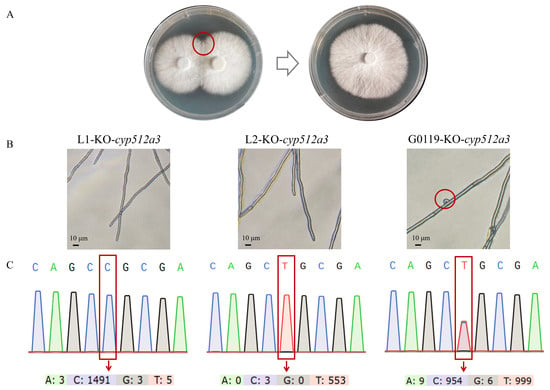
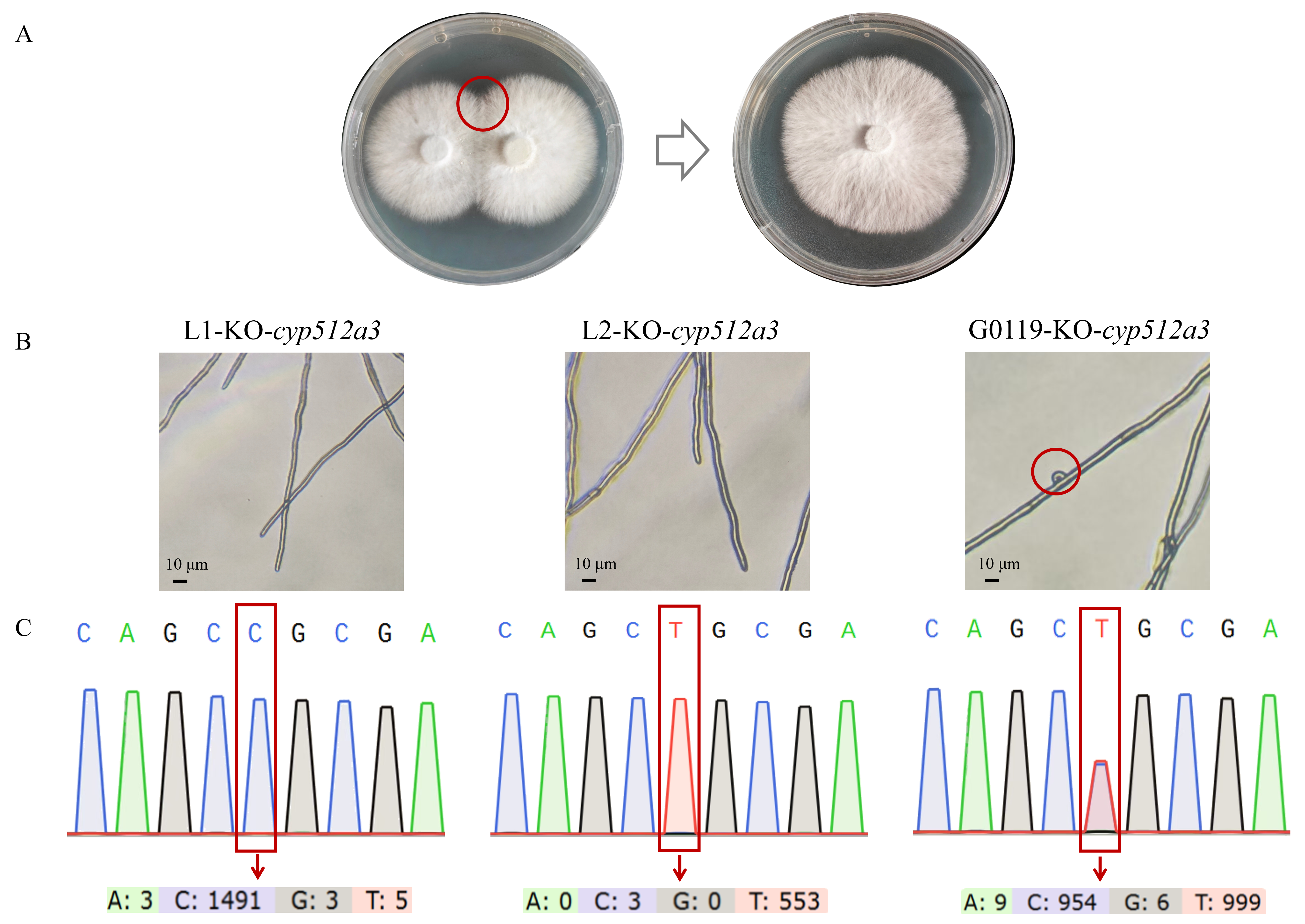
L1 and L2 are two monokaryotic strains with compatible mating types isolated from G0119. The cyp512a3 gene was knocked out in L1, and the strain was designated L1-KO-cyp512a3 (obtained in previous experiments in our laboratory). The cyp512a3 gene was knocked out in L2, and the strain was designated L2-KO-cyp512a3 (obtained in this study). The two edited monokaryotic strains L1-KO-cyp512a3 and L2-KO-cyp512a3 were co-cultured by confrontation assay. Mycelia were picked from the contact zone and re-cultured to form a new colony (Figure 3A). In the newly formed colonies, the typical structure of dikaryotization in basidiomycetes, known as clamp connection, was observed, whereas this structure was not found in the two monokaryotic parent strains (Figure 3B). Further SNP locus analysis revealed that the new colonies exhibited overlapping peaks at 60 bp after the ATG of the ura3 gene, while both monokaryotic parent strains showed single peaks at this locus (Figure 3C). The aforementioned results indicate that L1-KO-cyp512a3 and L2-KO-cyp512a3 have successfully mated and formed dikaryotic mycelium, with the cyp512a3 gene knocked out in both nuclei of this dikaryotic strain. This strain was named G0119-KO-cyp512a3 and was used for subsequent research (results shown in Supplementary Data S5).
Figure 3.
Single–single hybridization of cyp512a3 monokaryotic editing strain. (A) Schematic diagram of the confrontation culture plate of strains L1-KO-cyp512a3 and L2-KO-cyp512a3. (B) Mycelial morphology of strains L1-KO-cyp512a3, L2-KO-cyp512a3 and G0119-KO-cyp512a3 under a microscope. The red circle indicates the presence of clamp connections in the dikaryotic strain G0119-KO-cyp512a3. (C) DNA sequencing chromatograms of strains L1-KO-cyp512a3, L2-KO-cyp512a3 and G0119-KO-cyp512a3.
3.4. Acquisition of G. lucidum L1-OE-cyp512a3 Overexpression Strain
The pMD-EXP-cyp512a3 plasmid (Figure 4A) was transformed into the G. lucidum strain L2. After 20 days of cultivation, a total of 22 resistant transformants were obtained on carboxin-containing selection plates. Ten of these transformants were randomly selected and inoculated onto fresh PDA medium. Following five rounds of subculturing, they were screened again on PDA medium containing carboxin, ultimately yielding three stable resistant transformants (Figure 4B). The integration of the target gene into the transformants was verified through PCR and sequencing. The results showed that all three resistant transformants could amplify the expected bands encompassing the Pgpd promoter, intron, and a portion of the cyp512a3 sequence (Figure 4C), whereas no corresponding bands were observed in the negative control. The sequencing results of the resistant transformants are presented in Supplementary Data S6. The three transformants were named L1-T-cyp512a3-1, L1-T-cyp512a3-2, and L1-T-cyp512a3-3, respectively. qRT-PCR analysis revealed that, compared to the wild-type L1 strain, the expression levels of the cyp512a3 gene in L1-T-cyp512a3-1, L1-T-cyp512a3-2, and L1-T-cyp512a3-3 were increased to 6.8-fold, 21.5-fold, and 5.0-fold, respectively (Figure 4D). The expression of cyp512a3 in the empty vector control strain showed no significant difference from that in L1, indicating that the expression vector itself did not affect the transcription of the target gene. Based on these findings, the L1-T-cyp512a3-2 strain, which exhibited the highest expression level, was selected for subsequent experiments and renamed as L1-OE-cyp512a3.
Figure 4.
Acquisition of cyp512a3 overexpressing strains. (A) Plasmid map of pMD-EXP-cyp512a3. (B) Three stable resistant transformants were obtained on PDA medium containing carboxin; the L1 control strain showed no growth in the middle. (C) Agarose gel electrophoresis image for verification of resistant transformants. M represents the 2000 DNA molecular weight marker; the L1 monokaryotic strain serves as the control; N is the negative control (the L1 monokaryotic strain transformed with an empty vector not containing the target gene); P is the positive control (the fragment amplified from the plasmid pMD-EXP-cyp512a3); and 1, 2, and 3 are the fragments amplified from the three resistant transformants L1-T-cyp512a3-1, L1-T-cyp512a3-2, and L1-T-cyp512a3-3, respectively. (D) RT-qPCR detection of strains. The L1 monokaryotic strain serves as the control; N is the L1 monokaryotic strain transformed with an empty vector not containing the target gene; and L1-T-cyp512a3-1, L1-T-cyp512a3-2, and L1-T-cyp512a3-3 are the three resistant transformants. ****, indicates statistical significance (p < 0.0001) compared to the L1 strain. ***, indicates statistical significance (p < 0.001) compared to the L1 strain. ns, indicates no statistical significance (p > 0.05) compared to the L1 strain.
3.5. Triterpene Changes Caused by Knockout and Overexpression of Cyp512a3 Gene
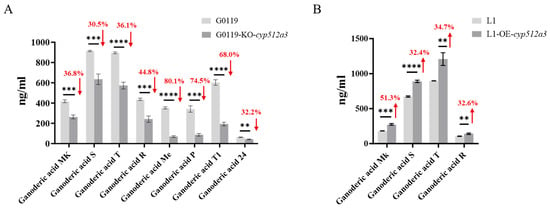
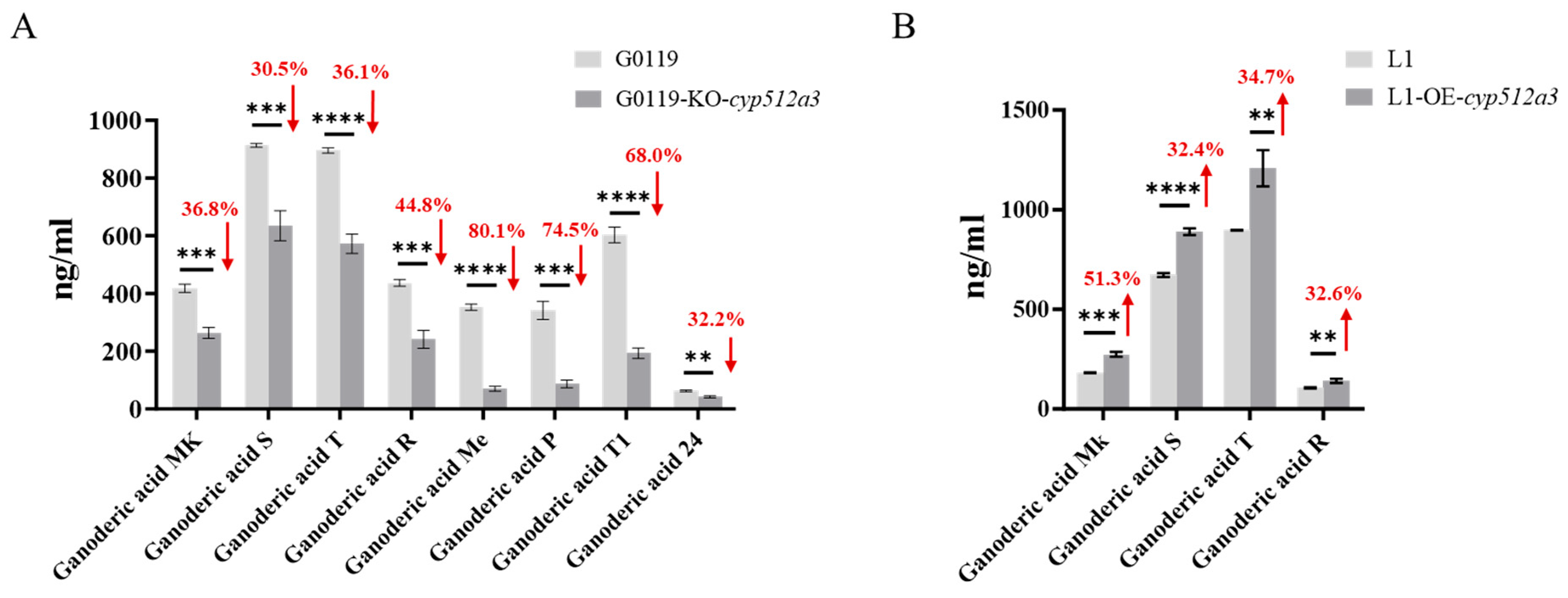
The dikaryotic knockout strain G0119-KO-cyp512a3, the overexpression strain L1-OE-cyp512a3, along with their wild-type strains G0119 and L1, were cultivated using a two-stage process involving shaking followed by stationary culture, as illustrated in the flowchart in Figure 5. After 14 days of stationary culture, the upper mycelial mat was collected to extract ganoderic triterpenoids. The content of ganoderic triterpenoids was then determined using UPLC-MS. The results showed that, compared to strain L1, the concentrations of various ganoderic acids in the overexpression strain L1-OE-cyp512a3 significantly increased, with ganoderic acid Mk, ganoderic acid S, ganoderic acid T, and ganoderic acid R increasing by 51.3%, 32.4%, 34.7%, and 32.6%, respectively (Figure 6A). Compared to strain G0119, the concentrations of eight ganoderic acid components in the dikaryotic edited strain G0119-KO-cyp512a3 decreased to varying degrees: ganoderic acid Me decreased by 80.1%, ganoderic acid P by 74.5%, ganoderic acid T1 by 68.0%, ganoderic acid R by 44.8%, ganoderic acid Mk by 36.8%, ganoderic acid T by 36.1%, ganoderic acid 24 by 32.2%, and ganoderic acid S by 30.5% (Figure 6B). The above results indicate that cyp512a3 is a key cyp450 gene influencing the synthesis of triterpenoids in the mycelium of G. lucidum. Through calculations, it was found that the contents of ganoderic acid Mk, ganoderic acid S, ganoderic acid T, and ganoderic acid R in the L1-OE-cyp512a3 strain were 0.548 ± 0.020, 1.780 ± 0.028, 2.416 ± 0.148, and 0.281 ± 0.016 mg/g dry weight of mycelial mat, respectively, which were 1.5, 1.3, 1.3, and 1.3 times those of the L1 control strain, respectively. The contents of ganoderic acid Mk, ganoderic acid S, ganoderic acid T, ganoderic acid R, ganoderic acid Me, ganoderic acid P, ganoderic acid T1, and ganoderic acid 24 in the G0119-KO-cyp512a3 strain were 0.528 ± 0.031, 1.269 ± 0.085, 1.144 ± 0.055, 0.482 ± 0.050, 0.140 ± 0.014, 0.174 ± 0.022, 0.386 ± 0.030, and 0.085 ± 0.006 mg/g dry weight of mycelial mat, respectively, which were 0.6, 0.7, 0.6, 0.6, 0.2, 0.3, 0.3, and 0.7 times those of the G0119 control strain, respectively (Table 1).
Figure 5.
Strain fermentation flow chart.
Figure 6.
UPLC-MS detection results of fermented mycoderma of G0119-KO-cyp512a3 and L1-OE-cyp512a3 strains. (A) Changes in ganoderic acid content in the fermented mycoderma of the G0119-KO-cyp512a3 strain. ****, indicates statistical significance (p < 0.0001) compared to the G0119 strain. ***, indicates statistical significance (p < 0.001) compared to the G0119 strain. **, indicates statistical significance (p < 0.01) compared to the G0119 strain. (B) Changes in ganoderic acid content in the fermented mycoderma of the L1-OE-cyp512a3 strain. ****, indicates statistical significance (p < 0.0001) compared to the L1 strain. ***, indicates statistical significance (p < 0.001) compared to the L1 strain. **, indicates statistical significance (p < 0.01) compared to the L1 strain.
Table 1.
Comparison of dry weight content of individual ganoderic acids in mycelial mat (mg/g dry weight).
3.6. Functional Localization of Gene Cyp512a3 in Triterpenoid Synthesis Pathway of G. lucidum mycelia
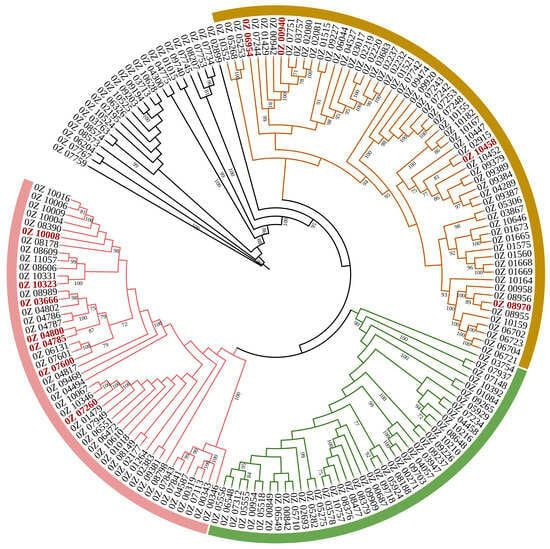

The gene IDs corresponding to 11 previously reported cyp450 genes involved in the synthesis of triterpenoids in G. lucidum were retrieved from the L1 genome (Table 2). A phylogenetic tree was constructed using 170 cyp450 genes from the L1 genome (Figure 7), and the results revealed that cyp512a3 (0Z_04785) had the closest evolutionary relationship with cyp512a13 (0Z_04800), the latter of which is known to hydroxylate the C12 position and oxidize the hydroxyl group at the C15 position of TIIGAs [20]. Additionally, cyp512a3 was also evolutionarily close to cyp512w2 (0Z_03666) and cyp512a2 (0Z_07600). Among them, cyp512w2 can catalyze the conversion of TIGAs to TIIGAs, transform HLDOA into GA-Y, and mediate oxidation at the C15 and C11 positions [18,20]; cyp512a2 can similarly convert TIGAs to TIIGAs and transform HLDOA into GA-Y, but its catalytic activity is lower than that of cyp512w2 [18,29].
Table 2.
Eleven reported cyp450 genes involved in triterpene synthesis of G. lucidum.
Figure 7.
The phylogenetic tree prediction of CYP genes in G. lucidum G0119. The genes marked in red represent those that have been reported in Table 2.
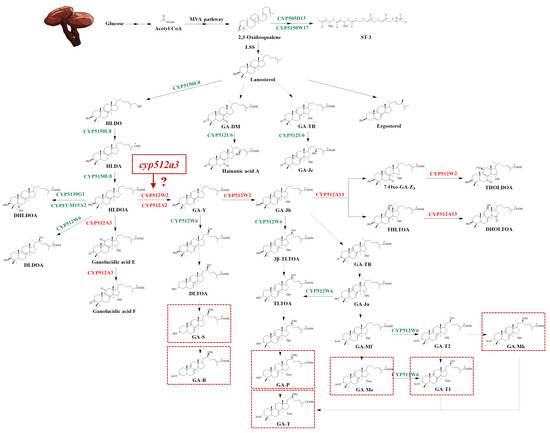
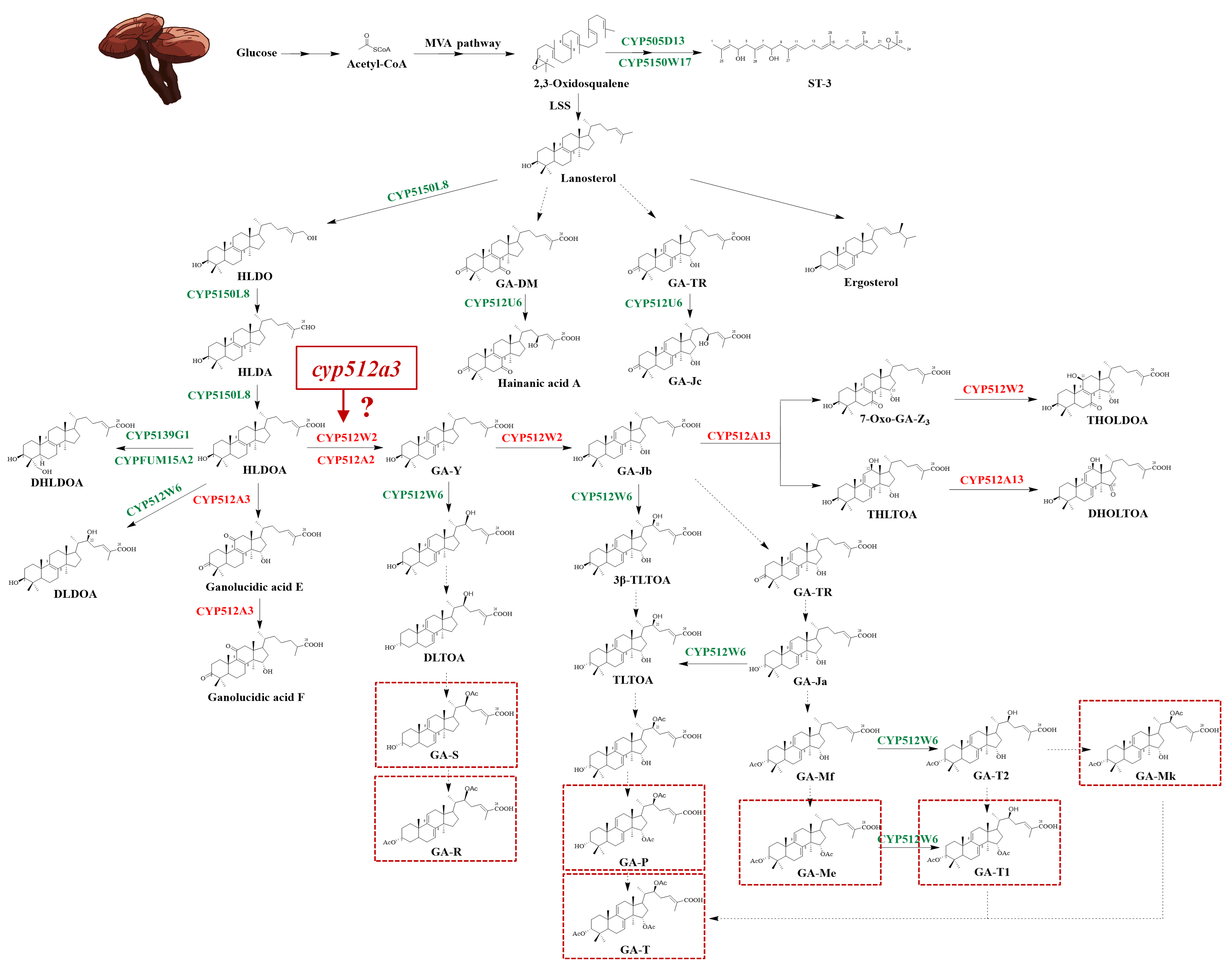
Based on the known functions of the aforementioned three homologous genes, it is speculated that cyp512a3 may possess similar partial catalytic activities and thus participate in the regulation of the biosynthesis of triterpenoids in G. lucidum. The results of this study show that knocking out cyp512a3 leads to significant changes in the content of eight ganoderic acids, with the positions of seven of these acids in the known triterpenoid synthesis pathway depicted in Figure 8. Notably, both cyp512w2 and cyp512a2 act on the same node downstream of the ganoderic acid HLDOA, and blocking this node may affect the synthesis of the aforementioned seven ganoderic acids. Combining the evolutionary relationships with metabolic phenotypes, it is inferred that cyp512a3 (0Z_04785) may also act on this key node, thereby participating in the synthesis and regulation of eight mycelial triterpenoids in G. lucidum, including ganoderic acid Mk.
Figure 8.
Prediction of triterpenoid biosynthesis pathway of CYP genes in G. lucidum G0119.
4. Discussion
This study systematically explores the role of the cyp450 gene cyp512a3 in the biosynthesis of triterpenes in G. lucidum using an endogenous system through gene editing and overexpression techniques for the first time. Although Du et al. [23] confirmed that cyp512a3 can catalyze the conversion of ganoderic acid HLDOA to ganolucidic acid E and F using a heterologous expression system (Saccharomyces cerevisiae), it is worth noting that these products are not abundant triterpenoid compounds found in the mycelium of G. lucidum. This actually reflects a common phenomenon in studies of cyp450 genes related to triterpenes in G. lucidum using heterologous systems: due to differences in metabolic backgrounds, the triterpene products generated through heterologous expression often deviate significantly from the endogenous metabolic profile of G. lucidum. This, to some extent, limits the translation of research results into industrial applications. In contrast, conducting gene function studies within the endogenous environment of G. lucidum has significant advantages: by regulating endogenous genes, it is possible to directly alter the levels of major triterpene compounds in the mycelium. These compounds not only have well-defined biological activities but also align closely with the metabolic regulatory mechanisms required for mycelial fermentation production. Furthermore, this study provides more direct experimental evidence for elucidating the synthesis pathways of key triterpene compounds during the mycelial stage, and these results can directly support the targeted breeding of high-yield strains and the optimization of fermentation processes.
As an important edible and medicinal fungus, the development of G. lucidum products primarily relies on the use of its dikaryotic fruiting bodies and the spores they produce [31,32,33]. Therefore, gene editing of dikaryotic strains of G. lucidum has significant industrial application value. However, when gene editing is performed directly on dikaryotic strains, it often results only in heterozygous edited strains with a single nucleus being edited [34,35]. This may be due to intrinsic differences between the two nuclei, leading to uneven editing efficiency. Recently, Choi et al. [36] achieved a major breakthrough in Ganoderma lucidum gene editing by directly performing CRISPR/Cas9 editing on dikaryotic strains. They obtained 31 transformants, among which only 2 strains showed simultaneous editing in both nuclei. In this study, a stepwise strategy was employed: first, the cyp512a3 gene was knocked out in two mating-type compatible monokaryotic strains (L1 and L2), and then the dikaryotic edited strains were obtained through single mating. The editing method used in this study features high editing efficiency and low screening cost. The editing efficiency of monokaryotic strains can reach 100% [34], and screening only needs to be performed against the haploid background, resulting in a low workload. In contrast, for dikaryotic editing, the probability of simultaneous targeting of both nuclei is compounded, leading to high screening costs for obtaining effective homozygous strains, which require extensive validation to acquire the target strains. Furthermore, unlike the study by Choi et al. [36], we co-transformed protoplasts with both RNP complexes and donor DNA, enabling the donor DNA to mediate homology-directed repair (HR) of double-strand breaks (DSB). Accordingly, the dikaryotic edited strains of Ganoderma lucidum obtained in this study were homozygous, which is more conducive to the functional analysis of specific target genes in subsequent research. In this study, we used ura3 as the marker gene, and a monokaryotic strain with the ura3 gene knocked out was used as the starting strain. The functional gene cyp512a3 was knocked out via the CRISPR/Cas9-mediated cleavage of the target gene, accompanied by the complementation of the ura3 gene. Strains with successful ura3 complementation could synthesize uridine, which is essential for growth, and thus grow on medium lacking uridine, whereas strains without successful complementation could not grow. Based on this selectable characteristic of the ura3 gene, we successfully obtained the cyp512a3-knockout strain. This system lays a foundation for the study of other functional genes in the future. In contrast, Choi et al. [36] only knocked out the pyrG marker gene, and the application of marker gene-based research to the study of functional genes may still be a long process. In addition, the method employed in this study supports stepwise stacking editing in separate nuclei, where different genes are edited in distinct monokaryotic strains, followed by hybridization to generate a dikaryon. In contrast, multigene co-editing in dikaryotic strains is extremely difficult, making it challenging to achieve precise reconstruction of metabolic pathways. In conclusion, his method offers stable heritable dikaryotic edited materials for the functional gene research of G. lucidum. More importantly, this study provides an essential dikaryotic editing tool for exploring important life traits of G. lucidum, such as fruiting body development, lignin degradation, and spore powder production. The in-depth analysis of these traits holds even greater biological significance compared to the study of triterpenoid synthesis pathways. Additionally, previously reported gene editing studies on edible fungi such as Lentinula edodes and Flammulina Filiformis have all been conducted in monokaryotic materials [37,38,39,40]. The editing strategy established in this paper can also serve as a methodological reference for the study of key life traits in other edible fungi like Lentinula edodes and Flammulina Filiformis.
According to the results in Figure 8, it is speculated that the cyp512a3 gene may be positioned upstream of lanosterol in the triterpenoid synthesis pathway of G. lucidum, located at a critical node in the metabolic network. After knocking out the cyp512a3 gene, the content of ganoderic acid Me significantly decreased, suggesting that this gene may be involved in key steps of the synthesis pathway of ganoderic acid Me, such as hydroxylation or oxidation reactions at specific positions [18,22]. It is noteworthy that the changes in the ganoderic acid profile caused by the overexpression of the cyp512a3 gene were more limited than those observed in the knockout treatment. This phenomenon can be explained by the complexity of the metabolic pathway: while overexpressing a single enzyme gene can accelerate specific reaction steps, if the cell cannot simultaneously enhance the supply of precursor substances and the level of energy metabolism, the overall flux of the pathway will still be constrained. In contrast, knocking out a key gene may block the core metabolic pathway, often resulting in more significant metabolic disturbances. This phenomenon of “limited overexpression effects and significant knockout effects” is relatively common in complex secondary metabolic pathways, reflecting the overall coordination and bottleneck effects of the metabolic network. In overexpression strains, excessive expression of the target gene driven by a strong promoter often triggers a series of non-physiological effects, including metabolic disorders caused by protein misfolding and aggregation, aberrant subcellular localization of proteins that further interferes with normal transcriptional regulation, and non-specific binding of overexpressed target proteins to other metabolic enzymes, thereby inhibiting their enzymatic activities. In contrast, the metabolic changes exhibited by gene knockout strains mainly represent physiological adaptations of cells to the loss of gene function, without the aforementioned artificial artifacts derived from overexpression. Consequently, the metabolic phenotypes of overexpression and knockout strains naturally display significant asymmetry.
Furthermore, in our previous work, a CRISPR/Cas9 gene-editing system based on RNP was successfully established for Ganoderma lucidum, with further optimization achieved by the addition of Triton X-100. In this established system, DNA double-strand breaks (DSBs) were repaired through the non-homologous end joining (NHEJ) pathway, and the editing efficiency for the ura3 gene reached over 35 mutants per 107 protoplasts—confirming that the constructed gene-editing system is stable and reliable [24]. In the present study, we introduced donor DNA to facilitate DSB repair via homologous recombination (HR); however, the HR efficiency in Ganoderma lucidum remains extremely low. This low efficiency is primarily attributed to the fact that DSB repair in Ganoderma lucidum is predominantly dependent on the NHEJ pathway rather than HR. As the initiator of the NHEJ pathway, the Ku70/Ku80 heterodimer can rapidly bind to DSB ends and initiate NHEJ-mediated repair, thereby suppressing the HR pathway [41,42]. However, knockout of Ku70/Ku80 leads to growth defects [43]. Additionally, the expression levels of Rad51 and Rad52, which are key genes involved in the HR pathway, are relatively low in Ganoderma lucidum. Even when the NHEJ pathway is inhibited, the activation of HR remains inadequate. In future research, we will attempt to enhance HR efficiency by synchronizing the cell cycle, optimizing the selection of Cas proteins and the design of single-guide RNAs (sgRNAs), and refining the construction of donor DNA.
5. Conclusions
In this study, the monokaryotic Ganoderma lucidum strain L2 with the ura3 gene knocked out was used as the recipient strain. Using an RNP-mediated CRISPR/Cas9 genome editing system and donor DNA, the functional gene cyp512a3 was successfully knocked out. Subsequently, a homozygous dikaryotic knockout strain of cyp512a3 was obtained via monokaryon–monokaryon hybridization. Compared with the wild-type strain, the contents of several ganoderic acids were significantly decreased in the edited strain. Based on phylogenetic relationships and metabolic phenotypes, the potential catalytic site of cyp512a3 was predicted. This study provides a practical strategy for obtaining dikaryotic Ganoderma lucidum strains with both nuclei edited and offers important support for exploring the biosynthetic pathway of ganoderic acids and gene function.
Supplementary Materials
The following supporting information can be downloaded at: https://www.mdpi.com/article/10.3390/jof12030183/s1, Supplementary Data S1: Sequences amplified from the L2 genome using primers L2-cyp512a3-F/R; Supplementary Data S2: The sgRNA transcription cassettes (T7 promoter-Spacer-sgRNA scaffold) of cyp512a3; Supplementary Data S3: Donor DNA sequences of cyp512a3; Supplementary Data S4: Sequences of the mutant edited through the G. lucidum CRISPR system, amplified in L2-Δcyp512a3 using primers V-KO-cyp512a3-F/R; Supplementary Data S5: Sequences amplified in L1-KO-cyp512a3 and L2-KO-cyp512a3 using primers ura3-SNP-F/R; Supplementary Data S6: Sequences amplified from the L1 genome using primers V-OE- cyp512a3-F/R. Table S1: Primer sequences.
Author Contributions
Conceptualization, J.Z. and Y.T.; methodology, B.D. and Y.T.; software, B.D., G.Z. and N.F.; validation, B.D., L.T. and Y.Z.; formal analysis, B.D. and Y.T.; investigation, B.D. and Y.T.; resources, C.T. and N.F.; data curation, B.D.; writing—original draft preparation, B.D. and Y.T.; writing—review and editing, G.Z. and J.F.; visualization, B.D.; supervision, J.Z.; project administration, Y.T.; funding acquisition, C.T. and J.Z. All authors have read and agreed to the published version of the manuscript.
Funding
This research was funded by the National Key R&D Program of China (Grant No. 2023YFF1000800).
Institutional Review Board Statement
Not applicable.
Informed Consent Statement
Not applicable.
Data Availability Statement
The original contributions presented in this study are included in the article/supplementary material. Further inquiries can be directed to the corresponding authors.
Conflicts of Interest
The authors declare no conflicts of interest.
References
- Tan, Y.; Tang, C.H.; Feng, J.; Feng, N.; Wu, Y.Y.; Bao, D.P.; Yang, Y.; Zhang, J.S. Research progress on biosynthesis and regulation of Ganoderma lucidum triterpenes. Acta Edulis Fungi 2019, 26, 125–140. [Google Scholar]
- Lin, Z.B. Ganoderma from Magic to Science; Peking University Medical Publishing House: Beijing, China, 2008. [Google Scholar]
- Ma, C.G.; Zhang, Z.X.; Yan, M.X.; Wang, S.J.; Jian, Q.Y. Research status of bio-active components and anti-tumor of Ganoderma lucidum. Edible Med. Mushrooms 2022, 30, 114–118. [Google Scholar]
- Xie, Y.Q.; Wang, Q.R.; Sun, S.Y.; Lai, M.R.; Cheng, R.B.; Qiu, X.H. Research progress on the pharmacological effects and clinical applications of Ganoderma lucidum. Clin. Med. Res. Pract. 2020, 5, 191–193. [Google Scholar]
- Shao, H.J.; Sun, J.H.; Liu, J.B.; Chen, R.Y.; Kang, J. Research Progress on Structures and Bioactivities of Ganoderma Triterpenes. J. Fungal Res. 2024, 22, 39–59. [Google Scholar]
- Du, Y.P.; Tian, L.X.; Wang, Y.; Li, Z.H.; Xu, Z.C. Chemodiversity, pharmacological activity, and biosynthesis of specialized metabolites from medicinal model fungi Ganoderma lucidum. Chin. Med. 2024, 19, 51. [Google Scholar] [CrossRef] [Scilit]
- Zhong, J.J.; Li, Y.B.; Liu, R.M. Anti-proliferation and induced mitochondria-mediated apoptosis of ganoderic acid Mk from Ganoderma lucidum mycelia in cervical cancer HeLa cells. Lat. Am. J. Pharm. 2012, 31, 43–50. [Google Scholar]
- Wang, C.N.; Chen, J.C.; Shiao, M.S.; Wang, C.T. The aggregation of human platelet induced by ganodermic acid S. Biochim. Et Biophys. Acta (BBA)-Biomembr. 1989, 986, 151–160. [Google Scholar] [CrossRef] [Scilit]
- Tang, W.; Liu, J.W.; Zhao, W.M.; Wei, D.Z.; Zhong, J.J. Ganoderic acid T from Ganoderma lucidum mycelia induces mitochondria mediated apoptosis in lung cancer cells. Life Sci. 2006, 80, 205–211. [Google Scholar] [CrossRef] [Scilit]
- Wang, G.; Zhao, J.; Liu, J.; Huang, Y.; Zhong, J.J.; Tang, W. Enhancement of IL-2 and IFN-γ expression and NK cells activity involved in the anti-tumor effect of ganoderic acid Me in vivo. Int. Immunopharmacol. 2007, 7, 864–870. [Google Scholar] [CrossRef] [Scilit] [PubMed]
- Chen, N.H.; Liu, J.W.; Zhong, J.J. Ganoderic acid Me inhibits tumor invasion through down-regulating matrix metalloproteinases 2/9 gene expression. J. Pharmacol. Sci. 2008, 108, 212–216. [Google Scholar] [CrossRef] [Scilit] [PubMed]
- Wang, J.L.; Li, Y.B.; Liu, R.M.; Zhong, J.J. A new ganoderic acid from Ganoderma lucidum mycelia. J. Asian Nat. Prod. Res. 2010, 12, 727–730. [Google Scholar] [CrossRef] [Scilit]
- He, X.Y.; Chen, Y.W.; Li, Z.H.; Fang, L.; Chen, H.M.; Liang, Z.S.; Abozeid, A.; Yang, Z.Q.; Yang, D.F. Germplasm resources and secondary metabolism regulation in Reishi mushroom (Ganoderma lucidum). Chin. Herb. Med. 2023, 15, 376–382. [Google Scholar] [CrossRef] [Scilit]
- Wang, W.F.; Xiao, H.; Zhong, J.J. Biosynthesis of a ganoderic acid in Saccharomyces cerevisiae by expressing a cytochrome P450 gene from Ganoderma lucidum. Biotechnol. Bioeng. 2018, 115, 1842–1854. [Google Scholar] [CrossRef] [Scilit]
- Chen, S.L.; Xu, J.; Liu, C.; Zhu, Y.J.; Nelson, D.R.; Zhou, S.G.; Li, C.F.; Wang, L.Z.; Guo, X.; Sun, Y.Z.; et al. Genome sequence of the model medicinal mushroom Ganoderma lucidum. Nat. Commun. 2012, 3, 913. [Google Scholar] [CrossRef] [Scilit]
- Yang, C.S.; Li, W.C.; Li, C.; Zhou, Z.H.; Xiao, Y.L.; Yan, X. Metabolism of ganoderic acids by a Ganoderma lucidum cytochrome P450 and the 3-keto sterol reductase ERG27 from yeast. Phytochemistry 2018, 155, 83–92. [Google Scholar] [CrossRef] [Scilit] [PubMed]
- Song, X.; Xiao, H.; Luo, S.W.; Wang, X.Z.; Wang, W.F.; Lin, S.J. Biosynthesis of squalene-type triterpenoids in Saccharomyces cerevisiae by expression of CYP505D13 from Ganoderma lucidum. Bioresoures Bioprocess. 2019, 6, 19. [Google Scholar] [CrossRef] [Scilit]
- Yuan, W.; Jiang, C.J.; Wang, Q.; Fang, Y.B.; Wang, J.; Wang, M.; Xiao, H. Biosynthesis of mushroom-derived type II ganoderic acids by engineered yeast. Nat. Commun. 2022, 13, 7740. [Google Scholar] [CrossRef] [Scilit] [PubMed]
- Lan, X.T.; Yuan, W.; Wang, M.; Xiao, H. Efficient biosynthesis of antitumor ganoderic acid HLDOA using a dual tunable system for optimizing the expression of CYP5150L8 and a Ganoderma P450 reductase. Biotechnol. Bioeng. 2019, 116, 3301–3311. [Google Scholar] [CrossRef] [Scilit] [PubMed]
- Wang, Q.; Du, Z.Q.; Li, Z.H.; Yuan, W.; Zhong, J.J.; Guo, J.; Luo, S.G.; Shi, T.; Xiao, H. A Branchpoint Cytochrome P450 CYP512A13 Interconverts Different Types of Ganoderma Triterpenoids. ACS Catal. 2025, 15, 13428–13443. [Google Scholar] [CrossRef] [Scilit]
- Wang, W.F.; Xiao, H.; Zhong, J.J. Biosynthesis of a novel ganoderic acid by expressing CYP genes from Ganoderma lucidum in Saccharomyces cerevisiae. Appl. Microbiol. Biotechnol. 2022, 106, 523–534. [Google Scholar] [CrossRef] [Scilit]
- Wang, Q.; Li, Y.; Zhang, S.H.; Yuan, W.; Du, Z.Q.; Shi, T.; Chang, Z.; Zhai, X.Y.; Lu, Y.H.; Wang, M.; et al. Decoding and reprogramming of the biosynthetic networks of mushroom-derived bioactive type II ganoderic acids in yeast. Cell Discov. 2025, 11, 61. [Google Scholar] [CrossRef] [Scilit]
- Du, Y.P.; Peng, S.; Chen, H.G.; Li, J.; Huang, F.Y.; Chen, W.X.; Wang, J.; Fang, X.X.; Liu, L.J.; Wei, L.H.; et al. Unveiling the Spatiotemporal Landscape of Ganoderma lingzhi: Insights into Ganoderic Acid Distribution and Biosynthesis. Engineering 2025, in press. [Google Scholar] [CrossRef] [Scilit]
- Tan, Y.; Yu, X.L.; Zhang, Z.G.; Tian, J.L.; Feng, N.; Tang, C.H.; Zou, G.; Zhang, J.S. An efficient CRISPR/Cas9 genome editing system for a Ganoderma lucidum cultivated strain by ribonucleoprotein method. J. Fungi 2023, 9, 1170. [Google Scholar] [CrossRef] [Scilit]
- Zhang, Z.G.; Zhang, J.S.; Zou, G.; Tang, C.H.; Feng, J.; Bao, D.P.; Chen, J.B.; Tan, Y. Construction of a CRISPR/Cas9-Based Genome Editing System in Ganoderma lucidum ‘Hunong No.1’ Cultivar. Acta Edulis Fungi 2023, 30, 9–18. [Google Scholar]
- Xu, J.; Xu, Z.C.; Zhu, Y.J.; Luo, H.M.; Qian, J.; Ji, A.J.; Hu, Y.L.; Sun, W.; Wang, B.; Song, J.Y.; et al. Identification and Evaluation of Reference Genes for qRT-PCR Normalization in Ganoderma lucidum. Curr. Microbiol. 2013, 68, 120–126. [Google Scholar] [CrossRef] [Scilit] [PubMed]
- Shen, K.Y.; Zhang, X.B.; Qin, P.; Cheng, Q.; Xiang, Q.J. Enzymatic activity and transcription of Ganoderma lucidum laccases following treatment with four heavy metals. Chin. J. Appl. Environ. Biol. 2017, 23, 0448–0453. [Google Scholar]
- Yue, Y.W.; Zhou, S.; Cheng, C.L.; Teng, L.M.; Zhang, J.S.; Cui, B.K.; Han, W.; Dai, Y.C.; Feng, N. Determination and chemotaxonomic analysis of lanostane triterpenoids in the mycelia of Ganoderma spp. using ultra-performance liquid chromatography-tandem mass spectrometry (I). Planta Medica 2023, 89, 1505–1514. [Google Scholar] [CrossRef] [Scilit] [PubMed]
- Luo, Y.H.; Du, Z.Q.; Jiang, C.J.; Yu, Z.Q.; Zhong, J.J.; Shi, T.; Xiao, H. Rational engineering of a membrane-anchored promiscuous cytochrome P450 for the efficient biosynthesis of valuable ganoderic acids. ACS Catal. 2023, 13, 15673–15681. [Google Scholar] [CrossRef] [Scilit]
- Wang, Q.; Xu, M.M.; Zhao, L.T.; Wang, F.; Li, Y.R.; Shi, G.Y.; Ding, Z.Y. Transcriptome dynamics and metabolite analysis revealed the candidate genes and regulatory mechanism of ganoderic acid biosynthesis during liquid superficial-static culture of Ganoderma lucidum. Microb. Biotechnol. 2021, 14, 600–613. [Google Scholar] [CrossRef] [Scilit]
- Meng, N.N. Extraction of Fruiting Polysaccharide from Ganoderma lucidum and Development of Compound Powder. Master’s Thesis, Shandong Agricultural University, Tai’an, China, 2019. [Google Scholar]
- Zeng, X.Y.; Qiu, R.C.; Cao, Z.Q. Development of Liaodong herbal brand Ganoderma lucidum extract spore powder tablets products. Ginseng Res. 2017, 29, 25–27. [Google Scholar]
- Li, K.X. Study on the Effect of Ganoderma lucidum Extract Combined with Different Prescriptions on its Anti Fatigue and Sleep Aid Efficacy. Master’s Thesis, Fujian Agriculture and Forestry University, Fuzhou, China, 2024. [Google Scholar]
- Tian, J.L.; Dong, B.B.; Tang, C.H.; Zhou, S.; Feng, N.; Feng, J.; Zhang, J.S.; Tan, Y. CRISPR/Cas 9-Assisted Hybridization Strategy for Generating Homozygous Mutants at Targeted Locus in Ganoderma lucidum. Acta Edulis Fungi 2025, 32, 1–12. [Google Scholar]
- Wang, P.A.; Xiao, H.; Zhong, J.J. CRISPR-Cas9 assisted functional gene editing in the mushroom Ganoderma lucidum. Appl. Microbiol. Biotechnol. 2020, 104, 1661–1671. [Google Scholar] [CrossRef] [Scilit] [PubMed]
- Choi, Y.J.; Eom, H.; Nandre, R.; Kim, M.; Oh, Y.L.; Kim, S.; Ro, H.S. Simultaneous gene editing of both nuclei in a dikaryotic strain of Ganoderma lucidum using Cas9-gRNA ribonucleoprotein. J. Microbiol. 2025, 63, e.2409006. [Google Scholar] [CrossRef] [Scilit]
- Liu, X.T.; Dong, J.H.; Liao, J.; Tian, L.; Qiu, H.; Wu, T.; Ge, F.; Zhu, J.; Shi, L.; Jiang, A.L.; et al. Establishment of CRISPR/Cas9 Genome-Editing System Based on Dual sgRNAs in Flammulina Filiformis. J. Fungi 2022, 8, 693. [Google Scholar] [CrossRef] [Scilit]
- Liu, J.Y.; Cui, H.Y.; Wang, R.J.; Xu, Z.; Yu, H.L.; Song, C.Y.; Lu, H.; Li, Q.Z.; Xing, D.R.; Tan, Q.; et al. A Simple and Efficient CRISPR/Cas9 System Using a Ribonucleoprotein Method for Flammulina filiformis. J. Fungi 2022, 8, 1000. [Google Scholar] [CrossRef] [Scilit]
- Moon, S.; An, J.Y.; Choi, Y.J.; Oh, Y.L.; Ro, H.S.; Ryu, H. Construction of a CRISPR/Cas9-mediated genome editing system in Lentinula edodes. Mycobiology 2021, 49, 599–603. [Google Scholar] [CrossRef] [Scilit]
- Kamiya, A.; Ueshima, H.; Nishida, S.; Honda, Y.; Kamitsuji, H.; Sato, T.; Miyamoto, H.; Sumita, T.; Izumitsu, K.; Irie, T. Development of a gene-targeting system using CRISPR/Cas9 and utilization of pyrG as a novel selectable marker in Lentinula edodes. FEMS Microbiol. Lett. 2023, 370, fnad042. [Google Scholar] [CrossRef] [Scilit] [PubMed]
- Tu, J.L.; Bai, X.Y.; Xu, Y.L.; Li, N.; Xu, J.W. Targeted Gene Insertion and Replacement in the Basidiomycete Ganoderma lucidum by Inactivation of Nonhomologous End Joining Using CRISPR/Cas9. Appl. Environ. Microbiol. 2021, 87, e0151021. [Google Scholar] [CrossRef] [Scilit] [PubMed]
- De Jong, J.F.; Ohm, R.A.; De Bekker, C.; WÖsten, H.A.B.; Lugones, L.G. Inactivation of ku80 in the mushroom-forming fungus Schizophyllum commune increases the relative incidence of homologous recombination. FEMS Microbiol. Lett. 2010, 310, 91–95. [Google Scholar] [CrossRef] [Scilit]
- Gandía, M.; Xu, S.; Font, C.; Marcos, J.F. Disruption of ku70 involved in non-homologous end-joining facilitates homologous recombination but increases temperature sensitivity in the phytopathogenic fungus Penicillium digitatum. Fungal Biol. 2016, 120, 317–323. [Google Scholar] [CrossRef] [Scilit]

Disclaimer/Publisher’s Note: The statements, opinions and data contained in all publications are solely those of the individual author(s) and contributor(s) and not of MDPI and/or the editor(s). MDPI and/or the editor(s) disclaim responsibility for any injury to people or property resulting from any ideas, methods, instructions or products referred to in the content. |
© 2026 by the authors. Licensee MDPI, Basel, Switzerland. This article is an open access article distributed under the terms and conditions of the Creative Commons Attribution (CC BY) license.