MCP-1/CCL2 in Fungal Infections: Balancing Immune Recruitment and Immunopathology


Abstract
1. Introduction
2. Literature Search Strategy
3. Fungal Species
3.1. Pulmonary Cryptococcosis
3.1.1. Direct Functional Evidence Supports a Protective MCP-1/CCL2 Recruitment Axis
3.1.2. Timing and Cellular Source Shape the Pulmonary MCP-1/CCL2 Response
3.1.3. Fungal and Host Factors Regulate MCP-1/CCL2 Within Broader Inflammatory Networks
3.2. CNS Cryptococcosis and Human Cryptococcal Meningitis
3.2.1. Sustained MCP-1/CCL2-Associated Recruitment Contributes to CNS Inflammation and Neuropathology
3.2.2. MCP-1/CCL2 Expression Is Not Inherently Pathologic and Depends on the Surrounding Immune Response
3.2.3. Human MCP-1/CCL2 Protein Levels Reflect CNS Inflammatory Phenotype and IRIS Risk
3.3. Candida
3.3.1. MCP-1/CCL2 Induction Is Shaped by Tissue, Fungal Phenotype, and Upstream Signaling
3.3.2. Protection Requires an Effective Response to the MCP-1/CCL2 Signal
3.3.3. MCP-1/CCL2 Production Becomes Uncoupled from Protection When Recruitment or Fungal Control Fails
3.3.4. Therapeutic Modulation Reflects the Part of the MCP-1/CCL2 Response Being Corrected
3.4. Aspergillus
3.4.1. Aspergillus Keratitis: Fungal Sensing, Macrophage Function, and Treatment-Associated Inflammation
3.4.2. Pulmonary Invasive Aspergillosis: MCP-1/CCL2 Production Supports Compensatory Antifungal Recruitment
3.4.3. Allergic and Chronic Airway Aspergillosis: Timing Shifts MCP-1/CCL2 Function from Fungal Clearance to Inflammatory Remodeling
3.4.4. Human and Translational Models
3.5. Other Fungal Species
3.5.1. Pneumocystis Pneumonia: Epithelial MCP-1/CCL2 Production and Immune-Context-Dependent Inflammation
3.5.2. Dimorphic Fungi: MCP-1/CCL2 in CCR2-Dependent Monocyte Recruitment and Granulomatous Immunity
3.5.3. Mucormycosis: Dendritic-Cell-Amplified Barrier Responses and Inflammatory Dysregulation
3.5.4. Other Localized and Environmental Fungal Diseases
3.5.5. Model Yeast and Transcriptional Regulation of MCP-1/CCL2
4. Discussion
4.1. Protective MCP-1/CCL2 Responses Require Effective Recruitment and Antifungal Cell Function
4.2. MCP-1/CCL2 Becomes Ineffective or Harmful When Recruitment Is Mistimed, Incomplete, or Excessive
4.3. Translational Implications for Biomarkers and Therapeutic Targeting
4.4. Limitations of the Current Evidence and Future Directions
5. Conclusions
Supplementary Materials
Author Contributions
Funding
Institutional Review Board Statement
Informed Consent Statement
Data Availability Statement
Acknowledgments
Conflicts of Interest
Abbreviations
| 5-LO | 5-Lipoxygenase |
| AFRS | Allergic fungal rhinosinusitis |
| AHCC | Active hexose correlated compound |
| AIDS | Acquired immunodeficiency syndrome |
| AKI | Acute kidney injury |
| APC | Antigen-presenting cell |
| aPDT | Antimicrobial photodynamic therapy |
| BALF | Bronchoalveolar lavage fluid |
| BCL6 | B-cell lymphoma 6 |
| BDSF | Cis-2-dodecenoic acid |
| BMDMs | Bone marrow-derived macrophages |
| C-IRIS | Cryptococcosis-associated immune reconstitution inflammatory syndrome |
| CAM | COVID-19-associated mucormycosis |
| cART | Combination antiretroviral therapy |
| CAWS | Candida albicans water-soluble extract |
| CBA | Cytometric bead array |
| CCL | C-C motif chemokine ligand |
| CCR2 | C-C chemokine receptor type 2 |
| CD | Cluster of differentiation |
| CFU | Colony-forming unit |
| ChIP | Chromatin immunoprecipitation |
| CNS | Central nervous system |
| CpG | Cytosine-phosphate-guanosine |
| CRP | C-reactive protein |
| CRSwNP | Chronic rhinosinusitis with nasal polyps |
| CSF | Cerebrospinal fluid |
| CXCL | C-X-C motif chemokine ligand |
| DNase I | Deoxyribonuclease I |
| DTR | Diphtheria toxin receptor |
| ELISA | Enzyme-linked immunosorbent assay |
| ERK1/2 | Extracellular signal-regulated kinase 1/2 signaling |
| GCS1 | Glucosylceramide synthase 1 |
| GWAS | Genome-wide association study |
| GXM | Glucuronoxylomannan |
| HIV | Human immunodeficiency virus |
| HSCT | Hematopoietic stem cell transplantation |
| IDO | Indoleamine 2,3-dioxygenase |
| IDR | Innate defense regulator |
| IFN | Interferon |
| IKK | Inhibitor of κB kinase |
| IL | Interleukin |
| IRIS | Immune reconstitution inflammatory syndrome |
| JNK | c-Jun N-terminal kinase |
| LDH | Lactate dehydrogenase |
| LOX-1 | Lectin-like oxidized low-density lipoprotein receptor-1 |
| LPS | Lipopolysaccharide |
| LT | Lymphotoxin |
| LTA4H | Leukotriene A4 hydrolase |
| MARCO | Macrophage receptor with collagenous structure |
| MCP-1 | Monocyte chemoattractant protein-1 |
| Mincle | Macrophage-inducible C-type lectin |
| miR | MicroRNA |
| MMP | Matrix metalloproteinase |
| mRNA | Messenger RNA |
| NF-κB | Nuclear factor kappa-light-chain-enhancer of activated B cells |
| NFAT | Nuclear factor of activated T cells |
| NK | Natural killer |
| ODN | Oligodeoxynucleotides |
| OPC | Oropharyngeal candidiasis |
| PBMCs | Peripheral blood mononuclear cells |
| PJP | Pneumocystis jirovecii pneumonia |
| PTP1B | Protein tyrosine phosphatase 1B |
| qRT-PCR | Quantitative reverse transcription real-time polymerase chain reaction |
| RPA | RNase protection assay |
| S1P | Sphingosine-1-phosphate |
| SAFS | Severe asthma with fungal sensitization |
| SCID | Severe combined immunodeficiency |
| seq | Sequencing |
| SK1 | Sphingosine kinase 1 |
| SNH | Sodium new houttuyfonate |
| STAT | Signal transducer and activator of transcription |
| Syk | Spleen tyrosine kinase |
| Th1 | T helper 1 |
| Tim | T-cell immunoglobulin and mucin domain |
| TLR | Toll-like receptor |
| TNF(R) | Tumor necrosis factor (receptor) |
| TRIF | Toll/Interleukin-1 receptor domain (TIR)-domain-containing adapter-inducing interferon-β |
| Trim72 | Tripartite motif-containing protein 72 |
| WT | Wild-type |
References
- Denning, D.W. Global incidence and mortality of severe fungal disease. Lancet Infect. Dis. 2024, 24, e428–e438. [Google Scholar] [CrossRef] [Scilit] [PubMed]
- World Health Organization. WHO Fungal Priority Pathogens List to Guide Research, Development and Public Health Action; World Health Organization: Geneva, Switzerland, 2022. [Google Scholar]
- Centers for Disease Control and Prevention. Antimicrobial-Resistant Fungal Diseases. Available online: https://www.cdc.gov/fungal/antimicrobial-resistant-fungi/index.html (accessed on 9 July 2026).
- Dewald, O.; Zymek, P.; Winkelmann, K.; Koerting, A.; Ren, G.; Abou-Khamis, T.; Michael, L.H.; Rollins, B.J.; Entman, M.L.; Frangogiannis, N.G. CCL2/Monocyte Chemoattractant Protein-1 regulates inflammatory responses critical to healing myocardial infarcts. Circ. Res. 2005, 96, 881–889. [Google Scholar] [CrossRef] [Scilit] [PubMed]
- Tsou, C.L.; Peters, W.; Si, Y.; Slaymaker, S.; Aslanian, A.M.; Weisberg, S.P.; Mack, M.; Charo, I.F. Critical roles for CCR2 and MCP-3 in monocyte mobilization from bone marrow and recruitment to inflammatory sites. J. Clin. Investig. 2007, 117, 902–909. [Google Scholar] [CrossRef] [Scilit] [PubMed]
- Serbina, N.V.; Pamer, E.G. Monocyte emigration from bone marrow during bacterial infection requires signals mediated by chemokine receptor CCR2. Nat. Immunol. 2006, 7, 311–317. [Google Scholar] [CrossRef] [Scilit] [PubMed]
- Morrison, B.E.; Park, S.J.; Mooney, J.M.; Mehrad, B. Chemokine-mediated recruitment of NK cells is a critical host defense mechanism in invasive aspergillosis. J. Clin. Investig. 2003, 112, 1862–1870. [Google Scholar] [CrossRef] [Scilit] [PubMed]
- Huffnagle, G.B.; Strieter, R.M.; Standiford, T.J.; McDonald, R.A.; Burdick, M.D.; Kunkel, S.L.; Toews, G.B. The role of monocyte chemotactic protein-1 (MCP-1) in the recruitment of monocytes and CD4+ T cells during a pulmonary Cryptococcus neoformans infection. J. Immunol. 1995, 155, 4790–4797. [Google Scholar] [CrossRef] [Scilit]
- Saavedra, M.; Taylor, B.; Lukacs, N.; Fidel, P.L. Local production of chemokines during experimental vaginal candidiasis. Infect. Immun. 1999, 67, 5820–5826. [Google Scholar] [CrossRef] [Scilit] [PubMed]
- Majer, O.; Bourgeois, C.; Zwolanek, F.; Lassnig, C.; Kerjaschki, D.; Mack, M.; Müller, M.; Kuchler, K. Type I interferons promote fatal immunopathology by regulating inflammatory monocytes and neutrophils during Candida infections. PLoS Pathog. 2012, 8, e1002811. [Google Scholar] [CrossRef] [Scilit] [PubMed]
- Xu, J.; Ganguly, A.; Zhao, J.; Ivey, M.; Lopez, R.; Osterholzer, J.J.; Cho, C.S.; Olszewski, M.A. CCR2 signaling promotes brain infiltration of inflammatory monocytes and contributes to neuropathology during cryptococcal meningoencephalitis. mBio 2021, 12. [Google Scholar] [CrossRef] [Scilit] [PubMed]
- MacCallum, D.M.; Castillo, L.; Brown, A.J.; Gow, N.A.; Odds, F.C. Early-expressed chemokines predict kidney immunopathology in experimental disseminated Candida albicans infections. PLoS ONE 2009, 4, e6420. [Google Scholar] [CrossRef] [Scilit] [PubMed]
- Kawakami, K.; Kinjo, Y.; Uezu, K.; Yara, S.; Miyagi, K.; Koguchi, Y.; Nakayama, T.; Taniguchi, M.; Saito, A. Monocyte chemoattractant protein-1-dependent increase of Vα14 NKT cells in lungs and their roles in Th1 response and host defense in cryptococcal infection. J. Immunol. 2001, 167, 6525–6532. [Google Scholar] [CrossRef] [Scilit] [PubMed]
- Uezu, K.; Kawakami, K.; Miyagi, K.; Kinjo, Y.; Kinjo, T.; Ishikawa, H.; Saito, A. Accumulation of γδ T cells in the lungs and their regulatory roles in Th1 response and host defense against pulmonary infection with Cryptococcus neoformans. J. Immunol. 2004, 172, 7629–7634. [Google Scholar] [CrossRef] [Scilit] [PubMed]
- Traynor, T.R.; Kuziel, W.A.; Toews, G.B.; Huffnagle, G.B. CCR2 expression determines T1 versus T2 polarization during pulmonary Cryptococcus neoformans infection. J. Immunol. 2000, 164, 2021–2027. [Google Scholar] [CrossRef] [Scilit] [PubMed]
- Traynor, T.R.; Herring, A.C.; Dorf, M.E.; Kuziel, W.A.; Toews, G.B.; Huffnagle, G.B. Differential roles of CC chemokine ligand 2/monocyte chemotactic protein-1 and CCR2 in the development of T1 immunity. J. Immunol. 2002, 168, 4659–4666. [Google Scholar] [CrossRef] [Scilit] [PubMed]
- Osterholzer, J.J.; Curtis, J.L.; Polak, T.; Ames, T.; Chen, G.-H.; McDonald, R.; Huffnagle, G.B.; Toews, G.B. CCR2 mediates conventional dendritic cell recruitment and the formation of bronchovascular mononuclear cell infiltrates in the lungs of mice infected with Cryptococcus neoformans. J. Immunol. 2008, 181, 610–620. [Google Scholar] [CrossRef] [Scilit] [PubMed]
- Rivera, J.; Zaragoza, O.; Casadevall, A. Antibody-mediated protection against Cryptococcus neoformans pulmonary infection is dependent on B cells. Infect. Immun. 2005, 73, 1141–1150. [Google Scholar] [CrossRef] [Scilit] [PubMed]
- Mednick, A.J.; Feldmesser, M.; Rivera, J.; Casadevall, A. Neutropenia alters lung cytokine production in mice and reduces their susceptibility to pulmonary cryptococcosis. Eur. J. Immunol. 2003, 33, 1744–1753. [Google Scholar] [CrossRef] [Scilit] [PubMed]
- Kawakami, K.; Qureshi, M.H.; Zhang, T.; Koguchi, Y.; Shibuya, K.; Naoe, S.; Saito, A. Interferon-gamma (IFN-gamma)-dependent protection and synthesis of chemoattractants for mononuclear leucocytes caused by IL-12 in the lungs of mice infected with Cryptococcus neoformans. Clin. Exp. Immunol. 1999, 117, 113–122. [Google Scholar] [CrossRef] [Scilit] [PubMed]
- Kawakami, K.; Shibuya, K.; Qureshi, M.H.; Zhang, T.; Koguchi, Y.; Tohyama, M.; Xie, Q.; Naoe, S.; Saito, A. Chemokine responses and accumulation of inflammatory cells in the lungs of mice infected with highly virulent Cryptococcus neoformans: Effects of interleukin-12. FEMS Immunol. Med. Microbiol. 1999, 25, 391–402. [Google Scholar] [CrossRef] [PubMed]
- Herring, A.C.; Falkowski, N.R.; Chen, G.-H.; McDonald, R.A.; Toews, G.B.; Huffnagle, G.B. Transient neutralization of tumor necrosis factor alpha can produce a chronic fungal infection in an immunocompetent host: Potential role of immature dendritic cells. Infect. Immun. 2005, 73, 39–49. [Google Scholar] [CrossRef] [Scilit] [PubMed]
- He, W.; Casadevall, A.; Lee, S.C.; Goldman, D.L. Phagocytic activity and monocyte chemotactic protein expression by pulmonary macrophages in persistent pulmonary cryptococcosis. Infect. Immun. 2003, 71, 930–936. [Google Scholar] [CrossRef] [Scilit] [PubMed]
- Castro-Lopez, N.; Campuzano, A.; Mdalel, E.; Vanegas, D.; Chaturvedi, A.; Nguyen, P.; Pulse, M.; Cardona Astrid, E.; Wormley Floyd, L. Inhibition of host 5-lipoxygenase reduces overexuberant inflammatory responses and mortality associated with Cryptococcus meningoencephalitis. mBio 2024, 15, e01483–01424. [Google Scholar] [CrossRef] [Scilit] [PubMed]
- Levitz, S.M.; North, E.A.; Jiang, Y.; Nong, S.H.; Kornfeld, H.; Harrison, T.S. Variables affecting production of monocyte chemotactic factor 1 from human leukocytes stimulated with Cryptococcus neoformans. Infect. Immun. 1997, 65, 903–908. [Google Scholar] [CrossRef] [Scilit] [PubMed]
- Lopes, J.P.; Stylianou, M.; Backman, E.; Holmberg, S.; Ekoff, M.; Nilsson, G.; Urban, C.F. Cryptococcus neoformans induces MCP-1 release and delays the death of human mast cells. Front. Cell Infect. Microbiol. 2019, 9, 289. [Google Scholar] [CrossRef] [Scilit] [PubMed]
- Souza, H.I.; Pereira, A.B.M.; Oliveira, J.R.; Silva, P.R.; Teixeira, D.N.S.; Silva-Vergara, M.L.; Rogério, A.P. Cryptococcus neoformans in association with Dermatophagoides pteronyssinus has pro-(IL-6/STAT3 overproduction) and anti-inflammatory (CCL2/ERK1/2 downregulation) effects on human bronchial epithelial cells. Inflammation 2022, 45, 1269–1280. [Google Scholar] [CrossRef] [Scilit] [PubMed]
- Cunha, M.M.; Pereira, A.B.M.; Lino, R.C.; da Silva, P.R.; Andrade-Silva, L.E.; de Vito, F.B.; de Souza, H.M.; Silva-Vergara, M.L.; Rogério, A.P. Effects of combination of Cryptococcus gattii and IFN-γ, IL-4 or IL-27 on human bronchial epithelial cells. Immunobiology 2023, 228, 152312. [Google Scholar] [CrossRef] [Scilit] [PubMed]
- Mednick, A.J.; Nosanchuk, J.D.; Casadevall, A. Melanization of Cryptococcus neoformans affects lung inflammatory responses during cryptococcal infection. Infect. Immun. 2005, 73, 2012–2019. [Google Scholar] [CrossRef] [Scilit] [PubMed]
- Wormley, F.L., Jr.; Cox, G.M.; Perfect, J.R. Evaluation of host immune responses to pulmonary cryptococcosis using a temperature-sensitive C. neoformans calcineurin A mutant strain. Microb. Pathog. 2005, 38, 113–123. [Google Scholar] [CrossRef] [Scilit] [PubMed]
- Xu, J.; Flaczyk, A.; Neal, L.M.; Fa, Z.; Eastman, A.J.; Malachowski, A.N.; Cheng, D.; Moore, B.B.; Curtis, J.L.; Osterholzer, J.J.; et al. Scavenger receptor MARCO orchestrates early defenses and contributes to fungal containment during cryptococcal infection. J. Immunol. 2017, 198, 3548–3557. [Google Scholar] [CrossRef] [Scilit] [PubMed]
- Supasorn, O.; Sringkarin, N.; Srimanote, P.; Angkasekwinai, P. Matrix metalloproteinases contribute to the regulation of chemokine expression and pulmonary inflammation in Cryptococcus infection. Clin. Exp. Immunol. 2016, 183, 431–440. [Google Scholar] [CrossRef] [Scilit] [PubMed]
- Farnoud, A.M.; Bryan, A.M.; Kechichian, T.; Luberto, C.; Poeta, M.D. The granuloma response controlling cryptococcosis in mice depends on the sphingosine kinase 1–sphingosine 1-phosphate pathway. Infect. Immun. 2015, 83, 2705–2713. [Google Scholar] [CrossRef] [Scilit] [PubMed]
- Grahnert, A.; Richter, T.; Piehler, D.; Eschke, M.; Schulze, B.; Müller, U.; Protschka, M.; Köhler, G.; Sabat, R.; Brombacher, F.; et al. IL-4 receptor-alpha-dependent control of Cryptococcus neoformans in the early phase of pulmonary infection. PLoS ONE 2014, 9, e87341. [Google Scholar] [CrossRef] [Scilit] [PubMed]
- Edwards, L.; Williams, A.E.; Krieg, A.M.; Rae, A.J.; Snelgrove, R.J.; Hussell, T. Stimulation via Toll-like receptor 9 reduces Cryptococcus neoformans-induced pulmonary inflammation in an IL-12-dependent manner. Eur. J. Immunol. 2005, 35, 273–281. [Google Scholar] [CrossRef] [Scilit] [PubMed]
- Arromsava, A.; Chuchawankul, S.; Worasilchai, N.; Angkasekwinai, P.; Amornsupak, K. Immunomodulatory activity of Pleurotus pulmonarius crude extract to human monocyte against Cryptococcus neoformans. BMC Complement. Med. Ther. 2025, 25, 251. [Google Scholar] [CrossRef] [Scilit] [PubMed]
- Shimoda, M.; Jones, V.C.; Kobayashi, M.; Suzuki, F. Microglial cells from psychologically stressed mice as an accelerator of cerebral cryptococcosis. Immunol. Cell Biol. 2006, 84, 551–556. [Google Scholar] [CrossRef] [Scilit] [PubMed]
- Kleinschek, M.A.; Muller, U.; Brodie, S.J.; Stenzel, W.; Kohler, G.; Blumenschein, W.M.; Straubinger, R.K.; McClanahan, T.; Kastelein, R.A.; Alber, G. IL-23 enhances the inflammatory cell response in Cryptococcus neoformans infection and induces a cytokine pattern distinct from IL-121. J. Immunol. 2006, 176, 1098–1106. [Google Scholar] [CrossRef] [Scilit] [PubMed]
- Fries, B.C.; Lee, S.C.; Kennan, R.; Zhao, W.; Casadevall, A.; Goldman, D.L. Phenotypic switching of Cryptococcus neoformans can produce variants that elicit increased intracranial pressure in a rat model of cryptococcal meningoencephalitis. Infect. Immun. 2005, 73, 1779–1787. [Google Scholar] [CrossRef] [Scilit] [PubMed]
- Uicker, W.C.; Doyle, H.A.; McCracken, J.P.; Langlois, M.; Buchanan, K.L. Cytokine and chemokine expression in the central nervous system associated with protective cell-mediated immunity against Cryptococcus neoformans. Med. Mycol. 2005, 43, 27–38. [Google Scholar] [CrossRef] [Scilit] [PubMed]
- Rayhane, N.; Lortholary, O.; Fitting, C.; Callebert, J.; Huerre, M.; Dromer, F.; Cavaillon, J.-M. Enhanced sensitivity of tumor necrosis factor/lymphotoxin-α—Deficient mice to Cryptococcus neoformans infection despite increased levels of nitrite/nitrate, interferon-γ, and interleukin-12. J. Infect. Dis. 1999, 180, 1637–1647. [Google Scholar] [CrossRef] [Scilit] [PubMed]
- Jarvis, J.N.; Meintjes, G.; Bicanic, T.; Buffa, V.; Hogan, L.; Mo, S.; Tomlinson, G.; Kropf, P.; Noursadeghi, M.; Harrison, T.S. Cerebrospinal fluid cytokine profiles predict risk of early mortality and immune reconstitution inflammatory syndrome in HIV-associated cryptococcal meningitis. PLoS Pathog. 2015, 11, e1004754. [Google Scholar] [CrossRef] [Scilit] [PubMed]
- Chang, C.C.; Omarjee, S.; Lim, A.; Spelman, T.; Gosnell, B.I.; Carr, W.H.; Elliott, J.H.; Moosa, M.-Y.S.; Ndung’u, T.; French, M.A.; et al. Chemokine levels and chemokine receptor expression in the blood and the cerebrospinal fluid of HIV-infected patients with cryptococcal meningitis and cryptococcosis-associated immune reconstitution inflammatory syndrome. J. Infect. Dis. 2013, 208, 1604–1612. [Google Scholar] [CrossRef] [Scilit] [PubMed]
- Zhou, L.H.; Zhao, H.Z.; Wang, X.; Wang, R.Y.; Jiang, Y.K.; Huang, L.P.; Yip, C.W.; Cheng, J.H.; Que, C.X.; Zhu, L.P. Immune reconstitution inflammatory syndrome in non-HIV cryptococcal meningitis: Cross-talk between pathogen and host. Mycoses 2021, 64, 1402–1411. [Google Scholar] [CrossRef] [Scilit] [PubMed]
- Tugume, L.; Rhein, J.; Hullsiek, K.H.; Mpoza, E.; Kiggundu, R.; Ssebambulidde, K.; Schutz, C.; Taseera, K.; Williams, D.A.; Abassi, M.; et al. HIV-associated cryptococcal meningitis occurring at relatively higher CD4 counts. J. Infect. Dis. 2019, 219, 877–883. [Google Scholar] [CrossRef] [Scilit] [PubMed]
- Lofgren, S.; Hullsiek, K.H.; Morawski, B.M.; Nabeta, H.W.; Kiggundu, R.; Taseera, K.; Musubire, A.; Schutz, C.; Abassi, M.; Bahr, N.C.; et al. Differences in immunologic factors among patients presenting with altered mental status during cryptococcal meningitis. J. Infect. Dis. 2017, 215, 693–697. [Google Scholar] [CrossRef] [Scilit] [PubMed]
- Xu, L.; Xu, Y.; Zheng, Y.; Peng, X.; Yang, Z.; Cao, Q.; Xiang, D.; Zhao, H. Differences in cytokine and chemokine profiles in cerebrospinal fluid caused by the etiology of cryptococcal meningitis and tuberculous meningitis in HIV patients. Clin. Exp. Immunol. 2021, 206, 82–90. [Google Scholar] [CrossRef] [Scilit] [PubMed]
- Christo, P.P.; de Carvalho Vilela, M.; Bretas, T.L.; Domingues, R.B.; Greco, D.B.; Livramento, J.A.; Teixeira, A.L. Cerebrospinal fluid levels of chemokines in HIV infected patients with and without opportunistic infection of the central nervous system. J. Neurol. Sci. 2009, 287, 79–83. [Google Scholar] [CrossRef] [Scilit] [PubMed]
- Li, A.; Zhu, W.; Yin, J.; Huang, X.; Sun, L.; Hua, W.; Wang, W.; Zhang, T.; Dai, L.; Wu, H. A preliminary study on the characteristics of Th1/Th2 immune response in cerebrospinal fluid of AIDS patients with cryptococcal meningitis. BMC Infect. Dis. 2021, 21, 500. [Google Scholar] [CrossRef] [Scilit] [PubMed]
- Beardsley, J.; Hoang, N.L.T.; Kibengo, F.M.; Tung, N.L.N.; Binh, T.Q.; Hung, L.Q.; Chierakul, W.; Thwaites, G.E.; Chau, N.V.V.; Nguyen, T.T.T.; et al. Do intracerebral cytokine responses explain the harmful effects of dexamethasone in human immunodeficiency virus–associated cryptococcal meningitis? Clin. Infect. Dis. 2019, 68, 1494–1501. [Google Scholar] [CrossRef] [Scilit] [PubMed]
- Wu, L.; Fu, X.; Pütz, B.; Zhang, R.; Liu, L.; Song, W.; Weng, L.; Shao, Y.; Zheng, Z.; Xun, J.; et al. Comprehensive risk factor predictions for 3-year survival among HIV-associated and disseminated cryptococcosis involving lungs and central nervous system. Infection 2024, 52, 1875–1887. [Google Scholar] [CrossRef] [Scilit] [PubMed]
- Steele, C.; Fidel, P.L. Cytokine and chemokine production by human oral and vaginal epithelial cells in response to Candida albicans. Infect. Immun. 2002, 70, 577–583. [Google Scholar] [CrossRef] [Scilit] [PubMed]
- Kuboyama, N.; Hayakawa, E.; Yaguchi, M.; Nomoto, T.; Abiko, Y. Stimulation of CCL2 expression in human gingival epithelium by Candida albicans. Int. J. Oral-Med. Sci. 2012, 11, 90–95. [Google Scholar] [CrossRef] [Scilit]
- Zeise, K.D.; Falkowski, N.R.; Metcalf, J.D.; Brown, C.A.; Huffnagle, G.B. Gene expression profiling reveals host defense strategies for restricting Candida albicans invasion and gastritis to the limiting ridge of the murine stomach. Infect. Immun. 2024, 92, e00438–00424. [Google Scholar] [CrossRef] [Scilit] [PubMed]
- Munoz-Duarte, A.R.; Castrejon-Jimenez, N.S.; Baltierra-Uribe, S.L.; Perez-Rangel, S.J.; Carapia-Minero, N.; Castaneda-Sanchez, J.I.; Luna-Herrera, J.; Lopez-Santiago, R.; Rodreguez-Tovar, A.V.; Garcia-Perez, B.E. Candida glabrata survives and replicates in human osteoblasts. Pathog. Dis. 2016, 74, ftw030. [Google Scholar] [CrossRef] [Scilit] [PubMed]
- Xu, T.; Liu, Y.; Zhang, W.; Li, M.; Zhang, L.; Li, X.; Zhang, Y.; Yue, L.; Li, S.; Lin, Y.; et al. Specific cell subclusters of dental pulp stem cells respond to distinct pathogens through the ROS pathway. Front. Cell. Infect. Microbiol. 2024, 14, 1452124. [Google Scholar] [CrossRef] [Scilit] [PubMed]
- Jakkawanpitak, C.; Hutadilok-Towatana, N.; Sermwittayawong, D. Fungal-like particles and macrophage-conditioned medium are inflammatory elicitors for 3T3-L1 adipocytes. Sci. Rep. 2020, 10, 9437. [Google Scholar] [CrossRef] [Scilit] [PubMed]
- Saunus, J.M.; Wagner, S.A.; Matias, M.A.; Hu, Y.; Zaini, Z.M.; Farah, C.S. Early activation of the interleukin-23-17 axis in a murine model of oropharyngeal candidiasis. Mol. Oral Microbiol. 2010, 25, 343–356. [Google Scholar] [CrossRef] [Scilit] [PubMed]
- Castillo, L.; MacCallum, D.M.; Brown, A.J.P.; Gow, N.A.R.; Odds, F.C. Differential regulation of kidney and spleen cytokine responses in mice challenged with pathology-standardized doses of Candida albicans mannosylation mutants. Infect. Immun. 2011, 79, 146–152. [Google Scholar] [CrossRef] [Scilit] [PubMed]
- Villar, C.C.; Kashleva, H.; Mitchell, A.P.; Dongari-Bagtzoglou, A. Invasive phenotype of Candida albicans affects the host proinflammatory response to infection. Infect. Immun. 2005, 73, 4588–4595. [Google Scholar] [CrossRef] [Scilit] [PubMed]
- Swidergall, M.; Khalaji, M.; Solis, N.V.; Moyes, D.L.; Drummond, R.A.; Hube, B.; Lionakis, M.S.; Murdoch, C.; Filler, S.G.; Naglik, J.R. Candidalysin is required for neutrophil recruitment and virulence during systemic Candida albicans infection. J. Infect. Dis. 2019, 220, 1477–1488. [Google Scholar] [CrossRef] [Scilit] [PubMed]
- Miyabe, C.; Miyabe, Y.; Bricio-Moreno, L.; Lian, J.; Rahimi, R.A.; Miura, N.N.; Ohno, N.; Iwakura, Y.; Kawakami, T.; Luster, A.D. Dectin-2-induced CCL2 production in tissue-resident macrophages ignites cardiac arteritis. J. Clin. Investig. 2019, 129, 3610–3624. [Google Scholar] [CrossRef] [Scilit] [PubMed]
- Liu, S.; Lin, K.; Tian, Y.; He, Y.; Zhang, Z.; Li, C.; Luo, Y.; Liang, Y.; Ma, Y.; Deng, W. Candidalysin induces Tim-3 expression in macrophages to suppress antifungal immunity in oropharyngeal candidiasis. Int. Immunopharmacol. 2025, 156, 114672. [Google Scholar] [CrossRef] [Scilit] [PubMed]
- Kobbe, R.; Kolster, M.; Fuchs, S.; Schulze-Sturm, U.; Jenderny, J.; Kochhan, L.; Staab, J.; Tolosa, E.; Grimbacher, B.; Meyer, T. Common variable immunodeficiency, impaired neurological development and reduced numbers of T regulatory cells in a 10-year-old boy with a STAT1 gain-of-function mutation. Gene 2016, 586, 234–238. [Google Scholar] [CrossRef] [Scilit] [PubMed]
- Tan, W.; Liu, J.; Yu, R.; Zhao, P.; Liu, Y.; Lu, Q.; Wang, K.; Ding, H.; Liu, Y.; Lai, X.; et al. Trim72 is a major host factor protecting against lethal Candida albicans infection. PLoS Pathog. 2024, 20, e1012747. [Google Scholar] [CrossRef] [Scilit] [PubMed]
- de Vries, D.H.; Matzaraki, V.; Bakker, O.B.; Brugge, H.; Westra, H.J.; Netea, M.G.; Franke, L.; Kumar, V.; van der Wijst, M.G.P. Integrating GWAS with bulk and single-cell RNA-sequencing reveals a role for LY86 in the anti-Candida host response. PLoS Pathog. 2020, 16, e1008408. [Google Scholar] [CrossRef] [Scilit] [PubMed]
- Venturini, J.; Fraga-Silva, T.F.; Marchetti, C.M.; Mimura, L.A.; Conti, B.J.; Golim Mde, A.; Mendes, R.P.; de Arruda, M.S. Imbalanced macrophage and dendritic cell activations in response to Candida albicans in a murine model of diabetes mellitus. Immunol. Investig. 2016, 45, 420–438. [Google Scholar] [CrossRef] [Scilit] [PubMed]
- Pinke, K.H.; Freitas, P.; Viera, N.A.; Honório, H.M.; Porto, V.C.; Lara, V.S. Decreased production of proinflammatory cytokines by monocytes from individuals presenting Candida-associated denture stomatitis. Cytokine 2016, 77, 145–151. [Google Scholar] [CrossRef] [Scilit] [PubMed]
- Righi, S.E.; Lilly, E.A.; Harriett, A.J.; Daly, P.W.; Jones, M.; Steele, C.; Noverr, M.C.; Fidel, P.L., Jr. Induction of myelopoiesis by Candida dubliniensis drives protective trained immunity against sepsis in a Card9-dependent manner. mBio 2025, 16, e0290625. [Google Scholar] [CrossRef] [Scilit] [PubMed]
- Radovanovic, I.; Leung, V.; Iliescu, A.; Bongfen, S.E.; Mullick, A.; Langlais, D.; Gros, P. Genetic control of susceptibility to Candida albicans in SM/J mice. J. Immunol. 2014, 193, 1290–1300. [Google Scholar] [CrossRef] [Scilit] [PubMed]
- Mullick, A.; Elias, M.; Picard, S.; Bourget, L.; Jovcevski, O.; Gauthier, S.; Tuite, A.; Harakidas, P.; Bihun, C.; Massie, B.; et al. Dysregulated inflammatory response to Candida albicans in a C5-deficient mouse strain. Infect. Immun. 2004, 72, 5868–5876. [Google Scholar] [CrossRef] [Scilit] [PubMed]
- Allen, B.; Dambuza, I.M.; Berry, S.H.; Reid, D.M.; McVey, S.M.; Mesiarikova, M.; John, L.; Davie, M.; Baker, C.P.; Arthur, J.S.C.; et al. PTP1B deficiency in myeloid cells increases susceptibility to Candida albicans systemic infection by modulating antifungal immunity. mBio 2025, 16, e01516–01525. [Google Scholar] [CrossRef] [Scilit] [PubMed]
- Gander-Bui, H.T.T.; Schläfli, J.; Baumgartner, J.; Walthert, S.; Genitsch, V.; van Geest, G.; Galván, J.A.; Cardozo, C.; Graham Martinez, C.; Grans, M.; et al. Targeted removal of macrophage-secreted interleukin-1 receptor antagonist protects against lethal Candida albicans sepsis. Immunity 2023, 56, 1743–1760.e1749. [Google Scholar] [CrossRef] [Scilit] [PubMed]
- Teo, Y.J.; Ng, S.L.; Mak, K.W.; Setiagani, Y.A.; Chen, Q.; Nair, S.K.; Sheng, J.; Ruedl, C. Renal CD169(++) resident macrophages are crucial for protection against acute systemic candidiasis. Life Sci. Alliance 2021, 4, e202000890. [Google Scholar] [CrossRef] [Scilit] [PubMed]
- Zhang, H.; Li, H.; Li, Y.; Zou, Y.; Dong, X.; Song, W.; Jia, C.; Li, S.; Xi, H.; Liu, D.; et al. IL-17 plays a central role in initiating experimental Candida albicans infection in mouse corneas. Eur. J. Immunol. 2013, 43, 2671–2682. [Google Scholar] [CrossRef] [Scilit] [PubMed]
- Freitas, C.G.; Lima, S.M.F.; Freire, M.S.; Cantuária, A.P.C.; Júnior, N.G.O.; Santos, T.S.; Folha, J.S.; Ribeiro, S.M.; Dias, S.C.; Rezende, T.M.B.; et al. An immunomodulatory peptide confers protection in an experimental candidemia murine model. Antimicrob. Agents Chemother. 2017, 61. [Google Scholar] [CrossRef] [Scilit] [PubMed]
- Xie, Y.; Wang, R.; Wu, Z.; Xie, C.; Gong, S.; Zhang, J.; Yu, H.; Song, Z. Prophylactic application of sodium new houttuyfonate to regulate macrophage activation and antifungal infection in intra-abdominal candidiasis model mice. Int. Immunopharmacol. 2025, 159, 114922. [Google Scholar] [CrossRef] [Scilit] [PubMed]
- Jordão, C.C.; Klein, M.I.; Barbugli, P.A.; Ferrisse, T.M.; de Moraes, J.C.G.; Pavarina, A.C. The association of DNase I with antimicrobial photodynamic therapy affects Candida albicans gene expression and promotes immunomodulatory effects in mice with candidiasis. Photochem. Photobiol. Sci. 2025, 24, 791–802. [Google Scholar] [CrossRef] [Scilit] [PubMed]
- Yang, D.L.; Zhang, Y.Q.; Hu, Y.L.; Weng, L.X.; Zeng, G.S.; Wang, L.H. Protective effects of cis-2-dodecenoic acid in an experimental mouse model of vaginal candidiasis. Biomed. Environ. Sci. 2018, 31, 816–828. [Google Scholar] [CrossRef] [Scilit] [PubMed]
- Li, X.Y.; Zhang, Y.Q.; Xu, G.; Li, S.H.; Li, H. miR-124/MCP-1 signaling pathway modulates the protective effect of itraconazole on acute kidney injury in a mouse model of disseminated candidiasis. Int. J. Mol. Med. 2018, 41, 3468–3476. [Google Scholar] [CrossRef] [Scilit] [PubMed]
- Wozniak, K.L.; Palmer, G.; Kutner, R.; Fidel, P.L., Jr. Immunotherapeutic approaches to enhance protective immunity against Candida vaginitis. Med. Mycol. 2005, 43, 589–601. [Google Scholar] [CrossRef] [Scilit]
- Camaioni, L.; Ustyanowski, B.; Buisine, M.; Lambert, D.; Sendid, B.; Billamboz, M.; Jawhara, S. Natural compounds with antifungal properties against Candida albicans and identification of Hinokitiol as a promising antifungal drug. Antibiotics 2023, 12, 1603. [Google Scholar] [CrossRef] [Scilit] [PubMed]
- Yu, F.; Jiang, W.; Zhang, L.; Jiang, N. IDO regulates macrophage functions by inhibiting the CCL2/CCR2 signaling pathway in fungal keratitis. Cornea 2023, 42, 1005–1015. [Google Scholar] [CrossRef] [Scilit] [PubMed]
- Xu, Q.; Zhao, G.; Lin, J.; Wang, Q.; Hu, L.; Jiang, Z. Role of Dectin-1 in the innate immune response of rat corneal epithelial cells to Aspergillus fumigatus. BMC Ophthalmol. 2015, 15, 126. [Google Scholar] [CrossRef] [Scilit] [PubMed]
- Zhao, G.; Xu, Q.; Lin, J.; Chen, W.; Cui, T.; Hu, L.; Jiang, N. The role of Mincle in innate immune to fungal keratitis. J. Infect. Dev. Ctries. 2017, 11, 89–97. [Google Scholar] [CrossRef] [Scilit] [PubMed]
- Yu, B.; Wang, Q.; Zhang, L.; Lin, J.; Feng, Z.; Wang, Z.; Gu, L.; Tian, X.; Luan, S.; Li, C.; et al. Ebselen improves fungal keratitis through exerting anti-inflammation, anti-oxidative stress, and antifungal effects. Redox Biol. 2024, 73, 103206. [Google Scholar] [CrossRef] [Scilit] [PubMed]
- Luan, J.; Lu, Y.; Wang, Q.; Li, C.; Peng, X.; Zheng, H.; Zhang, S.; Zhao, G.; Lin, J. Sanguinarine attenuates Aspergillus fumigatus keratitis by exerting antifungal and anti-inflammatory effects. Exp. Eye Res. 2026, 262, 110744. [Google Scholar] [CrossRef] [Scilit] [PubMed]
- Liu, X.; Sui, J.; Qi, P.; Luan, J.; Wang, Y.; Li, C.; Wang, Q.; Peng, X.; Zhao, G.; Lin, J. Anti-inflammatory efficacy of nanobody specific to β-glucan on a fungal cell wall in a murine model of fungal keratitis. ACS Infect. Dis. 2024, 10, 2991–2998. [Google Scholar] [CrossRef] [Scilit] [PubMed]
- Yin, M.; Li, N.; Zhang, L.; Lin, J.; Wang, Q.; Gu, L.; Zheng, H.; Zhao, G.; Li, C. Pseudolaric acid B ameliorates fungal keratitis progression by suppressing inflammation and reducing fungal load. ACS Infect. Dis. 2023, 9, 1196–1205. [Google Scholar] [CrossRef] [Scilit] [PubMed]
- He, M.; You, J.; Liu, X.; Peng, X.; Li, C.; Yang, S.; Xu, Q.; Lin, J.; Zhao, G. Perillaldehyde protects against Aspergillus fumigatus keratitis by reducing fungal load and inhibiting inflammatory cytokines and LOX-1. Curr. Eye Res. 2022, 47, 1366–1373. [Google Scholar] [CrossRef] [Scilit] [PubMed]
- Clemons, K.V.; Danielson, M.E.; Michel, K.S.; Liu, M.; Ottoson, N.C.; Leonardo, S.M.; Martinez, M.; Chen, V.; Antonysamy, M.A.; Stevens, D.A. Whole glucan particles as a vaccine against murine aspergillosis. J. Med. Microbiol. 2014, 63, 1750–1759. [Google Scholar] [CrossRef] [Scilit] [PubMed]
- Pérez-Cantero, A.; Serrano, D.R.; Navarro-Rodríguez, P.; Schätzlein, A.G.; Uchegbu, I.F.; Torrado, J.J.; Capilla, J. Increased efficacy of oral fixed-dose combination of amphotericin B and AHCC® natural adjuvant against aspergillosis. Pharmaceutics 2019, 11, 456. [Google Scholar] [CrossRef] [Scilit] [PubMed]
- Park, S.J.; Burdick, M.D.; Brix, W.K.; Stoler, M.H.; Askew, D.S.; Strieter, R.M.; Mehrad, B. Neutropenia enhances lung dendritic cell recruitment in response to Aspergillus via a cytokine-to-chemokine amplification loop. J. Immunol. 2010, 185, 6190–6197. [Google Scholar] [CrossRef] [Scilit] [PubMed]
- Carpenter, K.J.; Hogaboam, C.M. Immunosuppressive effects of CCL17 on pulmonary antifungal responses during pulmonary invasive aspergillosis. Infect. Immun. 2005, 73, 7198–7207. [Google Scholar] [CrossRef] [Scilit] [PubMed]
- Herbst, S.; Shah, A.; Carby, M.; Chusney, G.; Kikkeri, N.; Dorling, A.; Bignell, E.; Shaunak, S.; Armstrong-James, D. A new and clinically relevant murine model of solid-organ transplant aspergillosis. Dis. Models Mech. 2013, 6, 643–651. [Google Scholar] [CrossRef] [Scilit] [PubMed]
- Gessner, M.A.; Doran, S.F.; Yu, Z.; Dunaway, C.W.; Matalon, S.; Steele, C. Chlorine gas exposure increases susceptibility to invasive lung fungal infection. Am. J. Physiol. Lung Cell. Mol. Physiol. 2013, 304, L765–L773. [Google Scholar] [CrossRef] [Scilit] [PubMed]
- Becker, M.J.; de Marie, S.; Fens, M.H.A.M.; Verbrugh, H.A.; Bakker-Woudenberg, I.A.J.M. Effect of amphotericin B treatment on kinetics of cytokines and parameters of fungal load in neutropenic rats with invasive pulmonary aspergillosis. J. Antimicrob. Chemother. 2003, 52, 428–434. [Google Scholar] [CrossRef] [Scilit] [PubMed]
- Blease, K.; Mehrad, B.; Lukacs, N.W.; Kunkel, S.L.; Standiford, T.J.; Hogaboam, C.M. Antifungal and airway remodeling roles for murine monocyte chemoattractant protein-1/CCL2 during pulmonary exposure to Asperigillus fumigatus conidia. J. Immunol. 2001, 166, 1832–1842. [Google Scholar] [CrossRef] [Scilit] [PubMed]
- Blease, K.; Mehrad, B.; Standiford, T.J.; Lukacs, N.W.; Gosling, J.; Boring, L.; Charo, I.F.; Kunkel, S.L.; Hogaboam, C.M. Enhanced pulmonary allergic responses to Aspergillus in CCR2−/− mice. J. Immunol. 2000, 165, 2603–2611. [Google Scholar] [CrossRef] [Scilit] [PubMed]
- Koth, L.L.; Rodriguez, M.W.; Bernstein, L.X.; Chan, S.; Huang, X.; Charo, I.F.; Rollins, B.J.; Erle, D.J. Aspergillus antigen induces robust Th2 cytokine production, inflammation, airway hyperreactivity and fibrosis in the absence of MCP-1 or CCR2. Respir. Res. 2004, 5, 12. [Google Scholar] [CrossRef] [Scilit] [PubMed]
- Blease, K.; Schuh, J.M.; Jakubzick, C.; Lukacs, N.W.; Kunkel, S.L.; Joshi, B.H.; Puri, R.K.; Kaplan, M.H.; Hogaboam, C.M. Stat6-deficient mice develop airway hyperresponsiveness and peribronchial fibrosis during chronic fungal asthma. Am. J. Pathol. 2002, 160, 481–490. [Google Scholar] [CrossRef] [Scilit] [PubMed]
- Overton, N.; Simpson, A.; Bowyer, P.; Denning, D.W. Genetic susceptibility to severe asthma with fungal sensitization. Int. J. Immunogenet. 2017, 44, 93–106. [Google Scholar] [CrossRef] [Scilit] [PubMed]
- Peeters, D.; Peters, I.R.; Clercx, C.; Day, M.J. Quantification of mRNA encoding cytokines and chemokines in nasal biopsies from dogs with sino-nasal aspergillosis. Vet. Microbiol. 2006, 114, 318–326. [Google Scholar] [CrossRef] [Scilit] [PubMed]
- Ayers, C.M.; Schlosser, R.J.; O’Connell, B.P.; Atkinson, C.; Mulligan, R.M.; Casey, S.E.; Bleier, B.S.; Wang, E.W.; Sansoni, E.R.; Kuhlen, J.L. Increased presence of dendritic cells and dendritic cell chemokines in the sinus mucosa of chronic rhinosinusitis with nasal polyps and allergic fungal rhinosinusitis. Int. Forum Allergy Rhinol. 2011, 1, 296–302. [Google Scholar] [CrossRef] [Scilit] [PubMed]
- Fageräng, B.; Götz, M.P.; Cyranka, L.; Lau, C.; Nilsson, P.H.; Mollnes, T.E.; Garred, P. The inflammatory response induced by Aspergillus fumigatus conidia is dependent on complement activation: Insight from a whole blood model. J. Innate Immun. 2024, 16, 324–336. [Google Scholar] [CrossRef] [Scilit] [PubMed]
- Hoang, T.N.M.; Cseresnyés, Z.; Hartung, S.; Blickensdorf, M.; Saffer, C.; Rennert, K.; Mosig, A.S.; von Lilienfeld-Toal, M.; Figge, M.T. Invasive aspergillosis-on-chip: A quantitative treatment study of human Aspergillus fumigatus infection. Biomaterials 2022, 283, 121420. [Google Scholar] [CrossRef] [Scilit] [PubMed]
- Kim, Y.H.; Lee, S.-H. Mitochondrial reactive oxygen species regulate fungal protease-induced inflammatory responses. Toxicology 2017, 378, 86–94. [Google Scholar] [CrossRef] [Scilit] [PubMed]
- Bendíčková, K.; Tidu, F.; De Zuani, M.; Kohoutková, M.H.; Andrejčinová, I.; Pompeiano, A.; Bělášková, S.; Forte, G.; Zelante, T.; Frič, J. Calcineurin inhibitors reduce NFAT-dependent expression of antifungal pentraxin-3 by human monocytes. J. Leukoc. Biol. 2020, 107, 497–508. [Google Scholar] [CrossRef] [Scilit] [PubMed]
- Vymazal, O.; Papatheodorou, I.; Andrejčinová, I.; Bosáková, V.; Vascelli, G.; Bendíčková, K.; Zelante, T.; Hortová-Kohoutková, M.; Frič, J. Calcineurin-NFAT signaling controls neutrophils’ ability of chemoattraction upon fungal infection. J. Leukoc. Biol. 2024, 116, 816–829. [Google Scholar] [CrossRef] [Scilit] [PubMed]
- Ceesay, M.M.; Kordasti, S.; Rufaie, E.; Lea, N.; Smith, M.; Wade, J.; Douiri, A.; Mufti, G.J.; Pagliuca, A. Baseline cytokine profiling identifies novel risk factors for invasive fungal disease among haematology patients undergoing intensive chemotherapy or haematopoietic stem cell transplantation. J. Infect. 2016, 73, 280–288. [Google Scholar] [CrossRef] [Scilit] [PubMed]
- Sainz, J.; Lupiáñez, C.B.; Segura-Catena, J.; Vazquez, L.; Ríos, R.; Oyonarte, S.; Hemminki, K.; Försti, A.; Jurado, M. Dectin-1 and DC-SIGN polymorphisms associated with invasive pulmonary Aspergillosis infection. PLoS ONE 2012, 7, e32273. [Google Scholar] [CrossRef] [Scilit] [PubMed]
- Skonieczna, K.; Styczyński, J.; Krenska, A.; Stawiński, P.; Płoski, R.; Derwich, K.; Badowska, W.; Wysocki, M.; Grzybowski, T. Massively parallel targeted resequencing reveals novel genetic variants associated with aspergillosis in paediatric patients with haematological malignancies. Pol. J. Pathol. 2017, 68, 210–217. [Google Scholar] [CrossRef] [Scilit] [PubMed]
- Wang, J.; Gigliotti, F.; Bhagwat, S.P.; Maggirwar, S.B.; Wright, T.W. Pneumocystis stimulates MCP-1 production by alveolar epithelial cells through a JNK-dependent mechanism. Am. J. Physiol.-Lung Cell. Mol. Physiol. 2007, 292, L1495–L1505. [Google Scholar] [CrossRef] [Scilit] [PubMed]
- Bello-Irizarry, S.N.; Wang, J.; Olsen, K.; Gigliotti, F.; Wright, T.W. The alveolar epithelial cell chemokine response to Pneumocystis requires adaptor molecule MyD88 and interleukin-1 receptor but not Toll-like receptor 2 or 4. Infect. Immun. 2012, 80, 3912–3920. [Google Scholar] [CrossRef] [Scilit] [PubMed]
- Bello-Irizarry, S.N.; Wang, J.; Johnston, C.J.; Gigliotti, F.; Wright, T.W. MyD88 signaling regulates both host defense and immunopathogenesis during Pneumocystis infection. J. Immunol. 2014, 192, 282–292. [Google Scholar] [CrossRef] [Scilit] [PubMed]
- Pryhuber, G.S.; Huyck, H.L.; Bhagwat, S.; O’Reilly, M.A.; Finkelstein, J.N.; Gigliotti, F.; Wright, T.W. Parenchymal cell TNF receptors contribute to inflammatory cell recruitment and respiratory failure in Pneumocystis carinii-induced pneumonia. J. Immunol. 2008, 181, 1409–1419. [Google Scholar] [CrossRef] [Scilit] [PubMed]
- Wright, T.W.; Johnston, C.J.; Harmsen, A.G.; Finkelstein, J.N. Chemokine gene expression during Pneumocystis carinii-driven pulmonary inflammation. Infect. Immun. 1999, 67, 3452–3460. [Google Scholar] [CrossRef] [Scilit] [PubMed]
- Tasaka, S.; Kobayashi, S.; Kamata, H.; Kimizuka, Y.; Fujiwara, H.; Funatsu, Y.; Mizoguchi, K.; Ishii, M.; Takeuchi, T.; Hasegawa, N. Cytokine profiles of bronchoalveolar lavage fluid in patients with Pneumocystis pneumonia. Microbiol. Immunol. 2010, 54, 425–433. [Google Scholar] [CrossRef] [Scilit] [PubMed]
- Chou, C.W.; Lin, F.C.; Tsai, H.C.; Chang, S.C. The importance of pro-inflammatory and anti-inflammatory cytokines in Pneumocystis jirovecii pneumonia. Med. Mycol. 2013, 51, 704–712. [Google Scholar] [CrossRef] [Scilit] [PubMed]
- Chou, C.-W.; Lin, F.-C.; Tsai, H.-C.; Chang, S.-C. The impact of concomitant pulmonary infection on immune dysregulation in Pneumocystis jirovecii pneumonia. BMC Pulm. Med. 2014, 14, 182. [Google Scholar] [CrossRef] [Scilit] [PubMed]
- Szymczak, W.A.; Deepe, G.S., Jr. The CCL7-CCL2-CCR2 axis regulates IL-4 production in lungs and fungal immunity. J. Immunol. 2009, 183, 1964–1974. [Google Scholar] [CrossRef] [Scilit] [PubMed]
- Locachevic, G.A.; Pereira, P.A.; Secatto, A.; Fontanari, C.; Galvão, A.F.; Prado, M.K.; Zoccal, K.F.; Petta, T.; Moraes, L.A.; Ramos, S.G.; et al. Erythropoietin exacerbates inflammation and increases the mortality of Histoplasma capsulatum-infected mice. Mediat. Inflamm. 2015, 2015, 786319. [Google Scholar] [CrossRef] [Scilit] [PubMed]
- Wüthrich, M.; Ersland, K.; Sullivan, T.; Galles, K.; Klein, B.S. Fungi subvert vaccine T cell priming at the respiratory mucosa by preventing chemokine-induced influx of inflammatory monocytes. Immunity 2012, 36, 680–692. [Google Scholar] [CrossRef] [Scilit] [PubMed]
- Souto, J.T.; Aliberti, J.C.; Campanelli, A.P.; Livonesi, M.C.; Maffei, C.M.; Ferreira, B.R.; Travassos, L.R.; Martinez, R.; Rossi, M.A.; Silva, J.S. Chemokine production and leukocyte recruitment to the lungs of Paracoccidioides brasiliensis-infected mice is modulated by interferon-gamma. Am. J. Pathol. 2003, 163, 583–590. [Google Scholar] [CrossRef] [Scilit] [PubMed]
- Lopera, D.; Naranjo, T.W.; Cruz, O.G.; Restrepo, A.; Cano, L.E.; Lenzi, H.L. Structural and topographic dynamics of pulmonary histopathology and local cytokine profiles in Paracoccidioides brasiliensis conidia-infected mice. PLoS Neglected Trop. Dis. 2011, 5, e1232. [Google Scholar] [CrossRef] [Scilit] [PubMed]
- Costa, T.A.; Bazan, S.B.; Feriotti, C.; Araújo, E.F.; Bassi, Ê.; Loures, F.V.; Calich, V.L. In pulmonary paracoccidioidomycosis IL-10 deficiency leads to increased immunity and regressive infection without enhancing tissue pathology. PLoS Neglected Trop. Dis. 2013, 7, e2512. [Google Scholar] [CrossRef] [Scilit] [PubMed]
- Loures, F.V.; Pina, A.; Felonato, M.; Araújo, E.F.; Leite, K.R.M.; Calich, V.L.G. Toll-like receptor 4 signaling leads to severe fungal infection associated with enhanced proinflammatory immunity and impaired expansion of regulatory T cells. Infect. Immun. 2010, 78, 1078–1088. [Google Scholar] [CrossRef] [Scilit] [PubMed]
- Loures, F.V.; Pina, A.; Felonato, M.; Feriotti, C.; Araújo, E.F.d.; Calich, V.L.G. MyD88 signaling is required for efficient innate and adaptive immune responses to Paracoccidioides brasiliensis infection. Infect. Immun. 2011, 79, 2470–2480. [Google Scholar] [CrossRef] [Scilit] [PubMed]
- Pina, A.; Bernardino, S.; Calich, V.L.G. Alveolar macrophages from susceptible mice are more competent than those of resistant mice to control initial Paracoccidioides brasiliensis infection. J. Leukoc. Biol. 2008, 83, 1088–1099. [Google Scholar] [CrossRef] [Scilit] [PubMed]
- Pedroso, V.S.P.; Vilela, M.C.; Santos, P.C.; Cisalpino, P.S.; Rachid, M.A.; Teixeira, A.L. Traffic of leukocytes and cytokine up-regulation in the central nervous system in a murine model of neuroparacoccidioidomycosis. Mycopathologia 2013, 176, 191–199. [Google Scholar] [CrossRef] [Scilit] [PubMed]
- Lyon, A.C.; Teixeira, M.M.; Araújo, S.A.; Pereira, M.C.N.; Pedroso, E.R.P.; Teixeira, A.L. Serum levels of sTNF-R1, sTNF-R2 and CXCL9 correlate with disease activity in adult type paracoccidioidomycosis. Acta Trop. 2009, 109, 213–218. [Google Scholar] [CrossRef] [Scilit] [PubMed]
- Zucker, K.E.; Kamberi, P.; Sobel, R.A.; Cloud, G.; Meli, D.N.; Clemons, K.V.; Stevens, D.A.; Williams, P.L.; Leib, S.L. Temporal expression of inflammatory mediators in brain basilar artery vasculitis and cerebrospinal fluid of rabbits with coccidioidal meningitis. Clin. Exp. Immunol. 2006, 143, 458–466. [Google Scholar] [CrossRef] [Scilit] [PubMed]
- Belic, S.; Page, L.; Lazariotou, M.; Waaga-Gasser, A.M.; Dragan, M.; Springer, J.; Loeffler, J.; Morton, C.O.; Einsele, H.; Ullmann, A.J.; et al. Comparative analysis of inflammatory cytokine release and alveolar epithelial barrier invasion in a transwell® bilayer model of mucormycosis. Front. Microbiol. 2019, 9, 3204. [Google Scholar] [CrossRef] [Scilit] [PubMed]
- Shete, A.; Deshpande, S.; Sawant, J.; Warthe, N.; Thakar, M.; Madkaikar, M.; Pradhan, V.; Rao, P.; Rohatgi, S.; Mukherjee, A.; et al. Higher proinflammatory responses possibly contributing to suppressed cytotoxicity in patients with COVID-19 associated mucormycosis. Immunobiology 2023, 228, 152384. [Google Scholar] [CrossRef] [Scilit] [PubMed]
- Rosenblum Lichtenstein, J.H.; Molina, R.M.; Donaghey, T.C.; Brain, J.D. Strain differences influence murine pulmonary responses to Stachybotrys chartarum. Am. J. Respir. Cell Mol. Biol. 2006, 35, 415–423. [Google Scholar] [CrossRef] [Scilit] [PubMed]
- Leino, M.; Mäkelä, M.; Reijula, K.; Haahtela, T.; Mussalo-Rauhamaa, H.; Tuomi, T.; Hintikka, E.L.; Alenius, H. Intranasal exposure to a damp building mould, Stachybotrys chartarum, induces lung inflammation in mice by satratoxin-independent mechanisms. Clin. Exp. Allergy 2003, 33, 1603–1610. [Google Scholar] [CrossRef] [Scilit] [PubMed]
- He, M.; Ichinose, T.; Song, Y.; Yoshida, Y.; Kobayashi, F.; Maki, T.; Yoshida, S.; Takano, H.; Shibamoto, T.; Sun, G. The role of Toll-like receptors and myeloid differentiation factor 88 in Bjerkandera adusta-induced lung inflammation. Int. Arch. Allergy Immunol. 2015, 168, 96–106. [Google Scholar] [CrossRef] [Scilit] [PubMed]
- Trivedi, P.; Singh, S.; Dowari, S.; Jedhe, N.; Rana, K.; Srivastava, R.; Gajjar, D. Ex vivo goat corneal model for investigating host immune responses and antifungal drug testing in Fusarium keratitis. Apmis 2025, 133, e70120. [Google Scholar] [CrossRef] [Scilit] [PubMed]
- Tani, K.; Adachi, M.; Nakamura, Y.; Kano, R.; Makimura, K.; Hasegawa, A.; Kanda, N.; Watanabe, S. The effect of dermatophytes on cytokine production by human keratinocytes. Arch. Dermatol. Res. 2007, 299, 381–387. [Google Scholar] [CrossRef] [Scilit] [PubMed]
- Selander, C.; Engblom, C.; Nilsson, G.; Scheynius, A.; Andersson, C.L. TLR2/MyD88-dependent and -independent activation of mast cell IgE responses by the skin commensal yeast Malassezia sympodialis. J. Immunol. 2009, 182, 4208–4216. [Google Scholar] [CrossRef] [Scilit] [PubMed]
- Field, K.A.; Johnson, J.S.; Lilley, T.M.; Reeder, S.M.; Rogers, E.J.; Behr, M.J.; Reeder, D.M. The white-nose syndrome transcriptome: Activation of anti-fungal host responses in wing tissue of hibernating little brown Myotis. PLoS Pathog. 2015, 11, e1005168. [Google Scholar] [CrossRef] [Scilit] [PubMed]
- Busch, R.; Murti, K.; Liu, J.; Patra, A.K.; Muhammad, K.; Knobeloch, K.P.; Lichtinger, M.; Bonifer, C.; Wörtge, S.; Waisman, A. NFATc1 releases BCL6-dependent repression of CCR2 agonist expression in peritoneal macrophages from Saccharomyces cerevisiae infected mice. Eur. J. Immunol. 2016, 46, 634–646. [Google Scholar] [CrossRef] [Scilit] [PubMed]
- Espinosa, V.; Jhingran, A.; Dutta, O.; Kasahara, S.; Donnelly, R.; Du, P.; Rosenfeld, J.; Leiner, I.; Chen, C.C.; Ron, Y.; et al. Inflammatory monocytes orchestrate innate antifungal immunity in the lung. PLoS Pathog. 2014, 10, e1003940. [Google Scholar] [CrossRef] [Scilit] [PubMed]
- Lionakis, M.S.; Swamydas, M.; Fischer, B.G.; Plantinga, T.S.; Johnson, M.D.; Jaeger, M.; Green, N.M.; Masedunskas, A.; Weigert, R.; Mikelis, C.; et al. CX3CR1-dependent renal macrophage survival promotes Candida control and host survival. J. Clin. Investig. 2013, 123, 5035–5051. [Google Scholar] [CrossRef] [Scilit] [PubMed]
- Wang, J.; Gigliotti, F.; Bhagwat, S.P.; George, T.C.; Wright, T.W. Immune modulation with sulfasalazine attenuates immunopathogenesis but enhances macrophage-mediated fungal clearance during Pneumocystis pneumonia. PLoS Pathog. 2010, 6, e1001058. [Google Scholar] [CrossRef] [Scilit] [PubMed]
- Hung, C.-Y.; Gonzalez, A.; Wüthrich, M.; Klein Bruce, S.; Cole Garry, T. Vaccine immunity to coccidioidomycosis occurs by early activation of three signal pathways of T helper cell response (Th1, Th2, and Th17). Infect. Immun. 2011, 79, 4511–4522. [Google Scholar] [CrossRef] [Scilit] [PubMed]
- Yu, Y.-Y.; Duan, Y.-N.; Ma, S.; Hu, Q.-H.; Ma, G.-X. Research progress on the mechanism of functional activity of edible fungi polysaccharides—Focusing intestinal mucus as a key and entry point. Food Med. Homol. 2025, 2, 9420042. [Google Scholar] [CrossRef] [Scilit]
- Xie, Y.-K.; Pan, X.-Y.; Liang, X.-R.; Zhai, K.-F.; Yu, Q. Research progress on structural characterization and bioactivities of Poria cocos and Ganoderma polysaccharides. Food Med. Homol. 2025, 2, 9420040. [Google Scholar] [CrossRef] [Scilit]


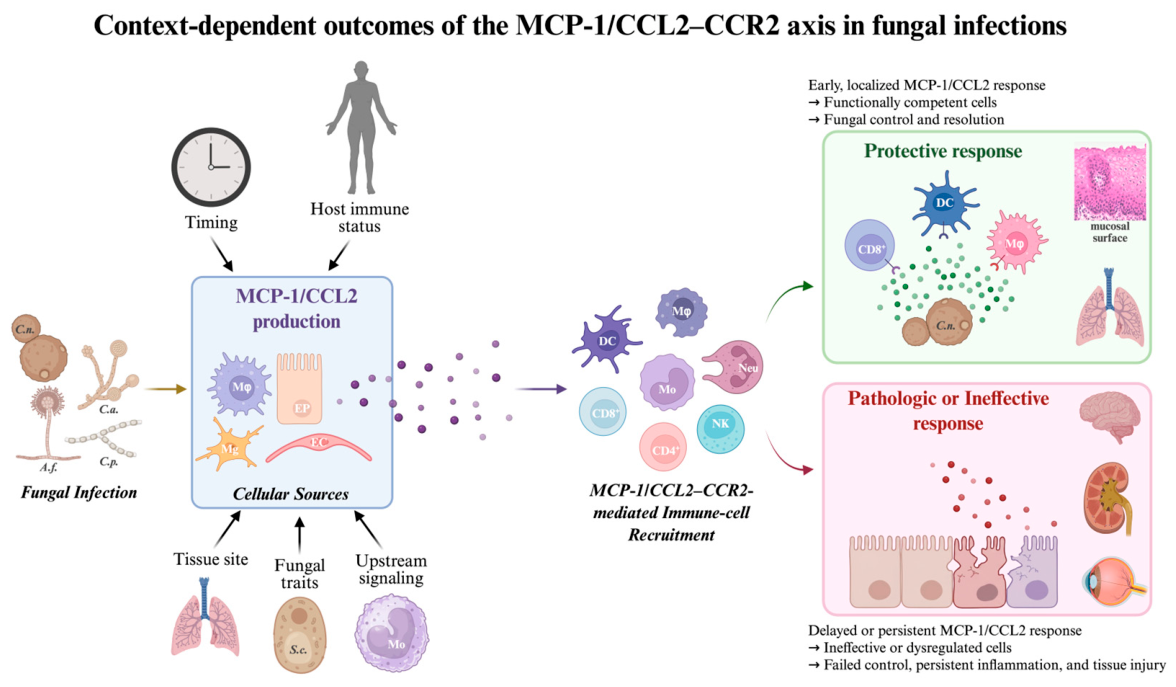
| Contextual Factor | Protective Configuration | Ineffective or Pathologic Configuration | Representative Fungal Examples | Representative Studies |
|---|---|---|---|---|
| Timing of MCP-1/CCL2 induction | MCP-1/CCL2 is induced early, before extensive fungal growth, allowing timely recruitment of antifungal cells | MCP-1/CCL2 is delayed, persists after fungal control has failed, or remains elevated after its protective value has declined | Early pulmonary cryptococcosis; early neutropenic aspergillosis; late allergic aspergillosis; transplant-associated aspergillosis | [7,8,22,95,98] |
| Tissue compartment and inflammatory tolerance | Recruitment occurs in tissues that benefit from early mononuclear-cell accumulation, such as the lung or some mucosal surfaces | Recruitment occurs in inflammation-sensitive tissues, where leukocyte accumulation, edema, or tissue injury may outweigh fungal-control benefits | Pulmonary cryptococcosis versus cryptococcal CNS disease; vaginal candidiasis versus renal candidiasis; fungal keratitis | [8,9,10,11,83] |
| Integrity of CCR2 signaling | MCP-1/CCL2 binds functional CCR2 on responsive leukocytes and supports migration into infected tissue | MCP-1/CCL2 is elevated, but receptor signaling is absent or impaired, so recruitment and fungal control fail | Pulmonary cryptococcosis; allergic aspergillosis | [15,16,99] |
| Successful tissue entry of responding cells | CCR2-expressing cells leave the circulation and accumulate in the correct infected compartment | MCP-1/CCL2 is abundant systemically, but inflammatory monocytes fail to accumulate effectively in the target organ | Susceptible versus resistant systemic candidiasis models | [70] |
| Antifungal competence of recruited cells | Recruited macrophages, monocytes, NK cells, or dendritic cells remain capable of phagocytosis, fungal killing, antigen presentation, or cytokine support | Recruited cells are dysfunctional, poorly activated, or unable to replace specialized tissue-resident populations | Trim72-associated renal macrophage recruitment; diabetic candidiasis; renal resident-macrophage depletion; Aspergillus keratitis | [65,67,74,83,144] |
| Identity of the recruited population | MCP-1/CCL2 recruits cell types suited to the immune deficit or tissue, such as macrophages, CD4+ T cells, NK cells, or dendritic cells | Recruitment favors cells that amplify inflammation without sufficient fungal control, or the required effector population is not recruited | Pulmonary cryptococcosis; neutropenic aspergillosis; renal candidiasis; cryptococcal CNS disease | [7,8,10,11,93] |
| Host immune status | MCP-1/CCL2 provides compensatory recruitment when a major defense pathway is missing but alternative effectors remain functional | Immunosuppression delays chemokine induction, metabolic disease weakens macrophage function, or immune restoration produces excessive inflammation | Neutropenic aspergillosis; transplant-associated aspergillosis; diabetic candidiasis; Pneumocystis immune reconstitution | [7,67,95,117,145] |
| Upstream cytokine environment | MCP-1/CCL2 is produced within a coordinated Th1-associated program involving IL-12, IFN-γ, and TNF | MCP-1/CCL2 is induced within inflammatory pathways that promote tissue injury, such as type I IFN, IL-23, 5-LO, or prolonged immune-reconstitution signaling | Pulmonary cryptococcosis; renal candidiasis; cryptococcal CNS disease; Pneumocystis pneumonia | [10,20,21,22,24,38,115] |
| Cellular source of MCP-1/CCL2 | Barrier cells or resident immune cells initiate a localized gradient that recruits cells to the appropriate site | Persistent production by microglia, endothelial cells, macrophages, or other local cells maintains damaging inflammation | Pneumocystis alveolar epithelium; Candida mucosal epithelium; pulmonary cryptococcal monocytes; cerebral cryptococcosis | [25,37,52,113,114] |
| Fungal virulence traits and phenotype | MCP-1/CCL2 appears as part of an organized containment or vaccine-associated response | Fungal melanin, laccase, candidalysin, altered mannosylation, proteases, or phenotypic switching amplify or redirect MCP-1/CCL2-associated inflammation | Cryptococcal melanin and mucoid switching; Candida candidalysin and mannosylation; Aspergillus protease; Coccidioides vaccination | [29,39,59,61,107,146] |
| Fungal immune suppression | Host cells produce MCP-1/CCL2 normally in response to fungal or cytokine stimulation | Fungal exposure or fungus-induced host regulatory pathways suppress epithelial or macrophage MCP-1/CCL2 induction. | Cryptococcus epithelial immune evasion; Candida Tim-3/Galectin-9 signaling | [27,28,63] |
| CCR2-ligand redundancy | MCP-1/CCL2 cooperates with CCL7, CCL12, and related ligands to maintain recruitment | MCP-1/CCL2 deficiency alone appears mild because other ligands compensate; CCR2 deficiency causes a broader defect | Histoplasmosis; pulmonary cryptococcosis; Blastomyces vaccine responses; Saccharomyces model | [16,17,121,123] |
| Relationship to fungal burden | MCP-1/CCL2 increases early as part of an effective response and then declines as fungal control is achieved | MCP-1/CCL2 increases because fungal burden remains high, tissue invasion progresses, or inflammation fails to resolve | Coccidioides vaccination; transplant aspergillosis; renal candidiasis; pulmonary aspergillosis | [12,95,97,142,146] |
| Disease stage and immune restoration | MCP-1/CCL2 supports clearance during the active antimicrobial phase | The same pathway contributes to injury after immune restoration or during chronic remodeling | Pneumocystis IRIS; cryptococcal IRIS; allergic aspergillosis | [42,43,98,117,145] |
| Treatment context | Increasing MCP-1/CCL2 improves recruitment or macrophage activation when early immunity is inadequate | Decreasing MCP-1/CCL2 is beneficial when treatment reduces fungal burden or established inflammatory injury | Early allergic aspergillosis; Trim72 candidiasis; Pneumocystis IRIS; candidiasis-associated AKI; fungal keratitis | [65,80,86,90,98,145] |
| Biomarker compartment | Local MCP-1/CCL2 in CSF, BALF, or infected tissue reflects compartment-specific immune activation | Serum or plasma MCP-1/CCL2 may not reflect the infected organ and may represent systemic inflammation or failed compensation | Cryptococcal meningitis; pulmonary aspergillosis; Pneumocystis pneumonia; systemic candidiasis | [43,70,97,118] |
| Interpretation with other biomarkers | MCP-1/CCL2 is interpreted with fungal burden, CXCL10, TGF-β1, inflammatory cytokines, and organ-injury markers | MCP-1/CCL2 is interpreted alone as a linear marker of severity | Cryptococcal IRIS; Pneumocystis pneumonia; invasive pulmonary aspergillosis | [43,97,119,120] |
Disclaimer/Publisher’s Note: The statements, opinions and data contained in all publications are solely those of the individual author(s) and contributor(s) and not of MDPI and/or the editor(s). MDPI and/or the editor(s) disclaim responsibility for any injury to people or property resulting from any ideas, methods, instructions or products referred to in the content. |
© 2026 by the authors. Licensee MDPI, Basel, Switzerland. This article is an open access article distributed under the terms and conditions of the Creative Commons Attribution (CC BY) license.
Share and Cite
Shi, X.; McClelland, E.E. MCP-1/CCL2 in Fungal Infections: Balancing Immune Recruitment and Immunopathology. J. Fungi 2026, 12, 732. https://doi.org/10.3390/jof12100732
Shi X, McClelland EE. MCP-1/CCL2 in Fungal Infections: Balancing Immune Recruitment and Immunopathology. Journal of Fungi. 2026; 12(10):732. https://doi.org/10.3390/jof12100732
Chicago/Turabian StyleShi, Xinyi (Silverdew), and Erin E. McClelland. 2026. "MCP-1/CCL2 in Fungal Infections: Balancing Immune Recruitment and Immunopathology" Journal of Fungi 12, no. 10: 732. https://doi.org/10.3390/jof12100732
APA StyleShi, X., & McClelland, E. E. (2026). MCP-1/CCL2 in Fungal Infections: Balancing Immune Recruitment and Immunopathology. Journal of Fungi, 12(10), 732. https://doi.org/10.3390/jof12100732