Article

Genome Analysis of Pseudomonas viciae G166 Conferring Antifungal Activity in Grapevine

Shandong Academy of Grape, Shandong Academy of Agricultural Sciences, Jinan 250100, China
*
Authors to whom correspondence should be addressed.
J. Fungi 2024, 10(6), 398; https://doi.org/10.3390/jof10060398
Submission received: 17 April 2024 / Revised: 29 May 2024 / Accepted: 29 May 2024 / Published: 31 May 2024
(This article belongs to the Special Issue Biocontrol of Grapevine Diseases, 2nd Edition)

Abstract

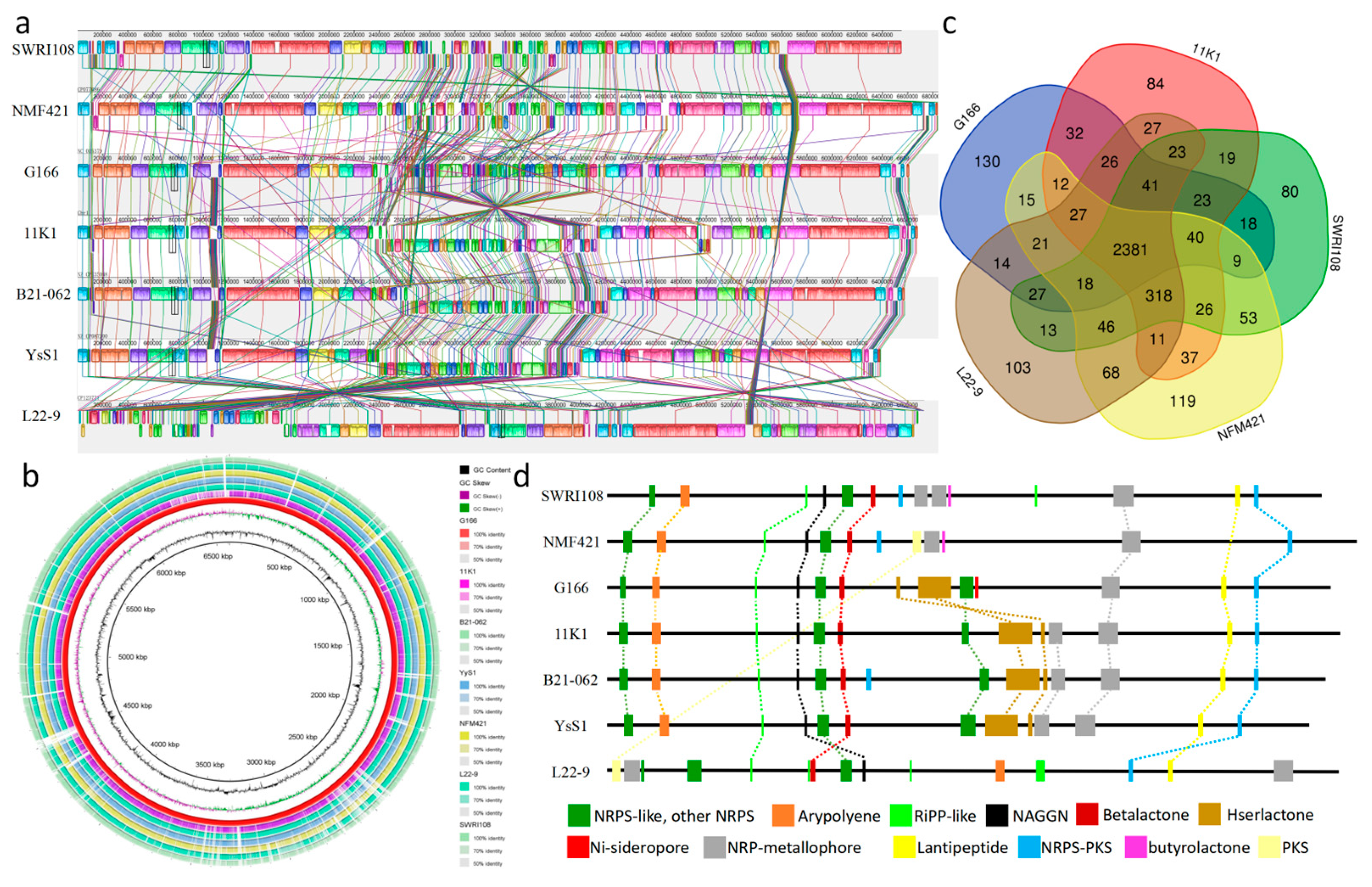
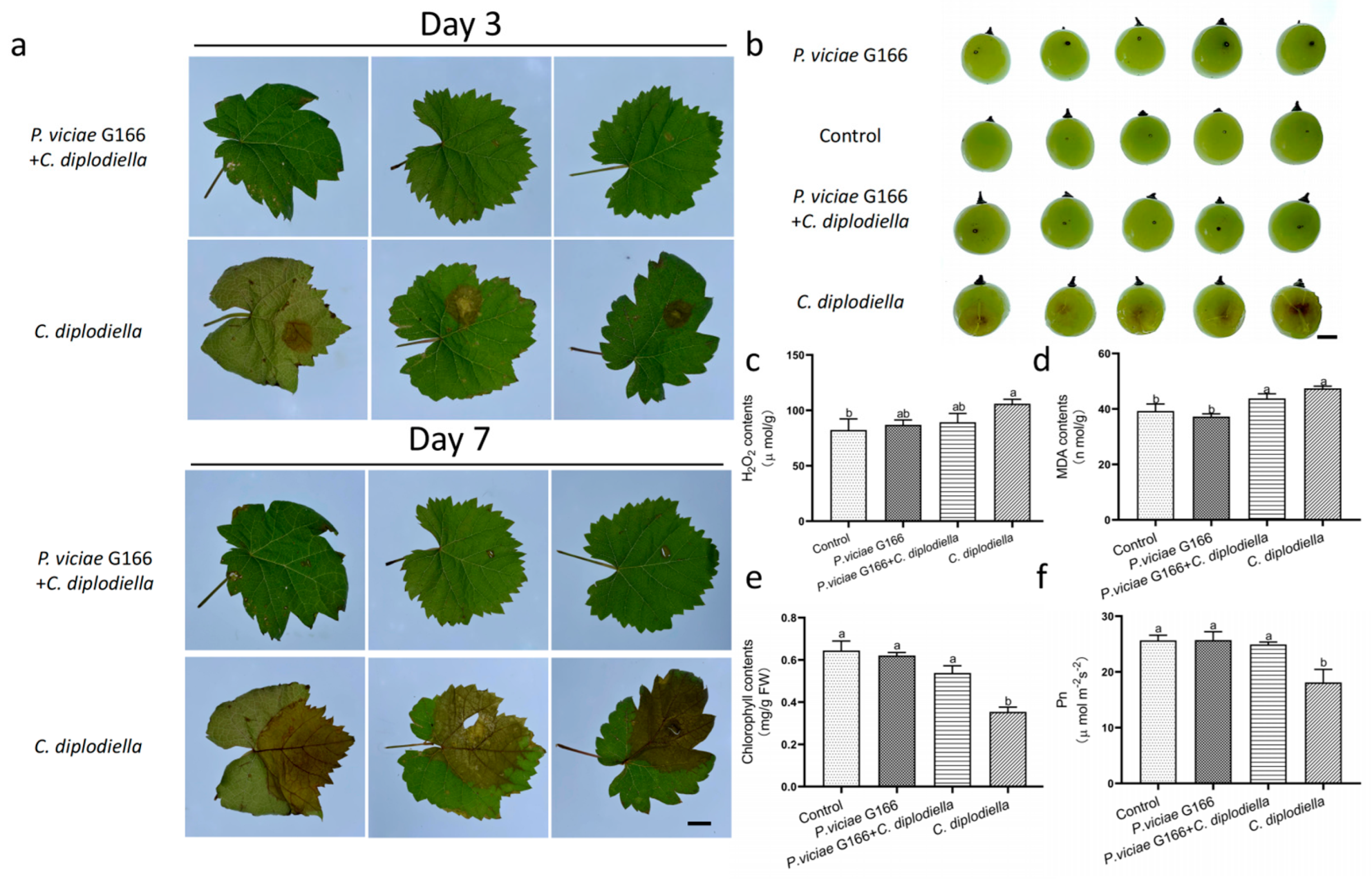
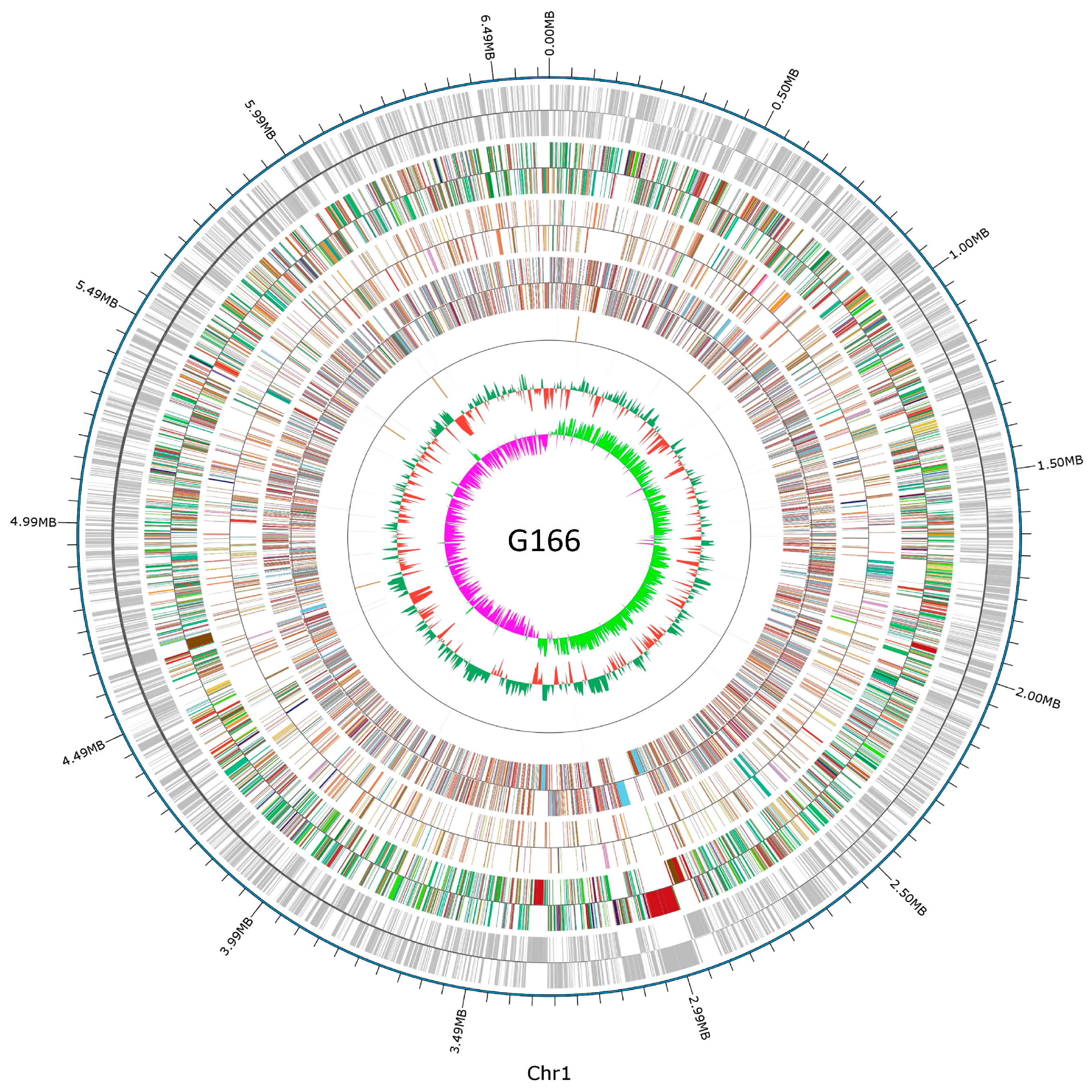
Grapevine (Vitis vinifera) is one of the major economic fruit crops but suffers many diseases, causing damage to the quality of grapes. Strain G166 was isolated from the rhizosphere of grapevine and was found to exhibited broad-spectrum antagonistic activities against fungal pathogens on grapes in vitro, such as Coniella diplodiella, Botrytis cinerea, and Colletotrichum gloeosporioides. Whole-genome sequencing revealed that G166 contained a 6,613,582 bp circular chromosome with 5749 predicted coding DNA sequences and an average GC content of 60.57%. TYGS analysis revealed that G166 belongs to Pseudomonas viciae. Phenotype analysis indicated that P. viciae G166 remarkably reduced the severity of grape white rot disease in the grapevine. After inoculation with C. diplodiella, more H2O2 and MDA accumulated in the leaves and resulted in decreases in the Pn and chlorophyll content. Conversely, G166-treated grapevine displayed less oxidative damage with lower H2O2 levels and MDA contents under the pathogen treatments. Subsequently, G166-treated grapevine could sustain a normal Pn and chlorophyll content. Moreover, the application of P. viciae G166 inhibited the growth of mycelia on detached leaves and berries, while more disease symptoms occurred in non-bacterized leaves and berries. Therefore, P. viciae G166 served as a powerful bioagent against grape white rot disease. Using antiSMASH prediction and genome comparisons, a relationship between non-ribosomal peptide synthase clusters and antifungal activity was found in the genome of P. viciae G166. Taken together, P. viciae G166 shows promising antifungal potential to improve fruit quality and yield in ecological agriculture.
Keywords: grape white rot disease; comparative genome analysis; non-ribosomal lipopeptides; biocontrol agents (BCAs) grape white rot disease; comparative genome analysis; non-ribosomal lipopeptides; biocontrol agents (BCAs)