Article

Does Forest Soil Fungal Community Respond to Short-Term Simulated Nitrogen Deposition in Different Forests in Eastern China?

1
The Key Laboratory for Silviculture and Conservation of Ministry of Education, Beijing Forestry University, Beijing 100083, China
2
Key Laboratory of Forest Ecology and Environment of National Forestry and Grassland Administration, Ecology and Nature Conservation Institute, Chinese Academy of Forestry, Beijing 100091, China
3
Key Laboratory for Earth Surface Processes of the Ministry of Education, Institute of Ecology, College of Urban and Environmental Sciences, Peking University, Beijing 100871, China
4
State Key Laboratory of Vegetation and Environmental Change, Institute of Botany, Chinese Academy of Sciences, Beijing 100093, China
*
Authors to whom correspondence should be addressed.
These authors contributed equally to this work.
J. Fungi 2023, 9(1), 53; https://doi.org/10.3390/jof9010053
Submission received: 3 October 2022 / Revised: 14 December 2022 / Accepted: 23 December 2022 / Published: 29 December 2022
(This article belongs to the Section Environmental and Ecological Interactions of Fungi)

Abstract

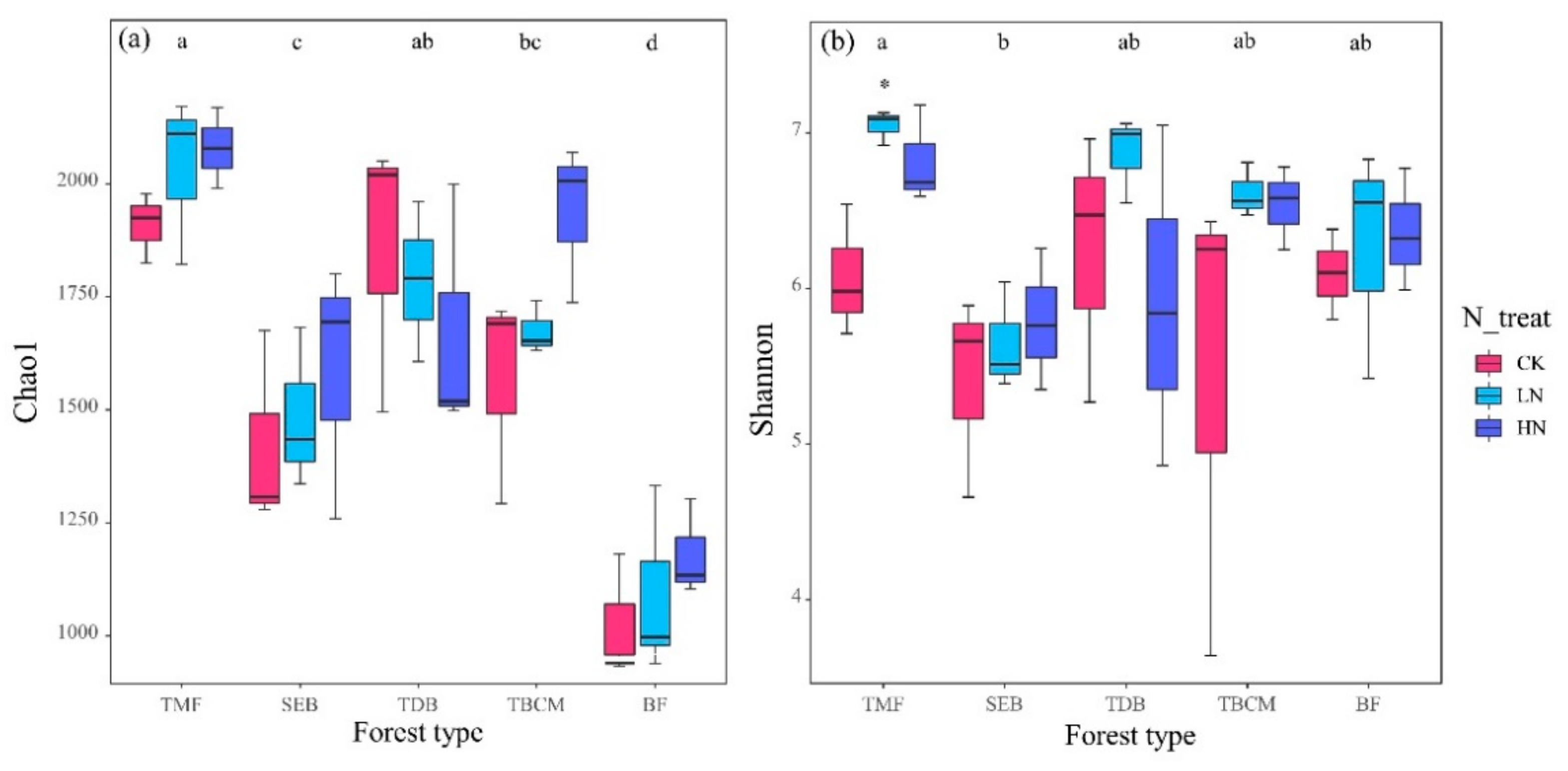
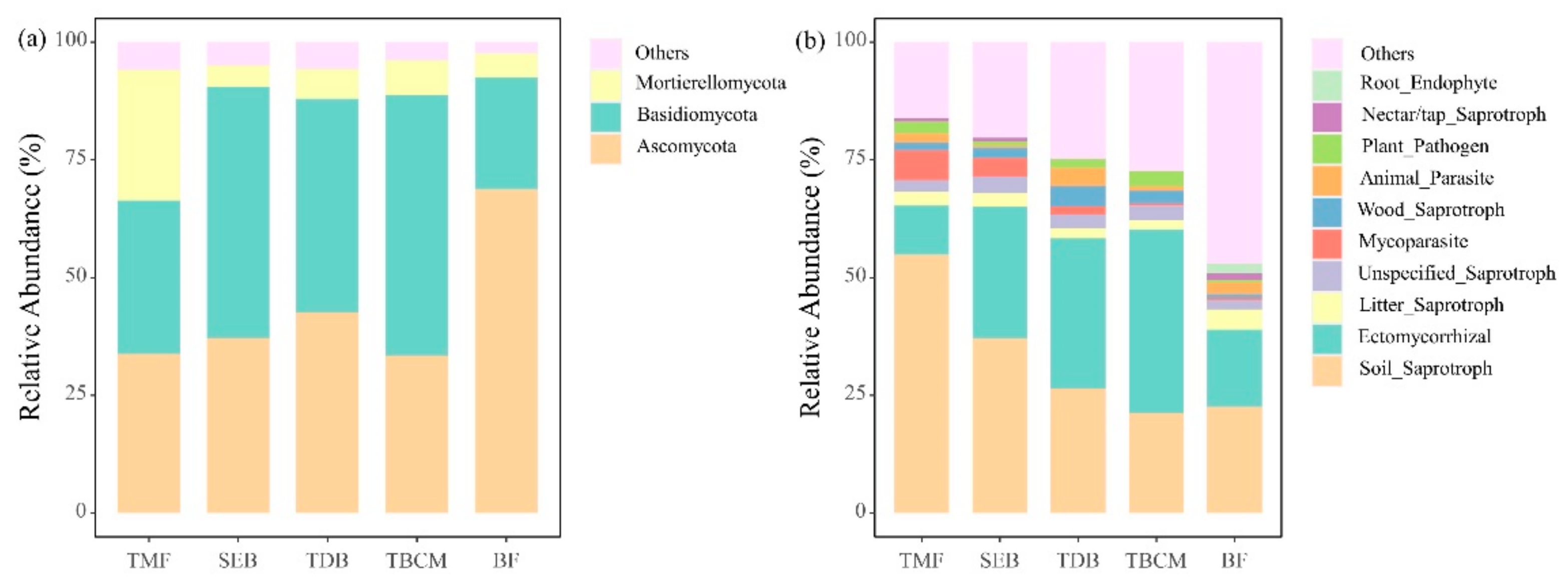
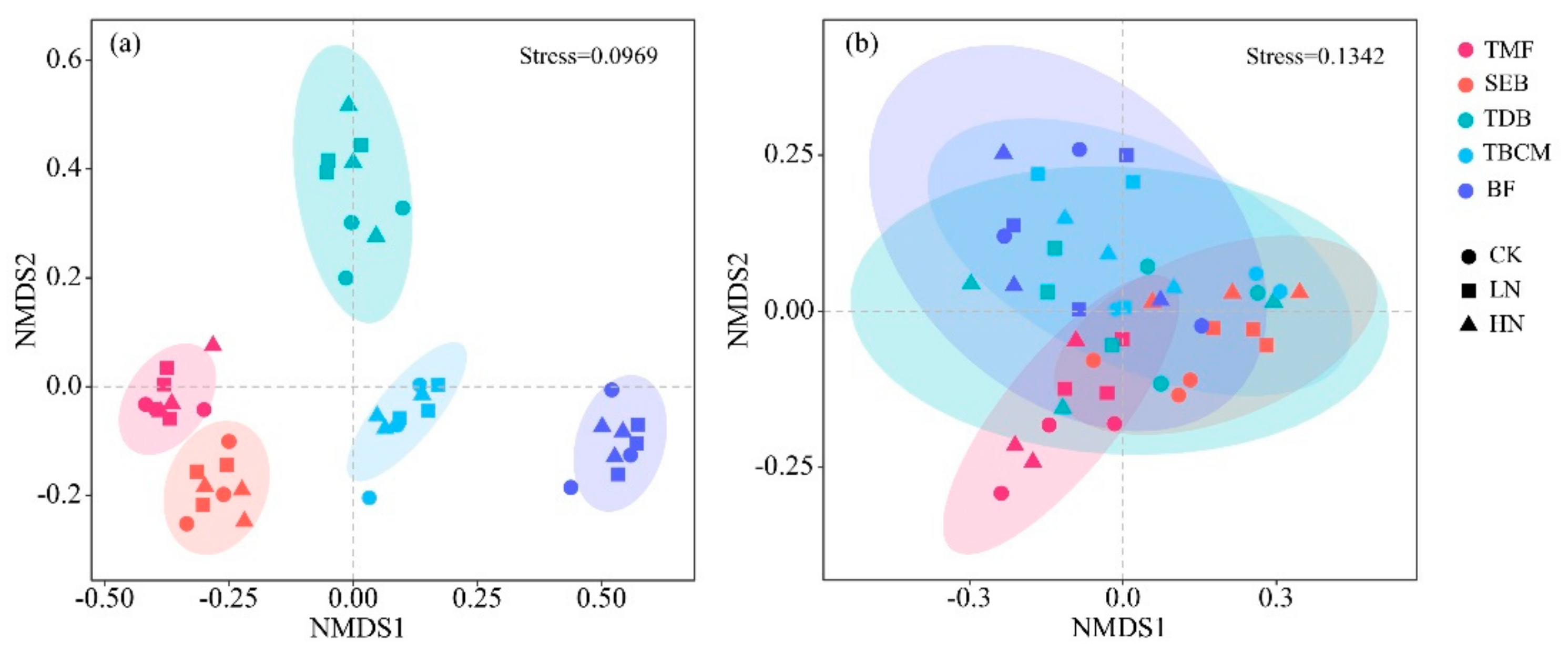
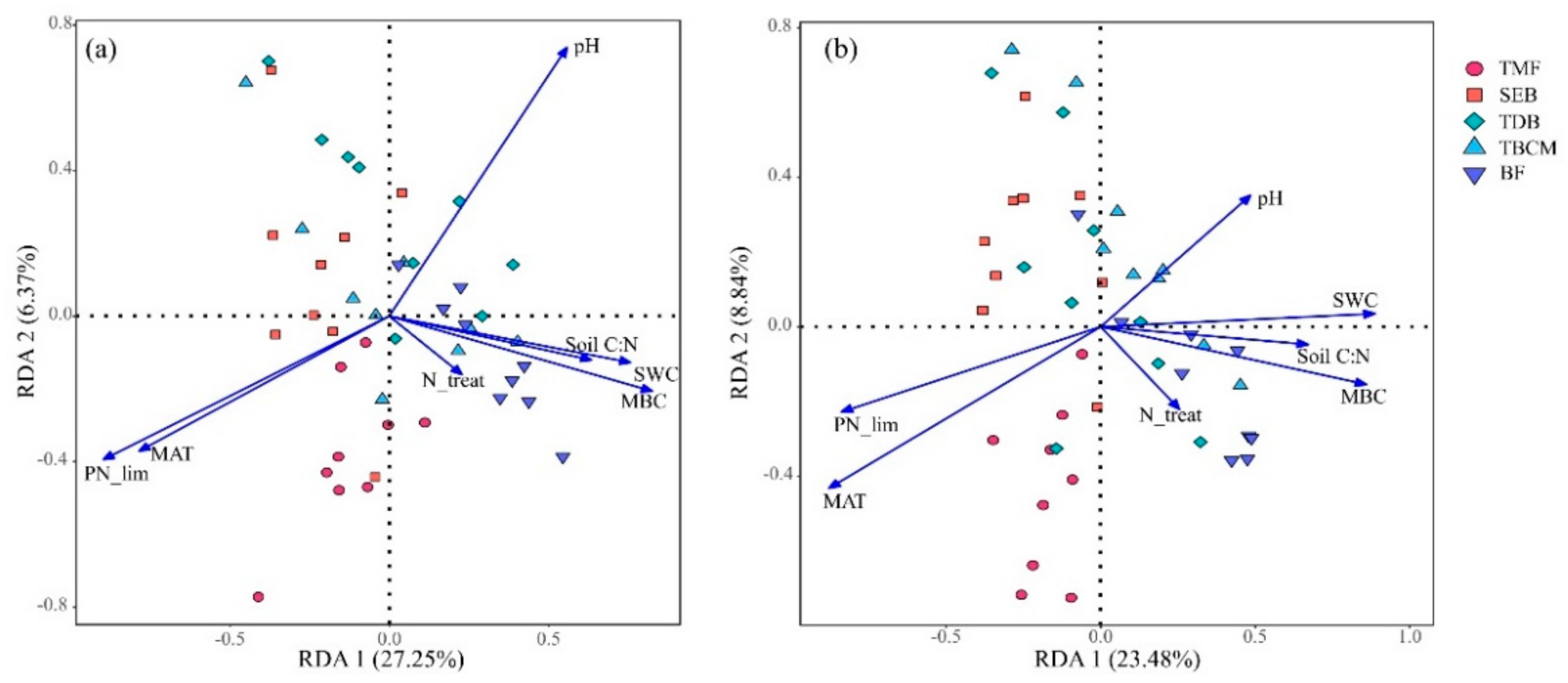
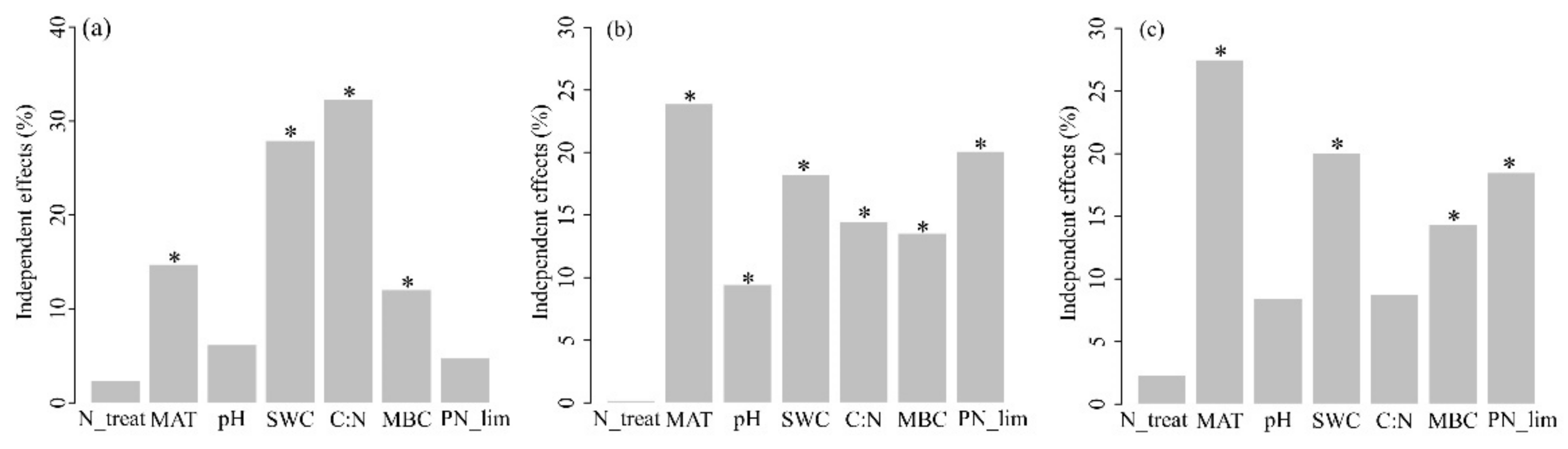
Nitrogen (N) deposition has changed plants and soil microbes remarkably, which deeply alters the structures and functions of terrestrial ecosystems. However, how forest fungal diversity, community compositions, and their potential functions respond to N deposition is still lacking in exploration at a large scale. In this study, we conducted a short-term (4–5 years) experiment of artificial N addition to simulated N deposition in five typical forest ecosystems across eastern China, which includes tropical montane rainforest, subtropical evergreen broadleaved forest, temperate deciduous broadleaved forest, temperate broadleaved and conifer mixed forest, and boreal forest along a latitudinal gradient from tropical to cold temperature zones. Fungal compositions were identified using high-throughput sequencing at the topsoil layer. The results showed that fungal diversity and fungal community compositions among forests varied apparently for both unfertilized and fertilized soils. Generally, soil fungal diversity, communities, and their potential functions responded sluggishly to short-term N addition, whereas the fungal Shannon index was increased in the tropical forest. In addition, environmental heterogeneity explained most of the variation among fungal communities along the latitudinal gradient. Specifically, soil C: N ratio and soil water content were the most important factors driving fungal diversity, whereas mean annual temperature and microbial nutrient limitation mainly shaped fungal community structure and functional compositions. Topsoil fungal communities in eastern forest ecosystems in China were more sensitive to environmental heterogeneity rather than short-term N addition. Our study further emphasized the importance of simultaneously evaluating soil fungal communities in different forest types in response to atmospheric N deposition.
Keywords: nitrogen deposition; fungal community; fungal functional groups; forest soil; eastern China nitrogen deposition; fungal community; fungal functional groups; forest soil; eastern China