
Review

How Do Smut Fungi Use Plant Signals to Spatiotemporally Orientate on and In Planta?
by
Karina van der Linde
1,*,† and
Vera Göhre
2,*,†
1
Department of Cell Biology and Plant Biochemistry, University of Regensburg, 93053 Regensburg, Germany
2
Institute for Microbiology, Cluster of Excellence on Plant Sciences, Heinrich-Heine University, 40225 Düsseldorf, Germany
*
Authors to whom correspondence should be addressed.
These authors contributed equally to this work.
J. Fungi 2021, 7(2), 107; https://doi.org/10.3390/jof7020107
Submission received: 23 December 2020 / Revised: 19 January 2021 / Accepted: 23 January 2021 / Published: 2 February 2021
(This article belongs to the Special Issue Smut Fungi)

Abstract

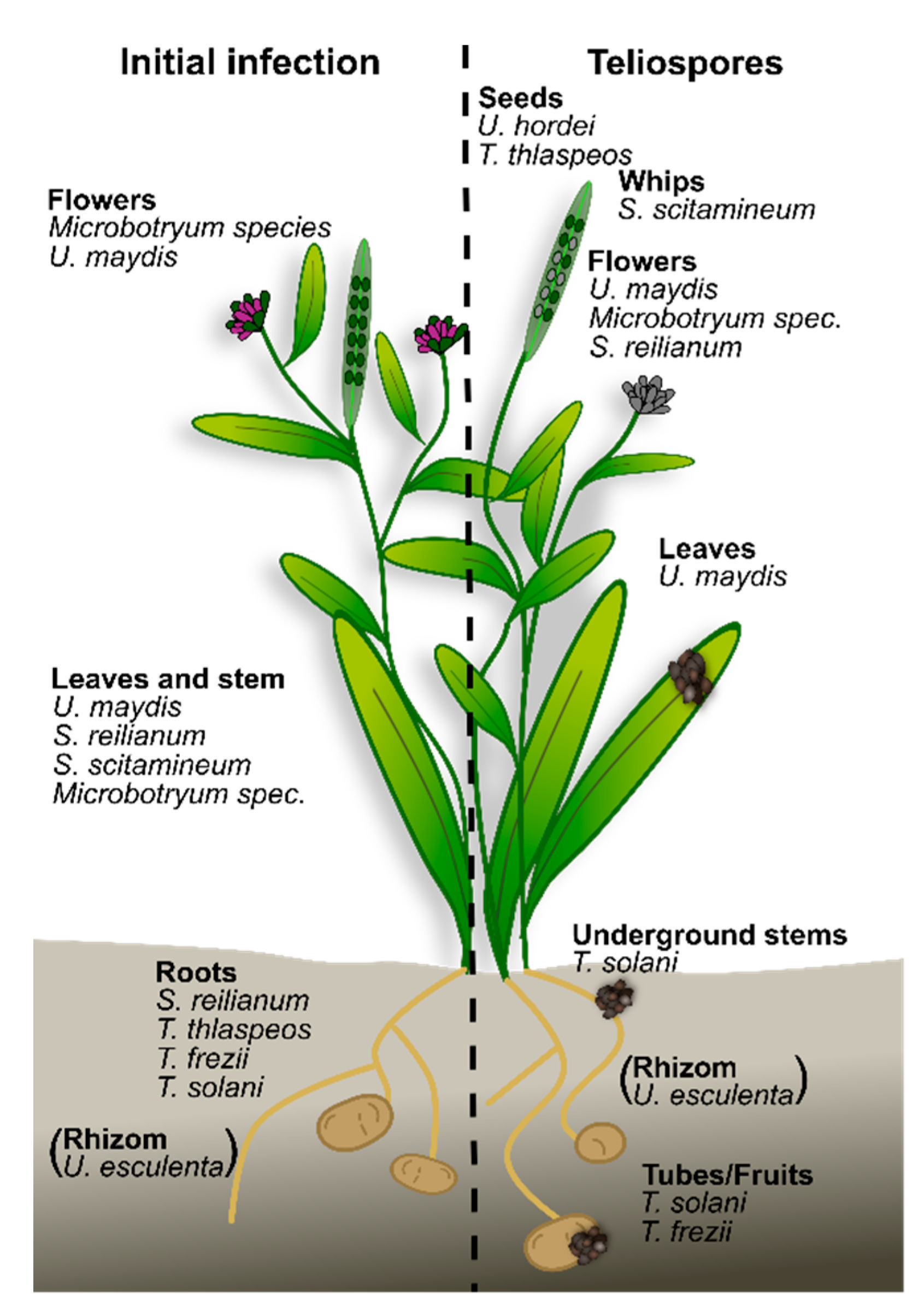
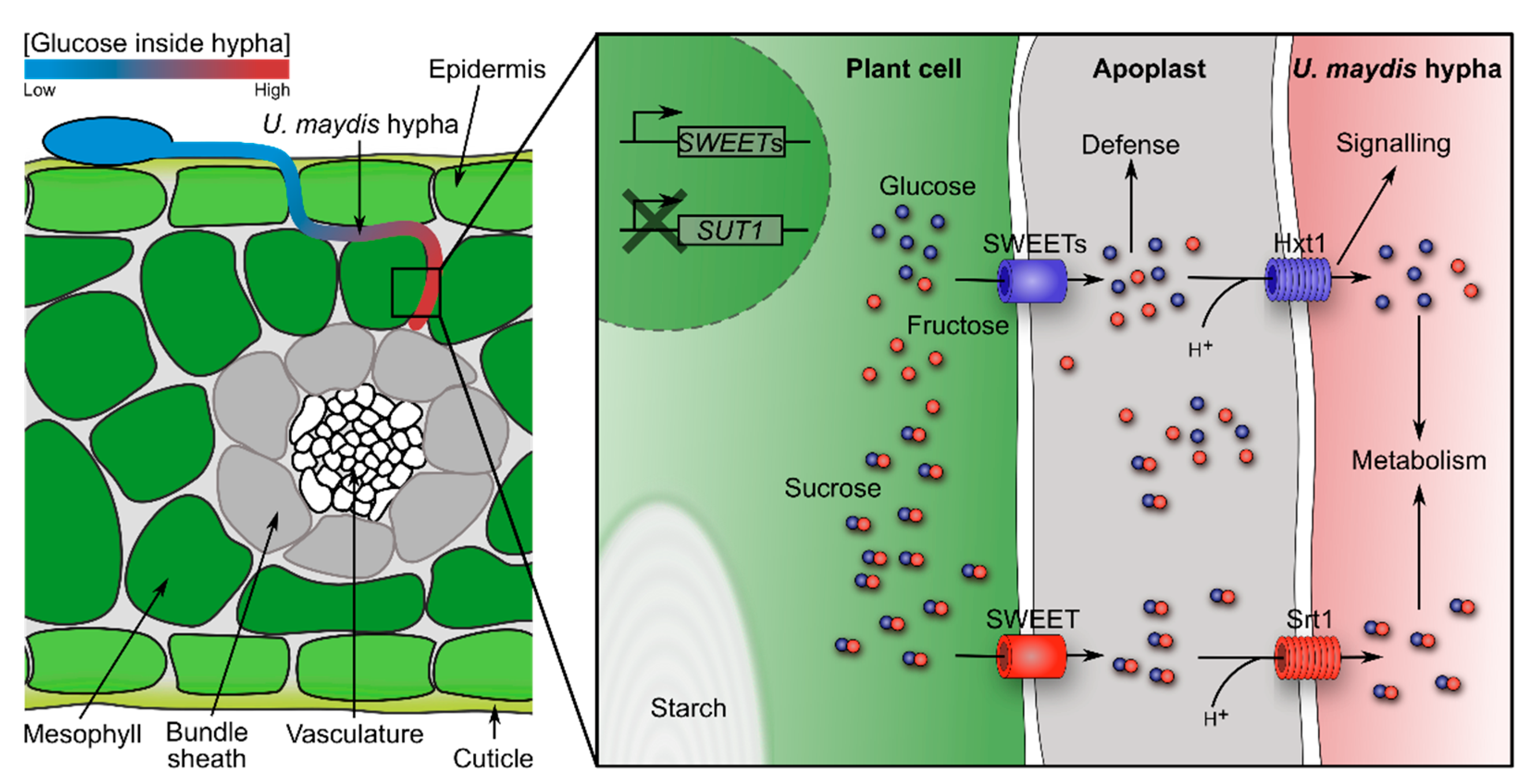
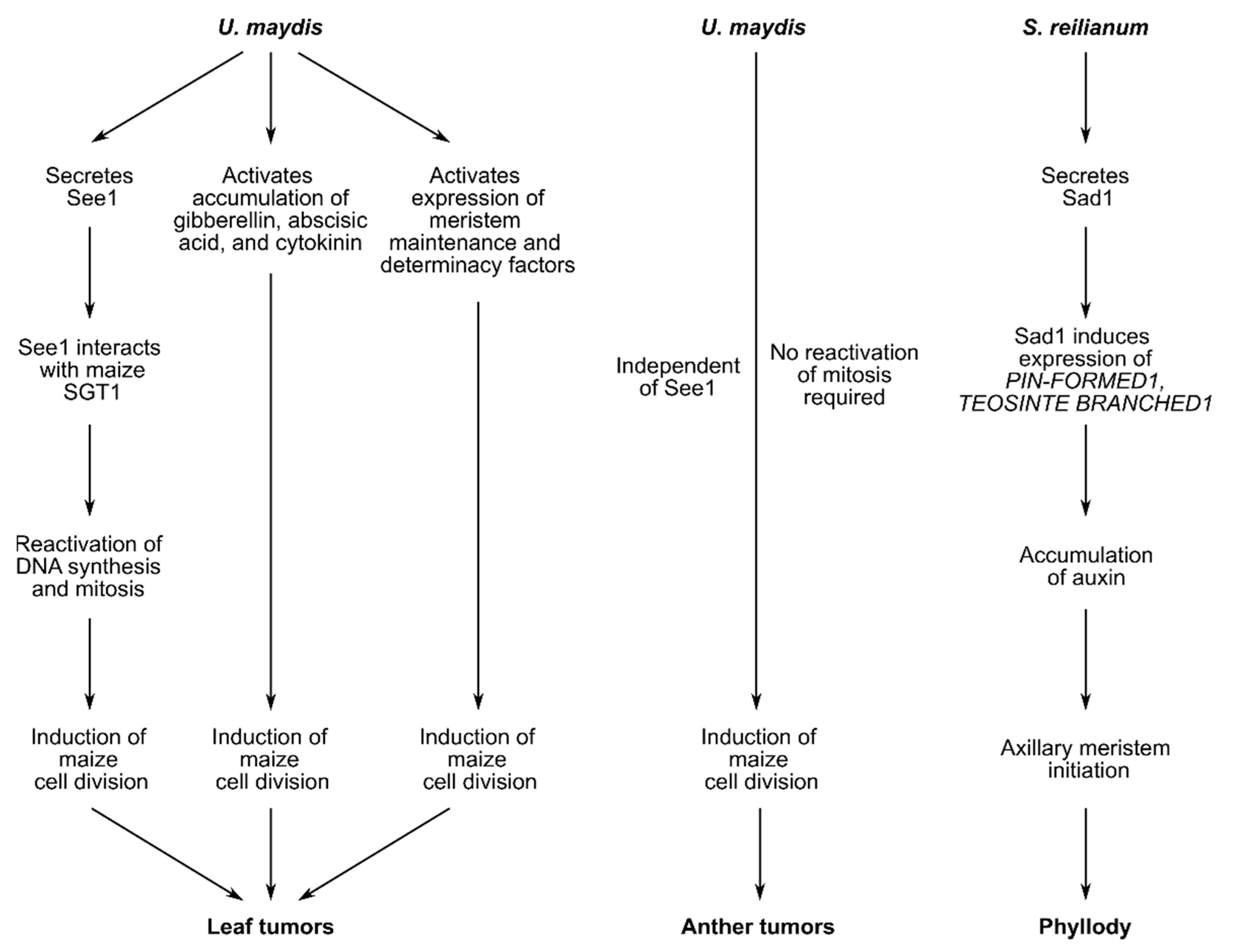
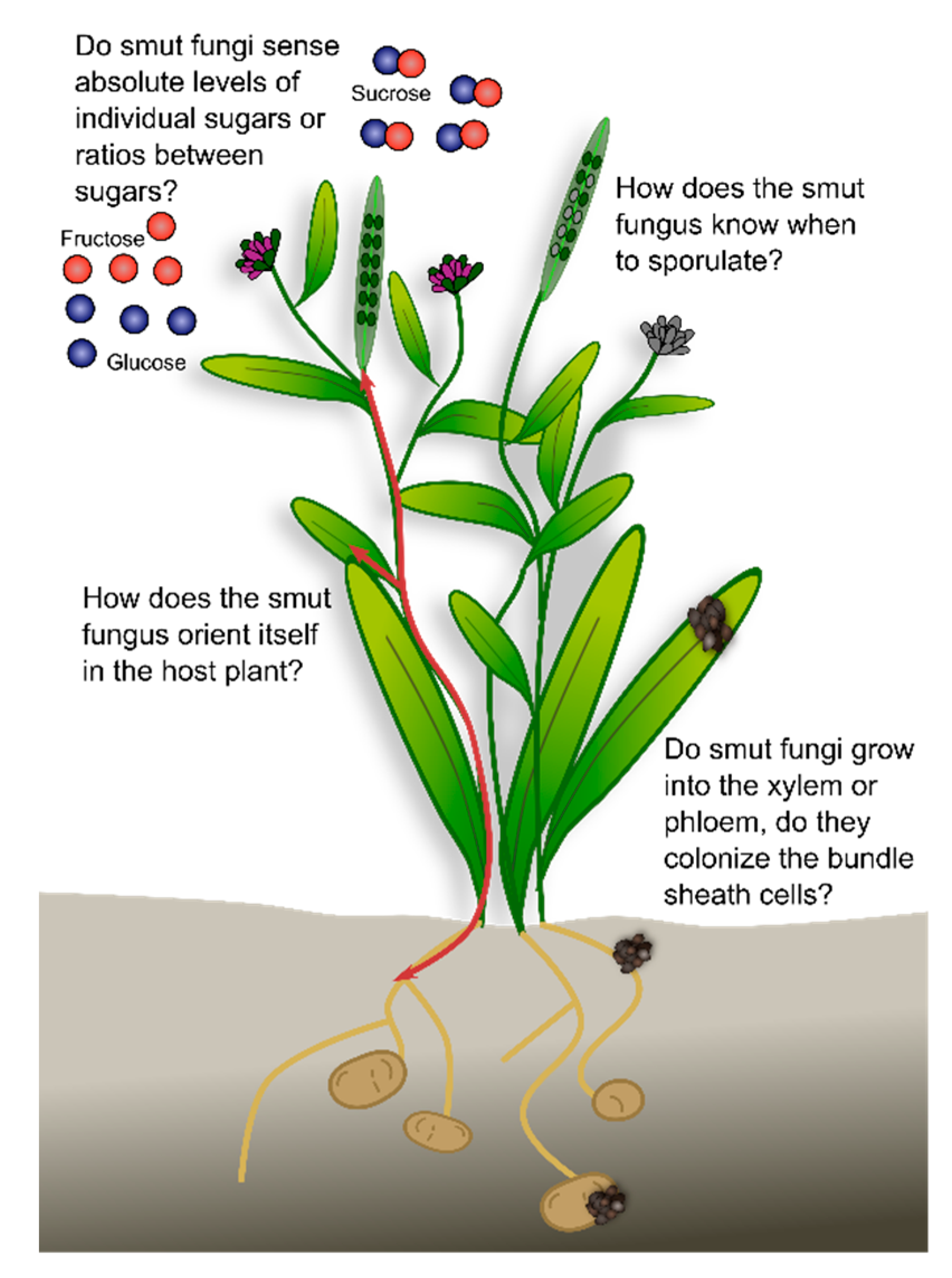
Smut fungi represent a large group of biotrophic plant pathogens that cause extensive yield loss and are also model organisms for studying plant–pathogen interactions. In recent years, they have become biotechnological tools. After initial penetration of the plant epidermis, smut fungi grow intra—and intercellularly without disrupting the plant-plasma membrane. Following the colonialization step, teliospores are formed and later released. While some smuts only invade the tissues around the initial penetration site, others colonize in multiple plant organs resulting in spore formation distal from the original infection site. The intimate contact zone between fungal hyphae and the host is termed the biotrophic interaction zone and enables exchange of signals and nutrient uptake. Obviously, all steps of on and in planta growth require fine sensing of host conditions as well as reprogramming of the host by the smut fungus. In this review, we highlight selected examples of smut fungal colonization styles, directional growth in planta, induction of spore formation, and the signals required, pointing to excellent reviews for details, to draw attention to some of the open questions in this important research field.
Keywords: Ustilago; Microbotryum; Sporisorium; Thecaphora; nutrition; meristem; growth; development Ustilago; Microbotryum; Sporisorium; Thecaphora; nutrition; meristem; growth; development