Review

A Review: Late Wilt of Maize—The Pathogen, the Disease, Current Status, and Future Perspective

1
Plant Sciences Department, Migal-Galilee Research Institute, Tarshish 2, Kiryat Shmona 11016, Israel
2
Faculty of Sciences, Tel-Hai College, Upper Galilee, Tel-Hai 12210, Israel
J. Fungi 2021, 7(11), 989; https://doi.org/10.3390/jof7110989
Submission received: 19 October 2021 / Revised: 14 November 2021 / Accepted: 17 November 2021 / Published: 19 November 2021
(This article belongs to the Special Issue Plant and Fungal Interactions)

Abstract

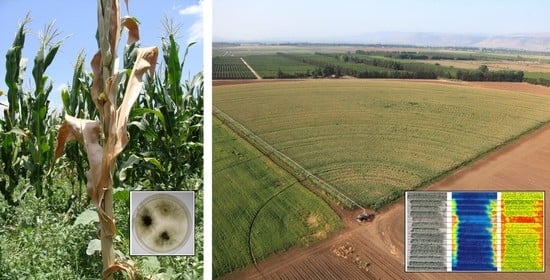
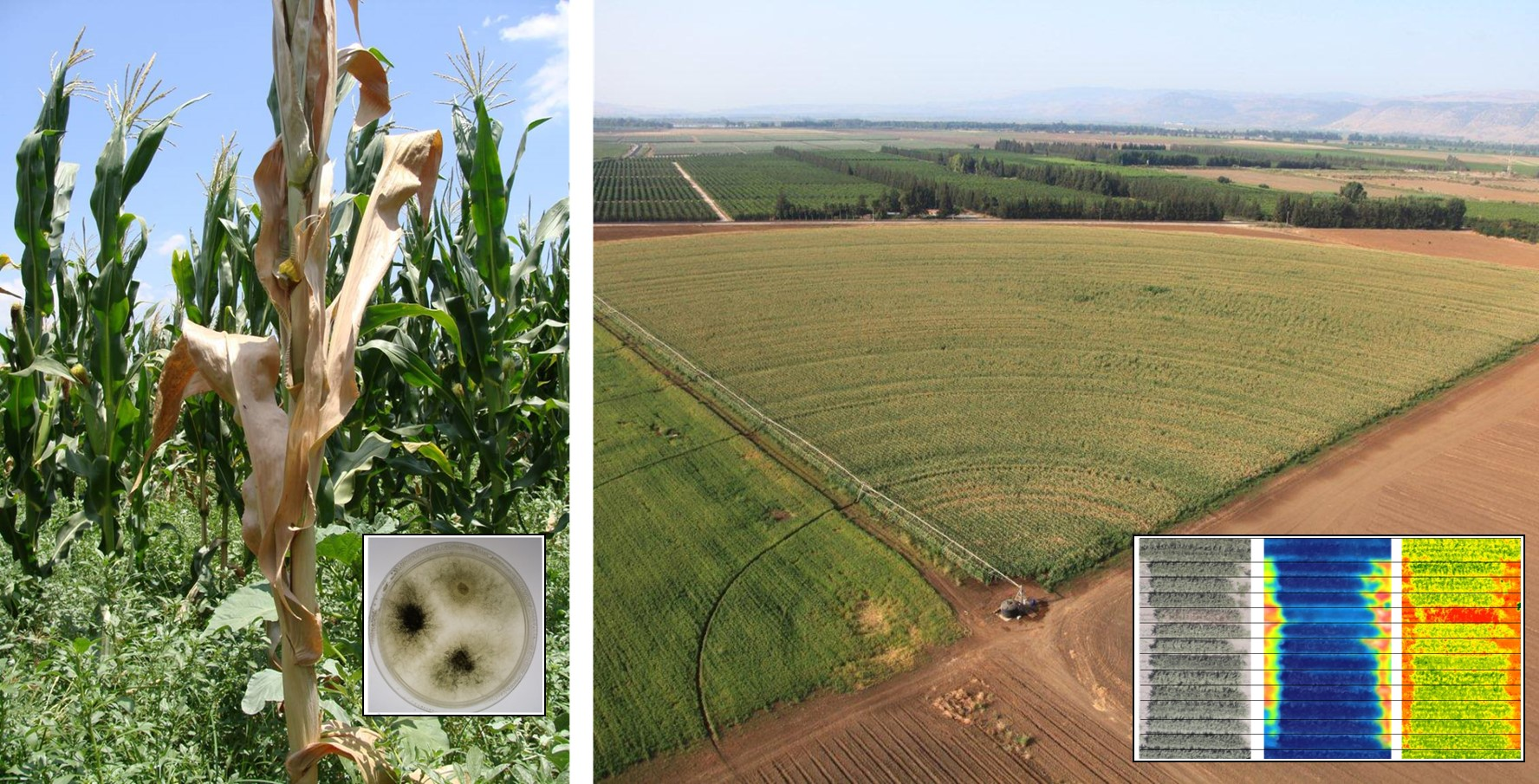
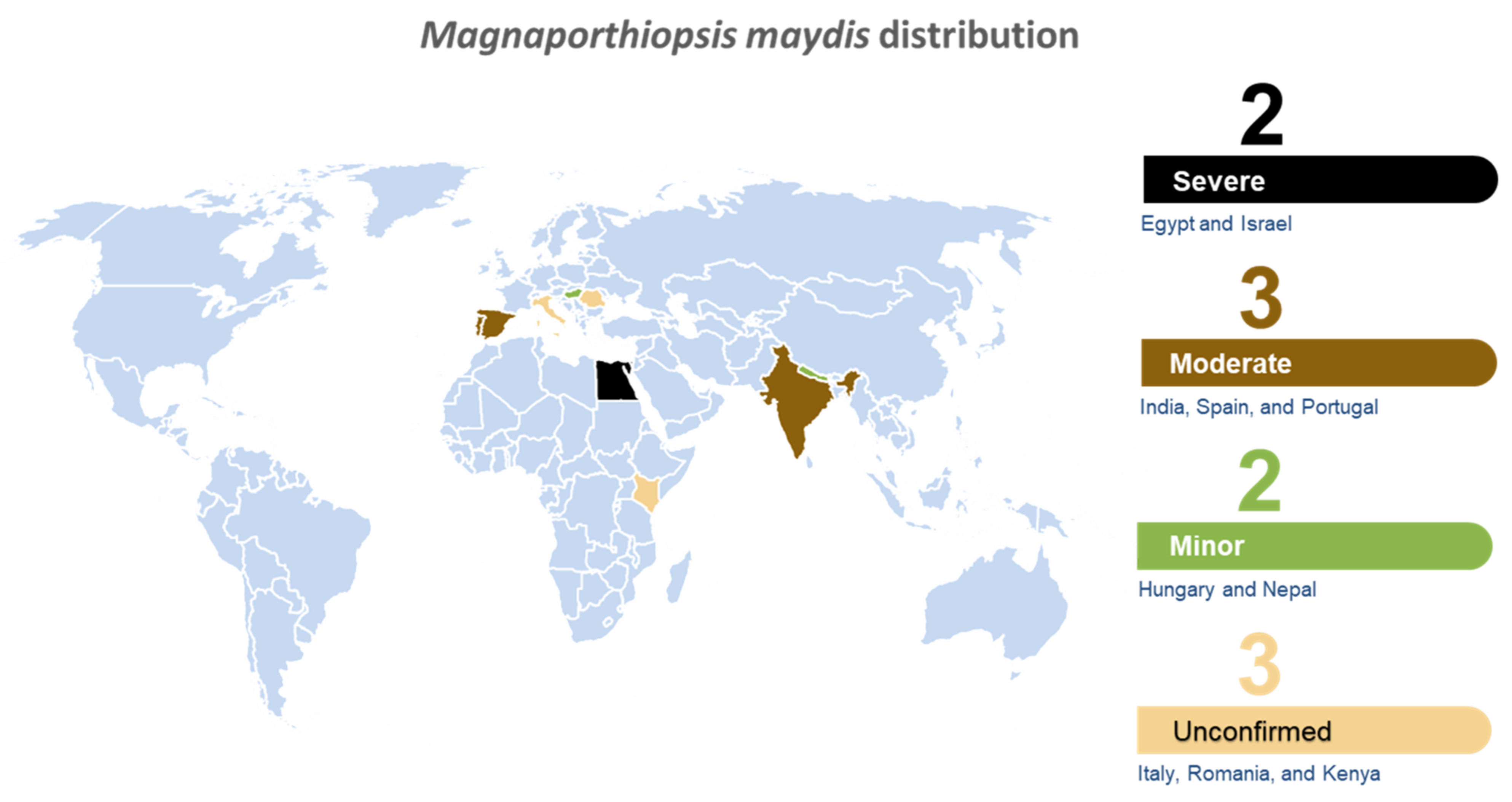
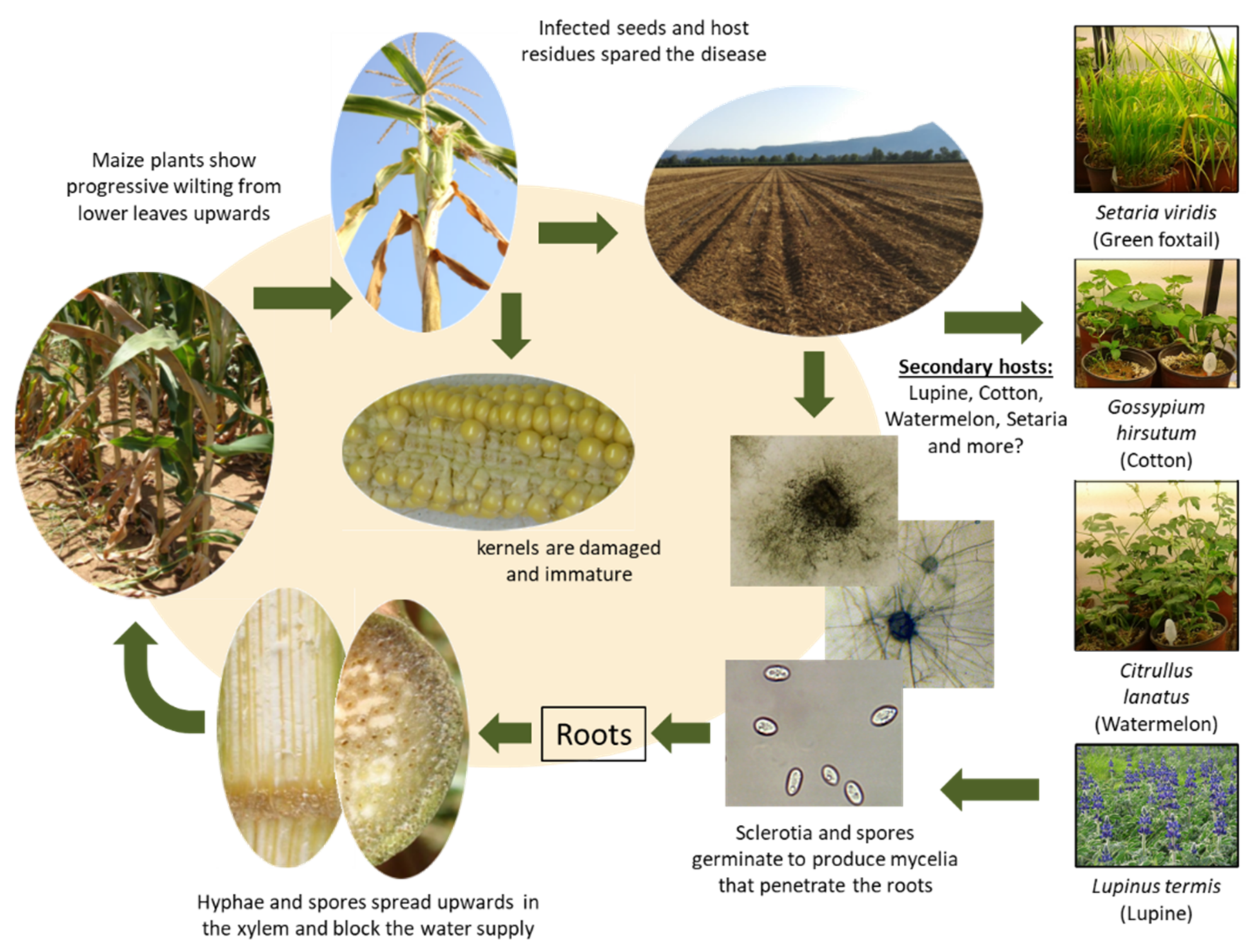
Late wilt (LWD) is a vascular wilt disease that outbursts late in maize development, usually during or after flowering. The disease causal agent, the soil and seed-borne fungi, Magnaporthiopsis maydis, causes significant economic losses in Egypt, Israel, Spain, Portugal, and India. Since its discovery in the early 1960s in Egypt, the knowledge base of the disease was significantly expanded. This includes basic information on the pathogen and its mode of action, disease symptoms and damages, methods to study and monitor the pathogen, and above all, control strategies to restrain M. maydis and reduce its impact on commercial maize production. Three approaches stand out from the various control methods inspected. First, the traditional use of chemical pesticides was investigated extensively. This approach gained attention when, in 2018–2020, a feasible and economical treatment based on Azoxystrobin (alone or in combination with other fungicides) was proven to be effective even in severe cases of LWD. Second, the growing trend of replacing chemical treatments with eco-friendly biological and other green protocols has become increasingly important in recent years and has already made significant achievements. Last but not least, today’s leading strategy to cope with LWD is to rely on resistant maize genotypes. The past two decades’ introduction of molecular-based diagnostic methods to track and identify the pathogen marked significant progress in this global effort. Still, worldwide research efforts are progressing relatively slowly since the disease is considered exotic and unfamiliar in most parts of the world. The current review summarizes the accumulated knowledge on LWD, its causal agent, and the disease implications. An additional important aspect that will be addressed is a future perspective on risks and knowledge gaps.
Keywords: Cephalosporium maydis; chemical control; crop protection; disease cycle; fungus; Harpophora maydis; Magnaporthiopsis maydis; real-time PCR Cephalosporium maydis; chemical control; crop protection; disease cycle; fungus; Harpophora maydis; Magnaporthiopsis maydis; real-time PCR
Graphical Abstract