
Distinct Phenotype and Secondary Metabolite Profile Mark a Dominant Aspergillus flavus Outbreak Strain

 , ,
, ,  and
and
Abstract
1. Introduction
2. Materials and Methods
2.1. Strains and Isolates
2.2. Galleria mellonella Virulence Assay
2.3. Morphological and HPLC-DAD Profiling
2.4. Genomic Basis of Secondary Metabolites
3. Results
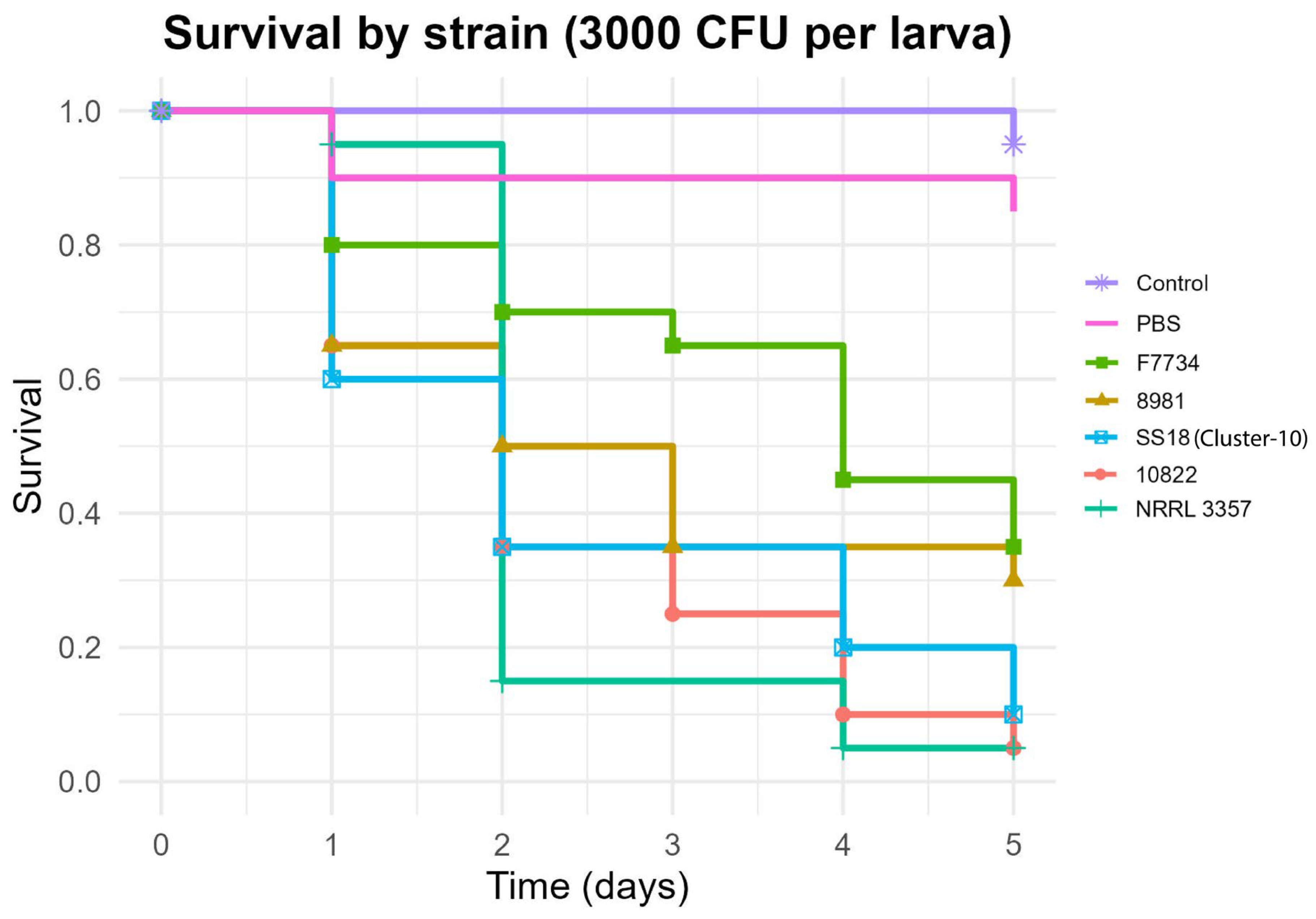
3.1. Virulence Studies in the Galleria mellonella Virulence Assay
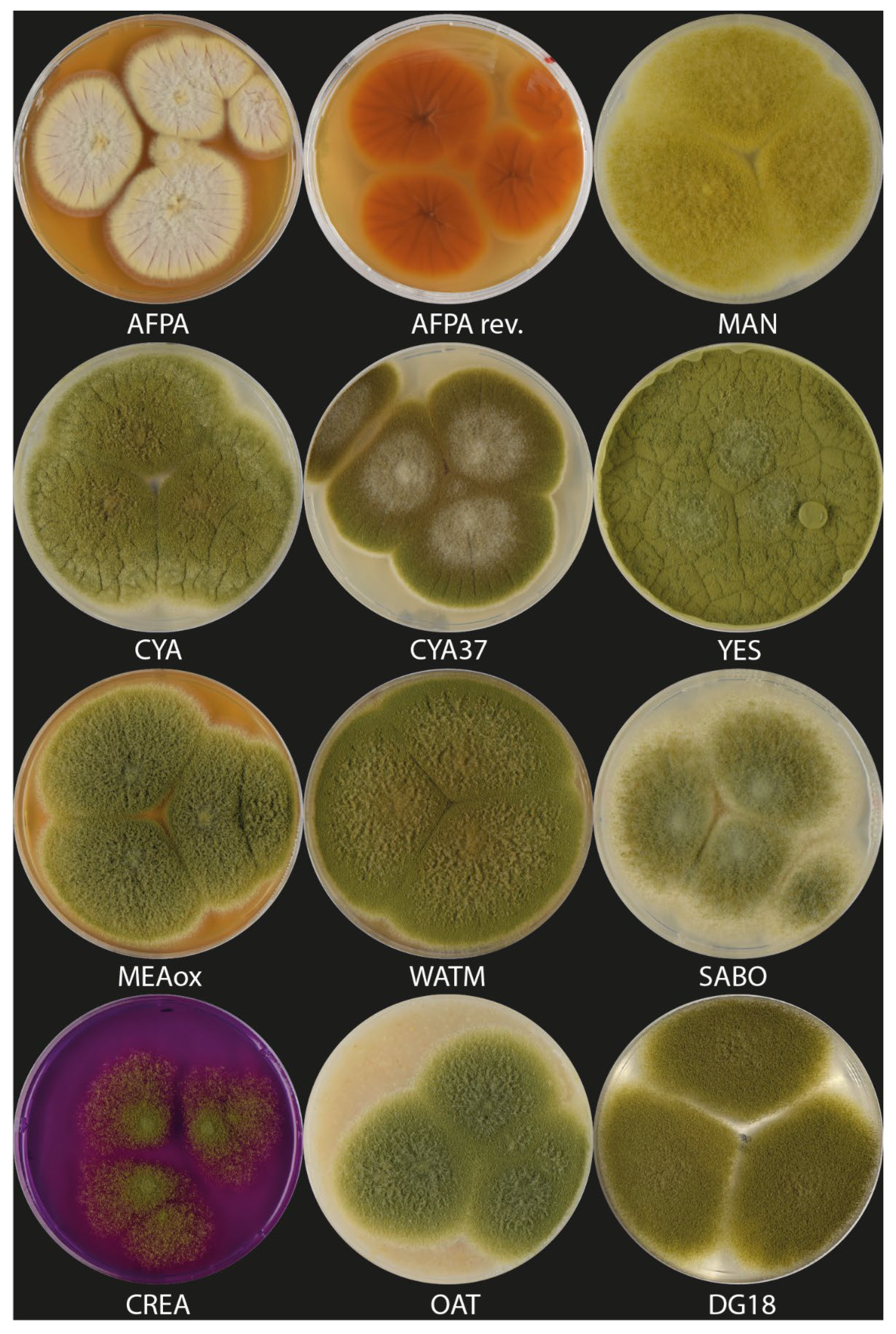
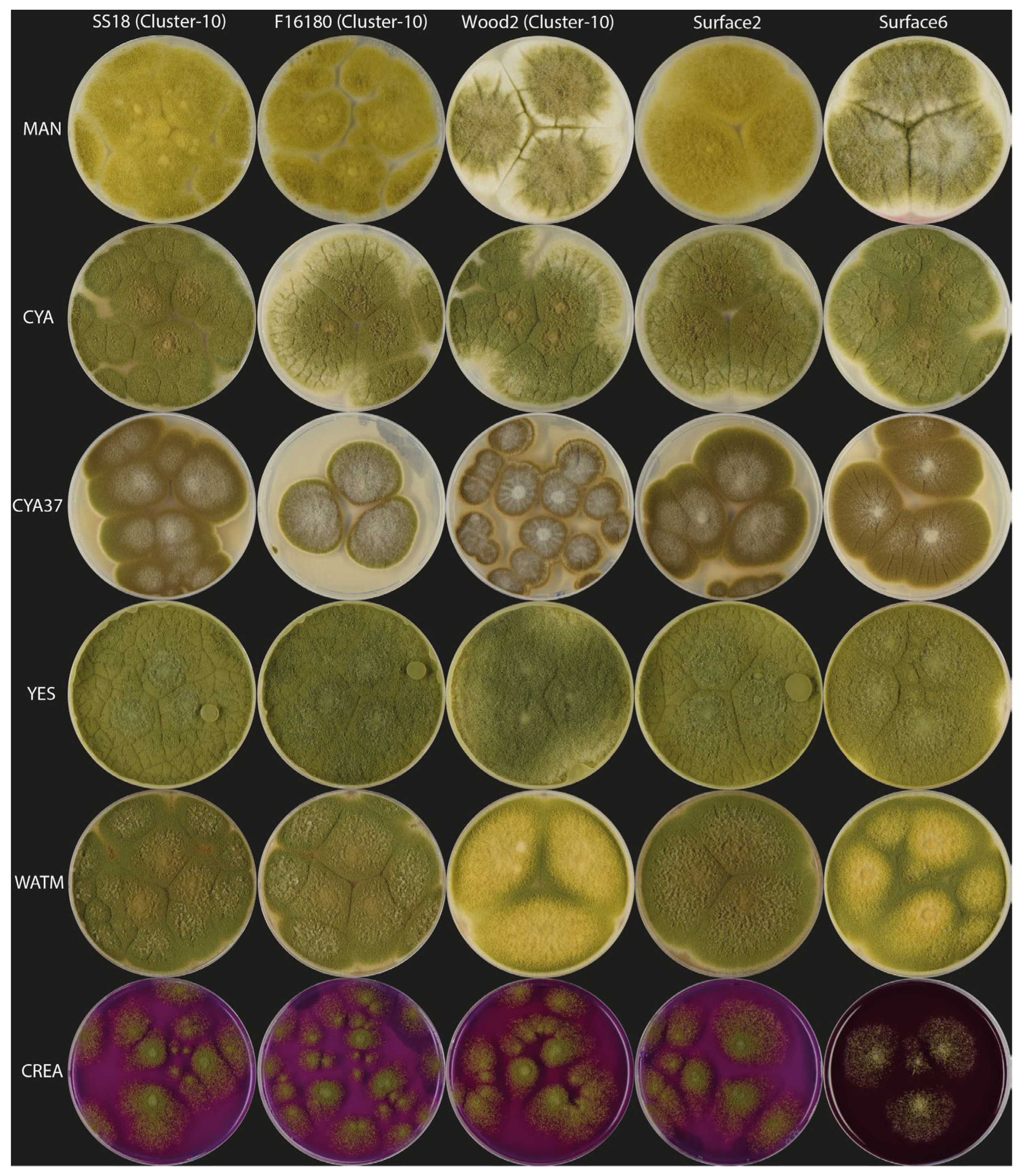
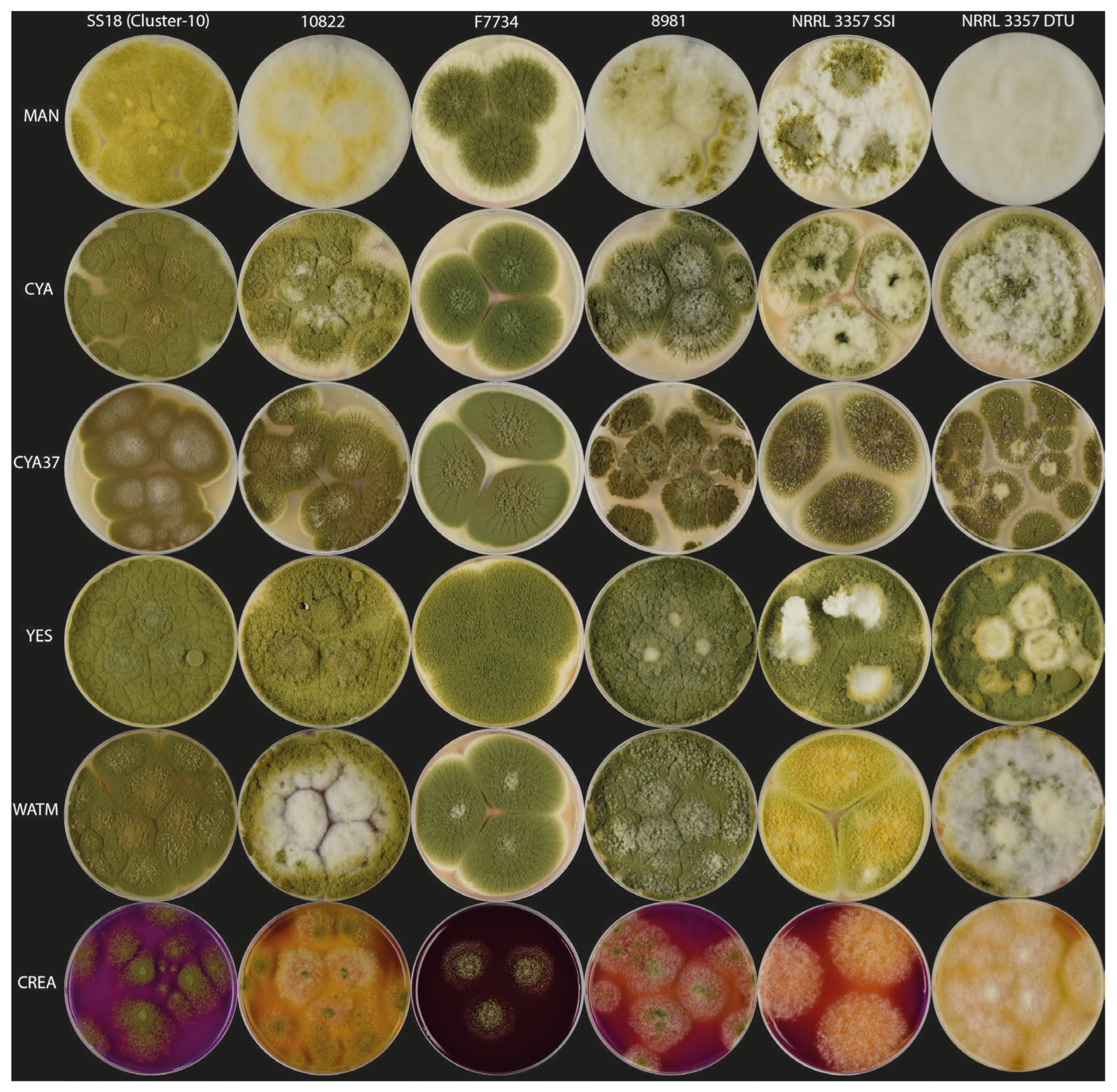
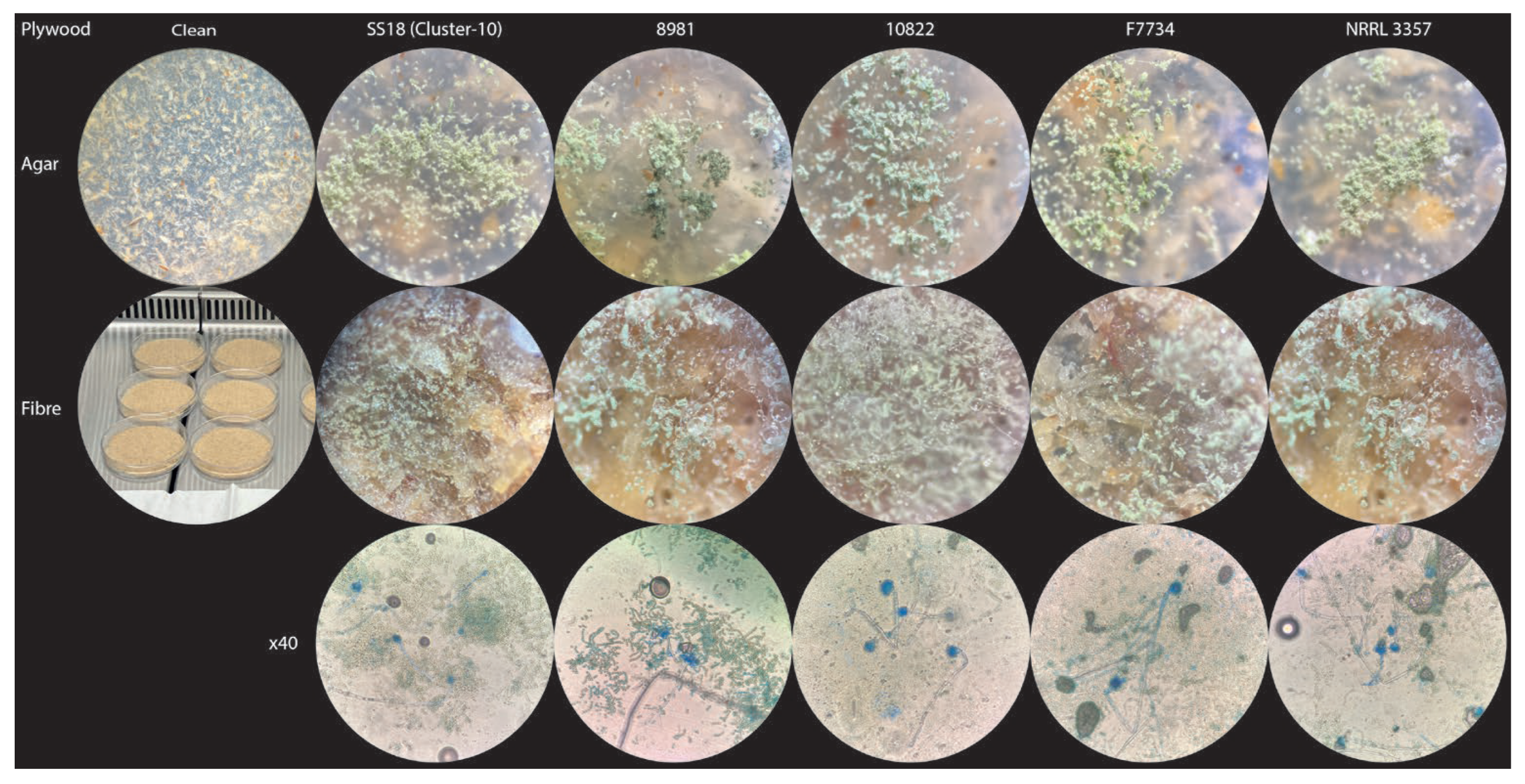
3.2. Morphological Profiling
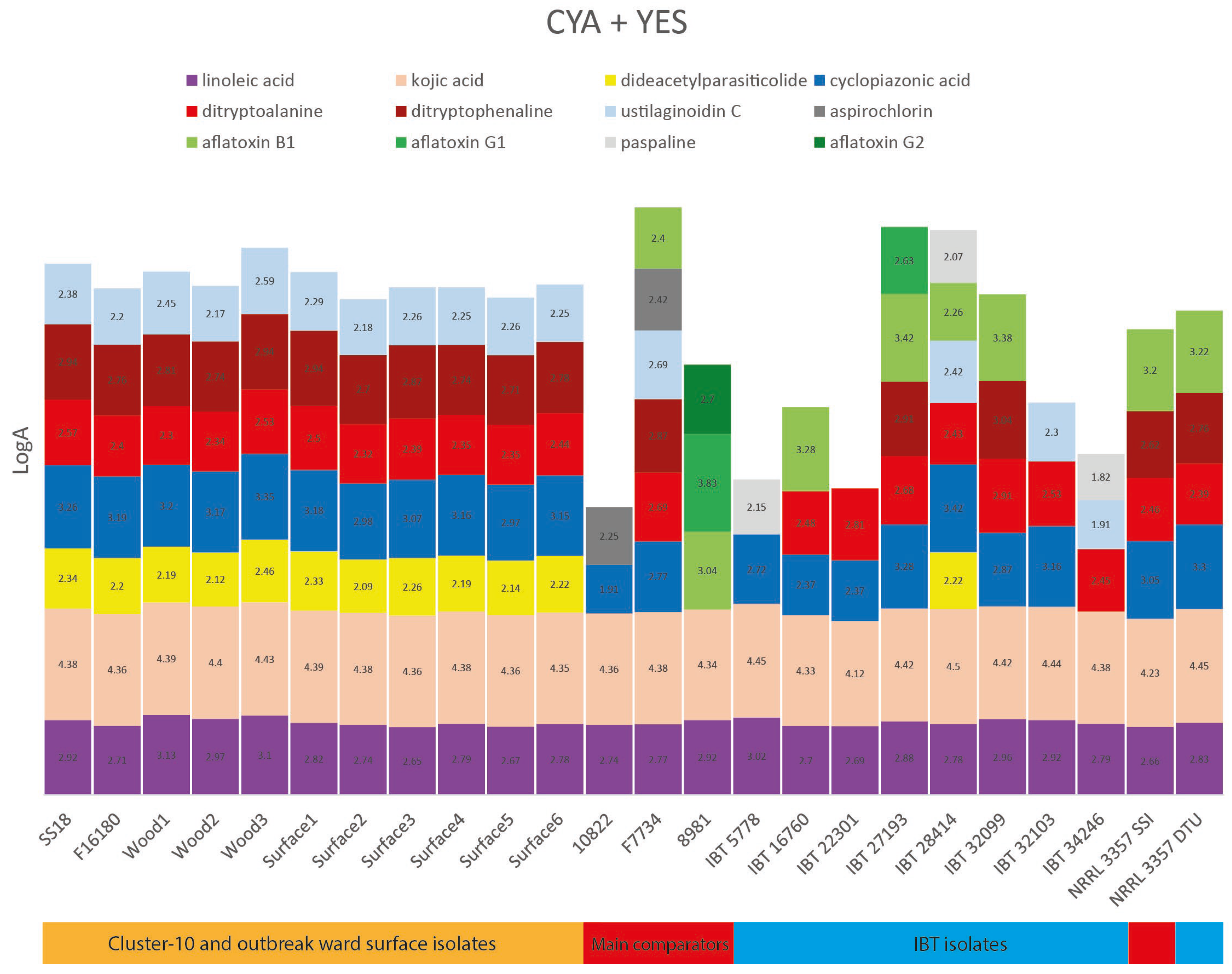
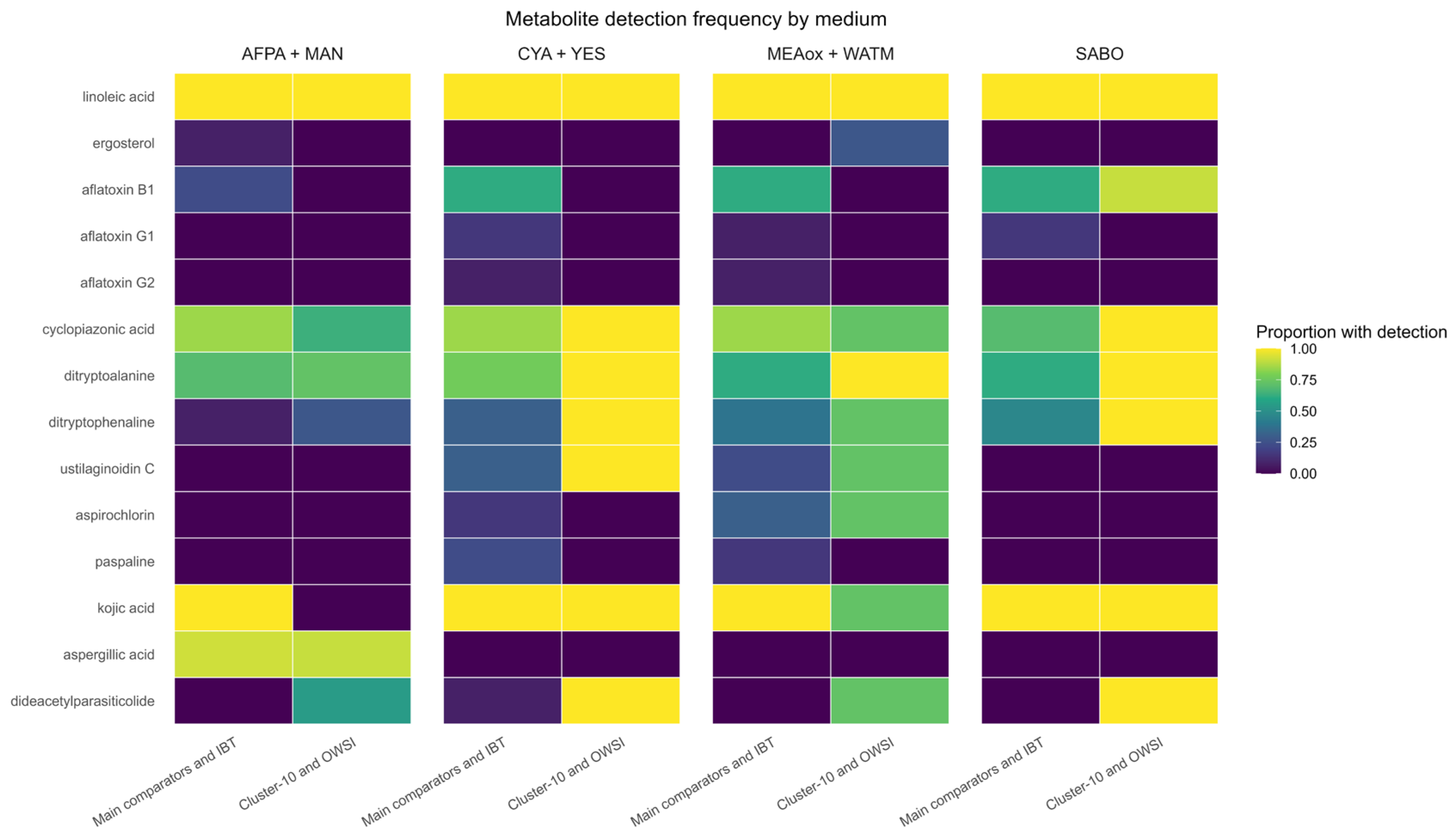
3.3. Secondary Metabolite Profiling via HPLC-DAD
3.4. Genomic Basis of Secondary Metabolites
4. Discussion
Supplementary Materials
Author Contributions
Funding
Institutional Review Board Statement
Informed Consent Statement
Data Availability Statement
Conflicts of Interest
References
- Hedayati, M.T.; Pasqualotto, A.C.; Warn, P.A.; Bowyer, P.; Denning, D.W. Aspergillus flavus: Human pathogen, allergen and mycotoxin producer. Microbiology 2007, 153, 1677–1692. [Google Scholar] [CrossRef] [PubMed]
- Vonberg, R.-P.; Gastmeier, P. Nosocomial aspergillosis in outbreak settings. J. Hosp. Infect. 2006, 63, 246–254. [Google Scholar] [CrossRef] [PubMed]
- Gewecke, A.; Hare, R.K.; Salgård, C.; Kyndi, L.; Høg, M.; Petersen, G.; Nahimana, D.; Abou-Chakra, N.; Knudsen, J.D.; Rosendahl, S.; et al. A single-source nosocomial outbreak of Aspergillus flavus uncovered by genotyping. Microbiol. Spectr. 2024, 12, e0027324. [Google Scholar] [CrossRef] [PubMed]
- Vissing, N.H.; Lausen, B.; Hutchings Hoffmann, M.; Als-Nielsen, B.; Schmiegelow, K.; Helweg-Larsen, J.; Arendrup, M.C.; Nygaard, U. Aspergillus flavus Infections in Children with Leukemia despite Liposomal Amphotericin-B Prophylaxis. Pediatr. Infect. Dis. J. 2021, 40, 749–752. [Google Scholar] [CrossRef] [PubMed]
- Gewecke, A.; Sieber, R.N.; Hallstrøm, S.; Stegger, M.; Kolarik, B.; Knudsen, J.D.; Andersen, B.; Hall, A.; Vissing, N.H.; Arendrup, M.C. Environmental and Phylogenetic Investigations of Aspergillus flavus Outbreak Linked to Contaminated Building Materials, Denmark, 2025. Emerg. Infect. Dis. 2026, 32, 376–387. [Google Scholar] [CrossRef] [PubMed]
- Loukou, E.; Jensen, N.F.; Rohde, L.; Andersen, B. Pre-contamination of new, wood-based building materials: Fungal diversity and susceptibility under different moisture scenarios. Build. Environ. 2026, 290, 114129. [Google Scholar] [CrossRef]
- Yohannis, E.; Urugo, M.M.; Teka, T.A.; Getachew, P.; Tola, Y.B.; Forsido, S.F.; Kebede, Y.S.; Teferra, T.F. Aflatoxin Contamination in Agri-Food Systems: A Comprehensive Review of Toxicity, Food Security, Economic Impacts, and Sustainable Mitigation Across the Value Chain. Food Sci. Nutr. 2025, 13, e71104. [Google Scholar] [CrossRef] [PubMed]
- Pickova, D.; Ostry, V.; Toman, J.; Malir, F. Aflatoxins: History, Significant Milestones, Recent Data on Their Toxicity and Ways to Mitigation. Toxins 2021, 13, 399. [Google Scholar] [CrossRef] [PubMed]
- Goessens, T.; Tesfamariam, K.; Njobeh, P.B.; Matumba, L.; Jali-Meleke, N.; Gong, Y.Y.; Herceg, Z.; Ezekiel, C.N.; De Saeger, S.; Lachat, C.; et al. Incidence and mortality of acute aflatoxicosis: A systematic review. Environ. Int. 2025, 199, 109461. [Google Scholar] [CrossRef] [PubMed]
- Ostry, V.; Toman, J.; Grosse, Y.; Malir, F. Cyclopiazonic acid: 50th anniversary of its discovery. World Mycotoxin J. 2018, 11, 135–148. [Google Scholar] [CrossRef]
- Valdes, J.J.; Cameron, J.E.; Cole, R.J. Aflatrem: A tremorgenic mycotoxin with acute neurotoxic effects. Environ. Health Perspect. 1985, 62, 459. [Google Scholar] [CrossRef] [PubMed]
- Feng, M.L.; Li, Z.H.; Shi, B.B. Progress on 3-Nitropropionic Acid Derivatives. Biomolecules 2025, 15, 1066. [Google Scholar] [CrossRef] [PubMed]
- Al Hallak, M.; Verdier, T.; Bertron, A.; Roques, C.; Bailly, J.D. Fungal Contamination of Building Materials and the Aerosolization of Particles and Toxins in Indoor Air and Their Associated Risks to Health: A Review. Toxins 2023, 15, 175. [Google Scholar] [CrossRef] [PubMed]
- Chen, T.; Yang, W.; Li, T.; Yin, Y.; Liu, Y.; Wang, B.; She, Z. Hemiacetalmeroterpenoids A-C and Astellolide Q with Antimicrobial Activity from the Marine-Derived Fungus Penicillium sp. N-5. Mar. Drugs 2022, 20, 514. [Google Scholar] [CrossRef] [PubMed]
- Dutcher, J.D. Aspergillic Acid: An Antibiotic Substance Produced by Aspergillus flavus: I. General Properties; Formation Of Desoxyaspergillic Acid; Structural Conclusions. J. Biol. Chem. 1947, 171, 321–339. [Google Scholar] [CrossRef]
- Zhang, Q.; Jia, M.; Li, H.; Shi, T.; Xu, Y.; Zhao, T.; Zhang, L.; Zhao, P.; Xia, X. Epipolythiodioxopiperazines: From Chemical Architectures to Biological Activities and Ecological Significance—A Comprehensive Review. Fermentation 2025, 11, 700. [Google Scholar] [CrossRef]
- Balbinot, R.B.; de Oliveira, J.A.M.; Bernardi, D.I.; Polli, A.D.; Polonio, J.C.; Cabral, M.R.P.; Zanqueta, É.B.; Endo, E.H.; Meneguello, J.E.; Cardoso, R.F.; et al. Chromolaena laevigata (Asteraceae) as a source of endophytic non-aflatoxigenic Aspergillus flavus: Chemical profile in different culture conditions and biological applications. Braz. J. Microbiol. 2021, 52, 1201–1214. [Google Scholar] [CrossRef] [PubMed]
- Calvo, A.M.; Cary, J.W. Association of fungal secondary metabolism and sclerotial biology. Front. Microbiol. 2015, 6, 62. [Google Scholar] [CrossRef] [PubMed]
- Cho, H.J.; Son, S.H.; Chen, W.; Son, Y.E.; Lee, I.; Yu, J.H.; Park, H.S. Regulation of Conidiogenesis in Aspergillus flavus. Cells 2022, 11, 2796. [Google Scholar] [CrossRef] [PubMed]
- Firacative, C.; Khan, A.; Duan, S.; Ferreira-Paim, K.; Leemon, D.; Meyer, W. Rearing and Maintenance of Galleria mellonella and Its Application to Study Fungal Virulence. J. Fungi 2020, 6, 130. [Google Scholar] [CrossRef] [PubMed]
- Han, K.; Jung, I. Restricted Mean Survival Time for Survival Analysis: A Quick Guide for Clinical Researchers. Korean J. Radiol. 2022, 23, 495–499. [Google Scholar] [CrossRef] [PubMed]
- Iwasaki, T.; Kosikowski, F.V. PRODUCTION OF β-NITROPROPIONIC ACID IN FOODS. J. Food Sci. 1973, 38, 1162–1165. [Google Scholar] [CrossRef]
- Smedsgaard, J. Micro-scale extraction procedure for standardization screening of fungal metabolite production in cultures. J. Chromatogr. A 1997, 760, 264–270. [Google Scholar] [CrossRef] [PubMed]
- Frisvad, J.C.; Thrane, U. Standardized high-performance liquid chromatography of 182 mycotoxins and other fungal metabolites based on alkylphenone retention indices and UV-VIS spectra (diodearray detection). J. Chromatogr. A 1987, 404, 195–214. [Google Scholar] [CrossRef] [PubMed]
- Rank, C.; Klejnstrup, M.L.; Petersen, L.M.; Kildgaard, S.; Frisvad, J.C.; Held Gotfredsen, C.; Ostenfeld Larsen, T. Comparative Chemistry of Aspergillus oryzae (RIB40) and A. flavus (NRRL 3357). Metabolites 2012, 2, 39–56. [Google Scholar] [CrossRef] [PubMed]
- Kim, D.H.; Kim, D.C.; Seo, D.; Kim, K.T.; Lee, S.H.; Hong, S.B. Genome diversity, population structure and MALDI-TOF MS profiling of Aspergillus oryzae/flavus strains from fermentation and wild environments. BMC Genom. 2025, 26, 429. [Google Scholar] [CrossRef] [PubMed]
- Shinohara, Y.; Takahashi, S.; Osada, H.; Koyama, Y. Identification of a novel sesquiterpene biosynthetic machinery involved in astellolide biosynthesis. Sci. Rep. 2016, 6, 32865. [Google Scholar] [CrossRef] [PubMed]
- Samson, R.A.; Visagie, C.M.; Houbraken, J.; Hong, S.B.; Hubka, V.; Klaassen, C.H.W.; Perrone, G.; Seifert, K.A.; Susca, A.; Tanney, J.B.; et al. Phylogeny, identification and nomenclature of the genus Aspergillus. Stud. Mycol. 2014, 78, 141–173. [Google Scholar] [CrossRef] [PubMed]
- Frisvad, J.C.; Hubka, V.; Ezekiel, C.N.; Hong, S.B.; Nováková, A.; Chen, A.J.; Arzanlou, M.; Larsen, T.O.; Sklenář, F.; Mahakarnchanakul, W.; et al. Taxonomy of Aspergillus section Flavi and their production of aflatoxins, ochratoxins and other mycotoxins. Stud. Mycol. 2019, 93, 1. [Google Scholar] [CrossRef] [PubMed]
- Rohlfs, M.; Churchill, A.C.L. Fungal secondary metabolites as modulators of interactions with insects and other arthropods. Fungal Genet. Biol. 2011, 48, 23–34. [Google Scholar] [CrossRef] [PubMed]
- Wang, S.; Wang, Y.; Shi, X.; Herrera-Balandrano, D.D.; Chen, X.; Liu, F.; Laborda, P. Application and antagonistic mechanisms of atoxigenic Aspergillus strains for the management of fungal plant diseases. Appl. Environ. Microbiol. 2024, 90, e01085-24. [Google Scholar] [CrossRef] [PubMed]
- Alshannaq, A.F.; Gibbons, J.G.; Lee, M.K.; Han, K.H.; Hong, S.B.; Yu, J.H. Controlling aflatoxin contamination and propagation of Aspergillus flavus by a soy-fermenting Aspergillus oryzae strain. Sci. Rep. 2018, 8, 16871. [Google Scholar] [CrossRef] [PubMed]
- Ehrlich, K.C.; Cotty, P.J. Variability in nitrogen regulation of aflatoxin production by Aspergillus flavus strains. Appl. Microbiol. Biotechnol. 2002, 60, 174–178. [Google Scholar] [CrossRef] [PubMed]
- Ehrlich, K.C.; Montalbano, B.G.; Cotty, P.J. Divergent regulation of aflatoxin production at acidic pH by two Aspergillus strains. Mycopathologia 2005, 159, 579–581. [Google Scholar] [CrossRef] [PubMed]
- Aleksic, B.; Draghi, M.; Ritoux, S.; Bailly, S.; Lacroix, M.; Oswald, I.P.; Bailly, J.D.; Robine, E. Aerosolization of Mycotoxins after Growth of Toxinogenic Fungi on Wallpaper. Appl. Environ. Microbiol. 2017, 83, e01001-17. [Google Scholar] [CrossRef] [PubMed]
- Täubel, M.; Sulyok, M.; Vishwanath, V.; Bloom, E.; Turunen, M.; Järvi, K.; Kauhanen, E.; Krska, R.; Hyvärinen, A.; Larsson, L.; et al. Co-occurrence of toxic bacterial and fungal secondary metabolites in moisture-damaged indoor environments. Indoor Air 2011, 21, 368–375. [Google Scholar] [CrossRef] [PubMed]
- Moularat, S.; Robine, E. A Method to Determine the Transfer of Mycotoxins from Materials to Air. CLEAN—Soil Air Water 2008, 36, 578–583. [Google Scholar] [CrossRef]
- Gutarowska, B.; Sulyok, M.; Krska, R. A study of the toxicity of moulds isolated from dwellings. Indoor Built Environ. 2010, 19, 668–675. [Google Scholar] [CrossRef]
- Mycotoxins. Available online: https://www.who.int/news-room/fact-sheets/detail/mycotoxins (accessed on 15 January 2026).
- Chang, P.K. Genome-wide nucleotide variation distinguishes Aspergillus flavus from Aspergillus oryzae and helps to reveal origins of atoxigenic A. flavus biocontrol strains. J. Appl. Microbiol. 2019, 127, 1511–1520. [Google Scholar] [CrossRef] [PubMed]
- Han, D.M.; Baek, J.H.; Choi, D.G.; Jeon, M.-S.; Eyun, S.-I.; Jeon, C.O. Comparative pangenome analysis of Aspergillus flavus and Aspergillus oryzae reveals their phylogenetic, genomic, and metabolic homogeneity. Food Microbiol. 2024, 119, 104435. [Google Scholar] [CrossRef] [PubMed]
- Champion, O.L.; Titball, R.W.; Bates, S. Standardization of G. mellonella Larvae to Provide Reliable and Reproducible Results in the Study of Fungal Pathogens. J. Fungi 2018, 4, 108. [Google Scholar] [CrossRef] [PubMed]



| Isolates (Local Name and Info.) | Origin (Original Strain Number) | Sourced from | Material | Year | SNPs from SS18 |
|---|---|---|---|---|---|
| Previously Sequenced [5] | |||||
| Cluster-10 isolates | |||||
| SS18 | DK | Outbreak ward surface | Dust (Vacuum cleaner bag) | 2024 | (Ref.) |
| F16180 | DK | DCM patient | Sputum | 2023 | 76 |
| Wood1 | Unknown | Danish retailer | Oriented strand board (OSB) | 2020 | 82 |
| Wood2 | Unknown | Danish retailer | Medium-density fibreboard (MDF) | 2020 | 86 |
| Wood3 | Unknown | Danish retailer | Plywood | 2020 | 82 |
| Main comparators | |||||
| 10822 | DK | Non-outbreak patient | BAL | 2019 | 16,825 |
| F7734 | DK | Non-outbreak patient | BAL | 2023 | 47,448 |
| 8981 | DK | Non-outbreak patient | BAL | 2018 | Not in tree b |
| NRRL 3357 SSI a | USA (CBS 128202) | Statens Serum Institut (DK) | Peanut | 1968 | 50,462 |
| Non-sequenced | |||||
| Outbreak ward surface isolates | |||||
| Surface 1 to 6 | DK | Outbreak ward surfaces | Surface swabs | 2025 | |
| IBT isolates | |||||
| IBT 5778 | USA (NRRL 1957) | Danish Technical University | Cellophane | 1944 | |
| IBT 16760 | Ecuador | Danish Technical University | Soil | 1965 | |
| IBT 22301 | Finland | Danish Technical University | Building material | Unknown | |
| IBT 27193 | The Netherlands | Danish Technical University | Unknown | Unknown | |
| IBT 28414 | DK | Danish Technical University | Lake water | 2006 | |
| IBT 32099 | USA—Miami (SRRC 2653) | Danish Technical University | Corneal ulcer | Unknown | |
| IBT 32103 | USA—Chicago (SRRC 2632) | Danish Technical University | Clinical (unknown site) | Unknown | |
| IBT 34246 | DK | Danish Technical University | Wheat | Unknown | |
| NRRL 3357 DTU a | USA (NRRL 3357) | Danish Technical University | Peanut | 1968 | |
| Strain | RMST (Days) | Difference (Days) | CI | p a |
|---|---|---|---|---|
| SS18 (Cluster-10) | 2.50 | (Ref.) | - | - |
| NRRL 3357 | 2.30 | −0.20 | [−1.00; 0.55] | 0.68 |
| 10822 | 2.35 | −0.15 | [−1.05; 0.75] | 0.78 |
| 8981 | 2.85 | 0.35 | [−0.65; 1.35] | 0.50 |
| F7734 | 3.60 | 1.10 | [0.10; 2.05] | 0.03 |
| Metabolite IDs | No. Isolates with Detection | Retention Index (RI) | RI Range |
|---|---|---|---|
| Kojic acid * | 24 | 558 | 556–560 |
| Ustilaginoidin C ** | 17 | 849 | 847–849 |
| Ditryptoalanine *** | 19 | 952 | 942–959 |
| Ditryptophenaline *** | 23 | 967 | 958–969 |
| Aflatoxin G1 * | 2 | 815 | 815–820 |
| Aflatoxin G2 * | 1 | 712 | |
| Aflatoxin B1 * | 18 | 840 | 839–845 |
| Aspirochlorin *** | 13 | 857 | 850–860 |
| Dideacetylparasiticolide *** | 13 | 1065 | 1065, 1066 |
| Cyclopiazonic acid *** | 22 | 1099 | 1097–1103 |
| Paspaline *** | 4 | 1486 | 1485–1486 |
| Linoleic acid * (in all fungi) | 24 | 1615 | 1614–1619 |
| Aspergillic acid * | 22 | 1986 | 1984–1988 |
| Ergosterol * (in all fungi) | 4 | 2135 | 2126–2138 |
| Toxin/Metabolite | Strain | Seq. Size (bp) | Identity (%) |
|---|---|---|---|
| Aflatoxin | NRRL 3357 (NCBI ref. sequence) | 70,001 | (Ref) |
| SS18 (Cluster-10) | 69,706 | 97.69 | |
| 10822 | 69,732 | 97.63 | |
| F7734 | 69,763 | 98.84 | |
| Cyclopiazonic acid | NRRL 3357 | 24,262 | (Ref) |
| SS18 | 20,029 | 78.67 | |
| 10822 | 21,344 | 83.44 | |
| F7734 | 24,269 | 99.02 | |
| Ditryptophenaline | NRRL 3357 | 14,001 | (Ref) |
| SS18 | 13,982 | 99.59 | |
| 10822 | 13,975 | 99.71 | |
| F7734 | 13,992 | 99.93 | |
| Dideacetylparasiticolide | RIB40 (A. oryzae NCBI ref. sequence) | 16,857 | (Ref) |
| SS18 | 16,872 | 98.64 | |
| 10822 | 1725 | 9.38 | |
| F7734 | 1725 | 9.40 | |
| NRRL 3357 | 1725 | 9.40 | |
| E1404 (A. flavus NCBI ref. sequence) | 16,872 | 98.99 | |
| E1404 vs. SS18 | - | 99.55 |
Disclaimer/Publisher’s Note: The statements, opinions and data contained in all publications are solely those of the individual author(s) and contributor(s) and not of MDPI and/or the editor(s). MDPI and/or the editor(s) disclaim responsibility for any injury to people or property resulting from any ideas, methods, instructions or products referred to in the content. |
© 2026 by the authors. Licensee MDPI, Basel, Switzerland. This article is an open access article distributed under the terms and conditions of the Creative Commons Attribution (CC BY) license.
Share and Cite
Gewecke, A.; Aviman, N.; Frisvad, J.C.; Arendrup, M.C.; Hoof, J.B. Distinct Phenotype and Secondary Metabolite Profile Mark a Dominant Aspergillus flavus Outbreak Strain. J. Fungi 2026, 12, 454. https://doi.org/10.3390/jof12060454
Gewecke A, Aviman N, Frisvad JC, Arendrup MC, Hoof JB. Distinct Phenotype and Secondary Metabolite Profile Mark a Dominant Aspergillus flavus Outbreak Strain. Journal of Fungi. 2026; 12(6):454. https://doi.org/10.3390/jof12060454
Chicago/Turabian StyleGewecke, Alexander, Noam Aviman, Jens C. Frisvad, Maiken Cavling Arendrup, and Jakob Blæsbjerg Hoof. 2026. "Distinct Phenotype and Secondary Metabolite Profile Mark a Dominant Aspergillus flavus Outbreak Strain" Journal of Fungi 12, no. 6: 454. https://doi.org/10.3390/jof12060454
APA StyleGewecke, A., Aviman, N., Frisvad, J. C., Arendrup, M. C., & Hoof, J. B. (2026). Distinct Phenotype and Secondary Metabolite Profile Mark a Dominant Aspergillus flavus Outbreak Strain. Journal of Fungi, 12(6), 454. https://doi.org/10.3390/jof12060454