Case Report

Native Valve Endocarditis Due to Trichosporon mycotoxinivorans—An Uncommon Presentation

1
Department of Cardiovascular & Thoracic Surgery, Amrita Institute of Medical Sciences and Research Center, Amrita Vishwa Vidyapeetham (Amrita University), Kochi 682041, India
2
Department of Microbiology, Amrita Institute of Medical Sciences and Research Center, Amrita Vishwa Vidyapeetham (Amrita University), Kochi 682041, India
*
Author to whom correspondence should be addressed.
J. Fungi 2026, 12(6), 447; https://doi.org/10.3390/jof12060447 (registering DOI)
Submission received: 2 April 2026 / Revised: 9 May 2026 / Accepted: 13 May 2026 / Published: 19 June 2026
(This article belongs to the Section Fungal Pathogenesis and Disease Control)

Abstract

Trichosporon is a type of non-candida yeast-like fungus. At one time, it was commonly reported in immunocompromised patients, but after the introduction of fluconazole as prophylaxis and for the treatment of fungal infections, there was a decrease in the incidence of the disease. With the introduction of echinocandins as the first line of treatment for fungal infections, and the intrinsic resistance of Trichosporon to the drug, there has been a small but increased reported incidence of the disease. Trichosporon usually causes skin infections, but invasive disease can occur in vulnerable patients. Endocarditis due to Trichosporon has been reported rarely, and usually occurs in prosthetic valves. In this paper, we report a patient with dialysis-dependent chronic kidney disease who presented with fever and was found to have native aortic valve endocarditis. In view of the large vegetation, he underwent early aortic valve replacement. Both the blood and tissue cultures grew Trichosporon spp. Post-operatively, he developed fungal septic shock, deteriorated, and died. Invasive Trichosporon disease has been associated with high rates of mortality ranging from 30 to 90%. There is limited literature on endocarditis resulting from Trichosporon. Specific treatment recommendations are unavailable, and a combination of surgery and prolonged antifungal medication will generally be required.

1. Introduction

Trichosporon spp. are a type of non-candida yeast found in nature, in soil, decomposed wood, bird droppings, food, and water [1]. They have also been found as commensals in humans in the gastrointestinal tract, hair, skin, and vagina [2]. Though most initial isolations of Trichosporon were as a colonizer or as a cutaneous infection, evidence of invasive infection has also been found in vulnerable populations like immunocompromised patients, especially in patients with hematological malignancies. Transplant recipients, patients who received prolonged antibiotics, patients with indwelling catheters or prosthetic heart valves, and patients with chronic kidney disease have also been found to be susceptible to invasive infection. The genus Trichosporon is distinguished by the presence of arthroconidia, which are asexual propagules that disarticulate from true hyphae in urease-positive yeast [2,3]. The word Trichosporon is derived from Greek, with Trichos meaning hair and sporon meaning spores. This is related to its first identification as an infection presenting as nodules on body hair, which was called white Piedra. After Candida, Trichosporon infection is the second most common cause of yeast infection in humans. Fifty species of the genus Trichosporon have been described, of which six of the most clinical relevance are T. asahii, T. asteroides, T. cutaneum, T. inkin, T. mucoides, and T. ovoides [4]. Among these, T. asahii, T. asteroides, and T. mucoides have been associated with invasive infection. In the 1980s, trichosporonosis was the second most common fungal infection in patients with hematological malignancies [5]. Subsequently, with the widespread introduction of fluconazole as both prophylaxis and for the treatment of fungal infections, there was a sharp decline in the incidence of Trichosporon infection [6]. However, with the use of echinocandins as a replacement for the more toxic amphotericin B as the initial treatment of choice for suspected fungal infections, a breakthrough in fungemia due to Trichosporon has been described due to the resistance of Trichosporon to echinocandins [7,8]. Trichosporon rarely causes endocarditis, and what is reported in the literature is usually prosthetic-valve-related endocarditis. This patient presented with native valve endocarditis and usually Trichosporon would not be considered in the differential. This report highlights the possibility of the re-emergence of this pathogen as a cause of fungal endocarditis.

2. Case Report

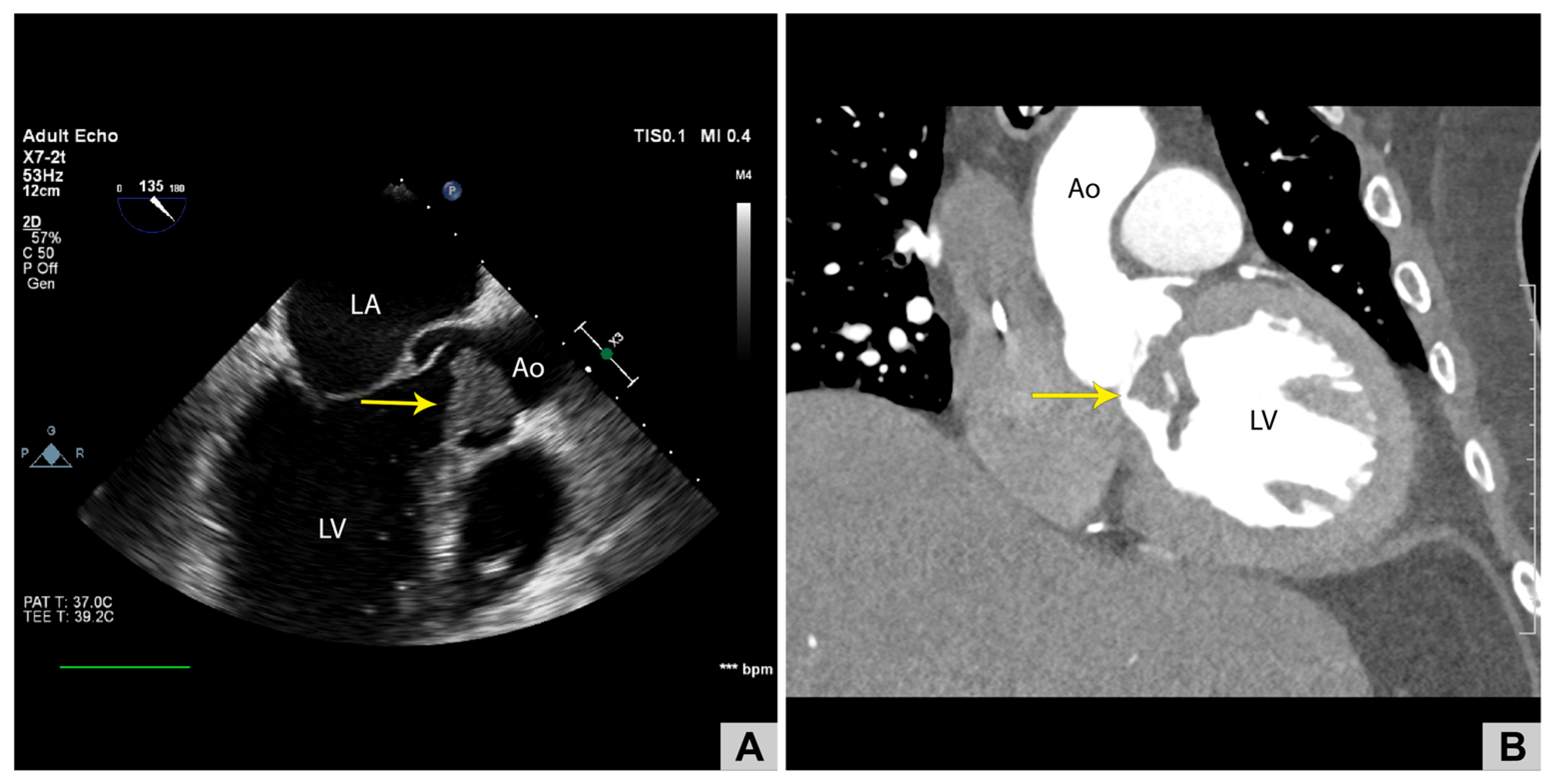
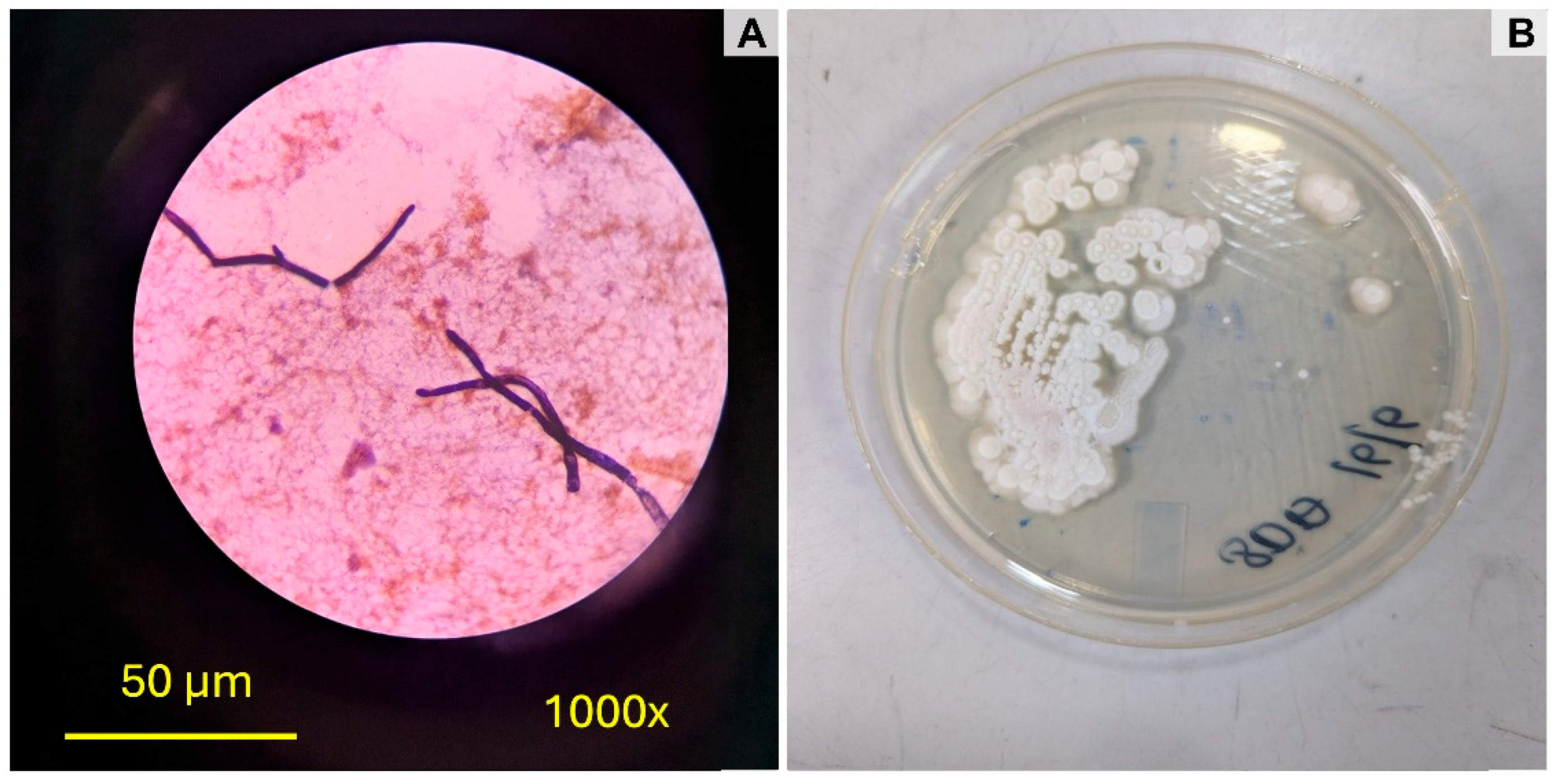
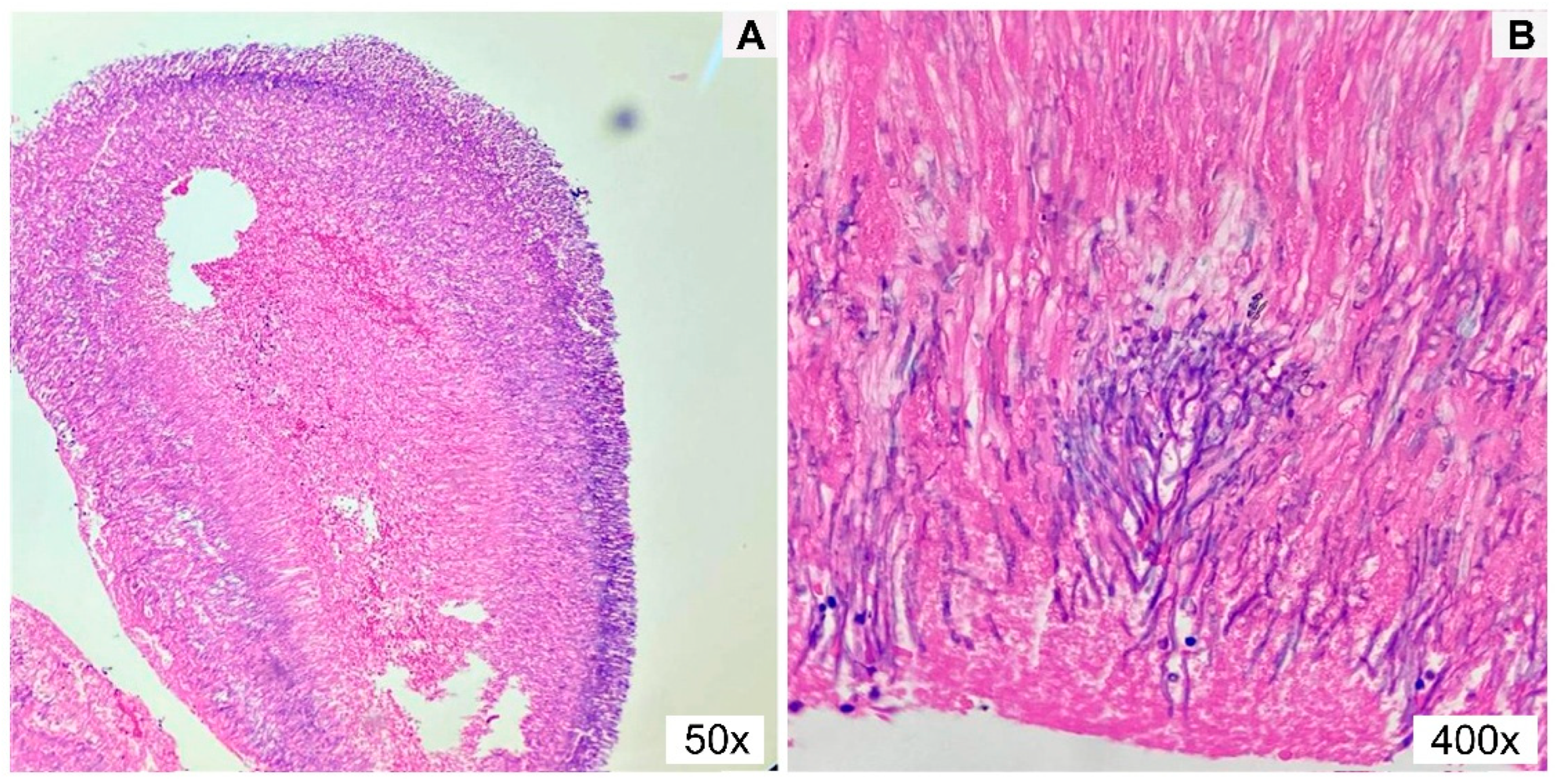
A 43-year-old male presented with a 3-day history of fever and breathlessness. He had a background of diabetes mellitus and dialysis-dependent renal failure. On examination, he was tachycardic, tachypneic, and febrile. Further evaluation by echocardiogram and computer tomography scan revealed a large aortic valve vegetation with significant aortic regurgitation (Figure 1A,B; Video S1). He was electively intubated and planned for early surgery in view of the large vegetation. Automated blood cultures were sent (Vitek2, bioMérieux, Marcy-l’Étoile, France) and he was started on ceftriaxone and vancomycin. The blood cultures were flagged as positive at 34 h of incubation, and the preliminary direct smear report indicated that yeast cells and pseudo hyphae were seen. Micafungin was added to cover the yeast since Candida is the most common cause of fungal endocarditis. Antigenic tests for fungi, β -D Glucan (6.83 ng/mL, ≥0.1 ng/mL positive), and galactomannan (2.08, ≥0.5 positive) from serum were both positive. The next day, he underwent surgical aortic valve replacement. A large vegetation attached to the right coronary cusp of the aortic valve was seen, with no involvement of the surrounding structures. The vegetation was sent for culture and histopathology (Figure 2 and Figure 3). The surgery was completed uneventfully, and he was shifted to the post-operative unit on a ventilator. Post-operatively, he did not become fully awake or oriented, with some spontaneous eye and limb movement but not to command. Following the procedure on day one, he developed high-grade fever and required increased vasopressor support to maintain blood pressure, and a diagnosis of post-operative vasoplegia or fungal sepsis was made. In the meantime, the blood culture and tissue culture grew identical dry, white, powdery colonies on sheep blood agar, chocolate agar, and Sabouraud dextrose agar within 48 h of incubation. The fungal isolate showed abundant arthroconidia on microscopy and was urease-positive. It also showed dry green colonies at 48 h of incubation on Candida HiCrome Agar (HiMedia, Thane, India). Vitek-2 identified Trichosporon spp. with low discrimination between T. asahii and T. mucoides. The isolate was found to have low MICs to voriconazole (Vitek-2 MIC ≤ 0.12 µg/mL) and fluconazole (2 µg/mL). The MIC of Amphotericin B was found to be 2 µg/mL, which is below the epidemiological cut-off value calculated by Francisco et al. for Trichosporon asahii [9]. The MICs of Caspofungin (>8 µg/mL) and micafungin (>8 µg/mL) were also high. Species identification by MALDI-TOF (Vitek MS, bioMérieux) was ordered, but the test failed to yield an identification, possibly because of the extremely dry consistency of the colonies. Subsequent Sanger sequencing of the isolate using primers targeting the D1/D2 region of the 26S rDNA identified it as Trichosporon mycotoxinivorans with 99.7% percentage identity. Currently, the MALDI-TOF (Vitek MS, bioMérieux) database does not include this pathogen. Voriconazole was initiated on post-operative day 2 and after 5 doses; trough levels were monitored, and the dose was titrated (target trough level 2 to 6 µg/mL). Despite treatment, the patient’s fever persisted, and blood pressure dropped with deterioration of neurological level and rising lactates, and the patient eventually expired on post-operative day 5.

3. Discussion

Fungal endocarditis is most commonly caused by Candida and Aspergillus, with Candida endocarditis being almost twice as common. Endocarditis due to Trichosporon has rarely been reported, with a recent article stating that there were only eight cases of Trichosporon endocarditis reported in the last 20 years [1]. Trichosporon mycotoxinivorans (current nomenclature Apiotrichum mycotoxinivorans) was first described in 2004 and is associated with infections in patients with cystic fibrosis [10]. Most of the reported cases of Trichosporon endocarditis have been prosthetic-valve-related, occurring in the immediate post-operative period to more than 10 years after surgery. Generally, patients with underlying medical conditions or patients with prior heart valve surgery with a prosthetic valve are more susceptible to the disease. Clinical presentation has been described as subacute with low-grade fever and leucocytosis, but our patient had a more acute presentation. In general, as with other cases of fungal endocarditis, vegetations are large and easily picked up on transthoracic echocardiogram, thus facilitating an earlier diagnosis. The large size of vegetation has also been implicated as the reason these patients can present more acutely with embolic events and early-onset heart failure. Trichosporon endocarditis has a poor prognosis, with the reported mortality being 56% in one review [4]. The reported incidence of embolism was also high, at 75%.
Diagnosis of Trichosporon endocarditis is enabled by the relative ease of growth in routine culture media used for bacterial blood culture, and there is no need for special fungal culture media. Cultures from valve tissue or vegetation are also usually positive. The Antigenic tests β -D glucan and galactomannan have been reported to be positive in Trichosporon infection, but are neither sensitive nor specific for the disease. One report of 33 patients with Trichosporon fungemia in which testing for β -D glucan was carried out reported 50% positivity [11]. Antigenic tests are more useful in this setting for their negative predictive value than for their positive predictive value. There is also a cross-reactivity with the cryptococcal capsular antigen glucuronoxylomannan. Therefore, the cryptococcal antigen detection test (latex agglutination or lateral flow assay) may be falsely positive in Trichosporon infections. One systematic review of invasive Trichosporon infections identified serum Cryptococcus glucuronoxylomannan (GXM) antigen in 4 out of 15 (26.6%) cases, while serum β -D glucan assay was positive in 9 out of 11 tested patients (81.8%) [8]. The source of Trichosporon in our patient is not clear. He had a known risk factor, dialysis-dependent renal failure, but he was being dialysed through a previously constructed arteriovenous fistula and not an indwelling catheter. Trichosporon mycotoxinivorans has been reported as a cause of fungemia in three patients who underwent hemodialysis, two of whom died despite receiving appropriate antifungal treatment [12]. Gut translocation, hospital-acquired infection, or the inherent risk of being a patient with renal failure were probably factors putting our patient at risk for infection.
Currently, the recommended treatment for Trichosporon infection is voriconazole or posaconazole as first-line treatment. However, there have been reports of the emergence of resistance to azoles due to the formation of biofilms [13]. Amphotericin B is considered as second-line treatment if Voriconazole fails. However, outcomes of Amphotericin B therapy on Trichosporon infection have generally not been as good compared to Voriconazole. Therapy may take the form of monotherapy or combined therapy, with good outcomes reported with Voriconazole alone. Speciation is of importance as there are differences in antifungal susceptibility between the species. A study from Taiwan on 267 Trichosporon isolates from clinical samples collected between 2008 and 2020 showed that T. asahii had significant higher MICs to fluconazole, voriconazole, isuvaconazole, and ravuconazole compared to other species. The study included only two isolates of T. mycotoxinivorans, which also interestingly showed high MICs to azoles [14]. Our patient’s infection proved resistant to Amphotericin B, and fluconazole MIC was relatively high. The treatment of Trichosporon endocarditis with drugs alone is probably insufficient. However, the number of reported cases is low, and there is no definite recommendation. Following the general recommendation for fungal endocarditis, surgery is probably required to allow the best possible chance for cure. Following surgery and 6 weeks of medical therapy, the duration of suppressive therapy in native valve endocarditis may be individualized based on the clinical picture and drug susceptibility testing; however, for prosthetic valve endocarditis, lifelong suppression may be required [3].

4. Conclusions

With the advances in medical care, we are seeing more patients with associated immunosuppression. This provides fertile ground for the emergence of newer infections in these susceptible patients. The standard treatment of Candida fungemia (which is the most common cause of fungemia) is echinocandins and Amphotericin B. However, the uniquely inherent resistance of Trichosporon to these drugs may lead to an increasing re-emergence of this fungus. Increased awareness of the infection, predisposing factors, and required treatment will hopefully lead to better outcomes for this life-threatening infection.

Supplementary Materials

The following supporting information can be downloaded at: https://www.mdpi.com/article/10.3390/jof12060447/s1, Video S1: Echo loop showing large vegetation attached to aortic valve.

Author Contributions

Conceptualization, K.G. and N.S.; methodology, K.G.; software, K.G.; validation, N.S., R.J. and P.K.V.; formal analysis, K.G. and N.S.; investigation, K.G.; resources, K.G.; data curation, K.G.; writing—original draft preparation, K.G.; writing—review and editing, N.S., R.J. and P.K.V.; visualization, K.G.; supervision, P.K.V.; project administration, K.G.; funding acquisition, K.G. All authors have read and agreed to the published version of the manuscript.

Funding

This research received no external funding.

Institutional Review Board Statement

The study was conducted in accordance with the Declaration of Helsinki, and approved by the Institutional Ethics Committee of Amrita Institute of Medical Sciences, Kochi (ECASM-AIMS-2025-300 dated 30 September 2025).

Informed Consent Statement

Written informed consent was obtained for the publication of this case report.

Data Availability Statement

The original contributions presented in this study are included in the article/Supplementary Material. Further inquiries can be directed to the corresponding author.

Acknowledgments

The authors would like to acknowledge and thank Indu Nair of Pathology, Amrita Institute of Medical Sciences, Kochi, for providing the histopathology images for this report.

Conflicts of Interest

The authors declare no conflicts of interest.

References

  1. Mulè, A.; Rossini, F.; Sollima, A.; Lenzi, A.; Fumarola, B.; Amadasi, S.; Chiari, E.; Lorenzotti, S.; Saccani, B.; Van Hauwermeiren, E.; et al. Trichosporon asahii Infective Endocarditis of Prosthetic Valve: A Case Report and Literature Review. Antibiotics 2023, 12, 1181. [Google Scholar] [CrossRef] [PubMed]
  2. Colombo, A.L.; Padovan, A.C.; Chaves, G.M. Current knowledge of Trichosporon spp. and Trichosporonosis. Clin. Microbiol. Rev. 2011, 24, 682–700. [Google Scholar] [CrossRef] [PubMed]
  3. Chen, S.C.-A.; Perfect, J.; Colombo, A.L.; Cornely, O.A.; Groll, A.H.; Seidel, D.; Albus, K.; de Almedia, J.N.; Garcia-Effron, G.; Gilroy, N.; et al. Global guideline for the diagnosis and management of rare yeast infections: An initiative of the ECMM in cooperation with ISHAM and ASM. Lancet Infect. Dis. 2021, 21, e375–e386. [Google Scholar] [CrossRef] [PubMed]
  4. Oh, T.H.; Shin, S.U.; Kim, S.S.; Kim, S.E.; Kim, U.J.; Kang, S.J.; Jang, H.C.; Jung, S.I.; Shin, J.H.; Park, K.H. Prosthetic valve endocarditis by Trichosporon mucoides: A case report and review of literature. Medicine 2020, 99, e22584. [Google Scholar] [CrossRef] [PubMed]
  5. Walsh, T.J.; Newman, K.R.; Moody, M.; Wharton, R.C.; Wade, J.C. Trichosporonosis in patients with neoplastic disease. Medicine 1986, 65, 268–279. [Google Scholar] [CrossRef] [PubMed]
  6. Kaufman, D.; Boyle, R.; Hazen, K.C.; Patrie, J.T.; Robinson, M.; Donowitz, L.G. Fluconazole prophylaxis against fungal colonization and infection in preterm infants. N. Engl. J. Med. 2001, 345, 1660–1666. [Google Scholar] [CrossRef] [PubMed]
  7. Liao, Y.; Hartmann, T.; Zheng, T.; Yang, R.Y.; Ao, J.H.; Wang, W.L. Breakthrough trichosporonosis in patients receiving echinocandins: Case report and literature review. Chin. Med. J. (Engl.) 2012, 125, 2632–2635. [Google Scholar] [PubMed]
  8. de Almeida Júnior, J.N.; Hennequin, C. Invasive Trichosporon Infection: A Systematic Review on a Re-emerging Fungal Pathogen. Front. Microbiol. 2016, 7, 1629. [Google Scholar] [CrossRef] [PubMed]
  9. Francisco, E.C.; de Almeida Junior, J.N.; de Queiroz Telles, F.; Aquino, V.; Mendes, A.; de Andrade Barberino, M.G.M.; Castro, P.D.T.O.; Guimarães, T.; Hahn, R.; Padovan, A.; et al. Species distribution and antifungal susceptibility of 358 Trichosporon clinical isolates collected in 24 medical centres. Clin. Microbiol. Infect. 2019, 25, 909.e1–909.e5. [Google Scholar] [CrossRef] [PubMed]
  10. Hickey, P.W.; Sutton, D.A.; Fothergill, A.W.; Rinaldi, M.G.; Wickes, B.L.; Schmidt, H.J.; Walsh, T.J. Trichosporon mycotoxinivorans, a novel respiratory pathogen in patients with cystic fibrosis. J. Clin. Microbiol. 2009, 47, 3091–3097. [Google Scholar] [CrossRef] [PubMed]
  11. Suzuki, K.; Nakase, K.; Kyo, T.; Kohara, T.; Sugawara, Y.; Shibazaki, T.; Oka, K.; Tsukada, T.; Katayama, N. Fatal Trichosporon fungemia in patients with hematologic malignancies. Eur. J. Haematol. 2010, 84, 441–447. [Google Scholar] [CrossRef] [PubMed]
  12. Chayakulkeeree, P.; Chongtrakool, D. Emergence of Apiotrichum mycotoxinivorans Invasive Infection in Thailand: Report of The First Four Cases in Southeast Asia. Int. J. Infect. Dis. 2025, 152, 107568. [Google Scholar] [CrossRef]
  13. Iturrieta-González, I.A.; Padovan, A.C.; Bizerra, F.C.; Hahn, R.C.; Colombo, A.L. Multiple species of Trichosporon produce biofilms highly resistant to triazoles and amphotericin B. PLoS ONE 2014, 9, e109553. [Google Scholar] [CrossRef] [PubMed]
  14. Lo, S.-H.; Tseng, Y.-T.; Chen, Y.-C.; Ho, M.-W.; Lee, C.-H.; Lu, P.-L.; Lin, S.-Y. In vitro activity of isavuconazole, ravuconazole, and comparison of the Sensititre YeastOne and CLSI broth microdilution methods against clinical isolates of Trichosporon species. J. Clin. Microbiol. 2025, 63, e0031925. [Google Scholar] [CrossRef] [PubMed]
Figure 1. (A) Echo image of large vegetation in left ventricular outflow tract arising from the aortic valve. LA—left atrium. LV—Left ventricle. Ao—Aorta. (B) CT image of vegetation in left ventricular outflow tract. Ao—Aorta. LV—Left ventricle.
Jof 12 00447 g001
Figure 2. (A) Gram stain from blood culture showing filamentous fungal hyphae. (B) Dry white cerebriform colonies on Sabourauds dextrose agar after 48 h incubation.
Jof 12 00447 g002
Figure 3. (A) Histopathology section from valvular vegetation with hematoxylin and eosin stain showing large fungal colonies. (B) Magnified histopathology section from vegetation with hematoxylin and eosin stain showing branched and septate fungal hyphae.
Jof 12 00447 g003
Disclaimer/Publisher’s Note: The statements, opinions and data contained in all publications are solely those of the individual author(s) and contributor(s) and not of MDPI and/or the editor(s). MDPI and/or the editor(s) disclaim responsibility for any injury to people or property resulting from any ideas, methods, instructions or products referred to in the content.