1. Introduction
Fungal infections are an increasing global health concern, affecting both humans and animals, with significant clinical, economic, and public health implications. In human medicine, opportunistic systemic mycoses caused by
Candida,
Aspergillus, and
Cryptococcus species are leading causes of morbidity and mortality among fungal infections, particularly in immunocompromised patients [
1,
2]. In veterinary medicine, fungal diseases represent a significant health concern, encompassing both invasive mycoses and superficial dermatophytosis in a wide range of animal species. Invasive mycoses, which are more severe and systemic, include infections such as aspergillosis and candidiasis. These infections can affect multiple organs and often occur in immunocompromised animals, where they are associated with high morbidity and mortality [
3]. On the other hand, dermatophytosis, caused by dermatophytes such as
Microsporum canis and
Trichophyton mentagrophytes, is a common and typically less severe fungal infection that affects a wide range of hosts, including humans, companion animals, and livestock, primarily involving the skin and hair. Although usually superficial, these infections can cause significant discomfort and are often zoonotic, posing a risk of transmission between animals and humans [
4,
5]. Dermatophytes are among the most prevalent fungal pathogens in animals, and zoonotic transmission represents an important route of spread, highlighting the need for reliable and efficient diagnostic methods [
6,
7].
Alternaria, a group of dematiaceous molds, is also a notable cause of fungal infections, leading to skin infections, respiratory issues, and allergic reactions in both humans and animals. These molds, while less commonly discussed than dermatophytes, pose significant threats in veterinary settings and are increasingly recognized as important pathogens [
8,
9].
Despite the critical nature of fungal infections, diagnostic approaches remain heavily reliant on traditional methods such as fungal culture and microscopy. While these methods have long been the standard, they are time-consuming, operator-dependent, and often limited by low sensitivity, particularly in cases of low-burden infections [
5].
Molecular methods such as PCR are widely used for fungal detection and provide high analytical performance, particularly through the use of universal primers targeting the internal transcribed spacer (ITS) region [
10]. However, despite their broad applicability [
11], PCR-based assays generally rely on specialized laboratory infrastructure, including thermal cyclers, dedicated reagents, and trained personnel [
12]. These requirements may limit their rapid deployment and routine implementation in some veterinary and resource-constrained settings. In veterinary practice, delays in diagnosis or prolonged turnaround times can lead to suboptimal treatment strategies and poorer clinical outcomes [
4]. Therefore, there is a particularly urgent demand for rapid, reliable and cost-effective diagnostic tools to enable timely confirmation of fungal infections and to avoid unnecessary antifungal treatment [
13,
14].
Fungal cell walls are predominantly composed of glucans, which are essential for maintaining their structural integrity and functional diversity [
15,
16]. Among these glucans, β-1,3-glucan is the most abundant, typically accounting for 65% to 90% of the total glucan content in the cell wall [
15]. Most fungal β-glucans consist primarily of β-1,3-linked glucose units, with varying amounts of β-1,6-linked branches. The abundance of β-1,6-glucan in fungal cell walls varies, but it is typically less abundant than β-1,3-glucan [
15].
Given the differing abundance of these glucans, combining the detection of both β-1,3- and β-1,6-glucans may enhance the sensitivity and specificity of diagnostic assays. Such an approach may broaden the detection coverage, potentially making it more suitable for identifying fungal species with varying cell wall compositions. Simultaneously detecting both β-1,3-glucan and β-1,6-glucan may offer a more comprehensive diagnostic strategy, increasing the reliability and early detection of fungal infections, particularly when fungal load is low during the early stages of infection.
Currently, commercial diagnostic methods for detecting β-1,3-glucan predominantly rely on immunological principles, such as antibody-based or antigen-based detection of (1 → 3) β-D-glucan released into the bloodstream during invasive fungal infections [
17,
18,
19]. Immunological methods for detecting β-1,3-glucan are associated with issues such as false positives, cross-reactivity, and limitations related to fungal species, as well as interference from variations in cell wall compositions across different fungi.
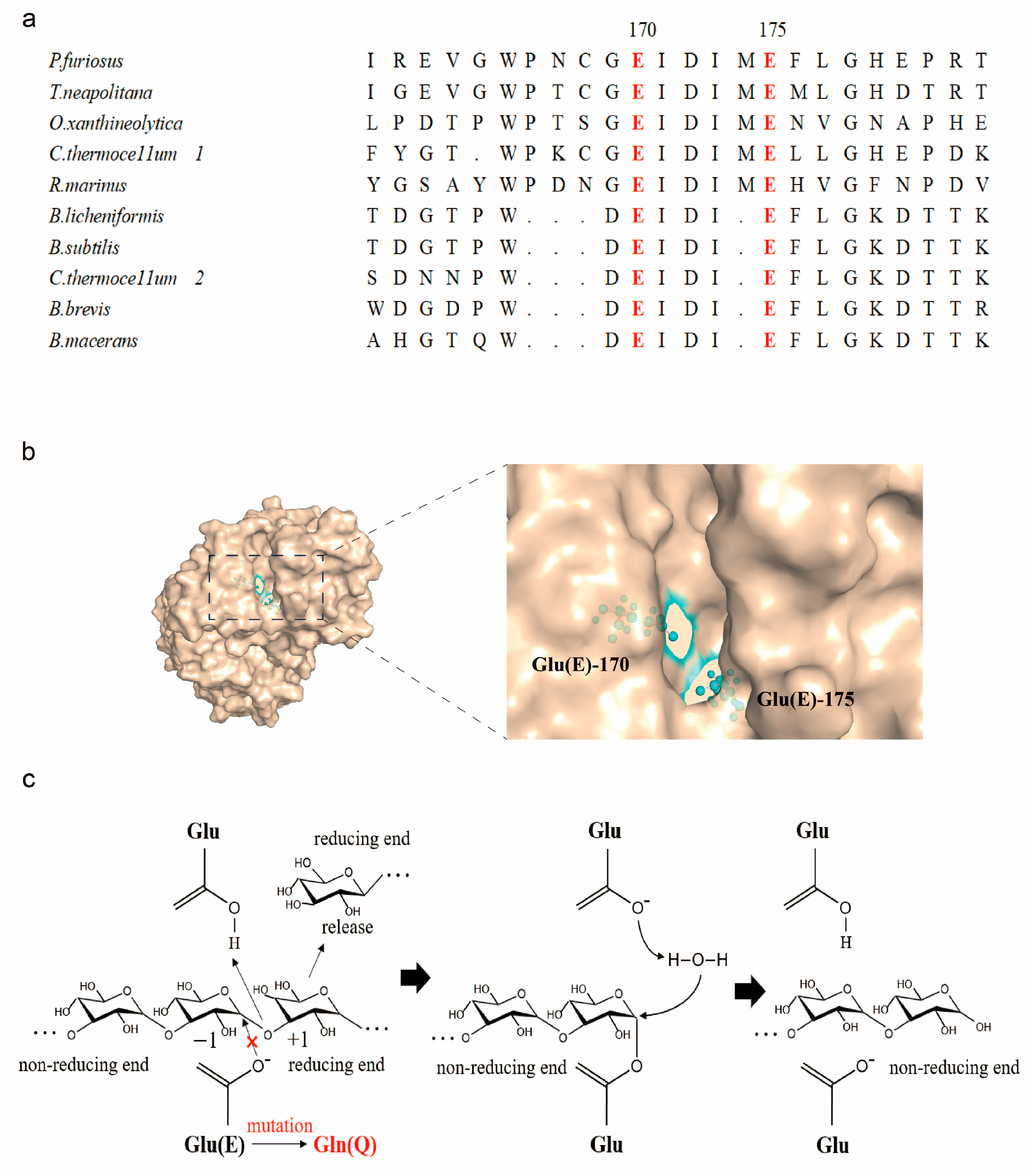
As an alternative to conventional β-1,3-glucan assays, we developed a glycoside hydrolase-based approach for β-1,3-glucan detection. Glycoside hydrolases catalyze hydrolysis via a double-displacement mechanism, where two glutamate residues act as the nucleophile and proton donor. The first glutamate attacks the glycosidic bond, forming a covalent intermediate, while the second stabilizes the structure by accepting a proton. After cleavage, water displaces the enzyme-substrate bond, completing the hydrolysis [
20,
21,
22]. Mutations in catalytic residues can impair hydrolytic activity while preserving binding, as shown in GH30 endo-β-1,6-glucanase (Neg1), where Glu-225 and Glu-321 mutations eliminate hydrolysis but maintain glucan binding [
23]. In LamA (GH16), sequence alignment identifies two conserved glutamates, Glu-170 and Glu-175 (
Figure 1a), as the acid-base catalyst and nucleophile [
21]. We hypothesize that mutating these residues will eliminate hydrolysis while preserving binding.
Based on this background, we chose the GH16 β-1,3-glucanase LamA from
Pyrococcus furiosus in our study, targeting its catalytic residues Glu-170 and Glu-175 (
Figure 1a). These glutamic acid residues were mutated to glutamine (Gln) to abolish the hydrolytic activity of LamA while maintaining its glucan-binding affinity. Meanwhile, we conducted a combined detection assay using the previously published
Neurospora-derived endo-β-1,6-glucanase (Neg1) mutant, Neg1
E321Q [
23]. This approach enables the creation of highly specific probes for detecting fungal β-1,3- and β-1,6-glucans in the sandwich ELISA format. The assay was further optimized and evaluated using reference fungal strains, simulated biological matrices, and preliminary clinical skin swab samples to assess its feasibility for broad-spectrum fungal screening.
Accordingly, the objective of this study was to develop a rapid, cost-effective, and broad-spectrum sandwich ELISA for detecting fungal β-1,3- and β-1,6-glucan signals using two catalytically inactive glucanase probes. Using pre-coated plates, the assay can be completed within approximately 40 min, providing a rapid and reliable approach for detecting a wide range of fungal species. This method is designed as a practical screening tool to indicate the presence of a meaningful fungal burden in suspected clinical samples, offering timely preliminary evidence of fungal involvement. While not intended for species-level identification, it can complement conventional diagnostic approaches, including clinical assessment, microscopy, fungal culture, PCR-based identification, and antifungal susceptibility testing. With further optimization and larger-scale clinical validation, this assay may support the future development of rapid fungal screening tools for veterinary diagnostics and potentially broader clinical applications.
2. Materials and Methods
2.1. Fungal Strains and Sample Preparation
Standard strains used in this study included laboratory-maintained reference strains of Saccharomyces cerevisiae and Candida albicans. Additionally, three dermatophyte species-Microsporum canis, Trichophyton mentagrophytes, and Nannizzia gypsea (formerly Microsporum gypseum)-and one dematiaceous mold, Alternaria sp., were isolated from veterinary cases and stored as glycerol stocks at −80 °C. Frozen fungal strains were streaked on YPD agar plates and incubated to revive colonies. For Candida albicans, plates were incubated at 37 °C, while other fungal strains were incubated at 30 °C. Single colonies were selected and inoculated into YPD broth under aerobic conditions. Cultures were used for subsequent experiments after reaching the desired growth stage.
For initial ELISA testing, all fungal strains, including
Saccharomyces cerevisiae,
Candida albicans, dermatophytes, and
Alternaria sp., were suspended in phosphate-buffered saline (PBS). For further evaluation under more physiologically relevant conditions,
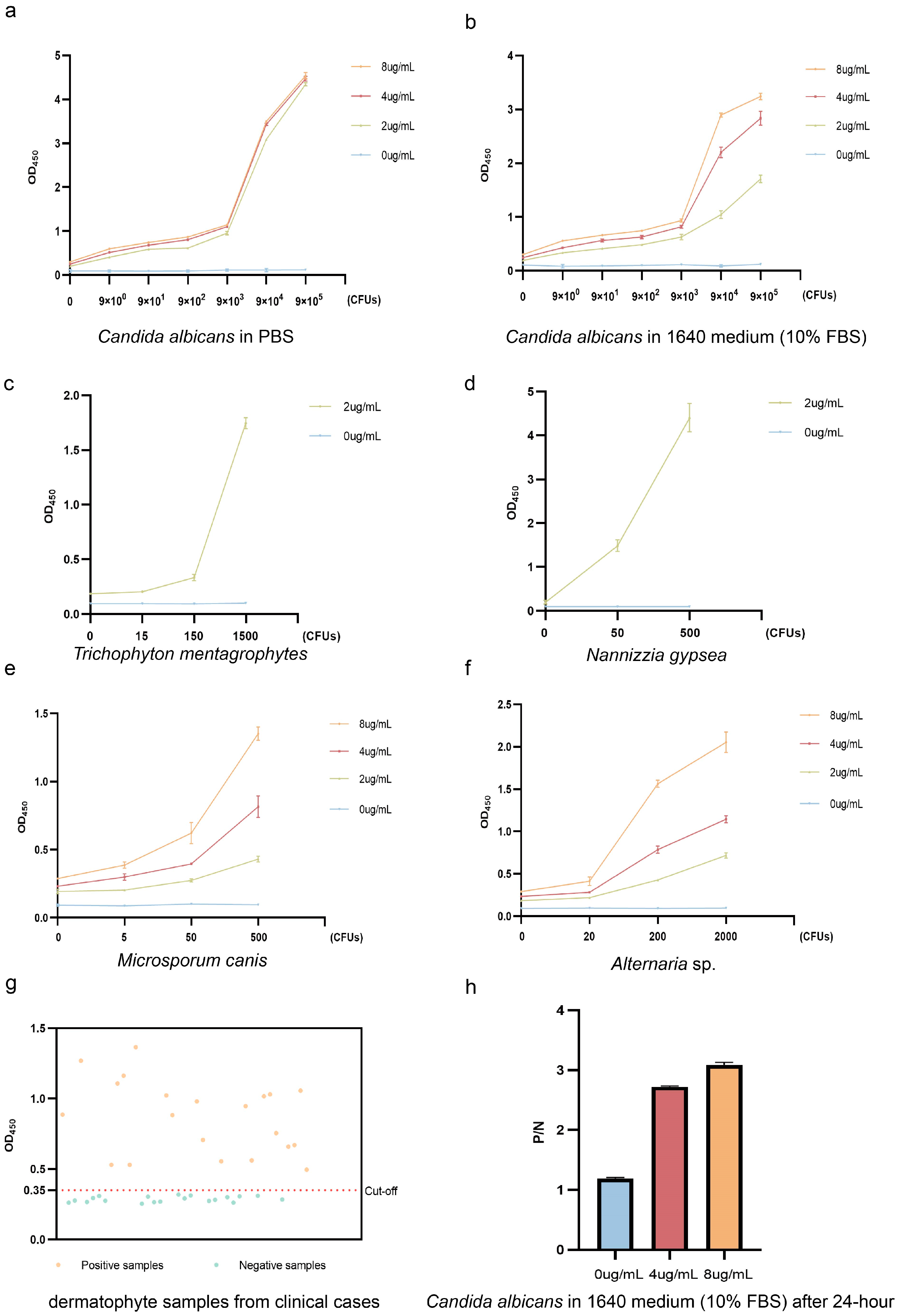
Candida albicans cells were also suspended in RPMI-1640 medium containing 10% fetal bovine serum (FBS), simulating a more complex biological matrix. To mimic the dynamic in-blood survival state,
Candida albicans cells (approximately 10
5 cells/mL) were inoculated into RPMI-1640 medium supplemented with 10% FBS and incubated statically at 37 °C for 24 h. After incubation, supernatants were collected by centrifugation (1800×
g, 10 min, 4 °C) and stored at −20 °C until further analysis [
23].
2.2. Preparation of Fungal Cell-Wall β-Glucan Extracts
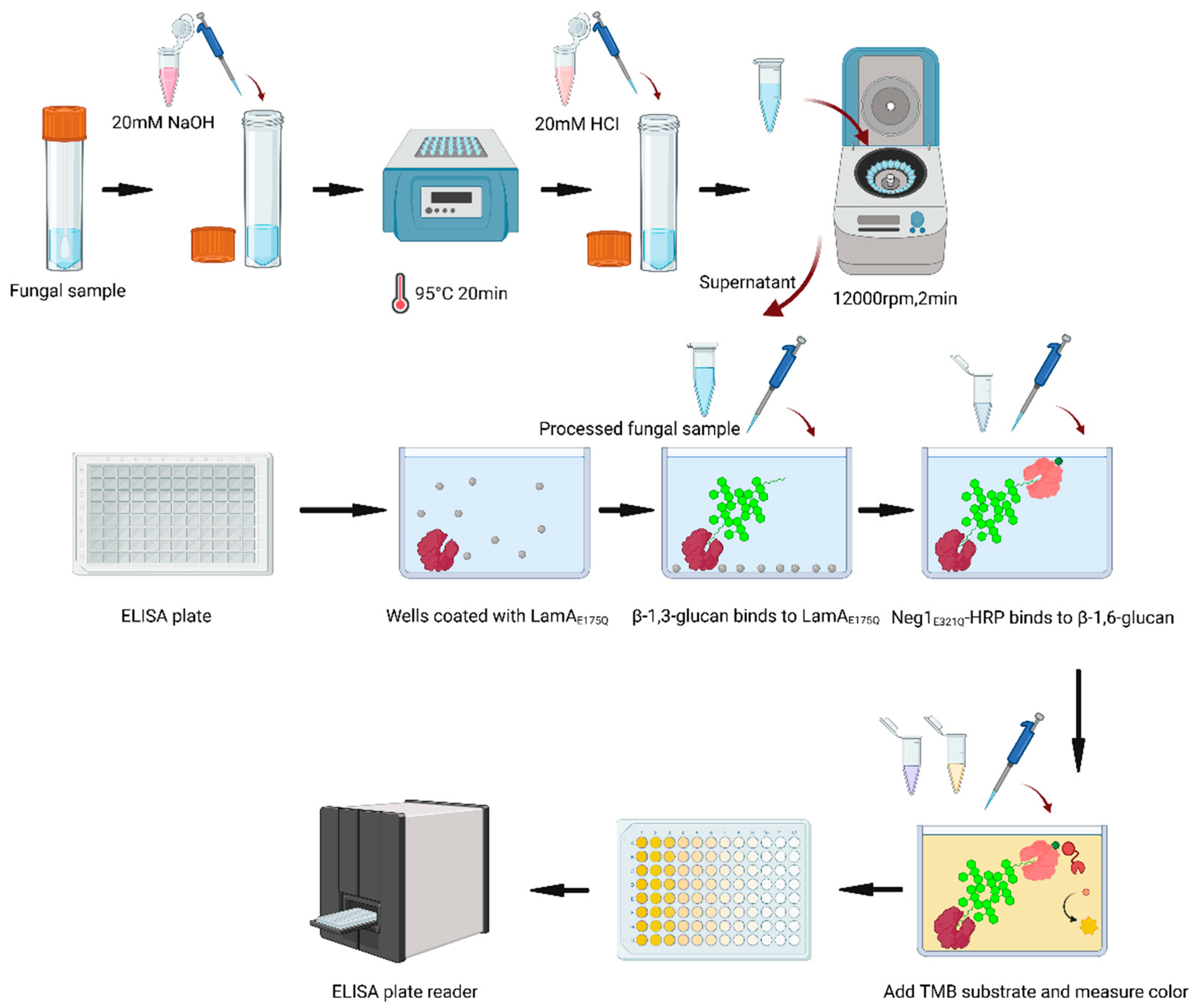
Fungal cells or mycelial masses were harvested, washed once in phosphate-buffered saline (PBS, pH 7.4), and resuspended in PBS. Alkaline heat extraction was performed by adding NaOH to a final concentration of 20 mM and incubating the suspension at 95 °C for 20 min. Samples were centrifuged at 12,000×
g for 2 min, and supernatants were immediately neutralized with 20 mM HCl (final pH 7.0–7.4). Neutralized extracts were aliquoted to minimize freeze–thaw cycles and stored at −20 °C until ELISA (
Figure 2).
2.3. Construction and Expression of Mutant β-Glucanase
To generate inactive β-1,3-glucanase probes for β-1,3-glucan recognition, site-directed mutations were introduced into the catalytic residues of LamA from
Pyrococcus furiosus. Glutamate residues at positions 170 and 175 were substituted with glutamine to generate LamA
E170Q and LamA
E175Q, respectively. The mutations were introduced using a two-fragment PCR-based site-directed mutagenesis strategy, with reference to the method described by Yang et al. [
24] and related
E. coli-mediated homologous assembly methods [
25,
26]. For each mutation, the plasmid was divided into two PCR fragments with homologous overlapping ends. One overlap contained the intended mutation site, whereas the other overlap was located within the kanamycin-resistance gene. To construct LamA
E170Q, two high-fidelity PCR reactions were performed in 25 μL reaction mixtures using pET-28a-pfLam-HS, a laboratory-constructed expression plasmid encoding His- and Strep-tagged pfLam, as the template. The His tag was used for affinity purification of the recombinant protein, whereas the Strep tag was used for tag-based detection in the indirect ELISA assays. The primer pairs LamA
E170QF (5′-GAACTGCGGCCAAATCGATATCATGGAATTCCTGGGTC-3′)/KanR (5′-CGGTTGCATTCGATTCCTGTTT-3′) and LamA
E170QR (5′-GACCCAGGAATTCCATGATATCGATTTGGCCGCAGTTC-3′)/KanF (5′-AAACAGGAATCGAATGCAACCG-3′) were used to generate two overlapping PCR fragments. To construct LamA
E175Q, pET-28a-pfLam-HS was used as the template, and the primer pairs LamA
E175QF (5′-GAACTGCGGCGAAATCGATATCATGCAATTCCTGGGTC-3′)/KanR and LamA
E175QR (5′-GACCCAGGAATTGCATGATATCGATTTCGCCGCAGTTC-3′)/KanF were used in two separate 25 μL high-fidelity PCR reactions. A small aliquot of each PCR product was analyzed by 1% agarose gel electrophoresis to confirm the presence of the expected bands.
The remaining PCR products were treated with 0.5 μL DpnI at 37 °C for 30 min to remove the methylated parental plasmid template. After DpnI digestion, 2.5 μL of each of the two corresponding PCR products was mixed and transformed into 50 μL of chemically competent E. coli DH5α cells for plasmid recovery. The two PCR fragments were not intended to be maintained as linear DNA molecules; rather, successful in vivo assembly reconstructed a circular plasmid containing an intact origin of replication and a functional kanamycin-resistance gene. Transformants were selected on LB agar plates containing kanamycin. Positive colonies were cultured, and plasmids were extracted and subjected to Sanger sequencing by Sangon Biotech (Shanghai, China) to confirm the intended mutation and the correctness of the relevant reconstructed regions. Only sequence-verified recombinant plasmids were subsequently transformed into E. coli BL21 (DE3) cells for protein expression. The recombinant strains were cultured in LB medium containing kanamycin (50 μg/mL) and induced with 1 mM IPTG at 18 °C for 16 h. Cells were harvested by centrifugation and resuspended in Buffer A (5 mM imidazole, 50 mM Tris, 500 mM NaCl, pH 7.5). The cell suspension was disrupted using a JN-02C high-pressure cell disrupter at 1.0 MPa for three passes. The lysate was centrifuged at 12,000 rpm for 90 min, and the supernatant was filtered through a 0.45 μm membrane.
The filtered supernatant was loaded onto a HisTrap HP column using a peristaltic pump. After sample loading, the column was connected to an ÄKTA Pure protein purification system (Cytiva, Marlborough, MA, USA). The system was equilibrated with Buffer A at a flow rate of 1 mL/min, with the pressure alarm set to 0.5 MPa. The column was washed with Buffer A until the OD280 signal approached the baseline, followed by an additional wash with five column volumes of Buffer A. Bound proteins were eluted using different gradients of Buffer B (500 mM imidazole, 50 mM Tris, 500 mM NaCl, pH 7.5), and all elution fractions were collected. The column was subsequently washed with 100% Buffer B and then with five column volumes of ddH2O before storage.
Eluted fractions were analyzed by SDS-PAGE. Fractions containing the target proteins were pooled and concentrated using 30 kDa molecular weight cut-off ultrafiltration tubes to a final volume of approximately 2 mL. Protein concentrations were determined using the BCA assay, and the purified proteins were stored at −80 °C until further use.
2.4. Enzymatic Hydrolytic Activity Assay
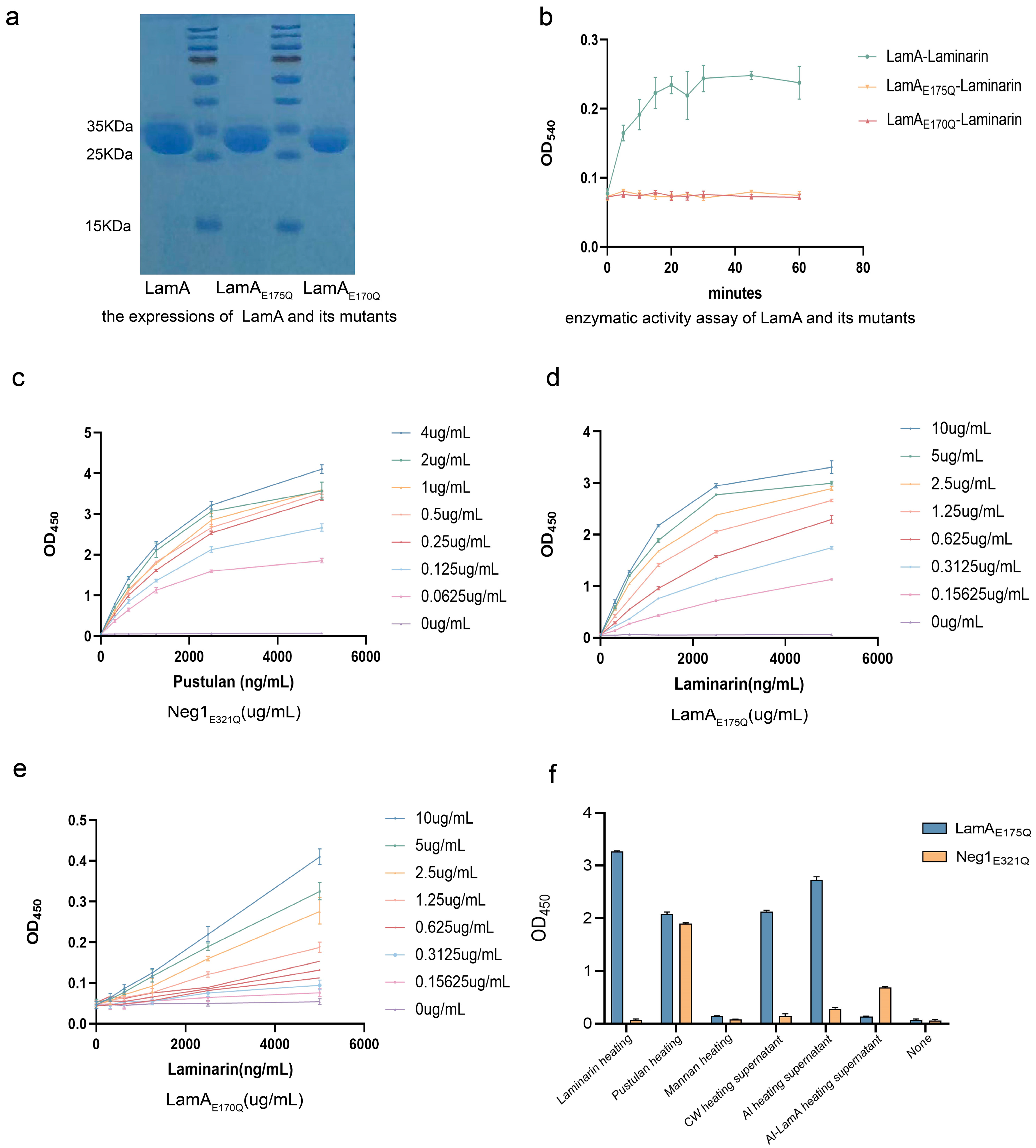
The hydrolytic activity of wild-type and mutant enzymes was evaluated using laminarin (β-1,3-glucan, 1.0 mg/mL) as a model substrate. Reactions were carried out at a final enzyme concentration of 0.1 mg/mL in 50 mM phosphate buffer (pH 6.4) for LamA variants. Assays were incubated at the indicated temperatures, and aliquots were withdrawn at 0, 5, 10, 15, 30, 45, and 60 min. Each aliquot was immediately mixed with 100 µL of 3,5-dinitrosalicylic acid (DNS) reagent to terminate the reaction and allow color development. The release of reducing sugars was quantified by measuring absorbance at 540 nm using a microplate reader. All assays were performed in triplicate to ensure reproducibility.
2.5. ELISA Procedures
2.5.1. Indirect ELISA for the Glucan Binding Affinities
High-binding 96-well plates were coated overnight at 4 °C with 100 µL per well of separately prepared two-fold serial dilutions of laminarin and pustulan, ranging from 10 to 0.15625 µg/mL and from 4 to 0.0625 µg/mL, respectively. After washing three times with PBST (PBS, 0.05% Tween-20), the plates were blocked with 1% BSA in PBST at 37 °C for 1 h. Mutant proteins LamAE175Q, LamAE170Q, and Neg1E321Q were diluted in PBST containing 1% BSA and added to the wells (100 µL per well) with different concentrations of Laminarin for β-1,3-glucan binding and Pustulan for β-1,6-glucan binding, followed by incubation at 37 °C for 30 min. After washing, HRP-conjugated anti-Strep antibody (1:5000 in 1% BSA-PBST) was added and incubated at room temperature for 30 min. The reaction was developed with TMB substrate for 5 min and stopped with 50 µL of 1 M sulfuric acid. Absorbance was measured at 450 nm using a microplate reader, with triplicate measurements to ensure reproducibility.
2.5.2. Indirect ELISA for Glucan Binding Specificity
Saccharomyces cerevisiae strains were cultured in 1 L YPD broth to mid-log phase and harvested by centrifugation (5000× g, 10 min). Cells were washed three times with ddH2O. For cell wall (CW) preparation, washed cell pellets were subjected to hot water extraction (~100 °C for 1 h) to remove soluble components, followed by centrifugation and washing with ddH2O. The CW pellets were then treated with an alkaline solution at 65 °C for 1 h with intermittent mixing to obtain the alkaline-insoluble fraction (AI). AI pellets were washed three times with ddH2O, lyophilized, weighed, and stored at room temperature.
To generate β-1,6-glucan-enriched AI-LamA supernatant, AI (10 mg) was incubated with 10 mL LamA (0.1 mg/mL in 50 mM phosphate buffer, pH 6.4) at 37 °C for 24 h. LamA alone was processed in parallel as a control. After centrifugation, supernatants were pooled and additional LamA (0.1 mg/mL) was added for 2 h at 37 °C to remove residual β-1,3-glucan. The pooled supernatant was then filtered through a 3 kDa ultrafiltration unit to remove LamA protein while retaining soluble β-1,6-glucan, followed by buffer exchange into ddH2O. The β-1,6-glucan content of the AI-LamA supernatant was estimated using Neg1E321Q indirect ELISA with Pustulan as a reference. Supernatants were used immediately due to limited stability.
For indirect ELISA, high-binding 96-well polystyrene plates were coated overnight at 4 °C with 100 µL per well of the following polysaccharides (1 mg/mL each): laminarin (β-1,3-glucan), pustulan (β-1,6-glucan), mannan, CW, AI, and AI-LamA supernatant. Plates were washed three times with PBST (PBS containing 0.05% Tween-20) and blocked with 1% BSA in PBST at 37 °C for 1 h. Mutant proteins LamAE175Q (5 µg/mL) and Neg1E321Q (1 µg/mL) were prepared in PBST containing 1% BSA and added to the wells (100 µL per well) for 30 min at 37 °C. After washing, HRP-conjugated anti-Strep antibody (1:5000 in blocking buffer) was added for 30 min. Color development was performed using TMB substrate and stopped with 1 M H2SO4. Absorbance was measured at 450 nm. All measurements were performed in triplicate.
This method integrates the preparation of glucan-rich yeast cell wall fractions with specific glucanase-based probes, providing a reliable tool for the qualitative assessment of β-1,3- and β-1,6-glucans in yeast-derived samples.
2.5.3. Sandwich ELISA for Dual-Glucan Detection
Plates were coated with the LamAE175Q capture probe diluted in carbonate buffer (pH 9.6; 100 µL/well) and incubated overnight at 4 °C. After coating, the plates were washed three times with PBST and blocked with 1% BSA in PBS for 1 h at room temperature. The plates were washed again before sample addition.
The tested samples included laboratory-maintained fungal strains, simulated serum-containing fungal cultures, and clinical skin swab samples from veterinary patients with suspected dermatophytosis or negative controls. Sample pretreatment was performed as described in
Section 2.2. Pretreated sample supernatants were added to the LamA
E175Q-coated wells (100 µL/well) and incubated for 1 h at 37 °C to allow binding to the capture probe. After incubation, the plates were washed to remove unbound material. Detection was performed using Neg1
E321Q directly conjugated to HRP [HRP-conjugated Neg1
E321Q, 1 µg/mL in blocking buffer], which was added to each well and incubated for 30 min at 37 °C. After a final washing step, TMB substrate was added for color development. The reaction was stopped with 1 M H
2SO
4, and the absorbance was measured at 450 nm using a microplate reader.
Each sample reaction was performed in three replicate wells. The overall workflow of the assay is summarized in
Figure 2.
2.6. Conventional ITS PCR for Saccharomyces cerevisiae and Candida albicans
To evaluate the sensitivity of the developed ELISA, conventional PCR targeting the internal transcribed spacer (ITS) region was performed for
Saccharomyces cerevisiae and
Candida albicans. Universal fungal ITS primers ITS1 (5′-TCCGTAGGTGAACCTGCGG-3′) and ITS4 (5′-TCCTCCGCTTATTGATATGC-3′) [
27] were used. For colony PCR, single yeast colonies were suspended in 20 mM NaOH and incubated at 98 °C for 10 min, followed by centrifugation to collect the supernatant, which served as the template. PCR amplification consisted of an initial denaturation at 95 °C for 10 min (1 cycle), followed by 30 cycles of 95 °C for 30 s, 55 °C for 30 s, and 72 °C for 15 s, and a final extension at 72 °C for 5 min. Reactions were then held at 4 °C. PCR products were visualized on 1.5% agarose gels.
2.7. Fungal Cell Quantification
Fungal cell quantification was performed using serial dilution and colony-forming unit (CFU) assays. For Saccharomyces cerevisiae and Candida albicans, overnight liquid cultures in YPD broth were prepared, and appropriate serial dilutions were plated on YPD agar. CFUs were counted after incubation at 30 °C (2 days) and 37 °C (2 days), respectively. For dermatophytes (Microsporum canis, Trichophyton mentagrophytes, Nannizzia gypsea) and Alternaria sp., liquid cultures were grown in YPD broth for 5–7 days, followed by serial dilution and plating on YPD agar. CFUs were counted after incubation at 30 °C (5–7 days). Due to the filamentous growth and hyphal clumping of dermatophytes and Alternaria sp., CFU counts for these species are approximate and should be interpreted as indicative of fungal biomass rather than precise quantitative measurements.
2.8. Collection and Processing of Clinical Skin Swab Samples from Veterinary Cases
To assess the clinical applicability of the assay, skin swab samples were collected from veterinary patients presenting with suspected dermatophyte infection, along with negative control samples from patients without clinical signs suggestive of dermatophytosis. Each sample was tested in parallel by conventional methods (fungal culture and PCR-based DNA sequencing) and the sandwich ELISA. Swabs were taken from lesion sites, suspended in PBS, vortexed, and subjected to alkaline-heat treatment to extract fungal β-glucans.
2.9. Establishment of Positive Cutoff Values for Sandwich ELISA in Fungal Detection: Statistical Approaches for Clinical and Laboratory Samples
In this study, the definition of a positive result for the sandwich ELISA was determined based on different criteria depending on the sample size and the type of sample analyzed.
For the clinical dermatophyte samples, the positive cutoff value was established using the mean absorbance (OD) of negative control samples plus three times the standard deviation (mean + 3 × SD). This method was selected due to the relatively larger sample size available, which allowed for a more robust statistical determination of the cutoff [
28,
29]. This approach ensures that any sample exhibiting absorbance values exceeding this threshold would be considered positive for fungal β-glucan structures.
In contrast, for all other ELISA experiments, including those involving laboratory strains and other fungal species, the positive cutoff was defined as a P/N ratio greater than 2.1. This threshold was adopted due to the limited sample sizes in these assays, as smaller sample sizes do not permit the same statistical analysis with high precision. A P/N ratio exceeding 2.1 has been widely accepted in the field as the standard for defining a positive result, as it reliably differentiates positive from negative signals while minimizing the risk of false positives [
30].
These established cutoff criteria provide a consistent and reproducible method for interpreting ELISA results, ensuring the reliability and validity of the diagnostic assays across different sample types and conditions.
2.10. Protein Structural Visualization
The three-dimensional structure of LamA was obtained from the Protein Data Bank (PDB ID: 2VY0) and visualized using PyMOL version 3.1.1. The protein surface was displayed to show the catalytic pocket, and the catalytic residues Glu170 and Glu175 were highlighted and labeled according to their positions in the LamA sequence. An enlarged view of the catalytic region was generated in PyMOL to illustrate the spatial location of the two conserved glutamate residues. The final figure was exported from PyMOL and arranged for presentation.
4. Discussion
Fungal infections impose substantial clinical and economic burdens in both human and veterinary medicine. Culture and microscopy are widely used but are often time-consuming, operator-dependent, and insufficiently sensitive in low-burden infections. Although ITS-based PCR improves sensitivity and coverage, it can be constrained by specialized instrumentation and personnel, limiting rapid and point-of-care deployment. Therefore, rapid, cost-effective, and practical methods with adequate sensitivity for low-level fungal detection remain needed. To address this gap, we developed a glycoside hydrolase-based sandwich immunoassay targeting β-1,3- and β-1,6-glucans, providing a streamlined, accessible, and cost-effective workflow to support timely detection and early clinical decision-making.
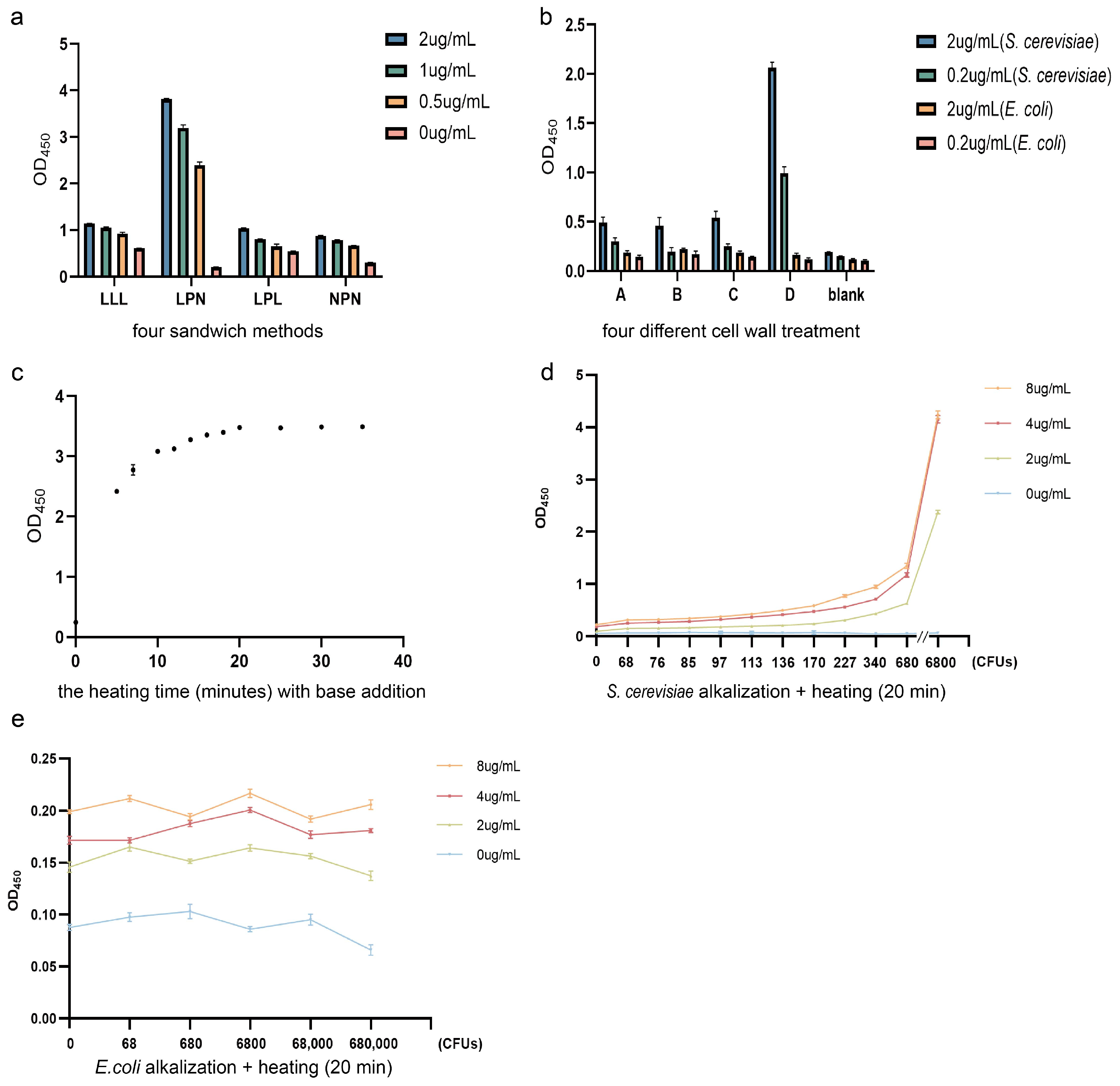
The sandwich ELISA demonstrated a detection threshold of 136 CFUs per reaction for Saccharomyces cerevisiae, which was lower than that of conventional ITS-based PCR. For Candida albicans, the detection threshold of the ELISA was also lower than that of conventional ITS-PCR. These results suggest that, under the experimental conditions of this study, the sandwich ELISA offered higher detection sensitivity than conventional ITS-based PCR for Saccharomyces cerevisiae and Candida albicans, supporting its potential as a complementary approach for fungal detection.
Furthermore, this assay demonstrated effective detection of dermatophytes and Alternaria sp., highlighting its broad applicability for detecting diverse fungal pathogens. In this preliminary clinical cohort, the sandwich ELISA identified β-glucan signals in all 21 culture-positive dermatophyte samples, while no signal was detected in 20 negative samples, suggesting the potential clinical applicability of this approach. Dermatophytes are among the most common fungal pathogens in companion animals, and they also pose a zoonotic risk to humans. The excellent performance in clinical samples highlights the practical applicability of our ELISA in real-world diagnostics, where speed and accuracy are crucial for effective infection management.
The sandwich ELISA also performed well in blood-mimetic systems for
Candida albicans, such as RPMI-1640 with 10% fetal bovine serum. In addition, soluble β-1,3- and β-1,6-glucans released into the supernatant of
Candida albicans cultures following centrifugation could be detected, demonstrating the capability of the assay to detect specific fungal glucans in complex serum-containing matrices. This robustness is especially important for diagnosing systemic fungal infections, where early detection is critical to prevent severe complications [
1,
33,
34]. As blood sample collection is subject to ethical and biosafety considerations, future studies will aim to expand testing to include blood samples from both humans and animals under appropriate conditions. Our method is designed for broad-spectrum fungal detection and is capable of identifying various fungal species. However, its specificity for diagnosing a particular fungal infection still requires further refinement. Additionally, using pre-coated plates, the ELISA workflow can be completed within approximately 40 min, providing a rapid assay, although further optimization may be required to enhance sensitivity, particularly for low-burden infections.
The sandwich ELISA developed in this study is conceptually related to the β-1,6-glucan detection system reported by Yamanaka et al. [
23], in which the catalytically inactive β-1,6-glucanase mutant Neg1
E321Q was used as a β-1,6-glucan-specific recognition probe. In contrast, our assay uses LamA
E175Q as the capture probe and chemically HRP-conjugated His-tagged Neg1
E321Q as the detection probe, establishing a heterologous dual-probe format for simultaneous β-1,3- and β-1,6-glucan recognition. Under our experimental conditions, this dual-probe configuration produced stronger and more consistent signals than using Neg1
E321Q-based homologous probe configurations and was therefore selected for further assay development. This comparison is limited to the configurations tested in this study. Further studies are needed to evaluate analytical specificity, clinical applicability, and performance across different sample types. Although β-glucans are typical fungal cell-wall components, β-glucan-like polysaccharides are not completely exclusive to fungi. For example, β-(1 → 3),β-(1 → 6)-linked glucans have been reported in certain rhizobial or plant-associated environmental bacteria, such as
Bradyrhizobium japonicum [
35]. However, these bacterial glucans are mainly osmoregulated periplasmic cyclic glucans, rather than abundant exposed cell-wall structural components comparable to fungal β-glucans.
Bradyrhizobium japonicum is also not a common animal skin pathogen or a major bacterial agent in routine veterinary dermatological infections. Therefore, while cross-reactivity with such special bacterial glucans cannot be excluded without direct testing, their clinical relevance as routine interfering organisms is likely limited. Future studies should include a broader bacterial panel, including common skin, wound, and systemic bacterial pathogens, as well as bacterial-fungal mixed samples, to further evaluate assay specificity.
Environmental fungi and commensal yeasts may be present on animal skin, hair, or sampling surfaces, but under the current assay conditions, trace-level contamination did not generate positive signals. In 20 negative veterinary samples, all remained negative, suggesting common surface fungi did not affect assay readout. Thus, a positive result indicates a meaningful fungal glucan burden, warranting further clinical evaluation. Consistent with the general use of β-D-glucan as an adjunctive biomarker [
19], this assay is intended as a rapid, low-cost, broad-spectrum screening tool, particularly when the etiological agent is unknown or species-specific PCR may fail. Positive results should be interpreted alongside clinical signs, sampling site, microscopy, culture, PCR, and, when necessary, antifungal susceptibility testing for definitive diagnosis.
In conclusion, the sandwich ELISA developed in this study provides a rapid, cost-effective, and complementary approach for detecting fungal β-1,3- and β-1,6-glucan signals. By combining β-1,3- and β-1,6-glucan recognition, this assay may improve the detection coverage of fungal glucan signals and serve as a practical screening tool for suspected fungal samples. However, it is not intended for species-level identification and should be interpreted together with clinical findings and conventional diagnostic methods. Further validation using larger clinical cohorts, broader fungal panels, and different sample types will be needed to fully evaluate its diagnostic performance and clinical applicability.