
The Oligosaccharyltransferase Catalytic Subunit PsSTT3B Is Required for Asexual Development and Pathogenicity in Phytophthora sojae

 and
and
Abstract
1. Introduction
2. Materials and Methods
2.1. Study Materials
2.2. Identification of the P. sojae STT3B Gene
2.3. Vector Construction
2.4. P. sojae Transformation
2.5. Transcription Profile of the PsSTT3A and PsSTT3B Genes
2.6. Phenotypic Characterization of PsSTT3B Deletion Mutants
2.7. Zoospore Chemotaxis Assays of P. sojae
2.8. Sensitivity Assays of P. sojae to TM and DTT
2.9. Statistical Analysis
3. Results
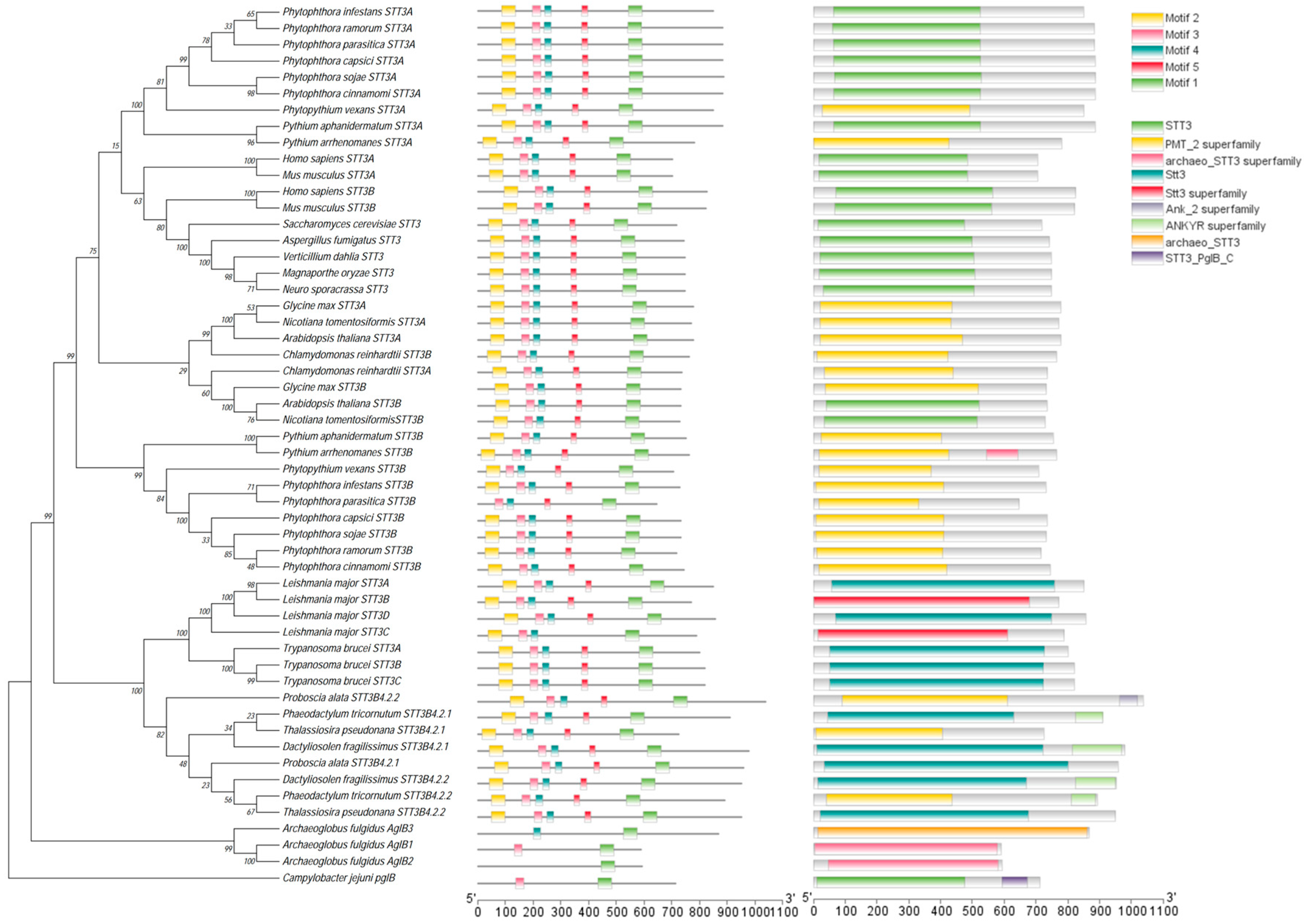
3.1. Identification and Evolutionary Characterization of PsSTT3B in P. sojae
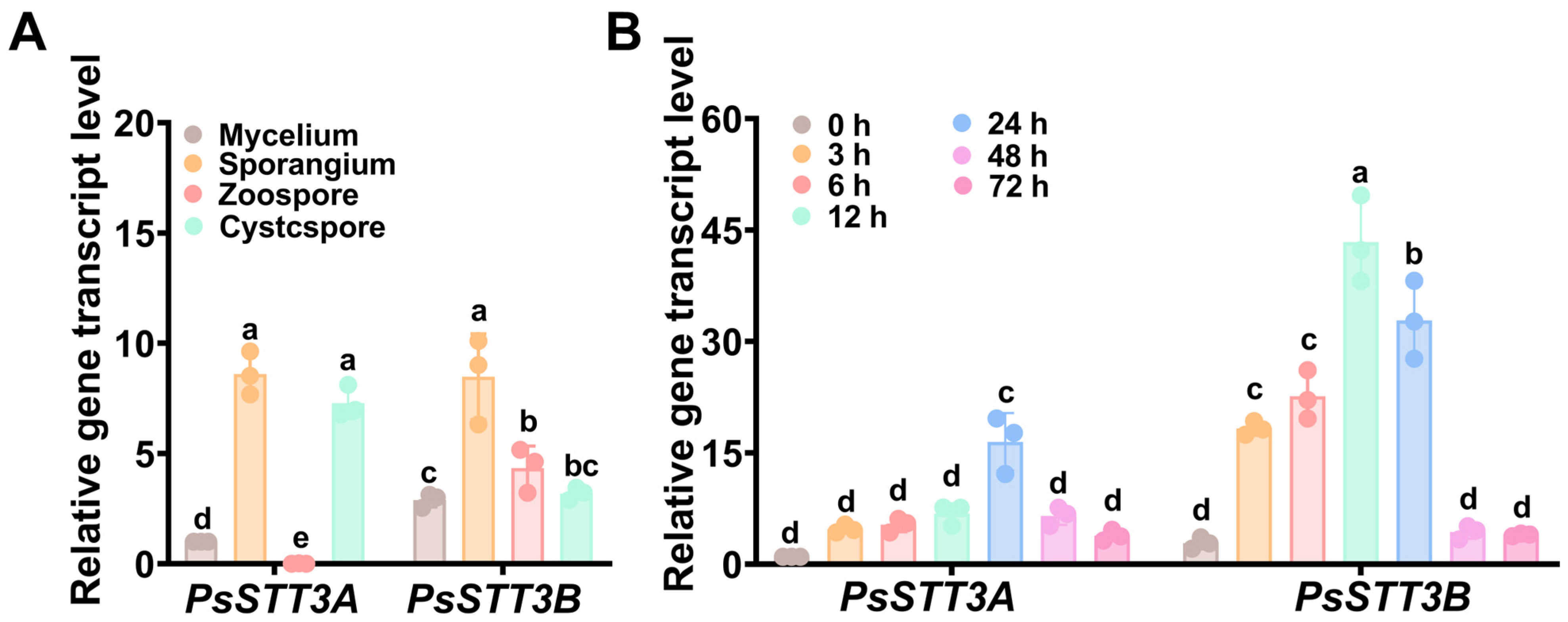
3.2. Transcriptional Profiling of PsSTT3A and PsSTT3B Across Development and Infection
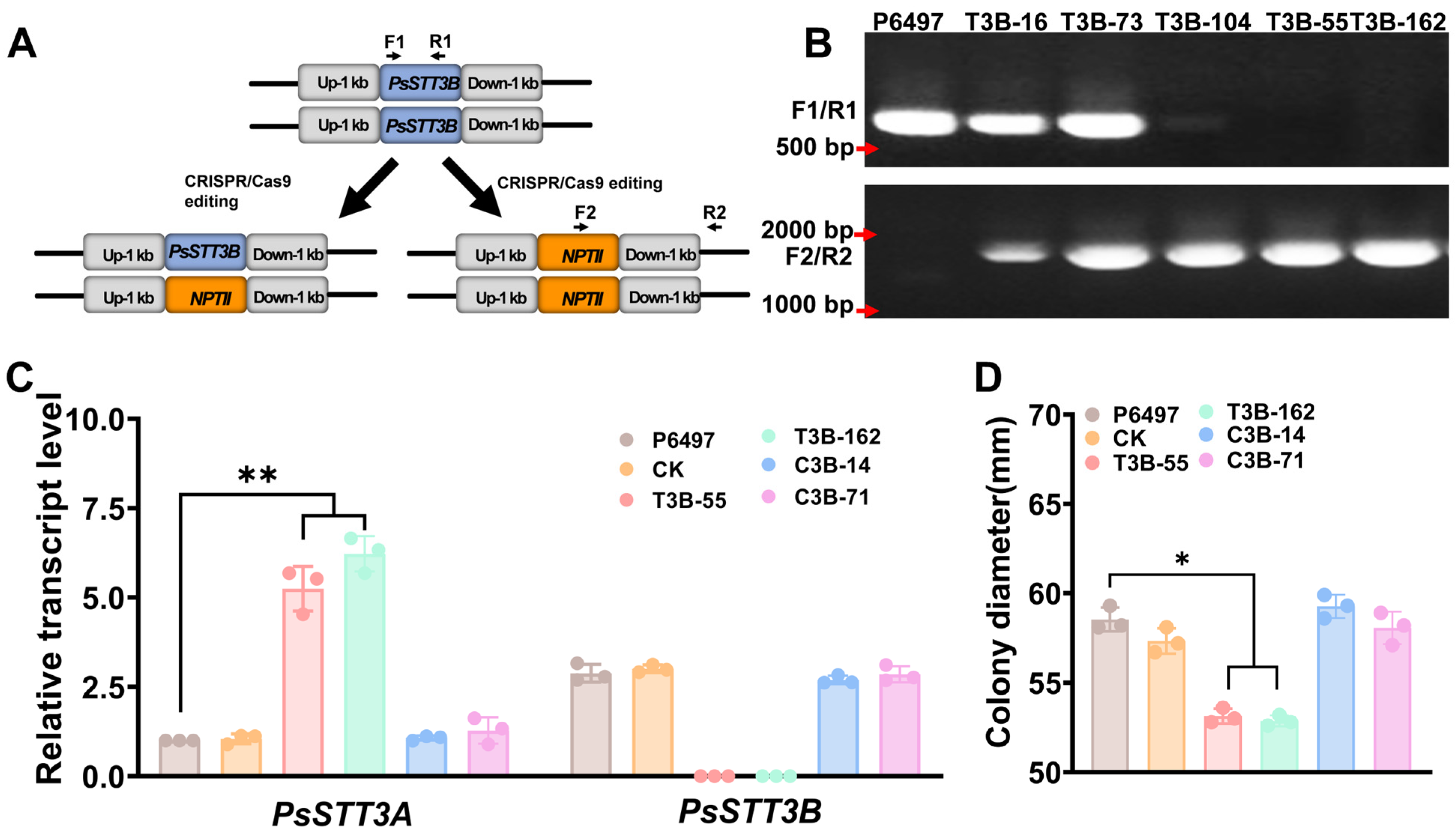
3.3. Targeted Disruption of PsSTT3B via CRISPR/Cas9-Mediated Gene Replacement
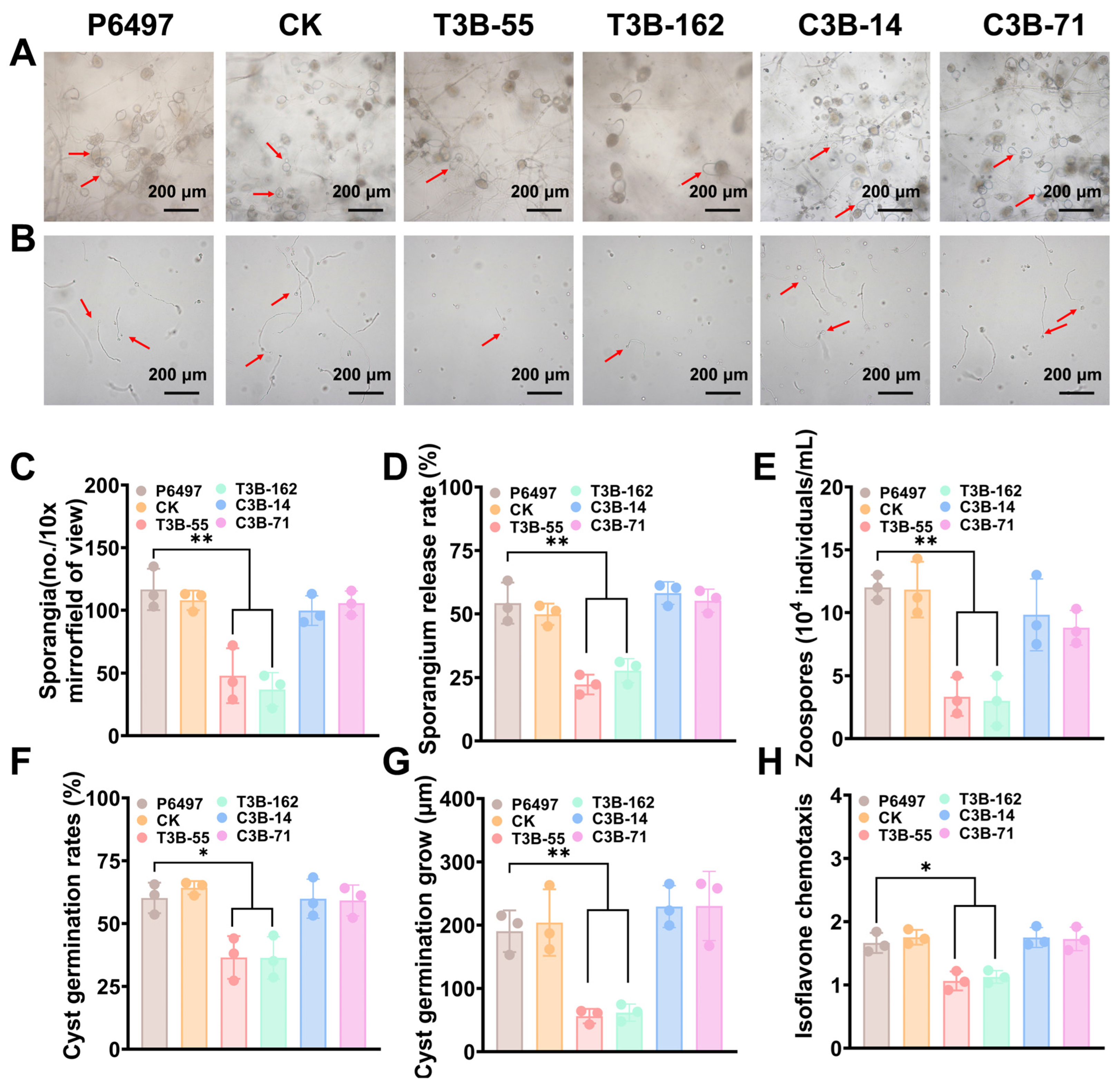
3.4. PsSTT3B Is Required for Vegetative Growth and Asexual Development of P. sojae
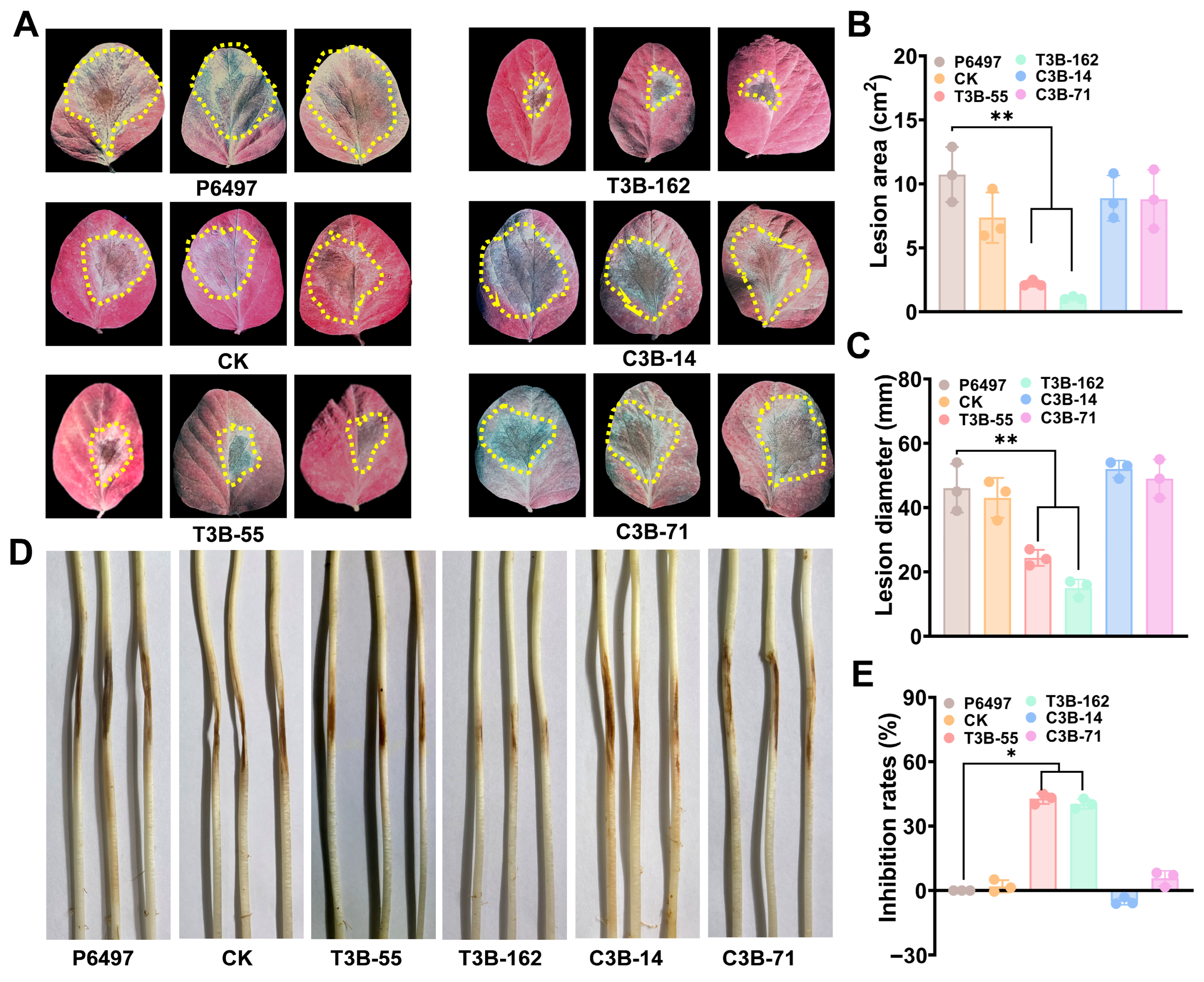
3.5. PsSTT3B Is Required for P. sojae Virulence
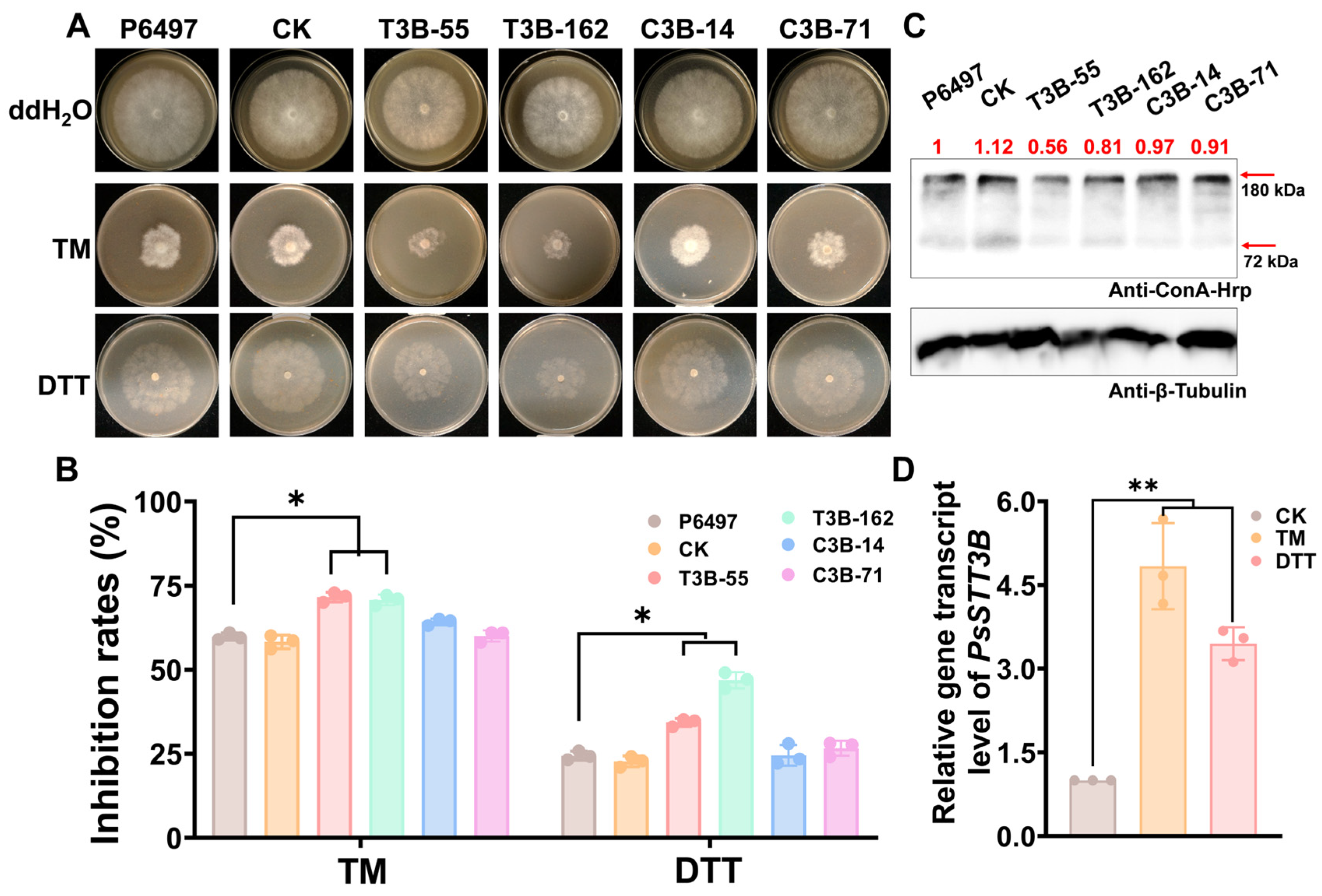
3.6. PsSTT3B Is Required for ER Stress Tolerance
3.7. Deletion of PsSTT3B Modifies the Profile of ConA-Binding Glycoproteins in Mycelium
4. Discussion
4.1. PsSTT3B-Mediated N-Glycosylation Contributes to Development and Pathogenicity
4.2. Possible Non-Equivalent Roles of STT3 Paralogs in Asexual Development
4.3. PsSTT3B Is Associated with Zoospore, Early Infection Processes, and ER Homeostasis
4.4. Comparison with Previous Studies
4.5. Limitations and Future Directions
5. Conclusions
Supplementary Materials
Author Contributions
Funding
Institutional Review Board Statement
Informed Consent Statement
Data Availability Statement
Conflicts of Interest
References
- Bai, L.; Li, H. Protein N-glycosylation and O-mannosylation are catalyzed by two evolutionarily related GT-C glycosyltransferases. Curr. Opin. Struct. Biol. 2021, 68, 66–73. [Google Scholar] [CrossRef]
- Zielinska, F.D.; Gnad, F.; Wiśniewski, R.J.; Mann, M. Precision mapping of an in vivo N-Glycoproteome reveals rigid topological and sequence constraints. Cell 2010, 141, 897–907. [Google Scholar] [CrossRef]
- Frank, C.G.; Aebi, M. ALG9 mannosyltransferase is involved in two different steps of lipid-linked oligosaccharide biosynthesis. Glycobiology 2005, 15, 1156–1163. [Google Scholar] [CrossRef] [PubMed]
- Helenius, A.; Aebi, M. Intracellular functions of N-linked glycans. Science 2001, 291, 2364–2369. [Google Scholar] [CrossRef] [PubMed]
- Kelleher, D.J.; Gilmore, R. An evolving view of the eukaryotic oligosaccharyltransferase. Glycobiology 2006, 16, 47R–62R. [Google Scholar] [CrossRef]
- Samuelson, J.; Banerjee, S.; Magnelli, P.; Cui, J.; Kelleher, D.J.; Gilmore, R.; Robbins, P.W. The diversity of dolichol-linked precursors to Asn-linked glycans likely results from secondary loss of sets of glycosyltransferases. Proc. Natl. Acad. Sci. USA 2005, 102, 1548–1553. [Google Scholar] [CrossRef]
- Castilho, A.; Beihammer, G.; Pfeiffer, C.; Göritzer, K.; Montero-Morales, L.; Vavra, U.; Maresch, D.; Grünwald-Gruber, C.; Altmann, F.; Steinkellner, H.; et al. An oligosaccharyltransferase from Leishmania major increases the N-glycan occupancy on recombinant glycoproteins produced in Nicotiana benthamiana. Plant Biotechnol. J. 2018, 16, 1700–1709. [Google Scholar] [CrossRef] [PubMed]
- Li, L.; Woodward, R.; Ding, Y.; Liu, X.; Yi, W.; Bhatt, V.S.; Chen, M.; Zhang, L.; Wang, P. Overexpression and topology of bacterial oligosaccharyltransferase PglB. Biochem. Biophys. Res. Commun. 2010, 394, 1069–1074. [Google Scholar] [CrossRef] [PubMed]
- Cain, J.A.; Dale, A.L.; Sumer-Bayraktar, Z.; Solis, N.; Cordwell, S.J. Identifying the targets and functions of N-linked protein glycosylation in Campylobacter jejuni. Mol. Omics 2020, 16, 287–304. [Google Scholar] [CrossRef]
- Hua, C.; Wang, Y.; Zheng, X.; Dou, D.; Zhang, Z.; Govers, F.; Wang, Y. A Phytophthora sojae G-protein α subunit is involved in chemotaxis to soybean isoflavones. Eukaryot. Cell 2008, 7, 2133–2140. [Google Scholar] [CrossRef]
- Braunger, K.; Pfeffer, S.; Shrimal, S.; Gilmore, R.; Berninghausen, O.; Mandon, E.C.; Becker, T.; Förster, F.; Beckmann, R. Structural basis for coupling protein transport and N-glycosylation at the mammalian endoplasmic reticulum. Science 2018, 360, 215–218. [Google Scholar] [CrossRef]
- Lu, H.; Fermaintt, C.S.; Cherepanova, N.A.; Gilmore, R.; Yan, N.; Lehrman, M.A. Mammalian STT3A/B oligosaccharyltransferases segregate N-glycosylation at the translocon from lipid-linked oligosaccharide hydrolysis. Proc. Natl. Acad. Sci. USA 2018, 115, 9557–9562. [Google Scholar] [CrossRef] [PubMed]
- Ruiz-Canada, C.; Kelleher, D.J.; Gilmore, R. Cotranslational and posttranslational N-Glycosylation of Polypeptides by distinct mammalian OST isoforms. Cell 2009, 136, 272–283. [Google Scholar] [CrossRef]
- Koiwa, H.; Li, F.; Mccully, M.G.; Mendoza, I.; Koizumi, N.; Manabe, Y.; Nakagawa, Y.; Zhu, J.; Rus, A.; Pardo, J.M. The STT3a subunit isoform of the Arabidopsis oligosaccharyltransferase controls adaptive responses to Salt/Osmotic stress. Plant Cell 2003, 15, 2273–2284. [Google Scholar] [CrossRef]
- Nekrasov, V.; Li, J.; Batoux, M.; Roux, M.; Chu, Z.; Lacombe, S.; Rougon, A.; Bittel, P.; Kiss-Papp, M.; Chinchilla, D.; et al. Control of the pattern-recognition receptor EFR by an ER protein complex in plant immunity. EMBO J. 2009, 28, 3428–3438. [Google Scholar] [CrossRef] [PubMed]
- Häweker, H.; Rips, S.; Koiwa, H.; Salomon, S.; Saijo, Y.; Chinchilla, D.; Robatzek, S.; von Schaewen, A. Pattern recognition receptors require N-glycosylation to mediate plant immunity. J. Biol. Chem. 2010, 285, 4629–4636. [Google Scholar] [CrossRef]
- Jeong, I.S.; Lee, S.; Bonkhofer, F.; Tolley, J.; Fukudome, A.; Nagashima, Y.; May, K.; Rips, S.; Lee, S.Y.; Gallois, P.; et al. Purification and characterization of Arabidopsis thaliana oligosaccharyltransferase complexes from the native host: A protein super-expression system for structural studies. Plant J. 2018, 94, 131–145. [Google Scholar] [CrossRef]
- Soussillane, P.; D’Alessio, C.; Paccalet, T.; Fitchette, A.C.; Parodi, A.J.; Williamson, R.; Plasson, C.; Faye, L.; Gomord, V. N-glycan trimming by glucosidase II is essential for Arabidopsis development. Glycoconj. J. 2009, 26, 597–607. [Google Scholar] [CrossRef]
- Knauer, R.; Lehle, L. The oligosaccharyltransferase complex from yeast. Biochim. Biophys. Acta 1999, 1426, 259–273. [Google Scholar] [CrossRef]
- Li, K.; Ouyang, H.; Lü, Y.; Liang, J.; Wilson, I.B.H.; Jin, C. Repression of N-glycosylation triggers the unfolded protein response (UPR) and overexpression of cell wall protein and chitin in Aspergillus fumigatus. Microbiology 2011, 157, 1968–1979. [Google Scholar] [CrossRef]
- Su, X.; Rehman, L.; Guo, H.; Li, X.; Cheng, H. The oligosaccharyltransferase subunit STT3 mediates fungal development and is required for virulence in Verticillium dahliae. Curr. Genet. 2018, 64, 235–246. [Google Scholar] [CrossRef]
- Kamoun, S. Molecular genetics of pathogenic oomycetes. Eukaryot. Cell 2003, 2, 191–199. [Google Scholar] [CrossRef]
- Dorrance, A.E.; Mills, D.; Robertson, A.E.; Draper, M.A.; Giesler, L.; Tenuta, A. Phytophthora root and stem rot of soybean. Plant Health Instr. 2007, 49, 731–745. [Google Scholar] [CrossRef]
- Tyler, B.M. Phytophthora sojae: Root rot pathogen of soybean and model oomycete. Mol. Plant Pathol. 2007, 8, 1–8. [Google Scholar] [CrossRef]
- Cui, T.; Ma, Q.; Zhang, F.; Chen, S.; Zhang, C.; Hao, J.; Liu, X. Characterization of PcSTT3B as a key oligosaccharyltransferase subunit involved in N-glycosylation and its role in development and pathogenicity of Phytophthora capsici. Int. J. Mol. Sci. 2023, 24, 7500. [Google Scholar] [CrossRef] [PubMed]
- Cui, T.; Ma, Q.; Zhang, F.; Chen, S.; Zhang, C.; Zhou, X.; Liu, X.L. The oligosaccharyltransferase subunit PsSTT3A regulates N-glycosylation and is critical for development and virulence of Phytophthora sojae. Sci. China Life Sci. 2025, 68, 1384–1399. [Google Scholar] [CrossRef] [PubMed]
- Atabey, T.; Derking, R.; Newby, M.; Bouhuijs, J.; Snitselaar, J.; Aldon, Y.; Allen, J.D.; Crispin, M.; Sanders, R.W. Differential contributions of human oligosaccharyltransferase complexes OST-A and OST-B to HIV-1 envelope glycoprotein glycosylation. J. Virol. 2026, 100, e0148125. [Google Scholar] [CrossRef] [PubMed]
- Baro, M.; Lee, H.; Kelley, V.; Lou, R.L.; Phoomak, C.; Politi, K.; Zeiss, C.J.; Van, Z.M.; Contessa, J.N. Redundancy of the OST catalytic subunit facilitates therapeutic targeting of N-glycosylation. Cell Chem. Biol. 2025, 32, 839–853. [Google Scholar] [CrossRef]
- Tyler, B.M.; Tripathy, S.; Zhang, X.; Dehal, P.; Jiang, R.H.Y.; Aerts, A.; Arredondo, F.D.; Baxter, L.; Bensasson, D.; Beynon, J.L.; et al. Phytophthora genome sequences uncover evolutionary origins and mechanisms of pathogenesis. Science 2006, 313, 1261–1266. [Google Scholar] [CrossRef]
- Stajich, J.E.; Harris, T.; Brunk, B.P.; Brestelli, J.; Fischer, S.; Harb, O.S.; Kissinger, J.C.; Li, W.; Nayak, V.; Pinney, D.F.; et al. FungiDB: An integrated functional genomics database for fungi. Nucleic Acids Res. 2012, 40, D675–D681. [Google Scholar] [CrossRef]
- Tamura, K.; Stecher, G.; Peterson, D.; Filipski, A.; Kumar, S. Mega6: Molecular evolutionary genetics analysis version 6.0. Mol. Biol. Evol. 2013, 30, 2725–2729. [Google Scholar] [CrossRef]
- Fang, Y.; Tyler, B.M. Efficient disruption and replacement of an effector gene in the oomycete Phytophthora sojae using CRISPR/Cas9. Mol. Plant Pathol. 2016, 17, 127–139. [Google Scholar] [CrossRef]
- Fang, Y.; Cui, L.; Gu, B.; Arredondo, F.; Tyler, B.M. Efficient Genome Editing in the Oomycete Phytophthora sojae Using CRISPR/Cas9. Curr. Protoc. Microbiol. 2017, 44, 21A. [Google Scholar] [CrossRef] [PubMed]
- Wang, W.; Xue, Z.; Miao, J.; Cai, M.; Zhang, C.; Li, T.; Zhang, B.; Tyler, B.M.; Liu, X. PcMuORP1, an oxathiapiprolin-resistance gene, functions as a novel selection marker for Phytophthora transformation and CRISPR/Cas9 mediated genome editing. Front. Microbiol. 2019, 10, 2402. [Google Scholar] [CrossRef]
- Ye, W.; Wang, X.; Tao, K.; Lu, Y.; Dai, T.; Dong, S.; Dou, D.; Gijzen, M.; Wang, Y. Digital gene expression profiling of the Phytophthora sojae transcriptome. Mol. Plant Microbe Interact. 2011, 24, 1530–1539. [Google Scholar] [CrossRef] [PubMed]
- Miao, J.; Chi, Y.; Lin, D.; Tyler, B.M.; Liu, X. Mutations in ORP1 conferring oxathiapiprolin resistance confirmed by genome editing using CRISPR/Cas9 in Phytophthora capsici and P. sojae. Phytopathology 2018, 108, 1412–1419. [Google Scholar] [CrossRef]
- Xue, Z.; Wang, W.; Shen, J.; Zhang, J.; Zhang, X.; Liu, X. A patched-like protein PsPTL is not essential for the growth and response to various stresses in Phytophthora sojae. Front. Microbiol. 2021, 12, 673784. [Google Scholar] [CrossRef] [PubMed]
- Ji, P.; Bao, Y.; Zhou, H.; Pei, Y.; Song, W.; Ou, K.M.; Qiao, Z.; Si, J.; Zhong, Z.; Xu, X.; et al. Blocking the isoflavone chemoreceptor in Phytophthora sojae to prevent disease. Sci. Adv. 2025, 11, eadt0925. [Google Scholar] [CrossRef]
- Chen, X.; Liu, C.; Tang, B.; Ren, Z.; Wang, G.; Liu, W.; Xu, J. Quantitative proteomics analysis reveals important roles of N-glycosylation on ER quality control system for development and pathogenesis in Magnaporthe oryzae. PLoS Pathog. 2020, 16, e1008355. [Google Scholar] [CrossRef]
- Zhao, M.; Li, N.; Chen, S.; Wu, J.; He, S.; Zhao, Y.; Wang, X.; Chen, X.; Zhang, C. GmWAK1, Novel Wall-Associated Protein Kinase, Positively Regulates Response of Soybean to Phytophthora sojae Infection. Int. J. Mol. Sci. 2023, 24, 798. [Google Scholar] [CrossRef]
- Doyle, R.J.; Birdsell, D.C. Interaction of concanavalin A with the cell wall of Bacillus subtilis. J. Bacteriol. 1972, 109, 652–658. [Google Scholar] [CrossRef] [PubMed]
- Markus, A. N-linked protein glycosylation in the ER. Biochim. Biophys. Acta Mol. Cell Res. 2013, 1833, 2430–2437. [Google Scholar] [CrossRef]
- Shiteshu, S.; Cherepanova, N.A.; Gilmore, R. Cotranslational and posttranslocational N-glycosylation of proteins in the endoplasmic reticulum. Semin. Cell Dev. Biol. 2015, 41, 71–78. [Google Scholar] [CrossRef]
- Situ, J.; Xi, P.; Lin, L.; Huang, W.; Song, Y.; Jiang, Z.; Kong, G. Signal and regulatory mechanisms involved in spore development of Phytophthora and Peronophythora. Front. Microbiol. 2022, 13, 984672. [Google Scholar] [CrossRef]
- Riquelme, M.; Aguirre, J.; Bartnicki-García, S.; Braus, G.H.; Feldbrügge, M.; Fleig, U.; Hansberg, W.; Herrera-Estrella, A.; Kämper, J. Fungal morphogenesis, from the polarized growth of hyphae to complex reproduction and infection structures. Microbiol. Mol. Biol. Rev. 2018, 82, e00068-17. [Google Scholar] [CrossRef]
- Morris, P.; Ward, E. Chemoattraction of zoospores of the soybean pathogen, Phytophthora sojae, by isoflavones. Physiol. Mol. Plant Pathol. 1992, 40, 17–22. [Google Scholar] [CrossRef]
- Tyler, B.M.; Wu, M.; Wang, J.; Cheung, W.; Morris, P.F. Chemotactic Preferences and Strain Variation in the Response of Phytophthora sojae Zoospores to Host Isoflavones. Appl. Environ. Microbiol. 1996, 62, 2811–2817. [Google Scholar] [CrossRef] [PubMed]
- Xia, Y.; Ma, Z.; Qiu, M.; Guo, B.; Zhang, Q.; Jiang, H.; Zhang, B.; Lin, Y.; Xuan, M. N-glycosylation shields Phytophthora sojae apoplastic effector PsXEG1 from a specific host aspartic protease. Proc. Natl. Acad. Sci. USA 2020, 117, 27685–27693. [Google Scholar] [CrossRef]
- Nonaka, M. Inhibition of N-glycan synthesis by tunicamycin. In Glycoscience Protocols (GlycoPODv2); Japan Consortium for Glycobiology and Glycotechnology: Saitama, Japan, 2021. [Google Scholar] [PubMed]
- Hosseini, S.; Heyman, F.; Olsson, U.; Broberg, A.; Funck, J.D.; Karlsson, M. Zoospore chemotaxis of closely related legume-root infecting Phytophthora species towards host isoflavones. Plant Pathol. 2014, 63, 708–714. [Google Scholar] [CrossRef]
- Judelson, H.S. Exchanges at the plant–oomycete interface that influence disease. Plant Physiol. 2019, 179, 1198–1211. [Google Scholar] [CrossRef]
- Price, N.P.J.; Hartman, T.M.; Li, J.; Velpula, K.K.; Naumann, T.A.; Guda, M.R.; Yu, B.; Bischoff, K.M. Modified tunicamycins with reduced eukaryotic toxicity that enhance the antibacterial activity of β-lactams. J. Antibiot. 2017, 70, 1070–1077. [Google Scholar] [CrossRef] [PubMed]


Disclaimer/Publisher’s Note: The statements, opinions and data contained in all publications are solely those of the individual author(s) and contributor(s) and not of MDPI and/or the editor(s). MDPI and/or the editor(s) disclaim responsibility for any injury to people or property resulting from any ideas, methods, instructions or products referred to in the content. |
© 2026 by the authors. Licensee MDPI, Basel, Switzerland. This article is an open access article distributed under the terms and conditions of the Creative Commons Attribution (CC BY) license.
Share and Cite
Ma, Q.; Zhang, B.; Cui, T.; Chen, S.; Geng, S.; Zhang, F.; Zhang, C.; Liu, X. The Oligosaccharyltransferase Catalytic Subunit PsSTT3B Is Required for Asexual Development and Pathogenicity in Phytophthora sojae. J. Fungi 2026, 12, 274. https://doi.org/10.3390/jof12040274
Ma Q, Zhang B, Cui T, Chen S, Geng S, Zhang F, Zhang C, Liu X. The Oligosaccharyltransferase Catalytic Subunit PsSTT3B Is Required for Asexual Development and Pathogenicity in Phytophthora sojae. Journal of Fungi. 2026; 12(4):274. https://doi.org/10.3390/jof12040274
Chicago/Turabian StyleMa, Quanhe, Borui Zhang, Tongshan Cui, Shanshan Chen, Shan Geng, Fan Zhang, Can Zhang, and Xili Liu. 2026. "The Oligosaccharyltransferase Catalytic Subunit PsSTT3B Is Required for Asexual Development and Pathogenicity in Phytophthora sojae" Journal of Fungi 12, no. 4: 274. https://doi.org/10.3390/jof12040274
APA StyleMa, Q., Zhang, B., Cui, T., Chen, S., Geng, S., Zhang, F., Zhang, C., & Liu, X. (2026). The Oligosaccharyltransferase Catalytic Subunit PsSTT3B Is Required for Asexual Development and Pathogenicity in Phytophthora sojae. Journal of Fungi, 12(4), 274. https://doi.org/10.3390/jof12040274