Development and Assessment of Heavy Oil-Degrading Fungal Consortia (Aspergillus and Alternaria) for Soil Bioremediation


Abstract
1. Introduction
2. Materials and Methods
2.1. Heavy Oil, Oil Sludge, and Culture Media
2.2. Fungal Isolation, Screening, and Identification
2.3. Optimal Co-Substrate Selection
2.4. Fungal Consortia Development and Optimization
2.5. Heavy Oil Removal Test
2.6. Whole-Genome Sequencing
2.7. Statistical Analysis
3. Results and Discussion
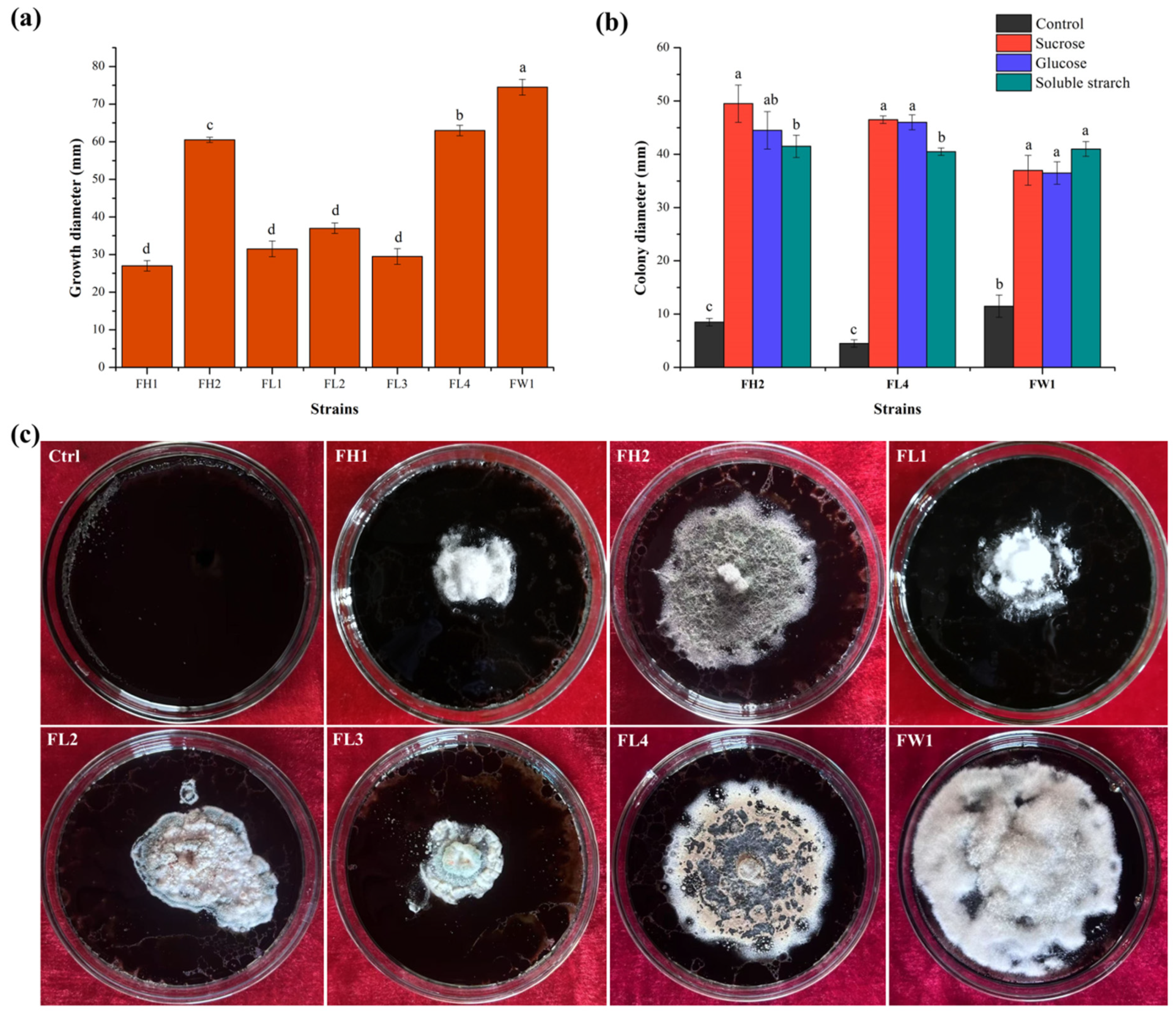
3.1. Screening and Identification of Heavy Oil-Degrading Fungi
3.1.1. Isolation and Screening of Fungal Strains
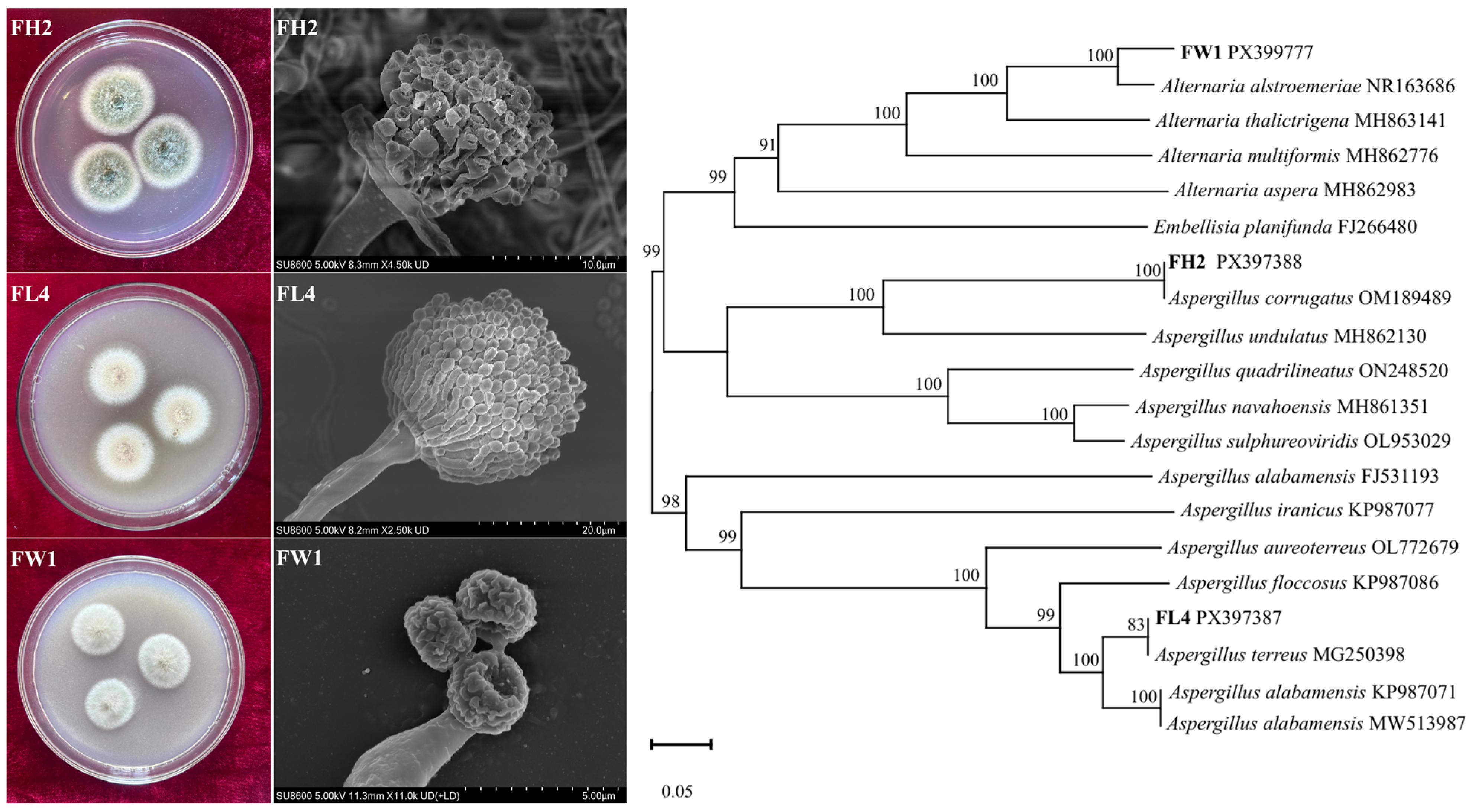
3.1.2. Morphological and Molecular Identification of Fungal Strains
3.2. Optimization of Co-Substrates for Heavy Oil Biodegradation
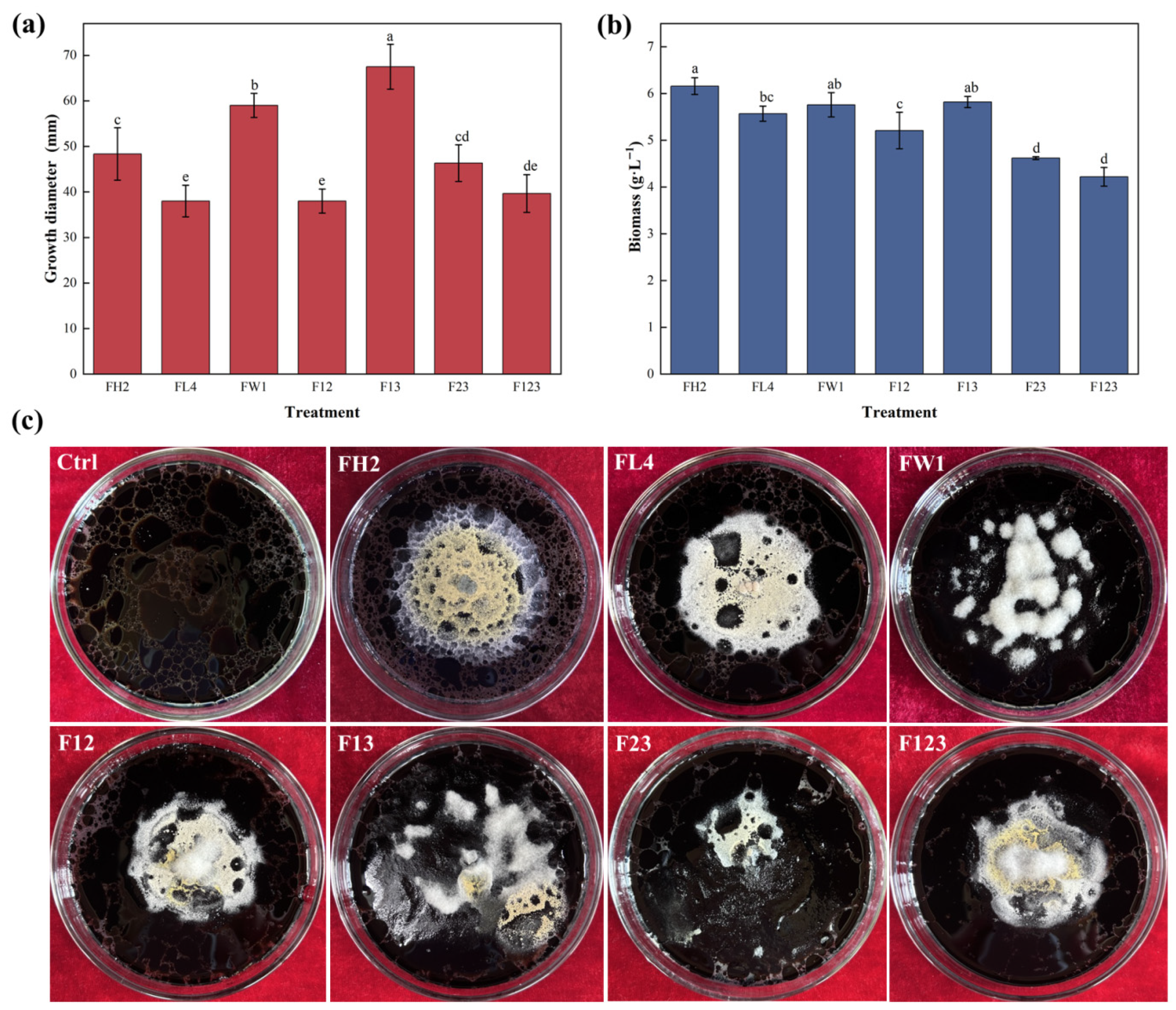
3.3. Performance of Fungal Consortia with Synergistic Interactions
3.4. Removal and Biodegradation of Heavy Oil in Simulated Soil
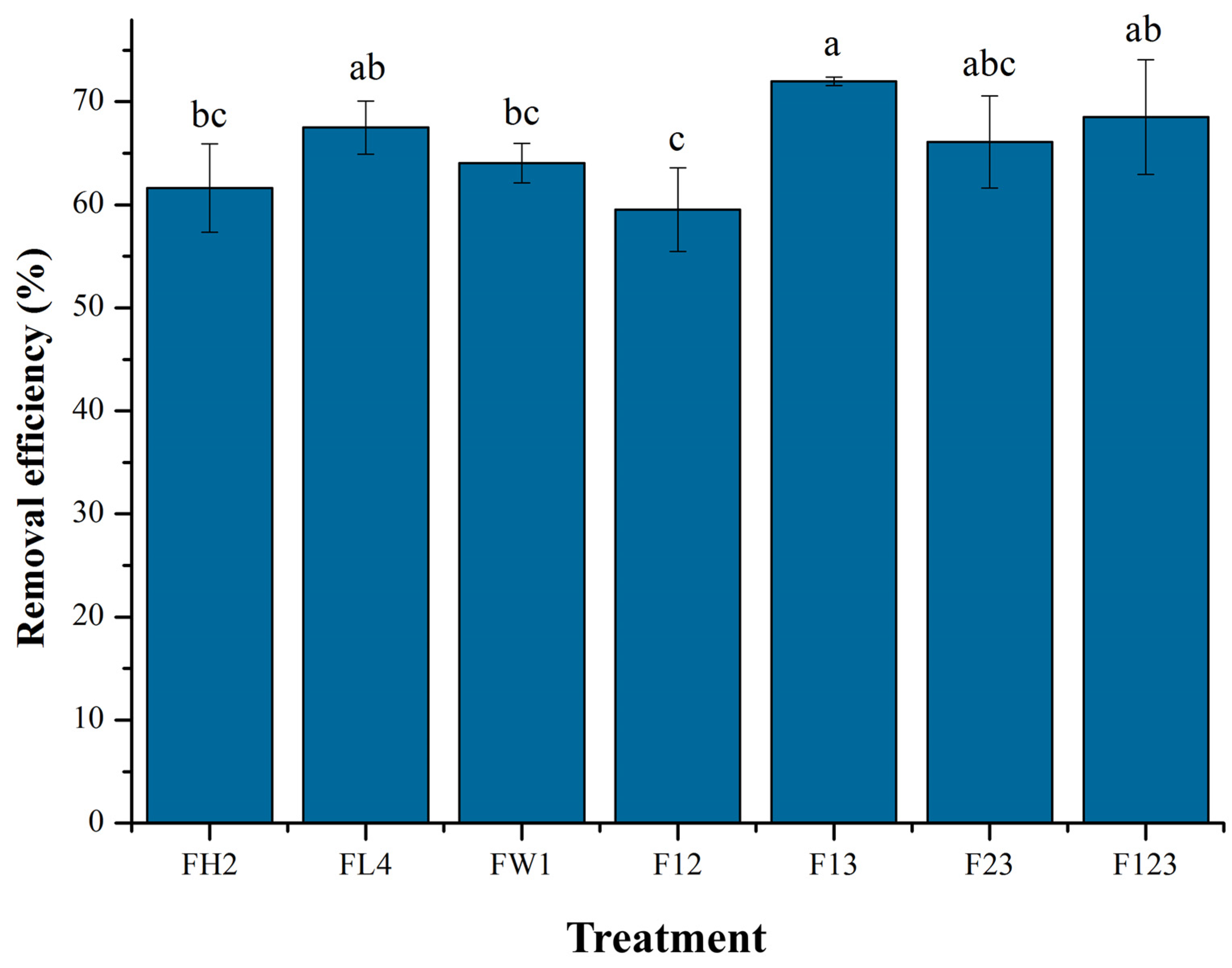
3.4.1. Heavy Oil Removal
3.4.2. Changes in SARA Fractions
3.4.3. n-Alkane Biodegradation
3.5. Whole-Genome Sequencing of Heavy Oil-Degrading Fungi
3.5.1. Genomic Features of Fungal Strains
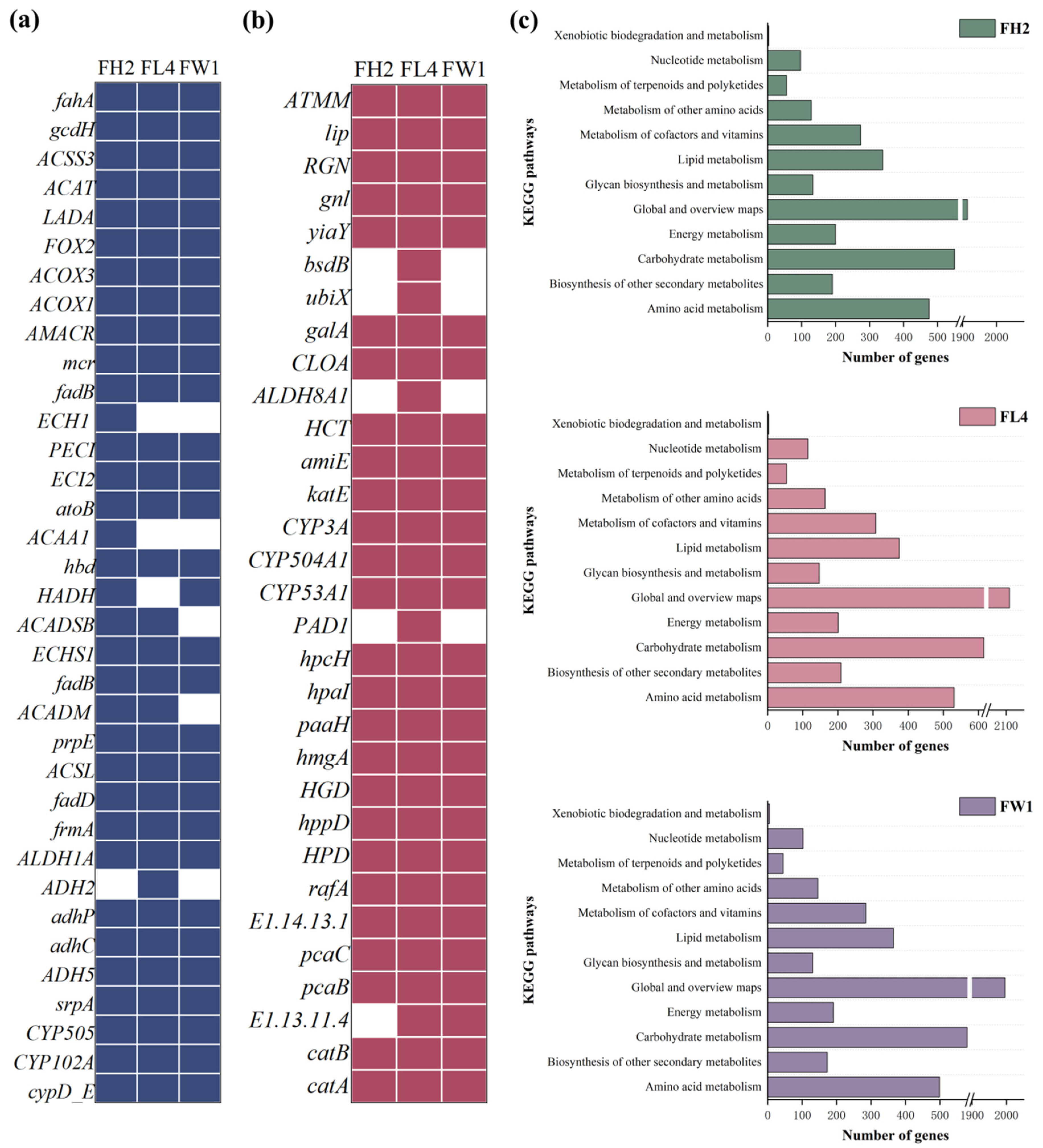
3.5.2. Functional Genes Responsible for Heavy Oil Biodegradation
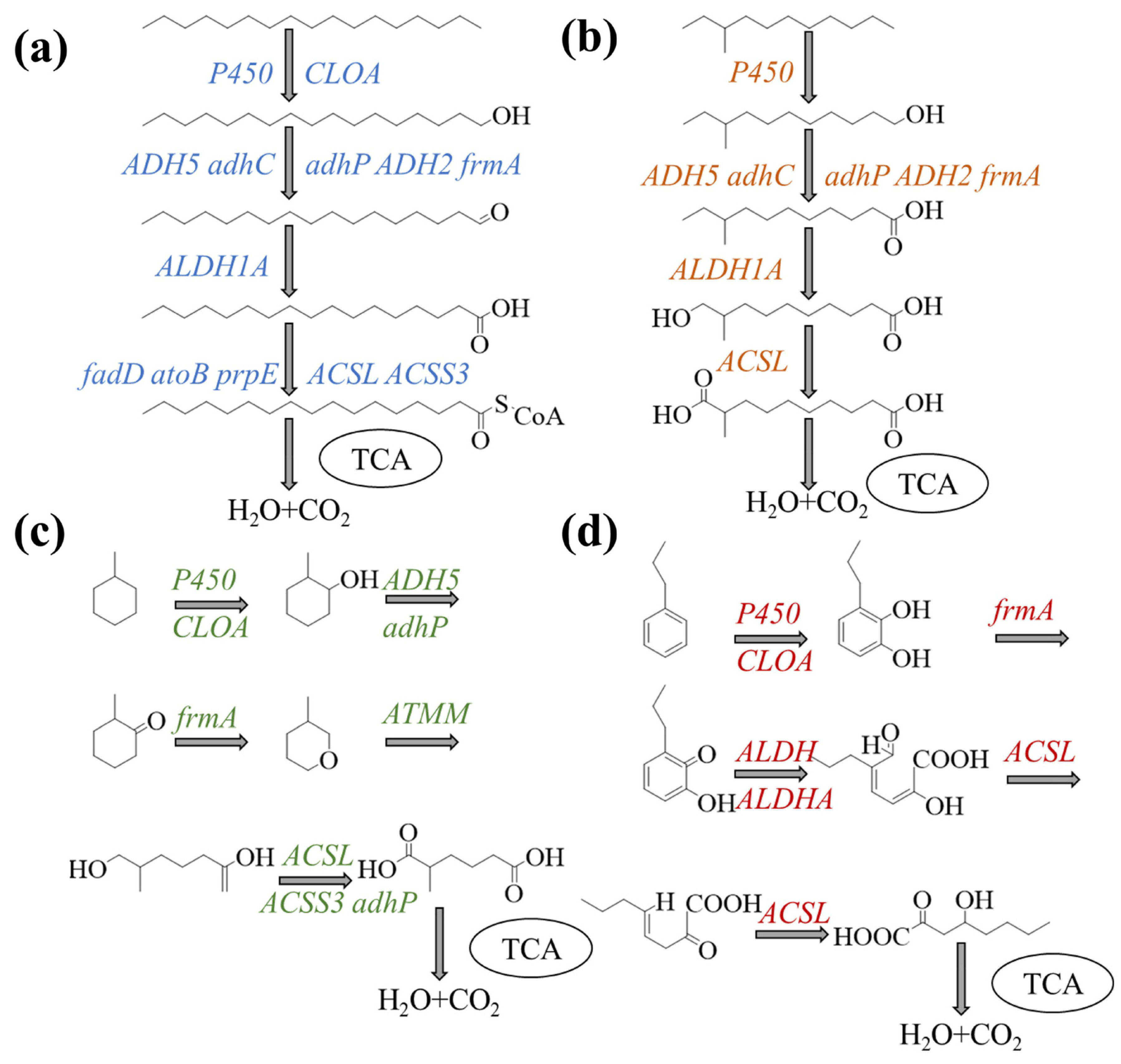
3.5.3. Possible Metabolic Pathways for Petroleum Hydrocarbon Biodegradation
4. Conclusions
Supplementary Materials
Author Contributions
Funding
Institutional Review Board Statement
Informed Consent Statement
Data Availability Statement
Acknowledgments
Conflicts of Interest
References
- Elahi, S.M.; Scott, C.E.; Chen, Z.X.; Pereira-Almao, P. In-situ upgrading and enhanced recovery of heavy oil from carbonate reservoirs using nano-catalysts: Upgrading reactions analysis. Fuel 2019, 252, 262–271. [Google Scholar] [CrossRef]
- Lozano-Navarro, J.I.; Palacio-Pérez, A.; Suárez-Domínguez, E.J.; Pérez-Sánchez, J.F.; Díaz-Zavala, N.P.; Melo-Banda, J.A.; Rodríguez-Valdés, A. Modification of the viscosity of extra-heavy crude oil using aqueous extracts of common geranium (Pelargonium hortorum). J. Petrol. Sci. Eng. 2022, 215, 110583. [Google Scholar] [CrossRef]
- Benguenab, A.; Chibani, A. Biodegradation of petroleum hydrocarbons by filamentous fungi (Aspergillus ustus and Purpureocillium lilacinum) isolated from used engine oil contaminated soil. Acta Ecol. Sin. 2021, 41, 416–423. [Google Scholar] [CrossRef]
- Lv, Y.F.; Bao, J.F.; Li, S.X.; Liu, D.Y.; Dai, D.; Qv, M.X.; Zhu, L.D. Biochar amendment of aerobic composting for the effective biodegradation of heavy oil and succession of bacterial community. Bioresour. Technol. 2022, 362, 127820. [Google Scholar] [CrossRef] [PubMed]
- Sharuddin, S.S.N.; Abdullah, S.R.S.; Hasan, H.A.; Othman, A.R.; Ismail, N. Potential bifunctional rhizobacteria from crude oil sludge for hydrocarbon degradation and biosurfactant production. Process Saf. Environ. 2021, 155, 108–121. [Google Scholar] [CrossRef]
- Pereira, J.E.S.; Borowski, J.V.B.; Napp, A.P.; Oliveira, M.M.; Ribeiro, I.D.A.; de Castro, L.G.Z.; Staats, C.C.; Schrank, A.; Passaglia, L.M.P.; Melo, V.M.M.; et al. Enhanced biodegradation of petroleum in seawater using an autochthonous microbial consortium from the northeast coast of Brazil affected by the Venezuelan oil spill. Chemosphere 2025, 384, 144485. [Google Scholar] [CrossRef]
- Rezaei, Z.; Moghimi, H. Fungal-bacterial consortia: A promising strategy for the removal of petroleum hydrocarbons. Ecotoxicol. Environ. Saf. 2024, 280, 116543. [Google Scholar] [CrossRef]
- Romero-Hernández, L.; Velez, P.; Betanzo-Gutiérrez, I.; Camacho-López, M.D.; Vázquez-Duhalt, R.; Riquelme, M. Extra-heavy crude oil degradation by Alternaria sp. isolated from deep-sea sediments of the Gulf of Mexico. Appl. Sci. 2021, 11, 6090. [Google Scholar] [CrossRef]
- Daccò, C.; Girometta, C.; Asemoloye, M.D.; Carpani, G.; Picco, A.M.; Tosi, S. Key fungal degradation patterns, enzymes and their applications for the removal of aliphatic hydrocarbons in polluted soils: A review. Int. Biodeter. Biodegr. 2020, 147, 104866. [Google Scholar] [CrossRef]
- Kadri, T.; Rouissi, T.; Brar, S.K.; Cledon, M.; Sarma, S.; Verma, M. Biodegradation of polycyclic aromatic hydrocarbons (PAHs) by fungal enzymes: A review. J. Environ. Sci. 2017, 8, 52–74. [Google Scholar] [CrossRef]
- Cipriani-Avila, I.; Decock, C.; Zambrano-Romero, A.; Zaldumbide, K.; Garcés-Ruiz, M.; Caiza-Olmedo, J.; Gordillo, A.; Luna, V.; Gerin, P.A. Mycoremediation of petroleum-contaminated soil using native Ganoderma and Trametes strains from the Ecuadorian Amazon. J. Fungi 2025, 11, 651. [Google Scholar] [CrossRef]
- Silva Monteiro, J.P.; da Silva, A.F.; Delgado Duarte, R.T.; José Giachini, A. Exploring novel fungal–bacterial consortia for enhanced petroleum hydrocarbon degradation. Toxics 2024, 12, 913. [Google Scholar] [CrossRef]
- Medaura, M.C.; Guivernau, M.; Moreno-Ventas, X.; Prenafeta-Boldú, F.X.; Viñas, M. Bioaugmentation of native fungi, an efficient strategy for the bioremediation of an aged industrially polluted soil with heavy hydrocarbons. Front. Microbiol. 2021, 12, 626436. [Google Scholar] [CrossRef]
- Wu, B.; Xiu, J.L.; Yu, L.; Huang, L.; Yi, L.X.; Ma, Y.D. Degradation of crude oil in a co-culture system of Bacillus subtilis and Pseudomonas aeruginosa. Front. Microbiol. 2023, 14, 1132831. [Google Scholar] [CrossRef] [PubMed]
- Lv, H.X.; Huang, Y.H.; Li, Q.F.; Zhao, H.M.; Xiang, L.; Li, H.; Li, Y.W.; Mo, C.H.; Cai, Q.Y. Degradation efficiency for phthalates and cooperative mechanism in synthetic bacterial consortium and its bioaugmentation for soil remediation. Environ. Pollut. 2025, 378, 126481. [Google Scholar] [CrossRef]
- Cao, Z.; Yan, W.; Ding, M.; Yuan, Y. Construction of microbial consortia for microbial degradation of complex compounds. Front. Bioeng. Biotechnol. 2022, 10, 1051233. [Google Scholar] [CrossRef] [PubMed]
- Roell, G.W.; Zha, J.; Carr, R.R.; Koffas, M.A.; Fong, S.S.; Tang, Y.J. Engineering microbial consortia by division of labor. Microb. Cell Fact. 2019, 18, 35. [Google Scholar] [CrossRef]
- Ramoutar, S.; Mohammed, A.; Ramsubhag, A. Laboratory-scale bioremediation potential of single and consortia fungal isolates from two natural hydrocarbon seepages in Trinidad, West Indies. Bioremediat. J. 2019, 23, 131–141. [Google Scholar] [CrossRef]
- Romero-Hernández, L.; Betanzo-Gutiérrez, I.; Vazquez-Duhalt, R.; Figueroa, M.; Riquelme, M.; Velez, P. Degradation of extra-heavy crude oil by fungi isolated from hydrothermal vents fields in the Gulf of California. Mycobiology 2025, 53, 684–695. [Google Scholar] [CrossRef]
- Sharma, S.; Pandey, L.M. Biodegradation kinetics of binary mixture of hexadecane and phenanthrene by the bacterial microconsortium. Bioresour. Technol. 2022, 358, 127408. [Google Scholar] [CrossRef]
- Rani, M.H.S.; Nandana, R.K.; Khatun, A.; Brindha, V.; Midhun, D.; Gowtham, P.; Mani, S.S.D.; Kumar, S.R.; Aswini, A.; Muthukumar, S. Three strategy rules of filamentous fungi in hydrocarbon remediation: An overview. Biodegradation 2024, 35, 833–861. [Google Scholar] [CrossRef]
- Freitas, J.F.; Silva, D.F.L.; Silva, B.S.; Castro, J.N.F.; Felipe, M.B.M.C.; Silva-Portela, R.C.B.; Minnicelli, C.F.; Agnez-Lima, L.F. Genomic and phenotypic features of Acinetobacter baumannii isolated from oil reservoirs reveal a novel subspecies specialized in degrading hazardous hydrocarbons. Microbiol. Res. 2023, 273, 127420. [Google Scholar] [CrossRef]
- Sun, Y.F.; Wang, Y.; Fan, K.X.; Tang, F.; Liu, Q.Y.; Zhang, X.X.; Wang, G. Degradation characteristics of petroleum by microbial consortium B10 and cooperation mechanism between strains under heavy metal stress. Sep. Purif. Technol. 2025, 376, 134162. [Google Scholar] [CrossRef]
- Zhu, H.H.; Ren, L.; Yang, H.Z.; Zhang, J.H. Leveraging indigenous Bacillus consortia for heavy oil biodegradation and soil bioremediation. Environ. Technol. Innov. 2025, 40, 104415. [Google Scholar] [CrossRef]
- Yang, S.Q.; Zhang, J.H.; Liu, Y.; Feng, W.D. Biodegradation of hydrocarbons by Purpureocillium lilacinum and Penicillium chrysogenum from heavy oil sludge and their potential for bioremediation of contaminated soils. Int. Biodeter. Biodegr. 2023, 178, 105566. [Google Scholar] [CrossRef]
- Fallahi, M.; Sarempour, M.; Gohari, A.M. Potential biodegradation of polycyclic aromatic hydrocarbons (PAHs) and petroleum hydrocarbons by indigenous fungi recovered from crude oil contaminated soil in Iran. Sci. Rep. 2023, 13, 22153. [Google Scholar] [CrossRef] [PubMed]
- Zhang, J.H.; Feng, W.D.; Ren, L. Fungal extracellular enzymes from Aspergillus spp. as promising candidates for extra-heavy oil degradation and enhanced oil recovery. Microorganisms 2024, 12, 2248. [Google Scholar] [CrossRef] [PubMed]
- Li, Y.R.; Li, Q.Y.; Wang, X.D.; Yu, L.G.; Yang, J.J. Aquathermolysis of heavy crude oil with ferric oleate catalyst. Petrol. Sci. 2018, 15, 613–624. [Google Scholar] [CrossRef]
- Al-Otibi, F.; Al-Zahrani, R.M.; Marraiki, N. Biodegradation of selected hydrocarbons by Fusarium species isolated from contaminated soil samples in Riyadh, Saudi Arabia. J. Fungi 2023, 9, 216. [Google Scholar] [CrossRef]
- Gaid, M.; Jentzsch, W.; Beermann, H.; Reinhard, A.; Meister, M.; Berzhanova, R.; Mukasheva, T.; Urich, T.; Mikolasch, A. Comparative bioremediation of tetradecane, cyclohexanone and cyclohexane by filamentous fungi from polluted habitats in Kazakhstan. J. Fungi 2024, 10, 436. [Google Scholar] [CrossRef]
- Hatami, E.; Abbaspour, A.; Dorostkar, V. Phytoremediation of a petroleum-polluted soil by native plant species in Lorestan Province, Iran. Environ. Sci. Pollut. Res. 2019, 26, 24323–24330. [Google Scholar] [CrossRef]
- Othman, A.R.; Ismail, N.S.; Abdullah, S.R.S.; Hasan, H.A.; Kurniawan, S.B.; Sharuddin, S.S.N.; Ismail, N.I. Potential of indigenous biosurfactant-producing fungi from real crude oil sludge in total petroleum hydrocarbon degradation and its future research prospects. J. Environ. Chem. Eng. 2023, 10, 107621. [Google Scholar] [CrossRef]
- Li, Y.; Huang, X.; Huang, C.; Wang, L.; Sokolov, S.; Wang, X. Effects and mechanisms of exogenous carbon addition on organic carbon pools in petroleum hydrocarbon contaminated soil. Process Saf. Environ. 2025, 203, 108020. [Google Scholar] [CrossRef]
- Singha, L.P.; Kumari, R.; Singha, K.M.; Pandey, P.; Shukla, P. Synergistic co-metabolism enhancing the crude oil degradation by Acinetobacter oleivorans DR1 and its metabolic potential. Microbiol. Spectr. 2025, 13, e03023-24. [Google Scholar] [CrossRef]
- Govarthanan, M.; Fuzisawa, S.; Hosogai, T.; Chang, Y.C. Biodegradation of aliphatic and aromatic hydrocarbons using the filamentous fungus Penicillium sp. CHY-2 and characterization of its manganese peroxidase activity. RSC Adv. 2017, 7, 20716–20723. [Google Scholar] [CrossRef]
- Fan, Y.Y.; Yan, D.K.; Chen, X.L.; Ran, X.N.; Cao, W.; Li, H.S.; Wan, J.F. Novel insights into the co-metabolism of pyridine with different carbon substrates: Performance, metabolism pathway and microbial community. J. Hazard. Mater. 2024, 465, 133396. [Google Scholar] [CrossRef]
- Zhu, M.J.; Su, Y.H.; Wang, Y.R.; Bo, Y.L.; Sun, Y.F.; Liu, Q.Y.; Zhang, H.; Zhao, C.C.; Gu, Y.Y. Biodegradation characteristics of p-Chloroaniline and the mechanism of co-metabolism with aniline by Pseudomonas sp. CA-1. Bioresour. Technol. 2024, 406, 131086. [Google Scholar] [CrossRef] [PubMed]
- Suda, K.; Ikarashi, M.; Tamaki, H.; Tamazawa, S.; Sakata, S.; Haruo, M.; Kamagata, Y.; Kaneko, M.; Ujiie, T.; Shinotsuka, Y.; et al. Methanogenic crude oil degradation induced by an exogenous microbial community and nutrient injections. J. Petrol. Sci. Eng. 2021, 201, 108458. [Google Scholar] [CrossRef]
- Dai, X.L.; Lv, J.; Wei, W.X.; Guo, S.H. Bioremediation of heavy oil contaminated intertidal zones by immobilized bacterial consortium. Process Saf. Environ. 2022, 158, 70–78. [Google Scholar] [CrossRef]
- Chen, Y.S.; Wei, J.L.; Zhou, J.B.; Huang, Y.H.; Tang, G.X.; Li, Y.W.; Zhao, H.M.; Xiang, L.; Feng, N.X.; Mo, C.H.; et al. Efficiencies, pathways and mechanism on simultaneous biodegradation of phthalates and polycyclic aromatic hydrocarbons by bacterial consortium. J. Environ. Chem. Eng. 2025, 13, 117285. [Google Scholar] [CrossRef]
- Dai, Y.L.; Cai, X.X.; Wang, S.; Zhao, C.X.; Wang, X.Y.; Yang, X.M.; Zhao, X.; Cheng, X.H.; Li, J.B.; Luo, C.L.; et al. Synergistic effects of surfactant biostimulation and indigenous fungal bioaugmentation for enhanced bioremediation of PAH-contaminated soils. Environ. Pollut. 2025, 375, 126304. [Google Scholar] [CrossRef]
- Abena, M.T.B.; Sodbaatar, N.; Li, T.; Damdinsuren, N.; Choidash, B.; Zhong, W.H. Crude oil biodegradation by newly isolated bacterial strains and their consortium under soil microcosm experiment. Appl. Biochem. Biotechnol. 2019, 189, 1223–1244. [Google Scholar] [CrossRef]
- Ali, S.; Isha; Chang, Y.C. Biodegradability of heavy oil using soil and water microbial consortia under aerobic and anaerobic conditions. Processes 2025, 13, 2057. [Google Scholar] [CrossRef]
- Uribe-Flores, M.M.; García-Cruz, U.; Hernández-Nuñez, E.; Cerqueda-García, D.; Aguirre-Macedo, M.L.; García-Maldonado, J.Q. Assessing the effect of chemical dispersant Nokomis 3-F4 on the degradation of a heavy crude oil in water by a marine microbial consortium. Bull. Environ. Contam. Toxicol. 2022, 108, 93–98. [Google Scholar] [CrossRef] [PubMed]
- Zhang, T.; Zhang, H.J. Microbial consortia are needed to degrade soil pollutants. Microorganisms 2022, 10, 261. [Google Scholar] [CrossRef]
- Ghorbannezhad, H.; Moghimi, H.; Dastgheib, S.M.M. Evaluation of heavy petroleum degradation using bacterial-fungal mixed cultures. Ecotoxicol. Environ. Saf. 2018, 164, 434–439. [Google Scholar] [CrossRef] [PubMed]
- Parhamfar, M.; Abtahi, H.; Godini, K.; Saeedi, R.; Sartaj, M.; Villaseñor, J.; Coulon, F.; Kumar, V.; Soltanighias, T.; Ghaznavi-Rad, E.; et al. Biodegradation of heavy oily sludge by a two-step inoculation composting process using synergistic effect of indigenous isolated bacteria. Process Biochem. 2020, 91, 223–230. [Google Scholar] [CrossRef]
- Nzila, A.; Musa, M. Current knowledge and future challenges on bacterial degradation of the highly complex petroleum products asphaltenes and resins. Front. Environ. Sci. 2021, 9, 779644. [Google Scholar] [CrossRef]
- Raheem, A.S.A.; Hentati, D.; Bahzad, D.; Abed, R.M.M.; Ismail, W. Biocatalytic upgrading of unconventional crude oil using oilfield-inhabiting bacterial consortia. Int. Biodeter. Biodegr. 2022, 174, 105468. [Google Scholar] [CrossRef]
- Varjani, S.J. Microbial degradation of petroleum hydrocarbons. Bioresour. Technol. 2017, 223, 277–286. [Google Scholar] [CrossRef]
- Dai, X.L.; Lv, J.; Yan, G.X.; Chen, C.M.; Guo, S.H.; Fu, P.C. Bioremediation of intertidal zones polluted by heavy oil spilling using immobilized laccase-bacteria consortium. Bioresour. Technol. 2020, 309, 123305. [Google Scholar] [CrossRef] [PubMed]
- Tang, F.; Zhang, H.; Cheng, H.; Wang, Y.R.; Liu, Q.Y.; Zhao, C.C.; Gu, Y.Y.; Wang, J.G. New insights of crude oil biodegradation construction by microbial consortium B10: Responded substrates, genomics, biodegradation mechanism and pathways. Chem. Eng. J. 2023, 478, 147143. [Google Scholar] [CrossRef]
- Song, J.Z.; Wang, C.Q.; Yu, G.S.; Sun, Z.; Wu, A.H.; Chi, Z.M.; Liu, G.L. Simultaneous production of biosurfactant and extracellular unspecific peroxygenases by Moesziomyces aphidis XM01 enables an efficient strategy for crude oil degradation. J. Hazard. Mater. 2024, 471, 134437. [Google Scholar] [CrossRef]
- Moktali, V.; Park, J.; Fedorova-Abrams, N.D.; Park, B.; Choi, J.; Lee, Y.H.; Kang, S. Systematic and searchable classification of cytochrome P450 proteins encoded by fungal and oomycete genomes. BMC Genom. 2012, 13, 525. [Google Scholar] [CrossRef]
- Li, M.L.; Wang, Y.R.; Tang, Z.H.; Wang, H.Z.; Hu, J.J.; Bao, Z.M.; Hu, X.L. Expression plasticity of peroxisomal acyl-coenzyme an oxidase gene implies their involvement in redox regulation in scallops exposed to PST-producing Alexandrium. Mar. Drugs 2022, 20, 472. [Google Scholar] [CrossRef]
- Hidalgo, K.J.; Centurion, V.B.; Lemos, L.N.; Soriano, A.U.; Valoni, E.; Baessa, M.P.; Richnow, H.H.; Vogt, C.; Oliveira, V.M. Disentangling the microbial genomic traits associated with aromatic hydrocarbon degradation in a jet fuel-contaminated aquifer. Biodegradation 2025, 36, 7. [Google Scholar] [CrossRef]
- Nayarisseri, A.; Sharma, K.; Khan, A.; Swami, R.; Chaudhary, R.; Sharma, J.; Kaur, N.; Kharate, J.; Rathore, V.; Prajapati, L.; et al. Whole genome sequence of petroleum hydrocarbon degrading novel strain Microbacter sp. EMBS2025 isolated from Chilika Lake, Odisha, India. Sci. Rep. 2025, 15, 27961. [Google Scholar] [CrossRef]
- Zhou, Y.M.; Wang, Y.; Yao, S.D.; Zhao, X.Y.; Kong, Q.; Cui, L.H.; Zhang, H.X. Driving mechanisms for the adaptation and degradation of petroleum hydrocarbons by native microbiota from seas prone to oil spills. J. Hazard. Mater. 2024, 476, 135060. [Google Scholar] [CrossRef]
- Kumar, A.G.; Manisha, D.; Sujitha, K.; Peter, D.M.; Kirubagaran, R.; Dharani, G. Genome sequence analysis of deep sea Aspergillus sydowii BOBA1 and effect of high pressure on biodegradation of spent engine oil. Sci. Rep. 2021, 11, 9347. [Google Scholar] [CrossRef]
- Imam, A.; Suman, S.K.; Kanaujia, P.K.; Ray, A. Biological machinery for polycyclic aromatic hydrocarbons degradation: A review. Bioresour. Technol. 2022, 343, 126121. [Google Scholar] [CrossRef] [PubMed]
- Wang, C.; Sun, H.; Li, J.; Li, Y.; Zhang, Q. Enzyme activities during degradation of polycyclic aromatic hydrocarbons by white-rot fungus Phanerochaete chrysosporium in soils. Chemosphere 2009, 77, 733–738. [Google Scholar] [CrossRef] [PubMed]
- Ghosal, D.; Ghosh, S.; Dutta, T.K.; Ahn, Y. Current state of knowledge in microbial degradation of polycyclic aromatic hydrocarbons (PAHs): A review. Front. Microbiol. 2016, 7, 1369. [Google Scholar] [CrossRef]
- Chen, Y.; Yu, B.; Lin, J.; Naidu, R.; Chen, Z. Simultaneous adsorption and biodegradation (SAB) of diesel oil using immobilized Acinetobacter venetianus on porous material. Chem. Eng. J. 2016, 289, 463–470. [Google Scholar] [CrossRef]
- Abbasian, F.; Lockington, R.; Mallavarapu, M.; Naidu, R. A comprehensive review of aliphatic hydrocarbon biodegradation by bacteria. Appl. Biochem. Biotechnol. 2015, 176, 670–699. [Google Scholar] [CrossRef]
- Jiang, W.; Fang, J.; Du, M.; Gao, Y.; Fang, J.; Jiang, Z. Integrated transcriptomics and metabolomics analyses reveal benzo[a]pyrene enhances the toxicity of mercury to the Manila clam, Ruditapes philippinarum. Ecotoxicol. Environ. Saf. 2021, 213, 112038. [Google Scholar] [CrossRef] [PubMed]
- Kshirsagar, S.D.; Mattam, A.J.; Jose, S.; Ramachandrarao, B.; Velankar, H.R. Heavy hydrocarbons as selective substrates for isolation of asphaltene degraders: A substrate-based bacterial isolation strategy for petroleum hydrocarbon biodegradation. Environ. Technol. Innov. 2020, 19, 100832. [Google Scholar] [CrossRef]
- Bora, B.; Kauser, H.; Geed, S.R. Bioremediation strategies for xenobiotic degradation in petroleum-impacted industrial ecosystems: Practical challenges and future directions. J. Water Process Eng. 2025, 70, 106877. [Google Scholar] [CrossRef]



| Treatment | Saturates (mg g−1) | VRm% | Aromatics (mg g−1) | VRm% | Resins (mg g−1) | VRm% | Asphaltenes (mg g−1) | VRm% |
|---|---|---|---|---|---|---|---|---|
| Ctrl | 103 ± 9 d | – | 690 ± 19 a | – | 420 ± 16 a | – | 121 ± 5 a | – |
| FH2 | 179 ± 17 b | −73.8 | 251 ± 8 b | 63.6 | 417 ± 33 a | 0.7 | 82 ± 4 bc | 32.2 |
| FL4 | 131 ± 4 c | −27.2 | 135 ± 5 c | 80.4 | 141 ± 12 c | 66.4 | 110 ± 8 a | 9.1 |
| FW1 | 200 ± 2 a | −94.2 | 98 ± 1 d | 84.2 | 189 ± 4 b | 55.0 | 69 ± 13 c | 43.0 |
| F12 | 9 ± 1 e | 91.3 | 84 ± 13 de | 85.8 | 142 ± 1 c | 66.2 | 87 ± 9 b | 28.1 |
| F13 | 13 ± 1 e | 87.4 | 55 ± 3 f | 92.0 | 128 ± 7 c | 69.5 | 88 ± 2 b | 27.3 |
| F23 | 8 ± 3 e | 92.2 | 78 ± 5 de | 88.7 | 135 ± 27 c | 67.9 | 106 ± 2 a | 12.4 |
| F123 | 6 ± 1 e | 94.2 | 68 ± 1 ef | 90.1 | 120 ± 18 c | 71.4 | 106 ± 14 a | 12.4 |
| Retention Time (s) | Molecular Formula | Relative Change (%) | ||||||
|---|---|---|---|---|---|---|---|---|
| FH2 | FL4 | FW1 | F12 | F13 | F23 | F123 | ||
| 1850.9 | C13H28 | 66.1 | 140.5 | 43.0 | −49.7 | −89.5 | −98.3 | −93.2 |
| 1988 | C14H30 | −94.9 | −48.1 | −59.9 | −58.5 | −68.2 | −90.8 | −92.2 |
| 2118.3 | C15H32 | −38.4 | 110.9 | −48.6 | 134.5 | −36.3 | −83.7 | 144.7 |
| 2242.1 | C16H34 | −36.9 | −89.9 | −91.9 | −96.1 | −53.3 | −90.5 | −87.6 |
| 2360.1 | C17H36 | −23.8 | −26.5 | −54.3 | −16.5 | −47.9 | −56.8 | −76.5 |
| 2472.6 | C18H38 | −22.6 | 22.7 | −14.5 | −68.9 | −74.8 | −82.2 | −73.7 |
| 2580.4 | C19H40 | −96.2 | 136.8 | 64.2 | −98.2 | −98.2 | −89.3 | −61.6 |
| 2683.7 | C20H42 | −14.6 | 171.6 | 11.2 | −86.2 | −99.0 | −92.6 | −85.0 |
| 2782.6 | C21H44 | −92.4 | 67.1 | −94.6 | −89.6 | −92.3 | −96.6 | −90.4 |
| 2877.4 | C22H46 | −89.3 | 52.7 | 55.0 | 0.8 | −25.6 | −74.2 | −15.6 |
| 2968.6 | C23H48 | −92.1 | −83.7 | −16.7 | 36.1 | −51.9 | −53.5 | −79.0 |
| 3056.4 | C24H50 | −76.1 | −47.3 | −72.7 | −94.4 | −97.7 | −90.9 | −94.5 |
| 3146.2 | C25H52 | −0.4 | 35.1 | −52.8 | −76.9 | −97.1 | −91.4 | −76.1 |
| 3246.3 | C26H54 | −71.0 | −96.8 | −87.4 | −91.9 | −93.3 | −81.5 | −93.1 |
| 3360.1 | C27H56 | −71.2 | 51.3 | −78.7 | −100.0 | −91.5 | −100.0 | −96.4 |
| 3499.8 | C28H58 | −29.8 | 33.5 | −51.4 | −100.0 | −100.0 | −100.0 | −100.0 |
| Feature | Description | ||
|---|---|---|---|
| Aspergillus corrugatus FH2 | Aspergillus terreus FL4 | Alternaria alstroemeriae FW1 | |
| Genome size (bp) | 30,458,146 | 32,757,900 | 34,353,871 |
| Genome coverage | 619.28× | 503.64× | 555.79× |
| Completeness | 99.80 | 99.70 | 99.80 |
| No. of contigs | 8 | 12 | 11 |
| G + C content (%) | 49.97 | 52.04 | 51.04 |
| N50 | 4,088,792 | 4,299,909 | 3,087,319 |
| N90 | 3,190,075 | 2,050,326 | 2,351,359 |
| Maximum scaffold size (bp) | 8,265,442 | 5,300,274 | 7,341,161 |
| Median scaffold size (bp) | 3,435,058 | 3,360,821 | 2,599,701 |
| Minimum scaffold size (bp) | 141,407 | 48,728 | 50,633 |
| Average scaffold size (bp) | 3,435,058 | 2,729,825 | 3,123,079 |
| Protein-coding genes | 9355 | 10,459 | 12,749 |
| Average mRNA size (bp) | 2888 | 2473 | 2242 |
| No. of exons | 31,736 | 33,842 | 33,949 |
| No. of introns | 22,381 | 23,383 | 21,200 |
| tRNAs | 220 | 169 | 124 |
| rRNAs | 4, 0, 4, 36 (18S, 28S, 5.8S, 5S) | 10, 0, 20, 34 (18S, 28S, 5.8S, 5S) | 14, 0, 17, 43 (18S, 28S, 5.8S, 5S) |
| Small nuclear RNAs | 33 | 30 | 37 |
| Genes assigned to NR | 9141 | 10,177 | 12,546 |
| Genes assigned to GO | 7578 | 7966 | 8316 |
| Genes assigned to KEGG | 6760 | 7359 | 7333 |
| Genes assigned to KOG | 1776 | 7359 | 1897 |
Disclaimer/Publisher’s Note: The statements, opinions and data contained in all publications are solely those of the individual author(s) and contributor(s) and not of MDPI and/or the editor(s). MDPI and/or the editor(s) disclaim responsibility for any injury to people or property resulting from any ideas, methods, instructions or products referred to in the content. |
© 2026 by the authors. Licensee MDPI, Basel, Switzerland. This article is an open access article distributed under the terms and conditions of the Creative Commons Attribution (CC BY) license.
Share and Cite
Peng, S.; Zhu, J.; Liu, W.; Zhang, J. Development and Assessment of Heavy Oil-Degrading Fungal Consortia (Aspergillus and Alternaria) for Soil Bioremediation. J. Fungi 2026, 12, 224. https://doi.org/10.3390/jof12030224
Peng S, Zhu J, Liu W, Zhang J. Development and Assessment of Heavy Oil-Degrading Fungal Consortia (Aspergillus and Alternaria) for Soil Bioremediation. Journal of Fungi. 2026; 12(3):224. https://doi.org/10.3390/jof12030224
Chicago/Turabian StylePeng, Shujuan, Junhao Zhu, Weiguo Liu, and Junhui Zhang. 2026. "Development and Assessment of Heavy Oil-Degrading Fungal Consortia (Aspergillus and Alternaria) for Soil Bioremediation" Journal of Fungi 12, no. 3: 224. https://doi.org/10.3390/jof12030224
APA StylePeng, S., Zhu, J., Liu, W., & Zhang, J. (2026). Development and Assessment of Heavy Oil-Degrading Fungal Consortia (Aspergillus and Alternaria) for Soil Bioremediation. Journal of Fungi, 12(3), 224. https://doi.org/10.3390/jof12030224