
Article

A New Species Bussabanomyces oryzae Isolated from Rice and Beneficial Application in Rice Seedling
Institute of Digital Agriculture, Zhejiang Academy of Agricultural Sciences, Hangzhou 310021, China
*
Author to whom correspondence should be addressed.
J. Fungi 2026, 12(3), 222; https://doi.org/10.3390/jof12030222
Submission received: 20 February 2026 / Revised: 16 March 2026 / Accepted: 18 March 2026 / Published: 19 March 2026
(This article belongs to the Special Issue Pathogenic Fungal–Plant Interactions)

Abstract

Endophytes are a type of microorganism that lives in harmony with plants, playing a significant role in promoting the growth of the host and enhancing the host’s stress resistance. Understanding the ecological functions of root endophytic fungi and screening functional strains can effectively alleviate the stress conditions of crops. In this study, endophyte 1R13 was isolated from the roots of rice. Through morphological observation and five-gene combined phylogenetic analysis, it was identified as Bussabanomyces oryzae (B. oryzae), which was proposed as a new species, Bussabanomyces oryzae nov. The colonization pattern of B. oryzae was mainly through invasion of the rice roots, entering the epidermal cells and then the cortical cells, and finally reaching the vascular bundle cells. In the co-culture assays with rice, B. oryzae can promote the growth of rice, increasing its growth volume by approximately 23% and its fresh weight by 52%. Meanwhile, it could enhance the stress resistance of rice, mainly manifested as increasing the ability of rice leaves to resist rice blast and improving the survival rate of transplanted seedlings in the field.

1. Introduction

At present, most of the typical functional microbes are mainly rhizobia and mycorrhizal fungi [1]. As “plant nutrition type” regulators, they can promote the growth of crops and increase yields [2]. However, the effects of rhizobia and mycorrhizal fungi in improving the host’s stress resistance are not ideal [3]. Endophytes are a type of fungi that can colonize within plants without causing fundamental harm to them; at least part of their life cycle is within healthy plant tissues, colonizing and absorbing nutrients from the host [4]. However, unlike pathogenic fungi, endophytes do not cause significant harm to the host. It can maintain a balanced relationship with the host internally [5,6]. During the interaction between endophytic fungi and plants, many beneficial biological relationships have been demonstrated, such as promoting the growth of the host, increasing the host’s yield, and enhancing the host’s stress resistance (disease resistance and heavy metal stress) [4,7,8]. Endophytes are also natural sources of active substances and can produce active metabolic products with antibacterial and bactericidal properties [9].
Endophytes in rice have been found to be associated with various parts of the rice plant, including roots, stems, leaves, seeds, ovules, and even meristems. Among them, roots were the largest source of endophytic bacteria [10,11], followed by leaves. Seeds played a crucial role in the spread of endophytic bacteria in different plants through vertical (parental) and horizontal (environmental characteristics) methods [12]. Gaeumannomyces graminis I-1 was found in the roots of rice and had the effect of promoting plant growth [13]. Pyricularia sacc was present in the roots and seeds of rice and had antipathogenic activity [14]. Pseudophhialophora oryzae could promote rice growth with the increase in fresh weight and chlorophyll content [15]. Falciphora oryzae induced systemic resistance in plants and enhanced the tolerance of rice to Cd [16]. These fungi all belong to the Magnaporthaceae family. Bussabanomyces is a genus under the Magnaporthaceae family, and it has only one species, Bussabanomyces longisporus. B. longisporus was discovered in the leaves of rice [17]. At present, the observations on this family have been limited to morphological studies, and the specific functions of it have not been deeply explored.
Based on the significant potential of endophytic fungi in promoting plant growth and enhancing stress resistance and considering the important position of the Magnaporthaceae family in plant pathology and symbiosis, this study focuses on a newly isolated endophytic strain from rice roots, Bussabanomyces oryzae. This study aims to clarify the taxonomic status of this strain through phylogenetic analysis and to reveal its specific colonization pattern in rice roots via GFP fluorescence labeling technology. On this basis, we will further investigate the biological effects of B. oryzae on rice growth and its ability to induce disease resistance, attempting to elucidate the potential of this endophytic fungus in enhancing plant stress resistance. The results of this study are intended to provide new microbial resources and a theoretical basis for the development of multifunctional biopesticides and biofertilizers.

2. Materials and Methods

2.1. Sample Collection and Culture

In June 2024, rice samples were collected in Shangyu District, Shaoxing City, Zhejiang Province, China (N 29°49′–29°53′, E 121°3′–121°7′). When collecting samples, uproot the plants, place the plant samples in self-sealing sterile bags, then put them in an insulated box and store them in ice packs. The samples were brought back to the laboratory for separation and culture within 48 h. The roots of the rice plants were rinsed to remove soil particles and attachments. The root tissue was cut into 0.5 cm segments and separated on the MEA medium containing 50 mg/L chloramphenicol. The strain was cultured in the dark at 25 °C. After the hyphae grew from the edge of the tissue incision, it was carefully picked out with a sterile toothpick and transferred to the PDA medium for purification at 25 °C.

2.2. DNA Extraction and Phylogenetic Analysis

DNA extraction was carried out through the fungal DNA extraction kit (Qiagen, Hilden, Germany). Referring to the method of Zhang et al. [18], the largest subunit of RNA polymerase II (RPB1) and the translation Elongation Factor 1-α gene (TEF1), internal transcribed spacer (ITS1), large subunit (LSU), and small subunit (SSU) of ribosomal RNA genes were sequenced and analyzed. Primers are listed in Supplementary Table S1. The obtained sequences were analyzed using BLAST (NCBI) (https://blast.ncbi.nlm.nih.gov/Blast.cgi, aceess date: 4 October 2025) and aligned with reference Bussabanomyces orzae strains in CLUSTAL X 2.1 [19]. The isolates and corresponding GenBank accession numbers are provided in Table 1. The alignment was manually refined in GENEDOC [20] to remove extra 5′ and 3′ overlapping regions. DAMBE5 [21] was employed to assess substitution saturation. For phylogenetic reconstruction, we performed Bayesian Inference (BI) using MrBayes v.3.2.7 [22], running 5,000,000 MCMC generations (sampling every 1000 generations). The first 1250 trees (25%) were discarded as burn-in, and the remaining 3750 trees were used to compute posterior probabilities (PPs) in the consensus tree. Maximum Likelihood (ML) analysis was performed using IQ-TREE v.2.3.6 [23], with branch support evaluated via ultrafast bootstrap [24]. The optimal nucleotide substitution model for both BI and ML was selected using jModelTest 2.1.10 [25] under the Akaike Information Criterion (AIC). Finally, p-distances (transitions + transversions) were computed using MEGA 12 [26].

2.3. Morphological Observation and Genetic Transformation

For colony observation, mycelial plugs were inoculated on the potato dextrose agar (PDA), malt extract agar (MEA), and water agar (WA) mediums at 25 °C in the dark for 5–7 d. For the observation of mycelial and conidial morphology, fresh mycelial plugs were obtained using an 8 mm diameter puncher and placed in 150 mL potato glucose broth (PDB). The mixture was cultured at 25 °C with a speed of 150 rpm for 3 days. The mycelia and conidia were collected and observed under a microscope (Carl Zeiss, Oberkochen, Germany). At the same time, the fungal mycelium plugs (5 mm × 5 mm) were fixed in 2.5% glutaraldehyde solution at 4 °C overnight. Then, the plugs were rinsed with 0.1 M phosphate buffer solution (pH = 7) for 15 min. The rinsed plugs were placed in 1% OsO4 at 25 °C for fixation for 2 h. After fixation, the disks were rinsed with phosphate buffer solution (pH = 7) and dehydrated using graded ethanol. The samples were dried and coated on an HCP-2 critical point dryer (Hitachi, Tokyo, Japan) and then observed under an SU-8010 scanning electron microscope (SEM) (Hitachi, Japan) [27].
The strain 1R13 was incubated in PDB medium for three days. Subsequently, a spore suspension was harvested and adjusted to a concentration of 1 × 10⁵ spores/mL. This suspension was then mixed with an equal volume of an Agrobacterium tumefaciens culture containing the PKD3-GFP vector with a benomyl-resistant gene [28]. Transformants were selected on complex medium (CM) supplemented with 400 μg/mL benomyl, 60 μg/mL streptomycin sulfate, and 400 μg/mL cefotaxime. Individual colonies growing on the initial selection plates were subjected to three rounds of single-spore isolation on CM medium also containing 400 μg/mL benomyl, 60 μg/mL streptomycin sulfate, and 400 μg/mL cefotaxime. Fluorescence was visualized using an LSM880 confocal laser scanning microscope (Carl Zeiss, Germany). Prior to inoculating rice plants, a small piece of mycelium from the purified culture was inoculated into LB broth and incubated at 37 °C with shaking for 48 h. No turbidity was observed, confirming that the culture was free of viable Agrobacterium.

2.4. Quantification of Fungal Biomass in Roots by qRT-PCR

After 14 days of co-culture with the strain 1R13 labeled with GFP, the roots of the symbiotic organisms were collected, sectioned horizontally and longitudinally, and observed under the LSM880 confocal laser scanning microscope (Carl Zeiss, Germany).
The fungal infection in the roots of rice could be detected by measuring the ratio of fungal/plant DNA (FPDR). The rice seeds were inoculated with 2 mL conidia suspension (5 × 10⁵ conidia/mL) of 1R13 strains and harvested at 5, 10, 15, and 20 days post-inoculation (d.p.i), based on the methods described in a previous study [29]. The root samples were ground in liquid nitrogen. Genomic DNA was extracted from 100 mg of root powder using a Plant DNeasy Kit (Qiagen, Germany) according to the manufacturer’s instructions. For qRT-PCR, 12.5 mL of TB Green (Takara, Osaka, Japan), 0.25 μL of 25 mM OsUbiq-F/R or TEF1-F/R (Supplementary Table S1), and 25 ng of DNA were mixed [30]. The qRT-PCR was performed using a Mastercycler ep realplex Thermal Cycler (Eppendorf, Westbury, NY, USA) with two steps and a melting curve analysis. Each fungal DNA sample was analyzed in triplicate. The assay was repeated at least twice.

2.5. Co-Culture and Phenotype Analysis

For the aseptic culture assay, the husks of rice seeds were removed, and the intact grains were selected for germination. For surface sterilization, seeds were sequentially treated with 75% ethanol (5 min) followed by 1% sodium hypochlorite solution (containing 5% active chlorine) for 10 min. After that, the rice seeds were put into MS medium and sealed with a sealing film to prevent contamination. The disinfected seeds were placed in a dark incubator for cultivation for 3 d. The germinated seeds were transplanted into tissue culture flasks (9.6 cm wide and 18.6 cm high) containing 150 mL of 1/2 MS medium, and 10 seedlings were inoculated in each flask. Meanwhile, three fresh endophytic fungal mycelial plugs with a diameter of 8 mm, cultured for 5–7 d, were inoculated into each tissue culture flask. The cultivation conditions were alternating cycles of light exposure at 25 °C for 16 h and darkness at 22 °C for 8 h. Blank blocks were inoculated as a control.
For the pot assay, the endophyte plugs were placed in 150 mL of PDB medium and cultured at 150 rpm at 25 °C for 3 d. Then, the hyphae suspension was added to the soybean cake flour fermentation liquid (0.4% soybean cake powder, 1% maize extract powder, 0.05% magnesium sulfate, 0.1% dipotassium phosphate) and fermented at 25 °C for 7 d. The rice varieties were indica rice CO39 and japonica rice ZH11. The germinated rice seeds mentioned above were planted into planting pots containing substrate soil (30 seeds per pot), and then 200 mL of fermentation liquid was added to each pot. The original liquid of the soybean cake flour fermentation liquid was taken as a control. The fermentation liquid should be irrigated every other week until the rice reaches the three-leaf and one-heart stage.

2.6. Rice Phenotype Analysis

When the rice seedling reached the three-leaf and one-heart stage (the control group and the treatment group reached this stage at approximately the same time), the phenotype analysis was conducted. The chlorophyll content was determined by SPAD-502. Plant height was measured as the vertical distance from the soil surface to the apex of the tallest leaf in the canopy. The stem thickness was measured by a vernier caliper. Fresh weight and dry weight were measured by an electronic balance. Fifty rice plants from the control and the treatment groups were selected for measurement. Each experiment was repeated three times.
The rice blast fungus (Magnaporthe oryzae) Guy11 was cultured in complete medium (CM) for 10 d, and the spores were collected to prepare a suspension at a concentration of 1 × 10⁵ CFU. Meanwhile, a 0.4% gelatin solution was prepared to increase the adhesion of the spore suspension. After the gelatin solution cooled down, it was mixed with the conidia suspension in equal volumes, and then the mixed solution was evenly sprayed on the co-cultured rice leaves (1 mL/bottle, 2.5 mL/pot). After the sprayed rice was cultivated in the dark at 22 °C for 2 d, it was placed at 25 °C for alternating light and dark cultivation (16 h of light/8 h of dark) for 4 d, and the lesion rate was calculated.

2.7. Measurement of Phenotypic and Physiological Indicators of Rice Seedlings in the Field

After the rice seedlings had grown for about 20 d, they were transplanted into the field. A total of 12 planting plots were set up, with 6 replicates in each plot and 1 plot in each replicate. The area of each plot was approximately 70 square meters. After growing in the field for 15 d, 100 rice seedlings were randomly selected from each plot, and the number of dead seedlings was recorded. Six rice seedlings were randomly selected from each repeat. Take a certain amount of plant tissue, wipe off the water and impurities, cut it into pieces, and put it into a mortar. Add liquid nitrogen and grind it into a powder. Then transfer it out. Weigh 0.1 g of the tissue and add 1 mL of the extraction solution, vortex mix and extract for 3–5 min. Centrifuge at 8000× g, 4 °C for 10 min. Use the commercial chemical assay kits (Nanjing Jiancheng Bioengineering Institute, Nanjing, China) according to the manufacturer’s instructions to measure the contents of catalase (CAT), peroxidase (POD), and superoxide dismutase (SOD) in the spectrophotometer at wavelengths of 405 nm, 470 nm, and 560 nm, respectively. Each sample was examined in triplicate.

2.8. Determination of Defense-Related Gene Expression Levels

Rice samples after co-culture of endophytic fungi and rice were collected, and rice RNA was extracted by the Trizol reagent (Invitrogen, Carlsbad, CA, USA). RNA was reverse-transcribed into cDNA through the reverse transcription kit (Takara, Japan). The expression levels of defense-related genes in rice seedlings were determined by real-time fluorescence quantitative experiments. Finally, the relative expression levels of gene expression were calculated by 2−ΔΔCt.

2.9. Statistical Analysis

The software GraphPad Prism 7 and SPSS 24.0 software were used for statistical analysis. The data were analyzed using an independent sample t-test. The lesion area was assessed by an Axiovision image analyzer.

3. Results

3.1. Phylogenetic Analysis

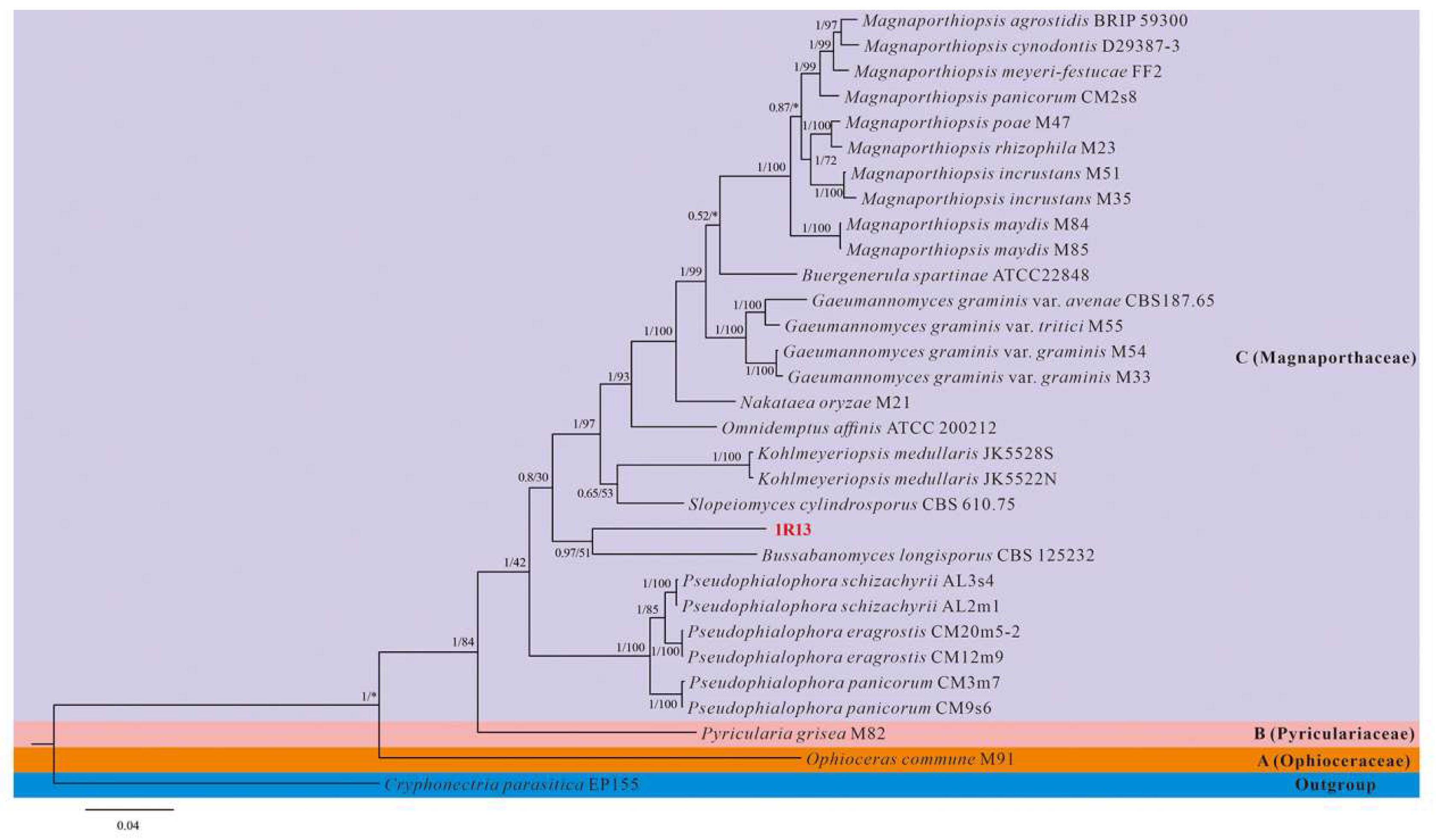
We blasted the five gene sequences of strain 1R13 on the NCBI website (Supplementary Table S2). The results showed that the most similar strains were all from the genus in Magnaporthaceae but were not identified to the species level. To determine the taxonomic status of strain 1R13, we constructed a phylogenetic tree based on the combined ITS-LSU-SSU-TEF1-RPB1 5-gene dataset, using strains from the genus in Magnaporthaceae as the main reference strains and Cryphonectria parasitica EP155 as the outgroup. It was found that the ITS alignment contained 584 nucleotides, 870 in LSU, 1034 in SSU, 770 in RPB1, and 926 in TEF1. The 5-gene concatenated dataset comprised 4184 aligned characters, including 796 parsimony-informative sites, 584 variable and parsimony-uninformative sites, and 2804 conserved sites. The best-fit substitution models, determined using jModelTest 2.1.10 and IQ-TREE v.2.3.6, were TIM2+I+G for Bayesian Inference (BI) and TIM2+F+R3 for Maximum Likelihood (ML). The BI and ML phylogenetic trees exhibited congruent topologies; thus, only the BI tree is presented (Figure 1). The entire phylogenetic tree was divided into three distinct branches, A, B, and C, which together constitute the Magnaporthaceae. The strain 1R13 was located in branch C and clustered with B. longisporus with a 0.97 BIPP and 51% MLBP, indicating that it belonged to the genus Bussabanomyces in Magnaporthaceae. Additionally, the morphology of strain 1R13 and B. longisporus was quite different [17,31].

3.2. Morphological Observation

Bussabanomyces oryzae nov. (Collection Number: CCTCC M 2025948) (Figure 2 and Figure 3).
Etymology: Isolated from Oryzae sativa.
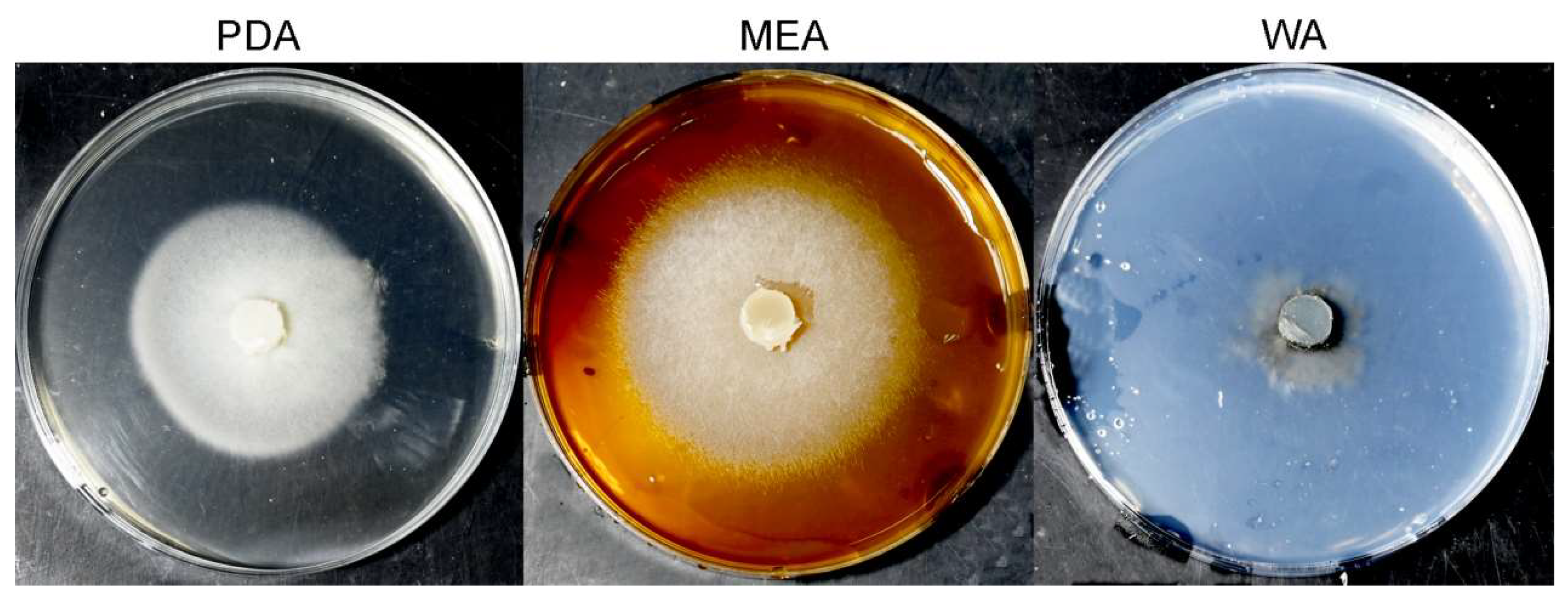
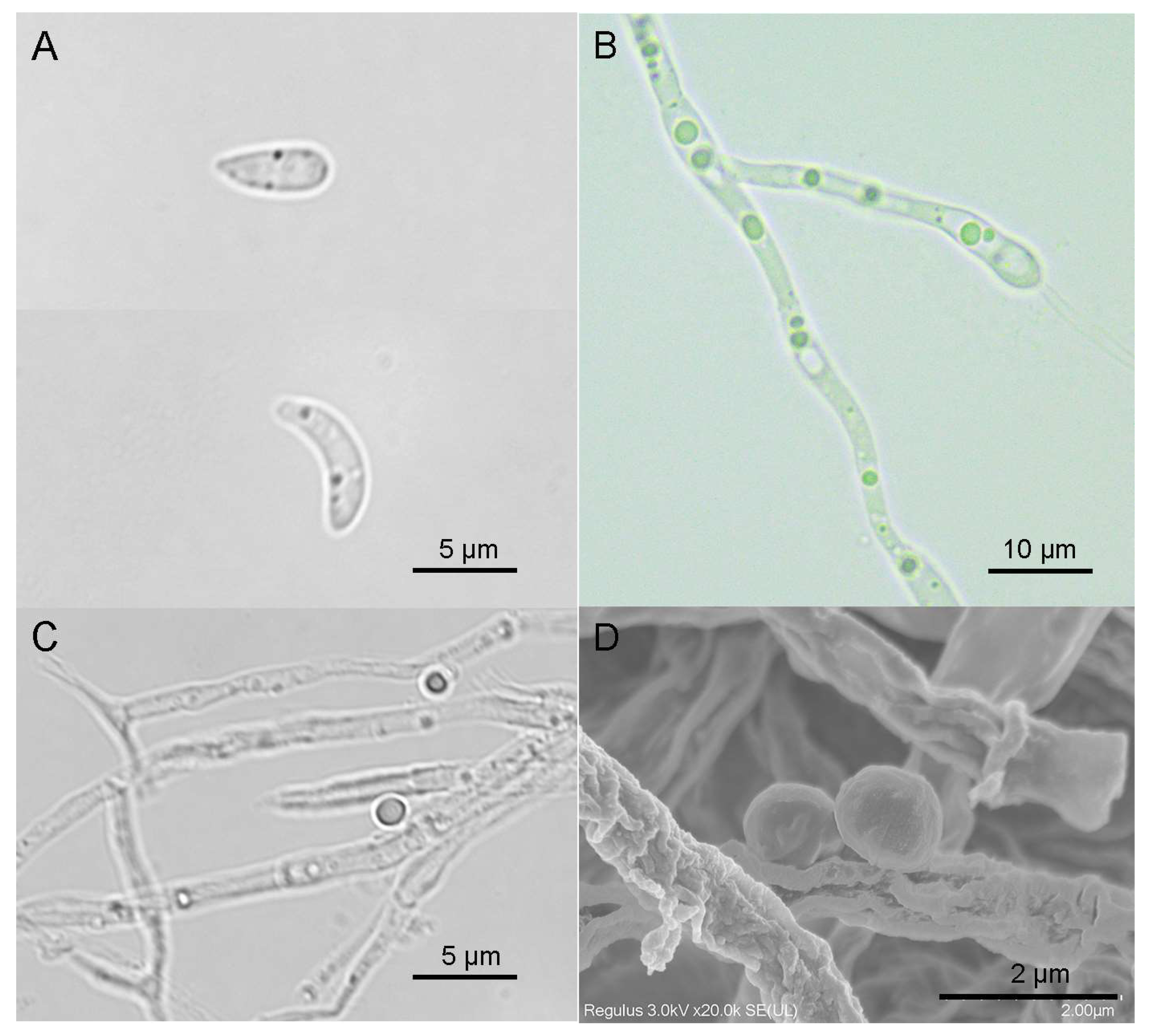
Colonies on PDA and MEA medium were round with regular edges, and the front side of the colonies was white, reaching 9 cm in 10 d. On WA medium, colonies were dark, reaching 3 cm in 10 d (Figure 2). Conidia, one being sickle-shaped and the other being ovoid, in PDB medium (Figure 3A,D). Oval-shaped conidia, 4–6 μm in length and 1.2–1.7 μm in width. Sickle-shaped conidia, 6–10 μm in length and 0.8–1.3 μm in width. In PDA medium, round, with a diameter of approximately 0.5–0.8 μm (Figure 3D). Hyphae 1.2–3.8 μm width, no septum, transparent in PDB medium (Figure 3B). Transparent and had septa in PDA medium (Figure 3C).
Based on molecular phylogeny and morphological and biological characteristics, the strain 1R13 was defined as a new species, Bussabanomyces oyrzae sp. nov (Collection Number: CCTCC M 2025948).

3.3. The Colonization Pattern of Bussabanomyces oryzae in the Roots of Rice

The transformants were obtained by Agrobacterium-mediated transformation. Through two rounds of purification, 15 GFP-labeled transformants were selected. Under a fluorescence microscope, a transformant with green fluorescence was picked up for the subsequent rice co-culture assay (Figure 4).
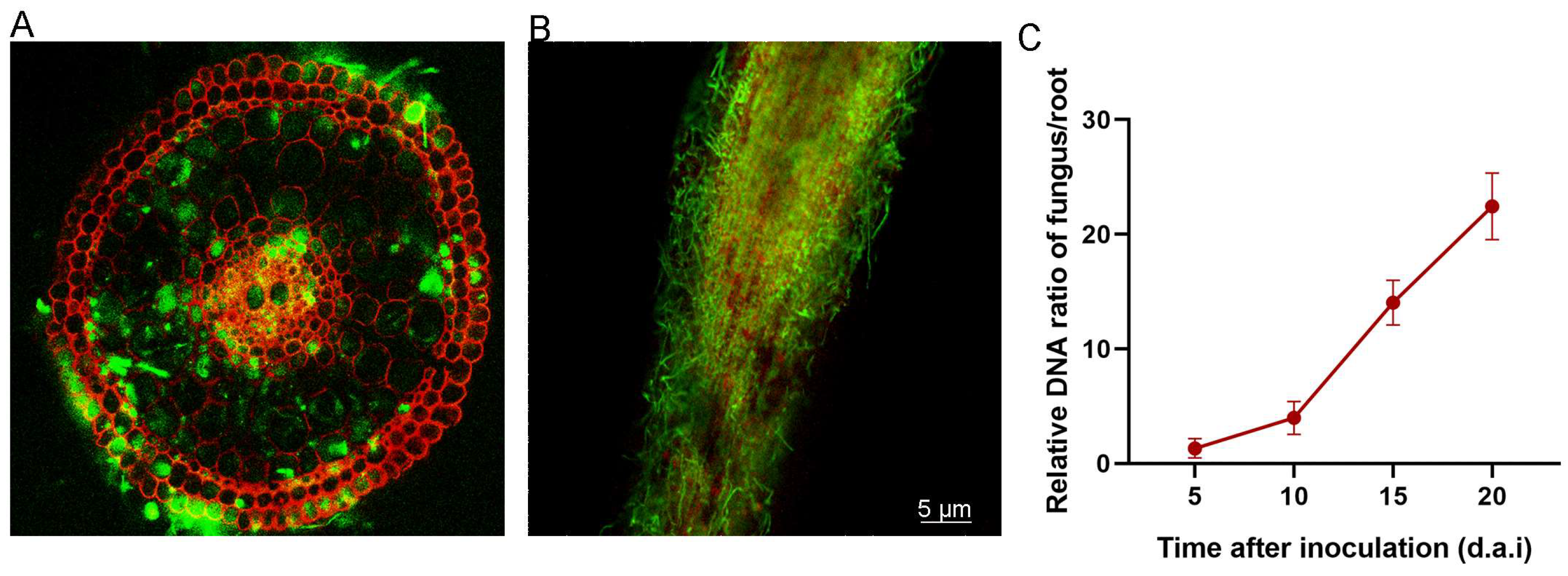
The roots of the co-cultured rice were cross-cut and longitudinally cut to observe the colonization pattern of B. oryzae. Through fluorescence microscopic observation, it was found that a large number of GFP-labeled hyphae were concentrated at the epidermis cells and then invaded the root cells (Figure 5A). Additionally, GFP-labeled hyphae extensively colonized root tissues, progressing from the epidermis through the outer cortex to the inner cortex (Figure 5B).
The infection of B. oryzae in the roots of rice can be reflected by determining the relative DNA ratio of fungus/root (FPDR). The results showed that the FPDR of B. oryzae was relatively low after co-culture for 5 d; the ratio was only 1.32 ± 0.83. Then it increases gradually. During the period of co-cultivation with rice for 10 to 15 d, the growth rate was the fastest and reached the maximum at 20 d (Figure 5C).

3.4. Bussabanomyces oryzae Promote the Growth of Rice

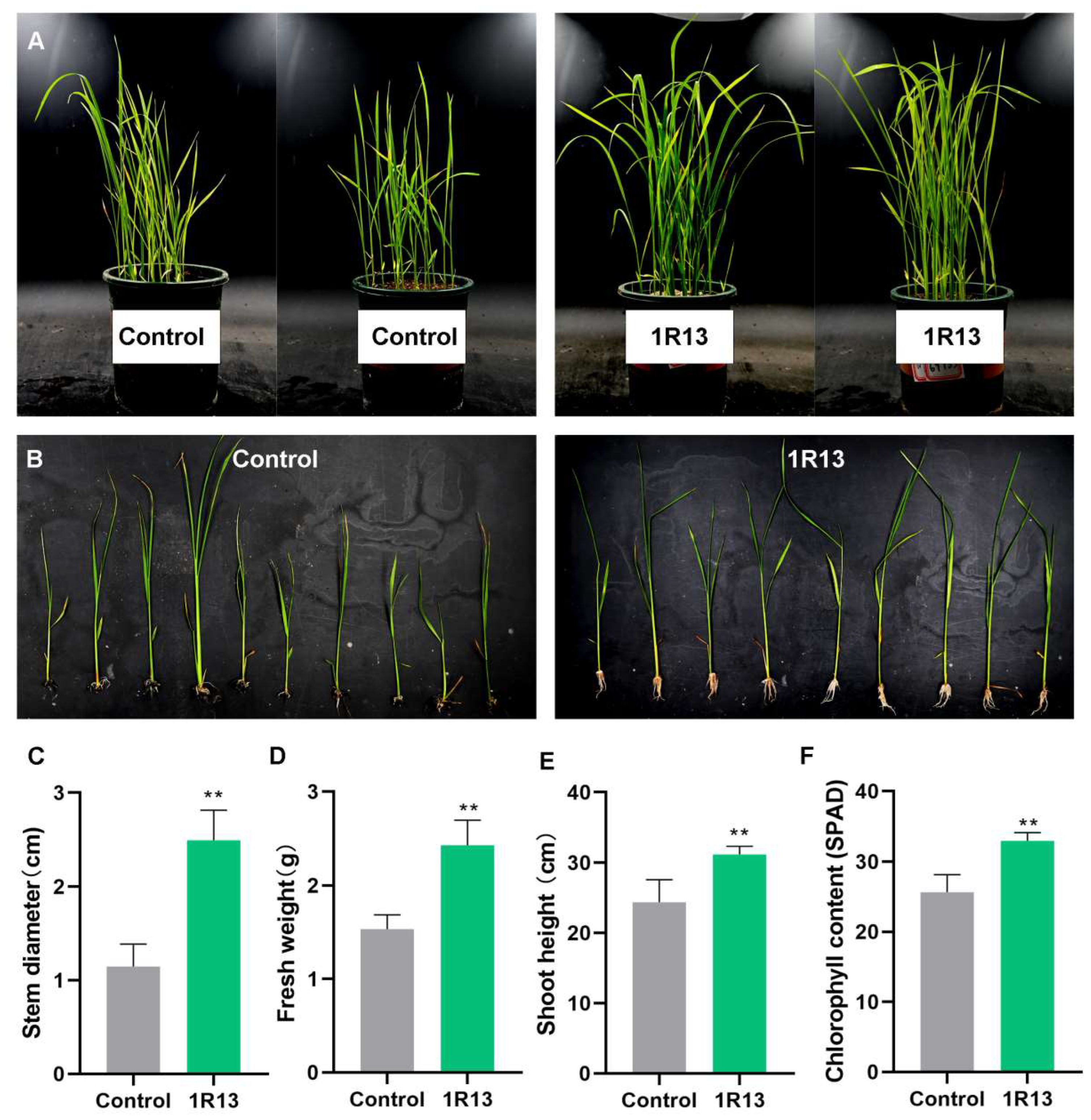
The fermentation broth of 1R13 was prepared and added to the rice seedlings. The phenotype of the rice seedlings was observed after 15 d (Figure 6A,B). It could be seen from the results that B. oryzae significantly promoted the growth of rice seedlings. The shoot height of the rice seedlings with 1R13 fermentation broth added was approximately 6 cm higher than that of the control (Figure 6E). Meanwhile, the rice with 1R13 fermentation broth added appeared stronger than the control (Figure 6C). Therefore, the fresh weight of rice in the treatment was significantly higher than that in the control. In addition, B. oryzae also increased the chlorophyll content of rice and might play an important role in promoting photosynthesis in rice (Figure 6F).

3.5. Bussabanomyces oryzae Enhances the Resistance of Rice to Rice Blast

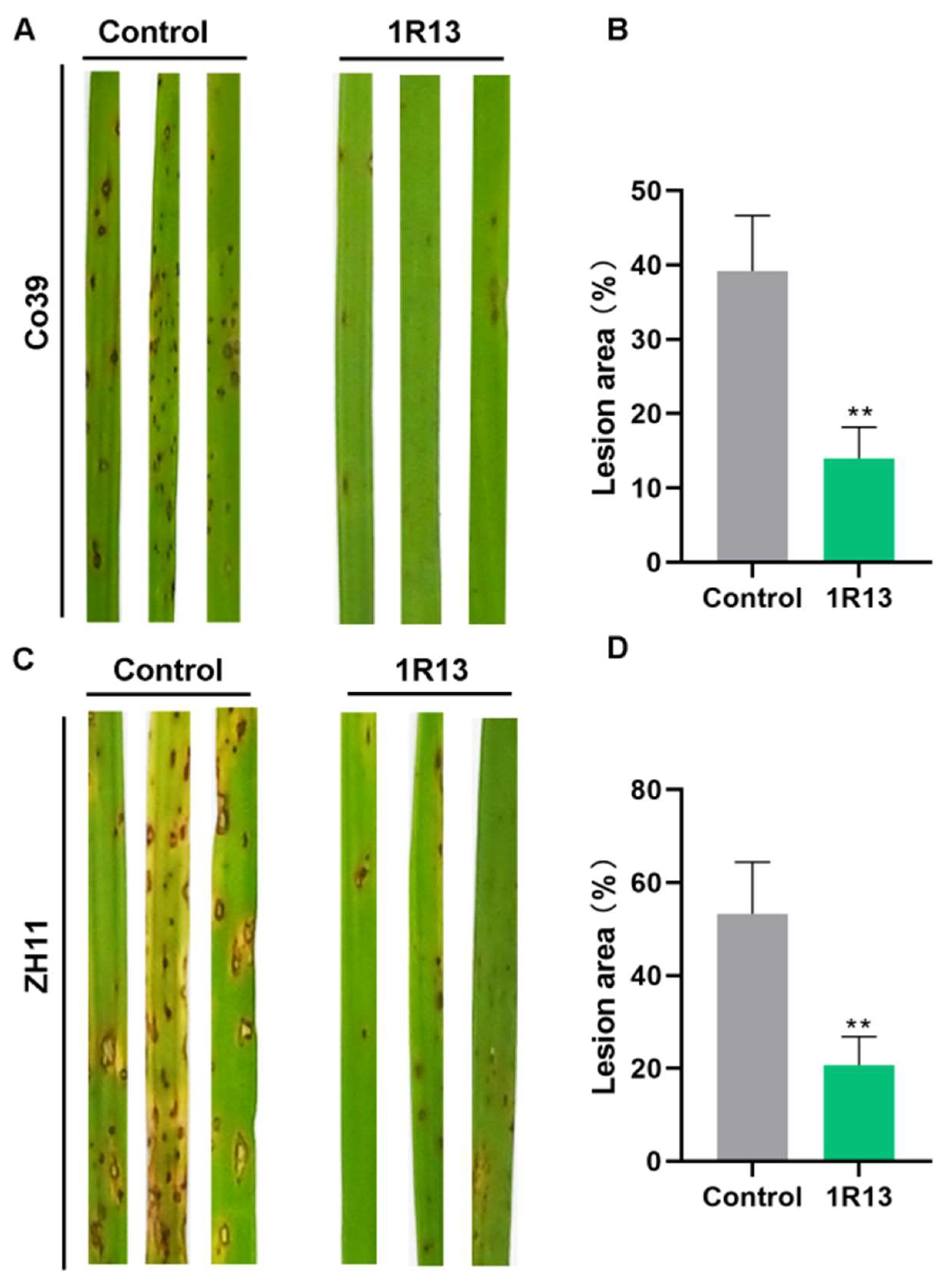
The effect of B. oryzae on rice resistance was determined by conducting a spray assay of rice blast fungus on rice seedlings. The results showed that B. oryzae could enhance the resistance of different varieties of rice to rice blast (Figure 7A,C). Among the indica rice CO39, the rice treated with 1R13 had fewer disease spots in leaves, with the lesion area being only 14%, which was much lower than 40% in the control (Figure 7B). In japonica rice ZH11, when the occurrence of rice blast was relatively severe, 1R13 could also significantly enhance the resistance of rice to rice blast, reducing the lesion area by about 30% (Figure 7D).

3.6. The Influence of Bussabanomyces oryzae on Rice Seedlings in Fields

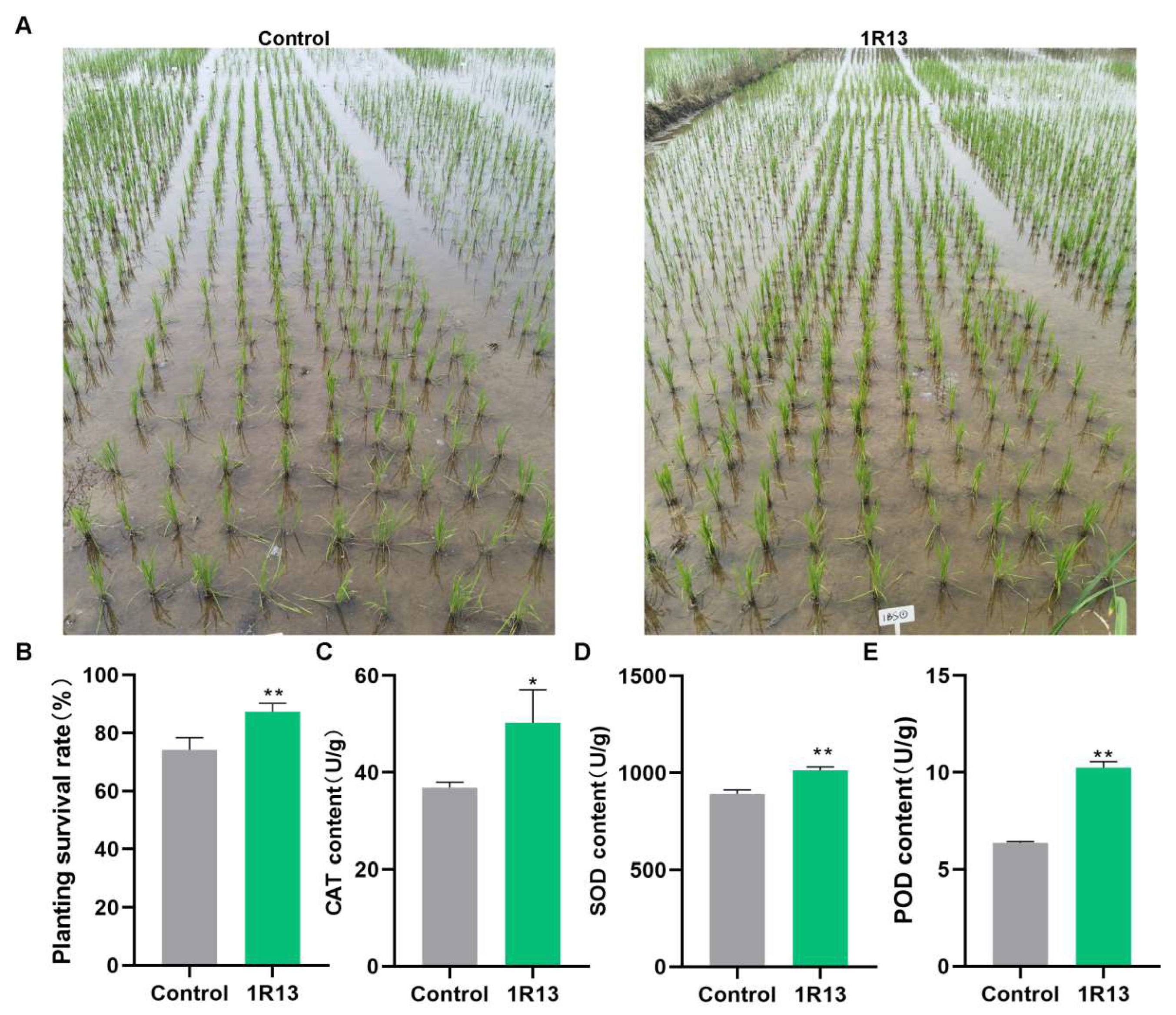
The rice seedlings treated with 1R13 were transplanted into the field to observe its effect on the seedlings. The results showed that 15 d after transplanting the seedlings, the survival rate of the seedlings treated with B. oryzae was about 87.4%, which was 13% higher than that of the control (Figure 8A,B). By determining the antioxidant enzyme activities of the seedlings, it was found that the content of CAT, SOD, and POD of the seedlings treated with B. oryzae was significantly higher than that of the control (Figure 8C–E). B. oryzae enhances the adaptability of rice to adverse conditions by increasing the activity of antioxidant enzymes.

3.7. The Expression of Defense-Related Genes in Rice

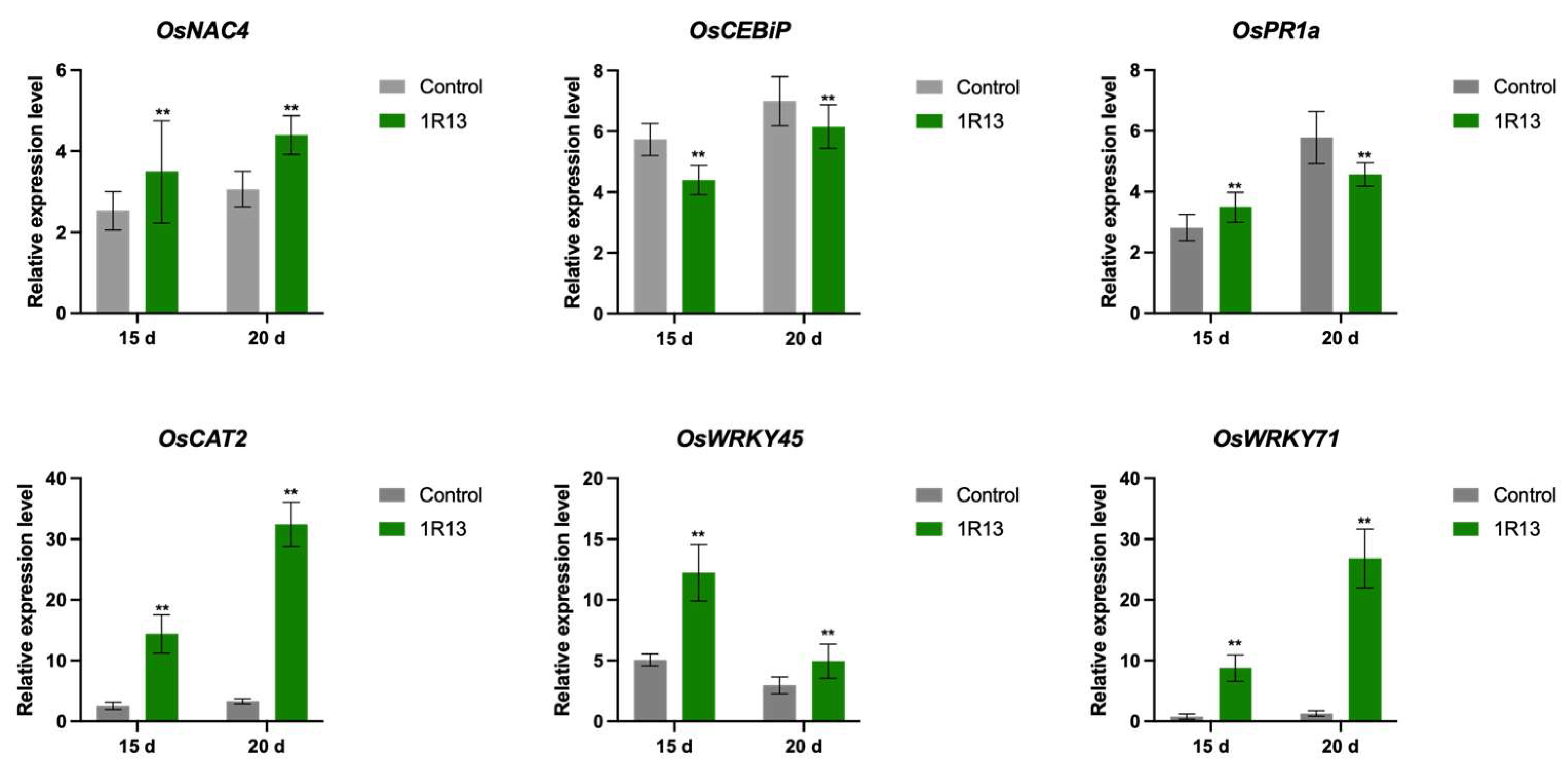
We analyzed the relative expression of defense-related genes in rice, including the pathogenesis-related gene (PR) PR1a, the reactive oxygen-related gene CAT2, the transcription factor WRKY45, and the immune reaction-related gene CEBiP. The results showed that at 15 d of B. oryzae treatment, the CEBiP gene was significantly downregulated, while the expression of other genes was significantly upregulated. When treated for 20 d, the CEBiP gene was still downregulated, and the PR1a gene, which was previously upregulated, was also downregulated (Figure 9). The mean difference, standard error, and t values are listed in Supplementary Table S3. These results indicate that the invasion of B. oryzae could regulate the differentiated expression of some defense-related genes, thereby enhancing the stress resistance of rice.

4. Discussion

Rice (Oryza sativa), a staple crop for a significant portion of the global population, is constantly threatened by various diseases, most notably rice blast caused by M. oryzae, leading to substantial yield losses [32]. Current management strategies often rely on chemical fungicides, which pose environmental and health risks [33]. Therefore, exploring sustainable and eco-friendly alternatives, such as the use of beneficial endophytic fungi, is of paramount importance for enhancing crop resilience and productivity. This study identified a novel endophytic fungus, Bussabanomyces oryzae, from rice roots and demonstrated its potential to promote growth and induce resistance against rice blast, offering a promising biological resource for sustainable rice cultivation.
The key finding of this study was the identification of strain 1R13 as a novel species within the Magnaporthaceae family. While the genus Bussabanomyces has been previously described, phylogenetic analysis clearly placed 1R13 as a distinct singleton, separate from B. longisporus (Figure 1). Furthermore, there are also significant differences between the morphology of conidia and hyphae. Thel conidia of B. longisporus are obclavate in shape, with four to five septa, measuring 47–72 μm (length) × 5.6–7.6 μm (width). The hyphae are mostly in an irregular shape [31]. The conidia produced by 1R13 mainly fall into two types, one being sickle-shaped and the other being ovoid (Figure 3A,D). This type of sporulation pattern has also been observed in other studies of endophyte [30]. However, the significance of this sporulation pattern still requires further investigation.
In our study, we found that the hyphae of B. oryzae first accumulated on the epidermal cells of the rice roots and gradually invaded the cortex and outer cortex of the root cells. The hyphae finally reached the vascular bundle cells (Figure 5A). This colonization pattern was consistent with that of most endophytic fungi [34]. However, a notable point of divergence in our study was the absence of specialized infection structures like appressoria, which are commonly employed by pathogenic and some endophytic fungi to breach the host cell wall [35]. Instead, B. oryzae appeared to rely on direct hyphal growth for invasion. This mode of colonization, coupled with the lack of any visible damage or lesion formation in the host, strongly aligns with the characteristics of dark septate endophytes (DSEs), a functional group of root-colonizing fungi [36]. Meanwhile, the infection rate of B. oryzae reached its peak mainly during the period of co-cultivation with rice for 10 to 15 d. And the FPDR continued to increase within the 20-day period (Figure 5B). This colonization pattern further supports the establishment of a compatible and long-term symbiotic relationship. We hypothesize that, similar to other DSEs [37], B. oryzae may secrete effector proteins or other compounds that modulate the host’s immune responses, allowing for accommodation without triggering strong defense reactions, a key aspect of a successful mutualistic symbiosis.
The growth-promoting effect of B. oryzae on rice, evidenced by increased fresh weight and chlorophyll content (Figure 6D–F), corroborates the well-documented beneficial roles of endophytes in enhancing plant productivity [38]. This finding is consistent with numerous studies on rice–endophyte interactions. Phialemonium dimorphosphorum demonstrated the capability to promote the growth of rice seedlings in terms of seed germination, plant height, root length and degree of root colonization [13]. Absidia sp. and Cylindrocladium sp. showed significant increases (p ≤ 0.05) in plant height and high growth inhibition of the pathogen M. oryzae [39]. However, the mechanism by which these endophytic fungi promoted the growth of rice had not yet been studied. Zhu et al. [15] demonstrated that the rice endophyte Pseudophialophora oryzae promotes host growth by upregulating genes involved in nutrient uptake (N, P, K, Fe, Mg). While our study did not directly assay for phytohormone production, the observed increase in chlorophyll content suggests a plausible mechanism. Higher chlorophyll levels are directly linked to enhanced photosynthetic capacity, which could, in turn, fuel increased biomass accumulation. Future work should investigate whether B. oryzae employs similar strategies, such as phytohormone production, nutrient mobilization, or photosynthetic enhancement, to promote rice growth.
During the interaction between endophytes and plants, the most important role of these fungi was their ability to help the host resist adverse environments. Endophytes are increasingly recognized for their ability to prime the host immune system for a faster and stronger response to challenges, a phenomenon known as induced systemic resistance (ISR) [40]. P. indica enhanced the immune capacity of plants and improved immune resistance by increasing the activity of host protective enzymes and inducing the expression of disease-resistant related genes such as PRRs [41,42]. Trichoderma harzianum upregulates the expression of pathogenesis-related genes and enzymes to enhance gray blight resistance in tea [43]. In our results, B. oryzae promotes host resistance by increasing the activity of host protective enzymes and inducing the expression of disease-resistance-related genes (Figure 8 and Figure 9). The results indicate that B. oryzae could directly stimulate the expression of the OsNAC and OsPR1a genes in rice, which were crucial mediators of induced systemic resistance [44,45]. Interestingly, we observed a continuous decrease in OsCEBiP expression (Figure 9). OsCEBiP, a chitin receptor gene, is involved in chitin perception, which is typically the first step in fungal recognition [46]. It is possible that B. oryzae actively suppresses this early recognition step to facilitate colonization—a strategy observed in some mutualistic interactions, such as the suppression of basal defense by P. indica during early colonization [47]. OsWRKY71 and OsWRKY45 are associated with the salicylic acid (SA) and jasmonic acid (JA) signaling pathways, respectively [48]. These pathways are the main regulatory mechanisms for inducing systemic resistance in rice [49]. The expression levels of the OsWRKY71 and OsWRKY45 genes were upregulated by inoculating B. oryzae (Figure 9), indicating that the systemic resistance of B. oryzae to rice blast might be mediated jointly by the salicylic acid and jasmonic acid pathways.

5. Conclusions

We isolated an endophyte 1R13 from the roots of rice. Through morphological observation and phylogenetic identification, we defined it as Bussabanomyces oryzae. It was proposed to be a new species, Bussabanomyces oryzae nov. Through co-culture with rice, it was found that B. oryzae mainly invaded through the epidermal cells of the roots and entered the cortical and vascular bundle cells of rice. Further research has shown that B. oryzae could promote the growth of rice, increase its fresh weight and chlorophyll content, and enhance the resistance of rice to adverse environments and rice blast disease. Through the qRT-PCR assay, it was found that B. oryzae mainly exerted the host’s stress resistance by regulating the expression of some defense-related genes. The discovery of B. oryzae as a novel species not only expands the current understanding of fungal diversity associated with rice but also provides a valuable microbial resource for agricultural biotechnology. However, key challenges remain, including understanding its host specificity, long-term ecological impact, and the optimization of its formulation for large-scale agricultural use. Addressing these questions will be essential for translating this laboratory-based discovery into practical strategies for enhancing global food security.

Supplementary Materials

The following supporting information can be downloaded at: https://www.mdpi.com/article/10.3390/jof12030222/s1, Table S1: Primers mentioned in the article; Table S2: The BLAST results of the five gene sequences of 1R13; Table S3: The mean difference, standard error, and t value of defense-related genes in B. oryzae-treated and control-treated rice plants.

Author Contributions

M.D.: methodology, writing—original draft. X.T.: visualization, writing—review and editing. Z.Y.: formal analysis, writing—review and editing. Y.L.: data curation. X.C.: investigation. B.L.: validation. D.K.: data curation, formal analysis, investigation. All authors have read and agreed to the published version of the manuscript.

Funding

This research was funded by the Basic Public Welfare Research Project of Zhejiang Province (LTGN24C010001).

Institutional Review Board Statement

Not applicable.

Informed Consent Statement

Not applicable.

Data Availability Statement

Conflicts of Interest

The authors declare no conflicts of interest.

References

  1. Gorgia, P.; Tsikou, D. Tripartite symbiosis between legumes, arbuscular mycorrhizal fungi and nitrogen fixing rhizobia: Interactions and regulation. Plant. Cell Environ. 2025. [Google Scholar] [CrossRef]
  2. Sun, Y.; Kang, X.; Li, R.; Cui, Y.; Long, M.; He, S. Arbuscular mycorrhizal fungi and rhizobia synergistically enhance alfalfa productivity and alleviate nutrient limitations, particularly under low-input conditions. Plant. Physiol. Biochem. 2025, 229, 110353. [Google Scholar] [CrossRef]
  3. Partida-Martínez, L.P.; Heil, M. The microbe-free plant: Fact or artifact? Front. Plant Sci. 2011, 2, 100. [Google Scholar] [CrossRef]
  4. Christian, N.; Perlin, M.H. Plant-endophyte communication: Scaling from molecular mechanisms to ecological outcomes. Mycologia 2024, 116, 227–250. [Google Scholar] [CrossRef]
  5. Yuan, Z.L.; Lin, F.C.; Zhang, C.L.; Kubicek, C.P. A new species of Harpophora (Magnaporthaceae) recovered from healthy wild rice (Oryza granulata) roots, representing a novel member of a beneficial dark septate endophyte. FEMS Microbiol. Lett. 2010, 307, 94–101. [Google Scholar] [CrossRef] [PubMed]
  6. Pathak, P.; Rai, V.K.; Can, H.; Singh, S.K.; Kumar, D.; Bhardwaj, N.; Roychowdhury, R.; de Azevedo, L.C.B.; Kaushalendra; Verma, H.; et al. Plant-endophyte interaction during biotic stress management. Plants 2022, 11, 2203. [Google Scholar] [CrossRef]
  7. Verma, S.K.; Sahu, P.K.; Kumar, K.; Pal, G.; Gond, S.K.; Kharwar, R.N.; White, J.F. Endophyte roles in nutrient acquisition, root system architecture development and oxidative stress tolerance. J. Appl. Microbiol. 2021, 131, 2161–2177. [Google Scholar] [CrossRef] [PubMed]
  8. Kamran, M.; Imran, Q.M.; Ahmed, M.B.; Falak, N.; Khatoon, A.; Yun, B.W. Endophyte-mediated stress tolerance in plants: A sustainable strategy to enhance resilience and assist crop improvement. Cells 2022, 11, 3292. [Google Scholar] [CrossRef] [PubMed]
  9. Ancheeva, E.; Daletos, G.; Proksch, P. Lead compounds from mangrove-associated microorganisms. Mar. Drugs 2018, 16, 319. [Google Scholar] [CrossRef]
  10. Rosenblueth, M.; Martínez-Romero, E. Bacterial endophytes and their interactions with hosts. Mol. Plant. Microbe Interact. 2006, 19, 827–837. [Google Scholar] [CrossRef]
  11. Borah, M.; Das, S.; Bora, S.S.; Boro, R.C.; Barooah, M. Comparative assessment of multi-trait plant growth-promoting endophytes associated with cultivated and wild Oryza germplasm of Assam. India Arch. Microbiol. 2021, 203, 2007–2028. [Google Scholar] [CrossRef] [PubMed]
  12. Shahzad, R.; Khan, A.L.; Bilal, S.; Asaf, S.; Lee, I.J. What is there in seeds? Vertically transmitted endophytic resources for sustainable improvement in plant growth. Front. Plant Sci. 2018, 9, 24. [Google Scholar] [CrossRef] [PubMed]
  13. Kandar, M.; Suhandono, S.; Aryantha, I.N. Growth promotion of rice plant by endophytic fungi. J. Pure Appl. Microbiol. 2018, 12, 1569–1577. [Google Scholar] [CrossRef]
  14. Tian, X.L.; Cao, L.X.; Tan, H.M.; Zeng, Q.G.; Jia, Y.Y.; Han, W.Q.; Zhou, S.N. Study on the communities of endophytic fungi and endophytic actinomycetes from rice and their antipathogenic activities in vitro. World J. Microbiol. Biotechnol. 2004, 20, 303–309. [Google Scholar] [CrossRef]
  15. Zhu, J.N.; Yu, Y.J.; Dai, M.D.; Zeng, Y.L.; Lu, X.J.; Wang, L.; Liu, X.H.; Su, Z.Z.; Lin, F.C. A new species in Pseudophialophora from wild rice and beneficial potential. Front. Microbiol. 2022, 13, 84. [Google Scholar] [CrossRef]
  16. Su, Z.Z.; Dai, M.D.; Zhu, J.N.; Liu, X.H.; Li, L.; Zhu, X.M.; Wang, J.Y.; Yuan, Z.L.; Lin, F.C. Dark septate endophyte Falciphora oryzae-assisted alleviation of cadmium in rice. J. Hazard Mater. 2021, 419, 126435. [Google Scholar] [CrossRef]
  17. Bussaban, B.; Lumyong, S.; Lumyong, P.; Hyde, K.D.; McKenzie, E.H. Three new species of Pyricularia are isolated as zingiberaceous endophytes from Thailand. Mycologia 2003, 95, 519–524. [Google Scholar] [CrossRef]
  18. Zhang, N.; Zhao, S.; Shen, Q. A six-gene phylogeny reveals the evolution of mode of infection in the rice blast fungus and allied species. Mycologia 2011, 103, 1267–1276. [Google Scholar] [CrossRef]
  19. Larkin, M.A.; Blackshields, G.; Brown, N.P.; Chenna, R.; McGettigan, P.A.; McWilliam, H.; Valentin, F.; Wallace, I.M.; Wilm, A.; Lopez, R.; et al. Clustal W and Clustal X version 2.0. Bioinformatics 2007, 23, 2947–2948. [Google Scholar] [CrossRef]
  20. Nicholas, K.; Nicholas, H. GeneDoc: A Tool for Editing and Annotating Multiple Sequence Alignments. 1997. Available online: https://www.scienceopen.com/book?vid=c8a87cd1-255f-4129-802b-d2382bb0fb37 (accessed on 12 November 2025).
  21. Xia, X. DAMBE5: A comprehensive software package for data analysis in molecular biology and evolution. Mol. Biol. Evol. 2013, 30, 1720–1728. [Google Scholar] [CrossRef]
  22. Ronquist, F.; Teslenko, M.; Mark, P.V.D.; Ayres, D.L.; Darling, A.; Höhna, S.; Larget, B.; Liu, L.; Suchard, M.A.; Huelsenbeck, J.P. MrBayes 3.2: Efficient Bayesian phylogenetic inference and model choice across a large model space. Syst. Biol. 2012, 61, 539–542. [Google Scholar] [CrossRef]
  23. Minh, B.Q.; Schmidt, H.A.; Chernomor, O.; Schrempf, D.; Woodhams, M.D.; von Haeseler, A.; Lanfear, R. IQ-TREE 2: New models and efficient methods for phylogenetic inference in the genomic era. Mol. Biol. Evol. 2020, 37, 1530–1534. [Google Scholar] [CrossRef]
  24. Hoang, D.T.; Chernomo, O.; Von, H.A.; Minh, B.Q.; Vinh, L.S. UFBoot2: Improving the ultrafast bootstrap approximation. Mol. Biol. Evol. 2017, 35, 518–522. [Google Scholar] [CrossRef]
  25. Darriba, D.; Taboada, G.L.; Doallo, R.; Posada, D. jModelTest 2: More models, new heuristics and parallel computing. Nat. Methods 2012, 9, 772. [Google Scholar] [CrossRef]
  26. Kumar, S.; Stecher, G.; Suleski, M.; Sanderford, M.; Sharma, S.; Tamura, K. MEGA12: Molecular evolutionary genetic analysis version 12 for adaptive and green computing. Mol. Biol. Evol. 2024, 41, msae263. [Google Scholar] [CrossRef]
  27. Liu, X.H.; Lu, J.P.; Zhang, L.; Dong, B.; Min, H.; Lin, F.C. Involvement of a Magnaporthe grisea serine/threonine kinase gene, MgATG1, in appressorium turgor and pathogenesis. Eukaryot. Cell 2007, 6, 997–1005. [Google Scholar] [CrossRef] [PubMed]
  28. Dai, M.D.; Li, Y.; Sun, L.X.; Lin, F.C.; Liu, X.H. Isolation and functional analysis of effector proteins of Magnaporthe oryzae. Methods Mol. Biol. 2021, 2356, 199–209. [Google Scholar] [PubMed]
  29. Maciá Vicente, J.G.; Jansson, H.B.; Talbot, N.J.; Lopez Llorca, L.V. Real-time PCR quantification and live-cell imaging of endophytic colonization of barley (Hordeum vulgare) roots by Fusarium equiseti and Pochonia chlamydosporia. New Phytol. 2009, 182, 213–228. [Google Scholar] [CrossRef] [PubMed]
  30. Su, Z.; Mao, L.; Li, N.; Feng, X.; Yuan, Z.; Wang, L.; Lin, F.; Zhang, C. Evidence for biotrophic lifestyle and biocontrol potential of dark septate endophyte Harpophora oryzae to rice blast disease. PLoS ONE 2013, 8, e61332. [Google Scholar] [CrossRef]
  31. Klaubauf, S.; Tharreau, D.; Fournier, E.; Groenewald, J.Z.; Crous, P.W.; Vries, R.P.; Lebrun, M. Resolving the polyphyletic nature of Pyricularia (Pyriculariaceae). Stud. Mycol. 2014, 79, 85–120. [Google Scholar] [CrossRef]
  32. Asif, N.; Lin, F.; Li, L.; Zhu, X.; Nawaz, S. Regulation of autophagy machinery in Magnaporthe oryzae. Int. J. Mol. Sci. 2022, 23, 8366. [Google Scholar] [CrossRef] [PubMed]
  33. Chakraborty, M.; Mahmud, N.U.; Ullah, C.; Rahman, M.; Islam, T. Biological and biorational management of blast diseases in cereals caused by Magnaporthe oryzae. Crit. Rev. Biotechnol. 2021, 41, 994–1022. [Google Scholar] [CrossRef]
  34. Hu, S.; Bidochka, M.J. Root colonization by endophytic insect-pathogenic fungi. J. Appl. Microbiol. 2021, 130, 570–581. [Google Scholar] [CrossRef]
  35. Chethana, K.W.T.; Jayawardena, R.S.; Chen, Y.J.; Konta, S.; Tibpromma, S.; Abeywickrama, P.D.; Gomdola, D.; Balasuriya, A.; Xu, J.; Lumyong, S.; et al. Diversity and function of appressoria. Pathogens 2021, 10, 746. [Google Scholar] [CrossRef]
  36. Santos, M.; Cesanelli, I.; Diánez, F.; Sánchez-Montesinos, B.; Moreno-Gavíra, A. Advances in the role of dark septate endophytes in the plant resistance to abiotic and biotic stresses. J. Fungi 2021, 7, 939. [Google Scholar] [CrossRef]
  37. Redkar, A.; Sabale, M.; Zuccaro, A.; Di Pietro, A. Determinants of endophytic and pathogenic lifestyle in root colonizing fungi. Curr. Opin. Plant Biol. 2022, 67, 102226. [Google Scholar] [CrossRef] [PubMed]
  38. Wani, Z.A.; Ashraf, N.; Mohiuddin, T.; Riyaz-Ul-Hassan, S. Plant-endophyte symbiosis, an ecological perspective. Appl. Microbiol. Biotechnol. 2015, 99, 2955–2965. [Google Scholar] [CrossRef]
  39. Atugala, D.M.; Deshappriya, N. Effect of endophytic fungi on plant growth and blast disease incidence of two traditional rice varieties. J. Natl. Sci. Found. Sri Lanka 2015, 43, 173–187. [Google Scholar] [CrossRef]
  40. de Lamo, F.J.; Takken, F.L.W. Biocontrol by Fusarium oxysporum using endophyte-mediated resistance. Front. Plant Sci. 2020, 11, 37. [Google Scholar] [CrossRef] [PubMed]
  41. Kumar, M.; Yadav, V.; Tuteja, N.; Johri, A.K. Antioxidant enzyme activities in maize plants colonized with Piriformospora indica. Microbiology 2009, 155, 780–790. [Google Scholar] [CrossRef]
  42. Molitor, A.; Zajic, D.; Voll, L.M.; Pons-K Hnemann, J.; Samans, B.; Kogel, K.H.; Waller, F. Barley leaf transcriptome and metabolite analysis reveals new aspects of compatibility and Piriformospora indica-mediated systemic induced resistance to powdery mildew. Mol. Plant Microbe Interact. 2011, 24, 1427–1439. [Google Scholar] [CrossRef] [PubMed]
  43. Pandey, A.K.; Yadav, S.; Samota, M.K.; Sharma, H.K.; Roy, S. Trichoderma harzianum TIND02 upregulates the expression of pathogenesis-related genes and enzymes and enhances gray blight resistance in tea. Pestic. Biochem. Physiol. 2024, 205, 106115. [Google Scholar] [CrossRef] [PubMed]
  44. Deshmukh, S.D.; Kogel, K.H. Piriformospora indica protects barley from root rot caused by Fusarium graminearum. J. Plant Dis. Prot. 2007, 114, 263–268. [Google Scholar] [CrossRef]
  45. Ling, L.; Li, M.; Chen, N.; Xie, X.; Han, Z.; Ren, G.; Yin, Y.; Jiang, H. Genome-Wide identification of NAC gene family and expression analysis under abiotic stresses in Avena sativa. Genes 2023, 14, 1186. [Google Scholar] [CrossRef]
  46. Dai, M.D.; Wu, M.; Li, Y.; Su, Z.Z.; Lin, F.C.; Liu, X.H. The chitin deacetylase PoCda7 is involved in the pathogenicity of Pyricularia oryzae. Microbiol. Res. 2021, 48, 126749. [Google Scholar] [CrossRef]
  47. Akum, F.N.; Steinbrenner, J.; Biedenkopf, D.; Imani, J.; Kogel, K.H. The Piriformospora indica effector PIIN_08944 promotes the mutualistic Sebacinalean symbiosis. Front. Plant Sci. 2015, 6, 906. [Google Scholar] [CrossRef]
  48. Liu, X.; Bai, X.; Wang, X.; Chu, C. OsWRKY71, a rice transcription factor, is involved in rice defense response. J. Plant Physiol. 2007, 164, 969–979. [Google Scholar] [CrossRef]
  49. Martínez-Terrazas, E.; Aragón, W.; Ocampo, C.F.; Serrano-Carreón, L.; Galindo, E.; Serrano, M. Bacillus velezensis 83 protects Arabidopsis thaliana against Botrytis cinerea by triggering JA-, and SA-dependent induced systemic resistance. Pest Manag. Sci. 2026, 82, 2532–2540. [Google Scholar] [CrossRef] [PubMed]
Figure 1. A phylogenetic tree based on the combined ITS-LSU-SSU-TEF1-RPB1 5-gene dataset. The trees’ topological structures use phylogenetic trees constructed by BI methods. The Bar indicates the presence of 0.04 base substitution sites. * indicates the nodes in the phylogenetic tree where the topological structures reconstructed from the BI method and the ML method are inconsistent.
Jof 12 00222 g001
Figure 2. The colony morphology growing on PDA, MEA, and WA media after 5 d of growth. PDA, potato dextrose agar; MEA, malt extract agar; and WA, water agar.
Jof 12 00222 g002
Figure 3. The morphology observation of the hyphae and conidia. (A) Two types of conidia germinated in PDB medium. Bar = 5 μm. (B) Hyphae germinated in PDB medium. Bar = 10 μm. (C) Conidia and hyphae produced in PDA medium. Bar = 5 μm. (D) The conidia and hyphae produced by the PDA culture medium were observed under the scanning electron microscope. Bar = 2 μm.
Jof 12 00222 g003
Figure 4. Identification of GFP-labeled fluorescent transformants. The hyphae showed constitutive GFP expression. Bar = 10 μm. GFP, green fluorescent protein; DIC, differential interference contrast; merge, GFP and DIC images are merged together.
Jof 12 00222 g004
Figure 5. The colonization pattern of B. oryzae in rice roots. (A) The colonization pattern on the cross-section. The red fluorescent signal represents the root tissue of the rice, while the green fluorescent signal is that of the GFP-labeled hyphae. Bar = 5 μm. (B) The colonization pattern on the longitudinal section. The red fluorescent signal represents the root tissue of the rice, while the green fluorescent signal is that of the GFP-labeled hyphae. Bar = 5 μm. (C) Relative amounts of fungal/rice DNA at different time points (5, 10, 15, 20 d.a.i).
Jof 12 00222 g005
Figure 6. The phenotype of co-cultivated rice. (A,B) Rice plants after co-cultivation with B. oryzae for 14 d. (CF) The comparison of phenotype between the rice plants treated with B. oryzae and the non-treated control included stem diameter (C), fresh weight (D), shoot height (E), and chlorophyll content (F). All the bar charts were plotted with the mean ± standard deviation. Independent sample t-tests were used to analyze the data. All treatments were repeated three times, with 50 rice plants being measured in each treatment, and three independent experimental repetitions were conducted. The symbol ** indicates a significant difference at p < 0.01.
Jof 12 00222 g006
Figure 7. The effect of B. oryzae on rice resistance. The degree of severe symptomatic damage and lesion area manifested on the foliage of CO39 rice variety (A,B) and ZH11 rice variety (C,D) co-cultivated with B. oryzae. The rice plants that were treated with the ordinary fermentation broth were used as the control. All the bar charts were plotted with the mean ± standard deviation. The data were analyzed by independent sample t-tests. All treatments were repeated three times, with 20 rice leaves being measured in each treatment, and three independent experimental repetitions were conducted. The symbol ** indicates a significant difference at p < 0.01.
Jof 12 00222 g007
Figure 8. The phenotype of rice seedlings in fields. (A) The growth condition of the rice seedlings after transplantation to the field 15 d after B. oryzae treatment. The rice plants that were added with the ordinary fermentation broth were used as the control. (BE) The comparison of phenotype between the rice plants treated with B. oryzae and the control included planting survival rate (B), CAT content (C), SOD content (D), and POD content (E). All the bar charts were plotted with the mean ± standard deviation. Independent sample t-tests were used to analyze the data. All treatments were repeated three times, with 100 rice plants being measured in each treatment, and three independent experimental repetitions were conducted. The symbols * and ** indicate significant differences at p < 0.05 and p < 0.01, respectively.
Jof 12 00222 g008
Figure 9. The relative expression levels of defense-related genes in B. oryzae-treated and control-treated rice plants. The relative expression levels of defense-related genes in B. oryzae-treated rice plants after 15 d and 20 d were calculated using the mean ± standard deviation method. Independent sample t-tests were used to analyze the data. All treatments were repeated three times, with 50 rice plants being measured in each treatment, and three independent experimental repetitions were conducted. The symbol ** indicates a significant difference at p < 0.01, respectively.
Jof 12 00222 g009
Table 1. Species name, isolated ID, and GenBank accession numbers of the fungi used in this study.
Species NameIsolate ID18S(SSU)ITS28S(LSU)RPB1TEF1
Bussabanomyces oyrzae1R13PV848745PV848743PV848744PV855959PV855960
Buergenerula spartinaeATCC22848DQ341471JX134666DQ341492JX134720JX134692
Bussabanomyces longisporusCBS 125232KM009214KM009166KM009154KM009190KM009202
Gaeumannomyces graminis var. avenaeCBS187.65JX134655JX134668JX134680JX134722JX134694
Gaeumannomyces graminis var. graminisM33JF414871JF710374JF414896JF710442JF710411
Gaeumannomyces graminis var. graminisM54JF414873JF414848JF414898JF710444JF710419
Gaeumannomyces graminis var. triticiM55JF414875JF414850JF414900JF710445JF710420
Kohlmeyeriopsis medullarisJK5522N/KM484853KM484969KM485069/
Kohlmeyeriopsis medullarisJK5528S/KM484852KM484968KM485068/
Magnaporthiopsis agrostidisBRIP 59300MF178145KT364753KT364754KT364755KT364756
Magnaporthiopsis cynodontisD29387-3MK458746MK458730MK458740MK458761MK458756
Magnaporthiopsis incrustansM35JF414867JF414843JF414892JF710437JF710412
Magnaporthiopsis incrustansM51JF414870JF414846JF414895JF710440JF710417
Magnaporthiopsis maydisM84KM009208KM009160KM009148KM009184KM009196
Magnaporthiopsis maydisM85KM009209KM009161KM009149KM009185KM009197
Magnaporthiopsis meyeri-festucaeFF2MF178140MF178146MF178151MF178162MF178167
Magnaporthiopsis panicorumCM2s8KF689593KF689643KF689633KF689613KF689623
Magnaporthiopsis poaeM47JF414860JF414836JF414885JF710433JF710415
Magnaporthiopsis rhizophilaM23JF414858JF414834JF414883JF710432JF710408
Nakataea oryzaeM21JF414862JF414838JF414887JF710441JF710406
Omnidemptus affinisATCC 200212JX134660JX134674JX134686JX134728JX134700
Ophioceras communeM91JX134661JX134675JX134687JX134729JX134701
Pseudophialophora eragrostisCM12m9KF689598KF689648KF689638KF689618KF689628
Pseudophialophora eragrostisCM20m5-2KF689597KF689647KF689637KF689617KF689627
Pseudophialophora panicorumCM3m7KF689602KF689652KF689642KF689622KF689632
Pseudophialophora panicorumCM9s6KF689601KF689651KF689641KF689621KF689631
Pseudophialophora schizachyriiAL2m1KF689599KF689649KF689639KF689619KF689629
Pseudophialophora schizachyriiAL3s4KF689600F689650KF689640KF689620KF689630
Pyricularia griseaM82JX134656JX134670JX134682JX134724JX134696
Slopeiomyces cylindrosporusCBS 610.75DQ341473JX134667DQ341494JX134721JX134693
Cryphonectria parasiticaEP155Genome data, GCF_011745365
Disclaimer/Publisher’s Note: The statements, opinions and data contained in all publications are solely those of the individual author(s) and contributor(s) and not of MDPI and/or the editor(s). MDPI and/or the editor(s) disclaim responsibility for any injury to people or property resulting from any ideas, methods, instructions or products referred to in the content.