Molecular Advances and Sustainable Strategies in Mushroom Production for Food Security: A Review

Abstract
1. Introduction
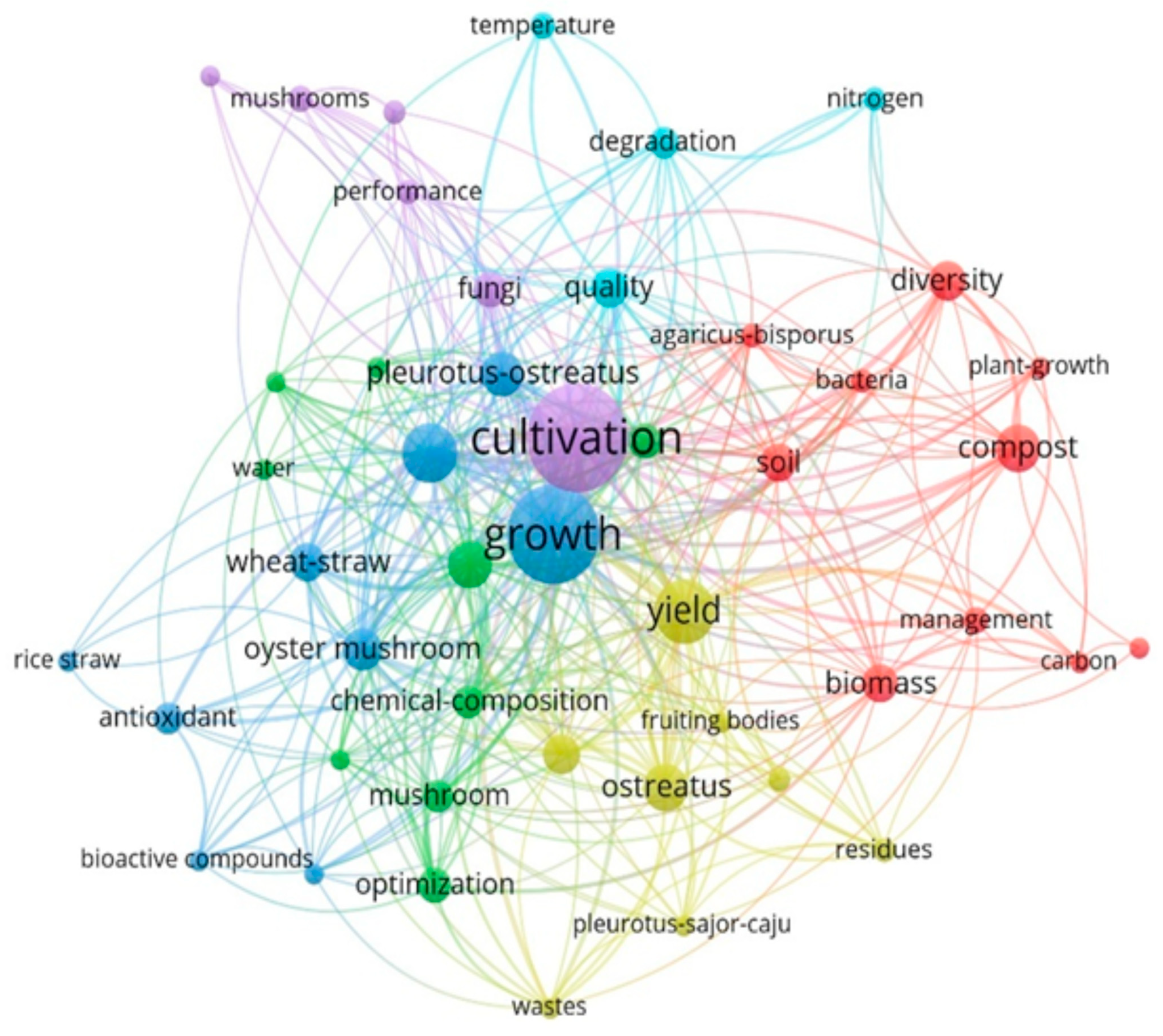
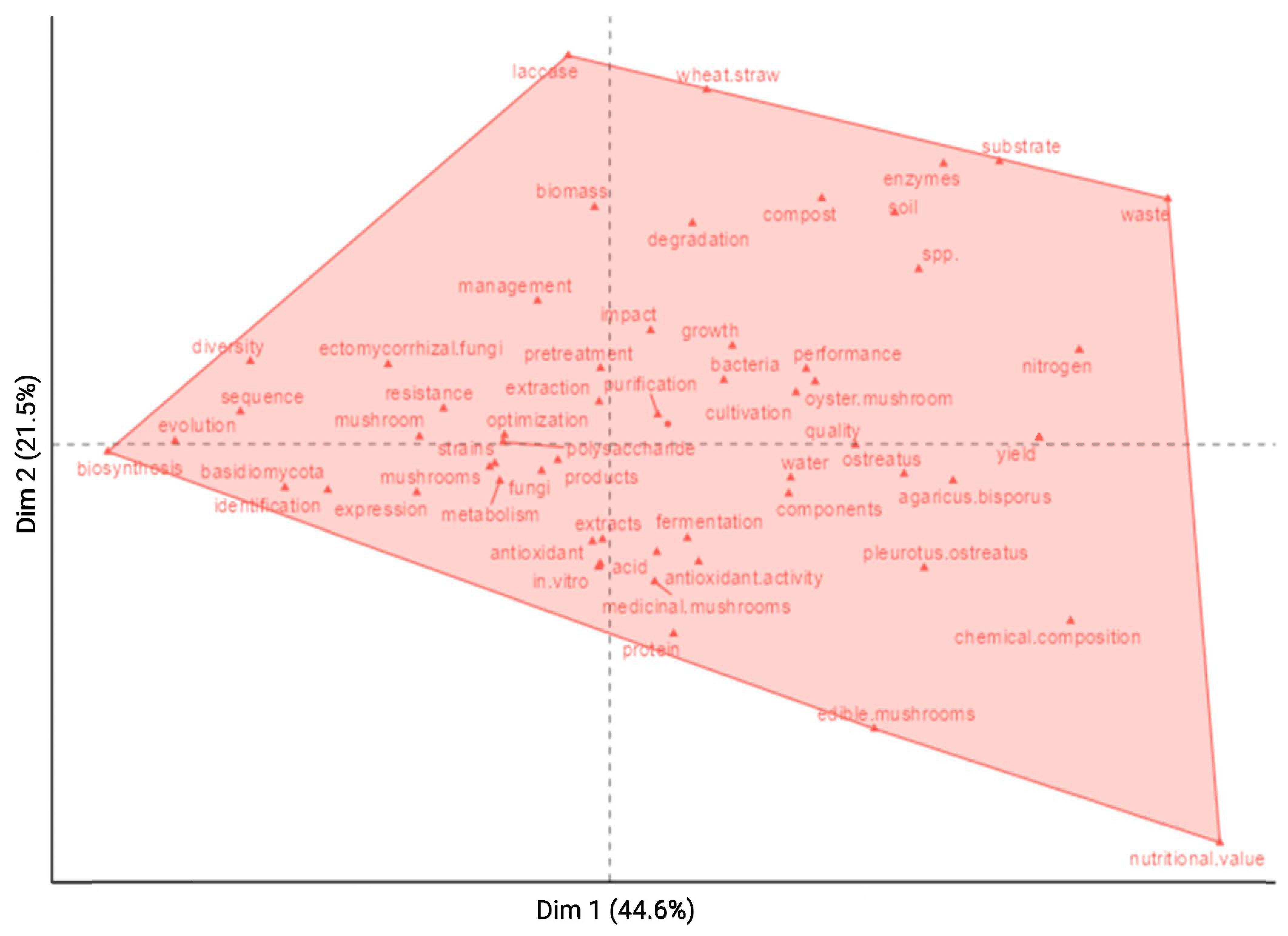
2. Bibliometric Analysis
3. Adaptations of Mushrooms to Diverse Climates and Ecosystems
3.1. Tropical Mushrooms
3.2. Arid Mushrooms
3.3. Temperate and Boreal Mushrooms
4. Symbiotic and Ecological Interactions in Mushrooms
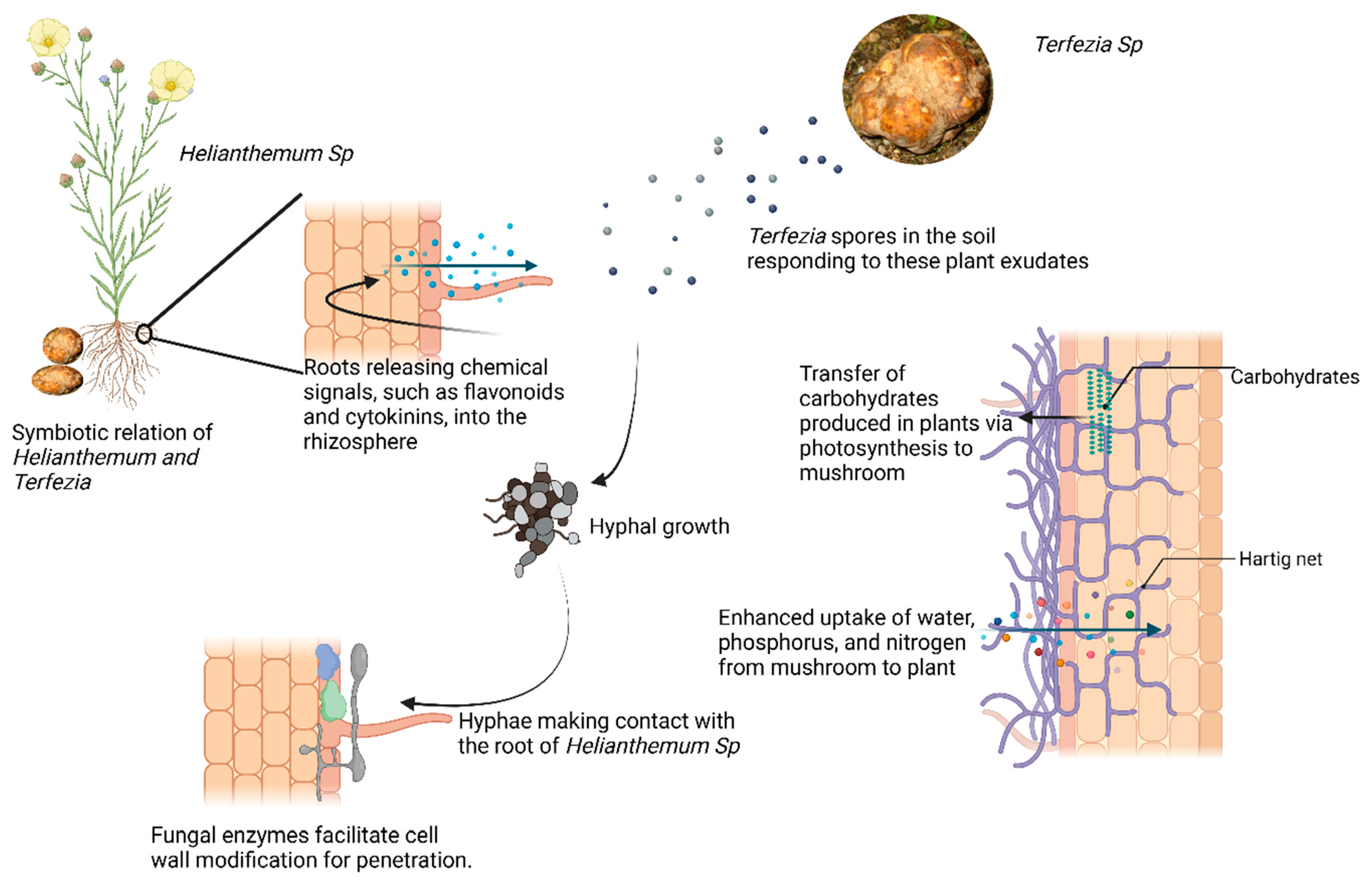
4.1. Mycorrhizal Associations with Host Plants
4.2. Lignin Degradation: Genetic and Molecular Insights
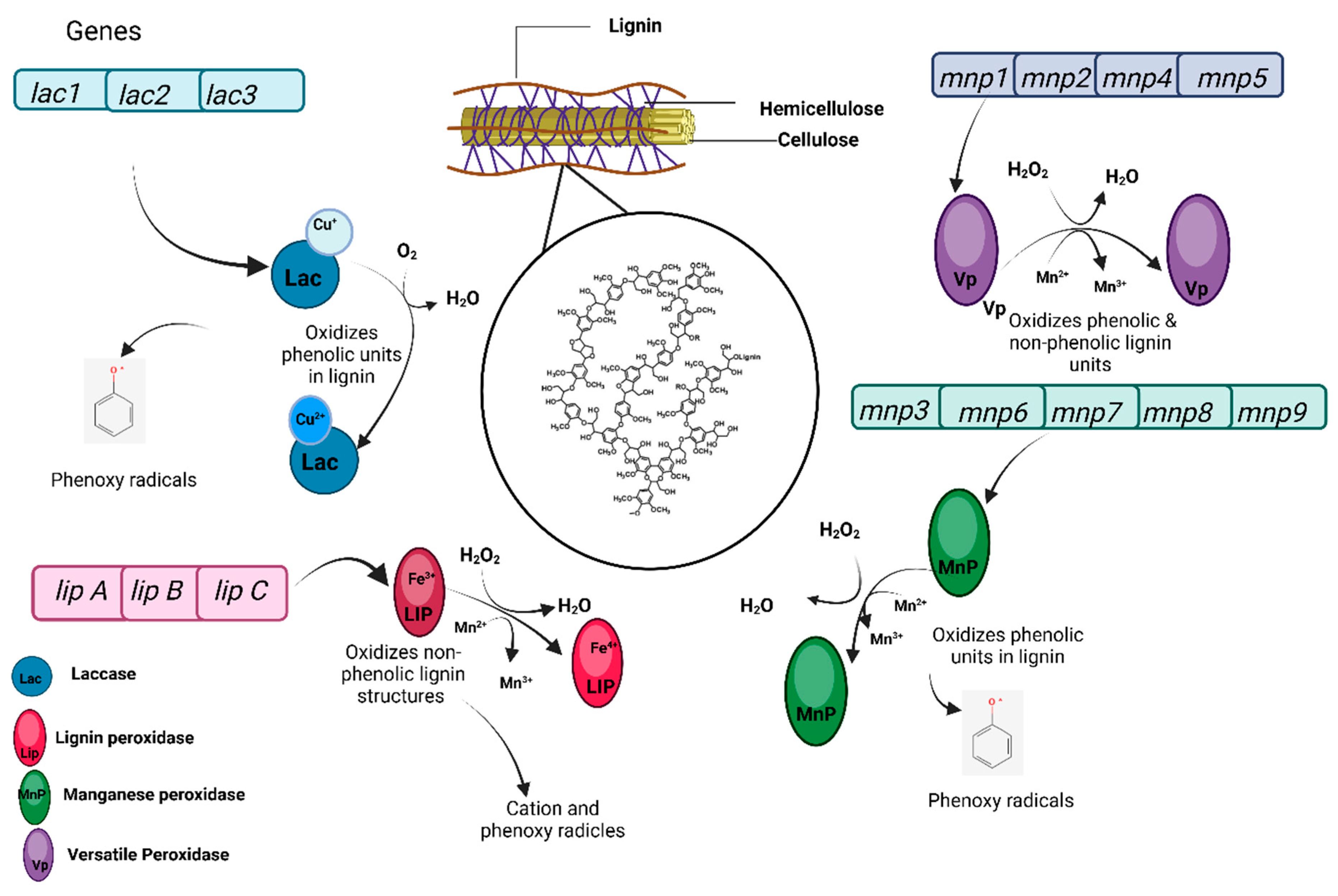
4.2.1. Enzymatic Pathways for Lignin Degradation
4.2.2. Genetic and Molecular Regulation
4.2.3. Technological Innovations in Lignin Degradation
5. Integrative Omics Approaches in Mushroom Cultivation
5.1. Transcriptomics and Proteomics
5.2. Synthetic Biology
5.3. Metagenomic Approaches
5.4. Genomics and Metabolomics
6. Sustainable Mushroom Production
7. Challenges and Future Directions
8. Conclusions
Author Contributions
Funding
Institutional Review Board Statement
Informed Consent Statement
Data Availability Statement
Conflicts of Interest
References
- Girotto, F.; Piazza, L. Food waste bioconversion into new food: A mini review on nutrients circularity in the production of mushrooms, microalgae and insects. Waste Manag. Res. 2022, 40, 47–53. [Google Scholar] [CrossRef]
- Rashad, F.M.; El Kattan, M.H.; Fathy, H.M.; Abd El-Fattah, D.A.; El Tohamy, M.; Farahat, A.A. Recycling of agro-wastes for Ganoderma lucidum mushroom production and Ganoderma post mushroom substrate as soil amendment. Waste Manag. 2019, 88, 147–159. [Google Scholar] [CrossRef]
- Losoya-Sifuentes, C.; Cruz, M.; Del Refugio Rocha-Pizaña, M.; Loredo-Treviño, A.; Belmares, R. Edible Mushrooms: A Nutrient-Rich Ingredient for Healthier Food Products—A Review. Curr. Nutr. Rep. 2025, 14, 9. [Google Scholar] [CrossRef]
- Pandey, K.R.; Joshi, Y.R.; Bhattarai, S.; Joshi, D.; Subedi, S.; Pant, P.K.; Khatri, S. Evaluation of local substrates as rice straw alternatives for oyster mushroom (Pleurotus ostreatus) cultivation in resource-constrained Darchula, Nepal. Arch. Agric. Environ. Sci. 2023, 8, 535–544. [Google Scholar] [CrossRef]
- Dedousi, M.; Melanouri, E.-M.; Karayannis, D.; Kaminarides, E.-I.; Diamantopoulou, P. Utilization of spent substrates and waste products of mushroom cultivation to produce new crops of Pleurotus ostreatus, Pleurotus eryngii and Agaricus bisporus. Carbon Resour. Convers. 2024, 7, 100196. [Google Scholar] [CrossRef]
- Martín, C.; Zervakis, G.I.; Xiong, S.; Koutrotsios, G.; Strætkvern, K.O. Spent substrate from mushroom cultivation: Exploitation potential toward various applications and value-added products. Bioengineered 2023, 14, 2252138. [Google Scholar] [CrossRef]
- Martins, J.; Gonçalves, R.; Branco, F. A bibliometric analysis and visualization of e-learning adoption using VOSviewer. Univ. Access Inf. Soc. 2024, 23, 1177–1191. [Google Scholar] [CrossRef] [PubMed]
- Xie, L.; Chen, Z.; Wang, H.; Zheng, C.; Jiang, J. Bibliometric and Visualized Analysis of Scientific Publications on Atlantoaxial Spine Surgery Based on Web of Science and VOSviewer. World Neurosurg. 2020, 137, 435–442.e4. [Google Scholar] [CrossRef] [PubMed]
- Ejaz, H.; Zeeshan, H.M.; Ahmad, F.; Bukhari, S.N.A.; Anwar, N.; Alanazi, A.; Sadiq, A.; Junaid, K.; Atif, M.; Abosalif, K.O.A.; et al. Bibliometric analysis of publications on the omicron variant from 2020 to 2022 in the Scopus database using R and VOSviewer. Int. J. Environ. Res. Public Health 2022, 19, 12407. [Google Scholar] [CrossRef]
- Al Hamad, M.; Lasrado, S.; Albarbari, H.S.; Waris, A.; Siddique, N.; Khan, M.A.; Alharbi, N.F.; Mohiuddin, S.S.; Parmar, R.V.; Zeidan, N.A.; et al. Research productivity in the genetics of papillary thyroid carcinoma (1991–2020): A bibliometric analysis. Acta Bio. Medica Atenei Parm. 2022, 93, e2022086. [Google Scholar] [CrossRef]
- Hasan, M.; Abedin, M.Z.; Amin, M.B.; Nekmahmud, M.; Oláh, J. Sustainable biofuel economy: A mapping through bibliometric research. J. Environ. Manag. 2023, 336, 117644. [Google Scholar] [CrossRef]
- Francis, D.V.; Abdalla, A.K.; Mahakham, W.; Sarmah, A.K.; Ahmed, Z.F.R. Interaction of plants and metal nanoparticles: Exploring its molecular mechanisms for sustainable agriculture and crop improvement. Environ. Int. 2024, 190, 108859. [Google Scholar] [CrossRef]
- Zhang, Y.; Li, A.A.; Xiao, S.N.; Zhong, N.S.; Tong, W.L.; Wang, S.J.; Liu, J.M.; Liu, Z.L. A Bibliometric Analysis of Publications on Spinal Cord Injury Treatment with Glucocorticoids Using VOSviewer. Front. Public Health 2022, 10, 907372. [Google Scholar] [CrossRef]
- Iman, B.; Yuadi, I.; Sukoco, B.M.; Purwono, R.; Hu, C.C. Mapping research trends with factorial analysis in organizational politics. Sage Open 2023, 13, 21582440231215984. [Google Scholar] [CrossRef]
- Branco, S.; Bi, K.; Liao, H.L.; Gladieux, P.; Badouin, H.; Ellison, C.E.; Nguyen, N.H.; Vilgalys, R.; Peay, K.G.; Taylor, J.W.; et al. Continental-level population differentiation and environmental adaptation in the mushroom Suillus brevipes. Mol. Ecol. 2017, 26, 2063–2076. [Google Scholar] [CrossRef]
- Bates, S.T.; Chapman, R.M.; Islam, M.B.; Schwabe, A.; Wardenaar, E.C.; Evenson, V.S. Phylogenetic placement of the secotioid fungus Araneosa columellata within Agaricus. Mycotaxon 2016, 131, 103–110. [Google Scholar] [CrossRef]
- Boddy, L. Interactions with Humans and Other Animals. In The Fungi; Elsevier: Amsterdam, The Netherlands, 2016; pp. 293–336. [Google Scholar] [CrossRef]
- Lee, M.; Dukan, E.; Milne, I. Amanita muscaria (Fly agaric): From a Shamanistic Hallucinogen to the Search for Acetylcholine. J. R. Coll. Physicians Edinb. 2018, 48, 85–91. [Google Scholar] [CrossRef]
- Hailey, L.E. Integrated Management of Honey Fungus, Armillaria mellea: Biological Control, Culture, and Early Detection. Ph.D. Thesis, University of Reading, Berkshire, UK, 2021. [Google Scholar] [CrossRef]
- Liu, M.; Jiang, W.; Huang, K.; Li, L.; Meng, Q.; You, X.; Pu, K.; Cheng, M.; Gao, Z.; Qi, J.; et al. Sustainable Cultivation and Functional Bioactive Compounds of Auricularia Mushrooms: Advances, Challenges, and Future Prospects. Biology 2025, 14, 1555. [Google Scholar] [CrossRef] [PubMed]
- Silva, M.; Ramos, A.C.; Lidon, F.J.; Reboredo, F.H.; Gonçalves, E.M. Pre- and Postharvest Strategies for Pleurotus ostreatus Mushroom in a Circular Economy Approach. Foods 2024, 13, 1464. [Google Scholar] [CrossRef]
- Shepherd, L.D.; Cooper, J.A. First record of the fungus Battarrea phalloides (Agariacaceae) in New Zealand. New Zealand J. Bot. 2018, 56, 109–114. [Google Scholar] [CrossRef]
- Tan, Y.; Zeng, N.-K.; Xu, B. Chemical profiles and health-promoting effects of porcini mushroom (Boletus edulis): A narrative review. Food Chem. 2022, 390, 133199. [Google Scholar] [CrossRef]
- Shukla, R.; Shukla, M.; Jha, S.; Singh, R.; Pathak, A.; Dikshit, A. Giant puffball (Calvatia gigantea). In Mushrooms; CRC Press: Boca Raton, FL, USA, 2023; pp. 96–112. [Google Scholar]
- Chen, X.; Xu, B. Insights into chemical components, health-promoting effects, and processing impact of golden chanterelle mushroom Cantharellus cibarius. Food Funct. 2024, 15, 7696–7732. [Google Scholar] [CrossRef] [PubMed]
- Baroni, T.J.; Kropp, B.R.; Evenson, V.S.; Wilhelm, M. Cercopemyces crocodilinus, a new genus and species related to Ripartitella, is described from North America. Mycologia 2014, 106, 785–796. [Google Scholar] [CrossRef] [PubMed]
- Lodge, D.J.; Ovrebo, C.L. First records of Hygrophoraceae from Panama including a new species of Camarophyllus and a new veiled species in Hygrocybe section Firmae. Fungal Divers. 2008, 32, 69–80. [Google Scholar]
- Fahmy, G.M.; Al-Thani, R.F. Components of water potential and concentrations of nutrient elements in the holoparasitic angiosperm Cynomorium coccineum L. and its host. Flora 2025, 330, 152786. [Google Scholar] [CrossRef]
- Zeller, S.M. North American species of Galeropsis, Gyrophragmium, Longia, and Montagnea. Mycologia 1943, 35, 409–421. [Google Scholar] [CrossRef]
- Young, A.M.; Wood, A.E. Studies on the Hygrophoraceae (Fungi, Homobasidiomycetes, Agaricales) of Australia. Aust. Syst. Bot. 1999, 10, 911–1030. [Google Scholar] [CrossRef]
- Jovanović, J.A.; Mihailović, M.; Dinić, S.; Grdović, N.; Uskoković, A.; Poznanović, G.; Vidaković, M. The antioxidant potential of Lactarius deterrimus in diabetes. In Diabetes; Elsevier: Amsterdam, The Netherlands, 2020; pp. 265–273. [Google Scholar] [CrossRef]
- Chen, W.; Li, W.; Yang, Y.; Yu, H.; Zhou, S.; Feng, J.; Li, X.; Liu, Y. Analysis and Evaluation of Tasty Components in the Pileus and Stipe of Lentinula edodes at Different Growth Stages. J. Agric. Food Chem. 2015, 63, 795–801. [Google Scholar] [CrossRef] [PubMed]
- Oviya, R.; Sobanbabu, G.; Anbazhagan, P.; Revathy, N.; Mahalakshmi, P.; Manonmani, K.; Mareeswari, P.; Vijayasamundeeswari, A.; Shanmugaiah, V.; Mehetre, S.; et al. Studying Soil Ecology and Growth Conditions of Phellorinia herculeana, a Wild Edible Mushroom. Processes 2022, 10, 1797. [Google Scholar] [CrossRef]
- Sunil, C.; Xu, B. Mycochemical profile and health-promoting effects of morel mushroom Morchella esculenta (L.)—A review. Food Res. Int. 2022, 159, 111571. [Google Scholar] [CrossRef]
- Sharma, M.P.; Grover, M.; Chourasiya, D.; Bharti, A.; Agnihotri, R.; Maheshwari, H.S.; Pareek, A.; Buyer, J.S.; Sharma, S.K.; Schütz, L.; et al. Deciphering the role of trehalose in tripartite symbiosis among rhizobia, Arbuscular mycorrhizal Fungi, and Legumes for Enhancing Abiotic Stress Tolerance in Crop Plants. Front. Microbiol. 2020, 11, 509919. [Google Scholar] [CrossRef]
- Chouhan, R. Diversity of Gasteromycetes in Rajasthan, India-I. Stud. Fungi 2021, 6, 175–187. [Google Scholar] [CrossRef]
- Liang, Z.-C.; Wu, C.-Y.; Wang, J.-C. The evaluation of using mushroom sawdust wastes for cultivation of Pleurotus citrinopileatus. Fungal Sci. 2005, 20, 27–34. [Google Scholar] [CrossRef]
- Akyüz, M.; Kırbağ, S. Cultivation of king eryngii (Pleurotus eryngii (DC. ex Fr.) Quel.) isolates on various local agro-residues. Biomass Conv. Bioref. 2024, 14, 12197–12205. [Google Scholar] [CrossRef]
- Abrashev, R.; Miteva-Staleva, J.; Gocheva, Y.; Stoyancheva, G.; Dishliyska, V.; Spasova, B.; Krumova, E.; Angelova, M. Cell response to oxidative stress in Antarctic filamentous fungi. Appl. Sci. 2025, 15, 5149. [Google Scholar] [CrossRef]
- Wu, N.; Tian, F.; Moodley, O.; Song, B.; Jia, C.; Ye, J.; Lv, R.; Qin, Z.; Li, C. Optimization of agro-residues as substrates for Pleurotus pulmonarius production. AMB Express 2019, 9, 184. [Google Scholar] [CrossRef] [PubMed]
- Fasehah, S.N.; Shah, A. Effect of using various substrates on cultivation of Pleurotus sajor-caju. J. Eng. Sci. Technol. 2017, 12, 1104–1110110. [Google Scholar]
- Ruvalcaba, L.; Gutiérrez, A.; Esqueda, M. Current Biological Knowledge, Applications, and Potential Use of the Desert Shaggy Mane Mushroom Podaxis pistillaris (Agaricomycetes): A Review. Int. J. Med. Mushrooms 2024, 26, 1–12. [Google Scholar] [CrossRef]
- Zhou, H.; Cheng, G.Q.; Wang, Q.T.; Guo, M.J.; Zhuo, L.; Yan, H.F.; Li, G.J.; Hou, C.L. Morphological characteristics and phylogeny reveal six new species in Russula subgenus Russula (Russulaceae, Russulales) from Yanshan Mountains, North China. J. Fungi 2022, 8, 1283. [Google Scholar] [CrossRef]
- Krause, K.; Jung, E.M.; Lindner, J.; Hardiman, I.; Poetschner, J.; Madhavan, S.; Matthäus, C.; Kai, M.; Menezes, R.C.; Popp, J.; et al. Response of the wood-decay fungus Schizophyllum commune to co-occurring microorganisms. PLoS ONE 2020, 15, e0232145. [Google Scholar] [CrossRef]
- Zocher, A.L.; Kraemer, D.; Merschel, G.; Bau, M. Distribution of major and trace elements in the bolete mushroom Suillus luteus and the bioavailability of rare earth elements. Chem. Geol. 2018, 483, 491–500. [Google Scholar] [CrossRef]
- Sitati, C.N.; Ogila, K.O.; Waihenya, R.W.; Ochola, L.A. Phytochemical profile and antimicrobial activities of edible mushroom Termitomyces striatus. Evid.-Based Complement. Altern. Med. 2021, 2021, 3025848. [Google Scholar] [CrossRef]
- Paloi, S.; Kumla, J.; Paloi, B.P.; Srinuanpan, S.; Hoijang, S.; Karunarathna, S.C.; Acharya, K.; Suwannarach, N.; Lumyong, S. Termite mushrooms (Termitomyces), a potential source of nutrients and bioactive compounds exhibiting human health benefits: A review. J. Fungi 2023, 9, 112. [Google Scholar] [CrossRef]
- Yamanaka, T.; Yamada, A.; Furukawa, H. Advances in the cultivation of the highly-prized ectomycorrhizal mushroom Tricholoma matsutake. Mycoscience 2020, 61, 49–57. [Google Scholar] [CrossRef]
- Hobart, C. Tulostoma fimbriatum new to the UK. Field Mycol. 2012, 13, 81–83. [Google Scholar] [CrossRef]
- Ali, S.; Yousaf, N.; Usman, M.; Javed, M.A.; Nawaz, M.; Ali, B.; Azam, M.; Ercisli, S.; Tirasci, S.; Ahmed, A.E. Volvariella volvacea (paddy straw mushroom): A mushroom with exceptional medicinal and nutritional properties. Heliyon 2024, 10, e39747. [Google Scholar] [CrossRef]
- Satish, L.; Barak, H.; Keren, G.; Yehezkel, G.; Kushmaro, A.; Ben-Dov, E.; Kagan-Zur, V.; Barak, Z.E.; Sitrit, Y. The microbiome structure of the symbiosis between the desert truffle Terfezia boudieri and its host plant Helianthemum sessiliflorum. J. Fungi 2022, 8, 1062. [Google Scholar] [CrossRef]
- Turgeman, T.; Ben Asher, J.; Roth-Bejerano, N.; Kagan-Zur, V.; Kapulnik, Y.; Sitrit, Y. Mycorrhizal association between the desert truffle Terfezia boudieri and Helianthemum sessiliflorum alters plant physiology and fitness to arid conditions. Mycorrhiza 2011, 21, 623–630. [Google Scholar] [CrossRef]
- Jiao, X.; Li, G.; Wang, Y.; Nie, F.; Cheng, X.; Abdullah, M.; Lin, Y.; Cai, Y. Systematic Analysis of the Pleurotus ostreatus Laccase Gene (PoLac) Family and Functional Characterization of PoLac2 Involved in the Degradation of Cotton-Straw Lignin. Molecules 2018, 23, 880. [Google Scholar] [CrossRef] [PubMed]
- Kuppuraj, S.P.; Venkidasamy, B.; Selvaraj, D.; Ramalingam, S. Comprehensive in silico and gene expression profiles of MnP family genes in Phanerochaete chrysosporium towards lignin biodegradation. Int. Biodeterior. Biodegrad. 2021, 157, 105143. [Google Scholar] [CrossRef]
- Sánchez-Ruiz, M.I.; Santillana, E.; Linde, D.; Romero, A.; Martínez, A.T.; Ruiz-Dueñas, F.J. Structure–function characterization of two enzymes from novel subfamilies of manganese peroxidases secreted by the lignocellulose-degrading Agaricales fungi Agrocybe pediades and Cyathus striatus. Biotechnol. Biofuels 2024, 17, 74. [Google Scholar] [CrossRef]
- Ramoni, J.; Seiboth, B. Degradation of Plant Cell Wall Polymers by Fungi. In Environmental and Microbial Relationships; Druzhinina, I.S., Kubicek, C.P., Eds.; Springer International Publishing: Cham, Switzerland, 2016; pp. 127–148. [Google Scholar] [CrossRef]
- Bilal, M.; Iqbal, H.M.N.; Hu, H.; Wang, W.; Zhang, X. Metabolic engineering and enzyme-mediated processing: A biotechnological venture towards biofuel production—A review. Renew. Sustain. Energy Rev. 2018, 82, 436–447. [Google Scholar] [CrossRef]
- Doddapaneni, H.; Yadav, J.S. Microarray-based global differential expression profiling of P450 monooxygenases and regulatory proteins for signal transduction pathways in the white rot fungus Phanerochaete chrysosporium. Mol. Genet. Genom. 2005, 274, 454–466. [Google Scholar] [CrossRef] [PubMed]
- Li, C.Y.; Chung, Y.M.; Wu, Y.C.; Hunyadi, A.; Wang, C.C.; Chang, F.R. Natural products development under epigenetic modulation in fungi. Phytochem. Rev. 2020, 19, 1323–1340. [Google Scholar] [CrossRef]
- Nakazawa, T.; Kawauchi, M.; Otsuka, Y.; Han, J.; Koshi, D.; Schiphof, K.; Ramírez, L.; Pisabarro, A.G.; Honda, Y. Pleurotus ostreatus as a model mushroom in genetics, cell biology, and material sciences. Appl. Microbiol. Biotechnol. 2024, 108, 217. [Google Scholar] [CrossRef]
- Xu, D.; Zhou, Q.; Yan, B.; Ma, A. Identification and physiological function of one microRNA (Po-MilR-1) in oyster mushroom Pleurotus ostreatus. Mycoscience 2021, 62, 182–188. [Google Scholar] [CrossRef]
- Nakazawa, T.; Morimoto, R.; Wu, H.; Kodera, R.; Sakamoto, M.; Honda, Y. Dominant effects of gat1 mutations on the ligninolytic activity of the white-rot fungus Pleurotus ostreatus. Fungal Biol. 2019, 123, 209–217. [Google Scholar] [CrossRef]
- Timofeeva, A.; Galyamova, M.; Sedykh, S. Prospects for Using Phosphate-Solubilizing Microorganisms as Natural Fertilizers in Agriculture. Plants 2022, 11, 2119. [Google Scholar] [CrossRef] [PubMed]
- López-González, J.A.; Suárez-Estrella, F.; Jurado, M.M.; Martínez-Gallardo, M.R.; Toribio, A.; Estrella-González, M.J.; López, M.J. Development of functional consortia for the pretreatment of compostable lignocellulosic waste: A simple and effective solution to a large-scale problem. J. Environ. Manag. 2024, 356, 120638. [Google Scholar] [CrossRef]
- Balakrishnan, K.; Nagarajan, S.; Balakrishnan, G.; Manickam, M.; Dharumadurai, D. Symbiotic microbial interactions in medicinal mushroom. In Microbial Symbionts; Elsevier: Amsterdam, The Netherlands, 2023; pp. 277–294. [Google Scholar] [CrossRef]
- Yang, Y.; Pian, Y.; Li, J.; Xu, L.; Lu, Z.; Dai, Y.; Li, Q. Integrative analysis of genome and transcriptome reveal the genetic basis of high temperature tolerance in pleurotus giganteus (Berk. Karun & Hyde). BMC Genom. 2023, 24, 552. [Google Scholar] [CrossRef]
- Chen, L.; Luo, Y.; Li, J.; Zhang, Z.; Wu, D. Comparative analysis of genome-wide transcriptional responses to continuous heat stress in Pleurotus tuoliensis. AMB Express 2023, 13, 121. [Google Scholar] [CrossRef]
- Wang, G.Z.; Ma, C.J.; Luo, Y.; Zhou, S.S.; Zhou, Y.; Ma, X.L.; Cai, Y.L.; Yu, J.J.; Bian, Y.B.; Gong, Y.H. Proteome and Transcriptome Reveal Involvement of Heat Shock Proteins and Indoleacetic Acid Metabolism Process in Lentinula edodes Thermotolerance. Cell Physiol. Biochem. 2018, 50, 1617–1637. [Google Scholar] [CrossRef]
- Liu, J.-Y.; Men, J.; Chang, M.; Feng, C.; Yuan, L.-G. iTRAQ-based quantitative proteome revealed metabolic changes of Flammulina velutipes mycelia in response to cold stress. J. Proteom. 2017, 156, 75–84. [Google Scholar] [CrossRef]
- Wang, G.; Liu, C.; Shen, N.; Wu, Y.; Bian, Y.; Xiao, Y. Differential analyses of morphology and transcription from oyster mushroom Pleurotus ostreatus response to brown blotch disease. Sci. Hortic. 2024, 331, 113141. [Google Scholar] [CrossRef]
- Wang, Z.; Chen, J.; Ding, J.; Han, J.; Shi, L. GlMPC activated by GCN4 regulates secondary metabolism under nitrogen limitation conditions in Ganoderma lucidum. mBio 2023, 14, e01356-23. [Google Scholar] [CrossRef] [PubMed]
- Zhang, S.; Wakai, S.; Sasakura, N.; Tsutsumi, H.; Hata, Y.; Ogino, C.; Kondo, A. Pyruvate metabolism redirection for biological production of commodity chemicals in aerobic fungus Aspergillus oryzae. Metab. Eng. 2020, 61, 225–237. [Google Scholar] [CrossRef] [PubMed]
- Vishal, V.; Tigga, S.S.; Hembrom, S.; Baraik, B.; Singh, G.; Lal, S. Mushroom Metagenome: Tool to Unravel Interaction Network of Plant, Mycorrhiza, and Bacteria. In Microbial Symbionts and Plant Health: Trends and Applications for Changing Climate; Mathur, P., Kapoor, R., Roy, S., Eds.; Springer Nature: Singapore, 2023; pp. 497–520. [Google Scholar] [CrossRef]
- Bera, I.; Nidhin, I.K.; Hembrom, M.E.; Das, K.; Chattopadhyay, I. Metagenomics offers insights into the rhizospheric bacterial diversity of mushrooms from a tropical forest and temperate forest of India. Ecol. Genet. Genom. 2023, 29, 100203. [Google Scholar] [CrossRef]
- Chang, W.; Feng, W.; Yang, Y.; Shen, Y.; Song, T.; Li, Y.; Cai, W. Metagenomics analysis of the effects of Agaricus bisporus mycelia on microbial diversity and CAZymes in compost. PeerJ 2022, 10, e14426. [Google Scholar] [CrossRef]
- Tian, Y.-Z.; Wang, Z.-F.; Liu, Y.-D.; Zhang, G.-Z.; Li, G. The whole-genome sequencing and analysis of a Ganoderma lucidum strain provide insights into the genetic basis of its high triterpene content. Genomics 2021, 113, 840–849. [Google Scholar] [CrossRef]
- Yu, H.; Zhang, M.; Sun, Y.; Li, Q.; Liu, J.; Song, C.; Shang, X.; Tan, Q.; Zhang, L.; Yu, H. Whole-genome sequence of a high-temperature edible mushroom Pleurotus giganteus (zhudugu). Front. Microbiol. 2022, 13, 941889. [Google Scholar] [CrossRef]
- Dong, W.G.; Wang, Z.X.; Feng, X.L.; Zhang, R.Q.; Shen, D.Y.; Du, S.; Gao, J.M.; Qi, J. Chromosome-Level Genome Sequences, Comparative Genomic Analyses, and Secondary-Metabolite Biosynthesis Evaluation of the Medicinal Edible Mushroom Laetiporus sulphureus. Microbiol. Spectr. 2022, 10, e02439-22. [Google Scholar] [CrossRef]
- Xu, X.; Li, C.; Wu, F.; Zhao, S.; Chen, T.; You, H.; Lin, Y.; Zou, X. Integrated Transcriptomic and Targeted Metabolomic Analysis Reveals the Key Genes Involved in Triterpenoid Biosynthesis of Ganoderma lucidum. J. Fungi 2025, 11, 57. [Google Scholar] [CrossRef] [PubMed]
- Rong, P.X.; He, X.Q.; Ayyash, M.; Liu, Y.; Wu, D.T.; Geng, F.; Li, H.B.; Ng, S.B.; Liu, H.Y.; Gan, R.Y. Untargeted metabolomics analysis of non-volatile metabolites and dynamic changes of antioxidant capacity in Douchi with edible mushroom by-products. Food Chem. 2024, 431, 137066. [Google Scholar] [CrossRef] [PubMed]
- Gamboa-Becerra, R.; Montoya, L.; Bandala, V.M.; Monribot-Villanueva, J.L.; Guerrero-Analco, J.A.; Ramos, A. Metabolomic profiling, nutritional parameters and potential bioactive metabolites of the edible mushroom Tricholoma mesoamericanum. Int. J. Food Sci. Tech. 2024, 59, 4348–4358. [Google Scholar] [CrossRef]
- Yuliana, N.D.; Saraswati, H.; Regiyana, Y.; Nora, A.; Hutabarat, D.J.C.; Lioe, H.N. Advances in metabolomics to optimize quality parameters of culinary mushrooms. Trends Food Sci. Technol. 2024, 145, 104378. [Google Scholar] [CrossRef]
- Baptista, F.; Almeida, M.; Paié-Ribeiro, J.; Barros, A.N.; Rodrigues, M. Unlocking the Potential of Spent Mushroom Substrate (SMS) for Enhanced Agricultural Sustainability: From Environmental Benefits to Poultry Nutrition. Life 2023, 13, 1948. [Google Scholar] [CrossRef]
- Kaur, P.; Kapoor, P. Revolutionizing Mushroom Cultivation: A Comprehensive Review of Hydroponics in Fungiculture. Curr. J. Appl. Sci. Technol. 2023, 42, 19–37. [Google Scholar] [CrossRef]
- Yin, H.; Yi, W.; Hu, D. Computer vision and machine learning applied in the mushroom industry: A critical review. Comput. Electron. Agric. 2022, 198, 107015. [Google Scholar] [CrossRef]
- Ahmad, M.H.; Sohag, S.R.; Bormon, S.; Shishir, H.R.; Antar, S.H. AI-Driven Mycology: Transfer Learning for Automated Mushroom Species Identification. In Proceedings of the 2024 IEEE International Conference on Computing, Applications and Systems (COMPAS), Cox’s Bazar, Bangladesh, 25–26 September 2024; pp. 1–9. [Google Scholar] [CrossRef]
- Francis, D.V.; Sood, N.; Gokhale, T. Biogenic CuO and ZnO Nanoparticles as Nanofertilizers for Sustainable Growth of Amaranthus hybridus. Plants 2022, 11, 2776. [Google Scholar] [CrossRef]
- Loc, N.Q.; Bui, T.K.L.; Tu, N.M.; Nguyen, T.T.T.; Hoang, N.D.; Nguyen, T.B.; Minh, L.B.N.; Ta, T.Y.; Quan, N.H.; Ghosh, S.K.; et al. Enhancing circular economy in the mushroom production chain: Systematic literature review and field study in the Central Highlands of Vietnam. J. Solid Waste Technol. Manag. 2024, 50, 689–710. [Google Scholar] [CrossRef]
- Liu, Y.Y.; Zhang, M.; Tang, F.; Wang, H.Q.; Gao, J.M.; Li, M.; Qi, J. Exploring the molecular tapestry of Sarcodon secondary metabolites: Chemical structures, activities, and biosynthesis. Mycology 2025, 16, 158–179. [Google Scholar] [CrossRef] [PubMed]
- Jacob, M.S.; Xu, A.; Qian, K.; Qi, Z.; Li, X.; Zhang, B. Artificial Intelligence in Edible Mushroom Cultivation, Breeding, and Classification: A Comprehensive Review. J. Fungi 2025, 11, 758. [Google Scholar] [CrossRef] [PubMed]
- Chen, Y.; Xu, M.; Wang, X.; Shan, X.; Ji, L.; Zhang, Y. Preparation of wood ear medicinal mushroom, Auricularia auricula-judae (Agaricomycetes), melanin and its antioxidant properties: Evaluation in vitro and in vivo. Int. J. Med. Mushrooms 2021, 23, 89–100. [Google Scholar] [CrossRef] [PubMed]



| Species | Common Name | Habitat | Edibility | Adaptation Characteristics |
|---|---|---|---|---|
| Agaricus columellatus | Minor pouch Agaricus | Deserts of the southwestern United States, | Unknown | Pouch-like basidiocarp; reduced exposure in arid habitats [16]. |
| Agaricus deserticola | Gasteroid Agaricus | Southwestern and western North America, arid and semi-arid habitats | Unknown | Secotioid morphology; reduced cap opening [15]. |
| Agrocybe aegerita | Black poplar mushroom | Grows on hardwoods, especially poplars | Edible | Wood-decay specialization; rapid substrate colonization [17]. |
| Amanita muscaria | Fly Agaric | Coniferous and deciduous forests | Inedible | Ectomycorrhizal symbiosis; secondary metabolite production [18]. |
| Armillaria spp. | Honey fungus | Deciduous and coniferous forests | Edible | Rhizomorph formation; long-distance nutrient transport [19]. |
| Auricularia auricula | Wood ear mushroom | Moist, shaded environments. | Edible | Gelatinous basidiocarp; desiccation tolerance [20]. |
| Auricularia polytricha | Cloud ear mushroom | Warm, humid climates, grows on dead or decaying wood | Edible | Moisture retention via jelly-like tissue [21]. |
| Battarrea phalloides | Sandy stiltball | Dry, sandy soils, found in Europe, Africa, Australia, Asia, and the Americas | Inedible | Elevated stipe; wind-assisted spore dispersal [22]. |
| Boletus edulis | Porcini | Temperate forests, under oak, pine | Edible | Ectomycorrhizal association; forest nutrient exchange [23]. |
| Calvatia gigantea | Western giant puffball | Grasslands and open areas in arid regions | Edible when young | Puffball sporulation; rapid spore release when mature [24]. |
| Cantharellus cibarius | Golden chanterelle | Temperate forests, mossy areas | Edible | Mycorrhizal lifestyle; soil moisture dependence [25]. |
| Cercopemyces crocodilinus | - | Arid regions; associated with mountain mahogany | Unknown | Secotioid development; adaptation to dry soils [26]. |
| Clavulina cristata | Crested coral fungus | Deciduous and coniferous forests | Edible | Mycorrhizal growth; coral-like branching morphology [27]. |
| Cynomorium coccineum | Desert thumb | Deserts of the Mediterranean and Arabian Peninsula | Inedible | Holoparasitism; reduced fungal structures [28]. |
| Gyrophragmium californicum | - | Deserts of North America | Inedible | Secotioid form; protection against desiccation [29]. |
| Hygrophorus camarophyllus | Smoky gilled waxcap | Boreal and temperate forests | Edible | Cold tolerance; waxy cuticle [30]. |
| Lactarius deterrimus | False saffron milkcap | Boreal and temperate forests | Edible | Latex production; mycorrhizal nutrient exchange [31] |
| Lentinula edodes | Shiitake | Native East Asia, grows on decaying hardwood trees | Edible | Hardwood specialization; efficient lignocellulose degradation [32]. |
| Montagnea arenaria | Namaqua black cap | Arid regions, often found in sandy soils | Unknown | Woody stipe; arid-environment persistence [33]. |
| Montagnea haussknechtii | Small spored Namaqua black cap | Dry sandy soils, grasslands, and savannas | Unknown | Reduced spores; structural stability in dry soil [33]. |
| Morchella esculenta | Morel | Temperate regions, often on sandy soils | Edible | Dual saprotrophic–symbiotic lifestyle [34]. |
| Mycenastrum corium | Corkstar puffball | Arid and semi-arid regions of Australia and the southwestern United States | Unknown | Thick peridium; delayed spore release [35]. |
| Phellorinia herculeana | Desert edible mushroom | Coastal, barren, and desert soils | Edible | Heat tolerance; deep rhizoidal anchorage [36]. |
| Pleurotus citrinopileatus | Golden oyster mushroom | Tropical and subtropical regions, grow on decaying wood | Edible | Broad substrate plasticity; rapid colonization [37]. |
| Pleurotus eryngii | King oyster mushroom | Native to Mediterranean regions; grows on decaying roots of herbaceous plants | Edible | Root-associated growth; drought tolerance [38]. |
| Pleurotus ostreatus | Oyster mushroom | Temperate and tropical forests grow on decaying wood | Edible | Ligninolytic enzyme production; climate adaptability [39]. |
| Pleurotus pulmonarius | Phoenix oyster mushroom | Widely distributed, grows on dead hardwoods, tolerates warmer temperatures | Edible | Heat tolerance; wide geographic distribution [40]. |
| Pleurotus sajor-caju | Grey oyster mushroom | Tropical and subtropical climates, grows on various lignocellulosic materials | Edible | Substrate versatility; rapid fruiting [41]. |
| Podaxis pistillaris | Desert shaggy mane | Arid and semi-arid regions worldwide | Edible | Heat tolerance; xerophytic sporulation [42]. |
| Russula emetica | The sickener | Temperate and boreal woodlands | Inedible | Short-lived sporocarps; mycorrhizal dependence [43]. |
| Schizophyllum commune | Split gill mushroom | Wide range of habitats, including arid regions, grows on decaying wood | Edible | Extreme desiccation tolerance; rapid rehydration [44]. |
| Suillus luteus | Slippery jack | Coniferous forests; pine associations | Edible | Pine-specific mycorrhiza; carbon exchange efficiency [45]. |
| Termitomyces striatus | - | Tropical and subtropical regions, associated with termite mounds | Edible | Fungus–termite symbiosis; nutrient recycling [46]. |
| Termitomyces titanicus | Termite mushroom | African tropical regions, associated with termite mounds | Edible | Obligate termite association; large sporocarp formation [47]. |
| Tricholoma matsutake | Matsutake | Pine forests in temperate zones | Edible | Mycorrhizal specialization; forest soil adaptation [48]. |
| Tulostoma brumale | Winter stalkball | Arid and semi-arid regions, sandy soils | Inedible | Stalked puffball morphology; arid survival [49]. |
| Volvariella volvacea | Straw mushroom | Tropical and subtropical regions | Edible | Rapid life cycle; thermophilic growth [50]. |
Disclaimer/Publisher’s Note: The statements, opinions and data contained in all publications are solely those of the individual author(s) and contributor(s) and not of MDPI and/or the editor(s). MDPI and/or the editor(s) disclaim responsibility for any injury to people or property resulting from any ideas, methods, instructions or products referred to in the content. |
© 2026 by the authors. Licensee MDPI, Basel, Switzerland. This article is an open access article distributed under the terms and conditions of the Creative Commons Attribution (CC BY) license.
Share and Cite
Francis, D.V.; Kishorkumar, M.; Ahmed, Z.F.R.; Neumann, E.G.; Kurup, S.S. Molecular Advances and Sustainable Strategies in Mushroom Production for Food Security: A Review. J. Fungi 2026, 12, 205. https://doi.org/10.3390/jof12030205
Francis DV, Kishorkumar M, Ahmed ZFR, Neumann EG, Kurup SS. Molecular Advances and Sustainable Strategies in Mushroom Production for Food Security: A Review. Journal of Fungi. 2026; 12(3):205. https://doi.org/10.3390/jof12030205
Chicago/Turabian StyleFrancis, Dali V., Malu Kishorkumar, Zienab F. R. Ahmed, Elke G. Neumann, and Shyam S. Kurup. 2026. "Molecular Advances and Sustainable Strategies in Mushroom Production for Food Security: A Review" Journal of Fungi 12, no. 3: 205. https://doi.org/10.3390/jof12030205
APA StyleFrancis, D. V., Kishorkumar, M., Ahmed, Z. F. R., Neumann, E. G., & Kurup, S. S. (2026). Molecular Advances and Sustainable Strategies in Mushroom Production for Food Security: A Review. Journal of Fungi, 12(3), 205. https://doi.org/10.3390/jof12030205