Article

Transcriptomic Insights into Sre1-Related Regulatory Responses to Hypoxia, Cobalt Chloride, and Clotrimazole in Phaffia rhodozyma


by
Marcelo Baeza
,
María Soledad Gutiérrez
,
Melissa Gómez
and
Jennifer Alcaíno
*
Departamento de Ciencias Ecológicas, Facultad de Ciencias, Universidad de Chile, Santiago 7800003, Chile
*
Author to whom correspondence should be addressed.
These authors contributed equally to this work.
J. Fungi 2026, 12(3), 200; https://doi.org/10.3390/jof12030200
Submission received: 29 January 2026 / Revised: 4 March 2026 / Accepted: 6 March 2026 / Published: 10 March 2026
(This article belongs to the Special Issue Stress Research in Filamentous Fungi and Yeasts)

Abstract

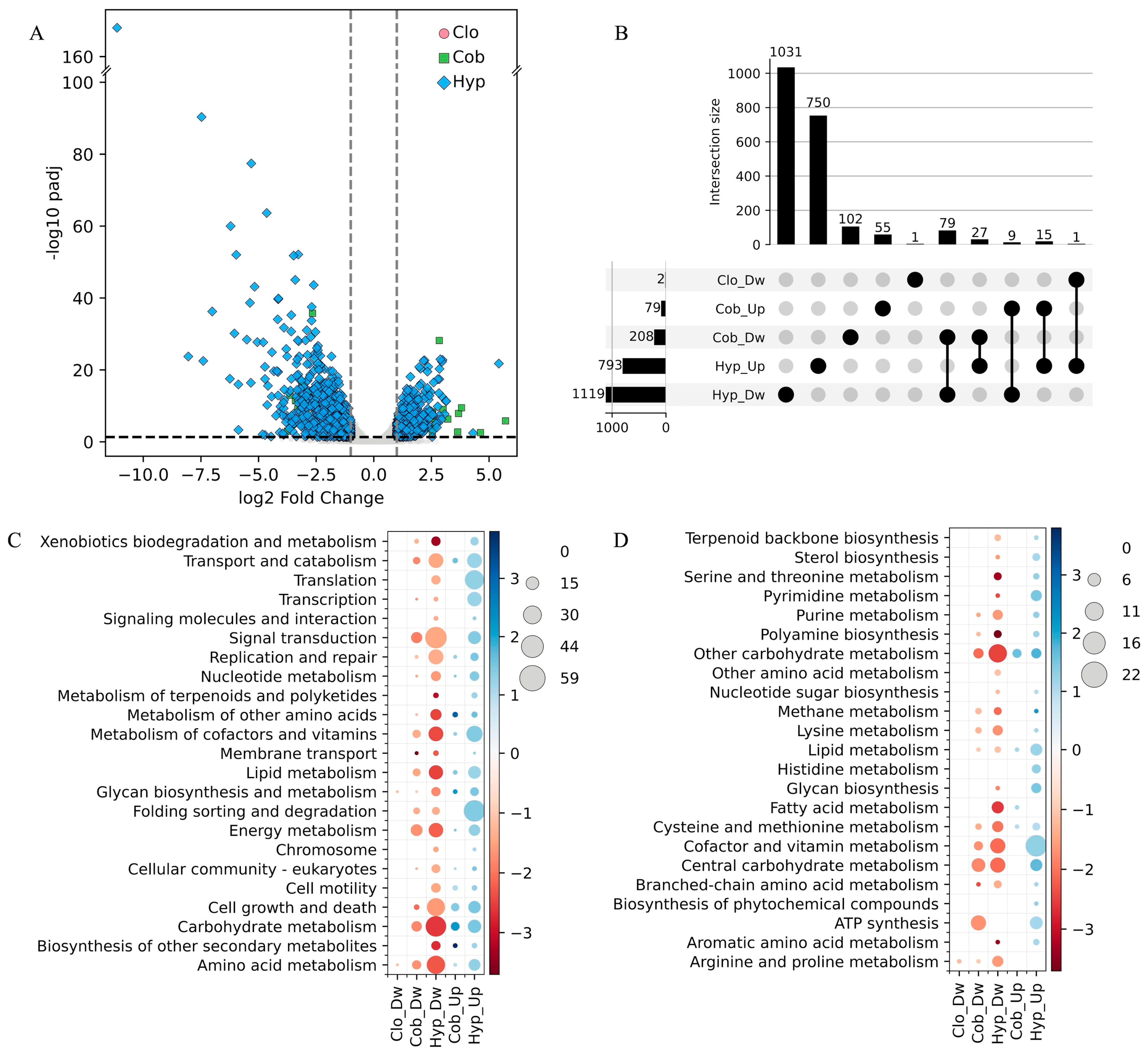
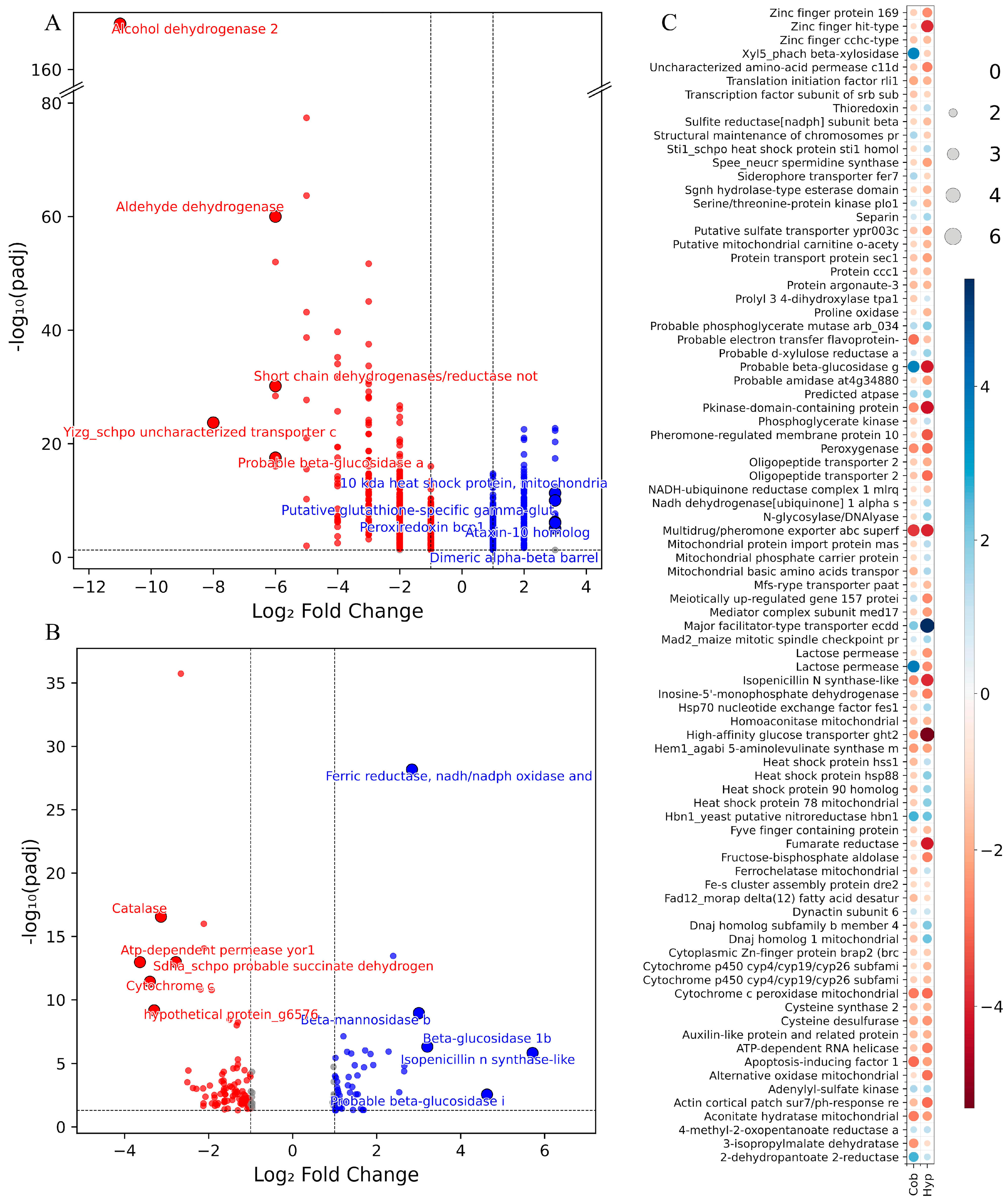
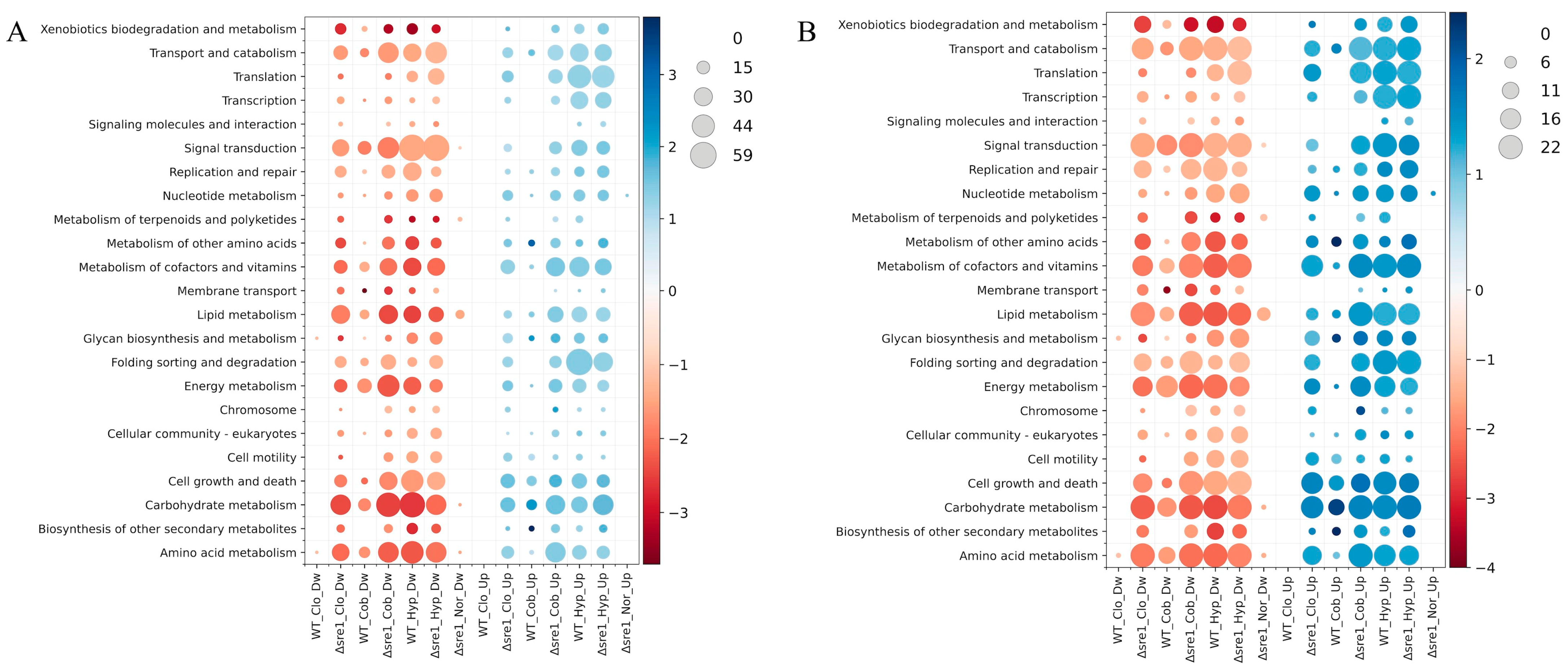
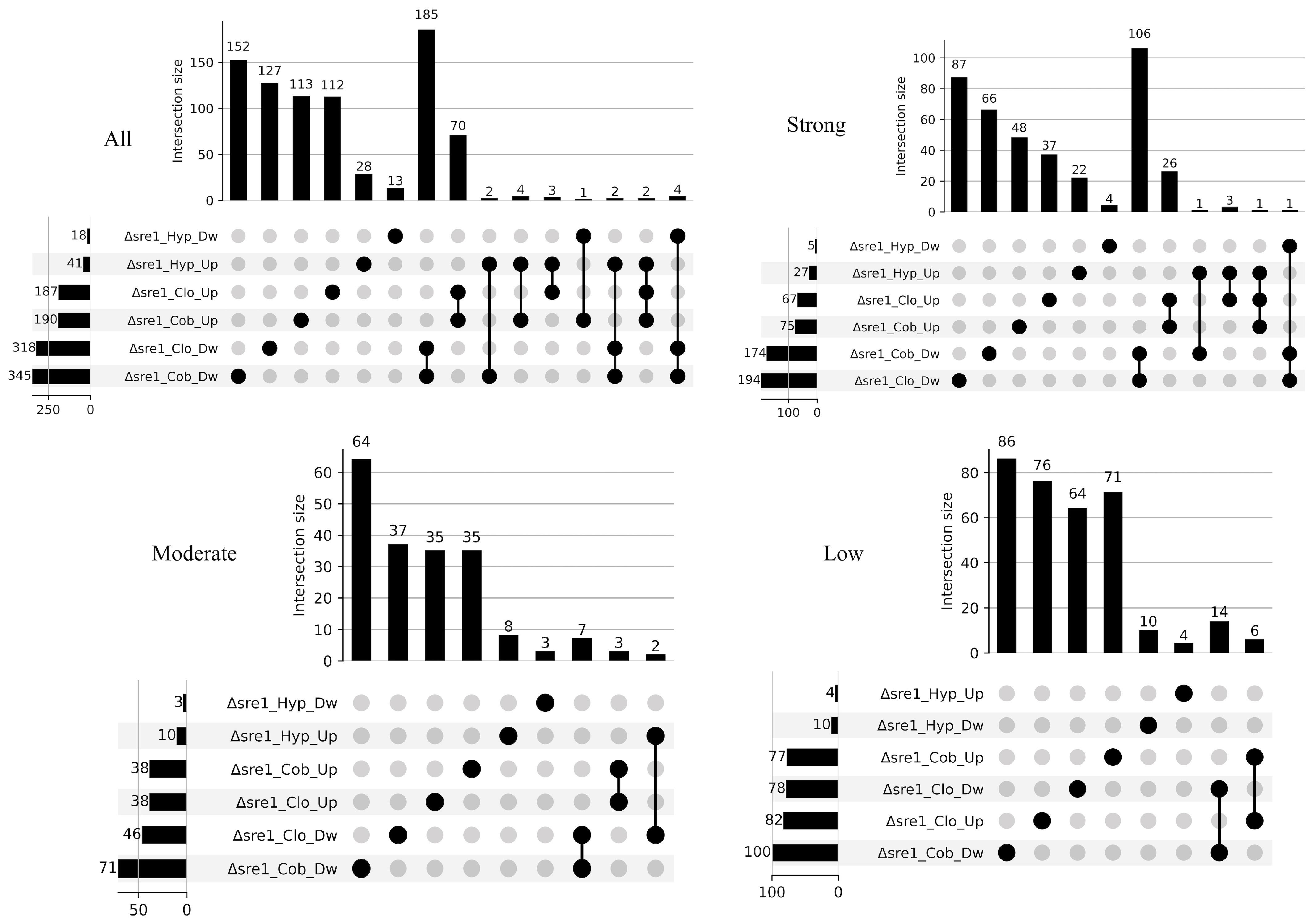
Sterol regulatory element-binding proteins (SREBPs) are transcription factors that regulate lipid homeostasis and have been associated with hypoxia adaptation in fungi. In the yeast Phaffia rhodozyma, the SREBP ortholog named Sre1 regulates sterol biosynthesis, but its contribution to stress-responsive transcriptional programs remains poorly understood. We performed RNA-seq analyses to evaluate the transcriptional responses of wild-type (WT) and ∆sre1 mutant strains exposed to hypoxia, cobalt chloride (CoCl2), and clotrimazole treatments. Differentially expressed genes (DEGs) were analyzed using KEGG mapping to assess the treatment-induced transcriptional changes in both strains and to evaluate the potential contribution of Sre1 to these responses. In the WT strain, hypoxia induced the most extensive transcriptional changes, while CoCl2 elicited a moderate response partially overlapping with hypoxia. Downregulated DEGs predominated in both conditions, and all CoCl2-associated KEGG pathways were also identified under hypoxia. In contrast, the Δsre1 mutant showed an increased number of DEGs in response to clotrimazole and CoCl2, with most clotrimazole-responsive genes being mutant-specific, indicating distinct Sre1-associated transcriptional responses under these conditions. Shared downregulated DEGs under CoCl2 and hypoxia suggest that basal Sre1 activity may contribute to modulation of gene expression programs related to core cellular processes. However, Sre1-dependent regulation alone did not account for the extensive transcriptional reprogramming observed under the applied hypoxic treatment.
Keywords: SREBP; Sre1; hypoxia; cobalt chloride; clotrimazole; RNA-seq; Phaffia rhodozyma SREBP; Sre1; hypoxia; cobalt chloride; clotrimazole; RNA-seq; Phaffia rhodozyma