Extremophilic Yeasts as Next-Generation Eukaryotic Models: Mechanisms of Stress Integration, Systems Biology and Biotechnological Applications: A Review



Abstract
1. Introduction
1.1. Relevance of Fungi and Yeasts as Biological Models
1.2. Limitations of Classical Models and Need for Novel Fungal Systems
1.3. Emergence of Extremophilic Yeast
2. Extremophilic Yeasts: Diversity, Physiology and Ecological Niches
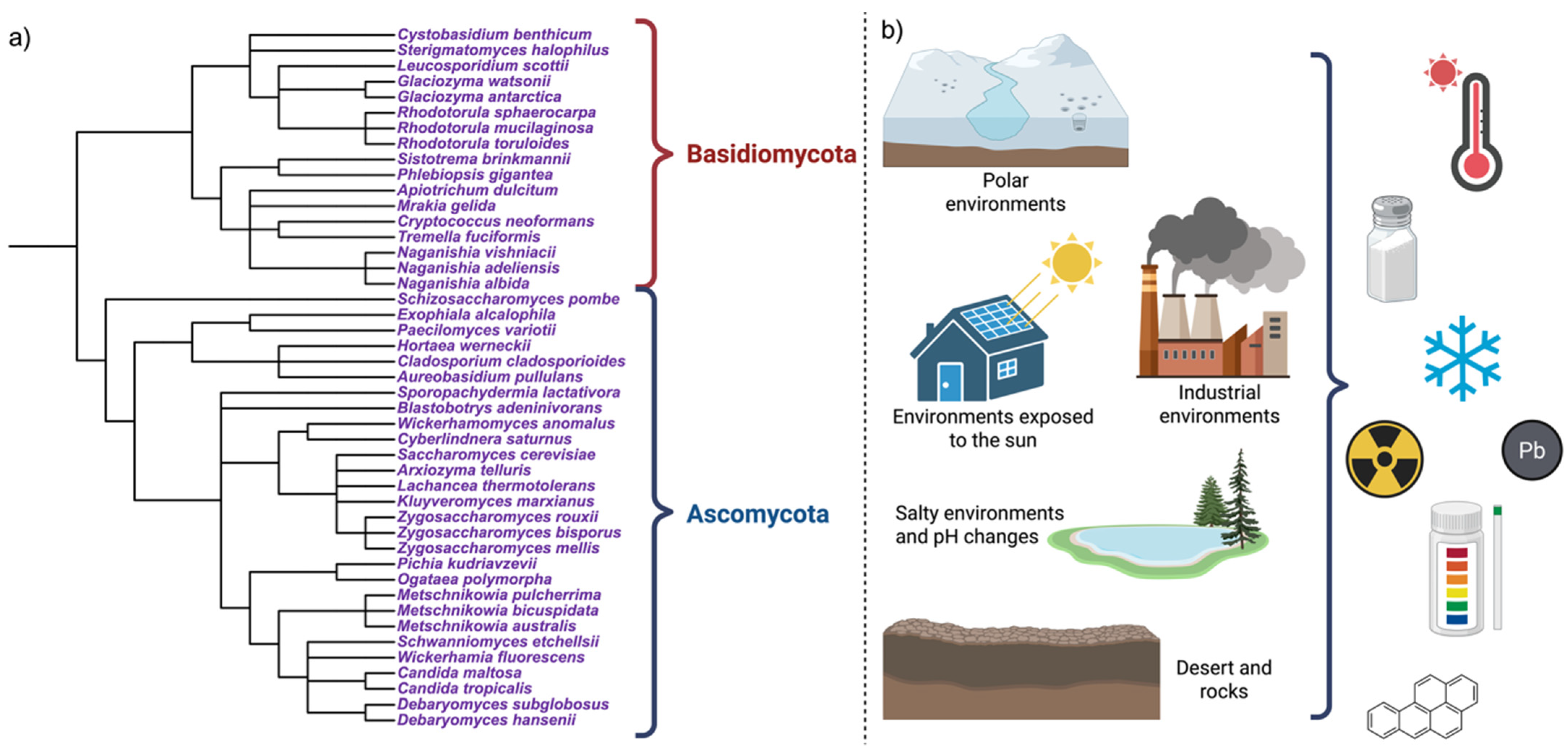
2.1. Taxonomic Diversity and Evolutionary Implications
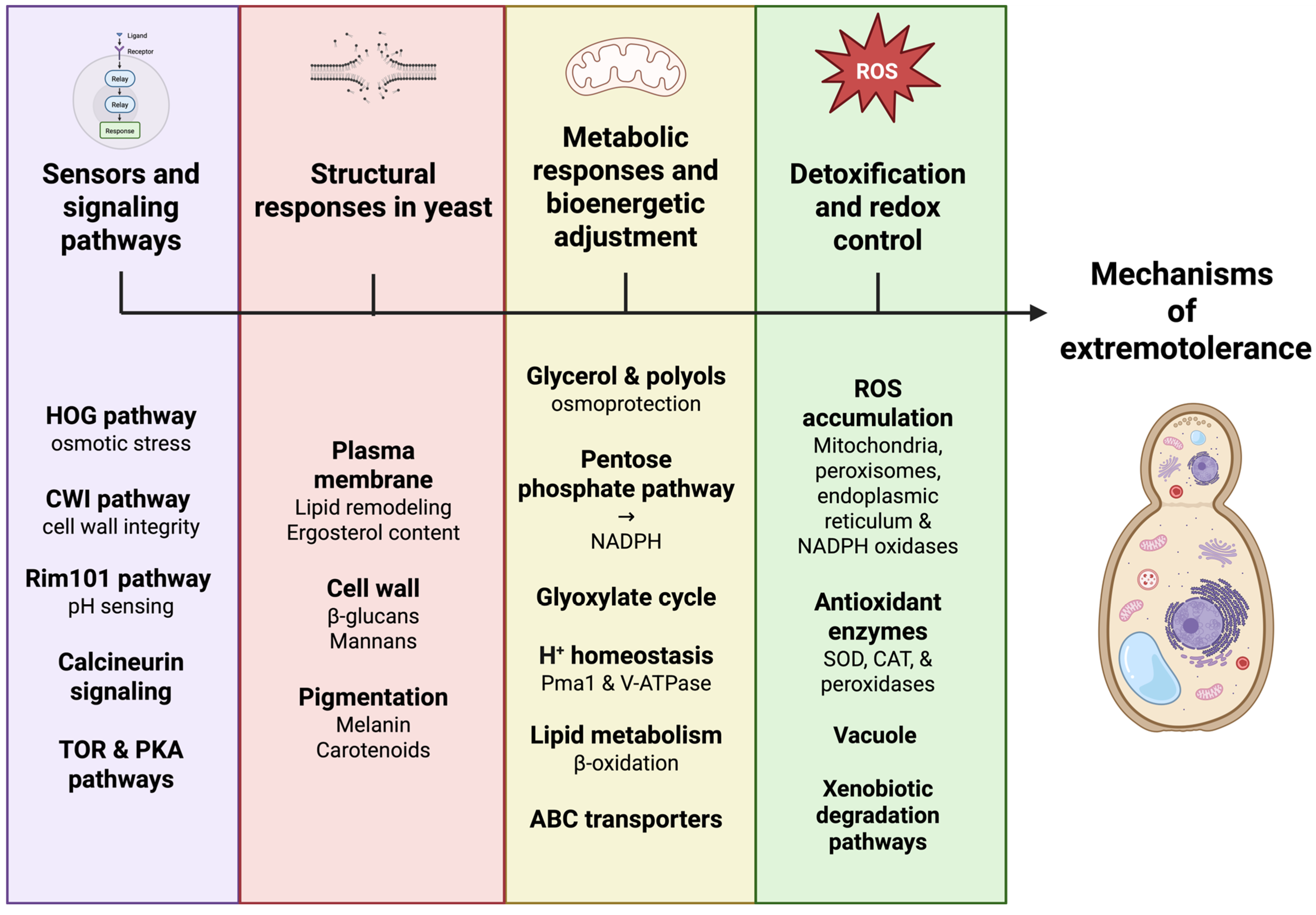
2.2. Mechanisms of Extremotolerance
2.2.1. Halotolerant and Halophilic Yeasts
2.2.2. Osmotolerant and Osmophilic Yeasts
2.2.3. Piezotolerant and Piezophilic Yeasts
2.2.4. Thermotolerant Yeasts
2.2.5. Psychrophilic and Psychrotolerant Yeasts
2.2.6. Acidophilic and Alkalitolerant Yeasts
2.2.7. Radiation- and Desiccation-Resistant Yeasts
2.2.8. Metalotolerant Yeasts
2.2.9. Polycyclic Aromatic Hydrocarbon and Xenobiotic Degrading Yeasts
2.2.10. Oxidative Stress-Tolerating Yeasts
2.3. Mechanisms of Polyextremotolerance
2.4. Comparative Advantages Versus Classical Yeasts
3. Current Applications of Yeasts in Scientific Research
3.1. Classical Uses of Model Yeasts
3.2. Emerging Applications Where Extremophilic Yeasts Outperform Classical Models
Yeasts as Experimental Systems Under Non-Conventional Growth Conditions
3.3. Conceptual Shift: From Universal Models to Functional Model Systems
3.4. Toward a Core Set of Extremophilic Yeast Model Systems
4. Omics and Systems Biology Advances in Extremophilic Yeasts
4.1. Genomics and Genome Plasticity
4.2. Transcriptomic Responses to Extreme Conditions
4.3. Proteomics, Metabolomics and Fluxomics
4.4. Synthetic Biology Tools and Genetic Engineering in Non-Conventional Yeasts
4.5. Systems Biology and Integrative Modeling
5. Biotechnological and Industrial Applications
5.1. Bioremediation and Biodegradation of Environmental Pollutants
5.1.1. Degradation of Hydrocarbons and PAHs
5.1.2. Metal Tolerance and Heavy Metal Remediation
5.1.3. Co-Metabolic Systems and Microbial Consortia
5.2. Industrial Production Platforms
5.2.1. Biofuels and Lipid-Based Products
5.2.2. Organic Acids, Enzymes and Specialty Chemicals
5.2.3. Process Robustness, Sustainability and Future Industrial Perspectives
5.2.4. Non-Sterile and Low-Cost Bioprocesses
5.3. Yeast-Based Biosensors
5.4. Conceptual Implications for Sustainable Biotechnology
6. Challenges and Knowledge Gaps
7. Future Perspectives
8. Conclusions
Author Contributions
Funding
Institutional Review Board Statement
Informed Consent Statement
Data Availability Statement
Conflicts of Interest
References
- Boekhout, T.; Amend, A.S.; El Baidouri, F.; Gabaldón, T.; Geml, J.; Mittelbach, M.; Robert, V.; Tan, C.S.; Turchetti, B.; Vu, D.; et al. Trends in yeast diversity discovery. Fungal Divers. 2022, 114, 491–537. [Google Scholar] [CrossRef] [Scilit]
- Vanderwaeren, L.; Dok, R.; Voordeckers, K.; Nuyts, S.; Verstrepen, K.J. Saccharomyces cerevisiae as a model system for eukaryotic cell biology, from cell cycle control to DNA damage response. Int. J. Mol. Sci. 2022, 23, 11665. [Google Scholar] [CrossRef] [Scilit] [PubMed]
- Elhalis, H. Expanding the horizons of Saccharomyces cerevisiae: Nutrition, oenology, and bioethanol production. Sustainability 2024, 16, 11151. [Google Scholar] [CrossRef] [Scilit]
- Onyema, V.O.; Amadi, O.C.; Moneke, A.N.; Agu, R.C. A brief review: Saccharomyces cerevisiae biodiversity potential and promising cell factories for exploitation in biotechnology and industrial processes—West African natural yeasts contribution. Food Chem. Adv. 2023, 2, 100162. [Google Scholar] [CrossRef] [Scilit]
- Segal-Kischinevzky, C.; Romero-Aguilar, L.; Alcaraz, L.D.; López-Ortiz, G.; Martínez-Castillo, B.; Torres-Ramírez, N.; Sandoval, G.; González, J. Yeasts inhabiting extreme environments and their biotechnological applications. Microorganisms 2022, 10, 794. [Google Scholar] [CrossRef] [Scilit]
- Rekadwad, B.N.; Li, W.-J.; Gonzalez, J.M.; Punchappady Devasya, R.; Ananthapadmanabha Bhagwath, A.; Urana, R.; Parwez, K. Extremophiles: The species that evolve and survive under hostile conditions. 3 Biotech. 2023, 13, 316. [Google Scholar] [CrossRef] [Scilit]
- Cazzanelli, G.; Pereira, F.; Alves, S.; Francisco, R.; Azevedo, L.; Dias Carvalho, P.; Almeida, A.; Côrte-Real, M.; Oliveira, M.; Lucas, C.; et al. The yeast Saccharomyces cerevisiae as a model for understanding RAS proteins and their role in human tumorigenesis. Cells 2018, 7, 14. [Google Scholar] [CrossRef] [Scilit]
- Acs-Szabo, L.; Papp, L.A.; Miklos, I. Understanding the molecular mechanisms of human diseases: The benefits of fission yeasts. Microb. Cell 2024, 11, 288–311. [Google Scholar] [CrossRef] [Scilit]
- Morano, K.A.; Grant, C.M.; Moye-Rowley, W.S. The response to heat shock and oxidative stress in Saccharomyces cerevisiae. Genetics 2012, 190, 1157–1195. [Google Scholar] [CrossRef] [Scilit]
- Święciło, A. Cross-stress resistance in Saccharomyces cerevisiae yeast—New insight into an old phenomenon. Cell Stress. Chaperones 2016, 21, 187–200. [Google Scholar] [CrossRef] [Scilit]
- Lara-Martínez, D.; Tristán-Flores, F.E.; Cervantes-Montelongo, J.A.; Silva-Martínez, G.A. Fungal stress responses and the importance of GPCRs. J. Fungi 2025, 11, 213. [Google Scholar] [CrossRef] [Scilit] [PubMed]
- Parapouli, M.; Vasileiadi, A.; Afendra, A.-S.; Hatziloukas, E. Saccharomyces cerevisiae and its industrial applications. AIMS Microbiol. 2020, 6, 1–32. [Google Scholar] [CrossRef] [Scilit] [PubMed]
- Buzzini, P.; Turchetti, B.; Yurkov, A. Extremophilic yeasts: The toughest yeasts around? Yeast 2018, 35, 487–497. [Google Scholar] [CrossRef] [Scilit] [PubMed]
- Marzban, G.; Tesei, D. The extremophiles: Adaptation mechanisms and biotechnological applications. Biology 2025, 14, 412. [Google Scholar] [CrossRef] [Scilit]
- Yurkov, A.; Turchetti, B.; Buzzini, P. Microbial life in extreme habitats. In Extremophilic Yeasts; Springer Nature: Cham, Switzerland, 2025; pp. 3–29. [Google Scholar]
- Buzzini, P.; Lachance, M.-A.; Yurkov, A. Yeasts in natural ecosystems: Diversity. In Yeasts in Natural Ecosystems: Diversity; Buzzini, P., Lachance, M.-A., Yurkov, A., Eds.; Springer International Publishing: Cham, Switzerland, 2017; pp. 1–15. [Google Scholar]
- Kochhar, N.; I.K., K.; Shrivastava, S.; Ghosh, A.; Rawat, V.S.; Sodhi, K.K.; Kumar, M. Perspectives on the microorganism of extreme environments and their applications. Curr. Res. Microb. Sci. 2022, 3, 100134. [Google Scholar] [CrossRef] [Scilit]
- Sepe, F.; Costanzo, E.; Ionata, E.; Marcolongo, L. Biotechnological potential of extremophiles: Environmental solutions, challenges, and advancements. Biology 2025, 14, 847. [Google Scholar] [CrossRef] [Scilit]
- Selbmann, L.; Zucconi, L.; Onofri, S.; Cecchini, C.; Isola, D.; Turchetti, B.; Buzzini, P. Taxonomic and phenotypic characterization of yeasts isolated from worldwide cold rock-associated habitats. Fungal Biol. 2014, 118, 61–71. [Google Scholar] [CrossRef] [Scilit]
- Gadanho, M.; Libkind, D.; Sampaio, J.P. Yeast diversity in the extreme acidic environments of the Iberian Pyrite Belt. Microb. Ecol. 2006, 52, 552–563. [Google Scholar] [CrossRef] [Scilit]
- Aguilera, A. Eukaryotic organisms in extreme acidic environments: The Río Tinto case. Life 2013, 3, 363–374. [Google Scholar] [CrossRef] [Scilit]
- Naranjo-Ortiz, M.A.; Gabaldón, T. Fungal evolution: Diversity, taxonomy and phylogeny of the fungi. Biol. Rev. Camb. Philos. Soc. 2019, 94, 2101–2137. [Google Scholar] [CrossRef] [Scilit]
- Keane, O.M.; Toft, C.; Carretero-Paulet, L.; Jones, G.W.; Fares, M.A. Preservation of genetic and regulatory robustness in ancient gene duplicates of Saccharomyces cerevisiae. Genome Res. 2014, 24, 1830–1841. [Google Scholar] [CrossRef] [Scilit]
- Postaru, M.; Tucaliuc, A.; Cascaval, D.; Galaction, A.-I. Cellular stress impact on yeast activity in biotechnological processes—A short overview. Microorganisms 2023, 11, 2522. [Google Scholar] [CrossRef] [Scilit]
- Ianieva, O. Halophilic and halotolerant yeasts. In Extremophilic Yeasts; Springer Nature: Cham, Switzerland, 2025; pp. 177–213. [Google Scholar]
- Plemenitaš, A.; Lenassi, M.; Konte, T.; Kejžar, A.; Zajc, J.; Gostinčar, C.; Gunde-Cimerman, N. Adaptation to high salt concentrations in halotolerant/halophilic fungi: A molecular perspective. Front. Microbiol. 2014, 5, 199. [Google Scholar] [CrossRef] [Scilit] [PubMed]
- Hohmann, S. Osmotic stress signaling and osmoadaptation in yeasts. Microbiol. Mol. Biol. Rev. 2002, 66, 300–372. [Google Scholar] [CrossRef] [Scilit] [PubMed]
- de Nadal, E.; Posas, F. The HOG pathway and the regulation of osmoadaptive responses in yeast. FEMS Yeast Res. 2022, 22, foac013. [Google Scholar] [CrossRef] [Scilit] [PubMed]
- Zalar, P.; Zupančič, J.; Gostinčar, C.; Zajc, J.; de Hoog, G.S.; De Leo, F.; Azua-Bustos, A.; Gunde-Cimerman, N. The extremely halotolerant black yeast Hortaea werneckii—A model for intraspecific hybridization in clonal fungi. IMA Fungus 2019, 10, 10. [Google Scholar] [CrossRef] [Scilit]
- Prista, C.; Loureiro-Dias, M.C. Debaryomyces hansenii, a salt-loving spoilage yeast. In A Portrait of State-of-the-Art Research at the Technical University of Lisbon; Springer: Dordrecht, The Netherlands, 2007; pp. 457–464. [Google Scholar]
- Rzechonek, D.A.; Day, A.M.; Quinn, J.; Mirończuk, A.M. Influence of YlHog1 MAPK kinase on Yarrowia lipolytica stress response and erythritol production. Sci. Rep. 2018, 8, 14735. [Google Scholar] [CrossRef] [Scilit]
- Sánchez, N.S.; Calahorra, M.; González, J.; Defosse, T.; Papon, N.; Peña, A.; Coria, R. Contribution of the mitogen-activated protein kinase Hog1 to the halotolerance of the marine yeast Debaryomyces hansenii. Curr. Genet. 2020, 66, 1135–1153. [Google Scholar] [CrossRef] [Scilit]
- Turk, M.; Méjanelle, L.; Šentjurc, M.; Grimalt, J.O.; Gunde-Cimerman, N.; Plemenitaš, A. Salt-induced changes in lipid composition and membrane fluidity of halophilic yeast-like melanized fungi. Extremophiles 2004, 8, 53–61. [Google Scholar] [CrossRef] [Scilit]
- Turk, M.; Montiel, V.; Žigon, D.; Plemenitaš, A.; Ramos, J. Plasma membrane composition of Debaryomyces hansenii adapts to changes in pH and external salinity. Microbiology 2007, 153, 3586–3592. [Google Scholar] [CrossRef] [Scilit]
- Mansour, M.M.F.; Salama, K.H.A.; Allam, H.Y.H. Role of the plasma membrane in saline conditions: Lipids and proteins. Bot. Rev. 2015, 81, 416–451. [Google Scholar] [CrossRef] [Scilit]
- Song, N.; Xia, H.; Yang, Q.; Zhang, X.; Yao, L.; Yang, S.; Chen, X.; Dai, J. Differential analysis of ergosterol function in response to high salt and sugar stress in Zygosaccharomyces rouxii. FEMS Yeast Res. 2022, 22, foac040. [Google Scholar] [CrossRef] [Scilit] [PubMed]
- Wang, D.; Zhang, M.; Huang, J.; Zhou, R.; Jin, Y.; Zhao, D.; Zheng, J.; Wu, C. Heat preadaptation improved the ability of Zygosaccharomyces rouxii to salt stress: A combined physiological and transcriptomic analysis. Appl. Microbiol. Biotechnol. 2021, 105, 259–270. [Google Scholar] [CrossRef] [Scilit] [PubMed]
- Wang, H.; Tang, J.; Lv, J.; Wang, X.; Sun, H. Physiological and transcriptomic insights into sugar stress resistance in osmophilic yeast Zygosaccharomyces rouxii. Food Microbiol. 2024, 117, 104395. [Google Scholar] [CrossRef] [Scilit] [PubMed]
- Levin, D.E. Regulation of cell wall biogenesis in Saccharomyces cerevisiae: The cell wall integrity signaling pathway. Genetics 2011, 189, 1145–1175. [Google Scholar] [CrossRef] [Scilit]
- Watanabe, J.; Uehara, K.; Mogi, Y. Adaptation of the osmotolerant yeast Zygosaccharomyces rouxii to an osmotic environment through copy number amplification of FLO11D. Genetics 2013, 195, 393–405. [Google Scholar] [CrossRef] [Scilit]
- Navarrete, C.; Sánchez, B.J.; Savickas, S.; Martínez, J.L. DebaryOmics: An integrative–omics study to understand the halophilic behaviour of Debaryomyces hansenii. Microb. Biotechnol. 2022, 15, 1133–1151. [Google Scholar] [CrossRef] [Scilit]
- Galello, F.; Bermúdez-Moretti, M.; Ortolá Martínez, M.C.; Rossi, S.; Portela, P. The cAMP–PKA signalling crosstalks with CWI and HOG-MAPK pathways in yeast cell response to osmotic and thermal stress. Microb. Cell 2024, 11, 90–105. [Google Scholar] [CrossRef] [Scilit]
- Prista, C.; Michán, C.; Miranda, I.M.; Ramos, J. The halotolerant Debaryomyces hansenii, the Cinderella of non-conventional yeasts. Yeast 2016, 33, 523–533. [Google Scholar] [CrossRef] [Scilit]
- Lenassi, M.; Gostinčar, C.; Jackman, S.; Turk, M.; Sadowski, I.; Nislow, C.; Jones, S.; Birol, I.; Gunde-Cimerman, N.; Plemenitaš, A. Whole genome duplication and enrichment of metal cation transporters revealed by de novo genome sequencing of extremely halotolerant black yeast Hortaea werneckii. PLoS ONE 2013, 8, e71328. [Google Scholar] [CrossRef] [Scilit]
- Gunde-Cimerman, N.; Plemenitaš, A.; Oren, A. Strategies of adaptation of microorganisms of the three domains of life to high salt concentrations. FEMS Microbiol. Rev. 2018, 42, 353–375. [Google Scholar] [CrossRef] [Scilit] [PubMed]
- Kogej, T.; Stein, M.; Volkmann, M.; Gorbushina, A.A.; Galinski, E.A.; Gunde-Cimerman, N. Osmotic adaptation of the halophilic fungus Hortaea werneckii: Role of osmolytes and melanization. Microbiology 2007, 153, 4261–4273. [Google Scholar] [CrossRef] [Scilit] [PubMed]
- Dakal, T.C.; Solieri, L.; Giudici, P. Adaptive response and tolerance to sugar and salt stress in the food yeast Zygosaccharomyces rouxii. Int. J. Food Microbiol. 2014, 185, 140–157. [Google Scholar] [CrossRef] [Scilit] [PubMed]
- Čadež, N.; Kachalkin, A.; Péter, G. Osmotolerant and osmophilic yeasts. In Extremophilic Yeasts; Springer Nature: Cham, Switzerland, 2025; pp. 215–246. [Google Scholar]
- Brysch-Herzberg, M.; Tobias, A.; Seidel, M.; Wittmann, R.; Wohlmann, E.; Fischer, R.; Dlauchy, D.; Péter, G. Schizosaccharomyces osmophilus sp. nov., an osmophilic fission yeast occurring in bee bread of different solitary bee species. FEMS Yeast Res. 2019, 19, foz038. [Google Scholar] [CrossRef] [Scilit]
- Péter, G. Biodiversity of Zygosaccharomyces species in food systems. Acta Aliment. 2022, 51, 43–51. [Google Scholar] [CrossRef] [Scilit]
- Mizuno, Y.; Yoshimura, T.; Sawada, K.; Tsuge, K.; Nagano, Y.; Yoshizaki, Y.; Goto, M.; Kobayashi, G. Crucial role of early addition of Wickerhamiella versatilis in enhancing aroma formation during soy sauce fermentation. J. Biosci. Bioeng. 2025, 139, 271–279. [Google Scholar] [CrossRef] [Scilit]
- Blomberg, A.; Adler, L. Physiology of osmotolerance in fungi. In Physiology and Biochemistry of Fungal Osmotolerance; Jennings, D.H., Ed.; Cambridge University Press: Cambridge, UK, 1992; pp. 145–212. [Google Scholar]
- Guo, H.; Qiu, Y.; Wei, J.; Niu, C.; Zhang, Y.; Yuan, Y.; Yue, T. Genomic insights into sugar adaptation in an extremophile yeast Zygosaccharomyces rouxii. Front. Microbiol. 2020, 10, 3157. [Google Scholar] [CrossRef] [Scilit]
- Burgaud, G.; Ho, V.S. Piezophilic and piezotolerant yeasts. In Extremophilic Yeasts; Springer Nature: Cham, Switzerland, 2025; pp. 277–314. [Google Scholar]
- Fernandes, P.M.B. How does yeast respond to pressure? Braz. J. Med. Biol. Res. 2005, 38, 1239–1245. [Google Scholar] [CrossRef] [Scilit]
- Burgaud, G.; Hué, N.T.M.; Arzur, D.; Coton, M.; Perrier-Cornet, J.-M.; Jebbar, M.; Barbier, G. Effects of hydrostatic pressure on yeasts isolated from deep-sea hydrothermal vents. Res. Microbiol. 2015, 166, 700–709. [Google Scholar] [CrossRef] [Scilit]
- Abe, F. Exploration of the effects of high hydrostatic pressure on microbial growth, physiology and survival: Perspectives from piezophysiology. Biosci. Biotechnol. Biochem. 2007, 71, 2347–2357. [Google Scholar] [CrossRef] [Scilit]
- Mentré, P.; Hoa, G.H.B. Effects of high hydrostatic pressures on living cells: A consequence of the properties of macromolecules and macromolecule-associated water. In High Pressure Bioscience and Biotechnology; Abe, F., Kato, C., Eds.; Elsevier: Amsterdam, The Netherlands, 2001; pp. 1–84. [Google Scholar]
- Bravim, F.; Mota, M.M.; Fernandes, A.A.R.; Fernandes, P.M.B. High hydrostatic pressure leads to free radicals accumulation in yeast cells triggering oxidative stress. FEMS Yeast Res. 2016, 16, fow052. [Google Scholar] [CrossRef] [Scilit] [PubMed]
- Sibirny, A.; Ruchala, J.; Vasylyshyn, R.; Peter, G.; Dmytruk, K. Mechanisms of thermotolerance and thermotolerant yeasts: Properties and applications. In Extremophilic Yeasts; Springer Nature: Cham, Switzerland, 2025; pp. 33–107. [Google Scholar]
- Hughes, S.R.; Qureshi, N.; López-Núñez, J.C.; Jones, M.A.; Jarodsky, J.M.; Galindo-Leva, L.Á.; Lindquist, M.R. Utilization of inulin-containing waste in industrial fermentations to produce biofuels and bio-based chemicals. World J. Microbiol. Biotechnol. 2017, 33, 78. [Google Scholar] [CrossRef] [Scilit] [PubMed]
- Banat, I.M.; Nigam, P.; Marchant, R. Isolation of thermotolerant, fermentative yeasts growing at 52 °C and producing ethanol at 45 °C and 50 °C. World J. Microbiol. Biotechnol. 1992, 8, 259–263. [Google Scholar] [CrossRef] [Scilit] [PubMed]
- Vaughan-Martini, A.; Lachance, M.-A.; Kurtzman, C.P. Kazachstania zubkova (1971). In The Yeasts, 5th ed.; Kurtzman, C.P., Fell, J.W., Boekhout, T., Eds.; Elsevier: London, UK, 2011; pp. 439–470. [Google Scholar]
- Boundy-Mills, K.; Miller, M.W. Cyniclomyces van der Walt & D.B. Scott (1971). In The Yeasts, 5th ed.; Kurtzman, C.P., Fell, J.W., Boekhout, T., Eds.; Elsevier: London, UK, 2011; pp. 357–360. [Google Scholar]
- Lindquist, S.; Craig, E.A. The heat-shock proteins. Annu. Rev. Genet. 1988, 22, 631–677. [Google Scholar] [CrossRef]
- Suutari, M.; Liukkonen, K.; Laakso, S. Temperature adaptation in yeasts: The role of fatty acids. J. Gen. Microbiol. 1990, 136, 1469–1474. [Google Scholar] [CrossRef] [Scilit]
- Caspeta, L.; Chen, Y.; Ghiaci, P.; Feizi, A.; Buskov, S.; Hallström, B.M.; Petranovic, D.; Nielsen, J. Altered sterol composition renders yeast thermotolerant. Science 2014, 346, 75–78. [Google Scholar] [CrossRef] [Scilit]
- Prasad, R.; Khandelwal, N.K.; Banerjee, A. Yeast ABC transporters in lipid trafficking. Fungal Genet. Biol. 2016, 93, 25–34. [Google Scholar] [CrossRef] [Scilit]
- Godinho, C.P.; Costa, R.; Sá-Correia, I. The ABC transporter Pdr18 is required for yeast thermotolerance due to its role in ergosterol transport and plasma membrane properties. Environ. Microbiol. 2021, 23, 69–80. [Google Scholar] [CrossRef] [Scilit]
- de Nadal, E.; Ammerer, G.; Posas, F. Controlling gene expression in response to stress. Nat. Rev. Genet. 2011, 12, 833–845. [Google Scholar] [CrossRef] [Scilit]
- Kubiak-Szymendera, M.; Pryszcz, L.P.; Białas, W.; Celińska, E. Epigenetic response of Yarrowia lipolytica to stress: Tracking methylation level and search for methylation patterns via whole-genome sequencing. Microorganisms 2021, 9, 1798. [Google Scholar] [CrossRef] [Scilit]
- Turchetti, B.; Sannino, C.; Mugnai, G.; Buzzini, P. Psychrophilic and psychrotolerant yeasts. In Extremophilic Yeasts; Springer Nature: Cham, Switzerland, 2025; pp. 109–175. [Google Scholar]
- Turchetti, B.; Thomas Hall, S.R.; Connell, L.B.; Branda, E.; Buzzini, P.; Theelen, B.; Müller, W.H.; Boekhout, T. Psychrophilic yeasts from Antarctica and European glaciers: Description of Glaciozyma gen. nov., Glaciozyma martinii sp. nov. and Glaciozyma watsonii sp. nov. Extremophiles 2011, 15, 573–586. [Google Scholar] [CrossRef] [Scilit]
- Wang, Q.-M.; Yurkov, A.M.; Göker, M.; Lumbsch, H.T.; Leavitt, S.D.; Groenewald, M.; Theelen, B.; Liu, X.-Z.; Boekhout, T.; Bai, F.-Y. Phylogenetic classification of yeasts and related taxa within Pucciniomycotina. Stud. Mycol. 2015, 81, 149–189. [Google Scholar] [CrossRef] [Scilit]
- Yurkov, A. Temporal and geographic patterns in yeast distribution. In Yeasts in Natural Ecosystems: Ecology; Springer International Publishing: Cham, Switzerland, 2017; pp. 101–130. [Google Scholar]
- Buzzini, P.; Branda, E.; Goretti, M.; Turchetti, B. Psychrophilic yeasts from worldwide glacial habitats: Diversity, adaptation strategies and biotechnological potential. FEMS Microbiol. Ecol. 2012, 82, 217–241. [Google Scholar] [CrossRef] [Scilit]
- Gunde-Cimerman, N.; Plemenitaš, A.; Buzzini, P. Changes in lipid composition and fluidity of yeast plasma membrane as response to cold. In Cold-Adapted Yeasts; Springer: Berlin, Germany, 2014; pp. 225–242. [Google Scholar]
- Boo, S.Y.; Wong, C.M.V.L.; Rodrigues, K.F.; Najimudin, N.; Murad, A.M.A.; Mahadi, N.M. Thermal stress responses in Antarctic yeast Glaciozyma antarctica PI12 characterized by real-time quantitative PCR. Polar Biol. 2013, 36, 381–389. [Google Scholar] [CrossRef] [Scilit]
- Firdaus-Raih, M.; Hashim, N.H.F.; Bharudin, I.; Abu Bakar, M.F.; Huang, K.K.; Alias, H.; Lee, B.K.B.; Mat Isa, M.N.; Mat-Sharani, S.; Sulaiman, S.; et al. The Glaciozyma antarctica genome reveals an array of systems that provide sustained responses towards temperature variations in a persistently cold habitat. PLoS ONE 2018, 13, e0189947. [Google Scholar] [CrossRef] [Scilit] [PubMed]
- Petrescu, I.; Lamotte-Brasseur, J.; Chessa, J.-P.; Ntarima, P.; Claeyssens, M.; Devreese, B.; Marino, G.; Gerday, C. Xylanase from the psychrophilic yeast Cryptococcus adeliensis. Extremophiles 2000, 4, 137–144. [Google Scholar] [CrossRef] [Scilit] [PubMed]
- Alcaíno, J.; Cifuentes, V.; Baeza, M. Physiological adaptations of yeasts living in cold environments and their potential applications. World J. Microbiol. Biotechnol. 2015, 31, 1467–1473. [Google Scholar] [CrossRef] [Scilit]
- Margesin, R. Bioremediation and biodegradation of hydrocarbons by cold-adapted yeasts. In Cold-Adapted Yeasts; Springer: Berlin, Germany, 2014; pp. 465–480. [Google Scholar]
- Gross, S.; Robbins, E.I. Acidophilic and acid-tolerant fungi and yeasts. Hydrobiologia 2000, 433, 91–109. [Google Scholar] [CrossRef] [Scilit]
- Deak, T. Environmental factors influencing yeasts. In Biodiversity and Ecophysiology of Yeasts; Springer: Berlin/Heidelberg, Germany, 2006; pp. 155–174. [Google Scholar]
- Kane, P.M. Proton transport and pH control in fungi. In The Mycota VIII: Physiology and Genetics; Springer: Berlin/Heidelberg, Germany, 2016; pp. 33–68. [Google Scholar]
- Sannino, C.; Mugnai, G.; Turchetti, B.; Buzzini, P. Yeasts at extreme pH conditions. In Extremophilic Yeasts; Springer Nature: Cham, Switzerland, 2025; pp. 247–276. [Google Scholar]
- Ianutsevich, E.A.; Danilova, O.A.; Grum-Grzhimaylo, O.A.; Groza, N.V.; Tereshina, V.M. Adaptation of the acidophilic fungus Sistotrema brinkmannii to the pH factor. Microbiology 2023, 92, 370–378. [Google Scholar] [CrossRef] [Scilit]
- Ianutsevich, E.A.; Danilova, O.A.; Grum-Grzhimaylo, O.A.; Tereshina, V.M. Membrane lipids and osmolytes in the response of the acidophilic basidiomycete Phlebiopsis gigantea to heat, cold, and osmotic shocks. Int. J. Mol. Sci. 2024, 25, 3380. [Google Scholar] [CrossRef] [Scilit]
- Pulschen, A.A.; Rodrigues, F.; Duarte, R.T.D.; Araujo, G.G.; Santiago, I.F.; Paulino-Lima, I.G.; Rosa, C.A.; Kato, M.J.; Pellizari, V.H.; Galante, D. UV-resistant yeasts isolated from a high-altitude volcanic area of the Atacama Desert as eukaryotic models for astrobiology. Microbiologyopen 2015, 4, 574–588. [Google Scholar] [CrossRef] [Scilit]
- Robison, Z.L.; Ren, Q.; Zhang, Z. How to survive without water: A short lesson on the desiccation tolerance of budding yeast. Int. J. Mol. Sci. 2024, 25, 7514. [Google Scholar] [CrossRef] [Scilit] [PubMed]
- Bland, J.; Gribble, L.A.; Hamel, M.C.; Wright, J.B.; Moormann, G.; Bachand, M.; Wright, G.; Bachand, G.D. Evaluating changes in growth and pigmentation of Cladosporium cladosporioides and Paecilomyces variotii in response to gamma and ultraviolet irradiation. Sci. Rep. 2022, 12, 12142. [Google Scholar] [CrossRef] [Scilit] [PubMed]
- Camacho, E.; Vij, R.; Chrissian, C.; Prados-Rosales, R.; Gil, D.; O’Meally, R.N.; Cordero, R.J.B.; Cole, R.N.; McCaffery, J.M.; Stark, R.E.; et al. The structural unit of melanin in the cell wall of the fungal pathogen Cryptococcus neoformans. J. Biol. Chem. 2019, 294, 10471–10489. [Google Scholar] [CrossRef] [Scilit] [PubMed]
- Sharma, R.; Ghoshal, G. Characterization and cytotoxic activity of pigment extracted from Rhodotorula mucilaginosa to assess its potential as bio-functional additive in confectionery products. J. Food Sci. Technol. 2021, 58, 2688–2698. [Google Scholar] [CrossRef] [Scilit]
- Boiteux, S.; Jinks-Robertson, S. DNA repair mechanisms and the bypass of DNA damage in Saccharomyces cerevisiae. Genetics 2013, 193, 1025–1064. [Google Scholar] [CrossRef] [Scilit]
- Tesei, D. Black fungi research: Out-of-this-world implications. Encyclopedia 2022, 2, 212–229. [Google Scholar] [CrossRef] [Scilit]
- Teixeira, M.M.; Moreno, L.F.; Stielow, B.J.; Muszewska, A.; Hainaut, M.; Gonzaga, L.; Abouelleil, A.; Patané, J.S.L.; Priest, M.; Souza, R.; et al. Exploring the genomic diversity of black yeasts and relatives (Chaetothyriales, Ascomycota). Stud. Mycol. 2017, 86, 1–28. [Google Scholar] [CrossRef] [Scilit]
- Botstein, D.; Fink, G.R. Yeast: An experimental organism for 21st century biology. Genetics 2011, 189, 695–704. [Google Scholar] [CrossRef] [Scilit]
- Mattiazzi, M.; Petrovič, U.; Križaj, I. Yeast as a model eukaryote in toxinology: A functional genomics approach to studying the molecular basis of action of pharmacologically active molecules. Toxicon 2012, 60, 558–571. [Google Scholar] [CrossRef] [Scilit]
- Jacobson, T.; Priya, S.; Sharma, S.K.; Andersson, S.; Jakobsson, S.; Tanghe, R.; Ashouri, A.; Rauch, S.; Goloubinoff, P.; Christen, P.; et al. Cadmium causes misfolding and aggregation of cytosolic proteins in yeast. Mol. Cell. Biol. 2017, 37, e00490-16. [Google Scholar] [CrossRef] [Scilit] [PubMed]
- Oremland, R.S.; Stolz, J.F. The ecology of arsenic. Science 2003, 300, 939–944. [Google Scholar] [CrossRef] [Scilit] [PubMed]
- Vadkertiová, R.; Horváthová, Á. Metallotolerant yeasts. In Extremophilic Yeasts; Springer Nature: Cham, Switzerland, 2025; pp. 315–367. [Google Scholar]
- Villegas, L.B.; Amoroso, M.J.; de Figueroa, L.I.C. Copper-tolerant yeasts isolated from polluted areas of Argentina. J. Basic Microbiol. 2005, 45, 381–391. [Google Scholar] [CrossRef] [Scilit] [PubMed]
- Villegas, L.B.; Amoroso, M.J.; de Figueroa, L.I.C. Responses of Candida fukuyamaensis RCL-3 and Rhodotorula mucilaginosa RCL-11 to copper stress. J. Basic. Microbiol. 2009, 49, 395–403. [Google Scholar] [CrossRef] [Scilit]
- Ilyas, S.; Rehman, A.; Ilyas, Q. Heavy metals induced oxidative stress in multi-metal tolerant yeast Candida sp. PS33 and its capability to uptake heavy metals from wastewater. Pak. J. Zool. 2017, 49, 769–775. [Google Scholar] [CrossRef] [Scilit]
- Khan, Z.; Rehman, A.; Nisar, M.A.; Zafar, S.; Hussain, S.Z.; Zerr, I.; Hussain, I.; Waseem, M.; Arif, M. Molecular basis of Cd2+ stress response in Candida tropicalis. Appl. Microbiol. Biotechnol. 2017, 101, 7715–7728. [Google Scholar] [CrossRef] [Scilit]
- Peña, M.M.O.; Lee, J.; Thiele, D.J. A delicate balance: Homeostatic control of copper uptake and distribution. J. Nutr. 1999, 129, 1251–1260. [Google Scholar] [CrossRef] [Scilit]
- Eide, D.J. The molecular biology of metal ion transport in Saccharomyces cerevisiae. Annu. Rev. Nutr. 1998, 18, 441–469. [Google Scholar] [CrossRef] [Scilit]
- Kamizono, A.; Nishizawa, M.; Teranishi, Y.; Murata, K.; Kimura, A. Identification of a gene conferring resistance to zinc and cadmium ions in the yeast Saccharomyces cerevisiae. Mol. Gen. Genet. 1989, 219, 161–167. [Google Scholar] [CrossRef] [Scilit]
- Pal, R.; Rai, J.P.N. Phytochelatins: Peptides involved in heavy metal detoxification. Appl. Biochem. Biotechnol. 2010, 160, 945–963. [Google Scholar] [CrossRef] [Scilit]
- Paš, M.; Milačič, R.; Drašar, K.; Pollak, N.; Raspor, P. Uptake of chromium(III) and chromium(VI) compounds in the yeast cell structure. Biometals 2004, 17, 25–33. [Google Scholar] [CrossRef] [Scilit] [PubMed]
- Mielniczki-Pereira, A.A.; Schuch, A.Z.; Bonatto, D.; Cavalcante, C.F.; Vaitsman, D.S.; Riger, C.J.; Eleutherio, E.C.A.; Henriques, J.A.P. The role of the yeast ATP-binding cassette Ycf1p in glutathione and cadmium ion homeostasis during respiratory metabolism. Toxicol. Lett. 2008, 180, 21–27. [Google Scholar] [CrossRef] [Scilit] [PubMed]
- Chatterjee, S.; Kumari, S.; Rath, S.; Priyadarshanee, M.; Das, S. Diversity, structure and regulation of microbial metallothionein: Metal resistance and possible applications in sequestration of toxic metals. Metallomics 2020, 12, 1637–1655. [Google Scholar] [CrossRef] [Scilit] [PubMed]
- Gadd, G.M.; de Rome, L. Biosorption of copper by fungal melanin. Appl. Microbiol. Biotechnol. 1988, 29, 610–617. [Google Scholar] [CrossRef] [Scilit]
- Kan, G.; Wang, X.; Jiang, J.; Zhang, C.; Chi, M.; Ju, Y.; Shi, C. Copper stress response in yeast Rhodotorula mucilaginosa AN5 isolated from Antarctic sea ice. Microbiologyopen 2019, 8, e00657. [Google Scholar] [CrossRef] [Scilit]
- Padilla-Garfias, F.; Araiza-Villanueva, M.; Calahorra, M.; Sánchez, N.S.; Peña, A. Advances in the degradation of polycyclic aromatic hydrocarbons by yeasts: A review. Microorganisms 2024, 12, 2484. [Google Scholar] [CrossRef] [Scilit]
- Padilla-Garfias, F.; Poot-Hernández, A.C.; Araiza-Villanueva, M.; Calahorra, M.; Sánchez, N.S.; Peña, A. Transcriptomic profiling of Debaryomyces hansenii reveals detoxification and stress responses to benzo(a)pyrene exposure. Appl. Environ. Microbiol. 2025, 91, e01557-25. [Google Scholar] [CrossRef] [Scilit]
- Padilla-Garfias, F.; Sánchez, N.S.; Calahorra, M.; Peña, A. DhDIT2 encodes a Debaryomyces hansenii cytochrome P450 involved in benzo(a)pyrene degradation—A proposal for mycoremediation. J. Fungi 2022, 8, 1150. [Google Scholar] [CrossRef] [Scilit]
- Martínez-Ávila, L.; Peidro-Guzmán, H.; Pérez-Llano, Y.; Moreno-Perlín, T.; Sánchez-Reyes, A.; Aranda, E.; Ángeles de Paz, G.; Fernández-Silva, A.; Folch-Mallol, J.L.; Cabana, H.; et al. Tracking gene expression, metabolic profiles, and biochemical analysis in the halotolerant basidiomycetous yeast Rhodotorula mucilaginosa EXF-1630 during benzo[a]pyrene and phenanthrene biodegradation under hypersaline conditions. Environ. Pollut. 2021, 271, 116358. [Google Scholar] [CrossRef] [Scilit]
- Aranda, E. Promising approaches towards biotransformation of polycyclic aromatic hydrocarbons with Ascomycota fungi. Curr. Opin. Biotechnol. 2016, 38, 1–8. [Google Scholar] [CrossRef] [Scilit]
- Padilla-Garfias, F.; Sánchez, N.S.; Calahorra, M.; Peña, A. Levaduras degradadoras de hidrocarburos aromáticos policíclicos. Rev. Educ. Bioquím. 2021, 40, 178–188. [Google Scholar]
- Padilla-Garfias, F.; Araiza-Villanueva, M.G.; Calahorra, M.; Sánchez, N.S.; Peña, A. Mechanisms of the marine yeast Debaryomyces hansenii for protection against reactive oxygen species produced during benzo(a)pyrene biotransformation. Appl. Environ. Microbiol. 2026, e0231425. [Google Scholar] [CrossRef] [Scilit] [PubMed]
- Zadrąg-Tęcza, R.; Maślanka, R.; Kwolek-Mirek, M. Oxidative stress-tolerating yeasts. In Extremophilic Yeasts; Springer Nature: Cham, Switzerland, 2025; pp. 369–424. [Google Scholar]
- Herrero, E.; Ros, J.; Bellí, G.; Cabiscol, E. Redox control and oxidative stress in yeast cells. Biochim. Biophys. Acta Gen. Subj. 2008, 1780, 1217–1235. [Google Scholar] [CrossRef] [Scilit] [PubMed]
- Aung-Htut, M.T.; Ayer, A.; Breitenbach, M.; Dawes, I.W. Oxidative stresses and ageing. In Oxidative Stress and Ageing; Springer: Berlin/Heidelberg, Germany, 2011; pp. 13–54. [Google Scholar]
- Zadrąg-Tęcza, R.; Maślanka, R.; Bednarska, S.; Kwolek-Mirek, M. Response mechanisms to oxidative stress in yeast and filamentous fungi. In Stress Response Mechanisms in Fungi; Springer International Publishing: Cham, Switzerland, 2018; pp. 1–34. [Google Scholar]
- Rinnerthaler, M.; Büttner, S.; Laun, P.; Heeren, G.; Felder, T.K.; Klinger, H.; Weinberger, M.; Stolze, K.; Grousl, T.; Hasek, J.; et al. Yno1p/Aim14p, a NADPH oxidase ortholog, controls extramitochondrial reactive oxygen species generation, apoptosis, and actin cable formation in yeast. Proc. Natl. Acad. Sci. USA 2012, 109, 8658–8663. [Google Scholar] [CrossRef] [Scilit] [PubMed]
- Delaunay, A.; Pflieger, D.; Barrault, M.-B.; Vinh, J.; Toledano, M.B. A thiol peroxidase is an H2O2 receptor and redox transducer in gene activation. Cell 2002, 111, 471–481. [Google Scholar] [CrossRef] [Scilit]
- Wood, M.J.; Andrade, E.C.; Storz, G. The redox domain of the Yap1p transcription factor contains two disulfide bonds. Biochemistry 2003, 42, 11982–11991. [Google Scholar] [CrossRef] [Scilit]
- Charizanis, C.; Juhnke, H.; Krems, B.; Entian, K.-D. The mitochondrial cytochrome c peroxidase Ccp1 of Saccharomyces cerevisiae is involved in conveying an oxidative stress signal to the transcription factor Pos9 (Skn7). Mol. Gen. Genet. 1999, 262, 437–447. [Google Scholar] [CrossRef] [Scilit]
- Salmon, T.B. Biological consequences of oxidative stress-induced DNA damage in Saccharomyces cerevisiae. Nucleic Acids Res. 2004, 32, 3712–3723. [Google Scholar] [CrossRef] [Scilit]
- Chalissery, J.; Jalal, D.; Al-Natour, Z.; Hassan, A.H. Repair of oxidative DNA damage in Saccharomyces cerevisiae. DNA Repair 2017, 51, 2–13. [Google Scholar] [CrossRef] [Scilit]
- Cipak, A.; Jaganjac, M.; Tehlivets, O.; Kohlwein, S.D.; Zarkovic, N. Adaptation to oxidative stress induced by polyunsaturated fatty acids in yeast. Biochim. Biophys. Acta Mol. Cell Biol. Lipids 2008, 1781, 283–287. [Google Scholar] [CrossRef] [Scilit]
- Cipak, A.; Hasslacher, M.; Tehlivets, O.; Collinson, E.J.; Zivkovic, M.; Matijevic, T.; Wonisch, W.; Waeg, G.; Dawes, I.W.; Zarkovic, N.; et al. Saccharomyces cerevisiae strain expressing a plant fatty acid desaturase produces polyunsaturated fatty acids and is susceptible to oxidative stress induced by lipid peroxidation. Free Radic. Biol. Med. 2006, 40, 897–906. [Google Scholar] [CrossRef] [Scilit] [PubMed]
- Estruch, F. Stress-controlled transcription factors, stress-induced genes and stress tolerance in budding yeast. FEMS Microbiol. Rev. 2000, 24, 469–486. [Google Scholar] [CrossRef] [PubMed]
- Ralser, M.; Kuhl, H.; Ralser, M.; Werber, M.; Lehrach, H.; Breitenbach, M.; Timmermann, B. The Saccharomyces cerevisiae W303-K6001 cross-platform genome sequence: Insights into ancestry and physiology of a laboratory mutt. Open Biol. 2012, 2, 120093. [Google Scholar] [CrossRef] [Scilit] [PubMed]
- Ralser, M.; Wamelink, M.M.; Kowald, A.; Gerisch, B.; Heeren, G.; Struys, E.A.; Klipp, E.; Jakobs, C.; Breitenbach, M.; Lehrach, H.; et al. Dynamic rerouting of the carbohydrate flux is key to counteracting oxidative stress. J. Biol. 2007, 6, 10. [Google Scholar] [CrossRef] [Scilit]
- Christodoulou, D.; Kuehne, A.; Estermann, A.; Fuhrer, T.; Lang, P.; Sauer, U. Reserve flux capacity in the pentose phosphate pathway by NADPH binding is conserved across kingdoms. iScience 2019, 19, 1133–1144. [Google Scholar] [CrossRef] [Scilit]
- Chiu, J.; Tactacan, C.M.; Tan, S.-X.; Lin, R.C.Y.; Wouters, M.A.; Dawes, I.W. Cell cycle sensing of oxidative stress in Saccharomyces cerevisiae by oxidation of a specific cysteine residue in the transcription factor Swi6p. J. Biol. Chem. 2011, 286, 5204–5214. [Google Scholar] [CrossRef] [Scilit]
- Mannazzu, I.; Landolfo, S.; da Silva, T.L.; Buzzini, P. Red yeasts and carotenoid production: Outlining a future for non-conventional yeasts of biotechnological interest. World J. Microbiol. Biotechnol. 2015, 31, 1665–1673. [Google Scholar] [CrossRef] [Scilit]
- Rothschild, L.J.; Mancinelli, R.L. Life in extreme environments. Nature 2001, 409, 1092–1101. [Google Scholar] [CrossRef] [Scilit]
- Grüning, N.-M.; Ralser, M. Glycolysis: How a 300-year long research journey that started with the desire to improve alcoholic beverages kept revolutionizing biochemistry. Curr. Opin. Syst. Biol. 2021, 28, 100380. [Google Scholar] [CrossRef] [Scilit]
- González, J.; Villarreal-Huerta, D.; Rosas-Paz, M.; Segal-Kischinevzky, C. Biotechnological applications of yeasts under extreme conditions. In Extremophilic Yeasts; Springer Nature: Cham, Switzerland, 2025; pp. 459–501. [Google Scholar]
- Gostinčar, C.; Grube, M.; de Hoog, S.; Zalar, P.; Gunde-Cimerman, N. Extremotolerance in fungi: Evolution on the edge. FEMS Microbiol. Ecol. 2010, 71, 2–11. [Google Scholar] [CrossRef] [Scilit]
- Gostinčar, C.; Zajc, J.; Lenassi, M.; Plemenitaš, A.; de Hoog, S.; Al-Hatmi, A.M.S.; Gunde-Cimerman, N. Fungi between extremotolerance and opportunistic pathogenicity on humans. Fungal Divers. 2018, 93, 195–213. [Google Scholar] [CrossRef] [Scilit]
- Zajc, J.; Gostinčar, C.; Černoša, A.; Gunde-Cimerman, N. Stress-tolerant yeasts: Opportunistic pathogenicity versus biocontrol potential. Genes 2019, 10, 42. [Google Scholar] [CrossRef] [Scilit]
- Wijayawardene, N.; Boonyuen, N.; Ranaweera, C.; de Zoysa, H.; Padmathilake, R.; Nifla, F.; Dai, D.-Q.; Liu, Y.; Suwannarach, N.; Kumla, J.; et al. OMICS and other advanced technologies in mycological applications. J. Fungi 2023, 9, 688. [Google Scholar] [CrossRef] [Scilit] [PubMed]
- Moreno, L.F.; Vicente, V.A.; de Hoog, S. Black yeasts in the omics era: Achievements and challenges. Med. Mycol. 2018, 56, S32–S41. [Google Scholar] [CrossRef] [Scilit]
- Gallo, G.; Puopolo, R.; Carbonaro, M.; Maresca, E.; Fiorentino, G. Extremophiles, a nifty tool to face environmental pollution: From exploitation of metabolism to genome engineering. Int. J. Environ. Res. Public. Health 2021, 18, 5228. [Google Scholar] [CrossRef] [Scilit] [PubMed]
- He, X.; Lu, H. Evolution and applications of genome-scale metabolic models in yeast systems biology studies. FEMS Yeast Res. 2025, 25, foaf045. [Google Scholar] [CrossRef] [Scilit]
- Mattenberger, F.; Sabater-Muñoz, B.; Toft, C.; Fares, M.A. The phenotypic plasticity of duplicated genes in Saccharomyces cerevisiae and the origin of adaptations. G3 Genes Genomes Genet. 2017, 7, 63–75. [Google Scholar] [CrossRef] [Scilit] [PubMed]
- Plemenitaš, A.; Vaupotič, T.; Lenassi, M.; Kogej, T.; Gunde-Cimerman, N. Adaptation of extremely halotolerant black yeast Hortaea werneckii to increased osmolarity: A molecular perspective at a glance. Stud. Mycol. 2008, 61, 67–75. [Google Scholar] [CrossRef] [Scilit]
- Park, Y.-K.; Ledesma-Amaro, R. What makes Yarrowia lipolytica well suited for industry? Trends Biotechnol. 2023, 41, 242–254. [Google Scholar] [CrossRef] [Scilit]
- Gálvez-López, D.; Chávez-Meléndez, B.; Vázquez-Ovando, A.; Rosas-Quijano, R. The metabolism and genetic regulation of lipids in the oleaginous yeast Yarrowia lipolytica. Braz. J. Microbiol. 2019, 50, 23–31. [Google Scholar] [CrossRef] [Scilit]
- Rappaport, H.B.; Oliverio, A.M. Lessons from extremophiles: Functional adaptations and genomic innovations across the eukaryotic tree of life. Genome Biol. Evol. 2024, 16, evae160. [Google Scholar] [CrossRef] [Scilit] [PubMed]
- Padilla-Garfias, F.; Araiza-Villanueva, M.G.; Peña, A. Las técnicas moleculares para el análisis de la expresión génica, con un enfoque en modelos de hongos: Antecedentes históricos y aplicaciones actuales. Rev. Educ. Bioquím. 2024, 43, 213–234. [Google Scholar]
- Baeza, M.; Zúñiga, S.; Peragallo, V.; Gutierrez, F.; Barahona, S.; Alcaíno, J.; Cifuentes, V. Response to cold: A comparative transcriptomic analysis in eight cold-adapted yeasts. Front. Microbiol. 2022, 13, 828536. [Google Scholar] [CrossRef] [Scilit] [PubMed]
- Gostinčar, C.; Stajich, J.E.; Kejžar, A.; Sinha, S.; Nislow, C.; Lenassi, M.; Gunde-Cimerman, N. Seven years at high salinity—Experimental evolution of the extremely halotolerant black yeast Hortaea werneckii. J. Fungi 2021, 7, 723. [Google Scholar] [CrossRef] [Scilit]
- Su, Y.; Xu, C.; Shea, J.; DeStephanis, D.; Su, Z. Transcriptomic changes in single yeast cells under various stress conditions. BMC Genom. 2023, 24, 88. [Google Scholar] [CrossRef] [Scilit]
- Silvestri, E.; Lombardi, A.; de Lange, P.; Glinni, D.; Senese, R.; Cioffi, F.; Lanni, A.; Goglia, F.; Moreno, M. Studies of complex biological systems with applications to molecular medicine: The need to integrate transcriptomic and proteomic approaches. Biomed. Res. Int. 2011, 2011, 810242. [Google Scholar] [CrossRef] [Scilit]
- Sanches, P.H.G.; de Melo, N.C.; Porcari, A.M.; de Carvalho, L.M. Integrating molecular perspectives: Strategies for comprehensive multi-omics integrative data analysis and machine learning applications in transcriptomics, proteomics, and metabolomics. Biology 2024, 13, 848. [Google Scholar] [CrossRef] [Scilit]
- Infant, T.; Deb, R.; Ghose, S.; Nagotu, S. Post-translational modifications of proteins associated with yeast peroxisome membrane: An essential mode of regulatory mechanism. Genes Cells 2021, 26, 843–860. [Google Scholar] [CrossRef] [Scilit]
- Blomberg, A. Yeast osmoregulation—Glycerol still in pole position. FEMS Yeast Res. 2022, 22, foac035. [Google Scholar] [CrossRef] [Scilit]
- Sánchez, N.S.; Arreguín, R.; Calahorra, M.; Peña, A. Effects of salts on aerobic metabolism of Debaryomyces hansenii. FEMS Yeast Res. 2008, 8, 1303–1312. [Google Scholar] [CrossRef] [Scilit]
- Fiaux, J.; Çakar, Z.P.; Sonderegger, M.; Wüthrich, K.; Szyperski, T.; Sauer, U. Metabolic-flux profiling of the yeasts Saccharomyces cerevisiae and Pichia stipitis. Eukaryot. Cell 2003, 2, 170–180. [Google Scholar] [CrossRef] [Scilit] [PubMed]
- Wagner, J.M.; Alper, H.S. Synthetic biology and molecular genetics in non-conventional yeasts: Current tools and future advances. Fungal Genet. Biol. 2016, 89, 126–136. [Google Scholar] [CrossRef] [Scilit] [PubMed]
- Yook, S.; Alper, H.S. Recent advances in genetic engineering and chemical production in yeast species. FEMS Yeast Res. 2025, 25, foaf009. [Google Scholar] [CrossRef] [Scilit] [PubMed]
- Aminian-Dehkordi, J.; Rahimi, S.; Golzar-Ahmadi, M.; Singh, A.; Lopez, J.; Ledesma-Amaro, R.; Mijakovic, I. Synthetic biology tools for environmental protection. Biotechnol. Adv. 2023, 68, 108239. [Google Scholar] [CrossRef] [Scilit]
- Srivastava, V.; Obudulu, O.; Bygdell, J.; Löfstedt, T.; Rydén, P.; Nilsson, R.; Ahnlund, M.; Johansson, A.; Jonsson, P.; Freyhult, E.; et al. OnPLS integration of transcriptomic, proteomic and metabolomic data shows multi-level oxidative stress responses in the cambium of transgenic HipI-superoxide dismutase Populus plants. BMC Genom. 2013, 14, 893. [Google Scholar] [CrossRef] [Scilit]
- Brauer, A.M.; Shi, H.; Levin, P.A.; Huang, K.C. Physiological and regulatory convergence between osmotic and nutrient stress responses in microbes. Curr. Opin. Cell Biol. 2023, 81, 102170. [Google Scholar] [CrossRef] [Scilit]
- Brauer, M.J.; Huttenhower, C.; Airoldi, E.M.; Rosenstein, R.; Matese, J.C.; Gresham, D.; Boer, V.M.; Troyanskaya, O.G.; Botstein, D. Coordination of growth rate, cell cycle, stress response, and metabolic activity in yeast. Mol. Biol. Cell 2008, 19, 352–367. [Google Scholar] [CrossRef] [Scilit]
- Klipp, E. Modelling dynamic processes in yeast. Yeast 2007, 24, 943–959. [Google Scholar] [CrossRef] [Scilit]
- Gostinčar, C.; Grube, M.; Gunde-Cimerman, N. Evolution of fungal pathogens in domestic environments? Fungal Biol. 2011, 115, 1008–1018. [Google Scholar] [CrossRef] [Scilit]
- Li, X.; Wu, S.; Dong, Y.; Fan, H.; Bai, Z.; Zhuang, X. Engineering microbial consortia towards bioremediation. Water 2021, 13, 2928. [Google Scholar] [CrossRef] [Scilit]
- Cao, Z.; Yan, W.; Ding, M.; Yuan, Y. Construction of microbial consortia for microbial degradation of complex compounds. Front. Bioeng. Biotechnol. 2022, 10, 1051233. [Google Scholar] [CrossRef] [Scilit] [PubMed]
- Zhang, T.; Zhang, H. Microbial consortia are needed to degrade soil pollutants. Microorganisms 2022, 10, 261. [Google Scholar] [CrossRef] [Scilit] [PubMed]
- Ashaolu, T.J.; Malik, T.; Soni, R.; Prieto, M.A.; Jafari, S.M. Extremophilic microorganisms as a source of emerging enzymes for the food industry: A review. Food Sci. Nutr. 2025, 13, fsn3.4540. [Google Scholar] [CrossRef] [Scilit] [PubMed]
- Abdel-Mawgoud, A.M.; Markham, K.A.; Palmer, C.M.; Liu, N.; Stephanopoulos, G.; Alper, H.S. Metabolic engineering in the host Yarrowia lipolytica. Metab. Eng. 2018, 50, 192–208. [Google Scholar] [CrossRef] [Scilit]
- Beopoulos, A.; Chardot, T.; Nicaud, J.-M. Yarrowia lipolytica: A model and a tool to understand the mechanisms implicated in lipid accumulation. Biochimie 2009, 91, 692–696. [Google Scholar] [CrossRef] [Scilit]
- Porro, D.; Branduardi, P. Production of organic acids by yeasts and filamentous fungi. In Biotechnology of Yeasts and Filamentous Fungi; Springer International Publishing: Cham, Switzerland, 2017; pp. 205–223. [Google Scholar]
- Sauer, M.; Porro, D.; Mattanovich, D.; Branduardi, P. Microbial production of organic acids: Expanding the markets. Trends Biotechnol. 2008, 26, 100–108. [Google Scholar] [CrossRef] [Scilit]
- Di Lorenzo, R.D.; Serra, I.; Porro, D.; Branduardi, P. State of the art on the microbial production of industrially relevant organic acids. Catalysts 2022, 12, 234. [Google Scholar] [CrossRef] [Scilit]
- Ye, J.-W.; Lin, Y.-N.; Yi, X.-Q.; Yu, Z.-X.; Liu, X.; Chen, G.-Q. Synthetic biology of extremophiles: A new wave of biomanufacturing. Trends Biotechnol. 2023, 41, 342–357. [Google Scholar] [CrossRef] [Scilit]
- Jarque, S.; Bittner, M.; Blaha, L.; Hilscherova, K. Yeast biosensors for detection of environmental pollutants: Current state and limitations. Trends Biotechnol. 2016, 34, 408–419. [Google Scholar] [CrossRef] [Scilit]
- Martin-Yken, H. Yeast-based biosensors: Current applications and new developments. Biosensors 2020, 10, 51. [Google Scholar] [CrossRef] [Scilit]
- Kant, S.; Deepika; Roy, S. Integrative multi-omics and artificial intelligence: A new paradigm for systems biology. OMICS A J. Integr. Biol. 2025, 29, 576–587. [Google Scholar] [CrossRef] [Scilit]
- Mishra, S.; Baranwal, R. Yeast genetics and biotechnological applications. In Yeast Biotechnology: Diversity and Applications; Springer: Dordrecht, The Netherlands, 2009; pp. 323–355. [Google Scholar]
- Ali, I.; Khaliq, S.; Sajid, S.; Akbar, A. Biotechnological applications of halophilic fungi: Past, present, and future. In Fungi in Extreme Environments: Ecological Role and Biotechnological Significance; Springer International Publishing: Cham, Switzerland, 2019; pp. 291–306. [Google Scholar]
- Hualpa-Cutipa, E.; Solórzano Acosta, R.A.; Luis-Alaya, B.; León, J.M. Extremophilic yeasts and their potential in bioremediation of polluted environments. In Advances in Yeast Biotechnology for Biofuels and Sustainability; Elsevier: Amsterdam, The Netherlands, 2023; pp. 521–542. [Google Scholar]
- Ali, I.; Qaiser, H.; Abdullah, R.; Kaleem, A.; Iqtedar, M.; Iqbal, I.; Chen, X. Prospective roles of extremophilic fungi in climate change mitigation strategies. J. Fungi 2024, 10, 385. [Google Scholar] [CrossRef] [Scilit]
- Wu, Y.; Xie, L. AI-driven multi-omics integration for multi-scale predictive modeling of genotype–environment–phenotype relationships. Comput. Struct. Biotechnol. J. 2025, 27, 265–277. [Google Scholar] [CrossRef] [Scilit]
- Leo, P.; Onofri, S. Yeasts in the era of astrobiological research. J. Indian. Inst. Sci. 2023, 103, 699–709. [Google Scholar] [CrossRef] [Scilit]



| Extremophilic Trait | Fungal Group | Representative Species |
|---|---|---|
| Thermophilic/Thermotolerant | Ascomycota | Blastobotrys adeninivorans, Kluyveromyces marxianus, Lachancea thermotolerans, Ogataea polymorpha, Sporopachydermia lactativora |
| Basidiomycota | Cryptococcus neoformans, Cystobasidium benthicum | |
| Psychrophilic/Psychrotolerant | Ascomycota | Candida psychrophila, Metschnikowia australis, Taphrina antarctica |
| Basidiomycota | Glaciozyma watsonii, Mrakia gelida, Naganishia vishniacii, Vishniacozyma carnescens | |
| Halophilic/Halotolerant | Ascomycota | Debaryomyces subglobosus, Metschnikowia bicuspidata, Schwanniomyces etchellsii |
| Basidiomycota | Naganishia albida, Rhodotorula sphaerocarpa, Sterigmatomyces halophilus | |
| Black yeasts | Hortaea werneckii, Wallemia ichthyophaga | |
| Osmophilic/Osmotolerant | Ascomycota | Zygosaccharomyces mellis, Candida zemplinina |
| Xerotolerant | Ascomycota | Candida versatilis, Zygosaccharomyces bisporus |
| Acidophilic/Acidotolerant | Ascomycota | Kazachstania exigua, Cyberlindnera saturnus |
| Basidiomycota | Rhodotorula toruloides, Tremella fuciformis | |
| Alkali-tolerant | Ascomycota | Komagataella pastoris, Metschnikowia pulcherrima, Wickerhamia fluorescens |
| Black yeasts | Exophiala alcalophila |
| Species | Fungal Group | Extremophilic Traits * |
|---|---|---|
| Debaryomyces hansenii | Ascomycota | A, AL, H, P, X |
| Naganishia adeliensis | Basidiomycota | A, AL, H, P, X |
| Zygosaccharomyces rouxii | Ascomycota | A, H, O, X |
| Aureobasidium pullulans | Black yeasts | AL, H, P |
Disclaimer/Publisher’s Note: The statements, opinions and data contained in all publications are solely those of the individual author(s) and contributor(s) and not of MDPI and/or the editor(s). MDPI and/or the editor(s) disclaim responsibility for any injury to people or property resulting from any ideas, methods, instructions or products referred to in the content. |
© 2026 by the authors. Licensee MDPI, Basel, Switzerland. This article is an open access article distributed under the terms and conditions of the Creative Commons Attribution (CC BY) license.
Share and Cite
Padilla-Garfias, F.; Peña, A. Extremophilic Yeasts as Next-Generation Eukaryotic Models: Mechanisms of Stress Integration, Systems Biology and Biotechnological Applications: A Review. J. Fungi 2026, 12, 92. https://doi.org/10.3390/jof12020092
Padilla-Garfias F, Peña A. Extremophilic Yeasts as Next-Generation Eukaryotic Models: Mechanisms of Stress Integration, Systems Biology and Biotechnological Applications: A Review. Journal of Fungi. 2026; 12(2):92. https://doi.org/10.3390/jof12020092
Chicago/Turabian StylePadilla-Garfias, Francisco, and Antonio Peña. 2026. "Extremophilic Yeasts as Next-Generation Eukaryotic Models: Mechanisms of Stress Integration, Systems Biology and Biotechnological Applications: A Review" Journal of Fungi 12, no. 2: 92. https://doi.org/10.3390/jof12020092
APA StylePadilla-Garfias, F., & Peña, A. (2026). Extremophilic Yeasts as Next-Generation Eukaryotic Models: Mechanisms of Stress Integration, Systems Biology and Biotechnological Applications: A Review. Journal of Fungi, 12(2), 92. https://doi.org/10.3390/jof12020092