
The Pheromone-Regulated Membrane Protein CsPRM10 Plays an Essential Role in the Asexual Reproduction of the Pepper Anthracnose Fungus Colletotrichum scovillei

 and
and 
Abstract
1. Introduction
2. Materials and Methods
2.1. Fungal Strains and Culture Conditions
2.2. Bioinformatic Analysis
2.3. Generation of Knock-Out and Complemented Strains
2.4. Analyses of Fungal Growth and Developments
2.5. Pathogenicity Assays
2.6. RNA Sequencing
3. Results
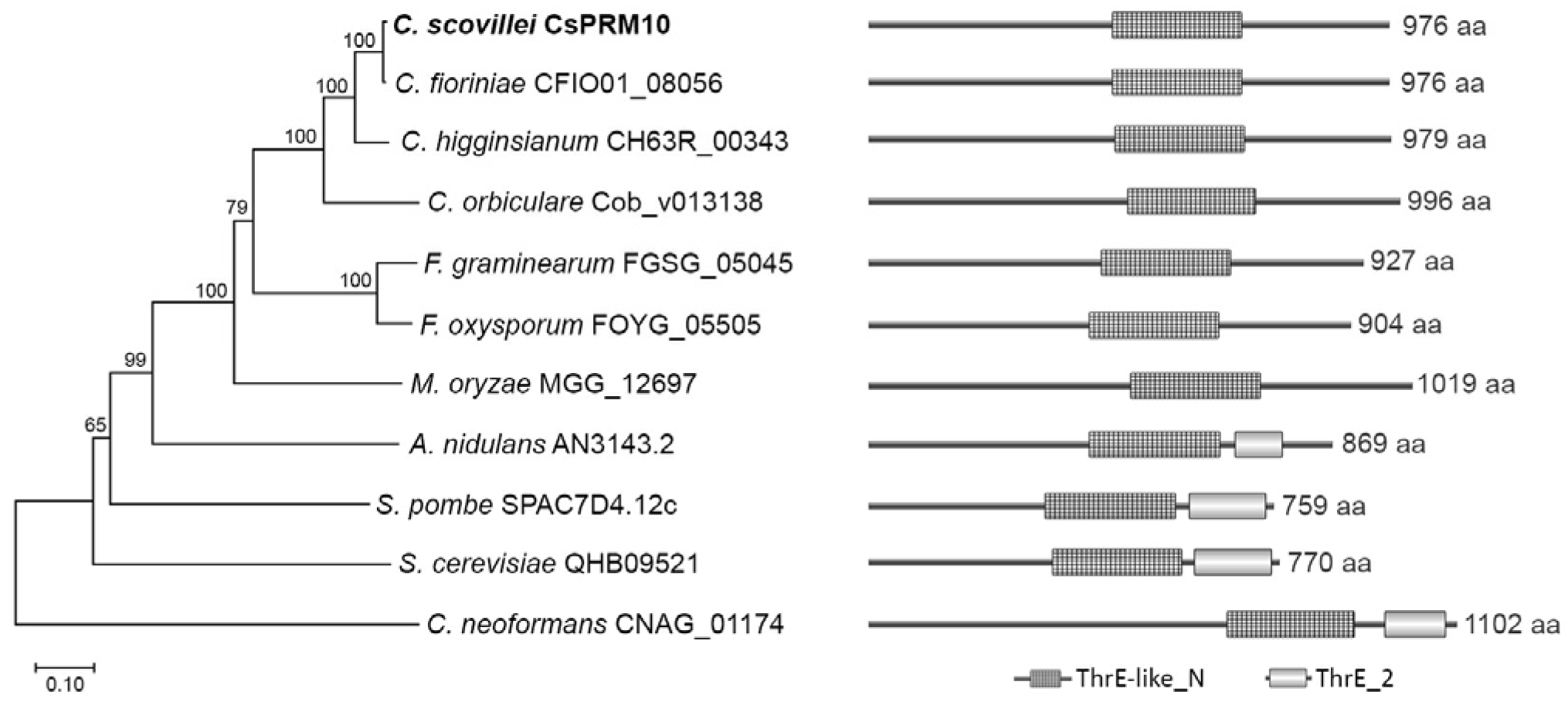
3.1. Phylogenetic Analysis of CsPRM10
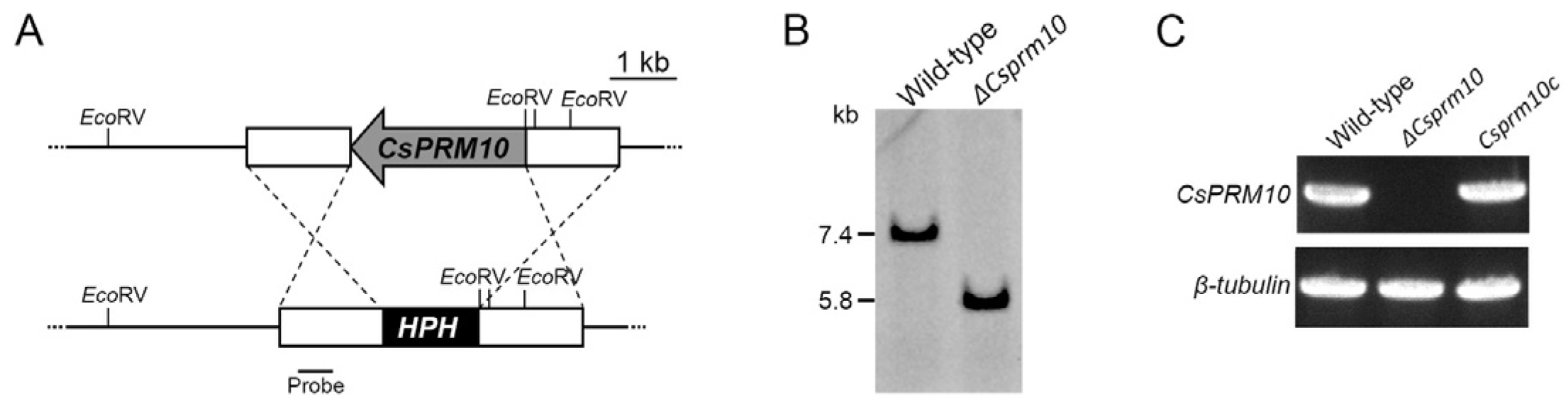
3.2. Targeted Deletion of CsPRM10
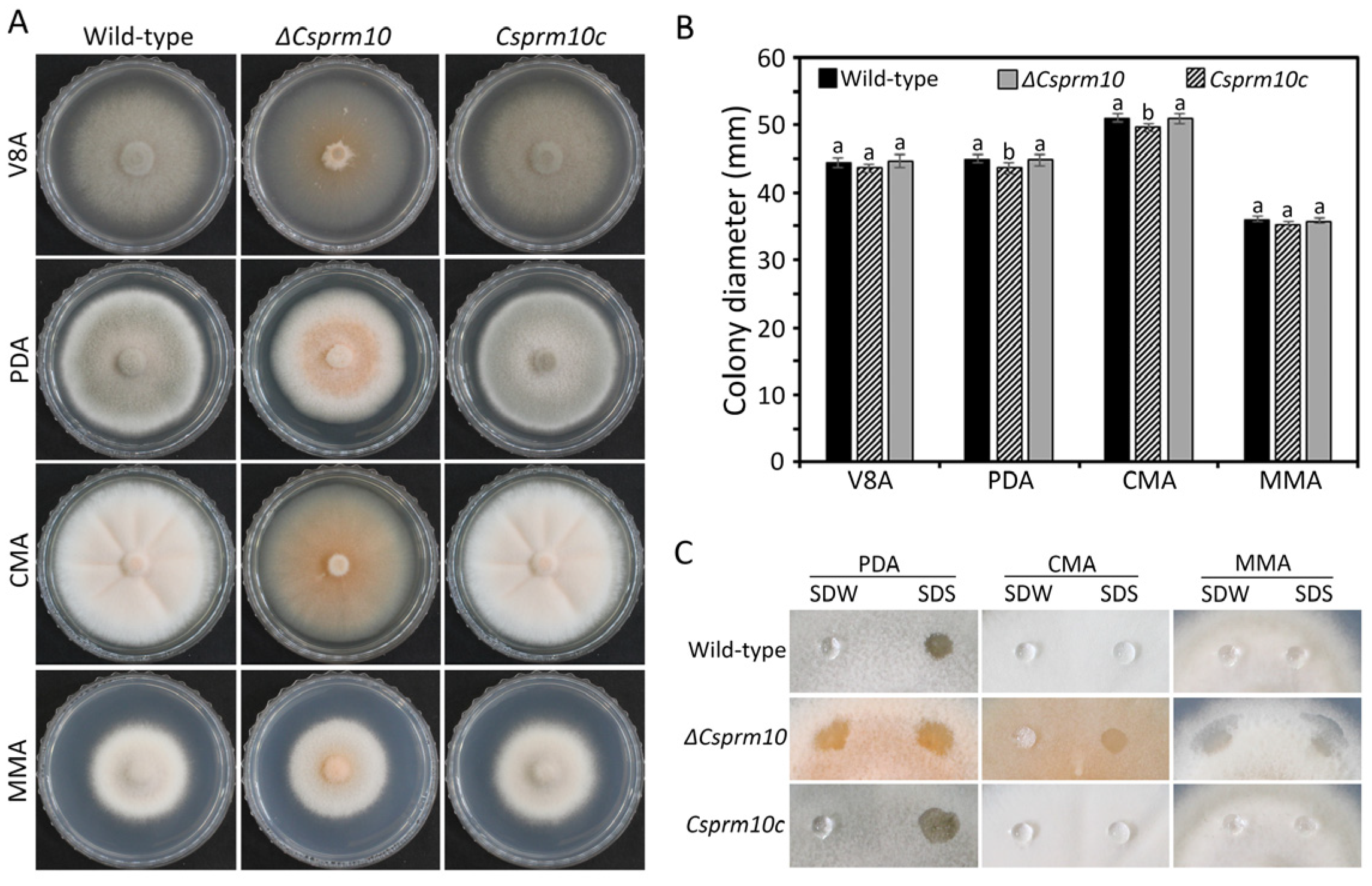
3.3. CsPRM10 Is Involved in Surface Hydrophobicity
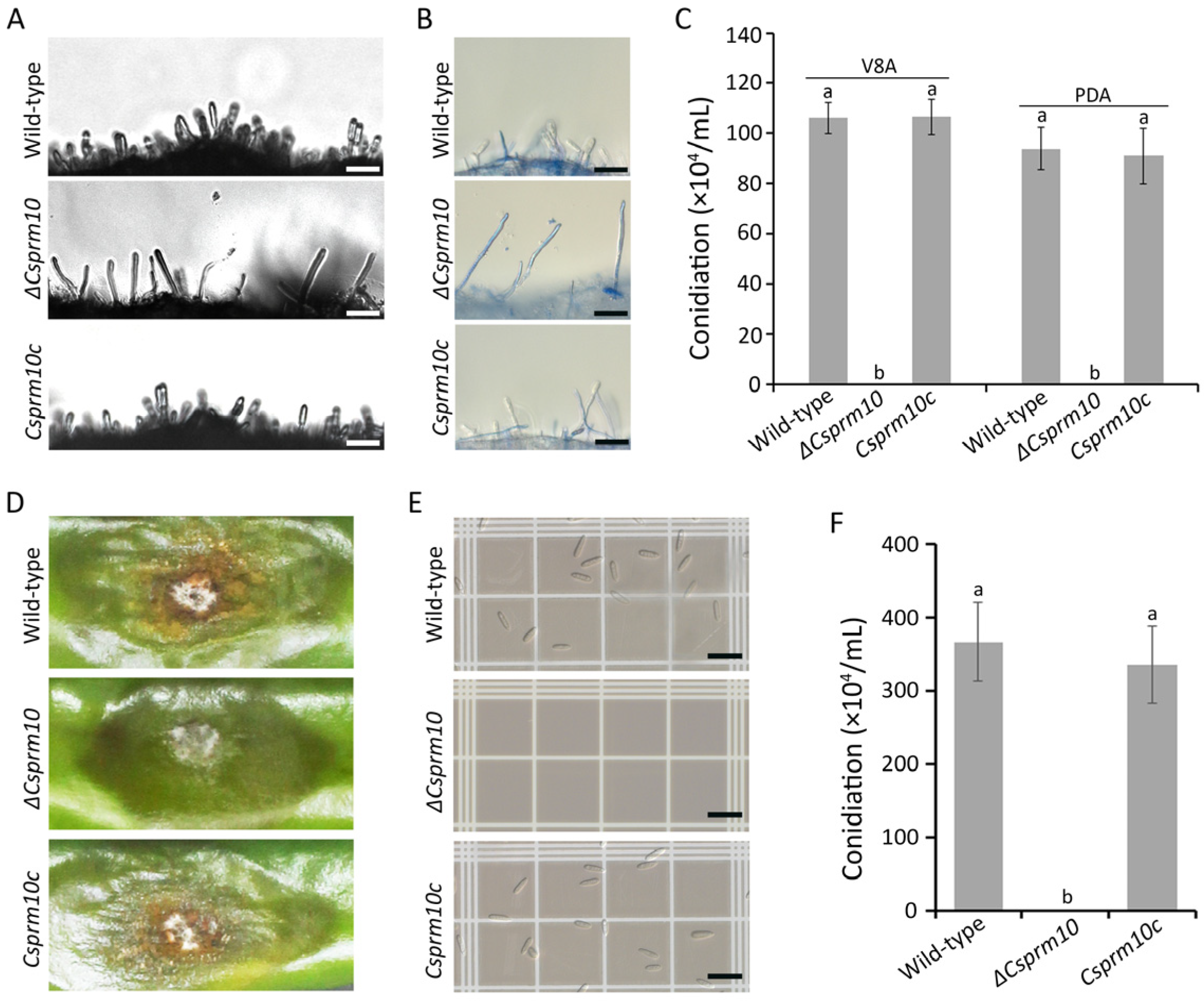
3.4. CsPRM10 Is Essential for Conidiation
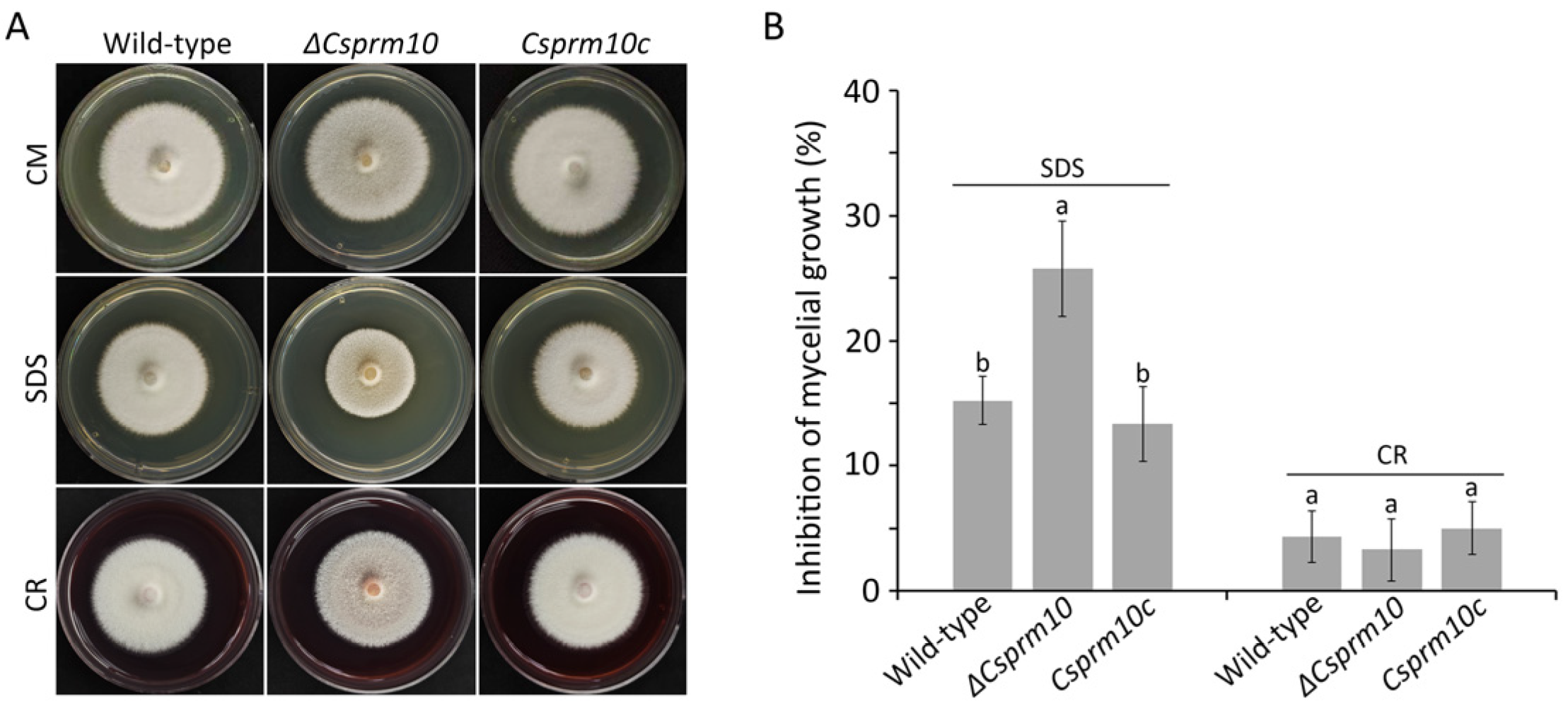
3.5. CsPRM10 Is Associated with Stress Adaptation
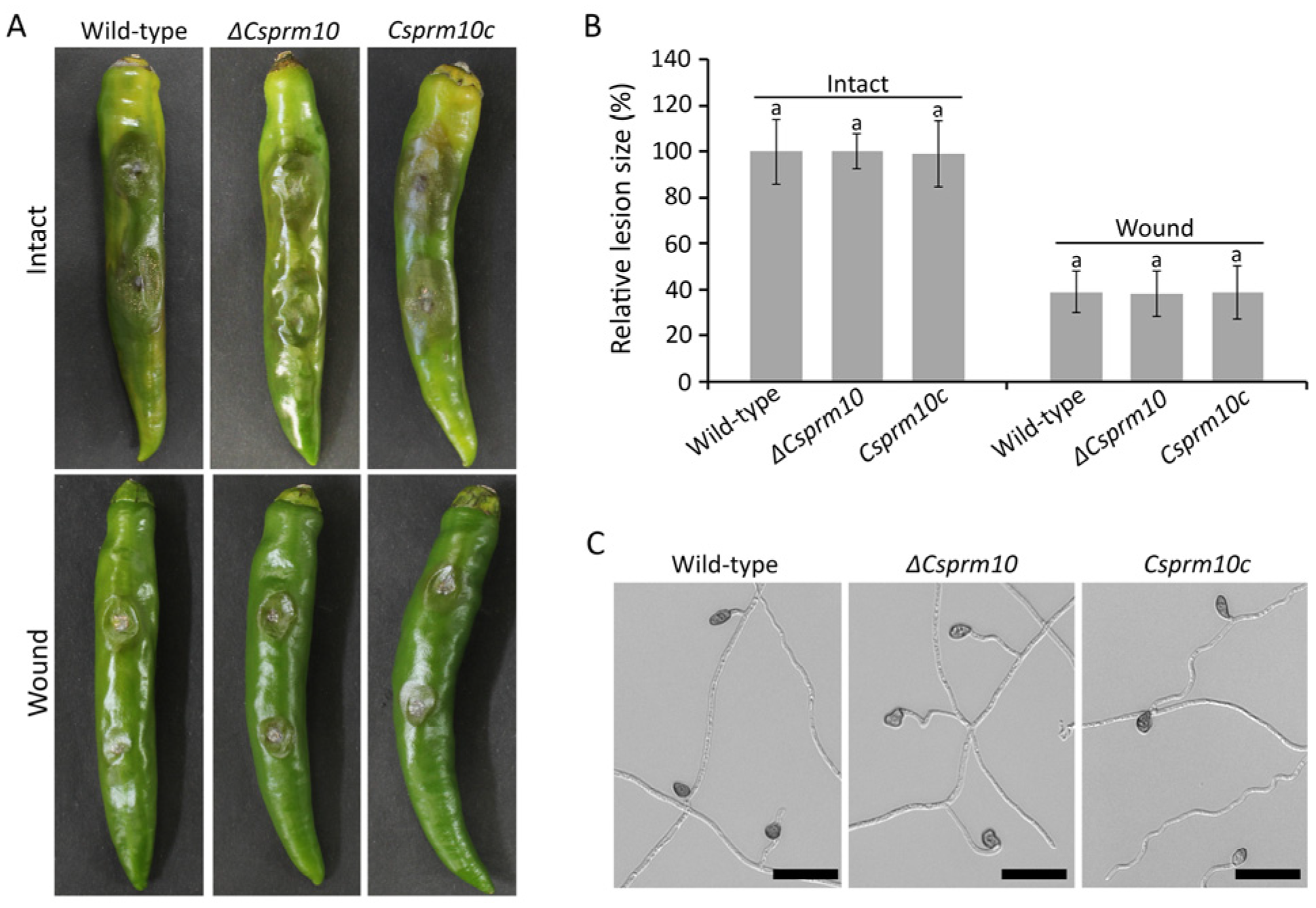
3.6. CsPRM10 Is Dispensable for Disease Development
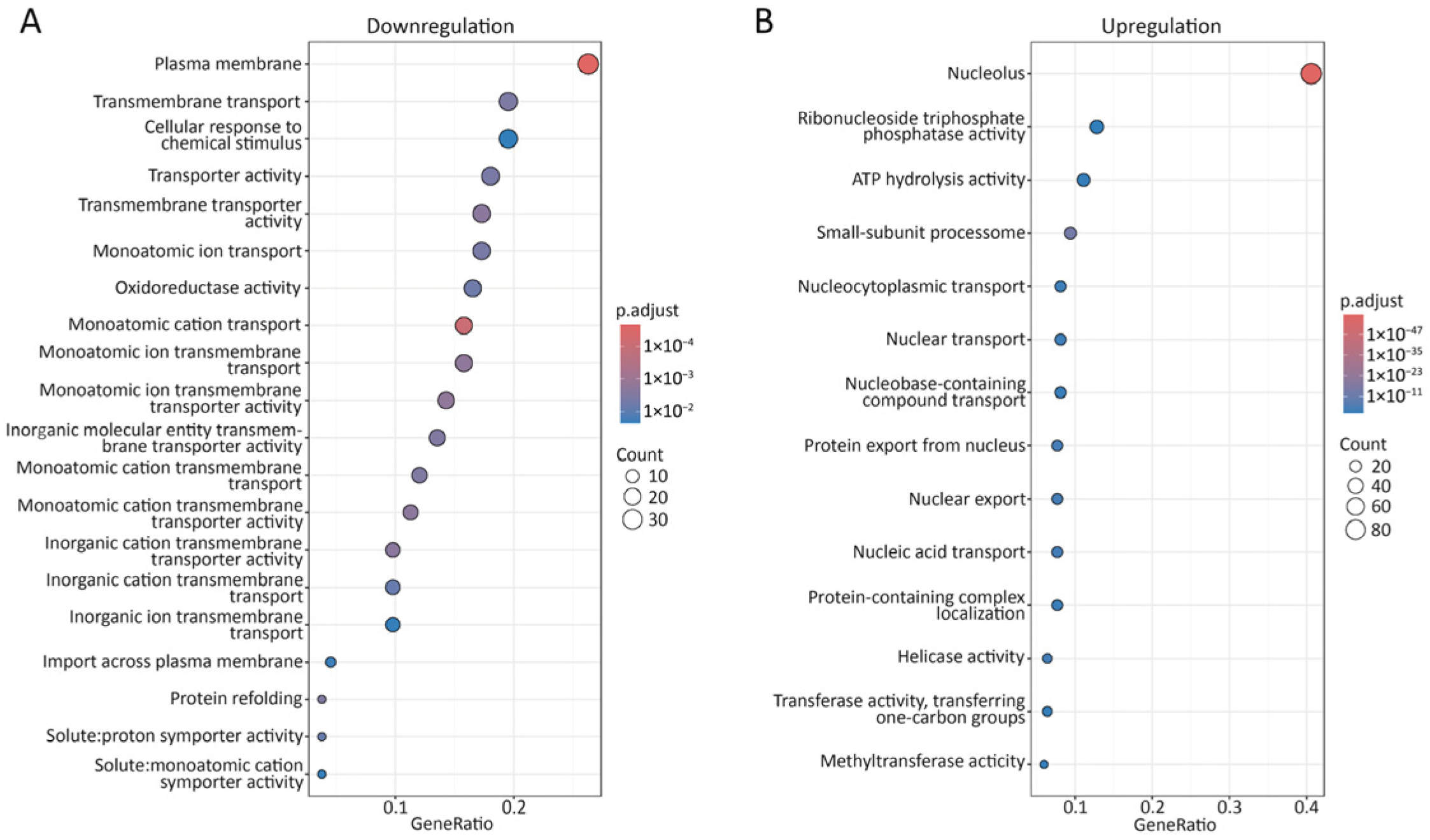
3.7. Transcriptomic Profiling of ΔCsprm10
4. Discussion
Supplementary Materials
Author Contributions
Funding
Institutional Review Board Statement
Informed Consent Statement
Data Availability Statement
Conflicts of Interest
Abbreviations
| DEGs | Differentially expressed genes |
| GO | Gene Ontology |
| V8A | V8 agar |
| MMA | Minimal medium agar |
| CM | Complete medium agar |
| PDA | Potato dextrose agar |
| CR | Congo red |
| SDS | Sodium dodecyl sulfate |
| SDW | Sterile distilled water |
| ALS | Appressorium-like structure |
References
- Law, C.X.; Hashim, N.; Ismail, S.I.; Jahari, M.; Al Riza, D.F. A review on anthracnose disease caused by Colletotrichum spp. in fruits and advances in control strategies. Int. J. Food Microbiol. 2025, 442, 111397. [Google Scholar] [CrossRef] [PubMed]
- Cannon, P.F.; Damm, U.; Johnston, P.R.; Weir, B.S. Colletotrichum: Current status and future directions. Stud. Mycol. 2012, 73, 181–213. [Google Scholar] [CrossRef]
- De Silva, D.D.; Groenewald, J.Z.; Crous, P.W.; Ades, P.K.; Nasruddin, A.; Mongkolporn, O.; Taylor, P.W. Identification, prevalence and pathogenicity of Colletotrichum species causing anthracnose of Capsicum annuum in Asia. IMA Fungus 2019, 10, 8. [Google Scholar] [CrossRef]
- Hsieh, D.-K.; Chuang, S.-C.; Chen, C.-Y.; Chao, Y.-T.; Lu, M.-Y.J.; Lee, M.H.; Shih, M.C. Comparative genomics of three Colletotrichum Scovillei strains and genetic analysis revealed genes involved in fungal growth and virulence on chili pepper. Front. Microbiol. 2022, 13, 818291. [Google Scholar] [CrossRef]
- Fu, T.; Han, J.-H.; Shin, J.-H.; Song, H.; Ko, J.; Lee, Y.-H.; Kim, K.-T.; Kim, K.S. Homeobox transcription factors are required for fungal development and the suppression of host defense mechanisms in the Colletotrichum scovillei-pepper pathosystem. mBio 2021, 12, e01620-21. [Google Scholar] [CrossRef]
- Fu, T.; Song, Y.-W.; Gao, G.; Kim, K.S. Novel cellular functions of Cys2-His2 zinc finger proteins in anthracnose development and dissemination on pepper fruits by Colletotrichum scovillei. mBio 2024, 15, e00667-24. [Google Scholar] [CrossRef] [PubMed]
- Song, Y.-W.; Fu, T.; Kim, K.S. CsSNF1 kinase plays important roles in fungal development and virulence of the pepper anthracnose fungus Colletotrichum scovillei. Plant Pathol. 2024, 73, 1837–1846. [Google Scholar] [CrossRef]
- Aron, O.; Wang, M.; Lin, L.; Batool, W.; Lin, B.; Shabbir, A.; Wang, Z.; Tang, W. MoGLN2 is important for vegetative growth, conidiogenesis, maintenance of cell wall integrity and pathogenesis of Magnaporthe oryzae. J. Fungi 2021, 7, 463. [Google Scholar] [CrossRef]
- Zheng, W.; Zhao, X.; Xie, Q.; Huang, Q.; Zhang, C.; Zhai, H.; Xu, L.; Lu, G.; Shim, W.-B.; Wang, Z. A conserved homeobox transcription factor Htf1 is required for phialide development and conidiogenesis in Fusarium species. PLoS ONE 2012, 7, e45432. [Google Scholar] [CrossRef]
- Han, Y.-C.; Zeng, X.-G.; Guo, C.; Zhang, Q.-H.; Chen, F.-Y.; Ren, L.; Chen, W.-D.; Qin, L. Reproduction response of Colletotrichum fungi under the fungicide stress reveals new aspects of chemical control of fungal diseases. Microb. Biotechnol. 2022, 15, 431–441. [Google Scholar] [CrossRef] [PubMed]
- Chen, X.; He, Y.; Wang, Z.; Niu, A.; Xue, Y.; Zhou, D.; Zhou, G.; Liu, J. Research progress and management strategies of fungal diseases in Camellia oleifera. Front. Microbiol. 2023, 14, 1215024. [Google Scholar] [CrossRef] [PubMed]
- Dowling, M.; Gelain, J.; May De Mio, L.L.; Schnabel, G. Characterization of high fludioxonil resistance in Botrytis cinerea isolates from calibrachoa flowers. Phytopathology 2021, 111, 478–484. [Google Scholar] [CrossRef]
- Zhang, Y.-H.; Yang, S.-S.; Zhang, Q.; Zhang, T.-T.; Zhang, T.-Y.; Zhou, B.-H.; Zhou, L. Discovery of N-phenylpropiolamide as a novel succinate dehydrogenase inhibitor scaffold with broad-spectrum antifungal activity on phytopathogenic fungi. J. Agric. Food Chem. 2023, 71, 3681–3693. [Google Scholar] [CrossRef]
- Jin, W.; Shi, D.; Wei, L.; Chen, W.; Ma, W.; Chen, C.; Wang, K. Mutations at sterol 14α-demethylases (Cyp51a &B) confer the DMI resistance in Colletotrichum gloeosporioides from grape. Pest Manag. Sci. 2020, 76, 4093–4103. [Google Scholar] [CrossRef]
- Kim, S.; Park, S.-Y.; Kim, K.S.; Rho, H.-S.; Chi, M.-H.; Choi, J.; Park, J.; Kong, S.; Park, J.; Goh, J.; et al. Homeobox transcription factors are required for conidiation and appressorium development in the rice blast fungus Magnaporthe oryzae. PLoS Genet. 2009, 5, e1000757. [Google Scholar] [CrossRef]
- Krijgsheld, P.; Bleichrodt, R.V.; Van Veluw, G.J.; Wang, F.; Müller, W.H.; Dijksterhuis, J.; Wösten, H.A.B. Development in Aspergillus. Stud. Mycol. 2013, 74, 1–29. [Google Scholar] [CrossRef]
- Son, H.; Kim, M.-G.; Min, K.; Seo, Y.-S.; Lim, J.Y.; Choi, G.J.; Kim, J.-C.; Chae, S.-K.; Lee, Y.-W. AbaA regulates conidiogenesis in the ascomycete fungus Fusarium graminearum. PLoS ONE 2013, 8, e72915. [Google Scholar] [CrossRef] [PubMed]
- Zhou, Z.; Li, G.; Lin, C.; He, C. Conidiophore stalk-less1 encodes a putative zinc-finger protein involved in the early stage of conidiation and mycelial infection in Magnaporthe oryzae. Mol. Plant-Microbe Interact. 2009, 22, 402–410. [Google Scholar] [CrossRef] [PubMed]
- Zhang, H.; Zhao, Q.; Guo, X.; Guo, M.; Qi, Z.; Tang, W.; Dong, Y.; Ye, W.; Zheng, X.; Wang, P.; et al. Pleiotropic function of the putative zinc-finger protein MoMsn2 in Magnaporthe oryzae. Mol. Plant-Microbe Interact. 2014, 27, 446–460. [Google Scholar] [CrossRef]
- Lysøe, E.; Pasquali, M.; Breakspear, A.; Kistler, H.C. The transcription factor FgStuAp influences spore development, pathogenicity, and secondary metabolism in Fusarium graminearum. Mol. Plant-Microbe Interact. 2011, 24, 54–67. [Google Scholar] [CrossRef]
- Zhu, J.; Hu, D.; Liu, Q.; Hou, R.; Xu, J.-R.; Wang, G. Stage-specific genetic interaction between FgYCK1 and FgBNI4 during vegetative growth and conidiation in Fusarium graminearum. Int. J. Mol. Sci. 2022, 23, 9106. [Google Scholar] [CrossRef]
- Goffeau, A.; Barrell, B.G.; Bussey, H.; Davis, R.W.; Dujon, B.; Feldmann, H.; Galibert, F.; Hoheisel, J.D.; Jacq, C.; Johnston, M.; et al. Life with 6000 genes. Science 1996, 274, 546–567. [Google Scholar] [CrossRef] [PubMed]
- García, R.; Bermejo, C.; Grau, C.; Pérez, R.; Rodríguez-Peña, J.M.; Francois, J.; Nombela, C.; Arroyo, J. The global transcriptional response to transient cell wall damage in Saccharomyces cerevisiae and its regulation by the cell integrity signaling pathway. J. Biol. Chem. 2004, 279, 15183–15195. [Google Scholar] [CrossRef] [PubMed]
- Erasmus, D.J.; van der Merwe, G.K.; van Vuuren, H.J. Genome-wide expression analyses: Metabolic adaptation of Saccharomyces cerevisiae to high sugar stress. FEMS Yeast Res. 2003, 3, 375–399. [Google Scholar] [CrossRef]
- Kirby, J.; Dietzel, K.L.; Wichmann, G.; Chan, R.; Antipov, E.; Moss, N.; Baidoo, E.E.K.; Jackson, P.; Gaucher, S.P.; Gottlieb, S.; et al. Engineering a functional 1-deoxy-D-xylulose 5-phosphate (Dxp) pathway in Saccharomyces cerevisiae. Metab. Eng. 2016, 38, 494–503. [Google Scholar] [CrossRef]
- Zhan, G.; Guo, J.; Tian, Y.; Ji, F.; Bai, X.; Zhao, J.; Guo, J.; Kang, Z. High-throughput RNA sequencing reveals differences between the transcriptomes of the five spore forms of Puccinia striiformis f. sp. tritici, the wheat stripe rust pathogen. Stress Biol. 2023, 3, 29. [Google Scholar] [CrossRef] [PubMed]
- Shin, J.-H.; Han, J.-H.; Park, H.-H.; Fu, T.; Kim, K.S. Optimization of polyethylene glycol-mediated transformation of the pepper anthracnose pathogen Colletotrichum scovillei to develop an applied genomics approach. Plant Pathol. J. 2019, 35, 575–584. [Google Scholar] [CrossRef]
- Shin, J.-H.; Kim, H.-Y.; Fu, T.; Lee, K.-H.; Kim, K.S. CsPOM1, a DYRK family kinase, plays diverse roles in fungal development, virulence, and stress tolerance in the anthracnose pathogen Colletotrichum scovillei. Front. Cell. Infect. Microbiol. 2022, 12, 861915. [Google Scholar] [CrossRef]
- Chi, M.-H.; Park, S.-Y.; Lee, Y.-H. A quick and safe method for fungal DNA extraction. Plant Pathol. J. 2009, 25, 108–111. [Google Scholar] [CrossRef]
- Yu, J.-H.; Hamari, Z.; Han, K.-H.; Seo, J.-A.; Reyes-Dominguez, Y.; Scazzocchio, C. Double-joint PCR: A PCR-based molecular tool for gene manipulations in filamentous fungi. Fungal Genet. Biol. 2004, 41, 973–981. [Google Scholar] [CrossRef]
- Gao, G.; Fu, T.; Song, Y.-W.; Kim, K.S. MAPKK CsSTE7 is critical for appressorium formation and pathogenicity in pepper anthracnose fungus, Colletotrichum scovillei. J. Gen. Plant. Pathol. 2024, 90, 108–119. [Google Scholar] [CrossRef]
- Love, M.I.; Huber, W.; Anders, S. Moderated estimation of fold change and dispersion for RNA-seq data with DESeq2. Genome Biol. 2014, 15, 550. [Google Scholar] [CrossRef]
- Cai, F.; Zhao, Z.; Gao, R.; Chen, P.; Ding, M.; Jiang, S.; Fu, Z.; Xu, P.; Chenthamara, L.; Shen, Q.; et al. The pleiotropic functions of intracellular hydrophobins in aerial hyphae and fungal. PLoS Genet. 2021, 17, e1009924. [Google Scholar] [CrossRef]
- Shan, L.-T.; Wang, Z.-L.; Ying, S.-H.; Feng, M.-G. Hydrophobicity-related protein contents and surface areas of aerial conidia are useful traits for formulation design of fungal biocontrol agents. Mycopathologia 2010, 169, 483–494. [Google Scholar] [CrossRef]
- Kershaw, M.J.; Talbot, N.J. Hydrophobins and repellents: Proteins with fundamental roles in fungal morphogenesis. Fungal Genet. Biol. 1998, 23, 18–33. [Google Scholar] [CrossRef]
- Riquelme, M.; Yarden, O.; Bartnicki-Garcia, S.; Bowman, B.; Castro-longoria, E.; Free, S.J.; Fleißner, A.; Freitag, M.; Lew, R.R.; Mouriño-Pérez, R.; et al. Architecture and development of the Neurospora crassa hypha—A model cell for polarized growth. Fungal Biol. 2011, 115, 446–474. [Google Scholar] [CrossRef] [PubMed]
- Wang, G.; Zou, J.; Wang, Y.; Liang, W.; Li, D. The small GTPase BcSec4 is involved in conidiophore development, membrane integrity, and autophagy in Botrytis cinerea. Phytopathol. Res. 2022, 4, 26. [Google Scholar] [CrossRef]
- Kwon, N.-J.; Garzia, A.; Espeso, E.A.; Ugalde, U.; Yu, J.-H. FlbC is a putative nuclear C2H2 transcription factor regulating development in Aspergillus nidulans. Mol. Microbiol. 2010, 77, 1203–1219. [Google Scholar] [CrossRef] [PubMed]
- Matheis, S.; Yemelin, A.; Scheps, D.; Andresen, K.; Jacob, S.; Thines, E.; Foster, A.J. Functions of the Magnaporthe oryzae Flb3p and Flb4p transcription factors in the regulation of conidiation. Microbiol. Res. 2017, 196, 106–117. [Google Scholar] [CrossRef] [PubMed]
- Kim, S.; Ahn, I.-P.; Rho, H.-S.; Lee, Y.-H. MHP1, a Magnaporthe grisea hydrophobin gene, is required for fungal development and plant colonization. Mol. Microbiol. 2005, 57, 1224–1237. [Google Scholar] [CrossRef]
- Fukuda, K.; Yamada, K.; Deoka, K.; Yamashita, S.; Ohta, A.; Horiuchi, H. Class III chitin synthase ChsB of Aspergillus nidulans localizes at the sites of polarized cell wall synthesis and is required for conidial development. Eukaryot. Cell 2009, 8, 945–956. [Google Scholar] [CrossRef]
- Zhu, Y.; Liu, T.; Wang, Y.; Chen, G.; Fang, X.; Zhou, G.; Wang, J. ChsA, a class II chitin synthase, contributes to asexual conidiation, mycelial morphology, cell wall integrity, and the production of enzymes and organic acids in Aspergillus niger. J. Fungi 2023, 9, 801. [Google Scholar] [CrossRef] [PubMed]
- Aimanianda, V.; Latgé, J.-P. Fungal hydrophobins form a sheath preventing immune recognition of airborne conidia. Virulence 2010, 1, 185–187. [Google Scholar] [CrossRef] [PubMed]
- Dubey, M.K.; Jensen, D.F.; Karlsson, M. Hydrophobins are required for conidial hydrophobicity and plant root colonization in the fungal biocontrol agent Clonostachys rosea. BMC Microbiol. 2014, 14, 18. [Google Scholar] [CrossRef] [PubMed]


Disclaimer/Publisher’s Note: The statements, opinions and data contained in all publications are solely those of the individual author(s) and contributor(s) and not of MDPI and/or the editor(s). MDPI and/or the editor(s) disclaim responsibility for any injury to people or property resulting from any ideas, methods, instructions or products referred to in the content. |
© 2026 by the authors. Licensee MDPI, Basel, Switzerland. This article is an open access article distributed under the terms and conditions of the Creative Commons Attribution (CC BY) license.
Share and Cite
Shen, H.; Li, J.; Xu, W.; Gao, G.; Kim, K.S.; Deng, J.-X.; Fu, T. The Pheromone-Regulated Membrane Protein CsPRM10 Plays an Essential Role in the Asexual Reproduction of the Pepper Anthracnose Fungus Colletotrichum scovillei. J. Fungi 2026, 12, 86. https://doi.org/10.3390/jof12020086
Shen H, Li J, Xu W, Gao G, Kim KS, Deng J-X, Fu T. The Pheromone-Regulated Membrane Protein CsPRM10 Plays an Essential Role in the Asexual Reproduction of the Pepper Anthracnose Fungus Colletotrichum scovillei. Journal of Fungi. 2026; 12(2):86. https://doi.org/10.3390/jof12020086
Chicago/Turabian StyleShen, Haowei, Jiaping Li, Wenjie Xu, Guoyang Gao, Kyoung Su Kim, Jian-Xin Deng, and Teng Fu. 2026. "The Pheromone-Regulated Membrane Protein CsPRM10 Plays an Essential Role in the Asexual Reproduction of the Pepper Anthracnose Fungus Colletotrichum scovillei" Journal of Fungi 12, no. 2: 86. https://doi.org/10.3390/jof12020086
APA StyleShen, H., Li, J., Xu, W., Gao, G., Kim, K. S., Deng, J.-X., & Fu, T. (2026). The Pheromone-Regulated Membrane Protein CsPRM10 Plays an Essential Role in the Asexual Reproduction of the Pepper Anthracnose Fungus Colletotrichum scovillei. Journal of Fungi, 12(2), 86. https://doi.org/10.3390/jof12020086