
Muscular VSD Device Complications: Literature Review and Possible Implications for Echocardiographic Follow-Up
 , , , and
Abstract
1. Introduction
2. Materials and Methods
3. Results
4. Discussion
Supplementary Materials
Author Contributions
Funding
Institutional Review Board Statement
Informed Consent Statement
Data Availability Statement
Conflicts of Interest
Abbreviations
| VSD | Ventricular septal defect |
| mVSD | Muscular ventricular septal defect |
| TTE | Transthoracic echocardiogram |
References
- van der Linde, D.; Konings, E.E.; Slager, M.A.; Witsenburg, M.; Helbing, W.A.; Takkenberg, J.J.; Roos-Hesselink, J.W. Birth prevalence of congenital heart disease worldwide: A systematic review and meta-analysis. J. Am. Coll. Cardiol. 2011, 58, 2241–2247. [Google Scholar] [CrossRef]
- Bergmann, M.; Germann, C.P.; Nordmeyer, J.; Peters, B.; Berger, F.; Schubert, S. Short- and Long-term Outcome After Interventional VSD Closure: A Single-Center Experience in Pediatric and Adult Patients. Pediatr. Cardiol. 2021, 42, 78–88. [Google Scholar] [CrossRef]
- Birnbaum, B.; Hahn, E.; Sheth, S.; Steele, J.; Sachdeva, R.; Parthiban, A.; Statile, C.; Zaidi, A. Clinical Practice Algorithm for the Follow-Up of Unrepaired and Repaired Ventricular Septal Defects; Clinical Practice Guidelines; The American College of Cardiology: Washington, DC, USA, 2023. [Google Scholar]
- Writing, G.; Sachdeva, R.; Valente, A.M.; Armstrong, A.K.; Cook, S.C.; Han, B.K.; Lopez, L.; Lui, G.K.; Pickard, S.S.; Powell, A.J.; et al. ACC/AHA/ASE/HRS/ISACHD/SCAI/SCCT/SCMR/SOPE 2020 Appropriate Use Criteria for Multimodality Imaging During the Follow-Up Care of Patients with Congenital Heart Disease: A Report of the American College of Cardiology Solution Set Oversight Committee and Appropriate Use Criteria Task Force, American Heart Association, American Society of Echocardiography, Heart Rhythm Society, International Society for Adult Congenital Heart Disease, Society for Cardiovascular Angiography and Interventions, Society of Cardiovascular Computed Tomography, Society for Cardiovascular Magnetic Resonance, and Society of Pediatric Echocardiography. J. Am. Soc. Echocardiogr. Off. Publ. Am. Soc. Echocardiogr. 2020, 33, e1–e48. [Google Scholar] [CrossRef]
- El Said, H.G.; Bratincsak, A.; Gordon, B.M.; Moore, J.W. Closure of perimembranous ventricular septal defects with aneurysmal tissue using the Amplazter Duct Occluder I: Lessons learned and medium term follow up. Catheter. Cardiovasc. Interv. 2012, 80, 895–903. [Google Scholar] [CrossRef]
- Gray, R.G.; Menon, S.C.; Johnson, J.T.; Armstrong, A.K.; Bingler, M.A.; Breinholt, J.P.; Kenny, D.; Lozier, J.; Murphy, J.J.; Sathanandam, S.K.; et al. Acute and midterm results following perventricular device closure of muscular ventricular septal defects: A multicenter PICES investigation. Catheter. Cardiovasc. Interv. 2017, 90, 281–289. [Google Scholar] [CrossRef] [PubMed]
- Zhang, K.; Yang, P.; Yin, D.; Li, M.; Liang, X.; Lv, T.; Zheng, M.; Xiang, P. Aortic Regurgitation Requiring Unplanned Surgery following Transcatheter Closure of Ventricular Septal Defect in Children: Incidence and Risk Factors. Cardiology 2023, 148, 62–71. [Google Scholar] [CrossRef]
- Kumar, K.; Lock, J.E.; Geva, T. Apical muscular ventricular septal defects between the left ventricle and the right ventricular infundibulum. Diagnostic and interventional considerations. Circulation 1997, 95, 1207–1213. [Google Scholar] [CrossRef]
- Robinson, J.D.; Zimmerman, F.J.; De Loera, O.; Heitschmidt, M.; Hijazi, Z.M. Cardiac conduction disturbances seen after transcatheter device closure of muscular ventricular septal defects with the Amplatzer occluder. Am. J. Cardiol. 2006, 97, 558–560. [Google Scholar] [CrossRef]
- Bjornstad, P.G.; Smevik, B.; Fischer, G. Catheter based closure of ventricular septal defects. Scand. Cardiovasc. J. 2010, 44, 9–14. [Google Scholar] [CrossRef] [PubMed]
- Thanopoulos, B.D.; Karanassios, E.; Tsaousis, G.; Papadopoulos, G.S.; Stefanadis, C. Catheter closure of congenital/acquired muscular VSDs and perimembranous VSDs using the Amplatzer devices. J. Interv. Cardiol. 2003, 16, 399–407. [Google Scholar] [CrossRef]
- Yildiz, K.; Narin, N.; Ozdemir, R.; Oksuz, S.; Demircan, T.; Bagli, S.; Aktas, R.; Nur Kecici, R.; Karadeniz, C. Closure of transcatheter ventricular septal defect using LifetechTM Konar-MF Occluder in children weighing less than 10 kilograms: Mid-term results, a tertiary single center experience. Eur. Rev. Med. Pharmacol. Sci. 2023, 27, 4053–4059. [Google Scholar] [CrossRef]
- Celiker, A.; Ozkutlu, S.; Karagoz, T.; Erdogan, I.; Ozer, S.; Aypar, E. Device closure of congenital ventricular septal defects with Amplatzer devices: First experiences in Turkey. Turk. J. Pediatr. 2008, 50, 106–113. [Google Scholar] [PubMed]
- Diab, K.A.; Cao, Q.L.; Mora, B.N.; Hijazi, Z.M. Device closure of muscular ventricular septal defects in infants less than one year of age using the Amplatzer devices: Feasibility and outcome. Catheter. Cardiovasc. Interv. 2007, 70, 90–97. [Google Scholar] [CrossRef]
- Wongwaitaweewong, K.; Promphan, W.; Roymanee, S.; Prachasilchai, P. Effect of transcatheter closure by AmplatzerTM Duct Occluder II in patients with small ventricular septal defect. Cardiovasc. Interv. Ther. 2021, 36, 375–383. [Google Scholar] [CrossRef]
- Ghosh, B.; Sahai, I.; Agrawal, G.; Khadase, S.; Rao, T.; Lohakare, A.; Chaturvedi, A.; Gomase, S. Experience of Percutaneous Closure of Ventricular Septal Defects in 140 Patients with Different Duct Occluders in a Tertiary Care Rural Hospital in Central India. Cureus 2023, 15, e42591. [Google Scholar] [CrossRef]
- Kamali, H.; Sivasli Gul, O.; Coban, S.; Sari, G.; Saritas, T.; Erdem, A.; Aldudak, B. Experiences of Two Centers in Percutaneous Ventricular Septal Defect Closure Using Konar Multifunctional Occluder. Anatol. J. Cardiol. 2022, 26, 276–285. [Google Scholar] [CrossRef] [PubMed]
- Kanaan, M.; Ewert, P.; Berger, F.; Assa, S.; Schubert, S. Follow-up of patients with interventional closure of ventricular septal defects with Amplatzer Duct Occluder II. Pediatr. Cardiol. 2015, 36, 379–385. [Google Scholar] [CrossRef]
- Bacha, E.A.; Hijazi, Z.M.; Cao, Q.L.; Abdulla, R.; Starr, J.P.; Quinones, J.; Koenig, P.; Agarwala, B. Hybrid pediatric cardiac surgery. Pediatr. Cardiol. 2005, 26, 315–322. [Google Scholar] [CrossRef] [PubMed]
- Kim, S.J.; Huh, J.; Song, J.Y.; Yang, J.H.; Jun, T.G.; Kang, I.S. The hybrid perventricular closure of apical muscular ventricular septal defect with Amplatzer duct occluder. Korean J. Pediatr. 2013, 56, 176–181. [Google Scholar] [CrossRef]
- Haponiuk, I.; Chojnicki, M.; Jaworski, R.; Steffens, M. Hybrid technique for muscular ventricular septal defect closure. J. Card. Surg. 2013, 28, 453–455. [Google Scholar] [CrossRef]
- Aal, A.A.; Hassan, H.M.; Ezzeldin, D.; El Sayed, M. Impact of percutaneous ventricular septal defect closure on left ventricular remodeling and function. Egypt. Heart J. 2021, 73, 86. [Google Scholar] [CrossRef]
- Haas, N.A.; Kock, L.; Bertram, H.; Boekenkamp, R.; De Wolf, D.; Ditkivskyy, I.; Freund, M.W.; Gewillig, M.; Happel, C.M.; Herberg, U.; et al. Interventional VSD-Closure with the Nit-Occlud® Lê VSD-Coil in 110 Patients: Early and Midterm Results of the EUREVECO-Registry. Pediatr. Cardiol. 2016, 38, 1502–1508. [Google Scholar] [CrossRef]
- Rahmath, M.R.; Numan, M.; Dilawar, M. Medium to long-term echo follow-up after ventricular septal defect device closure. Asian Cardiovasc. Thorac. Ann. 2016, 24, 422–427. [Google Scholar] [CrossRef]
- Pamukcu, O.; Narin, N.; Baykan, A.; Sunkak, S.; Tasci, O.; Uzum, K. Mid-term results of percutaneous ventricular septal defect closure with Amplatzer Duct Occluder-II in children. Cardiol. Young 2017, 27, 1726–1731. [Google Scholar] [CrossRef] [PubMed]
- El Shedoudy, S.; El-Doklah, E. Mid-term results of transcatheter closure of ventricular septal defect using Nit-Occlud Le ventricular septal defect coil, single-center experience. J. Saudi Heart Assoc. 2019, 31, 78–87. [Google Scholar] [CrossRef] [PubMed]
- Bacha, E.A.; Cao, Q.L.; Galantowicz, M.E.; Cheatham, J.P.; Fleishman, C.E.; Weinstein, S.W.; Becker, P.A.; Hill, S.L.; Koenig, P.; Alboliras, E.; et al. Multicenter experience with perventricular device closure of muscular ventricular septal defects. Pediatr. Cardiol. 2005, 26, 169–175. [Google Scholar] [CrossRef] [PubMed]
- Neukamm, C.; Bjornstad, P.G.; Fischer, G.; Smevik, B.; Lindberg, H.L. A novel method of hybrid intraoperative catheter-based closure of ventricular septal defects using the Amplatzer® PDA occluder. Catheter. Cardiovasc. Interv. 2011, 77, 557–563. [Google Scholar] [CrossRef]
- Baspinar, O.; Irdem, A.; Kilinc, M. Off-label use of Amplatzer devices in congenital heart disorders during childhood. Acta Cardiol. 2013, 68, 31–35. [Google Scholar] [CrossRef]
- Thanopoulos, B.D.; Rigby, M.L. Outcome of transcatheter closure of muscular ventricular septal defects with the Amplatzer ventricular septal defect occluder. Heart 2005, 91, 513–516. [Google Scholar] [CrossRef]
- Mohammed, M.H.; Tamimi, O.; Al-Mutairi, M.; Alomrani, A. Outcome of ventricular septal defect closure with the Nit-Occlud® Le VSD-Coil: Single centre experience. Sudan J. Paediatr. 2022, 22, 172–178. [Google Scholar] [CrossRef]
- Okubo, M.; Benson, L.N.; Nykanen, D.; Azakie, A.; Van Arsdell, G.; Coles, J.; Williams, W.G. Outcomes of intraoperative device closure of muscular ventricular septal defects. Ann. Thorac. Surg. 2001, 72, 416–423. [Google Scholar] [CrossRef]
- Changwe, G.J.; Li, H.; Zhang, H.Z.; Guo, W.; Liang, F.; Cao, X.X.; Chen, S.L. Percardiac closure of large apical ventricular septal defects in infants: Novel modifications and mid-term results. J. Card. Surg. 2021, 36, 928–938. [Google Scholar] [CrossRef]
- Michel-Behnke, I.; Le, T.P.; Waldecker, B.; Akintuerk, H.; Valeske, K.; Schranz, D. Percutaneous closure of congenital and acquired ventricular septal defects--considerations on selection of the occlusion device. J. Interv. Cardiol. 2005, 18, 89–99. [Google Scholar] [CrossRef]
- Szkutnik, M.; Kusa, J.; Bialkowski, J. Percutaneous closure of post-traumatic and congenital muscular ventricular septal defects with the Amplatzer Muscular VSD Occluder. Kardiol. Pol. 2008, 66, 715–720. [Google Scholar]
- Xu, X.D.; Liu, S.X.; Liu, X.; Chen, Y.; Li, L.; Qu, B.M.; Wu, Z.Y.; Zhang, D.F.; Zhao, X.X.; Qin, Y.W. Percutaneous closure of postinfarct muscular ventricular septal defects: A multicenter study in China. J. Cardiol. 2014, 64, 285–289. [Google Scholar] [CrossRef]
- Sadiq, M.; Qureshi, A.U.; Younas, M.; Arshad, S.; Hyder, S.N. Percutaneous closure of ventricular septal defect using LifeTechTM Konar-MF VSD Occluder: Initial and short-term multi-institutional results. Cardiol. Young 2022, 32, 755–761. [Google Scholar] [CrossRef] [PubMed]
- Al Senaidi, K.S.; Al Maskary, S.; Thomas, E.; Dimitrov, B.; Al Farqani, A. Percutaneous Closure of Ventricular Septal Defects in 116 Patients: Experience with different devices. Sultan Qaboos Univ. Med. J. 2020, 20, e352–e359. [Google Scholar] [CrossRef]
- Butera, G.; Carminati, M.; Chessa, M.; Piazza, L.; Abella, R.; Negura, D.G.; Giamberti, A.; Claudio, B.; Micheletti, A.; Tammam, Y.; et al. Percutaneous closure of ventricular septal defects in children aged <12: Early and mid-term results. Eur. Heart J. 2006, 27, 2889–2895. [Google Scholar] [CrossRef] [PubMed]
- Haddad, R.N.; Rizk, C.; Saliba, Z.; Farah, J. Percutaneous closure of ventricular septal defects in children: Key parameters affecting patient radiation exposure. Am. J. Cardiovasc. Dis. 2021, 11, 65–72. [Google Scholar] [PubMed]
- Prada, F.; Mortera, C.; Bartrons, J.; Rissech, M.; Jimenez, L.; Carretero, J.; Llevadias, J.; Araica, M. Percutaneous treatment of atrial septal defects, muscular ventricular septal defects and patent ductus arteriosus in infants under one year of age. Rev. Esp. Cardiol. 2009, 62, 1050–1054. [Google Scholar] [CrossRef]
- Narin, N.; Pamukcu, O.; Tuncay, A.; Baykan, A.; Sunkak, S.; Tasci, O.; Uzum, K.; Saltik, L. Percutaneous Ventricular Septal Defect Closure in Patients Under 1 Year of Age. Pediatr. Cardiol. 2018, 39, 1009–1015. [Google Scholar] [CrossRef]
- Thakkar, B.; Patel, N.; Shah, S.; Poptani, V.; Madan, T.; Shah, C.; Shukla, A.; Prajapati, V. Perventricular device closure of isolated muscular ventricular septal defect in infants: A single centre experience. Indian Heart J. 2012, 64, 559–567. [Google Scholar] [CrossRef]
- Bacha, E.A.; Cao, Q.L.; Starr, J.P.; Waight, D.; Ebeid, M.R.; Hijazi, Z.M. Perventricular device closure of muscular ventricular septal defects on the beating heart: Technique and results. J. Thorac. Cardiovasc. Surg. 2003, 126, 1718–1723. [Google Scholar] [CrossRef]
- Zhu, D.; Tao, K.; An, Q.; Luo, S.; Gan, C.; Lin, K. Perventricular device closure of residual muscular ventricular septal defects after repair of complex congenital heart defects in pediatric patients. Tex. Heart Inst. J. 2013, 40, 534–540. [Google Scholar]
- Omelchenko, A.; Jha, N.K.; Shah, N.; AbdelMassih, A.; Montiel, J.P.; Rajkumar, B.R. Perventricular device closure of the ventricular septal defects in children-first experience in the United Arab Emirates. J. Cardiothorac. Surg. 2024, 19, 430. [Google Scholar] [CrossRef] [PubMed]
- Omelchenko, A.; Gorbatykh, Y.; Voitov, A.; Zaitsev, G.; Bogachev-Prokophiev, A.; Karaskov, A. Perventricular device closure of ventricular septal defects: Results in patients less than 1 year of age. Interact. Cardiovasc. Thorac. Surg. 2016, 22, 53–56. [Google Scholar] [CrossRef] [PubMed]
- Laha, S.; Gangopadhyay, D.; Roy, M.; Singh, A.; Nandi, D.; Dutta, J. Procedural outcomes of percutaneous closure of perimembranous and other ventricular septal defects using Konar-MF occluder and short-term follow-up. Ann. Pediatr. Cardiol. 2024, 17, 101–108. [Google Scholar] [CrossRef] [PubMed]
- Menaissy, Y.; Alkady, H.; El-Saiedi, S. Rescue Cardiac Surgeries After Pediatric Catheter-Based Interventions: A Ten-Year Retrospective Study. World J. Pediatr. Congenit. Heart Surg. 2019, 10, 539–542. [Google Scholar] [CrossRef]
- Solana-Gracia, R.; Mendoza Soto, A.; Carrasco Moreno, J.I.; Del Cerro Marin, M.J.; Gutierrez-Larraya Aguado, F.; Coserria Sanchez, J.F.; Blanco Mata, R.; Prada Martinez, F.H.; Pan Alvarez-Ossorio, M.; Jimenez Montanes, L.; et al. Spanish registry of percutaneous VSD closure with NitOcclud Le VSD Coil device: Lessons learned after more than a hundred implants. Rev. Esp. Cardiol. Engl. Ed. 2021, 74, 591–601. [Google Scholar] [CrossRef]
- Murzi, B.; Bonanomi, G.L.; Giusti, S.; Luisi, V.S.; Bernabei, M.; Carminati, M.; Vanini, V. Surgical closure of muscular ventricular septal defects using double umbrella devices (intraoperative VSD device closure). Eur. J. Cardiothorac. Surg. 1997, 12, 450–454; discussion 454–455. [Google Scholar] [CrossRef]
- Hu, Y.B.; Zou, J.Q.; Wang, L.; Liu, G.Y. Therapeutic strategy for multiple VSD combined with MVSD in infants and young children. Eur. Rev. Med. Pharmacol. Sci. 2017, 21, 85–89. [Google Scholar]
- Chessa, M.; Carminati, M.; Cao, Q.L.; Butera, G.; Giusti, S.; Bini, R.M.; Hijazi, Z.M. Transcatheter closure of congenital and acquired muscular ventricular septal defects using the Amplatzer device. J. Invasive Cardiol. 2002, 14, 322–327. [Google Scholar] [PubMed]
- Arora, R.; Trehan, V.; Thakur, A.K.; Mehta, V.; Sengupta, P.P.; Nigam, M. Transcatheter closure of congenital muscular ventricular septal defect. J. Interv. Cardiol. 2004, 17, 109–115. [Google Scholar] [CrossRef] [PubMed]
- Carminati, M.; Butera, G.; Chessa, M.; Drago, M.; Negura, D.; Piazza, L. Transcatheter closure of congenital ventricular septal defect with Amplatzer septal occluders. Am. J. Cardiol. 2005, 96, 52L–58L. [Google Scholar] [CrossRef] [PubMed]
- Slim, M.; Ben Farhat, S.; Ben Ouannes, S.; Chrigui, R.; Yahia, F.; Thabet, H.; Ghardallou, H.; Gribaa, R.; ElHraiech, A.; Neffati, E. Transcatheter closure of congenital ventricular septal defects using the Amplatzer Duct Occluder II device: Preliminary data from a Tunisian monocentric study. Tunis. Med. 2022, 100, 450–454. [Google Scholar]
- Arora, R.; Trehan, V.; Kumar, A.; Kalra, G.S.; Nigam, M. Transcatheter closure of congenital ventricular septal defects: Experience with various devices. J. Interv. Cardiol. 2003, 16, 83–91. [Google Scholar] [CrossRef]
- Chen, Z.; Yu, Z.; Su, L.; Zhang, H.; Hu, W. Transcatheter closure of muscular ventricular septal defects using the Cardi-O-Fix plug. Cardiol. Young 2021, 31, 1472–1475. [Google Scholar] [CrossRef]
- Kavurt, A.V.; Ece, I.; Bagrul, D. Transcatheter closure of post-operative type 1 Gerbode defect by Amplatzer Duct Occluder 2. Cardiol. Young 2021, 31, 1545–1547. [Google Scholar] [CrossRef]
- Taha, F.A.; Alnozha, F.; Amoudi, O.; Almutairi, M.; Abuelatta, R. Transcatheter Closure of Residual and Iatrogenic Ventricular Septal Defects: Tertiary Center Experience and Outcome. Pediatr. Cardiol. 2022, 43, 308–323. [Google Scholar] [CrossRef]
- Hijazi, Z.M.; Hakim, F.; Al-Fadley, F.; Abdelhamid, J.; Cao, Q.L. Transcatheter closure of single muscular ventricular septal defects using the amplatzer muscular VSD occluder: Initial results and technical considerations. Catheter. Cardiovasc. Interv. 2000, 49, 167–172. [Google Scholar] [CrossRef]
- Polat, T.B.; Turkmen, E. Transcatheter closure of ventricular septal defects using the Amplatzer Duct Occluder II device: A single-center experience. Postep. Kardiol. Interwencyjnej 2016, 12, 340–347. [Google Scholar] [CrossRef]
- Khoshhal, S.Q.; Al-Mutairi, M.B.; Alnajjar, A.A.; Morsy, M.M.; Salem, S.S.; Al-Muhaya, M.; El-Harbi, K.M.; Abo-Haded, H.M. Transcatheter device closure of ventricular septal defects in children: A retrospective study at a single cardiac center. Ann. Saudi Med. 2020, 40, 396–402. [Google Scholar] [CrossRef] [PubMed]
- Ece, I.; Bagrul, D.; Kavurt, A.V.; Terin, H.; Torun, G.; Koca, S.; Gul, A.E.K. Transcatheter Ventricular Septal Defect Closure with Lifetech Konar-MF Occluder in Infants Under 10 kg with Only Using Venous Access. Pediatr. Cardiol. 2024, 45, 175–183. [Google Scholar] [CrossRef]
- Zartner, P.; Christians, C.; Stelter, J.C.; Hraska, V.; Schneider, M.B. Transvascular closure of single and multiple muscular ventricular septal defects in neonates and infants <20 kg. Catheter. Cardiovasc. Interv. 2014, 83, 564–570. [Google Scholar] [CrossRef] [PubMed]
- Vijayalakshmi, I.B.; Narasimhan, C.; Singh, B.; Manjunath, C.N. Treatment of congenital non-ductal shunt lesions with the amplatzer duct occluder II. Catheter. Cardiovasc. Interv. 2017, 89, E185–E193. [Google Scholar] [CrossRef]
- Tanidir, I.C.; Baspinar, O.; Saygi, M.; Kervancioglu, M.; Guzeltas, A.; Odemis, E. Use of Lifetech Konar-MF, a device for both perimembranous and muscular ventricular septal defects: A multicentre study. Int. J. Cardiol. 2020, 310, 43–50. [Google Scholar] [CrossRef] [PubMed]
- Acar, P.; Abdel-Massih, T.; Douste-Blazy, M.Y.; Dulac, Y.; Bonhoeffer, P.; Sidi, D. Assessment of muscular ventricular septal defect closure by transcatheter or surgical approach: A three-dimensional echocardiographic study. Eur. J. Echocardiogr. 2002, 3, 185–191. [Google Scholar] [CrossRef][Green Version]
- Holzer, R.; Balzer, D.; Cao, Q.L.; Lock, K.; Hijazi, Z.M.; Amplatzer Muscular Ventricular Septal Defect Investigators. Device closure of muscular ventricular septal defects using the Amplatzer muscular ventricular septal defect occluder: Immediate and mid-term results of a U.S. registry. J. Am. Coll. Cardiol. 2004, 43, 1257–1263. [Google Scholar] [CrossRef]
- Haponiuk, I.; Chojnicki, M.; Jaworski, R.; Steffek, M.; Juscinski, J.; Sroka, M.; Fiszer, R.; Sendrowska, A.; Gierat-Haponiuk, K.; Maruszewski, B. Hybrid approach for closure of muscular ventricular septal defects. Med. Sci. Monit. 2013, 19, 618–624. [Google Scholar] [CrossRef]
- Gil-Jaurena, J.M.; Zunzunegui, J.L.; Perez-Caballero, R.; Pita, A.; Pardo, C.; Calle, C.; Murgoitio, U.; Ballesteros, F.; Rodriguez, A.; Medrano, C. Hybrid Procedures. Opening Doors for Surgeon and Cardiologist Close Collaboration. Front. Pediatr. 2021, 9, 687909. [Google Scholar] [CrossRef]
- Salve, G.G.; Jain, S.A.; Sharma, B.; Nimbalkar, M.S.; Katkade, S.S.; Kurien, J.; Bhadane, N.S.; Dalvi, B.V.; Kumar, R.K.; Shivaprakash, K. Intraoperative customized double-patch device with twin sutures for multiple muscular septal defects. Interact. Cardiovasc. Thorac. Surg. 2018, 27, 402–409. [Google Scholar] [CrossRef]
- Bacha, E.A.; Hijazi, Z.M.; Cao, Q.L.; Starr, J.P.; Waight, D.; Koenig, P.; Agarwala, B. New Therapeutic Avenues with Hybrid Pediatric Cardiac Surgery. Heart Surg. Forum 2004, 7, 33–40. [Google Scholar] [CrossRef] [PubMed]
- Koneti, N.R.; Penumatsa, R.R.; Kanchi, V.; Arramraj, S.K.; Jaishankar, S.; Bhupathiraju, S. Retrograde transcatheter closure of ventricular septal defects in children using the Amplatzer Duct Occluder II. Catheter. Cardiovasc. Interv. 2011, 77, 252–259. [Google Scholar] [CrossRef] [PubMed]
- Sideris, E.B.; Haddad, J.; Rao, P.S. The Role of the ‘Sideris’ Devices in the Occlusion of Ventricular Septal Defects. Curr. Interv. Cardiol. Rep. 2001, 3, 349–353. [Google Scholar]
- Chessa, M.; Butera, G.; Negura, D.; Bussadori, C.; Giamberti, A.; Fesslova, V.; Carminati, M. Transcatheter closure of congenital ventricular septal defects in adult: Mid-term results and complications. Int. J. Cardiol. 2009, 133, 70–73. [Google Scholar] [CrossRef]
- Koneti, N.R.; Verma, S.; Bakhru, S.; Vadlamudi, K.; Kathare, P.; Penumatsa, R.R.; Qureshi, S. Transcatheter trans-septal antegrade closure of muscular ventricular septal defects in young children. Catheter. Cardiovasc. Interv. 2013, 82, E500–E506. [Google Scholar] [CrossRef]
- Amin, Z.; Berry, J.M.; Foker, J.E.; Rocchini, A.P.; Bass, J.L. Intraoperative closure of muscular ventricular septal defect in a canine model and application of the technique in a baby. J. Thorac. Cardiovasc. Surg. 1998, 115, 1374–1376. [Google Scholar] [CrossRef]
- Artis, N.J.; Thomson, J.; Plein, S.; Greenwood, J.P. Percutaneous closure of postinfarction ventricular septal defect: Cardiac magnetic resonance-guided case selection and postprocedure evaluation. Can. J. Cardiol. 2011, 27, 869.e3–869.e5. [Google Scholar] [CrossRef]
- Bendaly, E.A.; Hoyer, M.H.; Breinholt, J.P. Mid-term follow up of perventricular device closure of muscular ventricular septal defects. Catheter. Cardiovasc. Interv. 2011, 78, 577–582. [Google Scholar] [CrossRef]
- Bilgic, A.; Celiker, A.; Ozkutlu, S.; Ayabakan, C.; Karagoz, T.; Ocal, T. Transcatheter closure of secundum atrial septal defects, a ventricular septal defect, and a patent arterial duct. Turk. J. Pediatr. 2001, 43, 12–18. [Google Scholar] [PubMed]
- Bjorkman, K.R.; Aldoss, O.; Maldonado, J.R.; McLennan, D. Transcatheter utilisation of lifetech multifunction occluder device for closure of perimembranous and muscular ventricular septal defects: First use in North America. Cardiol. Young 2021, 31, 1525–1527. [Google Scholar] [CrossRef] [PubMed]
- Breinholt, J.P.; Rodefeld, M.D.; Hoyer, M.H. Successful embolization of a left ventricular pseudoaneurysm after perventricular ventricular septal defect device closure. Catheter. Cardiovasc. Interv. 2009, 74, 624–626. [Google Scholar] [CrossRef]
- Bressieux-Degueldre, S.; Sekarski, N.; Di Bernardo, S. Fungal endocarditis after hybrid periventricular closure of muscular ventricular septal defect by Amplatzer occluder in a child. Circulation 2015, 131, e339–e340. [Google Scholar] [CrossRef]
- Bridges, N.D.; Perry, S.B.; Keane, J.F.; Goldstein, S.A.; Mandell, V.; Mayer, J.E., Jr.; Jonas, R.A.; Casteneda, A.R.; Lock, J.E. Preoperative transcatheter closure of congenital muscular ventricular septal defects. N. Engl. J. Med. 1991, 324, 1312–1317. [Google Scholar] [CrossRef]
- Butera, G.; Carminati, M.; De Luca, F.; Chessa, M.; Bini Margherita, R. Transcatheter treatment of muscular ventricular septal defect and pulmonary valvar stenosis in an infant. Catheter. Cardiovasc. Interv. 2002, 55, 212–216. [Google Scholar] [CrossRef]
- Celiker, A.; Ozkutlu, S.; Erdogan, I.; Karagoz, T.; Dogan, O.F.; Demircin, M. Perventricular closure of muscular ventricular septal defect in an infant. Anadolu Kardiyol. Derg. 2008, 8, 312–313. [Google Scholar] [PubMed]
- Chaudhari, M.; Chessa, M.; Stumper, O.; De Giovanni, J.V. Transcatheter coil closure of muscular ventricular septal defects. J. Interv. Cardiol. 2001, 14, 165–168. [Google Scholar] [CrossRef]
- Chen, T.Y.; Ju, Y.T.; Wei, Y.J.; Hsieh, M.L.; Wu, J.M.; Wang, J.N. Clinical Experience of Transcatheter Closure for Ventricular Septal Defects in Children Weighing under 15 kg. Acta Cardiol. Sin. 2021, 37, 618–624. [Google Scholar]
- Contrafouris, C.A.; Mitropoulos, F.A.; Chatzis, A.C.; Giannopoulos, N.M.; Milonakis, M.; Rammos, S.; Azariades, M. Hybrid procedures for complex congenital cardiac lesions. Heart Surg. Forum 2009, 12, E155–E157. [Google Scholar] [CrossRef]
- Crossland, D.S.; Wilkinson, J.L.; Cochrane, A.D.; d’Udekem, Y.; Brizard, C.P.; Lane, G.K. Initial results of primary device closure of large muscular ventricular septal defects in early infancy using perventricular access. Catheter. Cardiovasc. Interv. 2008, 72, 386–391. [Google Scholar] [CrossRef] [PubMed]
- Dehghani, M.; Sharifkazemi, M.B.; Aslani, A.; Hoseini, E.; Samin, M.M. Closure of a muscular ventricular septal defect using the Amplatzer ventricular occluder. Arch. Iran. Med. 2007, 10, 543–545. [Google Scholar]
- Djer, M.M.; Latiff, H.A.; Alwi, M.; Samion, H.; Kandavello, G. Transcatheter closure of muscular ventricular septal defect using the Amplatzer devices. Heart Lung Circ. 2006, 15, 12–17. [Google Scholar] [CrossRef]
- El Tahlawi, M.; Kammache, I.; Fraisse, A. Ventricular septal defect closure in a small children with the Amplatzer Duct Occluder II. Catheter. Cardiovasc. Interv. 2011, 77, 268–271. [Google Scholar] [CrossRef]
- Elhmidi, Y.; Hoerer, J.; Lange, R.; Schreiber, C. Muscular ventricular septal defect in a newborn with truncus arteriosus communis: Perventricular transcatheter closure under echocardiographic guidance only, a case report. World J. Pediatr. Congenit. Heart Surg. 2014, 5, 589–591. [Google Scholar] [CrossRef]
- Elmarsafawy, H.; Hafez, M.; Alsawah, G.A.; Bakr, A.; Rakha, S. Long-term outcomes of percutaneous closure of ventricular septal defects in children using different devices: A single centre experience from Egypt. BMC Pediatr. 2023, 23, 381. [Google Scholar] [CrossRef] [PubMed]
- Escobar, A.J.; Levi, D.S.; Van Arsdell, G.S.; Perens, G.S.; Mohan, U.R. Apical muscular ventricular septal defect closure via hybrid approach using a right ventricular stay suture. Catheter. Cardiovasc. Interv. 2021, 97, E514–E517. [Google Scholar] [CrossRef] [PubMed]
- Fouilloux, V.; Bonello, B.; Gran, C.; Fraisse, A.; Mace, L.; Kreitmann, B. Perventricular closure of muscular ventricular septal defects in infants with echocardiographic guidance only. World J. Pediatr. Congenit. Heart Surg. 2012, 3, 446–451. [Google Scholar] [CrossRef]
- Gan, C.; Lin, K.; An, Q.; Tang, H.; Song, H.; Lui, R.C.; Tao, K.; Zhuang, Z.; Shi, Y. Perventricular device closure of muscular ventricular septal defects on beating hearts: Initial experience in eight children. J. Thorac. Cardiovasc. Surg. 2009, 137, 929–933. [Google Scholar] [CrossRef]
- Gan, C.; An, Q.; Tao, K.; Tang, H.; Lui, R.C.; Song, H.; Lin, K.; Pan, W.; Shi, Y. How to Choose an Occluder for Two Nearby Muscular Ventricular Septal Defects? Ann. Thorac. Surg. 2009, 87, 1307–1308. [Google Scholar] [CrossRef]
- Garcia-Valentin, A.; Congiu, S.; Mayol, J.; Prada, F.; Mortera, C.; Pomar, J.L.; Caffarena, J.M. Device migration in hybrid technique for apical muscular ventricular septal defects closure. Interact. Cardiovasc. Thorac. Surg. 2007, 6, 780–782. [Google Scholar] [CrossRef] [PubMed]
- Gupta, M.; Juneja, R.; Saxena, A. Simultaneous device closure of muscular ventricular septal defect and pulmonary valve balloon dilatation. Catheter. Cardiovasc. Interv. 2003, 58, 545–547. [Google Scholar] [CrossRef] [PubMed]
- Haddad, R.N.; Gaudin, R.; Bonnet, D.; Malekzadeh-Milani, S. Hybrid perventricular muscular ventricular septal defect closure using the new multi-functional occluder. Cardiol. Young 2020, 30, 1517–1520. [Google Scholar] [CrossRef]
- Jameel, A.A.; Arfi, A.M.; Arif, H.; Amjad, K.; Omar, G.M. Retrograde approach for device closure of muscular ventricular septal defects in children and adolescents, using the Amplatzer muscular ventricular septal defect occluder. Pediatr. Cardiol. 2006, 27, 720–728. [Google Scholar] [CrossRef]
- Janorkar, S.; Goh, T.; Wilkinson, J. Transcatheter closure of ventricular septal defects using the Rashkind device: Initial experience. Catheter. Cardiovasc. Interv. 1999, 46, 43–48. [Google Scholar] [CrossRef]
- Joseph, G.; Muthunayagam, J.V.; Mandalay, A. Concurrent transcatheter closure of an apical muscular ventricular septal defect and a patent ductus arteriosus in a child with severe hyperkinetic pulmonary hypertension. Pediatr. Cardiol. 2003, 24, 47–49. [Google Scholar] [CrossRef]
- Kalra, G.S.; Verma, P.K.; Dhall, A.; Singh, S.; Arora, R. Transcatheter device closure of ventricular septal defects: Immediate results and intermediate-term follow-up. Am. Heart J. 1999, 138, 339–344. [Google Scholar] [CrossRef]
- Kang, S.L.; Tometzki, A.; Caputo, M.; Morgan, G.; Parry, A.; Martin, R. Longer-term outcome of perventricular device closure of muscular ventricular septal defects in children. Catheter. Cardiovasc. Interv. 2015, 85, 998–1005. [Google Scholar] [CrossRef]
- Karacelik, M.; Ozturk, P.; Doyurgan, O.; Karagoz, U.; Yilmazer, M.M.; Mese, T.; Sariosmanoglu, O.N. A Complication following the Transcatheter Closure of a Muscular Ventricular Septal Defect. J. Tehran Heart Cent. 2015, 10, 149–151. [Google Scholar]
- Karimi, M.; Hulsebus, E.; Murdison, K.; Wiles, H. A case of hybrid closure of a muscular ventricular septal defect: Anatomical complexity and surgical management. Cardiol. Young 2012, 22, 356–359. [Google Scholar] [CrossRef] [PubMed]
- Kloecker, L.; Emmel, M.; Sreeram, N. Late complete left bundle branch block after transcatheter closure of a muscular ventricular septal defect. Cardiol. Young 2010, 20, 560–561. [Google Scholar] [CrossRef] [PubMed]
- Koneti, N.R.; Verma, S.; Bakhru, S.; Vadlamudi, K.; Kathare, P.; Jagannath, B. Epicardial deployment of right ventricular disk during perventricular device closure in a child with apical muscular ventricular septal defect. Ann. Pediatr. Cardiol. 2013, 6, 176–178. [Google Scholar] [CrossRef]
- Latiff, H.A.; Alwi, M.; Kandhavel, G.; Samion, H.; Zambahari, R. Transcatheter closure of multiple muscular ventricular septal defects using Gianturco coils. Ann. Thorac. Surg. 1999, 68, 1400–1401. [Google Scholar] [CrossRef]
- Li, C.S.; Lu, Z.; Song, X.R.; Yan, Z.Y. Hybrid procedure for treating adult congenital heart disease with valvular heart disease in two patients. J. Cardiothorac. Surg. 2019, 14, 180. [Google Scholar] [CrossRef] [PubMed]
- Maddali, M.M.; Al-Maskari, S.N.; Kandachar, P.S.; Arora, N.R.; Lacour-Gayet, F. Transesophageal echocardiography-assisted transcatheter device closure of apical muscular ventricular septal defect. Saudi J. Anaesth. 2019, 13, 148–150. [Google Scholar] [CrossRef]
- Mahmoud, H.T.; Santoro, G.; Capogrosso, C.; Russo, M.G. Off-label use of Amplatzer Duct Occluder II additional sizes. J. Cardiovasc. Med. 2017, 18, 436–442. [Google Scholar] [CrossRef] [PubMed]
- Martinez, J.J.; Verma, A.J.; Thankavel, P.P.; Jaquiss, R.D. Ventricular Pseudoaneurysms After Perventricular Closure of Ventricular Septal Defect. Ann. Thorac. Surg. 2019, 107, e397–e398. [Google Scholar] [CrossRef] [PubMed]
- Michaelis, A.; Dahnert, I.; Riede, F.T.; Paetsch, I.; Jahnke, C.; Paech, C. A case report: Amplatzer occluder device closure of an iatrogenic ventricular septal defect following radiofrequency ablation. Eur. Heart J. Case Rep. 2021, 5, ytab094. [Google Scholar] [CrossRef]
- Michel-Behnke, I.; Ewert, P.; Koch, A.; Bertram, H.; Emmel, M.; Fischer, G.; Gitter, R.; Kozlik-Feldman, R.; Motz, R.; Kitzmuller, E.; et al. Device closure of ventricular septal defects by hybrid procedures: A multicenter retrospective study. Catheter. Cardiovasc. Interv. 2011, 77, 242–251. [Google Scholar] [CrossRef]
- Mo, X.; Zuo, W.; Ma, Z.; Wu, K.; Sun, J.; Peng, W.; Qi, J.; Ding, J. Hybrid procedure with cardiopulmonary bypass for muscular ventricular septal defects in children. Eur. J. Cardiothorac. Surg. 2011, 40, 1203–1206. [Google Scholar] [CrossRef][Green Version]
- Molaei, A.; Afrasiabi, A.; Bilejani, E.; Samadi, M. Perventricular Muscular Ventricular Septal Defect (VSD) Closure under Epicardial Echocardiography Guidance: A Case Report. J. Tehran Heart Cent. 2017, 12, 138–141. [Google Scholar]
- Morgan, G.J. Occlutech(R) muscular ventricular septal defect device: The first reported human use. Cardiol. Young 2016, 26, 1448–1451. [Google Scholar] [CrossRef]
- Mutlu, D.; Marmagkiolis, K.; Iliescu, C.A.; Ates, I.; Cilingiroglu, M. Percutaneous Muscular Ventricular Septal Defect Closure with 2D Transthoracic Echocardiography: Can We Sufficiently Visualize It? Eurasian J. Med. 2021, 53, 144–147. [Google Scholar] [CrossRef]
- Muyskens, S.; Lasala, J.; Balzer, D. Percutaneous closure of a complex posttraumatic muscular ventricular septal defect. Catheter. Cardiovasc. Interv. 2008, 72, 408–412. [Google Scholar] [CrossRef] [PubMed]
- Narin, N.; Baykan, A.; Pamukcu, O.; Argun, M.; Ozyurt, A.; Mese, T.; Yilmazer, M.M.; Gunes, I.; Kazim, U. ADO II in Percutaneous VSD Closure in Pediatric Patients. J. Interv. Cardiol. 2015, 28, 479–484. [Google Scholar] [CrossRef]
- Ozyilmaz, I.; Saygi, M.; Yildiz, O.; Erek, E.; Guzeltas, A. Surgical repair of true left ventricular aneurysm in an infant: A rare complication after unsuccessful perventricular VSD closure. World J. Pediatr. Congenit. Heart Surg. 2014, 5, 637–639. [Google Scholar] [CrossRef] [PubMed]
- Padovani, P.; Ly, M.; Baruteau, A.E. Rescue one-stage hybrid perventricular and percutaneous device closure of multiple muscular ventricular septal defects using the new multifunctional occluder. Ann. Pediatr. Cardiol. 2024, 17, 146–148. [Google Scholar] [CrossRef]
- Park, H.; Song, J.; Kim, E.S.; Huh, J.; Kang, I.S. Early Experiences Using Cocoon Occluders for Closure of a Ventricular Septal Defect. J. Cardiovasc. Imaging 2018, 26, 165–174. [Google Scholar] [CrossRef]
- Parsi, A.; Bruch, L.; Szurawitzki, G.; Boosfeldt, C.; Grad, M.O.; Krebs, H.; Sabin, G.V.; Kleber, F.X. Transcatheter closure of muscular ventricular septal defects in two patients after myocardial infarction. J. Interv. Cardiol. 2001, 14, 219–221. [Google Scholar] [CrossRef]
- Pekel, N.; Ercan, E.; Ozpelit, M.E.; Ozyurtlu, F.; Yilmaz, A.; Topaloglu, C.; Saygi, S.; Yakan, S.; Tengiz, I. Directly ventricular septal defect closure without using arteriovenous wire loop: Our adult case series using transarterial retrograde approach. Anatol. J. Cardiol. 2017, 17, 461–468. [Google Scholar] [CrossRef] [PubMed]
- Ramakrishnan, S.; Saxena, A.; Choudhary, S.K. Residual VSD closure with an ADO II device in an infant. Congenit. Heart Dis. 2011, 6, 60–63. [Google Scholar] [CrossRef]
- Schwalm, S.; Hijazi, Z.; Sugeng, L.; Lang, R. Percutaneous closure of a post-traumatic muscular ventricular septal defect using the Amplatzer duct occluder. J. Invasive Cardiol. 2005, 17, 100–103. [Google Scholar]
- Semaan, S.; Aboulhosn, J.A. Transcatheter Closure of a Restrictive Muscular Ventricular Septal Defect Causing Tricuspid Valve Regurgitation in an Adult. J. Soc. Cardiovasc. Angiogr. Interv. 2023, 2, 100558. [Google Scholar] [CrossRef] [PubMed]
- Siagian, S.N.; Prakoso, R.; Mendel, B.; Hazami, Z.; Putri, V.Y.S.; Zulfahmi; Sakti, D.D.A.; Kuncoro, A.S. Transesophageal echocardiography-guided percutaneous closure of multiple muscular ventricular septal defects with pulmonary hypertension using single device: A case report. Front. Cardiovasc. Med. 2023, 10, 1093563. [Google Scholar] [CrossRef] [PubMed]
- Singh, V.; Badheka, A.O.; Bokhari, S.S.; Ghersin, E.; Clark, P.M.; O’Neill, W.W. Retrograde percutaneous closure of a ventricular septal defect after myectomy for hypertrophic obstructive cardiomyopathy. Tex. Heart Inst. J. 2013, 40, 468–471. [Google Scholar] [PubMed]
- Singhi, A.K.; Kothandam, S. Lessons learnt from a series of hemodynamic and interventional complications during pulmonary valvotomy and device closure of ventricular septal defect. Ann. Pediatr. Cardiol. 2015, 8, 59–63. [Google Scholar] [CrossRef]
- Spence, M.S.; Thomson, J.D.; Weber, N.; Qureshi, S.A. Transient renal failure due to hemolysis following transcatheter closure of a muscular VSD using an Amplatzer muscular VSD occluder. Catheter. Cardiovasc. Interv. 2006, 67, 663–667. [Google Scholar] [CrossRef]
- Stapleton, G.E.; Carlson, K.M.; Justino, H. Transcatheter occlusion of a residual muscular ventricular septal defect using an Amplatzer duct occluder in a child with congenitally corrected transposition of the great arteries. Catheter. Cardiovasc. Interv. 2006, 68, 296–300. [Google Scholar] [CrossRef]
- Taqatqa, A.S.; Caputo, M.; Kenny, D.P.; Diab, K.A. Surgical repair of left ventricular pseudoaneurysm following perventricular device closure of muscular ventricular septal defect. J. Card. Surg. 2016, 31, 697–699. [Google Scholar] [CrossRef]
- Tofeig, M.; Patel, R.G.; Walsh, K.P. Transcatheter closure of a mid-muscular ventricular septal defect with an amplatzer VSD occluder device. Heart 1999, 81, 438–440. [Google Scholar] [CrossRef][Green Version]
- Zanchetta, M.; Onorato, E.; Rigatelli, G.; Pedon, L.; Barbiero, M.; Zennaro, M.; Rigatelli, G.; Maiolino, P. Transcatheter closure of a stabilized post-infarction apical muscular septum defect as an alternative to surgical repair. Ital. Heart J. 2002, 3, 620–621. [Google Scholar]
- Zhu, D.; Liu, B.; Lin, K. Successful repair of multiple muscular ventricular septal defects using a unique hybrid procedure. J. Card. Surg. 2011, 26, 237–239. [Google Scholar] [CrossRef]
- Zhu, D.; Tao, K.Y.; Liu, B. Successful repair of a traumatic ventricular septal defect using an amplatzer occluder guided by three-dimensional transesophageal echocardiography. J. Card. Surg. 2010, 25, 685–689. [Google Scholar] [CrossRef]
- Turner, M.E.; Bouhout, I.; Petit, C.J.; Kalfa, D. Transcatheter Closure of Atrial and Ventricular Septal Defects: JACC Focus Seminar. J. Am. Coll. Cardiol. 2022, 79, 2247–2258. [Google Scholar] [CrossRef]
- Baumgartner, H.; De Backer, J.; Babu-Narayan, S.V.; Budts, W.; Chessa, M.; Diller, G.P.; Lung, B.; Kluin, J.; Lang, I.M.; Meijboom, F.; et al. 2020 ESC Guidelines for the management of adult congenital heart disease. Eur. Heart J. 2021, 42, 563–645. [Google Scholar] [CrossRef] [PubMed]
- Stout, K.K.; Daniels, C.J.; Aboulhosn, J.A.; Bozkurt, B.; Broberg, C.S.; Colman, J.M.; Crumb, S.R.; Dearani, J.A.; Fuller, S.; Gurvitz, M.; et al. 2018 AHA/ACC Guideline for the Management of Adults With Congenital Heart Disease: Executive Summary: A Report of the American College of Cardiology/American Heart Association Task Force on Clinical Practice Guidelines. Circulation 2019, 139, e637–e697. [Google Scholar] [CrossRef]
- Tricco, A.C.; Lillie, E.; Zarin, W.; O’Brien, K.K.; Colquhoun, H.; Levac, D.; Moher, D.; Peters, M.D.; Horsley, T.; Weeks, L.; et al. PRISMA Extension for Scoping Reviews (PRISMAScR): Checklist and Explanation. Ann. Intern. Med. 2018, 169, 467–473. [Google Scholar] [CrossRef] [PubMed]



| Complications | Case Study | Retrospective | Prospective | Total Count | Percent Overall (n = 1668) | Percent Among Complications (n = 299) |
|---|---|---|---|---|---|---|
| Arrhythmia | 3 | 19 | 19 | 41 | 2.46 | 13.71 |
| Malposition or Embolization | 6 | 29 | 5 | 40 | 2.40 | 13.38 |
| Erosion | 1 | 1 | 2 | 4 | 0.24 | 1.34 |
| Fracture | 0 | 2 | 0 | 2 | 0.12 | 0.67 |
| Valve dysfunction | 3 | 32 | 6 | 41 | 2.46 | 13.71 |
| Device-related Thrombus | 0 | 0 | 0 | 0 | 0.00 | 0.00 |
| Residual shunt | 31 | 76 | 16 | 122 | 7.31 | 40.80 |
| Complete Heart Block | 0 | 20 | 1 | 21 | 1.26 | 7.02 |
| Other | 7 | 18 | 3 | 28 | 1.68 | 9.36 |
| Totals | 51 | 197 | 52 | 299 | 17.93 | 100 |
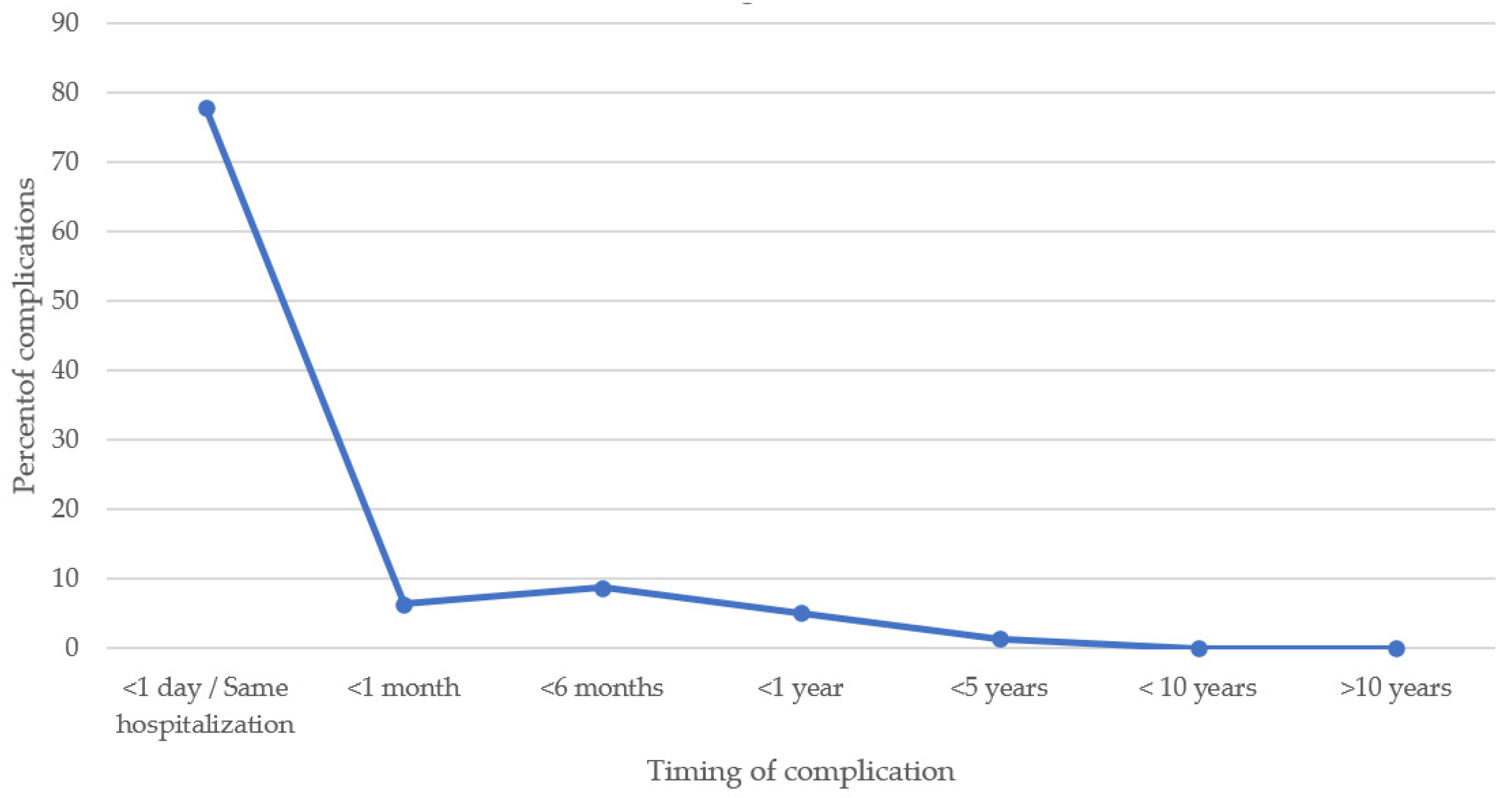
| Complications | Case Study | Retrospective | Prospective | Total Count | Percent Overall (N = 1668) | Percent Among Complications (N = 299) |
|---|---|---|---|---|---|---|
| <1 day/Same hospitalization | 40 | 147 | 44 | 233 | 13.97 | 77.93 |
| <1 month | 5 | 10 | 4 | 19 | 1.14 | 6.35 |
| <6 months | 3 | 23 | 0 | 26 | 1.56 | 8.70 |
| <1 year | 3 | 11 | 1 | 15 | 0.90 | 5.02 |
| <5 years | 1 | 3 | 0 | 4 | 0.24 | 1.34 |
| ≤10 years | 0 | 0 | 0 | 0 | 0.00 | 0.00 |
| >10 years | 0 | 0 | 0 | 0 | 0.00 | 0.00 |
| Not documented | 0 | 2 | 0 | 2 | 0.12 | 0.67 |
| Totals | 52 | 196 | 49 | 299 | 17.93 | 100 |
Disclaimer/Publisher’s Note: The statements, opinions and data contained in all publications are solely those of the individual author(s) and contributor(s) and not of MDPI and/or the editor(s). MDPI and/or the editor(s) disclaim responsibility for any injury to people or property resulting from any ideas, methods, instructions or products referred to in the content. |
© 2026 by the authors. Licensee MDPI, Basel, Switzerland. This article is an open access article distributed under the terms and conditions of the Creative Commons Attribution (CC BY) license.
Share and Cite
Tatum, M.; Casto, T.; Buddhavarapu, A.; Lyman, E.; Gehred, A.; Blais, B.; Cua, C.L. Muscular VSD Device Complications: Literature Review and Possible Implications for Echocardiographic Follow-Up. J. Cardiovasc. Dev. Dis. 2026, 13, 128. https://doi.org/10.3390/jcdd13030128
Tatum M, Casto T, Buddhavarapu A, Lyman E, Gehred A, Blais B, Cua CL. Muscular VSD Device Complications: Literature Review and Possible Implications for Echocardiographic Follow-Up. Journal of Cardiovascular Development and Disease. 2026; 13(3):128. https://doi.org/10.3390/jcdd13030128
Chicago/Turabian StyleTatum, Micah, Thomas Casto, Amulya Buddhavarapu, Elizabeth Lyman, Alison Gehred, Benjamin Blais, and Clifford L. Cua. 2026. "Muscular VSD Device Complications: Literature Review and Possible Implications for Echocardiographic Follow-Up" Journal of Cardiovascular Development and Disease 13, no. 3: 128. https://doi.org/10.3390/jcdd13030128
APA StyleTatum, M., Casto, T., Buddhavarapu, A., Lyman, E., Gehred, A., Blais, B., & Cua, C. L. (2026). Muscular VSD Device Complications: Literature Review and Possible Implications for Echocardiographic Follow-Up. Journal of Cardiovascular Development and Disease, 13(3), 128. https://doi.org/10.3390/jcdd13030128