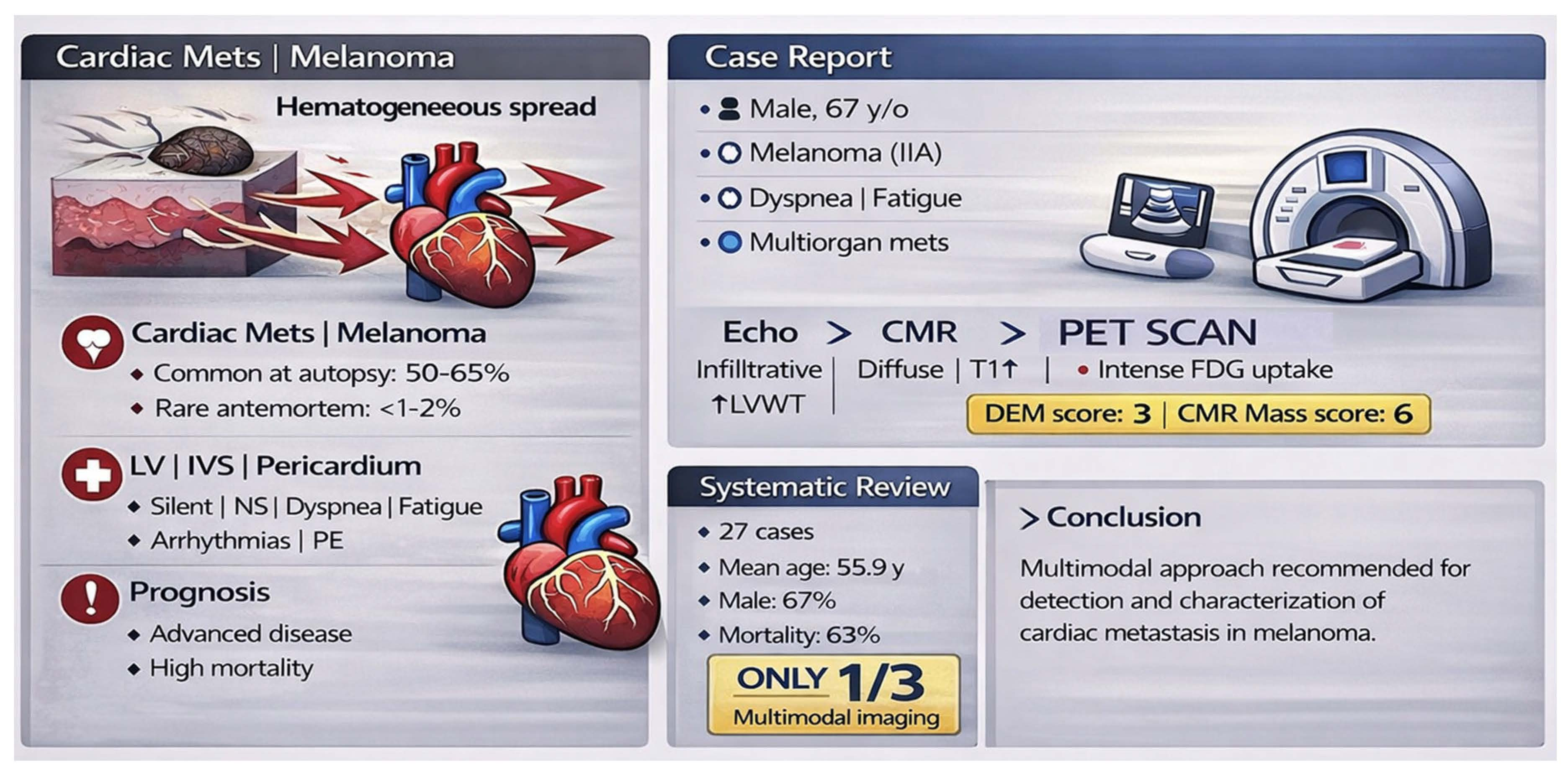

Multimodality Imaging in Cardiac Metastasis of Cutaneous Melanoma: Case Report and Systematic Review

 , , ,
, , ,  , , and
Abstract
1. Introduction
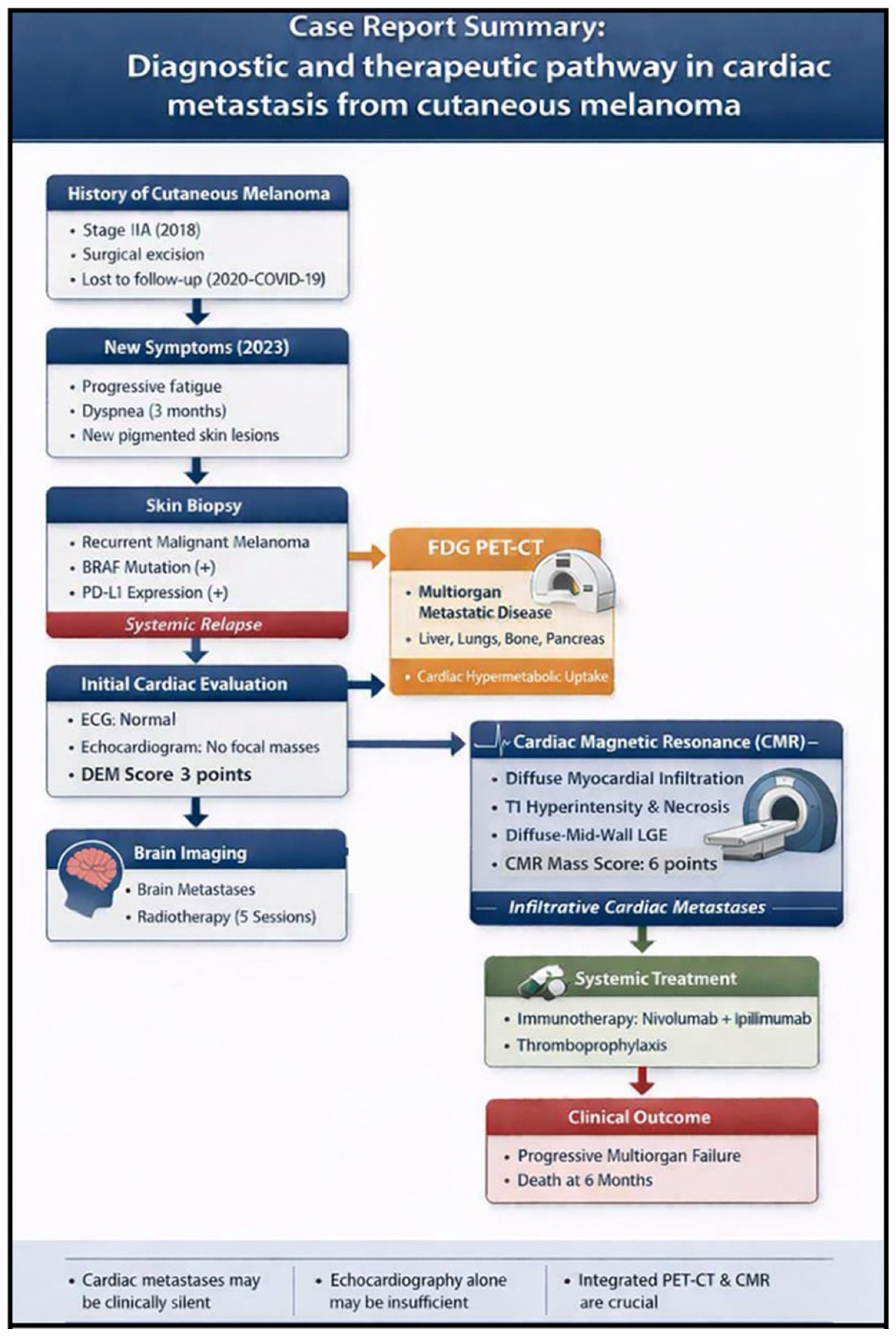
2. Case Presentation
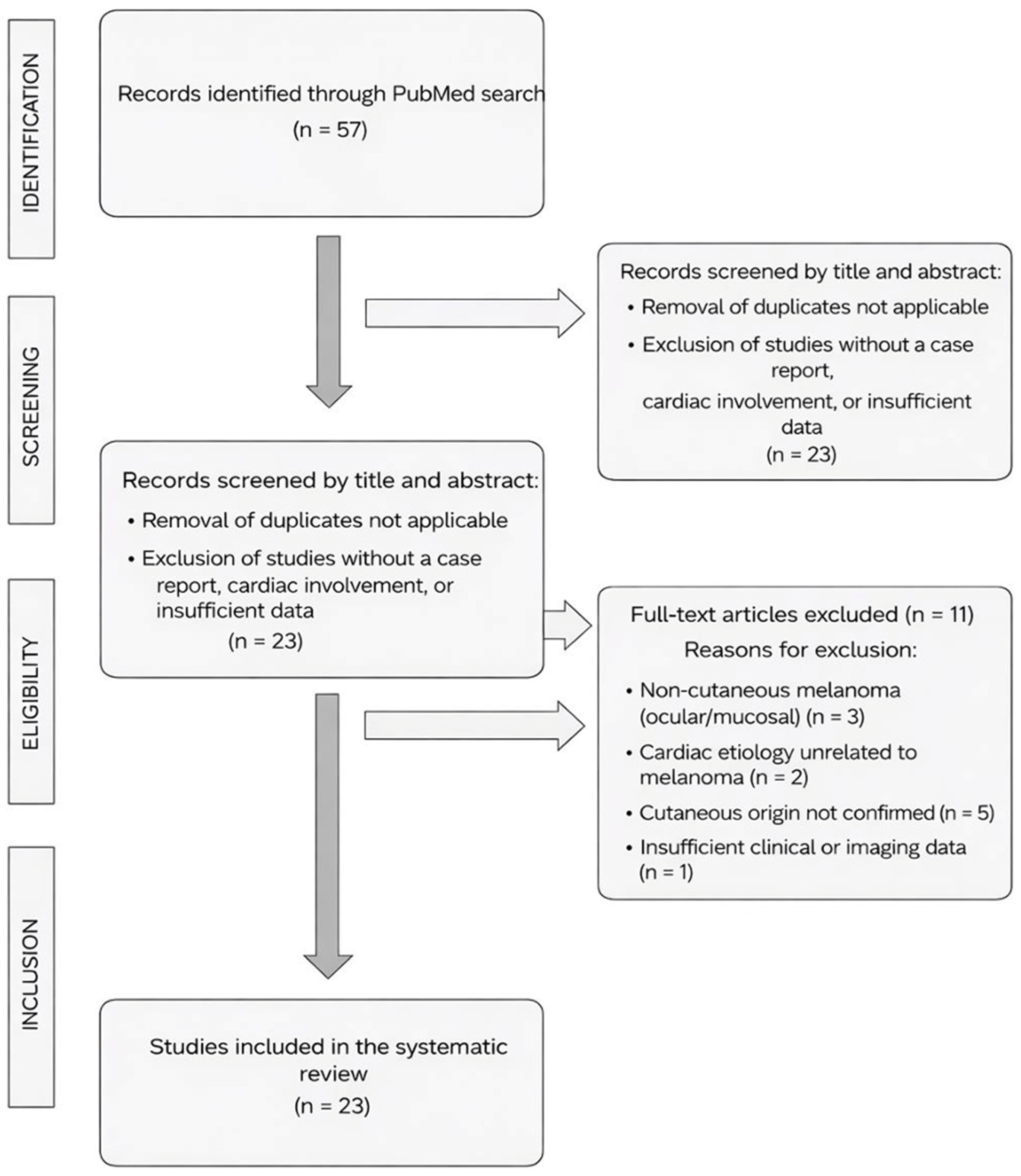
3. Discussion
4. New Challenges Arise
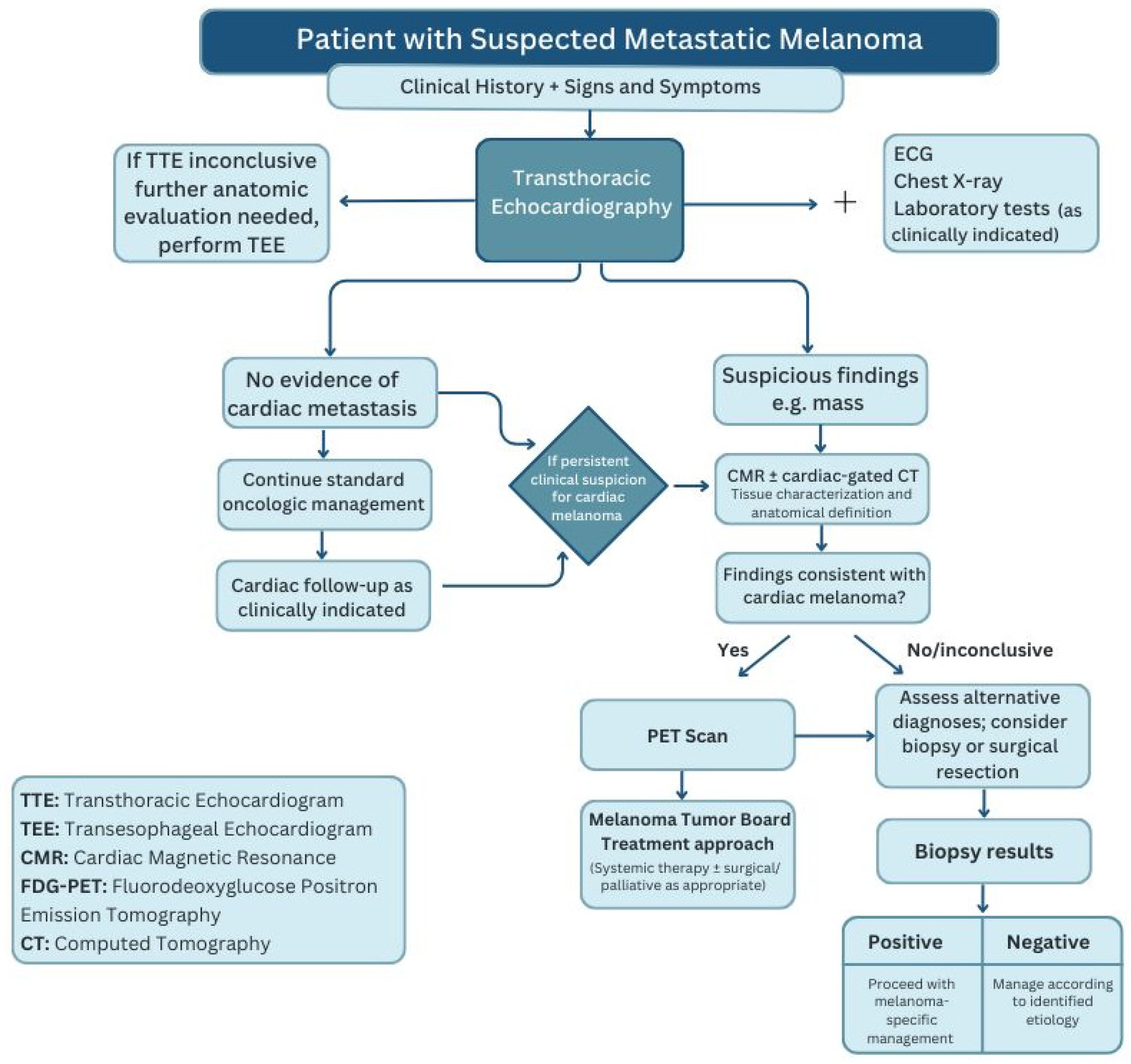
5. Considerations
Author Contributions
Funding
Informed Consent Statement
Data Availability Statement
Acknowledgments
Conflicts of Interest
Abbreviations
| PET-CT | Positron Emission Tomography-Computed Tomography |
| CMR | Cardiovascular Magnetic Resonance Imaging |
| LV | Left Ventricular |
| ECG | Electrocardiogram |
| LGE | Late Gadolinium Enhancement |
| CT | Computed Tomography |
| FDG-PET-CT | Fluorodeoxyglucose-Positron Emission Tomography/Computed Tomography |
References
- Bortolotti, U.; Tursi, V.; Milano, A.; Mazzucco, A.; Gallucci, V. Intracardiac metastatic melanoma: Report of a case mimicking a right atrial myxoma, with a review of the literature. Tex. Heart Inst. J. 1990, 17, 136. [Google Scholar]
- Rastrelli, M.; Tropea, S.; Rossi, C.R.; Alaibac, M. Melanoma: Epidemiology, Risk Factors, Pathogenesis, Diagnosis and Classification. In Vivo 2014, 28, 1005–1011. [Google Scholar]
- Goodall, J.; Beveridge, N.E.R.; Rasoul, D.; Bhamidipati, K.R. Metastatic melanoma to the heart causing ventricular tachycardia: Looking beyond the troponin. BMJ Case Rep. 2022, 15, e247658. [Google Scholar] [CrossRef]
- Tesolin, M.; Lapierre, C.; Oligny, L.; Bigras, J.-L.; Champagne, M. Cardiac Metastases from Melanoma. RadioGraphics 2005, 25, 249–253. [Google Scholar] [CrossRef] [PubMed]
- Goldberg, A.D.; Blankstein, R.; Padera, R.F. Tumors Metastatic to the Heart. Circulation 2013, 128, 1790–1794. [Google Scholar] [CrossRef] [PubMed]
- Paolisso, P.; Bergamaschi, L.; Angeli, F.; Belmonte, M.; Foà, A.; Canton, L.; Fedele, D.; Armillotta, M.; Sansonetti, A.; Bodega, F.; et al. Cardiac Magnetic Resonance to Predict Cardiac Mass Malignancy: The CMR Mass Score. Circ. Cardiovasc. Imaging 2024, 17, e016115. [Google Scholar] [CrossRef]
- Kottam, A.; Hanneman, K.; Schenone, A.; Daubert, M.A.; Sidhu, G.D.; Gropler, R.J.; Garcia, M.J.; on behalf of the American Heart Association Council on Cardiovascular Radiology and Intervention. State-of-the-Art Imaging of Infiltrative Cardiomyopathies: A Scientific Statement From the American Heart Association. Circ. Cardiovasc. Imaging 2023, 16, E934–E951. [Google Scholar] [CrossRef]
- Chang, H.-M.; Okwuosa, T.M.; Scarabelli, T.; Moudgil, R.; Yeh, E.T.H. Cardiovascular Complications of Cancer Therapy. J. Am. Coll. Cardiol. 2017, 70, 2552–2565. [Google Scholar] [CrossRef] [PubMed]
- Joosse, A.; De Vries, E.; Eckel, R.; Nijsten, T.; Eggermont, A.M.M.; Hölzel, D.; Coebergh, J.W.W.; Engel, J. Gender Differences in Melanoma Survival: Female Patients Have a Decreased Risk of Metastasis. J. Investig. Dermatol. 2011, 131, 719–726. [Google Scholar] [CrossRef]
- Parissis, H.; Al-Alao, B.S.; Young, V.K. Case report and literature review: Surgical treatment of a right atrial metastatic melanoma from a previously resected “advanced” primary site with regional lymph nodes involvement. Gen. Thorac. Cardiovasc. Surg. 2012, 60, 655–660. [Google Scholar] [CrossRef]
- Roubille, F.; Gahide, G.; Cayla, G.; Serre, I.; Sportouch-Dukhan, C.; Davy, J.-M.; Piot, C. Recent Malignant Dyspnea. Intern. Med. 2008, 47, 427–429. [Google Scholar] [CrossRef] [PubMed][Green Version]
- Villa, A.D.M.; Eshja, E.; Dallavalle, S.; Bassi, E.M.; Turco, A. Cardiac metastases of melanoma as first manifestation of the disease. J. Radiol. Case Rep. 2014, 8, 8–15. [Google Scholar] [CrossRef] [PubMed]
- Mousseaux, E.; Meunier, P.; Azancott, S.; Dubayle, P.; Gaux, J.-C. Cardiac Metastatic Melanoma Investigated by Magnetic Resonance Imaging. Magn. Reson. Imaging 1998, 16, 91–95. [Google Scholar] [CrossRef]
- Tas, F.; Mudun, A.; Kirma, C. Cardiac involvement in melanoma: A case report and review of the literature. J. Cancer Res. Ther. 2010, 6, 359. [Google Scholar] [CrossRef]
- Houmsse, M.; Raman, S.V.; Leier, C.V.; Orsinelli, D.A. Metastatic melanoma of the left ventricle: Cardiac imaging in the diagnosis and surgical approach. Int. J. Cardiovasc. Imaging 2004, 20, 523–526. [Google Scholar] [CrossRef]
- Ellis, C.J.; Dennison, E.M.; Simpson, I.A. Imaging of cardiac metastatic melanoma: Trans-oesophageal echocardiography or magnetic resonance imaging? Int. J. Cardiol. 1993, 41, 176–179. [Google Scholar] [CrossRef]
- Leja, M.J.; Blackmon, S.H. Metastatic melanoma to the intracavitary left ventricle treated using cardiac autotransplantation technique for resection. Methodist DeBakey Cardiovasc. J. 2011, 7, 44. [Google Scholar] [CrossRef]
- Rathi, V.K.; Williams, R.B.; Yamrozik, J.; Grill, H.; Biederman, R.W. Cardiovascular magnetic resonance of the charcoal heart. J. Cardiovasc. Magn. Reson. 2008, 10, 37. [Google Scholar] [CrossRef]
- Auer, J.; Schmid, J.; Berent, R.; Niedermair, M. Cardiac metastasis of malignant melanoma mimicking acute coronary syndrome. Eur. Heart J. 2012, 33, 676. [Google Scholar] [CrossRef] [PubMed]
- Malouf, J.F.; Thompson, R.C.; Maples, W.J.; Wolfe, J.T. Diagnosis of Right Atrial Metastatic Melanoma by Transesophageal Echocardiographic-Guided Transvenous Biopsy. Mayo Clin. Proc. 1996, 71, 1167–1170. [Google Scholar] [CrossRef]
- Karamitsos, T.D.; Bull, S.; Francis, J.M.; Newton, J.; Westaby, S.; Neubauer, S.; Myerson, S. Massive melanotic myocardial metastasis characterized by multiple cardiac imaging modalities. Int. J. Cardiol. 2011, 146, e27–e29. [Google Scholar] [CrossRef]
- Fontana, A.; Corsi, D.; Viganò, E.; Trocino, G.; Achilli, F. Added Value of Real Time Three-Dimensional Echocardiography in the Diagnosis of an Apical Right Ventricular Metastasis from Malignant Melanoma. Echocardiography 2013, 30, E16–E20. [Google Scholar] [CrossRef] [PubMed]
- Liébana, E.S.; González, D.J.; Martín, M.; Saiz, A. Atypical presentation of cardiac metastasis of amelanotic melanoma. Int. J. Cardiovasc. Imaging 2009, 25, 343–344. [Google Scholar] [CrossRef] [PubMed]
- Cheng, G.; Newberg, A.B.; Alavi, A. Metastatic melanoma causing complete atrioventricular block—The role of FDG PET/CT in diagnosis. Clin. Imaging 2011, 35, 312–314. [Google Scholar] [CrossRef]
- Kontozis, L.; Soteriou, M.; Papamichael, D.; Economides, C.; Bagdades, E.; Christou, C.; Oxynou, C. Isolated Right Atrial Metastasis of Malignant Melanoma Mimicking a Myxoma. Hellenic J. Cardiol. 2011, 52, 281–284. [Google Scholar]
- Gindea, A.J.; Steele, P.; Rumancik, W.M.; Culubret, M.; Feiner, H.; Sanger, J.J.; Kronzon, I. Biventricular cavity obliteration by metastatic malignant melanoma: Role of magnetic resonance imaging in the diagnosis. Am. Heart J. 1987, 114, 1249–1253. [Google Scholar] [CrossRef] [PubMed]
- Kutalek, S.P.; Panidis, I.P.; Kotler, M.N.; Mintz, G.S.; Carver, J.; Ross, J.J. Metastatic tumors of the heart detected by two-dimensional echocardiography. Am. Heart J. 1985, 109, 343–349. [Google Scholar] [CrossRef]
- Carpenter, M.R.; Vassallo, M.; Peat, I.M.; Scriven, A.J.I. Regression of cardiac involvement by malignant melanoma following lomustine chemotherapy. Postgrad. Med. J. 1997, 73, 571–572. [Google Scholar] [CrossRef]
- Chong, J.; Richards, D.; Chard, R.; Mckay, T.; Thomas, L. Two-dimensional and three-dimensional transthoracic echocardiography in surgical planning for right atrial metastatic melanoma. Eur. J. Echocardiogr. 2006, 9, 286–288. [Google Scholar] [CrossRef][Green Version]
- Özülker, T.; Özülker, F.; Cicin, İ.; Özpaçac, T. A Case of Malignant Melanoma with Cardiac and Gallbladder Metastases Detected by FDG PET-CT. Clin. Nucl. Med. 2009, 34, 948–949. [Google Scholar] [CrossRef]
- Schneider, B.; Zienkiewicz, T. Metastatic Malignant Melanoma Presenting as Congestive Heart Failure: Diagnosis by Transoesophageal Echocardiography. Eur. J. Echocardiogr. 2002, 3, 168–169. [Google Scholar] [CrossRef] [PubMed]
- Belda-Iniesta, C.; González, R.M.-A.; Cuesta, E.; González-Barón, M. Atrioventricular nodal blocking secondary to melanoma infiltration. Melanoma Res. 2003, 13, 433–434. [Google Scholar] [CrossRef]
- Sergi, M.C.; Filoni, E.; Triggiano, G.; Cazzato, G.; Internò, V.; Porta, C.; Tucci, M. Mucosal Melanoma: Epidemiology, Clinical Features, and Treatment. Curr. Oncol. Rep. 2023, 25, 1247–1258. [Google Scholar] [CrossRef]
- Altieri, L.; Eguchi, M.; Peng, D.H.; Cockburn, M. Predictors of mucosal melanoma survival in a population-based setting. J. Am. Acad. Dermatol. 2019, 81, 136–142.e2. [Google Scholar] [CrossRef]
- Ma, Y.; Xia, R.; Ma, X.; Judson-Torres, R.L.; Zeng, H. Mucosal Melanoma: Pathological Evolution, Pathway Dependency and Targeted Therapy. Front. Oncol. 2021, 11, 702287. [Google Scholar] [CrossRef]
- Allen, B.C.; Mohammed, T.L.; Tan, C.D.; Miller, D.V.; Williamson, E.E.; Kirsch, J.S. Metastatic Melanoma to the Heart. Curr. Probl. Diagn. Radiol. 2012, 41, 159–164. [Google Scholar] [CrossRef]
- Spiliopoulos, K.; Engels, P.; Kimpouri, K.; Floudas, I.; Salemis, N.S.; Schmid, F.-X. The Current Role of Surgery in the Treatment of Cardiac Metastases from Malignant Melanoma: An Educational Presentation. Braz. J. Cardiovasc. Surg. 2021, 36, 112–115. [Google Scholar] [CrossRef]
- Crean, A.M.; Juli, C. Diagnosis of Metastatic Melanoma to the Heart with an Intrinsic Contrast Approach Using Melanin Inversion Recovery Imaging. J. Comput. Assist. Tomogr. 2007, 31, 924–930. [Google Scholar] [CrossRef] [PubMed]
- Savoia, P.; Fierro, M.T.; Zaccagna, A.; Bernengo, M.G. Metastatic melanoma of the heart. J. Surg. Oncol. 2000, 75, 203–207. [Google Scholar] [CrossRef]
- Swetter, S.M.; Carroll, L.A.; Johnson, D.L.; Segall, G.M. Positron emission tomography is superior to computed tomography for metastatic detection in melanoma patients. Ann. Surg. Oncol. 2002, 9, 646–653. [Google Scholar] [CrossRef] [PubMed]
- Bonou, M.S.; Diamantopoulos, P.; Mavrogeni, S.; Kapelios, C.J.; Barbetseas, J.; Gogas, H. Multichamber Involvement of Metastatic Cardiac Melanoma. Diagnostics 2022, 12, 587. [Google Scholar] [CrossRef] [PubMed]
- Reinhardt, M.J.; Joe, A.Y.; Jaeger, U.; Huber, A.; Matthies, A.; Bucerius, J.; Roedel, R.; Strunk, H.; Bieber, T.; Biersack, H.-J.; et al. Diagnostic Performance of Whole Body Dual Modality 18F-FDG PET/CT Imaging for N- and M-Staging of Malignant Melanoma: Experience with 250 Consecutive Patients. J. Clin. Oncol. 2006, 24, 1178–1187. [Google Scholar] [CrossRef]
- Seferović, P.M.; Tsutsui, H.; Mcnamara, D.M.; Ristić, A.D.; Basso, C.; Bozkurt, B.; Cooper, L.T.; Filippatos, G.; Ide, T.; Inomata, T.; et al. Heart Failure Association, Heart Failure Society of America, and Japanese Heart Failure Society Position Statement on Endomyocardial Biopsy. J. Card. Fail. 2021, 27, 727–743. [Google Scholar] [CrossRef]
- Iliescu, C.A.; Grines, C.L.; Herrmann, J.; Yang, E.H.; Cilingiroglu, M.; Charitakis, K.; Hakeem, A.; Toutouzas, K.P.; Leesar, M.A.; Marmagkiolis, K. SCAI Expert consensus statement: Evaluation, management, and special considerations of cardio-oncology patients in the cardiac catheterization laboratory (endorsed by the cardiological society of india, and sociedad Latino Americana de Cardiologıa intervencionista). Catheter. Cardiovasc. Interv. 2016, 87, E202–E223. [Google Scholar] [CrossRef]
- Angeli, F.; Bodega, F.; Bergamaschi, L.; Armillotta, M.; Amicone, S.; Canton, L.; Fedele, D.; Suma, N.; Cavallo, D.; Foà, A.; et al. Multimodality Imaging in the Diagnostic Work-Up of Patients with Cardiac Masses. JACC CardioOncol. 2024, 6, 847–862. [Google Scholar] [CrossRef]
- Lucà, F.; Parrini, I.; Canale, M.L.; Rao, C.M.; Nucara, M.; Pelaggi, G.; Murrone, A.; Oliva, S.; Bisceglia, I.; Sergi, A.; et al. Cardiac Metastasis: Epidemiology, Pathophysiology, and Clinical Management. Life 2025, 15, 291. [Google Scholar] [CrossRef] [PubMed]
- Fotouhi Ghiam, A.; Dawson, L.A.; Abuzeid, W.; Rauth, S.; Jang, R.W.; Horlick, E.; Bezjak, A. Role of palliative radiotherapy in the management of mural cardiac metastases: Who, when and how to treat? A case series of 10 patients. Cancer Med. 2016, 5, 989–996. [Google Scholar] [CrossRef] [PubMed]
- Poulsen, C.B.; Weile, K.S.; Schmidt, H.; Poulsen, S.H. A case report: Metastasis of melanoma to the heart in an era of immunotherapy. Eur. Heart J.-Case Rep. 2019, 3, 1–7. [Google Scholar] [CrossRef]



| Author | Time to Metastasis | Cardiovascular Symptoms | ECG | Echocardiography | CT/PET | RMI | Treatment Given | Clinical Outcome |
|---|---|---|---|---|---|---|---|---|
| Haralabos Parissis et al. [10] | 7 months | NR | NR | Mildly dilated RA with a 5 × 3 cm mass occupying most of the atrial cavity | Focus of intense increased FDG uptake of activity in the RA and a 2.6 cm node in the left axilla | A 29 × 7 × 40 mm mass within the RA along the right postero-lateral wall, between the ostia for the superior and IVC | Surgery + ECMO + Vinblastine and Dacarbazine | Deceased |
| François Roubille et al. [11] | 15 years | Dyspnea, worsening cough, strong systolic–diastolic murmur, and right cardiac failure signs | Sinus tachycardia | An intracardiac mass occupying at least three-quarters of the RV, extending into the outflow tract. A small portion of the tumor prolapses into the RA, while another extends through the interventricular septum into the LV. Circumferential pericardial effusion present | A tumor was identified with no evidence of recurrence | Heterogeneous enhancement of a tumor invading the interventricular septum, with a small extension into the LV | Chemotherapy + corticosteroids + dacarbazine. | The patient died three months after initiating treatment. |
| Adriana Villa et al. [12] | Unspecified years | Shortness of breath and fainting without chest pain | Atrial flutter 2:1 | An irregular mass occupying the RA near the SVC | Cardiac masses exhibited polymorphic features, presenting both infiltrative and vegetative characteristics, with metastases detected in the brain, liver, and adrenal glands. | A polypoid atrial mass was located on the posterior wall of the RA, near the SVC. The intramyocardial and right atrial masses demonstrated different signal intensities, although most appeared hyperintense on both T1- and T2-weighted images. Additional masses were identified in the interatrial septum and RA, along with solid tissue infiltrating the ventricular myocardium bilaterally | Chemotherapy | Died around 1 year after the diagnosis. |
| Elie Mousseaux et al. [13] | 4 years | NR | NR | Pericardial effusion accompanied by infiltration of the left ventricular wall | NR | Tumoral infiltrations from the lesion were identified involving both the pleura and pericardium. A large tumor measuring 50 mm was also observed along the interior walls of the LA and LV. The lesion showed enhancement following gadolinium administration | Carboplatin and interferon | The patient died two years after diagnosis |
| Elie Mousseaux et al. [13] | Unknown | NR | NR | Non-contributive | NR | Tumor within the lateral wall of the LV (30 × 26 mm) enhanced after gadolinium injection | Ablated | Recovered uneventfully and remained alive five years postoperatively |
| Elie Mousseaux et al. [13] | Unknown | NR | NR | Mild pericardial effusion, and left ventricular hypertrophy with two intramural masses, one in the septum and one at the apex. | NR | Large pericardial effusion with a large multifocal tumor involving the lateral wall of the LA and the atrial septum, obstructing the right ventricular outflow tract. The mass showed enhancement following gadolinium injection | Fotemustine | The patient died eight months after diagnosis |
| Elie Mousseaux et al. [13] | Unknown | Superior vena cava syndrome | Not reported | An 8-cm mass occupying the lumen of the RA | NR | The right atrial wall facing the implantation of the tumor was infiltrated into the adjacent pericardium as well. The superior vena cava was also heavily infiltrated | Surgical resection | The patient was alive one year post-surgery, with no evidence of additional metastases |
| Faruk Tas et al. [14] | 6 months | Asymptomatic | Normal | A lesion measuring 0.3 cm in diameter was identified | Intense FDG uptake was observed in the interatrial region of the heart, accompanied by mediastinal lymphadenopathy and pulmonary parenchymal metastases, as well as the liver, bones, and soft tissues | NR | Temozolomide and Fotemustine | NR |
| Mahmoud Houmsse et al. [15] | 4 years | Soft II/VI systolic ejection murmur along the lower left sternal border | Left axis deviation, left anterior fascicular block, and T wave inversion of leads V1–V3 | A large mass occupying approximately three-quarters of the LV, likely originating from the apical region. The mass extended into the left ventricular outflow tract, reaching within 1 cm of the aortic valve annulus, and narrowed the outflow tract diameter to approximately 5 mm | A left ventricular mass | A mass located in the distal anteroseptal-apical region, characterized by high water content | Surgical excision of a 7 cm tumor via left posterolateral ventriculotomy+ chemotherapy + immunotherapy (two cycles of aldesleukin) | Asymptomatic |
| C. J. Ellis et al. [16] | 6 years | Lethargy, fatigue, and night sweats. | Normal | Large pedunculated tumor of the left ventricle | Normal/NR | Infiltrative lesion | Local radiotherapy and single-agent chemotherapy | Died 10 weeks following the cardiac biopsy |
| C. J. Ellis et al. [16] | 2 years | Dyspnea, marked peripheral swelling, large bilateral pleural effusions, and subsequently recurrent episodes of ventricular tachycardia, marked peripheral edema | Sinus rhythm with a right bundle branch block pattern | An adherent tumor mass in the right ventricle | Normal/NR | NR | Surgical debulking | Clinical recovery was favorable two months following cardiac surgery |
| Monika J. Leja et al. [17] | 4 years | NR | NR | NR | A 2.5 cm intracavitary mass in the left ventricle and a 10 mm non-cardiac nodule in the left upper lung lobe | An isolated mass measuring 1.4 × 1.2 cm was located deep within the left ventricular cavity, attached to the inferolateral wall. The mass appeared isodense on both T1- and T2-weighted images, demonstrated hypoperfusion on first-pass imaging, and showed moderate delayed contrast enhancement | Systemic biochemotherapy with cisplatin, vinblastine, and temozolomide, followed sequentially by interferon and interleukin-2, in combination with surgical resection under cardiopulmonary bypass | The patient was well one year after cardiac surgery |
| Vikas K Rathi et al. [18] | 7 years | Bradychardia without symptoms | Sinus tachycardia with complete heart block junctional escape rhythm at 42 beats per minute and poor R wave progression in the precordial leads | Increased echogenicity of the ventricular walls, likely due to hypertrophy, with associated myocardial thickening and slightly irregular endocardial margins. No nodular deposits were observed on imaging | NR | The LV demonstrated normal contractility despite marked tumor infiltration of the myocardium, characterized by nodularity throughout the myocardial muscle layers with variable penetration into the endocardium and epicardium. These nodular deposits appeared discrete and ranged from isointense to hyperintense relative to normal myocardium on both T1- and T2-weighted images. Masses in the left and right ventricles, as well as atria, appeared hyperintense on both imaging sequences | NR | NR |
| Johann Auer et al. [19] | 9 years | Acute coronary syndrome with sudden onset of chest pain | ST-segment changes, T-wave inversion involving the left precordial leads, and positive cardiac troponin I | A 6 × 3 cm smooth-surfaced, homogeneous echogenic mass involving the anterolateral wall and apex of the LV, accompanied by a small pericardial effusion | Suggestive of metastasis | NR | NR | The patient died six days after admission |
| Joseph F. Malouf et al. [20] | 2 years | Asymptomatic | Borderline low voltage and a first-degree atrioventricular block | A globular mass measuring 4.8 × 3.5 cm was identified in the RA, attached broadly to the right atrial free wall | Mass located in the RA, accompanied by nodular densities along the right pleura | NR | Surgical removal of the atrial mass followed by interleukin-2 combined with oral levamisole therapy | NR |
| Theodoros D. Karamitsos et al. [21] | 3 years | Dyspnea, fatigue, and peripheral edema | NR | A large mass within the RV, extending from the tricuspid valve to the infundibulum near the pulmonary valve, causing near obliteration of the right ventricular cavity. Right ventricular outflow obstruction was noted, with an estimated systolic pressure of 60 mmHg | NR | Enhancement of the right ventricular mass, suggestive of a highly vascular lesion | Palliative surgery involving debulking of the mass and tricuspid valve repair | The patient died two weeks after surgery |
| Antonella Fontana, M.D. [22] | Unspecified years | Dyspnea and atypical chest pain radiated to the scapulae | Sinus rhythm with new-onset diffuse negative T-waves | A mass attached to the apex of the RV, partially obstructing both the inflow and outflow tracts. The mass appeared as a large, elongated, echogenic lesion measuring 45 × 20 mm, positioned parallel to the interventricular septum. Three-dimensional imaging revealed effective dimensions of 57 × 45 × 40 mm, with intimate attachment to the RV apex and interventricular septum, multiple distal mammillated appendages, and protrusion into the RV outflow tract, causing partial obstruction | Impaired right ventricular filling due to the mass, with widespread dissemination of the primary tumor to distant organs | An expansive endocavitary lesion measuring 60 × 48 × 40 mm, hyperintense on T2-STIR and DP/T1 sequences, occupying the mid-apical third of the right ventricle. The lesion demonstrated moderate, heterogeneous enhancement after administration of paramagnetic contrast, with mammillated appendages extending into and obstructing the right ventricular outflow tract | Experimental treatment protocol including vemurafenib | NR |
| Elena Santamarta Liébana et al. [23] | 5 years | Asymptomatic | NR | NR | The mass is located in the right atrium | Mass located in the right atrium, extending toward the atrioventricular groove with invasion of the right ventricular wall. No pericardial involvement was observed. The lesion was isointense on T1- and T2-weighted sequences, with moderate gadolinium enhancement | NR | NR |
| Gang Cheng et al. [24] | Brain metastasis at 3 years, with intraventricular spread at 5 years | Supraventricular tachycardia complicated by hemodynamic instability and cardiac arrest | Complete atrioventricular block | Intraventricular thickening observed without evidence of a mass | FDG PET-CT revealed systemic metastases + hypermetabolic focus in the interventricular septum | NR | NR | NR |
| Loizos Kontozis et al. [25] | 9 years | Blood pressure of 104/86 mmHg, tachycardia 104 bpm, Jugular venous pressure 10 cm, with prominent a-waves. Presence of an S4, fatigue, malaise, and headaches. Progressively deteriorating exertional dyspnea. | Right atrial enlargement | A large right atrial tumor measuring 5.3 × 4.1 cm, prolapsing through the tricuspid valve and causing leftward displacement of the interventricular septum | No additional pathology was observed | Not reported | Surgically removed | Patient discharged 5 days postoperatively; at 5-month follow-up, transthoracic echocardiography showed no evidence of tumor recurrence |
| Aaron J. Gindea et al. [26] | 1 year | Tachycardia at a rate of 110 bpm and tachypnea. Distant heart sounds and a soft systolic murmur were audible across the precordium, and respiratory alkalosis | Sinus tachycardia (110 bpm) with interventricular conduction delay and nonspecific ST–T changes | Both ventricles were filled with an echogenic mass replacing nearly the entire ventricular blood pool, leaving only a small space distal to both atrioventricular valves | No metastases detected | A large mass occupied approximately 70% of both ventricular cavities and extended into the right ventricular outflow tract. T2-weighted images demonstrated a signal intensity difference between the biventricular mass and the surrounding myocardium and interventricular septum | None | The patient died 24 h after the biopsy |
| Steven P. Chutelike et al. [27] | 3 years | First heart sound followed by a prominent ejection click in the aortic area, which heralded a grade 316 harsh systolic ejection murmur radiating to the carotids and apex | Normal | A mobile, pedunculated intracavitary mass measuring 3 × 1.5 cm in the LV, protruding into the left ventricular outflow tract and contacting the ventricular septum and anterior mitral valve leaflet during systole | NR | NR | Radiation | Deceased |
| MR Carpenter et al. [28] | 17 months | Chest pain and dyspnea | T-wave changes and reduced R-wave amplitude in the anterior chest leads | TEE revealed gross thickening of the interventricular septum (3.2 cm) and a mobile mass within the right ventricle. TOE demonstrated distal septal thickening and two masses in the right ventricle: one adjacent to a papillary muscle, and another frond-like mass located in the ventricular body extending into the outflow tract, causing a 50% reduction in the infundibular diameter | NR | NR | Single fraction radiotherapy to the shoulder, followed by four courses of oral lomustine chemotherapy administered at six-to-eight-week intervals | Clinical remission lasting 11 months, followed by recurrence and death four months later |
| James J.H. Chong et al. [29] | 3 years | Exercise-induced hypertension and subjective decrease in exercise capacity | Sinus rhythm with nonspecific anterior T-wave changes | The TEE showed a 6 cm spherical right atrial mass attached to the atrial roof, containing echolucent areas suggestive of necrosis within the mass. | NR | NR | Surgical excision | NR |
| Tamer Özülker et al. [30] | 15 days | Asymptomatic | NR | NR | FDG-PET/CT scan revealed intense pathological FDG uptake (SUVmax: 9.8) in the right atrium, corresponding to a solid lesion on axial PET and CT slices. | NR | Surgical excision | NR |
| B. Schneider et al. [31] | 7 years | Worsening congestive heart failure requiring immediate mechanical ventilation. Clinical findings included jugular vein distension, soft heart sounds, S3 gallop, dullness and rales at the bases of both lungs, hepatomegaly, ascites, and bilateral leg edema. | Atrial fibrillation and right bundle branch block were noted | Hypertrophied ventricles | NR | NR | NR | NR |
| C. Belda-Iniesta et al. [32] | 5 months | Syncope (fainting) | Atrial flutter with a heart rate of 45 bpm | Normal ejection fraction without limitation to left ventricular filling or outflow tract obstruction. Multiple lesions were detected in the myocardium and pericardium. Invasion of the pericardium and myocardium was observed at the confluence of the interatrial and interventricular septa, the typical location of the atrioventricular node | NR | Nodular high-intensity lesion at the confluence of the interatrial and interventricular septa with pericardial infiltration. Metastatic nodular lesion in the atrioventricular nodal region showing gadolinium enhancement. | NR | NR |
Disclaimer/Publisher’s Note: The statements, opinions and data contained in all publications are solely those of the individual author(s) and contributor(s) and not of MDPI and/or the editor(s). MDPI and/or the editor(s) disclaim responsibility for any injury to people or property resulting from any ideas, methods, instructions or products referred to in the content. |
© 2026 by the authors. Licensee MDPI, Basel, Switzerland. This article is an open access article distributed under the terms and conditions of the Creative Commons Attribution (CC BY) license.
Share and Cite
Lara-Sampayo, K.L.; Ibarrola-Peña, J.C.; de la Pena-Tamez, M.; Salinas-Casanova, J.A.; Garcia, R.; Jerjes-Sanchez, C.; Paredes-Vazquez, J.G.; de la Pena-Almaguer, E. Multimodality Imaging in Cardiac Metastasis of Cutaneous Melanoma: Case Report and Systematic Review. J. Cardiovasc. Dev. Dis. 2026, 13, 84. https://doi.org/10.3390/jcdd13020084
Lara-Sampayo KL, Ibarrola-Peña JC, de la Pena-Tamez M, Salinas-Casanova JA, Garcia R, Jerjes-Sanchez C, Paredes-Vazquez JG, de la Pena-Almaguer E. Multimodality Imaging in Cardiac Metastasis of Cutaneous Melanoma: Case Report and Systematic Review. Journal of Cardiovascular Development and Disease. 2026; 13(2):84. https://doi.org/10.3390/jcdd13020084
Chicago/Turabian StyleLara-Sampayo, Karina L., Juan Carlos Ibarrola-Peña, Miranda de la Pena-Tamez, Jose A. Salinas-Casanova, Rafael Garcia, Carlos Jerjes-Sanchez, Jose Gildardo Paredes-Vazquez, and Erasmo de la Pena-Almaguer. 2026. "Multimodality Imaging in Cardiac Metastasis of Cutaneous Melanoma: Case Report and Systematic Review" Journal of Cardiovascular Development and Disease 13, no. 2: 84. https://doi.org/10.3390/jcdd13020084
APA StyleLara-Sampayo, K. L., Ibarrola-Peña, J. C., de la Pena-Tamez, M., Salinas-Casanova, J. A., Garcia, R., Jerjes-Sanchez, C., Paredes-Vazquez, J. G., & de la Pena-Almaguer, E. (2026). Multimodality Imaging in Cardiac Metastasis of Cutaneous Melanoma: Case Report and Systematic Review. Journal of Cardiovascular Development and Disease, 13(2), 84. https://doi.org/10.3390/jcdd13020084