
Atherosclerosis: A Pathologist’s Perspective
 , ,
, ,  ,
,
Abstract
1. Introduction
2. Epidemiology
3. Pathology
3.1. The Arterial Wall: Structure and Function
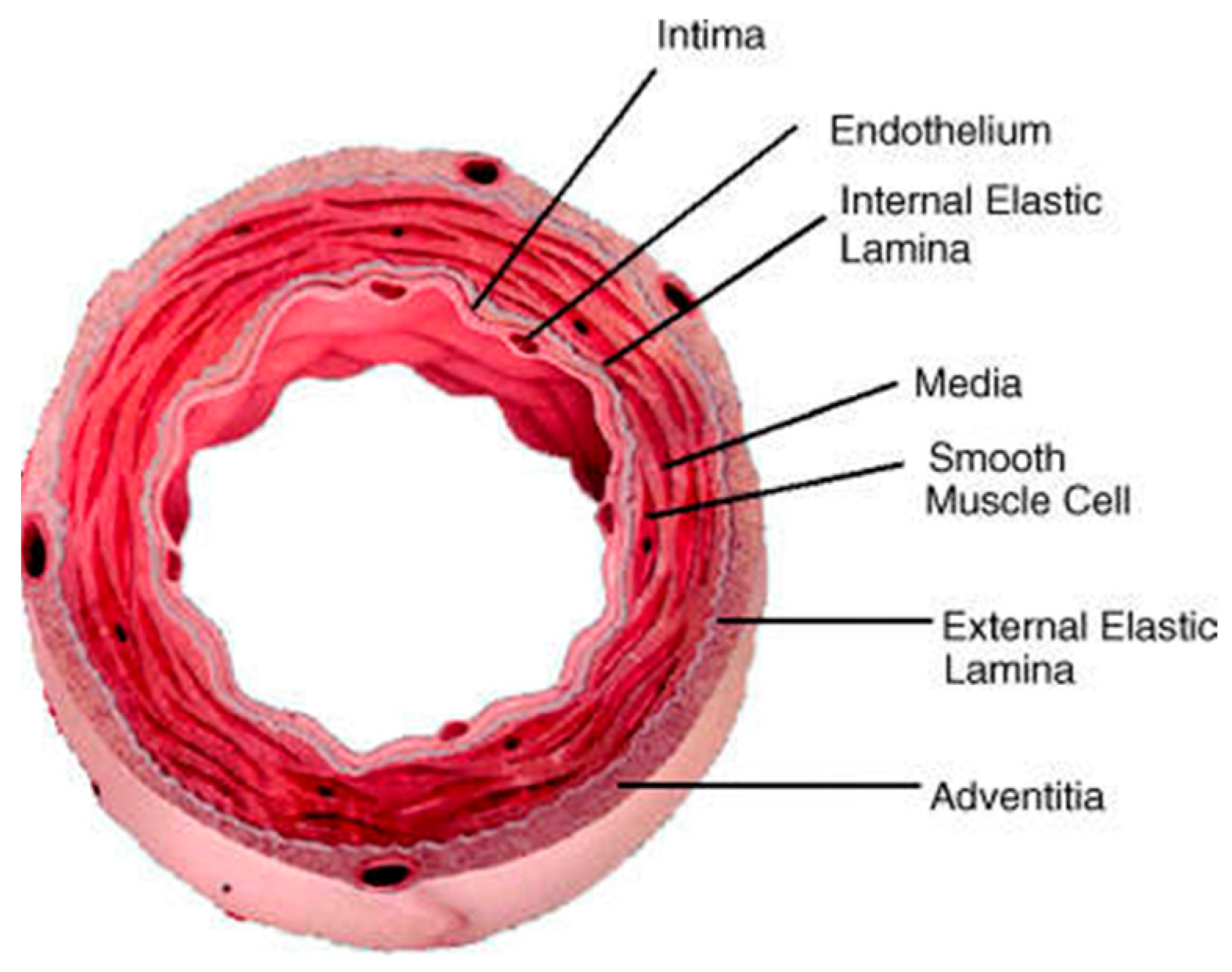
- Intima: The innermost layer of the arterial wall, the intima, is composed of a single layer of endothelial cells that line the lumen of the artery. The endothelium serves as a barrier between the blood and the underlying tissues, regulating vascular tone, blood flow, and the exchange of nutrients and waste products. It also plays a crucial role in preventing thrombosis by producing antithrombotic molecules such as nitric oxide (NO) and prostacyclin [23].
- Media: The media is the middle layer of the arterial wall and consists of smooth muscle cells (SMCs) embedded in an extracellular matrix (ECM) composed of collagen, elastin, and proteoglycans. The media is responsible for the structural integrity and elasticity of the artery, allowing it to withstand and respond to changes in blood pressure [24].
- Adventitia: The outermost layer of the arterial wall, the adventitia, contains fibroblasts, collagen fibers, nerves, and the vasa vasorum (small blood vessels that supply nutrients to the arterial wall). The adventitia provides structural support and plays a role in inflammatory response by serving as a site for immune cell accumulation and activation [25].
3.2. Pathogenesis of Atherosclerosis
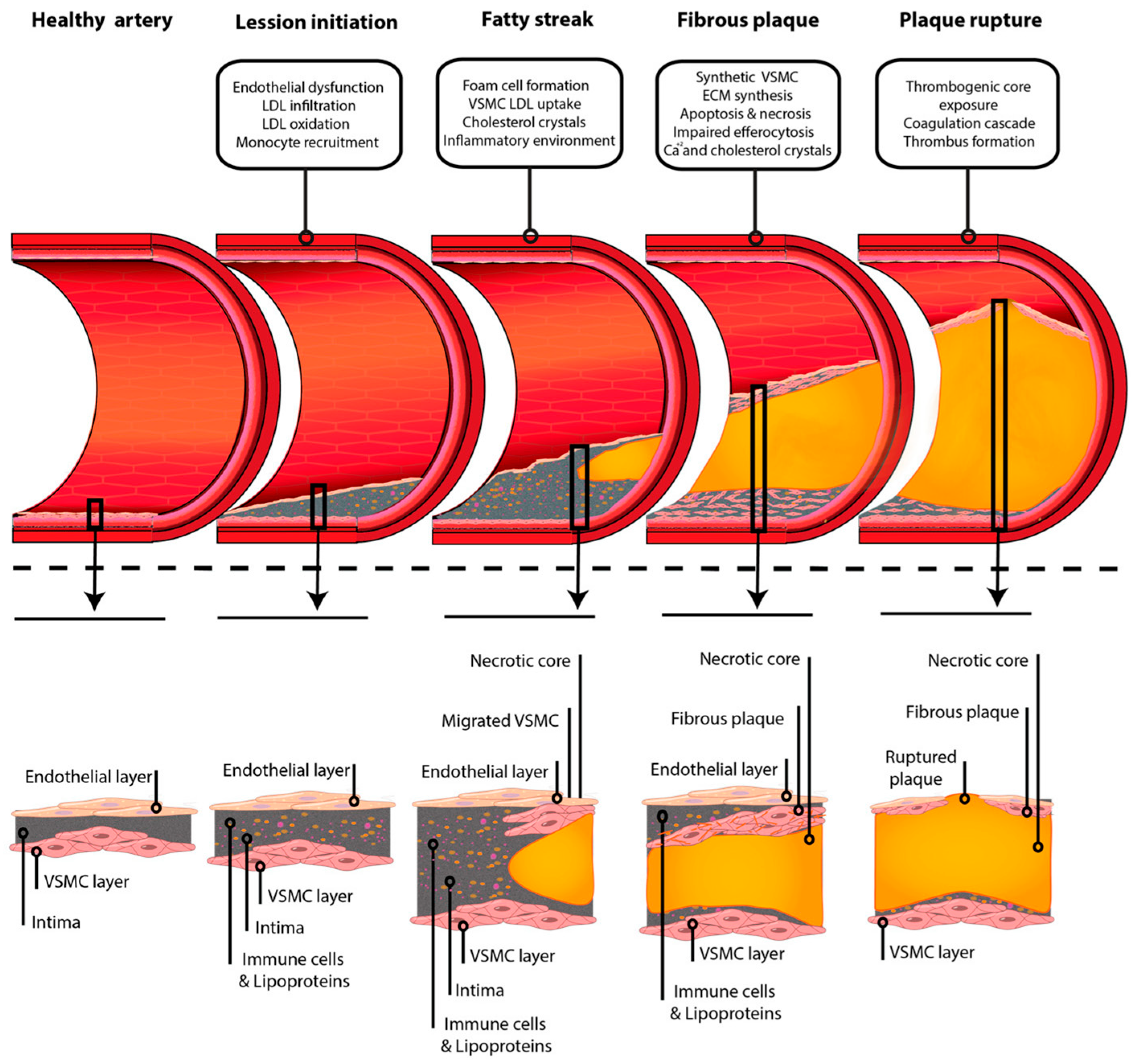
3.2.1. Initiation of Atherosclerosis
- a.
- Endothelial Dysfunction
- b.
- Lipoprotein Retention and Modification
- c.
- Monocyte Recruitment and Differentiation
3.2.2. Progression of Atherosclerosis
- a.
- Foam Cell Formation and Lipid Accumulation
- b.
- Smooth Muscle Cell Migration and Proliferation
- c.
- Extracellular Matrix Remodeling
- d.
- Neovascularization and Intraplaque Hemorrhage
3.2.3. Plaque Destabilization and Complications
- a.
- Plaque Rupture
- b.
- Plaque Erosion
- c.
- Calcification and Stiffening
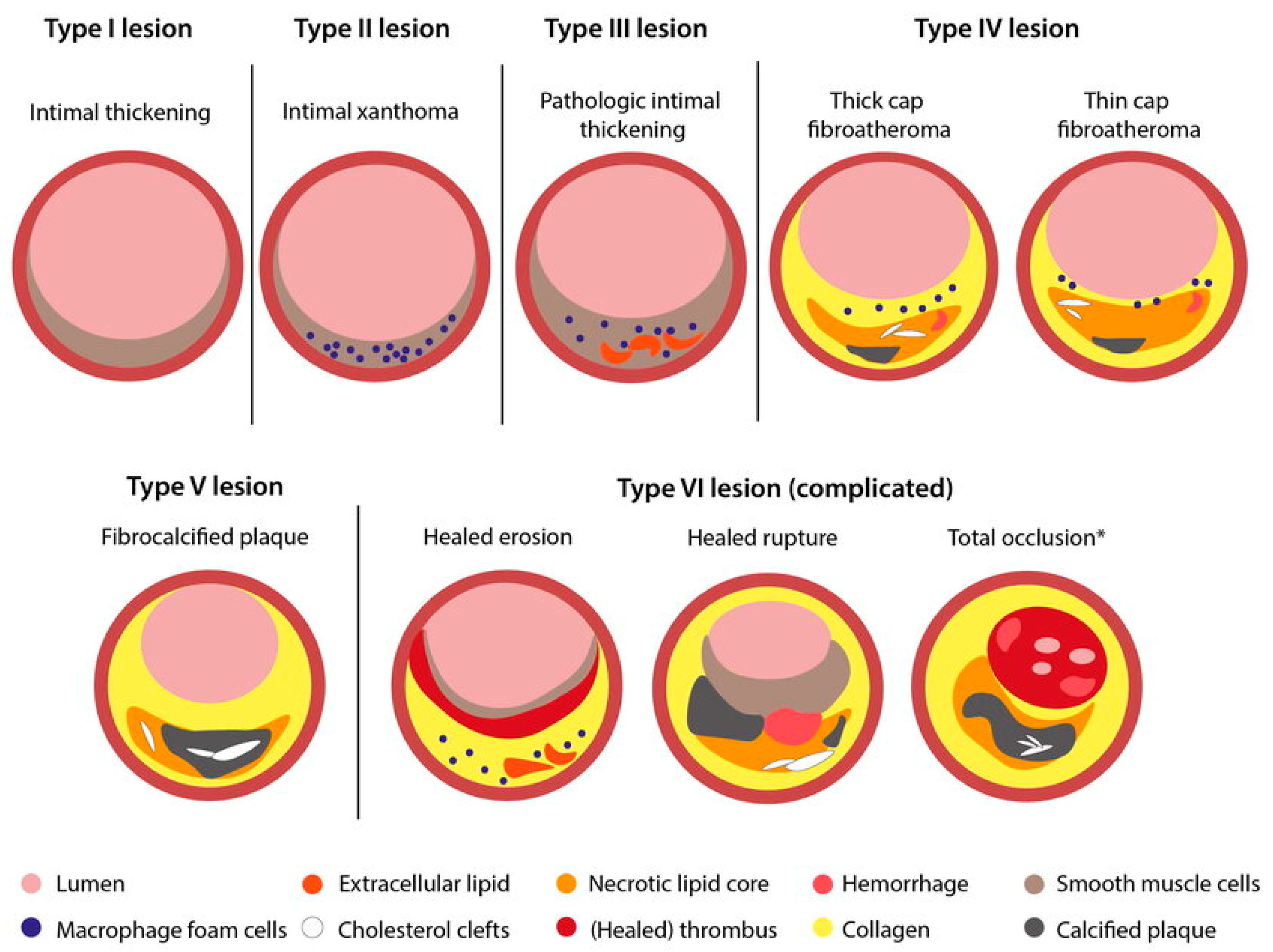
3.3. Classification of Atherosclerotic Lesion
4. Immunohistochemical Markers in Atherosclerotic Plaques
4.1. Core Lineage Panels
4.1.1. Macrophages and Foam Cells (CD68)
4.1.2. Smooth Muscle Cells and Cap Integrity (α-SMA)
4.1.3. T Lymphocytes (CD3 and CD8)
4.1.4. B Lymphocytes (CD20)
4.2. Immunohistochemical Markers of Plaque Instability
4.2.1. TREM2: Macrophage Phenotype and Lipid-Driven Instability
4.2.2. Mimecan (Osteoglycin): Extracellular Matrix Organization and Cap Integrity
4.2.3. Sclerostin: Osteogenic Signaling and Calcification-Associated Vulnerability
4.2.4. Adiponectin: Metabolic Signaling and Anti-Inflammatory Restraint
4.2.5. Adrenomedullin: Endothelial Stress and Compensatory Vasoprotection
4.2.6. Heparin Cofactor II: Local Anticoagulant Balance and Thrombotic Risk
5. Risk Assessment Tools
5.1. Histology-Based Vulnerability Scoring Systems
- (a)
- Structural instability: thin fibrous cap, cap rupture, or surface erosion;
- (b)
- Inflammatory burden: macrophage density at the cap and shoulder regions;
- (c)
- Thrombogenic substrate: size of necrotic core, tissue factor expression;
- (d)
- Hemorrhagic activity: intraplaque hemorrhage and neovascularization;
- (e)
- Calcification pattern: spotty or nodular calcification associated with stress concentration.
5.2. Imaging Techniques and Risk Assessment Tools
- Carotid Intima-Media Thickness (CIMT): CIMT measurement using ultrasound assesses the thickness of the carotid artery walls, which correlates with the extent of atherosclerosis in other vascular beds. Increased CIMT is associated with a higher risk of future cardiovascular events. However, the routine use of CIMT for screening in asymptomatic individuals remains controversial due to variability in measurement and interpretation [60].
- Coronary Artery Calcium (CAC) Scoring: CAC scoring, obtained through non-contrast cardiac computed tomography (CT), quantifies the extent of calcified atherosclerotic plaques in the coronary arteries. The CAC score is a strong predictor of future coronary events and is particularly useful in individuals with intermediate risk, where it can help refine risk stratification and guide preventive interventions. High CAC scores are associated with a higher likelihood of significant coronary artery disease and the need for aggressive preventive measures [61].
5.3. Blood Biomarkers and Risk Assessment Tools
5.3.1. Lipid Profile
5.3.2. High-Sensitivity C-Reactive Protein (hs-CRP)
5.3.3. Other Biomarkers
5.4. Non-Invasive Clinical Risk Assessment Tools
5.4.1. Flow-Mediated Vasodilation (FMD)
5.4.2. Pulse Wave Velocity (PWV)
6. Prevention of Atherosclerosis
6.1. Lifestyle Modifications
6.1.1. Dietary Interventions
6.1.2. Physical Activity
6.1.3. Smoking Cessation
6.1.4. Weight Management
7. Treatment of Atherosclerosis
7.1. Pharmacological Interventions
7.1.1. Lipid-Lowering Therapy
7.1.2. Antihypertensive Therapy
7.1.3. Antiplatelet Therapy
7.2. Invasive Procedures
7.2.1. Percutaneous Coronary Intervention (PCI)
7.2.2. Coronary Artery Bypass Grafting (CABG)
7.2.3. Carotid Endarterectomy and Stenting
7.2.4. Treatment of Lower Extremity Peripheral Artery Disease (PAD) and Chronic Limb-Threatening Ischemia (CLTI)
7.2.5. Renal Artery Stenosis
8. New Trends in Pathophysiology and Treatment
9. Conclusions
Author Contributions
Funding
Data Availability Statement
Conflicts of Interest
References
- Roth, G.A.; Mensah, G.A.; Johnson, C.O. Global burden of cardiovascular diseases and risk factors, 1990–2019: Update from the GBD 2019 Study. J. Am. Coll. Cardiol. 2023, 81, 153–155. [Google Scholar]
- World Health Organization. Cardiovascular Diseases (CVDs): Key Facts; World Health Organization: Geneva, Switzerland, 2023.
- Libby, P.; Buring, J.E.; Badimon, L. Atherosclerosis. Nat. Rev. Dis. Primers 2023, 9, 12. [Google Scholar]
- Hansson, G.K.; Hermansson, A. The immune system in atherosclerosis. Nat. Immunol. 2023, 24, 145–157. [Google Scholar]
- Ross, R. Atherosclerosis—An inflammatory disease. N. Engl. J. Med. 1999, 340, 115–126. [Google Scholar] [CrossRef]
- Gimbrone, M.A.; Garcia-Cardena, G. Endothelial cell dysfunction and the pathobiology of atherosclerosis. Circ. Res. 2016, 118, 620–636. [Google Scholar] [CrossRef]
- Lusis, A.J. Atherosclerosis. Nature 2000, 407, 233–241. [Google Scholar] [CrossRef]
- Stary, H.C.; Chandler, A.B.; Glagov, S. A definition of initial, fatty streak, and intermediate lesions of atherosclerosis. Circulation 1994, 89, 2462–2478. [Google Scholar] [CrossRef]
- Stary, H.C.; Chandler, A.B.; Dinsmore, R.E. A definition of advanced types of atherosclerotic lesions. Circulation 1995, 92, 1355–1374. [Google Scholar] [CrossRef]
- Virmani, R.; Kolodgie, F.D.; Burke, A.P.; Farb, A.; Schwartz, S.M. Lessons from sudden coronary death: A comprehensive morphological classification scheme. Arterioscler. Thromb. Vasc. Biol. 2000, 20, 1262–1275. [Google Scholar] [CrossRef]
- Pasterkamp, G.; den Ruijter, H.M. Pathology of atherosclerotic plaque progression and vulnerability. Cardiovasc. Pathol. 2022, 59, 107416. [Google Scholar]
- Davies, M.J. Stability and instability: Two faces of coronary atherosclerosis: The Paul Dudley White Lecture 1995. Circulation 1996, 94, 2013–2020. [Google Scholar] [CrossRef] [PubMed]
- Libby, P.; Hansson, G.K. Inflammation and immunity in diseases of the arterial tree: Players and layers. Circ. Res. 2015, 116, 307–311. [Google Scholar] [CrossRef] [PubMed]
- Otsuka, F.; Yasuda, S.; Noguchi, T.; Ishibashi-Ueda, H. Pathology of coronary atherosclerosis and thrombosis. Cardiovasc. Diagn. Ther. 2023, 13, 182–196. [Google Scholar] [CrossRef] [PubMed]
- Bennett, M.R.; Sinha, S.; Owens, G.K. Vascular smooth muscle cells in atherosclerosis. Circ. Res. 2022, 131, 692–708. [Google Scholar] [CrossRef]
- Wirka, R.C. Smooth muscle cell phenotypic switching in human atherosclerosis. Nat. Med. 2023, 29, 194–206. [Google Scholar]
- Fernandez, D.M. Single-cell immune profiling of human atherosclerotic plaques. Circulation 2024, 149, 123–138. [Google Scholar]
- Saigusa, R.; Winkels, H.; Ley, K. T cell subsets and functions in atherosclerosis. Nat. Rev. Cardiol. 2022, 19, 387–404. [Google Scholar] [CrossRef]
- Holm, N.R. Extracellular matrix remodeling and fibrous cap weakening in advanced atherosclerosis. Atherosclerosis 2023, 367, 1–10. [Google Scholar]
- Yusuf, S.; Joseph, P.; Rangarajan, S. Modifiable risk factors, cardiovascular disease, and mortality in 155,722 individuals from 21 countries (PURE study). Lancet 2022, 400, 795–807. [Google Scholar]
- Herrington, W.; Lacey, B.; Sherliker, P.; Armitage, J.; Lewington, S. Epidemiology of atherosclerotic cardiovascular disease and risk factors. Nat. Rev. Cardiol. 2023, 20, 223–241. [Google Scholar]
- Rit, E. Atherosclerosis in dialyzed patients. Blood Purif. 2004, 22, 28–37. [Google Scholar] [CrossRef] [PubMed]
- Davis, C.; Fischer, J.; Ley, K.; Sarembock, I.J. The role of inflammation in vascular injury and repair. J. Thromb. Haemost. 2003, 1, 1699–1709. [Google Scholar] [CrossRef] [PubMed]
- Savinov, A.Y. Transgenic overexpression of tissue-nonspecific alkaline phosphatase in vascular endothelium results in generalized arterial calcification. J. Am. Heart Assoc. 2015, 4, e002499. [Google Scholar] [CrossRef] [PubMed]
- Maiellaro, K.; Taylor, W.R. The role of the adventitia in vascular inflammation. Cardiovasc. Res. 2007, 75, 640–648. [Google Scholar] [CrossRef]
- Melaku, L.; Addisu, D. The cellular biology of atherosclerosis with atherosclerotic lesion classification and biomarkers. Bull. Natl. Res. Cent. 2021, 45, 225. [Google Scholar] [CrossRef]
- Steinberg, D.; Witztum, J.L. Oxidized low-density lipoprotein and atherosclerosis. Arterioscler. Thromb. Vasc. Biol. 2010, 30, 2311–2316. [Google Scholar] [CrossRef]
- Jebari-Benslaiman, S. Pathophysiology of atherosclerosis. Int. J. Mol. Sci. 2022, 23, 3346. [Google Scholar] [CrossRef]
- Moore, K.J.; Tabas, I. Macrophages in the pathogenesis of atherosclerosis. Cell 2011, 145, 341–355. [Google Scholar] [CrossRef]
- Francis, G.A. The greatly under-represented role of smooth muscle cells in atherosclerosis. Curr. Atheroscler. Rep. 2023, 25, 741–749. [Google Scholar] [CrossRef]
- Tabas, I.; Bornfeldt, K.E. Intracellular and intercellular aspects of macrophage immunometabolism in atherosclerosis. Circ. Res. 2020, 126, 1209–1227. [Google Scholar] [CrossRef]
- Xepapadaki, E. The antioxidant function of HDL in atherosclerosis. Angiology 2020, 71, 112–121. [Google Scholar] [CrossRef] [PubMed]
- Bentzon, J.F.; Otsuka, F.; Virmani, R.; Falk, E. Mechanisms of plaque formation and rupture. Circ. Res. 2024, 134, 987–1006. [Google Scholar] [CrossRef] [PubMed]
- Daugherty, A.; Tall, A.R.; Daemen, M.; Falk, E.; Fisher, E.A.; García-Cardeña, G.; Lusis, A.J.; Owens, A.P., 3rd; Rosenfeld, M.E.; Virmani, R. Recommendation on Design, Execution, and Reporting of Animal Atherosclerosis Studies: A Scientific Statement From the American Heart Association. Arter. Thromb. Vasc. Biol. 2017, 37, e131–e157. [Google Scholar] [CrossRef] [PubMed]
- van Veelen, A.; Sangen, N.; Henriques, J.; Claessen, B. Identification and treatment of the vulnerable coronary plaque. Rev. Cardiovasc. Med. 2022, 23, 1. [Google Scholar] [CrossRef]
- Konishi, T.; Funayama, N.; Virmani, R. Pathological characteristics of macrophage-rich coronary plaques associated with thrombosis. Cardiovasc. Pathol. 2023, 63, 107512. [Google Scholar]
- Balmos, I.A. Macrophage infiltration and fibrous cap thinning in advanced carotid atherosclerosis. Atherosclerosis 2023, 367, 45–54. [Google Scholar]
- Gisterå, A. B cells and tertiary lymphoid structures in atherosclerosis. Eur. Heart J. 2024, 45, 1025–1036. [Google Scholar]
- Cochain, C. Single-cell RNA-seq reveals the transcriptional landscape and heterogeneity of aortic macrophages in atherosclerosis. Nat. Commun. 2018, 9, 4894. [Google Scholar] [CrossRef]
- Kim, K.; Shim, D.; Lee, J.S. Transcriptome analysis reveals TREM2-positive macrophages associated with lipid metabolism and plaque progression in human atherosclerosis. Circulation 2023, 147, 144–158. [Google Scholar]
- Tasheva, E.S.; Koester, A.; Paulsen, A.Q. Mimecan/osteoglycin regulates collagen fibrillogenesis in connective tissues. J. Biol. Chem. 2002, 277, 33014–33021. [Google Scholar]
- Perisic Matic, L. Osteoglycin deficiency leads to altered collagen organization and increased plaque vulnerability in human atherosclerosis. Cardiovasc. Res. 2022, 118, 1840–1853. [Google Scholar]
- Brandenburg, V.M.; Kramann, R. Calcification of the vascular system: The skeleton in the vessel wall. Circ. Res. 2019, 125, 653–670. [Google Scholar]
- Durham, A.L.; Speer, M.Y.; Scatena, M. Role of smooth muscle cells in vascular calcification. Arterioscler. Thromb. Vasc. Biol. 2018, 38, 236–246. [Google Scholar]
- Evenepoel, P.; D’Haese, P.; Brandenburg, V. Sclerostin and vascular calcification: Emerging concepts. Kidney Int. 2023, 104, 249–261. [Google Scholar]
- Qureshi, A.R. Sclerostin expression in calcified atherosclerotic plaques and its association with cardiovascular outcomes. Atherosclerosis 2024, 384, 117–125. [Google Scholar]
- Matsuda, M.; Shimomura, I.; Sata, M. Role of adiponectin in preventing vascular inflammation. Circulation 2002, 106, 172–177. [Google Scholar]
- Okamoto, Y.; Kihara, S.; Funahashi, T. Adiponectin: A key adipocytokine in metabolic syndrome. Arterioscler. Thromb. Vasc. Biol. 2008, 28, 393–399. [Google Scholar] [CrossRef]
- Ouchi, N.; Walsh, K. Adiponectin as an anti-inflammatory factor in vascular disease. Nat. Rev. Cardiol. 2022, 19, 225–236. [Google Scholar]
- Yamauchi, T.; Kadowaki, T. Adiponectin signaling and cardiovascular protection. Circulation 2023, 147, 190–203. [Google Scholar]
- Hinson, J.P.; Kapas, S.; Smith, D.M. Adrenomedullin, a multifunctional regulatory peptide. Circ. Res. 2000, 86, 807–811. [Google Scholar]
- Kawai, J.; Ando, K.; Horiuchi, M. Adrenomedullin inhibits apoptosis in endothelial cells. Arterioscler. Thromb. Vasc. Biol. 2004, 24, 80–85. [Google Scholar]
- Kitamura, K.; Eto, T. Adrenomedullin and cardiovascular disease. Physiol. Rev. 2022, 102, 987–1030. [Google Scholar]
- Koyama, T. Adrenomedullin expression in atherosclerotic lesions and vascular stress responses. Atherosclerosis 2023, 370, 1–10. [Google Scholar]
- Blinder, M.A.; Marasa, J.C.; Reynolds, C.H. Dermatan sulfate-dependent inhibition of thrombin by heparin cofactor II in the arterial wall. J. Clin. Investig. 2002, 110, 197–205. [Google Scholar]
- Raghavan, S.; Singh, N.; Fogelson, A.L. Localization of heparin cofactor II in human atherosclerotic plaques. Arterioscler. Thromb. Vasc. Biol. 2008, 28, 1598–1604. [Google Scholar]
- Takamura, M. Local anticoagulant mechanisms in the arterial wall: Role of heparin cofactor II. Thromb. Haemost. 2024, 124, 456–467. [Google Scholar]
- Tolle, M. Heparin cofactor II and vascular protection in atherosclerosis. Cardiovasc. Res. 2022, 118, 3125–3137. [Google Scholar]
- Virmani, R.; Burke, A.P.; Farb, A.; Kolodgie, F.D. Pathology of the vulnerable plaque. J. Am. Coll. Cardiol. 2006, 47, C13–C18. [Google Scholar] [CrossRef]
- Goff, D.C. 2013 ACC/AHA guideline on the assessment of cardiovascular risk: A report of the American College of Cardiology/American Heart Association Task Force on Practice Guidelines. Circulation 2014, 129, S49–S73. [Google Scholar] [CrossRef]
- Pleitez, M.A. Label-free metabolic imaging by mid-infrared optoacoustic microscopy in living cells. Nat. Biotechnol. 2020, 38, 293–296. [Google Scholar] [CrossRef]
- Greenland, P. Coronary calcium score and cardiovascular risk. J. Am. Coll. Cardiol. 2018, 72, 434–447. [Google Scholar] [CrossRef] [PubMed]
- Mach, F.; Baigent, C.; Catapano, A.L.; Koskinas, K.C.; Casula, M. 2019 ESC/EAS Guidelines for the management of dyslipidaemias: Lipid modification to reduce cardiovascular risk. Eur. Heart J. 2020, 41, 111–188. [Google Scholar] [CrossRef] [PubMed]
- Thijssen, D.H.J.; Bruno, R.M.; van Mil, A. Expert consensus and evidence on the assessment of flow-mediated dilation. Eur. Heart J. 2022, 43, 2712–2727. [Google Scholar]
- Ghiadoni, L.; Taddei, S.; Virdis, A. Endothelial function and cardiovascular disease. Nat. Rev. Cardiol. 2023, 20, 505–522. [Google Scholar]
- Laurent, S.; Boutouyrie, P. Arterial stiffness and cardiovascular risk. Nat. Rev. Cardiol. 2022, 19, 460–472. [Google Scholar]
- Townsend, R.R.; Wilkinson, I.B.; Schiffrin, E.L. Recommendations for improving and standardizing vascular research on arterial stiffness. Hypertension 2023, 80, e1–e16. [Google Scholar] [CrossRef]
- Cecelja, M.; Chowienczyk, P. Role of arterial stiffness in atherosclerosis and cardiovascular risk. Cardiovasc. Res. 2024, 120, 105–116. [Google Scholar]
- World Health Organization. WHO Guidelines on Physical Activity and Sedentary Behaviour; World Health Organization: Geneva, Switzerland, 2020.
- Visseren, F.L.J.; Mach, F.; Smulders, Y.M.; Carballo, D.; Koskinas, K.C. 2021 ESC Guidelines on cardiovascular disease prevention in clinical practice. Eur. Heart J. 2021, 42, 3227–3337. [Google Scholar] [CrossRef]
- Steinberg, D. The LDL modification hypothesis of atherogenesis: An update. J. Lipid Res. 2009, 50, S376–S381. [Google Scholar] [CrossRef]
- Williams, B.; Mancia, G.; Spiering, W.; Agabiti Rosei, E.; Azizi, M. 2018 ESC/ESH Guidelines for the management of arterial hypertension. Eur. Heart J. 2018, 39, 3021–3104. [Google Scholar] [CrossRef]
- Weber, C.; Noels, H. Atherosclerosis: Current pathogenesis and therapeutic options. Nat. Med. 2011, 17, 1410–1422. [Google Scholar] [CrossRef] [PubMed]
- McEvoy, J.W. 2023 ESC guidelines for the management of elevated blood pressure and hypertension. Eur. Heart J. 2023, 44, 2159–2261. [Google Scholar]
- Liu, L.; Wang, Z.; Ma, L.; Wu, S. Recent insights into the pathophysiology and implications for surgery in atherosclerosis. J. Cardiothorac. Surg. 2025, 20, 410. [Google Scholar] [CrossRef] [PubMed]
- Niu, H.; Wu, L.; Cai, Y.; Yu, C.; Lin, N.; Cai, X.; Chen, M.; Wang, L. Endoplasmic reticulum-associated degradation mitigates atherosclerosis by maintaining cellular homeostasis. Front. Physiol. 2025, 16, 1638694. [Google Scholar] [CrossRef]
- Zhou, A.X.; Tabas, I. The UPR in atherosclerosis. Semin. Immunopathol. 2013, 35, 321–332. [Google Scholar] [CrossRef]
- Ghosh, A.P.; Klocke, B.J.; Ballestas, M.E.; Roth, K.A. CHOP potentially cooperates with FOXO3a in neuronal cells to regulate PUMA and BIM expression in response to ER stress. PLoS ONE 2012, 7, e39586. [Google Scholar] [CrossRef]
- Maidman, S.D.; Rosenson, R.S. Lipid-lowering RNA therapeutics for atherosclerotic cardiovascular disease prevention. BioDrugs 2025, 39, 753–768. [Google Scholar]
- Androsavich, J.R. Frameworks for transformational breakthroughs in RNA-based medicines. Nat. Rev. Drug Discov. 2024, 23, 421–444. [Google Scholar] [CrossRef]
- Ramirez-Cortes, F.; Menova, P. Hepatocyte targeting via the asialoglycoprotein receptor. RSC Med. Chem. 2024, 16, 525–534. [Google Scholar] [CrossRef]
- Karere, G.M. Potential miRNA biomarkers and therapeutic targets for early atherosclerotic lesions. Sci. Rep. 2023, 13, 3467. [Google Scholar] [CrossRef]
- Skoufos, G.; Kakoulidis, P.; Tastsoglou, S. TarBase v9.0 extends experimentally supported miRNA-gene interactions to cell types and virally encoded miRNAs. Nucleic Acids Res. 2024, 52, D304–D310. [Google Scholar] [CrossRef] [PubMed]
- Peters, L.J.F.; Bidzhekov, K.; Bonnin-Marquez, A. MicroRNA-26b deficiency augments atherosclerosis, while mimic-loaded nanoparticles reduce atherogenesis. Cardiovasc. Res. 2025, 121, 2700–2713. [Google Scholar] [CrossRef] [PubMed]
- Cui, C.; Zhong, B.; Fan, R.; Cui, Q. HMDD v4.0: A database for experimentally supported human microRNA-disease associations. Nucleic Acids Res. 2024, 52, D1327–D1332. [Google Scholar] [CrossRef] [PubMed]
- Zhang, Y. TheMarker: A comprehensive database of therapeutic biomarkers. Nucleic Acids Res. 2024, 52, D1450–D1464. [Google Scholar] [CrossRef]
- Sherry, S.T.; Ward, M.H.; Kholodov, M. dbSNP: The NCBI database of genetic variation. Nucleic Acids Res. 2001, 29, 308–311. [Google Scholar] [CrossRef]
- Buniello, A.; MacArthur, J.A.L.; Cerezo, M. The NHGRI-EBI GWAS Catalog of published genome-wide association studies. Nucleic Acids Res. 2019, 47, D1005–D1012. [Google Scholar] [CrossRef]
- Landrum, M.J.; Chitipiralla, S.; Brown, G.R. ClinVar: Improvements to accessing data. Nucleic Acids Res. 2020, 48, D835–D844. [Google Scholar] [CrossRef]
- Tate, J.G.; Bamford, S.; Jubb, H.C. COSMIC: The Catalogue of Somatic Mutations in Cancer. Nucleic Acids Res. 2019, 47, D941–D947. [Google Scholar] [CrossRef]
- Chakraborty, C.; Sharma, A.R.; Sharma, G.; Lee, S.S. Therapeutic advances of miRNAs: A preclinical and clinical update. J. Adv. Res. 2020, 28, 127–138. [Google Scholar] [CrossRef]
- Pokhrel, B.; Pellegrini, M.V.; Levine, S.N. PCSK9 Inhibitors; StatPearls Publishing: Treasure Island, FL, USA, 2025. [Google Scholar]
- Sabatine, M.S.; Giugliano, R.P.; Keech, A.C. Evolocumab and clinical outcomes in patients with cardiovascular disease. N. Engl. J. Med. 2017, 376, 1713–1722. [Google Scholar] [CrossRef]
- Schwartz, G.G.; Steg, P.G.; Szarek, M. Alirocumab and cardiovascular outcomes after acute coronary syndrome. N. Engl. J. Med. 2018, 379, 2097–2107. [Google Scholar] [CrossRef]
- Marrs, J.C.; Anderson, S.L. Inclisiran for the treatment of hypercholesterolaemia. Drugs Context 2024, 13, 2023-12-3. [Google Scholar] [CrossRef]
- Katsiki, N.; Vrablik, M.; Banach, M.; Gouni-Berthold, I. Inclisiran, low-density lipoprotein cholesterol and lipoprotein(a). Pharmaceuticals 2023, 16, 577. [Google Scholar] [CrossRef]
- Wiegman, A.; Peterson, A.L.; Hegele, R.A. Efficacy and safety of inclisiran in adolescents with homozygous familial hypercholesterolemia. Circulation 2025, 151, 1758–1766. [Google Scholar] [CrossRef]
- Syed, M.B. Emerging techniques in atherosclerosis imaging. Br. J. Radiol. 2019, 92, 20180309. [Google Scholar] [CrossRef]
- Puz, P. Inflammatory markers in patients with internal carotid artery stenosis. Arch. Med. Sci. 2013, 2, 254–260. [Google Scholar] [CrossRef]
- Orekhov, A.N. Mitochondrion as a selective target for treatment of atherosclerosis. Curr. Neuropharmacol. 2013, 11, 322–329. [Google Scholar]



| Pathological Stage/Feature | AHA Classification | Virmani Classification | Key Histopathological Characteristics |
|---|---|---|---|
| Diffuse intimal response | Type I (initial lesion)/Adaptive intimal thickening | Adaptive intimal thickening | Proteoglycan-rich intima, scattered SMCs, minimal lipid, absence of macrophage foam cells |
| Foam cell accumulation | Type II (fatty streak) | Intimal xanthoma | Macrophage-derived foam cells with intracellular lipid; preserved intimal architecture |
| Early extracellular lipid | Type III (intermediate lesion) | Pathological intimal thickening (PIT) | Pools of extracellular lipid without a necrotic core; SMC-rich intima |
| Established necrotic core | Type IV (atheroma) | Fibroatheroma | Well-formed necrotic lipid core with macrophages and SMCs; variable fibrous cap |
| Thick fibrous cap plaque | Type V (fibroatheroma) | Thick-cap fibroatheroma | Prominent collagen-rich fibrous cap; smaller necrotic core |
| Thin fibrous cap | Not distinctly defined | Thin-cap fibroatheroma (TCFA) | Large necrotic core, thin fibrous cap (<65 μm), macrophage infiltration |
| Plaque rupture | Type VI (complicated lesion) | Plaque rupture | Fibrous cap disruption with luminal thrombosis |
| Plaque erosion | Included within Type VI | Plaque erosion | Endothelial denudation without cap rupture; proteoglycan-rich surface |
| Calcified nodules | Included within Type VI | Calcified nodule | Protruding calcific masses with disrupted fibrous cap |
| Predominantly fibrotic plaque | Type VIII (fibrotic lesion) | Fibrotic plaque | Dense collagen, minimal lipid, reduced inflammation |
Disclaimer/Publisher’s Note: The statements, opinions and data contained in all publications are solely those of the individual author(s) and contributor(s) and not of MDPI and/or the editor(s). MDPI and/or the editor(s) disclaim responsibility for any injury to people or property resulting from any ideas, methods, instructions or products referred to in the content. |
© 2026 by the authors. Licensee MDPI, Basel, Switzerland. This article is an open access article distributed under the terms and conditions of the Creative Commons Attribution (CC BY) license.
Share and Cite
Verboova, L.; Nedoroscik, A.; Kiskova-Simkova, T.; Smirjakova, A.; Bohus, P.; Kollar, M.; Virag, M.; Mazarova, K.; Zavacka, M. Atherosclerosis: A Pathologist’s Perspective. J. Cardiovasc. Dev. Dis. 2026, 13, 85. https://doi.org/10.3390/jcdd13020085
Verboova L, Nedoroscik A, Kiskova-Simkova T, Smirjakova A, Bohus P, Kollar M, Virag M, Mazarova K, Zavacka M. Atherosclerosis: A Pathologist’s Perspective. Journal of Cardiovascular Development and Disease. 2026; 13(2):85. https://doi.org/10.3390/jcdd13020085
Chicago/Turabian StyleVerboova, Ludmila, Adam Nedoroscik, Terezia Kiskova-Simkova, Adriana Smirjakova, Peter Bohus, Marek Kollar, Michal Virag, Kristína Mazarova, and Martina Zavacka. 2026. "Atherosclerosis: A Pathologist’s Perspective" Journal of Cardiovascular Development and Disease 13, no. 2: 85. https://doi.org/10.3390/jcdd13020085
APA StyleVerboova, L., Nedoroscik, A., Kiskova-Simkova, T., Smirjakova, A., Bohus, P., Kollar, M., Virag, M., Mazarova, K., & Zavacka, M. (2026). Atherosclerosis: A Pathologist’s Perspective. Journal of Cardiovascular Development and Disease, 13(2), 85. https://doi.org/10.3390/jcdd13020085