Mechanisms of Moringa oleifera Leaf Extract Influences Productive Performance, Immunity, Milk Composition, and Rumen Microbiota in Ruminants: A Review
 , , , ,
  and
and 
Simple Summary
Abstract
1. Introduction
2. Nutritional Composition and Bioactive Components of MOL

| No | Bioactive Components | Species | Part of Plant | References |
|---|---|---|---|---|
| 1 | Polysaccharide | MO | Leaves | [24] |
| 2 | Vitamin A, E | MO | Fresh leaves | [22] |
| 3 | Terpenoids, polyphenols, flavonoids, glucosinolates, alkaloids, glycosides and carotenoids | MO | All part of plant | [23] |
| 4 | Phenolic acids and flavonoids | MO | Leaves | [24,37] |
| 5 | Unsaturated fatty acids | MO | Seeds | [38] |
| 6 | Proteins and functional peptides | MO | Stem | [39] |
| 7 | Crude fat, fatty acids and minerals | MO | Root, seed, stem | [40] |
| 8 | Polyunsaturated fatty acids such as omega-3 and omega-6 | MO | Leaves | [24] |
| 9 | Moringyne, alpha-phellandrene, | MO | Seeds | [41] |
| 10 | 4-(alpha-L-rhamanosyloxy) benzyl isothiocyanates | MO | Seeds | [42] |
| 11 | Oligosaccharides and oxalate | MO | Leaves | [43] |
| 12 | Beta carotenes | MO | Flowers | [44] |
| 13 | Flavonoids, saponins | MO | Seeds | [45] |
3. Impact of MOLE on Milk Production and Their Components
| Species | Supplement Form | Dose/Level | Duration | Outcome Metric | % Change vs. Control | Citation |
|---|---|---|---|---|---|---|
| Nubian goats | MO extract | Not specified | Trial period | Daily milk yield | +6% | [18] |
| Nubian goats | MO extract | Not specified | Trial period | Energy-corrected milk | +12% | [18] |
| Nubian goats | MO extract | Not specified | Trial period | Saturated fatty acids (total) | −4.6 to −5.6% | [18] |
| Nubian goats | MO extract | Not specified | Trial period | Unsaturated fatty acids (total) | +11.5 to +13.9% | [18] |
| Lactating goats | MOLM | 15% of diet | Trial period | Milk yield | Increased (significant) | [19] |
| Lactating goats | MOLM | 15% of diet | Trial period | Energy-corrected milk | Increased (significant) | [19] |
| Transition dairy cows | MOLM | 16.66 g/100 kg BW | Pre- + post-partum | Colostrum IgG | +42% | [47] |
| Transition dairy cows | MOLM | 16.66 g/100 kg BW | Pre- + post-partum | Milk SCC | −37% | [48] |
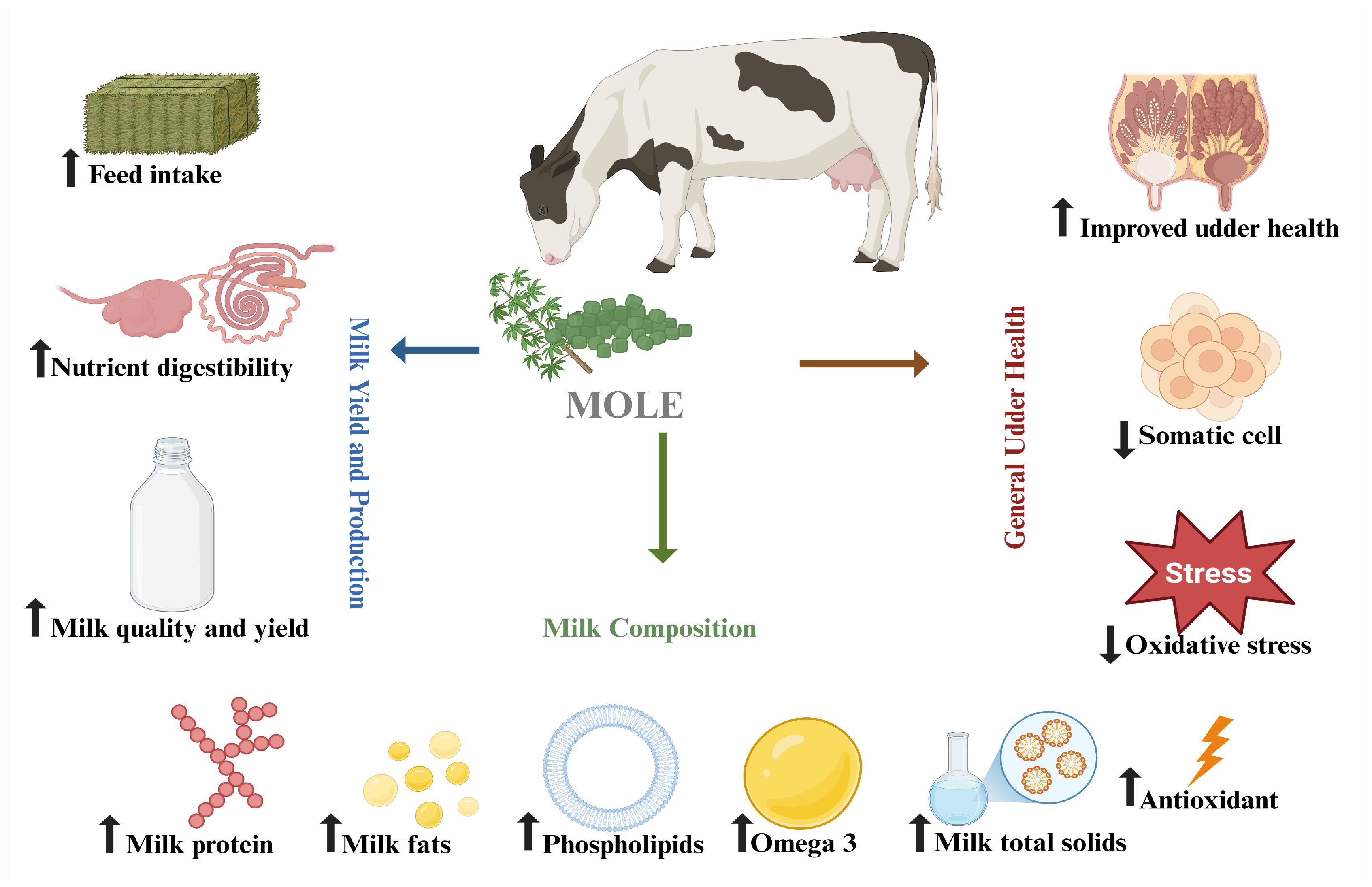
| Lactating buffaloes | MOLP | Increasing levels | Trial period | Total milk solids | +8 to +12% | [50] |
| Lactating buffaloes | MOLP | Increasing levels | Trial period | Total protein | +5 to +7% | [50] |
| Lactating buffaloes | MOLP | Increasing levels | Trial period | Milk fat | +6 to +9% | [50] |
4. Mechanism of Action of Moringa oliefera Leaf Extract (MOLE)
| No | Scientific Name | Country | Common Name | References |
|---|---|---|---|---|
| 1 | Moringa oleifera | Worldwide | Drumstick Tree | [67] |
| 2 | M. stenopetala | Botswana, Kenya and Ethiopia | Cabbage tree | [68] |
| 3 | M. peregrina | Middle East and Red Sea region (e.g., Egypt, Saudi Arabia, Sudan) | Ben tree; wispy, Yasar tree; Wild drumstick tree | [69] |
| 4 | Moringa oleifera leaf | Pakistan, India, and Africa | Benzolive tree, Kelor tree, Mlonge tree, Marango tree, Saijihan tree, Sajna tree, and Mulangaytree | [70] |
| 5 | M. rivae | East Africa (Kenya, Ethiopia) | Swanjehro | [69] |
| 6 | Moringa oleifera lam (Moringa pterygosperma G | India, Bangladesh, and Afghanistan | Horseradish tree | [37] |
| 7 | Moringa ovalifolia | Pakistan | Sohanjan | [71] |
| 8 | Moringa oleifera | India and Africa | Miracle Tree or Tree of life | [24] |
| 9 | Moringa oleifera | Asia and Africa | Tree-foliage | [27] |
| 10 | Moringa oleifera | Northern Nigeria | Zogale | [72] |
| Bioactive Components | Function | Mechanism of Action | References |
|---|---|---|---|
| Flavonoids and polyphenols | Anti-inflammatory | Inhibition of pro-inflammatory enzymes | [37] |
| Aqueous extract of leaves | Anti-hyperglycemic | Decreased blood glucose levels | [57] |
| Acetone extract of MOL | Antibacterial | Inhibit the growth | [73] |
| Ethanol extract of MOL (MOLE) | Regulated the Nrf-2 antioxidant system | Decreased the level of CYP 450 isoenzymes | [62] |
| Ethanol extract of MOL (MOLE) | Hypoglycemic effect | Improve glucose consumption | [74] |
| Ethanol extract of MOL (MOLE) | CNS depressant and anticonvulsant activities | Release γ-amino butyric acid (GABA) | [75] |
| Methanolic leaf extract (MOL) | Reducing glycemia | Increased insulin secretion and sensitivity | [76] |
| Ethanol extract of MOL (MOLE) (astragalin and isoquercetin) | Anticancer of colon cells | Down regulation of ERK1/2 phosphorylation | [77] |
| Ethanol extract of MOL (MOLE) | Improve the testicular structure | Germinal hyperactivity of cells | [78] |
| Ethanol extract of MOL (MOLE) | Therapeutic effectiveness against nephrotoxicity | Enhancement of the endogenous antioxidant system and a modulatory effect on specific inflammatory cytokines | [79] |
| Methanol leaf extract | Antibacterial | Growth inhibition | [80] |
| Aqueous extract of MOLE | Anti-allergic (anti-histamine) | Suppression of mast cell activation | [81] |
| Methanolic, hydro alcoholic and hydro alcoholic maltodextrin extracts | Bacteriostatic and bactericidal effects at concentrations of 0.5, 0.5 and 0.1 mg/mL | Alter membrane permeability | [82] |
Safety Considerations and Practical Inclusion Rates
5. Impact of MOLE on Immune Status
| Species | Supplement Form | Dose/Level | Parameter | % Change vs. Control | Citation |
|---|---|---|---|---|---|
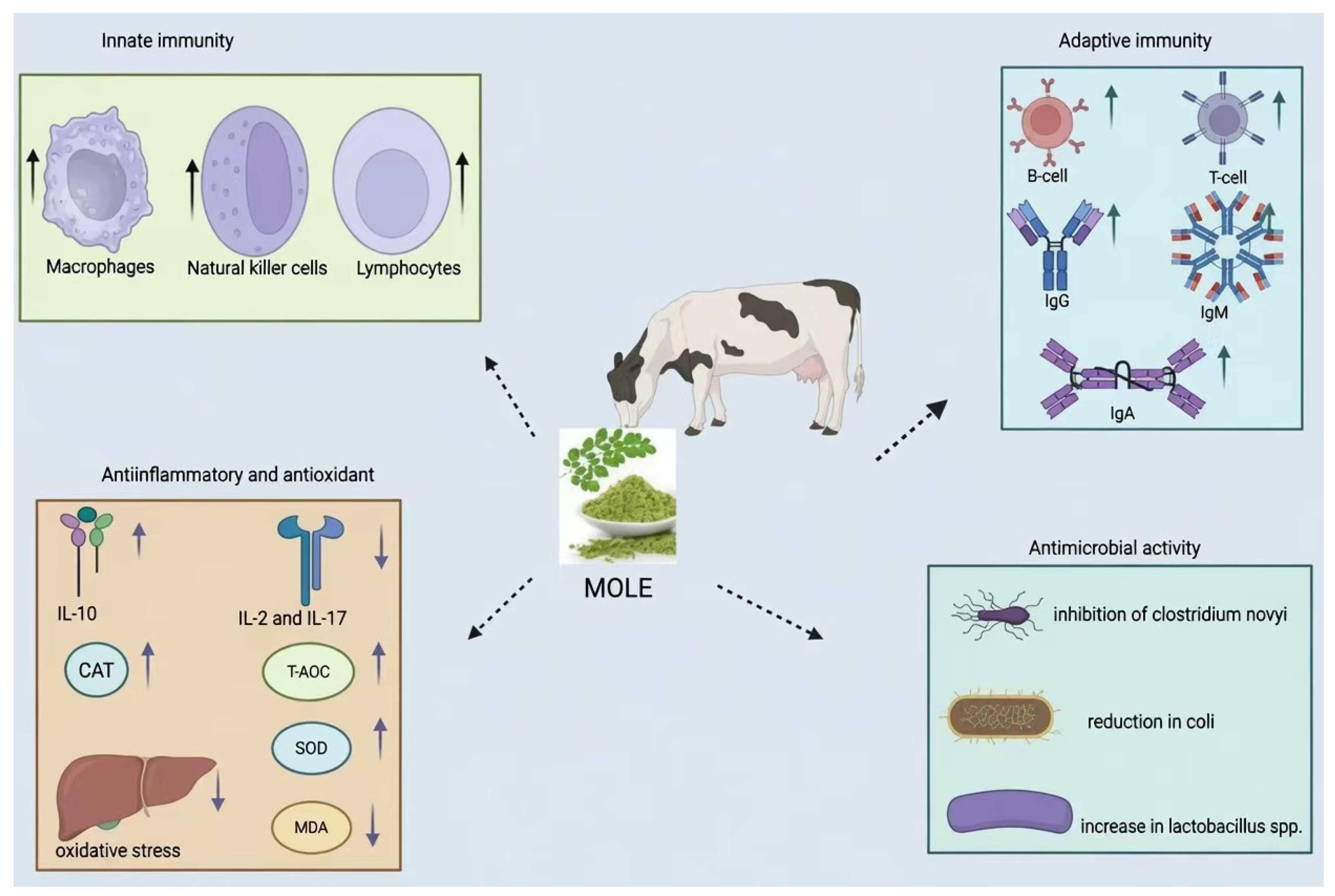
| Sheep (co-infected) | Aqueous MOLE | Not specified | Serum IgG (light infection) | −28% | [84] |
| Sheep (co-infected) | Aqueous MOLE | Not specified | IL-2 | −35% | [84] |
| Sheep (co-infected) | Aqueous MOLE | Not specified | IL-17 | −30% | [84] |
| Sheep (co-infected) | Aqueous MOLE | Not specified | IL-10 | +40% | [84] |
| Periparturient goats | MOLP | Not specified | Plasma T-AOC | +22% | [85] |
| Periparturient goats | MOLP | Not specified | CAT | +18% | [85] |
| Periparturient goats | MOLP | Not specified | MDA | −31% | [85] |
| Periparturient goats | MOLP | Not specified | IgA, IgG, IgM (range) | +15 to +25% | [85] |
| Early-weaned goat kids | Moringa polysaccharides | Not specified | Serum IgA | +26% | [86] |
| Early-weaned goat kids | Moringa polysaccharides | Not specified | Serum IgG | +31% | [86] |
| Early-weaned goat kids | Moringa polysaccharides | Not specified | Serum IgM | +19% | [86] |
| Early-weaned goat kids | Moringa polysaccharides | Not specified | CAT | +24% | [86] |
| Early-weaned goat kids | Moringa polysaccharides | Not specified | T-AOC | +29% | [86] |
| Early-weaned goat kids | Moringa polysaccharides | Not specified | MDA | −34% | [86] |
| Transition dairy cows | MOLM | 16.66 g/100 kg BW | Colostrum IgG | +42% | [47] |
| Transition dairy cows | MOLM | 16.66 g/100 kg BW | Milk SCC | −37% | [48] |
| Calves | Moringa polysaccharides | Linear dose | Serum IgA | +18% | [88] |
| Calves | Moringa polysaccharides | Linear dose | Serum IgG | +23% | [88] |
| Calves | Moringa polysaccharides | Linear dose | Serum IgM | +15% | [88] |
| MAC-T cells (in vitro) | MOLE | Not specified | LPS-induced ROS | −52% | [85,89] |
| MAC-T cells (in vitro) | MOLE | Not specified | IL-1β mRNA | −40 to −60% | [85,89] |
| MAC-T cells (in vitro) | MOLE | Not specified | TNF-α mRNA | −40 to −60% | [85,89] |
6. Impact of MOLE on Rumen Microbiota and Fermentation
| Species | Supplement Form | Key Observed Changes | Citation |
|---|---|---|---|
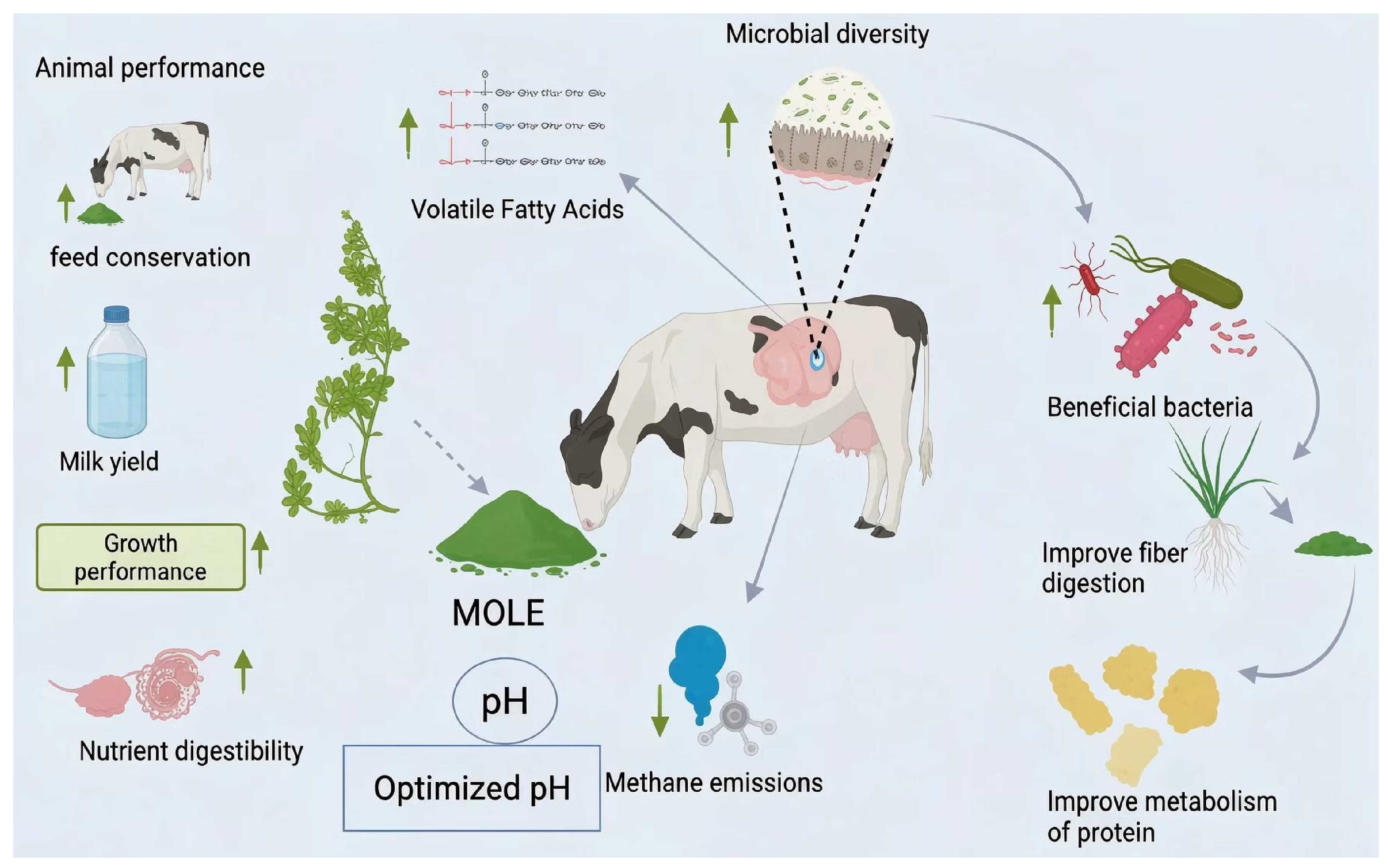
| Buffalo calves | MOLM | ↓ Ruminal enzyme activity, ↓ NH3-N, ↓ total protozoa, ↓ acetate:propionate; ↑ acetic, propionic, butyric acid, ↑ total VFA | [20] |
| Steers | MO seeds + probiotics | ↓ Ruminal pH, ↓ DM degradability; ↓ CH4/ME, ↓ CH4/OM | [95] |
| Sheep | MO seeds + probiotics | ↓ Ruminal pH, ↓ DM degradability; ↓ CH4/SCFA | [95] |
| Growing lambs | MO root bark | Beneficial alteration of ruminal fermentation, ↑ nutrient digestibility | [4] |
| Goat kids | MOLP | ↓ Propionic acid, ↓ butyric acid, ↓ valeric acid, ↓ NH3-N; ↑ rumen papilla height | [86] |
| In vitro (high/low roughage) | Moringa oil | ↑ Prevotella abundance | [54] |
| Lactating goats | MOL | ↓ Microbial diversity; ↑ Prevotella, ↑ Bacteroidales, ↑ Treponema, ↑ Ruminococcus, ↑ R. amylophilus, ↑ Aeromonas | [96] |
| Small ruminants | MOL | ↑ Prevotella, ↑ Anaerovibrio, ↑ Lachnospiraceae, ↑ Butyrivibrio, ↑ Christensenella, ↑ Proteobacteria, ↑ Ruminococcus | [97] |
| Lactating ewes | MOLE | Optimized ruminal pH, ↓ estimated CH4 emissions, positive effect on fermentation and microbial synthesis | [99] |
7. New Techniques for Extraction of MOLE Bioactive Components
| Items | Extraction Methods | Part of Plant | Temperature | Solvent | References |
|---|---|---|---|---|---|
| Gallic acid | Maceration | MOL | 40 °C | 70% ethanol | [112] |
| Flavonoids, alkaloids | microwave-assisted extraction | MO flowers | Eutectic Solvents | [113] | |
| Yield | soxhlet extraction | MOL powder | Room temperature | 70% ethanol | [70] |
| Polysaccharides | enzyme-assisted extraction | MOL | [114] | ||
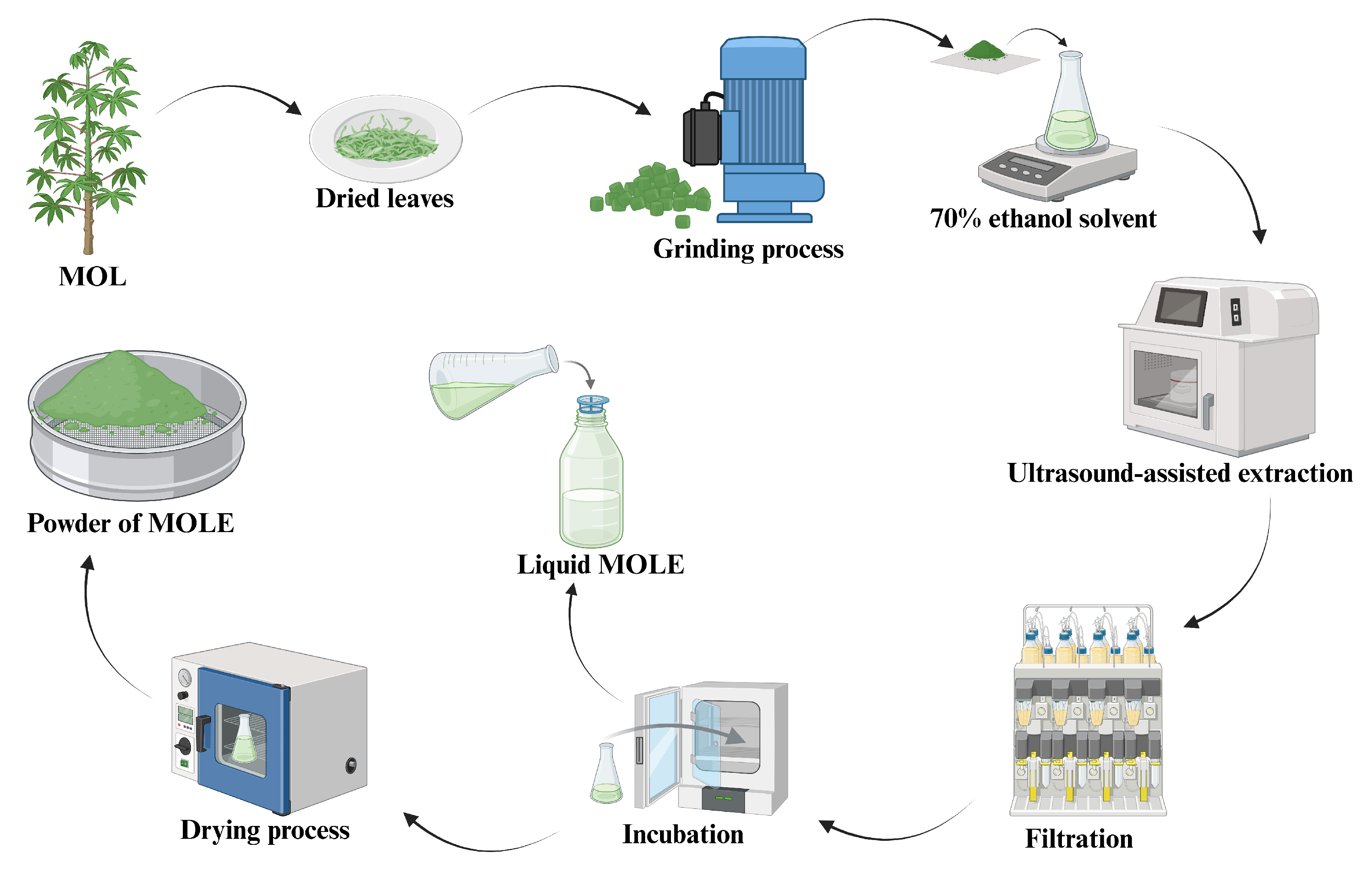
| Leaf extracts | Ultrasound-assisted extraction method | MOL powder | Less than 30 °C | 70% ethanol | [105] |
| Phenolic compounds | Hot bath and vacuum pressure | MOL | 60 °C | Ethyl acetate | [115] |
| Phenolic compounds | Ultra-high-pressure liquid Chromatography | MOL | Methanol 100% | [100] | |
| Flavonoid | successive Maceration | MOL | Dichloromethane | [102] | |
| Tannic acid | Maceration and ultrasonication | MOL powder | Room temperature | Phenol reagent and sodium carbonate | [116] |
| Flavonoids and phenolic compounds | Maceration and decoction | dried leaves | 100 °C | Boiling distilled water | [117] |
8. Advances in Nanoencapsulation and Formulation Technologies of MOLE
| Encapsulation Technique | Encapsulated Material | Encapsulation Matrix | Application | References |
|---|---|---|---|---|
| Cross-linking gelation | MO seed powder | Sodium alginate | Pollutants removal | [118] |
| Microencapsulation | Phenolics | Anti-diabetic | [121] | |
| Freeze dryer | MO seeds | Antioxidant | [122] | |
| Mono nuclear phagocyte system (MPS) cells | MOLE | Antimicrobial | [123] | |
| Nanoencapsulation | Oleic acid methyl ester | Sodium tripolyphosphate | Reduce ruminal methane | [21] |
| Cross-linking gelation | Polysaccharides and proteins | reduced oxidative degradation | [124] | |
| Novel formulation techniques | Flavonoids and phenolic | Improve patient compliance | [125] | |
| ‘Green’ nanoparticles | MOLE | Anti-diabetic | [126] | |
| Metal oxide nanoparticles | MOLE | Nutritional | [127] | |
| Ionic gelation | Phenolic compound | Sodium alginate | Antioxidant | [119] |
9. Research Bottlenecks and Future Directions
10. Limitations of the Review
Testable Hypotheses for Future Mechanistic Work
- (a)
- Bioactive isothiocyanates in MOLE specifically inhibit Butyrivibrio and other biohydrogenating bacteria, leading to an increased flow of unsaturated fatty acids to the mammary gland. This hypothesis could be tested via metatranscriptomic analysis of rumen microbiota from MOLE-supplemented animals.
- (b)
- Phenolic compounds in MOLE act as electron sinks, diverting electrons away from methanogenesis toward alternative pathways such as propionate synthesis. This is supported by the observed decrease in the acetate:propionate ratio [20] and warrants confirmation through in vitro hydrogen-balance experiments.
- (c)
- Isothiocyanates in MOLE specifically suppress Methanobrevibacter species while having minimal effect on fibrolytic bacteria. Future research should employ metagenomic sequencing to identify the precise microbial genes and pathways modulated by MOLE.
- (d)
- The immunomodulatory outcome of MOLE is dose-dependent: lower doses may preferentially enhance innate immunity (increased phagocytosis, NK cell activity), while higher doses suppress excessive inflammation (reduced Th17 response). This dual action would explain the simultaneous rise in IgA (mucosal immunity) and reduction in systemic IL-17 observed in supplemented ruminants. Future studies should explore the threshold concentrations at which MOLE switches from immunostimulatory to anti-inflammatory, as this would allow targeted use for either disease prevention or management of chronic inflammatory conditions.
11. Conclusions
Author Contributions
Funding
Institutional Review Board Statement
Informed Consent Statement
Data Availability Statement
Conflicts of Interest
Abbreviations
| MO | Moringa oleifera |
| MOLE | Moringa oleifera Leaf Extract |
| MOL | Moringa oleifera Leaves |
| MOLM | Moringa oleifera Leaf Meal |
| MOLP | Moringa oleifera Leaf Powder |
| MOML | Moringa oleifera Leaf Extract (methanolic/ethanol) |
| DM | Dry Matter |
| BW | Body Weight |
| VFA | Volatile Fatty Acids |
| SCC | Somatic Cell Count |
| IgG, IgA, IgM | Immunoglobulin G, A, M |
| IL-1β, IL-2, IL-10, IL-17 | Interleukin-1 beta, 2, 10, 17 |
| TNF-α | Tumor Necrosis Factor-alpha |
| ROS | Reactive Oxygen Species |
| MDA | Malondialdehyde |
| T-AOC | Total Antioxidant Capacity |
| CAT | Catalase |
| SOD | Superoxide Dismutase |
| GSH-Px | Glutathione Peroxidase |
| NF-κB | Nuclear Factor Kappa B |
| Nrf-2 | Nuclear factor erythroid 2-related factor 2 |
| COX | Cyclooxygenase |
| LOX | Lipoxygenase |
| NO | Nitric Oxide |
| PGE2 | Prostaglandin E2 |
| ERK | Extracellular signal-Regulated Kinase |
| MEK | Mitogen-Activated Protein Kinase Kinase |
| CYP450 | Cytochrome P450 |
| GABA | Gamma-Aminobutyric Acid |
| MAC-T | Bovine Mammary Epithelial Cell line |
| LPS | Lipopolysaccharide |
| UAE | Ultrasound-Assisted Extraction |
| MAE | Microwave-Assisted Extraction |
| CE | Conventional Extraction |
| SFE | Super-controlled Fluid Extraction (supercritical CO2) |
| ARTP | Atmospheric Room Temperature Plasma |
| BBD | Box–Behnken Design |
| PCL | Poly-ε-caprolactone |
| MMT | Montmorillonite |
| NPs | Nanoparticles |
| PCL-MO/MMT NPs | PCL-loaded MOLE/MMT nanoparticles |
| CaCl2 | Calcium Chloride |
| MPS | Mononuclear Phagocyte System |
| DPPH | Diphenyl-1-picrylhydrazyl |
| HPLC | High-Performance Liquid Chromatography |
| GC-MS | Gas Chromatography–Mass Spectrometry |
| OM | Organic Matter |
| SCFA | Short-Chain Fatty Acids |
| CH4 | Methane |
| CO2 | Carbon Dioxide |
| H2S | Hydrogen Sulfide |
| RBC/WBC | Red/White Blood Cells |
| ALT/AST | Alanine/Aspartate Transaminase (Glutamic/Pyruvic transaminase) |
| N-NH3/NH3-N | Ammonia Nitrogen |
| ECM | Energy-Corrected Milk |
| DIM | Days In Milk |
| SEM | Standard Error of Mean |
References
- Dong, L.; Zhang, T.; Diao, Q. Effect of Dietary Supplementation of Moringa oleifera on the Production Performance and Fecal Methanogenic Community of Lactating Dairy Cows. Animals 2019, 9, 262. [Google Scholar] [CrossRef] [Scilit] [PubMed]
- Kholif, A.E.; Gouda, G.A.; Anele, U.Y.; Galyean, M.L. Extract of Moringa oleifera leaves improves feed utilization of lactating Nubian goats. Small Rumin. Res. 2018, 158, 69–75. [Google Scholar] [CrossRef] [Scilit]
- Amad, A.A.; Zentek, J. The use of Moringa oleifera in ruminant feeding and its contribution to climate change mitigation. Front. Anim. Sci. 2023, 4, 1137562. [Google Scholar] [CrossRef] [Scilit]
- Soltan, Y.A.; Hashem, N.M.; Morsy, A.S.; El-Azrak, K.M.; El-Din, A.N.; Sallam, S.M. Comparative effects of Moringa oleifera root bark and monensin supplementations on ruminal fermentation, nutrient digestibility and growth performance of growing lambs. Anim. Feed Sci. Technol. 2018, 235, 189–201. [Google Scholar] [CrossRef] [Scilit]
- Kholif, A.E.; Gouda, G.A.; Abu Elella, A.A.; Patra, A.K. Replacing the Concentrate Feed Mixture with Moringa oleifera Leaves Silage and Chlorella vulgaris Microalgae Mixture in Diets of Damascus Goats: Lactation Performance, Nutrient Utilization, and Ruminal Fermentation. Animals 2022, 12, 1589. [Google Scholar] [CrossRef] [Scilit] [PubMed]
- Devkota, S.; Bhusal, K.K. Moringa oleifera: A miracle multipurpose tree for agroforestry and climate change mitigation from the Himalayas–A review. Cogent Food Agric. 2020, 6, 1805951. [Google Scholar] [CrossRef] [Scilit]
- Pollini, L.; Tringaniello, C.; Ianni, F.; Blasi, F.; Manes, J.; Cossignani, L. Impact of Ultrasound Extraction Parameters on the Antioxidant Properties of Moringa oleifera Leaves. Antioxidants 2020, 9, 277. [Google Scholar] [CrossRef] [Scilit] [PubMed]
- Masih, L.P.; Singh, S.; Elamathi, S.; Anandhi, P.; Abraham, T. Moringa: A multipurpose potential crop—A review. Proc. Indian Natl. Sci. Acad. 2019, 85, 589–601. [Google Scholar] [CrossRef] [Scilit]
- Mahfuz, S.; Piao, X.S. Application of Moringa (Moringa oleifera) as Natural Feed Supplement in Poultry Diets. Animals 2019, 9, 431. [Google Scholar] [CrossRef] [Scilit] [PubMed]
- Akanmu, A.M.; Hassen, A.; Adejoro, F.A. Haematology and Serum Biochemical Indices of Lambs Supplemented with Moringa oleifera, Jatropha curcas and Aloe vera Leaf Extract as Anti-Methanogenic Additives. Antibiotics 2020, 9, 601. [Google Scholar] [CrossRef] [Scilit] [PubMed]
- Webb, E.C.; Hassen, A.; Olaniyi, M.O.; Pophiwa, P. Effect of Dietary Inclusion of Azadirachta indica and Moringa oleifera Leaf Extracts on the Carcass Quality and Fatty Acid Composition of Lambs Fed High Forage Total Mixed Rations. Animals 2022, 12, 2039. [Google Scholar] [CrossRef] [Scilit] [PubMed]
- Bancessi, A.; Bancessi, Q.; Baldé, A.; Catarino, L. Present and potential uses of Moringa oleifera as a multipurpose plant in Guinea-Bissau. S. Afr. J. Bot. 2020, 129, 206–208. [Google Scholar] [CrossRef] [Scilit]
- Cohen-Zinder, M.; Weinberg, Z.G.; Leibovich, H.; Chen, Y.; Rosen, M.; Sagi, G.; Orlov, A.; Agmon, R.; Yishay, M.; Miron, J.; et al. Ensiled Moringa oleifera: An antioxidant-rich feed that improves dairy cattle performance. J. Agric. Sci. 2017, 155, 1174–1186. [Google Scholar] [CrossRef] [Scilit]
- Soltan, Y.A.; Morsy, A.S.; Hashem, N.M.; Sallam, S.M. Impact of supplementary Moringa oleifera leaf extract on ruminal nutrient degradation and mitigating methane formation in vitro. Egypt. J. Nutr. Feed. 2019, 22, 55–62. [Google Scholar] [CrossRef] [Scilit]
- Olvera-Aguirre, G.; Mendoza-Taco, M.M.; Arcos-Álvarez, D.N.; Piñeiro-Vázquez, A.T.; Moo-Huchin, V.M.; Canul-Solís, J.R.; Castillo-Sánchez, L.; Ramírez-Bautista, M.A.; Vargas-Bello-Pérez, E.; Chay-Canul, A.J. Effect of Feeding Lactating Ewes with Moringa oleifera Leaf Extract on Milk Yield, Milk Composition and Preweaning Performance of Ewe/Lamb Pair. Animals 2020, 10, 1117. [Google Scholar] [CrossRef] [Scilit] [PubMed]
- Hashem, N.M.; Soltan, Y.A.; El-Desoky, N.I.; Morsy, A.S.; Sallam, S.M.A. Effects of Moringa oleifera extracts and monensin on performance of growing rabbits. Livest. Sci. 2019, 228, 136–143. [Google Scholar] [CrossRef] [Scilit]
- Leitanthem, V.K.; Chaudhary, P.; Maiti, S.; Mohini, M.; Mondal, G. Impact of Moringa oleifera Leaves on Nutrient Utilization, Enteric Methane Emissions, and Performance of Goat Kids. Animals 2023, 13, 97. [Google Scholar] [CrossRef] [Scilit] [PubMed]
- Kholif, A.E.; Gouda, G.A.; Galyean, M.L.; Anele, U.Y.; Morsy, T.A. Extract of Moringa oleifera leaves increases milk production and enhances milk fatty acid profile of Nubian goats. Agrofor. Syst. 2019, 93, 1877–1886. [Google Scholar] [CrossRef] [Scilit]
- Kholif, A.E.; Gouda, G.A.; Morsy, T.A.; Salem, A.Z.M.; Lopez, S.; Kholif, A.M. Moringa oleifera leaf meal as a protein source in lactating goat’s diets: Feed intake, digestibility, ruminal fermentation, milk yield and composition, and its fatty acids profile. Small Rumin. Res. 2015, 129, 129–137. [Google Scholar] [CrossRef] [Scilit]
- Abdel-Raheem, S.M.; Hassan, E.H. Effects of dietary inclusion of Moringa oleifera leaf meal on nutrient digestibility, rumen fermentation, ruminal enzyme activities and growth performance of buffalo calves. Saudi J. Biol. Sci. 2021, 28, 4430–4436. [Google Scholar] [CrossRef] [Scilit] [PubMed]
- Elghandour, M.M.Y.; Vallejo, L.H.; Salem, A.Z.M.; Mellado, M.; Camacho, L.M.; Cipriano, M.; Olafadehan, O.A.; Olivares, J.; Rojas, S. Moringa oleifera leaf meal as an environmental friendly protein source for ruminants: Biomethane and carbon dioxide production, and fermentation characteristics. J. Clean. Prod. 2017, 165, 1229–1238. [Google Scholar] [CrossRef] [Scilit]
- Vergara-Jimenez, M.; Almatrafi, M.M.; Fernandez, M.L. Bioactive Components in Moringa oleifera Leaves Protect against Chronic Disease. Antioxidants 2017, 6, 91. [Google Scholar] [CrossRef] [Scilit] [PubMed]
- Chhikara, N.; Kaur, A.; Mann, S.; Garg, M.K.; Sofi, S.A.; Panghal, A. Bioactive compounds, associated health benefits and safety considerations of Moringa oleifera L.: An updated review. Nutr. Food Sci. 2020, 51, 255–277. [Google Scholar] [CrossRef] [Scilit]
- Kashyap, P.; Kumar, S.; Riar, C.S.; Jindal, N.; Baniwal, P.; Guiné, R.P.F.; Correia, P.M.R.; Mehra, R.; Kumar, H. Recent Advances in Drumstick (Moringa oleifera) Leaves Bioactive Compounds: Composition, Health Benefits, Bioaccessibility, and Dietary Applications. Antioxidants 2022, 11, 402. [Google Scholar] [CrossRef] [Scilit] [PubMed]
- Jayawardana, B.C.; Liyanage, R.; Lalantha, N.; Iddamalgoda, S.; Weththasinghe, P. Antioxidant and antimicrobial activity of drumstick (Moringa oleifera) leaves in herbal chicken sausages. LWT-Food Sci. Technol. 2015, 64, 1204–1208. [Google Scholar] [CrossRef] [Scilit]
- Lins, T.; Terry, S.A.; Silva, R.R.; Pereira, L.G.R.; Jancewicz, L.J.; He, M.L.; Wang, Y.; McAllister, T.A.; Chaves, A.V. Effects of the inclusion of Moringa oleifera seed on rumen fermentation and methane production in a beef cattle diet using the rumen simulation technique (Rusitec). Anim. Int. J. Anim. Biosci. 2019, 13, 283–291. [Google Scholar] [CrossRef] [Scilit] [PubMed]
- Olvera-Aguirre, G.; Mendoza-Taco, M.M.; Moo-Huchin, V.M.; Lee-Rangel, H.A.; Roque-Jiménez, J.A.; Gómez-Vázquez, A.; Dzib-Cauich, D.A.; Vargas-Bello-Pérez, E.; Chay-Canul, A.J. Effect of Extraction Type on Bioactive Compounds and Antioxidant Activity of Moringa oleifera Lam. Leaves. Agriculture 2022, 12, 1462. [Google Scholar] [CrossRef] [Scilit]
- Alkuwayti, M.A.; El-Sherif, F.; Yap, Y.-K.; Khattab, S. Foliar application of Moringa oleifera leaves extract altered stress-responsive gene expression and enhanced bioactive compounds composition in Ocimum basilicum. S. Afr. J. Bot. 2020, 129, 291–298. [Google Scholar] [CrossRef] [Scilit]
- Khalid, S.; Arshad, M.; Mahmood, S.; Ahmed, W.; Siddique, F.; Khalid, W.; Zarlasht, M.; Asar, T.O.; Hassan, F.A.M. Nutritional and phytochemical screening of Moringa oleifera leaf powder in aqueous and ethanol extract. Int. J. Food Prop. 2023, 26, 2338–2348. [Google Scholar] [CrossRef] [Scilit]
- Omokpariola, D.O.; Precious-Egere, S.C.; Omokpariola, P.L.; Okechukwu, V.U. Phytochemical and Anti-Microbial Analysis of Metabolites in seeds of Moringa oleifera grown in Nigeria. Prog. Chem. Biochem. Res. 2021, 4, 268–277. [Google Scholar]
- Natsir, H.; Wahab, A.W.; Budi, P.; Arif, A.R.; Arfah, R.A.; Djakad, S.R.; Fajriani, N. Phytochemical and antioxidant analysis of methanol extract of Moringa and celery leaves. J. Phys. Conf. Ser. 2019, 1341, 032023. [Google Scholar] [CrossRef] [Scilit]
- Ndhlala, A.R.; Mulaudzi, R.; Ncube, B.; Abdelgadir, H.A.; du Plooy, C.P.; Van Staden, J. Antioxidant, antimicrobial and phytochemical variations in thirteen Moringa oleifera Lam. cultivars. Molecules 2014, 19, 10480–10494. [Google Scholar] [CrossRef] [Scilit] [PubMed]
- Nugraha, A.P.; Triwardhani, A.; Sitalaksmi, R.M.; Ramadhani, N.F.; Luthfi, M.; Ulfa, N.M.; Tengku Ahmad Noor, T. Phytochemical, antioxidant, and antibacterial activity of Moringa oleifera nanosuspension against peri-implantitis bacteria: An in vitro study. J. Oral Biol. Craniofacial Res. 2023, 13, 720–726. [Google Scholar] [CrossRef] [Scilit] [PubMed]
- Dinesha, B.L.; Nidoni, U.; Ramachandra, C.T.; Naik, N.; Sankalpa, K.B. Effect of extraction methods on physicochemical, nutritional, antinutritional, antioxidant and antimicrobial activity of Moringa (Moringa oleifera Lam.) seed kernel oil. J. Appl. Nat. Sci. 2018, 10, 287–295. [Google Scholar] [CrossRef] [Scilit]
- Tshabalala, T.; Ndhlala, A.R.; Ncube, B.; Abdelgadir, H.A.; Van Staden, J. Potential substitution of the root with the leaf in the use of Moringa oleifera for antimicrobial, antidiabetic and antioxidant properties. S. Afr. J. Bot. 2020, 129, 106–112. [Google Scholar] [CrossRef] [Scilit]
- Farhan, S.A.-A.; Al-Shamary, E. The antioxidant and antibacterial activity of Moringa oleifera extracts against some foodborne pathogens. Med.-Leg. Update 2021, 21, 486–493. [Google Scholar] [CrossRef] [Scilit]
- Chiș, A.; Noubissi, P.A.; Pop, O.L.; Mureșan, C.I.; Fokam Tagne, M.A.; Kamgang, R.; Fodor, A.; Sitar-Tăut, A.V.; Cozma, A.; Orășan, O.H.; et al. Bioactive Compounds in Moringa oleifera: Mechanisms of Action, Focus on Their Anti-Inflammatory Properties. Plants 2023, 13, 20. [Google Scholar] [CrossRef] [Scilit] [PubMed]
- Özcan, M.M. Moringa spp: Composition and bioactive properties. S. Afr. J. Bot. 2020, 129, 25–31. [Google Scholar] [CrossRef] [Scilit]
- Saucedo-Pompa, S.; Torres-Castillo, J.A.; Castro-López, C.; Rojas, R.; Sánchez-Alejo, E.J.; Ngangyo-Heya, M.; Martínez-Ávila, G.C.G. Moringa plants: Bioactive compounds and promising applications in food products. Food Res. Int. 2018, 111, 438–450. [Google Scholar] [CrossRef] [Scilit] [PubMed]
- Vázquez-León, L.A.; Pérez-Coronel, D.E.; Robles-Olvera, V.J.; Valdés-Rodríguez, O.A.; Pérez-Vázquez, A.; García-Alvarado, M.A.; Rodríguez-Jimenes, G.C. Variation in bioactive compounds and antiradical activity of Moringa oleifera leaves: Influence of climatic factors, tree age, and soil parameters. Eur. Food Res. Technol. 2017, 243, 1593–1608. [Google Scholar] [CrossRef] [Scilit]
- Shinde, B.A.; Kamble, A.C. Bioactive compounds of drumstick (Moringa oleifera Lam.). In Bioactive Compounds in Underutilized Fruits and Nuts; Sanwal, G.G., Barrera, J.A.P., Eds.; Springer: Cham, Switzerland, 2020; pp. 573–589. [Google Scholar] [CrossRef] [Scilit]
- Moummou, H.; Meftah, I. Natural medicine: In-depth exploration of Moringa oleifera’s bioactive compounds and antimicrobial effects. In The Global Burden of Disease and Risk Factors—Understanding and Management; Mollaoğlu, M., Mollaoğlu, M.C., Eds.; IntechOpen: London, UK, 2024. [Google Scholar] [CrossRef] [Scilit]
- Srivastava, S.; Pandey, V.K.; Dash, K.K.; Dayal, D.; Wal, P.; Debnath, B.; Singh, R.; Dar, A.H. Dynamic bioactive properties of nutritional superfood Moringa oleifera: A comprehensive review. J. Agric. Food Res. 2023, 14, 100860. [Google Scholar] [CrossRef] [Scilit]
- Iqbal, R.; Liaqat, A.; Saeed, F.; Khaliq, A.; Jahangir Chughtai, M.F.; Afzaal, M.; Tehseen, S.; Aziz, M.; Hussain, M.; Anjum, F.M. Zogale (Moringa oleifera) as a functional ingredient: A review on its nutraceutical properties and food applications. Int. J. Food Prop. 2021, 24, 1202–1213. [Google Scholar] [CrossRef] [Scilit]
- Dzuvor, C.K.O.; Pan, S.; Amanze, C.; Amuzu, P.; Asakiya, C.; Kubi, F. Bioactive components from Moringa oleifera seeds: Production, functionalities and applications—A critical review. Crit. Rev. Biotechnol. 2022, 42, 271–293. [Google Scholar] [PubMed]
- Cohen-Zinder, M.; Shor-Shimoni, E.; Glasser, T.; Leibovich, H.; David, T.; Argov-Argaman, N.; Shabtay, A. Dietary Moringa oleifera improves goat milk quality: Benefits for human nutrition and the dairy industry. Food Chem. 2025, 479, 143786. [Google Scholar] [CrossRef] [Scilit] [PubMed]
- Kekana, T.W.; Marume, U.; Nherera-Chokuda, F.V. Prepartum supplementation of Moringa oleifera leaf meal: Effects on health of the dam, colostrum quality, and acquisition of immunity in the calf. J. Dairy Sci. 2022, 105, 5813–5821. [Google Scholar] [CrossRef] [Scilit] [PubMed]
- Kekana, T.W.; Marume, U.; Muya, M.C.; Nherera-Chokuda, F.V. Periparturient antioxidant enzymes, haematological profile and milk production of dairy cows supplemented with Moringa oleifera leaf meal. Anim. Feed Sci. Technol. 2020, 268, 114606. [Google Scholar] [CrossRef] [Scilit]
- Tan, K.; Sekiguchi, Y.; Hiratsuka, E.; Eguchi, N.; Mukawa, K.; Uyeno, Y.; Kushibiki, S. Effects of Moringa oleifera leaf powder supplementation on milk somatic cell scores and the plasma indexes of inflammation and antioxidant activity in dairy cows. Vet. Res. Commun. 2024, 49, 41. [Google Scholar] [CrossRef] [Scilit] [PubMed]
- El-Badawi, A.-E.Y.; Hassan, A.A.; Khalel, M.S.; Yacout, M.H.; El Naggar, S. Effect of Moringa oleifera leaves powder in diets of lactating buffaloes. Bull. Natl. Res. Cent. 2023, 47, 4. [Google Scholar] [CrossRef] [Scilit]
- Brar, S.; Haugh, C.; Robertson, N.; Owuor, P.M.; Waterman, C.; Fuchs, G.J., 3rd; Attia, S.L. The impact of Moringa oleifera leaf supplementation on human and animal nutrition, growth, and milk production: A systematic review. Phytother. Res. PTR 2022, 36, 1600–1615. [Google Scholar] [CrossRef] [Scilit] [PubMed]
- Kholif, A.E.; Gouda, G.A.; Olafadehan, O.A.; Abdo, M.M. Effects of replacement of Moringa oleifera for berseem clover in the diets of Nubian goats on feed utilisation, and milk yield, composition and fatty acid profile. Anim. Int. J. Anim. Biosci. 2018, 12, 964–972. [Google Scholar] [CrossRef] [Scilit] [PubMed]
- Patir, M.; Kaur, N.; Dutta, N.; Chakma, J.; Singh, G.; Jadhav, S.E. Effect of Moringa oleifera foliage supplementation on intake, milk yield and quality, metabolic profile, immunity in post-partum Vrindavani cattle. Agric. Res. 2025, 15, 1270–1278. [Google Scholar] [CrossRef] [Scilit]
- Ebeid, H.M.; Mengwei, L.; Kholif, A.E.; Hassan, F.U.; Lijuan, P.; Xin, L.; Chengjian, Y. Moringa oleifera Oil Modulates Rumen Microflora to Mediate In Vitro Fermentation Kinetics and Methanogenesis in Total Mix Rations. Curr. Microbiol. 2020, 77, 1271–1282. [Google Scholar] [CrossRef] [Scilit] [PubMed]
- Mohai Ud Din, R.; Eman, S.; Zafar, M.H.; Chong, Z.; Saleh, A.A.; Husien, H.M.; Wang, M. Moringa oleifera as a multifunctional feed additive: Synergistic nutritional and immunomodulatory mechanisms in livestock production. Front. Nutr. 2025, 12, 1615349. [Google Scholar] [CrossRef] [Scilit] [PubMed]
- Afzal, A.; Hussain, T.; Hameed, A.; Shahzad, M.; Mazhar, M.U.; Yang, G. Dietary Moringa oleifera Alters Periparturient Plasma and Milk Biochemical Indicators and Promotes Productive Performance in Goats. Front. Vet. Sci. 2021, 8, 787719. [Google Scholar] [CrossRef] [Scilit] [PubMed]
- Stohs, S.J.; Hartman, M.J. Review of the Safety and Efficacy of Moringa oleifera. Phytother. Res. PTR 2015, 29, 796–804. [Google Scholar] [CrossRef] [Scilit] [PubMed]
- Kumar, R.; Khatak, S.; Vandana; Shukla, A.K.; Panwar, S.; Kumar, A. Deciphering of nutritional profile, therapeutic potential, and networking of bioactive compounds of Moringa oleifera: A comprehensive review. Food Biomacromol. 2025, 2, 271–287. [Google Scholar] [CrossRef] [Scilit]
- Metwally, F.M.; Rashad, H.M.; Ahmed, H.H.; Mahmoud, A.A.; Abdol Raouf, E.R.; Abdalla, A.M. Molecular mechanisms of the anti-obesity potential effect of Moringa oleifera in the experimental model. Asian Pac. J. Trop. Biomed. 2017, 7, 214–221. [Google Scholar] [CrossRef] [Scilit]
- Ayertey, F.; Ofori-Attah, E.; Antwi, S.; Amoa-Bosompem, M.; Djameh, G.; Lartey, N.L.; Ohashi, M.; Kusi, K.A.; Appiah, A.A.; Appiah-Opong, R.; et al. Anti-inflammatory activity and mechanism of action of ethanolic leaf extract of Morinda lucida Benth. J. Tradit. Complement. Med. 2021, 11, 249–258. [Google Scholar] [CrossRef] [Scilit] [PubMed]
- Luetragoon, T.; Pankla Sranujit, R.; Noysang, C.; Thongsri, Y.; Potup, P.; Suphrom, N.; Nuengchamnong, N.; Usuwanthim, K. Bioactive Compounds in Moringa oleifera Lam. Leaves Inhibit the Pro-Inflammatory Mediators in Lipopolysaccharide-Induced Human Monocyte-Derived Macrophages. Molecules 2020, 25, 191. [Google Scholar] [CrossRef] [Scilit] [PubMed]
- Karthivashan, G.; Arulselvan, P.; Tan, S.W.; Fakurazi, S. The molecular mechanism underlying the hepatoprotective potential of Moringa oleifera leaves extract against acetaminophen induced hepatotoxicity in mice. J. Funct. Foods 2015, 17, 115–126. [Google Scholar] [CrossRef] [Scilit]
- Kumar, S.; Verma, P.K.; Shukla, A.; Singh, R.K.; Patel, A.K.; Yadav, L.; Kumar, S.; Kumar, N.; Kaushalendra; Acharya, A. Moringa oleifera L. leaf extract induces cell cycle arrest and mitochondrial apoptosis in Dalton’s Lymphoma: An in vitro and in vivo study. J. Ethnopharmacol. 2023, 302, 115849. [Google Scholar] [CrossRef] [Scilit] [PubMed]
- Balasubramaniam, M.; Sapuan, S.; Hashim, I.F.; Ismail, N.I.; Yaakop, A.S.; Kamaruzaman, N.A.; Ahmad Mokhtar, A.M. The properties and mechanism of action of plant immunomodulators in regulation of immune response—A narrative review focusing on Curcuma longa L. Panax ginseng C. A. Meyer and Moringa oleifera Lam. Heliyon 2024, 10, e28261. [Google Scholar] [CrossRef] [Scilit] [PubMed]
- Shady, N.H.; Mostafa, N.M.; Fayez, S.; Abdel-Rahman, I.M.; Maher, S.A.; Zayed, A.; Saber, E.A.; Khowdiary, M.M.; Elrehany, M.A.; Alzubaidi, M.A.; et al. Mechanistic Wound Healing and Antioxidant Potential of Moringa oleifera Seeds Extract Supported by Metabolic Profiling, In Silico Network Design, Molecular Docking, and In Vivo Studies. Antioxidants 2022, 11, 1743. [Google Scholar] [CrossRef] [Scilit] [PubMed]
- Shah, K.H.; Oza, M.J. Comprehensive review of bioactive and molecular aspects of Moringa oleifera Lam. Food Rev. Int. 2020, 38, 1427–1460. [Google Scholar] [CrossRef] [Scilit]
- Sharma, P.; Kachhwaha, S.; Mahendrakar, M.D.; Kothari, S.L.; Singh, R.B. Assessment of the genetic diversity and population structure in Moringa oleifera accessions using DNA markers and phenotypic descriptors. Plant Gene 2024, 39, 100462. [Google Scholar] [CrossRef] [Scilit]
- Hamada, F.A.; Sabah, S.S.; Mahdy, E.M.B.; El-Raouf, H.S.A.; El-Taher, A.M.; El-Leel, O.F.A.; Althobaiti, A.T.; Ghareeb, M.A.; Randhir, R.; Randhir, T.O. Genetic, phytochemical and morphological identification and genetic diversity of selected Moringa species. Sci. Rep. 2024, 14, 30476. [Google Scholar] [CrossRef] [Scilit] [PubMed]
- Nazim, M.; Raza, W.; ul Hassan Nasim, F.; Anjum, S.; Ullah, H.; Nawaz, A.; Ayaz, M.; Daglia, M. Moringa oleifera: A comprehensive review with special emphasis on phytochemistry. Phytochem. Rev. 2025, 25, 891–944. [Google Scholar] [CrossRef] [Scilit]
- Gharsallah, K.; Rezig, L.; Rajoka, M.S.R.; Mehwish, H.M.; Ali, M.A.; Chew, S.C. Moringa oleifera: Processing, phytochemical composition, and industrial applications. S. Afr. J. Bot. 2023, 160, 180–193. [Google Scholar] [CrossRef] [Scilit]
- Ullah, M.A. Moringa (Moringa oleifera) cultivation awareness in Pakistan. Arch. Food Sci. Nutr. Res. 2021, 1, 1003. [Google Scholar]
- Adamu Idris, M.; Aminu Sharif, H.; Hassanah, M.; Jabir Abdullahi, M. Phytochemical Constituents, Biological Activities, Therapeutic Potentials and Nutritional Values of Moringa oleifera (Zogale): A Review. J. Drug Des. Med. Chem. 2017, 3, 60–66. [Google Scholar] [CrossRef] [Scilit]
- Moyo, B.; Masika, P.J.; Muchenje, V. Antimicrobial activities of Moringa oleifera Lam leaf extracts. Afr. J. Biotechnol. 2012, 11, 2797–2802. [Google Scholar] [CrossRef] [Scilit]
- Hong, Z.; Xie, J.; Hu, H.; Bai, Y.; Hu, X.; Li, T.; Chen, J.; Sheng, J.; Tian, Y. Hypoglycemic effect of Moringa oleifera leaf extract and its mechanism prediction based on network pharmacology. J. Future Foods 2023, 3, 383–391. [Google Scholar] [CrossRef] [Scilit]
- Bakre, A.G.; Aderibigbe, A.O.; Ademowo, O.G. Studies on neuropharmacological profile of ethanol extract of Moringa oleifera leaves in mice. J. Ethnopharmacol. 2013, 149, 783–789. [Google Scholar] [CrossRef] [Scilit] [PubMed]
- Ahmad, J.; Khan, I.; Blundell, R. Moringa oleifera and glycemic control: A review of current evidence and possible mechanisms. Phytother. Res. PTR 2019, 33, 2841–2848. [Google Scholar] [CrossRef] [Scilit] [PubMed]
- Tragulpakseerojn, J.; Yamaguchi, N.; Pamonsinlapatham, P.; Wetwitayaklung, P.; Yoneyama, T.; Ishikawa, N.; Ishibashi, M.; Apirakaramwong, A. Anti-proliferative effect of Moringa oleifera Lam (Moringaceae) leaf extract on human colon cancer HCT116 cell line. Trop. J. Pharm. Res. 2017, 16, 371–378. [Google Scholar] [CrossRef] [Scilit]
- Mohlala, K.; Offor, U.; Monageng, E.; Takalani, N.B.; Opuwari, C.S. Overview of the Effects of Moringa oleifera Leaf Extract on Oxidative Stress and Male Infertility: A Review. Appl. Sci. 2023, 13, 4387. [Google Scholar] [CrossRef] [Scilit]
- Karthivashan, G.; Kura, A.U.; Arulselvan, P.; Md Isa, N.; Fakurazi, S. The modulatory effect of Moringa oleifera leaf extract on endogenous antioxidant systems and inflammatory markers in an acetaminophen-induced nephrotoxic mice model. PeerJ 2016, 4, e2127. [Google Scholar] [CrossRef] [Scilit] [PubMed]
- van den Berg, J.; Kuipers, S. The antibacterial action of Moringa oleifera: A systematic review. S. Afr. J. Bot. 2022, 151, 224–233. [Google Scholar] [CrossRef] [Scilit]
- Hagiwara, A.; Hidaka, M.; Takeda, S.; Yoshida, H.; Kai, H.; Sugita, C.; Watanabe, W.; Kurokawa, M. Anti-allergic action of aqueous extract of Moringa oleifera Lam. leaves in mice. Eur. J. Med. Plants 2016, 16, 1–10. [Google Scholar] [CrossRef] [Scilit]
- Fontana, R.; Caproni, A.; Buzzi, R.; Sicurella, M.; Buratto, M.; Salvatori, F.; Pappadà, M.; Manfredini, S.; Baldisserotto, A.; Marconi, P. Effects of Moringa oleifera Leaf Extracts on Xanthomonas campestris pv. campestris. Microorganisms 2021, 9, 2244. [Google Scholar] [CrossRef] [Scilit] [PubMed]
- Liu, J.; Wang, Y.; Liu, L.; Ma, G.; Zhang, Y.; Ren, J. Effect of Moringa leaf flavonoids on the production performance, immune system, and rumen fermentation of dairy cows. Vet. Med. Sci. 2023, 9, 917–923. [Google Scholar] [CrossRef] [Scilit] [PubMed]
- El Shanawany, E.E.; Fouad, E.A.; Keshta, H.G.; Hassan, S.E.; Hegazi, A.G.; Abdel-Rahman, E.H. Immunomodulatory effects of Moringa oleifera leaves aqueous extract in sheep naturally co-infected with Fasciola gigantica and Clostridium novyi. J. Parasit. Dis. Off. Organ Indian Soc. Parasitol. 2019, 43, 583–591. [Google Scholar] [CrossRef] [Scilit] [PubMed]
- Cheng, W.N.; Jeong, C.H.; Kim, D.H.; Han, S.G. Short communication: Effects of moringa extract on adhesion and invasion of Escherichia coli O55 in bovine mammary epithelial cells. J. Dairy Sci. 2020, 103, 7416–7424. [Google Scholar] [CrossRef] [Scilit] [PubMed]
- Liu, J.; Chen, J.; Fang, S.; Sun, B.; Li, Y.; Guo, Y.; Deng, M.; Zhou, D.; Liu, D.; Liu, G. Effects of moringa polysaccharides on growth performance, immune function, rumen morphology, and microbial community structure in early-weaned goat kids. Front. Vet. Sci. 2024, 11, 1461391. [Google Scholar] [CrossRef] [Scilit] [PubMed]
- Kekana, T.W.; Marume, U.; Muya, C.M.; Nherera-Chokuda, F.V. Lactation performance and blood metabolites in lactating dairy cows micro-supplemented with Moringa oleifera leaf meal. S. Afr. J. Anim. Sci. 2019, 49, 709–716. [Google Scholar] [CrossRef] [Scilit]
- Zhao, C.; Li, H.; Gao, C.; Tian, H.; Guo, Y.; Liu, G.; Li, Y.; Liu, D.; Sun, B. Moringa oleifera leaf polysaccharide regulates fecal microbiota and colonic transcriptome in calves. Int. J. Biol. Macromol. 2023, 253, 127108. [Google Scholar] [CrossRef] [Scilit] [PubMed]
- Cheng, W.N.; Jeong, C.H.; Seo, H.G.; Han, S.G. Moringa Extract Attenuates Inflammatory Responses and Increases Gene Expression of Casein in Bovine Mammary Epithelial Cells. Animals 2019, 9, 391. [Google Scholar] [CrossRef] [Scilit] [PubMed]
- Al-Mufarji, A.A.S.; Abd El-Nasser, M.A. Influence of organic Moringa oleifera leaves supplemented during gestation and lactation periods: Modulation of production efficiency, blood and metabolic parameters of ewes and lambs in subtropics. Adv. Anim. Vet. Sci. 2023, 11, 535–545. [Google Scholar] [CrossRef] [Scilit]
- Akib, M.G.; Rifat, A.; Bormon, C.; Dutta, A.; Ataher, M.S.; Azzam, M.; Farouk, M.H.; Das, R.; Azad, M.A.K.; Mahfuz, S. Effects of Moringa oleifera Leaf Powder on the Growth Performance, Meat Quality, Blood Parameters, and Cecal Bacteria of Broilers. Vet. Sci. 2024, 11, 374. [Google Scholar] [CrossRef] [Scilit] [PubMed]
- Mehwish, H.M.; Rajoka, M.S.R.; Xiong, Y.; Zheng, K.; Xiao, H.; Anjin, T.; Liu, Z.; Zhu, Q.; He, Z. Moringa oleifera—A functional food and its potential immunomodulatory effects. Food Rev. Int. 2022, 38, 1533–1552. [Google Scholar] [CrossRef] [Scilit]
- Abou Zeid, M.A.M.; Okasha, L.; Hegazy, Y.; Abdelmegeid, M. Staphylococcus aureus in subclinical bovine mastitis: Prevalence and innovative treatment with Moringa oleifera and Selenium nanoparticles. Open Vet. J. 2025, 15, 835–846. [Google Scholar] [CrossRef] [Scilit] [PubMed]
- Yasoob, T.B.; Yu, D.; Khalid, A.R.; Zhang, Z.; Zhu, X.; Saad, H.M.; Hang, S. Oral administration of Moringa oleifera leaf powder relieves oxidative stress, modulates mucosal immune response and cecal microbiota after exposure to heat stress in New Zealand White rabbits. J. Anim. Sci. Biotechnol. 2021, 12, 66. [Google Scholar] [CrossRef] [Scilit] [PubMed]
- Elghandour, M.; Pacheco, E.B.F.; Khusro, A.; Tirado-González, D.N.; Lackner, M.; Ponce-Covarrubias, J.L.; De Palo, P.; Maggiolino, A.; Salem, A.Z.M. Deciphering the role of Moringa oleifera seeds and probiotic bacteria on mitigation of biogas production from ruminants. AMB Express 2024, 14, 86. [Google Scholar] [CrossRef] [Scilit] [PubMed]
- Nehra, C.; Harshini, V.; Shukla, N.; Chavda, P.; Bhure, M.; Savaliya, K.; Patil, S.; Shah, T.; Pandit, R.; Patil, N.V.; et al. Ruminal microbial responses to Moringa oleifera feed in lactating goats (Capra hircus): A metagenomic exploration. New Biotechnol. 2025, 86, 87–96. [Google Scholar] [CrossRef] [Scilit] [PubMed]
- Nehra, C.; Harshini, V.; Shukla, N.; Chavda, P.; Savaliya, K.; Patil, S.; Shah, T.; Pandit, R.; Patil, N.V.; Patel, A.K.; et al. Moringa leaf meal exerts growth benefits in small ruminants through modulating the gastrointestinal microbiome. Appl. Microbiol. Biotechnol. 2024, 108, 438. [Google Scholar] [CrossRef] [Scilit] [PubMed]
- Khalid, A.R.; Yasoob, T.B.; Zhang, Z.; Zhu, X.; Hang, S. Dietary Moringa oleifera leaf powder improves jejunal permeability and digestive function by modulating the microbiota composition and mucosal immunity in heat stressed rabbits. Environ. Sci. Pollut. Res. Int. 2022, 29, 80952–80967. [Google Scholar] [CrossRef] [Scilit] [PubMed]
- Chagas, R.A.; Fernandes, T.; Barbosa, C.R.; de Carvalho Pantoja, J.; Navarro, S.R.; Morais de Oliveira, M.V.; Cardoso, C.A.; de Vargas, F.M. Moringa Extract to Modulate Rumen Fermentation and Lactation Performance of Ewes. Dairy 2025, 6, 70. [Google Scholar] [CrossRef] [Scilit]
- Rocchetti, G.; Blasi, F.; Montesano, D.; Ghisoni, S.; Marcotullio, M.C.; Sabatini, S.; Cossignani, L.; Lucini, L. Impact of conventional/non-conventional extraction methods on the untargeted phenolic profile of Moringa oleifera leaves. Food Res. Int. 2019, 115, 319–327. [Google Scholar] [CrossRef] [Scilit] [PubMed]
- Cao, J.; Shi, T.; Wang, H.; Zhu, F.; Wang, J.; Wang, Y.; Cao, F.; Su, E. Moringa oleifera leaf protein: Extraction, characteristics and applications. J. Food Compos. Anal. 2023, 119, 105234. [Google Scholar] [CrossRef] [Scilit]
- Bennour, N.; Mighri, H.; Bouhamda, T.; Mabrouk, M.; Apohan, E.; Yesilada, O.; Küçükbay, H.; Akrout, A. Moringa oleifera leaves: Could solvent and extraction method affect phenolic composition and bioactivities? Prep. Biochem. Biotechnol. 2021, 51, 1018–1025. [Google Scholar] [CrossRef] [Scilit] [PubMed]
- Rodríguez-Pérez, C.; Quirantes-Piné, R.; Fernández-Gutiérrez, A.; Segura-Carretero, A. Optimization of extraction method to obtain a phenolic compounds-rich extract from Moringa oleifera Lam. leaves. Ind. Crops Prod. 2015, 66, 246–254. [Google Scholar] [CrossRef] [Scilit]
- Peng, W.; Wang, L.; Wang, X.; Wang, Y.; Wang, W.; Huang, J.; Zhou, R.; Chen, C.; Bo, R.; Liu, M.; et al. Efficient polyphenol extraction from Moringa oleifera Lam. leaves using natural deep eutectic solvents: COSMO-RS screening, ANN-GA optimization and antioxidant activity evaluation. LWT 2025, 223, 117687. [Google Scholar] [CrossRef] [Scilit]
- Thangaiah, A.; Gunalan, S.; Velu, P.; Chandirasekaran, D.; Rajasekar, A.; AlSalhi, M.S.; Devanesan, S.; Malik, T. Augmenting phyto-chemical and phyto-mineral profiling of moringa leaf extract: A contrastive study of solid-liquid extraction methodologies. Heliyon 2024, 10, e40909. [Google Scholar] [CrossRef] [Scilit] [PubMed]
- Anyiam, P.N.; Tangjaidee, P.; Zhang, W.; Rawdkuen, S. A Comparative Study on Novel-Assisted Extraction Techniques for Retrieving Protein from Moringa oleifera Seeds. Foods 2025, 14, 3046. [Google Scholar] [CrossRef] [Scilit] [PubMed]
- Sandeep, G.; Arumugam, T.; Janavi, G.J.; Anitha, T.; Senthil, K.; Lakshmanan, A. A comparative study on conventional and non-conventional extraction methodologies for yield, quality and antibacterial investigation of Moringa oleifera Lam. Med. Plants Int. J. Phytomed. Relat. Ind. 2022, 14, 614–625. [Google Scholar] [CrossRef] [Scilit]
- Zhong, J.; Wang, Y.; Yang, R.; Liu, X.; Yang, Q.; Qin, X. The application of ultrasound and microwave to increase oil extraction from Moringa oleifera seeds. Ind. Crops Prod. 2018, 120, 1–10. [Google Scholar] [CrossRef] [Scilit]
- Ruttarattanamongkol, K.; Siebenhandl-Ehn, S.; Schreiner, M.; Petrasch, A.M. Pilot-scale supercritical carbon dioxide extraction, physico-chemical properties and profile characterization of Moringa oleifera seed oil in comparison with conventional extraction methods. Ind. Crops Prod. 2014, 58, 68–77. [Google Scholar] [CrossRef] [Scilit]
- Mantiniotou, M.; Athanasiadis, V.; Kalompatsios, D.; Bozinou, E.; Ntourtoglou, G.; Dourtoglou, V.G.; Lalas, S.I. Atmospheric Room Temperature Plasma as a Green Pretreatment Strategy for Enhanced Phytochemical Extraction from Moringa oleifera Leaves. Foods 2025, 14, 3233. [Google Scholar] [CrossRef] [Scilit] [PubMed]
- El-Desoky, N.I.; Hashem, N.M.; Elkomy, A.G.; Abo-Elezz, Z.R. Improving Rabbit Doe Metabolism and Whole Reproductive Cycle Outcomes via Fatty Acid-Rich Moringa oleifera Leaf Extract Supplementation in Free and Nano-Encapsulated Forms. Animals 2022, 12, 764. [Google Scholar] [CrossRef] [Scilit] [PubMed]
- Fitri, Z.A.; Ahmadi, F.; Islam, M.A.; Ponnampalam, E.N.; Dunshea, F.R.; Suleria, H.A.R. A Systematic Review of Extraction Methods, Phytochemicals, and Food Applications of Moringa oleifera Leaves Using PRISMA Methodology. Food Sci. Nutr. 2025, 13, e70138. [Google Scholar] [CrossRef] [Scilit] [PubMed]
- Bouchakour, M.; Nehal, F. Advances in phytochemical profiling and extraction techniques of Moringa oleifera Lam: Toward its pharmaceutical and nutraceutical applications. S. Afr. J. Bot. 2026, 188, 255–281. [Google Scholar] [CrossRef] [Scilit]
- Hamid, M.H.A.; Md Yusoff, M.H.; Rosazlina, R.; Shafie, M.H. A review on Moringa oleifera polysaccharides: Extraction, purification, structure-activity, bioactivities and application. Int. J. Biol. Macromol. 2025, 323, 147089. [Google Scholar] [CrossRef] [Scilit] [PubMed]
- Gomes, O.J.S.; Leitão, A.; de Sousa, H.C.; Braga, M.E.M.; Gando-Ferreira, L.M. Extraction of Moringa oleifera leaves to obtain antioxidants and vitamins. In Proceedings of the 3rd International Conference on Water Energy Food and Sustainability (ICoWEFS 2023); Galvão, J.R.d.C.S., Brito, P., Neves, F.d.S., Almeida, H.d.A., Mourato, S.d.J.M., Nobre, C., Eds.; Springer: Cham, Switzerland, 2024; pp. 141–156. [Google Scholar] [CrossRef] [Scilit]
- Rohit; Rishi, N.; Manju, K.M.; Sachin; Goel, G. TOPSIS based comprehensive evaluation of the effect of drying methods on polyphenolic contents and associated antioxidant activities of Moringa oleifera leaves. Discov. Food 2025, 5, 127. [Google Scholar] [CrossRef] [Scilit]
- Oliveira, I.S.; Fernandes, T.; Santos, A.R.; González Aquino, C.; Vega Britez, G.D.; Vargas Junior, F.M. Phytochemical Composition and Effects of Aqueous Extracts from Moringa oleifera Leaves on In Vitro Ruminal Fermentation Parameters. Ruminants 2025, 5, 4. [Google Scholar] [CrossRef] [Scilit]
- Pop, O.L.; Kerezsi, A.D.; Ciont Nagy, C. A Comprehensive Review of Moringa oleifera Bioactive Compounds-Cytotoxicity Evaluation and Their Encapsulation. Foods 2022, 11, 3787. [Google Scholar] [CrossRef] [Scilit] [PubMed]
- Koca, E.; Akyüz, A.; Taşkın, T.; Toker, Ö.S.; Şahin, E. Encapsulation of Moringa oleifera leaf extract in chitosan-coated alginate microbeads produced by ionic gelation. Food Biosci. 2022, 50, 102158. [Google Scholar] [CrossRef] [Scilit]
- El-Desoky, N.I.; Hashem, N.M.; Gonzalez-Bulnes, A.; Elkomy, A.G.; Abo-Elezz, Z.R. Effects of a Nanoencapsulated Moringa Leaf Ethanolic Extract on the Physiology, Metabolism and Reproductive Performance of Rabbit Does during Summer. Antioxidants 2021, 10, 1326. [Google Scholar] [CrossRef] [Scilit] [PubMed]
- Cabanillas-Ponce de León, R.; Cardenas-Torres, F.I.; Ontiveros, N.; Contreras-Angulo, L.A.; Elisande-Romero, C.A.; Leyva-López, N.; Bernal-Millán, M.D.; Heredia, J.B.; Gutiérrez-Grijalva, E.P. Advancements in Encapsulation Technologies: The Potential of Polyphenols as an Antidiabetic Therapy. Sci. Pharm. 2025, 93, 55. [Google Scholar] [CrossRef] [Scilit]
- Soliman, T.N.; Karam-Allah, A.A.K.; Abo-Zaid, E.M.; Mohammed, D.M. Efficacy of nanoencapsulated Moringa oleifera L. seeds and Ocimum tenuiflorum L. leaves extracts incorporated in functional soft cheese on streptozotocin-induced diabetic rats. Phytomed. Plus 2024, 4, 100598. [Google Scholar] [CrossRef] [Scilit]
- Perumalsamy, H.; Balusamy, S.R.; Sukweenadhi, J.; Nag, S.; MubarakAli, D.; El-Agamy Farh, M.; Vijay, H.; Rahimi, S. A comprehensive review on Moringa oleifera nanoparticles: Importance of polyphenols in nanoparticle synthesis, nanoparticle efficacy and their applications. J. Nanobiotechnol. 2024, 22, 71. [Google Scholar] [CrossRef] [Scilit] [PubMed]
- Devi, M.; Othman, R.; Mohan, K. Nanoencapsulation of Moringa oleifera L. extract in composite ultrafine particles using salting-out method. In Proceedings of the 4th International Conference on Biomass Utilization and Sustainable Energy, ICoBiomasSE 2024, Penang, Malaysia, 2–3 September 2024; Ong, H.L., Ed.; Springer: Singapore, 2025; pp. 1–12. [Google Scholar]
- Borkar, K.; Argulwar, G.; Deshmukh, S.; Jaiswal, S.; Kitukale, M.D. Moringa oleifera tablets: A comprehensive review of novel formulation techniques for enhanced bioavailability and patient compliance. Int. J. Pharm. Sci. 2025, 3, 1825–1838. [Google Scholar] [CrossRef]
- Mohammed, G.M.; Hawar, S.N. Green Biosynthesis of Silver Nanoparticles from Moringa oleifera Leaves and Its Antimicrobial and Cytotoxicity Activities. Int. J. Biomater. 2022, 2022, 4136641. [Google Scholar] [CrossRef] [Scilit] [PubMed]
- Muhaimin, M.; Chaerunisaa, A.Y.; Rostinawati, T.; Amalia, E.R.I.; Hazrina, A.; Nurhasanah, S. A review on nanoparticles of Moringa oleifera extract: Preparation, characterization, and activity. Int. J. Appl. Pharm. 2023, 15, 43–51. [Google Scholar] [CrossRef] [Scilit]
- Villegas-Vazquez, E.Y.; Padilla-Mendoza, J.R.; Carrillo-Pérez, M.S.; Gómez-Cansino, R.; Altamirano-Garcia, L.; Cruz Muñoz, R.; Diaz-Badillo, A.; López-Reyes, I.; Quintas-Granados, L.I. The “Colors” of Moringa: Biotechnological Approaches. Plants 2025, 14, 2338. [Google Scholar] [CrossRef] [Scilit] [PubMed]
- Azlan, U.K.; Mediani, A.; Rohani, E.R.; Tong, X.; Han, R.; Misnan, N.M.; Jam, F.A.; Bunawan, H.; Sarian, M.N.; Hamezah, H.S. A Comprehensive Review with Updated Future Perspectives on the Ethnomedicinal and Pharmacological Aspects of Moringa oleifera. Molecules 2022, 27, 5765. [Google Scholar] [CrossRef] [Scilit] [PubMed]
- Soto, J.A.; Gómez, A.C.; Vásquez, M.; Barreto, A.N.; Molina, K.S.; Zuniga-Gonzalez, C.A. Biological properties of Moringa oleifera: A systematic review of the last decade. F1000Research 2024, 13, 1390. [Google Scholar] [CrossRef] [Scilit]
- George, T.T.; Obilana, A.O.; Oyenihi, A.B.; Rautenbach, F.G. Moringa oleifera through the years: A bibliometric analysis of scientific research (2000–2020). S. Afr. J. Bot. 2021, 141, 12–24. [Google Scholar] [CrossRef] [Scilit]


Disclaimer/Publisher’s Note: The statements, opinions and data contained in all publications are solely those of the individual author(s) and contributor(s) and not of MDPI and/or the editor(s). MDPI and/or the editor(s) disclaim responsibility for any injury to people or property resulting from any ideas, methods, instructions or products referred to in the content. |
© 2026 by the authors. Licensee MDPI, Basel, Switzerland. This article is an open access article distributed under the terms and conditions of the Creative Commons Attribution (CC BY) license.
Share and Cite
Abdulrahman, M.Y.; Ibrahim, N.A.; Essa, M.O.A.; Adam, S.Y.; Din, R.M.U.; Ahmed, A.A.; Jan, R.U.; Bendif, H.; Basher, N.S.; Saleh, A.A.; et al. Mechanisms of Moringa oleifera Leaf Extract Influences Productive Performance, Immunity, Milk Composition, and Rumen Microbiota in Ruminants: A Review. Vet. Sci. 2026, 13, 821. https://doi.org/10.3390/vetsci13080821
Abdulrahman MY, Ibrahim NA, Essa MOA, Adam SY, Din RMU, Ahmed AA, Jan RU, Bendif H, Basher NS, Saleh AA, et al. Mechanisms of Moringa oleifera Leaf Extract Influences Productive Performance, Immunity, Milk Composition, and Rumen Microbiota in Ruminants: A Review. Veterinary Sciences. 2026; 13(8):821. https://doi.org/10.3390/vetsci13080821
Chicago/Turabian StyleAbdulrahman, Mudathir Y., Nasir A. Ibrahim, Mohamed Osman Abdalrahem Essa, Saber Y. Adam, Raza Mohai Ud Din, Abdelkareem A. Ahmed, Rifat Ullah Jan, Hamdi Bendif, Nosiba S. Basher, Ahmed A. Saleh, and et al. 2026. "Mechanisms of Moringa oleifera Leaf Extract Influences Productive Performance, Immunity, Milk Composition, and Rumen Microbiota in Ruminants: A Review" Veterinary Sciences 13, no. 8: 821. https://doi.org/10.3390/vetsci13080821
APA StyleAbdulrahman, M. Y., Ibrahim, N. A., Essa, M. O. A., Adam, S. Y., Din, R. M. U., Ahmed, A. A., Jan, R. U., Bendif, H., Basher, N. S., Saleh, A. A., Husien, H. M., & Wang, M. (2026). Mechanisms of Moringa oleifera Leaf Extract Influences Productive Performance, Immunity, Milk Composition, and Rumen Microbiota in Ruminants: A Review. Veterinary Sciences, 13(8), 821. https://doi.org/10.3390/vetsci13080821