Article

Achilles Tendon Laceration and Rupture in Dromedary Camels (Camelus dromedarius): Clinical, Radiographic, Ultrasonographic, and Anatomical Findings

by
Madeh Sadan
1,
Gamal Mounir Allouch
2 and
Fahad Abdullah Alshanbari
2,*
1
Department of Clinical Sciences, College of Veterinary Medicine, Qassim University, P.O. Box 6622, Buraydah 51452, Saudi Arabia
2
Department of Medical Biosciences, College of Veterinary Medicine, Qassim University, Buraydah 51452, Saudi Arabia
*
Author to whom correspondence should be addressed.
Vet. Sci. 2026, 13(6), 563; https://doi.org/10.3390/vetsci13060563 (registering DOI)
Submission received: 24 April 2026 / Revised: 26 May 2026 / Accepted: 4 June 2026 / Published: 7 June 2026
(This article belongs to the Special Issue Advances in Morphology and Histopathology in Veterinary Medicine)

Simple Summary

This study describes the structure of the Achilles tendon in dromedary camels and the main features of injuries to this tendon. The tendon is formed by several muscles and attaches to the calcaneus in layered arrangements. Injured camels showed severe hindlimb lameness and swelling. Older animals and males were more commonly affected, with blunt trauma as the main cause. Tendon ruptures were more frequent than lacerations. Radiography helped detect swelling and bone damage, while ultrasonography identified tendon disruption. Both imaging methods are important for accurate diagnosis, treatment planning, and prognosis of Achilles tendon injuries in camels.

Abstract

This study aimed to describe the anatomical composition of the Achilles tendon in dromedary camels and to characterize the clinical, radiographic, and ultrasonographic features of tendon laceration and rupture. Six pelvic limbs from an adult healthy Mejhem camel were dissected following fixation in 10% formaldehyde. Additionally, 19 camels with confirmed Achilles tendon injuries were evaluated clinically and by imaging. Anatomically, the tendon is a composite structure formed by the semitendinosus, gastrocnemius (medial and lateral heads), and superficial digital flexor muscles, arranged in superficial and deep layers and inserting at the tuber calcanei. Clinically, affected camels showed acute hindlimb lameness, reduced weight-bearing, and swelling near the calcaneus. Wadeh camels were more frequently affected than other breeds (p < 0.05–0.001). Age > 2 years (OR = 14.06; p < 0.001) and male sex (OR = 28.4; p < 0.001) were significant risk factors, with blunt trauma as the main cause (p < 0.001). Ruptures were more common than lacerations (OR = 28.4; p < 0.001). Radiography revealed soft tissue swelling and occasional calcaneal avulsion fractures, while ultrasonography showed tendon enlargement, fiber disruption, and hypoechoic gaps. These findings highlight the diagnostic value of combined imaging for accurate evaluation and management.

1. Introduction

Dromedary camels are of considerable economic importance due to their roles in the production of milk, meat, wool, and leather, as well as their use in camel racing in many countries. Maintaining their overall health is essential for optimizing productivity and ensuring the quality of milk and meat production [1,2,3]. The camel’s pes is anatomically composed of the tarsal bones, metatarsals, and phalanges [4]. In camels, the metatarsal region is formed by the fusion of the third and fourth metatarsal bones. Lameness affecting the distal limbs, commonly resulting from Achilles tendon laceration, rupture, or infection, requires prompt diagnosis, appropriate treatment, routine veterinary monitoring, and proper care to ensure effective recovery [5]. Because lameness is a significant problem in dairy animals with substantial economic consequences, rapid identification of the affected site is essential for successful management [6]. Achilles tendon laceration or rupture is a severe, potentially life-threatening injury that has been reported in various farm animals and is associated with substantial economic losses. It is most commonly caused by sudden direct trauma from hard, sharp objects, such as wires or shovels, leading to either partial or complete disruption of the tendon [7,8]. A thorough evaluation of lame camels is essential to identify the underlying causes and contributing factors, as the diagnosis and treatment of this condition can be challenging [9]. The Achilles tendon, formed from the tendons of several muscles and, in some species, with a minor contribution from the soleus, varies structurally among mammals but generally exhibits high tensile strength. In camels, it comprises fascial extensions from the gluteobiceps, gracilis, semitendinosus, gastrocnemius, and superficial digital flexor muscles [9]. In cattle, the Achilles tendon is formed by the tendinous contributions of the gluteobiceps, semitendinosus, gastrocnemius, and superficial digital flexor muscles. In horses, it comprises several distinct tendinous components derived from the gastrocnemius, soleus, biceps femoris, semitendinosus, and superficial digital flexor (flexor digitorum superficialis) muscles [10]. In dogs, the calcaneal (common calcaneal) tendon is formed by several musculotendinous units that converge at the level of the hock. These include the gastrocnemius tendon, the superficial digital flexor tendon, and a common tendon contributed by the biceps femoris, gracilis, and semitendinosus muscles. Notably, dogs lack a soleus muscle [8]. In humans, the Achilles tendon is formed by the complex fusion of the tendons of the medial gastrocnemius, lateral gastrocnemius, and soleus muscles [11]. Despite the widespread importance of camels, reports of Achilles tendon rupture in this species remain limited, and the diagnostic performance of radiography and ultrasonography as standalone, non-invasive modalities is not well established. To address this gap and facilitate more accurate diagnosis and informed clinical decision-making, this study aimed to characterize the clinical, radiographic, ultrasonographic, and anatomical features of Achilles tendon rupture in dromedary camels, thereby enhancing their practical application in veterinary practice.

2. Materials and Methods

2.1. Study Design and Animals

A total of 19 dromedary camels (twelve males and seven females), aged 12–132 months (mean ± SD: 110 ± 12 months) and weighing 200–750 kg (mean ± SD: 470 ± 150 kg), were included in this study. The camels represented different breeds, including Wadeh (n = 12), Asfar (n = 1), Ashaal (n = 1), and Mejhem (n = 5). All camels were presented to the University Veterinary Hospital, Faculty of Veterinary Medicine, Qassim University, Saudi Arabia, between April 2018 and February 2026, and originated from various owners and farms across different regions of the Kingdom of Saudi Arabia.
The camels were admitted primarily for clinical evaluation of hindlimb lameness and were subsequently diagnosed with Achilles tendon laceration or rupture based on clinical, radiographic, and ultrasonographic examinations. Most animals were kept for traditional purposes, including milk and meat production or general husbandry. However, detailed information regarding physical activity, workload, or participation in racing was not consistently available in the clinical records; therefore, assessment of the relationship between tendon injury and activity level was not feasible.
Achilles tendon injuries were classified as partial or complete according to the degree of tendon involvement. In addition, the interval between injury occurrence and presentation to the clinic was recorded. All procedures were conducted in accordance with the Laboratory Animal Control Guidelines of Qassim University, which are consistent with the principles of the Guide for the Care and Use of Laboratory Animals (NIH Publication No. 86–23, revised 1996). The study protocol was reviewed and approved (Approval No. 367; March 2018) by the Committee for Animal Welfare and Ethics, Qassim University, Saudi Arabia.

2.2. Clinical Examination

Each camel underwent a comprehensive clinical examination to characterize the physical features of Achilles tendon laceration or rupture. Recorded parameters included the suspected cause, type, anatomical location, and duration of the injury, as well as the breed, age, and sex of the affected animals. Diagnosis and classification were primarily based on clinical palpation and physical examination, supported by radiographic and ultrasonographic findings. Lameness was graded on a scale from 0 to 3, with 0 ≡ No lameness, 1 ≡ Mild lameness, 2 ≡ Moderate lameness, and 3 ≡ Severe lameness [12,13,14]. The distribution of Achilles tendon laceration and rupture types in the examined camels is summarized in Table 1.

2.3. Radiographic Examination

Radiographic evaluation of the injured Achilles tendon was performed with the camels positioned in lateral recumbency. Imaging was conducted using a Min-X-ray HF 100/30 generator (Toshiba, Tokyo, Japan) with exposure settings of 70 kVp and 2.0 mAs, and a focal film distance of 70 cm. Standard craniocaudal, lateromedial, and flexed lateromedial projections were obtained to assess the Achilles tendon region and adjacent skeletal structures. Prior to imaging, camels were mildly sedated with intravenous xylazine hydrochloride (0.2 mg/kg; Seton 2%, Laboratorios Calier, S.A., Barcelona, Spain) to minimize movement and facilitate proper positioning. All radiographs were evaluated subjectively to identify structural abnormalities associated with tendon laceration and rupture [15].

2.4. Ultrasonographic Examination

Ultrasonographic examination of the affected Achilles tendons was performed with the camels in lateral recumbency using 7.5 MHz linear probes and 3.5–5 MHz sector transducers (SSD-500, Aloka, Japan), selected according to the depth and anatomical location of the lesion. Camels were mildly sedated with intravenous xylazine hydrochloride (0.2 mg/kg; Seton 2%, Laboratorios Calier, S.A., Barcelona, Spain). The skin over the suspected rupture site was clipped and shaved to ensure optimal acoustic contact. The transducer was moved in a proximodistal direction, starting from the normal portion of the tendon and progressing toward the suspected rupture site. This approach enabled assessment of tendon continuity, echogenicity, and structural integrity. Ultrasonographic interpretation was primarily based on alterations in tendon echogenicity and fiber alignment, facilitating determination of the type and extent of tendon damage [8,9].

2.5. Anatomical Examination

This study included the dissection of six pelvic limbs obtained bilaterally from three adult healthy camels, comprising three right and three left hind limbs, of the Mejhem breed, aged 5–7 years and of both sexes. Specimens were preserved in 10% formaldehyde for 1–2 weeks prior to dissection to investigate the anatomical structure of the Achilles tendon. It is important to note that the specimens used for anatomical analysis were distinct from those included in the clinical study. All anatomical samples were obtained from the Anatomy Laboratory, Department of Biomedical Sciences, College of Veterinary Medicine, Qassim University. Dissection was performed in a layer-by-layer manner, beginning with removal of the skin over the gluteal, thigh, and leg regions to expose the Achilles tendon. The contributing muscle tendons were carefully isolated, providing detailed anatomical characterization of the Achilles tendon and its associated structures [8].

2.6. Statistical Analysis

The frequency of lesions in relation to different contributing factors was analyzed. Variations in the frequency of lesions according to the camels’ demographic data and contributing factors were evaluated using the chi-square test and Fisher’s exact test. A p-value of <0.05 was considered statistically significant. For statistical analysis, the commercial software GraphPad Prism (version 8.2, USA) was used.

3. Results

3.1. Anatomical Findings

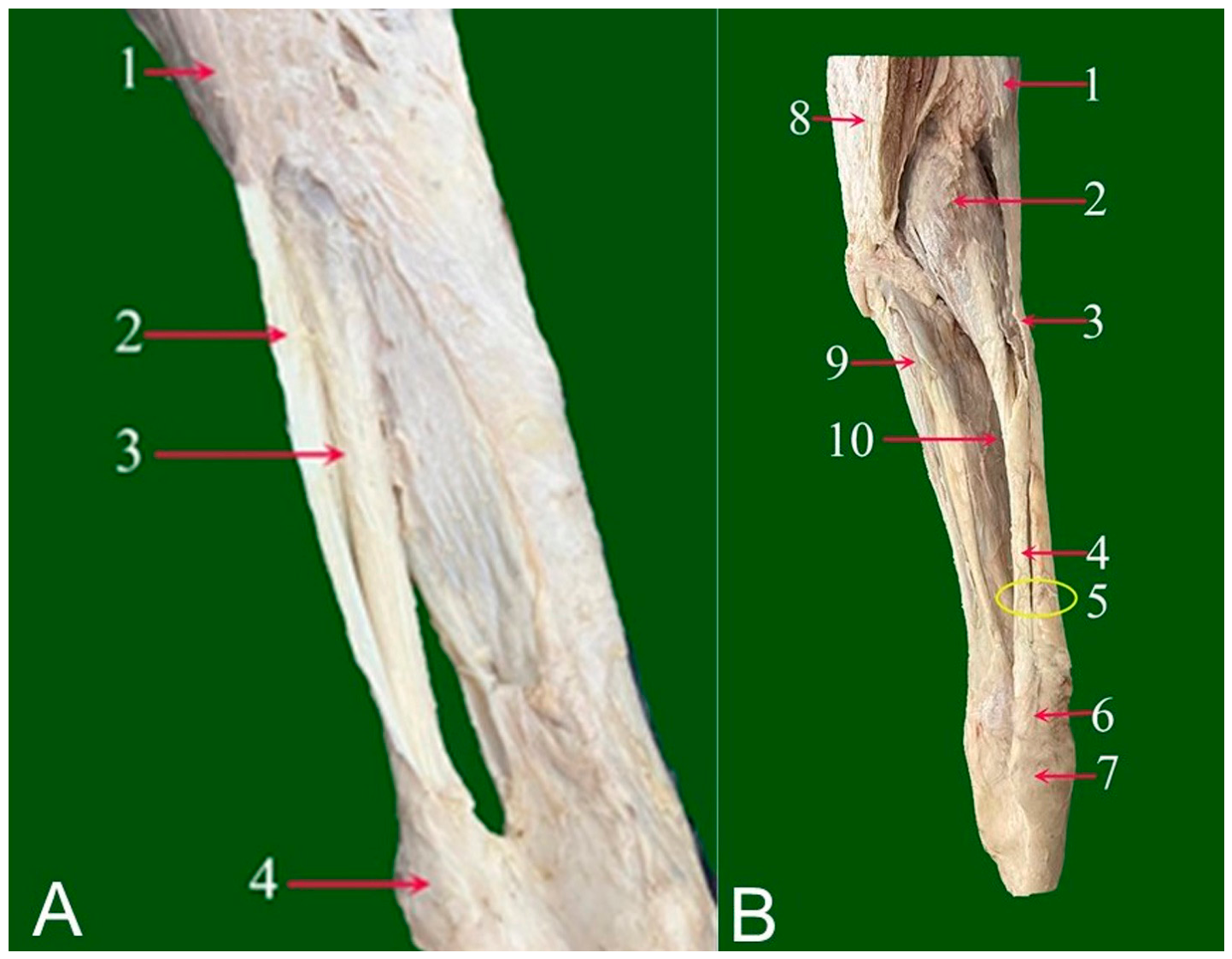
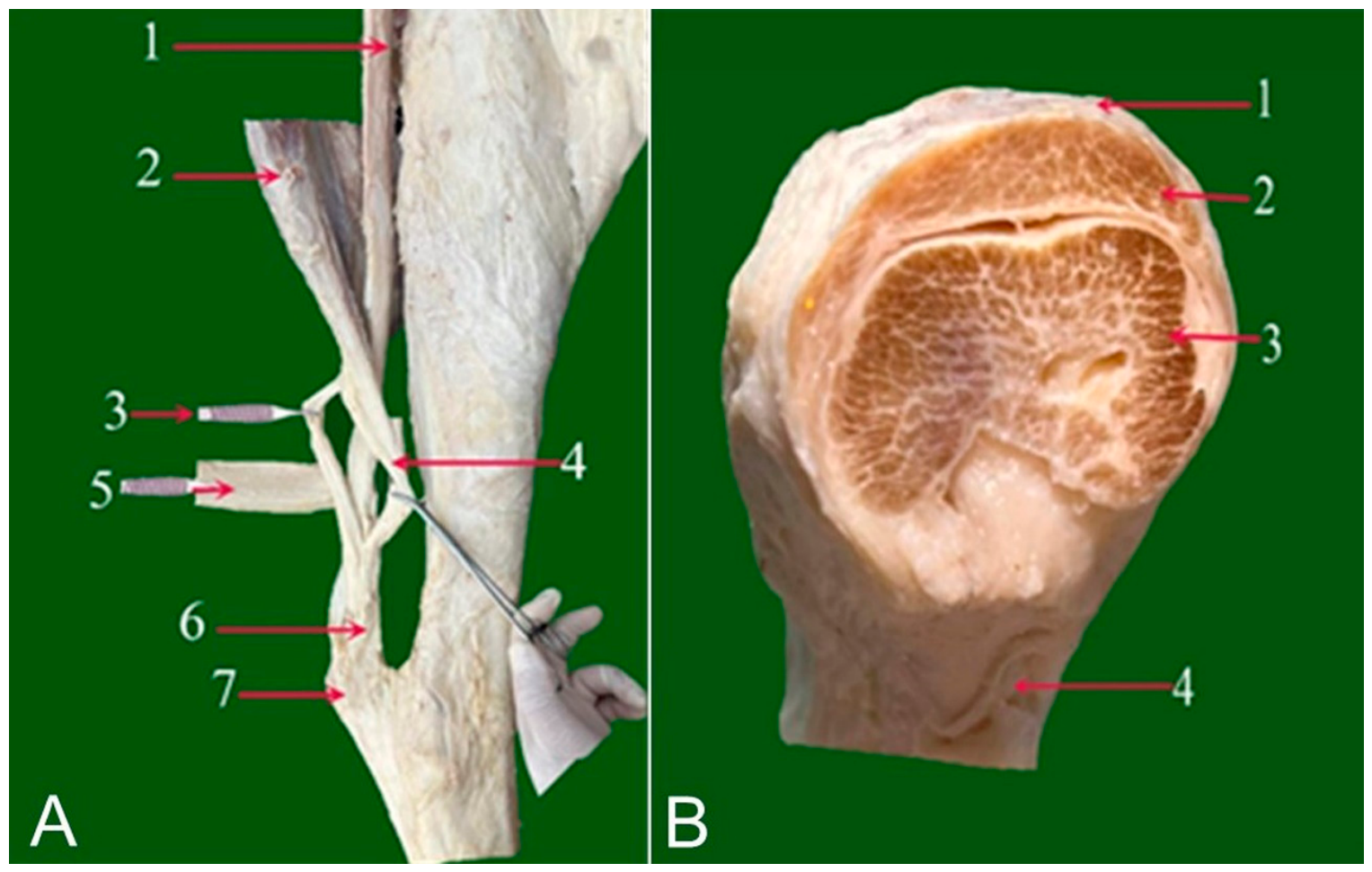
In camels, the Achilles tendon originates immediately caudal to the stifle joint and consists of a complex assemblage of closely associated tendinous structures. It descends along the length of the tibia and inserts on the tuber calcanei, where all components converge. The superficial component is formed by the flattened tendon of the semitendinosus muscle (Musculus semitendinosus). Proximally, the semitendinosus tendon merges with the tendon of the lateral head of the gastrocnemius muscle, contributing to the formation of the Achilles tendon. From this junction, the tendon continues distally along the caudal surface of the tibia and ultimately inserts on the cranial aspect of the proximal calcaneal tuber (Figure 1 and Figure 2).
The gastrocnemius (Musculus gastrocnemius) and superficial digital flexor (Musculus flexor digitorum superficialis) tendons constitute the primary components of the camel Achilles tendon, which insert together on the calcaneal tuber. Beneath this principal layer lies a fascicular arrangement derived from the medial and lateral heads of the gastrocnemius, forming cranial, lateral, and medial subdivisions. The lateral head forms an intermediate layer, attaching partially to both sides of the tuber calcanei, whereas the tendon of the medial head lies deeper, positioned caudal to the contribution of the lateral head.
The superficial digital flexor (plantaris) tendon represents the deepest component of the Achilles tendon complex. It is partially continuous with the tendons of both gastrocnemius heads and is firmly attached to the caudal surface of the gastrocnemius tendon and the cranial aspect of the calcaneal tuber. Proximally, it is enclosed within the gastrocnemius muscle, and then descends along the caudal border of the gastrocnemius tendon. Tendinous bundles from its cranial and medial surfaces extend caudally, laterally, and cranially, whereas those from the cranial and lateral aspects course caudally, distally, and medially. Ultimately, all components converge at the calcaneal tuberosity, forming the common insertion of the Achilles (common calcaneal) tendon (Figure 1 and Figure 2).
The gastrocnemius muscle plays a fundamental role in both the formation and functional capacity of the Achilles tendon. Rather than merely attaching to the tendon, it actively contributes to its development by gradually transforming the muscle fibers of its medial and lateral heads into dense tendinous tissue. Functionally, the gastrocnemius is a key contributor to plantar flexion, facilitating limb propulsion during activities such as walking, running, and jumping, and plays an essential role in load distribution across the Achilles tendon.
In this study, no anatomical variations were observed among the dissected specimens, all of which were derived from the Mejhem breed, a breed reported to exhibit a higher predisposition to Achilles tendon injuries.

3.2. Clinical Findings

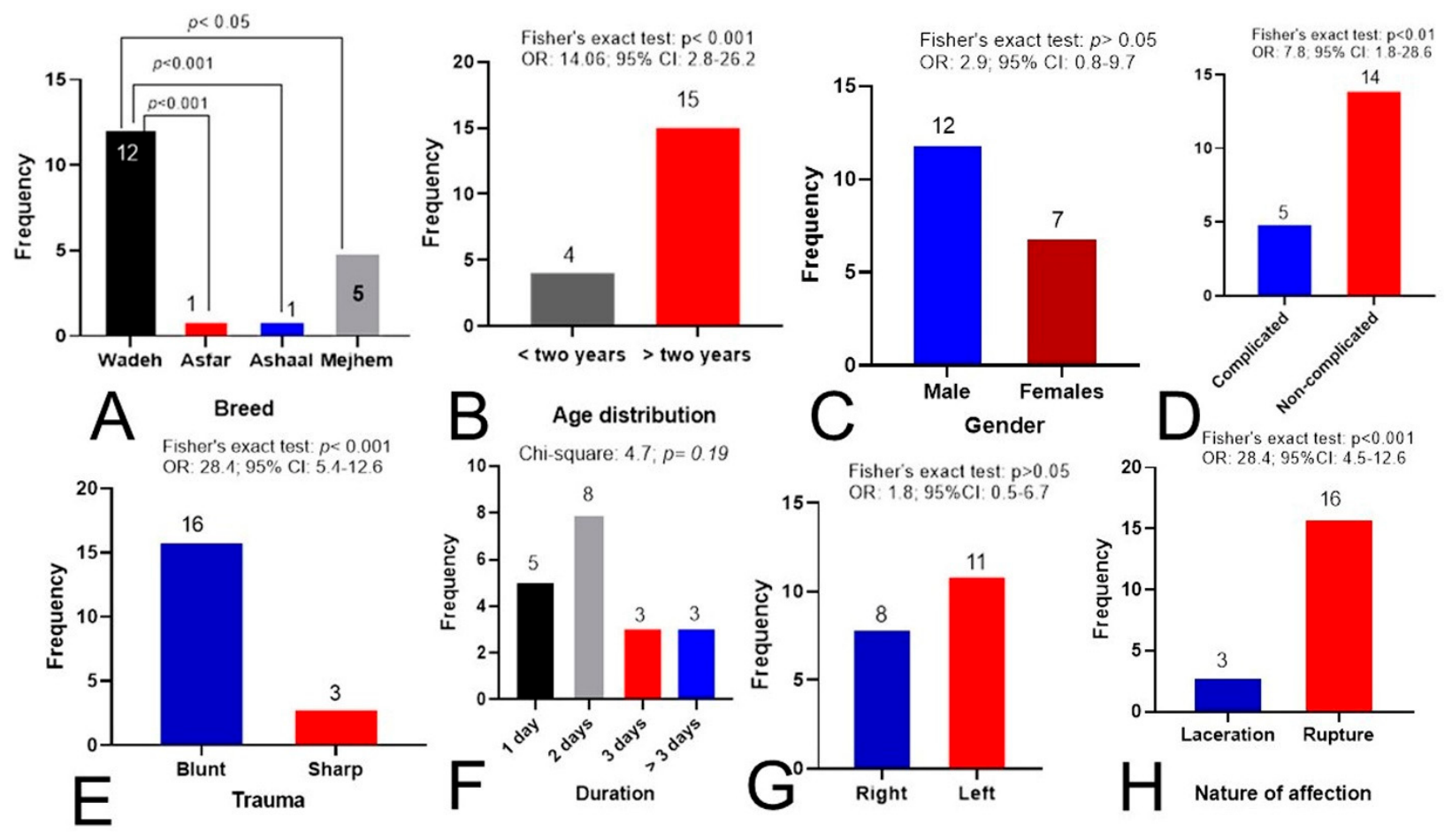
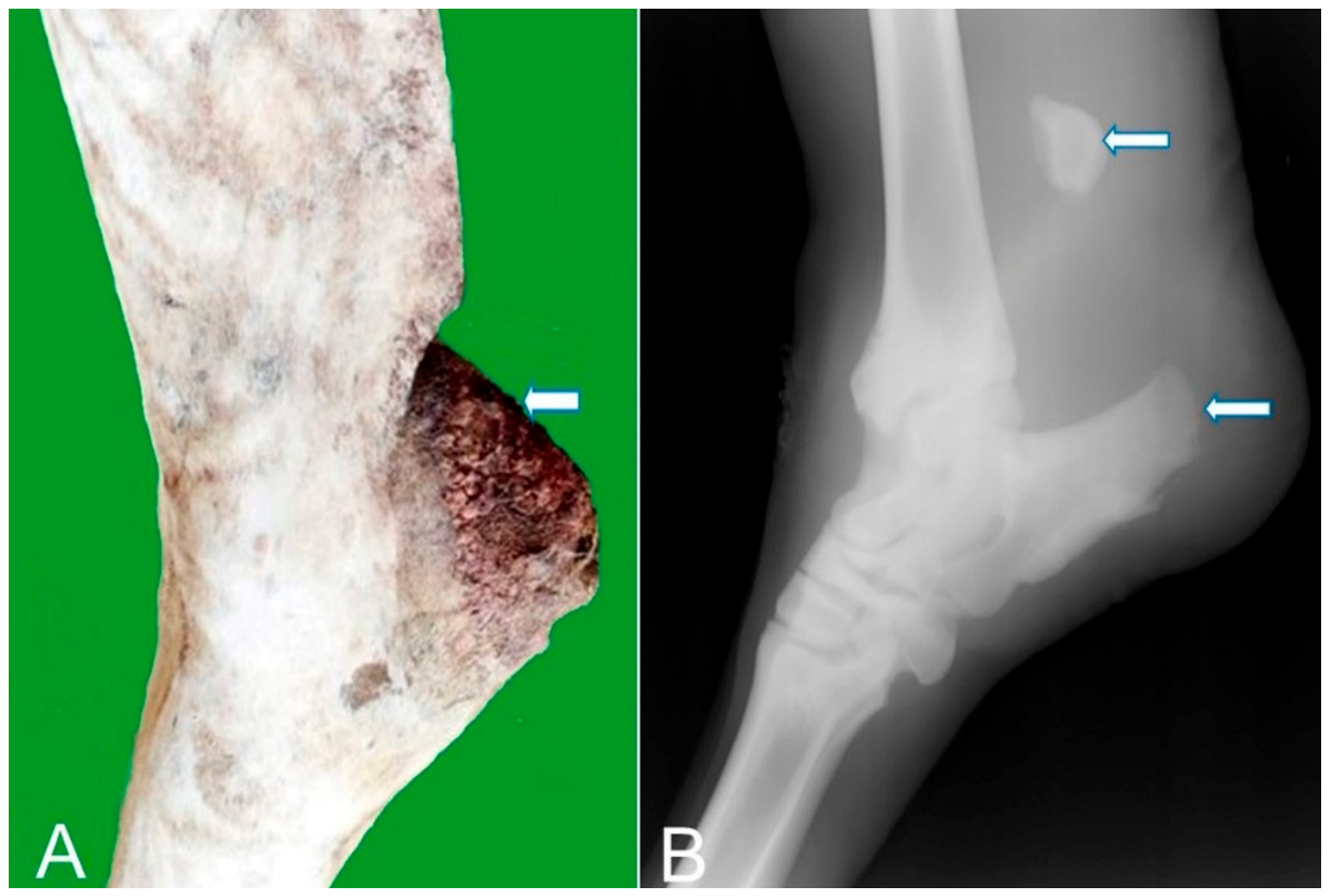
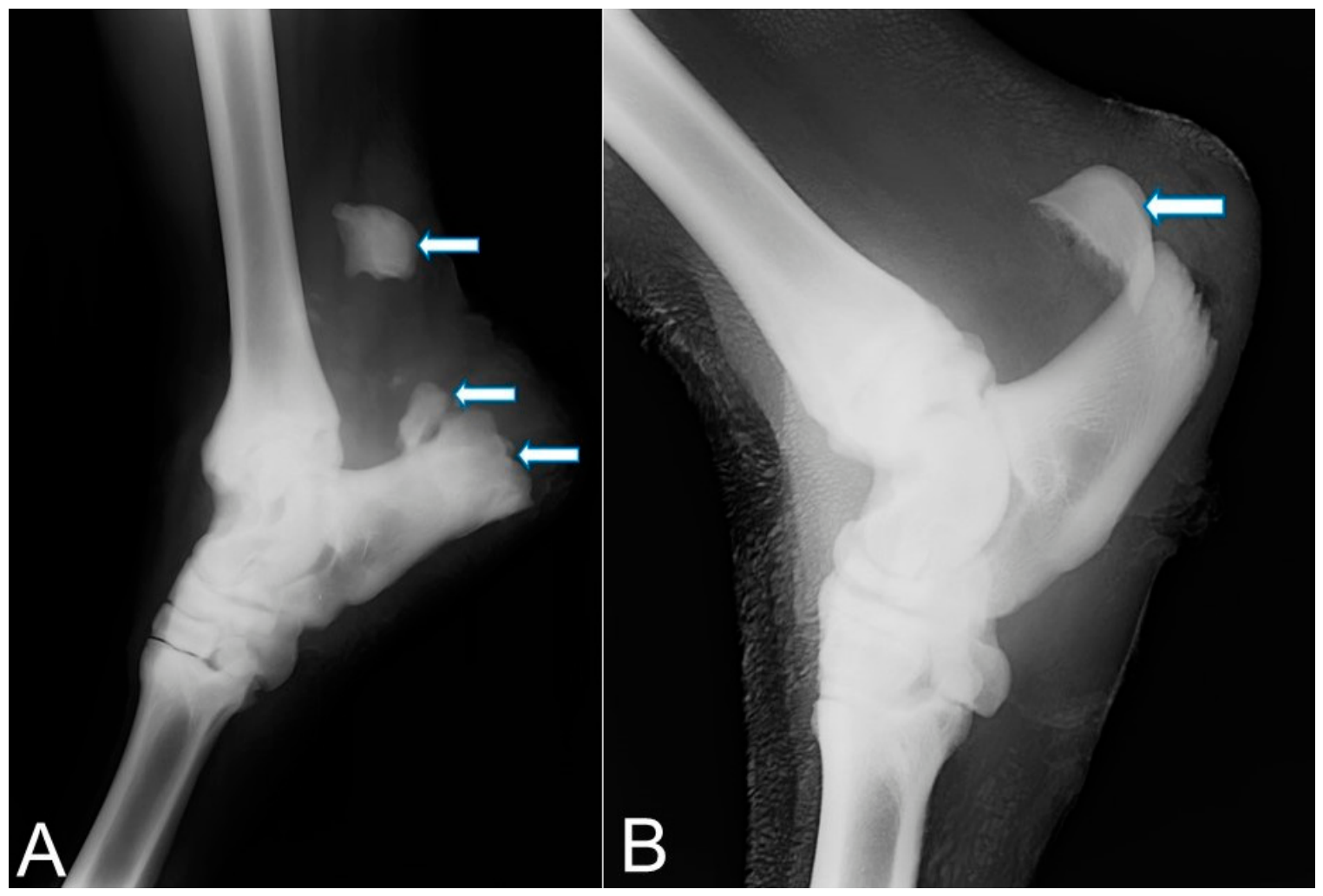
Among the 19 examined camels, 3 cases (15.79%) were diagnosed with complete Achilles tendon laceration (Figure 3A). Five cases (26.31%) showed complete Achilles tendon rupture complicated by avulsion fracture of the calcaneal tuber (Figure 3B and Figure 4), whereas 11 cases (57.9%) exhibited partial (incomplete) rupture (Table 1). Significant differences were observed among breeds, with Wadeh camels exhibiting a higher frequency of injury compared to Mejhem (p < 0.05) and Asfar and Ashaal breeds (p < 0.001) (Figure 5A). Age was identified as a significant risk factor, as camels older than 2 years had a markedly increased risk (OR = 14.06; 95% CI: 2.8–26.2; p < 0.001) (Figure 5B). Similarly, sex showed a strong association, with males demonstrating a 28-fold higher risk compared to females (OR = 28.4; 95% CI: 5.4–12.6; p < 0.001), (Figure 5C). Additionally, uncomplicated cases were significantly more common than complicated ones (OR = 7.8; 95% CI: 1.8–28.6; p < 0.01) (Figure 5D). Regarding etiology, blunt trauma was identified as the predominant cause and occurred significantly more frequently than sharp trauma (p < 0.001) (Figure 5E). In contrast, duration of admission showed no significant association with injury occurrence (χ2 = 4.7; p = 0.19) (Figure 5F). No significant difference was observed between right and left limb involvement (OR = 1.8; 95% CI: 0.5–6.7; p > 0.05) (Figure 5G). Concerning lesion type, rupture was significantly more common than laceration (OR = 28.4; 95% CI: 4.5–12.6; p < 0.001) (Figure 5H).
With respect to the anatomical structures involved, lesions affecting the superficial portion of the tendon complex were identified in 9 camels (47.37%), whereas deep tendon involvement was observed in 2 camels (10.53%). Percentages were calculated based on the total number of examined animals (n = 19).
Clinically, affected camels exhibited acute hindlimb lameness, characterized by reduced or absent weight-bearing on the affected limb. In the present study, most animals demonstrated grade 3 lameness, accompanied by moderate to severe swelling in the Achilles tendon region near the calcaneus. In cases of complete Achilles tendon laceration, the lesion site was clearly identified during clinical examination. In the absence of visible external wounds, careful palpation of the tendon region was required to detect discontinuity or abnormal tension, with ruptures typically located at or slightly proximal to the calcaneal insertion. Information regarding the cause of injury was obtained from owners when available. Reported causes included sharp trauma from objects such as barbed wire and blunt trauma associated with incidents such as vehicle accidents or overextension.
The interval between injury occurrence and presentation to the clinic ranged from 1 to 6 days, indicating that most cases were evaluated during the early post-traumatic period. Although Wadeh camels accounted for the majority of cases (12/19; 63.15%), this likely reflects their higher representation among animals that presented to the hospital; therefore, no definitive conclusion regarding breed predisposition can be drawn. Nevertheless, the condition was more commonly observed in Wadeh camels than in the other examined breeds (63.15% vs. 36.85%) (Table 1).

3.3. Radiographic Findings

Craniocaudal, lateromedial, and flexed lateromedial radiographic projections consistently revealed marked soft tissue swelling surrounding the region of the ruptured Achilles tendon, most prominently located just proximal to the tuber calcanei in the majority of affected camels. The normal soft tissue outline of the caudal tarsal region was frequently distorted or obscured, with increased soft tissue opacity indicative of edema, hemorrhage, and inflammatory changes associated with tendon injury. Avulsion fractures of the calcaneus were identified in five camels. These were characterized by the presence of one or more detached bone fragments, ranging from small flecks to large, clearly displaced fragments adjacent to the tuber calcanei (Figure 3B and Figure 4). In such cases, the avulsion site appeared irregular, with loss of the normal smooth cortical contour. The displaced fragments were typically located proximally, corresponding to the direction of traction exerted by the ruptured tendon. In addition, widening of the gap between the fragment and the parent bone was observed, suggesting complete tendon rupture. These radiographic findings, particularly when combined with clinical and ultrasonographic assessments, provided valuable information regarding the severity of the injury and the presence of associated osseous involvement.

3.4. Ultrasonographic Findings

Ultrasonographic examination of the affected camels revealed consistent and characteristic alterations in the structure and echogenicity of the Achilles tendon. The affected segments appeared markedly swollen and edematous, with a heterogeneous echotexture compared to the normal, parallel fibrillar pattern observed in intact tendons. Prominent anechoic to hypoechoic regions were frequently detected within the tendon substance, representing fluid accumulation, hemorrhage, or disruption of tendon fibers. These changes were often accompanied by varying degrees of tendon thickening at both the proximal and distal margins. In most cases, there was a clear loss of the normal linear fibrillar architecture, with focal discontinuities and irregular fiber alignment. The margins of the ruptured tendon were frequently indistinct. In some animals, a hypoechoic gap was observed between the retracted tendon ends, indicating complete rupture. Peritendinous fluid accumulation and surrounding soft tissue edema were also noted in several cases, supporting the presence of acute injury.
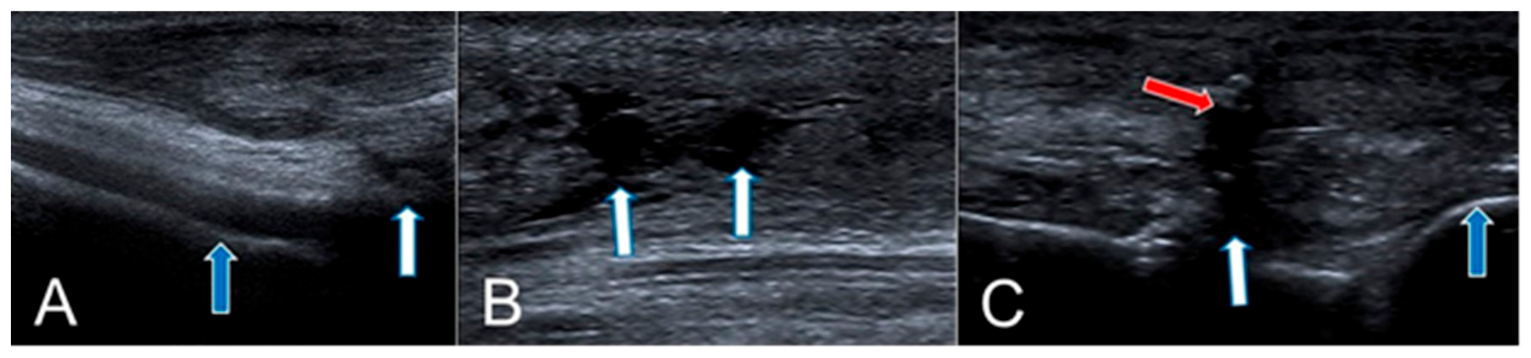
In cases of complete rupture involving both superficial and deep components, ultrasonography demonstrated severe disruption of tendon continuity, characterized by extensive anechoic to hypoechoic areas, complete loss of the normal fibrillar pattern, and marked alteration of tendon echogenicity. In contrast, partial ruptures affecting either the superficial or deep components exhibited more localized changes, including focal hypoechoic areas, reduced echogenicity, and mild to moderate tendon thickening, while portions of the fibrillar structure remained intact (Figure 6).

4. Discussion

The Achilles tendon is regarded as the strongest tendon in the body. It is defined by its insertion on the tuber calcanei and its continuity with the tendons that converge proximally into this common insertion. Functionally, it acts as an energy-efficient structure that supports rapid locomotion, enabling movements such as kicking and running, and serves as both a spring and a shock absorber during motion [16]. Our findings are consistent with those of Szaro et al., 2009 [17], who reported that all components of the Achilles tendon are interconnected. However, these results differ from those reported by Solano et al., 2015 [6], who suggested that muscles such as the biceps portion of the gluteobiceps, articularis coxae, and gracilis contribute to the formation of the Achilles tendon. They reported that the tendon is formed by these muscles in addition to the semitendinosus, gastrocnemius, and superficial digital flexor. In contrast, our findings did not demonstrate any contribution from the biceps portion of the gluteobiceps, articularis coxae, or gracilis muscles.
In the present study, dissection of the Achilles tendon revealed the absence of the soleus muscle in all examined specimens, in contrast to the findings reported by Sadan, 2019 [18], and Kirat, 2021 [19], who reported the presence of this muscle in camels. In contrast, in horses, the gastrocnemius, superficial digital flexor, and soleus muscles all contribute to the formation of the Achilles tendon [10,20]. Our results contradict the descriptions provided by Smuts and Bezuidenhout, 1987 [21], for camels, by Dyce et al., 2010 [22], for domestic animals, and by Schreiber et al., 2024 [23], for sheep; they reported that the Achilles tendon is composed of three distinct musculotendinous components: the gastrocnemius tendon (associated with the soleus muscle), the superficial digital flexor tendon, and the common calcaneal tendon formed by the tendons of the gracilis, biceps femoris, and semitendinosus muscles. However, our findings differ from theirs regarding the contribution of the gracilis and biceps femoris tendons to the formation of the common calcaneal tendon. The plantaris tendon has been reported to recover more than 90% of the energy stored during locomotion, contributing significantly to efficiency during both walking and running [24]. Our observations differ from those reported by Budras et al., 2011 [25], who reported that the flexor muscle does not contribute to the formation of the Achilles tendon and documented the presence of the soleus muscle as a component of the tendon in bovine species. However, our findings differ from these observations. Similarly, our results are inconsistent with those reported by Budras et al., 2007 [26], who described the biceps femoris tendon as merging with the semitendinosus and gracilis tendons to insert on the calcaneal tuber. In contrast, our findings do not support the involvement of the biceps femoris tendon in this convergence. However, our results are consistent with the same authors’ observations in dogs, in which the semitendinosus muscle, located caudolaterally, inserts proximomedially on the Achilles tendon. Accurate anatomical identification of the tendons contributing to the common calcaneal tendon is essential for improving diagnostic accuracy and optimizing clinical outcomes [24,27,28,29]. Additionally, our findings agree with Gadallah et al., 2023 [8], who reported no significant differences between live animals and cadaveric specimens. However, our findings do not fully support this observation. According to Malvankar and Khan, 2011 [16], Achilles tendon rupture is generally attributed to excessive loading of a tensioned tendon, such as the loading that occurs during athletic activity. A thorough understanding of Achilles tendon anatomy is essential for the effective management of both acute and chronic tendon injuries [11].
Achilles tendon laceration or rupture is a relatively common condition and represents a common indication for surgical intervention in camels. Despite its clinical importance, published data on the types, causes, and characteristics of Achilles tendon injuries in this species remain limited. Therefore, the present study aimed to evaluate the diagnostic value of clinical, radiographic, and ultrasonographic examinations in identifying this condition in dromedary camels. A notable breed-related variation in the occurrence of Achilles tendon rupture was observed, with Wadeh camels accounting for the highest proportion of cases (12/19; 63.16%) compared to 7/19 (36.84%) for other breeds. However, this higher frequency may reflect the greater prevalence of Wadeh camels in Saudi Arabia, likely due to their desirable productive and reproductive traits, rather than a true breed predisposition [1,30,31].
Case history and physical examination are routinely employed in the diagnosis of Achilles tendon laceration or rupture in camels. However, radiography and ultrasonography represent valuable non-invasive imaging modalities that can assist in the diagnosis and differentiation of various types of Achilles tendon injuries, particularly when clinical findings are inconclusive. In the present study, the radiographic and ultrasonographic features of Achilles tendon rupture varied according to the type, location, and duration of the injury. These findings are consistent with those of previous studies, which have also reported variability in imaging characteristics depending on the nature and progression of the lesion [8,9,23,32].
Typical ultrasonographic features of tendon injury include focal disruption of the fibrillar pattern, loss of normal tendon architecture, and areas of reduced echogenicity. In the present study, echogenicity varied according to the type of Achilles tendon rupture: partial tears were characterized by anechoic to hypoechoic regions and thickening of the proximal or distal margins involving either the superficial or deep components of the tendon, whereas complete ruptures exhibited these changes in both components. These observations are consistent with previous reports, which have described similar ultrasonographic characteristics in tendon injuries [9,33,34]. Radiographically, affected camels exhibited marked soft tissue swelling surrounding the ruptured tendon, particularly proximal to the calcaneal tuberosity. In some cases, avulsion fractures of the calcaneal tuber were also observed. These findings are consistent with previous reports describing similar radiographic features associated with Achilles tendon injuries [23].
Our results demonstrated that the Achilles tendon in camels is composed of three principal tendinous components: the gastrocnemius, superficial digital flexor, and semitendinosus muscles. In this study, three camels (15.79%) were diagnosed with complete Achilles tendon laceration, five cases (26.31%) exhibited complete rupture complicated by avulsion fracture of the calcaneal tuber, and eleven cases (57.9%) showed partial (incomplete) rupture. With respect to the anatomical structures involved, injuries affecting the superficial portion of the tendon complex were identified in nine camels (47.37%), whereas deep tendon involvement was observed in two camels (10.53%). Clinically, affected camels exhibited acute hindlimb lameness, characterized by non-weight-bearing or markedly reduced weight-bearing, ranging from grade 2 to grade 3, and accompanied by noticeable swelling of the tendon near the calcaneus. These findings are consistent with previous reports describing similar clinical and pathological manifestations associated with Achilles tendon rupture [23]. In this study, Achilles tendon rupture was identified as a common surgical condition in camels, most frequently resulting from sharp trauma (e.g., barbed-wire injuries) or blunt trauma (e.g., road traffic accidents). Diagnosis of this condition can be challenging due to the limitations of physical examination alone. Consequently, radiography and ultrasonography are valuable, non-invasive imaging modalities that enable accurate assessment and differentiation of the various forms of Achilles tendon rupture. These findings are consistent with previous reports, which have emphasized the importance of advanced imaging techniques in the diagnosis of tendon injuries [7,9,23].
Despite providing valuable clinical, imaging, and anatomical insights into Achilles tendon rupture in dromedary camels, this study has several limitations that should be considered when interpreting the findings. First, the study was based on cases presented to a single veterinary teaching hospital, which may introduce selection bias and may not fully represent the epidemiological distribution of the condition in the general camel population. Another limitation was the incomplete availability of detailed case histories for several animals, particularly regarding the exact cause of injury, physical activity level, workload, and participation in racing or other strenuous activities. Consequently, it was not possible to establish clear associations between Achilles tendon rupture and specific risk factors. Finally, the study focused primarily on diagnostic findings and anatomical characterization, and long-term clinical outcomes and treatment responses were not systematically evaluated. Future studies involving larger sample sizes, multicenter data collection, and comprehensive follow-up of treatment outcomes are warranted to provide a more complete understanding of Achilles tendon rupture in camels.

5. Conclusions

The present study provides an integrated clinical, radiographic, ultrasonographic, and anatomical characterization of Achilles tendon laceration and rupture in dromedary camels. Anatomical dissection demonstrated that the camel Achilles tendon is primarily formed by the tendons of the gastrocnemius, superficial digital flexor (plantaris), and semitendinosus muscles, which converge and insert on the tuber calcanei. Clinically and diagnostically, Achilles tendon injuries in camels were identified as complete lacerations or complete and incomplete ruptures, involving either the superficial or deep components of the tendon complex. Recognition of these variations is clinically important, as the extent and anatomical location of the injury influence the severity of lameness, interpretation of imaging findings, and selection of appropriate therapeutic or surgical management approaches.
Radiography proved valuable for identifying associated skeletal abnormalities, including soft tissue swelling and calcaneal avulsion fractures, whereas ultrasonography enabled detailed assessment of tendon fiber integrity, echogenicity, and the extent of structural disruption. Together, these imaging modalities provide a practical and reliable diagnostic approach for confirming Achilles tendon injuries and differentiating between types of tendon involvement. The findings of this study contribute clinically relevant insights that may assist veterinarians in improving diagnostic accuracy, guiding surgical planning, and better assessing the severity and prognosis of Achilles tendon injuries in dromedary camels.


Author Contributions

M.S., G.M.A. and F.A.A. conceived the project, executed the experiment, analyzed and evaluated the results and procedures, and wrote the manuscript. All authors have read and agreed to the published version of the manuscript.

Funding

Founded by Qassim University, (QU-APC 2026).

Institutional Review Board Statement

Ethical approval for this study was obtained from the Committee for Animal Welfare and Ethics, Qassim University, Saudi Arabia (Approval No. 367; 4 March 2018).

Informed Consent Statement

Written informed consent was obtained from the camel owners for clinical examination, diagnostic imaging, treatment procedures, and publication of the clinical data and accompanying images included in this manuscript.

Data Availability Statement

The original contributions presented in this study are included in the article. Further inquiries can be directed to the corresponding author.

Acknowledgments

The researchers would like to thank the Deanship of Graduate Studies and Scientific Research at Qassim University for financial support (QU-APC 2026).

Conflicts of Interest

The authors declare no conflicts of interest.

References

  1. Bornstein, S. Evolution, distribution, and economic importance of the camels. In Infectious Diseases of Dromedary Camels: A Concise Guide; Springer: Berlin/Heidelberg, Germany, 2021; pp. 1–19. [Google Scholar] [CrossRef]
  2. Gagaoua, M.; Dib, A.L.; Bererhi, E.-H. Recent advances in dromedary camels and their products. Animals 2022, 12, 162. [Google Scholar] [CrossRef] [PubMed]
  3. Sadan, M.; El-Khodery, S.; Almatroodi, S.; Alsobayil, F.; El-Shafaey, E.-S. Diagnosing and treating esophageal obstruction in camels (Camelus dromedarius). Vet. World 2023, 16, 735. [Google Scholar] [CrossRef]
  4. König, H.E.; Liebich, H.-G. Veterinary Anatomy of Domestic Animals: Textbook and Color Atlas; Thieme: Stuttgart, Germany, 2020; Available online: https://www.researchgate.net/publication/338801588_Veterinary_Anatomy_of_Domestic_Animals (accessed on 15 June 2025).
  5. Yousef, A.T.; Hussein, M.K.; Hamed, M.A.; Farrag, F.; Abumandour, M.; Hamoda, H. Morphological and radiographic studies on the manus region in the Arabian one-humped camel (Camelus dromedarius). Anat. Histol. Embryol. 2024, 53, e13040. [Google Scholar] [CrossRef]
  6. Solano, L.; Barkema, H.; Pajor, E.; Mason, S.; LeBlanc, S.; Heyerhoff, J.Z.; Nash, C.; Haley, D.; Vasseur, E.; Pellerin, D. Prevalence of lameness and associated risk factors in Canadian Holstein-Friesian cows housed in freestall barns. J. Dairy Sci. 2015, 98, 6978–6991. [Google Scholar] [CrossRef]
  7. Fubini, S.L.; Ducharme, N. Farm Animal Surgery; Elsevier Health Sciences: Amsterdam, The Netherlands, 2016; Available online: https://shop.elsevier.com/books/farm-animal-surgery/fubini/978-0-323-31665-1 (accessed on 15 June 2025).
  8. Gadallah, S.; Sharshar, A.; Elsharkawy, S.; Fadel, M. Ultrasonographic description of tendons and ligaments at the palmar (plantar) aspect of the distal limb in the one-humped camel (Camelus dromedarius). Aust. Vet. J. 2023, 101, 397–408. [Google Scholar] [CrossRef]
  9. Hamoda, H.; Elsaid, F.G.; Eldesoqui, M.; Al-Mosaibih, M.A.; Fayad, E.; Hussein, M.K.; Hamed, M.A.; Farrag, F.; Abumandour, M.; Shukry, M. Imaging-based observation of the pes region in the dromedary camel (Camelus dromedarius): Computed tomography, 3D volume rendering, magnetic resonance imaging, and ultrasonography. Front. Vet. Sci. 2025, 12, 1558954. [Google Scholar] [CrossRef] [PubMed]
  10. Alves, A.L.G.; Dudhia, J.; Rosa, G.S.; Smith, R.K. The veterinarian perspective: Comparative anatomy, equine models and in vivo bioengineering of tendons. In Tendon Regeneration; Elsevier: Amsterdam, The Netherlands, 2025; pp. 359–380. [Google Scholar] [CrossRef]
  11. Naňka, O.; Sedmera, D.; Rammelt, S.; Bartoníček, J. Anatomy of the Achilles tendon—A pictorial review. Die Orthop. 2024, 53, 721–730. [Google Scholar] [CrossRef] [PubMed]
  12. El-Shafaey, E.; Elseady, Y.; El-Khodery, S. Comparative therapeutic effect of antiseptic–antibiotic paste for topical treatment of digital dermatitis in dairy cows. Vet. Arh. 2016, 86, 197–208. Available online: https://hrcak.srce.hr/file/230958 (accessed on 15 June 2025).
  13. Zabady, M.K. Management of the commonly diagnosed foot wounds and fractures in one-humped camel. J. Camel Pract. Res. 2012, 19, 87–94. Available online: https://camelsandcamelids.com/uploads/journal-manuscript/PG%20087-094%20Management%20of%20the%20Commonly.pdf (accessed on 15 June 2025).
  14. Mostafa, M.B. Distal limb lameness in draught dromedary camels. J. Camel Pract. Res. 2020, 27, 359–366. [Google Scholar] [CrossRef]
  15. Jani, S.M.Y. Diagnostic Approaches to Tendon, Ligament and Joint Affections in Large Animals with Special Reference to Tendon Elastography. Ph.D. Thesis, Guru Angad Dev Veterinary and Animal Sciences University, Ludhiana, India, 2018. [Google Scholar] [CrossRef]
  16. Malvankar, S.; Khan, W. Evolution of the Achilles tendon: The athlete’s Achilles heel? Foot 2011, 21, 193–197. [Google Scholar] [CrossRef]
  17. Szaro, P.; Witkowski, G.; Śmigielski, R.; Krajewski, P.; Ciszek, B. Fascicles of the adult human Achilles tendon—An anatomical study. Ann. Anat. 2009, 191, 586–593. [Google Scholar] [CrossRef]
  18. Sadan, M. Achilles tendon rupture in camel (Camelus dromedarius): Radiographic and ultrasonographic findings. J. Camel Health 2019. Available online: https://www.semanticscholar.org/paper/Achilles-tendon-rupture-in-camel-(Camelus-and-Sadan/c511f164a43d61908299a1b9d25ce53c4d34af3a.
  19. Kirat, D.; Hamada, M.; Moustafa, A.; Miyasho, T. Irisin/FNDC5: A participant in camel metabolism. Saudi J. Biol. Sci. 2021, 28, 693–706. [Google Scholar] [CrossRef]
  20. Budras, K.D.; Sack, W.O.; Rock, S.; Horowitz, A.; Berg, R. Anatomy of the Horse; Schlütersche: Hannover, Germany, 2012. [Google Scholar] [CrossRef]
  21. Smuts, M.M.; Bezuidenhout, A.J. Anatomy of the Dromedary; Oxford University Press: Oxford, UK, 1987; Available online: https://www.scirp.org/reference/referencespapers?referenceid=3010973 (accessed on 15 June 2025).
  22. Dyce, K.; Sack, W.; Wensing, C. Textbook of Veterinary Anatomy, 4th ed.; Saunders Elsevier: Philadelphia, PA, USA, 2010; pp. 71–78. Available online: https://catalog.nlm.nih.gov/discovery/fulldisplay/alma9917010213406676/01NLM_INST:01NLM_INST (accessed on 15 June 2025).
  23. Schreiber, K.; Haudiquet, P.; Hamon, M. Achilles tendon rupture treated with flexor digitorum lateralis tendon transposition and transarticular external skeletal fixator in Ouessant sheep. VCOT Open 2024, 7, e46–e51. [Google Scholar] [CrossRef]
  24. Proudman, C. Common calcaneal tendinitis in a horse. Equine Vet. Educ. 1992, 4, 277–279. [Google Scholar] [CrossRef]
  25. Budras, K.D.; Habel, R.E.; Mülling, C.K.; Greenough, P.R.; Jahrmärker, G.; Richter, R.; Starke, D. Bovine Anatomy: An Illustrated Text; Schlütersche: Hannover, Germany, 2011. [Google Scholar] [CrossRef]
  26. Budras, K.; McCarthy, P.; Fricke, W.; Richter, R.; Horowitz, A.; Berg, R. Anatomy of the Dog; Schlütersche: Hannover, Germany, 2007; Available online: https://www.cabidigitallibrary.org/doi/full/10.5555/20093064524 (accessed on 15 June 2025).
  27. Harasen, G. Ruptures of the common calcaneal tendon. Can. Vet. J. 2006, 47, 1219. [Google Scholar] [PubMed]
  28. Kees, J. Ultrasonography of the equine crus. Vet. Radiol. Ultrasound 1993, 34, 28–34. [Google Scholar] [CrossRef]
  29. Post, E.; Singer, E.; Clegg, P.; Smith, R.; Cripps, P. Retrospective study of 24 cases of septic calcaneal bursitis in the horse. Equine Vet. J. 2003, 35, 662–668. [Google Scholar] [CrossRef]
  30. Abdul Rahim, S.; Abdul Rahman, K.; El-Nazier, A. Camel production and reproduction in Qassim, Saudi Arabia. J. Arid. Environ. 1994, 26, 53–59. [Google Scholar] [CrossRef]
  31. Sadan, M.; El-Shafaey, E.-S.; El-Khodery, S. Abdominal hernias in camel (Camelus dromedarius): Clinical findings and treatment outcomes. J. Vet. Med. Sci. 2018, 81, 675–681. [Google Scholar] [CrossRef] [PubMed]
  32. Hassan, H.M.; Ashraf, M. Role of diagnostic imaging in diagnosis of camel lameness: Current status and future perspectives. J. Camel Pract. Res. 2024, 31, 11–16. Available online: https://www.camelsandcamelids.com/uploads/journal-manuscript/role-of-diagnostic-imaging-in-diagnosis-of-camel-lameness-current-status-and-future-prospectives.pdf (accessed on 15 June 2025). [CrossRef]
  33. Hashefi, M. Ultrasound in the diagnosis of noninflammatory musculoskeletal conditions. Ann. N. Y. Acad. Sci. 2009, 1154, 171–203. [Google Scholar] [CrossRef] [PubMed]
  34. Kofler, J. Ultrasonography as a diagnostic aid in bovine musculoskeletal disorders. Vet. Clin. N. Am. Food Anim. Pract. 2009, 25, 687–731. [Google Scholar] [CrossRef] [PubMed]
Figure 1. (A). Photograph of medial view of the Achilles tendons in camel shows Semitendinosus muscle (1), Tendon of semitendinosus muscle (2), Gastrocnemius and plantaris tendons of the Achilles tendon (3), and calcaneus tuber (4). (B). Photograph of caudolateral view of the camel Achilles tendon shows Semitendinosus muscle (1), Gastrocnemius muscle (2), Tendon of semitendinosus muscle (3) (please note the continuation of the tendon), Tendon of Gastrocnemius muscle (4), Achilles tendons (5), Insertion site of Achilles tendon (6), Calcaneus tuber (7), Biceps femoris muscle, please that it is not share in the Achilles tendon (8), Cranial tibial muscle (9), and Caudal tibial muscle (10).
Vetsci 13 00563 g001
Figure 2. (A). Photograph shows lateral view of the Achilles tendon in camel: Plantaris (Superficial digital flexor) muscle (1). Lateral head (belly) of gastrocnemius muscle (2), Tendon of medial head (belly) of gastrocnemius muscle (3), Tendon of lateral head (belly) of gastrocnemius muscle (4), The distal part of the semitendinosus tendon (cut) (5); Termination of Achilles tendons (6), and Calcaneus Tuber (7). (B). Photograph of cross section of the Achilles tendon in camel shows Semitendinosus muscle tendon (1), Gastrocnemius muscle tendon (2), Plantaris (Superficial digital flexor) muscle (3), and Achilles tendon (cut) (4).
Vetsci 13 00563 g002
Figure 3. (A) Complete laceration of the Achilles tendon in a camel. (B) Lateral radiographic view demonstrates avulsion of the Achilles tendon from the tuber calcanei, which was associated with an avulsion fracture of the tuber calcis. A large, displaced bone fragment is clearly visible (arrow). The tuber calcanei exhibits an irregular, roughened surface at the avulsion site, with marked soft tissue swelling surrounding the region of tendon injury.
Vetsci 13 00563 g003
Figure 4. (A) Lateral radiographic view showing avulsion of the Achilles tendon from the tuber calcanei in a camel, accompanied by an avulsion fracture of the tuber calcanei with two detached bone fragments (large and small) clearly visible (arrows). The tuber calcanei appears irregular and roughened at the avulsion site (arrow). (B) Lateral radiograph demonstrates a similar avulsion injury of the Achilles tendon from the tuber calcanei, characterized by a distinct bone fragment, an irregular surface of the tuber calcanei at the avulsion site (arrows), and associated soft tissue swelling around the region of tendon rupture.
Vetsci 13 00563 g004
Figure 5. (A) Frequency of Achilles tendon lacerations and ruptures in different camel breeds. p-value was calculated based on Fishers exact test. (B) Frequency of Achilles tendon lacerations and ruptures in different camel age groups. (C) Frequency of Achilles tendon lacerations and ruptures in different camel genders. (D) Classification of Achilles tendon lesions in camels. (E) Frequency of Achilles tendon lacerations and ruptures in camels according to cause. (F) Frequency of Achilles tendon lacerations and ruptures in camels according to admission to the University Veterinary Hospital. (G) Frequency of Achilles tendon lacerations and ruptures in camels. (H) Nature of Achilles tendon lesions in camels.
Vetsci 13 00563 g005
Figure 6. (A) Longitudinal ultrasonographic image of a completely ruptured Achilles tendon in a camel that involved both the superficial and deep components; it is characterized by anechoic to hypoechoic regions with focal disruption of the normal fibrillar pattern and loss of tendon echotexture (white arrow). Please note the tibial bone (blue arrow). (B) Longitudinal ultrasonographic view of a partial rupture affecting the superficial component of the Achilles tendon (core lesion) (arrows). (C) Longitudinal ultrasonographic view of a rupture involving the deep component of the Achilles tendon (white arrow) and superficial component (red arrow). Affected areas appear hypoechoic, with focal reduction in echogenicity and mild to moderate tendon thickening. Please note the os calcis (blue arrow).
Vetsci 13 00563 g006
Table 1. Clinical findings of camels with lacerations and ruptures of the Achilles tendon (N = 19).
Case No.BreedAgeSexType of RuptureCause
Sharp/Blunt Trauma
Duration
1Wadeh5 YrsMaleComplete laceration of left AchillesSharp2 Days
2Wadeh2 YrsFemaleComplete laceration of left AchillesSharp5 Days
3Asfar9 YrsMaleComplete laceration of right AchillesSharp3 Days
4Ashaal4 YrsMaleRight Achilles, complete rupture
Complicated with avulsion fracture of the tuber calcanei
blunt3 Days
5Mejhem8 YrsFemaleLeft Achilles, incomplete rupture (superficial part)blunt5 Days
6Wadeh6 YrsMaleLeft Achilles, incomplete rupture (superficial part)blunt2 Days
7Mejhem2 YrsFemaleLeft Achilles, complete rupture
Complicated with avulsion fracture of the tuber calcanei
bluntOne day
8Wadeh8 YrsMaleRight Achilles, incomplete rupture (superficial part)blunt2 Days
9Mejhem5 YrsFemaleRight Achilles, incomplete rupture (superficial part)blunt2 Days
10Wadeh4 YrsMaleLeft Achilles, incomplete rupture (superficial part)bluntOne Day
11Wadeh7 YrsMaleRight Achilles, incomplete rupture (superficial part)bluntOne Day
12Mejhem3 YrsFemaleRight Achilles, incomplete rupture (deep part)blunt2 Days
13Wadeh8 YrsMaleLeft Achilles, complete rupture
Complicated with avulsion fracture of the tuber calcanei
bluntOne Day
14Wadeh5 YrsMaleLeft Achilles, incomplete rupture (deep part)blunt2 Days
15Mejhem7 YrsMaleRight Achilles, incomplete rupture (superficial part)blunt2 Days
16Wadeh11 YrsMaleLeft Achilles, incomplete rupture (superficial part)blunt3 Day
17Wadeh3 YrsFemaleRight Achilles, incomplete rupture (superficial part)blunt6 Day
18Wadeh2 YrsFemaleLeft Achilles, complete rupture
Complicated with avulsion fracture of the tuber calcanei
bluntOne Day
19WadehOne YrMaleLeft Achilles, complete rupture
Complicated with avulsion fracture of the tuber calcanei
blunt2 Days
Disclaimer/Publisher’s Note: The statements, opinions and data contained in all publications are solely those of the individual author(s) and contributor(s) and not of MDPI and/or the editor(s). MDPI and/or the editor(s) disclaim responsibility for any injury to people or property resulting from any ideas, methods, instructions or products referred to in the content.