

The Characteristics of 924 Cutaneous Mast Cell Tumours in Dogs ≤ 3 Years of Age—With a Short Literature Review of Feline, Equine, and Human Proliferative Mast Cell Disorders

 and
and 
Simple Summary
Abstract
1. Introduction
2. Materials and Methods
2.1. Data Collection
- Tissue samples were submitted for histopathological evaluation.
- Complete patient signalment (age, breed, and sex) was available.
- The patient was ≤3 years of age at the time of submission.
- A definitive diagnosis was rendered.
2.2. Variables and Definitions
- Digit_NOS: Including MCTs found on the digits.
- Head: Including MCTs found on the head, excluding the conjunctivae, nasal planum, and labia, as they were interpreted as “muco-cutaneous MCTs”, and excluding MCTs located on the pinnae.
- Hind/fore limb: Including MCTs found in the inguinal area and the axillary region, respectively. MCTs appearing on the digits were included in the digit_NOS category.
- Neck: Including all MCTs located in the skin between the cranial aspect of the shoulder and the base of the skull and pinnae.
- Pinna: Including MCTs found on the pinnae.
- Scrotum: Including MCTs located on the scrotum.
- Trunk: Including MCTs found on the tail.
2.3. Composition of Subgroups
- Regression model cohort (n = 31,087), comprising histopathological cases from dogs aged ≤ 3 years, corrected for duplicate entries and analysed on the patient level. Within this cohort, the following subgroups were defined:
- (b)
- MCTs_total group (n = 924), tumour level, including all cutaneous mast cell tumours diagnosed within the regression model cohort. Datasets were multiplied by the number of MCTs diagnosed in a single patient during a single submission.
- (c)
- MCTs_patient group (n = 849), patient level, consisting of all dogs diagnosed with cutaneous MCTs, with one tumour per patient included in the analysis. If more than one MCT was diagnosed in a patient, the highest-grade tumour was included in patient-level analyses.
- (d)
- Sampling-site group (n = 715), patient level, comprising dogs affected with cutaneous MCTs with a documented anatomic site. Corrected for duplicate entries.
- (e)
- Tumour-size group (n = 406), patient level, including dogs with cutaneous MCTs with a documented tumour size. Corrected for duplicate entries.
- (f)
- Ki-67 and KIT group (n = 87), consisting of the subset of dogs for which immunohistochemical examination (Ki-67 and KIT staining) was requested and performed.
2.4. Statistical Analysis
2.5. Ethics Statement
3. Results
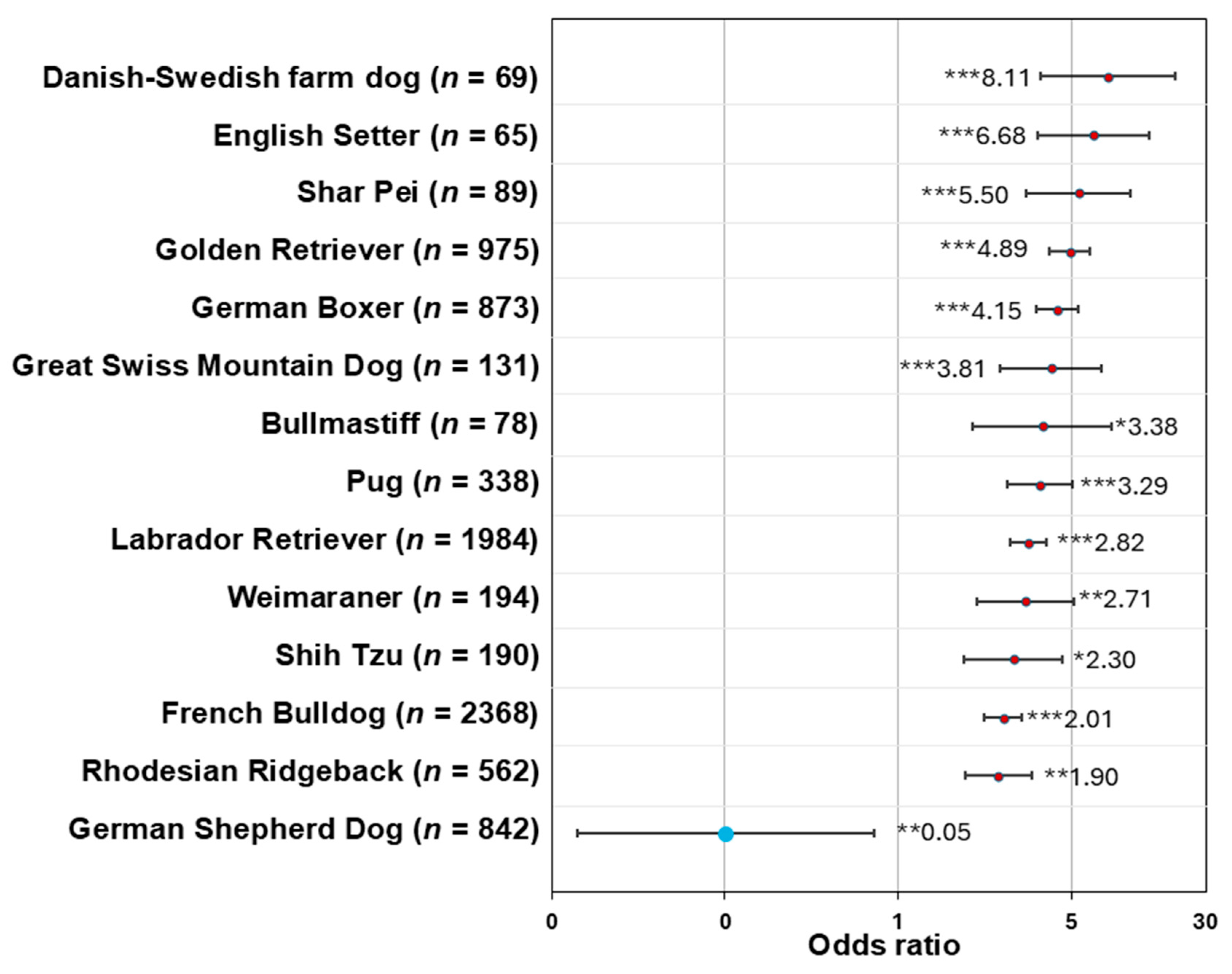
3.1. Logistic Regression Analysis of Signalment Data
3.1.1. Breed
3.1.2. Sex
3.1.3. Age
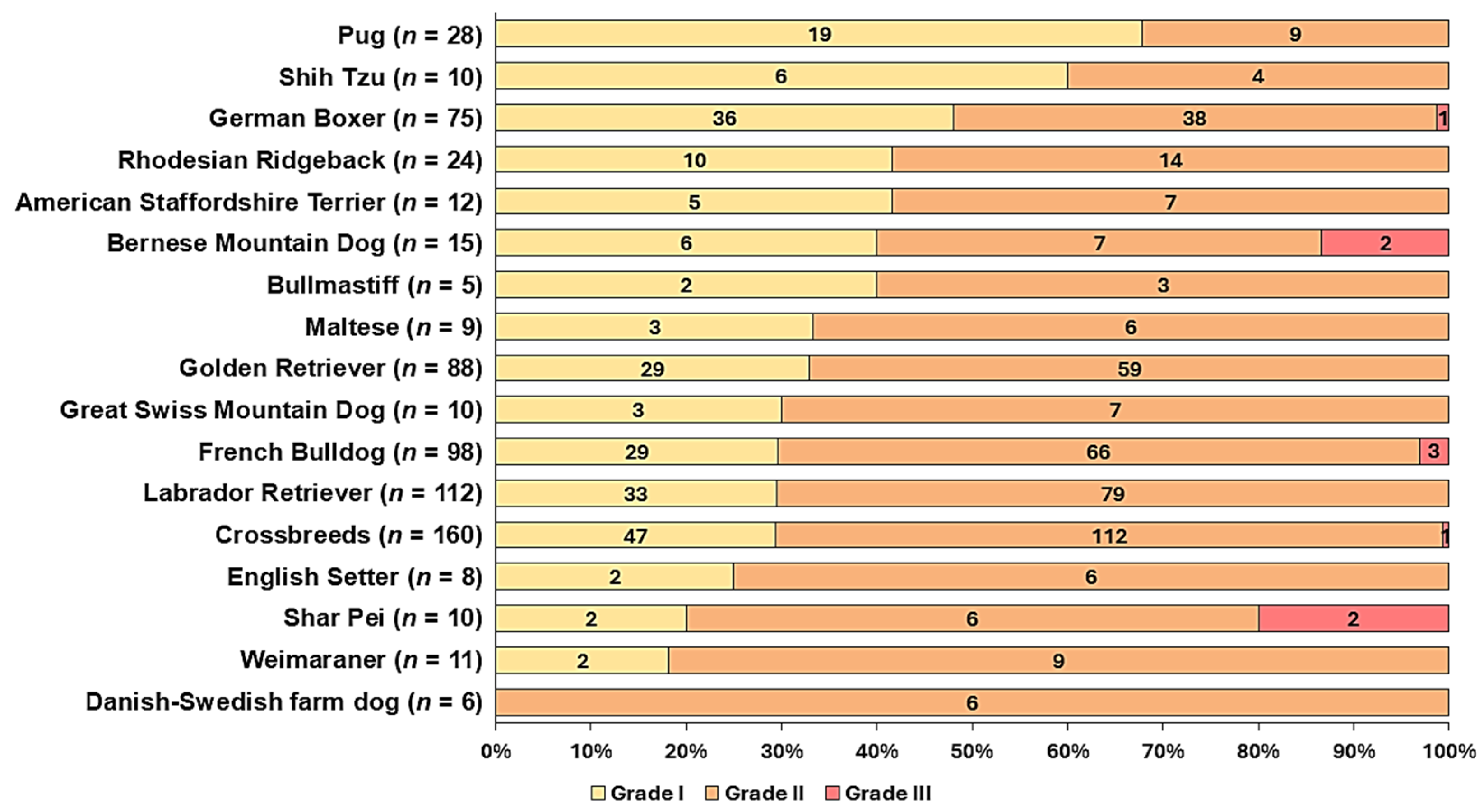
3.2. Histological Grading
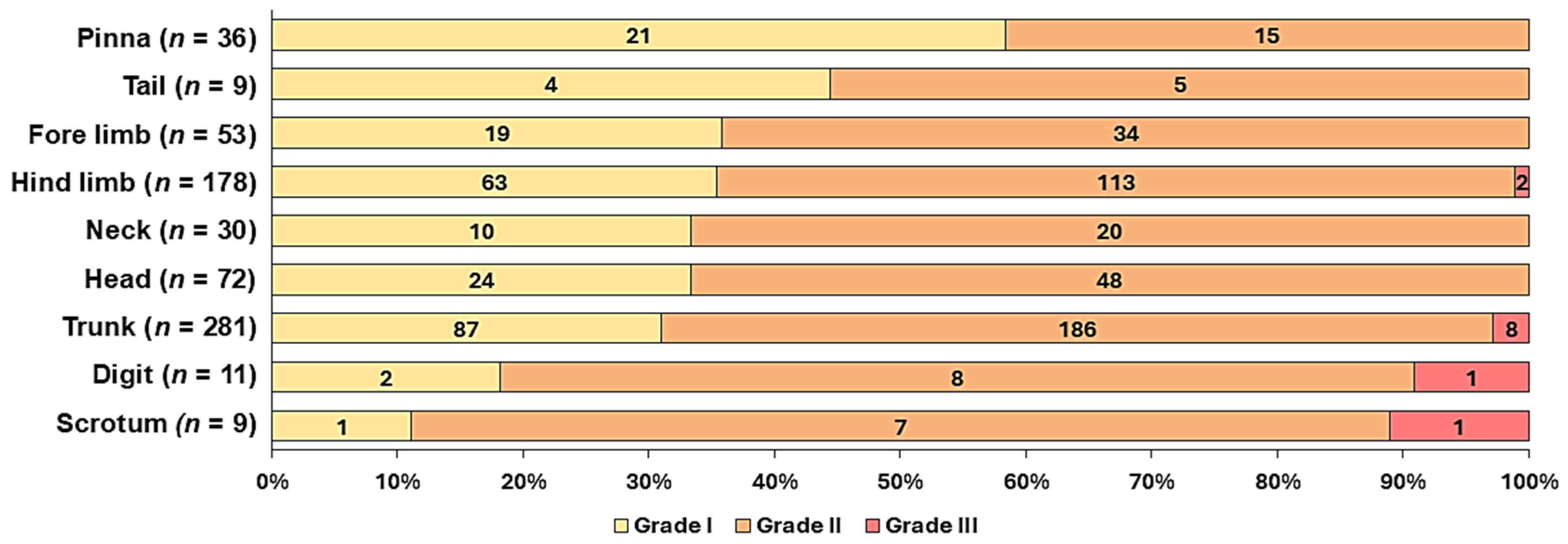
3.3. Anatomical Sites
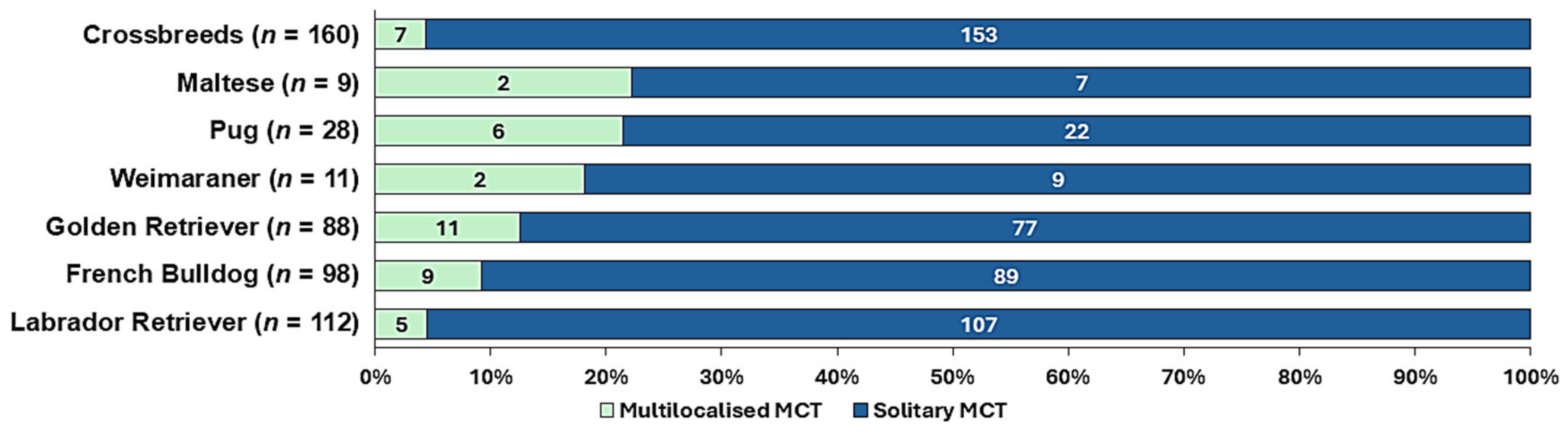
3.4. Multiplicity
3.5. Tumour Size
3.6. KIT and Ki-67 Immunohistochemistry
4. Discussion
4.1. Limitations
4.2. Logistic Regression Analysis
4.3. Histological Grading
4.4. Anatomic Sites
4.5. Multiplicity
4.6. Tumour Diameters
4.7. KIT and Ki-67 Immunohistochemistry
5. Conclusions
Supplementary Materials
Author Contributions
Funding
Institutional Review Board Statement
Informed Consent Statement
Data Availability Statement
Conflicts of Interest
References
- Miller, D.M. The occurrence of mast cell tumors in young Shar-Peis. J. Vet. Diagn. Investig. 1995, 7, 360–363. [Google Scholar] [CrossRef] [PubMed]
- Pierini, A.; Lubas, G.; Gori, E.; Binanti, D.; Millanta, F.; Marchetti, V. Epidemiology of breed-related mast cell tumour occurrence and prognostic significance of clinical features in a defined population of dogs in west-central Italy. Vet. Sci. 2019, 6, 53. [Google Scholar] [CrossRef]
- Hottendorf, G.H.; Nielsen, S.W. Pathologic survey of 300 extirpated canine mastocytomas. Zentralbl. f. Vet. Med. Reihe A 1967, 14, 272–281. [Google Scholar] [CrossRef]
- McNiel, E.A.; Prink, A.L.; O’Brien, T.D. Evaluation of risk and clinical outcome of mast cell tumours in pug dogs. Vet. Comp. Oncol. 2006, 4, 2–8. [Google Scholar] [CrossRef]
- Elliott, J.W.; Cripps, P.; Blackwood, L.; Berlato, D.; Murphy, S.; Grant, I.A. Canine oral mucosal mast cell tumours. Vet. Comp. Oncol. 2016, 14, 101–111. [Google Scholar] [CrossRef]
- Žagar, Ž.; Wehrend, A.; Schmidt, J.M.; Kuehnel-Lawatsch, S.; Buehler, T.; von Bomhard, W.; Kessler, M. Preputial and scrotal cutaneous mast cell tumors in dogs show no evidence of inherently higher biologic malignancy. Front. Vet. Sci. 2025, 12, 1672099. [Google Scholar] [CrossRef]
- Sfiligoi, G.; Rassnick, K.M.; Scarlett, J.M.; Northrup, N.C.; Gieger, T.L. Outcome of dogs with mast cell tumors in the inguinal or perineal region versus other cutaneous locations: 124 cases (1990–2001). J. Am. Vet. Med. Assoc. 2005, 226, 1368–1374. [Google Scholar] [CrossRef]
- Cahalane, A.K.; Payne, S.; Barber, L.G.; Duda, L.E.; Henry, C.J.; Mauldin, G.E.; Frimberger, A.E.; Cotter, S.M.; Moore, A.S. Prognostic factors for survival of dogs with inguinal and perineal mast cell tumors treated surgically with or without adjunctive treatment: 68 cases (1994–2002). J. Am. Vet. Med. Assoc. 2004, 225, 401–408. [Google Scholar] [CrossRef]
- Ozaki, K.; Yamagami, T.; Nomura, K.; Narama, I. Mast cell tumors of the gastrointestinal tract in 39 dogs. Vet. Pathol. 2002, 39, 557–564. [Google Scholar] [CrossRef] [PubMed]
- Takahashi, T.; Kadosawa, T.; Nagase, M.; Matsunaga, S.; Mochizuki, M.; Nishimura, R.; Sasaki, N. Visceral mast cell tumors in dogs: 10 cases (1982–1997). J. Am. Vet. Med. Assoc. 2000, 216, 222–226. [Google Scholar] [CrossRef]
- White, C.; Hohenhaus, A.; Kelsey, J.; Procter-Gray, E. Cutaneous MCTs: Associations with spay/neuter status, breed, body size, and phylogenetic cluster. J. Am. Anim. Hosp. Assoc. 2011, 47, 210–216. [Google Scholar] [CrossRef]
- Shoop, S.J.; Marlow, S.; Church, D.B.; English, K.; McGreevy, P.D.; Stell, A.J.; Thomson, P.C.; O’Neill, D.G.; Brodbelt, D.C. Prevalence and risk factors for mast cell tumours in dogs in England. Canine Genet. Epidemiol. 2015, 2, 1. [Google Scholar] [CrossRef]
- Śmiech, A.; Łopuszyński, W.; Ślaska, B.; Bulak, K.; Jasik, A. Occurrence and distribution of canine cutaneous mast cell tumour characteristics among predisposed breeds. J. Vet. Res. 2019, 63, 141–148. [Google Scholar] [CrossRef]
- Grüntzig, K.; Graf, R.; Boo, G.; Guscetti, F.; Hässig, M.; Axhausen, K.W.; Fabrikant, S.; Welle, M.; Meier, D.; Folkers, G.; et al. Swiss Canine Cancer Registry 1955–2008: Occurrence of the Most Common Tumour Diagnoses and Influence of Age, Breed, Body Size, Sex and Neutering Status on Tumour Development. J. Comp. Pathol. 2016, 155, 156–170. [Google Scholar] [CrossRef] [PubMed]
- Aupperle-Lellbach, H.; Grassinger, J.M.; Floren, A.; Törner, K.; Beitzinger, C.; Loesenbeck, G.; Müller, T. Tumour incidence in dogs in Germany: A retrospective analysis of 109,616 histopathological diagnoses (2014–2019). J. Comp. Pathol. 2022, 198, 33–55. [Google Scholar] [CrossRef]
- Rigas, K.; Biasoli, D.; Polton, G.; Finotello, R.; Murphy, S.; Di Palma, S.; Starkey, M.; Verganti, S. Mast cell tumours in dogs less than 12 months of age: A multi-institutional retrospective study. J. Small Anim. Pract. 2020, 61, 449–457. [Google Scholar] [CrossRef]
- Kim, D.; Dobromylskyj, M.J.; O’Neill, D.; Smith, K.C. Skin masses in dogs under one year of age. J. Small Anim. Pract. 2022, 63, 10–15. [Google Scholar] [CrossRef] [PubMed]
- Patnaik, A.K.; Ehler, W.J.; MacEwen, E.G. Canine cutaneous mast cell tumor: Morphologic grading and survival time in 83 dogs. Vet. Pathol. 1984, 21, 469–474. [Google Scholar] [CrossRef]
- Kiupel, M.; Webster, J.D.; Bailey, K.L.; Best, S.; DeLay, J.; Detrisac, C.J.; Fitzgerald, S.D.; Gamble, D.; Ginn, P.E.; Goldschmidt, M.H.; et al. Proposal of a 2-tier histologic grading system for canine cutaneous mast cell tumors to more accurately predict biological behavior. Vet. Pathol. 2011, 48, 147–155. [Google Scholar] [CrossRef]
- Murphy, S.; Sparkes, A.H.; Smith, K.C.; Blunden, A.S.; Brearley, M.J. Relationships between the histological grade of cutaneous mast cell tumours in dogs, their survival and the efficacy of surgical resection. Vet. Rec. 2004, 154, 743–746. [Google Scholar] [CrossRef]
- Reynolds, B.D.; Thomson, M.J.; O’Connell, K.; Morgan, E.J.; Gummow, B. Patient and tumour factors influencing canine mast cell tumour histological grade and mitotic index. Vet. Comp. Oncol. 2019, 17, 338–344. [Google Scholar] [CrossRef] [PubMed]
- Sabattini, S.; Brocanelli, A.; Zaccone, R.; Faroni, E.; Renzi, A.; Ciammaichella, L.; Bettini, G.; Marconato, L. The 2-tier grading system identifies canine cutaneous and/or subcutaneous mast cell tumors with aggressive biological behavior regardless of growth model. Vet. Pathol. 2024, 61, 874–881. [Google Scholar] [CrossRef] [PubMed]
- Kiupel, M.; Webster, J.D.; Kaneene, J.B.; Miller, R.; Yuzbasiyan-Gurkan, V. The use of KIT and tryptase expression patterns as prognostic tools for canine cutaneous mast cell tumors. Vet. Pathol. 2004, 41, 371–377. [Google Scholar] [CrossRef]
- Giantin, M.; Vascellari, M.; Morello, E.M.; Capello, K.; Vercelli, A.; Granato, A.; Lopparelli, R.M.; Nassuato, C.; Carminato, A.; Martano, M.; et al. c-KIT messenger RNA and protein expression and mutations in canine cutaneous mast cell tumors: Correlations with post-surgical prognosis. J. Vet. Diagn. Investig. 2012, 24, 116–126. [Google Scholar] [CrossRef] [PubMed]
- Maglennon, G.A.; Murphy, S.; Adams, V.; Miller, J.; Smith, K.; Blunden, A.; Scase, T.J. Association of Ki67 index with prognosis for intermediate-grade canine cutaneous mast cell tumours. Vet. Comp. Oncol. 2008, 6, 268–274. [Google Scholar] [CrossRef]
- Ozaki, K.; Yamagami, T.; Nomura, K.; Narama, I. Prognostic significance of surgical margin, Ki-67 and cyclin D1 protein expression in grade II canine cutaneous mast cell tumor. J. Vet. Med. Sci. 2007, 69, 1117–1121. [Google Scholar] [CrossRef]
- Zemke, D.; Yamini, B.; Yuzbasiyan-Gurkan, V. Mutations in the juxtamembrane domain of c-KIT are associated with higher grade mast cell tumors in dogs. Vet. Pathol. 2002, 39, 529–535. [Google Scholar] [CrossRef]
- Tamlin, V.S.; Bottema, C.D.K.; Woolford, L.; Dobson, E.C.; Kessell, A.E.; Peaston, A.E. Canine mast cell tumours part I: Clinical and survival outcomes. Vet. Med. Sci. 2022, 8, 1409–1420. [Google Scholar] [CrossRef]
- Takeuchi, Y.; Fujino, Y.; Watanabe, M.; Takahashi, M.; Nakagawa, T.; Takeuchi, A.; Bonkobara, M.; Kobayashi, T.; Ohno, K.; Uchida, K.; et al. Validation of the prognostic value of histopathological grading or c-kit mutation in canine cutaneous mast cell tumours: A retrospective cohort study. Vet. J. 2013, 196, 492–498. [Google Scholar] [CrossRef]
- Webster, J.D.; Yuzbasiyan-Gurkan, V.; Kaneene, J.B.; Miller, R.; Resau, J.H.; Kiupel, M. The role of c-KIT in tumorigenesis: Evaluation in canine cutaneous mast cell tumors. Neoplasia 2006, 8, 104–111. [Google Scholar] [CrossRef]
- Tamlin, V.S.; Kessell, A.E.; Mccoy, R.J.; Dobson, E.C.; Smith, T.S.; Hebart, M.; Brown, L.; Mitrovic, D.; Peaston, A.E. Prevalence of exon 11 internal tandem duplications in the C-KIT proto-oncogene in Australian canine mast cell tumours. Aust. Vet. J. 2017, 95, 386–391. [Google Scholar] [CrossRef] [PubMed]
- London, C.A.; Galli, S.J.; Yuuki, T.; Hu, Z.Q.; Helfand, S.C.; Geissler, E.N. Spontaneous canine mast cell tumors express tandem duplications in the proto-oncogene c-kit. Exp. Hematol. 1999, 27, 689–697. [Google Scholar] [CrossRef] [PubMed]
- Takeuchi, Y.; Fujino, Y.; Fukushima, K.; Watanabe, M.; Nakagawa, T.; Ohno, K.; Sasaki, N.; Sugano, S.; Tsujimoto, H. Biological effect of tyrosine kinase inhibitors on three canine mast cell tumor cell lines with various KIT statuses. J. Vet. Pharmacol. Ther. 2012, 35, 97–104. [Google Scholar] [CrossRef]
- Kessler, M.; von Bomhard, D. Beitrag zur pädiatrischen Onkologie beim Kleintier. Berl. Munch. Tierarztl. Wochenschr. 1997, 110, 311–314. [Google Scholar] [PubMed]
- Schmidt, J.M.; North, S.M.; Freeman, K.P.; Ramiro-Ibañez, F. Canine paediatric oncology: Retrospective assessment of 9522 tumours in dogs up to 12 months (1993–2008). Vet. Comp. Oncol. 2010, 8, 283–292. [Google Scholar] [CrossRef]
- Evans, B.J.; O’Brien, D.; Allstadt, S.D.; Gregor, T.P.; Sorenmo, K.U. Treatment outcomes and prognostic factors of feline splenic mast cell tumors: A multi-institutional retrospective study of 64 cases. Vet. Comp. Oncol. 2018, 16, 20–27. [Google Scholar] [CrossRef]
- Blackwood, L.; Murphy, S.; Buracco, P.; de Vos, J.P.; de Fornel-Thibaud, P.; Hirschberger, J.; Kessler, M.; Pastor, J.; Ponce, F.; Savary-Bataille, K.; et al. European consensus document on mast cell tumours in dogs and cats. Vet. Comp. Oncol. 2012, 10, e1–e29. [Google Scholar] [CrossRef]
- Blackwood, L. Feline mast cell tumours. In Pract. 2015, 37, 391–400. [Google Scholar] [CrossRef]
- Sabattini, S.; Bettini, G. Prognostic value of histologic and immunohistochemical features in feline cutaneous mast cell tumors. Vet. Pathol. 2010, 47, 643–653. [Google Scholar] [CrossRef]
- Mullins, M.N.; Dernell, W.S.; Withrow, S.J.; Ehrhart, E.J.; Thamm, D.H.; Lana, S.E. Evaluation of prognostic factors associated with outcome in dogs with multiple cutaneous mast cell tumors treated with surgery with and without adjuvant treatment: 54 cases (1998–2004). J. Am. Vet. Med. Assoc. 2006, 228, 91–95. [Google Scholar] [CrossRef]
- Hadzijusufovic, E.; Peter, B.; Rebuzzi, L.; Baumgartner, C.; Gleixner, K.V.; Gruze, A.; Thaiwong, T.; Pickl, W.F.; Yuzbasiyan-Gurkan, V.; Willmann, M.; et al. Growth-inhibitory effects of four tyrosine kinase inhibitors on neoplastic feline mast cells exhibiting a Kit exon 8 ITD mutation. Vet. Immunol. Immunopathol. 2009, 132, 243–250. [Google Scholar] [CrossRef]
- Isotani, M.; Tamura, K.; Yagihara, H.; Hikosaka, M.; Ono, K.; Washizu, T.; Bonkobara, M. Identification of a c-kit exon 8 internal tandem duplication in a feline mast cell tumor case and its favorable response to the tyrosine kinase inhibitor imatinib mesylate. Vet. Immunol. Immunopathol. 2006, 114, 168–172. [Google Scholar] [CrossRef]
- Valentine, B.A. Survey of equine cutaneous neoplasia in the Pacific northwest. J. Vet. Diagn. Investig. 2006, 18, 123–126. [Google Scholar] [CrossRef] [PubMed]
- Mair, T.S.; Krudewig, C. Mast cell tumours (mastocytosis) in the horse: A review of the literature and report of 11 cases. Equine Vet. Educ. 2008, 20, 177–182. [Google Scholar] [CrossRef]
- McEntee, M.F. Equine cutaneous mastocytoma: Morphology, biological behaviour and evolution of the lesion. J. Comp. Pathol. 1991, 104, 171–178. [Google Scholar] [CrossRef] [PubMed]
- Tan, R.H.; Crisman, M.V.; Clark, S.P.; Gagea, M.; Zimmerman, K. Multicentric mastocytoma in a horse. J. Vet. Intern. Med. 2007, 21, 340–343. [Google Scholar] [CrossRef]
- Cheville, N.F.; Prasse, K.; van der Maaten, M.; Boothe, A.D. Generalized equine cutaneous mastocytosis. Vet. Pathol. 1972, 9, 394–407. [Google Scholar] [CrossRef]
- Valent, P.; Akin, C.; Metcalfe, D. Mastocytosis 2016: Updated WHO classification and novel emerging treatment concepts. Blood 2016, 129, 1420–1427. [Google Scholar] [CrossRef]
- Valent, P.; Akin, C.; Hartmann, K.; Alvarez-Twose, I.; Brockow, K.; Hermine, O.; Niedoszytko, M.; Schwaab, J.; Lyons, J.J.; Carter, M.C.; et al. Updated diagnostic criteria and classification of mast cell disorders: A consensus proposal. Hemasphere 2021, 5, e646. [Google Scholar] [CrossRef]
- Aberer, E.; Sperr, W.R.; Bretterklieber, A.; Avian, A.; Hadzijusufovic, E.; Kluin-Nelemans, H.C.; Oude Elberink, H.; van Anrooij, B.; Niedoszytko, M.; Lange, M.; et al. Clinical impact of skin lesions in mastocytosis: A multicenter study of the European competence network on mastocytosis. J. Investig. Dermatol. 2021, 141, 1719–1727. [Google Scholar] [CrossRef]
- Rudelius, M.; Horny, H.-P. Mastocytosis: Principles and pitfalls in the diagnosis of a unique disease. IgMin Res. 2024, 2, 694–701. [Google Scholar] [CrossRef]
- Hartmann, K.; Escribano, L.; Grattan, C.; Brockow, K.; Carter, M.C.; Alvarez-Twose, I.; Matito, A.; Broesby-Olsen, S.; Siebenhaar, F.; Lange, M.; et al. Cutaneous manifestations in patients with mastocytosis: Consensus report of the European Competence Network on Mastocytosis; the American Academy of Allergy, Asthma & Immunology; and the European Academy of Allergology and Clinical Immunology. J. Allergy Clin. Immunol. 2016, 137, 35–45. [Google Scholar] [CrossRef] [PubMed]
- Ben-Amitai, D.; Metzker, A.; Cohen, H.A. Pediatric cutaneous mastocytosis: A review of 180 patients. Isr. Med. Assoc. J. 2005, 7, 320–322. [Google Scholar] [PubMed]
- Ayadi, L.; Abid, N.; Makni, S.; Bahri, I.; Frikha, I.; Sellami-Boudawara, T. An unusual tumour of the lung. Pathologica 2015, 107, 14–18. [Google Scholar] [PubMed]
- Bergström, A.; Hägglund, H.; Berglund, A.; Nilsson, G.; Lambe, M. Epidemiology of mastocytosis: A population-based study (Sweden). Acta Oncol. 2024, 63, 44–50. [Google Scholar] [CrossRef]
- Zanotti, R.; Bonifacio, M.; Isolan, C.; Tanasi, I.; Crosera, L.; Olivieri, F.; Orsolini, G.; Schena, D.; Bonadonna, P. A multidisciplinary diagnostic approach reveals a higher prevalence of indolent systemic mastocytosis: 15-Years’ experience of the GISM network. Cancers 2021, 13, 6380. [Google Scholar] [CrossRef]
- Garcia-Montero, A.C.; Jara-Acevedo, M.; Teodosio, C.; Sanchez, M.L.; Nunez, R.; Prados, A.; Aldanondo, I.; Sanchez, L.; Dominguez, M.; Botana, L.M.; et al. KIT mutation in mast cells and other bone marrow hematopoietic cell lineages in systemic mast cell disorders: A prospective study of the Spanish Network on Mastocytosis (REMA) in a series of 113 patients. Blood 2006, 108, 2366–2372. [Google Scholar] [CrossRef]
- Ustun, C.; Keklik Karadag, F.; Linden, M.A.; Valent, P.; Akin, C. Systemic mastocytosis: Current status and challenges in 2024. Blood Adv. 2025, 9, 2048–2062. [Google Scholar] [CrossRef]
- Méni, C.; Bruneau, J.; Georgin-Lavialle, S.; Le Saché de Peufeilhoux, L.; Damaj, G.; Hadj-Rabia, S.; Fraitag, S.; Dubreuil, P.; Hermine, O.; Bodemer, C. Paediatric mastocytosis: A systematic review of 1747 cases. Br. J. Dermatol. 2015, 172, 642–651. [Google Scholar] [CrossRef]
- Pinello, K.; Baldassarre, V.; Steiger, K.; Paciello, O.; Pires, I.; Laufer-Amorim, R.; Oevermann, A.; Niza-Ribeiro, J.; Aresu, L.; Rous, B.; et al. Vet-ICD-O-Canine-1, a System for Coding Canine Neoplasms Based on the Human ICD-O-3.2. Cancers 2022, 14, 1529. [Google Scholar] [CrossRef]
- Webster, J.D.; Yuzbasiyan-Gurkan, V.; Miller, R.A.; Kaneene, J.B.; Kiupel, M. Cellular proliferation in canine cutaneous mast cell tumors: Associations with c-KIT and its role in prognostication. Vet. Pathol. 2007, 44, 298–308. [Google Scholar] [CrossRef]
- Śmiech, A.; Ślaska, B.; Łopuszyński, W.; Jasik, A.; Bochyńska, D.; Dąbrowski, R. Epidemiological assessment of the risk of canine mast cell tumours based on the Kiupel two-grade malignancy classification. Acta Vet. Scand. 2018, 60, 70. [Google Scholar] [CrossRef] [PubMed]
- Villamil, J.A.; Henry, C.J.; Bryan, J.N.; Ellersieck, M.; Schultz, L.; Tyler, J.W.; Hahn, A.W. Identification of the most common cutaneous neoplasms in dogs and evaluation of breed and age distributions for selected neoplasms. J. Am. Vet. Med. Assoc. 2011, 239, 960–965. [Google Scholar] [CrossRef] [PubMed]
- Leidinger, E.F.; Freeman, K.; Kirtz, G.; Hooijberg, E.H.; Sick, K. Breed related odds ratio and anatomic distribution of canine mast cell tumours in Austria. Retrospective study of cases in the years 2000–2010. Tierarztl. Prax. Ausg. K Kleintiere Heimtiere 2014, 42, 367–373. [Google Scholar] [CrossRef]
- Mochizuki, H.; Motsinger-Reif, A.; Bettini, C.; Moroff, S.; Breen, M. Association of breed and histopathological grade in canine mast cell tumours. Vet. Comp. Oncol. 2017, 15, 829–839. [Google Scholar] [CrossRef]
- Engdahl, K.; Saellström, S.; Hedhammar, Å.; Dimopoulou, M.; Rönnberg, H. The epidemiology of mast cell tumours in insured dogs in Sweden. Prev. Vet. Med. 2025, 242, 106589. [Google Scholar] [CrossRef]
- Melville, K.; Smith, K.C.; Dobromylskyj, M.J. Feline cutaneous mast cell tumours: A UK-based study comparing signalment and histological features with long-term outcomes. J. Feline Med. Surg. 2015, 17, 486–493. [Google Scholar] [CrossRef] [PubMed]
- Chastain, C.B.; Turk, M.A.M.; O’Brien, D. Benign cutaneous mastocytomas in two litters of Siamese kittens. J. Am. Vet. Med. Assoc. 1988, 193, 959–960. [Google Scholar] [CrossRef]
- Biasoli, D.; Compston-Garnett, L.; Ricketts, S.L.; Birand, Z.; Courtay-Cahen, C.; Fineberg, E.; Arendt, M.; Boerkamp, K.; Melin, M.; Koltookian, M.; et al. A synonymous germline variant in a gene encoding a cell adhesion molecule is associated with cutaneous mast cell tumour development in Labrador and Golden Retrievers. PLoS Genet. 2019, 15, e1007967. [Google Scholar] [CrossRef]
- Arendt, M.L.; Melin, M.; Tonomura, N.; Koltookian, M.; Courtay-Cahen, C.; Flindall, N.; Bass, J.; Boerkamp, K.; Megquir, K.; Youell, L.; et al. Genome-Wide Association Study of Golden Retrievers Identifies Germ-Line Risk Factors Predisposing to Mast Cell Tumours. PLoS Genet. 2015, 11, e1005647. [Google Scholar] [CrossRef] [PubMed]
- London, C.A.; Kisseberth, W.C.; Galli, S.J.; Geissler, E.N.; Helfand, S.C. Expression of stem cell factor receptor (c-kit) by the malignant mast cells from spontaneous canine mast cell tumours. J. Comp. Pathol. 1996, 115, 399–414. [Google Scholar] [CrossRef] [PubMed]
- Vozdova, M.; Kubickova, S.; Fictum, P.; Fröhlich, J.; Jelinek, F.; Rubes, J. Prevalence and prognostic value of c-kit and TP53 mutations in canine mast cell tumours. Vet. J. 2019, 247, 71–74. [Google Scholar] [CrossRef] [PubMed]
- Vozdova, M.; Kubickova, S.; Fictum, P.; Cernohorska, H.; Fröhlich, J.; Rubes, J. Mutation and methylation status of KIT and TP53 in canine cutaneous and subcutaneous mast cell tumours. Vet. Comp. Oncol. 2020, 18, 438–444. [Google Scholar] [CrossRef] [PubMed]
- Zemke, D.; Yamini, B.; Yuzbasiyan-Gurkan, V. Characterization of an undifferentiated malignancy as a mast cell tumor using mutation analysis in the proto-oncogene c-KIT. J. Vet. Diagn. Investig. 2001, 13, 341–345. [Google Scholar] [CrossRef]
- Yang, C.; Bradley, C.W.; Preziosi, D.; Mauldin, E.A. Cutaneous mastocytosis in 8 young dogs and review of literature. Vet. Pathol. 2023, 60, 849–856. [Google Scholar] [CrossRef]
- Wyatt, E.K.; Affolter, V.; Borio, S.; Guillen, A.; Verganti, S.; Murphy, S.; Ballarini, D.; Banovic, F.; Schmidt, V.; Tanis, J.-B. Mastocytosis in the skin in dogs: A multicentric case series. Vet. Comp. Oncol. 2024, 22, 136–148. [Google Scholar] [CrossRef]
- Bodemer, C.; Hermine, O.; Palmérini, F.; Yang, Y.; Grandpeix-Guyodo, C.; Leventhal, P.S.; Hadj-Rabia, S.; Nasca, L.; Georgin-Lavialle, S.; Cohen-Akenine, A.; et al. Pediatric mastocytosis is a clonal disease associated with D816V and other activating c-KIT mutations. J. Investig. Dermatol. 2010, 130, 804–815. [Google Scholar] [CrossRef]
- Hartmann, K.; Wardelmann, E.; Ma, Y.; Merkelbach-Bruse, S.; Preussner, L.M.; Woolery, C.; Baldus, S.E.; Heinicke, T.; Thiele, J.; Buettner, R.; et al. Novel germline mutation of KIT associated with familial gastrointestinal stromal tumors and mastocytosis. Gastroenterology 2005, 129, 1042–1046. [Google Scholar] [CrossRef]
- Lanternier, F.; Cohen-Akenine, A.; Palmerini, F.; Feger, F.; Yang, Y.; Zermati, Y.; Barète, S.; Sans, B.; Baude, C.; Ghez, D.; et al. Phenotypic and genotypic characteristics of mastocytosis according to the age of onset. PLoS ONE 2008, 3, e1906. [Google Scholar] [CrossRef]
- Wilcock, B.P.; Yager, J.A.; Zink, M.C. The morphology and behavior of feline cutaneous mastocytomas. Vet. Pathol. 1986, 23, 320–324. [Google Scholar] [CrossRef]
- Sabattini, S.; Bettini, G. Grading cutaneous mast cell tumors in cats. Vet. Pathol. 2019, 56, 43–49. [Google Scholar] [CrossRef] [PubMed]
- Cohen, P.R. Solitary mastocytoma presenting in an adult: Report and literature review of adult-onset solitary cutaneous mastocytoma with recommendations for evaluation and treatment. Dermatol. Pract. Concept. 2016, 6, 31–38. [Google Scholar] [CrossRef]
- Séguin, B.; Leibman, N.F.; Bregazzi, V.S.; Ogilvie, G.K.; Powers, B.E.; Dernell, W.S.; Fettman, M.J.; Withrow, S.J. Clinical outcome of dogs with grade-II mast cell tumors treated with surgery alone: 55 cases (1996–1999). J. Am. Vet. Med. Assoc. 2001, 218, 1120–1123. [Google Scholar] [CrossRef]
- Chalfon, C.; Finotello, R.; Sabattini, S.; Gramer, I.; Morris, J.S.; Aralla, M.; Morello, E.M.; Ferraris, E.; Ramos, S.; Polton, G.; et al. Patterns of nodal metastases, biological behaviour and prognosis of canine mast cell tumours of the pinna: A multi-institutional retrospective study. Vet. Comp. Oncol. 2023, 21, 332–338. [Google Scholar] [CrossRef]
- Schwab, T.M.; Popovitch, C.; DeBiasio, J.; Goldschmidt, M. Clinical outcome for MCTs of canine pinnae treated with surgical excision (2004–2008). J. Am. Anim. Hosp. Assoc. 2014, 50, 187–191. [Google Scholar] [CrossRef]
- Willmann, M.; Yuzbasiyan-Gurkan, V.; Marconato, L.; Dacasto, M.; Hadzijusufovic, E.; Hermine, O.; Sadovnik, I.; Gamperl, S.; Schneeweiss-Gleixner, M.; Gleixner, K.V.; et al. Proposed diagnostic criteria and classification of canine mast cell neoplasms: A consensus proposal. Front. Vet. Sci. 2021, 8, 755258. [Google Scholar] [CrossRef]
- Garrett, L.D. Canine mast cell tumors: Diagnosis, treatment, and prognosis. Vet. Med. Res. Rep. 2014, 5, 49–58. [Google Scholar] [CrossRef]
- Murphy, S.; Sparkes, A.H.; Blunden, A.S.; Brearley, M.J.; Smith, K.C. Effects of stage and number of tumours on prognosis of dogs with cutaneous mast cell tumours. Vet. Rec. 2006, 158, 287–291. [Google Scholar] [CrossRef] [PubMed]
- Firsching, T.C.; Dietert, K.; Bartel, A.; Doherr, M.G.; Gruber, A.D. Dependence of the Ki67 labelling index of selected canine tumours on patient age, sex and tumour Size. J. Comp. Pathol. 2022, 193, 1–8. [Google Scholar] [CrossRef] [PubMed]
- Itoh, T.; Nishi, A.; Uchida, K.; Kushima, K.; Shii, H. Clinical Findings and Prognoses of 58 Cases of Canine Cutaneous Mast Cell Tumor. J. Vet. Med. Sci. 2014, 67, 839–843. [Google Scholar]
- Gross, T.L. (Ed.) Skin Diseases of the Dog and Cat: Clinical and Histopathologic Diagnosis, 2nd ed.; Blackwell Science: Oxford, UK, 2005; ISBN 9780470752487. [Google Scholar]
- Reguera, M.J.; Rabanal, R.M.; Puigdemont, A.; Ferrer, L. Canine mast cell tumors express stem cell factor receptor. Am. J. Dermatopathol. 2000, 22, 49–54. [Google Scholar] [CrossRef]




| KIT Staining Pattern 1 | Ki-67 ≤ 23; n, (%) 2 | Ki-67 > 23; n, (%) 2 |
|---|---|---|
| Pattern I (n = 38) | 32 (81.1%) | 6 (18.9%) |
| Pattern II (n = 47) | 33 (66%) | 14 (34%) |
| Pattern III (n = 2) | 2 (100%) | 0 (0%) |
| Total (n = 87) | 67 (77.1%) | 20 (22.9%) |
Disclaimer/Publisher’s Note: The statements, opinions and data contained in all publications are solely those of the individual author(s) and contributor(s) and not of MDPI and/or the editor(s). MDPI and/or the editor(s) disclaim responsibility for any injury to people or property resulting from any ideas, methods, instructions or products referred to in the content. |
© 2026 by the authors. Licensee MDPI, Basel, Switzerland. This article is an open access article distributed under the terms and conditions of the Creative Commons Attribution (CC BY) license.
Share and Cite
Schwinn, J.; Törner, K.; Beitzinger, C.; Klopfleisch, R.; Aupperle-Lellbach, H. The Characteristics of 924 Cutaneous Mast Cell Tumours in Dogs ≤ 3 Years of Age—With a Short Literature Review of Feline, Equine, and Human Proliferative Mast Cell Disorders. Vet. Sci. 2026, 13, 500. https://doi.org/10.3390/vetsci13050500
Schwinn J, Törner K, Beitzinger C, Klopfleisch R, Aupperle-Lellbach H. The Characteristics of 924 Cutaneous Mast Cell Tumours in Dogs ≤ 3 Years of Age—With a Short Literature Review of Feline, Equine, and Human Proliferative Mast Cell Disorders. Veterinary Sciences. 2026; 13(5):500. https://doi.org/10.3390/vetsci13050500
Chicago/Turabian StyleSchwinn, Joshua, Katrin Törner, Christoph Beitzinger, Robert Klopfleisch, and Heike Aupperle-Lellbach. 2026. "The Characteristics of 924 Cutaneous Mast Cell Tumours in Dogs ≤ 3 Years of Age—With a Short Literature Review of Feline, Equine, and Human Proliferative Mast Cell Disorders" Veterinary Sciences 13, no. 5: 500. https://doi.org/10.3390/vetsci13050500
APA StyleSchwinn, J., Törner, K., Beitzinger, C., Klopfleisch, R., & Aupperle-Lellbach, H. (2026). The Characteristics of 924 Cutaneous Mast Cell Tumours in Dogs ≤ 3 Years of Age—With a Short Literature Review of Feline, Equine, and Human Proliferative Mast Cell Disorders. Veterinary Sciences, 13(5), 500. https://doi.org/10.3390/vetsci13050500