Application of Gene Editing Technology in Poultry


Simple Summary
Abstract
1. Introduction
2. Development of Gene Editing Technology
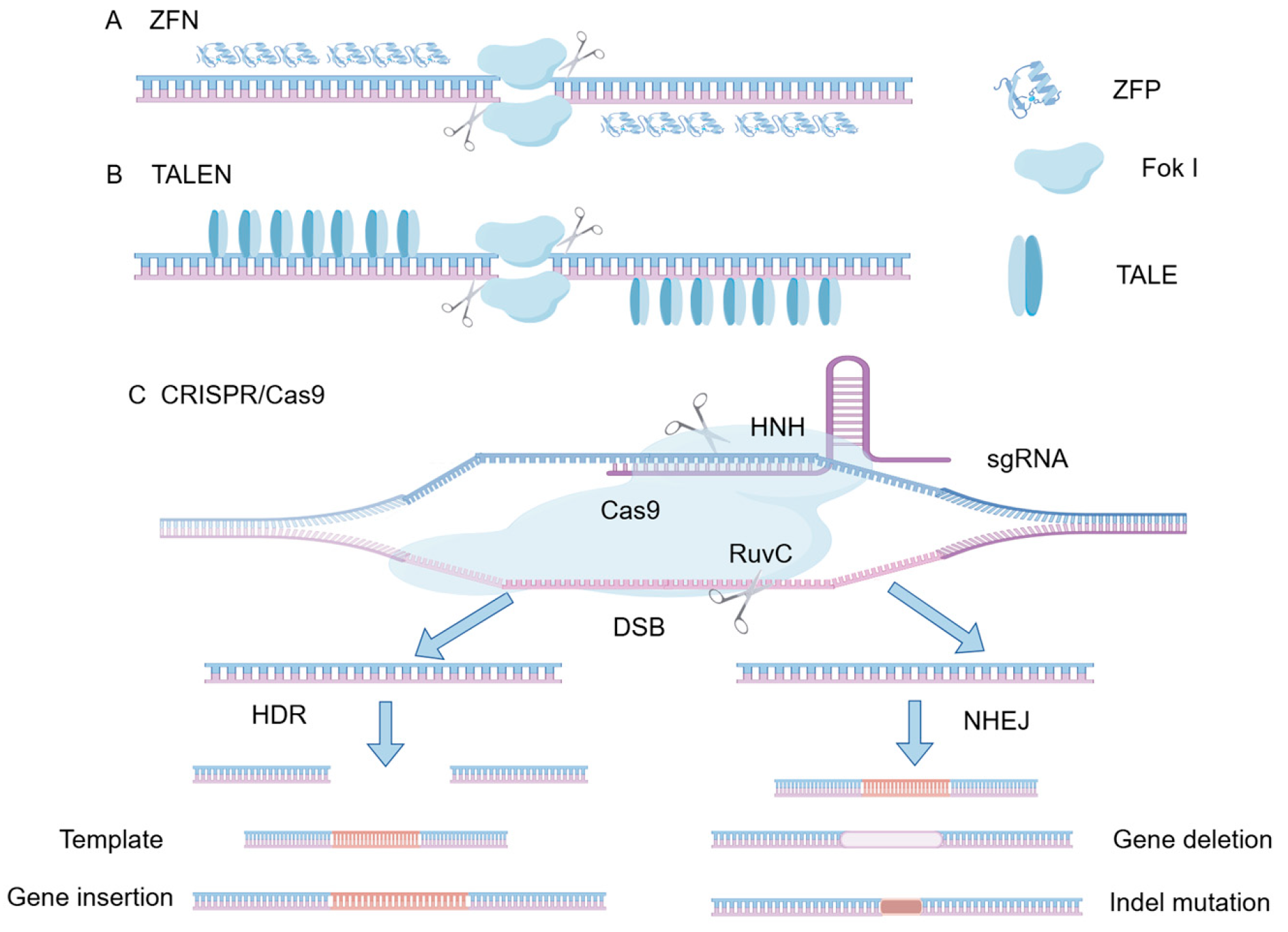
2.1. CRISPR/Cas9
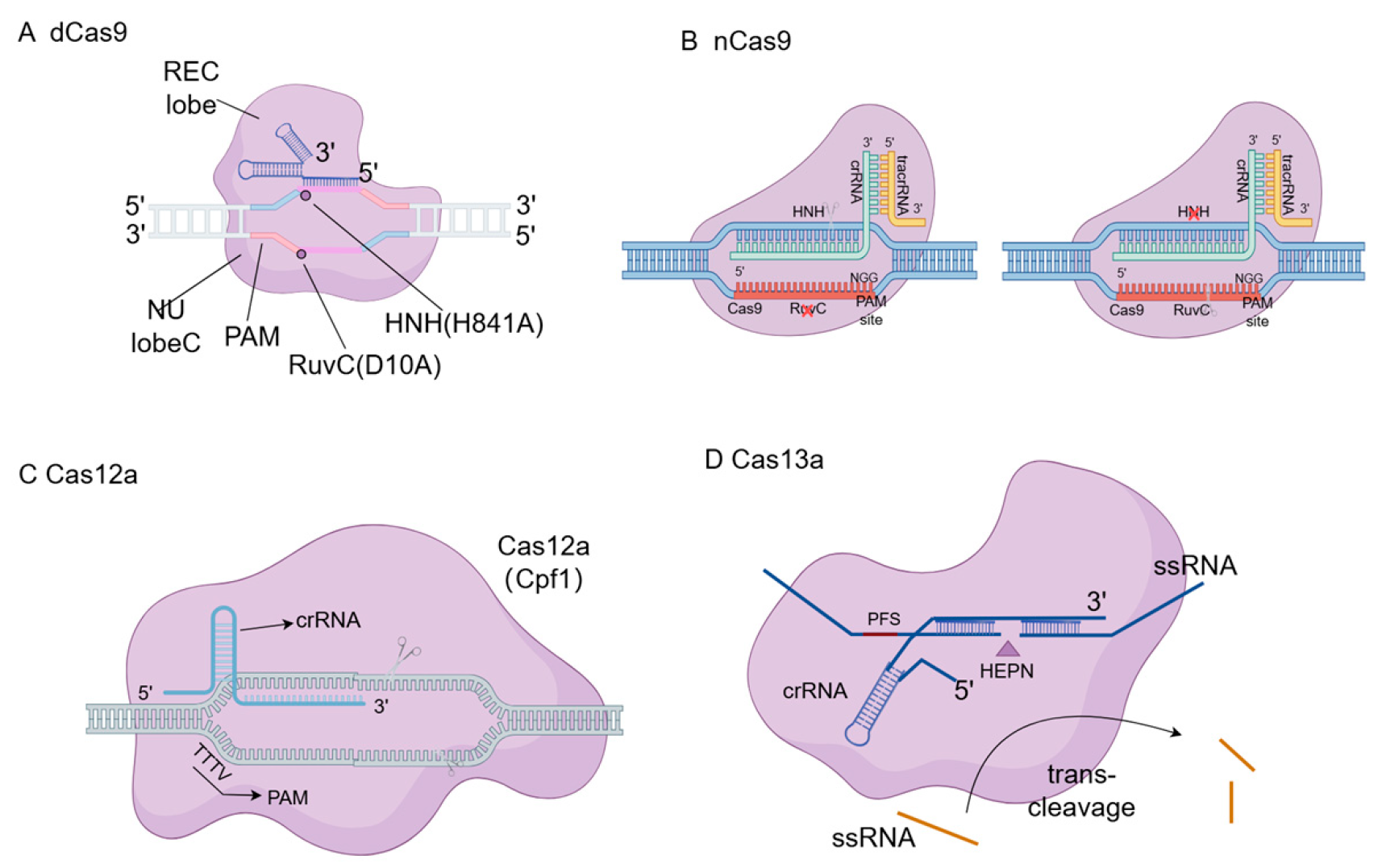
2.1.1. Nickase Cas9 (nCas9)
2.1.2. dCas9
2.1.3. CRISPR/Cas12a
2.1.4. CRISPR/Cas13
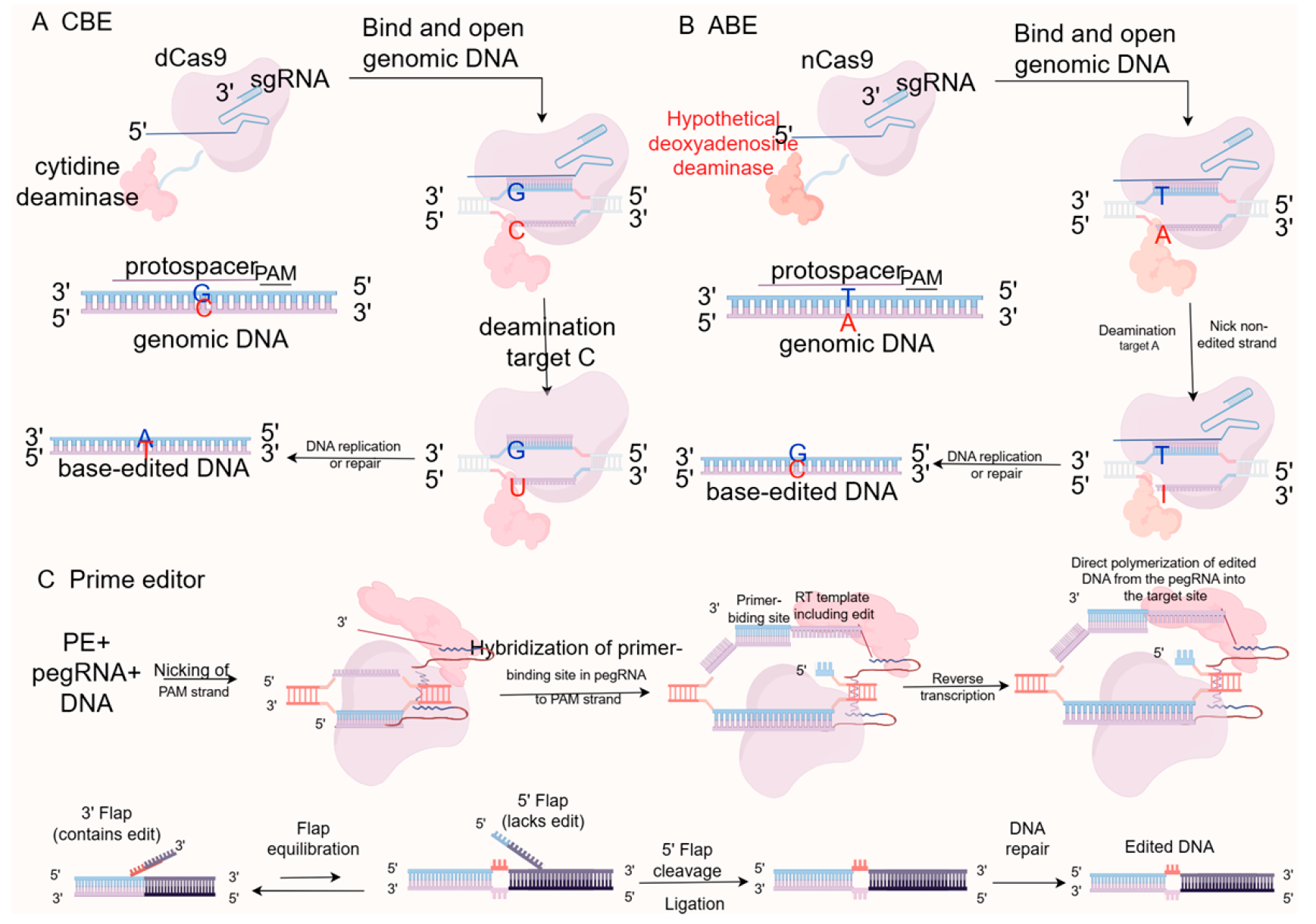
2.2. Base Editor
2.3. Prime Editing
2.4. Gene Delivery Systems
2.4.1. Viral Vectors
2.4.2. Non-Viral Vectors
2.4.3. Nanomaterial Vectors and Cell Delivery
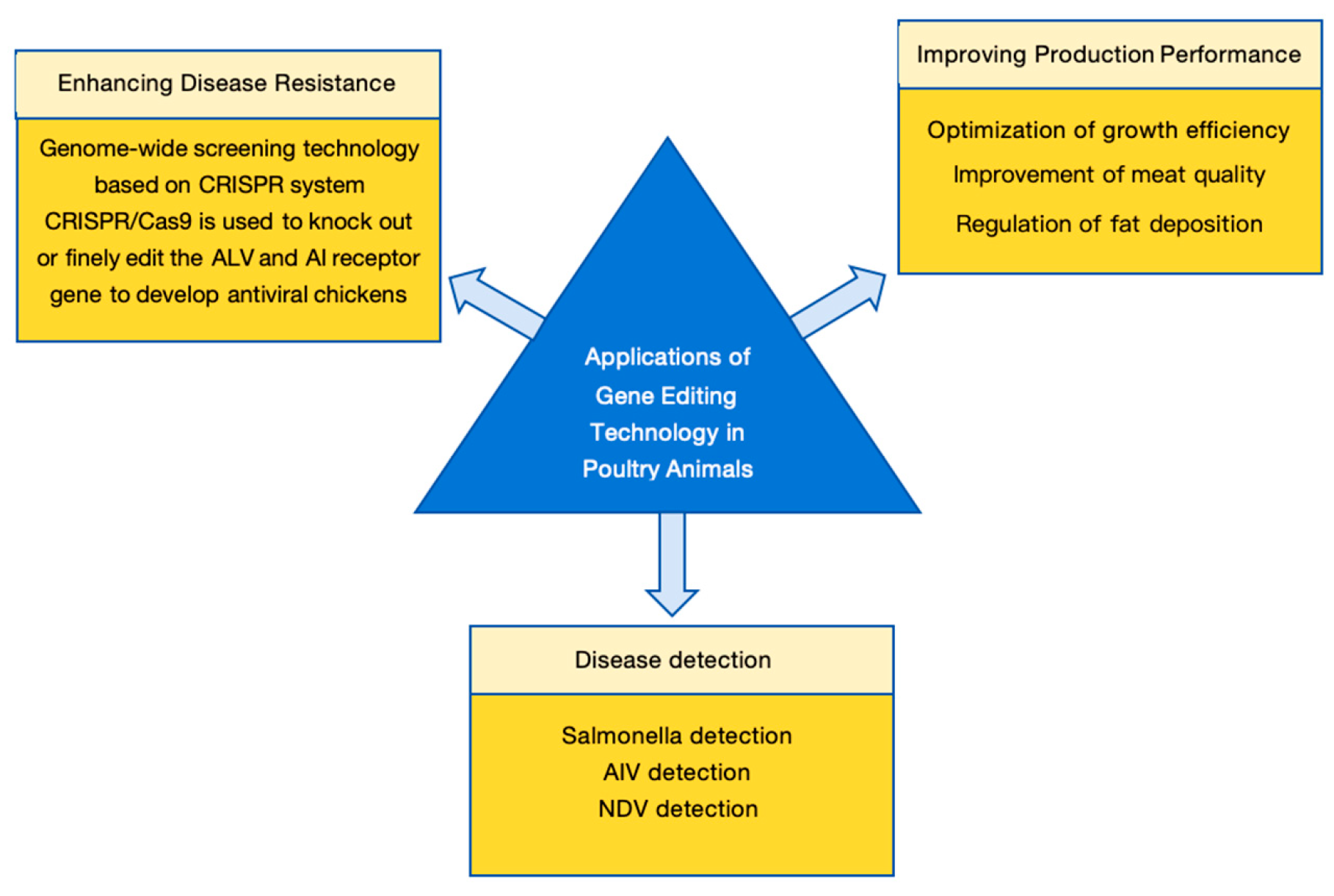
3. Applications of Gene Editing Technology in Poultry Animals
3.1. Enhancing Disease Resistance
3.1.1. Genome-Wide Screening Technology Based on CRISPR System
3.1.2. CRISPR/Cas9 Is Used to Knock out or Finely Edit the ALV and AI Receptor Gene to Develop Antiviral Chickens
Avian Leukosis
Avian Influenza
3.2. Improving Production Performance
3.2.1. Optimization of Growth Efficiency
3.2.2. Improvement of Meat Quality
3.2.3. Regulation of Fat Deposition
3.3. Disease Detection
3.3.1. Salmonella Detection
3.3.2. AIV Detection
3.3.3. NDV Detection
3.4. Applications in Commercial Poultry Lines vs. Purebred Lines
4. Risks and Challenges of Gene Editing Technology
4.1. Off-Target Effects and Safety
4.2. Ethical and Legal Issues
4.3. Technical Complexity
5. Conclusions
Author Contributions
Funding
Institutional Review Board Statement
Informed Consent Statement
Data Availability Statement
Acknowledgments
Conflicts of Interest
Abbreviations
| ZFN | Zinc Finger Nucleases |
| TALEN | Transcription Activator-Like Effector Nucleases |
| CRISPR | Clustered Regularly Interspaced Short Palindromic Repeats |
| Cas9 | CRISPR-associated protein 9 |
| DSBs | Double-Strand Breaks |
| NHEJ | Non-Homologous End Joining |
| HDR | Homology-Directed Repair |
| nCas9 | Nickase Cas9 |
| dCas9 | Dead Cas9 |
| PAM | Protospacer Adjacent Motif |
| crRNA | CRISPR RNA |
| tracrRNA | Trans-activating |
| gRNA | Guide RNA |
| ssODN | Single-Stranded Oligonucleotide |
| CBEs | Cytosine Base Editors |
| ABEs | Adenine Base Editors |
| GBEs | Guanine Base Editors |
| PEs | Prime Editors |
| pegRNA | Prime Editing Guide RNA |
| LNP | Lipid Nanoparticles |
| PEI | Polyethylenimine |
| PLGA | Poly (lactic-co-glycolic acid) |
| MOFs | Metal–Organic Frameworks |
| CPPs | Cell-Penetrating Peptides |
| PRRSV | Porcine Reproductive and Respiratory Syndrome Virus |
| CD163 | Cluster of Differentiation 163 |
| PRNP | Prion Protein Gene |
| MSTN | Myostatin |
| BLG | Beta-lactoglobulin |
| FGF5 | Fibroblast Growth Factor 5 |
| ATGL | Adipose Triglyceride Lipase |
| G0S2 | G0/G1 Switch Gene 2 |
| CH4 | Methane |
| TB | Tuberculosis |
| NRAMP1 | Natural Resistance-Associated Macrophage Protein 1 |
| SP110 | Sp110 Nuclear Body Protein |
| LEPR | Leptin Receptor |
| KISS1 | Kisspeptin1 |
| ALV | Avian Leukosis Virus |
| AIV | Avian Influenza Virus |
| HA | Hemagglutinin |
| NA | Neuraminidase |
| HPAIV | Highly Pathogenic Avian Influenza Virus |
| RNA | Ribonucleic Acid |
| DNA | Deoxyribonucleic Acid |
| mRNA | Messenger RNA |
| sgRNA | Single Guide RNA |
| shRNA | Short Hairpin RNA |
| miRNA | MicroRNA |
| siRNA | Small Interfering RNA |
| CRISPRa | CRISPR Activation |
| AAV | Adeno-Associated Virus |
| ALV-J | Avian Leukosis Virus Subgroup J |
| NDV | Newcastle Disease Virus |
| PGC | Primordial Germ Cell |
| SCNT | Somatic Cell Nuclear Transfer |
| SERS | Surface-Enhanced Raman Scattering |
| Rox | 6-Carboxy-X-Rhodamine |
| PS | Phosphate-Buffered Saline |
| GGP | Grandparent Generation Poultry |
| GP | Germline Progenito |
References
- Jinek, M.; Chylinski, K.; Fonfara, I.; Hauer, M.; Doudna, J.A.; Charpentier, E. A programmable dual-RNA–guided DNA endonuclease in adaptive bacterial immunity. Science 2012, 337, 816–821. [Google Scholar] [CrossRef] [Scilit] [PubMed]
- Komal; Kaur, P.; Arora, N.; Sawale, J.A.; Singh, A. Transformative CRISPR-Cas9 Technologies: A Review of Molecular Mechanisms, Precision Editing Techniques, and Clinical Progress in Sickle Cell Disease. Curr. Drug Metab. 2024, 25, 734–741. [Google Scholar] [CrossRef] [Scilit] [PubMed]
- Gong, T.; Liu, D.; Wang, X.; Zhou, D.; Tang, L.; Wang, H.; Su, J.; Liang, P. Establishment of a CIB1 knockout human pluripotent stem cell line via CRISPR/Cas9 genome editing technology. Stem Cell Res. 2024, 81, 103580. [Google Scholar] [CrossRef] [Scilit]
- Gao, C. Genome engineering for crop improvement and future agriculture. Cell 2021, 184, 1621–1635. [Google Scholar] [CrossRef] [Scilit]
- Smith, H.O.; Welcox, K.W. A restriction enzyme from Hemophilus influenzae. J. Mol. Biol. 1970, 51, 379–391. [Google Scholar] [CrossRef] [Scilit]
- Jackson, D.A.; Symons, R.H.; Berg, P. Biochemical method for inserting new genetic information into DNA of simian virus 40: Circular SV40 DNA molecules containing lambda phage genes and the galactose operon of Escherichia coli. Proc. Natl. Acad. Sci. USA 1972, 69, 2904–2909. [Google Scholar] [CrossRef] [Scilit]
- Capecchi, M.R. Targeted gene replacement. Sci. Am. 1994, 270, 52–59. [Google Scholar] [CrossRef] [Scilit]
- Wilmut, I.; Schnieke, A.E.; McWhir, J.; Kind, A.J.; Campbell, K.H. Viable offspring derived from fetal and adult mammalian cells. Nature 1997, 385, 810–813. [Google Scholar] [CrossRef] [Scilit]
- Bibikova, M.; Carroll, D.; Segal, D.J.; Trautman, J.K.; Smith, J.; Kim, Y.-G.; Chandrasegaran, S. Stimulation of homologous recombination through targeted cleavage by chimeric nucleases. Mol. Cell. Biol. 2001, 21, 289–297. [Google Scholar] [CrossRef] [Scilit] [PubMed]
- Miller, J.C.; Tan, S.; Qiao, G.; Barlow, K.A.; Wang, J.; Xia, D.F.; Meng, X.; Paschon, D.E.; Leung, E.; Hinkley, S.J.; et al. A TALE nuclease architecture for efficient genome editing. Nat. Biotechnol. 2011, 29, 143–148. [Google Scholar] [CrossRef] [Scilit]
- Mali, P.; Yang, L.; Esvelt, K.M.; Aach, J.; Guell, M.; DiCarlo, J.E.; Norville, J.E.; Church, G.M. RNA-guided human genome engineering via Cas9. Science 2013, 339, 823–826. [Google Scholar] [CrossRef] [Scilit]
- Dimitrov, L.; Pedersen, D.; Ching, K.H.; Yi, H.; Collarini, E.J.; Izquierdo, S.; Van De Lavoir, M.-C.; Leighton, P.A. Germline gene editing in chickens by efficient CRISPR-mediated homologous recombination in primordial germ cells. PLoS ONE 2016, 11, e0154303. [Google Scholar] [CrossRef] [Scilit]
- Oishi, I.; Yoshii, K.; Miyahara, D.; Kagami, H.; Tagami, T. Targeted mutagenesis in chicken using CRISPR/Cas9 system. Sci. Rep. 2016, 6, 23980. [Google Scholar] [CrossRef] [Scilit]
- Komor, A.C.; Kim, Y.B.; Packer, M.S.; Zuris, J.A.; Liu, D.R. Programmable editing of a target base in genomic DNA without double-stranded DNA cleavage. Nature 2016, 533, 420–424. [Google Scholar] [CrossRef] [Scilit]
- Gootenberg, J.S.; Abudayyeh, O.O.; Lee, J.W.; Essletzbichler, P.; Dy, A.J.; Joung, J.; Verdine, V.; Donghia, N.; Daringer, N.M.; Freije, C.A.; et al. Nucleic acid detection with CRISPR-Cas13a/C2c2. Science 2017, 356, 438–442. [Google Scholar] [CrossRef] [Scilit]
- Zhong, Z.; Zhang, Y.; You, Q.; Tang, X.; Ren, Q.; Liu, S.; Yang, L.; Wang, Y.; Liu, X.; Liu, B.; et al. Plant genome editing using FnCpf1 and LbCpf1 nucleases at redefined and altered PAM sites. Mol. Plant 2018, 11, 999–1002. [Google Scholar] [CrossRef] [Scilit] [PubMed]
- Anzalone, A.V.; Randolph, P.B.; Davis, J.R.; Sousa, A.A.; Koblan, L.W.; Levy, J.M.; Chen, P.J.; Wilson, C.; Newby, G.A.; Raguram, A.; et al. Search-and-replace genome editing without double-strand breaks or donor DNA. Nature 2019, 576, 149–157. [Google Scholar] [CrossRef] [Scilit] [PubMed]
- Proudfoot, C.; Lillico, S.; Tait-Burkard, C. Genome editing for disease resistance in pigs and chickens. Anim. Front. Rev. Mag. Anim. Agric. 2019, 9, 6–12. [Google Scholar] [CrossRef] [Scilit] [PubMed]
- Koslová, A.; Trefil, P.; Mucksová, J.; Reinišová, M.; Plachý, J.; Kalina, J.; Kučerová, D.; Geryk, J.; Krchlíková, V.; Lejčková, B.; et al. Precise CRISPR/Cas9 editing of the NHE1 gene renders chickens resistant to the J subgroup of avian leukosis virus. Proc. Natl. Acad. Sci. USA 2020, 117, 2108–2112. [Google Scholar] [CrossRef] [Scilit]
- Mehta, J. CRISPR-Cas9 gene editing for sickle cell disease and beta-thalassemia. N. Engl. J. Med. 2021, 384, 252–260. [Google Scholar]
- Ishino, Y.; Shinagawa, H.; Makino, K.; Amemura, M.; Nakata, A. Nucleotide sequence of the iap gene, responsible for alkaline phosphatase isozyme conversion in Escherichia coli, and identification of the gene product. J. Bacteriol. 1987, 169, 5429–5433. [Google Scholar] [CrossRef] [Scilit]
- Jiang, S.; Shen, Q.W. Principles of gene editing techniques and applications in animal husbandry. 3 Biotech 2019, 9, 28. [Google Scholar] [CrossRef] [Scilit]
- Deltcheva, E.; Chylinski, K.; Sharma, C.M.; Gonzales, K.; Chao, Y.; Pirzada, Z.A.; Eckert, M.R.; Vogel, J.; Charpentier, E. CRISPR RNA maturation by trans-encoded small RNA and host factor RNase III. Nature 2011, 471, 602–607. [Google Scholar] [CrossRef] [Scilit] [PubMed]
- Fineran, P.C.; Charpentier, E. Memory of viral infections by CRISPR-cas adaptive immune systems: Acquisition of new information. Virology 2012, 434, 202–209. [Google Scholar] [CrossRef] [Scilit]
- Ledford, H.; Callaway, E. Pioneers of revolutionary CRISPR gene editing win chemistry nobel. Nature 2020, 586, 346–347. [Google Scholar] [CrossRef] [Scilit]
- Cong, L.; Ran, F.A.; Cox, D.; Lin, S.; Barretto, R.; Habib, N.; Hsu, P.D.; Wu, X.; Jiang, W.; Marraffini, L.A. Multiplex genome engineering using CRISPR/cas systems. Science 2013, 339, 819–823. [Google Scholar] [CrossRef] [Scilit]
- Ma, S.; Chang, J.; Wang, X.; Liu, Y.; Zhang, J.; Lu, W.; Gao, J.; Shi, R.; Zhao, P.; Xia, Q. CRISPR/Cas9 mediated multiplex genome editing and heritable mutagenesis of BmKu70 in Bombyx mori. Sci. Rep. 2014, 4, 4489. [Google Scholar] [CrossRef] [Scilit]
- Ran, F.A.; Hsu, P.D.; Lin, C.-Y.; Gootenberg, J.S.; Konermann, S.; Trevino, A.E.; Scott, D.A.; Inoue, A.; Matoba, S.; Zhang, Y.; et al. Double nicking by RNA-guided CRISPR Cas9 for enhanced genome editing specificity. Cell 2013, 154, 1380–1389. [Google Scholar] [CrossRef] [Scilit]
- Khadempar, S.; Familghadakchi, S.; Motlagh, R.A.; Farahani, N.; Dashtiahangar, M.; Rezaei, H.; Gheibi Hayat, S.M. CRISPR-Cas9 in genome editing: Its function and medical applications. J. Cell. Physiol. 2019, 234, 5751–5761. [Google Scholar] [CrossRef] [Scilit] [PubMed]
- O’Brien, S.J.; Ekman, M.B.; Manek, S.; Galandiuk, S. CRISPR-mediated gene editing for the surgeon scientist. Surgery 2019, 166, 129–137. [Google Scholar] [CrossRef] [Scilit] [PubMed]
- Gilbert, L.A.; Larson, M.H.; Morsut, L.; Liu, Z.; Brar, G.A.; Torres, S.E.; Stern-Ginossar, N.; Brandman, O.; Whitehead, E.H.; Doudna, J.A.; et al. CRISPR-mediated modular RNA-guided regulation of transcription in eukaryotes. Cell 2013, 154, 442–451. [Google Scholar] [CrossRef] [Scilit]
- Li, S.-Y.; Cheng, Q.-X.; Liu, J.-K.; Nie, X.-Q.; Zhao, G.-P.; Wang, J. CRISPR-Cas12a has both cis- and trans-cleavage activities on single-stranded DNA. Cell Res. 2018, 28, 491–493. [Google Scholar] [CrossRef] [Scilit]
- Swarts, D.C.; Jinek, M. Mechanistic insights into the cis- and trans-acting DNase activities of Cas12a. Mol. Cell 2019, 73, 589–600.e4. [Google Scholar] [CrossRef] [Scilit] [PubMed]
- Abudayyeh, O.O.; Gootenberg, J.S.; Konermann, S.; Joung, J.; Slaymaker, I.M.; Cox, D.B.T.; Shmakov, S.; Makarova, K.S.; Semenova, E.; Minakhin, L.; et al. C2c2 is a single-component programmable RNA-guided RNA-targeting CRISPR effector. Science 2016, 353, aaf5573. [Google Scholar] [CrossRef] [Scilit]
- San Filippo, J.; Sung, P.; Klein, H. Mechanism of eukaryotic homologous recombination. Annu. Rev. Biochem. 2008, 77, 229–257. [Google Scholar] [CrossRef] [Scilit] [PubMed]
- Lin, S.; Staahl, B.T.; Alla, R.K.; Doudna, J.A. Enhanced homology-directed human genome engineering by controlled timing of CRISPR/Cas9 delivery. eLife 2014, 3, e04766. [Google Scholar] [CrossRef] [Scilit] [PubMed]
- Chen, P.J.; Hussmann, J.A.; Yan, J.; Knipping, F.; Ravisankar, P.; Chen, P.-F.; Chen, C.; Nelson, J.W.; Newby, G.A.; Sahin, M.; et al. Enhanced prime editing systems by manipulating cellular determinants of editing outcomes. Cell 2021, 184, 5635–5652.e29. [Google Scholar] [CrossRef] [Scilit]
- Kwon, M.; Firestein, B.L. DNA transfection: Calcium phosphate method. Methods Mol. Biol. 2013, 1018, 107–110. [Google Scholar] [CrossRef] [Scilit]
- Kumar, P.; Nagarajan, A.; Uchil, P.D. DEAE-Dextran Transfection; Cold Spring Harbor Laboratory Press: New York, NY, USA, 2018. [Google Scholar] [CrossRef] [Scilit]
- Zhao, J.; Lever, A.M.L. Lentivirus-mediated gene expression. Methods Mol. Biol. 2007, 366, 343–355. [Google Scholar] [CrossRef] [Scilit]
- Temin, H.M. Retrovirus vectors: Promise and reality. Science 1989, 246, 983. [Google Scholar] [CrossRef] [Scilit]
- Zhang, D.; Das, D.B.; Rielly, C.D. Potential of microneedle-assisted micro-particle delivery by gene guns: A review. Drug Deliv. 2014, 21, 571–587. [Google Scholar] [CrossRef] [Scilit]
- Kumar, P.; Nagarajan, A.; Uchil, P.D. Electroporation. Cold Spring Harb. Protoc. 2019, 2019, 519–525. [Google Scholar] [CrossRef] [Scilit] [PubMed]
- Gahl, R.F. Microinjection of live mammalian cells: A delivery method that provides added versatility to the study of cellular function. In Microinjection: Methods and Protocols; Liu, C., Du, Y., Eds.; Springer: New York, NY, USA, 2019; pp. 525–536. [Google Scholar]
- Leclerc, D.; Siroky, M.D.; Miller, S.M. Next-generation biological vector platforms for in vivo delivery of genome editing agents. Curr. Opin. Biotechnol. 2024, 85, 11. [Google Scholar] [CrossRef] [Scilit]
- Issa, S.S.; Shaimardanova, A.A.; Solovyeva, V.V.; Rizvanov, A.A. Various AAV serotypes and their applications in gene therapy: An overview. Cells 2023, 12, 785. [Google Scholar] [CrossRef] [Scilit] [PubMed]
- Hirschenberger, M.; Stadler, N.; Fellermann, M.; Sparrer, K.M.J.; Kirchhoff, F.; Barth, H.; Papatheodorou, P. CRISPA: A non-viral, transient Cas9 delivery system based on reengineered anthrax toxin. Front. Pharmacol. 2021, 12, 770283. [Google Scholar] [CrossRef] [Scilit]
- Allemailem, K.S.; Alsahli, M.A.; Almatroudi, A.; Alrumaihi, F.; Alkhaleefah, F.K.; Rahmani, A.H.; Khan, A.A. Current updates of CRISPR/Cas9-mediated genome editing and targeting within tumor cells: An innovative strategy of cancer management. Cancer Commun. 2022, 42, 1257–1287. [Google Scholar] [CrossRef] [Scilit]
- Nakase, I.; Tanaka, G.; Futaki, S. Cell-penetrating peptides (CPPs) as a vector for the delivery of siRNAs into cells. Mol. Biosyst. 2013, 9, 855–861. [Google Scholar] [CrossRef] [Scilit]
- Wang, K.; Ouyang, H.; Xie, Z.; Yao, C.; Guo, N.; Li, M.; Jiao, H.; Pang, D. Efficient generation of myostatin mutations in pigs using the CRISPR/Cas9 sys-tem. Sci. Rep. 2015, 5, 16623. [Google Scholar] [CrossRef] [Scilit] [PubMed]
- Carlson, D.F.; A Lancto, C.; Zang, B.; Kim, E.-S.; Walton, M.; Oldeschulte, D.; Seabury, C.; Sonstegard, T.S.; Fahrenkrug, S.C. Production of hornless dairy cattle from genome-edited cell lines. Nat. Biotechnol. 2016, 34, 479–481. [Google Scholar]
- Lee, H.J.; Lee, , K.Y.; Jung, , K.M.; Park, , K.J.; Lee, , K.O.; Suh, , J.-Y.; Yao, , Y.; Nair, , V.; Han, J.Y. Precise gene editing of chicken Na+/H+ exchange type 1 (chNHE1) confers resistance to avian leukosis virus subgroup J (ALV-J). Dev. Comp. Immunol. 2017, 77, 340-349. [Google Scholar] [CrossRef] [Scilit]
- Burkard, C.; Lillico, S.G.; Reid, E.; Jackson, B.; Mileham, A.J.; Ait-Ali, T.; Whitelaw, C.B.; Archibald, A.L. Precision engineering for PRRSV resistance in pigs: Macrophages from genome edited pigs lacking CD163 SRCR5 domain are fully resistant to both PRRSV genotypes while maintaining biological function. PLoS Pathog. 2017, 13, e1006206. [Google Scholar]
- Sun, Z.; Wang, M.; Han, S.; Ma, S.; Zou, Z.; Ding, F.; Li, X.; Li, L.; Tang, B.; Wang, H.; et al. Production of hypoallergenic milk from DNA-free beta-lactoglobulin (BLG) gene knockout cow using zinc-finger nucleases mRNA. Sci. Rep. 2018, 8, 15430. [Google Scholar]
- Chen, J.S.; Ma, E.; Harrington, L.B. CRISPR-Cas12a target binding unleashes indiscriminate single-stranded DNase activity. Science 2018, 360, 436–439. [Google Scholar]
- Koslová, A.; Kučerová, D.; Reinišová, M.; Geryk, J.; Trefil, P.; Hejnar, J. Genetic Resistance to Avian Leukosis Viruses Induced by CRISPR/Cas9 Editing of Specific Receptor Genes in Chicken Cells. Viruses 2018, 10, 605. [Google Scholar] [CrossRef] [Scilit]
- Tanihara, F.; Hirata, M.; Nguyen, N.T.; Sawamoto, O.; Kikuchi, T.; Otoi, T. One-Step Generation of Multiple Gene-Edited Pigs by Electroporation of the CRISPR/Cas9 System into Zygotes to Reduce Xenoantigen Biosynthesis. Int. J. Mol. Sci. 2021, 22, 2249. [Google Scholar] [CrossRef] [Scilit]
- Flórez, J.M.; Martins, K.; Solin, S.; Bostrom, J.R.; Rodríguez-Villamil, P.; Ongaratto, F.; Larson, S.A.; Ganbaatar, U.; Coutts, A.W.; Kern, D.; et al. CRISPR/Cas9-editing of KISS1 to generate pigs with hypogonadotropic hypogonadism as a castration free trait. Front. Genet. 2023, 13, 1078991. [Google Scholar] [CrossRef] [Scilit]
- Idoko-Akoh, A.; Goldhill, D.H.; Sheppard, C.M.; Bialy, D.; Quantrill, J.L.; Sukhova, K.; Brown, J.C.; Richardson, S.; Campbell, C.; Taylor, L.; et al. Creating resistance to avian influenza infection through genome editing of the ANP32 gene family. Nat. Commun. 2023, 14, 1–15. [Google Scholar] [CrossRef] [Scilit]
- Zhou, X.; Wang, S.; Ma, Y.; Li, Y.; Deng, G.; Shi, J.; Wang, X. Rapid detection of avian influenza virus based on CRISPR-Cas12a. Virol. J. 2023, 20, 1–10. [Google Scholar] [CrossRef] [Scilit]
- Cuellar, C.J.; Amaral, T.F.; Rodriguez-Villamil, P.; Ongaratto, F.; Martinez, D.O.; Labrecque, R.; Losano, J.D.d.A.; Estrada-Cortés, E.; Bostrom, J.R.; Martins, K.; et al. Consequences of gene editing of PRLR on thermotolerance, growth, and male reproduction in cattle. FASEB BioAdvances 2024, 6, 223–234. [Google Scholar] [CrossRef] [Scilit]
- Feng, R.; Zhao, J.; Zhang, Q.; Zhu, Z.; Zhang, J.; Liu, C.; Zheng, X.; Wang, F.; Su, J.; Ma, X.; et al. Generation of Anti-Mastitis Gene-Edited Dairy Goats with Enhancing Lysozyme Expression by Inflammatory Regulatory Sequence using ISDra2-TnpB System. Adv. Sci. 2024, 11, e2404408. [Google Scholar] [CrossRef] [Scilit]
- Liu, P.; Jiang, J.; Chen, Y.; Gao, F.; Wang, S.; Yu, M.; Liu, Y.; Guo, R.; Zhang, L.; Xu, Z.; et al. Identification of Cables1 as a critical host factor that promotes ALV-J replication via genome-wide CRISPR/Cas9 gene knockout screening. J. Biol. Chem. 2024, 300, 107804. [Google Scholar] [CrossRef] [Scilit]
- Ding, J.; Liu, X.; Nawaz, A.H.; Leng, D.; Li, N.; Ge, D.; Li, D.; Feng, C. Integrative multi-omics analysis deciphers the regulatory mechanisms of egg weight traits in chickens. Poult. Sci. 2025, 104, 105813. [Google Scholar] [CrossRef] [Scilit]
- Hu, S.; Gan, M.; Wei, Z.; Shang, P.; Song, L.; Feng, J.; Chen, L.; Niu, L.; Wang, Y.; Zhang, S.; et al. Identification of host factors for livestock and poultry viruses: Genome-wide screening technology based on the CRISPR system. Front. Microbiol. 2024, 15, 1498641. [Google Scholar] [CrossRef] [Scilit]
- Park, J.S.; Lee, K.Y.; Han, J.Y. Precise Genome Editing in Poultry and Its Application to Industries. Genes 2020, 11, 1182. [Google Scholar] [CrossRef] [Scilit]
- Nawaz, A.H.; Ding, J.; Ali, M.; Leng, D.; Mukhtar, N.; Ali, A.; Feng, C. Decoding chicken growth regulation through multi-omics insights and emerging genetic tools for growth optimization. Poult. Sci. 2025, 104, 105542. [Google Scholar] [CrossRef] [Scilit]
- Li, X.; Sun, D.; Wang, Z.; Zhao, Q.; Liu, Y.; Hou, Z. Transcriptional regulatory mechanism of NR2F2 and ZNF423 in avian preadipocyte differentiation. Gene 2023, 897, 148106. [Google Scholar] [CrossRef] [Scilit]
- Zhai, G.; Pang, Y.; Zou, Y.; Wang, X.; Liu, J.; Zhang, Q.; Cao, Z.; Wang, N.; Li, H.; Wang, Y. Effects of PLIN1 Gene Knockout on the Proliferation, Apoptosis, Differentiation and Lipolysis of Chicken Preadipocytes. Animals 2022, 13, 92. [Google Scholar] [CrossRef] [Scilit]
- Jia, F.; Li, B.; He, Y.; Shen, Y.; Chen, J.; Li, X.; Li, Y. An amplification-free CRISPR-SERS biosensor for specific, sensitive and rapid detection of salmonella typhimurium in poultry. Food Sci. Techno. 2023, 189, 8. [Google Scholar]
- Wang, L.; Xie, T.; Zhou, X.; Yang, G.; Guo, Z.; Huang, Y.; Lamont, S.J.; Lan, X. LncIRF1 promotes chicken resistance to ALV-J infection. 3 Biotech 2023, 13, 367. [Google Scholar] [CrossRef] [Scilit]
- Xu, M.; Qian, K.; Shao, H.; Yao, Y.; Nair, V.; Ye, J.; Qin, A. 3′UTR of ALV-J can affect viral replication through promoting transcription and mRNA nuclear export. J. Virol. 2023, 97, e01152-23. [Google Scholar] [CrossRef] [Scilit] [PubMed]
- Feng, W.; Meng, W.; Cai, L.; Cui, X.; Pan, Z.; Wang, G.; Cheng, Z. Avian leukosis virus subgroup J induces its receptor--chNHE1 up-regulation. Virol. J. 2016, 13, 58. [Google Scholar] [CrossRef] [Scilit]
- Chen, M.; Granger, A.J.; VanBrocklin, M.W.; Payne, W.S.; Hunt, H.; Zhang, H.; Dodgson, J.B.; Holmen, S.L. Inhibition of avian leukosis virus replication by vector-based RNA interference. Virology 2007, 365, 464–472. [Google Scholar] [CrossRef] [Scilit]
- Spackman, E. A brief introduction to avian influenza virus. In Animal Influenza Virus; Spackman, E., Ed.; Springer: New York, NY, USA, 2020; Volume 2123, pp. 83–92. [Google Scholar]
- Alexander, D.J. An overview of the epidemiology of avian influenza. Vaccine 2007, 25, 5637–5644. [Google Scholar] [CrossRef] [Scilit] [PubMed]
- Xu, M.; Wang, R.; Li, Y. Electrochemical biosensors for rapid detection of Escherichia coli O157:H7. Talanta 2017, 162, 511–522. [Google Scholar] [CrossRef] [Scilit]
- Li, F.; Ye, Q.; Chen, M.; Zhou, B.; Zhang, J.; Pang, R.; Xue, L.; Wang, J.; Zeng, H.; Wu, S.; et al. An ultrasensitive CRISPR/Cas12a based electrochemical biosensor for Listeria monocytogenes detection. Biosens. Bioelectron. 2021, 179, 113073. [Google Scholar] [CrossRef] [Scilit]
- Chen, S.-J. Minimizing off-target effects in CRISPR-Cas9 genome editing. Cell Biol. Toxicol. 2019, 35, 399–401. [Google Scholar] [CrossRef] [Scilit]
- Kim, H.; Lee, W.; Oh, Y.; Kang, S.-H.; Hur, J.K.; Lee, H.; Song, W.; Lim, K.-S.; Park, Y.-H.; Song, B.-S.; et al. Enhancement of target specificity of CRISPR–Cas12a by using a chimeric DNA–RNA guide. Nucleic Acids Res. 2020, 48, 8601–8616. [Google Scholar] [CrossRef] [Scilit]
- Barman, A.; Deb, B.; Chakraborty, S. A glance at genome editing with CRISPR-Cas9 technology. Curr. Genet. 2020, 66, 447–462. [Google Scholar] [CrossRef] [Scilit]
- Tyumentseva, M.; Tyumentsev, A.; Akimkin, V. CRISPR/Cas9 Landscape: Current State and Future Perspectives. Int. J. Mol. Sci. 2023, 24, 16077. [Google Scholar] [CrossRef] [Scilit]
- Shen, B.; Zhang, W.; Zhang, J.; Zhou, J.; Wang, J.; Chen, L.; Wang, L.; Hodgkins, A.; Iyer, V.; Huang, X.; et al. Efficient genome modification by CRISPR-Cas9 nickase with minimal off-target effects. Nat. Methods 2014, 11, 399–402. [Google Scholar] [CrossRef] [Scilit]
- Fu, Y.; Foden, J.A.; Khayter, C.; Maeder, M.L.; Reyon, D.; Joung, J.K.; Sander, J.D. High-frequency off-target mutagenesis induced by CRISPR-cas nucleases in human cells. Nat. Biotechnol. 2013, 31, 822–826. [Google Scholar] [CrossRef] [Scilit]
- Gallala, M. Application of CRISPR/Cas gene editing for infectious disease control in poultry. Open Life Sci. 2025, 20, 20251095. [Google Scholar] [CrossRef] [Scilit]
- Asmamaw Mengstie, M.; Teshome Azezew, M.; Asmamaw Dejenie, T.; Teshome, A.A.; Tadele Admasu, F.; Behaile Teklemariam, A.; Tilahun Mulu, A.; Mekonnen Agidew, M.; Adugna, D.G.; Geremew, H.; et al. Recent Advancements in Reducing the Off-Target Effect of CRISPR-Cas9 Genome Editing. Biol. Targets Ther. 2024, 18, 21–28. [Google Scholar] [CrossRef] [Scilit] [PubMed]
- Cyranoski, D. The CRISPR-baby scandal: What’s next for human gene-editing. Nature 2019, 566, 440–442. [Google Scholar] [CrossRef] [Scilit]
- Tomita, A.; Sasanuma, H.; Owa, T.; Nakazawa, Y.; Shimada, M.; Fukuoka, T.; Ogi, T.; Nakada, S. Inducing multiple nicks promotes interhomolog homologous recombination to correct heterozygous mutations in somatic cells. Nat. Commun. 2023, 14, 5607. [Google Scholar] [CrossRef] [Scilit] [PubMed]
- Schaefer, G.O.; Labude, M.K.; Zhu, Y.; Foo, R.S.-Y.; Xafis, V. International reporting mechanism for unethical germline gene editing experiments is needed. Trends Biotechnol. 2021, 39, 427–430. [Google Scholar] [CrossRef] [Scilit] [PubMed]
- Ormond, K.E.; Bombard, Y.; Bonham, V.L.; Hoffman-Andrews, L.; Howard, H.; Isasi, R.; Musunuru, K.; Riggan, K.A.; Michie, M.; Allyse, M. The clinical application of gene editing: Ethical and social issues. Pers. Med. 2019, 16, 337–350. [Google Scholar] [CrossRef] [Scilit]
- A, F.M.; B, A.N.; B, I.P. CRISPR/Cas9 gene-editing: Research technologies, clinical applications and ethical considerations—ScienceDirect. Semin. Perinatol. 2018, 42, 487–500. [Google Scholar]
- Eckerstorfer, M.F.; Dolezel, M.; Heissenberger, A.; Miklau, M.; Reichenbecher, W.; Steinbrecher, R.A.; Waßmann, F. An EU Perspective on Biosafety Considerations for Plants Developed by Genome Editing and Other New Genetic Modification Techniques (nGMs). Front. Bioeng. Biotechnol. 2019, 7, 31. [Google Scholar] [CrossRef] [Scilit] [PubMed]
- Lei, R.; Qiu, R. Ethical and regulatory issues in human gene editing: Chinese perspective. Biotechnol. Appl. Biochem. 2020, 67, 880–891. [Google Scholar] [CrossRef] [Scilit]
- Cai, W.; Liu, J.; Chen, X.; Mao, L.; Wang, M. Orthogonal chemical activation of enzyme-inducible CRISPR/Cas9 for cell-selective genome editing. J. Am. Chem. Soc. 2022, 144, 22272–22280. [Google Scholar] [CrossRef] [Scilit] [PubMed]
- van Haasteren, J.; Li, J.; Scheideler, O.J.; Murthy, N.; Schaffer, D.V. The delivery challenge: Fulfilling the promise of therapeutic genome editing. Nat. Biotechnol. 2020, 38, 845–855. [Google Scholar] [CrossRef] [Scilit]
- Kreitz, J.; Friedrich, M.J.; Guru, A.; Lash, B.; Saito, M.; Macrae, R.K.; Zhang, F. Programmable protein delivery with a bacterial contractile injection system. Nature 2023, 616, 357–364. [Google Scholar] [CrossRef] [Scilit]
- Wu, H.; Wang, Y.; Zhang, Y.; Yang, M.; Lv, J.; Liu, J.; Zhang, Y. TALE nickase-mediated SP110 knockin endows cattle with increased resistance to tuberculosis. Proc. Natl. Acad. Sci. USA 2015, 112, E1530-1539. [Google Scholar] [CrossRef] [Scilit]
- Hii, A.R.K.; Qi, X.; Wu, Z. Advanced strategies for CRISPR/Cas9 delivery and applications in gene editing, therapy, and cancer detection using nanoparticles and nanocarriers. J. Mater. Chem. B 2024, 12, 1467–1489. [Google Scholar] [CrossRef] [Scilit]
- Patel, P.; Benzle, K.; Pei, G.L. Cell-penetrating peptides for sustainable agriculture. Trends Plant Sci. 2024, 29, 1131–1144. [Google Scholar] [CrossRef] [Scilit]
- Abbasi, A.F.; Asim, M.N.; Dengel, A. Transitioning from wet lab to artificial intelligence: A systematic review of AI predictors in CRISPR. J. Transl. Med. 2025, 23, 153. [Google Scholar] [CrossRef] [Scilit]
- Shriver, A. Prioritizing the protection of welfare in gene-edited livestock. Anim. Front. Rev. Mag. Anim. Agric. 2020, 10, 39–44. [Google Scholar] [CrossRef] [Scilit] [PubMed]



| Time | Technology | References |
|---|---|---|
| 1970 | Restriction enzymes | A restriction enzyme from Hemophilus influenzae. I. Purification and general properties [5] |
| 1972 | DNA recombination in vitro | Biochemical method for inserting new genetic information into DNA of Simian Virus 40: circular SV40 DNA molecules containing lambda phage genes and the galactose operon of Escherichia coli [6] |
| 1994 | Homologous recombination | Targeted gene replacement [7] |
| 1997 | Cloning of the sheep | Viable offspring derived from fetal and adult mammalian cells [8] |
| 2001 | ZFNs | Stimulation of homologous recombination through targeted cleavage by chimeric nucleases [9] |
| 2011 | TALEN | A TALE nuclease architecture for efficient gene editing [10] |
| 2012 | CRISPR/Cas9 | A programmable dual-RNA-guided DNA endonuclease in adaptive bacterial immunity [1] |
| 2013 | CRISPR/Cas9 in eukaryotic cells | Successful application of CRISPR/Cas9 in mammalian cells accelerated its use in biomedical and agricultural research [11] |
| 2016 | CRISPR-mediated editing in chicken primordial germ cells (PGCs) | Efficient gene editing in chicken PGCs enabled stable germline transmission and opened a new era for avian transgenic research [12] |
| 2016 | Generation of gene-edited chickens | CRISPR/Cas9 technology was successfully used to generate genetically modified chickens, demonstrating its feasibility in poultry breeding [13] |
| 2016 | Base editing | Programmable editing of a target base in genomic DNA without double-stranded DNA cleavage [14] |
| 2017 | CRISPR/Cas13a | Nucleic acid detection with CRISPR-Cas13a/C2c2 [15] |
| 2018 | CRISPR/Cas12 | Plant Gene Editing Using FnCpf1 and LbCpf1 Nucleases at Redefined and Altered PAM Sites [16] |
| 2019 | Prime editing | Search-and-replace gene editing without double-strand breaks or donor DNA [17] |
| 2020 | Antiviral gene editing in poultry | Genome editing targeting host antiviral genes emerged as a promising strategy for improving poultry disease resistance [18] |
| 2020 | ALV-J-resistant chickens via NHE1 editing | Precise editing of the chicken NHE1 receptor conferred resistance to ALV-J infection, demonstrating the practical potential of CRISPR-assisted antiviral breeding in poultry [19] |
| 2021 | Clinical translation of CRISPR/Cas9 | CRISPR/Cas9 therapies entered clinical trials for human genetic diseases, highlighting the translational potential of gene editing [20] |
| Delivery System | Method | Delivery Principle | Characteristics |
|---|---|---|---|
| Chemical delivery | Calcium phosphate [37] | Calcium phosphate-DNA complexes adsorb to the cell membrane and are endocytosed | Not suitable for primary cells, simple to operate but with poor reproducibility |
| Cationic liposome [38] | Positively charged liposomes form complexes with negatively charged nucleic acids and are endocytosed | Widely applicable, high transfection efficiency, good reproducibility | |
| DEAE-dextran [39] | Positively charged DEAE-dextran interacts with the negatively charged phosphate backbone of nucleic acids to form complexes that are endocytosed | Relatively simple, but has some toxic side effects on cells | |
| Biological delivery | Lentivirus [40] | Infects host cells to integrate foreign genes into the chromosome | Suitable for hard-to-transfect cells, primary cells, and in vivo cells |
| Adenovirus [41] | Suitable for hard-to-transfect cells, safety considerations required | ||
| Physical transduction | Particle bombardment [42] | DNA is precipitated onto microscopic heavy metal particles and delivered via Biolistic particle delivery, with DNA gradually released and expressed in cells | Suitable for epidermal cells, fibroblasts, lymphocyte lines, and primary cells |
| Electroporation [43] | High-voltage pulses disrupt the cell membrane potential, allowing DNA to enter through small pores | High cell mortality, large amounts of DNA and cells required | |
| Microinjection [44] | DNA is directly injected into the nucleus of target cells using micromanipulation | Limited number of transfected cells, primarily used for engineering or transgenic animal embryonic cells |
| Year | Species | Achievement |
|---|---|---|
| 1997 | Sheep | First cloned mammal (Dolly), foundation for gene editing [8] |
| 2015 | Pig | MSTN knockout producing double-muscle phenotype [50] |
| 2016 | Cattle | POLLED gene editing eliminating need for dehorning [51] |
| 2016 | Chicken | First demonstration of gene editing in chicken primordial germ cells [12] |
| 2017 | Chicken | Foundational technology enabling rapid detection of viral pathogens in poultry [15] |
| 2017 | Chicken | W38-deficient chickens resistant to ALV-J infection [52] |
| 2017 | Pig | CD163 knockout conferring complete PRRSV resistance [53] |
| 2018 | Goat | BLG knockout reducing milk allergenicity [54] |
| 2018 | Chicken | Foundational technology for Cas12a-based detection platforms in poultry [55] |
| 2018 | Chicken | DF-1 cells resistant to ALV-A/ALV-C subgroup infection [56] |
| 2021 | Cattle | BLG-free cows with reduced milk allergenicity [57] |
| 2022 | Pig | KISS1 knockout boars eliminating castration [58] |
| 2023 | Chicken | Homology-directed genome editing confers resistance to avian influenza infection [59] |
| 2023 | Chicken | Enables rapid, sensitive on-site detection of AIV [60] |
| 2024 | Cattle | SLICK1 mutation for heat-stress resistance [61] |
| 2024 | Goat | ISDra2-TnpB system for mastitis resistance (no foreign gene) [62] |
| 2024 | Chicken | Identification of Cables1 as a critical host factor that promotes ALV-J replication [63] |
| 2025 | Chicken | Integrative multi-omics analysis deciphers regulatory mechanisms of production traits [64] |
| Application Area | Target | Representative Genes | Key Methods | Achievements | |
|---|---|---|---|---|---|
| Enhancing disease resistance | Genome-wide antiviral factor screening | Identify host factors at adsorption, endocytosis, replication, or immune evasion | LDLR, SLC35A1, B4GALNT2, SGMS1, TMEM41B, STAG2, HSP90AB1, etc. | CRISPR library-based genome-wide screening | Identifies key host factors in viral lifecycle and antiviral response [65] |
| CRISPR/Cas9 editing of ALV and AIV receptors for antiviral chickens | Block ALV-J infection | chNHE1 (W38 residue) | CRISPR/Cas9 knockout or precise editing in PGCs | Produces chickens resistant to ALV-J [52] | |
| Block ALV-A/ALV-C infection | TVA, TVC | CRISPR/Cas9 knockout in PGCs | DF-1 cells resistant to ALV-A and ALV-C [56] | ||
| Block AIV binding | B4GALNT2, ANP32A | CRISPR/Cas9 knockout or precise editing in PGCs | Modifies sialic acid receptors, prevents viral polymerase interaction [66] | ||
| Improving Production Performance | Improving growth efficiency | Increase growth rate, muscle mass | MSTN, IGF2BP1, CAB39L, LCORL, LDB2 | CRISPR/Cas9 knockout or promoter editing in PGCs | Enhances skeletal muscle growth, feed conversion, reduces abdominal fat [67] |
| Improving meat quality | Optimize intramuscular fat, tenderness, juiciness, muscle fiber type, fatty acid composition | ZNF423, NR2F2, PLIN1, MYOD1, MYOG, MYF5, FADS2, PRKAG3 | CRISPR/Cas9-mediated gene editing | Balances fat deposition, enhances meat quality [68,69] | |
| Regulating fat deposition | Reduce abdominal fat, regulate adipocyte differentiation | NR2F2-ZNF423 axis, PLIN1 | CRISPR/Cas9 knockout or overexpression | Controls lipolysis, fat accumulation [68,69] | |
| Disease detection | Rapid detection of Salmonella Typhimurium | InvA | CRISPR-SERS biosensor | Amplification-free, high sensitivity (110 CFU/mL) [70] | |
| Commercial line integration | Introduce disease resistance traits to commercial hybrids | W38 mutation (ALV-J), ANP32A edits (AIV) | Establish edits in homozygous GGP/pedigree lines, propagate through GP/PS | Commercial hybrids inherit traits [19,66] | |
Disclaimer/Publisher’s Note: The statements, opinions and data contained in all publications are solely those of the individual author(s) and contributor(s) and not of MDPI and/or the editor(s). MDPI and/or the editor(s) disclaim responsibility for any injury to people or property resulting from any ideas, methods, instructions or products referred to in the content. |
© 2026 by the authors. Licensee MDPI, Basel, Switzerland. This article is an open access article distributed under the terms and conditions of the Creative Commons Attribution (CC BY) license.
Share and Cite
Liao, R.; Ran, R.; Liu, Y.; Zhou, X.; Tan, M.; Wang, Q.; Wang, H.; Lan, X. Application of Gene Editing Technology in Poultry. Vet. Sci. 2026, 13, 484. https://doi.org/10.3390/vetsci13050484
Liao R, Ran R, Liu Y, Zhou X, Tan M, Wang Q, Wang H, Lan X. Application of Gene Editing Technology in Poultry. Veterinary Sciences. 2026; 13(5):484. https://doi.org/10.3390/vetsci13050484
Chicago/Turabian StyleLiao, Ruyu, Rong Ran, Yixin Liu, Xinyi Zhou, Min Tan, Qigui Wang, Haiwei Wang, and Xi Lan. 2026. "Application of Gene Editing Technology in Poultry" Veterinary Sciences 13, no. 5: 484. https://doi.org/10.3390/vetsci13050484
APA StyleLiao, R., Ran, R., Liu, Y., Zhou, X., Tan, M., Wang, Q., Wang, H., & Lan, X. (2026). Application of Gene Editing Technology in Poultry. Veterinary Sciences, 13(5), 484. https://doi.org/10.3390/vetsci13050484