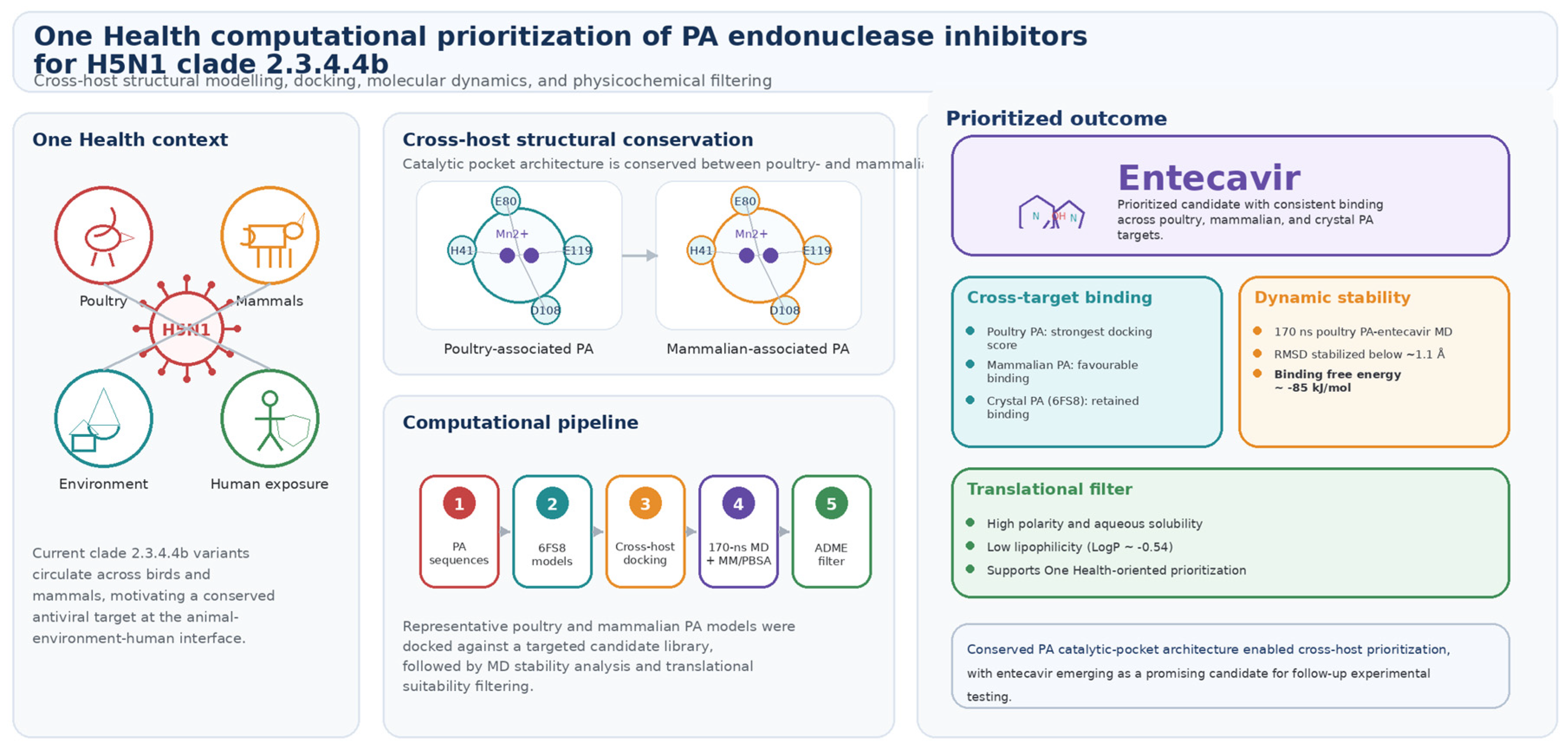


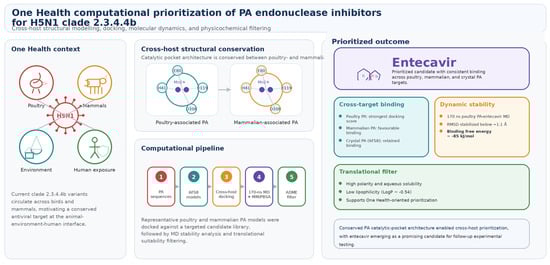
A One Health Computational Framework for Identifying PA Endonuclease Inhibitors Against Contemporary H5N1 Avian Influenza


Simple Summary
Abstract
1. Introduction
- To the best of our knowledge, no study incorporates cross-host structural comparisons (poultry vs. mammalian variants) to ensure antiviral candidates are robust across One Health transmission interfaces.
- Critically, no computational pipeline has evaluated antiviral candidates in the context of poultry/agrochemical feasibility, including solubility, environmental safety, residue risk, and suitability for in-barn, water, aerosol, or surface delivery systems.
2. Materials and Methods
2.1. PA Sequence Retrieval and Alignment
2.2. Structural Template Identification
2.3. Homology Modeling
2.4. Active-Site Definition and Protein Preparation
2.5. Ligand Library Preparation
2.6. Docking
2.7. ADMET and Poultry/Environmental Suitability
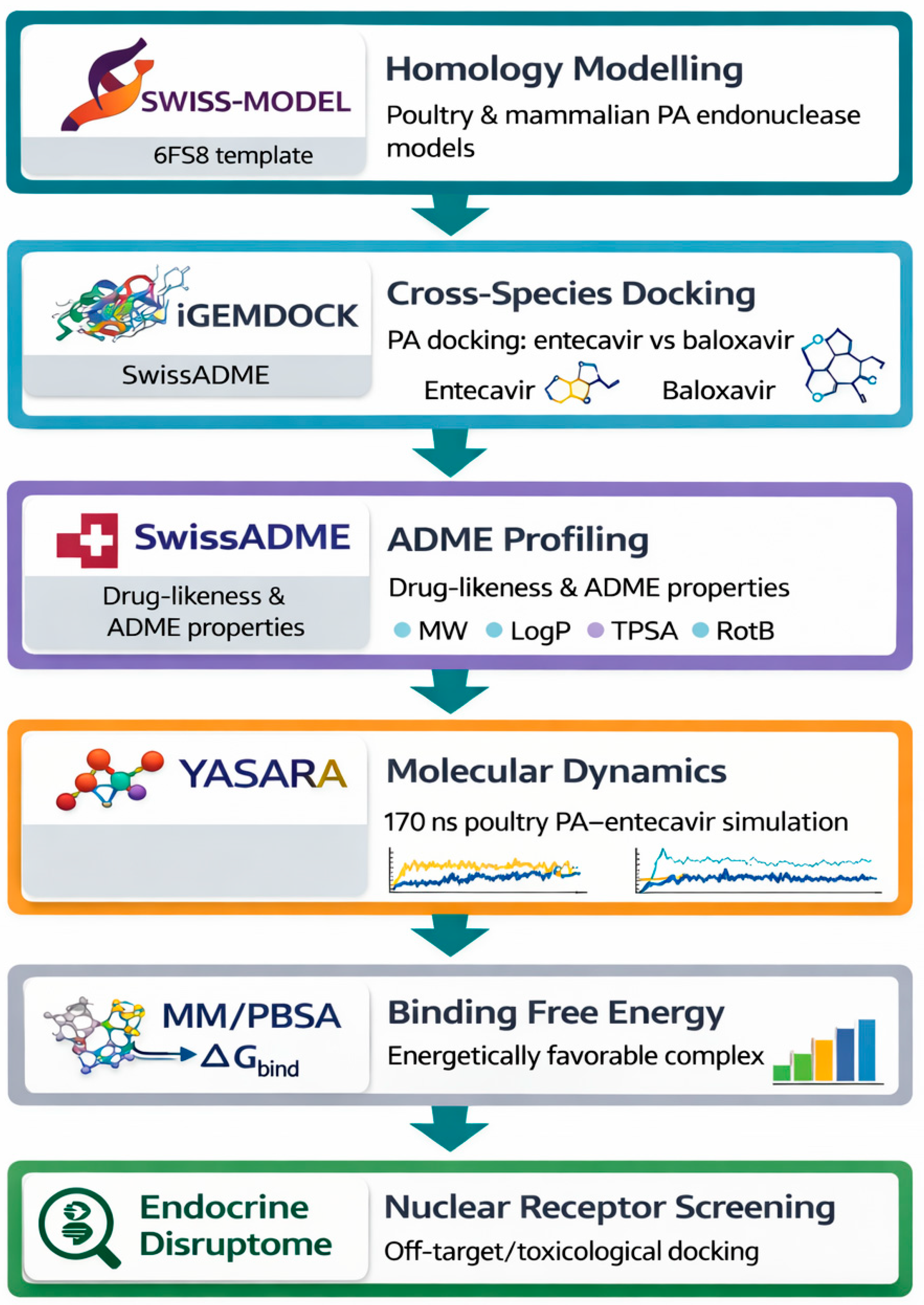
2.8. Molecular Dynamics and Binding Energy
3. Results
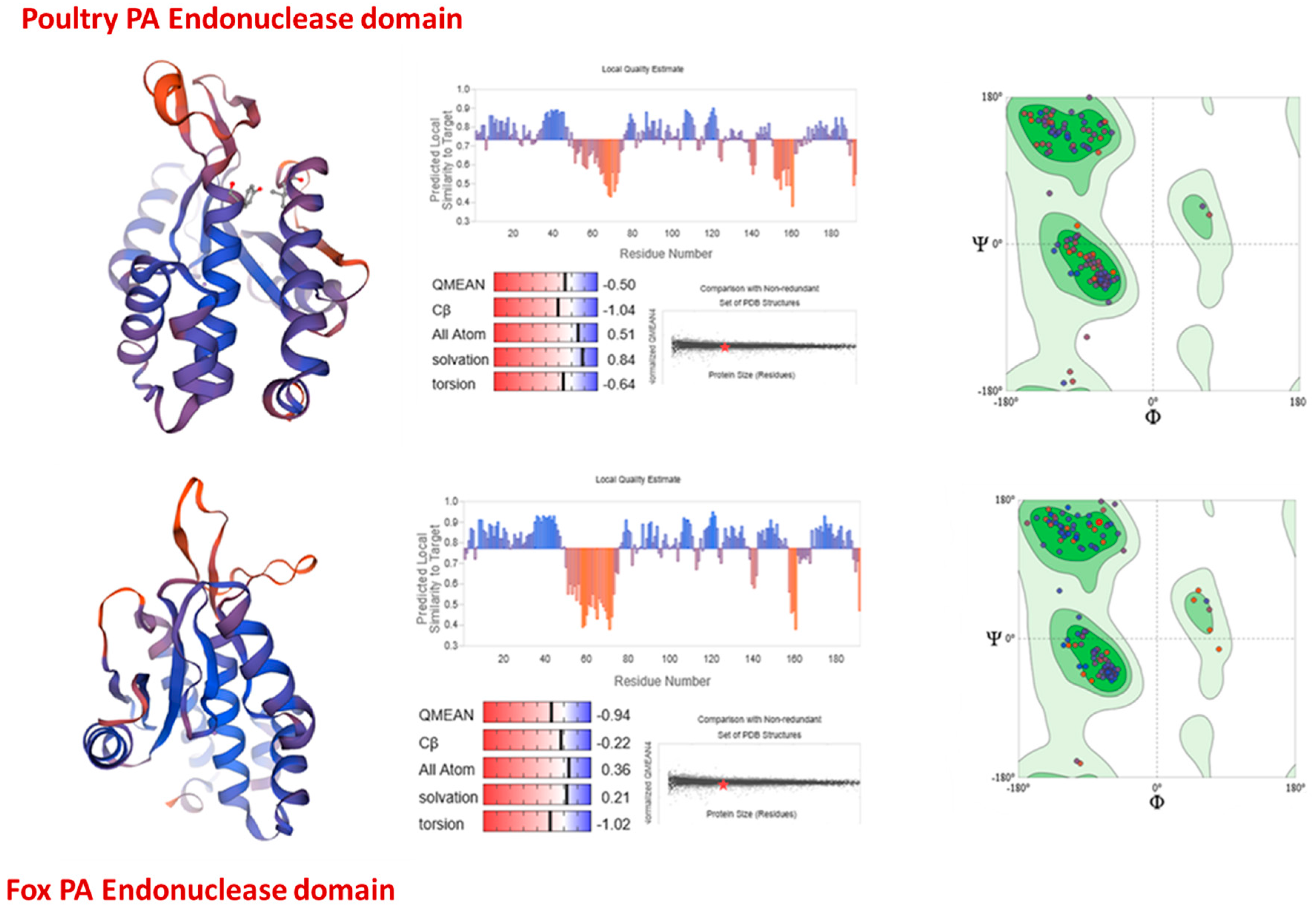
3.1. Homology Modeling and Structural Readiness of PA Endonuclease Targets
3.2. Cross-Species Docking Performance and Interaction Residues
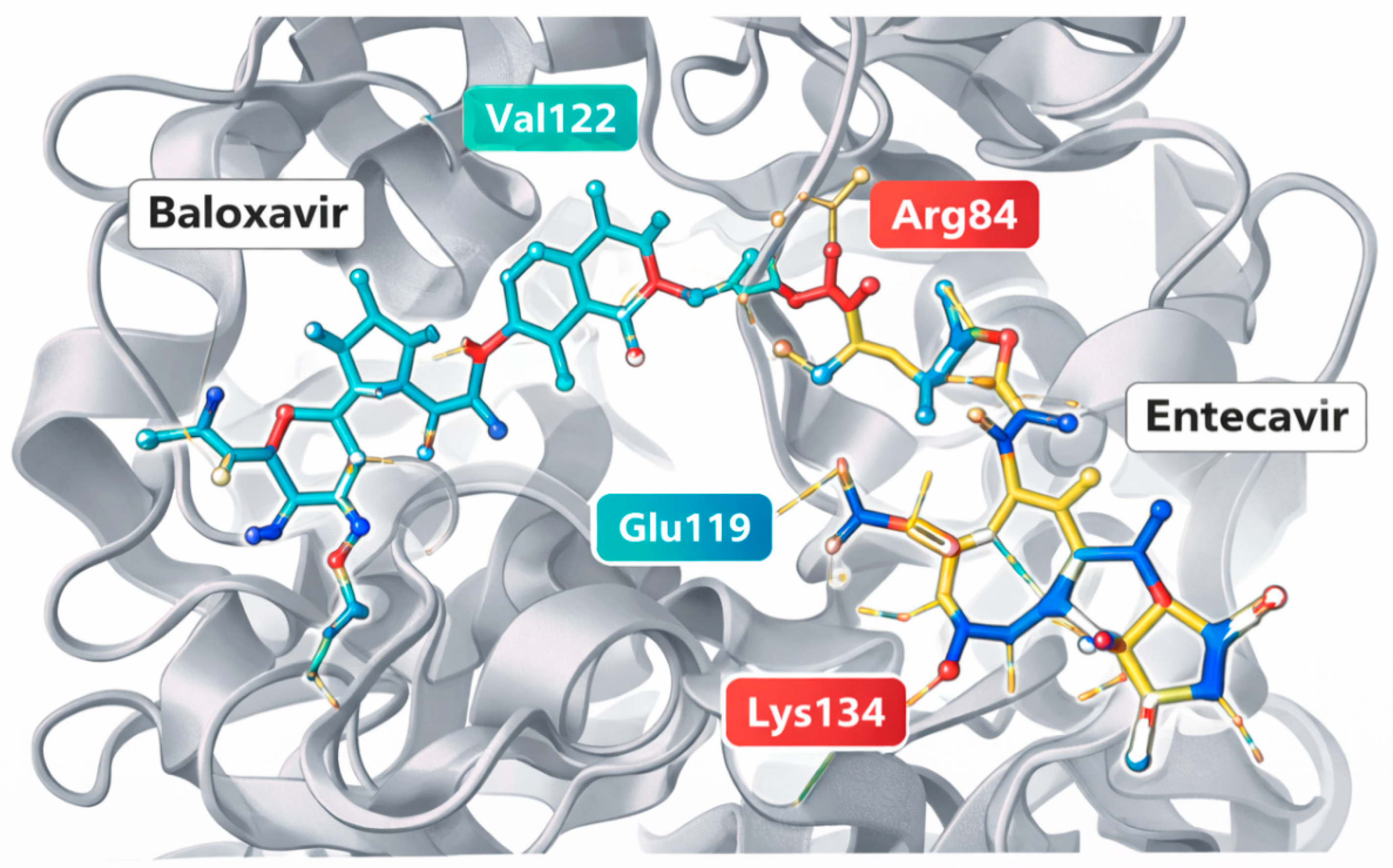
3.3. Interaction Profiles Within the Catalytic Pocket
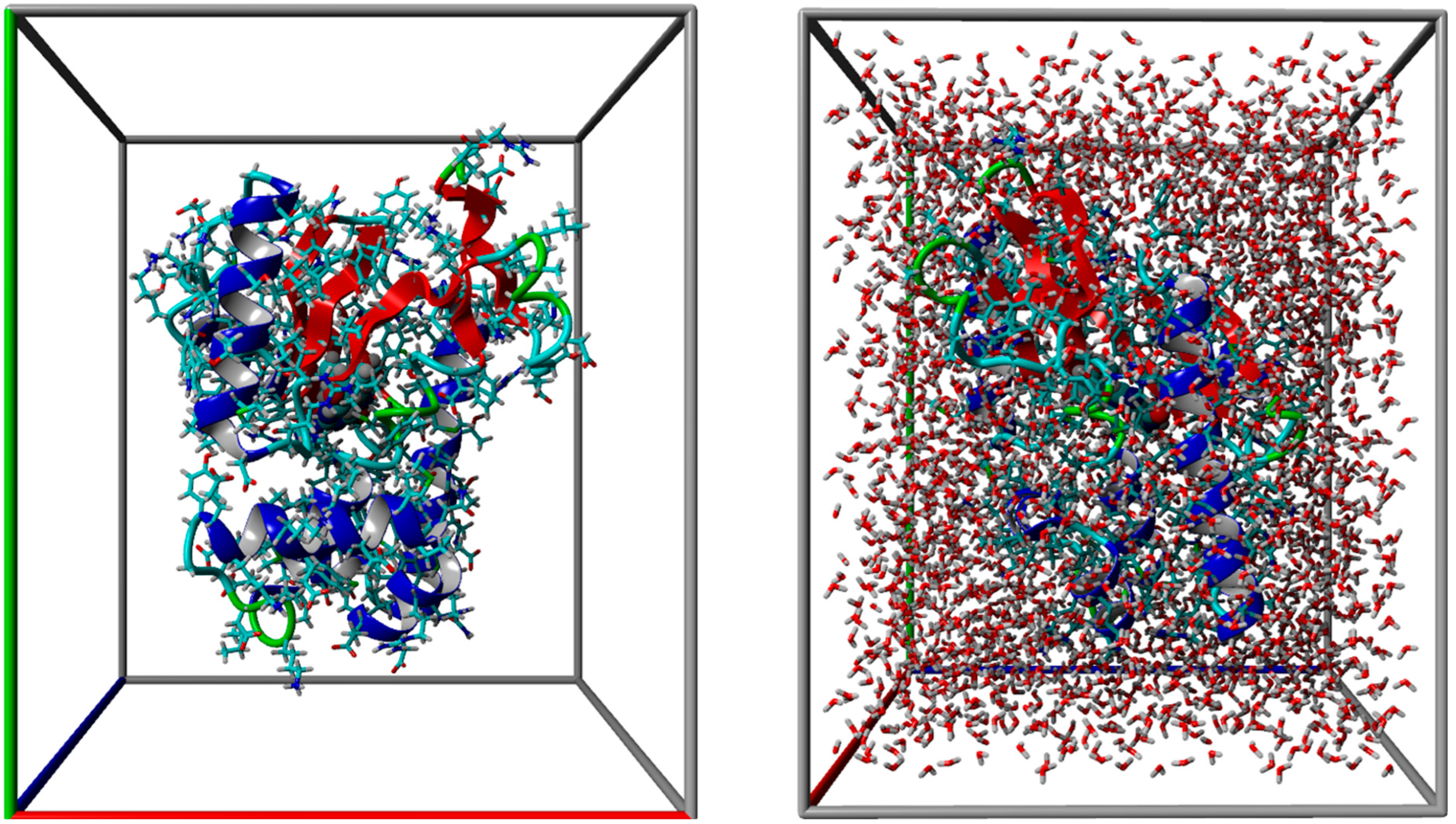
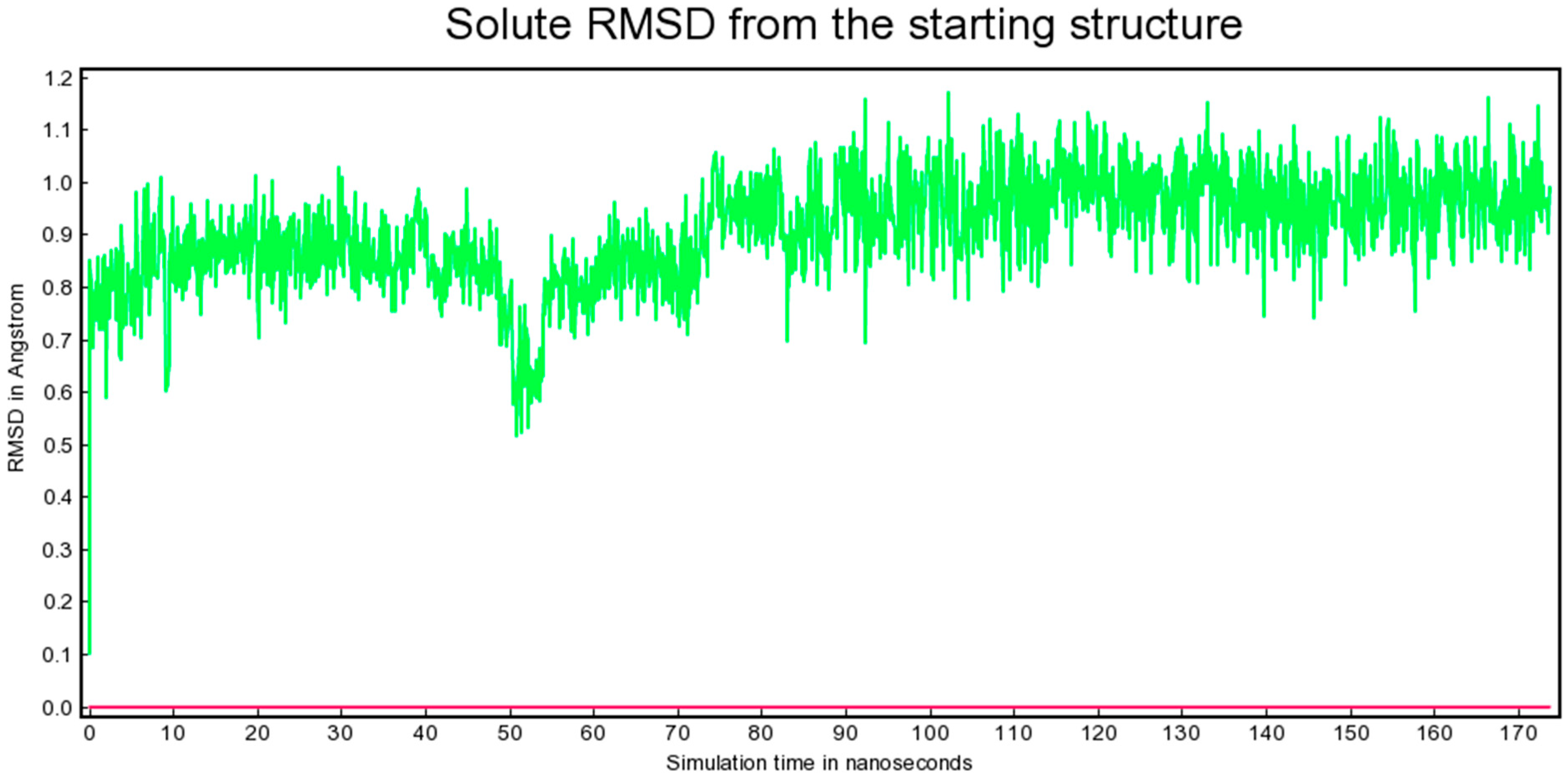
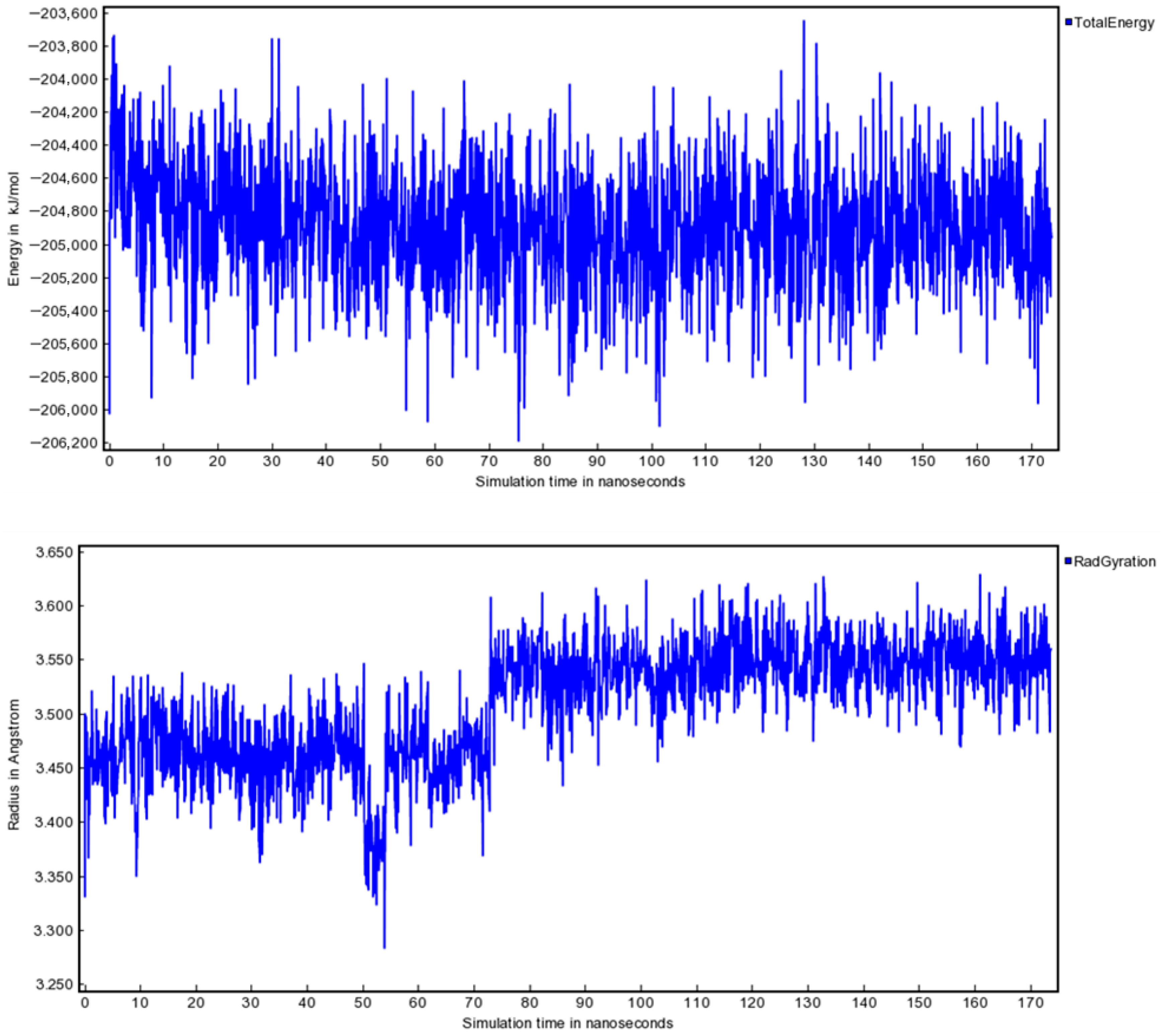
3.4. Molecular Dynamics Stability of the Poultry PA–Entecavir Complex
3.5. ADME Profiling and Selection Rationale
3.6. Concise Endocrine Nuclear Receptor Screening
4. Discussion
5. Conclusions
Supplementary Materials
Funding
Institutional Review Board Statement
Informed Consent Statement
Data Availability Statement
Acknowledgments
Conflicts of Interest
References
- Meng, F.; Cheng, Z.; Feng, Z.; Zhang, Y.; Zhang, Y.; Wang, Y.; Zhai, Y.; Kuang, P.; Qu, R.; Chen, Y.; et al. H128N substitution in the sa antigenic site of HA1 causes antigenic drift between Eurasian avian-like H1N1 and 2009 pandemic H1N1 influenza viruses. Viruses 2025, 17, 1360. [Google Scholar] [CrossRef]
- Bloom, J.D.; Glassman, M.J. Inferring stabilizing mutations from protein phylogenies: Application to influenza hemagglutinin. PLoS Comput. Biol. 2009, 5, e1000349. [Google Scholar] [CrossRef]
- Bazhan, S.I.; Antonets, D.V.; Starostina, E.V.; Ilyicheva, T.N.; Kaplina, O.N.; Marchenko, V.Y.; Volkova, O.Y.; Bakulina, A.Y.; Karpenko, L.I. In silico design of influenza a virus artificial epitope-based T-cell antigens and the evaluation of their immunogenicity in mice. J. Biomol. Struct. Dyn. 2020, 40, 3196–3208. [Google Scholar] [CrossRef] [PubMed]
- Mattox, D.E.; Bailey-Kellogg, C. Comprehensive analysis of lectin-glycan interactions reveals determinants of lectin specificity. PLoS Comput. Biol. 2021, 17, e1009470. [Google Scholar] [CrossRef] [PubMed]
- Li, Y.; Zhang, J.; He, F.; Cao, C.; Zhan, Y.; Zhong, N.; Yang, Z. Anti-influenza drugs targeting trimeric RNA polymerase complex: From development to clinics. Acta Pharm. Sin. B 2026, 16, 728–745. [Google Scholar] [CrossRef] [PubMed]
- Kephart, S.M.; Awatramani, K.F.; Saunders, M.I.; Croft, J.T.; Lee, K.K. Host switching mutations in H5N1 influenza hemagglutinin suppress site-specific activation dynamics. Nat. Commun. 2025, 17, 234. [Google Scholar] [CrossRef]
- Bedair, N.M.; Sakr, M.A.; Mourad, A.; Eissa, N.; Khamiss, O.; Naguib, M.M.; Mostafa, A. Genetic characterization of highly pathogenic avian influenza A/H5N8 virus isolated from commercial poultry farms in Egypt reveals zoonotic potential. Arch. Virol. 2025, 171, 29. [Google Scholar] [CrossRef]
- Jiao, J.; Ding, J.; Sun, Z.; Chi, C.; Liu, S.; Jiang, S.; Chen, N.; Zheng, W.; Ding, X.; Zhu, J. Characterization of a reassortant H3N2 swine influenza virus with 2009 pandemic internal genes and enhanced potential for zoonotic risk. Vet. Microbiol. 2026, 315, 110937. [Google Scholar] [CrossRef]
- Mellace, M.; Ceniti, C.; Borrelli, L.; Tilocca, B. Viral protein mutations enabling mammalian adaptation in avian influenza A viruses: Strategies for zoonotic risk mitigation and future perspectives. Virology 2025, 614, 110731. [Google Scholar] [CrossRef]
- Zhang, L.; Lai, Y.; Cui, Y.; Yang, Q.; Shao, Y.; Ding, S.; Wang, H.; Wang, L.; Gao, G.F.; Deng, T. Emergence of mammalian-adaptive PB2 mutations enhances polymerase activity and pathogenicity of cattle-derived H5N1 influenza A virus. Nat. Commun. 2025, 17, 1011. [Google Scholar] [CrossRef]
- Pascua, P.N.Q.; Chesnokov, A.P.; Nguyen, H.T.; Champion, C.; Gao, R.; De La Cruz, J.A.; Jang, Y.; Hatta, Y.; Guo, Z.; Uyeki, T.M.; et al. Antiviral susceptibility of clade 2.3.4.4b highly pathogenic avian influenza A(H5N1) viruses from humans in the united states, october 2024 to february 2025. Emerg. Microbes Infect. 2025, 15, 2601372. [Google Scholar] [CrossRef] [PubMed]
- El-Bidawy, M.H.; Mohammad, I.; Ansari, R.; Hajelbashir, M.I.; Khan, M.S.; Poyil, M.M.; Bari, N.; Arafah, A.M.R.; Kamal, M.A.; Ahsan, S.T.M. Highly pathogenic avian influenza: Tracking the progression from IAV (H5N1) to IAV (H7N9) and preparing for emerging challenges. Microorganisms 2025, 14, 12. [Google Scholar] [CrossRef]
- Anastassopoulou, C.; Panagiotopoulos, A.; Ranellou, K.; Mariolis, I.; Tsakris, A. Antiviral strategies against H5N1: Current options and emerging therapeutics. Infection 2025, 54, 25. [Google Scholar] [CrossRef]
- Alzua, G.P.; León, A.N.; Yellin, T.; Bhavsar, D.; Loganathan, M.; Bushfield, K.; Brouwer, P.J.M.; Rodriguez, A.J.; Jeevan, T.; Webby, R.; et al. Human monoclonal antibodies that target clade 2.3.4.4b H5N1 hemagglutinin. Nat. Commun. 2025, 17, 135. [Google Scholar] [CrossRef] [PubMed]
- Khursheed, S.; Ahmed, M.Z.; Khursheed, S.; Mutahir, Z.; Samad, N. Bioinformatics-guided vaccine targeting the hemagglutinin protein of avian influenza virus. Mol. Genet. Genom. 2026, 301, 42. [Google Scholar] [CrossRef]
- Pal, A.; Pal, A.; Baviskar, P. RIGI, TLR7, and TLR3 genes were predicted to have immune response against avian influenza in indigenous ducks. Front. Mol. Biosci. 2021, 8, 633283. [Google Scholar] [CrossRef]
- Thai, K.; Le, D.; Tran, N.; Nguyen, T.; Tran, T.; Le, M. Computational assay of zanamivir binding affinity with original and mutant influenza neuraminidase 9 using molecular docking. J. Theor. Biol. 2015, 385, 31. [Google Scholar] [CrossRef] [PubMed]
- Khan, M.Y.; Shah, A.U.; Duraisamy, N.; Cherkaoui, M.; Hemida, M.G. Repurposing of some nucleoside analogs targeting some key proteins of the avian H5N1 clade 2.3.4.4b to combat the circulating HPAI in birds: An in silico approach. Viruses 2025, 17, 972. [Google Scholar] [CrossRef] [PubMed]
- Sarukhanyan, E.; Shanmugam, T.A.; Dandekar, T. In silico studies reveal peramivir and zanamivir as an optimal drug treatment even if H7N9 avian type influenza virus acquires further resistance. Molecules 2022, 27, 5920. [Google Scholar] [CrossRef] [PubMed]
- Donia, T.; Alkafaas, S.S.; Ismail, D.F.; Adly, E.; Tabll, A.A.; Mekkawy, K.M.; Swede, K.E.; Hessien, M. Insights into antiviral activity of chlorpromazine against RNA viruses: Molecular docking, ADME profile, and semi-in vivo study. J. Virol. Methods 2025, 340, 115294. [Google Scholar] [CrossRef]
- Kumosani, T.A.; Abbas, A.T.; Basheer, B.; Hassan, A.M.; Yaghmoor, S.S.; Alyahiby, A.H.; Asseri, A.H.; Dwivedi, V.D.; Azhar, E.I. Investigating Pb2 CAP-binding domain inhibitors from marine bacteria for targeting the influenza A H5N1. PLoS ONE 2025, 20, e0310836. [Google Scholar] [CrossRef]
- Rajapaksha, H.; Petrovsky, N. In silico structural homology modelling and docking for assessment of pandemic potential of a novel H7N9 influenza virus and its ability to be neutralized by existing anti-hemagglutinin antibodies. PLoS ONE 2014, 9, e102618. [Google Scholar] [CrossRef] [PubMed]
- Dashti, F.; Raisi, A.; Pourali, G.; Razavi, Z.S.; Ravaei, F.; Nahand, J.S.; Kourkinejad-Gharaei, F.; Mirazimi, S.M.A.; Zamani, J.; Tarrahimofrad, H.; et al. A computational approach to design a multiepitope vaccine against H5N1 virus. Virol. J. 2024, 21, 67. [Google Scholar] [CrossRef]
- Savarino, A. Expanding the frontiers of existing antiviral drugs: Possible effects of HIV-1 protease inhibitors against SARS and avian influenza. J. Clin. Virol. 2005, 34, 170. [Google Scholar] [CrossRef]
- Duraisamy, N.; Shah, A.U.; Khan, M.Y.; Cherkaoui, M.; Hemida, M.G. A pan-H5N1 multiepitope DNA vaccine construct targeting some key proteins of the clade 2.3.4.4b using AI-assisted epitope mapping and molecular docking. Viruses 2025, 17, 1152. [Google Scholar] [CrossRef]
- Dutta, A.K.; Gazi, M.S.; Uddin, S.J. A systemic review on medicinal plants and their bioactive constituents against avian influenza and further confirmation through in-silico analysis. Heliyon 2023, 9, e14386. [Google Scholar] [CrossRef]
- Eweas, A.F.; Abdel-Moneim, A.S. In-silico structural analysis of the influenza A subtype H7N9 neuraminidase and molecular docking with different neuraminidase inhibitors. VirusDisease 2015, 26, 27. [Google Scholar] [CrossRef] [PubMed]
- Zekri, A.; Ouassaf, M.; Khan, S.U.; Rengasamy, K.R.R.; Alhatlani, B.Y. Discovery of novel natural inhibitors of H5N1 neuraminidase using integrated molecular modeling and ADMET prediction. Bioengineering 2025, 12, 622. [Google Scholar] [CrossRef]
- Hegazy, A.; Soltane, R.; Alasiri, A.; Mostafa, I.; Metwaly, A.M.; Eissa, I.H.; Mahmoud, S.H.; Allayeh, A.K.; Shama, N.M.A.; Khalil, A.A.; et al. Anti-rheumatic colchicine phytochemical exhibits potent antiviral activities against avian and seasonal influenza A viruses (IAVs) via targeting different stages of IAV replication cycle. BMC Complement Med. Ther. 2024, 24, 49. [Google Scholar] [CrossRef] [PubMed]
- Waterhouse, A.; Bertoni, M.; Bienert, S.; Studer, G.; Tauriello, G.; Gumienny, R.; Heer, F.T.; de Beer, T.A.P.; Rempfer, C.; Bordoli, L.; et al. SWISS-MODEL: Homology modelling of protein structures and complexes. Nucleic Acids Res. 2018, 46, W296–W303. [Google Scholar] [CrossRef]
- Bienert, S.; Waterhouse, A.; de Beer, T.A.P.; Tauriello, G.; Studer, G.; Bordoli, L.; Schwede, T. The SWISS-MODEL Repository—New features and functionality. Nucleic Acids Res. 2017, 45, D313–D319. [Google Scholar] [CrossRef]
- Guex, N.; Peitsch, M.C.; Schwede, T. Automated comparative protein structure modeling with SWISS-MODEL and Swiss-PdbViewer: A historical perspective. Electrophoresis 2009, 30, S162–S173. [Google Scholar] [CrossRef] [PubMed]
- Studer, G.; Rempfer, C.; Waterhouse, A.M.; Gumienny, R.; Haas, J.; Schwede, T. QMEANDisCo—Distance constraints applied on model quality estimation. Bioinformatics 2020, 36, 1765–1771. [Google Scholar] [CrossRef] [PubMed]
- Bertoni, M.; Kiefer, F.; Biasini, M.; Bordoli, L.; Schwede, T. Modeling protein quaternary structure of homo- and hetero-oligomers beyond binary interactions by homology. Sci. Rep. 2017, 7, 10480. [Google Scholar] [CrossRef]
- Mercier-Darty, M.; Boutolleau, D.; Lepeule, R.; Rodriguez, C.; Burrel, S. Utility of ultra-deep sequencing for detection of varicella-zoster virus antiviral resistance mutations. Antivir. Res. 2018, 151, 20–23. [Google Scholar] [CrossRef] [PubMed]
- Pushpakom, S.; Iorio, F.; Eyers, P.A.; Escott, K.J.; Hopper, S.; Wells, A.; Doig, A.; Guilliams, T.; Latimer, J.; McNamee, C.; et al. Drug repurposing: Progress, challenges and recommendations. Nat. Rev. Drug Discov. 2019, 18, 41–58. [Google Scholar] [CrossRef]




| ID | Compound Name | Chemical Class/Role | Rationale |
|---|---|---|---|
| A1 | Baloxavir (baloxavir acid) | Approved PA endonuclease inhibitor | Gold-standard positive control |
| A2 | Baloxavir marboxil | Prodrug of baloxavir | Comparator; shows prodrug vs. active |
| A3 | L-742,001 | Experimental PA inhibitor | Widely cited research inhibitor |
| A4 | 2,4-Dioxo-4-phenylbutanoic acid | 2,4-Dioxobutanoic acid | Classic PA metal-chelating scaffold |
| A5 | 4-(4-Chlorophenyl)-2,4-dioxobutanoic acid | 2,4-Dioxobutanoic acid | Aryl-substituted PA inhibitor |
| A6 | 4-(4-Fluorophenyl)-2,4-dioxobutanoic acid | 2,4-Dioxobutanoic acid | Aryl-substituted PA inhibitor |
| A7 | 4-(4-Bromophenyl)-2,4-dioxobutanoic acid | 2,4-Dioxobutanoic acid | Aryl-substituted PA inhibitor |
| A8 | 3-Hydroxyquinolin-2(1H)-one | Hydroxyquinolinone | PA inhibitor pharmacophore |
| A9 | 3-Hydroxypyridin-2(1H)-one | Hydroxypyridinone | PA inhibitor pharmacophore |
| A10 | Flutimide | Historic PA-inhibitor scaffold | Literature comparator |
| ID | Compound Name | Chemical Class | Rationale |
|---|---|---|---|
| B1 | Gallic acid | Polyphenolic acid | Strong metal chelation, food-adjacent |
| B2 | Caffeic acid | Phenolic acid | Metal binding, antioxidant |
| B3 | Ferulic acid | Phenolic acid | Hydrophilic, feed-relevant |
| B4 | p-Coumaric acid | Phenolic acid | Small, polar aromatic acid |
| B5 | Protocatechuic acid | Dihydroxybenzoic acid | Catechol-type chelator |
| B6 | Gentisic acid | Dihydroxybenzoic acid | Metal binding, polar |
| B7 | Chlorogenic acid | Polyphenol | Potent chelator, larger scaffold |
| B8 | Catechol | Simple diol | Minimal chelation motif |
| B9 | Pyrogallol | Trihydroxybenzene | Strong chelation motif |
| B10 | Salicylic acid | Hydroxybenzoic acid | Classic chelating pharmacophore |
| B11 | Acetohydroxamic acid | Hydroxamate | Strong metalloenzyme binder |
| B12 | Benzohydroxamic acid | Hydroxamate | Drug-like chelator |
| B13 | Deferiprone | Hydroxypyridinone | Potent metal chelator |
| B14 | Maltol | Hydroxypyrone | Moderate chelator |
| B15 | Kojic acid | Hydroxypyrone | Metal-binding scaffold |
| B16 | Pyridine-2,4-dicarboxylic acid | Heteroaromatic diacid | PA-relevant chelation geometry |
| B17 | Pyridine-2,6-dicarboxylic acid | Heteroaromatic diacid | Dipicolinic acid, a strong chelator |
| B18 | Pyridine-3,5-dicarboxylic acid | Heteroaromatic diacid | Symmetric chelation |
| B19 | Phthalic acid | Aromatic diacid | Compact diacid scaffold |
| B20 | Isophthalic acid | Aromatic diacid | Positional isomer comparator |
| ID | Compound Name | Chemical Class | Rationale |
|---|---|---|---|
| C1 | Citric acid | Tricarboxylic acid | GRAS chelator |
| C2 | Lactic acid | Organic acid | Food system relevance |
| C3 | Malic acid | Dicarboxylic acid | GRAS, polar |
| C4 | Tartaric acid | Dicarboxylic acid | GRAS, chelating |
| C5 | Succinic acid | Dicarboxylic acid | Simple aliphatic diacid |
| C6 | Fumaric acid | Dicarboxylic acid | Unsaturated diacid |
| C7 | Gluconic acid | Polyhydroxy acid | Food and sanitation use |
| C8 | Ascorbic acid | Vitamin C | Redox-active, chelating |
| C9 | EDTA | Polyaminocarboxylate | Strong metal chelator (reference) |
| C10 | Phytic acid | Polyphosphate | Strong chelator, feed relevance |
| Metric | Observation |
|---|---|
| Simulation length | 170 ns |
| RMSD (solute vs. start) | Stabilizes during trajectory; plateau below ~1.1 Å |
| Total potential energy | Fluctuates around stable mean; no systematic drift |
| RMSF | Expected local flexibility; no global destabilization indicated |
| Secondary structure | Helix/sheet content remains broadly stable |
| Target | Ligand | Docking Energy (Reported) | Notes |
|---|---|---|---|
| 6FS8 (crystal) | Baloxavir | −101.7, −101.7, −101.6 | replicate runs consistent |
| 6FS8 (crystal) | Entecavir | −83.0, −83.0 | replicate runs consistent |
| Poultry PA model | Baloxavir | −97.5, −97.7 | replicate runs |
| Poultry PA model | Entecavir | −100.6, −100.6 | replicate runs |
| Mammalian (fox) PA model | Baloxavir | −97.6 to −97.7 | replicate runs |
| Mammalian (fox) PA model | Entecavir | −95.0 to −95.1 | replicate runs |
| Parameter | Entecavir | Baloxavir (Acid) |
|---|---|---|
| Molecular weight (g/mol) | 277.28 | 483.49 |
| TPSA (Å2) | 130.05 | 100.31 |
| Consensus LogP | −0.54 | 2.90 |
| HBA/HBD | 5/4 | 6/1 |
| GI absorption | High | High |
| BBB permeant | No | No |
| P-gp substrate | No | No |
| PAINS | 0 alerts | 0 alerts |
| CYP inhibition (selected) | None predicted | CYP2C19/CYP2C9/CYP2D6 Predicted |
| Solubility class | Soluble/very soluble | Moderately soluble |
Disclaimer/Publisher’s Note: The statements, opinions and data contained in all publications are solely those of the individual author(s) and contributor(s) and not of MDPI and/or the editor(s). MDPI and/or the editor(s) disclaim responsibility for any injury to people or property resulting from any ideas, methods, instructions or products referred to in the content. |
© 2026 by the author. Licensee MDPI, Basel, Switzerland. This article is an open access article distributed under the terms and conditions of the Creative Commons Attribution (CC BY) license.
Share and Cite
Vlasiou, M.C. A One Health Computational Framework for Identifying PA Endonuclease Inhibitors Against Contemporary H5N1 Avian Influenza. Vet. Sci. 2026, 13, 385. https://doi.org/10.3390/vetsci13040385
Vlasiou MC. A One Health Computational Framework for Identifying PA Endonuclease Inhibitors Against Contemporary H5N1 Avian Influenza. Veterinary Sciences. 2026; 13(4):385. https://doi.org/10.3390/vetsci13040385
Chicago/Turabian StyleVlasiou, Manos C. 2026. "A One Health Computational Framework for Identifying PA Endonuclease Inhibitors Against Contemporary H5N1 Avian Influenza" Veterinary Sciences 13, no. 4: 385. https://doi.org/10.3390/vetsci13040385
APA StyleVlasiou, M. C. (2026). A One Health Computational Framework for Identifying PA Endonuclease Inhibitors Against Contemporary H5N1 Avian Influenza. Veterinary Sciences, 13(4), 385. https://doi.org/10.3390/vetsci13040385