The Environmental Pathways and Veterinary Health Implications of Microplastics and Nanoplastics: A Comprehensive Evaluation of Emerging Contaminants from a One Health Perspective

 ,
, 
Simple Summary
Abstract
1. Introduction
2. Review Methodology
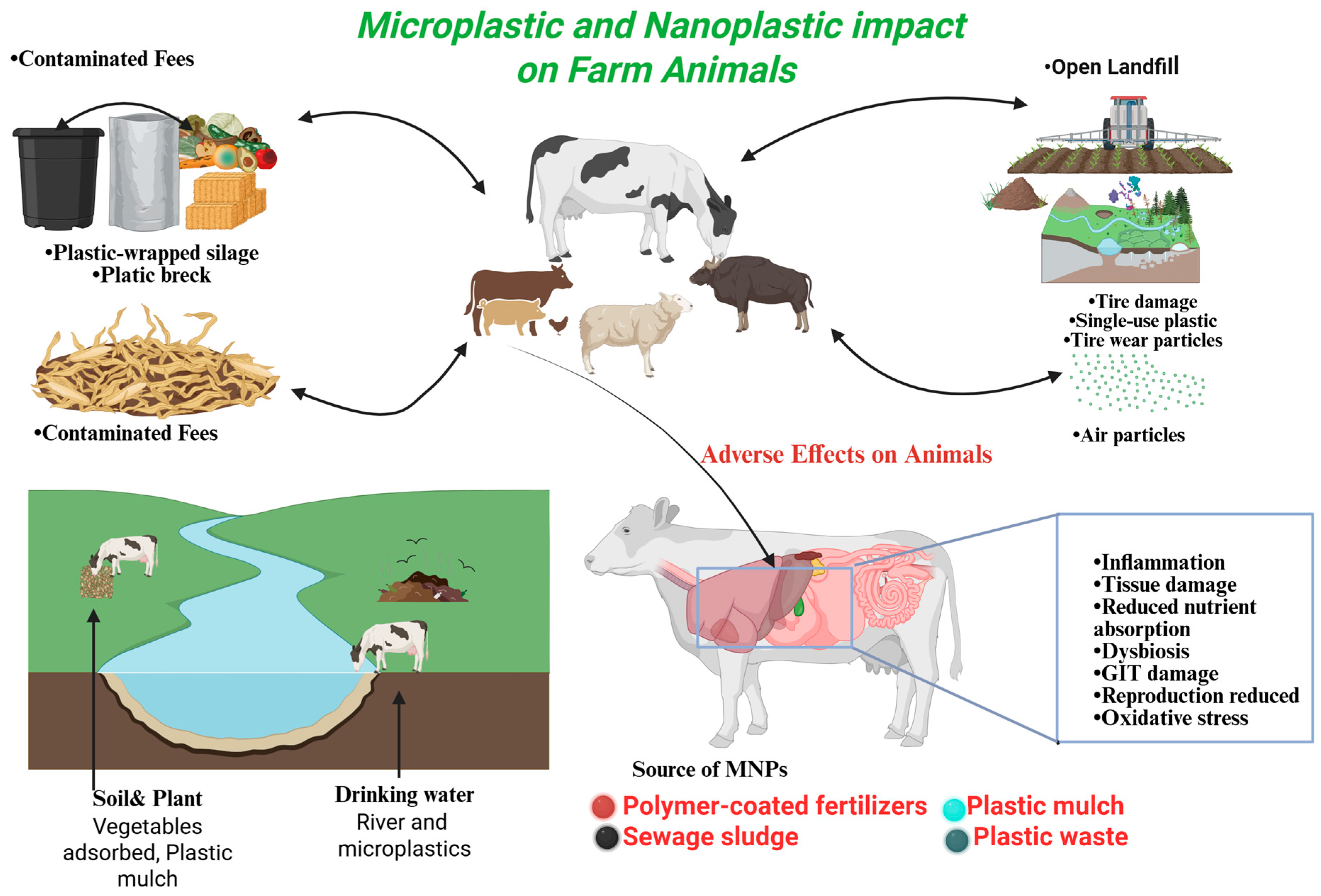
2.1. Pathways of Exposure and Uptake of Micro- and Nanoplastics (MNPs) in Livestock at the Farm Level
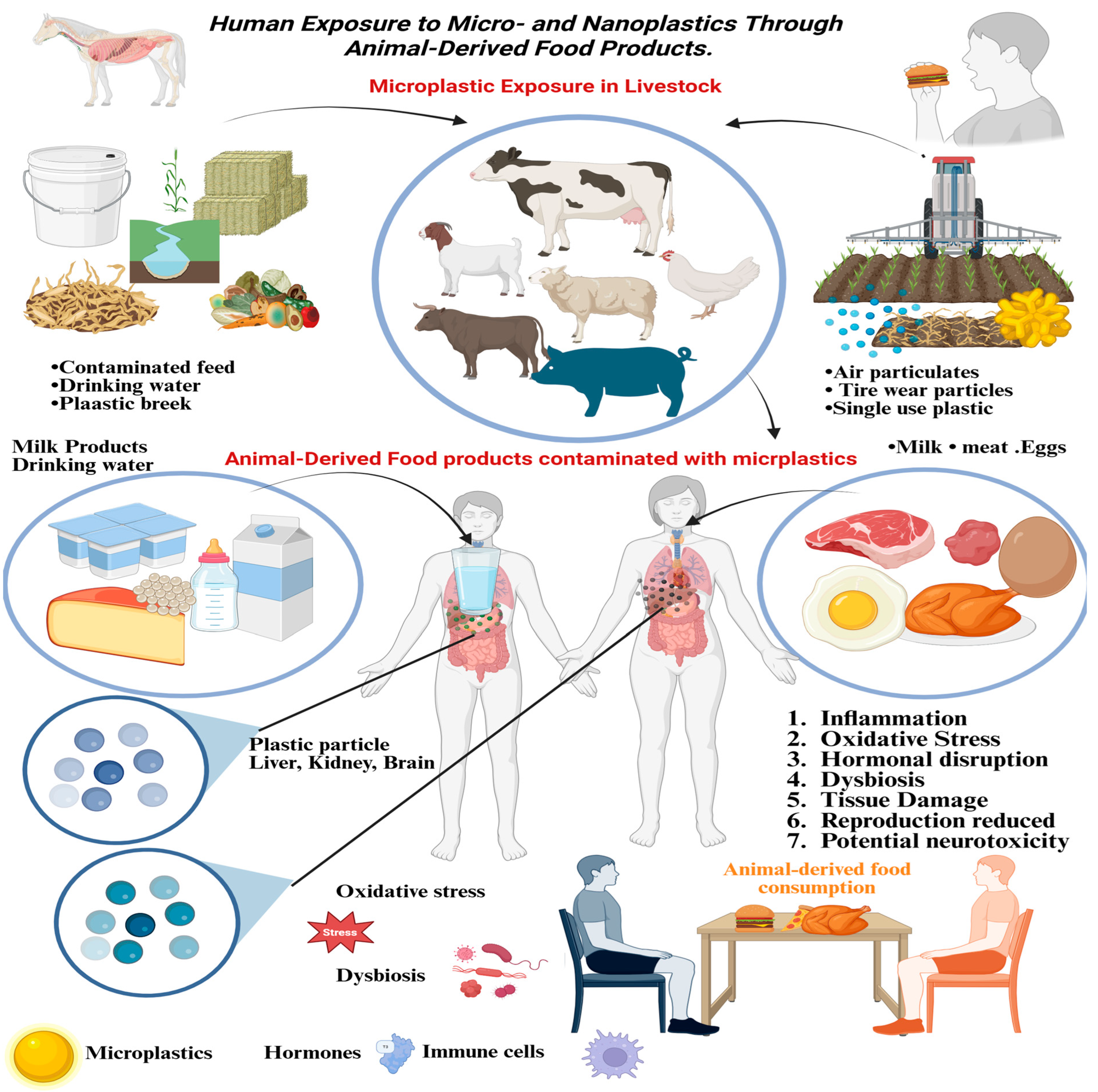
2.2. Human Exposure to Micro- and Nanoplastics Through Animal-Derived Food Products
Considerations of Study Quality and Bias
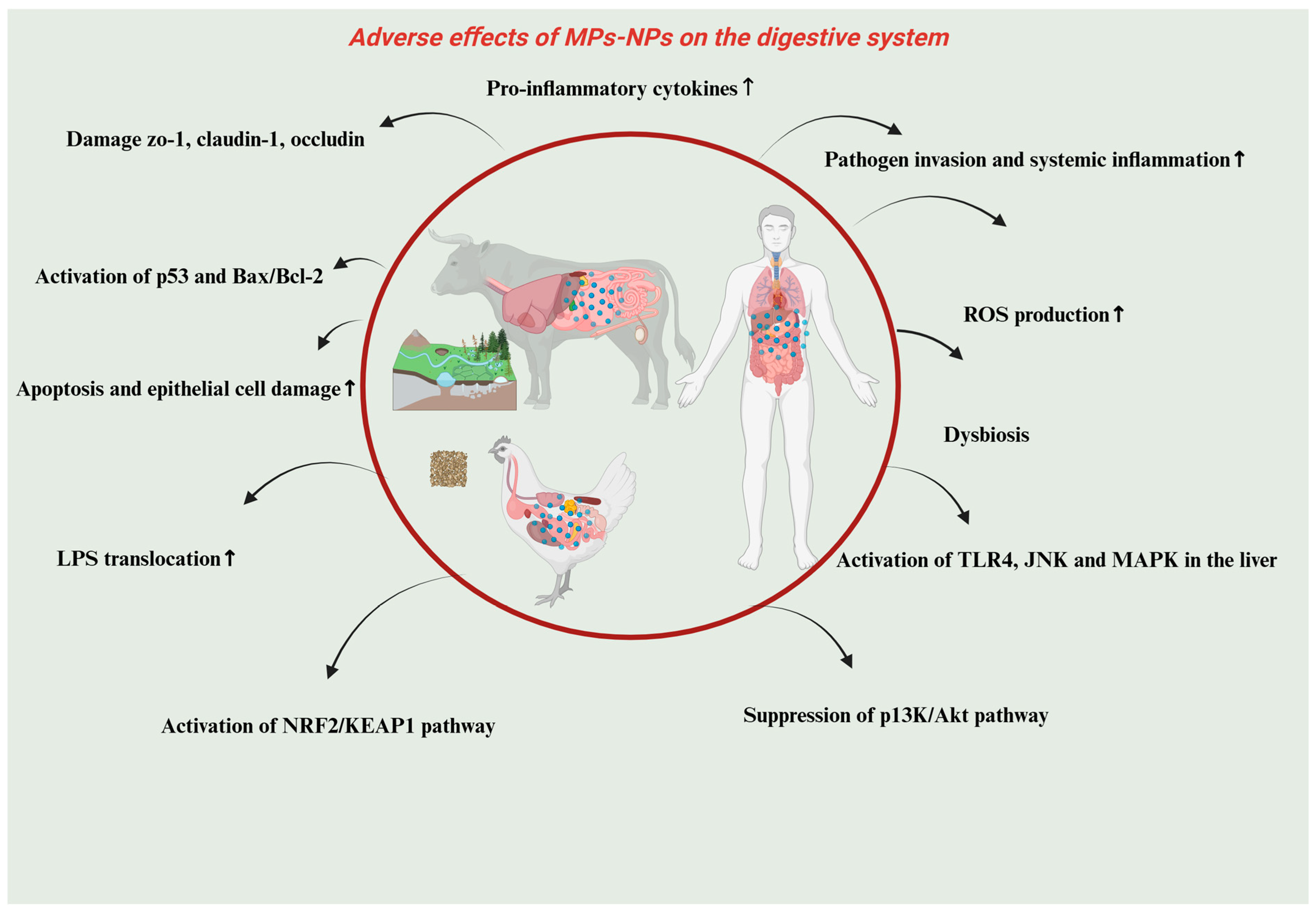
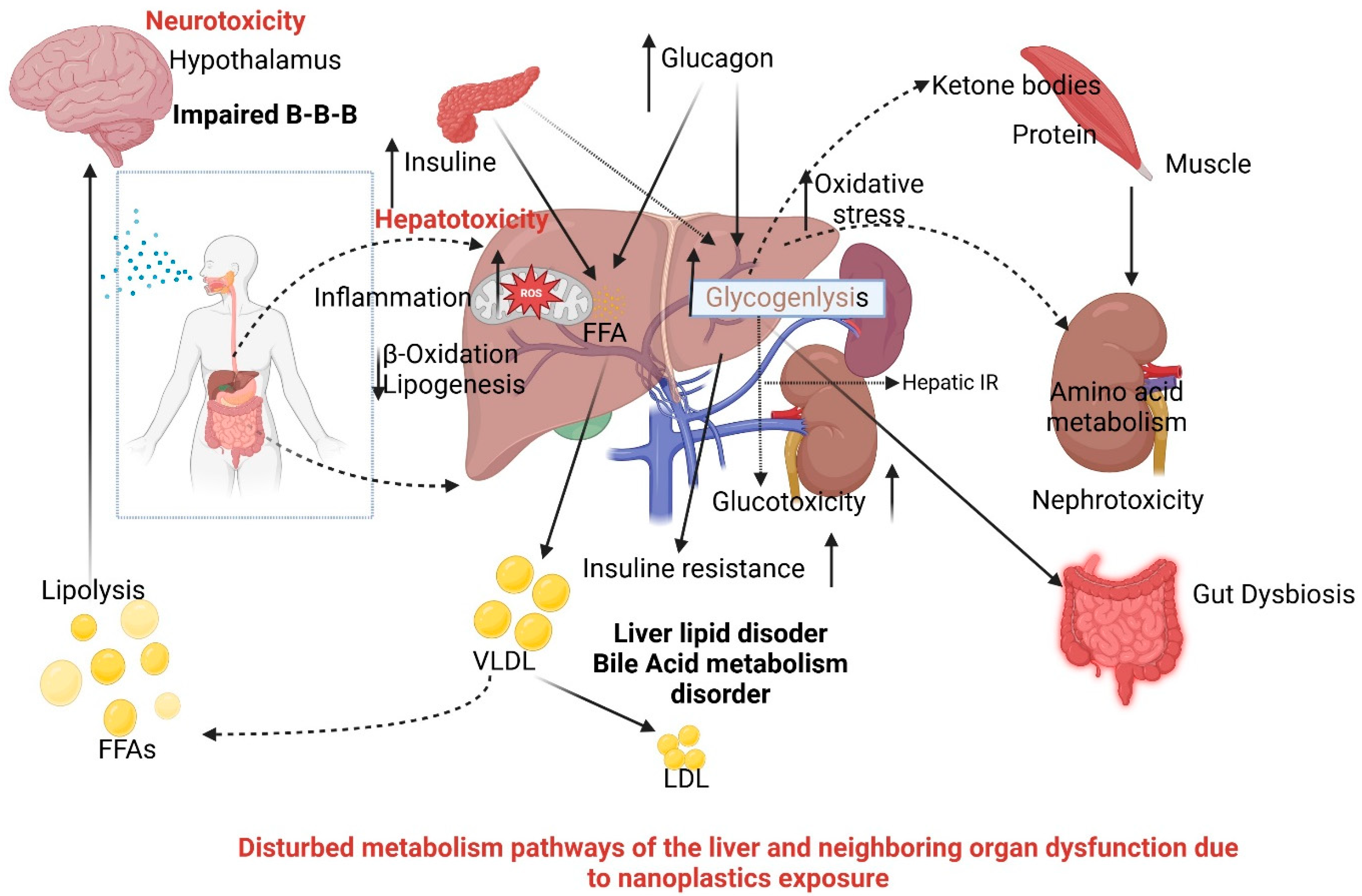
2.3. Detrimental Impacts on Gastrointestinal Function and Metabolic Regulation
2.4. Pathophysiological Effects on Reproductive Organs and Hormonal Balance
2.5. Nervous System and Immunity
2.6. Dermal Contact with Microplastics from Food Contact Materials: Pathways and Skin Health Considerations
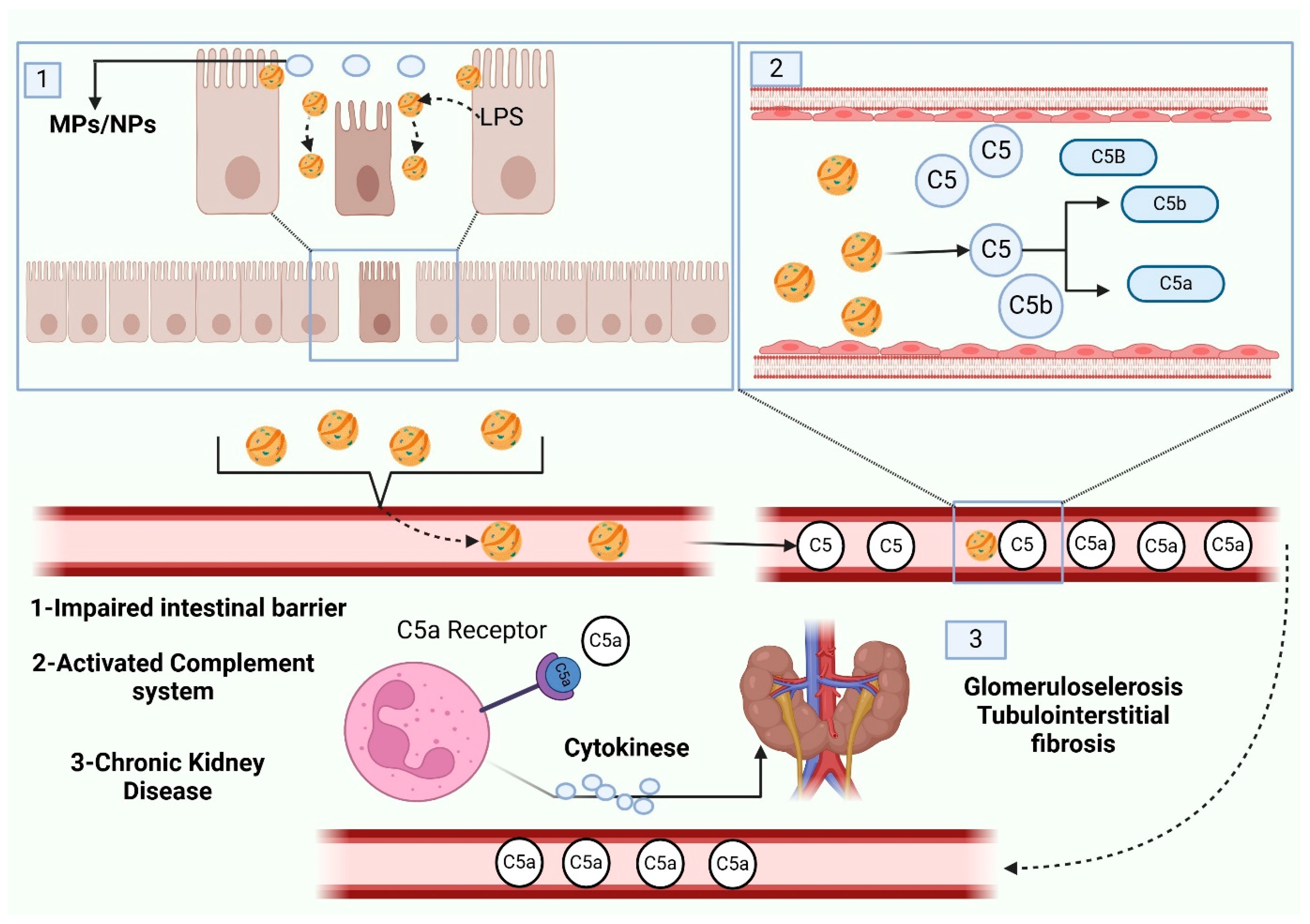
2.7. Renal Handling of Micro- and Nanoplastics: Exposure Routes, Clearance, and Potential Kidney Effects
2.8. Inflammatory Consequences of Micro- and Nanoplastics: From Exposure to Systemic Effects
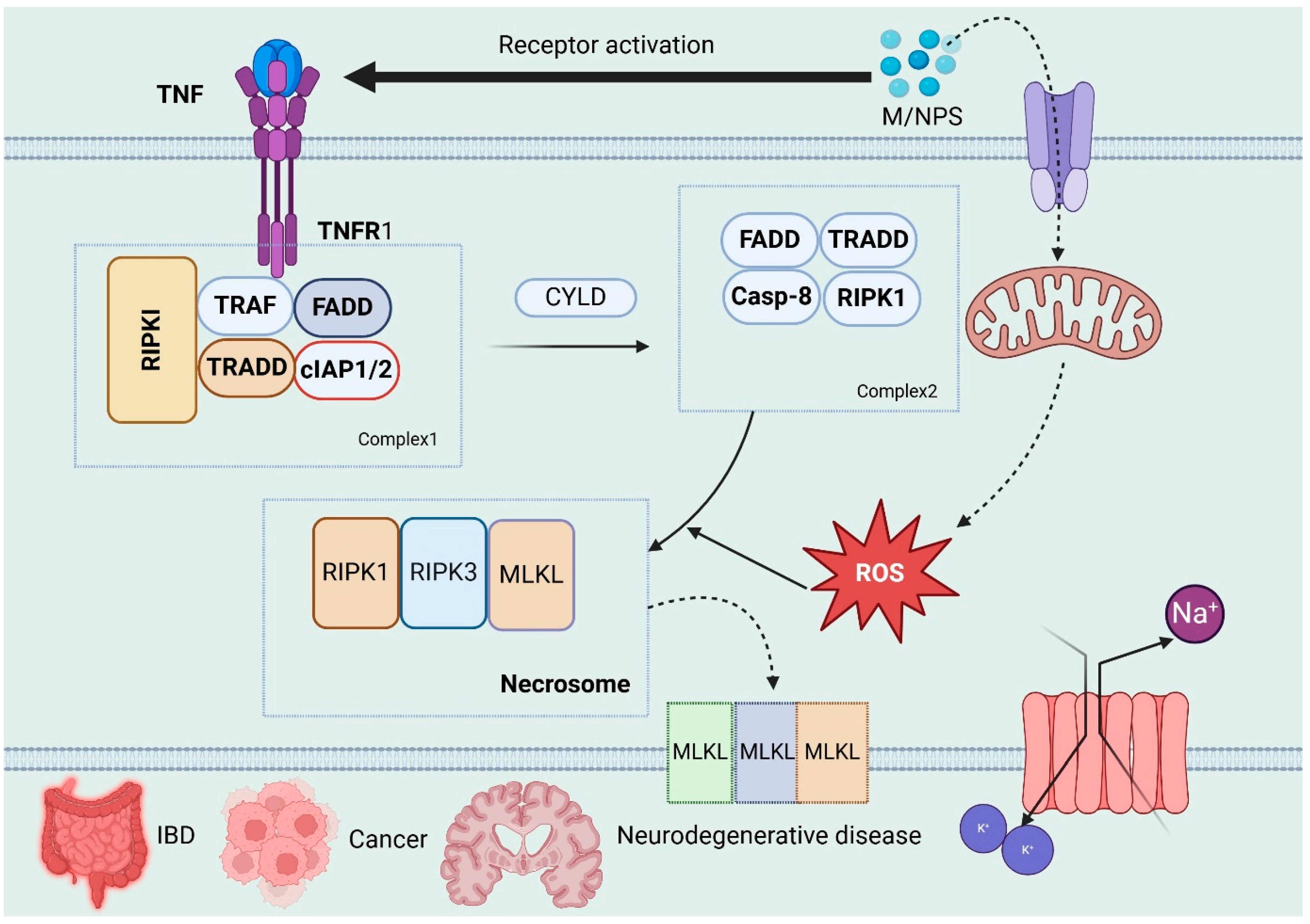
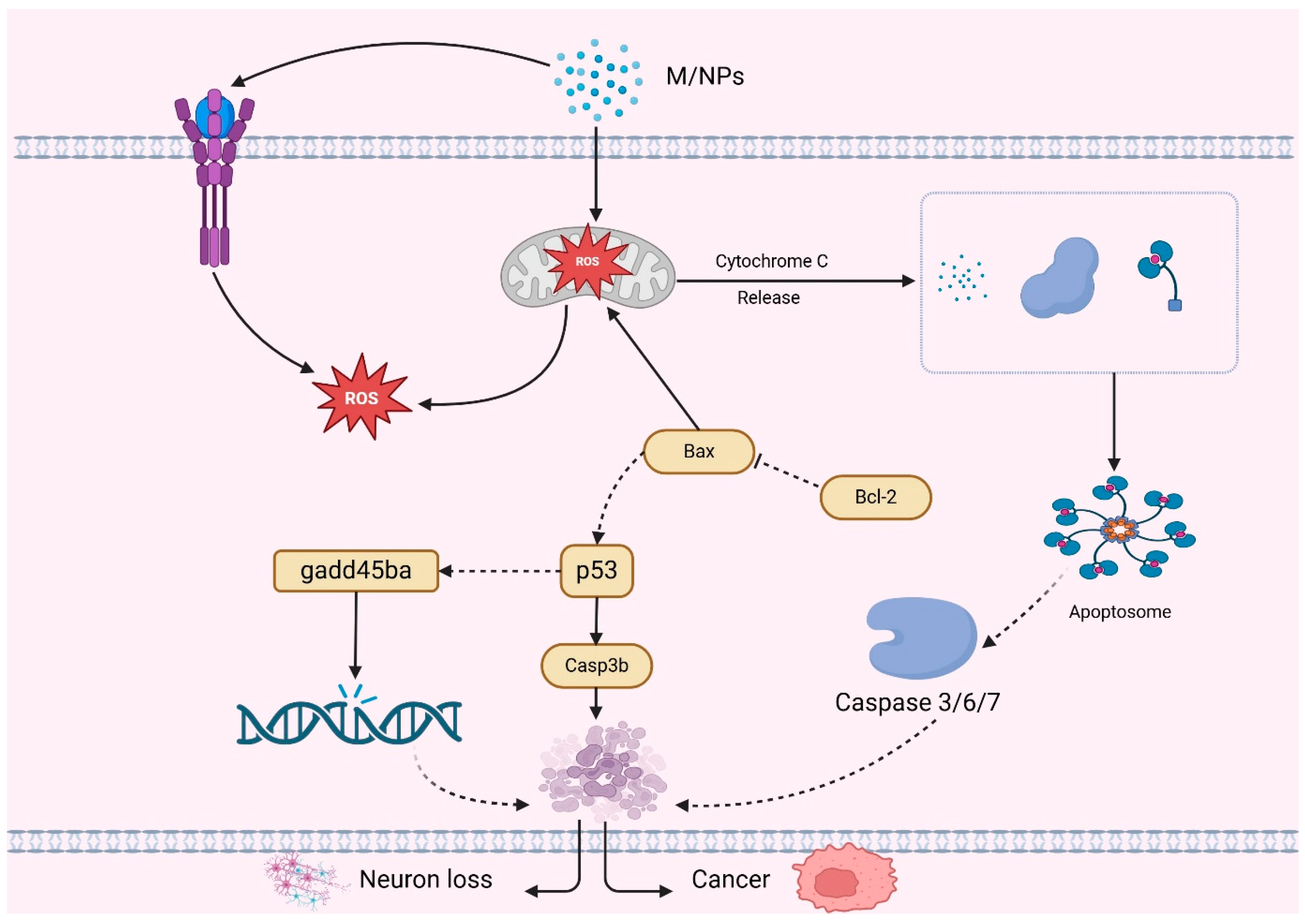
2.9. Microplastic-Induced Oxidative Stress and Apoptosis: Mechanistic Pathways and Health Implications
2.10. The Potential Consequences of Exposure to Microplastics on the Metabolic Balance and Composition of Intestinal Microbiota
3. Conclusions and Outlook
Author Contributions
Funding
Institutional Review Board Statement
Informed Consent Statement
Data Availability Statement
Acknowledgments
Conflicts of Interest
References
- Wagner, S.; Schlummer, M. Legacy additives in a circular economy of plastics: Current dilemma, policy analysis, and emerging countermeasures. Resour. Conserv. Recycl. 2020, 158, 104800. [Google Scholar] [CrossRef]
- Vethaak, A.D.; Legler, J. Microplastics and human health. Science 2021, 371, 672–674. [Google Scholar] [CrossRef] [PubMed]
- Cao, J.; Yang, Q.; Jiang, J.; Dalu, T.; Kadushkin, A.; Singh, J.; Fakhrullin, R.; Wang, F.; Cai, X.; Li, R. Coronas of micro/nano plastics: A key determinant in their risk assessments. Part. Fibre Toxicol. 2022, 19, 55. [Google Scholar] [CrossRef]
- Rochman, C.M.; Brookson, C.; Bikker, J.; Djuric, N.; Earn, A.; Bucci, K.; Athey, S.; Huntington, A.; McIlwraith, H.; Munno, K.; et al. Rethinking microplastics as a diverse contaminant suite. Environ. Toxicol. Chem. 2019, 38, 703–711. [Google Scholar] [CrossRef]
- Hiltunen, M.; Vehniäinen, E.-R.; Kukkonen, J.V. Interacting effects of simulated eutrophication, temperature increase, and microplastic exposure on Daphnia. Environ. Res. 2021, 192, 110304. [Google Scholar] [CrossRef]
- Dokl, M.; Copot, A.; Krajnc, D.; Van Fan, Y.; Vujanović, A.; Aviso, K.B.; Tan, R.R.; Kravanja, Z.; Čuček, L. Global projections of plastic use, end-of-life fate and potential changes in consumption, reduction, recycling and replacement with bioplastics to 2050. Sustain. Prod. Consum. 2024, 51, 498–518. [Google Scholar] [CrossRef]
- Pinto, R.B.; van Emmerik, T.H.; Duah, K.; van der Ploeg, M.; Uijlenhoet, R. Mismanaged plastic waste as a predictor for river plastic pollution. Sci. Total Environ. 2024, 951, 175463. [Google Scholar] [CrossRef]
- Tang, K.H.D. Microplastics in seagrass ecosystems: A review of fate and impacts. Res. Ecol. 2024, 6, 41–53. [Google Scholar] [CrossRef]
- Huang, W.; Song, B.; Liang, J.; Niu, Q.; Zeng, G.; Shen, M.; Deng, J.; Luo, Y.; Wen, X.; Zhang, Y. Microplastics and associated contaminants in the aquatic environment: A review on their ecotoxicological effects, trophic transfer, and potential impacts to human health. J. Hazard. Mater. 2021, 405, 124187. [Google Scholar] [CrossRef]
- Banaee, M.; Multisanti, C.R.; Impellitteri, F.; Piccione, G.; Faggio, C. Environmental toxicology of microplastic particles on fish: A review. Comp. Biochem. Physiol. Part C Toxicol. Pharmacol. 2025, 287, 110042. [Google Scholar] [CrossRef]
- Rochman, C.M. Microplastics research—From sink to source. Science 2018, 360, 28–29. [Google Scholar] [CrossRef]
- Tang, K.H.D. Occurrence and fate of microplastics in anaerobic digestion of dewatered sludge. In Management of Micro and Nano-plastics in Soil and Biosolids: Fate, Occurrence, Monitoring, and Remedies; Springer: Berlin/Heidelberg, Germany, 2024; pp. 325–341. [Google Scholar]
- Fan, W.; Salmond, J.A.; Dirks, K.N.; Sanz, P.C.; Miskelly, G.M.; Rindelaub, J.D. Evidence and mass quantification of atmospheric microplastics in a coastal New Zealand city. Environ. Sci. Technol. 2022, 56, 17556–17568. [Google Scholar] [CrossRef] [PubMed]
- Koelmans, A.A.; Nor, N.H.M.; Hermsen, E.; Kooi, M.; Mintenig, S.M.; De France, J. Microplastics in freshwaters and drinking water: Critical review and assessment of data quality. Water Res. 2019, 155, 410–422. [Google Scholar] [CrossRef]
- Banaee, M.; Faraji, J.; Amini, M.; Multisanti, C.R.; Faggio, C. Rainbow trout (Oncorhynchus mykiss) physiological response to microplastics and enrofloxacin: Novel pathways to investigate microplastic synergistic effects on pharmaceuticals. Aquat. Toxicol. 2023, 261, 106627. [Google Scholar] [CrossRef]
- Gall, S.C.; Thompson, R.C. The impact of debris on marine life. Mar. Pollut. Bull. 2015, 92, 170–179. [Google Scholar] [CrossRef]
- Vitali, C.; Peters, R.J.; Janssen, H.-G.; Nielen, M.W. Microplastics and nanoplastics in food, water, and beverages; part I. Occurrence. TrAC Trends Anal. Chem. 2022, 159, 116670. [Google Scholar] [CrossRef]
- Mitrano, D.M.; Wick, P.; Nowack, B. Placing nanoplastics in the context of global plastic pollution. Nat. Nanotechnol. 2021, 16, 491–500. [Google Scholar] [CrossRef] [PubMed]
- Gigault, J.; El Hadri, H.; Nguyen, B.; Grassl, B.; Rowenczyk, L.; Tufenkji, N.; Feng, S.; Wiesner, M. Nanoplastics are neither microplastics nor engineered nanoparticles. Nat. Nanotechnol. 2021, 16, 501–507. [Google Scholar] [CrossRef]
- Dong, X.; Liu, X.; Hou, Q.; Wang, Z. From natural environment to animal tissues: A review of microplastics (nanoplastics) translocation and hazards studies. Sci. Total Environ. 2023, 855, 158686. [Google Scholar] [CrossRef]
- EFSA Panel on Contaminants in the Food Chain (CONTAM). Presence of microplastics and nanoplastics in food, with particular focus on seafood. Efsa J. 2016, 14, e04501. [Google Scholar]
- Lwanga, E.H.; Gertsen, H.; Gooren, H.; Peters, P.; Salánki, T.; van der Ploeg, M.; Besseling, E.; Koelmans, A.A.; Geissen, V. Incorporation of microplastics from litter into burrows of Lumbricus terrestris. Environ. Pollut. 2017, 220, 523–531. [Google Scholar] [CrossRef]
- Azeem, I.; Adeel, M.; Ahmad, M.A.; Shakoor, N.; Jiangcuo, G.D.; Azeem, K.; Ishfaq, M.; Shakoor, A.; Ayaz, M.; Xu, M.; et al. Uptake and accumulation of nano/microplastics in plants: A critical review. Nanomaterials 2021, 11, 2935. [Google Scholar] [CrossRef]
- World Health Organization; UNEP United Nations Environment Programme; World Organisation for Animal Health. One Health Joint Plan of Action (2022–2026): Working Together for the Health of Humans, Animals, Plants and the Environment; World Health Organization: Geneva, Switzerland, 2022. [Google Scholar]
- Pevsner, J. Bioinformatics and Functional Genomics; John Wiley & Sons: Hoboken, NJ, USA, 2015. [Google Scholar]
- Robinson, T.P.; William Wint, G.R.; Conchedda, G.; Van Boeckel, T.P.; Ercoli, V.; Palamara, E.; Cinardi, G.; D’Aietti, L.; Hay, S.; Gilbert, M. Mapping the global distribution of livestock. PLoS ONE 2014, 9, e96084. [Google Scholar] [CrossRef] [PubMed]
- Melchor-Martínez, E.M.; Macías-Garbett, R.; Alvarado-Ramírez, L.; Araújo, R.G.; Sosa-Hernández, J.E.; Ramírez-Gamboa, D.; Parra-Arroyo, L.; Alvarez, A.G.; Monteverde, R.P.B.; Cazares, K.A.S.; et al. Towards a circular economy of plastics: An evaluation of the systematic transition to a new generation of bioplastics. Polymers 2022, 14, 1203. [Google Scholar] [CrossRef] [PubMed]
- Hoang, T.C. Plastic pollution: Where are we regarding research and risk assessment in support of management and regulation? Integr. Environ. Assess. Manag. 2022, 18, 851–852. [Google Scholar] [CrossRef] [PubMed]
- Ragossnig, A.M.; Agamuthu, P. Plastic waste: Challenges and opportunities. Waste Manag. Res. 2021, 39, 629–630. [Google Scholar] [CrossRef]
- Andrady, A.L. Weathering and fragmentation of plastic debris in the ocean environment. Mar. Pollut. Bull. 2022, 180, 113761. [Google Scholar] [CrossRef]
- Sun, J.; Zheng, H.; Xiang, H.; Fan, J.; Jiang, H. The surface degradation and release of microplastics from plastic films studied by UV radiation and mechanical abrasion. Sci. Total Environ. 2022, 838, 156369. [Google Scholar]
- Okeke, E.S.; Chukwudozie, K.I.; Addey, C.I.; Okoro, J.O.; Ezeorba, T.P.C.; Atakpa, E.O.; Okoye, C.O.; Nwuche, C.O. Micro and nanoplastics ravaging our agroecosystem: A review of occurrence, fate, ecological impacts, detection, remediation, and prospects. Heliyon 2023, 9, e13296. [Google Scholar] [CrossRef]
- Kadac-Czapska, K.; Knez, E.; Grembecka, M. Food and human safety: The impact of microplastics. Crit. Rev. Food Sci. Nutr. 2024, 64, 3502–3521. [Google Scholar] [CrossRef]
- Sheriff, I.; Yusoff, M.S.; Manan, T.S.B.A.; Koroma, M. Microplastics in manure: Sources, analytical methods, toxicodynamic, and toxicokinetic endpoints in livestock and poultry. Environ. Adv. 2023, 12, 100372. [Google Scholar] [CrossRef]
- Bilal, M.; Taj, M.; Hassan, H.U.; Yaqub, A.; Shah, M.I.A.; Sohail, M.; Rafiq, N.; Atique, U.; Abbas, M.; Sultana, S.; et al. First report on microplastics quantification in poultry chicken and potential human health risks in Pakistan. Toxics 2023, 11, 612. [Google Scholar] [CrossRef]
- Ramachandraiah, K.; Ameer, K.; Jiang, G.; Hong, G.-P. Micro-and nanoplastic contamination in livestock production: Entry pathways, potential effects and analytical challenges. Sci. Total Environ. 2022, 844, 157234. [Google Scholar]
- Urli, S.; Pause, F.C.; Crociati, M.; Baufeld, A.; Monaci, M.; Stradaioli, G. Impact of microplastics and nanoplastics on livestock health: An emerging risk for reproductive efficiency. Animals 2023, 13, 1132. [Google Scholar] [CrossRef] [PubMed]
- Aardema, H.; Vethaak, A.D.; Kamstra, J.H.; Legler, J. Farm animals as a critical link between environmental and human health impacts of micro-and nanoplastics. Microplast. Nanoplast. 2024, 4, 5. [Google Scholar] [CrossRef]
- Ziani, K.; Ioniță-Mîndrican, C.-B.; Mititelu, M.; Neacșu, S.M.; Negrei, C.; Moroșan, E.; Drăgănescu, D.; Preda, O.-T. Microplastics: A real global threat for environment and food safety: A state of the art review. Nutrients 2023, 15, 617. [Google Scholar] [CrossRef]
- Maganti, S.S.; Akkina, R.C. Detection and characterisation of microplastics in animal feed. Online J. Anim. Feed. Res. 2023, 13, 348–356. [Google Scholar]
- Jovanović, B. Ingestion of microplastics by fish and its potential consequences from a physical perspective. Integr. Environ. Assess. Manag. 2017, 13, 510–515. [Google Scholar] [CrossRef] [PubMed]
- Corte Pause, F.; Urli, S.; Crociati, M.; Stradaioli, G.; Baufeld, A. Connecting the dots: Livestock animals as missing links in the chain of microplastic contamination and human health. Animals 2024, 14, 350. [Google Scholar] [CrossRef]
- Huang, Y.; Liu, Q.; Jia, W.; Yan, C.; Wang, J. Agricultural plastic mulching as a source of microplastics in the terrestrial environment. Environ. Pollut. 2020, 260, 114096. [Google Scholar] [CrossRef]
- Fakour, H.; Lo, S.-L.; Yoashi, N.T.; Massao, A.M.; Lema, N.N.; Mkhontfo, F.B.; Jomalema, P.C.; Jumanne, N.S.; Mbuya, B.H.; Mtweve, J.T.; et al. Quantification and analysis of microplastics in farmland soils: Characterization, sources, and pathways. Agriculture 2021, 11, 330. [Google Scholar] [CrossRef]
- Yang, L.; Zhang, Y.; Kang, S.; Wang, Z.; Wu, C. Microplastics in soil: A review on methods, occurrence, sources, and potential risk. Sci. Total Environ. 2021, 780, 146546. [Google Scholar] [CrossRef]
- Jansen, M.K.; Andrady, A.L.; Bornman, J.F.; Aucamp, P.J.; Bais, A.F.; Banaszak, A.T.; Barnes, P.W.; Bernhard, G.H.; Bruckman, L.S.; Busquets, R.; et al. United Nations Environment Programme (UNEP), Plastics in the environment in the context of UV radiation, climate change and the Montreal Protocol. 2023 Assessment Update of the UNEP Environmental Effects Assessment Panel. Photochem. Photobiol. Sci. 2024, 23, 629–650. [Google Scholar] [CrossRef] [PubMed]
- Jin, T.; Tang, J.; Lyu, H.; Wang, L.; Gillmore, A.B.; Schaeffer, S.M. Activities of microplastics (MPs) in agricultural soil: A review of MPs pollution from the perspective of agricultural ecosystems. J. Agric. Food Chem. 2022, 70, 4182–4201. [Google Scholar] [CrossRef] [PubMed]
- Huerta Lwanga, E.H.; Vega, J.M.; Quej, V.K.; Chi, J.d.L.A.; del Cid, L.S.; Chi, C.; Segura, G.E.; Gertsen, H.; Salánki, T.; van der Ploeg, M.; et al. Field evidence for transfer of plastic debris along a terrestrial food chain. Sci. Rep. 2017, 7, 14071. [Google Scholar] [CrossRef]
- Beriot, N.; Peek, J.; Zornoza, R.; Geissen, V.; Lwanga, E.H. Low density-microplastics detected in sheep faeces and soil: A case study from the intensive vegetable farming in Southeast Spain. Sci. Total Environ. 2021, 755, 142653. [Google Scholar] [CrossRef]
- Wu, R.-T.; Cai, Y.-F.; Chen, Y.-X.; Yang, Y.-W.; Xing, S.-C.; Liao, X.-D. Occurrence of microplastic in livestock and poultry manure in South China. Environ. Pollut. 2021, 277, 116790. [Google Scholar] [CrossRef]
- Luo, Y.; Gibson, C.T.; Chuah, C.; Tang, Y.; Naidu, R.; Fang, C. Raman imaging for the identification of Teflon microplastics and nanoplastics released from non-stick cookware. Sci. Total Environ. 2022, 851, 158293. [Google Scholar] [CrossRef]
- Omidi, A.; Naeemipoor, H.; Hosseini, M. Plastic debris in the digestive tract of sheep and goats: An increasing environmental contamination in Birjand, Iran. Bull. Environ. Contam. Toxicol. 2012, 88, 691–694. [Google Scholar] [CrossRef]
- Mekuanint, S.; Alemneh, T.; Asredie, T. Indigestible rumen foreign bodies-causes of rumen impaction in cattle, sheep and goats slaughtered at addis ababa abattoir enterprise, Ethiopia. J. Vet. Sci. Med. 2017, 5, 5. [Google Scholar]
- Wright, S.L.; Kelly, F.J. Plastic and human health: A micro issue? Environ. Sci. Technol. 2017, 51, 6634–6647. [Google Scholar] [CrossRef]
- Liu, Z.; Zhuan, Q.; Zhang, L.; Meng, L.; Fu, X.; Hou, Y. Polystyrene microplastics induced female reproductive toxicity in mice. J. Hazard. Mater. 2022, 424, 127629. [Google Scholar] [CrossRef]
- Hou, B.; Wang, F.; Liu, T.; Wang, Z. Reproductive toxicity of polystyrene microplastics: In vivo experimental study on testicular toxicity in mice. J. Hazard. Mater. 2021, 405, 124028. [Google Scholar] [CrossRef]
- Quartinello, F.; Kremser, K.; Schoen, H.; Tesei, D.; Ploszczanski, L.; Nagler, M.; Podmirseg, S.M.; Insam, H.; Piñar, G.; Sterflingler, K.; et al. Together is better: The rumen microbial community as biological toolbox for degradation of synthetic polyesters. Front. Bioeng. Biotechnol. 2021, 9, 684459. [Google Scholar] [CrossRef]
- Prata, J.C.; da Costa, J.P.; Lopes, I.; Duarte, A.C.; Rocha-Santos, T. Environmental exposure to microplastics: An overview on possible human health effects. Sci. Total Environ. 2020, 702, 134455. [Google Scholar] [CrossRef] [PubMed]
- Kutralam-Muniasamy, G.; Perez-Guevara, F.; Elizalde, I.; Shruti, V.C. Branded milks–Are they immune from microplastics contamination? Sci. Total Environ. 2020, 714, 136823. [Google Scholar] [CrossRef] [PubMed]
- Da Costa Filho, P.A.; Andrey, D.; Eriksen, B.; Peixoto, R.P.; Carreres, B.M.; Ambühl, M.E.; Descarrega, J.B.; Dubascoux, S.; Zbinden, P.; Panchaud, A.; et al. Detection and characterization of small-sized microplastics (≥5 µm) in milk products. Sci. Rep. 2021, 11, 24046. [Google Scholar] [CrossRef] [PubMed]
- van Asselt, E.D.; van der Fels-Klerx, H.; Marvin, H.; Veen, H.v.B.d.; Groot, M.N. Overview of food safety hazards in the European dairy supply chain. Compr. Rev. Food Sci. Food Saf. 2017, 16, 59–75. [Google Scholar] [CrossRef]
- Veen, I.; van Mourik, L.M.; van Velzen, M.J.M.; Groenewoud, Q.R.; Leslie, H.A. Plastic particles in livestock feed, milk, meat and blood. A pilot study. Environ. Health 2023, 1–48. [Google Scholar]
- Pouliot, Y. Membrane processes in dairy technology—From a simple idea to worldwide panacea. Int. Dairy J. 2008, 18, 735–740. [Google Scholar] [CrossRef]
- Dinnissen, C.S.; Ocké, M.C.; Buurma-Rethans, E.J.M.; van Rossum, C.T.M. Dietary changes among adults in The Netherlands in the Period 2007–2010 and 2012–2016. Results from two cross-sectional national food consumption surveys. Nutrients 2021, 13, 1520. [Google Scholar] [CrossRef]
- Malisch, R.; Kotz, A. Dioxins and PCBs in feed and food—Review from European perspective. Sci. Total Environ. 2014, 491–492, 2–10. [Google Scholar] [CrossRef]
- Liu, Q.; Chen, Z.; Chen, Y.; Yang, F.; Yao, W.; Xie, Y. Microplastics contamination in eggs: Detection, occurrence and status. Food Chem. 2022, 397, 133771. [Google Scholar] [CrossRef]
- Bahrani, F.; Mohammadi, A.; Dobaradaran, S.; De-La-Torre, G.E.; Arfaeinia, H.; Ramavandi, B.; Saeedi, R.; Tekle-Röttering, A. Occurrence of microplastics in edible tissues of livestock (cow and sheep). Environ. Sci. Pollut. Res. 2024, 31, 22145–22157. [Google Scholar] [CrossRef] [PubMed]
- Fournier, E.; Leveque, M.; Ruiz, P.; Ratel, J.; Durif, C.; Chalancon, S.; Amiard, F.; Edely, M.; Bezirard, V.; Gaultier, E.; et al. Microplastics: What happens in the human digestive tract? First evidences in adults using in vitro gut models. J. Hazard. Mater. 2022, 442, 130010. [Google Scholar] [CrossRef] [PubMed]
- Tamargo, A.; Molinero, N.; Reinosa, J.J.; Alcolea-Rodriguez, V.; Portela, R.; Bañares, M.A.; Fernández, J.F.; Moreno-Arribas, M.V. PET microplastics affect human gut microbiota communities during simulated gastrointestinal digestion, first evidence of plausible polymer biodegradation during human digestion. Sci. Rep. 2022, 12, 528. [Google Scholar] [CrossRef]
- Huang, W.; Yin, H.; Yang, Y.; Jin, L.; Lu, G.; Dang, Z. Influence of the co-exposure of microplastics and tetrabromobisphenol A on human gut: Simulation in vitro with human cell Caco-2 and gut microbiota. Sci. Total Environ. 2021, 778, 146264. [Google Scholar] [CrossRef]
- Xu, M.; Halimu, G.; Zhang, Q.; Song, Y.; Fu, X.; Li, Y.; Li, Y.; Zhang, H. Internalization and toxicity: A preliminary study of effects of nanoplastic particles on human lung epithelial cell. Sci. Total Environ. 2019, 694, 133794. [Google Scholar] [CrossRef]
- Yang, S.; Cheng, Y.; Chen, Z.; Liu, T.; Yin, L.; Pu, Y.; Liang, G. In vitro evaluation of nanoplastics using human lung epithelial cells, microarray analysis and co-culture model. Ecotoxicol. Environ. Saf. 2021, 226, 112837. [Google Scholar] [CrossRef]
- Bojic, S.; Falco, M.M.; Stojkovic, P.; Ljujic, B.; Jankovic, M.G.; Armstrong, L.; Markovic, N.; Dopazo, J.; Lako, M.; Bauer, R.; et al. Platform to study intracellular polystyrene nanoplastic pollution and clinical outcomes. Stem Cells 2020, 38, 1321–1325. [Google Scholar] [CrossRef] [PubMed]
- Oslakovic, C.; Cedervall, T.; Linse, S.; Dahlbäck, B. Polystyrene nanoparticles affecting blood coagulation. Nanomed. Nanotechnol. Biol. Med. 2012, 8, 981–986. [Google Scholar] [CrossRef] [PubMed]
- Zhang, Y.; Yin, K.; Wang, D.; Wang, Y.; Lu, H.; Zhao, H.; Xing, M. Polystyrene microplastics-induced cardiotoxicity in chickens via the ROS-driven NF-κB-NLRP3-GSDMD and AMPK-PGC-1α axes. Sci. Total Environ. 2022, 840, 156727. [Google Scholar] [CrossRef]
- Cheng, W.; Li, X.; Zhou, Y.; Yu, H.; Xie, Y.; Guo, H.; Wang, H.; Li, Y.; Feng, Y.; Wang, Y. Polystyrene microplastics induce hepatotoxicity and disrupt lipid metabolism in the liver organoids. Sci. Total Environ. 2022, 806, 150328. [Google Scholar] [CrossRef]
- Deng, Y.; Zhang, Y.; Lemos, B.; Ren, H. Tissue accumulation of microplastics in mice and biomarker responses suggest widespread health risks of exposure. Sci. Rep. 2017, 7, srep46687. [Google Scholar] [CrossRef]
- Wang, Y.-L.; Lee, Y.-H.; Hsu, Y.-H.; Chiu, I.-J.; Huang, C.C.-Y.; Huang, C.-C.; Chia, Z.-C.; Lee, C.-P.; Lin, Y.-F.; Chiu, H.-W. The kidney-related effects of polystyrene microplastics on human kidney proximal tubular epithelial cells HK-2 and male C57BL/6 mice. Environ. Health Perspect. 2021, 129, 57003. [Google Scholar] [CrossRef] [PubMed]
- Meng, X.; Zhang, J.; Wang, W.; Gonzalez-Gil, G.; Vrouwenvelder, J.S.; Li, Z. Effects of nano- and microplastics on kidney: Physicochemical properties, bioaccumulation, oxidative stress and immunoreaction. Chemosphere 2022, 288, 132631. [Google Scholar] [CrossRef]
- Wei, Z.; Wang, Y.; Wang, S.; Xie, J.; Han, Q.; Chen, M. Comparing the effects of polystyrene microplastics exposure on reproduction and fertility in male and female mice. Toxicology 2022, 465, 153059. [Google Scholar] [CrossRef] [PubMed]
- Hua, T.; Kiran, S.; Li, Y.; Sang, Q.-X.A. Microplastics exposure affects neural development of human pluripotent stem cell-derived cortical spheroids. J. Hazard. Mater. 2022, 435, 128884. [Google Scholar] [CrossRef]
- Jin, Y.; Lu, L.; Tu, W.; Luo, T.; Fu, Z. Impacts of polystyrene microplastic on the gut barrier, microbiota and metabolism of mice. Sci. Total Environ. 2019, 649, 308–317. [Google Scholar] [CrossRef]
- Lu, L.; Wan, Z.; Luo, T.; Fu, Z.; Jin, Y. Polystyrene microplastics induce gut microbiota dysbiosis and hepatic lipid metabolism disorder in mice. Sci. Total Environ. 2018, 631–632, 449–458. [Google Scholar] [CrossRef]
- Xiao, J.; Jiang, X.; Zhou, Y.; Sumayyah, G.; Zhou, L.; Tu, B.; Qin, Q.; Qiu, J.; Qin, X.; Zou, Z.; et al. Results of a 30-day safety assessment in young mice orally exposed to polystyrene nanoparticles. Environ. Pollut. 2022, 292, 118184. [Google Scholar] [CrossRef]
- Toto, B.; Refosco, A.; O’kEeffe, M.; Barkhald, Ø.H.; Brønstad, A.; Lied, G.A.; Yadetie, F.; Goksøyr, A.; Kögel, T.; Dierkes, J. Intestinal permeability and gene expression after polyethylene and polyamide microplastic ingestion in Wistar rats. Toxicol. Lett. 2022, 370, 35–41. [Google Scholar] [CrossRef] [PubMed]
- Yin, K.; Wang, D.; Zhang, Y.; Lu, H.; Wang, Y.; Xing, M. Dose-effect of polystyrene microplastics on digestive toxicity in chickens (Gallus gallus): Multi-omics reveals critical role of gut-liver axis. J. Adv. Res. 2023, 52, 3–18. [Google Scholar] [CrossRef]
- Li, B.; Ding, Y.; Cheng, X.; Sheng, D.; Xu, Z.; Rong, Q.; Wu, Y.; Zhao, H.; Ji, X.; Zhang, Y. Polyethylene microplastics affect the distribution of gut microbiota and inflammation development in mice. Chemosphere 2020, 244, 125492. [Google Scholar] [CrossRef]
- de Souza-Silva, T.G.; Oliveira, I.A.; da Silva, G.G.; Giusti, F.C.V.; Novaes, R.D.; de Almeida Paula, H.A. Impact of microplastics on the intestinal microbiota: A systematic review of preclinical evidence. Life Sci. 2022, 294, 120366. [Google Scholar] [CrossRef]
- Sun, H.; Chen, N.; Yang, X.; Xia, Y.; Wu, D. Effects induced by polyethylene microplastics oral exposure on colon mucin release, inflammation, gut microflora composition and metabolism in mice. Ecotoxicol. Environ. Saf. 2021, 220, 112340. [Google Scholar] [CrossRef]
- Okamura, T.; Hamaguchi, M.; Hasegawa, Y.; Hashimoto, Y.; Majima, S.; Senmaru, T.; Ushigome, E.; Nakanishi, N.; Asano, M.; Yamazaki, M.; et al. Oral exposure to polystyrene microplastics of mice on a normal or high-fat diet and intestinal and metabolic outcomes. Environ. Health Perspect. 2023, 131, 27006. [Google Scholar] [CrossRef]
- Lin, S.; Zhang, H.; Wang, C.; Su, X.-L.; Song, Y.; Wu, P.; Yang, Z.; Wong, M.-H.; Cai, Z.; Zheng, C. Metabolomics reveal nanoplastic-induced mitochondrial damage in human liver and lung cells. Environ. Sci. Technol. 2022, 56, 12483–12493. [Google Scholar] [CrossRef] [PubMed]
- Fan, X.; Wei, X.; Hu, H.; Zhang, B.; Yang, D.; Du, H.; Zhu, R.; Sun, X.; Oh, Y.; Gu, N. Effects of oral administration of polystyrene nanoplastics on plasma glucose metabolism in mice. Chemosphere 2022, 288, 132607. [Google Scholar] [CrossRef]
- Ilechukwu, I.; Ehigiator, B.E.; Ben, I.O.; Okonkwo, C.J.; Olorunfemi, O.S.; Modo, U.E.; Ilechukwu, C.E.; Ohagwa, N.J. Chronic toxic effects of polystyrene microplastics on reproductive parameters of male rats. Environ. Anal. Health Toxicol. 2022, 37, e2022015. [Google Scholar] [CrossRef] [PubMed]
- Yang, J.; Kamstra, J.; Legler, J.; Aardema, H. The impact of microplastics on female reproduction and early life. Anim. Reprod. 2023, 20, e20230037. [Google Scholar] [CrossRef]
- da Silva Brito, W.A.; Mutter, F.; Wende, K.; Cecchini, A.L.; Schmidt, A.; Bekeschus, S. Consequences of nano and microplastic exposure in rodent models: The known and unknown. Part. Fibre Toxicol. 2022, 19, 28. [Google Scholar] [CrossRef] [PubMed]
- Jeong, B.; Baek, J.Y.; Koo, J.; Park, S.; Ryu, Y.-K.; Kim, K.-S.; Zhang, S.; Chung, C.; Dogan, R.; Choi, H.-S.; et al. Maternal exposure to polystyrene nanoplastics causes brain abnormalities in progeny. J. Hazard. Mater. 2022, 426, 127815. [Google Scholar] [CrossRef] [PubMed]
- Luo, T.; Wang, C.; Pan, Z.; Jin, C.; Fu, Z.; Jin, Y. Maternal polystyrene microplastic exposure during gestation and lactation altered metabolic homeostasis in the dams and their F1 and F2 offspring. Environ. Sci. Technol. 2019, 53, 10978–10992. [Google Scholar] [CrossRef]
- Ragusa, A.; Svelato, A.; Santacroce, C.; Catalano, P.; Notarstefano, V.; Carnevali, O.; Papa, F.; Rongioletti, M.C.A.; Baiocco, F.; Draghi, S.; et al. Plasticenta: First evidence of microplastics in human placenta. Environ. Int. 2021, 146, 106274. [Google Scholar] [CrossRef]
- Leroy, J.L.M.R.; Valckx, S.D.M.; Jordaens, L.; De Bie, J.; Desmet, K.L.J.; Van Hoeck, V.; Britt, J.H.; Marei, W.F.; Bols, P.E.J. Nutrition and maternal metabolic health in relation to oocyte and embryo quality: Critical views on what we learned from the dairy cow model. Reprod. Fertil. Dev. 2015, 27, 693–703. [Google Scholar] [CrossRef]
- Aardema, H.; van Tol, H.T.; Vos, P.L. An overview on how cumulus cells interact with the oocyte in a condition with elevated NEFA levels in dairy cows. Anim. Reprod. Sci. 2019, 207, 131–137. [Google Scholar] [CrossRef]
- Ménézo, Y.J.; Hérubel, F. Mouse and bovine models for human IVF. Reprod. Biomed. Online 2002, 4, 170–175. [Google Scholar] [CrossRef]
- An, R.; Wang, X.; Yang, L.; Zhang, J.; Wang, N.; Xu, F.; Hou, Y.; Zhang, H.; Zhang, L. Polystyrene microplastics cause granulosa cells apoptosis and fibrosis in ovary through oxidative stress in rats. Toxicology 2021, 449, 152665. [Google Scholar] [CrossRef] [PubMed]
- Li, S.; Wang, Q.; Yu, H.; Yang, L.; Sun, Y.; Xu, N.; Wang, N.; Lei, Z.; Hou, J.; Jin, Y.; et al. Polystyrene microplastics induce blood–testis barrier disruption regulated by the MAPK-Nrf2 signaling pathway in rats. Environ. Sci. Pollut. Res. 2021, 28, 47921–47931. [Google Scholar] [CrossRef]
- Amereh, F.; Babaei, M.; Eslami, A.; Fazelipour, S.; Rafiee, M. The emerging risk of exposure to nano (micro) plastics on endocrine disturbance and reproductive toxicity: From a hypothetical scenario to a global public health challenge. Environ. Pollut. 2020, 261, 114158. [Google Scholar] [CrossRef]
- Park, E.-J.; Han, J.-S.; Park, E.-J.; Seong, E.; Lee, G.-H.; Kim, D.-W.; Son, H.-W.; Han, H.-Y.; Lee, B. Repeated-oral dose toxicity of polyethylene microplastics and the possible implications on reproduction and development of the next generation. Toxicol. Lett. 2020, 324, 75–85. [Google Scholar] [CrossRef]
- Yan, W.; Li, Z.-J.; Lin, Z.-Y.; Ji, S.-Q.; Tse, W.K.F.; Meng, Z.-Q.; Liu, C.; Li, L. Microplastic exposure disturbs sleep structure, reduces lifespan, and decreases ovary size in Drosophila melanogaster. Zool. Res. 2024, 45, 805–820. [Google Scholar] [CrossRef] [PubMed]
- Segovia-Mendoza, M.; Nava-Castro, K.E.; Palacios-Arreola, M.I.; Garay-Canales, C.; Morales--Montor, J. How microplastic components influence the immune system and impact on children health: Focus on cancer. Birth Defects Res. 2020, 112, 1341–1361. [Google Scholar] [CrossRef]
- Pei, Z.; Qin, Y.; Fu, X.; Yang, F.; Huo, F.; Liang, X.; Wang, S.; Cui, H.; Lin, P.; Zhou, G.; et al. Inhibition of ferroptosis and iron accumulation alleviates pulmonary fibrosis in a bleomycin model. Redox Biol. 2022, 57, 102509. [Google Scholar] [CrossRef] [PubMed]
- Wei, J.; Liu, J.; Liang, S.; Sun, M.; Duan, J. Low-dose exposure of silica nanoparticles induces neurotoxicity via neuroactive ligand–receptor interaction signaling pathway in zebrafish embryos. Int. J. Nanomed. 2020, 15, 4407–4415. [Google Scholar] [CrossRef]
- Wu, H.; Xu, T.; Chen, T.; Liu, J.; Xu, S. Oxidative stress mediated by the TLR4/NOX2 signalling axis is involved in polystyrene microplastic-induced uterine fibrosis in mice. Sci. Total Environ. 2022, 838, 155825. [Google Scholar] [CrossRef]
- Besseling, E.; Wang, B.; Lürling, M.; Koelmans, A.A. Nanoplastic affects growth of S. obliquus and reproduction of D. magna. Environ. Sci. Technol. 2014, 48, 12336–12343. [Google Scholar] [CrossRef]
- Johnson, W.L.; Kaltenboeck, G.; Demetriou, M.D.; Schramm, J.P.; Liu, X.; Samwer, K.; Kim, C.P.; Hofmann, D.C. Beating crystallization in glass-forming metals by millisecond heating and processing. Science 2011, 332, 828–833. [Google Scholar] [CrossRef] [PubMed]
- Barboza, L.G.A.; Vethaak, A.D.; Lavorante, B.R.; Lundebye, A.-K.; Guilhermino, L. Marine microplastic debris: An emerging issue for food security, food safety and human health. Mar. Pollut. Bull. 2018, 133, 336–348. [Google Scholar] [CrossRef]
- Hwang, J.; Lee, J.-S.; Kim, H. Perceived innovativeness of drone food delivery services and its impacts on attitude and behavioral intentions: The moderating role of gender and age. Int. J. Hosp. Manag. 2019, 81, 94–103. [Google Scholar] [CrossRef]
- Wang, C.; Chen, W.; Zhao, H.; Tang, J.; Li, G.; Zhou, Q.; Sun, J.; Xing, B. Microplastic fiber release by laundry: A comparative study of hand-washing and machine-washing. ACS ES T Water 2023, 3, 147–155. [Google Scholar] [CrossRef]
- Schneider, A.; Friedl, M.A.; Potere, D. Mapping global urban areas using MODIS 500-m data: New methods and datasets based on ‘urban ecoregions’. Remote Sens. Environ. 2010, 114, 1733–1746. [Google Scholar] [CrossRef]
- Miltner, A.; Bombach, P.; Schmidt-Brücken, B.; Kästner, M. SOM genesis: Microbial biomass as a significant source. Biodegradation 2012, 111, 41–55. [Google Scholar] [CrossRef]
- Facciolà, A.; Visalli, G.; Ciarello, M.P.; Di Pietro, A. Newly emerging airborne pollutants: Current knowledge of health impact of micro and nanoplastics. Int. J. Environ. Res. Public Health 2021, 18, 2997. [Google Scholar] [CrossRef] [PubMed]
- Alvarez-Román, R.; Naik, A.; Kalia, Y.N.; Guy, R.H.; Fessi, H. Skin penetration and distribution of polymeric nanoparticles. J. Control. Release 2004, 99, 53–62. [Google Scholar] [CrossRef]
- Campbell, R.; Pound, P.; Morgan, M.; Daker-White, G.; Britten, N.; Pill, R.; Yardley, L.; Pope, C.; Donovan, J. Evaluating meta-ethnography: Systematic analysis and synthesis of qualitative research. Health Technol. Assess. 2011, 15, 1–164. [Google Scholar] [CrossRef]
- Vogt, P.; Ferrari, J.R.; Lookingbill, T.R.; Gardner, R.H.; Riitters, K.H.; Ostapowicz, K. Mapping functional connectivity. Ecol. Indic. 2009, 9, 64–71. [Google Scholar] [CrossRef]
- Biniek, K.; Levi, K.; Dauskardt, R.H. Solar UV radiation reduces the barrier function of human skin. Proc. Natl. Acad. Sci. USA 2012, 109, 17111–17116. [Google Scholar] [CrossRef]
- Lusher, A.; Hollman, P.; Mendoza-Hill, J. Microplastics in Fisheries and Aquaculture: Status of Knowledge on Their Occurrence and Implications for Aquatic Organisms and Food Safety; FAO: Rome, Italy, 2017. [Google Scholar]
- Dragicevic, N.; Atkinson, J.P.; Maibach, H.I. Chemical Penetration Enhancers: Classification and Mode of Action. In Percutaneous Penetration Enhancers Chemical Methods in Penetration Enhancement: Modification of the Stratum Corneum; Springer: Berlin/Heidelberg, Germany, 2015; pp. 11–27. [Google Scholar]
- Jatana, B.S.; Kitchens, C.; Ray, C.; Tharayil, N. Regulating the nutrient release rates from proteinaceous agricultural byproducts using organic amendments and its effect on soil chemical and microbiological properties. Biol. Fertil. Soils 2020, 56, 747–758. [Google Scholar] [CrossRef]
- Lusher, A.L.; Rachel, H.; Christian, V.; Luca, N.; Marianne, O. Mapping Microplastics in Sludge; Norsk Institutt for Vannforskning (NIVA): Oslo, Norway, 2017. [Google Scholar]
- Wright, J.S.; Fu, R.; Worden, J.R.; Chakraborty, S.; Clinton, N.E.; Risi, C.; Sun, Y.; Yin, L. Rainforest-initiated wet season onset over the southern Amazon. Proc. Natl. Acad. Sci. USA 2017, 114, 8481–8486. [Google Scholar] [CrossRef]
- Anderson, P.J.; Warrack, S.; Langen, V.; Challis, J.K.; Hanson, M.L.; Rennie, M.D. Microplastic contamination in lake Winnipeg, Canada. Environ. Pollut. 2017, 225, 223–231. [Google Scholar] [CrossRef]
- Lambert, S.; Wagner, M. Characterisation of nanoplastics during the degradation of polystyrene. Chemosphere 2016, 145, 265–268. [Google Scholar] [CrossRef] [PubMed]
- Prietl, B.; Meindl, C.; Roblegg, E.; Pieber, T.R.; Lanzer, G.; Fröhlich, E. Nano-sized and micro-sized polystyrene particles affect phagocyte function. Cell Biol. Toxicol. 2014, 30, 1–16. [Google Scholar] [CrossRef]
- Lehner, R.; Weder, C.; Petri-Fink, A.; Rothen-Rutishauser, B. Emergence of nanoplastic in the environment and possible impact on human health. Environ. Sci. Technol. 2019, 53, 1748–1765. [Google Scholar] [CrossRef]
- Rahman, L.; Williams, A.; Wu, D.; Halappanavar, S. Polyethylene Terephthalate Microplastics Generated from Disposable Water Bottles Induce Interferon Signaling Pathways in Mouse Lung Epithelial Cells. Nanomaterials 2024, 14, 1287. [Google Scholar] [CrossRef]
- Cao, J.; Xu, R.; Wang, F.; Geng, Y.; Xu, T.; Zhu, M.; Lv, H.; Xu, S.; Guo, M.-Y. Polyethylene microplastics trigger cell apoptosis and inflammation via inducing oxidative stress and activation of the NLRP3 inflammasome in carp gills. Fish Shellfish. Immunol. 2022, 132, 108470. [Google Scholar] [CrossRef]
- Wang, X.; Ren, X.-M.; He, H.; Li, F.; Liu, K.; Zhao, F.; Hu, H.; Zhang, P.; Huang, B.; Pan, X. Cytotoxicity and pro-inflammatory effect of polystyrene nano-plastic and micro-plastic on RAW264.7 cells. Toxicology 2023, 484, 153391. [Google Scholar] [CrossRef]
- Hu, M.; Palić, D. Micro- and nano-plastics activation of oxidative and inflammatory adverse outcome pathways. Redox Biol. 2020, 37, 101620. [Google Scholar] [CrossRef] [PubMed]
- Weber, A.; Schwiebs, A.; Solhaug, H.; Stenvik, J.; Nilsen, A.M.; Wagner, M.; Relja, B.; Radeke, H.H. Nanoplastics affect the inflammatory cytokine release by primary human monocytes and dendritic cells. Environ. Int. 2022, 163, 107173. [Google Scholar] [CrossRef] [PubMed]
- Niska, K.; Zielinska, E.; Radomski, M.W.; Inkielewicz-Stepniak, I. Metal nanoparticles in dermatology and cosmetology: Interactions with human skin cells. Chem. Biol. Interact. 2018, 295, 38–51. [Google Scholar] [CrossRef]
- Chen, C.-S.; Le, C.; Chiu, M.-H.; Chin, W.-C. The impact of nanoplastics on marine dissolved organic matter assembly. Sci. Total Environ. 2018, 634, 316–320. [Google Scholar] [CrossRef]
- Juránek, I.; Bezek, S. Controversy of free radical hypothesis: Reactive oxygen species-cause or consequence of tissue injury? Gen. Physiol. Biophys. 2005, 24, 263. [Google Scholar] [PubMed]
- Zhang, Z.; Xu, M.; Wang, L.; Gu, W.; Li, X.; Han, Z.; Fu, X.; Wang, X.; Li, X.; Su, Z. Continuous oral exposure to micro- and nanoplastics induced gut microbiota dysbiosis, intestinal barrier and immune dysfunction in adult mice. Environ. Int. 2023, 182, 108353. [Google Scholar] [CrossRef] [PubMed]
- Lu, H.; Xu, P.; Sun, G.; Chen, B.; Zheng, Y.; Zhang, J.; Wang, G. Early-life exposure to polystyrene micro- and nanoplastics disrupts metabolic homeostasis and gut microbiota in juvenile mice with a size-dependent manner. Sci. Total Environ. 2024, 955, 176802. [Google Scholar] [CrossRef] [PubMed]
- Vancamelbeke, M.; Vermeire, S. The intestinal barrier: A fundamental role in health and disease. Expert Rev. Gastroenterol. Hepatol. 2017, 11, 821–834. [Google Scholar] [CrossRef]
- Xie, S.; Zhang, R.; Li, Z.; Liu, C.; Chen, Y.; Yu, Q. Microplastics perturb colonic epithelial homeostasis associated with intestinal overproliferation, exacerbating the severity of colitis. Environ. Res. 2023, 217, 114861. [Google Scholar] [CrossRef]





| Animal | Types of Microplastics | Amount Isolated | Organs Isolated From | Size of Microplastics | Reference |
|---|---|---|---|---|---|
| Cow | Polyvinyl chloride (PVC), polyethylene (PE), polystyrene-based polymers, and polypropylene (PP) | Polyvinyl chloride particles (PVC-Ps) have been reported to range between 1.2 and 6.1 µg/g, while polystyrene-based particles (Styr-Ps) vary from 0.09 to 1.5 µg/g. Polyethylene (PE) concentrations have been observed within a range of 0.22 to 2.9 µg/g. | Blood | ≥700 ns | [62] |
| Cow | Nylon (a synthetic polyamide polymer) | An average concentration of 0.14 particles per gram. | Muscle tissue (meat), liver, and gastrointestinal organs (tripe) | Less than 5 mm in size | [67] |
| Sheep | Fiber | 0.13 items/g. | Meat, liver, and tripe | <5 mm | [67] |
| Pig | Styrene-based polymers, including polystyrene and its derivatives | Polyvinyl chloride particles (PVC-Ps) have been reported to range from 1.7 to 17 µg/g, while styrene-based polymers (Styr-Ps) range from 0.3 to 10 µg/g. Polyethylene (PE) concentrations are observed to be higher, ranging from 2.1 to 33 µg/g. | Blood | Equal to or greater than 700 ns in size | [62] |
| Chicken | Not specified | Detected. | Eggs | Not specified | [66] |
| Chicken | Polyvinyl chloride (PVC), low-density polyethylene (LDPE), polystyrene (PS), and polypropylene homopolymer (PPH) | An average of 17.8 ± 12.1 particles per sample in the crop and 33.25 ± 17.8 particles per sample in the gizzard, indicating a higher accumulation of particles within the digestive organs. | Crop and gizzard | 50–500 µm | [35] |
| Name | Species | Research Design | Granulation/Exposure | Bioactivity | Reference |
| GIT | Human | The in vitro design encompasses human colon adenocarcinoma Caco-2 cells and colon adenocarcinoma HT29-MTX cells. | Cells were exposed to polyethylene microplastics (PE-MPs) with a diameter of 1–10 μm for 14 days. The daily exposure was conducted in a manner whereby 21 mg of PE-MPs were suspended in 8 mL of water, containing 0.01% (w/v). | A rise in the number of detrimental microbes, including those belonging to the Enterobacteriaceae, Desulfovibrionaceae and Pathobiont families, was observed. Concurrently, there was a decline in the population of beneficial bacteria, namely those belonging to the Christensenellaceae family. | [68] |
| Human | The stimulation of the gastrointestinal (GIT) tract was achieved by combining a harmonized static model with a dynamic gastrointestinal simulation model in an in vitro setting. | The administration of a single dose of digested polystyrene microplastics (0.166 g) over a period of 72 h, referred to as PET-MPs. | Biotransformation of PET-MPs in the gastrointestinal tract (GIT) and colon. The structure of PET-MPs was observed to differ from that of the original particle. | [69] | |
| Mice | The study employed C57BL/6 J mice and an in vivo experimental design. | A combination of PS-NPs (50 nm and 500 nm, respectively) and PS-MPs (administered orally by gavage at a dose of 20 mL/kg bw) was given on a daily basis for a period of 28 days in combination with PS MNPs (administered orally by gavage at a volume of 20 mL/kg bw). | Intestinal toxicity:
| [70] | |
| Respiratory system | Human | The in vitro engineering of human bronchial epithelial cells (BEAS-2B) represents a pivotal aspect of biomedical research. | Postscript: The cells were treated with the MPs at concentrations ranging from 1 to 1000 μg/cm2 for 24 and 48 h. | Cytotoxic and inflammatory effects via ROS production:
| [71] |
| Rat | This study employs a Sprague–Dawley rat model in vivo design. | A series of PS-MPs with dimensions of 100 nm, 500 nm, 1 μm, and 2.5 μm were administered via inhalation for a period of three days. Following this, an intra-tracheal instillation of either saline or the aforementioned PS-MPs at concentrations of 0, 0.5, 1, and 2 mg per 200 μL was conducted for a period of two weeks. | Histological alterations were observed in the lungs as a consequence of the accumulation of particles in the size range of 100 nm to 1 μm, characterized as polyvinyl sulfate-modified microparticles (PS-MPs). Additionally, an increase in the expression of pro-inflammatory cytokines, including IL-6, TNF-α, and IL-1β, was documented. It can be postulated that these changes may contribute to the development of lung inflammation. | [72] | |
| CVS | Human | The in vitro design of human embryos and human-induced pluripotent stem cells (hiPSCs) | PS-NPs (40 nm and 200 nm), derived from hiPSCs, were subjected to 24 h of exposure at a concentration of 1 × 10⁹/mL of 40 nm PS-NPs. | The expression of the LEFTY1 and LEFTY2 genes was reduced, while the expression of the CA4 and OCLM genes was elevated. These changes affected the development of the atrioventricular heart valve. | [73] |
| Human | The objective of this study is to develop an in vitro design for red blood cell (RBC) production. | Precipitated silica nanoparticles (PS-NPs), measuring 50–250 nm, were incubated at concentrations ranging from 50 to 500 μg/mL for an hour. | The phenomenon of induced hemolysis was observed in a size- and dose-dependent manner in a plasma-free medium. However, this phenomenon was not observed in a full plasma environment. | [74] | |
| Chicken | In vivo design of chicks at 61 days of age. | P.S.—MPs (5 μm) were orally administered in doses of 1–100 mg/L for a period of six weeks. | The pathological damage and ultrastructural changes observed in the heart are the result of two main processes: induced oxidative stress and induced myocardial pyroptosis and cellular inflammation. | [75] | |
| Hepatic system | Human | Hepatocellular (Hep G2) liver cells are used as a model for studying liver function. | Hep G2 cells were treated with 5 μg/mL of green fluorescent PS-MPs (1 μm) for 24, 48 and 72 h. | A reduction in cell viability was observed, accompanied by morphological alterations in cells that had taken up MPs. Additionally, there was a notable decline in glycolytic activity. | [76] |
| Mice | The study comprised two experimental groups, namely a control group and an exposed group, which were maintained under identical conditions in vivo. | The fluorescent and pristine PS-MPs were treated with a dosage of 0.01 to 0.5 mg/day via oral gavage for a period of up to 28 days. The PS-MPs were 5 and 20 μm in size, respectively. | The accumulation of MPs in liver tissue was observed to result in the following disturbances:
| [77] | |
| Renal system | Human | The in vitro cell culture design utilizes embryonic kidney (HEK 293) cells. | Green fluorescent PS-MPs (1 μm) were used, and HEK 293 cells underwent a 24-, 48-, and 72 h treatment regimen with 5 μg/mL (100 μg/mL PS for cell proliferation assay) PS-MPs. | An increase in cellular reactive oxygen species (ROS) production was observed. A decrease in glycolytic activity was observed. | [78] |
| Mice | The male mice were divided into five groups for the in vivo degradation study. | The study involved the exposure of polystyrene nanoparticles (PS-NPs) with a diameter of 50 nm and polystyrene micro-particles (PS-MPs) with a diameter of 300 nm, 600 nm and 4 μm to a solution of 5 mg of water over a period of 24 h and four weeks, respectively. | The process of bioaccumulation, coupled with the exacerbated biotoxicity of the substance in question, resulted in notable alterations to the subject’s histomorphology. Additionally, there was a notable decline in weight, an elevated mortality rate, and a shift in several biomarkers. | [79] | |
| Reproduction and development | Human | The study involved 18 mother–infant pairs from Shanghai, China, and was conducted as a prospective pilot study in 2021. | A total of eighteen placental samples and twelve meconium samples were collected for the purpose of detecting the presence of microplastic particles (MPPs). | MPs were identified in 76.5% of the samples. Sixteen different types of MPs were observed, with polyamide and polyurethane representing the most prevalent. The predominant microbiota included Proteobacteria, Bacteroidota, and Firmicutes, with notable differences in β-diversity. | [55] |
| Mice | The study employed an in vivo design, with female mice as the subject population. | The experimental procedure involved the administration of PS-MPs/G-PS-MPs (0.79 µm, administered orally via gastric gavage at a dose of 30 mg/kg over a period of 35 days). | An accumulation of PS-MPs was observed in a number of organs, including the uterus, ovary and blood vessels. In addition, there was a reduction in the levels of reduced glutathione (GSH) and matrix metalloproteinases (MMP) and ROS. | [80] | |
| CNS | Human | The presented model of the human forebrain is three-dimensional and comprises cortical spheroids that were designed in vitro. | Polyvinylsiloxane (PVS) particles of 1 and 10 microns in diameter were subjected to exposure at concentrations of 100, 50, and 5 micrograms per milliliter during the period between days four and ten and days four and thirty. | The results demonstrated a reduction in cell viability and a downregulation of mature neuronal markers and cortical layer VI markers in response to long-term exposure to PS-MPs. Furthermore, the observed effects were found to be dose-dependent, exhibiting a correlation with particle size. | [81] |
Disclaimer/Publisher’s Note: The statements, opinions and data contained in all publications are solely those of the individual author(s) and contributor(s) and not of MDPI and/or the editor(s). MDPI and/or the editor(s) disclaim responsibility for any injury to people or property resulting from any ideas, methods, instructions or products referred to in the content. |
© 2026 by the authors. Licensee MDPI, Basel, Switzerland. This article is an open access article distributed under the terms and conditions of the Creative Commons Attribution (CC BY) license.
Share and Cite
Rahim, M.F.; Gong, S.; Li, K.; Quan, C.; Ijaz, F.; Li, Y.; Mo, Q.; Li, J. The Environmental Pathways and Veterinary Health Implications of Microplastics and Nanoplastics: A Comprehensive Evaluation of Emerging Contaminants from a One Health Perspective. Vet. Sci. 2026, 13, 202. https://doi.org/10.3390/vetsci13020202
Rahim MF, Gong S, Li K, Quan C, Ijaz F, Li Y, Mo Q, Li J. The Environmental Pathways and Veterinary Health Implications of Microplastics and Nanoplastics: A Comprehensive Evaluation of Emerging Contaminants from a One Health Perspective. Veterinary Sciences. 2026; 13(2):202. https://doi.org/10.3390/vetsci13020202
Chicago/Turabian StyleRahim, Muhammad Farhan, Saisai Gong, Kewei Li, Chuxian Quan, Farah Ijaz, Yan Li, Quan Mo, and Jiakui Li. 2026. "The Environmental Pathways and Veterinary Health Implications of Microplastics and Nanoplastics: A Comprehensive Evaluation of Emerging Contaminants from a One Health Perspective" Veterinary Sciences 13, no. 2: 202. https://doi.org/10.3390/vetsci13020202
APA StyleRahim, M. F., Gong, S., Li, K., Quan, C., Ijaz, F., Li, Y., Mo, Q., & Li, J. (2026). The Environmental Pathways and Veterinary Health Implications of Microplastics and Nanoplastics: A Comprehensive Evaluation of Emerging Contaminants from a One Health Perspective. Veterinary Sciences, 13(2), 202. https://doi.org/10.3390/vetsci13020202