
Article

Antimicrobial Resistance in Escherichia coli from Captive Wild Felids: Associations with Host and Management Factors
1
CIISA-Centre for Interdisciplinary Research in Animal Health, Faculty of Veterinary Medicine, University of Lisbon, 1300-477 Lisbon, Portugal
2
AL4AnimalS—Associate Laboratory for Animal and Veterinary Sciences, 1300-477 Lisbon, Portugal
3
The Big Cat Sanctuary, Headcorn Rd, Smarden, Ashford TN27 8PJ, UK
4
cE3c—Centre for Ecology, Evolution and Environmental Changes, CHANGE—Global Change and Sustainability Institute, Faculty of Sciences, University of Lisbon, 1749-016 Lisbon, Portugal
*
Authors to whom correspondence should be addressed.
These authors contributed equally to this work.
Vet. Sci. 2026, 13(2), 124; https://doi.org/10.3390/vetsci13020124
Submission received: 23 December 2025 / Revised: 19 January 2026 / Accepted: 27 January 2026 / Published: 28 January 2026

Simple Summary

Antimicrobial resistance enables microorganisms to survive established treatments protocols and represents a growing problem that affects both human and animal health. In this study, we investigated the antimicrobial resistance profiles of Escherichia coli isolated from captive wild felids. Our aim was to assess whether captive conditions influence the presence of resistant bacteria and whether these bacteria may pose a risk to human health. Faecal samples were collected from several captive animals, from which E. coli isolates were obtained and analysed for their resistance and virulence profiles. The results showed that some isolates were resistant to multiple antibiotics, and that certain captive conditions appeared to be associated with the presence of resistant isolates. These findings highlight the importance of monitoring bacteria in captive wildlife, not only to protect animal health but also to reduce the potential risk of transmission of resistant strains to humans. Identifying resistant bacteria and associated circumstances may help guide strategies to limit the spread of antimicrobial resistance, contributing to both public health and animal welfare.

Abstract

Understanding antimicrobial resistance (AMR) within a One Health framework requires examining how human–animal–environment interactions shape bacterial populations, and captive wildlife offers a unique context to explore these dynamics. This study aimed to characterise the phenotypic resistance and virulence profiles of Escherichia coli isolated from faecal samples of captive non-domestic felids housed in a wildlife sanctuary in the United Kingdom and evaluate the influence of captive conditions in E. coli traits. A total of 41 faecal samples were collected from 36 animals representing 11 non-domestic felid species, from which it was possible to obtain 108 E. coli isolates identified using IMViC testing. The isolates were characterised regarding their susceptibility to 12 antibiotics by disc diffusion and screened for the phenotypic expression of six virulence factors, including protease, DNase, gelatinase, lecithinase, haemolysins, and biofilm formation. The highest resistance rates were observed for tetracycline (19.4%) and ampicillin (10.2%), while isolates presented complete susceptibility regarding half of the tested antibiotics. Also, 9.3% of the isolates presented a multidrug-resistant profile. Biofilm formation was the only virulence factor expressed by the isolates under study (8.3%). Significant associations were detected between resistance outcomes and levels of human proximity and enclosure type. These findings suggest that captivity-related factors may influence AMR profiles in wild felids and highlight the importance of continued AMR surveillance and appropriate management practices to reduce selective pressures in captive wildlife.

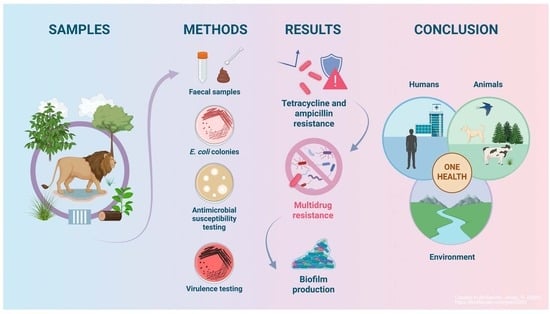
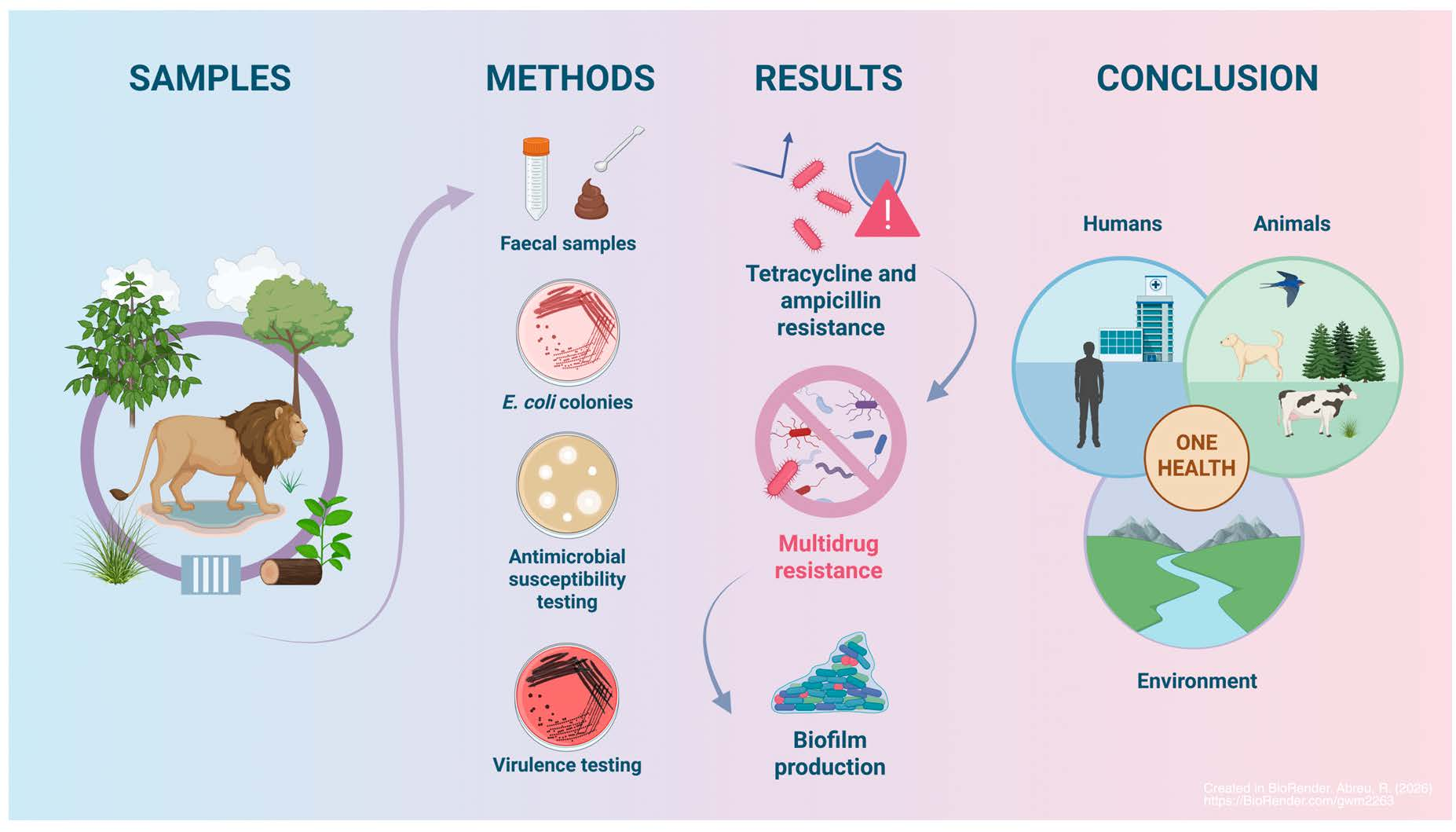
Graphical Abstract

1. Introduction

Antimicrobial resistance (AMR) poses a growing global threat at the human–animal–environment interface and is a central focus of the One Health framework [1]. Wildlife, including captive populations, can act as important reservoirs, amplifiers, and sentinels of antimicrobial-resistant bacteria [2,3], reflecting both environmental contamination and anthropogenic pressures [4,5]. Among wildlife species, non-domestic felids are of particular relevance due to their apex predator status, with the animals in zoological collections experiencing increased human contact related to routine husbandry activities and being potentially subjected to antibiotic therapy in the context of veterinary management [6,7].
Zoos and wildlife conservation centres occupy a unique position at the intersection of human, animal, and environmental health, with public health being one of the several core areas of focus of these institutions, alongside conservation, education, and scientific research [8]. International organisations, such as the World Organisation for Animal Health (WOAH) and the International Union for Conservation of Nature (IUCN), recognise that captive wildlife collections offer valuable opportunities for disease surveillance and pathogen monitoring, particularly given the rising human–animal interactions that elevate the risk of spillover events [9,10]. Much of the scientific literature available highlights the relevance of zoonotic hazards, with around 70% of emerging infectious diseases originating from wildlife [11,12,13]. While increased detection of pathogens may reflect higher human activity in wildlife-housing institutions [14,15], it also results from strengthened One Health surveillance strategies [15].
Zoonotic bacterial pathogens, including antimicrobial-resistant strains, pose some of the most significant public health concerns in these settings. Captive wildlife can transmit microorganisms through direct contact, indirect environmental exposure or faecal–oral routes, with wild felids being recognised reservoirs for pathogens such as Escherichia coli, Salmonella spp., Mycobacterium bovis, and Leptospira spp. [3,6,16,17]. Studies focusing on lions, tigers and other large felids have reported both zoonotic and anthroponotic transmission, reinforcing the need for continued research and implementation of evidence-based practices in zoological environments [18,19,20,21,22]. In zoo and sanctuary environments, antimicrobial resistance may be influenced by management-specific variables, including the use of broad-spectrum antimicrobials and repeated exposure to shared microbiota. Additionally, husbandry-related practices, such as feeding management and the contact between animals and humans, shared use of enclosures, equipment and disinfectants, may facilitate the maintenance and circulation of antimicrobial-resistant bacteria, increasing the risk of intra- and interspecies transmission within captive felid populations [6,23,24,25], demanding coordinated mitigation strategies. As a result, the recent literature has increasingly focused on the role of captivity in the maintenance and dissemination of antimicrobial-resistant pathogens [23]. However, the implementation of such measures remains especially challenging for under-resourced institutions such as wildlife sanctuaries and rehabilitation centres, where regulatory updates alone are insufficient without accompanying structural and financial support [8,26].
E. coli is widely used as an indicator organism for AMR surveillance due to its ubiquity in the gastrointestinal microbiota and ability to acquire and disseminate resistance determinants [27,28]. However, data on AMR profiles of strains from captive wild felids remains limited, despite their potential relevance for the management of veterinary care, occupational health, and conservation measures [6,29]. This study aimed to characterise the antimicrobial resistance and phenotypic virulence profiles of E. coli isolates obtained from faecal samples of captive non-domestic felids housed in a wildlife sanctuary. It further aimed to explore potential associations between host characteristics and captivity conditions and the occurrence of selected resistance traits. Defining these patterns is essential to better understand AMR dynamics in ex situ conservation settings, guide informed antimicrobial stewardship practices and support effective monitoring of resistant microorganisms in captive populations.

2. Materials and Methods

2.1. Study Population and Sample Collection

A total of 41 faecal samples were collected from 36 captive non-domestic felids representing 11 species present at the Big Cat Sanctuary, a conservation centre located in southeast England (UK). These included 36 individual samples and 5 composite samples from multi-animal enclosures, corresponding to samples for which the origin could not be assigned to a single individual. Samples were obtained from freshly deposited faeces present in the enclosure environment, with material retrieved from the inner portion of each sample to minimise environmental contamination using AMIES transport swabs (VWR®, Leuven, Belgium). Sample collection did not involve direct animal handling or promoted alterations to the animals’ normal husbandry routine. After collection, the samples were kept at 4 °C until transportation to the Laboratory of Microbiology and Immunology at the Faculty of Veterinary Medicine at the University of Lisbon, Portugal, for further processing.
Animal metadata was collected for each individual, including species, taxonomic group (Pantherinae vs. Felinae), sex, age, origin, time at the sanctuary, antimicrobial treatments administered in the 6 months prior, IUCN status, housing conditions (alone or in a shared environment), and human proximity.
Human proximity was classified based on the presence of keepers inside the enclosures for routine activities developed in the presence of the animals and on the frequency of the animals’ participation in activities involving the public. Activities such as “keeper for the day,” where visitors assist staff with enclosure maintenance, were considered to contribute to an increased human presence within the animals’ living areas. “Big cat encounters,” which allow visitors to approach and feed the animals through mesh barriers, were also included as events involving close human–animal contact.

2.2. Isolation and Identification of E. coli

Samples were inoculated onto MacConkey agar (VWR®, Leuven, Belgium) and incubated at 37 °C for 24 h. From each plate, whenever possible, at least four morphologically distinct, lactose-fermenting colonies with macroscopic morphology consistent with E. coli, were selected and subcultured on Brain Heart Infusion agar (VWR®, Leuven, Belgium). After incubation at 37 °C for 24 h, fresh cultures were used for Gram staining and oxidase testing, aiming to identify Gram-negative, oxidase-negative bacilli. These presumptive E. coli isolates were then identified using the IMViC biochemical test series, using Simmons Citrate Agar (Oxoid®, Hampshire, UK), Sulfide Indole Motility Agar (Merck, Darmstadt, Germany), and Voges–Proskauer Broth (Oxoid®, Hampshire, UK). After 24 h of incubation at 37 °C, isolates that were indole-positive, methyl red-positive, Voges–Proskauer-negative, citrate-negative, motile, and did not produce hydrogen sulfide were identified as belonging to the species E. coli. The isolates were stored in buffered peptone water (VWR®, Leuven, Belgium) supplemented with 20% glycerol (VWR®, Lisbon, Portugal) at −20 °C throughout the study.

2.3. Antimicrobial Susceptibility Testing

Susceptibility profiles were determined using the Kirby–Bauer disc diffusion method on Mueller–Hinton agar (Oxoid®, Hampshire, UK) according to Clinical and Laboratory Standards Institute (CLSI) guidelines [30]. Twelve antimicrobials representing major antibiotic classes were tested: beta-lactams combined with beta-lactamase inhibitors (amoxicillin-clavulanate, AMC, 30 µg), third-generation cephalosporins (ceftazidime, CAZ, 30 µg; cefotaxime, CTX, 30 µg), cephamycins (cefoxitin, FOX, 30 µg), fluoroquinolones (enrofloxacin, ENR, 5 µg), aminoglycosides (gentamicin, CN, 10 µg), monobactams (aztreonam, ATM, 30 µg), folate pathway inhibitors (sulfamethoxazole-trimethoprim, SXT, 25 µg), phenicols (chloramphenicol, C, 30 µg), penicillins (ampicillin, AMP, 10 µg), tetracyclines (tetracycline, TE, 30 µg) and carbapenems (imipenem, IPM, 10 µg) (Oxoid®, Hampshire, UK). These compounds were selected based on their use in veterinary and human medicine, the antimicrobial therapy protocols adopted at the conservation centre where the sampling took place, and previous scientific studies with a focus on wild or captive non-domestic felids [31,32,33]. Reference strains E. coli ATCC 25922 and Pseudomonas aeruginosa ATCC 27853 were also tested for quality control.
After establishing the isolates’ susceptibility profile, they were classified as susceptible (S), intermediate (I), or resistant (R) according to CLSI standards [30,34]. Multidrug resistance (MDR) was defined as non-susceptibility to ≥1 agent in ≥3 antimicrobial classes, according to Magiorakos [35]. For defining an MDR profile, isolates showing intermediate susceptibility to an antibiotic were considered as resistant to that compound.

2.4. Phenotypic Virulence Testing

Virulence factor expression was evaluated using differential media for detecting the production of biofilm, DNase, gelatinase, haemolysins, lecithinase, and protease.
The ability to form biofilm was assessed using Congo Red agar, composed of Brain Heart Infusion Broth (VWR) at 3.7%, Bacteriological Agar (VWR®, Leuven, Belgium) at 1.4%, Sucrose (Sigma-Aldrich®, Steinheim, Germany) at 5%, and Red Congo reagent (Sigma-Aldrich®, Steinheim, Germany) at 0.08%. After inoculation, plates were incubated for 72 h at 37 °C. A positive reaction was defined by the appearance of black colonies with a dry, crystalline consistency [36]. In this assay, Enterococcus hirae ATCC 10541 was used as the positive control, and E. coli ATCC 25922 as the negative control.
DNase activity was evaluated using DNase agar (Remel™, Lenexa, KS, USA). After inoculation, the cultures were incubated for 48 h at 37 °C, and a positive reaction corresponded to the formation of a clear zone around the colonies following the addition of 2 mL of 1 N HCl [37]. In this test, Staphylococcus aureus ATCC 25923 served as the positive control, and E. coli ATCC 25922 as the negative control.
Gelatinase activity was assessed using Nutrient Gelatin medium (Oxoid®, Hants, UK). Cultures were incubated for 72 h at 37 °C, after which tubes were placed in an ice bath for 15 min. Liquefaction of the medium indicated a positive reaction [38]. Pseudomonas aeruginosa Z25.1 was tested as the positive control, and E. coli ATCC 25922 as the negative control.
Haemolysin production was evaluated on Columbia agar supplemented with 5% sheep blood (bioMérieux®, Marcy l’Étoile, France). After inoculation, plates were incubated for 24 h at 37 °C. After incubation, a clear halo or a greenish-brown discoloration surrounding the colonies was interpreted as a positive haemolytic reaction [39]. In this assay, S. aureus ATCC 25923 was used as the positive control and E. faecium CCUG 36804 as the negative control.
Lecithinase activity was assessed using Egg Yolk agar, prepared with Tryptic Soy agar (VWR®, Leuven, Belgium) supplemented with 10% egg yolk (VWR®, Leuven, Belgium). After inoculation, the cultures were incubated for 24 h at 37 °C. A positive result corresponded to the presence of a white, opaque halo around the colonies [40]. P. aeruginosa ATCC 27853 was tested as the positive control, and E. coli ATCC 25922 as the negative control.
Protease production was evaluated on Skim Milk agar, prepared with skim milk powder (VWR®, Leuven, Belgium) supplemented with 2% bacteriological agar (VWR). Cultures were incubated for 24 h at 37 °C. A transparent, clear halo surrounding the colonies indicated a positive reaction [41]. In this assay, P. aeruginosa ATCC 27853 was tested as the positive control, and S. aureus ATCC 29213 as the negative control.

2.5. Statistical Analysis

To assess potential relationships between E. coli isolates’ AMR, virulence profiles, and host and captivity-related variables, all data were compiled in Microsoft Excel 365 (Microsoft Corporation, Redmond, WA, USA) and analysed using SAS 9.4 (SAS Institute Inc., Cary, NC, USA). Independent variables included species, taxonomic group (Pantherinae vs. Felinae), sex, age, origin, time period spent at the sanctuary, antimicrobial treatments administered in the 6 months prior to the study, IUCN status, housing in a shared environment, and participation in “Keeper for the Day” and “Big Cat Encounters” activities. For descriptive analysis, age and time at the sanctuary were reported as median values. Only resistance to ENR, CN, SXT, C, AMP, and TE was analysed, as all isolates were fully susceptible to the other antimicrobials tested (AMC, CAZ, CTX, FOX, ATM, IPM). Regarding the isolates’ virulence profile, only biofilm formation was detected and therefore included in the statistical analysis.
Multivariable logistic regression models (PROC LOGISTIC) were applied to assess associations between independent variables and AMR. Cumulative logistic regression was used for ordinal response variables, including the Multiple Antimicrobial Resistance (MAR) and Virulence (V) indexes, calculated as: MAR = number of antimicrobials to which isolates were non-susceptible (I + R) ÷ total antimicrobials tested, and V = number of positive virulence factors ÷ total virulence factors tested. For descriptive analysis, MAR and V indexes were expressed as mean ± standard deviation (SD).
Spearman correlation coefficient was used to assess relationships among antimicrobials for which the isolates showed resistance and were interpreted using the terminology proposed by Schober [42]. This analysis was completed with PROC CORR, whereby intermediate results were classified as resistant. All statistical tests were conducted with a 95% confidence interval and were considered statistically significant when p ≤ 0.05 levels of significance.

3. Results

3.1. Characterisation of the Sampled Population

Animals sampled in this study (n = 36) belonged to 11 distinct species (Table 1), with Panthera leo leo being the most frequently sampled (22.2%; n = 8). Among the sampled animals, 63.9% (n = 23) were females and 36.1% (n = 13) were males. The age distribution of the sampled population ranged from 1 to 20 years old, and the median age was 11 years. The median duration of housing at the sanctuary was 7.5 years. The largest proportion of animals were classified as vulnerable according to the IUCN (44.4%; n = 16), while others were listed as critically endangered (19.4%; n = 7), least concern (16.7%; n = 6), near threatened (11.1%; n = 4) or endangered (8.3%; n = 3). Regarding origin, 80.6% (n = 29) came from zoos, 11.1% (n = 4) were born at the Big Cat Sanctuary, and 2.8% each (n = 1) were rescued from circus, private collections or rescue projects. Most animals (80.6%; n = 29) had no record of antimicrobial treatment during the six months prior to sampling; of those treated with antibiotics (19.4%; n = 7), 85.7% (n = 6) received amoxicillin, 14.3% (n = 1) marbofloxacin, and 14.3% (n = 1) doxycycline. In terms of housing, 58.3% (n = 21) were kept individually, while 41.7% (n = 15) lived in groups. Concerning human proximity, 19.4% (n = 7) of the animals had keepers present within their enclosures while the animals were present, while 13.9% (n = 5) had direct contact with the keepers. Additionally, 50.0% (n = 18) participated in the “keeper for the day” experience, and 55.6% (n = 20) were involved in “big cat encounters,” providing extra opportunities for close interaction with humans. All data can be consulted Table S1.

3.2. E. coli Isolation

E. coli was successfully isolated from all faecal samples collected. In total, 122 morphologically distinct presumptive isolates were obtained, of which 108 isolates were identified as E. coli, and selected for further characterisation.

3.3. Susceptibility Profiles

Overall, the antimicrobial resistance levels presented by the isolates were low to moderate. All isolates were fully susceptible to AMC, CAZ, CTX, FOX, ATM, and IMI. The highest resistance rates were observed for TE (19.4%; n = 21) and AMP (10.2%; n = 11), with lower resistance frequencies detected for SXT (6.5%; n = 7), ENR (3.7%; n = 4), and C (0.9%; n = 1). Intermediate susceptibility was observed only for ENR (5.6%; n = 6), CN (32.4%; n = 35), and AMP (6.5%; n = 7). Detailed results of antimicrobial susceptibility testing are presented in Table 2.
Ten isolates (9.3%) were classified as MDR [35]. Among the MDR E. coli isolates, resistance was highest for tetracycline and ampicillin (100%; n = 10), followed by sulfamethoxazole-trimethoprim and gentamicin (50.0%; n = 5) and chloramphenicol (n = 1; 10.0%), considering intermediate results as resistant for MDR classification. Jaguars (Panthera onca) (66.7%; n = 2) and servals (Leptailurus serval) (100%; n = 2) showed the highest proportions of MDR isolates. Seven MDR isolates originated from 4 Pantherinae species, and 3 from 2 Felinae species, with 40.0% (n = 4) being collected from species classified as vulnerable on the IUCN Red List.
The mean MAR index of the E. coli isolates was 0.07 (SD = 0.08; range 0.00–0.33), and no significant associations were observed between MAR values or MDR profiles and any of the 13 independent variables tested.

3.4. Phenotypic Virulence Factors

Regarding virulence characteristics, biofilm formation was the only phenotypic virulence factor expressed by the isolates under study, being present in 8.3% (n = 9) of the isolates. None of the isolates showed protease, DNase, gelatinase, lecithinase, or haemolysin activities.
The mean V index of the E. coli isolates was 0.01 (SD = 0.05; range 0.00–0.17).

3.5. Influence of Host Characteristics and Captivity Factors on Resistance and Virulence Profiles

It was possible to detect several significant associations between E. coli resistance and specific host and captivity factors. Resistance to ENR was significantly associated with the sex of the animals (p = 0.015), with females showing a lower probability of carrying resistant isolates (OR = 0.167). Resistance to CN was significantly associated with the presence of keepers in the enclosure (p = 0.0008), with animals present at the same time as keepers having a higher probability of carrying resistant isolates (OR = 0.103). Resistance to AMP was associated with enclosure type (p = 0.0446), suggesting that animals housed individually had a lower probability of carrying resistant isolates (OR = 0.282). A non-significant tendency towards an association between resistance to TE and participation in “keeper for the day” activities was observed (p = 0.0608). No significant associations were found between resistance to the antibiotics tested and age, species, or recent antimicrobial treatments. Also, no statistically significant correlations were found between the MAR index and the V index (p > 0.05). By analysing possible relationships between resistance to different antibiotics within the same bacterial isolate, a moderately positive correlation was found between TE and AMP resistance. Other moderately positive correlations were identified between AMP and SXT resistance, as well as between TE and SXT resistance.

4. Discussion

The emergence of AMR poses an increasing threat to global public health, affecting both human and veterinary medicine [43,44]. While wildlife has long been recognised as a reservoir of resistant pathogens, there is a growing focus on how captivity and anthropogenic pressures modulate AMR dynamics [45,46].
This study evaluated the prevalence of antimicrobial resistance and virulence factors in E. coli isolated from captive non-domestic felids in a UK wildlife sanctuary. This bacterial species was chosen as a model for this study since it represents a significant challenge in modern medicine, not only because the intrinsic resistance mechanisms present in Gram-negative bacteria may limit therapeutic options, but also because its ability to easily acquire additional resistance determinants can further contribute to the emergence of MDR strains [47]. The findings from this study revealed variable resistance profiles across isolates from different animal species, reflecting complex interactions of multiple independent variables within captive settings. The predominance of resistance to broad-spectrum antibiotics, such as tetracycline and ampicillin, is in accordance with the resistance patterns previously documented in captive felid species [32,48,49], as well as in felid species present in wild environments [33]. In contrast, previous studies focusing on captive zoo animals [23,29,50] have reported that bacterial isolates from these animals remain largely susceptible to critically important antimicrobials, including sulfamethoxazole-trimethoprim and third-generation cephalosporins, highlighting potential differences in selective pressures or management practices within these settings.
Although tetracycline is commonly used in veterinary medicine, including zoo settings [50,51], it was not among the most frequently administered antimicrobials in the studied sanctuary. Only 7 of the 36 felids sampled had received antibiotics in the 6 months preceding sample collection, and recent treatment was not significantly associated with resistance prevalence. These observations suggest that factors beyond local antimicrobial use may have contributed to the observed resistance profiles. Environmental exposure, anthropogenic pressures, and potential transmission through contaminated food or vectors such as insects and rodents may also play a role [52,53,54]. Yet, the absence of similar resistance profiles among animals of the same species further indicates that foodborne transmission alone cannot explain the observed patterns. Most of the sampled animals were born or had been long-term residents of sanctuaries, zoos, or similar facilities, in which increased human proximity, shared housing, social interactions and regular contact with animal caretakers may influence microbiome composition and antimicrobial resistance patterns [25]. These intrinsic similarities among related or co-housed animals represent inherent limitations when interpreting AMR data and should be considered when extrapolating these findings to free-ranging populations or other captive settings. In the wildlife sanctuary under study, quaternary ammonium compound (QAC)-based disinfectants are routinely applied to animal enclosures, food preparation surfaces, and foot dips. The use of these biocides may drive the selection of AMR as QAC resistance determinants are often present on mobile genetic elements alongside antibiotic resistance genes (ARGs), potentially contributing to cross-resistance transmission due to horizontal gene transfer, associated with an increasing MDR prevalence [24,55,56,57]. While evidence primarily comes from studies in livestock and food chain bacteria [55], similar mechanisms may be present in strains from captive wildlife.
MDR E. coli isolates were obtained from 9.3% of the sampled animals, lower than rates reported in wildlife elsewhere, including in India (21%) [49], Spain (71%) [58], and Belgium (64%) [29]. Within the UK, 8.5% MDR prevalence has recently been reported in petting zoo animals [59] and 18% among zoo-housed ungulates in Southeast England [60]. All MDR isolates of this study were resistant to tetracycline and ampicillin, with half also being resistant to sulfamethoxazole-trimethoprim and gentamicin, similar to previous research on captive animals [23,29]. Statistical correlations among resistance to tetracycline, ampicillin, and sulfamethoxazole-trimethoprim may reflect co-location of ARGs on mobile genetic elements and co-selection [61,62,63].
Captivity specific factors appear to influence AMR dynamics. Most MDR isolates originated from Pantherinae species, possibly due to participation in sanctuary “animal activities” associated with increased human proximity, though differences between isolates from Felinae and Pantherinae were not statistically significant. Four out of the 10 MDR isolates were from species classified as vulnerable on the IUCN Red List, emphasising the need to integrate AMR monitoring into conservation practices [64,65,66]. Female animals were less likely to carry E. coli resistant to enrofloxacin, although the small sample size and greater proportion of females in the sampled population limit the interpretation of the significance of this result. Gentamicin resistance was significantly associated with the variable “keeper in enclosure with animal present”, suggesting the role of anthropogenic pressures in shaping resistance profiles [3]. This finding aligns with the UK Health Security Agency’s (UKHSA) surveillance data from 2024 to 2025, which documents a rising trend in gentamicin-resistance within E. coli human clinical isolates [67]. As gentamicin is one of the most frequently prescribed aminoglycosides [68,69], this result may reflect this selection pressure stemming from UK hospital practices. However, given the exploratory nature of the study and its limited sample size, this hypothesis should be considered with caution. Additionally, a marginal association was observed between tetracycline resistance and the animals’ participation in “keeper for the day” activities, pointing to a possible influence of increased human-related activities to the development of resistance to this antibiotic; however, this trend did not reach statistical significance and should therefore be interpreted with caution.
Housing practices also appeared to influence resistance patterns. Ampicillin resistance was associated with animals housed in shared enclosures, suggesting that co-housing may facilitate bacterial exchange, and supporting previous studies that have reported that captivity-related housing structures and management practices adopted in zoo settings may influence bacterial circulation [50,70].
While increased anthropogenic activity may represent a potential selective pressure or a source for bacterial exchange, no definitive conclusions can be drawn from the present data. Overall, the findings from this study raise the possibility that captive environments may contribute to the circulation of antimicrobial-resistant bacteria across animal species, highlighting the need for further investigation.
The isolates under study presented a low diversity of phenotypic virulence expression, with only 8.3% of the isolates being able to form biofilms. Culture-based methods may underestimate pathogenic potential compared to molecular approaches, but the lack of correlation between MAR and V indexes suggests that high AMR burden does not necessarily increase virulence, which is encouraging from a conservation and welfare perspective [3,71].
This study has several limitations that should be acknowledged. In addition to the relatively small sample size, E. coli identification relied on IMViC biochemical tests, a classical phenotypic approach. While allowing bacterial identification, contemporary methods such as MALDI-TOF mass spectrometry or molecular methodologies are increasingly being used as standard identification methods in many microbiological settings. Furthermore, the analysis of composite faecal samples collected from multi-animal enclosures provides logistical advantages but may mask individual-level variation.
Additionally, antimicrobial resistance and virulence profiles were assessed exclusively using phenotypic methods. While this approach provides relevant information on resistance and virulence expression, it does not allow detailed characterisation of the underlying genetic mechanisms. Consequently, the presence and diversity of specific resistance determinants could not be assessed. Future studies integrating molecular approaches, such as the detection of resistance-associated genes (e.g., bla, tet, qnr) and virulence profiling (e.g., eae, stx, fimH), would enable a more comprehensive characterisation of the isolates’ antimicrobial resistance and virulence profiles and facilitate the investigation of transmission pathways and genomic relatedness among isolates. Moreover, future investigations could expand the scope of surveillance to include other clinically and epidemiologically relevant bacterial pathogens, such as Salmonella spp. and Enterococcus spp., providing a broader overview of antimicrobial resistance in ex-situ wildlife settings.
Finally, the captive history of the animals also constitutes a limitation. Animals born or housed long-term in sanctuaries may share microbiomes with their parents, siblings, or enclosure mates, potentially influencing the observed AMR and virulence profiles. Such intrinsic similarities should be considered when extrapolating findings to free-ranging populations or other captive settings.
Despite these limitations, the present findings represent valuable baseline data on antimicrobial resistance and phenotypic virulence traits in E. coli isolated from sanctuary-housed felids, supporting the importance of continued antimicrobial resistance surveillance in conservation and One Health contexts.

5. Conclusions

This study shows that captive non-domestic felids may harbour Escherichia coli with low to moderate levels of antimicrobial resistance, including a small proportion of multidrug-resistant isolates. Although the virulence profiles of the isolates were limited and restricted to occasional biofilm formation, the presence of resistant strains highlights the importance of monitoring antimicrobial resistance in wildlife kept under human care. The associations identified between resistance profiles and captivity-related factors, such as human proximity and enclosure type, suggest that environmental and management practices may influence the resistome of these populations. Importantly, these associations should be regarded as preliminary and hypothesis-generating results, highlighting the need for broader, comparative, multi-institutional studies to confirm these patterns. Continued surveillance, together with responsible antimicrobial stewardship practices in zoological settings, is essential to reduce selective pressures and mitigate potential risks at the human–animal–environment interface.

Supplementary Materials

The following supporting information can be downloaded at: https://www.mdpi.com/article/10.3390/vetsci13020124/s1, Table S1: Metadata of sampled animals.

Author Contributions

Conceptualisation, S.C. and M.O.; methodology, S.C., R.A., E.C., E.M. and M.O.; software, S.C., R.A. and G.P.; validation, S.C., R.A., G.P., E.C., L.T., E.M. and M.O.; formal analysis, S.C., R.A., G.P. and M.O.; investigation, S.C., R.A. and M.O.; resources, L.T. and M.O.; data curation, S.C., R.A. and M.O.; writing—original draft preparation, S.C. and R.A.; writing—review and editing, S.C., R.A., G.P., E.C., L.T., E.M. and M.O.; visualisation, S.C.; supervision, M.O.; project administration, M.O.; funding acquisition, L.T. and M.O. All authors have read and agreed to the published version of the manuscript.

Funding

This research was funded by the Portuguese Foundation for Science and Technology (FCT) under projects UID/276/2025 (CIISA) and LA/P/0059/2020 (AL4AnimalS).

Institutional Review Board Statement

Not applicable.

Informed Consent Statement

Not applicable.

Data Availability Statement

The original contributions presented in this study are included in the article/Supplementary Materials. Further inquiries can be directed to the corresponding authors.

Acknowledgments

The authors would like to acknowledge CIISA—the Centre for Interdisciplinary Research in Animal Health, Faculty of Veterinary Medicine, University of Lisbon; AL4AnimalS—Associate Laboratory for Animal and Veterinary Sciences; Microbiology and Immunology Laboratory from FMV/ULisbon, and The Big Cat Sanctuary.

Conflicts of Interest

The authors declare no conflicts of interest.

References

  1. WHO. World Health Organization Global Antibiotic Resistance Surveillance Report 2025: WHO Global Antimicrobial Resistance and Use Surveillance System (GLASS); WHO: Geneva, Switzerland, 2025. [Google Scholar]
  2. Vittecoq, M.; Godreuil, S.; Prugnolle, F.; Durand, P.; Brazier, L.; Renaud, N.; Arnal, A.; Aberkane, S.; Jean-Pierre, H.; Gauthier-Clerc, M.; et al. Antimicrobial Resistance in Wildlife. J. Appl. Ecol. 2016, 53, 519–529. [Google Scholar] [CrossRef]
  3. Li, X.; Mowlaboccus, S.; Jackson, B.; Cai, C.; Coombs, G.W. Antimicrobial Resistance among Clinically Significant Bacteria in Wildlife: An Overlooked One Health Concern. Int. J. Antimicrob. Agents 2024, 64, 107251. [Google Scholar] [CrossRef]
  4. Gomez, A.; Petrzelkova, K.; Yeoman, C.J.; Vlckova, K.; Mrázek, J.; Koppova, I.; Carbonero, F.; Ulanov, A.; Modry, D.; Todd, A.; et al. Gut Microbiome Composition and Metabolomic Profiles of Wild Western Lowland Gorillas (Gorilla gorilla gorilla) Reflect Host Ecology. Mol. Ecol. 2015, 24, 2551–2565. [Google Scholar] [CrossRef]
  5. Zou, S.; Yuan, T.; Lu, T.; Yan, J.; Kang, D.; Li, D. Human Disturbance Increases Health Risks to Golden Snub-Nosed Monkeys and the Transfer Risk of Pathogenic Antibiotic-Resistant Bacteria from Golden Snub-Nosed Monkeys to Humans. Animals 2023, 13, 3083. [Google Scholar] [CrossRef]
  6. Rampacci, E.; Diaferia, M.; Lucentini, L.; Brustenga, L.; Capasso, M.; Girardi, S.; Gizzi, I.; Primavilla, S.; Veronesi, F.; Passamonti, F. Detection of Zoonotic Enteropathogens in Captive Large Felids in Italy. Zoonoses Public Health 2024, 71, 200–209. [Google Scholar] [CrossRef] [PubMed]
  7. Miller, E.A.; Amato, R.; Ponder, J.B.; Bueno, I. Survey of Antimicrobial and Probiotic Use Practices in Wildlife Rehabilitation in the United States. PLoS ONE 2024, 19, e0308261. [Google Scholar] [CrossRef] [PubMed]
  8. Spooner, S.L.; Walker, S.L.; Dowell, S.; Moss, A. The Value of Zoos for Species and Society: The Need for a New Model. Biol. Conserv. 2023, 279, 109925. [Google Scholar] [CrossRef]
  9. Food and Agriculture Organization; United Nations Environment Programme; World Health Organization; World Organisation for Animal Health. One Health Joint Plan of Action (2022–2026). Working Together for the Health of Humans, Animals, Plants and the Environment; FAO: Rome, Italy, 2022. [Google Scholar]
  10. World Organisation for Animal Health; IUCN. General Guidelines for Surveillance of Diseases, Pathogens and Toxic Agents in Free-Ranging Wildlife: An Overview for Wildlife Authorities and Others Working with Wildlife; Gland: Paris, France, 2024; 56p. [Google Scholar] [CrossRef]
  11. Robinette, C.; Saffran, L.; Ruple, A.; Deem, S.L. Zoos and Public Health: A Partnership on the One Health Frontier. One Health 2017, 3, 1–4. [Google Scholar] [CrossRef] [PubMed]
  12. Hirst, K.M.; Halsey, S.J. Bacterial Zoonoses Impacts to Conservation of Wildlife Populations: A Global Synthesis. Front. Conserv. Sci. 2023, 4, 1218153. [Google Scholar] [CrossRef]
  13. Kuhn, C.; Hayibor, K.M.; Acheampong, A.T.; Pires, L.S.A.; Costa-Ribeiro, M.C.V.; Burrone, M.S.; Vásquez-Almazán, C.R.; Radon, K.; Soto, M.T.S.; Salini, A.P.L.; et al. How Studies on Zoonotic Risks in Wildlife Implement the One Health Approach—A Systematic Review. One Health 2024, 19, 100929. [Google Scholar] [CrossRef]
  14. Esposito, M.M.; Turku, S.; Lehrfield, L.; Shoman, A. The Impact of Human Activities on Zoonotic Infection Transmissions. Animals 2023, 13, 1646. [Google Scholar] [CrossRef] [PubMed]
  15. Van Leeuwen, P.; Falconer, S.; Veitch, J.; Pyott, B.; Hughes, B.; Zimmermann, I.; Schulte-Hostedde, A. Zoos as Sentinels? A Meta-Analysis of Seroprevalence of Terrestrial Mammalian Viruses in Zoos. EcoHealth 2023, 20, 43–52. [Google Scholar] [CrossRef]
  16. Straub, M.H.; Rudd, J.L.; Woods, L.W.; Clifford, D.L.; Foley, J.E. Leptospira Prevalence and Its Association with Renal Pathology in Mountain Lions (Puma concolor) and Bobcats (Lynx rufus) in California, USA. J. Wildl. Dis. 2021, 57, 27–39. [Google Scholar] [CrossRef]
  17. Gumbo, R.; Goosen, W.J.; Buss, P.E.; de Klerk-Lorist, L.-M.; Lyashchenko, K.; Warren, R.M.; van Helden, P.D.; Miller, M.A.; Kerr, T.J. “Spotting” Mycobacterium bovis Infection in Leopards (Panthera pardus)—Novel Application of Diagnostic Tools. Front. Immunol. 2023, 14, 1216262. [Google Scholar] [CrossRef] [PubMed]
  18. Iatta, R.; Natale, A.; Ravagnan, S.; Mendoza-Roldan, J.; Zatelli, A.; Cavalera, M.A.; Nachum-Biala, Y.; Baneth, G.; Otranto, D. Zoonotic and Vector-Borne Pathogens in Tigers from a Wildlife Safari Park, Italy. Int. J. Parasitol. Parasites Wildl. 2020, 12, 1–7. [Google Scholar] [CrossRef]
  19. Žele-Vengušt, D.; Lindtner-Knific, R.; Mlakar-Hrženjak, N.; Jerina, K.; Vengušt, G. Exposure of Free-Ranging Wild Animals to Zoonotic Leptospira interrogans sensu stricto in Slovenia. Animals 2021, 11, 2722. [Google Scholar] [CrossRef]
  20. Chomel, B.B.; Belotto, A.; Meslin, F.-X. Wildlife, Exotic Pets, and Emerging Zoonoses. Emerg. Infect. Dis. 2007, 13, 6–11. [Google Scholar] [CrossRef]
  21. Green, J.; Jakins, C.; Asfaw, E.; Bruschi, N.; Parker, A.; de Waal, L.; D’Cruze, N. African Lions and Zoonotic Diseases: Implications for Commercial Lion Farms in South Africa. Animals 2020, 10, 1692. [Google Scholar] [CrossRef] [PubMed]
  22. McAloose, D.; Laverack, M.; Wang, L.; Killian, M.L.; Caserta, L.C.; Yuan, F.; Mitchell, P.K.; Queen, K.; Mauldin, M.R.; Cronk, B.D.; et al. From People to Panthera: Natural SARS-CoV-2 Infection in Tigers and Lions at the Bronx Zoo. mBio 2020, 11, e02220-20. [Google Scholar] [CrossRef]
  23. Medina, A.; Vega, Y.; Medina, J.; López, R.N.; Vayas, P.; Soria, J.; Velásquez-Yambay, C.; Sánchez-Gavilanes, L.; Bastidas-Caldes, C.; Calero-Cáceres, W. Characterization of Antimicrobial Resistance Profiles in Escherichia coli Isolated from Captive Mammals in Ecuador. Vet. Med. Sci. 2024, 10, 1546. [Google Scholar] [CrossRef]
  24. Kim, M.; Weigand, M.R.; Oh, S.; Hatt, J.K.; Krishnan, R.; Tezel, U.; Pavlostathis, S.G.; Konstantinidis, K.T. Widely Used Benzalkonium Chloride Disinfectants Can Promote Antibiotic Resistance. Appl. Environ. Microbiol. 2018, 84, e01201-18. [Google Scholar] [CrossRef]
  25. Dallas, J.W.; Warne, R.W. Captivity and Animal Microbiomes: Potential Roles of Microbiota for Influencing Animal Conservation. Microb. Ecol. 2023, 85, 820–838. [Google Scholar] [CrossRef]
  26. Thal, D.A.; Mettenleiter, T.C. One Health—Key to Adequate Intervention Measures against Zoonotic Risks. Pathogens 2023, 12, 415. [Google Scholar] [CrossRef]
  27. Anjum, M.F.; Schmitt, H.; Börjesson, S.; Berendonk, T.U.; Donner, E.; Stehling, E.G.; Boerlin, P.; Topp, E.; Jardine, C.; Li, X.; et al. The Potential of Using E. coli as an Indicator for the Surveillance of Antimicrobial Resistance (AMR) in the Environment. Curr. Opin. Microbiol. 2021, 64, 152–158. [Google Scholar] [CrossRef]
  28. Furuya, Y.; Matsuda, M.; Harada, S.; Kumakawa, M.; Shirakawa, T.; Uchiyama, M.; Akama, R.; Ozawa, M.; Kawanishi, M.; Shimazaki, Y.; et al. Nationwide Monitoring of Antimicrobial-Resistant Escherichia coli and Enterococcus spp. Isolated from Diseased and Healthy Dogs and Cats in Japan. Front. Vet. Sci. 2022, 9, 916461. [Google Scholar] [CrossRef]
  29. de Witte, C.; Vereecke, N.; Theuns, S.; De Ruyck, C.; Vercammen, F.; Bouts, T.; Boyen, F.; Nauwynck, H.; Haesebrouck, F. Presence of Broad-Spectrum Beta-Lactamase-Producing Enterobacteriaceae in Zoo Mammals. Microorganisms 2021, 9, 834. [Google Scholar] [CrossRef] [PubMed]
  30. CLSI M100; Performance Standards for Antimicrobial Susceptibility Testing. 34th ed. CLSI: Malvern, PA, USA, 2020.
  31. Gonçalves, A.; Igrejas, G.; Radhouani, H.; Santos, T.; Monteiro, R.; Pacheco, R.; Alcaide, E.; Zorrilla, I.; Serra, R.; Torres, C.; et al. Detection of Antibiotic Resistant enterococci and Escherichia coli in Free Range Iberian Lynx (Lynx pardinus). Sci. Total Environ. 2013, 456–457, 115–119. [Google Scholar] [CrossRef] [PubMed]
  32. Xue, Y.; Chen, J.; Wang, Y.; Zhang, Y.; Liu, D.; Hua, Y. Characterization of Integron-Mediated Antimicrobial Resistance among Escherichia coli Strains Isolated from a Captive Population of Amur Tigers in China. J. Zoo. Wildl. Med. 2013, 44, 951–956. [Google Scholar] [CrossRef]
  33. Li, H.; Lan, T.; Zhai, H.; Zhou, M.; Chen, D.; Lu, Y.; Han, L.; Wei, J.; Zhou, S.; Xu, H.; et al. Whole-Genome Analysis of Escherichia coli Isolated from Wild Amur Tiger (Panthera tigris altaica) and North China Leopard (Panthera pardus japonensis). PeerJ 2024, 12, 17381. [Google Scholar] [CrossRef]
  34. CLSI VET01S; Performance Standards for Antimicrobial Disk and Dilution Susceptibility Tests for Bacteria Isolated from Animals. CLSI: Malvern, PA, USA, 2024; Volume CLSI supplement VET01.
  35. Magiorakos, A.P.; Srinivasan, A.; Carey, R.B.; Carmeli, Y.; Falagas, M.E.; Giske, C.G.; Harbarth, S.; Hindler, J.F.; Kahlmeter, G.; Olsson-Liljequist, B.; et al. Multidrug-Resistant, Extensively Drug-Resistant and Pandrug-Resistant Bacteria: An International Expert Proposal for Interim Standard Definitions for Acquired Resistance. Clin. Microbiol. Infect. 2012, 18, 268–281. [Google Scholar] [CrossRef] [PubMed]
  36. Freeman, D.J.; Falkiner, F.R.; Keane, C.T. New Method for Detecting Slime Production by Coagulase Negative staphylococci. J. Clin. Pathol. 1989, 42, 872–874. [Google Scholar] [CrossRef] [PubMed]
  37. Marques, I. Caracterização de Enteroccoccus Spp. e Aeromonas Spp. Isolados de Produtos Hortícolas de Agricultura Biológica e Convencional; Faculty of Sciences, University of Lisbon: Lisbon, Portugal, 2016. [Google Scholar]
  38. Pitt, T.L.; Dey, D. A Method for the Detection of Gelatinase Production by Bacteria. J. Appl. Bacteriol. 1970, 33, 687–691. [Google Scholar] [CrossRef]
  39. Fernandes, M.; Grilo, M.L.; Carneiro, C.; Cunha, E.; Patino-Martinez, J. Antibiotic Resistance and Virulence Profiles of Gram-Negative Bacteria Isolated from Loggerhead Sea Turtles (Caretta caretta) of the Island of Maio, Cape Verde. Antibiotics 2021, 10, 771. [Google Scholar] [CrossRef]
  40. Chrisope, G.L.; Fox, C.W.; Marshall, R.T. Lecithin Agar for Detection of Microbial Phospholipases. Appl. Environ. Microbiol. 1976, 31, 784–786. [Google Scholar] [CrossRef] [PubMed]
  41. Sokol, P.A.; Ohman, D.E.; Iglewski, B.H. A More Sensitive Plate Assay for Detection of Protease Production by Pseudomonas aeruginosa. J. Clin. Microbiol. 1979, 9, 538–540. [Google Scholar] [CrossRef] [PubMed]
  42. Schober, P.; Boer, C.; Schwarte, L.A. Correlation Coefficients: Appropriate Use and Interpretation. Anesth. Analg. 2018, 126, 1763–1768. [Google Scholar] [CrossRef]
  43. Kulasooriya, G.D.B.N.; Jayasekara, P.P.; Wijayarathna, J.M.S.M.; Amarasiri, M.K.U.T.; Mendis, B.C.G.; Siribaddana, A.; Dangolla, A.; Kalupahana, R.S.; Fernando, B.R. Screening of Elephants Participating in the Esala Perahera for Zoonotic and Multidrug Resistant Bacteria. Sri Lanka Vet. J. 2016, 63, 9. [Google Scholar] [CrossRef]
  44. Hickson, S.M.; Ledger, E.L.; Wells, T.J. Emerging Antimicrobial Therapies for Gram-Negative Infections in Human Clinical Use. npj Antimicrob. Resist. 2025, 3, 16. [Google Scholar] [CrossRef]
  45. Huang, H. Captivity and Geography Influence the Antibiotic Resistome of Non-Human Primates. Front. Vet. Sci. 2022, 9, 1020276. [Google Scholar] [CrossRef]
  46. Cai, T.-G.; Zhang, J.-D.; Lu, L.; Wang, Y.-F.; Zhu, D. Captivity Increased the Abundance of High-Risk Antibiotic Resistance Genes in the Giant Panda Gut Microbiome. Environ. Res. 2024, 263, 120220. [Google Scholar] [CrossRef]
  47. Arzanlou, M.; Chai, W.C.; Venter, H. Intrinsic, Adaptive and Acquired Antimicrobial Resistance in Gram-Negative Bacteria. Essays Biochem. 2017, 61, 49–59. [Google Scholar] [CrossRef]
  48. Ghosh, S.; Bupasha, Z.; Nine, H.; Sen, A.; Ahad, A.; Sarker, M. Antibiotic Resistance of Escherichia coli Isolated from Captive Bengal Tigers at Safari Parks in Bangladesh. J. Adv. Vet. Anim. Res. 2019, 6, 341. [Google Scholar] [CrossRef] [PubMed]
  49. Kumar, R.; Tiwari, A.; Mishra, A.; Bhatt, P.; Author, C.; Shukla, N.; Upadhyay, A.K.; Singh, N.K. Antimicrobial Resistance Pattern of Shigatoxigenic E. coli (STEC) and Enteropathogenic E. coli (EPEC) Isolated from Wild Felidae in India. Pharma Innov. J. 2022, 11, 1082–1085. [Google Scholar]
  50. Kim, M.; Kim, M.; Yeo, Y.-G.; Lee, Y.-T.; Han, J.-I. Antimicrobial Resistance of Commensal Escherichia coli and Enterococcus faecalis Isolated from Clinically Healthy Captive Wild Animals in Seoul Zoo. Front. Vet. Sci. 2024, 10, 1283487. [Google Scholar] [CrossRef]
  51. Schmartz, G.P.; Rehner, J.; Schuff, M.J.; Molano, L.A.G.; Becker, S.L.; Krawczyk, M.; Tagirdzhanov, A.; Gurevich, A.; Francke, R.; Müller, R.; et al. Exploring Microbial Diversity and Biosynthetic Potential in Zoo and Wildlife Animal Microbiomes. Nat. Commun. 2024, 15, 8263. [Google Scholar] [CrossRef] [PubMed]
  52. Feng, X.; Hua, R.; Zhang, W.; Liu, Y.; Luo, C.; Li, T.; Chen, X.; Zhu, H.; Wang, Y.; Lu, Y. Comparison of the Gut Microbiome and Resistome in Captive African and Asian Elephants on the Same Diet. Front. Vet. Sci. 2023, 10, 986382. [Google Scholar] [CrossRef] [PubMed]
  53. Yin, J.-H.; Kelly, P.J.; Wang, C. Flies as Vectors and Potential Sentinels for Bacterial Pathogens and Antimicrobial Resistance: A Review. Vet. Sci. 2022, 9, 300. [Google Scholar] [CrossRef]
  54. Devanathan, N.; Mukhopadhyay, H.K.; Sihag, K.K.; Terence Nathan, A.; Chakkaravarthi, A.; Srinivasan, L.; Srinivas, M.V.; Vasu, J.; Shanmugam, V.P.; Rahi, M.; et al. Synanthropic Rodents and Shrews Are Reservoirs of Zoonotic Bacterial Pathogens and Act as Sentinels for Antimicrobial Resistance Spillover in the Environment: A Study from Puducherry, India. One Health 2024, 18, 100759. [Google Scholar] [CrossRef]
  55. Wales, A.; Davies, R. Co-Selection of Resistance to Antibiotics, Biocides and Heavy Metals, and Its Relevance to Foodborne Pathogens. Antibiotics 2015, 4, 567–604. [Google Scholar] [CrossRef]
  56. Li, X.; Brejnrod, A.; Trivedi, U.; Russel, J.; Thorsen, J.; Shah, S.A.; Vestergaard, G.A.; Rasmussen, M.A.; Nesme, J.; Bisgaard, H.; et al. Co-Localization of Antibiotic Resistance Genes Is Widespread in the Infant Gut Microbiome and Associates with an Immature Gut Microbial Composition. Microbiome 2024, 12, 87. [Google Scholar] [CrossRef]
  57. Liu, C.; Hu, J.; Wu, Y.; Irwin, D.M.; Chen, W.; Zhang, Z.; Yu, L. Comparative Study of Gut Microbiota from Captive and Confiscated-Rescued Wild Pangolins. J. Genet. Genom. 2021, 48, 825–835. [Google Scholar] [CrossRef]
  58. Vidal, A.; Baldomà, L.; Molina-López, R.A.; Martin, M.; Darwich, L. Microbiological Diagnosis and Antimicrobial Sensitivity Profiles in Diseased Free-Living Raptors. Avian Pathol. 2017, 46, 442–450. [Google Scholar] [CrossRef]
  59. Nishigaki, A.; Arden, K.; Frosini, S.M. Antimicrobial Resistance in Petting Zoo Animals in the United Kingdom. Appl. Microbiol. 2025, 5, 115. [Google Scholar] [CrossRef]
  60. Frank, M.A.; Justice, W.S.M.; La Ragione, R.; Chambers, M.A. Antibiotic Resistance in Escherichia coli and Enterococcus spp. Isolated from Ungulates at a Zoological Collection in the United Kingdom. J. Zoo. Wildl. Med. 2021, 51, 761–770. [Google Scholar] [CrossRef] [PubMed]
  61. Ozawa, M.; Shirakawa, T.; Moriya, K.; Furuya, Y.; Kawanishi, M.; Makita, K.; Sekiguchi, H. Role of Plasmids in Co-Selection of Antimicrobial Resistances among Escherichia coli Isolated from Pigs. Foodborne Pathog. Dis. 2023, 20, 435–441. [Google Scholar] [CrossRef] [PubMed]
  62. Ching, C.; Zaman, M.H.; Wirtz, V.J. Evaluation of Surveillance Strategies of Antimicrobial Consumption in Animals. Antibiotics 2024, 13, 505. [Google Scholar] [CrossRef]
  63. Gullberg, E.; Albrecht, L.M.; Karlsson, C.; Sandegren, L.; Andersson, D.I. Selection of Amultidrug Resistance Plasmid by Sublethal Levels of Antibiotics and Heavy Metals. mBio 2014, 5, e01918-14. [Google Scholar] [CrossRef] [PubMed]
  64. Benavides, J.A.; Salgado-Caxito, M.; Torres, C.; Godreuil, S. Public Health Implications of Antimicrobial Resistance in Wildlife at the One Health Interface. In Proceedings of the One Health 2023, Barcelona, Spain, 19–20 October 2023; MDPI: Basel, Switzerland, 2024; p. 1. [Google Scholar]
  65. Vezeau, N.; Kahn, L. Current Understanding and Knowledge Gaps Regarding Wildlife as Reservoirs of Antimicrobial Resistance. Am. J. Vet. Res. 2024, 85, 40. [Google Scholar] [CrossRef]
  66. Ramey, A.M.; Ahlstrom, C.A. Antibiotic Resistance in Free-Ranging Wildlife. In Fowler’s Zoo and Wild Animal Medicine Current Therapy: Volume 10; Miller, E.R., Lamberski, N., Calle, P.P., Eds.; W.B. Saunders: Philadelphia, PA, USA, 2023; Volume 10, pp. 121–124. ISBN 9780323828529. [Google Scholar]
  67. UK Health Security Agency (UKHSA). English Surveillance Programme for Antimicrobial Utilisation and Resistance (ESPAUR) Report 2024 to 2025; UKHSA: London, UK, 2025. [Google Scholar]
  68. Dyar, O.J.; Huttner, B.; Schouten, J.; Pulcini, C. What Is Antimicrobial Stewardship? Clin. Microbiol. Infect. 2017, 23, 793–798. [Google Scholar] [CrossRef]
  69. Moore, H.; Yeoh, D.; Hughes, C.; Raby, E.; Sandaradura, I. Aminoglycosides: An Update on Indications, Dosing and Monitoring. Aust. Prescr. 2025, 48, 133. [Google Scholar] [CrossRef]
  70. Sealey, J.E.; Saunders, R.; Horspool, T.; Barrows, M.G.; Avison, M.B. Molecular Ecology of Highest Priority Critically Important Antibiotic Resistant Escherichia coli from Mammals Housed at an Urban Zoo. J. Antimicrob. Chemother. 2023, 78, 1667–1671. [Google Scholar] [CrossRef] [PubMed]
  71. Carvalho, V.M.; Osugui, L.; Setzer, A.P.; Lopez, R.P.G.; de Castro, A.F.P.; Irino, K.; Catão-Dias, J.L. Characterization of Extraintestinal Pathogenic Escherichia coli Isolated from Captive Wild Felids with Bacteremia. J. Vet. Diagn. Investig. 2012, 24, 1014–1016. [Google Scholar] [CrossRef] [PubMed]

Table 1. Number (n) and percentage (%) of animals sampled per felid species.
SpeciesSubspeciesCommon Namen (%)
Panthera leoPanthera leo leoAfrican lion6 (16.7)
Asiatic lion2 (5.6)
Panthera tigrisPanthera tigris sumatraeSumatran tiger2 (5.6)
Panthera tigris tigrisBengal tiger1 (2.8)
Panthera tigris altaicaAmur tiger2 (5.6)
Panthera onca Jaguar3 (8.3)
Panthera pardusPanthera pardus orientalisAmur leopard3 (8.3)
North-Chinese leopard2 (5.6)
Panthera uncia Snow leopard4 (11.1)
Acinonyx jubatusAcinonyx jubatus jubatusSouthern cheetah3 (8.3)
Puma concolor Puma3 (8.3)
Leptailurus serval Serval2 (5.6)
Caracal caracal Caracal1 (2.8)
Prionailurus rubiginosus Rusty-spotted cat1 (2.8)
Neofelis nebulosa Clouded leopard1 (2.8)
Table 2. Results of the antimicrobial susceptibility profiling of the E. coli isolates under study. S—susceptible; I—intermediate; R—resistant.
Antimicrobial ClassAntimicrobial AgentBacterial Isolates, n (%)
SIR
Beta-lactam with beta-lactamase inhibitorAmoxicillin-clavulanate108 (100)0 (0)0 (0)
Third-generation cephalosporinsCeftazidime108 (100)0 (0)0 (0)
Cefotaxime108 (100)0 (0)0 (0)
CephamycinsCefoxitin108 (100)0 (0)0 (0)
FluoroquinolonesEnrofloxacin98 (90.7)6 (5.6)4 (3.7)
AminoglycosidesGentamicin73 (67.6)35 (32.4)0 (0)
MonobactamsAztreonam108 (100)0 (0)0 (0)
Folate pathway inhibitorsSulfamethoxazole-trimethoprim101 (93.5)0 (0)7 (6.5)
PhenicolsChloramphenicol107 (99.1)0 (0)1 (0.9)
PenicillinsAmpicillin90 (83.3)7 (6.5)11 (10.2)
TetracyclinesTetracycline87 (80.6)0 (0)21 (19.4)
CarbapenemsImipenem108 (100)0 (0)0 (0)
Disclaimer/Publisher’s Note: The statements, opinions and data contained in all publications are solely those of the individual author(s) and contributor(s) and not of MDPI and/or the editor(s). MDPI and/or the editor(s) disclaim responsibility for any injury to people or property resulting from any ideas, methods, instructions or products referred to in the content.