
The CRISPR/Cas9-Mediated Knockout of VgrG2 in Wild Pathogenic E. coli to Alleviate the Effects on Cell Damage and Autophagy
by
 , ,
, ,
Tian-Ling Pan
1,†,
Jin-Long Cha
1,†,
Hao Wang
2,† ,
,
Jing-Song Zhang
1,
Jin-Long Xiao
1,
Jue Shen
1,
Meng Zhou
2,
Yue Li
1,
Jin-Zhi Ma
1,
Kai-Yuan Zhao
1,
Yong-Kang Zhang
1,
Peng Xiao
1,* and
Hong Gao
1,* 1
College of Veterinary Medicine, Yunnan Agricultural University, Kunming 650201, China
2
College of Food Science and Technology, Yunnan Agricultural University, Kunming 650201, China
*
Authors to whom correspondence should be addressed.
†
These authors contributed equally to this work.
Vet. Sci. 2025, 12(3), 249; https://doi.org/10.3390/vetsci12030249
Submission received: 25 December 2024
/
Revised: 17 February 2025
/
Accepted: 18 February 2025
/
Published: 5 March 2025
(This article belongs to the Special Issue Interaction Between Intestinal Microorganisms and Hosts to Regulate Animal Growth)
Simple Summary
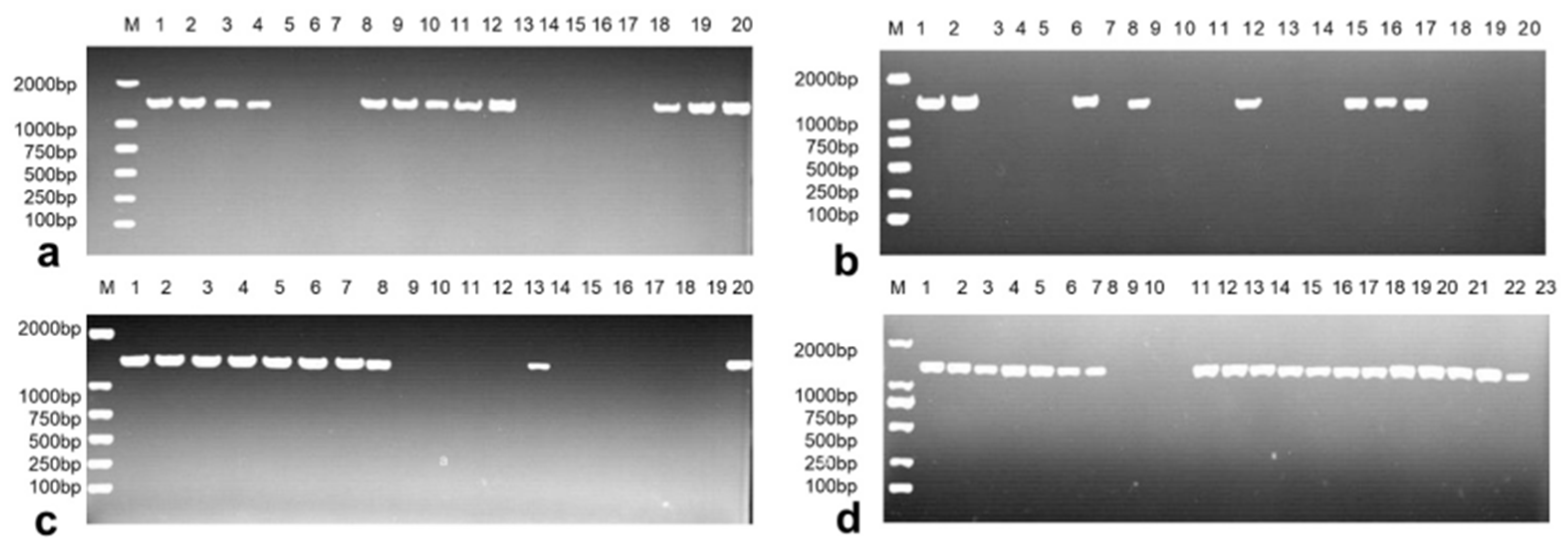
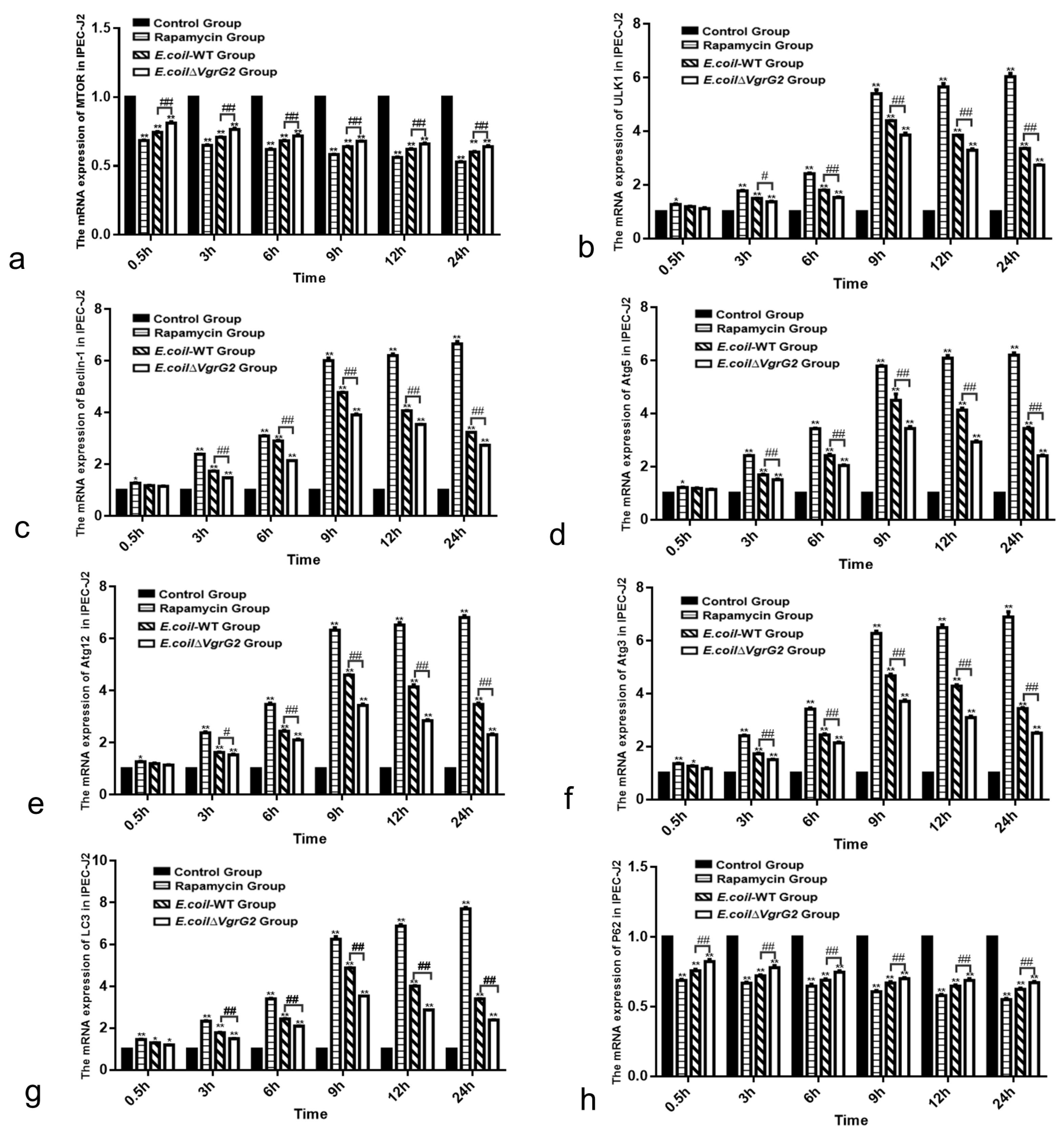
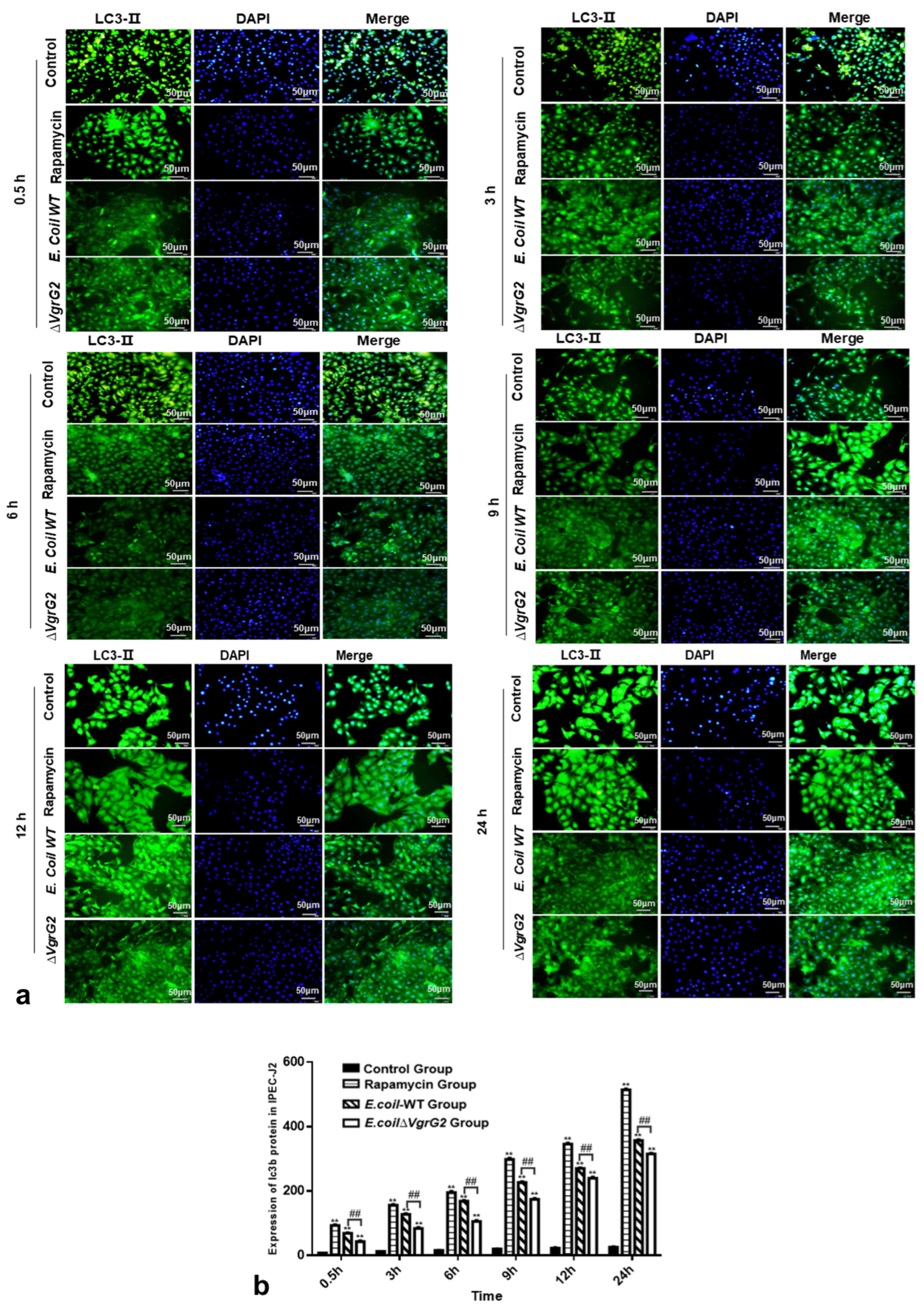
This study focuses on the efficacy of CRISPR/Cas9 technology in wild-type E. coli, a major pathogen responsible for foodborne illnesses and intestinal inflammation. The primary objective was to investigate the role of VgrG2, a key virulence factor, in enhancing E. coli pathogenicity. We screened E. coli strains harboring the VgrG2 gene, which were also susceptible to both kanamycin and spectinomycin, and successfully knocked out the VgrG2 gene using a dual-plasmid CRISPR/Cas9 system. The results showed that VgrG2 activated the mTOR signaling pathway, inhibited mTOR and p62 mRNA levels, upregulated autophagy-related genes, and increased the expression of the LC3-II protein. These findings enhance our understanding of the molecular mechanisms by which VgrG2 contributes to cellular damage and provide valuable insights into genome editing strategies for pathogenic bacteria, offering potential approaches for controlling bacterial infections and their associated health impacts.
Abstract
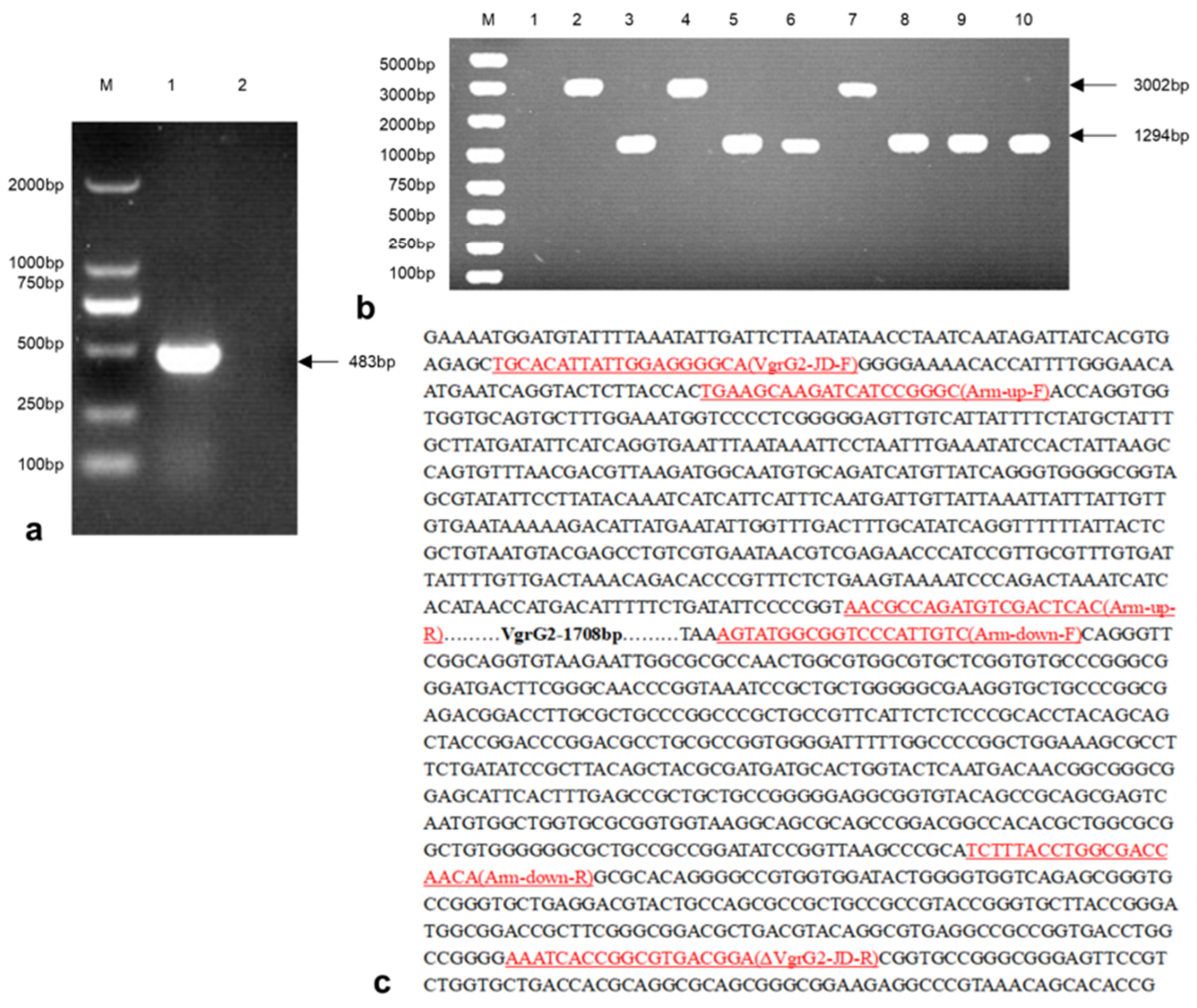
CRISPR/Cas9, as a well-established gene editing technology, has been applied in numerous model organisms, but its application in wild-type E. coli remains limited. Pathogenic wild-type E. coli, a major cause of foodborne illnesses and intestinal inflammation in humans and animals, poses a significant global public health threat. The valine-glycine repeat protein G (VgrG) is a key virulence factor that enhances E. coli pathogenicity. In this study, PCR was used to identify 50 strains carrying the virulence gene VgrG2 out of 83 wild pathogenic E. coli strains, with only one strain sensitive to kanamycin and spectinomycin. A homologous repair template for VgrG2 was constructed using overlap PCR. A dual-plasmid CRISPR/Cas9 system, combining pTarget (spectinomycin resistance) and pCas (kanamycin resistance) with Red homologous recombination, was then used to induce genomic cleavage and knock out VgrG2. PCR and sequencing confirmed the deletion of a 1708 bp fragment of the VgrG2 gene in wild-type E. coli. IPEC-J2 cells were infected with E. coli-WT and E. coli ∆VgrG2, and treated with the mTOR inhibitor rapamycin to study the effects of VgrG2 on the mTOR signaling pathway. The qPCR results showed that VgrG2 activated the mTOR pathway, suppressed mTOR and p62 mRNA levels, and upregulated the autophagy-related genes and LC3-II protein expression. In conclusion, we utilized CRISPR/Cas9 technology to achieve large-fragment deletions in wild-type E. coli, revealing that VgrG2 activates the mTOR signaling pathway and upregulates autophagy markers. These findings offer new insights into E. coli genome editing and clarifies the pathogenic mechanisms through which VgrG2 induces cellular damage.