
Evaluating a Response to a Canine Leptospirosis Outbreak in Dogs Using an Owner Survey



1
Animal and Veterinary Science Department, California State Polytechnic University, Pomona, CA 99701, USA
2
Biology Department, University of Wisconsin, La Crosse, WI 55601, USA
*
Author to whom correspondence should be addressed.
Vet. Sci. 2025, 12(2), 119; https://doi.org/10.3390/vetsci12020119
Submission received: 2 December 2024
/
Revised: 15 January 2025
/
Accepted: 21 January 2025
/
Published: 2 February 2025
(This article belongs to the Special Issue One Health Challenges and Opportunities—Animals, Humans and Their Interconnected Ecosystems)
Simple Summary
Leptospirosis is a bacterial zoonotic disease that spreads through contaminated soil and water or directly from infected animals through urine. In January 2022, a survey targeting Los Angeles County communities, in which a 2021 leptospirosis outbreak occurred, was sent out via groups on the online platforms Instagram and Facebook. A total of 102 dog owners completed the survey, and 90% reported having a primary veterinarian, 68% of the respondents were unaware of the outbreak, and 77% were unfamiliar with the signs and risks associated with leptospirosis. These data provide some insight into dog owners’ awareness and perceptions of leptospirosis and the 2021 outbreak.
Abstract
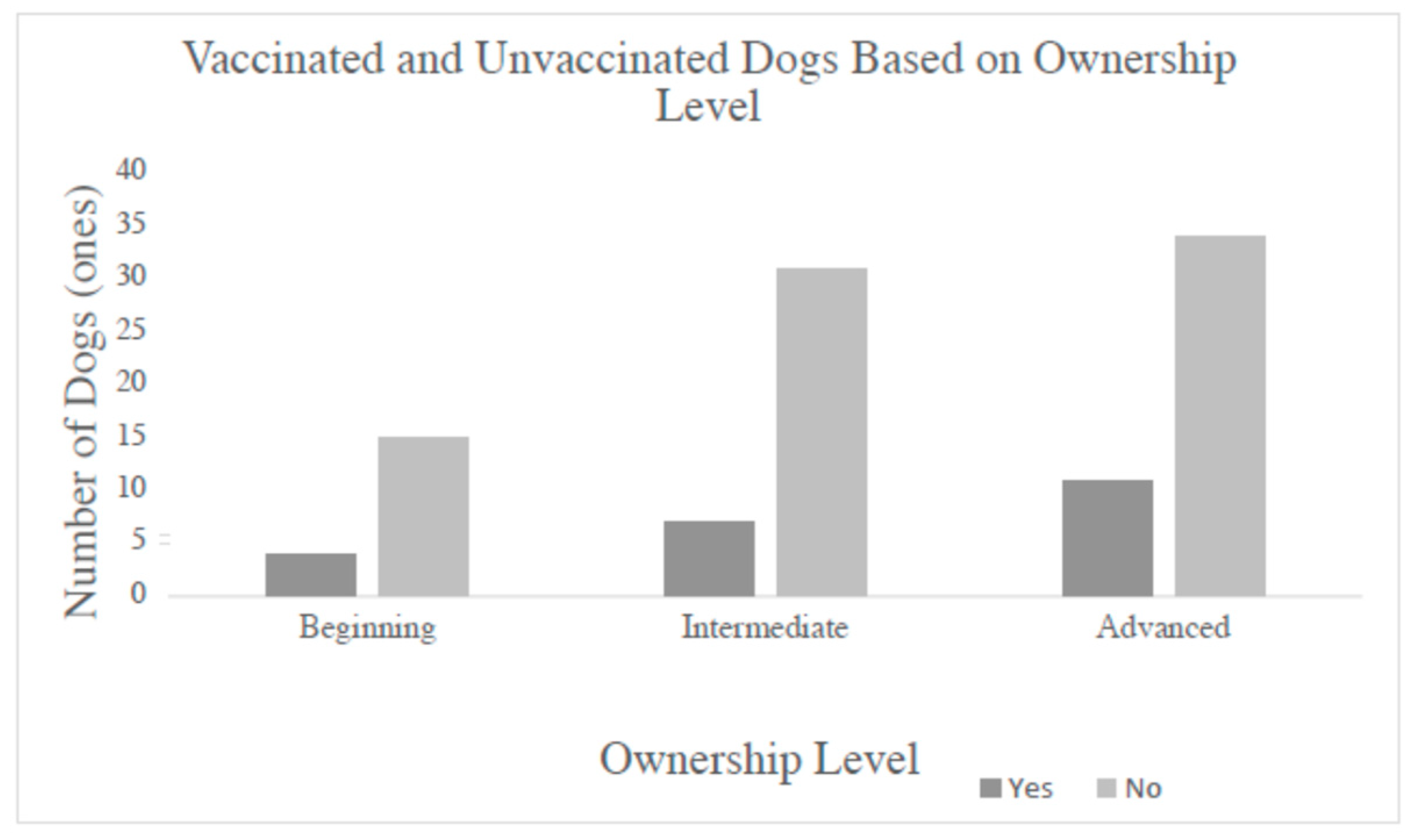
Leptospirosis is a bacterial zoonotic disease that spreads through contaminated soil and water or directly from infected animals through urine. Although animal-to-human transmission is low, humans are most susceptible to contracting leptospirosis from these contaminated sources. This makes leptospirosis a public health concern, and therefore it is important to control these bacteria from spreading into the environment. A survey targeting Los Angeles County communities, in which a 2021 leptospirosis outbreak occurred, was sent out via groups on the online platforms Instagram and Facebook to gather dog and owner demographics. With 92 (90.2%) respondents having a primary veterinarian, it could not be determined what caused certain owners to have a greater vaccination rate than those who did not (n = 10; 9.8%). Overall, 69 respondents (68%), regardless of whether they had a primary veterinarian or not, reported not knowing of canine leptospirosis and 79 (77%) not knowing the signs to look for or that it is zoonotic. These data help provide a basis in terms of the status of dog owners’ knowledge of leptospirosis and how to begin to inform dog owners better about preventatives for this disease.
Keywords:
canine leptospirosis; owner survey; outbreak; elective vaccinations