
Host-Microbe Interactions: Understanding the Mechanism of Autophagy in Viral Replication and Immune Evasion

 , , and
Simple Summary
Abstract
1. Introduction
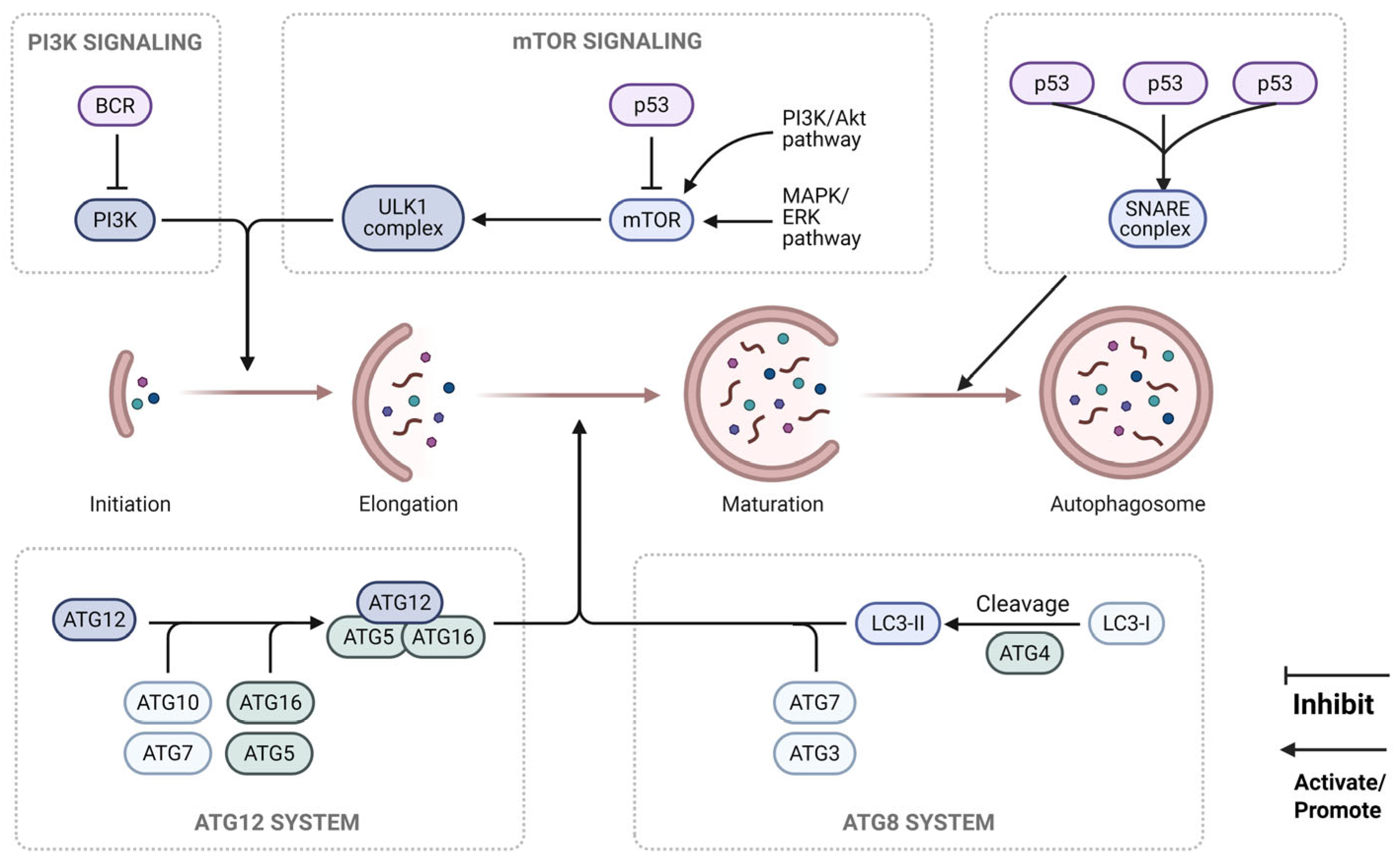
2. Molecular Mechanisms and Regulatory Networks of Autophagy
2.1. Core Molecular Mechanisms of Autophagy
2.2. Signaling Regulatory Networks of Autophagy
3. Interaction Between Viruses and Autophagy
3.1. Autophagy Participates in the Host Antiviral Response
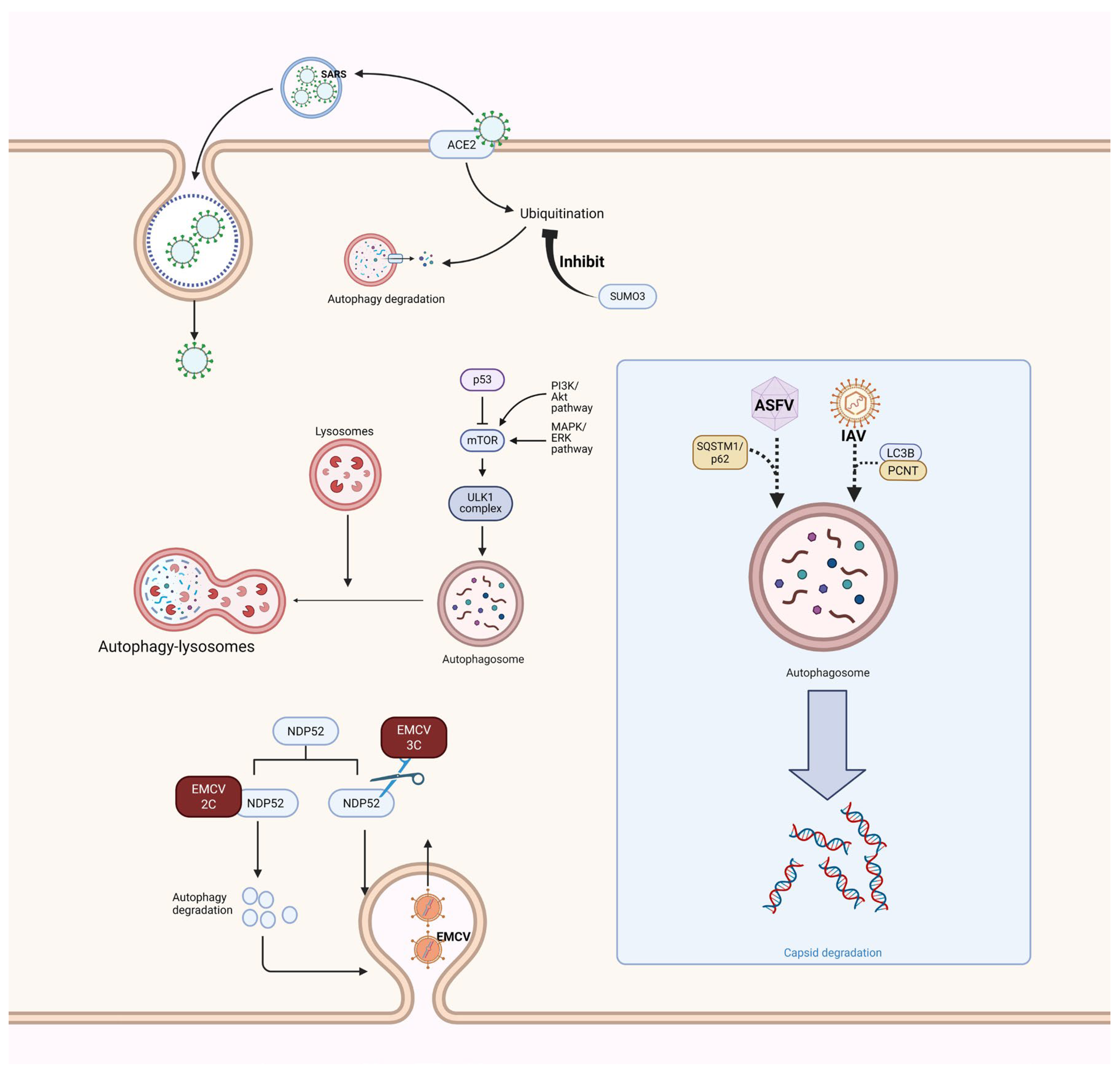
3.2. Viral Utilization of Autophagy to Promote Self-Invasion and Genome Release

| Mechanism of Action | Virus | Hijacked Autophagy Steps/Molecules | References |
|---|---|---|---|
| Stable viral receptor | SARS-CoV-2 | TOLLIP-mediated autophagic degradation pathway, Hsp70 | [33,35] |
| Create an invasion membrane platform | EBOV | PI3KC3 complex, autophagic membrane trafficking | [34,36] |
| HCV | Early endosome | [37] | |
| HIV-1 | LC3B, Atg8 | [38] | |
| Create an invasion membrane platform | ASFV | p62-mediated selective autophagy | [39] |
| DENV | p62, NDP52, TAX1BP1 | [40] | |
| IAV | LC3B, pericentrin (PCNT) | [41] |
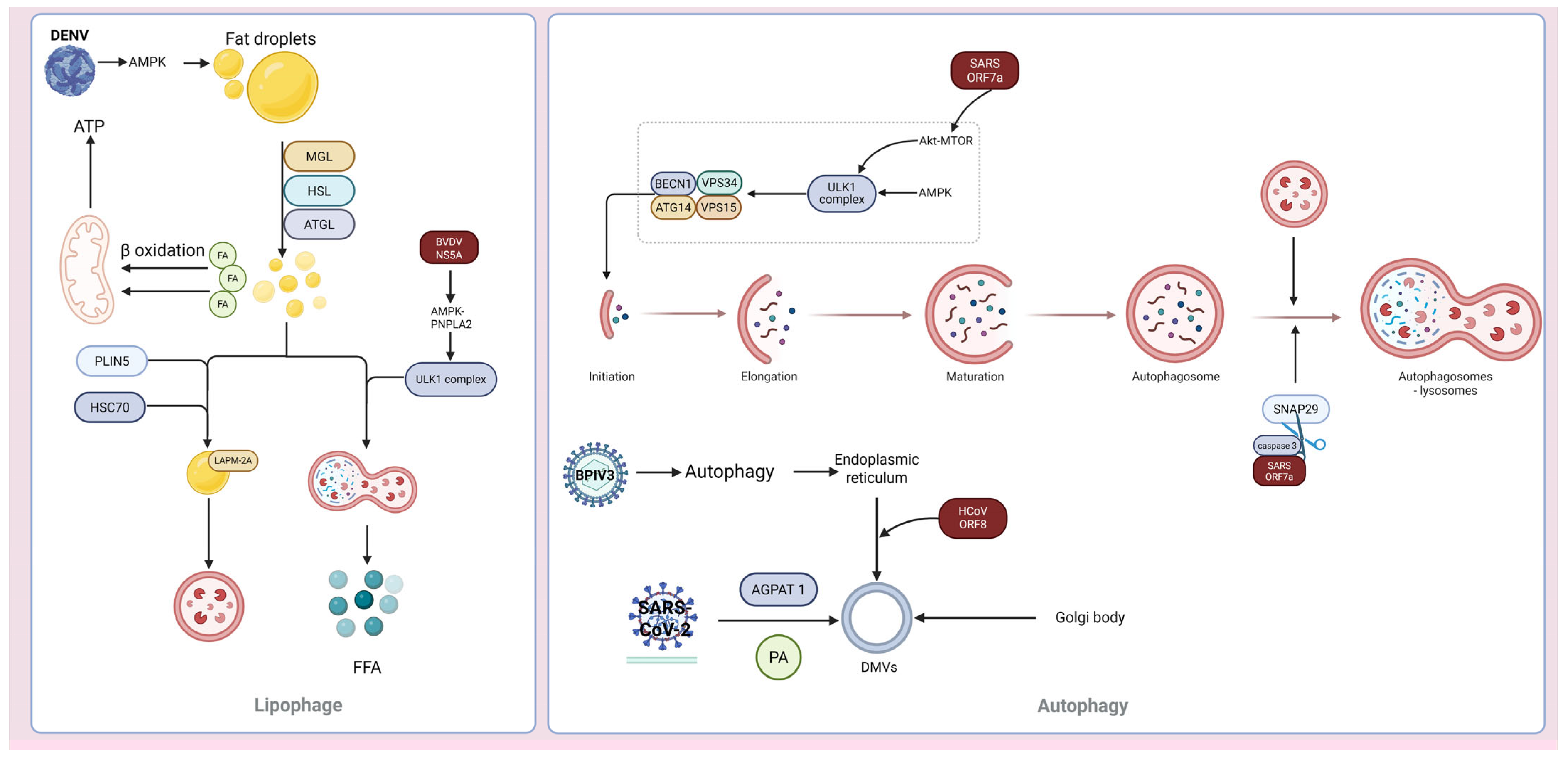
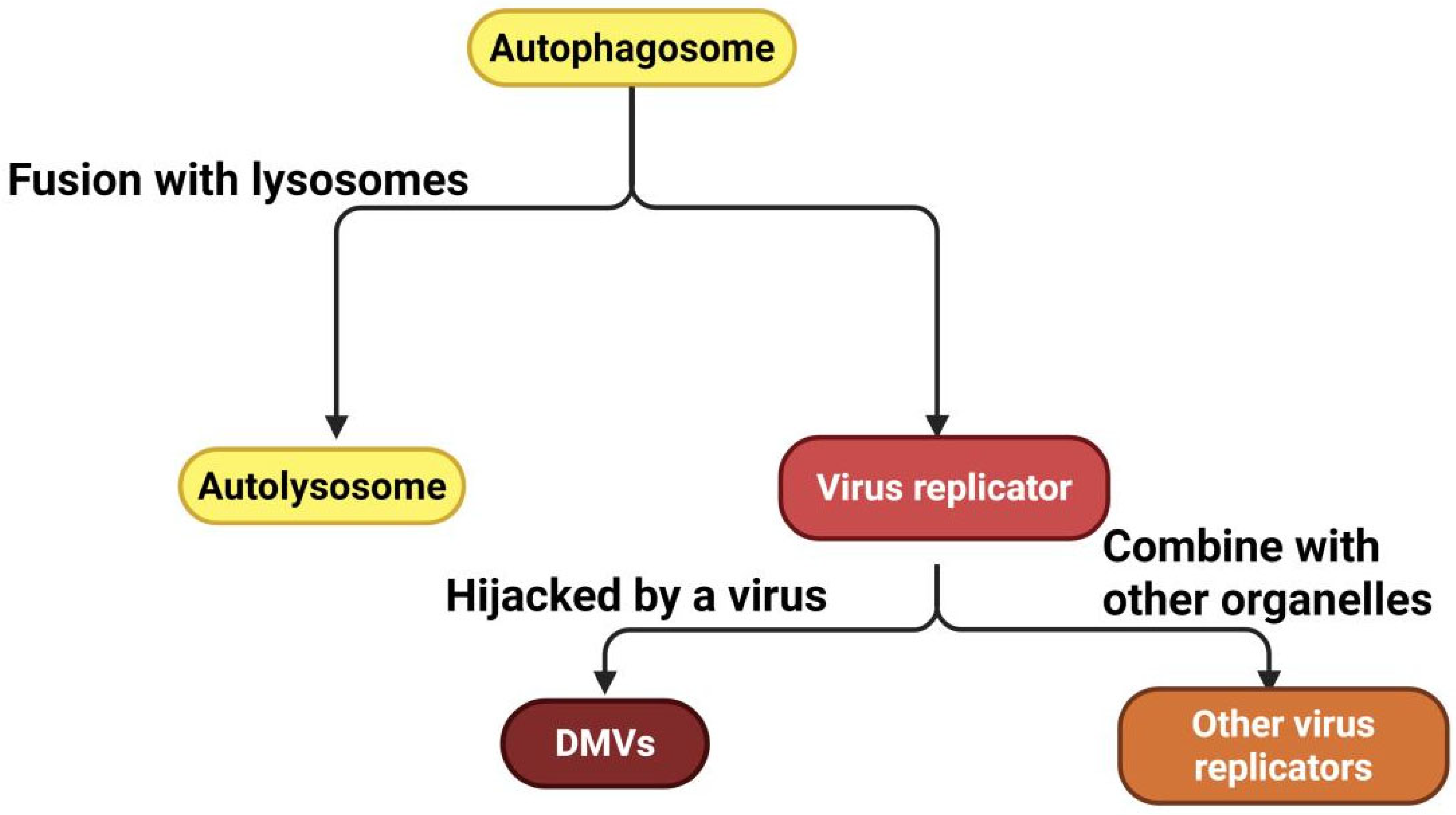
3.3. Viral Utilization of Autophagy to Enhance Replication
| Mechanism of Action | Virus | Hijacked Autophagy Steps/Molecules | References |
|---|---|---|---|
| Block autophagic flux and turn autophagosomes into replication factories | SARS-CoV-2 | ORF7a protein, SNAP29, SNARE complex, p62, endoplasmic reticulum autophagy receptors (FAM134B, ATL3), Phosphatidic acid (PA), AGPAT1/2 | [47,48] |
| BPIV3 | GRP78, ER stress | [49] | |
| HCV | Phosphatidic acid (PA), AGPAT1/2 | [45] | |
| Using the lipophagy complex | HCV | Lipid droplet, autophagosome | [51,52,53] |
| DENV | AMPK signaling pathway, lipophagy | [54,55] | |
| BVDV | NS5A protein, AMPK-PNPLA2 pathway | [56] |
3.4. Viral Utilization of Autophagy for Assembly and Release
| Mechanism of Action | Virus | Hijacked Autophagy Steps/Molecules | References |
|---|---|---|---|
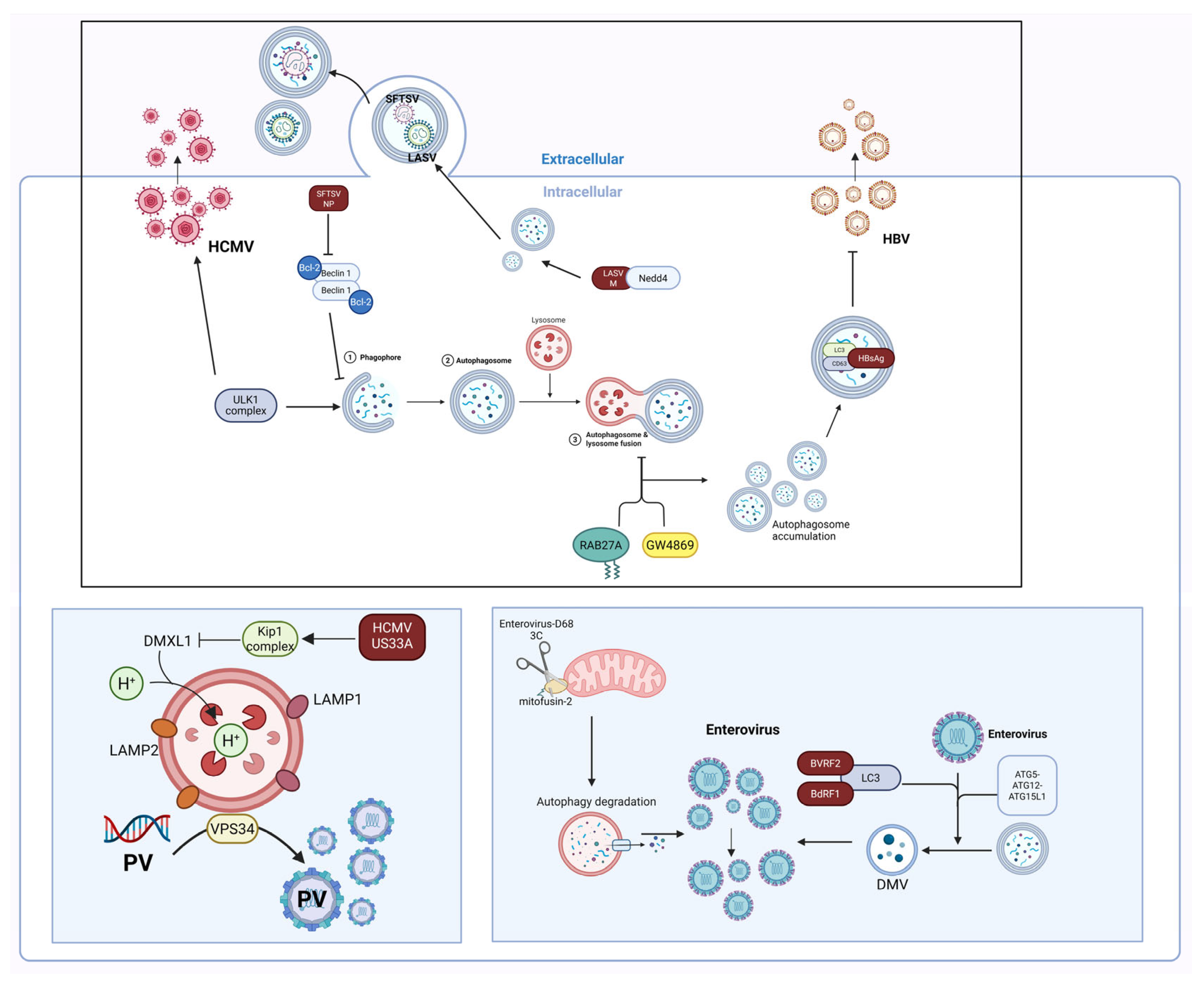
| Using autophagosomes/lysosomes as assembly platforms and release carriers | SFTSV | NP protein, BECN1, autophagosome | [58,59] |
| HCMV | US33A protein, DMXL1, lysosome, Kip1 complex | [60,61,62] | |
| IBDV | Autophagosome/lysosome, p62 | [63] | |
| lysesaviruses | E3 ubiquitin ligase Nedd4, autophagosomes | [64] | |
| Hijacking autophagy proteins as molecular scaffolds | HBV | Atg5-12-Atg16L1 complex | [11,56,70,71] |
| EBV | BVRF2, BdRF1, LC3-conjugating complex ATG5-ATG12-ATG16L1 | [67] | |
| Using autophagosome membranes for disguised release | HAV | LC3-positive ‘virus-like’ membrane vesicles | [73] |
3.5. Viral Regulation of Autophagy for Immune Evasion
| Targeted Immune Pathways/Molecules | Virus/Viral Protein | Autophagy Receptor Used | Brief Overview of Core Mechanism | References |
|---|---|---|---|---|
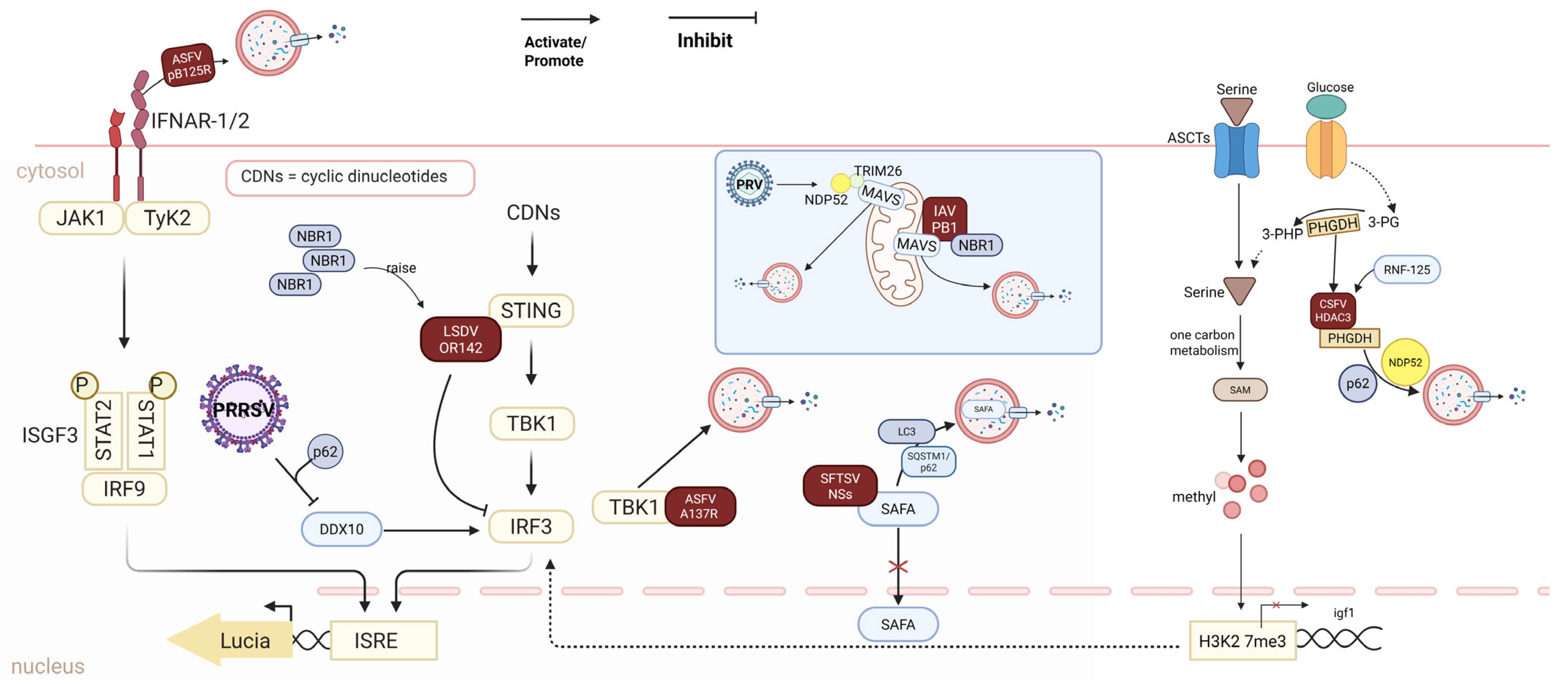
| MDA5 | ASFV MGF-360-4 L | p62/SQSTM1 | The viral protein acts as a bridge, recruiting p62 to MDA5 and mediating its autophagic degradation. | [75] |
| RIG-I | PRRSV NSP2 | SH3KBP1 (Indirect) | Enhance RIG-I ubiquitination, promote the autophagic degradation of the adaptor protein SH3KBP1, and disrupt signaling. | [76] |
| MAVS | IAV PB1 | NBR1 | E3 ligase is recruited to catalyze K27 ubiquitination of MAVS, which is recognized by NBR1 and mediates its autophagic degradation. | [30] |
| PRV (Through TRIM26) | NDP52 | Upregulate TRIM26, bridge MAVS and NDP52, and target MAVS for autophagic degradation. | [31] | |
| STING | LSDV ORF142 | NBR1 | The viral protein directly interacts with STING and recruits NBR1, guiding the autophagic degradation of STING. | [74] |
| IFNAR2 | ASFV pB125R | Unkonw | The viral protein directly binds to IFNAR2, promoting its autophagic degradation and blocking downstream signaling. | [77] |
| SAFA (Viral RNA sensor) | SFTSV NSs | p62/SQSTM1 | Retain nuclear SAFA in the cytoplasm and degrade it through p62-mediated selective autophagy. | [78,79] |
| PHGDH (Serine metabolism enzyme) | CSFV HDAC3 | p62, NDP52 | Deacetylates and degrades PHGDH, affects mitochondrial function, and indirectly inhibits the MAVS-IRF3 pathway. | [80] |
| TBK1 | ASFV A137R | Atg5-12-16L1 complex | It catalyzes K63-linked ubiquitination of TBK1 and directs it to lysosomal degradation via the autophagy complex. | [81] |
| DDX10 (helicase) | PRRSV E protein | p62/SQSTM1 | Induce the nucleocytoplasmic redistribution of DDX10 and degrade it through p62-dependent autophagy. | [82] |
| pDCs | EBV | TLR9/7, TNF-α | Affect the maturation of dendritic cells | [83,84,85] |
3.6. Interaction Between Enteroviruses and Autophagy
4. Summary and Outlook
Author Contributions
Funding
Institutional Review Board Statement
Informed Consent Statement
Data Availability Statement
Conflicts of Interest
References
- Chen, T.; Tu, S.; Ding, L.; Jin, M.; Chen, H.; Zhou, H. The role of autophagy in viral infections. J. Biomed. Sci. 2023, 30, 5. [Google Scholar] [CrossRef]
- Deretic, V.; Saitoh, T.; Akira, S. Autophagy in infection, inflammation and immunity. Nat. Rev. Immunol. 2013, 13, 722–737. [Google Scholar] [CrossRef]
- Zhou, P.; Zhang, Q.; Yang, Y.; Chen, D.; Jongkaewwattana, A.; Jin, H.; Zhou, H.; Luo, R. Avian TRIM13 attenuates antiviral innate immunity by targeting MAVS for autophagic degradation. Autophagy 2025, 21, 754–770. [Google Scholar] [CrossRef]
- Choi, Y.; Bowman, J.W.; Jung, J.U. Autophagy during viral infection-a double-edged sword. Nat. Rev. Microbiol. 2018, 16, 341–354. [Google Scholar] [CrossRef] [PubMed]
- Miao, G.; Zhao, H.; Li, Y.; Ji, M.; Chen, Y.; Shi, Y.; Bi, Y.; Wang, P.; Zhang, H. ORF3a of the COVID-19 virus SARS-CoV-2 blocks HOPS complex-mediated assembly of the SNARE complex required for autolysosome formation. Dev. Cell 2021, 56, 427–442.e5. [Google Scholar] [CrossRef]
- Zhou, D.; Spector, S.A. Human immunodeficiency virus type-1 infection inhibits autophagy. AIDS 2008, 22, 695–699. [Google Scholar] [CrossRef]
- Zachari, M.; Ganley, I.G. The mammalian ULK1 complex and autophagy initiation. Essays Biochem. 2017, 61, 585–596. [Google Scholar] [CrossRef]
- Jung, C.H.; Jun, C.B.; Ro, S.H.; Kim, Y.M.; Otto, N.M.; Cao, J.; Kundu, M.; Kim, D.H. ULK-Atg13-FIP200 complexes mediate mTOR signaling to the autophagy machinery. Mol. Biol. Cell 2009, 20, 1992–2003. [Google Scholar] [CrossRef] [PubMed]
- Tremel, S.; Ohashi, Y.; Morado, D.R.; Bertram, J.; Perisic, O.; Brandt, L.T.L.; von Wrisberg, M.K.; Chen, Z.A.; Maslen, S.L.; Kovtun, O.; et al. Structural basis for VPS34 kinase activation by Rab1 and Rab5 on membranes. Nat. Commun. 2021, 12, 1564. [Google Scholar] [CrossRef] [PubMed]
- Wu, Y.; Cheng, S.; Zhao, H.; Zou, W.; Yoshina, S.; Mitani, S.; Zhang, H.; Wang, X. PI3P phosphatase activity is required for autophagosome maturation and autolysosome formation. EMBO Rep. 2014, 15, 973–981. [Google Scholar] [CrossRef] [PubMed]
- Döring, T.; Zeyen, L.; Bartusch, C.; Prange, R. Hepatitis B Virus Subverts the Autophagy Elongation Complex Atg5-12/16L1 and Does Not Require Atg8/LC3 Lipidation for Viral Maturation. J. Virol. 2018, 92, e01513-17. [Google Scholar] [CrossRef]
- Otomo, C.; Metlagel, Z.; Takaesu, G.; Otomo, T. Structure of the human ATG12~ATG5 conjugate required for LC3 lipidation in autophagy. Nat. Struct. Mol. Biol. 2013, 20, 59–66. [Google Scholar] [CrossRef]
- Walczak, M.; Martens, S. Dissecting the role of the Atg12-Atg5-Atg16 complex during autophagosome formation. Autophagy 2013, 9, 424–425. [Google Scholar] [CrossRef]
- Gong, X.; Wang, Y.; Tang, Y.; Wang, Y.; Zhang, M.; Li, M.; Zhang, Y.; Pan, L. ATG16L1 adopts a dual-binding site mode to interact with WIPI2b in autophagy. Sci. Adv. 2023, 9, eadf0824. [Google Scholar] [CrossRef]
- Kabeya, Y.; Mizushima, N.; Ueno, T.; Yamamoto, A.; Kirisako, T.; Noda, T.; Kominami, E.; Ohsumi, Y.; Yoshimori, T. LC3, a mammalian homologue of yeast Apg8p, is localized in autophagosome membranes after processing. EMBO J. 2000, 19, 5720–5728. [Google Scholar] [CrossRef]
- Xu, Y.; Qian, C.; Wang, Q.; Song, L.; He, Z.; Liu, W.; Wan, W. Deacetylation of ATG7 drives the induction of macroautophagy and LC3-associated microautophagy. Autophagy 2024, 20, 1134–1146. [Google Scholar] [CrossRef] [PubMed]
- Nath, S.; Dancourt, J.; Shteyn, V.; Puente, G.; Fong, W.M.; Nag, S.; Bewersdorf, J.; Yamamoto, A.; Antonny, B.; Melia, T.J. Lipidation of the LC3/GABARAP family of autophagy proteins relies on a membrane-curvature-sensing domain in Atg3. Nat. Cell Biol. 2014, 16, 415–424. [Google Scholar] [CrossRef] [PubMed]
- Li, X.; He, S.; Ma, B. Autophagy and autophagy-related proteins in cancer. Mol. Cancer 2020, 19, 12. [Google Scholar] [CrossRef] [PubMed]
- Shpilka, T.; Weidberg, H.; Pietrokovski, S.; Elazar, Z. Atg8: An autophagy-related ubiquitin-like protein family. Genome Biol. 2011, 12, 226. [Google Scholar] [CrossRef]
- Ohsumi, Y. Historical landmarks of autophagy research. Cell Res. 2014, 24, 9–23. [Google Scholar] [CrossRef]
- Wei, Y.; Han, T.; Wang, R.; Wei, J.; Peng, K.; Lin, Q.; Shao, G. LSD1 negatively regulates autophagy through the mTOR signaling pathway in ovarian cancer cells. Oncol. Rep. 2018, 40, 425–433. [Google Scholar] [CrossRef] [PubMed]
- Kim, J.; Kundu, M.; Viollet, B.; Guan, K.L. AMPK and mTOR regulate autophagy through direct phosphorylation of Ulk1. Nat. Cell Biol. 2011, 13, 132–141. [Google Scholar] [CrossRef]
- Inoki, K.; Zhu, T.; Guan, K.L. TSC2 mediates cellular energy response to control cell growth and survival. Cell 2003, 115, 577–590. [Google Scholar] [CrossRef] [PubMed]
- Chen, M.; Liu, G.; Fang, Z.; Gao, W.; Song, Y.; Lei, L.; Du, X.; Li, X. Buddleoside alleviates nonalcoholic steatohepatitis by targeting the AMPK-TFEB signaling pathway. Autophagy 2025, 21, 1316–1334. [Google Scholar] [CrossRef]
- Oda, E.; Ohki, R.; Murasawa, H.; Nemoto, J.; Shibue, T.; Yamashita, T.; Tokino, T.; Taniguchi, T.; Tanaka, N. Noxa, a BH3-only member of the Bcl-2 family and candidate mediator of p53-induced apoptosis. Science 2000, 288, 1053–1058. [Google Scholar] [CrossRef] [PubMed]
- Baek, J.H.; Jung, J.; Seo, J.; Kim, J.H.; Kim, J. Bacterial Overexpression and Denaturing Purification of VPS34-Binding Domain of Beclin 1. J. Microbiol. Biotechnol. 2016, 26, 1808–1816. [Google Scholar] [CrossRef]
- Kong, N.; Shan, T.; Wang, H.; Jiao, Y.; Zuo, Y.; Li, L.; Tong, W.; Yu, L.; Jiang, Y.; Zhou, Y.; et al. BST2 suppresses porcine epidemic diarrhea virus replication by targeting and degrading virus nucleocapsid protein with selective autophagy. Autophagy 2020, 16, 1737–1752. [Google Scholar] [CrossRef]
- Thinwa, J.W.; Zou, Z.; Parks, E.; Sebti, S.; Hui, K.; Wei, Y.; Goodarzi, M.; Singh, V.; Urquhart, G.; Jewell, J.L.; et al. CDKL5 regulates p62-mediated selective autophagy and confers protection against neurotropic viruses. J. Clin. Investig. 2024, 134, e168544. [Google Scholar] [CrossRef]
- White, J.; Choi, Y.B.; Zhang, J.; Vo, M.T.; He, C.; Shaikh, K.; Harhaj, E.W. Phosphorylation of the selective autophagy receptor TAX1BP1 by TBK1 and IKBKE/IKKi promotes ATG8-family protein-dependent clearance of MAVS aggregates. Autophagy 2025, 21, 160–177. [Google Scholar] [CrossRef]
- Zeng, Y.; Xu, S.; Wei, Y.; Zhang, X.; Wang, Q.; Jia, Y.; Wang, W.; Han, L.; Chen, Z.; Wang, Z.; et al. The PB1 protein of influenza A virus inhibits the innate immune response by targeting MAVS for NBR1-mediated selective autophagic degradation. PLoS Pathog. 2021, 17, e1009300. [Google Scholar] [CrossRef]
- Chengyue, W.; Mengdong, W.; Xiaoquan, W.; Yeping, C.; Hao, L.; Liumei, S.; Jianle, R.; Zhendong, Z. TRIM26 facilitates PRV infection through NDP52-mediated autophagic degradation of MAVS. Vet. Res. 2024, 55, 84. [Google Scholar] [CrossRef] [PubMed]
- Greseth, M.D.; Traktman, P. The Life Cycle of the Vaccinia Virus Genome. Annu. Rev. Virol. 2022, 9, 239–259. [Google Scholar] [CrossRef] [PubMed]
- Jin, S.; He, X.; Ma, L.; Zhuang, Z.; Wang, Y.; Lin, M.; Cai, S.; Wei, L.; Wang, Z.; Zhao, Z.; et al. Suppression of ACE2 SUMOylation protects against SARS-CoV-2 infection through TOLLIP-mediated selective autophagy. Nat. Commun. 2022, 13, 5204. [Google Scholar] [CrossRef] [PubMed]
- Onnis, A.; Andreano, E.; Cassioli, C.; Finetti, F.; Della Bella, C.; Staufer, O.; Pantano, E.; Abbiento, V.; Marotta, G.; D’Elios, M.M.; et al. SARS-CoV-2 Spike protein suppresses CTL-mediated killing by inhibiting immune synapse assembly. J. Exp. Med. 2023, 220, e20220906. [Google Scholar] [CrossRef] [PubMed]
- Joshi, P.; Garg, S.; Mani, S.; Shoaib, R.; Jakhar, K.; Almuqdadi, H.T.A.; Sonar, S.; Marothia, M.; Behl, A.; Biswas, S.; et al. Targeting host inducible-heat shock protein 70 with PES-Cl is a promising antiviral strategy against SARS-CoV-2 infection and pathogenesis. Int. J. Biol. Macromol. 2024, 279, 135069. [Google Scholar] [CrossRef]
- Shtanko, O.; Reyes, A.N.; Jackson, W.T.; Davey, R.A. Autophagy-Associated Proteins Control Ebola Virus Internalization Into Host Cells. J. Infect. Dis. 2018, 218, S346–S354. [Google Scholar] [CrossRef]
- Su, W.C.; Chao, T.C.; Huang, Y.L.; Weng, S.C.; Jeng, K.S.; Lai, M.M. Rab5 and class III phosphoinositide 3-kinase Vps34 are involved in hepatitis C virus NS4B-induced autophagy. J. Virol. 2011, 85, 10561–10571. [Google Scholar] [CrossRef] [PubMed]
- Pradel, B.; Cantaloube, G.; Villares, M.; Deffieu, M.S.; Robert-Hebmann, V.; Lucansky, V.; Faure, M.; Chazal, N.; Gaudin, R.; Espert, L. LC3B conjugation machinery promotes autophagy-independent HIV-1 entry in CD4+ T lymphocytes. Autophagy 2024, 20, 1825–1836. [Google Scholar] [CrossRef] [PubMed]
- Song, J.; Li, J.; Li, S.; Zhao, G.; Li, T.; Chen, X.; Hu, B.; Liu, J.; Lai, X.; Liu, S.; et al. Autophagy promotes p72 degradation and capsid disassembly during the early phase of African swine fever virus infection. J. Virol. 2025, 99, e0170124. [Google Scholar] [CrossRef]
- Wu, Y.; Zhou, T.; Hu, J.; Liu, Y.; Jin, S.; Wu, J.; Guan, X.; Cui, J. Autophagy Activation Induces p62-Dependent Autophagic Degradation of Dengue Virus Capsid Protein During Infection. Front. Microbiol. 2022, 13, 889693. [Google Scholar] [CrossRef]
- Cong, Y.; Verlhac, P.; Green, B.B.; de Vries-Idema, J.; Strauss, L.M.; Río-Bergé, C.; Etzerodt, A.; Nejsum, L.N.; Huckriede, A.L.W.; Reggiori, F. Influenza A virus subverts the LC3-pericentrin dynein adaptor complex for host cytoplasm entry. Sci. Adv. 2025, 11, eadu7602. [Google Scholar] [CrossRef] [PubMed]
- McFarlane, S.; Aitken, J.; Sutherland, J.S.; Nicholl, M.J.; Preston, V.G.; Preston, C.M. Early induction of autophagy in human fibroblasts after infection with human cytomegalovirus or herpes simplex virus 1. J. Virol. 2011, 85, 4212–4221. [Google Scholar] [CrossRef]
- Wileman, T. Aggresomes and autophagy generate sites for virus replication. Science 2006, 312, 875–878. [Google Scholar] [CrossRef] [PubMed]
- Pei, J.; Zhao, M.; Ye, Z.; Gou, H.; Wang, J.; Yi, L.; Dong, X.; Liu, W.; Luo, Y.; Liao, M.; et al. Autophagy enhances the replication of classical swine fever virus in vitro. Autophagy 2014, 10, 93–110. [Google Scholar] [CrossRef]
- Tabata, K.; Prasad, V.; Paul, D.; Lee, J.Y.; Pham, M.T.; Twu, W.I.; Neufeldt, C.J.; Cortese, M.; Cerikan, B.; Stahl, Y.; et al. Convergent use of phosphatidic acid for hepatitis C virus and SARS-CoV-2 replication organelle formation. Nat. Commun. 2021, 12, 7276. [Google Scholar] [CrossRef]
- Twu, W.I.; Lee, J.Y.; Kim, H.; Prasad, V.; Cerikan, B.; Haselmann, U.; Tabata, K.; Bartenschlager, R. Contribution of autophagy machinery factors to HCV and SARS-CoV-2 replication organelle formation. Cell Rep. 2021, 37, 110049. [Google Scholar] [CrossRef]
- Cortese, M.; Lee, J.Y.; Cerikan, B.; Neufeldt, C.J.; Oorschot, V.M.J.; Köhrer, S.; Hennies, J.; Schieber, N.L.; Ronchi, P.; Mizzon, G.; et al. Integrative Imaging Reveals SARS-CoV-2-Induced Reshaping of Subcellular Morphologies. Cell Host Microbe 2020, 28, 853–866.e5. [Google Scholar] [CrossRef]
- Tan, X.; Cai, K.; Li, J.; Yuan, Z.; Chen, R.; Xiao, H.; Xu, C.; Hu, B.; Qin, Y.; Ding, B. Coronavirus subverts ER-phagy by hijacking FAM134B and ATL3 into p62 condensates to facilitate viral replication. Cell Rep. 2023, 42, 112286. [Google Scholar] [CrossRef] [PubMed]
- Han, Y.; Wang, C.; Bai, C.; Diao, E.; Yuan, B.; Lu, K.; Dong, X.; Zhang, R.; Han, B.; Liu, H.; et al. Bovine parainfluenza virus type 3 infections induce ER stress-mediated autophagy to facilitate virus replication. Vet. Microbiol. 2024, 292, 110051. [Google Scholar] [CrossRef] [PubMed]
- Song, M.S.; Sim, H.J.; Noh, S.H.; Malhotra, V.; Lee, M.G. ER tubular body: An ER-derived compartment for redirecting autophagy to secretory functions. Autophagy 2025, 21, 2082–2084. [Google Scholar] [CrossRef]
- Vieyres, G.; Reichert, I.; Carpentier, A.; Vondran, F.W.R.; Pietschmann, T. The ATGL lipase cooperates with ABHD5 to mobilize lipids for hepatitis C virus assembly. PLoS Pathog. 2020, 16, e1008554. [Google Scholar] [CrossRef] [PubMed]
- He, A.; Dean, J.M.; Lu, D.; Chen, Y.; Lodhi, I.J. Hepatic peroxisomal β-oxidation suppresses lipophagy via RPTOR acetylation and MTOR activation. Autophagy 2020, 16, 1727–1728. [Google Scholar] [CrossRef]
- Meyers, N.L.; Fontaine, K.A.; Kumar, G.R.; Ott, M. Entangled in a membranous web: ER and lipid droplet reorganization during hepatitis C virus infection. Curr. Opin. Cell Biol. 2016, 41, 117–124. [Google Scholar] [CrossRef] [PubMed]
- Zhang, J.; Lan, Y.; Li, M.Y.; Lamers, M.M.; Fusade-Boyer, M.; Klemm, E.; Thiele, C.; Ashour, J.; Sanyal, S. Flaviviruses Exploit the Lipid Droplet Protein AUP1 to Trigger Lipophagy and Drive Virus Production. Cell Host Microbe 2018, 23, 819–831.e5. [Google Scholar] [CrossRef]
- Liu, B.; Gao, T.T.; Fu, X.Y.; Xu, Z.H.; Ren, H.; Zhao, P.; Qi, Z.T.; Qin, Z.L. PTEN Lipid Phosphatase Activity Enhances Dengue Virus Production through Akt/FoxO1/Maf1 Signaling. Virol. Sin. 2021, 36, 412–423. [Google Scholar] [CrossRef] [PubMed]
- Döring, T.; Prange, R. Rab33B and its autophagic Atg5/12/16L1 effector assist in hepatitis B virus naked capsid formation and release. Cell. Microbiol. 2015, 17, 747–764. [Google Scholar] [CrossRef]
- Liu, C.C.; Liu, Y.Y.; Zhou, J.F.; Chen, X.; Chen, H.; Hu, J.H.; Chen, J.; Zhang, J.; Sun, R.C.; Wei, J.C.; et al. Cellular ESCRT components are recruited to regulate the endocytic trafficking and RNA replication compartment assembly during classical swine fever virus infection. PLoS Pathog. 2022, 18, e1010294. [Google Scholar] [CrossRef]
- Liu, S.; Su, Y.; Lu, Z.; Zou, X.; Xu, L.; Teng, Y.; Wang, Z.; Wang, T. The SFTSV Nonstructural Proteins Induce Autophagy to Promote Viral Replication via Interaction with Vimentin. J. Virol. 2023, 97, e0030223. [Google Scholar] [CrossRef]
- Yan, J.M.; Zhang, W.K.; Yan, L.N.; Jiao, Y.J.; Zhou, C.M.; Yu, X.J. Bunyavirus SFTSV exploits autophagic flux for viral assembly and egress. Autophagy 2022, 18, 1599–1612. [Google Scholar] [CrossRef]
- Chuang, Y.-C.; Ou, J.-H.J. Effects of cellular membranes and the precore protein on hepatitis B virus core particle assembly and DNA replication. mBio 2025, 16, e0397224. [Google Scholar] [CrossRef]
- Cepeda, V.; Esteban, M.; Fraile-Ramos, A. Human cytomegalovirus final envelopment on membranes containing both trans-Golgi network and endosomal markers. Cell. Microbiol. 2010, 12, 386–404. [Google Scholar] [CrossRef]
- Li, H.; Fletcher-Etherington, A.; Hunter, L.M.; Keshri, S.; Fielding, C.A.; Nightingale, K.; Ravenhill, B.; Nobre, L.; Potts, M.; Antrobus, R.; et al. Human cytomegalovirus degrades DMXL1 to inhibit autophagy, lysosomal acidification, and viral assembly. Cell Host Microbe 2024, 32, 466–478.e11. [Google Scholar] [CrossRef]
- Wang, Y.; Duan, Y.; Han, C.; Yao, S.; Qi, X.; Gao, Y.; Maier, H.J.; Britton, P.; Chen, L.; Zhang, L.; et al. Infectious Bursal Disease Virus Subverts Autophagic Vacuoles To Promote Viral Maturation and Release. J. Virol. 2017, 91, e01883-16. [Google Scholar] [CrossRef] [PubMed]
- Yuan, Y.; Fang, A.; Wang, H.; Wang, C.; Sui, B.; Zhao, J.; Fu, Z.F.; Zhou, M.; Zhao, L. Lyssavirus M protein degrades neuronal microtubules by reprogramming mitochondrial metabolism. mBio 2024, 15, e0288023. [Google Scholar] [CrossRef] [PubMed]
- Granato, M.; Santarelli, R.; Farina, A.; Gonnella, R.; Lotti, L.V.; Faggioni, A.; Cirone, M. Epstein-barr virus blocks the autophagic flux and appropriates the autophagic machinery to enhance viral replication. J. Virol. 2014, 88, 12715–12726. [Google Scholar] [CrossRef]
- Nowag, H.; Guhl, B.; Thriene, K.; Romao, S.; Ziegler, U.; Dengjel, J.; Münz, C. Macroautophagy Proteins Assist Epstein Barr Virus Production and Get Incorporated into the Virus Particles. eBioMedicine 2014, 1, 116–125. [Google Scholar] [CrossRef]
- Pena-Francesch, M.; Vanoaica, L.D.; Zhu, G.F.; Stumpe, M.; Sankar, D.S.; Nowag, H.; Valencia-Camargo, A.D.; Hammerschmidt, W.; Dengjel, J.; Ligeon, L.A.; et al. The autophagy machinery interacts with EBV capsids during viral envelope release. Proc. Natl. Acad. Sci. USA 2023, 120, e2211281120. [Google Scholar] [CrossRef]
- Wang, T.; Zhang, L.; Liang, W.; Liu, S.; Deng, W.; Liu, Y.; Liu, Y.; Song, M.; Guo, K.; Zhang, Y. Extracellular vesicles originating from autophagy mediate an antibody-resistant spread of classical swine fever virus in cell culture. Autophagy 2022, 18, 1433–1449. [Google Scholar] [CrossRef] [PubMed]
- Feng, Z.; Hensley, L.; McKnight, K.L.; Hu, F.; Madden, V.; Ping, L.; Jeong, S.H.; Walker, C.; Lanford, R.E.; Lemon, S.M. A pathogenic picornavirus acquires an envelope by hijacking cellular membranes. Nature 2013, 496, 367–371. [Google Scholar] [CrossRef]
- Watanabe, T.; Sorensen, E.M.; Naito, A.; Schott, M.; Kim, S.; Ahlquist, P. Involvement of host cellular multivesicular body functions in hepatitis B virus budding. Proc. Natl. Acad. Sci. USA 2007, 104, 10205–10210. [Google Scholar] [CrossRef]
- Li, J.; Kemper, T.; Broering, R.; Lin, Y.; Wang, X.; Lu, M. Amphisome plays a role in HBV production and release through the endosomal and autophagic pathways. Hepatol. Commun. 2025, 9, e0654. [Google Scholar] [CrossRef]
- Langelier, Y.; Bergeron, S.; Chabaud, S.; Lippens, J.; Guilbault, C.; Sasseville, A.M.; Denis, S.; Mosser, D.D.; Massie, B. The R1 subunit of herpes simplex virus ribonucleotide reductase protects cells against apoptosis at, or upstream of, caspase-8 activation. J. Gen. Virol. 2002, 83, 2779–2789. [Google Scholar] [CrossRef]
- Marino-Merlo, F.; Klett, A.; Papaianni, E.; Drago, S.F.A.; Macchi, B.; Rincón, M.G.; Andreola, F.; Serafino, A.; Grelli, S.; Mastino, A.; et al. Caspase-8 is required for HSV-1-induced apoptosis and promotes effective viral particle release via autophagy inhibition. Cell Death Differ. 2023, 30, 885–896. [Google Scholar] [CrossRef]
- Wang, J.; Wang, Z.; Wan, S.; Ye, S.; Li, Q.; Liu, Y.; Liu, X.; Chen, Z.; Liu, S.; Xie, Q.; et al. Lumpy skin disease virus ORF142 suppresses the cGAS/STING-mediated IFN-I pathway through NBR1-mediated STING autophagic degradation. Microb. Pathog. 2025, 208, 107959. [Google Scholar] [CrossRef]
- Sun, H.; Yang, J.; Zhang, Z.; Wu, M.; Tian, Z.; Liu, Y.; Zhang, X.; Zhong, J.; Yang, S.; Chen, Y.; et al. The African swine fever virus gene MGF_360-4L inhibits interferon signaling by recruiting mitochondrial selective autophagy receptor SQSTM1 degrading MDA5 antagonizing innate immune responses. mBio 2025, 16, e0267724. [Google Scholar] [CrossRef]
- Li, J.; Zhang, J.; Sun, P.; Wang, J.; Li, G.; Cui, Z.; Li, D.; Yuan, H.; Wang, T.; Li, K.; et al. Porcine reproductive and respiratory syndrome virus nonstructural protein 2 promotes the autophagic degradation of adaptor protein SH3KBP1 to antagonize host innate immune responses by enhancing K63-linked polyubiquitination of RIG-I. PLoS Pathog. 2024, 20, e1012670. [Google Scholar] [CrossRef] [PubMed]
- Fan, J.H.; Zhao, Y.Y.; Ma, Y.H.; Pan, X.Y.; Shao, H.C.; Zi, M.H.; Ren, H.; Zhang, Y.; Han, S.; Wan, B.; et al. The African swine fever virus B125R protein antagonizes JAK-STAT signalling by promoting the degradation of IFNAR2. Vet. Res. 2025, 56, 87. [Google Scholar] [CrossRef] [PubMed]
- Li, Z.M.; Duan, S.H.; Yu, T.M.; Li, B.; Zhang, W.K.; Zhou, C.M.; Yu, X.J. Bunyavirus SFTSV NSs utilizes autophagy to escape the antiviral innate immune response. Autophagy 2024, 20, 2133–2145. [Google Scholar] [CrossRef] [PubMed]
- Yu, T.M.; Li, Z.M.; Zhang, W.K.; Li, B.; Liu, Q.; Zhou, C.M.; Yu, X.J. SFTSV NSs degrades SAFA via autophagy to suppress SAFA-dependent antiviral response. PLoS Pathog. 2025, 21, e1013201. [Google Scholar] [CrossRef]
- Li, X.; Huang, Y.; Liu, X.; Zhang, L.; Wang, X.; Zhao, F.; Zou, L.; Wu, K.; Chen, W.; Qin, Y.; et al. Classical swine fever virus inhibits serine metabolism-mediated antiviral immunity by deacetylating modified PHGDH. mBio 2024, 15, e0209724. [Google Scholar] [CrossRef]
- Sun, M.; Yu, S.; Ge, H.; Wang, T.; Li, Y.; Zhou, P.; Pan, L.; Han, Y.; Yang, Y.; Sun, Y.; et al. The A137R Protein of African Swine Fever Virus Inhibits Type I Interferon Production via the Autophagy-Mediated Lysosomal Degradation of TBK1. J. Virol. 2022, 96, e0195721. [Google Scholar] [CrossRef] [PubMed]
- Li, J.; Zhou, Y.; Zhao, W.; Liu, J.; Ullah, R.; Fang, P.; Fang, L.; Xiao, S. Porcine reproductive and respiratory syndrome virus degrades DDX10 via SQSTM1/p62-dependent selective autophagy to antagonize its antiviral activity. Autophagy 2023, 19, 2257–2274. [Google Scholar] [CrossRef]
- Quan, T.E.; Roman, R.M.; Rudenga, B.J.; Holers, V.M.; Craft, J.E. Epstein-Barr virus promotes interferon-alpha production by plasmacytoid dendritic cells. Arthritis Rheumatol. 2010, 62, 1693–1701. [Google Scholar] [CrossRef] [PubMed]
- Fiola, S.; Gosselin, D.; Takada, K.; Gosselin, J. TLR9 contributes to the recognition of EBV by primary monocytes and plasmacytoid dendritic cells. J. Immunol. 2010, 185, 3620–3631. [Google Scholar] [CrossRef]
- Severa, M.; Giacomini, E.; Gafa, V.; Anastasiadou, E.; Rizzo, F.; Corazzari, M.; Romagnoli, A.; Trivedi, P.; Fimia, G.M.; Coccia, E.M. EBV stimulates TLR- and autophagy-dependent pathways and impairs maturation in plasmacytoid dendritic cells: Implications for viral immune escape. Eur. J. Immunol. 2013, 43, 147–158. [Google Scholar] [CrossRef]
- Shi, X.; Chen, Z.; Tang, S.; Wu, F.; Xiong, S.; Dong, C. Coxsackievirus B3 infection induces autophagic flux, and autophagosomes are critical for efficient viral replication. Arch. Virol. 2016, 161, 2197–2205. [Google Scholar] [CrossRef] [PubMed]
- Mohamud, Y.; Shi, J.; Qu, J.; Poon, T.; Xue, Y.C.; Deng, H.; Zhang, J.; Luo, H. Enteroviral Infection Inhibits Autophagic Flux via Disruption of the SNARE Complex to Enhance Viral Replication. Cell Rep. 2018, 22, 3292–3303. [Google Scholar] [CrossRef]
- Richards, A.L.; Jackson, W.T. Intracellular vesicle acidification promotes maturation of infectious poliovirus particles. PLoS Pathog. 2012, 8, e1003046. [Google Scholar] [CrossRef]
- Dahmane, S.; Kerviel, A.; Morado, D.R.; Shankar, K.; Ahlman, B.; Lazarou, M.; Altan-Bonnet, N.; Carlson, L.A. Membrane-assisted assembly and selective secretory autophagy of enteroviruses. Nat. Commun. 2022, 13, 5986. [Google Scholar] [CrossRef]
- Mutsafi, Y.; Altan-Bonnet, N. Enterovirus Transmission by Secretory Autophagy. Viruses 2018, 10, 139. [Google Scholar] [CrossRef]
- Bird, S.W.; Maynard, N.D.; Covert, M.W.; Kirkegaard, K. Nonlytic viral spread enhanced by autophagy components. Proc. Natl. Acad. Sci. USA 2014, 111, 13081–13086. [Google Scholar] [CrossRef]
- Robinson, S.M.; Tsueng, G.; Sin, J.; Mangale, V.; Rahawi, S.; McIntyre, L.L.; Williams, W.; Kha, N.; Cruz, C.; Hancock, B.M.; et al. Coxsackievirus B exits the host cell in shed microvesicles displaying autophagosomal markers. PLoS Pathog. 2014, 10, e1004045. [Google Scholar] [CrossRef]
- Jassey, A.; Paudel, B.; Wagner, M.A.; Pollack, N.; Cheng, I.T.; Godoy-Ruiz, R.; Weber, D.J.; Jackson, W.T. Mitophagosomes induced during EV-D68 infection promote viral nonlytic release. bioRxiv 2024. bioRxiv:2024.12.05.627125. [Google Scholar] [CrossRef]
- Li, K.; Chen, D.; Zhao, K.; Liu, D.; Kong, D.; Sun, Y.; Guan, A.; Zhou, P.; Jin, H.; Jongkaewwattana, A.; et al. Cleavage of the selective autophagy receptor NBR1 by the PDCoV main protease NSP5 impairs autophagic degradation of the viral envelope protein. Autophagy 2025, 21, 1507–1522. [Google Scholar] [CrossRef]
- Liu, X.; Wang, Q. Effect of natural products on host cell autophagy induced by Influenza A virus infection. Front. Cell Infect. Microbiol. 2024, 14, 1460604. [Google Scholar] [CrossRef] [PubMed]
- Alsaady, I.M.; Bajrai, L.H.; Alandijany, T.A.; Gattan, H.S.; El-Daly, M.M.; Altwaim, S.A.; Alqawas, R.T.; Dwivedi, V.D.; Azhar, E.I. Cheminformatics Strategies Unlock Marburg Virus VP35 Inhibitors from Natural Compound Library. Viruses 2023, 15, 1739. [Google Scholar] [CrossRef]
- Cursaro, I.; Rossi, S.; Butini, S.; Gemma, S.; Carullo, G.; Campiani, G. A Focus on Natural Autophagy Modulators as Potential Host-Directed Weapons Against Emerging and Re-Emerging Viruses. Med. Res. Rev. 2025, 45, 1850–1882. [Google Scholar] [CrossRef] [PubMed]
- Moon, J.H.; Munna, A.N.; Hong, J.M.; Seol, J.W.; Park, S.Y. HIF-1α stabilization inhibits Japanese encephalitis virus propagation and neurotoxicity via autophagy pathways. Biochem. Biophys. Res. Commun. 2024, 736, 150853. [Google Scholar] [CrossRef] [PubMed]
- Sasaki-Tanaka, R.; Shibata, T.; Moriyama, M.; Okamoto, H.; Kogure, H.; Kanda, T. Amantadine and Rimantadine Inhibit Hepatitis A Virus Replication through the Induction of Autophagy. J. Virol. 2022, 96, e0064622. [Google Scholar] [CrossRef]
- Guo, F.; Liu, X.; Cai, H.; Le, W. Autophagy in neurodegenerative diseases: Pathogenesis and therapy. Brain Pathol. 2018, 28, 3–13. [Google Scholar] [CrossRef] [PubMed]


| Phase/Pathway | Core Molecule/Complex | Main Functions | References |
|---|---|---|---|
| Core process | |||
| Start | ULK1 complex (ULK1/2, Atg13, FIP200, Atg101) | Responds to upstream signals (e.g., mTORC1 inhibition) to initiate autophagy. | [7] |
| Nucleation | PI3K III complex (Beclin1-Vps34-Vps15-ATG14) | Generates PI3P, recruits downstream effector proteins, and forms a phagosome. | [8,9,10] |
| Extend | Atg12-Atg5-Atg16L1 complex | The Atg12-Atg5-Atg16L1 complex promotes LC3 lipidation as an E3-like enzyme | [11,12,13,14,15,16,17] |
| LC3 family | LC3-I is lipidated to LC3-II and anchored to the membrane, driving the elongation and closure of the autophagosome membrane. | ||
| Fusion and Degradation | SNARE complex (e.g., Syntaxin17, SNAP29, VAMP8) and HOPS complex | Mediates the fusion of autophagosomes with lysosomes to form autolysosomes for degrading their contents. | [18,19,20] |
| Main regulatory pathways | |||
| Nutrition/Energy Sensing | mTORC1 | mTORC1: Inhibits autophagy when nutrients are abundant (phosphorylates ULK1). | [21,22,23] |
| AMPK | AMPK: Activates autophagy during energy deprivation (activates ULK1 and inhibits mTORC1). | ||
| Growth factor signaling | PI3K-Akt pathway | Activate mTORC1, thereby inhibiting autophagy. | [24] |
| Stress and bidirectional regulation | p53 | Nuclear p53: promotes autophagy. Cytoplasmic p53: inhibits autophagy. | [25] |
| Epigenetic regulation | Histone deacetylase (e.g., LSD1) | Negatively regulates autophagy through the mTOR pathway. | [21] |
Disclaimer/Publisher’s Note: The statements, opinions and data contained in all publications are solely those of the individual author(s) and contributor(s) and not of MDPI and/or the editor(s). MDPI and/or the editor(s) disclaim responsibility for any injury to people or property resulting from any ideas, methods, instructions or products referred to in the content. |
© 2025 by the authors. Licensee MDPI, Basel, Switzerland. This article is an open access article distributed under the terms and conditions of the Creative Commons Attribution (CC BY) license (https://creativecommons.org/licenses/by/4.0/).
Share and Cite
Fu, Z.; Li, X.; Abd El-Aty, A.M.; Yagan, R.; Ju, X.; Yong, Y. Host-Microbe Interactions: Understanding the Mechanism of Autophagy in Viral Replication and Immune Evasion. Vet. Sci. 2025, 12, 1200. https://doi.org/10.3390/vetsci12121200
Fu Z, Li X, Abd El-Aty AM, Yagan R, Ju X, Yong Y. Host-Microbe Interactions: Understanding the Mechanism of Autophagy in Viral Replication and Immune Evasion. Veterinary Sciences. 2025; 12(12):1200. https://doi.org/10.3390/vetsci12121200
Chicago/Turabian StyleFu, Ziyuan, Xiaowen Li, A. M. Abd El-Aty, Ridvan Yagan, Xianghong Ju, and Yanhong Yong. 2025. "Host-Microbe Interactions: Understanding the Mechanism of Autophagy in Viral Replication and Immune Evasion" Veterinary Sciences 12, no. 12: 1200. https://doi.org/10.3390/vetsci12121200
APA StyleFu, Z., Li, X., Abd El-Aty, A. M., Yagan, R., Ju, X., & Yong, Y. (2025). Host-Microbe Interactions: Understanding the Mechanism of Autophagy in Viral Replication and Immune Evasion. Veterinary Sciences, 12(12), 1200. https://doi.org/10.3390/vetsci12121200