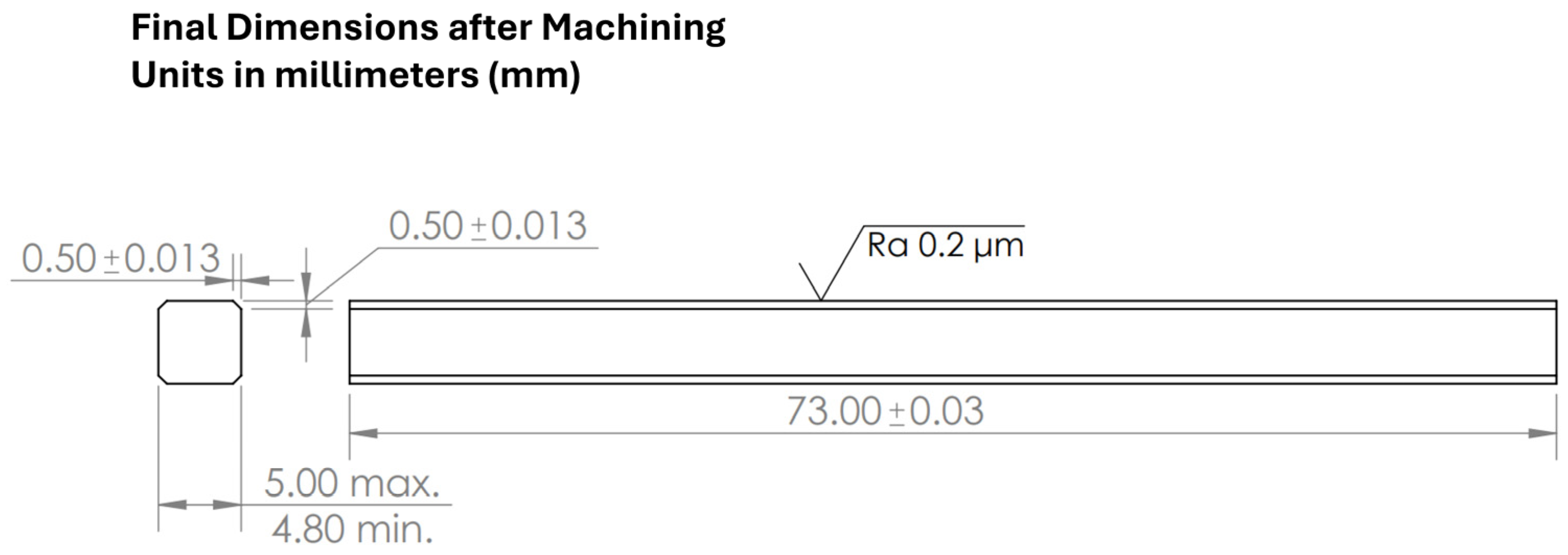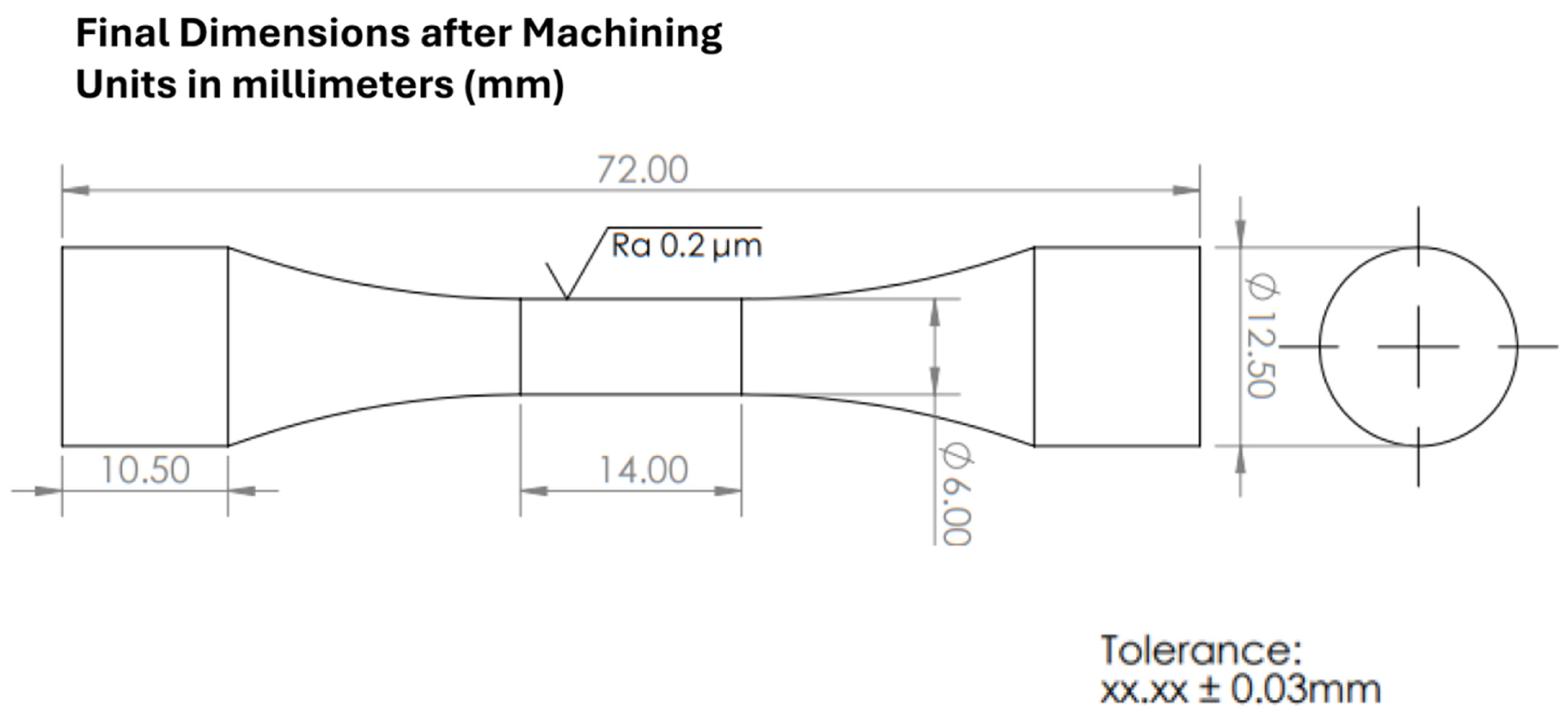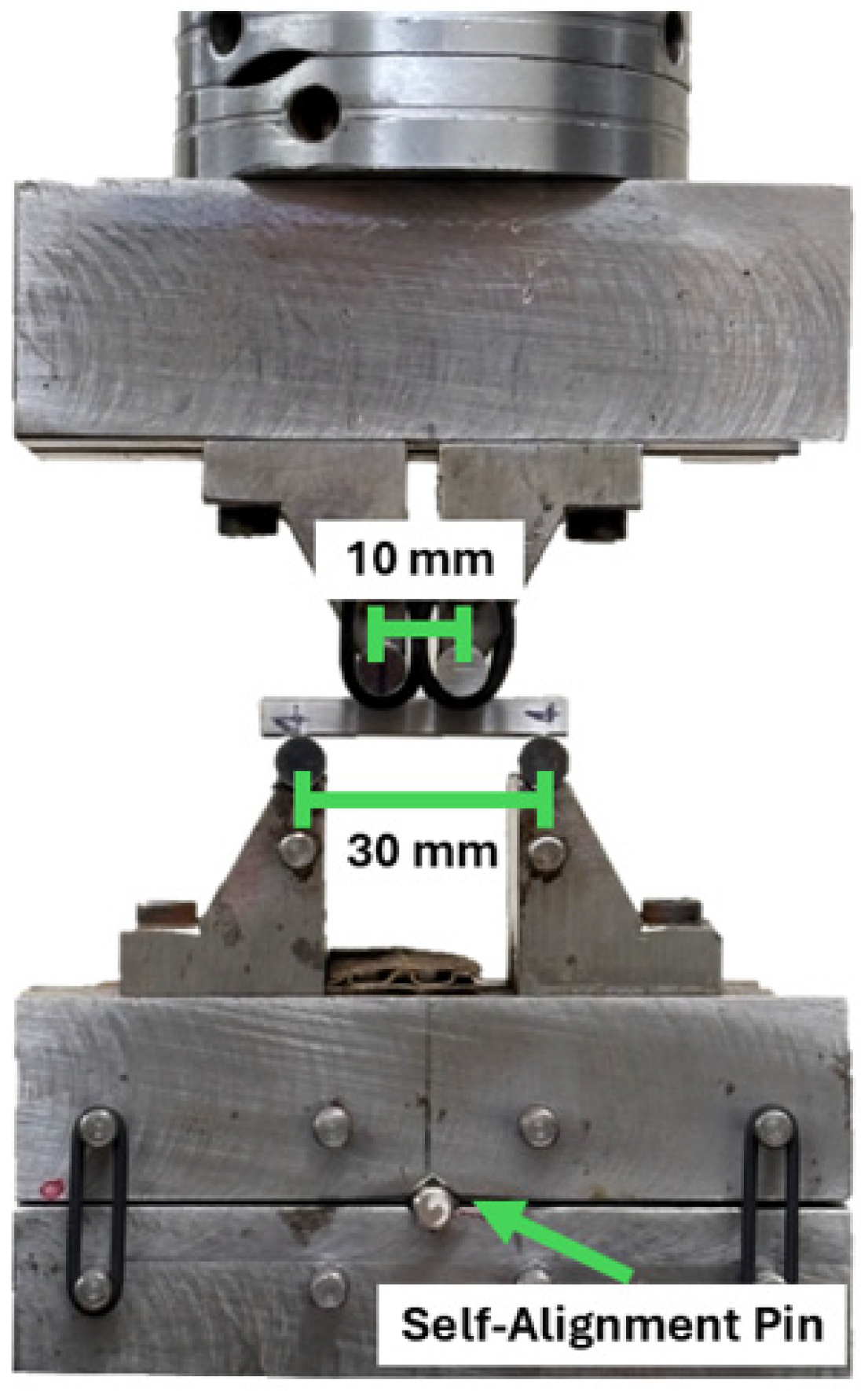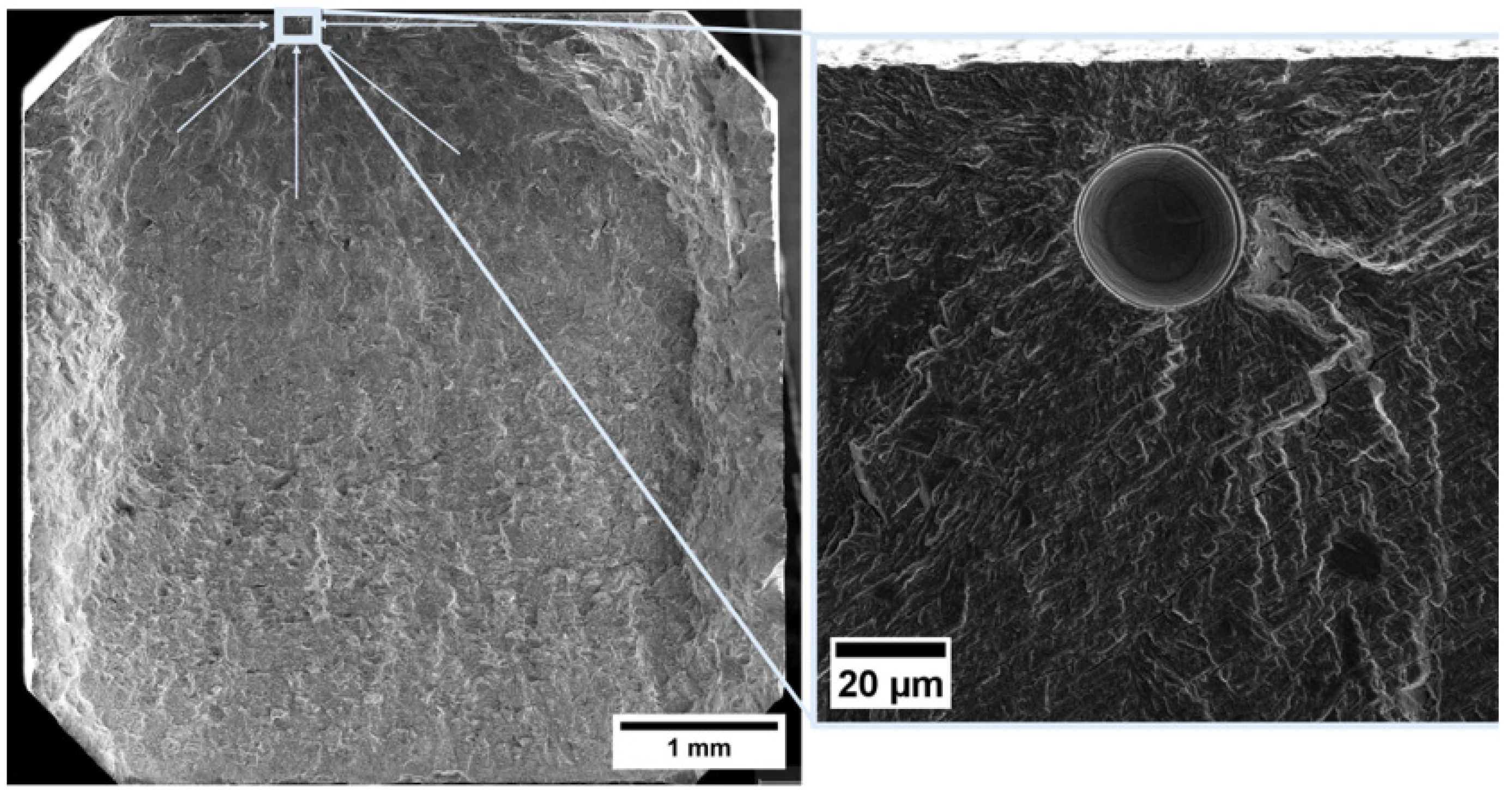


Dataset on Fatigue Results and Fatigue Fracture Initiation Site Characterization in Stress-Relieved PBF-LB/M Ti-6Al-4V Four-Point Bend and Axial Specimens: Part I (High Power, Variable Scan Velocities)


Abstract
1. Summary
2. Data Description
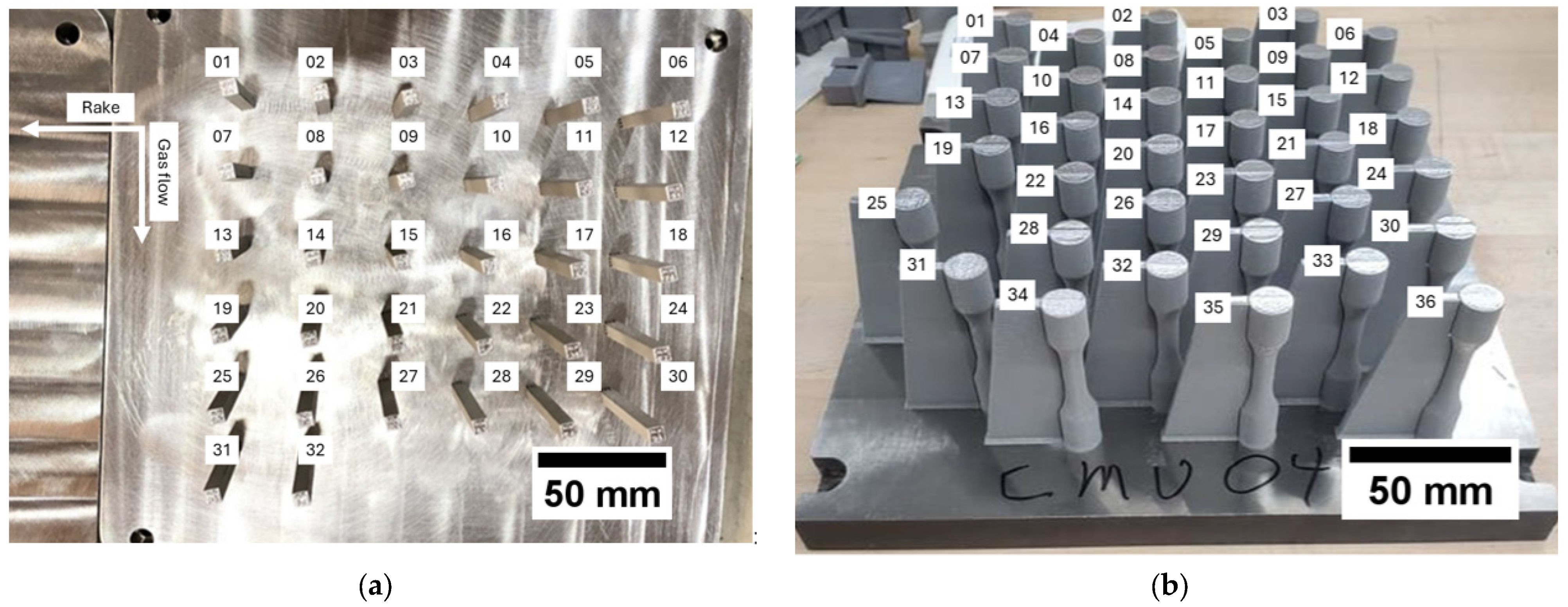
- Specimen Metadata;
- Fatigue Testing and Results;
- Initiation Defect Type Identification;
- Initiation Defect Size and Shape Descriptors;
- Initiation Defect Location Metrics.
2.1. Specimen Metadata
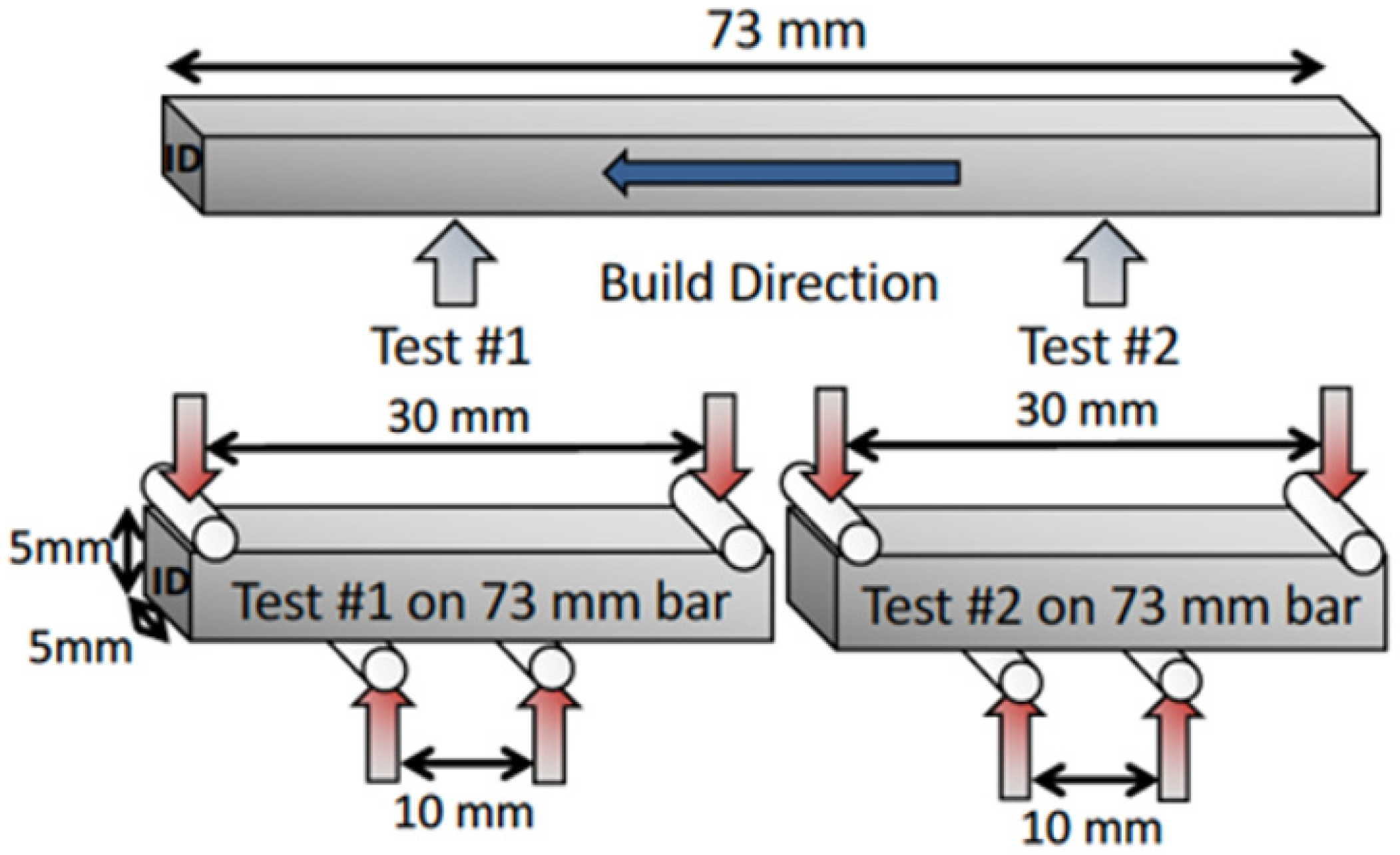
2.2. Fatigue Testing and Results
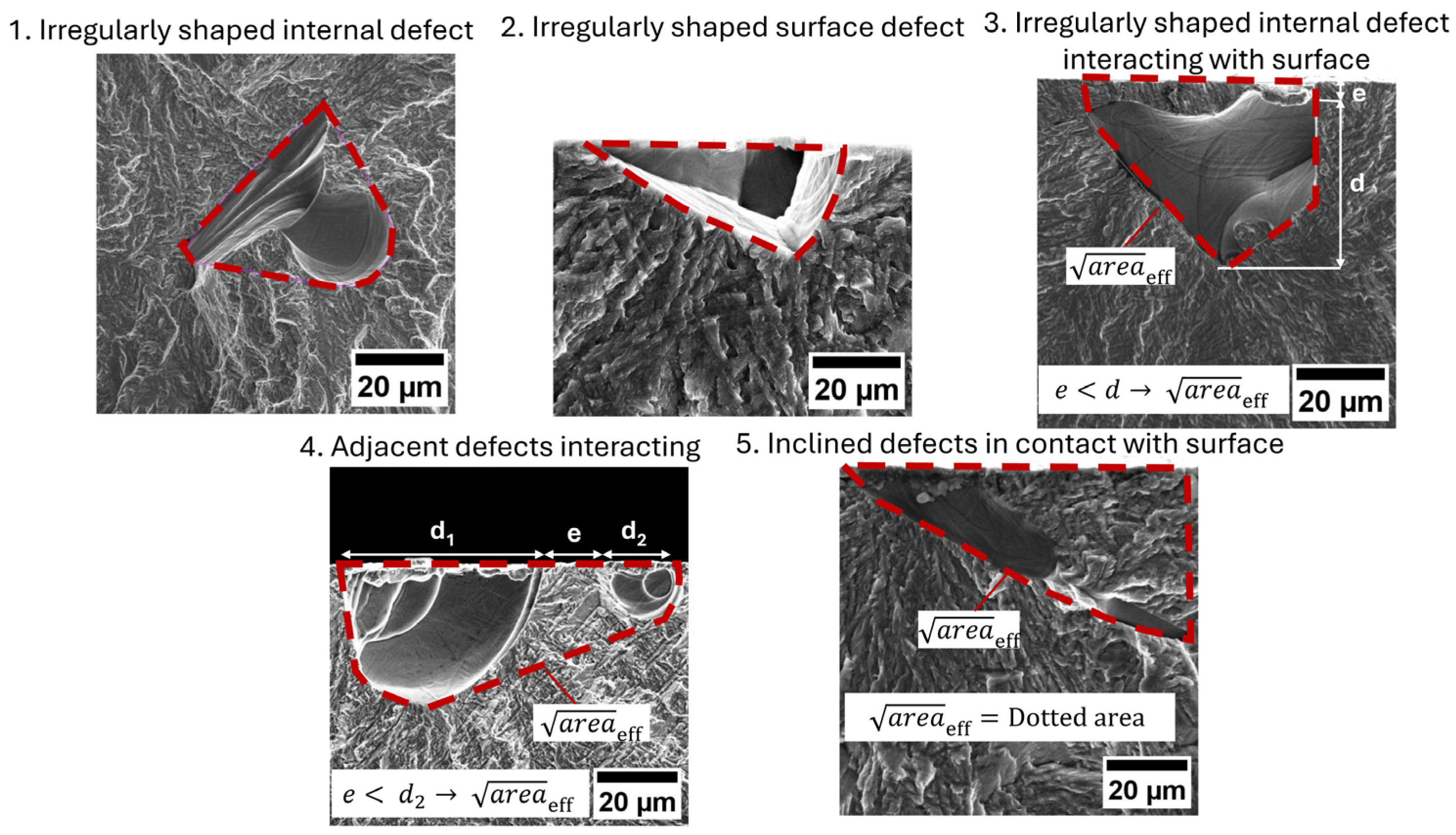
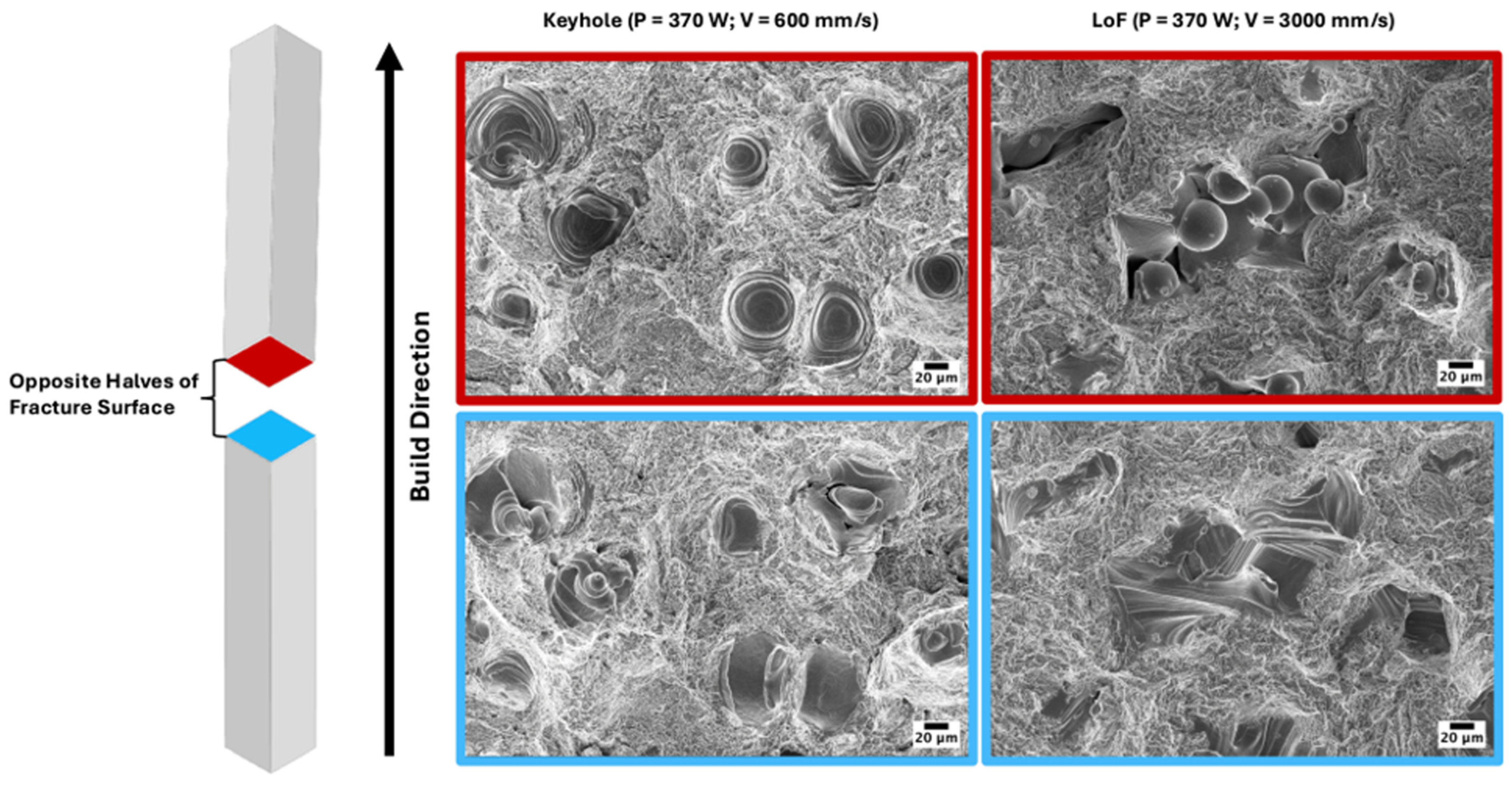
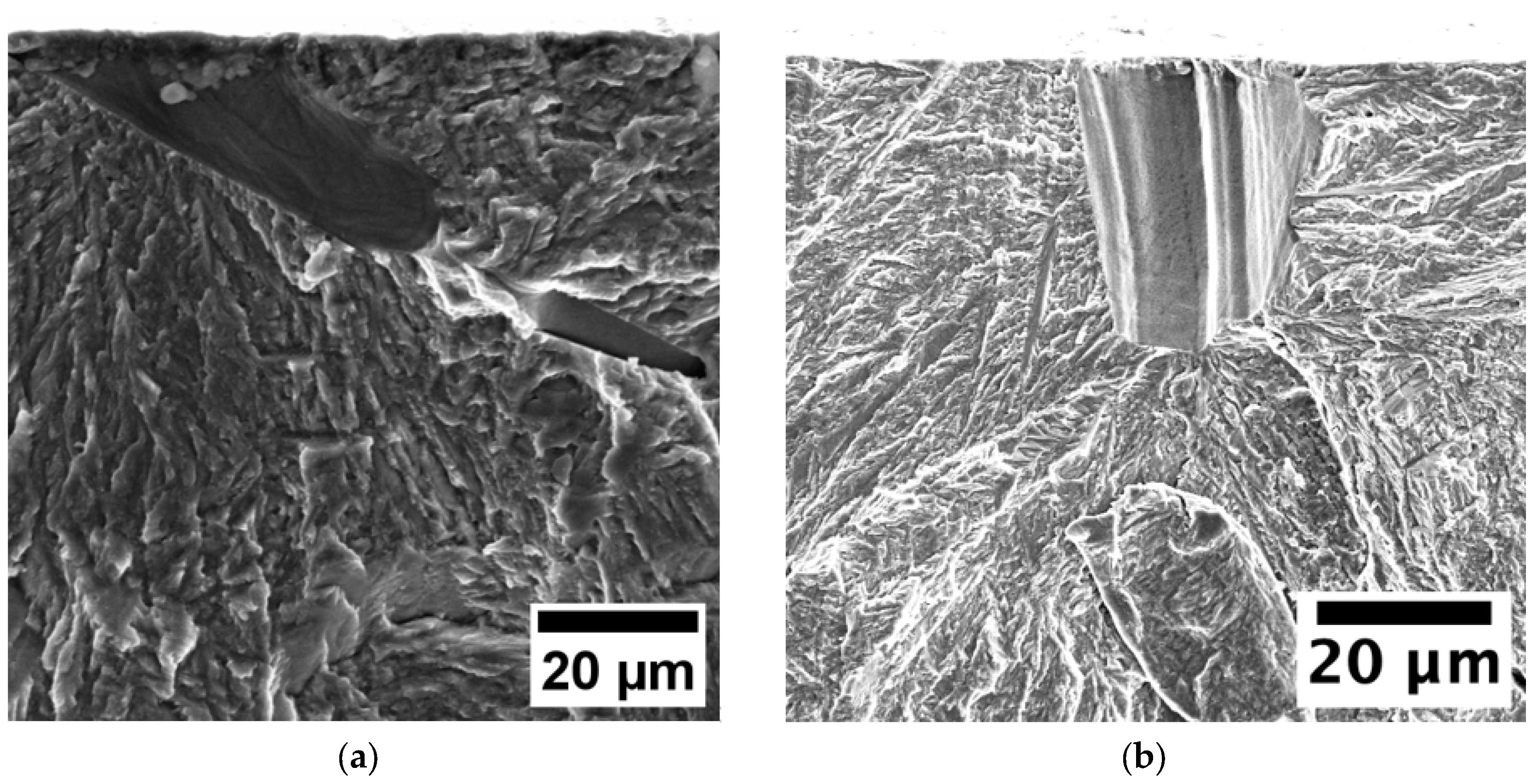
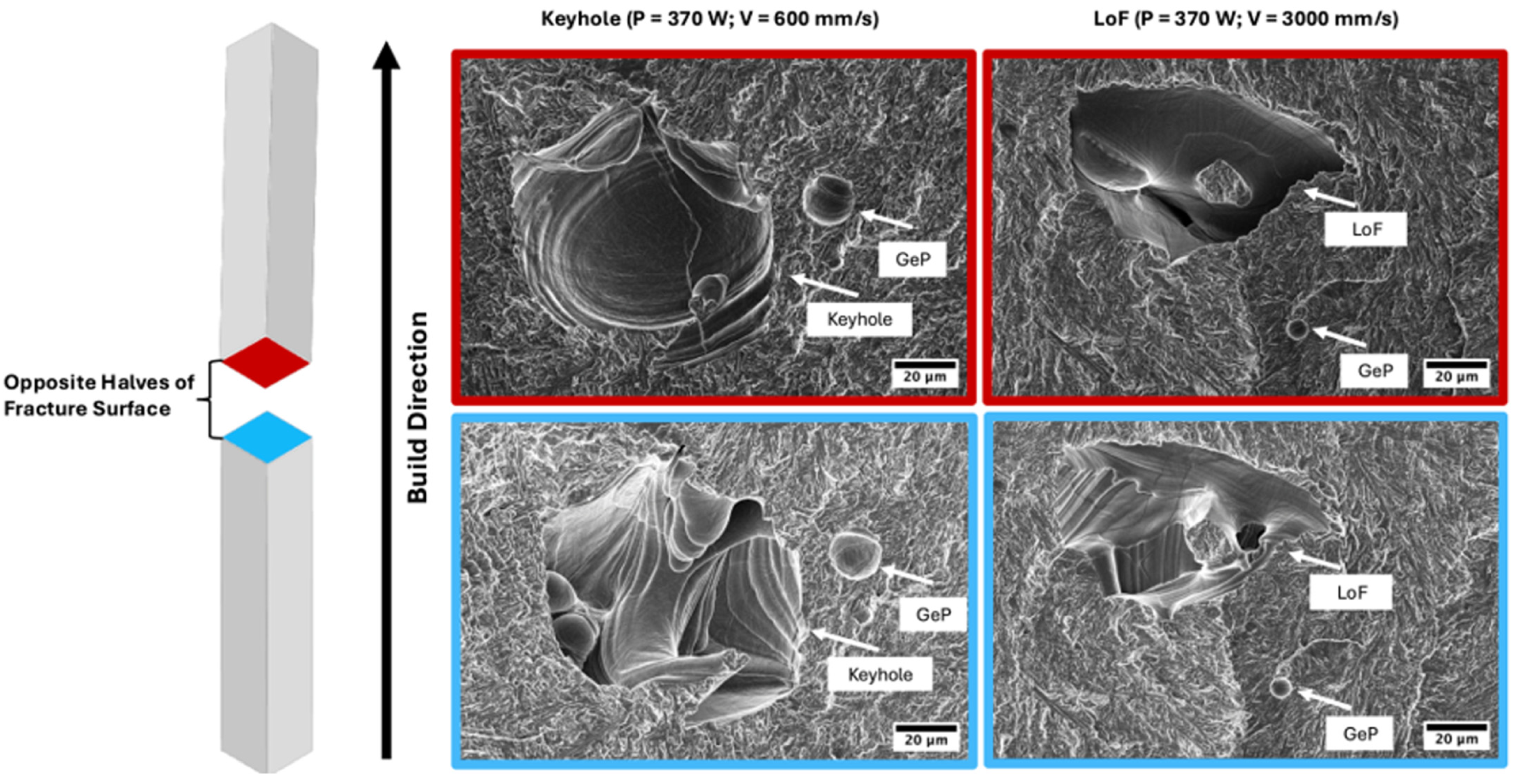
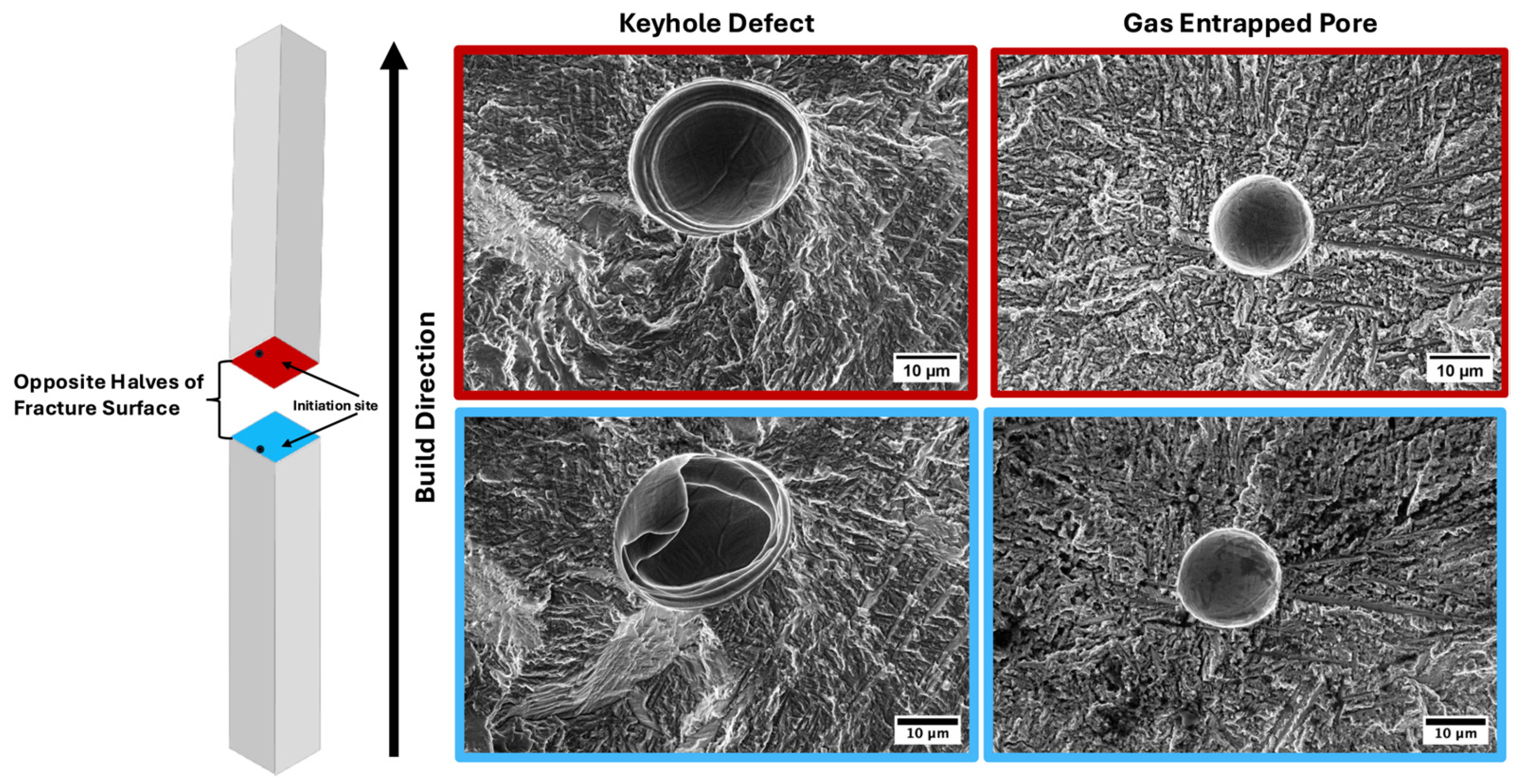
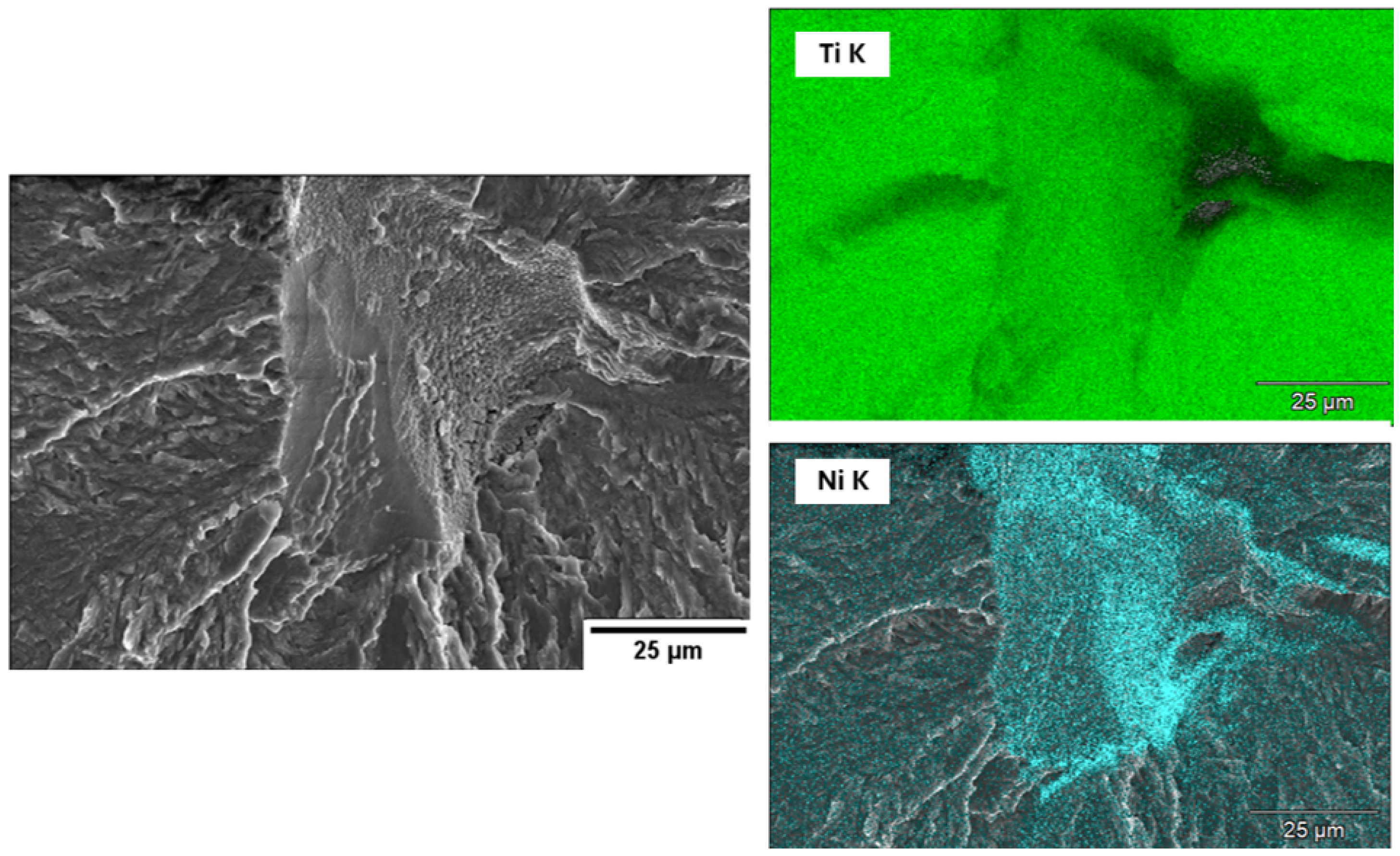
2.3. Initiation Defect Type Identification
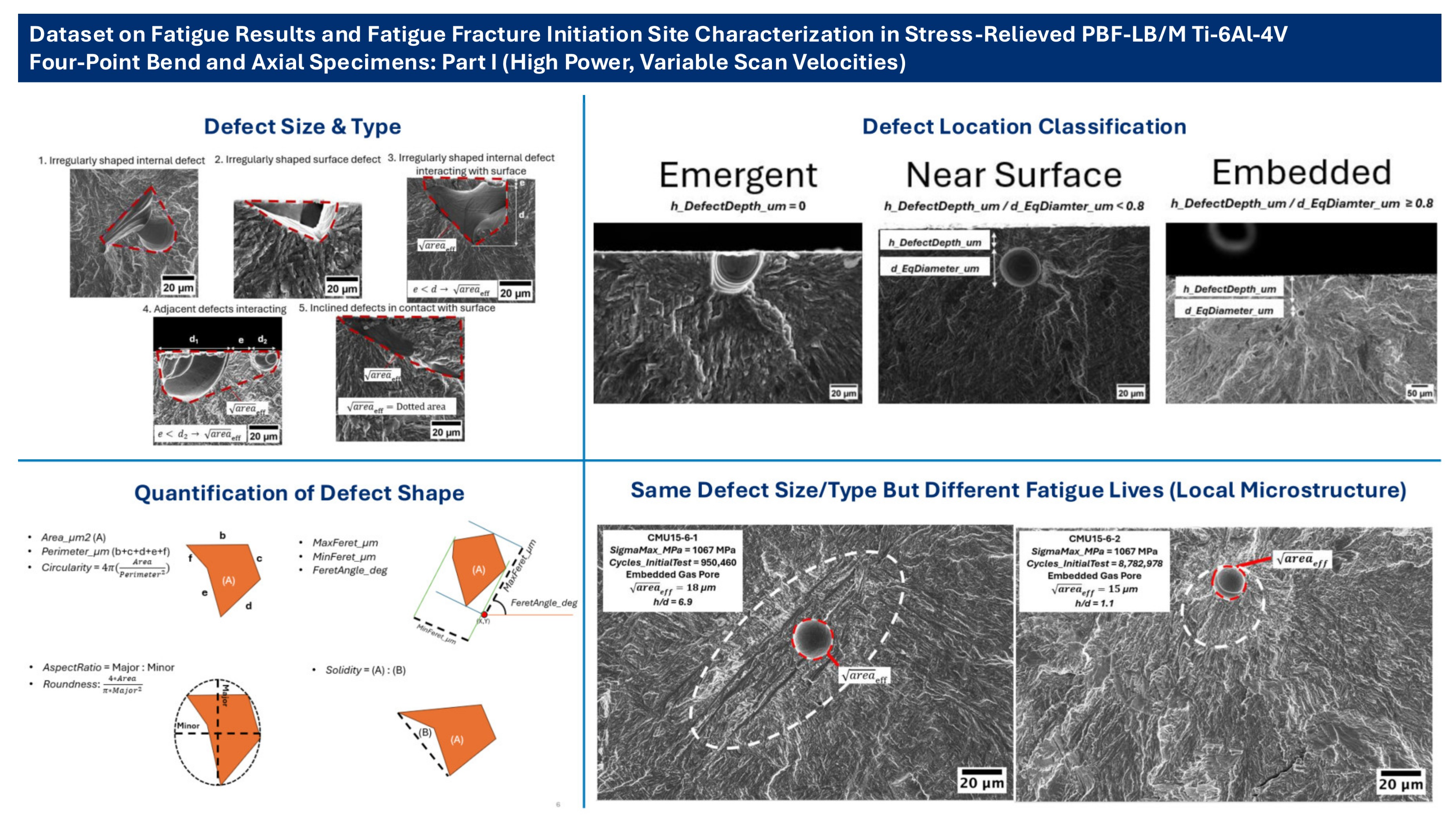
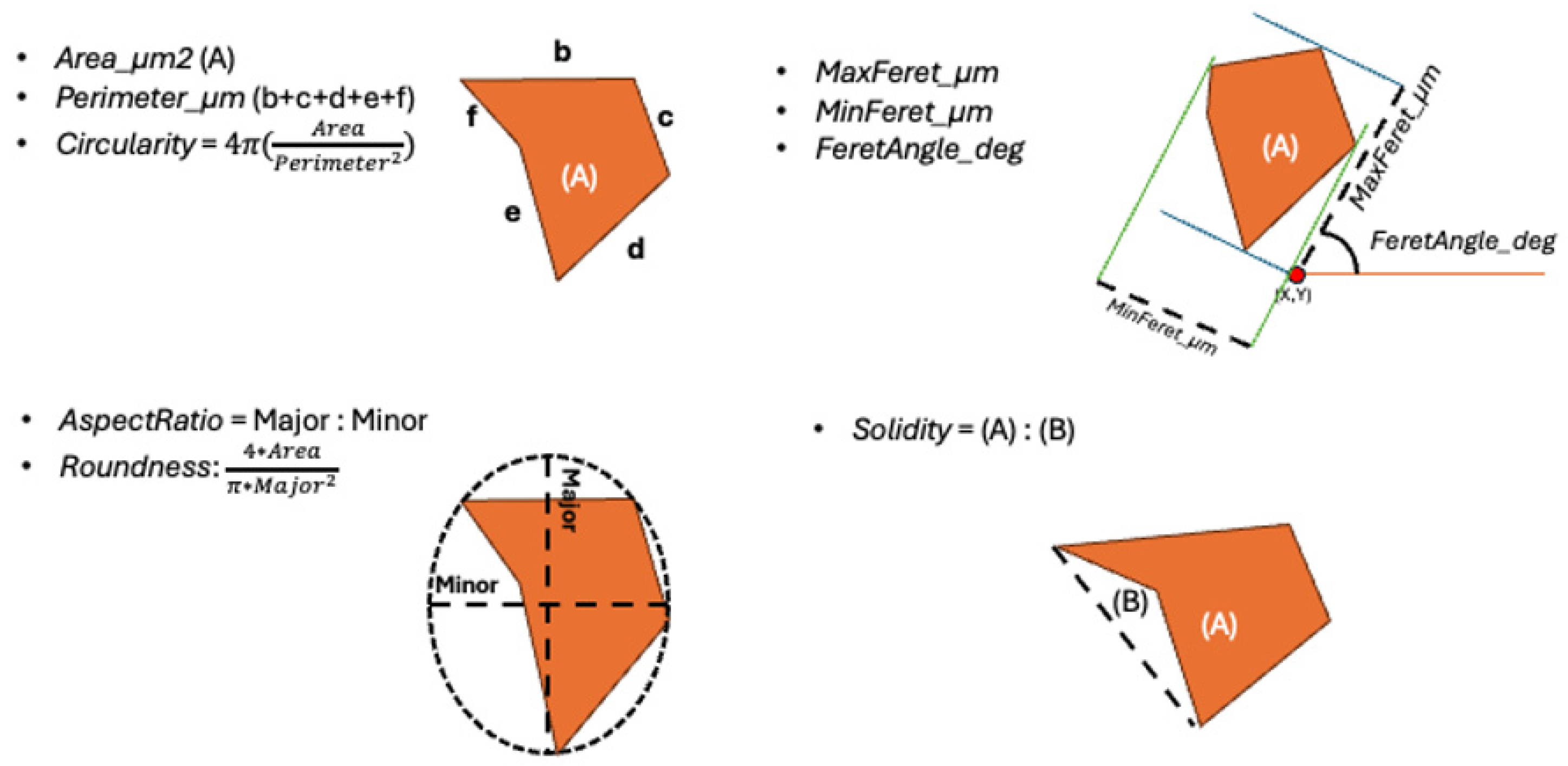
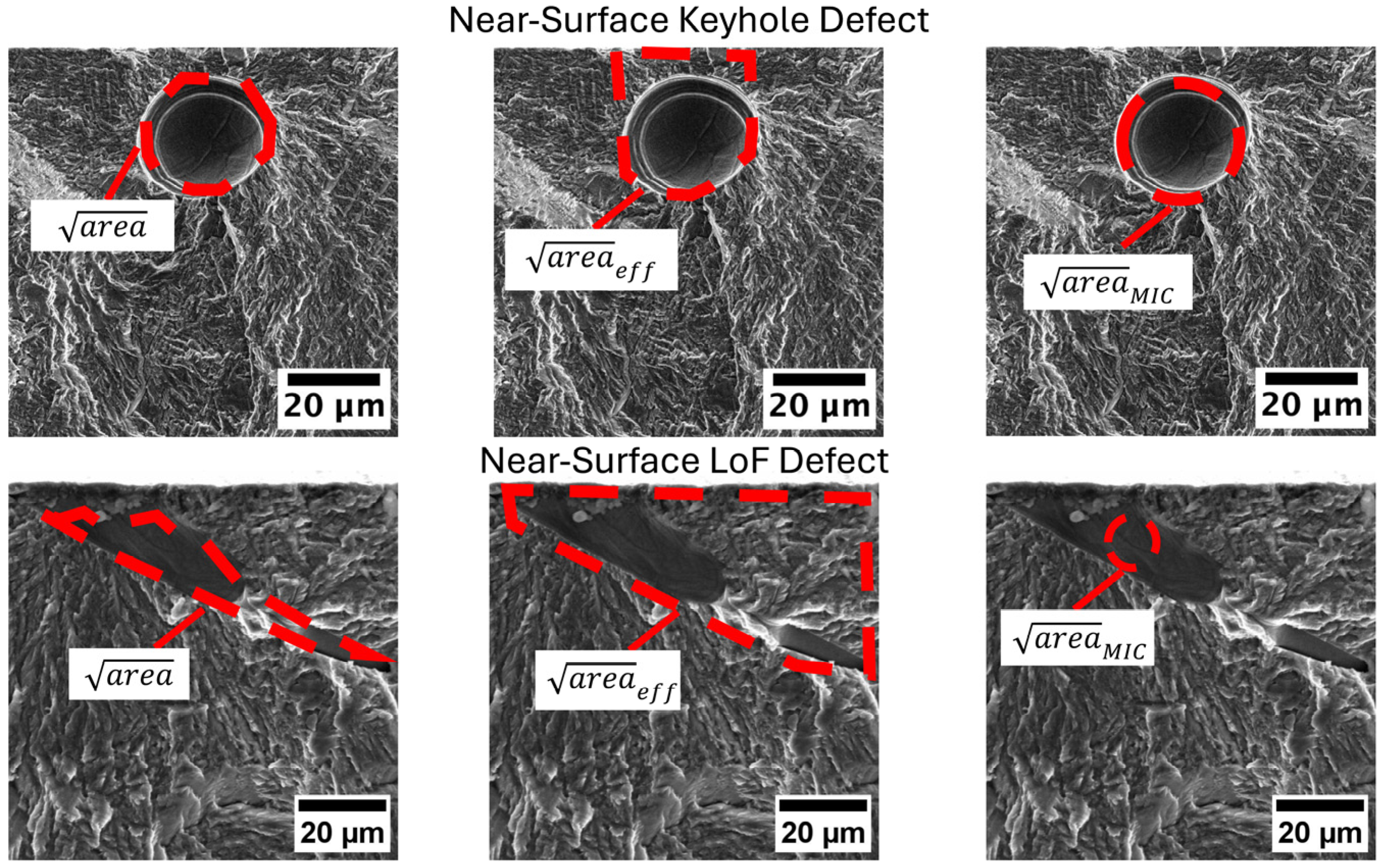
2.4. Initiation Defect Size and Shape Descriptors
- RootArea_um (µm) is defined as the square root of the area enclosed by the manually segmented defect boundary, Area_um2 (µm2);
- d_EqDiameter_um (µm) represents the equivalent diameter of a circle having the same area as the enclosed defect;
- MaxInscribedArea_um2 (µm2) and MaxInscribedRootArea_um (µm) correspond to the area of the largest circle that can be inscribed within the manually segmented defect boundary [8].
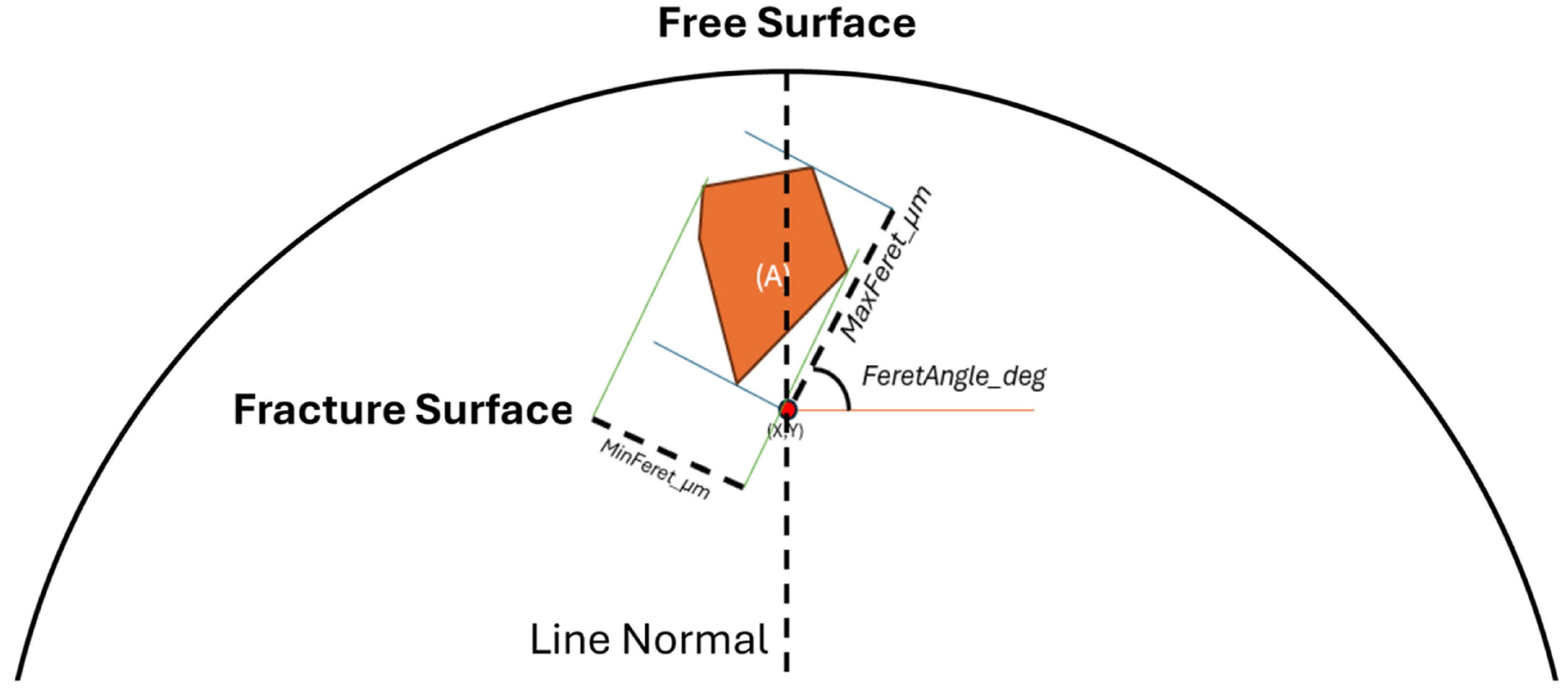
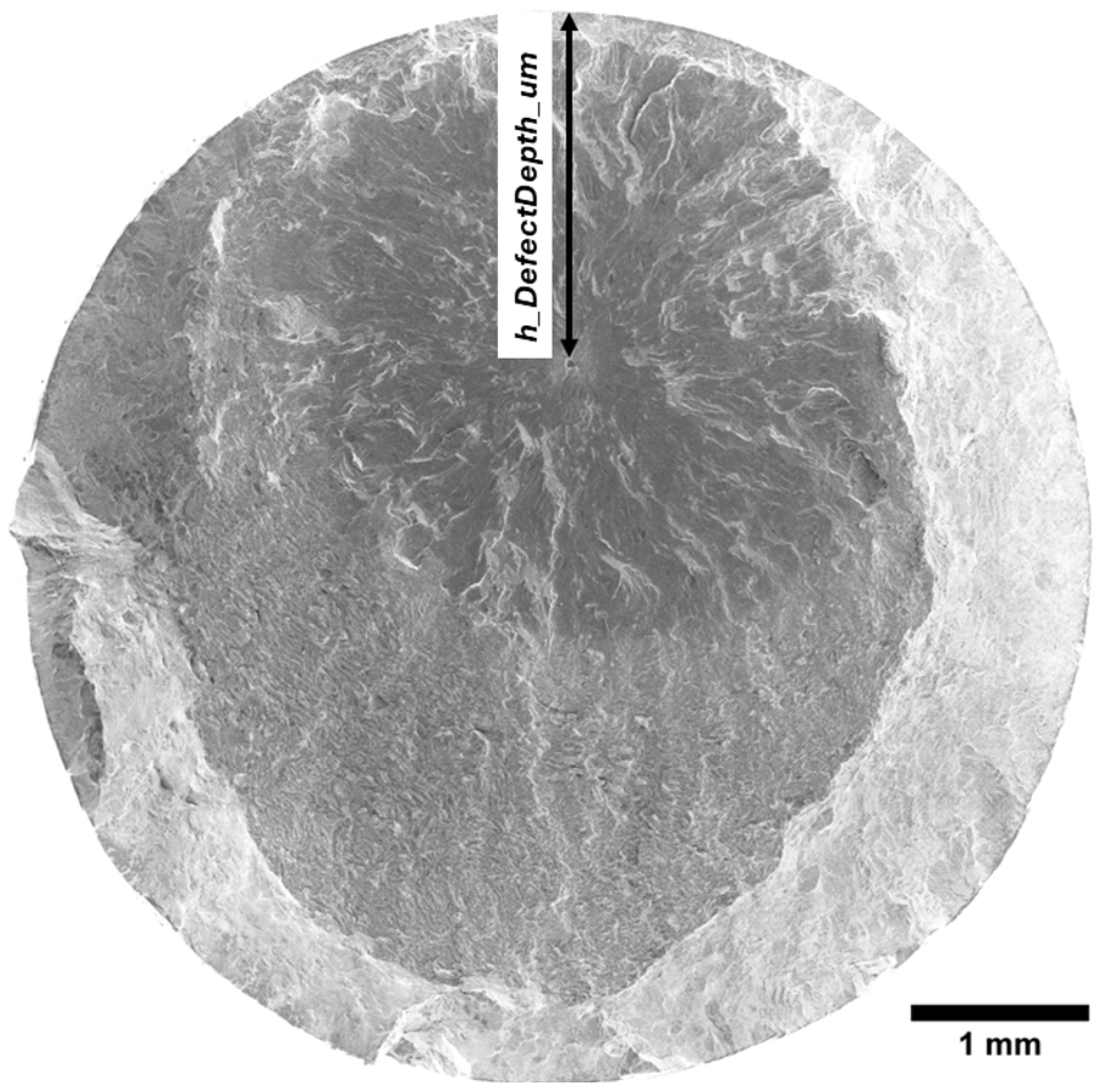
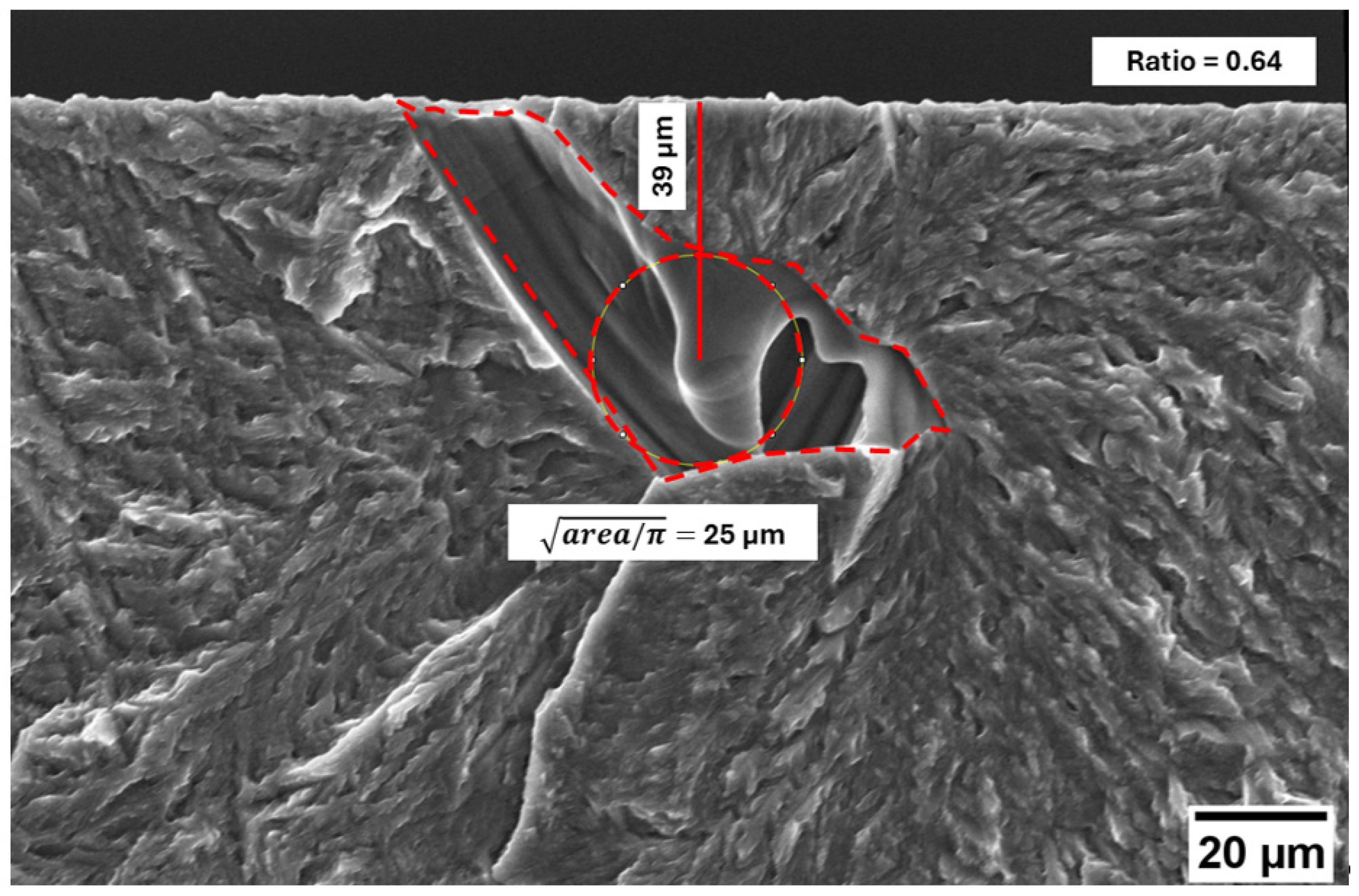
2.5. Initiation Defect Location Metrics
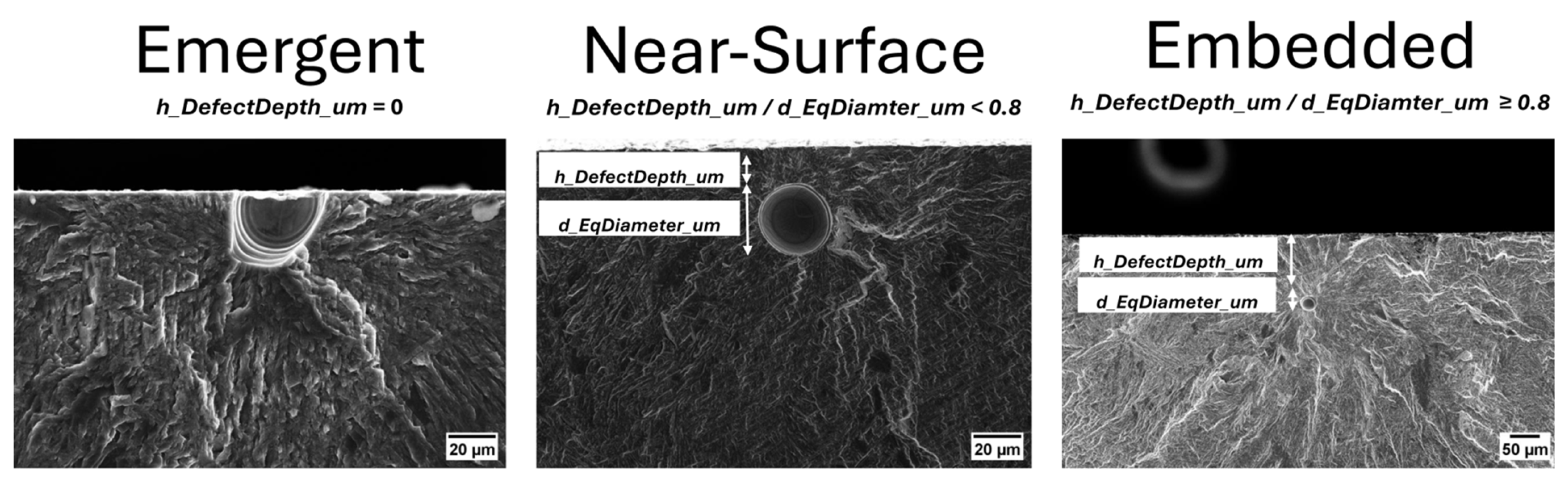
- Emergent defects intersect the free surface (h_DefectDepth_um = 0).
- Near_Surface defects satisfy h_over_d < 0.8.
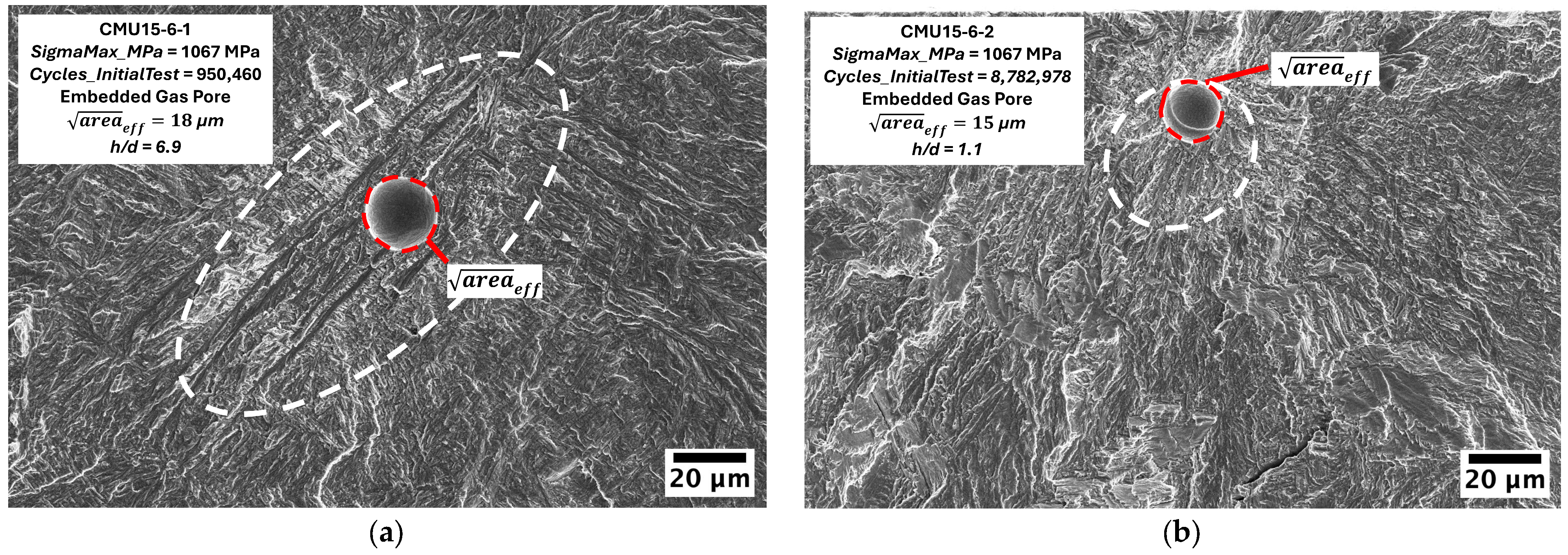
- Embedded defects satisfy h_over_d ≥ 0.8 (Figure 7).
3. Methods
4. User Notes
Supplementary Materials
Author Contributions
Funding
Institutional Review Board Statement
Informed Consent Statement
Data Availability Statement
Acknowledgments
Conflicts of Interest
References
- Hojjatzadeh, S.M.H.; Parab, N.D.; Guo, Q.; Qu, M.; Xiong, L.; Zhao, C.; Escano, L.I.; Fezzaa, K.; Everhart, W.; Sun, T. Direct observation of pore formation mechanisms during LPBF additive manufacturing process and high energy density laser welding. Int. J. Mach. Tools Manuf. 2020, 153, 103555. [Google Scholar] [CrossRef]
- Reddy, T.; Ngo, A.; Miner, J.P.; Gobert, C.; Beuth, J.L.; Rollett, A.D.; Lewandowski, J.J.; Narra, S.P. Fatigue-based process window for laser beam powder bed fusion additive manufacturing. Int. J. Fatigue 2024, 187, 108428. [Google Scholar] [CrossRef]
- Ngo, A.Q.-T. Determination of a Fatigue-and Toughness-Based Process Window for Metal Additive Manufacturing: Effects of LPBF Process Variables on Flaw Characteristics and Resulting Fatigue and Toughness Properties in LPBF Ti-6Al-4V. Ph.D. Thesis, Case Western Reserve University, Cleveland, OH, USA, 2024. [Google Scholar]
- Narra, S.P.; Rollett, A.D.; Ngo, A.; Scannapieco, D.; Shahabi, M.; Reddy, T.; Pauza, J.; Taylor, H.; Gobert, C.; Diewald, E.; et al. Process qualification of laser powder bed fusion based on processing-defect structure-fatigue properties in Ti-6Al-4V. J. Mater. Process. Technol. 2023, 311, 117775. [Google Scholar] [CrossRef]
- Sanaei, N.; Fatemi, A. Defects in additive manufactured metals and their effect on fatigue performance: A state-of-the-art review. Prog. Mater. Sci. 2021, 117, 100724. [Google Scholar] [CrossRef]
- Seifi, M.; Gorelik, M.; Waller, J.; Hrabe, N.; Shamsaei, N.; Daniewicz, S.; Lewandowski, J.J. Progress towards metal additive manufacturing standardization to support qualification and certification. JOM 2017, 69, 439–455. [Google Scholar] [CrossRef]
- Seifi, M.; Salem, A.; Beuth, J.; Harrysson, O.; Lewandowski, J.J. Overview of materials qualification needs for metal additive manufacturing. JOM 2016, 68, 747–764. [Google Scholar] [CrossRef]
- Muhammad, M.; Yasin, M.S.; Soman, S.; Shao, S.; Shamsaei, N. Defect features critical to the fatigue of additively manufactured Ti-6Al-4V. Theor. Appl. Fract. Mech. 2025, 138, 104981. [Google Scholar] [CrossRef]
- Kobryn, P.; Semiatin, S. Mechanical properties of laser-deposited Ti-6Al-4V. In Proceedings of the Solid Freeform Fabrication Symposium, Austin, TX, USA, 6–8 August 2001; pp. 178–186. [Google Scholar]
- Beretta, S.; Romano, S. A comparison of fatigue strength sensitivity to defects for materials manufactured by AM or traditional processes. Int. J. Fatigue 2017, 94, 178–191. [Google Scholar] [CrossRef]
- Lewandowski, J.J.; Seifi, M. Metal additive manufacturing: A review of mechanical properties. Annu. Rev. Mater. Res. 2016, 46, 151–186. [Google Scholar] [CrossRef]
- Banuelos, C.; Ramirez, B.; De la Cruz, A.; Nabil, S.; Arrieta, E.; Wicker, R.; Medina, F. Fatigue Endurance Investigation of Post-processed Surfaces of LPBF Ti-6Al-4V under Flexural Stress. In Proceedings of the 34th Annual International Solid Freeform Fabrication Symposium, Austin, TX, USA, 14–16 August 2023. [Google Scholar]
- Ramirez, B.; Banuelos, C.; De La Cruz, A.; Nabil, S.T.; Arrieta, E.; Murr, L.E.; Wicker, R.B.; Medina, F. Effects of Process Parameters and Process Defects on the Flexural Fatigue Life of Ti-6Al-4V Fabricated by Laser Powder Bed Fusion. Materials 2024, 17, 4548. [Google Scholar] [CrossRef]
- Miner, J.P.; Narra, S.P. Dataset of X-Ray Micro Computed Tomography Porosity Measurements from Powder Bed Fusion; Carnegie Mellon University: Pittsburgh, PA, USA, 2024. [Google Scholar] [CrossRef]
- Miner, J.P.; Narra, S.P. Extreme value statistics with uncertainty to assess porosity equivalence across additively manufactured parts. Reliab. Eng. Syst. Saf. 2025, 262, 111207. [Google Scholar] [CrossRef]
- Sun, S.; Choi, Y.R.; Bayoumy, D.; Miller, J.D.; Liu, Q. Empirical fatigue life model based on micro-CT defect severity indicator for laser powder-bed additively manufactured Ti-6Al-4V. Int. J. Fatigue 2025, 202, 109213. [Google Scholar] [CrossRef]
- Murakami, Y. Metal Fatigue: Effects of Small Defects and Nonmetallic Inclusions; Academic Press: Oxford, UK, 2019. [Google Scholar]
- Murakami, Y.; Kodama, S.; Konuma, S. Quantitative evaluation of effects of non-metallic inclusions on fatigue strength of high strength steels. I: Basic fatigue mechanism and evaluation of correlation between the fatigue fracture stress and the size and location of non-metallic inclusions. Int. J. Fatigue 1989, 11, 291–298. [Google Scholar] [CrossRef]
- Cunningham, R.; Narra, S.P.; Montgomery, C.; Beuth, J.; Rollett, A. Synchrotron-based X-ray microtomography characterization of the effect of processing variables on porosity formation in laser power-bed additive manufacturing of Ti-6Al-4V. JOM 2017, 69, 479–484. [Google Scholar] [CrossRef]
- Gordon, J.V.; Narra, S.P.; Cunningham, R.W.; Liu, H.; Chen, H.; Suter, R.M.; Beuth, J.L.; Rollett, A.D. Defect structure process maps for laser powder bed fusion additive manufacturing. Addit. Manuf. 2020, 36, 101552. [Google Scholar] [CrossRef]
- Mostafaei, A.; Zhao, C.; He, Y.; Ghiaasiaan, S.R.; Shi, B.; Shao, S.; Shamsaei, N.; Wu, Z.; Kouraytem, N.; Sun, T.; et al. Defects and anomalies in powder bed fusion metal additive manufacturing. Curr. Opin. Solid State Mater. Sci. 2022, 26, 100974. [Google Scholar] [CrossRef]
- Francis, Z.R. The Effects of Laser and Electron Beam Spot Size in Additive Manufacturing Processes. Ph.D. Thesis, Carnegie Mellon University, Pittsburgh, PA, USA, 2017. [Google Scholar]
- Tang, M.; Pistorius, P.C.; Beuth, J.L. Prediction of lack-of-fusion porosity for powder bed fusion. Addit. Manuf. 2017, 14, 39–48. [Google Scholar] [CrossRef]
- ASTM E1823-24c; Standard Terminology Relating to Fatigue and Fracture Testing. ASTM International: West Conshohocken, PA, USA, 2024.
- ASTM D6272-25; Standard Test Method for Flexural Properties of Unreinforced and Reinforced Plastics and Electrical Insulating Materials by Four-Point Bending. ASTM International: West Conshohocken, PA, USA, 2025.
- ASTM E466-21; Standard Practice for Conducting Force-Controlled Constant-Amplitude Axial Fatigue Tests of Metallic Materials. ASTM International: West Conshohocken, PA, USA, 2021.
- Dowling, N.E.; Kampe, S.L.; Kral, M.V. Mechanical Behavior of Materials: Engineering Methods for Deformation, Fracture, and Fatigue; Prentice Hall: Upper Saddle River, NJ, USA, 1999. [Google Scholar]
- Schindelin, J.; Arganda-Carreras, I.; Frise, E.; Kaynig, V.; Longair, M.; Pietzsch, T.; Preibisch, S.; Rueden, C.; Saalfeld, S.; Schmid, B. Fiji: An open-source platform for biological-image analysis. Nat. Methods 2012, 9, 676–682. [Google Scholar] [CrossRef]
- Malvern Instruments Ltd. Morphologi G3 User Manual; MAN0410, Issue 1.1; Malvern Instruments Ltd.: Malvern, UK, 2008. [Google Scholar]
- Biswal, R.; Syed, A.; Zhang, X. Assessment of the effect of isolated porosity defects on the fatigue performance of additive manufactured titanium alloy. Addit. Manuf. 2018, 23, 433–442. [Google Scholar] [CrossRef]
- Shamir, M.; Syed, A.K.; Janik, V.; Biswal, R.; Zhang, X. The role of microstructure and local crystallographic orientation near porosity defects on the high cycle fatigue life of an additive manufactured Ti-6Al-4V. Mater. Charact. 2020, 169, 110576. [Google Scholar] [CrossRef]
- Wu, Z.; Wu, S.; Bao, J.; Qian, W.; Karabal, S.; Sun, W.; Withers, P.J. The effect of defect population on the anisotropic fatigue resistance of AlSi10Mg alloy fabricated by laser powder bed fusion. Int. J. Fatigue 2021, 151, 106317. [Google Scholar] [CrossRef]
- SAE International. Heat Treatment of Titanium Alloy Parts; SAE International: Warrendale, PA, USA, 2024. [Google Scholar]
- Bagehorn, S.; Wehr, J.; Maier, H.-J. Application of mechanical surface finishing processes for roughness reduction and fatigue improvement of additively manufactured Ti-6Al-4V parts. Int. J. Fatigue 2017, 102, 135–142. [Google Scholar] [CrossRef]
- Greitemeier, D.; Dalle Donne, C.; Syassen, F.; Eufinger, J.; Melz, T. Effect of surface roughness on fatigue performance of additive manufactured Ti–6Al–4V. Mater. Sci. Technol. 2016, 32, 629–634. [Google Scholar] [CrossRef]
- Seifi, M.; Salem, A.; Satko, D.; Shaffer, J.; Lewandowski, J.J. Defect distribution and microstructure heterogeneity effects on fracture resistance and fatigue behavior of EBM Ti–6Al–4V. Int. J. Fatigue 2017, 94, 263–287. [Google Scholar] [CrossRef]
- Hinderdael, M.; Strantza, M.; De Baere, D.; Devesse, W.; De Graeve, I.; Terryn, H.; Guillaume, P. Fatigue performance of Ti-6Al-4V additively manufactured specimens with integrated capillaries of an embedded structural health monitoring system. Materials 2017, 10, 993. [Google Scholar] [CrossRef]
- Jiang, X.; Man, C.-S.; Shepard, M.; Zhai, T. Effects of shot-peening and re-shot-peening on four-point bend fatigue behavior of Ti–6Al–4V. Mater. Sci. Eng. A 2007, 468, 137–143. [Google Scholar] [CrossRef]
- Zhai, T.; Xu, Y.; Martin, J.; Wilkinson, A.; Briggs, G. A self-aligning four-point bend testing rig and sample geometry effect in four-point bend fatigue. Int. J. Fatigue 1999, 21, 889–894. [Google Scholar] [CrossRef]
- Ariza, D.; Arrieta, E.; Banuelos, C.; Colon, B.; Murr, L.; Wicker, R.; Beamer, C.; Medina, F. Comparison of fatigue life behavior between 4-point and uniaxial loading for L-PBF Ti–6Al–4V after HIP treatments. Results Mater. 2024, 22, 100579. [Google Scholar] [CrossRef]
- Ariza, D.; Arrieta, E.; Banuelos, C.; Colón, B.; Wicker, R.; Beamer, C.; Medina, F. The Impact of Different HIP Treatment Cycles on Fatigue Behavior during 4-Point Bending of Additively Manufactured (AM) Ti-6Al-4V. In Proceedings of the 35th Annual International Solid Freeform Fabrication Symposium, Austin, TX, USA, 11–14 August 2024. [Google Scholar]
- Poudel, A.; Yasin, M.S.; Ye, J.; Liu, J.; Vinel, A.; Shao, S.; Shamsaei, N. Feature-based volumetric defect classification in metal additive manufacturing. Nat. Commun. 2022, 13, 6369. [Google Scholar] [CrossRef]
- Ngo, A.; Hernandez, K.; Olatunde, A.E.; Ciardi, T.G.; Harding, A.; Nihar, A.; Mondal, A.; French, R.H.; Bruckman, L.S.; Lewandowski, J.J. Image-Based Fracture Surface Defect Characterization Methods for Additively Manufactured Ti-6Al-4V Tested in Fatigue. JOM 2024, 76, 4813–4824. [Google Scholar] [CrossRef]
- Miner, J.P.; Ngo, A.; Gobert, C.; Reddy, T.; Lewandowski, J.J.; Rollett, A.D.; Beuth, J.; Narra, S.P. Impact of melt pool geometry variability on lack-of-fusion porosity and fatigue life in powder bed fusion-laser beam Ti–6Al–4V. Addit. Manuf. 2024, 95, 104506. [Google Scholar] [CrossRef]
- Adcock, E.B. Investigation of Ti-6Al-4V Microstructure Development with Variable Cooling Rates in Laser Powder Bed Fusion. Ph.D. Thesis, Carnegie Mellon University, Pittsburgh, PA, USA, 2025. [Google Scholar]
- Chen, H.; Wang, X.; Ren, X. Size effect on fatigue performance of SLM-ed AlSi10Mg alloy: Role of defect size distribution. Int. J. Fatigue 2024, 182, 108163. [Google Scholar] [CrossRef]
- Romano, S.; Brandão, A.; Gumpinger, J.; Gschweitl, M.; Beretta, S. Qualification of AM parts: Extreme value statistics applied to tomographic measurements. Mater. Des. 2017, 131, 32–48. [Google Scholar] [CrossRef]
- Lütjering, G. Influence of processing on microstructure and mechanical properties of (α + β) titanium alloys. Mater. Sci. Eng. A 1998, 243, 32–45. [Google Scholar] [CrossRef]
- Qu, Z.; Zhang, Z.; Liu, R.; Xu, L.; Zhang, Y.; Li, X.; Zhao, Z.; Duan, Q.; Wang, S.; Li, S.; et al. High fatigue resistance in a titanium alloy via near-void-free 3D printing. Nature 2024, 626, 999–1004. [Google Scholar] [CrossRef]
- Nalla, R.; Ritchie, R.; Boyce, B.; Campbell, J.; Peters, J. Influence of microstructure on high-cycle fatigue of Ti-6Al-4V: Bimodal vs. lamellar structures. Metall. Mater. Trans. A 2002, 33, 899–918. [Google Scholar] [CrossRef]
- Pilchak, A.; Fox, K.; Payton, E.; Wiedemann, M.; Broderick, T.; Delaleau, P.; Glavicic, M.; Jenkins, N.; Ruppert, J.-M.; Streich, B.; et al. Cold Dwell Fatigue of Titanium Alloys: History, Current State, and Aviation Industry Perspective; DOT/FAA/TC-23/40; U.S. Department of Transportation, Federal Aviation Administration: Washington, DC, USA, 2024.
- Suresh, S. Fatigue of Materials, 2nd ed.; Cambridge University Press: Cambridge, UK, 1998. [Google Scholar]
- Lankford, J. The growth of small fatigue cracks in 7075–T6 aluminum. Fatigue Fract. Eng. Mater. Struct. 1982, 5, 233–248. [Google Scholar] [CrossRef]
- Ritchie, R.; Lankford, J. Small fatigue cracks: A statement of the problem and potential solutions. Mater. Sci. Eng. 1986, 84, 11–16. [Google Scholar] [CrossRef]



| Test Mode | Power (W) | Hatch Spacing (µm) | Layer Thickness (µm) | Scan Velocity (mm/s) |
|---|---|---|---|---|
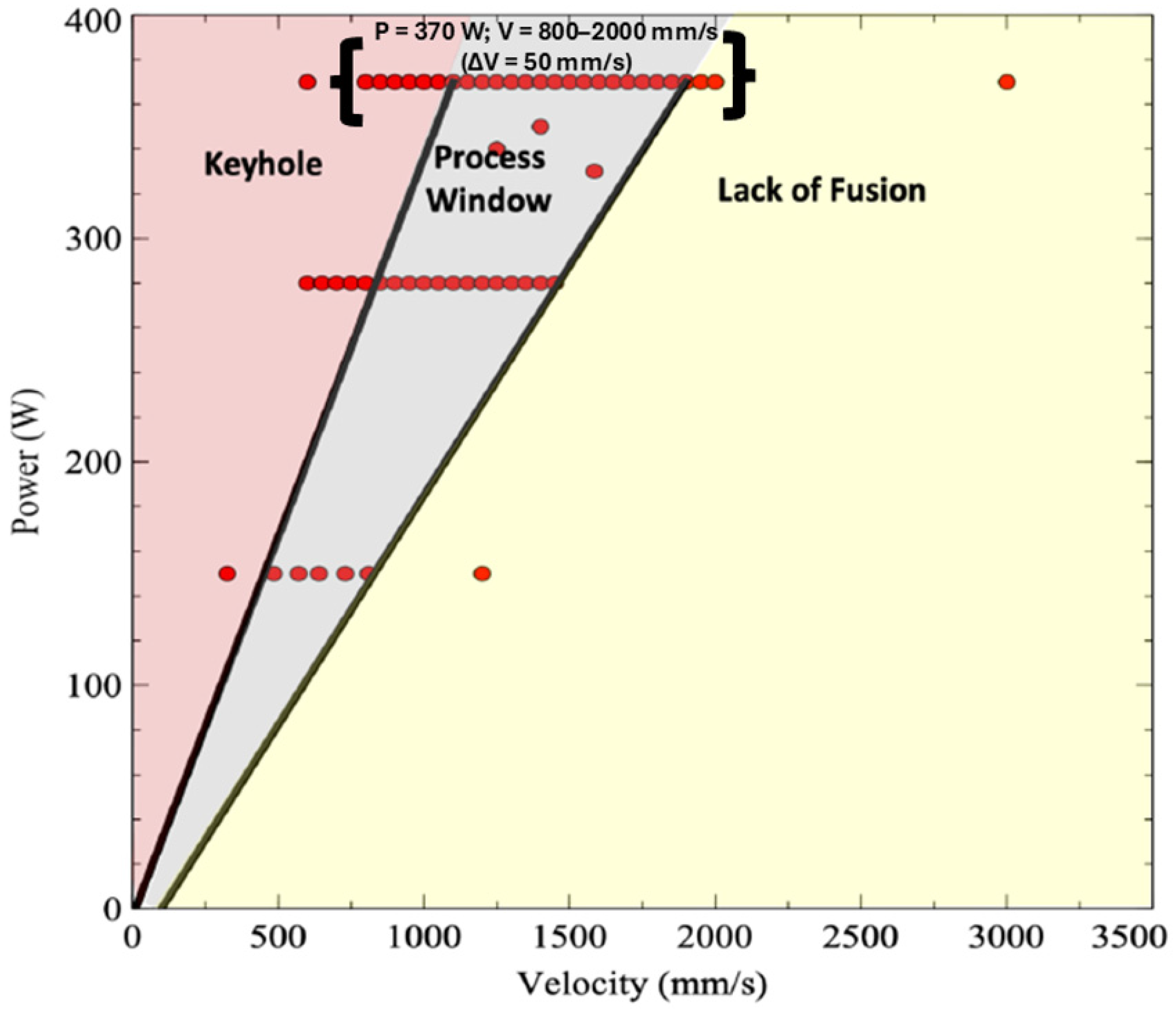
| Four-Point Bend | 370 | 140 | 30 | 800–1950 (∆ = 50) |
| Axial | 370 | 140 | 30 | 800, 1000, 1300, 1500, 1800, 2000 |
| Al | V | Fe (max) | O (max) | C (max) | N (max) | H (max) | Ti |
|---|---|---|---|---|---|---|---|
| 5.50–6.50 | 3.50–4.50 | 0.25 | 0.08 | 0.05 | 0.01 | 0.01 | Balance |
Disclaimer/Publisher’s Note: The statements, opinions and data contained in all publications are solely those of the individual author(s) and contributor(s) and not of MDPI and/or the editor(s). MDPI and/or the editor(s) disclaim responsibility for any injury to people or property resulting from any ideas, methods, instructions or products referred to in the content. |
© 2026 by the authors. Licensee MDPI, Basel, Switzerland. This article is an open access article distributed under the terms and conditions of the Creative Commons Attribution (CC BY) license.
Share and Cite
Ley, B.E.; Ngo, A.Q.; Lewandowski, J.J. Dataset on Fatigue Results and Fatigue Fracture Initiation Site Characterization in Stress-Relieved PBF-LB/M Ti-6Al-4V Four-Point Bend and Axial Specimens: Part I (High Power, Variable Scan Velocities). Data 2026, 11, 81. https://doi.org/10.3390/data11040081
Ley BE, Ngo AQ, Lewandowski JJ. Dataset on Fatigue Results and Fatigue Fracture Initiation Site Characterization in Stress-Relieved PBF-LB/M Ti-6Al-4V Four-Point Bend and Axial Specimens: Part I (High Power, Variable Scan Velocities). Data. 2026; 11(4):81. https://doi.org/10.3390/data11040081
Chicago/Turabian StyleLey, Brett E., Austin Q. Ngo, and John J. Lewandowski. 2026. "Dataset on Fatigue Results and Fatigue Fracture Initiation Site Characterization in Stress-Relieved PBF-LB/M Ti-6Al-4V Four-Point Bend and Axial Specimens: Part I (High Power, Variable Scan Velocities)" Data 11, no. 4: 81. https://doi.org/10.3390/data11040081
APA StyleLey, B. E., Ngo, A. Q., & Lewandowski, J. J. (2026). Dataset on Fatigue Results and Fatigue Fracture Initiation Site Characterization in Stress-Relieved PBF-LB/M Ti-6Al-4V Four-Point Bend and Axial Specimens: Part I (High Power, Variable Scan Velocities). Data, 11(4), 81. https://doi.org/10.3390/data11040081